Category Archives: Mideast

‘Women’s Boat to Gaza’ set to arrive in Gaza within hours amid fears of Israeli hijacking

.DISARMAMENT & SECURITY. .

An article from Ahram Online

The Women’s Boat to Gaza (WBG) mission is set to arrive in Gaza in a couple of hours and aims to challenge the 10-year blockade of the strip and highlight the critical role of Palestinian women in the resistance movement amid fears of Israeli forces intercepting the mission, according to WBG’s website.

flotilla
Sandra Barralilo, MP Jeannette Escarilla, Ann Wright, Ambassador , Dr. Fauziah, Mairead Maguire, MP Samira Douliafia. Above MP Marama Davidson. Olympic Athlete Leigh-Ann Naidoo. (Photo Courtesy of Women’s Boat to Gaza website)
Click on photo to enlarge

The Israeli naval and land blockade has severely restricted the movement of 1.8 million Palestinians and goods to and from Gaza since the Islamist Hamas movement became its de-facto ruler in 2006, inflicting increasing suffering on the impoverished population.

“At home we are all asking our governments to ensure the safe passage of Zaytouna [the Women’s Boat to Gaza]. We are calling on government leaders to stand with us in this challenge and to support our efforts to end this blockade, which is a collective punishment and is illegal under international law,” Wendy Goldsmith, an organiser of the Canadian Boat to Gaza campaign, told Ahram Online.

The women’s boat to Gaza, which includes only women from all over the world, is the fourth mission that has been organised by the Freedom Flotilla Coalition after the last attempt in 2015 ended with the seizure of the boat by Israeli forces in international waters.

“If Israel chooses to intercept this peaceful mission, they will be greeted by 13 incredibly strong and resilient women who are on a course to break the illegal blockade of Gaza. They will be met with love and determination to reach the conscience of humanity,” she said.

The two boats that make up the women’s boat mission — the Amal-Hope and Zaytouna-Oliva — have docked at a number of Mediterranean ports since 12 September, but the Amal-Hope broke off at Barcelona due to unexpected engine problems with only Zatouna-Olivia continuing the journey.

(Article continued in right column)

Question related to this article:

Presenting the Palestinian side of the Middle East, Is it important for a culture of peace?

(Article continued from left column)

“The women on the boat send us daily updates and they report that they are in fine spirits and are looking forward to reaching the shores of Gaza,” Goldsmith said, adding that “we are also in regular contact with the women in Gaza and West Bank who have been organising many solidarity events. We are deeply touched and encouraged by the spirit of sisterhood around the world.”

The first attempt to break the siege with a flotilla, which was organised in 2010, ended in the killing by Israel of nine activists in international waters on the Turkish ship Mavi Marmara.

A second attempt was organised out of Greece in 2011, but the vessels were turned back by the Greek coastguard.

Among the diverse group of women on board are Swedish Member of European Parliament Malin Björk; a retired American army colonel and former diplomat who resigned in 2003 in opposition to the invasion of Iraq, Ann Wright; Irish Nobel Laureate and peace activist Mairead Maguire; and Turkish athlete and coach Cigdem Topçuoglu, whose husband was killed in the Israeli attack on the first freedom flotilla in 2010.

“Within this struggle, men and women play equal roles. In this particular project, it has been decided that women will take on the major role of confronting the Israeli Occupation Force (IOF). This does not minimise in any way the role that men take in both the organising and planning stages,” according to the launching statement of WBG sent to Ahram Online in March.

The Freedom Flotilla Coalition is an international coalition composed of civil society organisations and initiatives from all over the world challenging “the illegal and inhumane” Israeli blockade of Gaza.

“When we arrive in Gaza we expect to be greeted by our many supporters, perhaps with coffee and falafel, music and dance. We hope to join hands with our sisters and claim an end to the blockade that has created the world’s largest open air prison, where innocent children and their families suffer every day,” Goldsmith said.

Arab states: International Day of Peace

FREE FLOW OF INFORMATION

A survey by CPNN

The following events were listed in “Google News” during the week of September 17-24 for the International day of peace. All but the last three were listed under the arabic script. Although the links below are in English, the articles are in arabic; hence, unless you can read arabic, you will need to use a translation service such as that of google as we have done. For events elsewhere in the world, click here.

map of arab states idp
(Click on image to enlarge)

As seen on the map above, there were articles about 14 events for the International Day of Peace in 11 Arab states.

Here are excerpts from the articles.

As you can see from the preceding map, there were
Bahrain: The Minister of Labour and Social Development Jamil Humaidan, the United Nations Information Centre for Arab Gulf countries and the Bahrain Assembly of the Baha’i held an event to celebrate the International Day of Peace. Participating in the celebration were a number of officials of the ministry, members of the House of Representatives and the Shura Council and the heads of councils and associations, as well as intellectuals, opinion leaders and clerics of different sects and relligions.

Lebanon: The Organization Media Association for Peace-MAP, in collaboration with the United Nations Information Centre in Beirut and the Club “Masterpiece,” held a celebration to display artistic talents within the activities of the Beirut Festival. The celebration saw the participation of talented young people in singing, dancing and playing music, with messages calling for peace and hope through art.

Egypt: The Day of Peace was held on the Greek campus of the American University in Cairo. A workshop discussed the situation of refugees and foreign students in Egypt, in addition to taking the values ​​of accepting the other. Participants included a number of expatriate student leaders and members of the African community living in Egypt, as well as representatives from civil society the UN High Commissioner for Refugees, and academic researchers and activists in the field of refugees.

Somalia: The Somali Youth Dialogue Centre organized a ceremony in the capital, Mogadishu, to commemorate the International Day of Peace. Participants included government officials and MPs and civic organizations involved in public affairs, as well as guests of honor, notables and elders of the community. The director of Youth Dialogue Center stressed that Somali youth should be give the opportunity to take the initiative for lasting peace and stability in the country.

Taiz, Yemen: A workshop was held on “Social effects of the conflict in Taiz and ways to promote coexistence and social peace.” The director of the sponsoring foundation, Mohamed Ahmed Haj Amin, called for peace-building in addition to humanitarian aid and support for education in the effort to restore security, peace and stability to the province of Taiz.

(Article continued in the right column)

Question for this article

What has happened this year (2016) for the International Day of Peace?

(Article continued from the left column)

Aden, Yemen: The Al Mualla Foundation of Aden sponsored a meeting of women entitled “Open dialogue on peace.” The women concluded that the media should be activated to publish oncepts of peace in schools, universities, and other meetings and gatherings and to achieve a peace free from the partisan and sectarian strife of the ongoing war in Yemen. The meeting was attended by representatives from government agencies, civil society organizations, young women and housewives.

Al Diwaniyah, Iraq: A festival of music, theater and fine arts was held in Diwaniyah. A member of the preparatory committee for the festival, Bara Nihad, said that ” a group of young activists and volunteers in the province, agreed to draw a picture of peace in Diwaniyah, a number of art events and exhibitions produced by youth.” She expressed her delight at the large and interactive audience and explained that the festival provides a vision of peace and the desire of citizens for civic life, freedom of opinion and expression unlike the fighting in the fronts to expel Daesh. Hence there was no involvement of any government or party in the events and the young organizers relied only on their own energy and talents.

Hillah, Iraq: Activists in the Babylon tourist Resort (6 km north of the city of Hillah) greeted the World Day of Peace in the spirit of spreading “love, peace and tolerance” among children and displaced people. They sent a message to the world that the Iraqis are keen to achieve “coexistence and national unity.”

Damascus, Syria: On the occasion of the World Day of Peace the chorus of St. Ephrem Syriac Patriarchate and the choir Ohieddith Adonia, in collaboration with the United Nations Development Programme, gave a concert in Damascus. The concert included traditional and popular songs representing Syrian folklore of various kinds with the theme “Blessed are those who seek peace.”

United Arab Emirates: At the association’s headquarters in Dubai the Emirates Association for hostels celebrated the day of peace with the slogan «sleep peacefully» for all the world ‘s youth hostels. The celebration was organized under the patronage of the Minister of culture Sheikh Nahyan bin Mubarak Al Nahyan.

Palestine An event in Ramallah drew about a thousand Palestinian school and sent a message of peace to the countries of the world and to the members of the international Quartet. Balloons and white doves were released to express their hopes and dreams for a better future, “we want to live in peace.”

Gaza, Palestine In the old port of Gaza, dozens of Palestinian children from public and private schools manifested their appreciation for international solidarity and their hope that
the ship of women bound for Gaza would be able to break the Israeli blockade . They addressed a message of peace and hope to the entire world: “We, children are the light of Palestine. . . May justice prevail!”

Algeria: On the occasion of the international Day of peace, the wilaya of Mostaganem organized a ceremony for the Emir Abdelkader prize, given to three personalities who contributed to the promotion of peace: Federico Mayor from Spain, Raymond Chretien from Canada and Lakhdar Brahimi from Algeria.

South Sudan: The United Nations’ Funds, Programmes and Agencies, and the peacekeeping mission organized a number of events across the country, in collaboration with the National Platform for Peace and Reconciliation (NPPR) and other non-governmental organisations; alongside the launch of the 100 days of peace activism; a platform for all voices calling for peace, healing, and reconciliation to unite and send powerful messages to leaders and calling for a peaceful resolution to the current crisis.

Hundreds of Thousands Join Saudi Women-Led Campaign to End Male Guardianship in the Kingdom

. . WOMEN’S EQUALITY . .

This article originally appeared on Global Voices on September 4 (reprinted here according to terms of Creative Commons)

As part of the efforts to end the draconian laws against women in the Gulf state, Saudi women launched a campaign demanding an end to male guardianship for basic practices such as work, property ownership and travel. Using the hashtag #TogetherToEndMaleGuardianship and its Arabic version #سعوديات_نطالب_باسقاط_الولاية (which translates to ‘Saudi women demand the end of guardianship’), hundreds of thousands of supporters worldwide took part in this campaign.

saudi
Video:”Trapped with abuse”

The campaign was sponsored by Human Rights Watch and follows the release of its lengthy report entitled “Boxed In: Women and Saudi Arabia’s Male Guardianship System”. In it, the international human rights organization explains that:

“In Saudi Arabia, a woman’s life is controlled by a man from birth until death. Every Saudi woman must have a male guardian, normally a father or husband, but in some cases a brother or even a son, who has the power to make a range of critical decisions on her behalf. As dozens of Saudi women told Human Rights Watch, the male guardianship system is the most significant impediment to realizing women’s rights in the country, effectively rendering adult women legal minors who cannot make key decisions for themselves.”

The report included three short videos illustrating the effects of the system on women’s lives, as well as statements from Saudi women’s rights activists and citizens who find the law to be socially and economically crippling.

Question related to this article:

Protecting women and girls against violence, Is progress being made?

As one Saudi activist and former school principal, 44-year-old Hayat, told Human Rights Watch on December 7, 2015:

“The guardianship system also impacts women’s ability to seek work inside Saudi Arabia and to pursue opportunities abroad that might advance their careers. Specifically, women may not apply for a passport without male guardian approval and require permission to travel outside the country. Women also cannot study abroad on a government scholarship without guardian approval and, while not always enforced, officially require a male relative to accompany them throughout the course of their studies.

It can mess with your head and the way you look at yourself. How do you respect yourself or how [can] your family respect you, if he is your legal guardian?”

Human Rights Watch also explained that the religious reasons supposedly justifying the male guardianship system have been repeatedly challenged:

“Saudi Arabia’s imposition of the guardianship system is grounded in the most restrictive interpretation of an ambiguous Quranic verse—an interpretation challenged by dozens of Saudi women, including professors and Islamic feminists, who spoke to Human Rights Watch. Religious scholars also challenge the interpretation, including a former Saudi judge who told Human Rights Watch that the country’s imposition of guardianship is not required by Sharia and the former head of the religious police, also a respected religious scholar, who said Saudi Arabia’s ban on women driving is not mandated by Islamic law in 2013.”

This is why, among many reasons, the guardianship system is being challenged — on Twitter and elsewhere — by Saudi women and their supporters. According to Vocativ, as of August 4, 2016, at least 170,000 tweets have been posted in both Arabic and English.

(Thank you to Janet Hudgins, the CPNN reporter for this article)

Beirut Int’l Conference Highlights Women’s Participation in Peace, Security Initiatives

. . WOMEN’S EQUALITY . .

An article from Women in China

An international conference on “prioritizing women, peace and security on the Arab agenda” called on Thursday for actions to ensure the participation of women in all aspects of peace and security initiatives across the Arab world.

Beirut

The conference was organized by the Institute for Women’s Studies in the Arab World at Lebanese American University and the United Nations Economic and Social Commission for Western Asia (ESCWA) from August 8 to 10 in Beirut.

According to a statement by the ESCWA, the conference concluded by launching the Beirut Call for Action and urged the Arab states, the UN, the League of Arab States, civil society, policymakers and practitioners to fulfill their commitments.

Participants called for “introducing a new paradigm that promotes a culture of peace, active protection of women from violence, as well as tackles issues of violent extremism, radical religious discourse and political repression,” the statement said.

The conference brought together more than 40 high level experts, academics and practitioners from the United Nations and 11 Arab countries to discuss women’s participation in regional peace and security initiatives.

(Click here for a version of this article in French)

Question for this article

Tunisia moves closer to achieving gender equality in politics

. WOMEN’S EQUALITY .

An article from UN Women

Tunisia’s Parliament has approved an amendment ensuring that women have greater representation in local politics. This amendment, which applies to both municipal and regional elections, includes a proposal for “horizontal and vertical” gender parity in Article 49 of the electoral law.

Tunisia
Plenary session in the Assembly of Representatives of the People (ARP), with UN Women. Photo: ARP
(click on photo to enlarge)

Horizontal parity requires that municipal election lists across Tunisia have equal number of both men and women, while vertical parity requires that men and women alternate within each list. Both were adopted by the Assembly of Representatives of the People (ARP), the Tunisian parliament, on 15 June 2016. Out of 134 representatives, 127 agreed to the new measure.

“The adoption of the new electoral law on parity aligns with the democratic path that the country has chosen to take,” said Bochra Belhaj Hamida, a parliamentarian and member of the Commission of Women, Family, Children, Youth and Seniors. “For the first time, 73 women parliamentarians, from different parties, backgrounds and political ideologies, voted unanimously and conducted their own lobbying in favour of the horizontal and vertical parity.”

UN Women joined forces with the advocacy efforts led by civil society for horizontal parity in local elections. On the eve of the plenary session in Parliament for this draft law, a specific session was held in partnership with the International Development Centre for Local Innovative Governance. Women parliamentarians presented arguments and evidence in favour of the adoption of horizontal and vertical parity.

(Continued in right column)

Question for this article

Prospects for progress in women’s equality, what are the short and long term prospects?

(Continued from left column)

According to the Gender Gap Report 2015, Tunisia is ranked 69th in terms of political empowerment out of 145 countries. Enshrining horizontal and vertical parity in the electoral law increases women’s chances of being elected in the upcoming local elections planned in March 2017, and will allow for better representation in municipal and regional councils. It constitutes significant progress towards inclusive government, equal opportunities and gender equality.

“Besides being a first in our region, the adoption of horizontal and vertical parity in electoral law is a timely achievement because it will guarantee effective participation of women in the upcoming decentralization process in Tunisia,” said Leila Rhiwi, UN Women Maghreb Representative.

In line with its efforts to support women’s leadership and political participation, in March 2016 UN Women initiated a project with parliamentarians in Tunisia that involved advocacy sessions around the legislative agenda, capacity building, networking and support for the implementation of the women’s caucus. This initiative, conducted with Members of Parliament, aims to improve the representation of women in both local and national politics. To date, four sessions have been held.

These efforts are in line with UN Women’s “Step It Up” initiative. At the Global Leaders’ Meeting on 27 September 2015, Tunisian Prime Minister Habib Essid pledged to expand women’s ability to participate in politics and public affairs, saying: “Our experience in democratic transition recently is witness to the fact that women should be represented in all legislative bodies. Hence, we enhance women’s ability to participate in politics and in public affairs. This is a commitment.”

Freedom Flotilla will sail until the blockade of Gaza is permanently and fully lifted

DISARMAMENT & SECURITY .

An article by the Women’s Boat to Gaza

September, Cigdem Topçuoglu, whose husband was killed by Israel on board of Mavi Marmara in 2010, will be sailing with women from all over the world on the Freedom Flotilla Coalition’s latest mission, the Women’s Boat to Gaza (WBG). Ms. Topçuoglu’s action symbolizes Freedom Flotilla Coalition’s (FFC) position regarding the Israeli blockade of Gaza. It must be fully and unconditionally lifted.

gaza
Click on photo to enlarge

The Gaza Strip is the largest open air prison in the world. More than 1.8M persons have been living under an inhuman an illegal Israeli blockade since 2007. The blockade is killing Gaza. Five UN special rapporteurs found that the blockade of Gaza is illegal collective punishment.

MK Haneen Zoabi, who participated in the 2010 on board the Mavi Marmara, said that the reconciliation agreement between the two countries is a clear “admission of murder” by Israel. Ms. Zoabi called for more flotillas in order to remove “the criminal siege on Gaza”.

Laura Arau, an organizer with the FFC and herself a Mavi Marmara passenger said, “Keep in mind that the FFC is not affiliated with any government or political party,” and made a call to civil society: “Nothing can justify the suffering of the families of the activists who were murdered on board the Mavi Marmara in 2010 nor the daily violations of the human rights in Palestine. We, people of the world, must take action when our governments remain silent and are complicit to war crimes.”

Husein Oruç, member of IHH Humanitarian Relief Foundation and also an organizer with the FFC, said that “all the participants, all the families, all the members of Mavi Marmara are saying we are not looking for apologies, we are not looking for compensation.Our main purpose for going to Gaza was to end the blockade. If the agreement does not have this, it is unacceptable.”

In mid September the Women’s Boat to Gaza will sail with the same goal which is to break the illegal and inhumane blockade of Gaza. The Freedom Flotilla will continue until the port of Gaza is open, and Palestinians of Gaza have the ability to fish, to import and export freely, and to lead a normal life without daily fear and suffering. Norwegian organizer Gerd von der Lippe asserts that “the Freedom Flotilla will continue to sail until the illegal and inhumane blockade of Gaza is permanently lifted.”

Question related to this article:

Presenting the Palestinian side of the Middle East, Is it important for a culture of peace?

Readers’ comments are invited on this article and question. See comments section below.

The Elders welcome Paris conference as step towards two-state solution for Israel-Palestine

DISARMAMENT AND SECURITY .

An article by The Elders

The Elders welcome the international conference being convened in Paris on 3 June by the French Government, aimed at reviving efforts to end the Israeli-Palestinian conflict.

conference
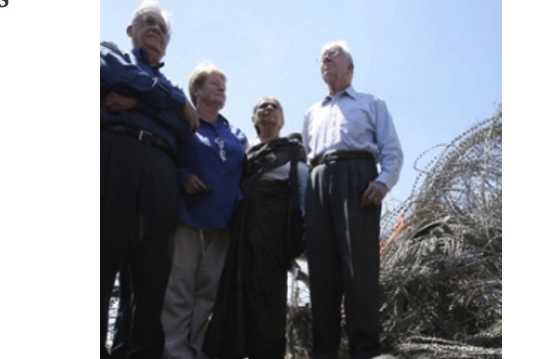
French President Hollande speaks to the Paris conference. Photo from AFP/Stephane de Sakutin, Pool.
Click on photo to enlarge

The last 18 months have seen worsening violence, a hardening of political rhetoric and a diplomatic impasse. The international community must push decisively to shift the dynamics on the ground and secure lasting peace for Israelis and Palestinians alike. A two-state solution that respects international law, addresses legitimate security concerns and upholds human rights remains the only way forward.

Kofi Annan, Chair of The Elders, said:

“This conference is an opportunity to revitalise international engagement on the Israeli-Palestinian conflict. After so many decades of conflict, people deserve to live in peace and dignity. This requires an end to occupation, and self-determination for the Palestinian people. The Elders call on all those involved to work constructively and in good faith towards this goal.”

The Elders note the conflicts raging in much of the wider Middle East and argue this makes it even more important that diplomatic efforts for a two-state solution are intensified.

Jimmy Carter, former President of the United States and Honorary Elder, said:

“The world cannot afford to forget about the Israeli-Palestinian conflict. Palestinians continue to be denied justice and human rights, and their leaders remain divided and disengaged from the search for lasting peace. This stokes resentment and support for extremism across the region. Equally, Israelis are ill-served by a government that promotes illegal settlements and flouts international law.”

(See right column for Final Communique)

Question related to this article:

Presenting the Palestinian side of the Middle East, Is it important for a culture of peace?

How can a culture of peace be established in the Middle East?

(continued from left column)

[Editor’s note: The final communique from the summit includes an urgent call for a two-state solution, as demanded by the Elders and by the the Arab Peace Initiative.]:

“The Participants met in Paris on June 3, 2016 to reaffirm their support for a just, lasting and comprehensive solution to the Israeli-Palestinian conflict.

“They reaffirmed that a negotiated two-state solution is the only way to achieve an enduring peace, with two states, Israel and Palestine, living side by side in peace and security. They are alarmed that actions on the ground, in particular continued acts of violence and ongoing settlement activity, are dangerously imperiling the prospects for a two-state solution.

“The Participants underscored that the status quo is not sustainable, and stressed the importance of both sides demonstrating, with policies and actions, a genuine commitment to the two-state solution in order to rebuild trust and create the conditions for fully ending the Israeli occupation that began in 1967 and resolving all permanent status issues through direct negotiations based on resolutions 242 (1967), 338 (1973), and also recalling relevant United Nations Security Council resolutions and highlighting the importance of the implementation of the Arab Peace Initiative.

“The Participants discussed possible ways in which the international community could help advance the prospects for peace, including by providing meaningful incentives to the parties to make peace. The Participants also highlighted the potential for regional peace and security as envisioned by the Arab Peace Initiative.

“The Participants highlighted the key role of the Quartet and key regional stakeholders. They welcomed the interested countries’ offer to contribute to this effort. They also welcomed France’s offer to coordinate it, and the prospect of convening before the end of the year an international conference.”

Mediterranean meeting on mediation to be held in Tangier, Morocco

… EDUCATION FOR PEACE …

An article in Libération (translated by CPNN)

The city of Détroit de Gibralter [Morocco] is home on 2 and 3 June 2016 to the fifth meeting of Mediterranean mediation. A legal-social forum is expanding on the south side of the Mediterranean. Following the previous meetings, and considering the growing importance of mediation in the social reality around all of the Mediterranean as an alternative means of dispute resolution, this event is of great importance. It provides a good opportunity for debate and reflection for actors on both sides of the sea.

mediation

The city of Détroit de Gibralter [Morocco] is home on 2 and 3 June 2016 to the fifth meeting of Mediterranean mediation. A legal-social forum is expanding on the south side of the Mediterranean. Following the previous meetings, and considering the growing importance of mediation in the social reality around all of the Mediterranean as an alternative means of dispute resolution, this event is of great importance. It provides a good opportunity for debate and reflection for actors on both sides of the sea.

The event aims to promote the culture of mediation in the Mediterranean, creating a network of peace mediators and conflict resolution including the southern Mediterranean.

Indeed, mediation is playing an increasingly important role in resolving conflicts in the family, commercial, and intercultural business. It is a useful and necessary tool.

According to a statement from organizers, the event aims to promote the exchange of information on mediation, considered in its broadest sense and in the service of exchanging experiences between Mediterranean countries.

Bringing together many prominent scholars and experts belonging to several countries in the region, this forum is designed as a deductive approach, starting from the general to the specific, expanding from mediation in general to its different fields of application. The various interventions will address various topics of mediation relating to commercial, family, intercultural and business applications.

Organized by the University of Abdelmalek Essaadi of Tetouan, the National University for Distance Education (UNED), the University Pablo Olavide, the Research Group on Contemporary Arab Studies of the University of Granada, the Three Cultures Foundation of the Mediterranean and the national Association of Mediators (Paris), the meeting intends to spread the culture of conflict resolution through mediation and its consolidation in the Mediterranean to help promote the culture of peace.

(click here for the French version)

Question for this article:

IWPR Holds Landmark Afghan Peace Conference

DISARMAMENT & SECURITY .

An article by the Institute for War and Peace Reporting

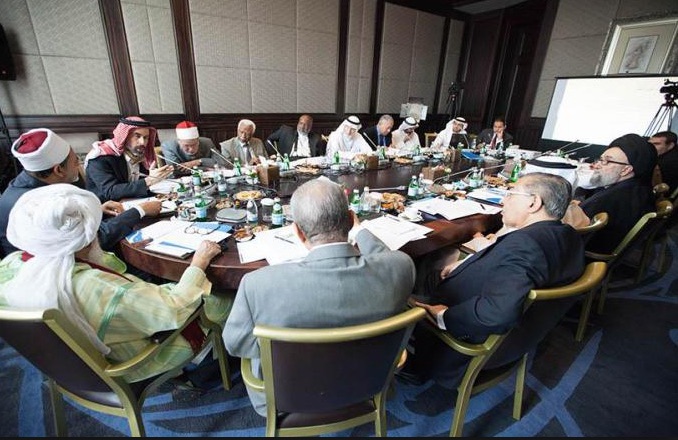
A groundbreaking conference organised by IWPR in Kabul has produced new recommendations on how the Afghan government can move forward with the reconciliation process. The three-day event was convened in cooperation with the Afghan High Peace Council, the body created in 2010 to facilitate talks with the armed opposition. Government officials, religious leaders, civil society activists and journalists from across Afghanistan were among the 70 people who gathered at the Intercontinental Hotel on May 15-17. Religious scholars from Egypt’s famed Al-Azhar university were also invited.

Afghan
Click on the photo to enlarge and to read the legend.

The conference was part of a two-year IWPR initiative designed to draw Afghans into a nationwide discussion on peace building and reconciliation. Afghan Reconciliation: Promoting Peace and Building Trust by Engaging Civil Society, supported by the US State Department’s Bureau of Democracy, Human Rights, and Labour, has so far engaged more than 18,000 Afghans nationwide.

Participants in some 180 panel events have had the opportunity to discuss a range of issues related to peace and reconciliation. More than a dozen call-in radio forums have spread the message further.

“The conference allowed us to share with experts and representatives of the Afghan government our findings and efforts over the past 20 months,” explained Noorrahman Rahmani, IWPR Afghanistan country director.

The working committees used IWPR’s data and feedback to help formulate final proposals, announced at a press conference on the last day of the event. These recommendations stressed the importance of including women and young people in any peace talks and preventing the use of religion as a tool for justifying violence. To that end, the conference called for new controls over mosques and religious education centres as well as creating a central Islamic authority in Kabul to deal with such issues.

One innovative recommendation was the inclusion of a course devoted to peace in the educational curricula of schools and universities.

“Holding the three-day peace conference in Kabul was a major milestone towards the successful completion of IWPR’s 24-month project promoting peace and reconciliation,” Rahmani said. “It wasn’t easy given the recent security developments and unrest in Kabul. “Despite this, IWPR was able to successfully organise and hold the conference, which led to the development of a set of recommendations that will hopefully help the Afghan government and its international partners to approach the ongoing peace process more effectively.”

CYCLE OF CONFLICT

More than three decades of war have extracted a heavy price from the Afghan people, leaving millions dead, many more displaced, a country in ruins and a legacy of bitterness that will take years to overcome. The limited reach of central government, the volatile mix of political, regional and ethnic loyalties, and the heavily militarised social environment make it difficult to move beyond the continuous cycle of conflict. Continued suicide bombings and other attacks underline the enormity of the task ahead, as well as the religious aspect of both conflict and reconciliation. The armed opposition often justifies its actions through its call for jihad or holy war.

With that in mind, experts were brought over from the Al-Azhar university in Egypt, a key Islamic authority, to give their views on the religious aspect of the conflict.

(continued in right column)

Question for this article: Is peace possible in Afghanistan?

(continued from left column)

Mohamed Salem Mohamed Abouaasy, the dean of the Shariah faculty at Al-Azhar, said, “Those who consider jihad and martyrdom permissible in Afghanistan are wrong, because Afghanistan is an Islamic country and the call to prayer is heard here. Thus, this country cannot be regarded as a battlefield from an Islamic perspective.”

Keramatullah Sediqi, of the Afghan ministry of hajj and religious affairs, agreed. “War between two Muslims is unlawful in Islam,” he said.

Fazel Nagar, a civil society activist from Nangarhar province, said that the inclusion of experts from al-Azhar had been particularly wise. “The presence of the Egyptian religious scholars will be very effective in the outcome of the conference, because the people of Afghanistan respect Egyptian religious scholars deeply,” he said. “We understand better now that the war in Afghanistan is illegitimate, because the highest academic source called the war unlawful based on Shariah provisions.”

The conference also discussed the importance of securing the country’s borders. The Durand Line, a poorly defined boundary established by the British in 1893, has long been a source of friction with Pakistan. Kabul does not recognise the Durand Line, whereas Islamabad would like to see it formalised as the official frontier.

Abdul Ghafur Lewal, the deputy minister of borders and tribal affairs, noted that some people argued that recognising the Durand Line would solve all bilateral tensions. This was a mistake, he said. “Pakistan will not be silent simply if the Durand Line is recognised. If we recognise Durand, we should think about how we plan on defending Kabul [from attack].”

Lewal stressed that borders needed to be protected by well-trained security forces with up-to-date equipment. “Criminal groups involved in the smuggling of drugs, and [wasted resources] from our forests and mines… are problems that endanger the country’s security,” he added.

The conference also highlighted the importance of resolving Afghanistan’s water issues.

Sultan Mahmoud Mahmoudi of the ministry of energy and water, said that neighbouring countries had long exploited Afghanistan’s abundant natural resources. He said that 80 billion cubic metres of water flowed unchecked from Afghanistan into neighbouring countries each year, with most of this used by Pakistan and Iran. “One of the main reasons for the war is that Afghanistan’s neighbors interfere so as to prevent plans to control natural water resources in the country, because our neighbors have used our country’s waters for free for centuries,” he said. “They don’t want us to control our own waters so they try to inflame the war in Afghanistan.”

Conference participants were delighted with the outcome of the event.

“These efforts are effective in institutionalising a culture of peace,” said High Peace Council vice-chairman Ataurrahman Salim. “I hope such conferences will be held in the future as well.

“The last day of the conference coincided with the day on which the Afghan government reached a final agreement with the Gulbuddin Hekmatyar-led [jihadi party] Hizb-e Islami, an opponent of the government,” he continued. “This is good news for ensuring peace and security in the country.”

Mohammad Omar Satay, who heads the secretariat of the High Peace Council in Kandahar province, agreed. “This conference inspired us to further strengthen the spirit of coexistence among Afghans,” he said. “ Now the time has come for us to devote ourselves to peace.”

Others said that the summit had been a fitting end to an extensive programme of IWPR discussions on peace and reconciliation.

Shukria Neda, a civil society activist from Bamyan, said that over the last two years she had taken part in the debates IWPR had organised in her home province. “Now I participated in the peace conference following those programmes. We learned new strategies for peace at the conference. The issue should be a priority for every Afghan, because we all have a thirst for peace.”

IWPR’s Syria Coordinator Wins Landmark Freedom of Speech Prize

FREE FLOW OF INFORMATION

An article by the Institute for War and Peace Reporting

IWPR Syria project coordinator Zaina Erhaim has been awarded the 2016 Index on Censorship Freedom of Expression Award for journalism. Erhaim, 30, returned to the war-torn Syria in 2013. Based in Aleppo, she has since trained about 100 citizen reporters, around a third of them women, who are now among the very few able to provide eyewitness accounts of events on the ground.

Syria
Zaina Erhaim. (Photo: Hayyan Alyousouf)
Click on the image to enlarge

Accepting the award at a gala ceremony in London on April 13, she dedicated it to “the journalists and citizen journalists still taking this dangerous, difficult path, sacrificing everything, playing hide and seek with death to get the stories of the Syrian people out”.

In 2015 Erhaim filmed a ground-breaking documentary, Syria’s Rebellious Women, telling the stories of young activists helping their country in the midst of conflict.

At a screening the night before the awards ceremony at London’s Frontline Club, Erhaim told the audience that she wanted to ensure these women’s work was remembered.

“The main reason I made the films is because I am Syrian, and I’m a woman,” she said. “I tried to do some research six years ago about Syrian women who participated in Syrian history and I couldn’t find anything.

“So I felt like we had to capture this work that the women are doing because in the future the men are going to be writing the history and these heroines are going to be forgotten.”

Last year Erhaim won another landmark prize, the Peter Mackler Award for Courageous and Ethical Journalism.

Zaina also writes regularly for The Economist and has contributed to the Guardian and Arabic-language media like Orient TV, Al-Hayat and Al-Quds Al-Arabi.

Born in Idlib and educated in Damascus, Erhaim was finishing a degree in international journalism in London just as unrest began in Syria in 2011. She spent two years as a broadcast journalist with the BBC before joining IWPR and returning to northern Syria.

IWPR has worked in Syria since 2007, supporting journalists, civil society groups, and youth and female activists. Its Damascus Bureau platform is a space for news, comment and reportage written by Syrians. Since February 2015, the Women’s Blog has carried pieces by new writers with no background in professional journalism, talking about the hardship of daily life and the horrors of war. Erhaim has been instrumental in bringing these stories out.

Another IWPR contributor, Azerbaijani journalist Idrak Abbasov, won the 2012 Index On Censorship prize for journalism.

Abbasov was recognised for his investigative reports on corruption and violence in Azerbaijan.

Questions related to this article: