Category Archives: DEMOCRATIC PARTICIPATION

What would a general strike in the US actually look like?

. HUMAN RIGHTS .

An article by Jeremy Brecher from Waging Nonviolence

Something is in the air: A perception that American democracy and livable conditions for working people may only be saved by the kind of large-scale nonviolent direct action variously called “general strikes,” “political strikes,” or, as I will refer to all of them, “social strikes.”

Calls for mass disruptive action are coming from unlikely places, like Anthony Romero, executive director of the ACLU, an organization normally associated with legal action through the courts. When Romero was asked in a recent interview what would happen if the Trump administration systematically defied court orders, he replied, “Then we’ve got to take to the streets in a different way. We’ve got to shut down this country.”

Similarly senior Democratic Rep. Jim McGovern said, “We can’t just sit back and let our democracy just fall apart. What we need to think about are things like maybe a national strike across this country.”

Some in organized labor are also entering the fray. Sara Nelson, head of the Association of Flight Attendants, recently said that American workers — no matter what they do or what sector they are in — now have “very few options but to join together to organize for a general strike.” (She led the organizing for a national general strike that successfully deterred Trump’s attempt to shut down the government in his first term.)

Meanwhile, online, there are even more ad hoc efforts demonstrating the tactic’s appeal right now. For instance, more than 300,000 people have signed cards pledging to participate in a general strike.

Calling for general strikes is a staple of the radical toolkit. (I’ve made questionable efforts to call two or three myself over the past half-century.) But why has the idea of such mass actions suddenly appeared on the lips of such a wide range of people? There are three principal reasons:

1. The wide range of people being harmed by the MAGA juggernaut gives credibility to actions based on wide public participation.

2. The demolition of key institutions of democracy, constitutionalism and the rule of law is threatening to leave few alternatives to popular uprising.

3. The fecklessness of the leadership of the Democratic Party, as sublimely illustrated by Sen. Chuck Schumer’s passage in March of the devastating MAGA budget, has led to despair about resistance within the institutions of government.

These inescapable realities are forcing people to think in unaccustomed ways.

I use the term “social strikes” to describe mass actions people take to exercise power by withdrawing cooperation from and disrupting the operation of society. The goal of a social strike is to affect not just the immediate employer, but a political regime or social structure. Such forms of mass direct action provide a possible alternative when institutional means of action prove ineffective. In all their varied forms they are based on Gandhi’s fundamental perception that “even the most powerful cannot rule without the cooperation of the ruled.”

(Article continued in the right column)

Questions related to this article:

The struggle for human rights, is it gathering force in the USA?

(Article continued from the left column)


What are social strikes?

Social strike is a broad term that encompasses a wide range of activities that use the withdrawal of cooperation and mass disruption to affect governments and social structures. While the U.S. has a tradition of social and labor movements using mass action and local general strikes, it does not have a tradition of using people power for the defense of democracy. However, in other countries where democratic institutions have been so weakened or eliminated that they provide no alternative to tyranny, such methods have been used effectively.

Tyrannical regimes from Serbia to the Philippines to Brazil and many other places have been brought down by nonviolent revolts that made society ungovernable. More recent examples include the “popular impeachment” of the governor of Puerto Rico in 2019 after the leaking of scurrilous discussions in a chat group by top government leaders and the massive uprisings that removed the president of Korea as he instigated a coup last December. In March 2025 alone there were general strikes in Belgium, Argentina, Serbia and Korea — all directed against government austerity policies or, in the case of Korea, unconstitutional seizure of government power.

Various kinds of social strikes have occurred in U.S. history. The U.S. has seen at least half-a-dozen phases of intense class conflict like those Rosa Luxemburg called “periods of mass strike.” These often involved popular action that went far beyond, though usually included, the withdrawal of labor power that conventionally define a strike. Mass strikes have included general strikes, mass picketing, occupation of workplaces and government buildings, nonviolent direct action, shutdowns of commerce, blocking of traffic and other disruption of everyday activities. Mass strikes have often been met with severe repression and at times involved violent conflict with company guards, police, state militias and the U.S. Army.

The U.S. has also seen a handful of actions that fit the classical definition of a “general strike” as a coordinated work stoppage by trade unions in many different sectors.

The closest the U.S. has come to a national general strike was in 1886, when a strike for the eight-hour day became a general strike in Chicago and some other locations. Since then there have been a handful of general strikes in individual cities, for example the Seattle general strike in 1919 and the general strikes in Oakland and Stamford, Connecticut in 1946. They have all been sympathetic strikes to support particular groups of workers in struggles with their employers.

Such union-called general strikes, however, have been a rarity in U.S. labor history. American unions are bound by laws specifically designed to prevent them from taking part in strikes about issues outside their own workplace, such as sympathy strikes and political strikes. In most cases their contracts include “no-strike” language that bans them from striking during the contract. Unions that violate these prohibitions are subject to crushing fines and loss of bargaining rights. Their leaders can be — and have been — packed off to jail.

Historically, American unions have often opposed their members’ participation in strikes that union officials have not authorized because they wished to exercise a monopoly of authority over their members’ collective action. In labor movement jargon, such unauthorized actions were condemned as “dual unionism.” U.S. unions have often disciplined and sometimes supported the firing and blacklisting of workers who struck without official authorization. As a result, unions have often deterred their members from participating in mass strike actions even when the rank and file wanted to.

– – – – – –

If you wish to make a comment on this article, you may write to coordinator@cpnn-world.org with the title “Comment on (name of article)” and we will put your comment on line. Because of the flood of spam, we have discontinued the direct application of comments.
Bolivia: National Network for a Culture of Peace Meets in Sacaba

. . DEMOCRATIC PARTICIPATION . .

An article from Los Tiempos

Under the slogan “I choose to dialogue, I choose to listen,” more than 150 communicators and young people from 40 municipalities will meet this Saturday (3:30 p.m.) in the town of Sacaba. The goal is to strengthen their values, skills, and knowledge about the Culture of Peace and its connection to the exercise of human rights and development, aware that conflict fragments the cohesion of a society and impedes development.

In addition, they will make public their declaration for peace, recognizing their responsibility in conflict prevention and transformation through art and communication.

(Article continued in right column)

(Click here for the original article in Spanish.)

Question related to this article:

How can we develop the institutional framework for a culture of peace?

(Article continued from left column)

Sacaba’s main square will be the stage for the cultural movement, supported by Solidar Suiza and the UNDP (United Nations Development Programme) (Peacebuilding Fund).

On Saturday, participants will spread awareness-raising messages and reflect on the culture of peace through communication and art. During the public intervention, they will present plays, rap, performances, and a mural, concluding with their Declaration of Commitment to Peace.

The communicators and young members of the National Network for a Culture of Peace will use their knowledge of communication and art to continue contributing to the culture of peace. They will amplify and disseminate their messages and proposals, generate mobilization in their contexts, and also contribute to the fight against disinformation and hate speech.

This action is part of the Initiative to Consolidate a Culture of Peace in Bolivia, promoted by UNDP with financial support from the United Nations Peacebuilding Fund (PBF) and implemented by Solidar Suiza in partnership with LanzArte and RedCom.

– – – – – –

If you wish to make a comment on this article, you may write to coordinator@cpnn-world.org with the title “Comment on (name of article)” and we will put your comment on line. Because of the flood of spam, we have discontinued the direct application of comments.
Mexico: Cuernavaca City Council Holds the First University Conference on a Culture of Peace in the State of Morelos

.. DEMOCRATIC PARTICIPATION ..

An article from the city of Cuernavaca

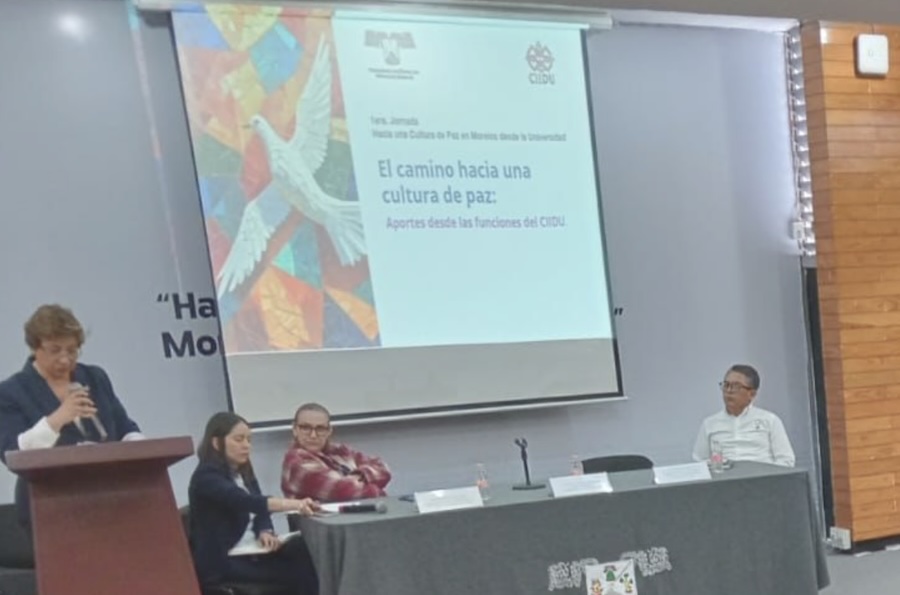
The Cuernavaca City Council, through the Directorate of Migration and Religious Affairs, held the first University Conference on a Culture of Peace in the State of Morelos, with the purpose of raising awareness among the academic community about the importance of fostering values ​​that strengthen social peace.

(Click here for the Spanish original of this article)

Questions for this article:

How can culture of peace be developed at the municipal level?

Is there progress towards a culture of peace in Mexico?

(continued from left column)

The event took place in the César Carrizales Auditorium of the Autonomous University of the State of Morelos (UAEM), with the participation of 50 attendees, including students, faculty, and researchers. It was supported by the Interdisciplinary Research Center for University Development (CIIDU) and the Human Rights Commission of the State of Morelos.

During the activities, two roundtable discussions were held with specialists, who discussed various psychological, economic, and social factors that influence the construction of a culture of peace, also providing a space for public participation.

As part of a comprehensive strategy promoted by the Cuernavaca City Council, led by Mayor José Luis Urióstegui Salgado, these workshops will continue to be held in the municipality’s educational and community centers, with the goal of fostering an active citizenry in building a comprehensive peace that encompasses all areas, including the social and educational.

– – – – – –

If you wish to make a comment on this article, you may write to coordinator@cpnn-world.org with the title “Comment on (name of article)” and we will put your comment on line. Because of the flood of spam, we have discontinued the direct application of comments.
Burkina Faso: The 5th edition of the “Ambassadors of Peace Awards” will take place on August 1, 2025, with a series of activities

. DEMOCRATIC PARTICIPATION .

An article from Le Faso (translation by CPNN)

The 5th edition of the “Ambassadors of Peace Awards” (APA), an event aimed at recognizing individuals and organizations working to promote peace, patriotism, and social cohesion in Burkina Faso, will be held on August 1, 2025, in Ouagadougou, under the theme: “5 Years of the APA: What’s the Record?” For this edition, in addition to the awards ceremony, activities aimed at supporting national initiatives are planned.

This was announced by the leaders of the Movement for the Culture of Peace and Love of the Fatherland (MPAP), sponsor of the APA, on Tuesday, July 8, 2025, in Ouagadougou, during a press conference dedicated to the event.

The SIAO’s “Soleil Levant” pavilion has been selected for the awards ceremony, on August 1, 2025, starting at 8 p.m. The event will also be broadcast live on Burkina Faso’s national television.

This edition will therefore provide an opportunity to take stock of the APA’s five years of existence, through an assessment of the actions undertaken, the successes achieved, and the challenges to be addressed to improve future editions. It will also, the speakers continued, reaffirm the commitment to working for a peaceful future, a future where love of country and respect for civic values will always guide actions.

For this fifth edition, organizers have planned several activities spread over several days. Starting on July 31st, a panel will be held to review past editions and explore future prospects. “It will also be a time for exchanges between stakeholders involved in peacebuilding, to share their experiences, and analyze the impact of the various themes addressed in previous editions. This event will be a moment of celebration, but also of collective reflection, as it will allow us to lay the foundations for a shared vision for peace and sustainable development in our country,” reads the opening statement read by the president of the organizing committee, Paul-Marie Zoma, who is also vice-president of the MPAP.

The panel will also bring together institutional stakeholders, winners from previous editions, peace specialists, technical partners, and others. The evening will feature the presentation of trophies and certificates. It will also serve as a framework for launching a call for contributions to create a fundraising campaign for the “Faso Mêbo” presidential initiative.

(article continued in right column)

(Click here for the original article in French.)

Question for this article:

The new military governments in Africa: Are they promoting a culture of peace?

(article continued from left column)

“For participation in the Gala, a contribution of 25,000 FCFA per person or 250,000 FCFA for a full table of 10 is requested. An evening for partners and peace ambassadors will be held on August 2nd, starting at 6 p.m. Prior to all these activities, the MPAP plans to visit the headquarters of the Faso Mêbo Presidential Initiative to salute and encourage all those involved in the success and completion of this initiative,” the speakers explained, adding that the partners will also welcome the participation of the winners of all the APA awards.

The awards are organized into trophy categories. The “Grand APA” (Grand APA) recognizes an individual or legal entity who has invested in promoting peace, social cohesion, and community life, and who has had a significant impact on their community through peacebuilding, community building, and social initiatives (e.g., caring for vulnerable people). The second category is the “APA for Patriotism,” which recognizes an individual or legal entity who, through their daily actions, demonstrates a commitment to their country, demonstrated by a desire to defend and promote it through actions in this regard.

The “APA for Leadership” recognizes an individual or legal entity who has a positive influence on their community. The “APA for Commitment to Social Cohesion and Community Life” recognizes an individual or legal entity who is committed to promoting social cohesion and community life through concrete actions and initiatives in their community.

The “APA for Integration,” which recognizes an individual or legal entity, an expatriate residing in Burkina Faso and carrying out actions and activities promoting peace, social cohesion, and harmonious coexistence. This individual is well integrated and contributes to development efforts in their host country, Burkina Faso. They also promote political and socio-cultural integration initiatives.

The “APA of the AES,” which recognizes an individual or legal entity from the AES region (Mali-Burkina-Niger) who is committed to promoting peace, social cohesion, and harmonious cohesion, and who promotes the principles and values on which the AES (Alliance of Sahel States) is founded.

The “APA of Honor,” which recognizes an individual or legal entity who is committed to promoting peace, social cohesion, and harmonious cohesion, and who supports the actions of the MPAP.

In addition to these distinctions, certificates of recognition will be presented to stakeholders and institutions to recognize their ongoing commitment and support for peace-promoting efforts in Burkina Faso, they announced.

The 5th edition of the Ambassadors of Peace Awards is under the patronage of His Majesty Bifaté II, head of the canton of Gaoua and the co-sponsorship of the President and CEO of Sofao Groupe SARL, Hamadé Ouédraogo, also President of the Regional Council of Employers of the Center; of the President and CEO of the Fortuna group, Roch Donation Nagalo, 5th Vice-President in charge of professional and umbrella organizations of the Chamber of Commerce and Industry of Burkina Faso (CCI-BF) and of the President and CEO of Socodifa International, Abdoul Fatao Ouédraogo.

– – – – – –

If you wish to make a comment on this article, you may write to coordinator@cpnn-world.org with the title “Comment on (name of article)” and we will put your comment on line. Because of the flood of spam, we have discontinued the direct application of comments.
Niger: Agadez Mobilizes Its Traditional Chiefs for Peace

. DEMOCRATIC PARTICIPATION .

An article from Journal du Niger (translation by CPNN)

In the vibrant amphitheater of the Maison des Jeunes et de la Culture in Agadez, a major initiative was launched on Thursday, July 10, 2025. Under the chairmanship of Major General Ibra Boulama Issa, Governor of the region, a strategic workshop on the role of traditional leaders in promoting peace, security, and social cohesion was launched with a flourish. Bringing together traditional leaders, prefects, municipal administrators, and prominent figures such as the Sultan of Aïr, His Highness Oumarou Ibrahim Oumarou, this meeting marked a turning point in the mobilization of traditional authorities to build a more united and resilient Niger.

Agadez: Traditional Chiefs, Pillars of Peace and Stability in Niger

Before an audience of dignitaries, including the President of the Regional Office of the Association of Traditional Chiefs of Niger, General Boulama Issa set the tone for a day marked by collective commitment. Indeed, this workshop, initiated by the governorate, aims to equip the traditional chiefs of Agadez with the tools they need to play a central role in fostering a culture of peace, strengthening security, social cohesion, and non-violent conflict management. In a region facing complex challenges—insecurity, community tensions, and illicit activities such as gold mining—this training embodies a bold ambition: to make traditional leaders key players in the rebuilding of the Republic.

Moreover, the governor, in a speech imbued with conviction, emphasized the importance of these traditional figures in the fabric of Niger’s society. “You are the guardians of our values, the relays of our communities. “Your role is essential in promoting peace and supporting the authorities’ efforts in a context where cohesion is our greatest strength,” he said, according to participants. This vision places traditional leaders at the heart of a strategy aimed at anchoring local governance in the region’s cultural and social realities.

(article continued in right column)

(Click here for the original article in French.)

Question for this article:

Can a culture of peace be achieved in Africa through local indigenous training and participation?

The new military governments in Africa: Are they promoting a culture of peace?

(article continued from left column)

Strategic Training: When Ancestral Wisdom Meets Modern Challenges

The workshop, designed as a space for exchange and training, addressed crucial themes. Participants explored strategies to prevent intercommunity conflicts, encourage collaboration with the Defense and Security Forces, and promote dialogue as an alternative to violence. In a region like Agadez, a strategic crossroads in the Sahel, where tensions related to migration, banditry, and armed groups remain prevalent, these skills are vital.

The presence of the Sultan of Aïr, a respected figure and symbol of traditional authority, lent particular legitimacy to the event. Alongside departmental prefects and municipal delegated administrators, he embodied the union between tradition and modernity, an essential balance for meeting contemporary challenges. The discussions also highlighted the role of traditional leaders in intelligence gathering and community outreach, strengthening their position as a bridge between citizens and institutions.

Agadez: A Regional Response to Security and Cohesion Challenges

This workshop is part of a series of initiatives undertaken by the governorate to consolidate stability in Agadez. Following the meeting in Injitan on July 9, where General Boulama Issa engaged with the Ihagaran community on similar issues, this training broadens the scope of regional engagement. By equipping traditional leaders with new skills, the authorities aim to create a network of leaders capable of defusing tensions and promoting harmonious coexistence in a context marked by security and social challenges. Participants also addressed practical issues, such as limited access to communications networks in some rural areas, which hinders coordinated peace efforts. In response, the governor promised to explore solutions to strengthen digital infrastructure, which is essential for security and development.

Niger’s Future: A Country United by Traditional Wisdom and Modern Commitment

In short, the Agadez workshop resonates as a call to unity and action. By placing traditional leaders at the heart of national reconstruction, General Boulama Issa and his team are sending a powerful message: peace and social cohesion are everyone’s business. In a region where tradition is a driving force, this event marks a decisive step in transforming challenges into opportunities.

The echoes of the MJC now resonate throughout Agadez. Newly equipped, traditional leaders are preparing to become the architects of a more peaceful Niger. With the support of the Sultan of Aïr and regional authorities, they also embody the hope of a society where ancestral wisdom and modern commitment converge to build a stable and prosperous future.

– – – – – –

If you wish to make a comment on this article, you may write to coordinator@cpnn-world.org with the title “Comment on (name of article)” and we will put your comment on line. Because of the flood of spam, we have discontinued the direct application of comments.
United States: No Kings, No War, on Pride Day

. HUMAN RIGHTS .

Received at CPNN by email from the Campaign for Peace, Disarmamen and Common Security

Friends,

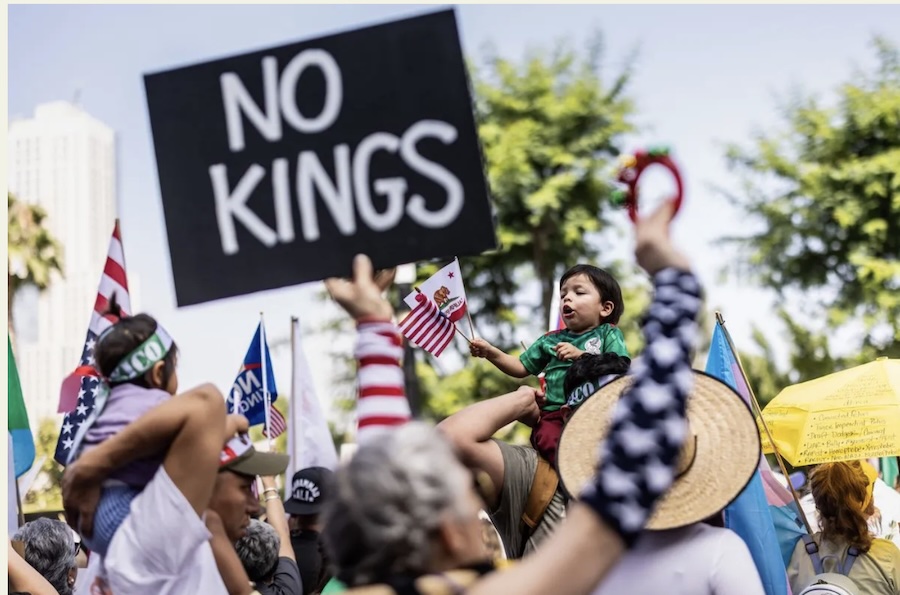
I am writing to everyone on the CPDCS e-list, except those who feel personally vulnerable to unconscionable ICE detentions, to join one of the 1,800 No Kings protests across the country this Saturday.


Map of planned NoKings events

If you had doubts about Trump/MAGA tyrannical ambitions and the threat to democracy, think about Trump’s illegal and totally mobilization of National Guard troops,  the dispatch of Marines to repress protests in Los Angeles, the threat to arrest Governor Newsom or Trump’s stupid birthday gift to himself – his massively expensive and wasteful military parade.

(Article continued in the right column)

Questions related to this article:

The struggle for human rights, is it gathering force in the USA?

(Article continued from the left column)

All this to press his white supremacist mass deportation campaign and to distract media tension from the pathetic Trump-Musk competition for who can be more corrupt and disgusting.

Mass Peace Action, on whose board I serve, has created an excellent announcement with information about how to access and join any one of the 1,800 protests, close to 100 are in Massachusetts alone.

Mass Peace Action – No Kings

This is a critical moment that requires compromises and a united front unity to resist tyranny.

Join Us!

Joseph Gerson
For CPDCS

Find an Event Near You

– – – – – –

If you wish to make a comment on this article, you may write to coordinator@cpnn-world.org with the title “Comment on (name of article)” and we will put your comment on line. Because of the flood of spam, we have discontinued the direct application of comments.
Mediation injects new impetus of peace into a turbulent world

. . DEMOCRATIC PARTICIPATION . .

An editorial from the Global Times

On May 30, the signing ceremony of the Convention on the Establishment of the International Organization for Mediation (IOMed) was held in Hong Kong. Senior representatives from 85 countries and nearly 20 international organizations gathered in the city, and 33 countries signed the convention on the scene and became founding member states.


Photo: www.fmprc.gov.cn

As the world’s first intergovernmental organization dedicated to resolving international disputes through mediation, the IOMed provides a new platform for mediating disputes between countries, disputes over investment between the state and the people of other countries, and international commercial disputes.

The establishment of the IOMed is a historic breakthrough in the international dispute settlement mechanism. For a long time, settlement of international dispute has mainly relied on judicial adjudication and arbitration mechanisms, both of which have certain limitations. Mediation is based on respecting the wills of the parties, and explores win-win solutions through the assistance of a neutral third party, with the final decision made by the disputing parties. Hong Kong’s judicial practice shows that the settlement rate of court mediation cases is about 50 percent, which fully proves the unique value of mediation in resolving complex contradictions. This approach, which contains the wisdom of “harmonious coexistence,” has opened up a new path for dealing with international disputes with large cultural differences and high political sensitivity.

At present, the world is undergoing rapid change of a century, and various contradictions are intertwined. Using a “Cold War” confrontational mindset to deal with various global and regional issues has clearly deviated from the needs of the times and the development trend of the rule of law. In the existing international judicial system, developing countries often face difficulties such as lack of voice, insufficient applicability of rules, and high costs. However, some major countries are accustomed to handling international disputes through unilateral sanctions, often bypassing existing international rules and mechanisms and acting on their own. This not only fails to solve problems, but also gives rise to more contradictions.

(Editorial continued in right column)

Question related to this article:

How can we develop the institutional framework for a culture of peace?

Mediation as a tool for nonviolence and culture of peace

Does China promote a culture of peace?

(Editorial continued from left column)

The international community has never been so eager to resolve disputes peacefully. From the historic reconciliation between Saudi Arabia and Iran in Beijing to the signing of the Beijing Declaration on ending the division by various Palestinian factions, countries have seen the great potential and possibility of resolving differences through dialogue. The birth of the IOMed is timely, and its establishment is an important step in promoting the development of the international order to a more just and reasonable direction.

The IOMed advocates for the peaceful and amicable settlement of international disputes, aiming to build more harmonious international relations and embody an inclusive and pluralistic culture of the rule of law. Against the backdrop of profound adjustments in the global order, the IOMed provides the international community with a public good of global rule of law that is peaceful, just, trustworthy, and efficient.

At the level of international law, the IOMed represents an innovative response to the United Nations (UN) Charter’s principle of peaceful dispute settlement. It breaks through the traditional methods of handling disputes – whether between countries, between countries and investors, or between equal commercial entities – offering the greater flexibility, convenience, lower costs and more effective implementation. At the same time, it complements and enhances existing international dispute settlement mechanisms such as litigation and arbitration, helping to build a more comprehensive and diversified system for resolving international disputes.

Through consultations among the negotiating parties, Hong Kong was agreed to be the headquarters of the IOMed – a strong recognition by the international community of the culture of the rule of law under “one country, two systems.” The return of Hong Kong itself is a successful example of dispute settlement, and its prosperity and stability stand as a testament to the vitality of “one country, two systems.”

With the advantages of both common law and civil law traditions, a mature legal environment, and extensive experience in “super mediation”, Hong Kong – an international metropolis backed by the motherland and connected to the world — offers an ideal environment for the development of the IOMed. This “rising star of international rule of law,” the IOMed, will surely shine in tandem with the “pearl of the orient,” creating a future of shared brilliance.

As the world reaches the crossroads of history, what countries are calling for is not an arena of power, but a dialogue platform that transcends the zero-sum mentality of “you win, I lose” and promotes the friendly settlement of disputes. This is the mission of the IOMed. It carries not only the practical need to resolve disputes, but also the civilized pursuit of eliminating conflicts through dialogue and resolving disputes through consultation. The healthy growth of this seedling of peace requires the care and support of the international community. We welcome more countries to join hands to nurture it.

– – – – – –

If you wish to make a comment on this article, you may write to coordinator@cpnn-world.org with the title “Comment on (name of article)” and we will put your comment on line. Because of the flood of spam, we have discontinued the direct application of comments.
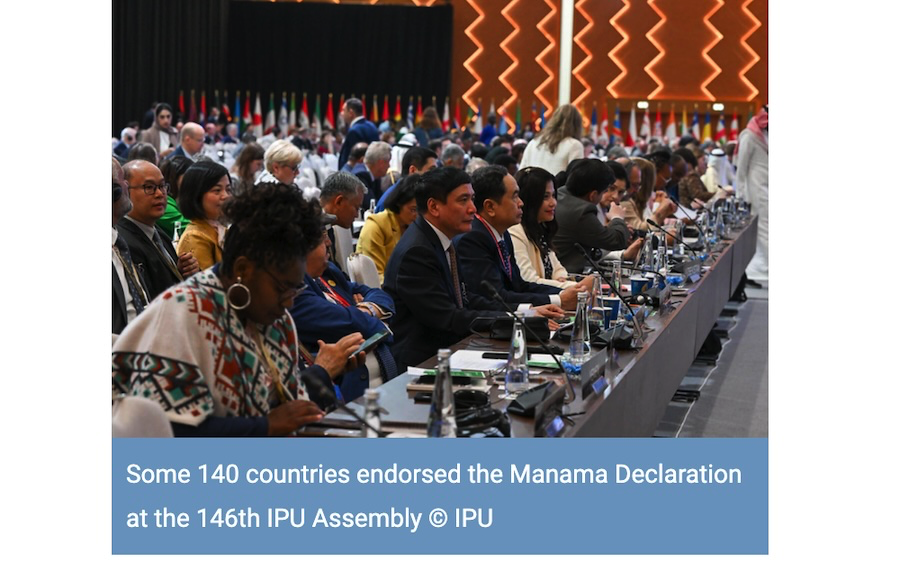
Uruguay: The 5th World Forum of Cities and Territories of Peace

. . DEMOCRATIC PARTICIPATION . .

An article from City of Montevideo (translated by CPNN)

The 5th World Forum of Cities and Territories of Peace: the opening plenary session, which took place at 5:00 p.m. in the West Room of the Antel Arena, featured the participation of the Mayor of Montevideo, Mauricio Zunino, along with the Director of the International Relations Division, Fabiana Goyeneche; the President of UCLG and Mayor of The Hague, Jan Van Zanen; as well as the Undersecretary of the Ministry of Foreign Affairs, Valeria Csukasi; and the Vice President of the Republic, Carolina Cosse, as representatives of the national government. Zunino highlighted the importance of cities and their governance in helping to resolve different types of conflict and urban coexistence, and emphasized inequality as one of the most important factors that generate violence in the world.

The mayor of Montevideo emphasized that these types of broad-based participation events contribute to reflecting on how conflicts are resolved and “other types of violence such as xenophobia, discrimination, gender-based violence, and other ills that exist in cities.”

In the face of these types of situations, city governments can implement a set of actions that integrate processes of reflection, cooperation, and the exchange of good practices. The awarding of the Peace Prize to those cities that have worked and provide adequate solutions to these needs helps to encourage societal transformations.

(article continued in right column)

(Click here for the original Spanish version of this article.)

Question related to this article:
 
How can culture of peace be developed at the municipal level?

(article continued from left column)

Zunino also highlighted the participation of 180 foreign representatives from all continents, which provides an important framework due to the quality and experience of the presentations, in addition to the local contribution. She also highlighted the opportunity to interact with multilateral agencies that take advantage of the meeting to network and coordinate with governments, as well as with civil society organizations that are also participating in the event.

The opening session concluded with a speech by the Vice President of the Eastern Republic of Uruguay, who especially thanked those participating and highlighted the importance of the forum for Montevideo and the country.

In her address, Cosse referred to uncertainty as a fact of current reality but, based on her scientific training, reflected that in scientific work, “uncertainty is the cornerstone of the problem; it’s not a bad thing. You don’t know the solution and you don’t know what it’s about, so uncertainty is normal.” She recalled that uncertainty can “respond to an innovative surge, to an urgent need,” and becomes complex when it doesn’t respond to those needs. In this sense, Cosse asserted that in the face of uncertainty, there are also agreements, such as democracy, “that great social agreement” that provides a framework for resolving conflicts and is “one of the minimum certainties that human beings need.”

Cosse concluded by stating that, just as the truth lies locally, on street corners, in neighborhoods, “there too are the problems, but there too is hope, always, always, no matter how big the problem, if there is hope, it will emerge from there.” She expressed her pride in being part of a government that publicly recognizes the importance of multilateralism and the importance of cities.

The World Forum of Cities and Territories of Peace is one of the two activities taking place within the framework of Montevideo, Destination for Peace: an event that brings together training, exchange, and exhibition, cultural and entertainment opportunities.

Access the thematic axes and activities of the 5th World Forum of Cities and Territories of Peace.

– – – –

If you wish to make a comment on this article, you may write to coordinator@cpnn-world.org with the title “Comment on (name of article)” and we will put your comment on line. Because of the flood of spam, we have discontinued the direct application of comments.
Kurdish language at the forefront of Turkey’s peace process: Recognition demands intensify

… EDUCATION FOR PEACE …

An article from Medyanews

Kurdish Language Day, observed annually on 15 May, was commemorated throughout Turkey with an array of political, cultural and grassroots events calling for formal recognition of Kurdish in education and public life. The occasion mobilised political parties, human rights organisations and community groups across a wide range of cities, from metropolitan centres to Kurdish-majority regions.

The central message was clear: Kurdish must be granted official status and incorporated into Turkey’s education system and administrative institutions as part of the broader democratic transformation that is now under discussion  following the dissolution of the Kurdistan Workers’ Party (PKK).


Click here for video

Statements released by the Democratic Regions Party (DBP), the Peoples’ Equality and Democracy (DEM) Party, the Human Rights Association (İHD), and the Kurdistan National Congress (KNK) collectively framed the absence of Kurdish in public policy as a legacy of cultural repression. These groups underscored that constitutional reforms should guarantee linguistic rights and reflect the multicultural reality of Turkey.

The DBP characterised state policy as institutionally exclusionary:

“The refusal of education in the mother tongue is the clearest manifestation of this century-long hostility,” the party stated, asserting that linguistic justice is fundamental to democratic life.

Similarly, the DEM Party’s Commission on Language, Culture and Arts cited the imprisoned Kurdish leader Abdullah Öcalan’s writings, which conceptualise language as central to both personal and collective identity.

“Language is not merely a vehicle for expression—it is foundational to the continuity and evolution of a people’s political and cultural existence,” the Commission declared.

From the parliamentary floor, DEM Party Group Deputy Chair Gülistan Kılıç Koçyiğit reinforced this position, pointing to past and present restrictions on the public use of Kurdish. She remarked: “A people’s language is the embodiment of their dignity. Repression of linguistic diversity obstructs democratic development and perpetuates inequality.”

Public commemorations were held in cities including Adana, Diyarbakır (Amed), Iğdır (Idîr), Urfa (Riha), Mersin, Ankara and Istanbul. These events featured speeches, music, community statements and visual displays, with participants carrying banners that read “No life without language” and “Our language is our identity”.

In Diyarbakır (Amed), a notable cultural initiative was unveiled: classical Kurdish poetry by figures such as Melayê Cizîrî and Feqiyê Teyran was inscribed on paving stones along a major thoroughfare. The project, coordinated by the municipality’s Department for Language Protection, was intended to bring Kurdish literature into public view and assert its place in the collective urban landscape.

(Continued in right column)

Question for this article:

What is the relation between peace and education?

(Continued from left column)

The Human Rights Association (İHD) marked the day by referencing international human rights standards, asserting that linguistic repression constitutes a violation of cultural rights. In their statement, they recalled the case of Vedat Aydın, a leading Kurdish politician who was assassinated after publicly using his native language, highlighting the risks historically faced by defenders of linguistic freedom.

Kurdish Language Day commemorates the publication of Hawar magazine on 15 May 1932, edited by the Kurdish intellectual Celadet Alî Bedirxan. The magazine marked a pivotal moment in the codification and standardisation of the Kurdish language and helped promote Kurdish as a literary and educational medium.

Hawar was the first publication to use a Latin-based alphabet for Kurdish, a decision that played a key role in modernising the language and expanding its use in both cultural and political spheres. The date has since become a symbolic occasion for asserting the linguistic and cultural rights of the Kurdish people. The magazine played a formative role in the standardisation of the Kurdish language, building upon earlier efforts such as the 1898 newspaper Kurdistan. These publications laid the groundwork for a modern Kurdish literary and political consciousness.

The 2025 observances took place within a newly developing political context. The PKK declared on 12 May that it would dissolve its armed structures and transition towards non-violent democratic engagement. This historic decision has effectively dismantled one of the Turkish state’s main justifications for restricting Kurdish cultural rights—namely, the association between Kurdish identity and insurgency.

With this pretext removed, Kurdish political actors argue that the continued ban on Kurdish in public education and administration is no longer tenable and must now be seen for what it is: a form of cultural exclusion. Legal recognition of the Kurdish language has since emerged as a central demand within the redefined peace framework, alongside broader calls for structural reform.

Following the PKK’s declaration that it would dissolve its armed structures and seek a democratic resolution, the peace process has become a renewed focus for Kurdish political and civic initiatives. Legal recognition of the Kurdish language has since emerged as one of the central demands accompanying calls for structural reform.

Cities in Turkey’s Kurdish-majority southeast—commonly referred to by Kurds as North Kurdistan (Bakur)—continue to be hubs of cultural production and mobilisation. Local institutions and activists have played a pivotal role in preserving Kurdish heritage and resisting assimilationist policies.

Despite these efforts, Kurdish remains effectively excluded from the formal education system and is not employed in state institutions. While limited elective courses and symbolic acknowledgements exist, the absence of structural guarantees has sustained what many describe as a regime of cultural erasure.

Linguists, educators, and community leaders have argued that this undermines linguistic vitality, intergenerational transmission, and collective memory.

Kurdish political actors and civil society organisations are now placing increased pressure on the Turkish government to abandon restrictive policies and embrace a model of inclusive governance.

Within the scope of the peace process launched in October 2024, they assert that cultural recognition must be prioritised. For them, recognising Kurdish as a constituent part of the country’s national identity is not only a question of justice but a prerequisite for sustainable peace and coexistence.

– – – – – –

If you wish to make a comment on this article, you may write to coordinator@cpnn-world.org with the title “Comment on (name of article)” and we will put your comment on line. Because of the flood of spam, we have discontinued the direct application of comments.

AFSCME, United States: It’s Time to Get Organized

. . DEMOCRATIC PARTICIPATION . .

An article from the American Federation of State, County and Municipal Employees Union

[Editor’s note: An excellent article about the AFSCME initiative by Fortune Magazine may be found here.]

In 1968, when Dr. King addressed AFSCME-represented sanitation workers during their historic strike in Memphis, Tennessee, he said that “only when it is dark enough, can you see the stars.”

These are some dark times for our country. Elon Musk, billionaires and anti-union extremists have amassed more power than ever before – and they’ve been granted free reign to implement the radical Project 2025 agenda.

AFSCME is fighting back. Already, our lawsuits have helped reverse the illegal firings of thousands of federal workers, including AFSCME members.

But the illegal attacks on federal civil servants are just the tip of the iceberg. An even bigger threat now looms over public service workers, at every level.

The House has passed a budget resolution that sets the stage for nearly a trillion dollars in cuts to Medicaid, Medicare and other federal programs – all to pave the way for even bigger tax breaks for billionaires.

These cuts won’t just rip away health care from millions of seniors, children, Americans with disabilities and working families. They will starve state and local budgets of critical federal funding for hospitals, schools, nursing homes, prisons, transit systems, and all the essential services AFSCME members provide in our communities every single day.

These cuts also would stack the deck against public service workers headed into contract negotiations. The cuts could lead to pay cuts, furloughs and hiring freezes. Our jobs, hard-won benefits, and retirement security are threatened. Our workplace health and safety and even our right to form a union are under attack.

(article continued in right column)

Question related to this article:
 
What is the contribution of trade unions to the culture of peace?

(article continued from left column)

The billionaires behind this agenda don’t understand the first thing about what working people go through or why anyone would pursue a career that’s about serving others instead of getting rich.

Indeed, Elon Musk himself – the richest man in the world – has spread online propaganda comparing public service workers to genocidal murderers like Hitler at the very same time he’s pushing for massive cuts to vital public services relied on by seniors, veterans, children, and millions of Americans.

But as Dr. King reminds us, we are not lost in the darkness. Mobilizing and organizing to grow our union’s power has always been AFSCME’s North Star, and that is exactly how we’re going to fight back now.

AFSCME has launched a new campaign, called Get Organized, or AFSCME GO.

The GO campaign is all about making sure everyone in the AFSCME family understands what’s at stake in this fight. It’s about standing up to the billionaires and anti-union extremists trying to steal our power, and defeating any efforts to gut Medicaid, Medicare, and Social Security.

Through Get Organized, we will bring more workers without a voice on the job into the AFSCME family. We will increase engagement among current working members and retirees alike, empowering everyone to build on AFSCME’s proud legacy of activism.

We have faced big challenges before. The billionaires behind the Supreme Court’s decision in Janus v. AFSCME tried to take us out of the ball game completely, but they failed. They failed because they underestimated AFSCME members and our capacity to organize, mobilize and grow. They underestimated Americans’ overwhelming support for unions that give workers a seat at the table and a voice on the job. And they are underestimating us once again.

The battle lines have been drawn. We may not win every fight, but we will emerge stronger than ever before.

Turning crisis into opportunity. Turning defense into offense. It is the AFSCME way. It’s time to fight back. It’s time to get organized.

– – – – – –

If you wish to make a comment on this article, you may write to coordinator@cpnn-world.org with the title “Comment on (name of article)” and we will put your comment on line. Because of the flood of spam, we have discontinued the direct application of comments.