Category Archives: WOMEN’S EQUALITY

Final declaration of NADA (Regional Democratic Women’s Coalition in the Middle East and North Africa) congress

. . WOMEN’S EQUALITY . .

An article from Women Defend Rojava

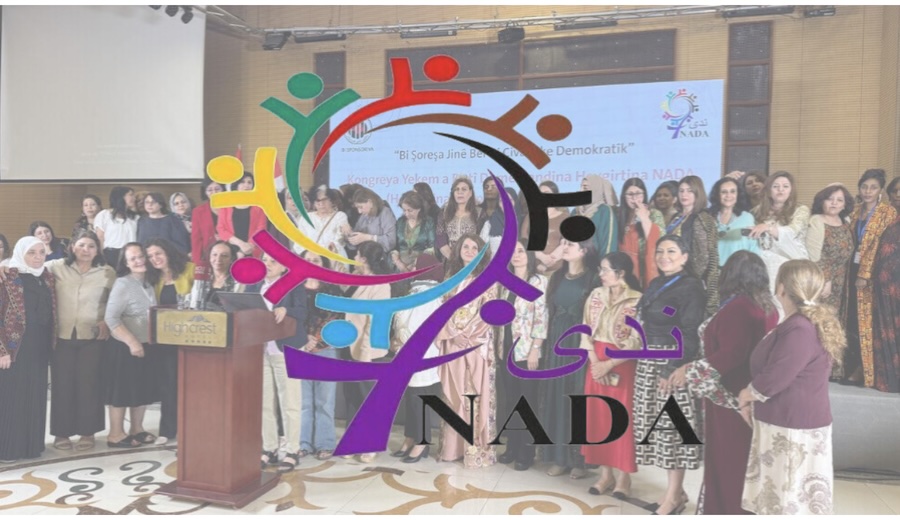
The first congress of the Regional Democratic Women’s Coalition in the Middle East and North Africa (NADA) took place in Suleymaniya [Iraq] on May 15th, 16th, and 17th, 2025. Around 200 women from 19 different countries participated, including representatives from Kurdistan, Afghanistan, Palestine, Iran, and others.

This congress was a strategic event for women and society in the Middle East and North Africa, as well as an important step toward building a global women’s confederation. Below is the final declaration of the congress.

“We are currently undergoing a period of significant transformation, marked by dramatic changes in all areas and unfolding amid intense developments at both the regional and international levels. While unjust policies and practices have deepened the devastating impact of these transformations on women, they have also opened up new and significant opportunities.

In this context, the NADA Alliance held its first post-foundation congress on May 15–17, 2025, in the city of Sulaymaniyah in the Kurdistan Region of Iraq, under the slogan ‘Towards a Democratic Society Based on Women’s Revolution.’ The congress brought together hundreds of women activists, organizations, and institutions from across the Middle East and North Africa (including Palestine, Lebanon, Jordan, Egypt, Tunisia, Morocco, Somalia, Sudan, Yemen, Mauritania, Iraq and the Kurdistan Region, Turkey, Iran, Syria, and Afghanistan). The participation of women from Arab, Kurdish, Syriac, Assyrian, Armenian, Amazigh, Persian, Afghan, and Yazidi (Êzidî) communities represented the unity of women across the region’s immense cultural diversity.

The congress sessions focused on core theoretical issues related to the exclusion and injustice faced by women in the Middle East. The third world war currently unfolding in the region was described as a silent genocide against women: massacres, forced displacement, abduction, and the use of women as tools of war, as seen in the atrocities committed against Yazidi women in Shengal in 2014, or in the ongoing devastation in Palestine over the past year and a half. Similar atrocities are taking place in Sudan and Yemen. These brutal wars are not only the product of democracy-deprived nation-states, but also the result of global capitalism’s alliance with local political-religious powers. These dynamics, compounded by patriarchal laws, constitutional frameworks, and regressive social values, have further marginalized women.

The congress also addressed the historical legacy of women’s resistance and their struggle to uphold this legacy amid today’s crises. Women have never stepped back; on the contrary, they have forged a powerful connection between the matriarchal culture of the past and the goals of contemporary struggle. The women’s revolutions in Rojava, Sudan, Yemen, and Tunisia, as well as the “Jin, Jiyan, Azadî” (Woman, Life, Freedom) uprising in Iran and Eastern Kurdistan (Rojhilat), are vivid examples of this continuity. The congress emphasized that a society based on women’s freedom must be built upon a shared life rooted in equality between men and women.

Participants thoroughly evaluated the current state of the women’s struggle, the challenges it faces, and the opportunities that lie ahead. The discussions emphasized the importance of seizing available resources and historical openings to strengthen efforts toward building peace and establishing a democratic society rooted in the women’s revolution. It was also stressed that regional alliances among women must be reinforced, and the need for collective resistance against patriarchal and anti-woman neoliberal coalitions was highlighted. The congress further underlined that women must have access to legal, constitutional, and security-based protection and defense mechanisms, particularly in times of war and conflict.

(Article continued in right column)

Questions related to this article:

Do women have a special role to play in the peace movement?

(Article continued from left column)

The congress emphasized that in response to the political dynamics of the third world war, it is essential to develop a unified political struggle led by women and to build global women’s networks that can carry forward the universal legacy of women. The NADA Alliance was highlighted as a driving force in continuing the passionate women’s revolution under the slogan “Jin, Jiyan, Azadî”.

On the third day of the congress, participants reviewed the past activities of the NADA Alliance, defined its strategic objectives, and established seven specialized committees to implement the alliance’s projects.

Participants reached a consensus on the following points:

– To strengthen the NADA Alliance as a comprehensive women’s platform grounded in human rights, embracing the Convention on the Elimination of All Forms of Discrimination Against Women (CEDAW), the Istanbul Convention, United Nations Security Council Resolution 1325 on Women, Peace and Security, and relevant regional protocols.

– To adopt the Rojava and North and East Syria Women’s Revolution Document and the Charter of the Global Democratic Women’s Confederation as core references of the NADA Alliance, thereby reinforcing international solidarity among women.

– To enhance women’s organization and resistance for a society based on freedom, a life shared in equality between women and men, democracy, and social justice.

– To struggle for a democratic society and peace built on individual freedom, free from extremism, and from ethnic, religious, or sectarian divisions.

– To support Abdullah Öcalan’s Call for Peace and Democratic Society, which centers on women’s freedom.

– To demand the release of women prisoners held in the jails of occupying forces and authoritarian regimes.

– To stand in solidarity with the resistance of Yazidi women and offer support for their struggle.

– To provide both national and international support to women’s resistance in the face of war, occupation, genocide, displacement, demographic engineering, and sexual violence occurring across the Middle East and North Africa, particularly in Palestine, Sudan, Syria, and Yemen.

– To establish networks among women’s organizations, promote the sharing of ideas, visions, and experiences, and address women’s issues as a transnational human cause.

– To ensure women’s active participation in political decision-making processes and to strengthen their intellectual and social capacities.

– To expand the work of the NADA Alliance through its local committees in each country and to reinforce joint actions on both local and regional levels.

– To build a women-centered, independent media that amplifies women’s issues and counters the male-dominated media narrative that degrades women.

Long live the free women’s struggle in the Middle East and North Africa!

Long live the women’s revolution! (Woman, Life, Freedom – Jin, Jiyan, Azadî)

Regional Democratic Women’s Alliance (NADA Alliance)”

– – – – – –

If you wish to make a comment on this article, you may write to coordinator@cpnn-world.org with the title “Comment on (name of article)” and we will put your comment on line. Because of the flood of spam, we have discontinued the direct application of comments.

Urgent Call for Peace Launched by Indian and Pakistani Feminists

. . WOMEN’S EQUALITY . .

An article from Presse Gauche (translation by CPNN)

We, feminists of India and Pakistan, unequivocally welcome the ceasefire declared by our two nations today. The tension and escalation of the past two weeks remind us how fragile peace is. The ceasefire also vindicates the calls for de-escalation and peace made by thousands of ordinary people on both sides of the border. While we hope for an absolute cessation of hostilities, we are mindful of recent events.

From Between the lines and the words
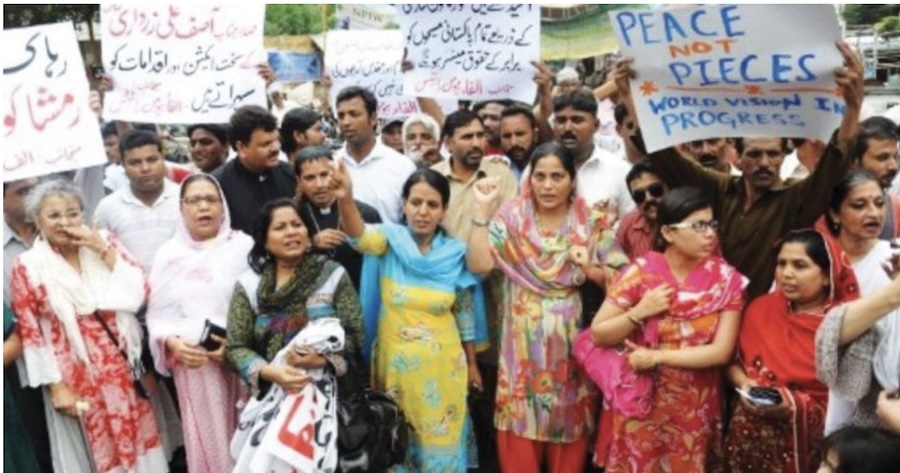
The ceasefire is only the first step in the long march towards justice and peace.

We condemn the Pahalgam terrorist attack that killed 25 tourists from different parts of India and one from Nepal who came to visit Kashmir. A local person also lost their life in the Pahalgam attack. These targeted attacks have widened the communal divide between Muslims and Hindus in India and have been exploited to incite hatred, fear, and collective punishment.

In the aftermath of the Pahalgam attack, it is women—including mothers, daughters, sisters, and wives—who bear the unbearable burden of grief. Instead of respecting and sharing it, it has been weaponized and subjected to police surveillance—especially when people refuse to follow the script of hate.

Himanshi Narwal, the young widow of one of the slain victims, is among the survivors who, despite unimaginable pain, found the strength to call for peace. She asked people not to direct their rage at Kashmiris and Muslims who, like her, are trapped in a cycle of violence they did not create. For this simple act of humanity, she was trolled, vilified, and attacked by lurking nationalists more devoted to bloodlust than truth.

Linking the terrorist attack to Pakistan, India immediately suspended the Indus Waters Treaty and resumed hydroelectric projects and dam construction previously restricted by the treaty. Both sides canceled short-term visas for visitors. We witnessed heartbreaking scenes at the Attari-Wagah border, where Indian and Pakistani women with the “wrong” passports were forced to hand over their children to their husbands before crossing into “their countries,” causing unfathomable distress for the women themselves, their children, and their families. Fourteen days later, India carried out airstrikes and Pakistan retaliated, followed by drone strikes from both sides.

Disinformation campaigns on both sides made the truth difficult to ascertain. One thing is certain: the loss of life, widespread fear, and escalating violence add to the potential terror of the grave and irreversible consequences that tensions between the two nuclear powers could have for populations throughout South Asia.

As feminists, we are fundamentally against war and militarism. We denounce the war economy that thrives on violence and destruction, as well as the deeply patriarchal structures that fuel and sustain it. The fact that the Indian operation was dubbed Sindoor, a deeply patriarchal gesture, is a stark reminder of the misogynistic propaganda employed by both sides. Between loved ones, there are also many other private and specific symbols, of which Sindoor, for some women, could be one. But when Sindoor becomes a battle cry, it erases and weaponizes pain, and reduces women to bodies upon which masculinist nationalist fantasies of conquest, violence, and rape are constructed.

(Article continued in right column)

(Click here for the original article in French).

Questions related to this article:

Do women have a special role to play in the peace movement?

(Article continued from left column)

The past year has been marked by a surge in violence around the world, with devastating images from Gaza and other conflict zones becoming a daily occurrence, tragically desensitizing many to the true horrors of armed conflict. The Indian and Pakistani governments and opinion makers appear oblivious to the catastrophic consequences of war and the immense devastation it would cause. Only those who manufacture and sell weapons systems to our governments will profit from war. War reinforces, exacerbates, and perpetuates existing inequalities, disproportionately affecting women, sexual and religious minorities, and children. These hostilities distract from what people really need: education, health, employment, social protection, security, and well-being.

We, feminists from India and Pakistan, firmly believe that war is never a solution. We call for the dismantling of power structures that fuel violence. The logic of war—rooted in nationalism, toxic masculinity, and colonial-era borders—must be rejected. In both countries, women activists, journalists, and peacebuilders have long advocated for dialogue, de-escalation, and diplomacy. Yet our voices are consistently sidelined and overwhelmed by the inflammatory rhetoric and assertive militarism that dominate the public sphere.

We call on the governments of India and Pakistan to:

* Consolidate the May 10 ceasefire, renounce cross-border violations, and defuse rising tensions by keeping channels of communication open;

* Jointly launch an investigation, with international representatives, into the Pahalgam attack to bring the perpetrators to justice.

* Refrain from unilateral actions such as the termination of the Indus Waters Treaty;

* Prioritize and engage in dialogue and diplomacy to resolve differences;

* Work towards resolving the central political issue of Kashmir, which is at the heart of the conflict.

We urge feminists around the world to raise their voices in solidarity and join us in resisting war and building peace. There is no time or space for complacency.

Saheli Women’s Resource Centre, New Delhi, India; Women’s Action Forum (WAF), All Chapters, Pakistan; Aurat March, Lahore, Pakistan; All India Democratic Women’s Association, India.

Individual endorsements (in alphabetical order): Abha Bhaiyya, Aisha Gazdar, Amar Sindhu, Amrita Chhachi, Anita Pinjani, Anuradha Banerji, Arfana Mallah, Avantika Tewari, Ayesha Kidwai, Beena Sarwar, Chayanika Shah, Devangana Kalita, Elaine Alam, Farrah Taufiq, Farida Shaheed, Gulbadan Javed, Haseen Musarat, Huma Ahmed-Ghosh, Humaira Rahman, Iram Hashmi, Kalyani Menon Sen, Kavita Krishnan, Kausar Khan, Khawar Mumtaz, Lalita Ramdas, Madhu Bhushan, Maimoona Mollah, Malka Khan, Maria Rasheed, Mariam Dhawale, Meera Sanghamitra, Nageen Hyat, Naheed Aziz, Najam Panhwar, Natasha Narwal, Naseem Jalbani, Nasim Jalbani, Nasreen Azhar, Neelam Hussain, Nighat Said Khan, Nivedita Menon, Nuscie Jamil, Nuzhat Shirin, Pamela Philipose, Pratiksha Baxi, Raheema Panhwar, Rashida Dohad, Riffat Aziz, Rita Manchanda, Ritu Menon, Roshmi Goswami, Rozina Junejo, Rukhsana Rashid, Saba Gul Khattak, Safia Noor, Salima Hashmi, Samina Jabbar, Samina Omar Asghar Khan, Shabnam Hashmi, Shad Begum, Sheeba Chhachi, Shahnaz Rouse, Simi Kamal, Smita Gupta, Soonha Abro, Sumaira Ishfaq, Syeda Hamid, Tahira Abdullah, Tasneem Ahmar, Uma Chakravarti, Urvashi Butalia, Uzma Noorani, Vani Subramanian, Vanita Mukherjee.
– – – – – –

If you wish to make a comment on this article, you may write to coordinator@cpnn-world.org with the title “Comment on (name of article)” and we will put your comment on line. Because of the flood of spam, we have discontinued the direct application of comments.
Turkey: Peace Mothers to mothers of soldiers and police officers: “Let there be no tears on either side”

. . WOMEN’S EQUALITY . .

An article from Bianet

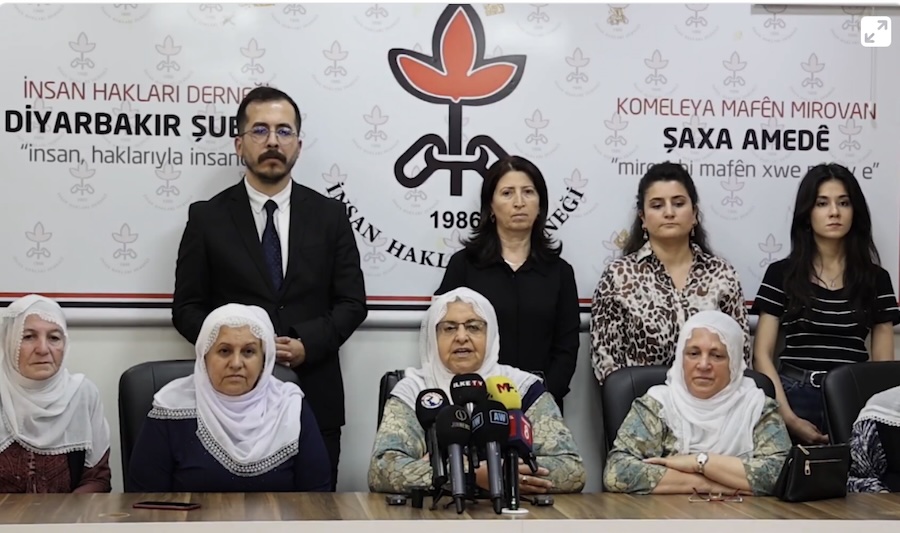
Following the PKK’s decision to disband and lay down arms, the Mothers for Peace Assembly issued a statement regarding the “Peace and Democratic Society Process.”

The announcement, made at the Diyarbakır branch of the Human Rights Association (İHD), was attended by numerous lawyers and human rights defenders alongside the Peace Mothers.


Photo: Diyarbakır İHD / X

Who are the Peace Mothers?

The Peace Mothers are a women’s civil rights group in Turkey, mainly Kurdish women, who advocate for peace between Turkey’s different ethnic groups, especially regarding the conflict between the Turkish state and the Kurdistan Workers’ Party (PKK). Many of these mothers have lost children or other relatives in the conflict, or have children in prison, and they use non-violent means like protests and vigils to call for an end to the fighting.

(Article continued in right column)

Questions related to this article:

Do women have a special role to play in the peace movement?

(Article continued from left column)

“No more dead bodies”

Havva Kıran, spokesperson for the Mothers for Peace Assembly, called for a bilateral ceasefire: “A ceasefire cannot be one-sided – it must involve both parties. As mothers, we appeal to the state, the president, and leaders – everyone must act. This process has given hope to both Kurds and Turks. Let their planes stop bombing Kurdish lands. No more dead bodies. Let the tears of Turkish and Kurdish mothers cease.”

“Let there be no tears on either side”

Kıran noted that “the state has yet to take a promising step” and addressed mothers of soldiers and police, urging them to join hands for peace:

“Only the Kurdish side has taken steps. They’ve laid down their arms, held their congresses. They’re ready for peace. As Peace Mothers, we call on the mothers of soldiers and police – hold hands with us. Let no more mothers’ hearts ache. Let us hold hands and bring peace.  Let there be no tears on either side. Let us bring peace to Turkey and live together. Let us strengthen those who are willing to shoulder the responsibility for peace.”

“You too must take a step”

“The end of war is now peace. War leads nowhere. There’s no alternative – peace must prevail. A grieving mother doesn’t say, ‘I’ve given one child, I’ll give another.’ Let us live freely and in peace in this country. Everyone has the right to live and speak their own language – but Kurds are denied this right. We opened the path for this process – now you must take a step. We want not war, but calm and peace.”

– – – – – –

If you wish to make a comment on this article, you may write to coordinator@cpnn-world.org with the title “Comment on (name of article)” and we will put your comment on line. Because of the flood of spam, we have discontinued the direct application of comments.
Pope Francis tried to change the Catholic Church for women, with mixed success

. . WOMEN’S EQUALITY . .

An article from The Conversation

Pope Francis, the head of the Catholic Church, died on Easter Monday at the age of 88. On Easter Sunday, he used his message and blessing to appeal for peace in Middle East and Ukraine.

Pope Francis will be remembered as a pastoral leader who cared deeply about the environment and those impacted by migration, poverty and war.

During his Pontificate, he did make important changes to the patriarchal structure of the Catholic Church – but did he go far enough?


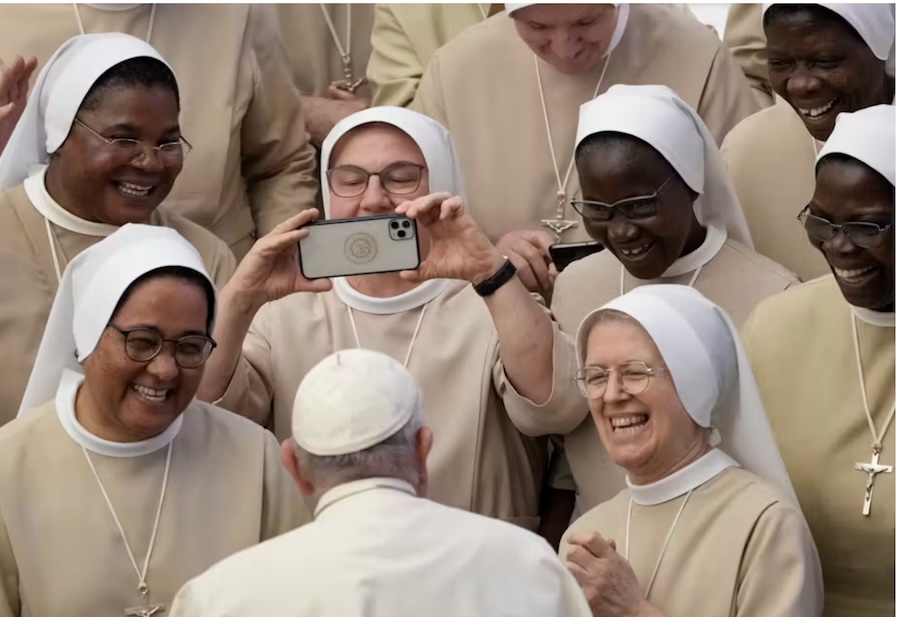
Pope Francis meets a group of nuns at the Vatican. Andrew Medichini/AP

A pope for all?

Throughout his papacy, Pope Francis highlighted the struggles of women  in society. He took important steps to expand opportunities for women in the church and address its patriarchal structure.

This was showcased by his inclusion of women in the 2024 synod  (a global meeting of the whole church, represented by bishops) and his granting of voting  rights for 57 women out of a total of 368 attendees.

His appointment of around 20 women  to positions of authority in the Vatican is unprecedented.

This includes the recent 2025 appointment  of an Italian religious sister, Simona Brambilla, to lead a Vatican department.

During his papacy, Pope Francis also strongly supported the ongoing involvement of women in positions of leadership in the Roman Curia (the governance body of the church).

At local levels, in parishes, he made it possible for women to be formally appointed to the positions of catechist and lector  – roles previously reserved for men.

He also emphasised a need for more women to study and teach theology.

An ‘urgent challenge’

However, these changes barely scratched the surface  of securing full equality for women in the Catholic Church.

Pope Francis himself stated  women still encountered obstacles, and opportunities for women to participate were under-utilised by local churches.

In his autobiography, published in January this year, he wrote of the “urgent challenge” to include women in central roles at every level of church life.

He viewed this move as essential to “de-masculinising” the church and removing the problem of clericalism.

Importantly, the reasoning that underpins women’s limited role in the life of the church remains unchanged.

In particular, Pope Francis referred to gender stereotypes and supported the theology of complementarianism (a view that women are different but equally valued, where their central contribution is to motherhood, femininity and pastoral care responsibilities).

(Article continued in right column)

Questions related to this article:

Prospects for progress in women’s equality, what are the short and long term prospects?

(Article continued from left column)

While Pope Francis was genuinely committed to dialogue about and with women, his legacy remains contradictory.

Equality is still lacking

Women have been appointed to administrative and management positions, but decision making and ministry still largely rest with clerical men.

Pope Francis’ emphasis on the “feminine nature” women bring to roles, rather than their gifts and talents, limited women.

And although he called out discrimination against women in broader society, he expressed opposition to contemporary feminism, which he titled “gender ideology” and “machismo with a skirt”.

Moreover, despite ongoing discussions, Pope Francis appeared to be unresponsive to calls for a greater role for women in ministry.

Women cannot preach during Mass or be ordained to the priesthood or deaconate, despite multiple attempts by Catholic reform groups to advocate for women’s inclusion.

The 2023  International Survey of Catholic Women, which surveyed more than 17,000 Catholic women from 104 countries and eight language groups, found women across the world were keen for church reform that recognises women’s leadership capacities and ongoing contribution to church communities.

More than eight in ten (84%) of the women surveyed supported reform in the church. Two-thirds (68%) agreed women should be ordained to the priesthood, and three-quarters (78%) were supportive of women preaching during Mass.

The survey reported  on the deep frustration and despair women experienced for not having their gifts and talents recognised.

Women also stated they are dissatisfied with the burden of labour they carry in the church.

In this regard, Pope Francis did not address the financial burdens and exploitation of Catholic women who work for the church without adequate recognition or pay. This leaves women, particularly those working in parishes, open to exploitation.

More worryingly, decades after cases of abuse  were reported to the Vatican, Pope Francis publicly acknowledged  that women, particularly nuns, were significantly affected by spiritual and sexual abuse.

While this recognition is important, church responses to abuse remain inadequate and more needs to be done to safeguard women in pastoral settings.

With regard to sexual and reproductive decision-making, the International Survey of Catholic Women found the majority of respondents wanted more freedom of conscience around such issues. This is because when they are denied by church law, women’s agency was diminished and their vulnerability to situations of gendered violence increased.

The papacy of Pope Francis has made no reforms in this area, leaving many Catholic women frustrated and disappointed.

Hope for the future?

More than 60 years ago, Vatican II generated hope for change among Catholic women.

Pope Francis reignited that hope, and listened. But responses have been too slow and Catholic women are still waiting for genuine reform.

– – – – – –

If you wish to make a comment on this article, you may write to coordinator@cpnn-world.org with the title “Comment on (name of article)” and we will put your comment on line. Because of the flood of spam, we have discontinued the direct application of comments.
International Women’s Day: Europe

. WOMEN’S EQUALITY . .

A press survey by CPNN

Here are the photos from Europe.

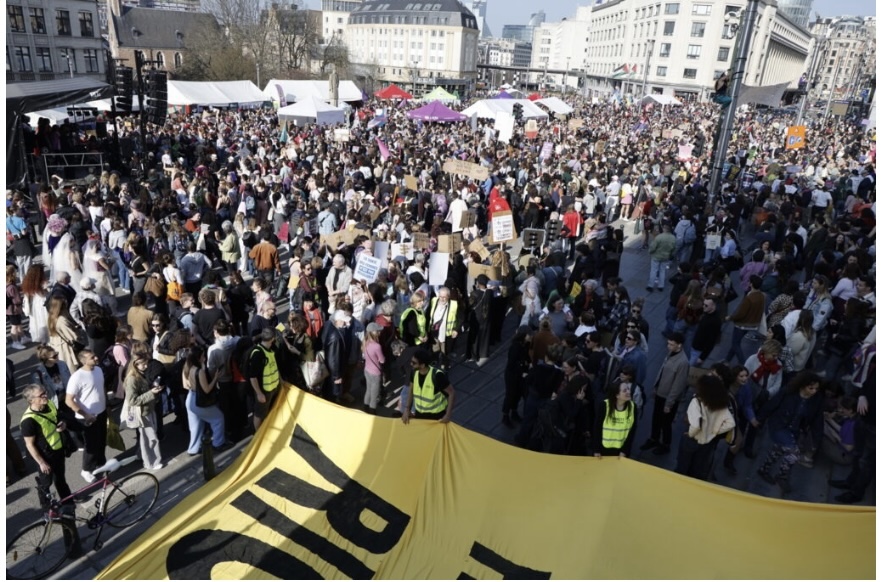
BELGIUM, BRUSSELS

Organised by the feminist and anti-capitalist movement World Women’s March Belgium, the demonstration aimed to highlight the “alarming decline” in women’s rights and the “shift to the political right” in society.
(Brussels Times)

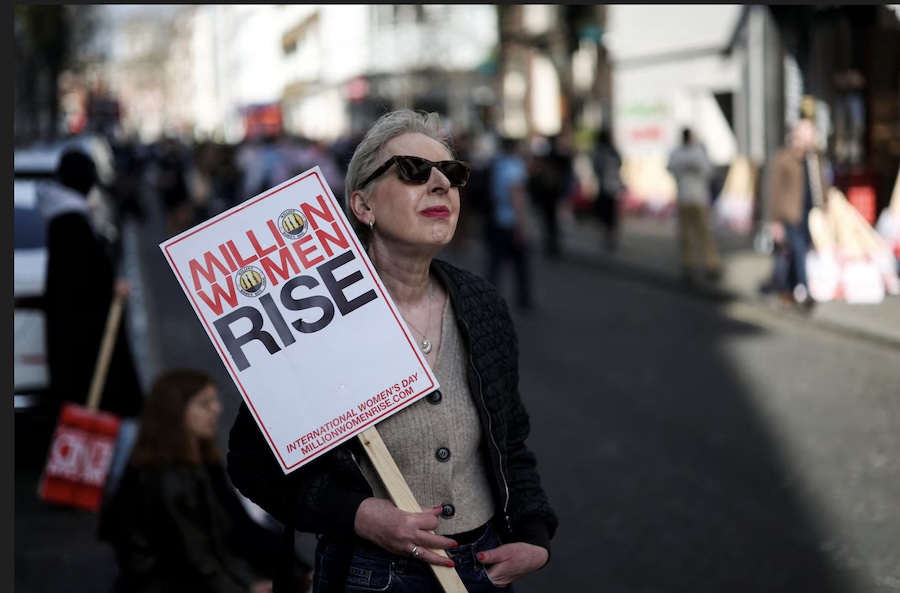
ENGLAND, LONDON

A woman carries a placard, on the day of the Million Women Rise march, during the International Women’s Day in London, Britain, March 8. REUTERS/Hannah McKay.
(Reuters)

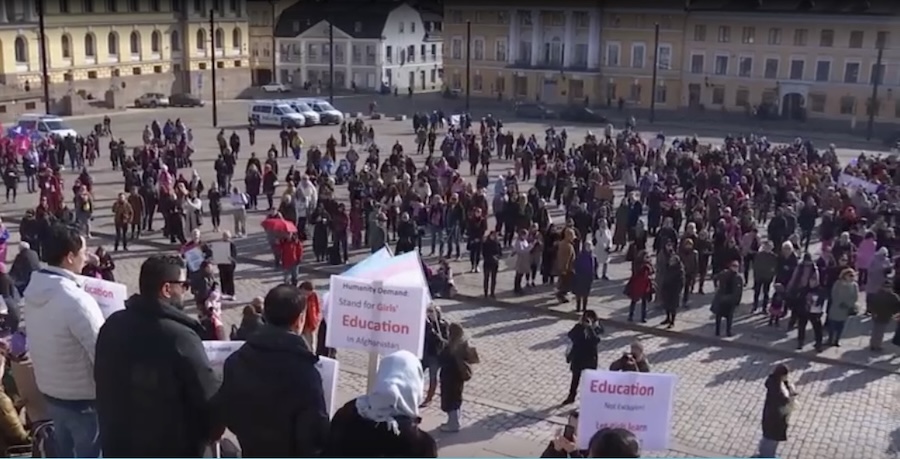
FINLAND, HELSINKI

Women’s Day march in Helsinki calls for concrete action on gender equality. The event aimed to urge parliamentary parties to commit to advancing the rights of women, girls and minorities. (Yle)

FRANCE, MARSEILLES

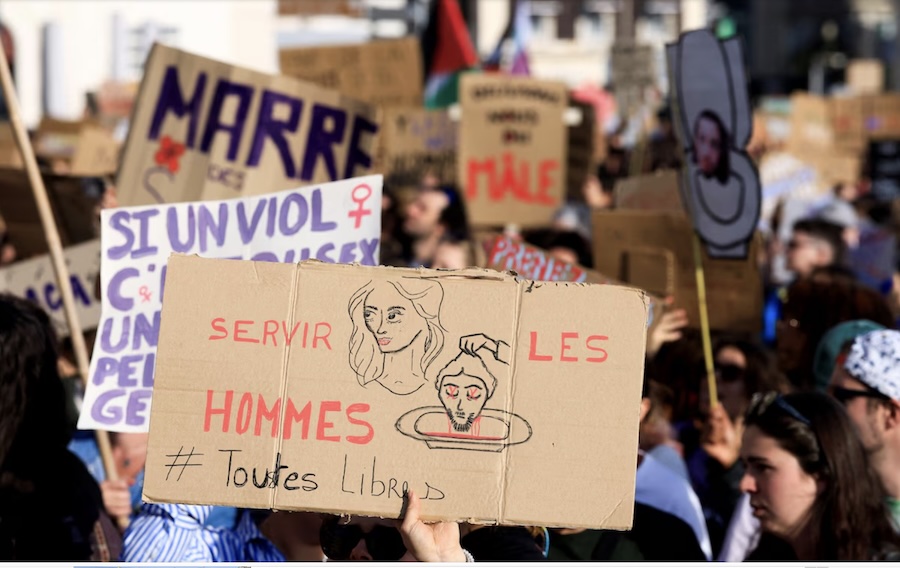
A woman holds a sign reading “Serve men, everything for free!” during a demonstration demanding gender equality and an end to violence against women on International Women’s Day in Marseille. (REUTERS/Manon Cruz).
(Infobae)

FRANCE, PARIS

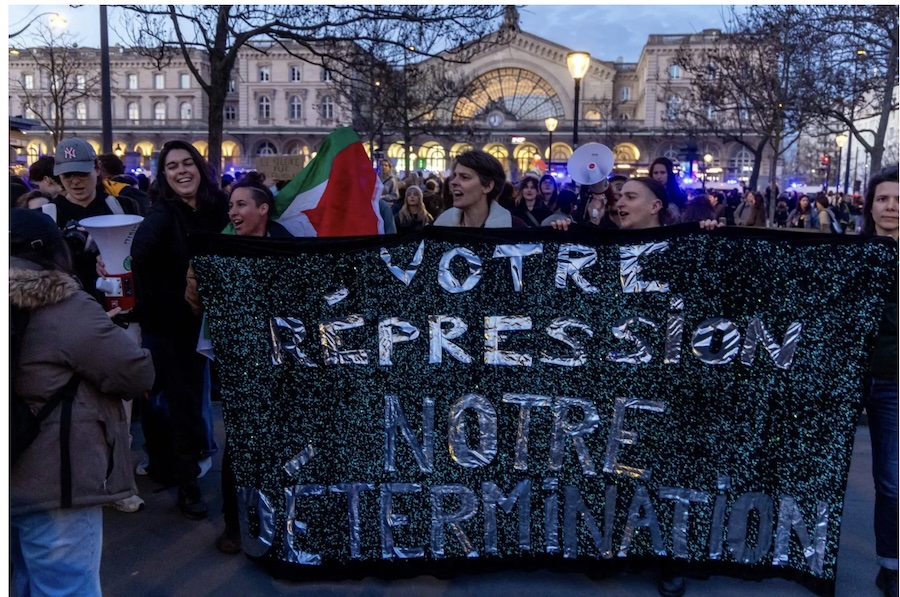
Activists behind a banner reading “your repression is our determination” as radical feminist organizations take part in a night march in solidarity with Palestinian women on the eve of the International Women’s Day in Paris, France, Mar. 7, 2025. EFE/EPA/CHRISTOPHE PETIT TESSON.
(EFE)

GERMANY, BERLIN

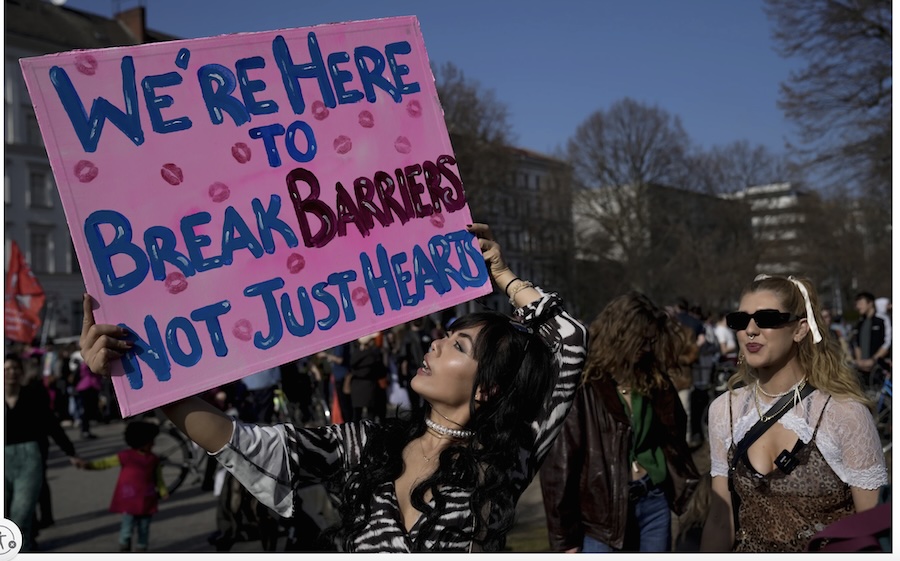
A woman holds up a placard during an International Women’s Day demonstration in Berlin, Germany, Saturday, March 8, 2025. (AP Photo/Ebrahim Noroozi).
(Associated Press News)

GREECE, ATHENS

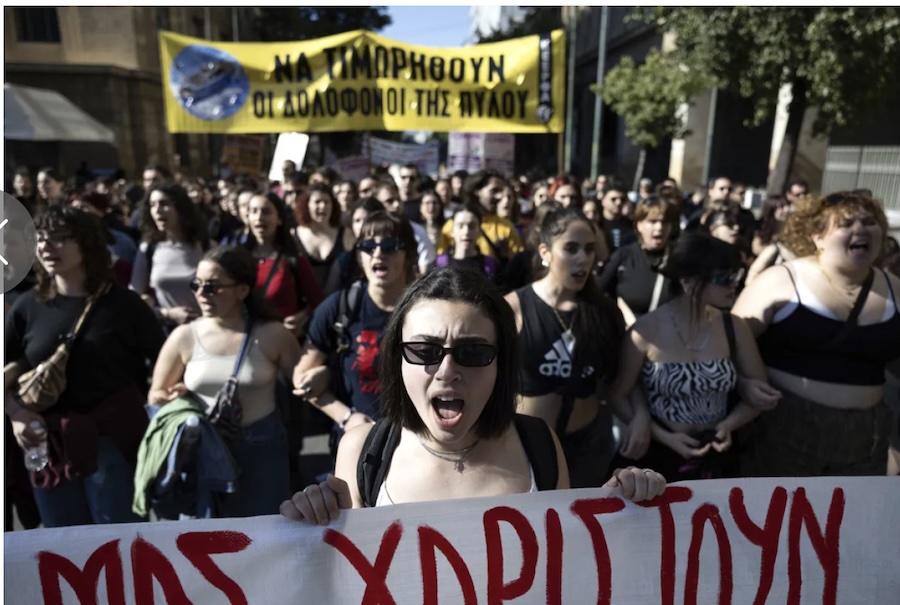
Protesters shout slogans during a rally marking International Women’s Day, in Athens, Saturday, March 8, 2025. Photo:Yorgos Karahalis.
(Euronews)

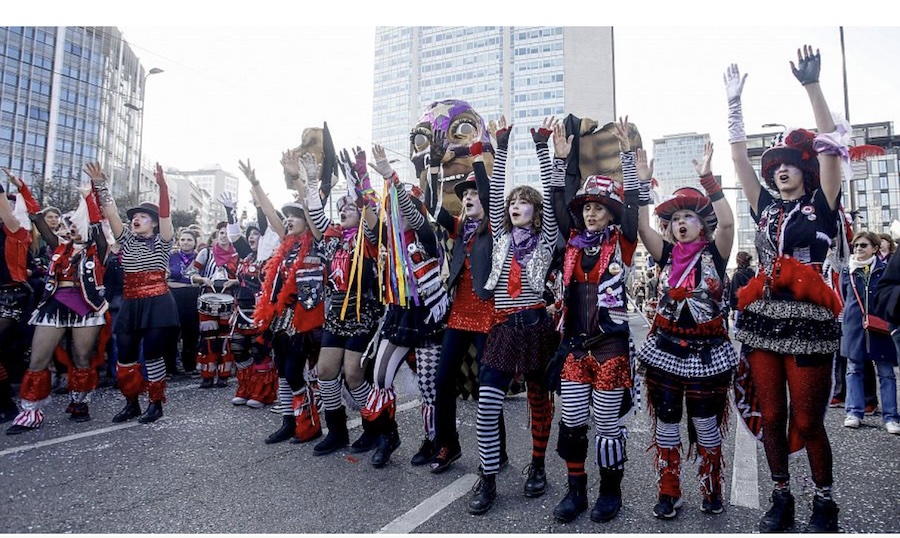
ITALY, MILAN

In Milan, women dressed alike to protest this March 8th. EFE/EPA/MOURAD BALTI TOUATI. (Radio y Television Española)

ITALY, NAPLES

In Naples, women marched under the slogan “Not one less.” EFE/EPA/CIRO FUSCO.
(Radio y Television Española)

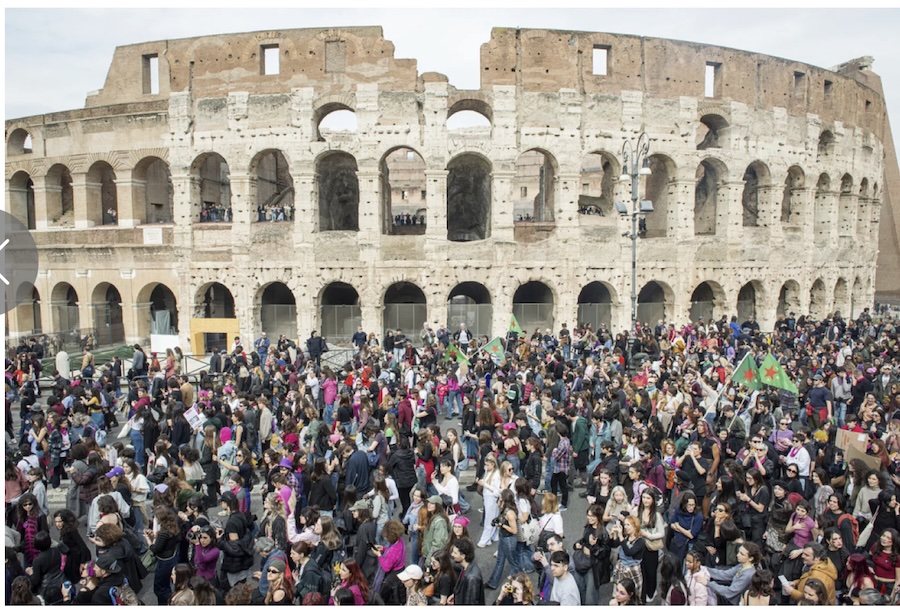
ITALY, ROME

People take part in a Transfeminist strike on International Women’s Day, outside the Colosseum, in Rome, Saturday, March 8, 2025 (Valentina Stefanelli/LaPresse via AP). (Euronews)

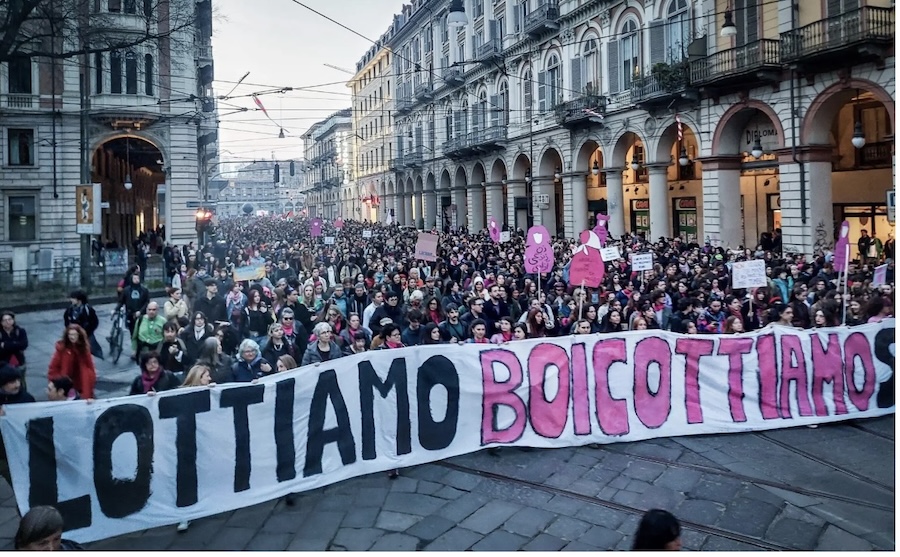
ITALY, TURIN

People march in a demonstration organized by movement ‘Non una di meno’ (Not one less) to mark International Women’s Day in Turin, Italy, Mar. 8, 2025. EFE/EPA/TINO ROMANO. (EFE)

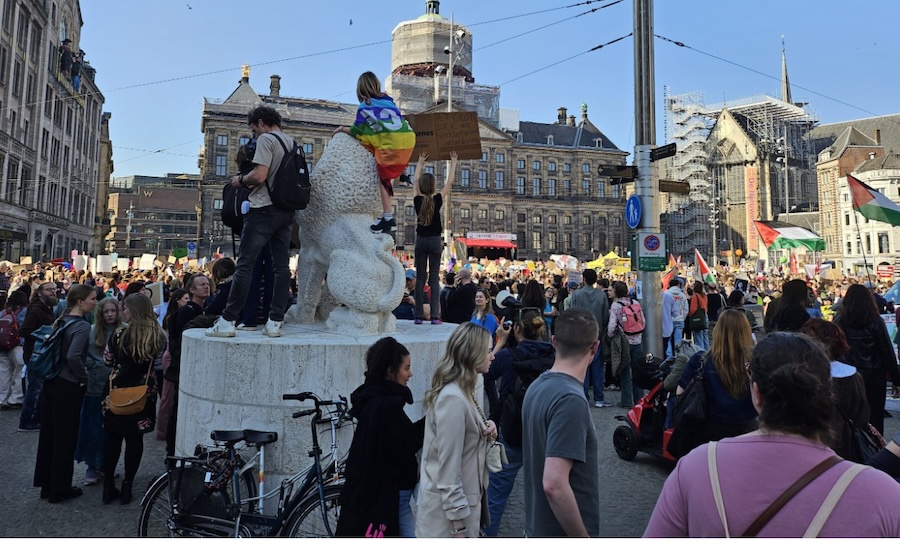
NETHERLANDS, AMSTERDAM

Some 15,000 people have taken part in the Feminist March through central Amsterdam to mark International Women’s Day, carrying placards with texts such as “Abortion in the constitution” and “Keep your hands off my womb”.
(Dutch News)

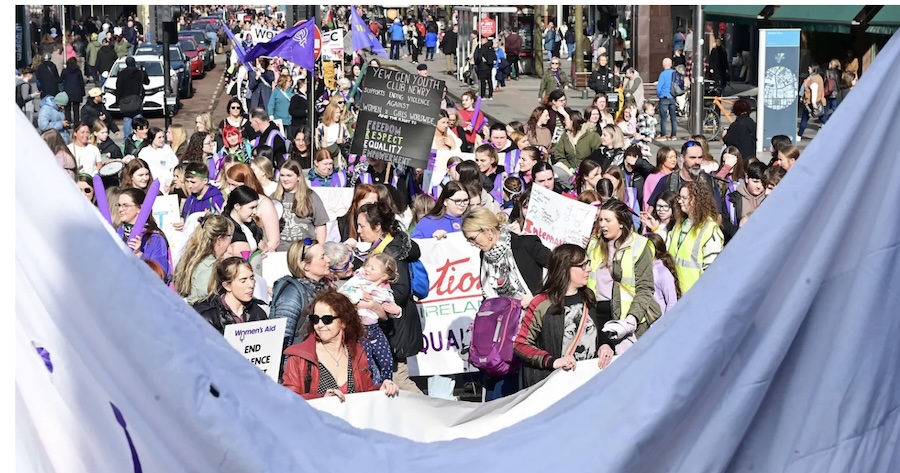
NORTHERN IRELAND, BELFAST

Ending violence against women and girls was one of the main messages of the rally in Belfast. (BBC)

Question related to this article:
 
International Women’s Day

Prospects for progress in women’s equality, what are the short and long term prospects?

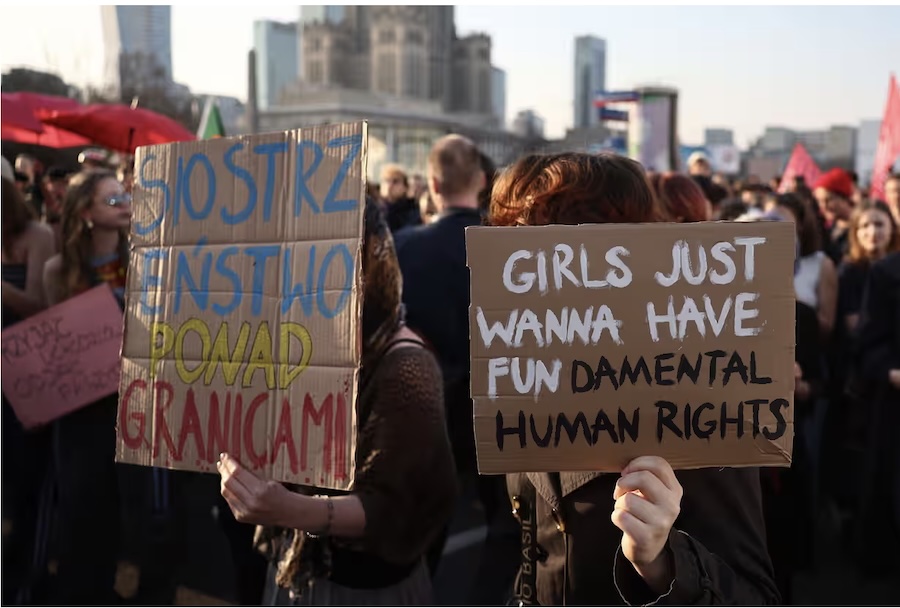
POLAND, WARSAW

Women took to the streets of cities of Warsaw to mark International Women’s Day with demands for ending inequality and gender-based violence.
(The Guardian)

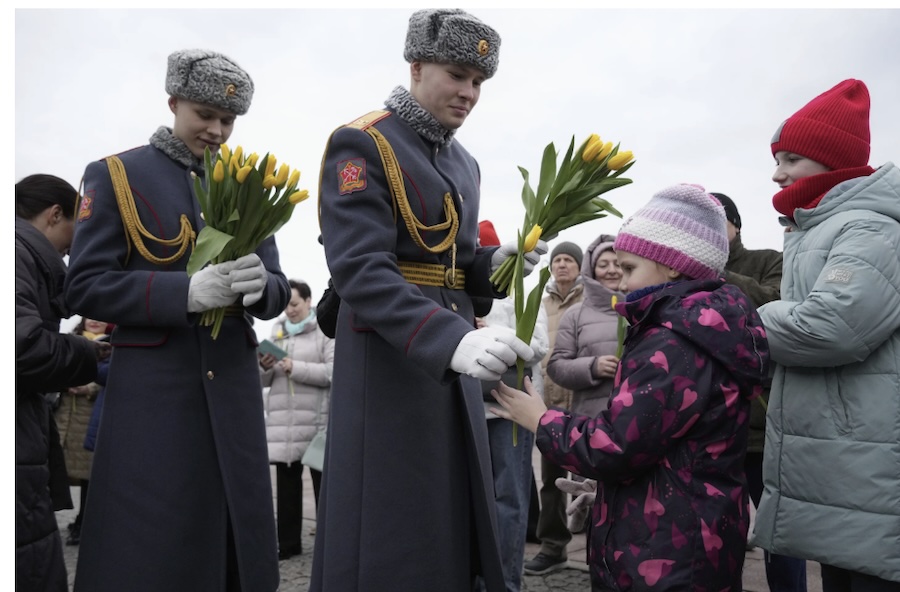
RUSSIA, ST PETERSBURG

Honour guard soldiers present flowers to girls and women during International Women’s Day celebration in St. Petersburg, Russia, Saturday, March 8, 2025. (AP Photo/Dmitri Lovetsky)
(Associated Press News)

SERBIA, BELGRADE

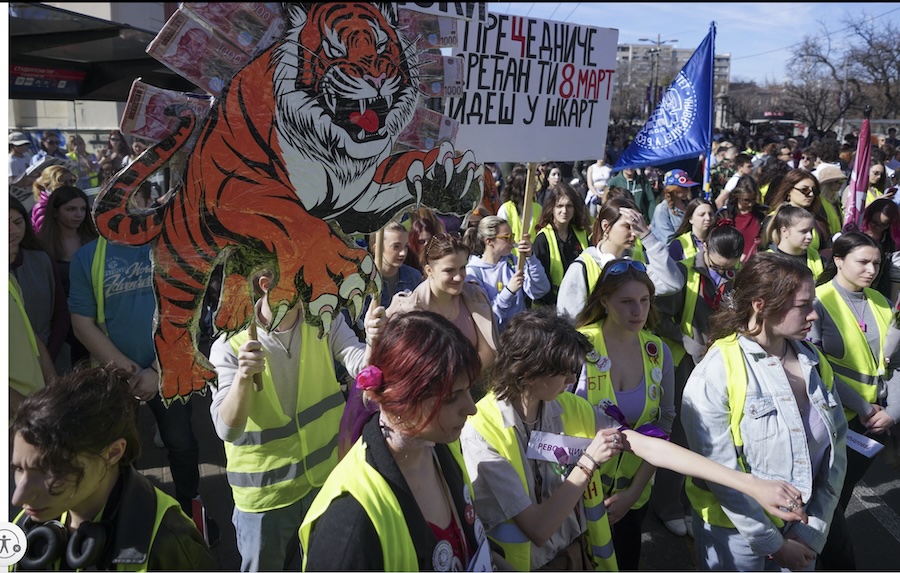
People march in support of women on the International Women’s Day in Belgrade, Serbia, Saturday, March 8, 2025. (AP Photo/Darko Vojinovic). (Associated Press News)

SPAIN, BARCELONA

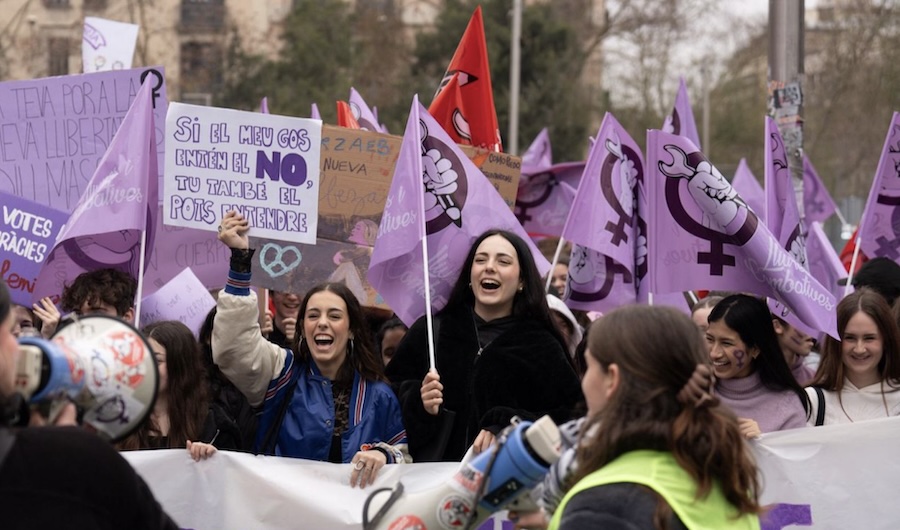
Dozens of people during the 8M Assembly demonstration in Barcelona organized by the 8M Assembly. ALBERTO PAREDES / EUROPA PRESS.
(Radio y Television Española)

SPAIN, GIJÓN

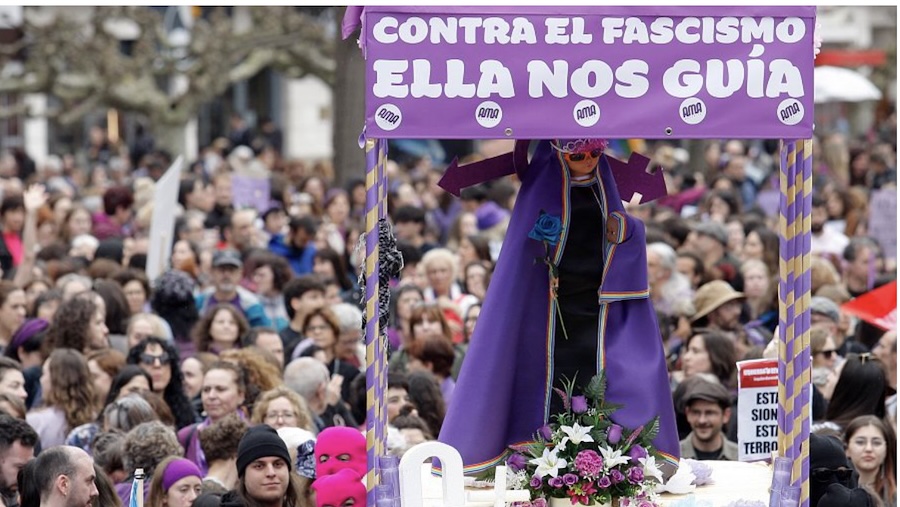
Thousands of people have filled the streets of Gijón with drum music, banners, and slogans in support of equality. EFE/Juan González.
(Radio y Television Española)

SPAIN, MADRID

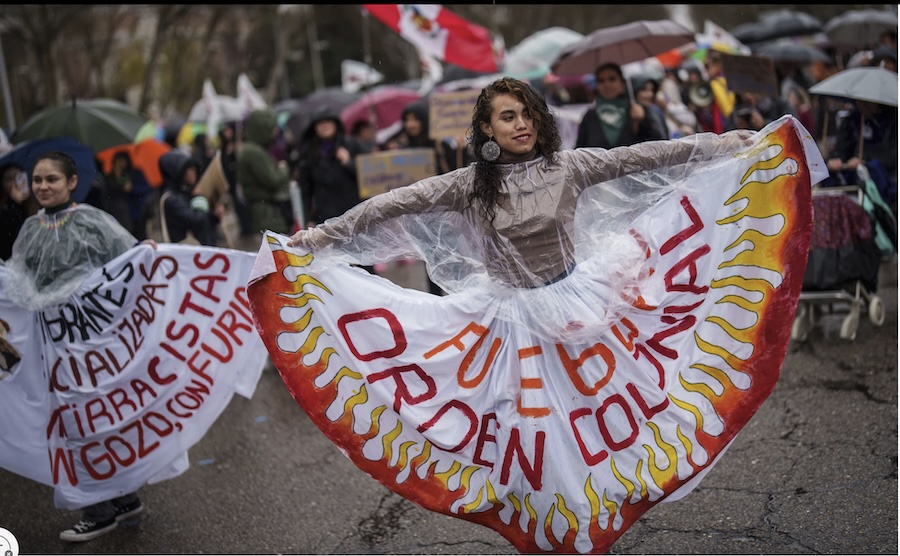
Demonstrators rally during an International Women’s Day protest in Madrid, Spain, Saturday, March 8, 2025. (AP Photo/Bernat Armangue).
(Associated Press News)

SPAIN, MALLORCA

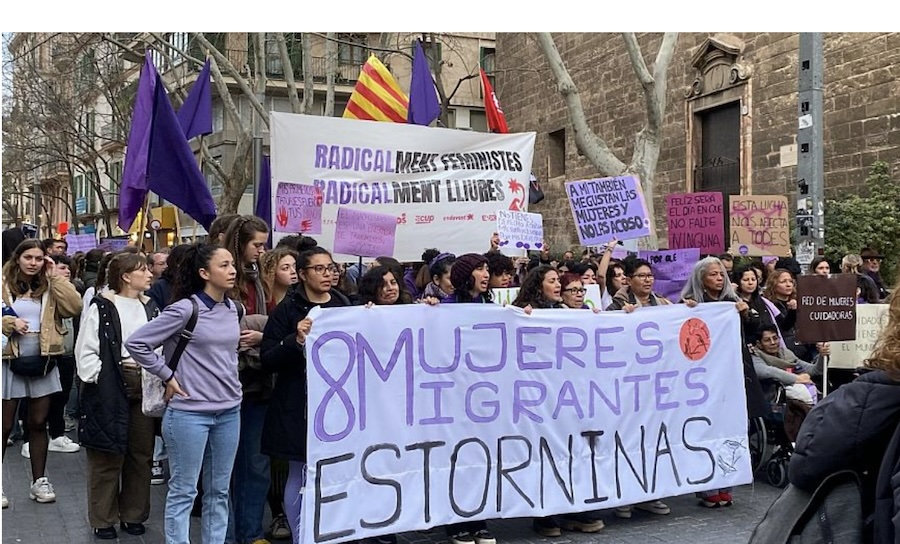
Mallorca, mobilization organized by the Transfeminist Coordinator on Women’s Day 2025.
(Radio y Television Española)

SPAIN, SANTA CRUZ DE TENERIFE

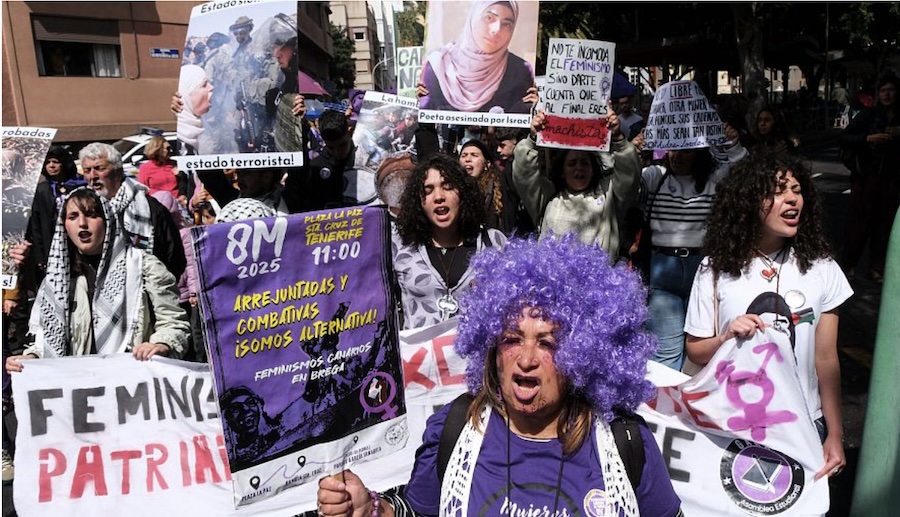
Hundreds of people participated in a demonstration this Saturday to mark International Women’s Day in Santa Cruz de Tenerife. EFE/ Alberto Valdés.
(Radio y Television Española)

SPAIN, SEVILLE

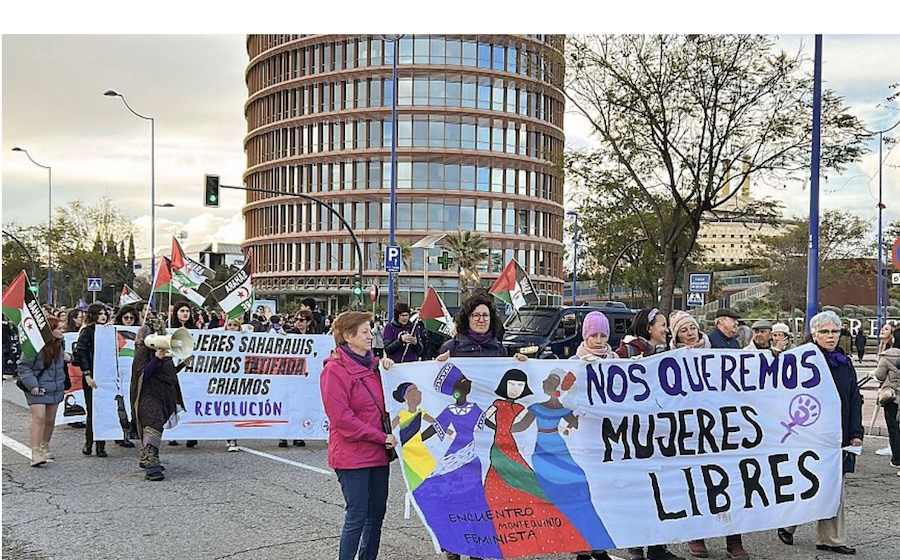
View of the demonstration organized by feminist groups that toured Seville this Saturday. EFE/Fermín Cabanillas.(Radio y Television Española)

SPAIN, TERUEL

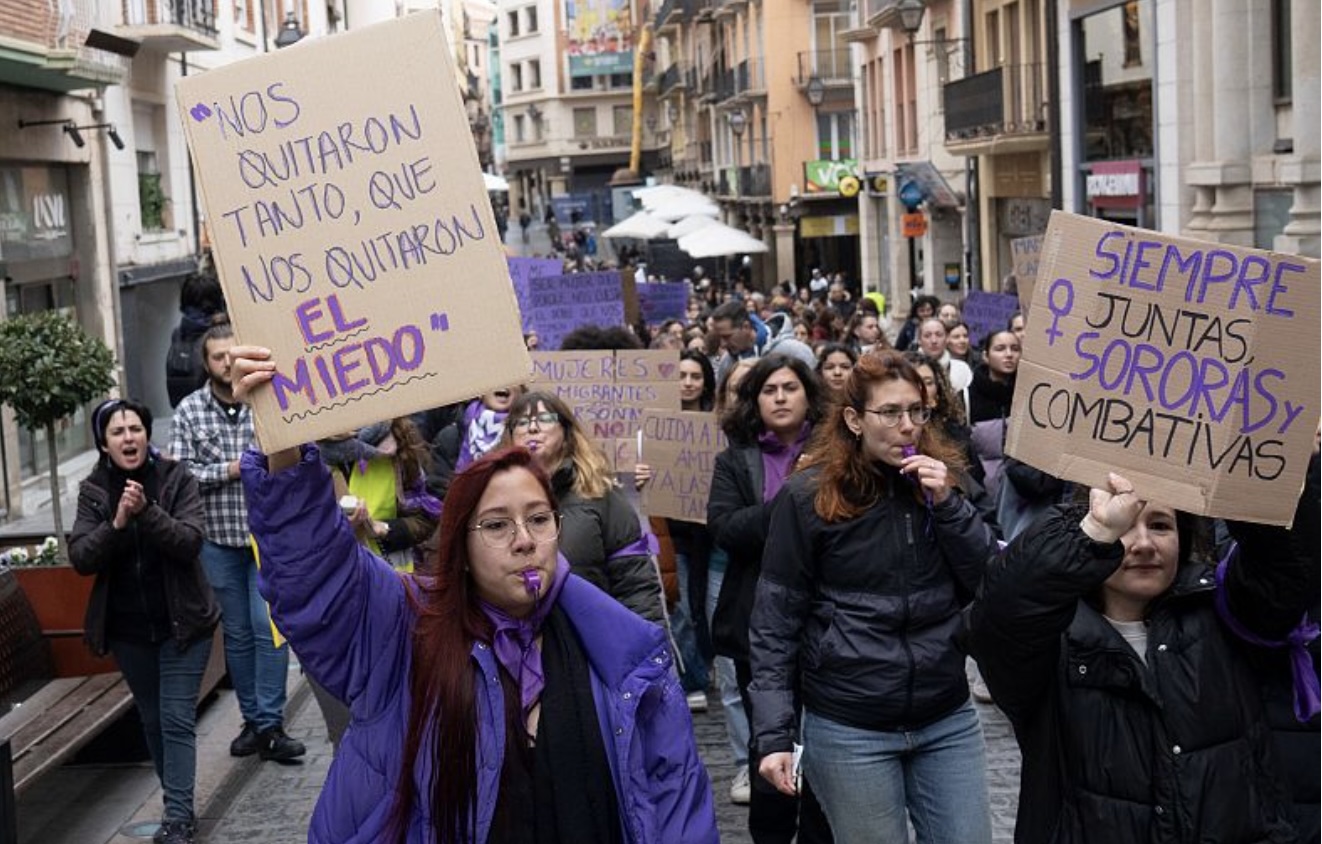
Around 700 people demonstrated in Teruel with banners calling for equality. Among the banners were messages such as “They took so much from us that they took away our fear” and “Patriarchy affects us all.”
(Radio y Television Española)

SPAIN, TOLEDO

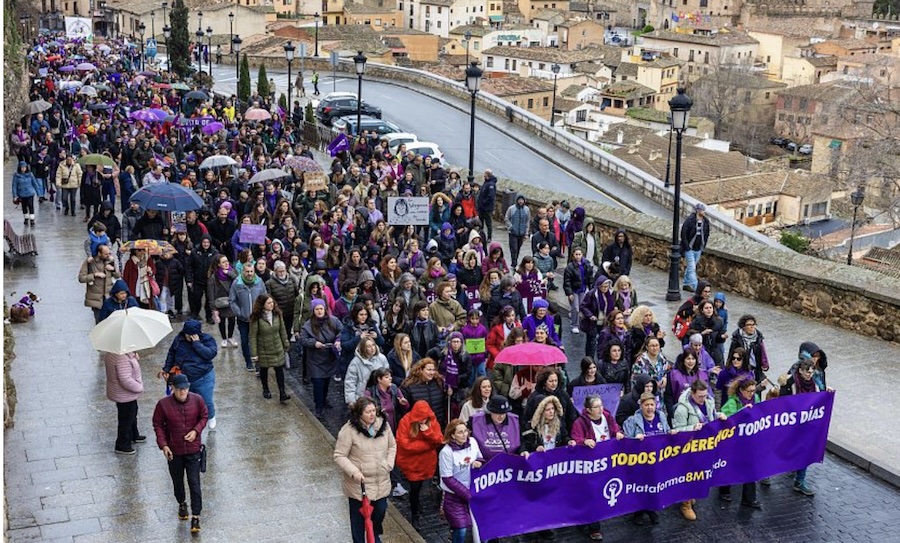
In Toledo, women have taken to the streets to demonstrate under the slogan “All women. All rights. Every day.”
(Radio y Television Española)

SPAIN, VALENCIA

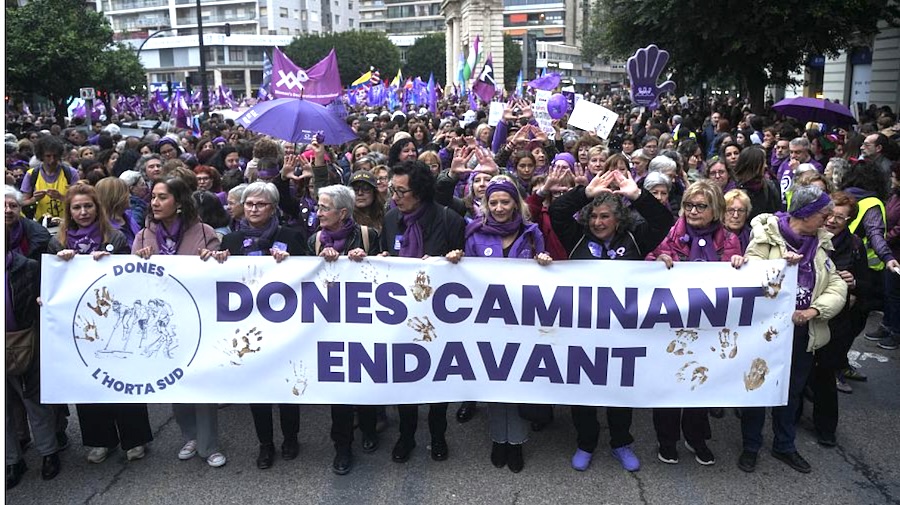
Demonstration by the Valencia Feminist Coordinator on March 8. Jorge Gil / Europa Press. Among the banners, “We are the cry of those who no longer have a voice” or “We are half the earth, we want half the sky.”
(Radio y Television Española)

SPAIN, VALLODOLID

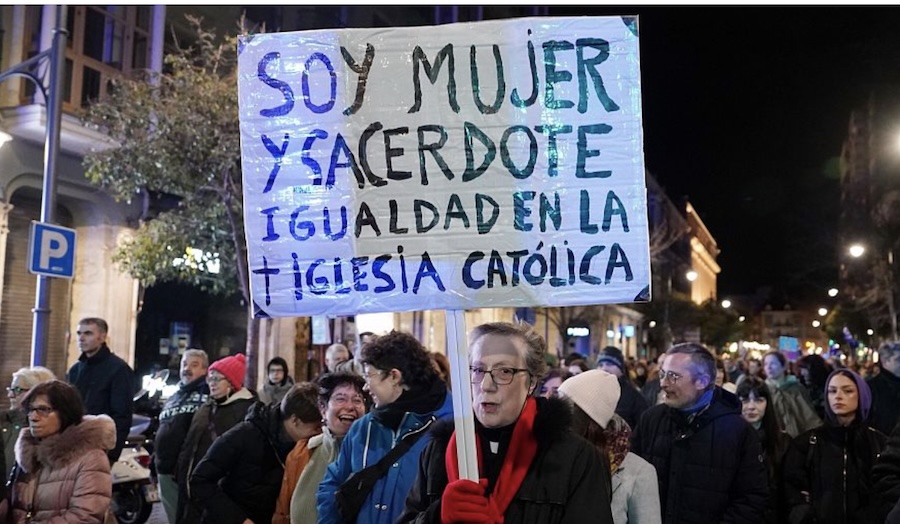
In Valladolid, this woman calls for equality in the Catholic Church at the feminist march. EFE/NACHO GALLEGO.
(Radio y Television Española)

TURKEY, ISTANBUL

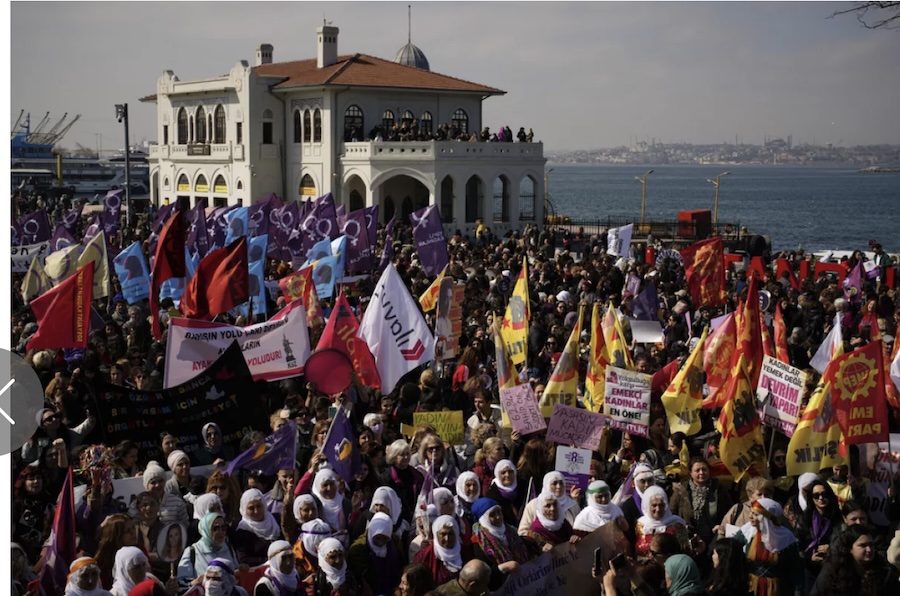
Women attend a protest marking International Women’s Day in Istanbul, Turkey, Saturday, March 8, 2025. (AP Photo/Emrah Gurel).
(Euronews)

International Women’s Day: Canada and USA

. WOMEN’S EQUALITY . .

A press survey by CPNN

Here are the photos from Canada and United States.

CANADA, MONTREAL, QUEBEC

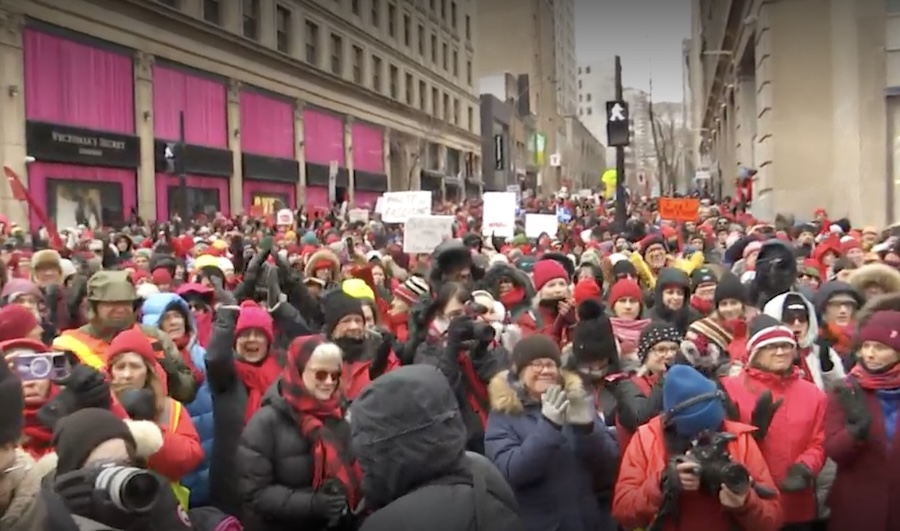
Hundreds gathered in downtown Montreal on International Women’s Day Saturday to protest U.S. President Donald Trump’s controversial policies and views on women’s rights. (Canadian Broadcasting Company)

CANADA, TORONTO, ONTARIO

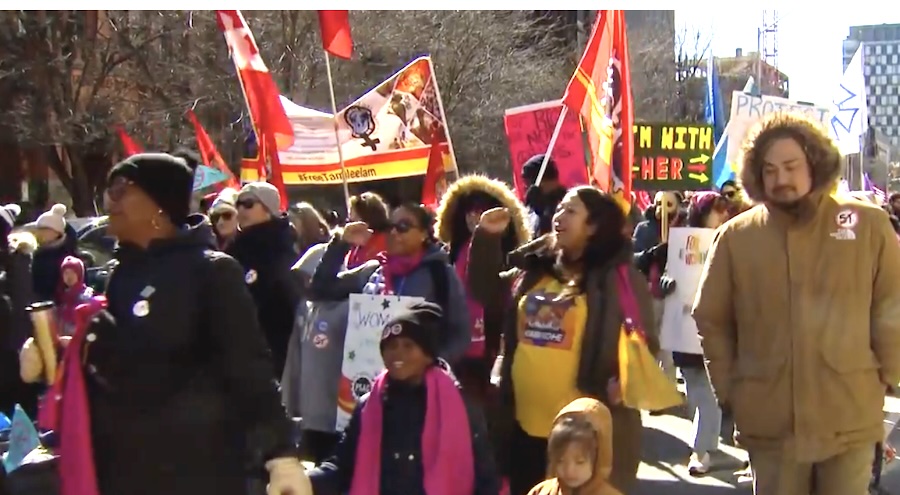
Torontonians marched in celebration of womens’ contributions to Canada and the world at large. The theme of this year’s march was to defy rising political agendas attacking the rights of women to choose freely and to succeed equally in the workplace. (Toronto City News)

CANADA, VANCOUVER, BRITISH COLUMBIA

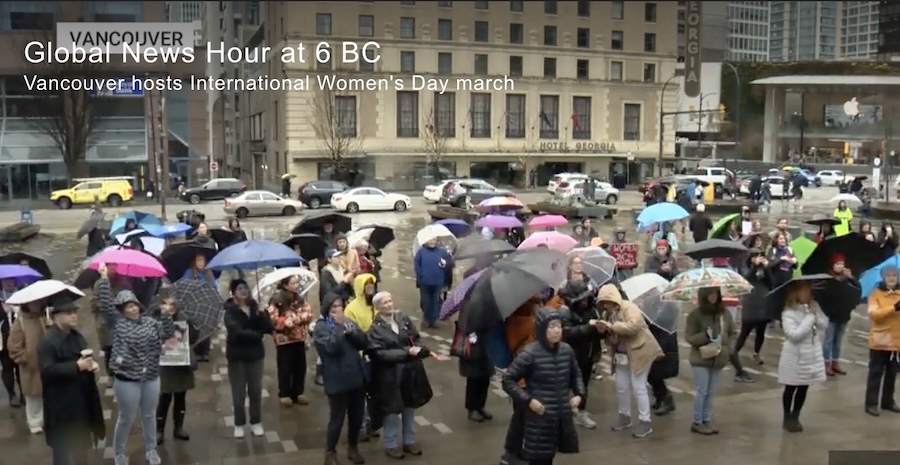
Vancouver hosts International Women’s Day march. (Global News)

USA, CHICAGO, ILLINOIS

Hundreds of people took to the streets in downtown Chicago on Saturday for International Women’s Day. They started with a rally at Daley Plaza, then marched in solidarity to Trump Tower, expressing rears the Trump administration will roll back rights for women.
(YouTube)

Question related to this article:
 
International Women’s Day

Prospects for progress in women’s equality, what are the short and long term prospects?

USA, EUREKA, CALIFORNIA

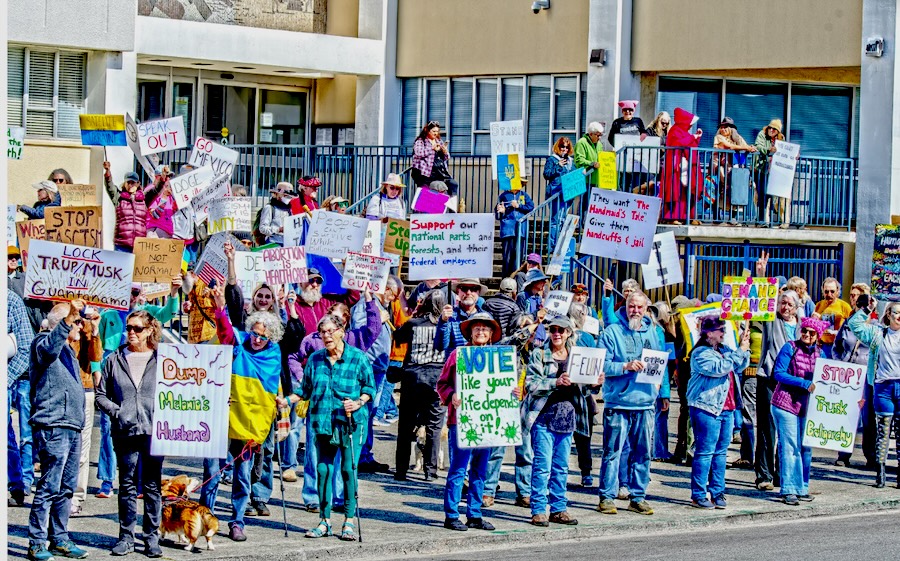
A few hundred celebrants and protestors gathered in front of the Humboldt County Courthouse to make statements about women’s rights and freedoms and the current political climate in Washington, D.C. (Times-Standard)

USA, LOS ANGELES, CALIFORNIA

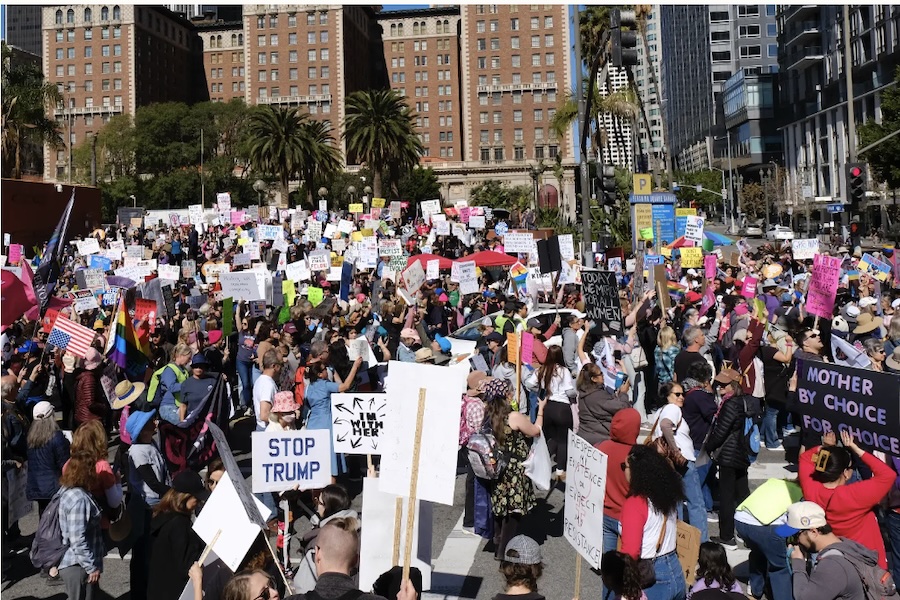
Protesters gather at Pershing Square in Downtown Los Angeles during a march on International Women’s Day on March 8, 2025. “The goal of the day is to help people “build community” and “practice democracy,” particularly at a time when democratic resistance to President Donald Trump’s Administration presents as fractured.” Hence the sign “Stop Trump” Jen Osborne—Getty Images. (Time Magazine)

USA, NEW YORK, NEW YORK

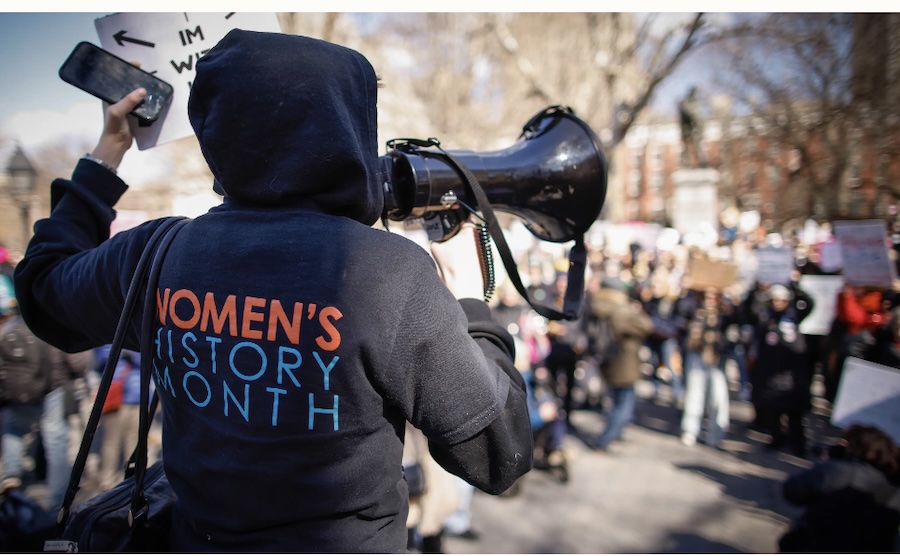
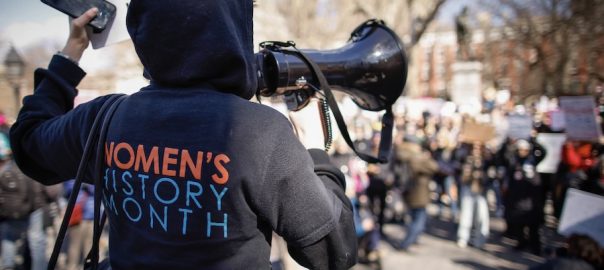
A woman speaks to a group of demonstrators as they attend the International Women’s Day march on March 8, 2025 in New York City. Kena Betancur—Getty Images. (Time Magazine)

USA, SAN FRANCISCO, CALIFORNIA

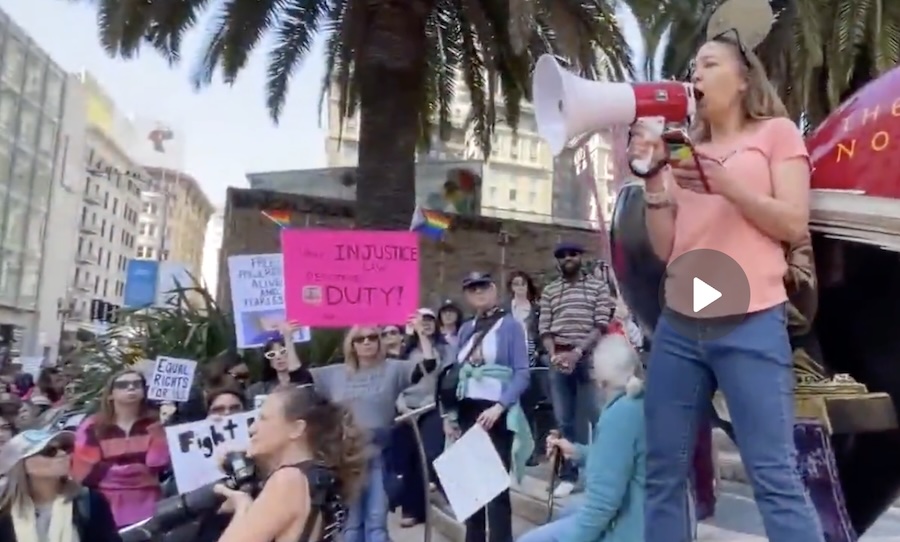
Thousands of people participated in the Bay Area’s annual International Women’s Day. Among the signs visible in the video: RESIST No Oligarchs Save Democracy; NO KINGS NO TYRANNY; HELL HATH NO FURY LIKE 170 MILLION WOMEN SCORNED
(CBS News)

International Women’s Day: Africa and Asia

. WOMEN’S EQUALITY . .

A press survey by CPNN

Here are the photos from Africa and Asia.

BANGLADESH, SYLHET

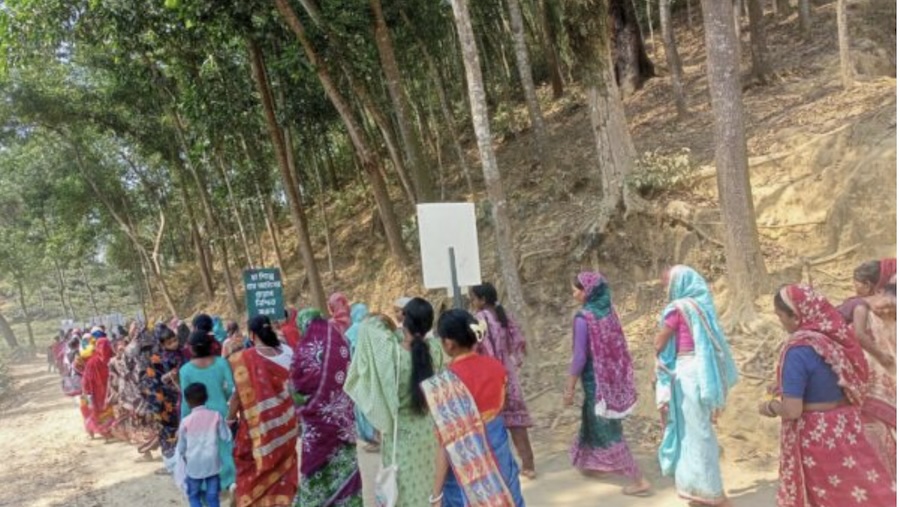
Ethnic Community Development Organization (ECDO) observed International Women’s Day 2025 at the Hiluachhara Tea Garden.

CHINA

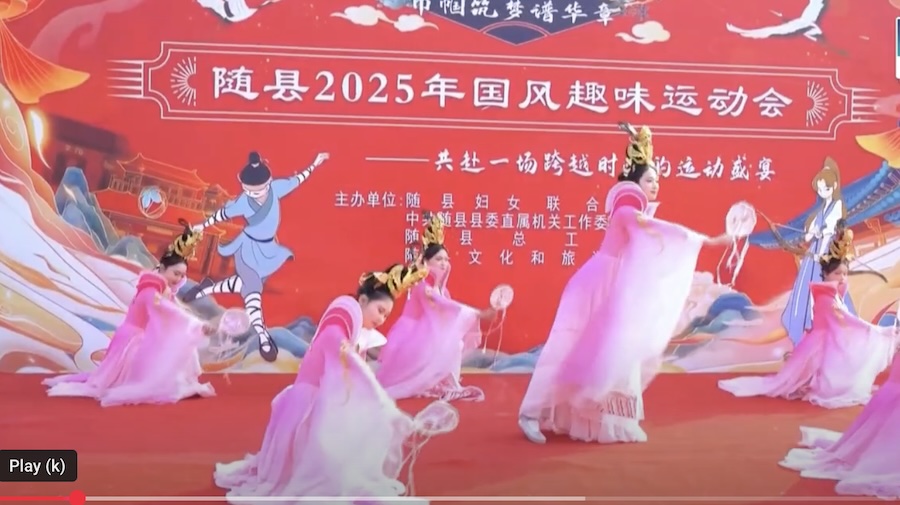
China Celebrates International Women’s Day with Cultural & Career Events | AG15 (YouTube)

INDONESIA, BANDUNG
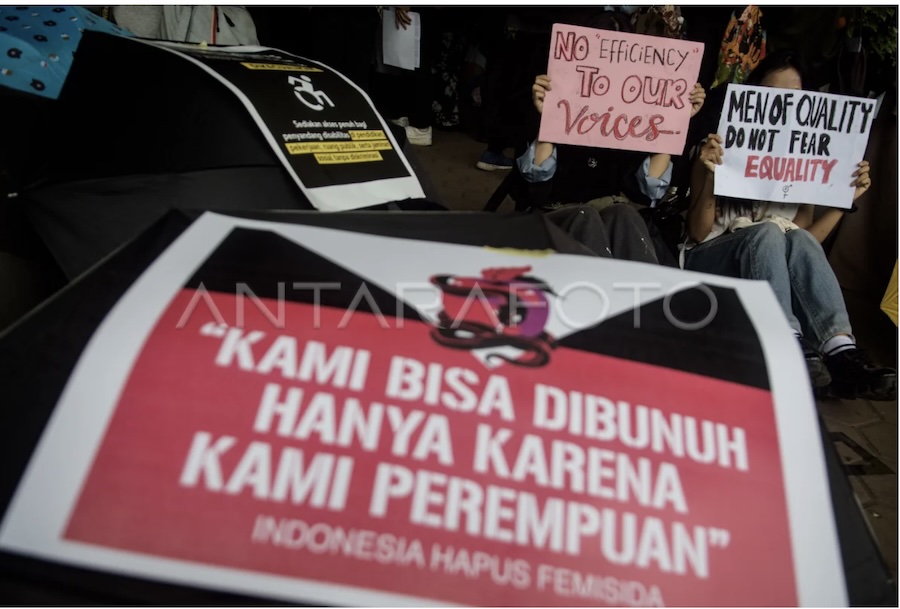
“We can be killed just because we are women. Indonesia must eliminate femicide” (Antarafoto)

INDONESIA, JAKARTA
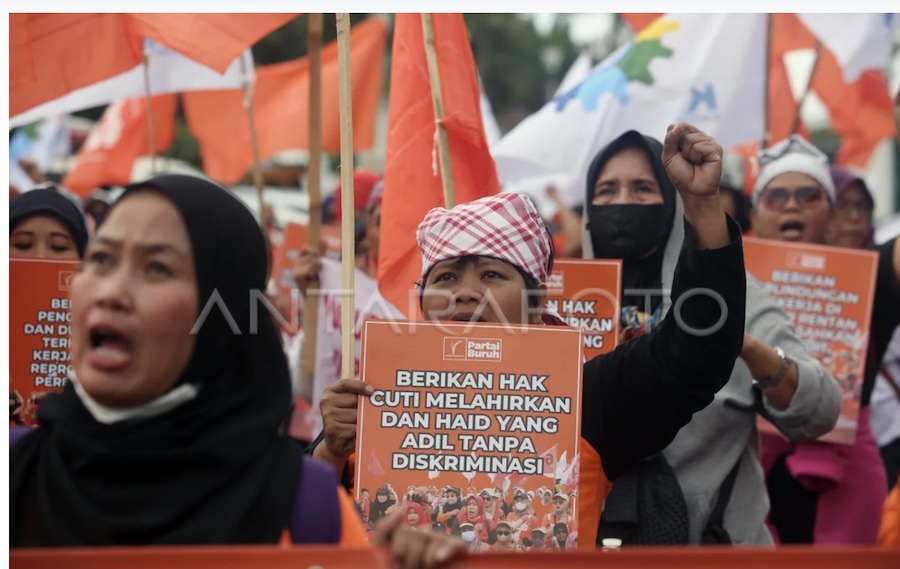
“Provide fair maternity and menstrual leave rights without discrimination” (Antarafoto)

JAPAN, TOKYO

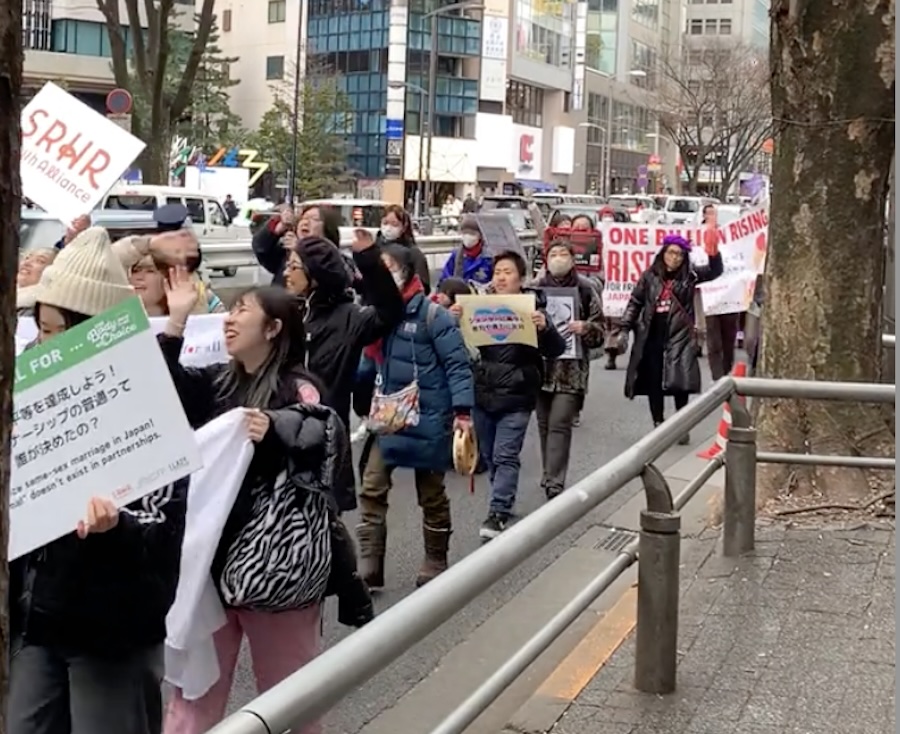
Happy International Women’s Day from Tokyo! (TikTok)

NIGERIA, ABUJA

On 7 March 2025, the WHO Nigeria offices buzzed with energy as staff joined the global celebration of International Women’s Day: “commitment to gender equality and empowerment as essential drivers of health for all.”

NIGERIA, LAGOS

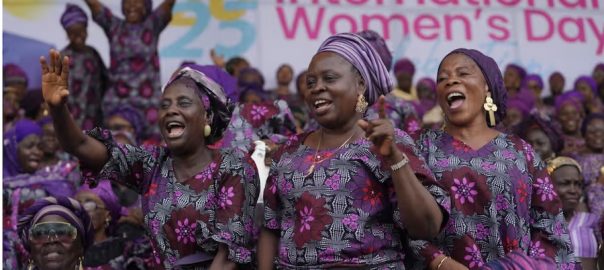
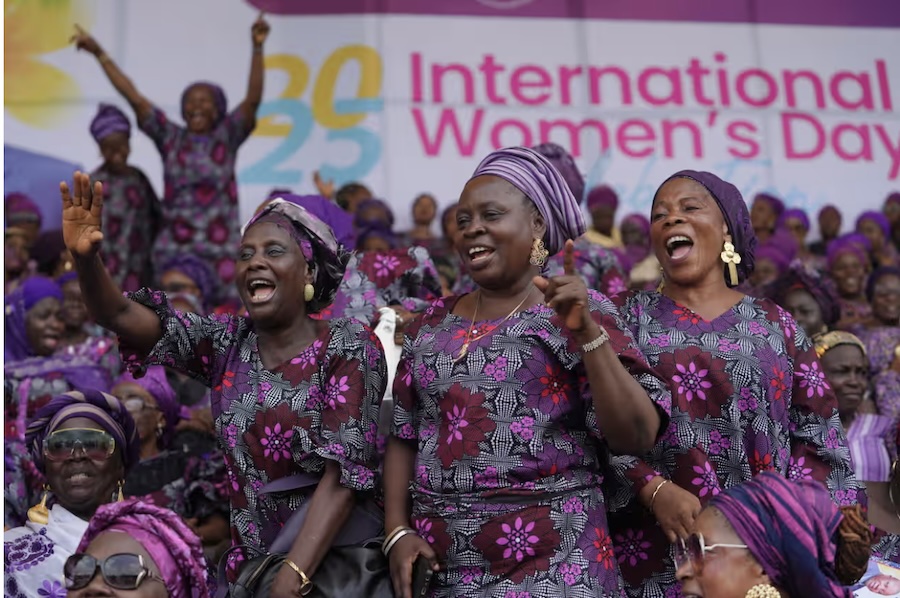
In the Nigerian capital of Lagos, thousands of women gathered at the Mobolaji Johnson stadium, dancing and signing and celebrating their womanhood. Many were dressed in purple, the traditional color of the women’s liberation movement. Photograph: Sunday Alamba/AP. (The Guardian)

Question related to this article:
 
International Women’s Day

Prospects for progress in women’s equality, what are the short and long term prospects?

PAKISTAN, ISLAMABAD

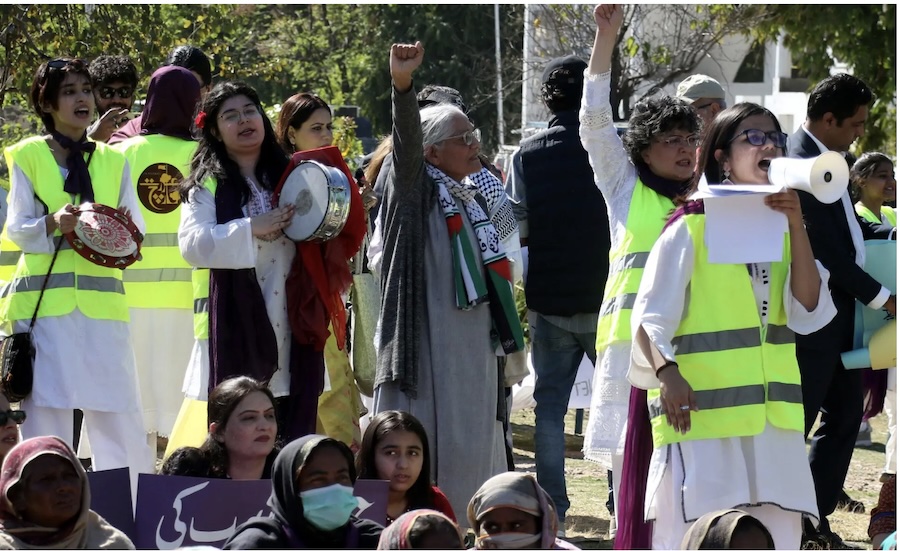
Women participate in an Aurat March held to mark International Women’s Day in Islamabad, Pakistan, Mar. 8, 2025. EFE/EPA/SOHAIL SHAHZAD 78595. (EFE)

PAKISTAN, LAHORE

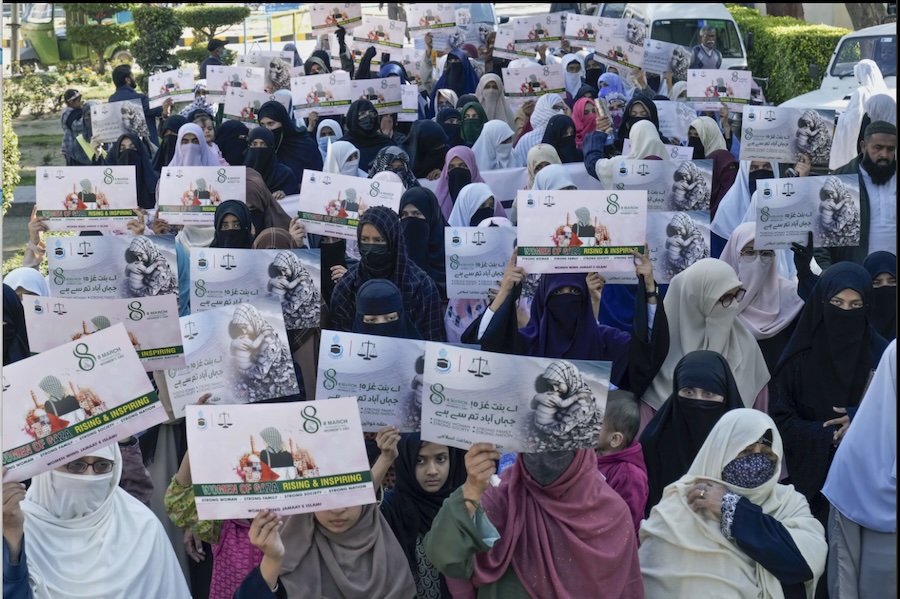
Supporters of a religious party ‘Jamaat-e-Islami’ gather in support of women of Gaza, marking International Women’s Day, in Lahore, Pakistan, Saturday, March 8, 2025. (AP Photo/K.M Chaudary) (Associated Press News)

PHILIPPINES, MANILA

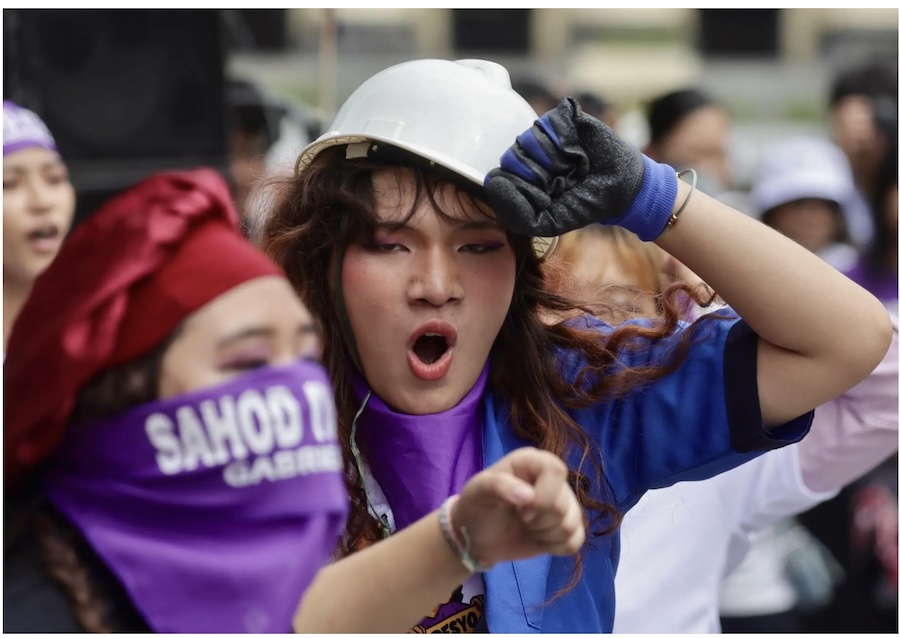
Members of women’s rights group, ‘Gabriela’, perform to mark International Women’s Day in Manila, Philippines, Mar. 8, 2025. EFE/EPA/FRANCIS R. MALASIG. (EFE)

SRI LANKA

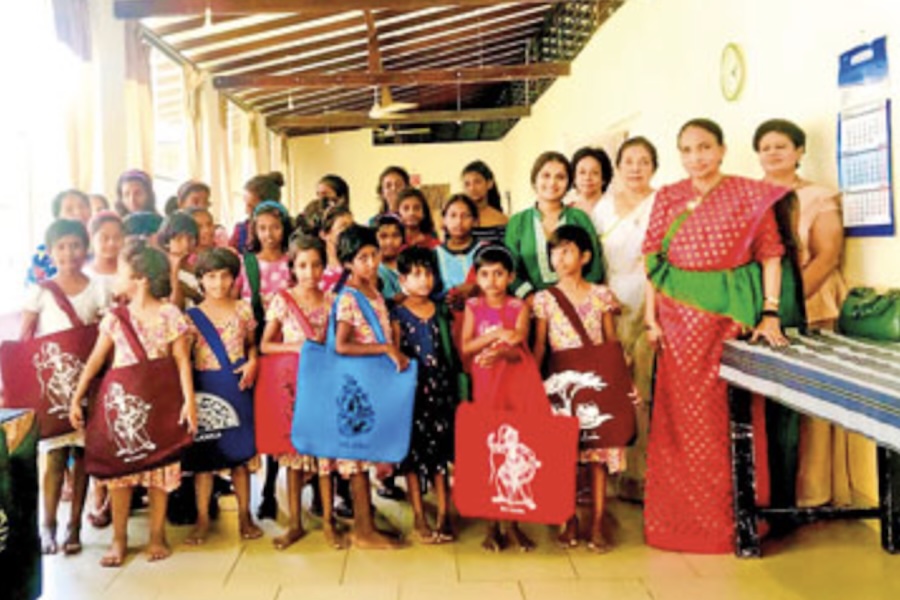
he 84-year-old Sri Lanka Federation of University Women, under its President Colonel Dr Udula Krishnaratne, ably supported by her team – celebrated International Women’s Day. The programme was intended to promote education for girls from the primary to the tertiary levels, provide better sustenance to needy families and ease economic hardship, and help improve the overall health of women and girls. (Sunday Times)

THAILAND, BANGKOK

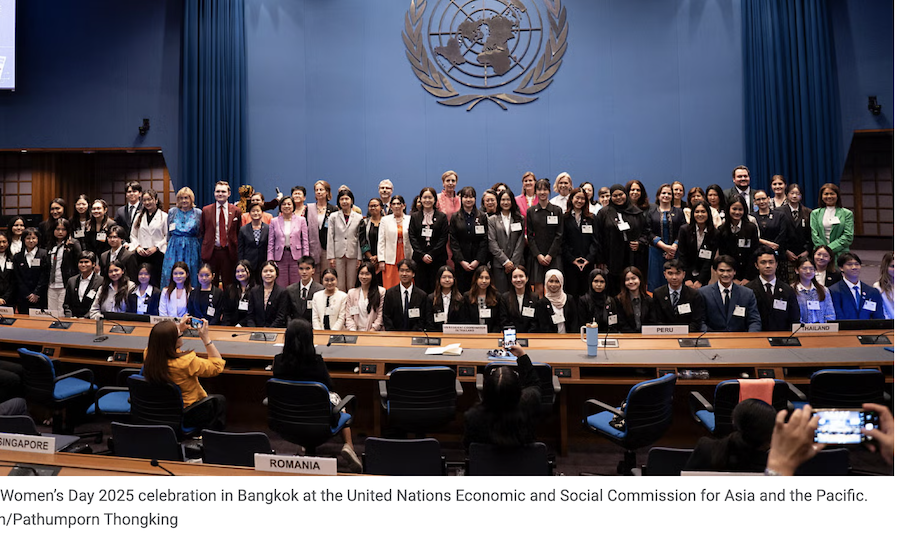
Under the theme “For ALL Women and Girls: Rights, Equality, Empowerment,” the spotlight was on youth at the International Women’s Day 2025 celebration in Bangkok. (UN Women)

VIETNAM, HANOI

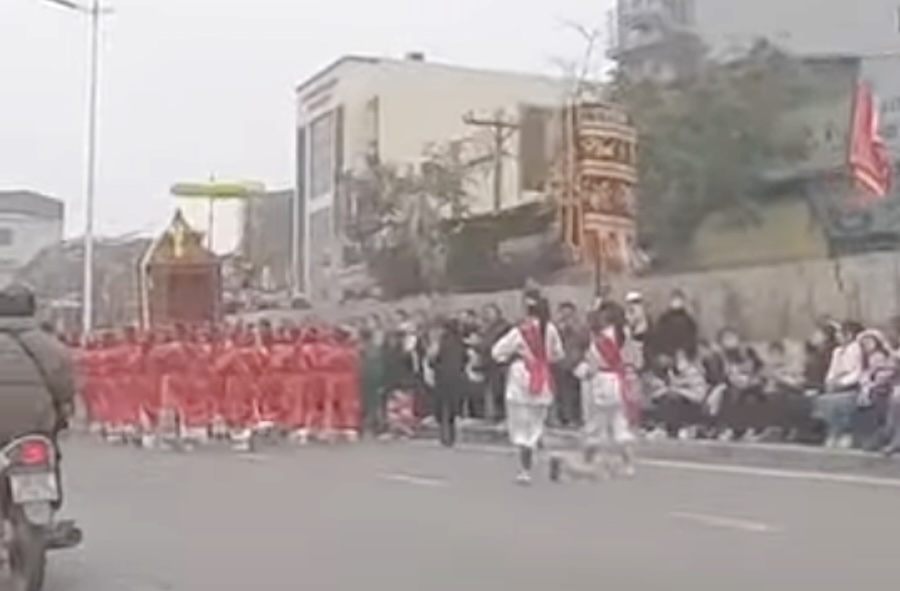
International Women’s Day parade in Hanoi, Vietnam. (YouTube)

International Women’s Day: Latin America

. WOMEN’S EQUALITY . .

A press survey by CPNN

Here are the photos from Latin America, March 8, 2025.

ARGENTINA, BUENOS AIRES

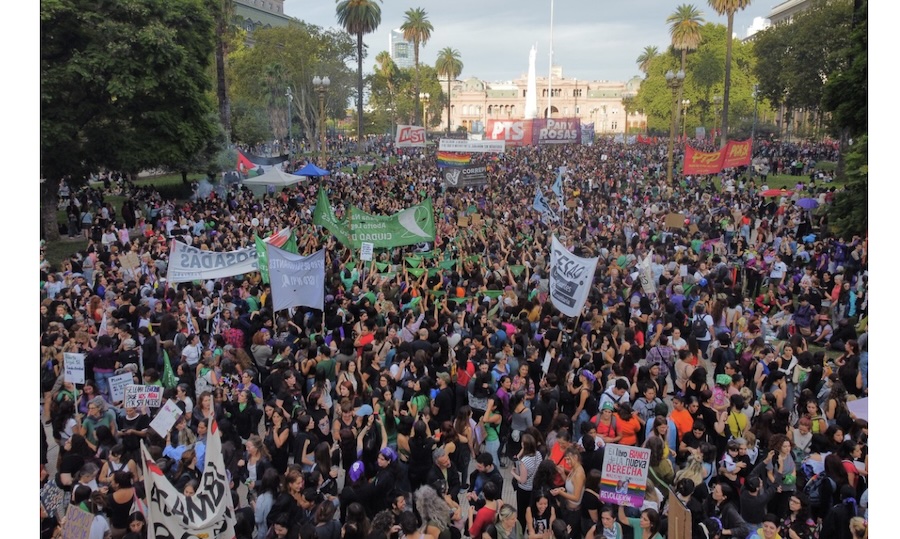
“Contra el fascismo, el racismo, el patriarcado y el capitalismo”, en repudio a las políticas del Gobierno de Javier Milei. After 6 p.m., the mobilization reached its peak, a dense crowd filled Avenida de Mayo up to the Casa Rosada. Photo: Francisco Loureiro
(Clarín)

BOLIVIA, LA PAZ

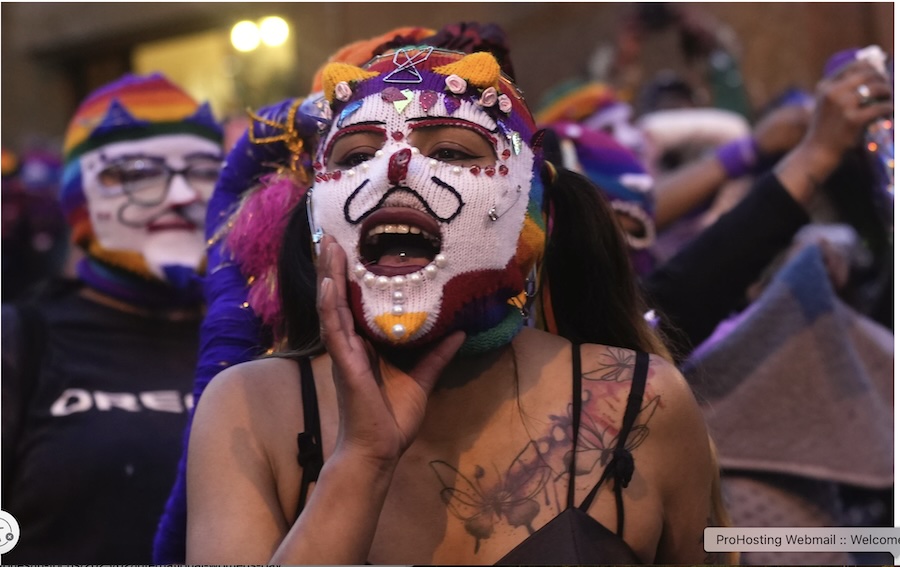
A women shouts slogans during a march to mark International Women’s Day, in La Paz, Bolivia, Friday, March 7, 2025. (AP Photo/Juan Karita)
One of the most chanted slogans was: “What’s the big deal? They kill us and rape us and the state does nothing,” which grew louder as the march passed by the headquarters of the courts and prosecutors in La Paz. (Agencia EFE)

BRAZIL, BRASILIA

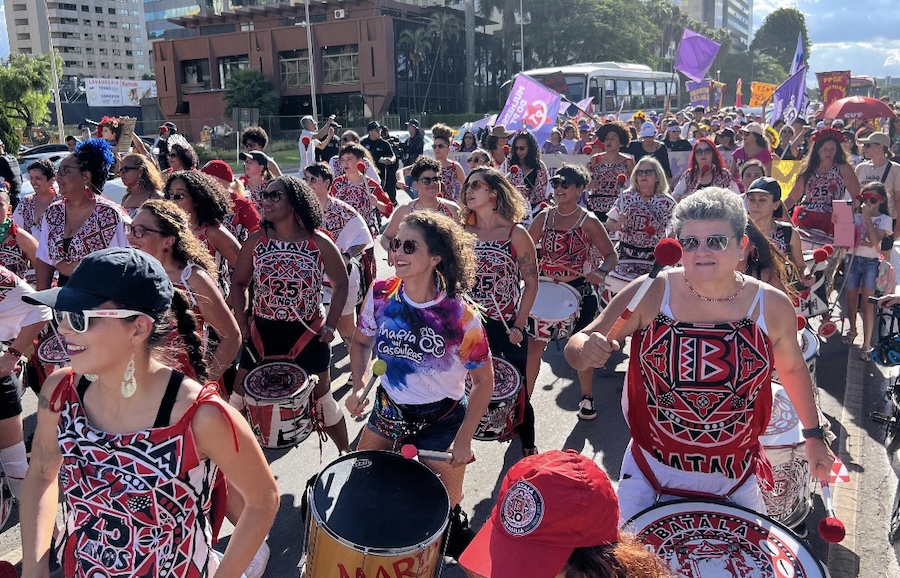
March for International Women’s Day in Brasilia — The event highlights issues such as feminicide, racism, improving public policies for women, food insecurity and defending democracy. Foto: Gabriel Buosi/TV Globo
(O Globo)

BRAZIL, SAO PAULO

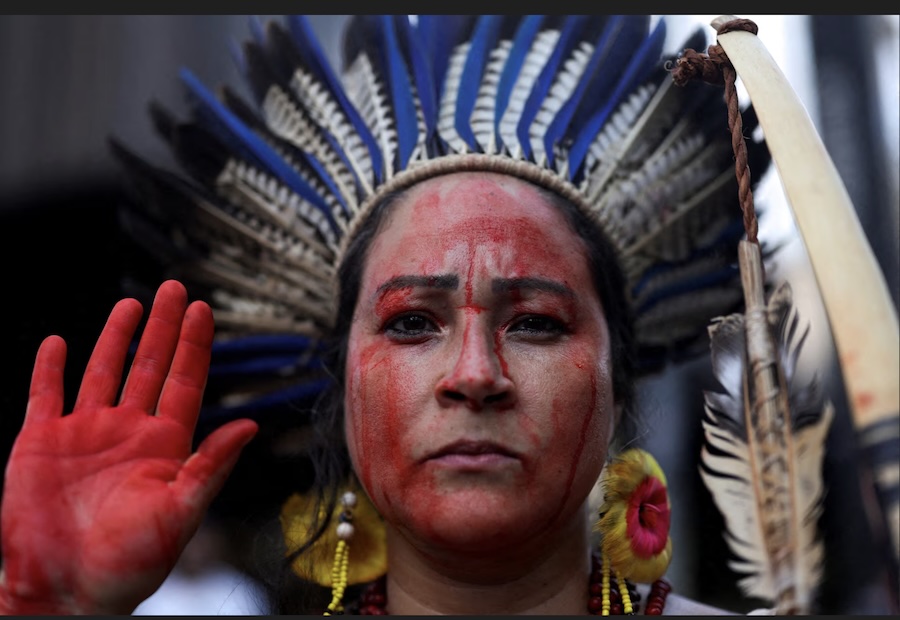
Indigenous woman Bekoy Tupinamba participates in a march to mark International Women’s Day in Sao Paulo, Brazil, March 8. REUTERS/Amanda Perobelli (Reuters)

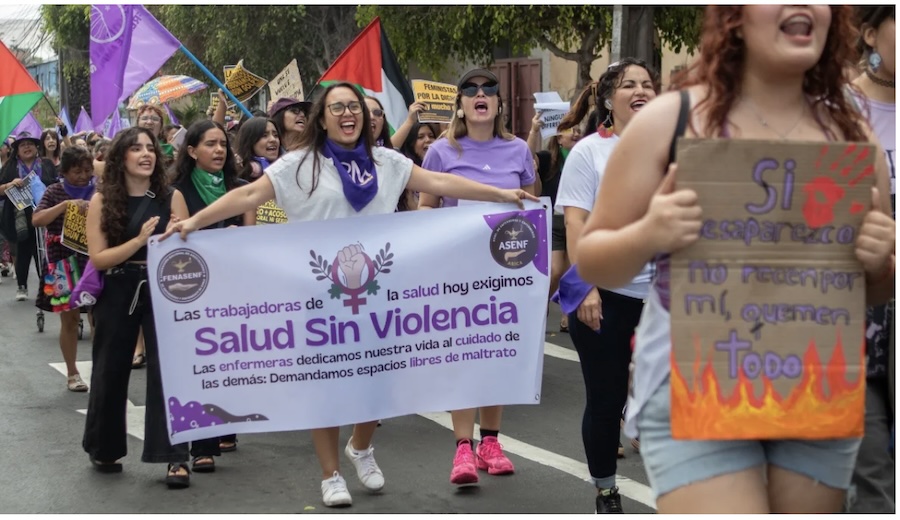
CHILE, ARICA

“Health Without Violence”(Pudhuel)

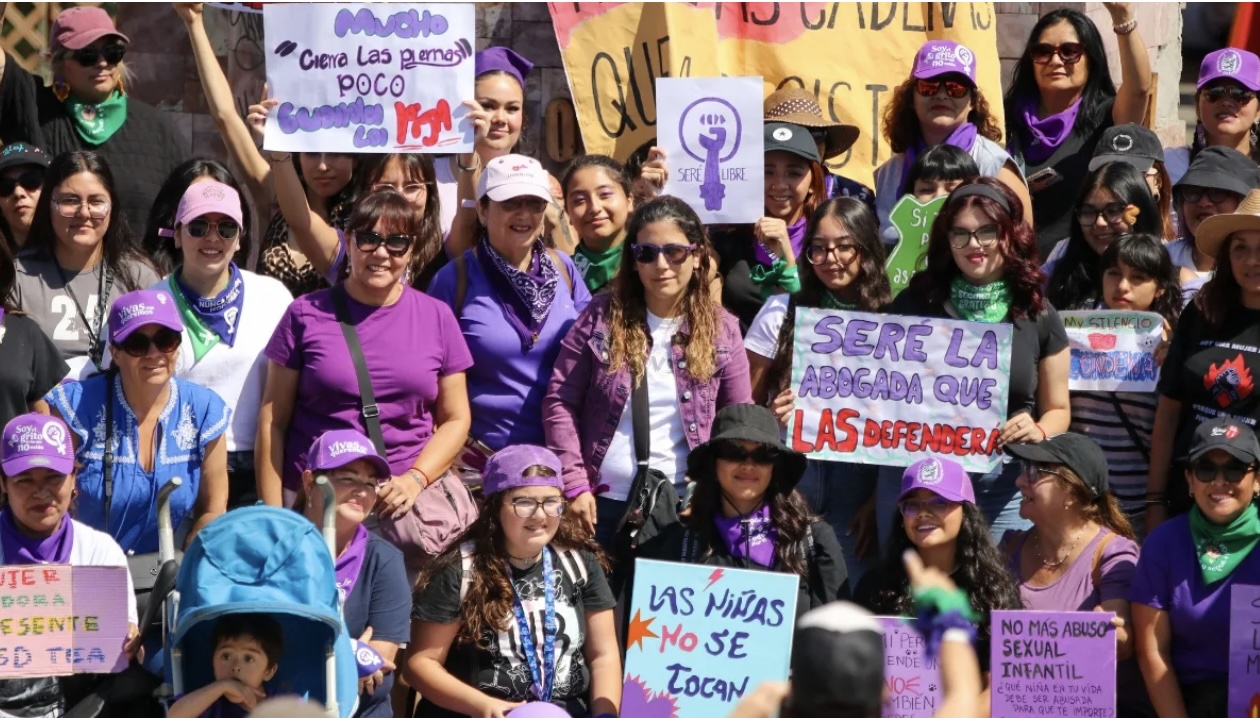
CHILE, ATOFOGASTA

“I will be the lawyer who will defend them.”(Pudhuel)

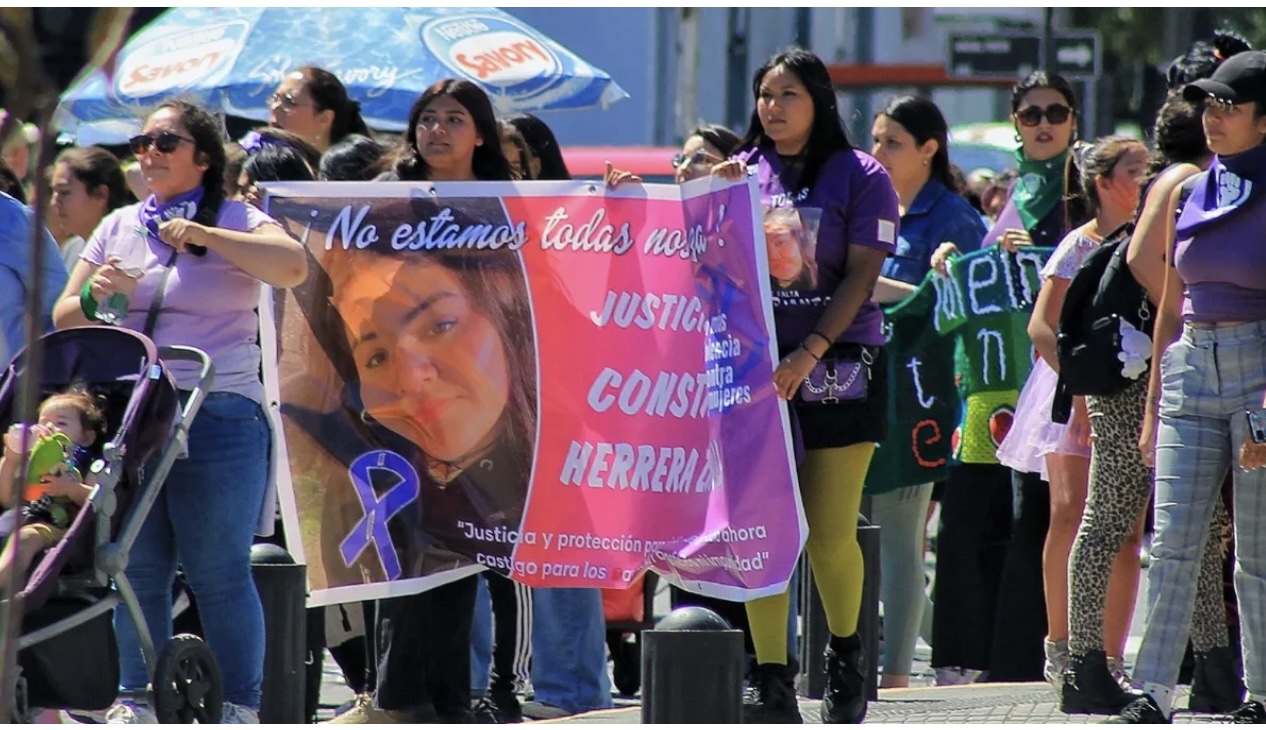
CHILE, BÍO BÍO

(Pudhuel)

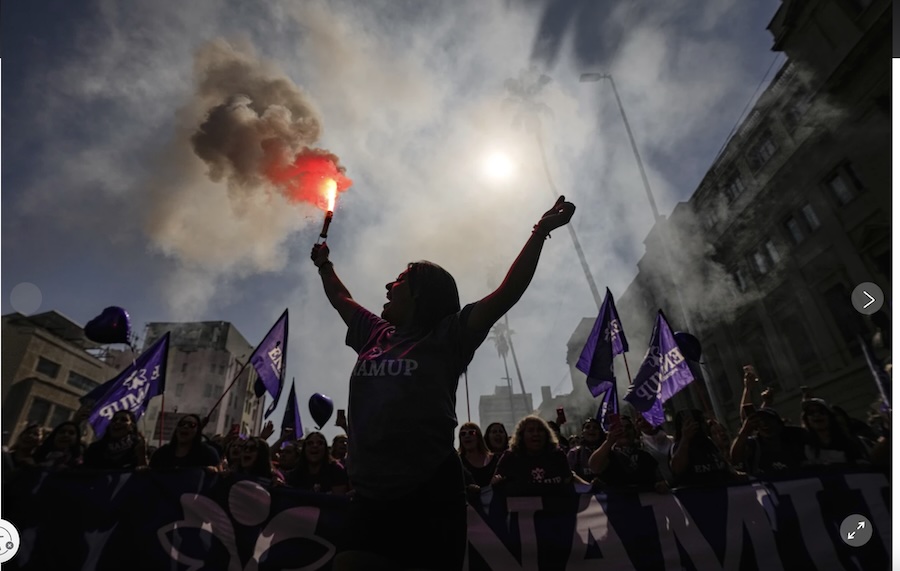
CHILE, SANTIAGO

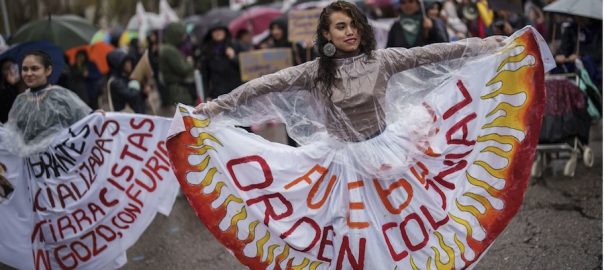
A woman waves a flare during a march marking International Women’s Day in Santiago, Chile, Saturday, March 8I, 2025 (AP Photo/Estaban Felix)
(Associated Press News)

Question related to this article:
 
International Women’s Day

Prospects for progress in women’s equality, what are the short and long term prospects?

CHILE, VALPARAISO

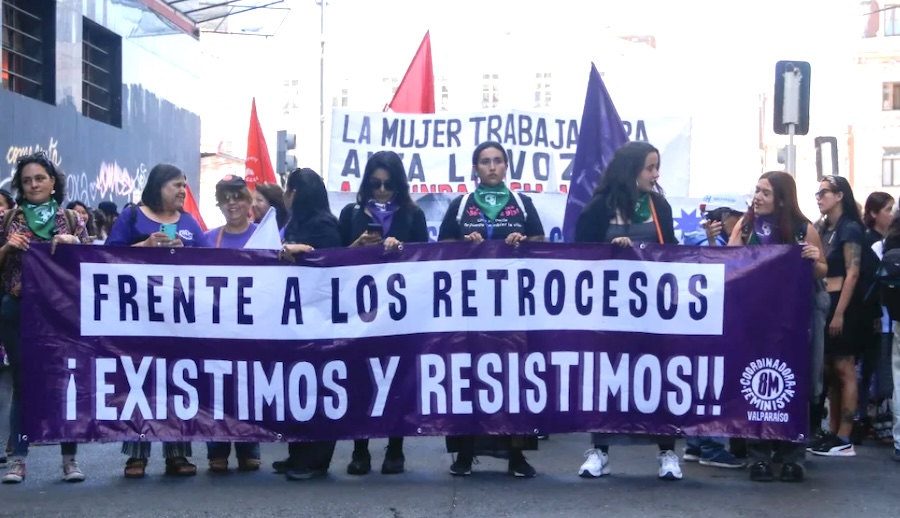
“IN THE FACE OF SETBACKS, WE EXIST AND WE RESIST!”(Pudhuel)

COLOMBIA, BOGOTA

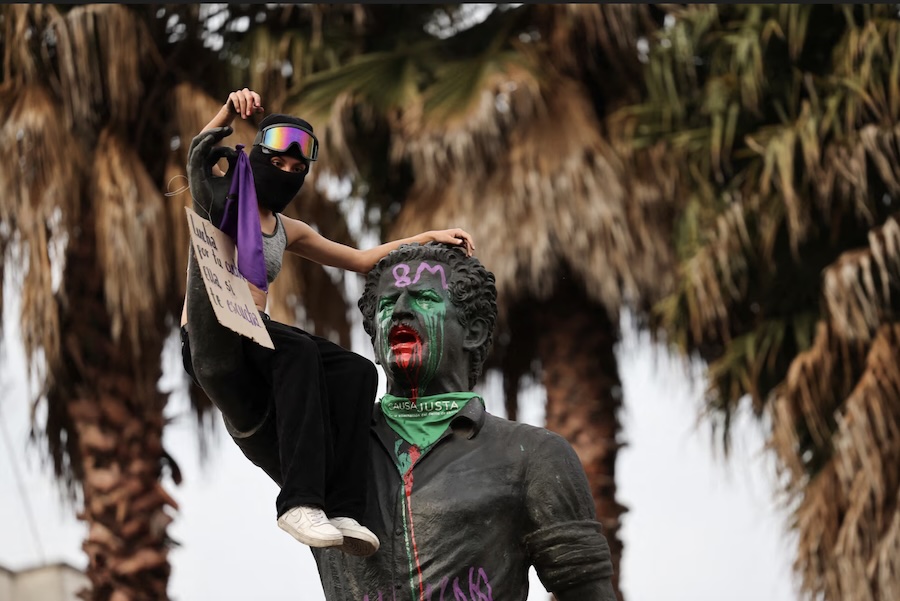
A demonstrator sits on the statue of Luis Carlos Galan during a protest to mark International Women’s Day in Bogota, Colombia. REUTERS/Luisa Gonzalez
(Reuters)

ECUADOR, QUITO

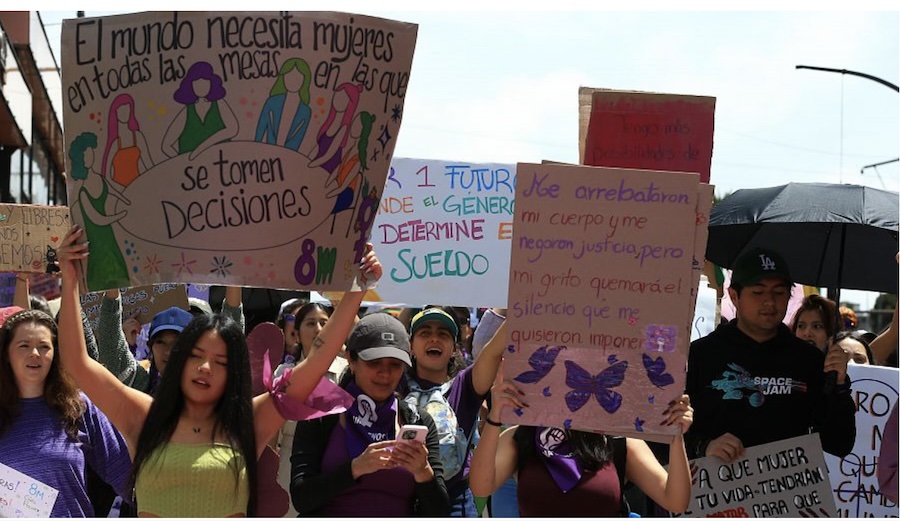
“The world needs women at every decision-making table.” International Women’s Day in Quito (Ecuador) EFE/ José Jácome
(RTVE – Radio y Televisión Española)

MEXICO, GUADALAJARA

in Bogota, Colombia. REUTERS/Luisa Gonzalez
(Reuters)

MEXICO, MEXICO CITY

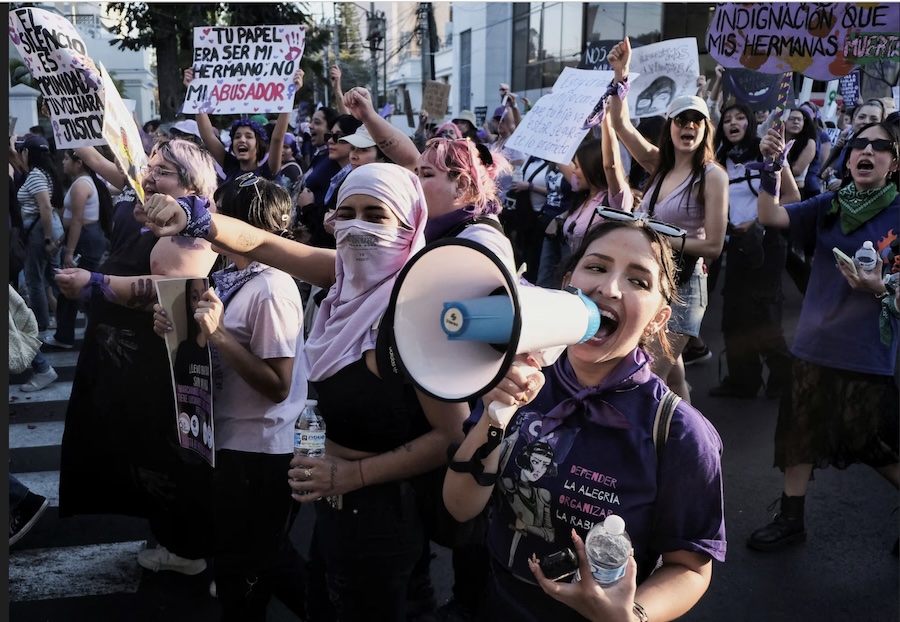
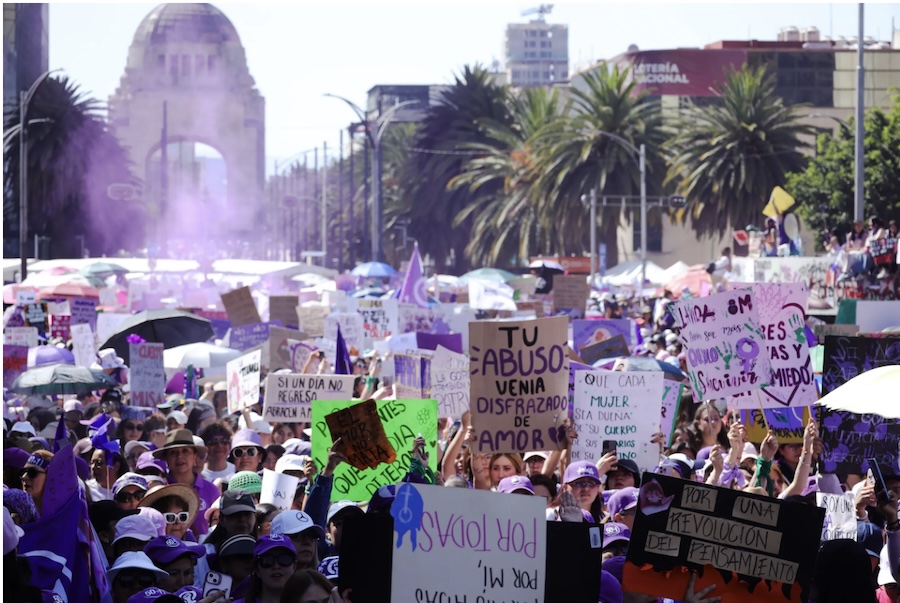
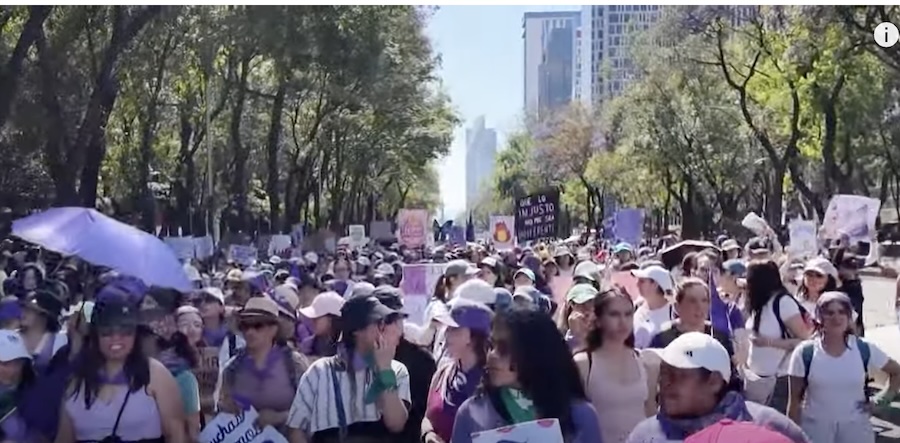
Once again, Mexico City turned purple . Its most iconic streets and monuments welcomed the International Women’s Day march on March 8. Feminist groups, collectives, mothers, daughters, girls, friends, and allies gathered once again to demand gender equality and justice for gender-based violence in our country . The government of Mexico City has reported the attendance of 200,000 protesters this year. (Vogue)

MEXICO, PACHUCA

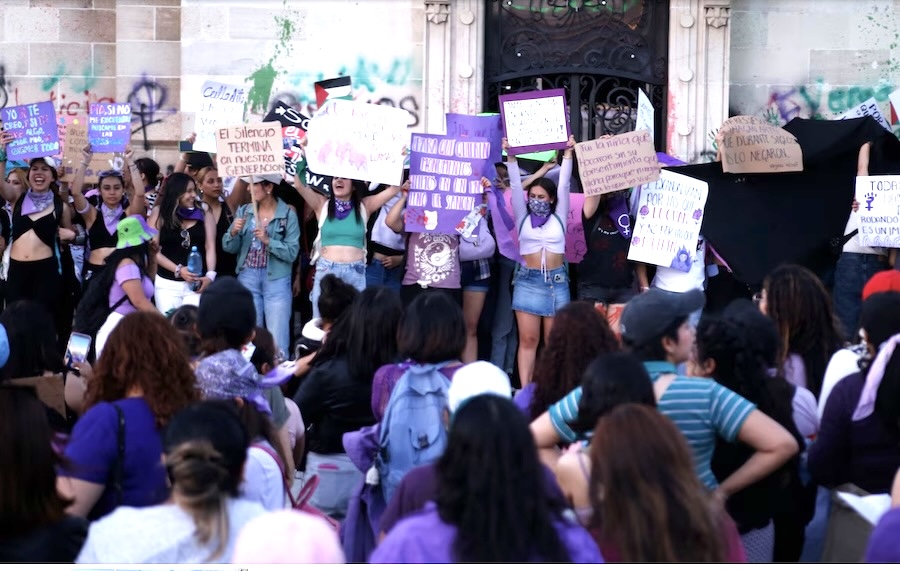
Women from various feminist groups protest in the Mexican city of Pachuca (EFE/David Martínez Pelcastre)
(Infobae)

VENEZUELA


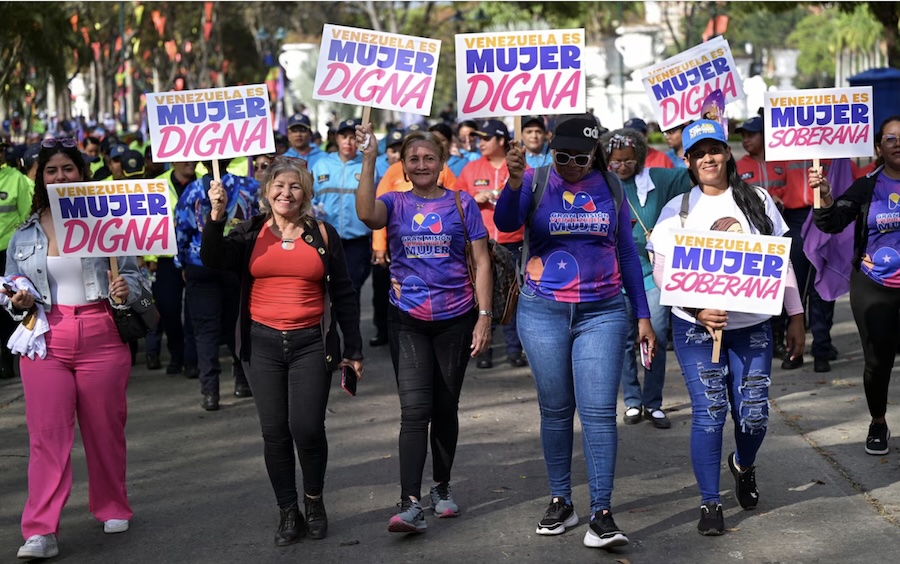
Venezuelan women marching to demand better wages and protection from violence (REUTERS). (Infobae)

On the ground at UN women’s conference in New York City

. . WOMEN’S EQUALITY . .

An article from the Catholic Register

Every March thousands of government officials, activists and policy makers descend on the United Nations (UN) headquarters in New York City for two weeks of both high-level meetings and side-events at the Commission on the Status of Women (CSW).


UN Women Executive Director Sima Bahous delivers remarks at the opening of the 69th session of the Commission on the Status of Women, 10 March 2025, UN headquarters. Photo: UN Women/Ryan Brown.

The CSW began in 1946 as one of the original sub-commissions of the UN’s Economic and Social Affairs Commission (ECOSOC). Its purpose, according to the UN website, is to promote “gender equality, the rights and the empowerment of girls.” 

Since March 10 when the 69th CSW session began, the streets around UN headquarters on East 45th have been filled with men and women from every corner of the world. African women, wearing traditional dress underneath hastily purchased sweaters as protection against the East River wind, walk alongside young female urbanites carrying tote-bags that proclaim, “Women belong in all places where decisions are being made,” that a quote of the late U.S. Supreme Court Justice Ruth Bader Ginsburg.

(Article continues in right column.)

Questions related to this article:

Does the UN advance equality for women?

(Article continued from left column.)

In the line-up in front of the UN Pass and ID office, waiting to receive my press pass, I was sandwiched between a woman who was a director of “Gender Equality and Social Inclusion” at a UK-based think tank and a tiny, red-lipsticked New Yorker who works for NGO Girls Not Brides. The two women were quite excited when they heard I was a journalist but went completely silent when I told them I worked for The Catholic Register.

According to the CSW website, the commission is a “one-of-a-kind platform for feminists from around the world to advocate, learn and share experiences.” 

This year is a particularly important one for the CSW as it marks 30 years since the fourth World Conference on Women at which the Beijing Declaration and Platform for Action was adopted. Signed by 189 countries, the 1995 global policy document outlines 12 focus points which includes women and the economy, human rights and the environment. Since the adoption of the declaration, subsequent commissions have been engaged with member countries monitoring and reporting on progress in those 12 areas.

Sima Bahous, executive director of UN Women, introduced the 69th CSW with the note, “while we have not yet known a world of full equality for all women and girls, the global community collectively imagined it in the 1995 Beijing Declaration and Platform for Action.” [Click here for her speech.]

Every year, much of the work of the commission takes place in the hundreds of side events both on the grounds of the UN headquarters and offsite in nearby hotels. Organized by non-governmental organizations in conjunction with member state delegations, the topics range from the realities of sex-selective practices to the role AI might play in combating human trafficking. 

The Canadian delegation co-hosted several side events in the first week, including one co-hosted with Sierra Leone, Plan International, UNICEF and CHOICE for Youth & Sexuality, entitled, “Stories from the future: Charting a path towards the future girls want.”

This year, Minister for Women and Gender Equality and Youth of Canada Marci Ien leads the Canadian delegation. Ien has stated that the primary focus of Canada’s advocacy at the commission will be “Women’s empowerment and the advancement of 2SLGBTQI+ rights.”

– – – – – –

If you wish to make a comment on this article, you may write to coordinator@cpnn-world.org with the title “Comment on (name of article)” and we will put your comment on line. Because of the flood of spam, we have discontinued the direct application of comments.
CODEPINK at International Working Women’s Day 2025

. . WOMEN’S EQUALITY . .

An article from Codepink

This year’s International Working Women’s Day was a welcome respite from the chaotic, maddening, and often heart-wrenching news cycle that is defining 2025. Our local chapters showcased last weekend that we will never let ourselves be defined by, nor distracted by the chaos and cruelty that’s being unleashed on us and our sisters all over the world. Instead, we focused on meeting people where they are at and growing the movement one person at a time.


From Los Angeles to Dallas, from Massachusetts to London, UK, our local chapters centered international working women’s resistance to send a powerful and urgent reminder that if women around the world are standing together – liberation from imperialism and militarism is inevitable! 

CODEPINK’s birth 23 years ago also culminated in powerful action on IWWD 2003, kicking off our alternate, feminist vision for peace against the backdrop of U.S. militarism and violence against women at home and in the Global South. 

Our chapters are doing the hard work of movement building. Many of them showed up to Women’s Day events in their community and brought flyers that educate on war and peace in a way that makes sense to anyone and everyone. This sparked lively conversation with people our movement wouldn’t otherwise reach. Scroll down to read more and see action photos!

CODEPINK Bay Area honored the revolutionary struggles of working women within Turtle Island and the Global South by holding community-led workshops to oppose fascism. Bay Area Organizer Cynthia stated, “The event was a beautiful collaboration of many groups. People were happy to receive our CODEPINK flyers. A highlight was the Palestinian Feminist Collective workshop where we learned about the crucial role of women in Palestinian life and resistance.”

CODEPINK London, UK took to the streets to mark the International Feminist Strike 2025 as part of a global anti-colonial movement.

We asked our CODEPINK London Regional Organizer, Nuvpreet: In the spirit of IWWD, what does true solidarity with international women look like? 

(Article continued in right column)

Questions related to this article:

Do women have a special role to play in the peace movement?

(Article continued from left column)

“As feminists in the imperial core, we must recognize that our governments fund, support, and maintain systems of militarism and colonial domination that harm women across the world. Our role is to oppose and end these systems so that women across the world can live in peace.”

CODEPINK Milwaukee did not let their local IWWD protest forget the women of Palestine! They brought signs, chants and extra PINK to the streets of Milwaukee! The women of Palestine are our sisters!!!

CODEPINK North Carolina showed up at their first event together with the message that militarism and war has no place in our feminism! Or at IWWD!

We asked our National Co-Director, Danaka: How do we care for ourselves and each other all year round? 

“It’s pretty easy to get swept up in the constantly devastating news cycle. But I try and remember that feeling defeated isn’t helping anyone…it’s not helping me, and it’s certainly not doing anything for women in the Global South who my country is bombing, starving, or exploiting. When I practice my feminist values of care, solidarity, and curiosity – how could I ever feel hopeless? There’s billions of people in the world with kind hearts, we just need to organize them.” 

CODEPINK NYC joined partners to host an educational screening of Leila and the Wolves (Leila wa za’ib) followed by a discussion on women leading resistance and liberation movements. 
Kurt from CODEPINK NYC reflected after, “The discussion was just as impactful as the movie itself. It felt good to be in a room where people could share their thoughts openly, even when the topics were tough. I walked away feeling really grateful for the chance to connect in community over such an important film. Thanks to everyone who made the event happen!” 

Our chapters have their work cut out for them as they disrupt the war narrative everywhere. And the work hasn’t stopped at IWWD! Last week, CODEPINK London, UK made news launching  BasesOffCyprus, a brand new coalition-led campaign to end joint US/UK surveillance flights aiding Israel’s genocide, which forced the UK government to publicly respond. Our chapter in Missouri is organizing to stop Israel Chemicals Limited from opening up a new facility in St. Louis. CODEPINK North Dakota is working on kicking Elbit Systems out of their state. The chapter in Chicago is part of a massive coalition to divest from Israeli bonds. They are taking on the war machine locally while educating and activating their friends and neighbors. 
Thank you to all those that brought messages of peace and justice to their International Working Women’s Day actions! We cannot do this work without each of our amazing local leaders, online organizers and global partners. 

– – – – – –

If you wish to make a comment on this article, you may write to coordinator@cpnn-world.org with the title “Comment on (name of article)” and we will put your comment on line. Because of the flood of spam, we have discontinued the direct application of comments.