All posts by CPNN Coordinator

About CPNN Coordinator

Dr David Adams is the coordinator of the Culture of Peace News Network. He retired in 2001 from UNESCO where he was the Director of the Unit for the International Year for the Culture of Peace, proclaimed for the Year 2000 by the United Nations General Assembly.

In Nepal, Woman Radio Host Makes Big Splash over Airwaves

.. EDUCATION  FOR PEACE ..

an article by Jiyoung Han for Search for Common Ground (abridged)

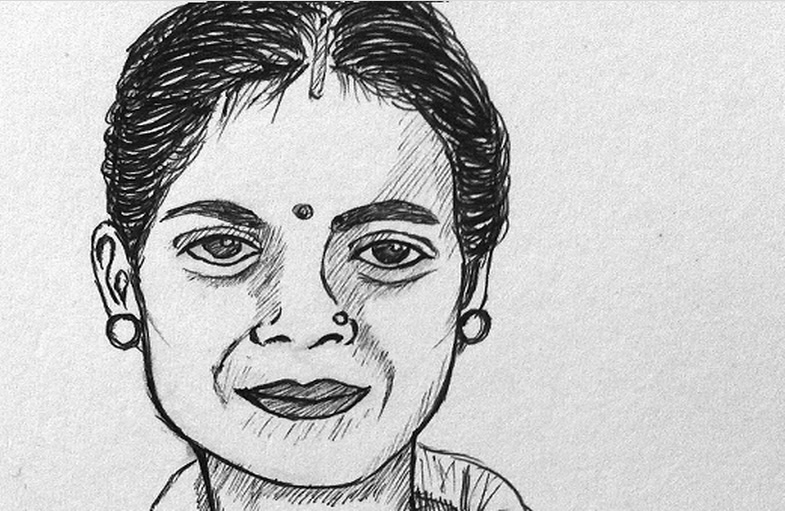
Sanju Kumari Das is a petite, soft-spoken woman, but don’t let that fool you. Hailing from Siraha, a volatile district in Nepal’s eastern Terai, this formidable 26 year-old commands the attention of political giants, helps end nationwide strikes, and is one only a handful of female radio show hosts in Nepal.


Sanju Kumari Das

Sanju is a producer for the Farakilo Dharti franchise, one of Search’s peacebuilding radio talk shows in Nepal. . . . Sanju has undergone Search’s peacebuilding training and applies the common ground approach to disputes on the program.

“It’s challenging to get people of opposing sides to come to an agreement, but it’s truly rewarding when it happens,” explains Sanju. “Agreement is difficult to achieve and should be celebrated.” . .

Once when political parties enforced nationwide strikes over a disagreement on the future federal states, Sanju invited party reps on the show to talk it out. This set a constructive precedent for subsequent talks, culminating in a multi-party agreement to end the strikes.

Many of Sanju’s guests have praised her accomplishments and mediation skills. This is all the more striking in a region where women are expected to be silent before men, contrary to Sanju’s highly public profile as a peacemaker. However, Sanju believes her gender and youth are irrelevant to the quality of the show, however. She coolly explains that, as long as the proper conflict resolution models are maintained, hosts young and old, male and female, would see similar results.

“I used to think I was always right, that my opinions were the most accurate. But producing Khulla Dharti has shown me that I make mistakes, that alternative views have just as much merit as my own. I’ve learned to listen to others, which is a crucial part of resolving any conflict.”

Khulla Dharti has built a strong following, with listenership as high as 41% of all radio listeners in the eastern region of Nepal. Sanju credits the program’s emphasis on neutrality and constructive dialogue as the key to its appeal. Whether it’s critically or appreciatively, listeners are engaging with Khulla Dharti conversations. For now, they’re focused on getting Sanju back on air; the mother of two has been on maternity leave to look after her 8 month-old son. She plans on returning to Khulla Dharti soon.

Fourteen radio stations currently produce and broadcast Farakilo Dharti in three languages—Nepali (Farakilo Dharti), Maithili (Khulla Dharti), and Tharu (Chakkar Dharti)—tailoring their respective shows to the local context. Between April and June of 2013, 84% of FD episodes have led to an agreed solution between conflicting parties, while a 2013 listenership survey revealed that 80% of respondents continue the discussion with friends after listening to the show. Indeed, FD continues to have impact on its target communities, with marginalized groups across the country reporting that it gives their voices an otherwise unavailable platform.

Question related to this article:

The Caribbean Union of Teachers promotes LGBT Rights

… HUMAN RIGHTS …

an article by Education International

Teacher union leaders have made an important step in their journey to develop a better understanding of LGBT issues from a human rights perspective, as the region shifts its tolerance and acceptance toward sexual diversity.


Lisa Shoman

In an effort to bring an end to the discrimination of LGBT students and teachers in Caribbean schools, teachers’ unions took small steps to find solutions to create acceptance of sexual diversity.

Human rights were at the core of the argument led by one of the Caribbean’s leading politicians and former Foreign Minister of Belize, Lisa Shoman, as she facilitated a discussion on “LGBT rights of students and teachers” at the Caribbean Union of Teachers’ (CUT) 6th Education Conference in Belize City, Central America in December.

Shoman, who is also a human rights lawyer, had the challenge of helping teachers move beyond what has been a contentious issue throughout the region’s history, which has been greatly influenced by religious and cultural beliefs and values. She worked to highlight human rights to separate them from issue of beliefs. However, one major roadblock in many countries has been the law.

“There are still antiquated laws on the statute books” that see people penalised for their sexual preferences, said Davanand Sinanan, President of the Trinidad and Tobago Unified Teachers Association (TTUTA), and Education International (EI) Executive Board Member. “In fact, in Trinidad and Tobago we have not been able to finalize a national gender policy for over three years because of opposition from religious bodies to clauses that speak to LGBT rights.”

Sinanan made it clear that wants his schools and society to change perspective, to recognise that all people deserve equal rights in order to stop discrimination.

Following the discussion, many agreed that there is a need for extensive education on the issue within the region to ensure that teachers are able to face varied lifestyle choices professionally and without judgement, especially youth friendly educational services that are delivered with the full respect of their rights and dignity for all, and the diversity of sexual orientation and gender identity.

Currently, 11 of the 12 Commonwealth countries of the Caribbean criminalise homosexuality under laws introduced by British colonialism. Many of these laws are reported to be indirectly enforced through police extortion and other state-sanctioned abuses, social stigma and direct discrimination. Criminal enforcement emerges as a barrier, which amounts to the denial of access and rights to education, employment, housing, health and other public services.

[Thank you to the Good News Agency for bringing this article to our attention.]

(Click here for a Spanish version of this article and here for a version in French.


Question related to this article:

The struggle against homophobia, Is progress being made in your community?

It would seem from articles on CPNN that progress is being made in some communities. In particular this is true in the United States according to the article by Danny B and in Bulgaria according to the article by Diana Tashkova.

Japan Gets Rid of All Cluster Munitions

DISARMAMENT & SECURITY .

an article by Cluster Munition Coalition

Japan announced this week having destroyed its entire stockpile of cluster munitions. As a State Party to the Convention on Cluster Munitions, Japan had until 1 August 2018 to finish destroying its stocks. The task was completed way ahead of the obligatory deadline. Congratulations, omedetou gozaimasu!
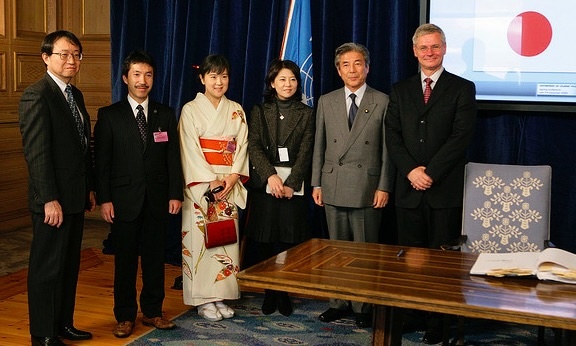

Japan signed the Convention in December 2008 in Oslo (Norway) along with nearly 100 other states

With this important accomplishment, Japan joins the United Kingdom, Denmark, Chile, The Netherlands, Belgium, Ecuador and many other countries that have destroyed their entire stockpiles of cluster munitions, ensuring these unacceptable weapons can never be used again.

The Ministry of Foreign Affairs reported that the destruction was completed on 9 February 2015. The President-Designate of the First Review Conference of the Convention, Croatia, welcomed the good news from Japan and encouraged other States Parties to follow the example.

All States Parties to the Convention that are currently in the process of destroying their stockpiles have indicated that they will meet their obligatory deadlines. Over 80% of these states’ cluster munitions have been destroyed already.

According to Albania and France, who coordinate a working group on the issue: “States’ achievements to date … highlight stockpile destruction as a success story of this Convention, directly contributing to its aims of preventing the proliferation and use of cluster munitions.”

Japan is an important donor for the clearance of cluster munition remnants in affected countries, and for assistance to survivors. “But at least three major financial institutions in Japan still invest in producers of cluster munitions abroad,” said Suzanne Oosterwijk from PAX (The Netherlands) who coordinates the Stop Explosive Investments initiative together with the CMC. “It is high time for Japan to adopt strong legal measures prohibiting investments in companies that produce these weapons.”

Japan participated in the Oslo Process that created the Convention and its position evolved significantly over time to allow it to join in the consensus adoption in 2008. It has continued to actively engage in the work of the Convention on Cluster Munitions since then.

The Cluster Munition Monitor provides more information on Japan. More information in Japanese is available through the Japan Campaign to Ban Landmines, a member of the Cluster Munition Coalition.

[Thank you to Janet Hudgins, the CPNN reporter for this article.]

Question related to this article:

Can cluster bombs be abolished?

The cluster bombs treaty was reported as follows by Agence France Presse while there was very little coverage in the US media, as usual for peace matters.

……………………..

Observers laud landmark cluster bomb ban

May 28, 2008

DUBLIN (AFP). — Observers on Thursday lauded a landmark treaty agreed by delegates from 111 countries in Dublin to ban cluster bombs, though the deal lacks the backing of major producers and stockpilers.

After 10 days of painstaking negotiations at Croke Park stadium in Dublin, diplomats agreed the wording of a wide-ranging pact to outlaw the use, production, transfer and stockpiling of cluster munitions by its signatories.

It also provides for the welfare of victims and the clearing of areas contaminated by unexploded cluster bombs.

The agreement will be formally adopted on Friday, and signed in Oslo on December 2-3. Signatories would then need to ratify it.

It was hailed in The Independent newspaper in London as a “significant step forward”, describing cluster bombs as “little more than air-delivered landmines” and declaring that “there can be no compromise when it comes to cluster bombs.”

The newspaper acknowledged in its editorial, however, that the document was weakened by the absence of the United States, Russia, China, India, Israel and Pakistan from the Dublin talks, and thus the agreement.

Irish Foreign Minister Micheal Martin said the treaty was a “very strong and ambitious text which nevertheless was able to win consensus among all delegations.”

“It is a real contribution to international humanitarian law,” he added.

The Irish Department for Foreign Affairs said 111 participating states and 18 observer countries attended.

The treaty requires the destruction of stockpiled munitions within eight years — though it leaves the door open for future, more precise generations of cluster munitions that pose less harm to civilians.

Britain was widely cited by campaigners as being at the forefront of a group of states seeking to water down the treaty.

But in a dramatic move Wednesday, Prime Minister Gordon Brown announced in London that Britain would withdraw all its cluster bombs from service in a bid to “break the log jam” in the Dublin talks.

The draft treaty agreed in Dublin read:

“Each state party undertakes never under any circumstances to:

“(a) Use cluster munitions;

“(b) Develop, produce, otherwise acquire, stockpile, retain or transfer to anyone, directly or indirectly, cluster munitions;

“© Assist, encourage or induce anyone to engage in any activity prohibited to a state party under this convention.”

Much of the wrangling focused on what signatories could and could not do in joint operations with states still using cluster bombs.

The draft text said signatories “may engage in military cooperation and operations”.

But the Cluster Munition Coalition, an umbrella group of non-governmental organisations, hopes that the treaty will stigmatise the use of cluster munitions — as the similar Ottawa Treaty did for landmines — and stop countries from helping others to use them.

CMC co-chair Simon Conway told AFP the treaty was a compromise but nonetheless “incredibly strong”.

“We’re going to end up with a strong treaty that prohibits every cluster bomb that’s ever been used, with no transition periods, with strong obligations on clearance and particularly strong obligations on victim assistance,” he said.

Hildegarde Vansintjan, advocacy officer for disability campaigners Handicap International, said the convention made states responsible for providing assistance to cluster bomb victims.

The treaty “would be a real step forward for the people suffering from cluster munitions all over the world,” she told AFP.

The cluster munitions ban process, started by Norway in February 2007, took the same path as the 1997 Ottawa Treaty by going outside the United Nations to avoid vetoes and seal a swift pact.

Cluster munitions are among the weapons that pose the gravest dangers to civilians, especially in heavily bombed countries such as Laos, Vietnam and Afghanistan.

Dropped from planes or fired from artillery, they explode in mid-air, randomly scattering bomblets. Countries are seeking a ban due to the risk of civilians being killed or maimed by their indiscriminate, wide area effect.

They also pose a lasting threat to civilians as many bomblets fail to explode on impact.
La Caribbean Union of Teachers promueve los derechos LGBT

. . . . . DERECHOS HUMANOS . . . . .

Un articulo del Internacional de la Educación

Los/as dirigentes sindicales han dado un importante paso adelante en el camino para desarrollar una mejor comprensión de las cuestiones LGBT desde una perspectiva de derechos humanos, cambiando la tolerancia y aceptación de la diversidad sexual en la región.

lgbt
Haga clic en la foto para ampliarla

Lisa Shoman

En un esfuerzo por poner fin a la discriminación de los/as estudiantes y docentes LGBT en las escuelas del Caribe, los sindicatos docentes dieron pequeños pasos con el fin de encontrar soluciones para fomentar la aceptación de la diversidad sexual.

Los derechos humanos fueron el eje del argumento dirigido por Lisa Shoman, una de las principales figuras políticas del Caribe y el exministra de Relaciones Exteriores de Belice, que facilitó un debate sobre ” los derechos de la comunidad de estudiantes y docentes LGBT ” en la sexta Conferencia de Educación de la Caribbean Union of Teachers’ (CUT) que tuvo lugar en la Ciudad de Belice, Centroamérica, el pasado mes de diciembre.

Shoman, que también es abogada en derechos humanos, se enfrentó al reto de ayudar a los/as docentes a superar lo que ha sido un tema polémico en la historia de la región, muy influida por las creencias y los valores religiosos y culturales, trabajando para resaltar los derechos humanos y separarlos de las creencias. Sin embargo, la ley ha sido en muchos países un obstáculo importante.

“Hay todavía leyes anticuadas en los estatutos” que sancionan a las personas por sus preferencias sexuales, señaló Davanand Sinanan, Presidente de la Trinidad and Tobago Unified Teachers Association (TTUTA) y miembro del Consejo Ejecutivo de la Internacional de la Educación (IE). “De hecho, en Trinidad y Tobago no hemos sido capaces de llevar a buen término una política de género en tres años debido a la oposición de los cuerpos religiosos a las cláusulas que se refieren a los derechos de las personas LGBT”.

Sinanan dejó claro que quiere que sus escuelas y la sociedad cambien de perspectiva y reconozcan la igualdad de derechos de todas las personas con el fin de acabar con la discriminación”.

Tras el debate, muchos/as coincidieron en que existe la necesidad de una amplia educación sobre el tema dentro de la región, con el fin de asegurar que los/as docentes sean capaces de enfrentarse a la variedad de estilos de vida de una manera profesional y sin juicio, especialmente los servicios educativos dirigidos a jóvenes que se entregan con el pleno respeto de derechos y dignidad para todos/as, en la diversidad de orientación sexual e identidad de género.

Actualmente, 11 de los 12 países el Caribe que pertenecen a la Commonwealth criminalizan la homosexualidad bajo leyes introducidas por el colonialismo británico. Muchas de estas leyes se aplican de manera indirecta en la extorsión policial y en otros abusos sancionados por el estado, estigma social y discriminación directa. La ejecución penal aparece como una barrera que niega el acceso y el derecho a la educación, empleo, vivienda, salud y otros servicios públicos.

[Gracias a la Good News Agency por informarnos al artículo.]

( Clickear aquí para la version inglês y aquí para la version francês )

Pregunta(s) relacionada(s) al artículo

The struggle against homophobia, Is progress being made in your community?

It would seem from articles on CPNN that progress is being made in some communities. In particular this is true in the United States according to the article by Danny B and in Bulgaria according to the article by Diana Tashkova.

33 Latin American and Caribbean states call for negotiations on a nuclear ban treaty

DISARMAMENT & SECURITY .

an article by International Campaign to Ban Nuclear Weapons

Latin American and Caribbean states have once again shown a united front and a clear vision for the future of nuclear disarmament.

At the third annual summit of the Community of Latin American and Caribbean States (CELAC), heads of state of all 33 countries, issued a declaration fully supporting the outcomes of the Third International Conference on the Humanitarian Impact of Nuclear Weapons in Vienna last December and formally endorsing the Austrian Pledge. The Austrian Pledge, delivered by the deputy foreign minister of Austria at the end of the Vienna Conference, recognised the existence of a “legal gap” in the international framework regulating nuclear weapons and called on all states to join in efforts to fill this legal gap by pursuing measures which would stigmatise, prohibit and lead to the elimination of nuclear weapons.

CELAC is the first regional group of states to recognise that a treaty banning nuclear weapons is the best option to fill this gap:

“As has been demonstrated by the testimonies of survivors and evidence and scientific data, nuclear weapons constitute a serious threat to security, development of peoples and civilization in general. Being consistent with our declarations, in this purpose we reiterate our strong support to call made in Vienna and Nayarit to initiate a diplomatic negotiation process of an internationally legally binding instrument for the prohibition nuclear weapons.”

Carlos Umaña of IPPNW Costa Rica, an ICAN partner organisation, notes that, “With the CELAC Declaration, Latin American and Caribbean states have recognised they intend to remain at the forefront of efforts which bring us closer to a world without nuclear weapons. The Treaty of Tlatelolco, which established a nuclear weapons free zone across the region, was the first multilateral treaty to prohibit nuclear weapons in a region — now Latin American and Caribbean states intend to work to promote a similar process that bans nuclear weapons internationally.”

For decades, discussions on nuclear weapons have been dominated by the few nuclear-armed states – states that continue to stockpile and maintain over 16,000 warheads. The humanitarian initiative on nuclear weapons has prompted a fundamental change in this conversation, with non-nuclear armed states leading the way in a discussion on the actual effects of the weapons.

According to Daniel Högsta of ICAN, “the Austrian Pledge is a rallying call for states to demand action to fill an unacceptable legal gap. The momentum generated by the humanitarian initiative is paving the way for the commencement of a process to ban nuclear weapons. CELAC states have added their voices to the call. We expect other regions to do the same.”

Question related to this article:

Can we abolish all nuclear weapons?

30 August 2012 — The following opinion piece by Secretary-General BAN Ki-moon appeared in leading newspapers in Argentina, Bangladesh, Burundi, China, Germany, India, Iran, Italy, Japan, Lebanon, Malaysia, The Philippines, Republic of Korea, Russia, Serbia, Turkey, Ukraine and European weekly publications and has been translated into 10 languages.

‘THE WORLD IS OVER-ARMED AND PEACE IS UNDER-FUNDED’

Last month, competing interests prevented agreement on a much-needed treaty that would have reduced the appalling human cost of the poorly regulated international arms trade. Meanwhile, nuclear disarmament efforts remain stalled, despite strong and growing global popular sentiment in support of this cause.

The failure of these negotiations and this month’s anniversaries of the atomic bombings at Hiroshima and Nagasaki provide a good opportunity to explore what has gone wrong, why disarmament and arms control have proven so difficult to achieve, and how the world community can get back on track towards these vitally important goals.

Many defence establishments now recognize that security means far more than protecting borders. Grave security concerns can arise as a result of demographic trends, chronic poverty, economic inequality, environmental degradation, pandemic diseases, organized crime, repressive governance and other developments no state can control alone. Arms can’t address such concerns.

Yet there has been a troubling lag between recognizing these new security challenges, and launching new policies to address them. National budget priorities still tend to reflect the old paradigms. Massive military spending and new investments in modernizing nuclear weapons have left the world over-armed — and peace under-funded.

Last year, global military spending reportedly exceeded $1.7 trillion – more than $4.6 billion a day, which alone is almost twice the UN’s budget for an entire year. This largesse includes billions more for modernizing nuclear arsenals decades into the future.

This level of military spending is hard to explain in a post-Cold War world and amidst a global financial crisis. Economists would call this an “opportunity cost”. I call it human opportunities lost. Nuclear weapons budgets are especially ripe for deep cuts.

Such weapons are useless against today’s threats to international peace and security. Their very existence is de-stabilizing: the more they are touted as indispensable, the greater is the incentive for their proliferation. Additional risks arise from accidents and the health and environmental effects of maintaining and developing such weapons.

The time has come to re-affirm commitments to nuclear disarmament, and to ensure that this common end is reflected in national budgets, plans and institutions.

Four years ago, I outlined a five-point disarmament proposal highlighting the need for a nuclear weapon convention or a framework of instruments to achieve this goal.

Yet the disarmament stalemate continues. The solution clearly lies in greater efforts by States to harmonize their actions to achieve common ends. Here are some specific actions that all States and civil society should pursue to break this impasse.

* Support efforts by the Russian Federation and the United States to negotiate deep, verified cuts in their nuclear arsenals, both deployed and un-deployed.

* Obtain commitments by others possessing such weapons to join the disarmament process.

* Establish a moratorium on developing or producing nuclear weapons or new delivery systems.

* Negotiate a multilateral treaty outlawing fissile materials that can be used in nuclear weapons.

* End nuclear explosions and bring into force the Comprehensive Nuclear-Test-Ban Treaty.

* Stop deploying nuclear weapons on foreign soil, and retire such weapons.

* Ensure that nuclear-weapon states report to a public UN repository on nuclear disarmament, including details on arsenal size, fissile material, delivery systems, and progress in achieving disarmament goals.

* Establish a Middle East zone free of nuclear weapons and other weapons of mass destruction.

* Secure universal membership in treaties outlawing chemical and biological weapons.

* Pursue parallel efforts on conventional arms control, including an arms trade treaty, strengthened controls over the illicit trade in small arms and light weapons, universal membership in the Mine Ban, Cluster Munitions, and Inhumane
Weapons Conventions, and expanded participation in the UN Report on Military Expenditures and the UN Register of Conventional Arms.

* Undertake diplomatic and military initiatives to maintain international peace and security in a world without nuclear weapons, including new efforts to resolve regional disputes.

First UN conference on tourism and culture opens in Cambodia, seeks to build partnerships

. SUSTAINABLE DEVELOPMENT .

an article by United Nations News Centre

Aimed at bringing together Ministers of Tourism and Ministers of Culture to identify key opportunities and challenges for stronger cooperation between the fields, two United Nations agencies launched the First World Conference on Tourism and Culture today [4 February] in the shadow of the legendary Angkor Wat temple, in Siem Reap, Cambodia.

cambodia
click on photo to enlarge

Statues on the Angkor Wat temple in Siem Reap Cambodia. Photo: UNESCO

The Conference, run by the UN World Tourism Organisation (UNWTO) and the UN Educational, Scientific and Cultural Organization (UNESCO) aims to address the overlap between culture and tourism, tackling the question of how to harness the power of tourism and culture to alleviate poverty, create jobs, protect natural and cultural heritage and promote international understanding.

“Today, cultural tourism – the world’s mosaic of art forms, heritage sites, festivals, traditions, and pilgrimages – is growing at an unprecedented rate,” said Taleb Rifai, UNWTO Secretary-General. “Humanity’s curiosity about cultural heritage is the element that truly differentiates one destination from another.”

Mr. Rifai described the growth of international tourism since the 1950s and the socio-economic contribution made by tourism, accounting for one out of every 11 jobs worldwide, as well as contributing nine per cent to global gross domestic product (GDP) and 30 per cent contribution to total global exports.

Irina Bokova, UNESCO Director-General, joined Mr. Rifai in looking forward to building a new, sustainable partnership that unites tourism and culture and said her goal was to create a positive mutually reinforcing dynamic between the two, working to build sustainability and to benefit local communities.

“Our starting point is to safeguard culture under all its forms, from monuments to living heritage, encompassing traditions, festivals and the performing arts,” said Ms. Bokova. We do so, because culture is who we are. It shapes our identity and is a means to foster respect and tolerance among people.”

She underlined the need to safeguard cultural heritage while moving ahead with sustainable tourism and said she believed that was the Conference’s core message, citing that vision as the route to promoting culture as a driver and enabler of sustainable development.

Cambodia’s Minister of Tourism, Thong Khon, also welcomed delegates, looking forward to the event’s contribution to sustainable conservation and development of tourism and culture.

[Thank you to the Good News Agency for bringing this article to our attention.]

Question related to this article:

How can tourism promote a culture of peace?

Comment by Liliana Mota, October 23, 2013

Why tourism?

Can tourism be seen as an instrument to achieve complicity between people’s minds?

“There is nothing better that connects two people’s mind than a good conversation” The above quote could be used to describe the effect which tourism has on people. Like a great conversation, tourism could be said to play a vital role amongst people all over the world. It fosters communication in all its senses, intercultural dialogue and mutual understanding.

In today’s world it is evident that there is a shortage of moral or ethical values amongst people across the different nations in this world, resulting in a globalised world lacking these morals and ethical values. Ignorance, the failure to consider the needs of others, and selfishness are a few of the ways which hinder us from embracing diversity and a common human perspective, which would result informal empathy, internal moral compassion, tolerance of differences, historical consciousness and interpretation. The above mentioned features are intrinsic, inherent and can be found in the practice of tourism.

Tourism has been emphasized as one of the most effective instruments which continue to tackle to tackle social and economical poverty, as well as encourage the culture of peace practice amongst people. In looking at the UN architecture, one is able to see the growing implications which the tourism sector has on the world and world policies. The touristic phenomenon has achieved a world record of 5% of world’s GDP contribution and is responsible for 235 millions jobs, according to the UNWTO’s data. Often the tourism sector counts more than 20% of the countries’ GDP.

On the negative side of this, it is evident that tourism focuses on economical matters, depriving any focus on the global implications of the constant interaction tourism encourages.

In the literal sense, tourism is nothing more or less than people meeting with the willingness to understand each other’s differences and point of view and simultaneously creating the opportunity for dialogue, mutual understanding and peace to take place.

Apart from tourism, various factors could be seen to play a role in encouraging integration and diversity amongst societies across the world. For example, the cultural segment has played an essential source of people’s integration and inclusiveness in developing countries.

Education has also played a significant role in encouraging integration, and incorporation amongst people all over the world. Education has been reconsidered and proposed to being the catalyst for exchange between countries, cultures and sectors, and most importantly for enhancing the lives of people by granting them the opportunity to leave their poverty stricken lives and societies in exchange a for better future which includes job and exchange opportunities.

In the tourism world, differences play the most essential role, differences among people represents the added-value. Being different is always a positive factor that usually motivates and encourages people to get to move and engage with each other and embrace the differences with the use of spiritual, religious and cultural meanings.

This notion of tourism needs to be addressed in multilateral governance discussions, where all the main actors, the international community, the ministerial and experts, private sector, local institutions and civil society engages are all present, and are all willing to work together in combined efforts and initiatives (from poverty alleviation to the promotion of awareness of sustainable development addressing special needs like regional development, urban planning and protection of natural and cultural landscapes). This combined approach of working at the local level within communities and at the national and international level, in order to reach and engage the poor, has been considered as potentially being the “one possible and effective answer” and effective approach towards the world’s poorest areas where it can make a difference.

Mexico: Alternative Justice Act should be approved before August

. DEMOCRATIC PARTICIPATION .

an article by Dulce Rodríguez Calderón, Entrelíneas

The Chief Justice of the State, José Miguel Salcido Romero, has indicated that the law for Alternative Justice will be ready before August 17, when the new system of oral justice for civil and family matters begins in Chihuahua.

Mexico
click on photo to enlarge

The Chief Justice of the State, José Miguel Salcido Romero

“We have sent the initiative to the State Congress and hopefully it will soon be processed, that makes us very pleased because we will be able to consolidate our alternative justice system in a very solid manner,” he shared in an interview as the head of the judiciary.

When asked whether the new law must be analyzed, optionally modified and approved by the Legislature before August, he responded that these are matters to be decided by the State Congress, but: he added, “I would say yes, because it would help very much this issue to be firmly established by the time the new oral system of civil and family justice comes into force.”

We need to keep in mind that the main purpose of the law is to promote social harmony as the main tool for dialogue, which will undoubtedly aid justice to be prompt and expeditious, so that parties can come to agreement through mediation and avoid prosecution.

It is also important to mention that if approved, the Mediation Act, which dates from June 7, 2003 (which was planned for Mediation Center that never began operations) is insufficient for today’s needs for implementation of the Alternative Justice Center.

The new Organic Law of the Judiciary provides for the existence of the Centre for Alternative Justice to promote the settlement of disputes and the culture of peace for individuals or corporations in civil, labor, criminal and commercial cases.

As a procedure for resolving disputes, Alternative Justice is much wider when it comes to conciliation and mediation, which is the reason to propose the new Act.

(Click here for a Spanish version of this article)

Question related to this article:

Volunteering for the World We Want: Annual Report of United Nations Volunteers

FREE FLOW OF INFORMATION

an article by Richard Dictus, Executive Coordinator, United Nations Volunteers (abridged)

I am pleased to present the UNV Annual Report for 2013, which depicts the work and achievements of UN Volunteers in addressing the challenges of peace and sustainable human development. This report highlights UNV’s partnerships and results, and attests to the commitment, creativity and talent of our UN Volunteers, UN Youth Volunteers and UN Online Volunteers.


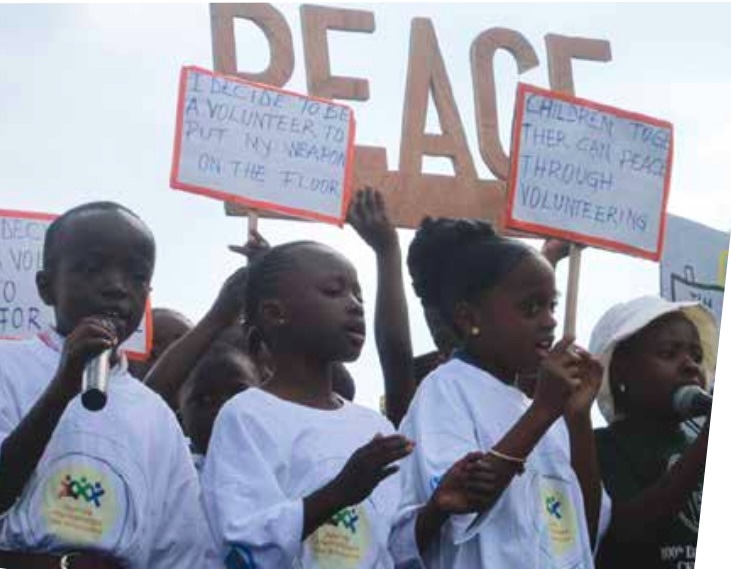
On International Volunteer Day 2013, UN Volunteers organized activities with school children to raise awareness on volunteerism in Goma, Democratic Republic of Congo (Alexandra de Bournonville/UNV, 2013)

In 2013, 6,351 United Nations Volunteers were deployed to 129 countries. They contributed to the effective delivery of the peace and development interventions of 34 UN system partners. Of these, 1,021 were UN Youth Volunteers. Additionally, 11,328 UN Online Volunteers completed over 17,370 assignments. Many of these worked together with UN Youth Volunteers on advancing the UN global consultations to shape the post-2015 development agenda, as part of our partnership with the United Nations Millennium Campaign and the World We Want 2015/MY World initiatives. Through this most innovative collaboration, UN Volunteers amplified the voices of marginalized and disenfranchised people who would not have been able to respond to a web-based UN-language questionnaire without this support.

I have taken time during my travels to connect with UN Volunteers, particularly our UN Youth Volunteers. For instance, during my visit to Burkina Faso, I was pleased to see the outcome of proactive collaboration between an internationalUN Volunteer and a Red Cross volunteer. Working with men and women, the volunteers established innovative shelters for the refugee camp community that were acceptable in traditional terms, durable in climate conditions and low in cost. This model is now being adopted across the Sahel. . .

The new Strategic Framework reflects UNV‘s focus on working more systematically with United Nations and other partners to jointly deliver stronger results for peace and development. Recent Memoranda of Understanding signed with the United Nations Population Fund (UNFPA), the United Nations Environment Programme (UNEP) and UN-Habitat further cement existing partnerships and plans.

True to its mandate, UNV continued to engage people, particularly youth, in development processes and contribute to development impact. We provide our partners with the best quality volunteers, who increase the sustainability, effectiveness and efficiency of joint interventions.

At the end of September 2014, UNV is convening a forum to provide a platform for UNV’s longstanding and new partners to share good practices and experiences in promoting volunteering for peace and development. The Forum will also provide an opportunity for UNV to share with partners its key achievements in 2013, its new strategic focus,as well as opportunities for partnering with UNV.

As the new sustainable development agenda takes shape, UNV is poised to deliver more talent and more results for peace and development. I applaud our volunteers and salute our partners: let us continue volunteering for the world we want.

[Thank you to Janet Hudgins, the CPNN reporter for this article.]

Question related to this article:


Can the UN help move the world toward a culture of peace?

The following comes from the CPNN Coordinator’s blog of October 2012

The United Nations and the Culture of Peace

My ten years working in the United Nations system left me with a sweet and sour taste: the sweet side was the universality of the UN, both its staff and mandate, and its great significance for raising the consciousness of the peoples of the world; the sour side was the jealousy of the Member States who make sure that the UN does not encroach on their freedom to rule over their own citizens, as well as people in other countries that they may dominate through neo-colonial relations. This became crystal-clear to me when the United States delegate, during the informal meetings of the UN General Assembly in 1999, opposed the Declaration and Programme of Action on a Culture of Peace, saying that it would make it more difficult for them to start a war. In fact, throughout history, war (call it “defense” if you prefer) has always been the most fundamental “right” of the state

With this in mind, I have been pleasantly surprised by the extent to which the UN system has once again taken up the culture of peace as a priority, as shown in this month’s CPNN bulletin, just as it was a priority in the Year 2000 when I was the director of the UN International Year for the Culture of Peace

Of course, this does not happen by chance, and great credit belongs to two men who played key roles for the Year 2000, Federico Mayor Zaragoza, who made the culture of peace a priority of UNESCO, and Anwarul Chowdhury, who played the role of midwife at the UN General Assembly, guiding the culture of peace resolution through nine months of opposition by the powerful states. Once again, this last month, these two men motivated and spoke eloquently at the High Level Forum on a Culture of Peace at the UN

As always it was the countries of the South who supported the initiative (see the CPNN article of September 24 and its discussion), but at least this month it was not blocked by the powerful states

In fact, it is my impression that the powerful states pay less and less attention to the United Nations. When there was a financial crisis a few years ago, the powerful states did not turn to the UN agencies , the World Bank and the International Monetary Fund, but set up their own temporary system of finance ministers, and when it came time for the review of nuclear non-proliferation, President Obama held his own meeting with heads of state in Washington and ignored the UN conference where the only head of state to speak was that of Iran. And the US has pulled out of UNESCO entirely, forcing drastic cuts in its budget

In fact, the lack of attention by the powerful states may provide the UN system with an opportunity to push the agenda of the culture of peace without their opposition – let us hope that the UN can take advantage of this

Of course, in the long run, the UN, or any other institution, cannot mandate a culture of peace; instead, the culture of peace can only grow from the consciousness, both understanding and action, of the peoples of the world (see last month’s blog below). That’s why the role of the UN for consciousnes-raising is ultimately its greatest contribution!

Sudan Open University Graduates Sign Peace Pledge

FREE FLOW OF INFORMATION

an article by AllAfrica News Service, press release from UNAMID

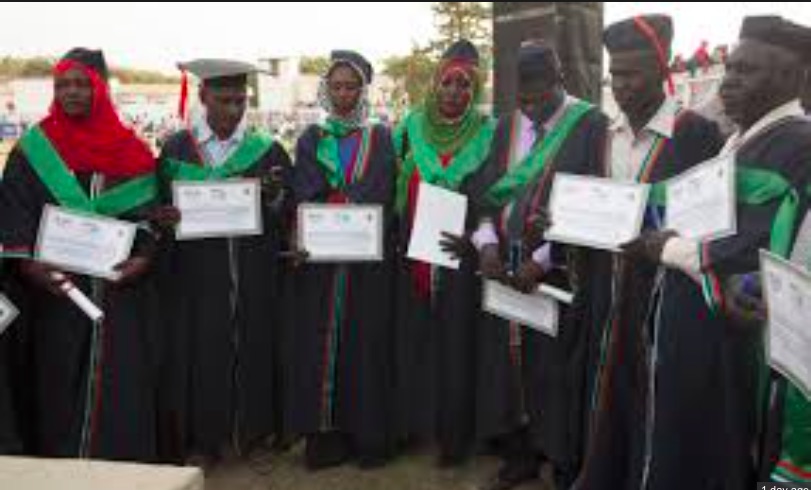
On 10 February 2015, thousands of people in El Fasher, North Darfur, attended a graduation ceremony organized by UNAMID for the students of the Sudan Open University.


Sudan Open University Graduates Sign Peace Pledge

The occasion, held under the theme “Darfur: Talk Peace Now,” included a musical concert, traditional dances and drama performances.

The highlight of the event was the signing of a peace pledge by graduates from 2006-2012. “As we have gained a lot through our education at the University, we pledge before everyone present here to become messengers for peace and development,” said Khalil Gamareldin, on behalf of the graduates.

UNAMID Deputy Joint Special Representative (DJSR), Abdul Kamara, addressed the gathering saying that such events motivate the youth to support peace initiatives through their education. Speaking to the new graduates, Mr. Kamara said, “Today’s ceremony represents a giant step for you, as it will enable you to begin contributing to the promotion of all peace initiatives using your newly gained education and credentials, through avenues that are now open for you, to place the agenda for peace in Darfur firmly on national, regional and international platforms.”

DJSR Kamara reconfirmed that the African Union and United Nations, along with other international partners, remain cogniscent of developments in the region, and will continue to work with the Government and all parties in the implementation of initiatives that can guarantee peace and security for all Darfuris. “UNAMID stands ready to support anyone, any group, any community, that is willing to work for better lives and livelihoods for the people of Darfur,” remarked UNAMID’s Deputy JSR.

On his part, Mr. Abu Abdelrahman, Chair, Sudan Open University, spoke about the work of the University in areas such as human resource development, social cohesion and the dissemination of the culture of peace. Additionally, he expressed his gratitude to UNAMID for its continued support.

“Focusing on learning and education can help address many of the significant issues Darfuris are dealing with,” said the Wali (Governor) of North Darfur State, Osman Kibir, reaffirming his support for speeding up the pace of education to bring about peace and development in the region.

Question related to this article:

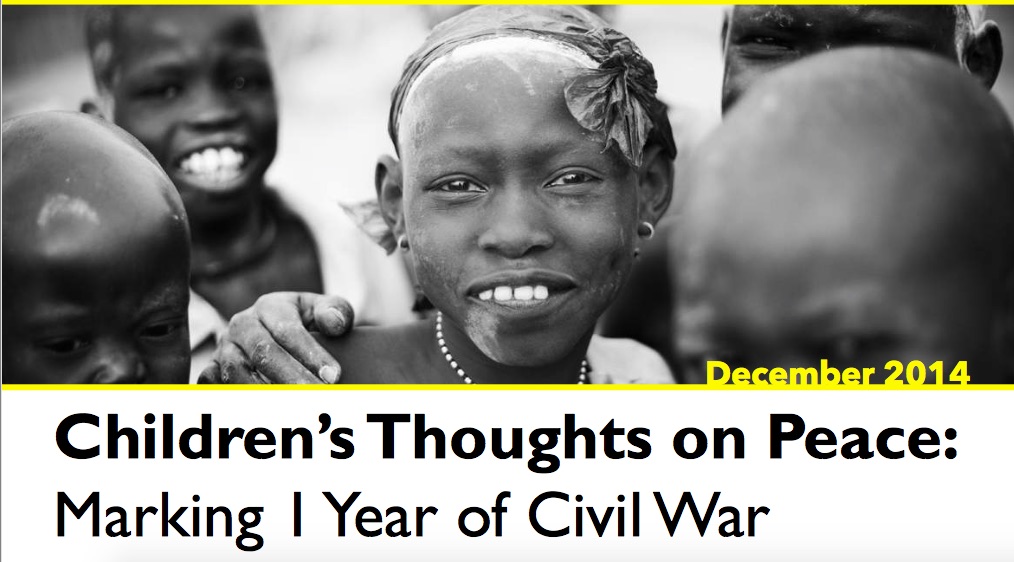
Children’s Thoughts on Peace: Marking 1 Year of Civil War in South Sudan

FREE FLOW OF INFORMATION

an article by Tiffany Easthom, Nonviolent Peaceforce Country Director

Video: Nonviolent Peaceforce in South Sudan

[Editor’s Note: In South Sudan, where the danger of a full-scale war looms with the return of the dry season, Nonviolent Peaceforce provides training to nongovernmental organization workers, NP is able to spread protective coverage for civilians and at the same time mainstream protection methodologies. Over the next three months, NP will train 150 people in five areas in South Sudan. Here is a special message from South Sudan country director Tiffany Easthom.]

What is peace to you? For children in South Sudan it’s the little things that we often take for granted. A year after the conflict, children were asked to share their perspective on what peace means to them. They communicated this through art. Illustrations included images of water, school, planes, sharing, playing sports, and growing food. See their drawings here.

Looking back at 2014, we have faced many challenges together. It has been a year of heart- break and hardwork. We have laughed together and cried together as we struggled to come to terms with the reality of the terrible violence that has continued to shake the country. We have learned a great deal, and have been able to contribute to keeping conflict affected people around the country safe. We have welcomed many new colleagues into the family and have sadly bade a few farewell.

Through all of this tragedy, we have been able to continue to develop and improve both the programming and the operational sides of the house. All of these achievements are a testament to you – to each and everyone of you who makes their contribution, who fulfills their responsibilities and who contributes to making sure that we are doing everything we possibly can for improving the safety and security of conflict affected communities.

So as the year draws to a close, I am filled with gratitude and love for all of you and am looking forward to continuing our struggle together in the new year.

[Thank you to Janet Hudgins, the CPNN reporter for this article.]

Question related to this article: