All posts by CPNN Coordinator

About CPNN Coordinator

Dr David Adams is the coordinator of the Culture of Peace News Network. He retired in 2001 from UNESCO where he was the Director of the Unit for the International Year for the Culture of Peace, proclaimed for the Year 2000 by the United Nations General Assembly.

Nigeria: Plateau To Tackle Boko Haram With Peace Education

… EDUCATION FOR PEACE …

An article from Concise News

The Government of Plateau has introduced peace education in primary and secondary schools to forestall the resurgence of Boko Haram and tackle the menace of radicalism among children and youths.


Plateau State Governor Simon Lalong   Photo: ScanNews

Deputy governor of the state, Prof. Sonni Tyoden, told the News Agency of Nigeria in New York that the state had paid dearly for violent conflicts.

Tyoden attended the 2017 Education Solutions International Conference in New York and delivered a keynote address on ‘SDGs-4: Character and Leadership Education in 2030 Development Agenda’.

He said Plateau would become the first and only state in Nigeria to have introduced peace education in its primary and secondary schools curricula.

”As a society emerging from the throes of violent conflict, so much is required in terms of functional and collaborative partnership with the global community to develop the educational sector.

”However, the current situation where peace education is only taught at tertiary levels may not be the best approach as far as the quest for the de-radicalisation of young minds is concerned,” he said.

To ensure its success, Tyoden said the state is willing to build strategic partnership with relevant stakeholders. The stakeholders, according to him, are the UN Educational, Scientific and Cultural Organisation and other International Non-Governmental Organisations (INGOs).

He also said the state would partner with donor agencies to tackle the problems of negative social indoctrination, as well as other challenges facing our education sector.

[Thank you to Janet Hudgins, the CPNN reporter for this article, and to the Global Campaign for Peace Education for calling this article to our attention]

Question for this article:

UN conference adopts treaty banning nuclear weapons

. DISARMAMENT & SECURITY.

A news release from the United Nations

Countries meeting at a United Nations conference in New York today (July 7) adopted the Treaty on the Prohibition of Nuclear Weapons, the first multilateral legally-binding instrument for nuclear disarmament to have been negotiated in 20 years.


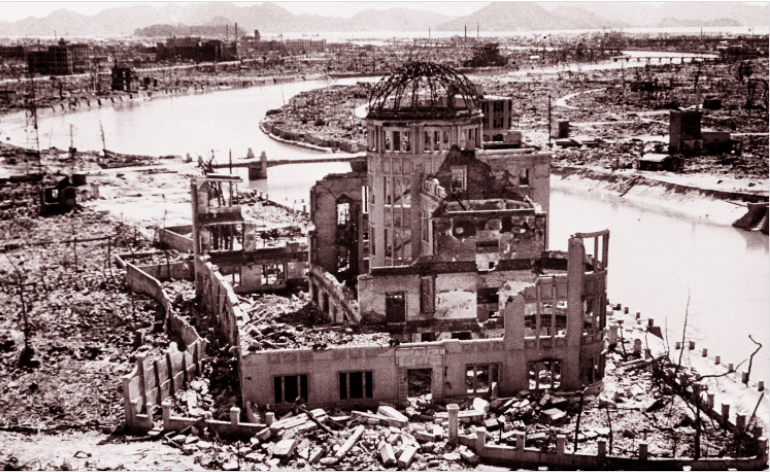
The remains of the Prefectural Industry Promotion Building, later preserved as a monument – known as the Genbaku Dome – at the Hiroshima Peace Memorial. UN Photo

“The treaty represents an important step and contribution towards the common aspirations of a world without nuclear weapons,” the spokesperson for Secretary-General António Guterres said following its adoption.

“The Secretary-General hopes that this new treaty will promote inclusive dialogue and renewed international cooperation aimed at achieving the long overdue objective of nuclear disarmament,” Stéphane Dujarric added.

The treaty – adopted by a vote of 122 in favour to one against (Netherlands), with one abstention (Singapore) – prohibits a full range of nuclear-weapon-related activities, such as undertaking to develop, test, produce, manufacture, acquire, possess or stockpile nuclear weapons or other nuclear explosive devices, as well as the use or threat of use of these weapons.

[Click here to read the treaty]

“We feel emotional because we are responding to the hopes and dreams of the present and future generations,” said Ambassador Elayne Whyte Gómez of Costa Rica, who serves as the President of the conference that negotiated the treaty in response to a mandate given by the UN General Assembly.

She told a news conference at UN Headquarters that with the treaty the world is “one step closer” to a total elimination of nuclear weapons.

(Continued in the right column)

Question related to this article:

Can we abolish all nuclear weapons?

(Continued from the left column)

The treaty will be open for signature to all States at UN Headquarters in New York on 20 September 2017, and enter into force 90 days after it has been ratified by at least 50 countries.

However, a number of countries stayed out of the negotiations, including the United States, Russia and other nuclear-weapon States, as well as many of their allies. The Democratic People’s Republic of Korea (DPRK) did not join the talks either.

In a joint press statement issued today, the delegations of the United States, United Kingdom and France said they “have not taken part in the negotiation of the treaty… and do not intend to sign, ratify or ever become party to it.”

“This initiative clearly disregards the realities of the international security environment,” they said. “Accession to the ban treaty is incompatible with the policy of nuclear deterrence, which has been essential to keeping the peace in Europe and North Asia for over 70 years.”

In response to questions on the joint statement, Ms. Whyte Gómez recalled that when the Treaty on the Non-Proliferation of Nuclear Weapons (NPT) was adopted decades ago, it did not enjoy a large number of accessions.

Opened for signature in 1968, the Treaty entered into force in 1970. Then in 1995, the Treaty was extended indefinitely. A total of 191 States have joined the Treaty, including the five nuclear-weapon States that are the permanent members of the UN Security Council – China, France, Russia, the United Kingdom and the United States.

In the beginning, it was unimaginable that those States would be parties to the NPT, she noted. “But the world changes and the circumstances change.”

She added that the hibakusha, survivors of nuclear bombs, have been the driving force in the creation of the nuclear weapons prohibition treaty. The experiences they have been sharing “touch the human soul,” she said, adding that the negotiations were a “combination of reason and heart.”

English bulletin July 1, 2017

. . . PEACE IS ADVANCING . . .

It has been a busy month at CPNN, reflecting progress in many areas of the culture of peace (37 articles in English, 8 of which also in Spanish and 5 of which are in French).

Four of the articles follow the ongoing development of negotiations at the United Nations for a treaty to ban nuclear weapons. As the July 7 deadline for the vote approaches, the work has been intense by Member States and Non-Governmental Organizations. Delegations from the Member States concluded their first read-through of the entire draft on June 21, and a revision on June 27.

The nuclear states and their allies are boycotting the negotiations; hence the treaty will not affect them directly. However, there are a number of proposed elements of the draft treaty which could impact them indirectly, although agreement on these proposals is proving to be difficult to achieve. They include proposals to prohibit the transit of, threat to use, and financing of nuclear weapons.

Nuclear-armed states currently spend US$100 billion collectively on nuclear weapons programs annually and the corporations manufacturing the weapons and their delivery systems are a major driver of the nuclear arms race. If all of the States joining the nuclear ban treaty divested their public funds from these corporations, and disallowed banks from investing in them, it could radically change the economics of the nuclear arms industry. And it would give support to efforts of parliamentarians and civil society in the nuclear arms States to cut the exorbitant nuclear arms budgets and re-direct these funds to health, education, jobs, environment and sustainable development.

We see an example of this strategy in the decisions this month by the U.S. Conference of Mayors at their annual meeting. They supported two resolutions submitted by member cities urging Congress to move funding out of the military and into human and environmental needs rather than the reverse. And they adopted a new resolution which concludes as follows:

“BE IT FURTHER RESOLVED, that The United States Conference of Mayors urges all U.S. mayors to join Mayors for Peace in order to help reach the goal of 10,000 member cities by 2020, and encourages U.S. member cities to get actively involved by establishing sister city relationships with cities in other nuclear-armed nations, and by taking action at the municipal level to raise public awareness of the humanitarian and financial costs of nuclear weapons, the growing dangers of wars among nuclear-armed states, and the urgent need for good faith U.S. participation in negotiating the global elimination of nuclear weapons.”

Meanwhile, four of this month’s articles follow the progress towards peace in Colombia. On June 26, the United Nations announced that the FARC has completed the process of turning in their weapons as called for in last year’s peace agreement. And on June 6, the Colombian Government and the other guerilla group, the ELN, announced that they reached a series of agreements, including international financing to push forward the peace process. Although violence continues in many regions of the country, there are important grass-roots initiatives to promote non-violence, including “Community Radios for Peace and Coexistence”, launched in mid-2016, with support from the European Union. This supports 400 of the 627 community radio stations in Colombia to generate a culture of peace in the most remote rural areas, those most affected by the armed conflict.

Seven articles this month reflect the ongoing progress in peace education around the world, including initiatives in the Dominican Republic, Northern Ireland, Ecuador, Mexico and Cote D’Ivoire, as well as plans for the annual meetings of the International Institute for Peace Education and the Asia-Pacific Peace Research Association.

Also three articles inform us about the continuing development of journalism and writing for a culture of peace in Africa. A regional seminar on “ The role of journalists and the media in preventing violence” was sponsored by the United Nations in Dakar, Senegal. Also in Dakar, the members of the Writers’ Union of Africa, Asia and Latin America refirmed their commitment to promote a culture of peace. “Children, adolescents and adults who read us need to read positive things that can boost their creativity, and it is in peace that we can create,” said the Special Advisor to the President of the Republic, Macky Sall. And in Uganda, traditional leaders who have been active in the peace and reconciliation efforts say that peace journalism as a tool has been “useful in mobilising people and reaching out to rebels”.

Finally, in a good surprise for the peace movements around the world, Jeremy Corbyn, the leader of the British opposition Labour Party and former chairman of the Stop the War Coalition, led his party to a remarkable advance in the recent General Elections. It was all the more remarkable because the attacks by his opponents and much of the mainstream media against his anti-war positions seem to have backfired, and to have helped rather than hurt him and his party in the elections. It seems that British voters want peace instead of continuing their involvement with the various wars and military threats headed up by the United States and NATO.


DISARMAMENT AND SECURITY


UN: Conference Considers Revised Draft of Proposed Legally Binding Instrument to Prohibit Nuclear Weapons

TOLERANCE AND SOLIDARITY


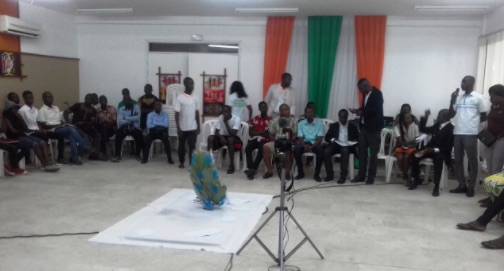
Côte d’Ivoire: Preservation of the peace in Port-Bouët: Communal youth give their recipes

DEMOCRATIC PARTICIPATION


U.S. Conference of Mayors Opposes Military-Heavy Trump Budget

SUSTAINABLE DEVELOPMENT


Montreal: Official Conference of the UN International Year of Sustainable Tourism for Development

WOMEN’S EQUALITY


UN: New films on Global Goals spotlight women’s journeys of resilience

HUMAN RIGHTS


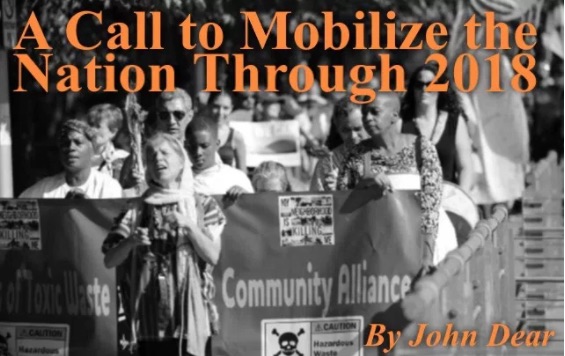
USA: A Call to Mobilize the Nation through 2018

FREE FLOW OF INFORMATION


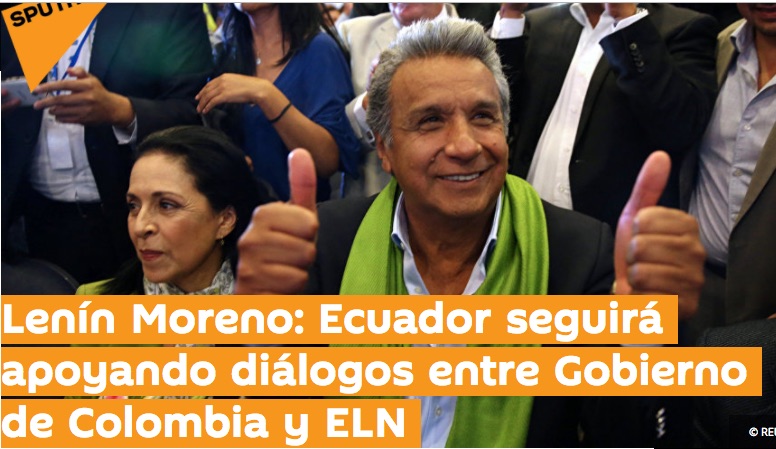
The Government of Colombia and the ELN agree on international aid to support the peace process

EDUCATION FOR PEACE


Africa: In a World of Turbulence, Writers Reaffirm Their Role for Enlightenment and Information

UN: Conference Considers Revised Draft of Proposed Legally Binding Instrument to Prohibit Nuclear Weapons

.DISARMAMENT & SECURITY.

Meeting coverage from the United Nations

Queries Raised about Consensus, Clarity on State Responsibility, Victim Assistance

The Conference to negotiate a legally binding instrument to prohibit nuclear weapons considered a new version of the draft convention today [June 27], following the read-through of the earlier version last week, when delegations made proposals and suggestions.

Pushing ahead towards concluding with a final version by 7 July, Conference President Elayne Whyte Gómez (Costa Rica) presented a revised version of the draft instrument (document A/CONF.229/2017/CRP.1/REV.1), saying that in reviewing the draft “article by article”, her main focus had been on points of convergence..

Video from Press TV

Starting from the top, she said, the title had changed, referring to a “treaty”, the clear preference expressed by many delegations. However, the change in title would in no way affect the instrument’s legal status, she emphasized. Rather, it placed the draft convention on the same level as the many treaties negotiated over the decades with the aim of advancing progress towards the total elimination of nuclear weapons.

She went on to note that the draft preamble’s basic structure remained largely unchanged, although it did elaborate significantly on the humanitarian consequences of nuclear weapons and more accurately characterize the legal basis upon which the treaty would rest. New paragraphs had been added to recall essential principled efforts of the United Nations, reaffirm the inalienable right to the peaceful use of nuclear energy, and recognize the roles of women and men in the disarmament process. While the draft preamble was relatively long compared to other multilateral treaties in the nuclear field, she said, hopefully it provided a clear and precise narrative.

Concerning safeguards, she said consultations on the matter had revealed a number of complicated and technical issues, adding that she would continue to consult on the appropriate way to incorporate elements from the Annex into the first draft. The most significant innovation in the revised draft was in article 4, she added.

Following overwhelming interest from delegations, the draft now incorporated the so-called “join-then-destroy” pathway, she continued, underlining the contributions of South Africa, Austria, and Sweden. Article 4 now provided an option for States possessing nuclear weapons to join the treaty at an early date, subject to the obligation to eliminate its nuclear weapons arsenal. A considerable amount of flexibility had been built into that approach, because it must be fit to accommodate the widely varying nature of existing nuclear weapons programmes.

She said the role of the International Atomic Energy Agency (IAEA) had been carefully limited to verification of nuclear material in peaceful activities, in accordance with its current safeguards system. The so-called South Africa-plus pathway had also been retained, having been brought into line with the current safeguards system. The option to pursue additional protocols, including through negotiations with non-signatory States, had been retained as well. “Many delegations considered that it would be appropriate, prudent and wise to retain this option,” she stressed.

(Continued in the right column)

Question related to this article:

Can we abolish all nuclear weapons?

(Continued from the left column)

Article 9, on meetings of States parties, now elaborated specific items that could be considered in light of various provisions of the draft, she continued, adding that there was also a new provision to allow the convening of extraordinary meetings. The main change in the article on amendments was that it now provided for the consideration of proposed amendments at a conference dedicated for that purpose, in accordance with the normal parameters set forth in many treaties. Articles 4, 14 and 15 had been modified to allow the treaty to remain open for signature indefinitely, she said. And finally, the text of Article 19 had been modelled on the Arms Trade Treaty’s corresponding provision on relations with other agreements.

With the floor open for general comments, several delegates said they were awaiting instructions from their capitals. Iran’s representative emphasized the need for consensus on what exactly the treaty aimed to do. Proposing the deletion of Articles 2-4, he said such provisions were highly technical and complex, and requiring additional attention and time. Noting that several of his delegation’s suggestions for the draft preamble had been left out, he declared: “The revised text is far from a consensus text.”

Austria’s representative said a number of issues remained outstanding, particularly concerning Article 2 on declarations and Article 3 on safeguards. Article 14 on signatures could benefit from including the time and place where the treaty would be opened for signature, he added.

Ecuador’s representative referred to Article 7 on victim assistance, saying it was important to look at things from the victims’ point of view. That article must be strengthened to help alleviate the plight of victims and also to address environmental challenges, he said, stressing also that it should not be possible to withdraw from the treaty.

The representative of the Netherlands expressed disappointment that the revised text did not eliminate his concerns about the draft treaty’s effectiveness and its relationship with existing instruments. Its goal was to strengthen the Treaty on the Non-Proliferation of Nuclear Weapons regime, rather than to undermine it, he emphasized.

South Africa’s representative underlined the need to resume negotiations in “one common space” so as to develop the draft instrument. “It is not going to be the Secretariat that gives us a treaty,” she pointed out.

The observer for the State of Palestine said the revised version addressed a number of loopholes, despite worries relating to Article 2. There must be clarity on State responsibility, he stressed, insisting also that, given the nature of prohibition, there must not be any possibility of withdrawal.

Also speaking today were representatives of Malaysia, Argentina, Cuba, Ireland, Nigeria, Costa Rica, Mozambique, Liechtenstein, Antigua and Barbuda (on behalf of the Caribbean Community), Brazil, Switzerland, Thailand, Guatemala, Egypt, New Zealand, Sweden, Peru, Mexico, Chile and Algeria.

The Conference will reconvene in plenary session at 10 a.m. on Thursday, 29 June.

Colombia’s FARC disarmament confirmed by United Nations

FREE FLOW OF INFORMATION

An article from Deutsche Welle

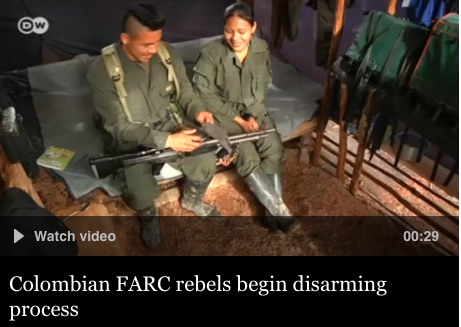
One of Latin America’s longest-lived and most powerful rebel groups, the Revolutionary Armed Forces of Colombia (FARC), has turned in all its previously registered weapons under a milestone peace deal signed last year, the United Nations has confirmed.

UN monitors said on Monday [June 26] they had “the entirety of the FARC’s registered individual arms stored away,” apart from some that were exempted for transitional security at demobilization camps until August 1.


See video on Deutsche Welle.

The group’s 6,800 fighters handed in the 7,132 weapons in three phases this month in a disarmament process supervised by the UN. Monitors are, however, still collecting and destroying other weapons and munitions stored in remote caches that FARC have identified to the UN.

An official ceremony to mark the completion of disarmament is scheduled for 1500 UTC Tuesday in a camp near the central town of Mesetas in the department of Meta.

The ceremony is to be attended by Colombian President Juan Manuel Santos, who received last year’s Nobel Peace prize for his efforts to reach a peace deal, along with FARC leader Rodrigo Londono, aka Timochenko, and UN representatives.

(Continued in right column)

Question related to this article:

What is happening in Colombia, Is peace possible?

(Continued from left column)

Too lenient?

FARC will now transform into a political party under the landmark deal, which also includes rural reforms, cooperation on combating drug trafficking and the creation of a system of transitional justice.

Critics of the deal, who include former conservative President Alvaro Uribe, have called it too lenient on FARC members, some of whom will be amnestied or given reduced sentences for crimes committed during the conflict.

But Londono called his group’s disarmament “a historic moment for Colombia,” describing it on Twitter as “an act of will, courage and hope.”

Colombia’s internal conflict broke out in 1964 over land rights issues and pitted FARC and other left-wing rebels against the military, police and right-wing paramilitary groups. It left 260,000 people confirmed dead, more than 60,000 missing and 7 million displaced.

President Santos says he now wants to achieve “complete peace” in the country by obtaining a deal with the last major rebel group still active in Colombia, the leftist National Liberation Army (ELN).

Although the ELN started talks with the government in February, it and other fringe groups have been blamed for ongoing violence over the past months.

Conference of the Asia-Pacific Peace Research Association

EDUCATION FOR PEACE .

Excerpts from website of the Asia-Pacific Peace Research Association

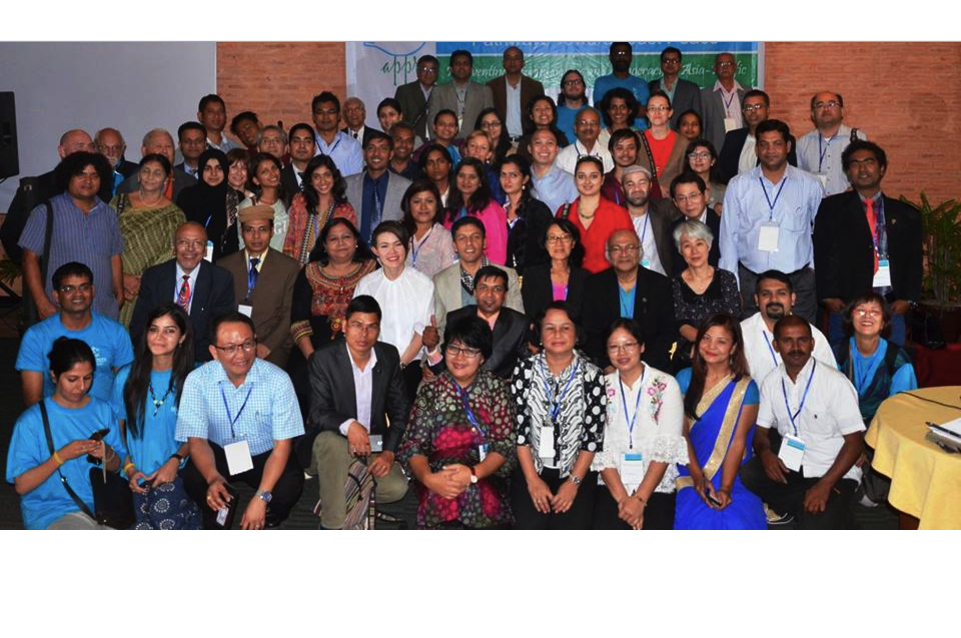
The Centre for Policy Research and International Studies (CenPRIS), Universiti Sains Malaysia in collaboration with its conference partners will be hosting the Asia Pacific Peace Research Association (APPRA) Conference from 23 to 25 August, 2017 at Universiti Sains Malaysia, Penang, Malaysia. Theme: ‘Promoting Peace and Upholding the Transcendent Dignity of the Human Person in the Asia-Pacific Region’ Dates: August 23-25, 2017 Venue: Dewan Persidangan Universiti, Universiti Sains Malaysia, Penang, Malaysia


(Click on photo to enlarge)

There will be several special lectures but the highlight will be the Keynote Address on the theme of “Promoting Peace and Upholding the Transcendent Dignity of the Human Person in the Asia-Pacific Region”.

Confirmed Keynote Speakers:

Tan Sri Dato Professor Dzulkifly Abdul Razak, former Vice-Chancellor of Universiti Sains Malaysia and current Chairman, Board of Directors, Universiti Sains Islam Malaysia,Malaysia “Peace Starts with Me – Lessons from a hibakusha”

Dato’ Prof. ( Dr.) Anwar Fazal, Right Livelihood College, Penang, Malaysia “Streets of Harmony: Building Bridges, Crossing Them: The Penang Experience”

Professor Dr. Kevin Clements, Chair and Director, The National Centre for Peace and Conflict Studies,University of Otago, New Zealand “The Current State of Peace Research in the Asia-Pacific Region”

Professor Dr. Katsuya Kodama, Secretary-General, International Peace Research Association (IPRA) “ Hiroshima – Nagasaki Process”, Japan

Professor Dr. Chaiwat Satha-Anand, Peace Information Centre, Thammasat University, Thailand “Nonkilling: Asia as a Peace Research Agenda”

Here are some of the confirmed panels:

Peace Education at Peace Museums -convened by Prof. Yamane Kazuyo, Ritsumeikan University

“US military vs Asian lands and people” – convened by Patrick Hiller, Oregon Institute of Peace

Kampung Mizan : Re-thinking the idea of development- convened by Associate Professor Dr. Mahazan, Malaysian Islamic Science University [USIM]

(continued in right column)

Question for this article:

Can peace be guaranteed through nonviolent means?

(continued from left column)

Aging with Dignity- convened by Associate Prof. Dr. Saidatulakmal Mohd, USM-RIKEN International Centre for Aging Science , URICAS, Universiti Sains Malaysia

Religion, Spirituality and Peace – convened by Chetalanaya Institute, Nepal

Mother Earth convened by Sahabat Alam Malaysia

Challenges of Peace Building in the Deeply Polarized societies: The Case of Identity, Ethnicity and Territory based Conflicts in Deep South of Thailand and Arakan State of Myanmar –AMAN

Gandhian non-violent action – Prof. Dr.Vidya Jain

Multi-national/ethnic federalism as a framework of peacemaking – Prof. Dr. Tatsushi Arai

Transforming the inter-communal and Buddhist/Muslim conflict in Western Myanmar, Eastern Bangladesh, and ASEAN- Prof. Dr. Tatsushi Arai.

Education for Social Healing & Reconciliation-Professor Dr. Roy Tamashiro of Webster University, USA, Dr. Chang Ku Do, in Korea, Prof. Yang Shanyou, China, Prof. Kazuyo Yamane, Ritsumeikan University, Japan.

“Populism in Asia and its non-violent responses”-Dr. Janjira Sombatpoonsiri Faculty of Political Science, Thammasat University (Panel Coordinator), Panelists: Dr. Ajay Gudavarthy, Politics Department, Jawaharlal Nehru University, India, Dr. Aries Arugay, Faculty of Political Science, University of the Philippines, Diliman, the Philippines and Dr. Luky Djani, Executive Director, Institute for Strategic Initiatives, Indonesia

“Nonkilling Asia” Prof. Chaiwat Satha-Anand, Thammast University (moderator) The panelists are Pradeep (Nepal), Emma Leslie (Cambodia), Jose Abueve (Philippines), Siwach Sripokangkul (Thailand).

Conflict Early Warning and Agro-terrorism, Dr. Ali Maksum and Surwandono, Universitas Muhammadiyah and Ms. Zuliana, CenPRIS.

For information about the registration, abstract submission and general questions about the conference, please contact

Conference Secretariat:
Centre for Policy Research and International Studies (CenPRIS)
Universiti Sains Malaysia
11800 USM, Penang
Malaysia
Tel: +604-653 2456
Fax: +604-658 4820
Website: appra.net , cenpris.usm.my/index.php/appra2017
E-mail: appra.usm2017@gmail.com or omarufaruku@gmail.com

Chief justices call on world leaders “to work for the establishment of a world parliament”

DISARMAMENT & SECURITY .

An article from Campaign for a United Nations Parliamentary Assembly

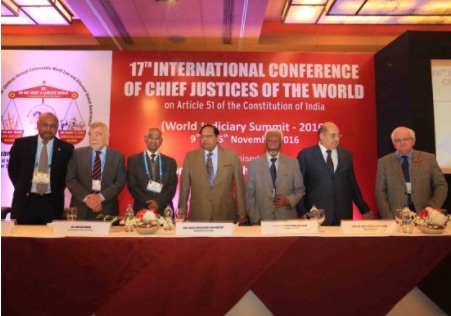
Gathering in Lucknow in the Indian state of Uttar Pradesh, an international conference of around 300 chief justices, judges, legal experts and ambassadors from nearly 60 countries predominantly from the Global South closed [in November 2016] with the adoption of a declaration that called on heads of states and governments to convene a world summit “to consider the present grave global problems facing mankind” and “to work for establishment of a World Parliament to enact enforceable World Laws, a World Government, and a World Court of Justice.”


Click on photo to enlarge

The document stated that “more serious and concrete steps must be taken to reform the United Nations by review of the UN charter with a view to making the UN a fully democratic, representative and effective institution.”

During the four-day conference six sessions were held on topics such as creating a culture of unity & peace, establishing rule of law, protection of human rights, reforming the structure of global governance, or sustainable development.

Participants included, among others, Anerood Jugnauth, the prime minister of Mauritius, Moses Veerasammy Nagamootoo, the prime minister of Guyana, Kgalema Motlanthe, former president and vice-president of South Africa, former Croatian president Stjepan Mesić as well as chief justices and judges of the supreme courts of Afghanistan, Benin, Cameroon, Croatia, East Timor, Egypt, Eritrea, Ethiopia, Fiji, Kyrgyzstan, Lebanon, Lesotho, Malawi, Mauritius, Mozambique, Myanmar, Nauru, Paraguay, Peru, Slovenia, South Africa, Sudan, Suriname, South Sudan, Tanzania, Uganda, Ukraine, Zambia, and Zimbabwe.

The conference was organized for the 17th time by the “World Unity Education Department” of City Montessori School in Lucknow.

(Thank you to Janet Hudgins, the CPNN reporter for this article.)

Question for this article:

Proposals for Reform of the United Nations: Are they sufficiently radical?

In the blog “Proposal for a Radical Reform of the United Nations”, it is asserted that “As it is structured now, the United Nations is controlled by national governments, with their military institutions and military budgets. Over the course of history, national governments have come to monopolize war. As a result, if we are to make the transition from a culture of war to a culture of peace, we need a radical reform of the United Nations. Instead of being controlled by the Member States, it should be controlled by “We the Peoples,” the words that begin its Charter.”

* * * * * * * * * * * *

This question applies to the following CPNN articles:

European Parliament Calls for a United Nations Parliamentary Assembly and a UN Reform Summit in 2020

Campaign for a UN Parliamentary Assembly now endorsed by over 1,500 current and former lawmakers from 120 countries

Roundtable on Increasing Democratic Representation at the United Nations in The Hague

Chief justices call on world leaders “to work for the establishment of a world parliament”

Pan-African Parliament calls on African Union to support the creation of a UN Parliamentary Assembly

Calls for UN Security council reform at Istanbul summit

A Joint Declaration on the Environment, Social Inequality and Elimination of Nuclear Threat, with a Proposal for UN reform

Intergovernmental Negotiations on Security Council Reform/a>

Mexico: UNICEF carries out Culture of Peace Pilot Program

EDUCATION FOR PEACE .

An article from Radio Formula (translated by CPNN)

The representative of the United Nations Children’s Fund (UNICEF) in Mexico, Christian Skoog, reports that a pilot project in childhood education is being carried out in Guerrero to promote a culture of peace in homes, schools, communities and institutions.

“We have worked on various themes of education in childhood and social policies in general, and now we need to talk about violence and promote a culture of peace in schools, communities and family. We know that children live in a situation of violence, and that there are different types of violence, with the strongest being homicides,” he said.

“We are supporting the state to see how we can promote another culture, to resolve conflicts, and to discipline your children without violence. We have a pilot project in a municipality (of which he could not remember the name), in an effort to see how we can best change the way people act “.

In the interview, Christian Skoog said that the results will be evaluated in July and August, but so far have been “good” indicators, so that in the last months of 2017 the project will be applied in other municipalities of Guerrero.

“We have very good indicators of change in the way people interact at home and at school, and we are very happy about that, although we know that the situation in Guerrero is complex not only for children but for the entire population. However, we see a great willingness on the part of several actors as well as instances of government and civil society to unite efforts,” he said.

He also indicated that it is expected that in the medium term this pilot program will be implemented at the national level. “For this reason, we are working with the National Security Commission at the federal level.”

On other issues, the UNICEF representative said that the lack of opportunities, poor educational quality, and lack of respect and dignity for human rights have led to more and more young people and children entering criminal groups.

“Many times it has to do with having opportunities. If you have opportunities and you see that education counts, which parents should promote with their children, but if there is no quality of education and a decent job then there is another alternative that Is not good. In general, we need to promote how to act in life with respect and dignity and resolve conflicts in a peaceful way,” he concluded.

(Click here for the original version of this article in Spanish)

Question for this article:

Dominican Republic: Education Ministry launches student forum for a culture of peace

EDUCATION FOR PEACE .

An article from Hoy Digital

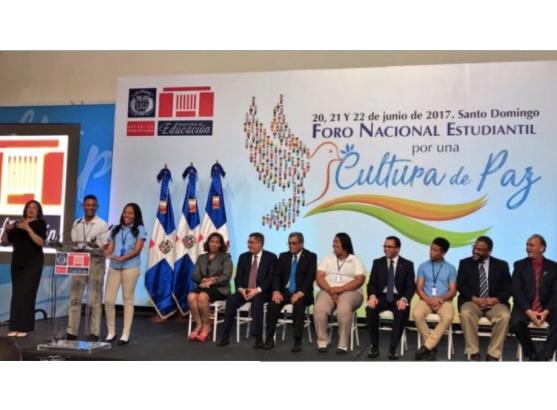
The Ministry of Education today launched the National Student Forum for a Culture of Peace, which involves 360 students endowed with the best averages in public and private educational centers throughout the country.


(Click on photo to enlarge)

The opening of the forum was led by the Minister of Education, Andres Navarro, who promoted a culture of peace as an urgent need for the Dominican Republic, both in homes and in schools, with an emphasis on study and work.

“Students deserve to be heard as protagonists in the process of reform and change that is taking place, within the framework of the educational revolution that drives our president Danilo Medina,” said Navarro. He stated that the event constitutes a meeting space for reflection on education and should be understood as an exercise of student participation in the education system.

The forum, which will run until next Thursday, is being held at the Ministry of Foreign Affairs’s convention center with talks, conferences and other activities that will help the students to strengthen their culture.

(Click here for the original version of this article in Spanish)

Question for this article: