Tag Archives: global

Peter Kuznick on the Significance of the Treaty on the Prohibition of Nuclear Weapons

DISARMAMENT & SECURITY .

An article from World Beyond War

Peter Kuznick answered the following questions from Mohamed Elmaazi of Sputnik Radio and agreed to let World BEYOND War publish the text.

1) What’s the significance of Honduras being the latest country to join the UN’s Treaty on the Prohibition of Nuclear Weapons?

What a remarkable and ironic development, especially after the U.S. had been pressuring the previous 49 signers to withdraw their approvals. It is so fitting that Honduras, the original “banana republic,” pushed it over the edge–a delicious fuck you to a century of U.S. exploitation and bullying.


Peter Kuznick on Sputnik

2) Is it possibly a bit of a distraction to focus on countries that have no nuclear capability?

Not really. This treaty represents the moral voice of humanity. It may not have a universal enforcement mechanism, but it clearly states that the people of this planet abhor the power-hungry, annihilation-threatening madness of the nine nuclear powers. The symbolic significance can not be overstated.

3) There already is a Treaty on Nuclear Non-Proliferation which came into force in 1970 and which has been nearly every country on the planet is a party to. Is the NPT being lived up to?

The NPT has been lived up to to a surprising extent by the non-nuclear powers. It is amazing that more countries have not gone the nuclear path. The world is fortunate that more haven’t made that leap at a time when, according to El Baradei, at least 40 countries have the technological capability of doing so. The ones who are guilty of violating it are the five original signatories–the U.S., Russia, China, Britain, and France. They have completely ignored Article 6, which requires the nations possessing nuclear arsenals to reduce and eliminate those arsenals. The total number of nuclear weapons may have been cut from an absolutely insane 70,000 to a slightly less insane 13,500, but that is still enough to end life on the planet many times over.

4) If it isn’t, what good will yet another treaty, such as the one Honduras just joined, be in such an environment?

The NPT didn’t make possession, development, transportation, and threat to use nuclear weapons illegal. The new treaty does and explicitly so. This is a major symbolic leap. While it won’t put the leaders of the nuclear weapons states on trial by the International Criminal Court, it will put pressure on them to heed global sentiment as has been the case with chemical weapons, land mines, and other treaties. If the U.S. wasn’t concerned about the effect of this pressure, why did it make such an effort to block the treaty’s ratification? As Eisenhower and Dulles both stated during the 1950s, it was the global nuclear taboo that stopped them from using nuclear weapons on several occasions. Global moral pressure can constrain bad actors and sometimes even force them to become good actors.

In 2002 the US administration of George W Bush Jr withdrew from the ABM treaty. The Trump Administration withdrew from the INF Treaty in 2019 and there are questions as to whether the New START treaty will be renewed before it expires in 2021. Both the ABM and the INF treaties were signed between the US and Soviet Union to reduce the risk of nuclear war.

(Continued in right column)

Question related to this article:
 
Can we abolish all nuclear weapons?

(Continued from left column)

5) Explain the consequences of the US withdrawal from key nuclear controls treaties such as the ABM and the INF treaty.

The consequences of U.S. withdrawal from the ABM Treaty were enormous. On the one hand, it allowed the U.S. to continue with implementation of its still unproven and costly missile defense systems. On the other, it induced the Russians to begin research and development of their own countermeasures. As a result of those efforts, on March 1, 2018, in his State of the Nation address, Vladimir Putin announced that the Russians had now developed five new nuclear weapons, all of which can circumvent U.S. missile defense systems. Hence, abrogation of the ABM Treaty gave the U.S. a false sense of security and by putting Russia in a vulnerable position, it sparked Russian innovation that has put the U.S. in a weakened position. Overall, this has only made the world more dangerous. Abrogation of the INF Treaty has similarly resulted in introduction of more dangerous missiles that can potentially destabilize relations. This is what happens when shortsighted, advantage-seeking hawks make policy and not responsible statesmen.

6) Why do you think the US has been moving away from these nuclear arms control treaties that it originally signed with the Soviet Union? Have they not been serving their purpose?

The Trump administration policymakers do not want to see the U.S. constrained by international treaties. They believe the U.S. can and will win an arms race. Trump has said so repeatedly. In 2016, he declared, “Let it be an arms race. We will outmatch them at every pass and outlast them all.” This past May, Trump’s chief arms control negotiator, Marshall Billingslea, similarly stated, “We can spend Russia and China into oblivion in order to win a new nuclear arms race.” They are both insane and should be taken away by the men in white coats. In 1986, during the previous arms race before Gorbachev, with a little late help from Reagan, injected some sanity into the world, the nuclear powers had accumulated approximately 70,000 nuclear weapons, equivalent to some 1.5 million Hiroshima bombs. Do we really want to get back to that? Sting sang a powerful song in the 1980s with the lyrics, “I hope the Russians love their children too.” We were lucky that they did. I don’t think Trump is capable of loving anyone other than himself and he has a straight line to the nuclear button with no one standing in his way.

7) What is New START Treaty and how does it fit into all of this?

The New START Treaty limits the number of deployed strategic nuclear weapons to 1,550 and also limits the number of launch vehicles. Because of technicalities, the number of weapons is actually higher. It is all that is left of the nuclear arms control architecture that has taken decades to erect. It is all that stands in the way of nuclear anarchy and the new arms race I was just talking about. It is set to expire on February 5. From Trump’s first day in office, Putin has been trying to get Trump to extend it unconditionally for five years as the treaty allows. Trump disparaged the treaty and established impossible conditions for its renewal. Now, desperate for a foreign policy victory on the eve of the election, he has tried to negotiate its extension. But Putin refuses to accept the terms that Trump and Billingslea are proposing, making one wonder just how firmly Putin really is in Trump’s corner.

8) Where would you like to see policy makers go from here, in particular among major nuclear powers?

First, they need to extend the New START Treaty for five years, as Biden has promised he will do. Second, they need to reinstitute the JCPOA (Iran nuclear deal) and the INF Treaty. Third, they need to take all weapons off hair-trigger alert. Fourth, they need to get rid of all ICBMs, which are the most vulnerable part of the arsenal and require immediate launch if an incoming missile is detected as has happened numerous times only to be found to be false alarms. Fifth, they need to change command and control to insure that other responsible leaders have to sign off besides just the president before nuclear weapons are ever used. Sixth, they need to reduce arsenals below the threshold for nuclear winter. Seventh, they need to join the TPNW and abolish nuclear weapons entirely. Eighth, they need to take the money they’ve been wasting on weapons of annihilation and invest them in areas that will uplift humanity and improve people’s lives. I can give them lots of suggestions of where to begin if they want to listen.
 
Peter Kuznick is Professor of History at American University, and author of Beyond the Laboratory: Scientists As Political Activists in 1930s America, co-author with Akira Kimura of  Rethinking the Atomic Bombings of Hiroshima and Nagasaki: Japanese and American Perspectives, co-author with Yuki Tanaka of Nuclear Power and Hiroshima: The Truth Behind the Peaceful Use of Nuclear Power, and co-editor with James Gilbert of Rethinking Cold War Culture. In 1995, he founded American University’s Nuclear Studies Institute, which he directs. In 2003, Kuznick organized a group of scholars, writers, artists, clergy, and activists to protest the Smithsonian’s celebratory display of the Enola Gay. He and filmmaker Oliver Stone co-authored the 12 part Showtime documentary film series and book both titled The Untold History of the United States.

Red Cross : Nuclear ban: “Today is an historic day. We call on world leaders to act with courage and join the right side of history”

DISARMAMENT & SECURITY .

A press release from  The International Federation of Red Cross and Red Crescent Societies (IFRC)

October 24. Fifty States have now ratified the Treaty, meaning that it will enter into force as an instrument of international humanitarian law in 90 days. The Treaty is the first globally applicable multilateral agreement to comprehensively prohibit nuclear weapons. It prohibits their use, threat of use, development, production, testing and stockpiling. It also commits States to clearing contaminated areas and helping victims. By providing pathways for the elimination of nuclear weapons, the TPNW is an indispensable building block towards a world free of nuclear weapons


Photo: ICRC

Francesco Rocca, President of the International Federation of Red Cross and Red Crescent Societies (IFRC), said:

“Today is an historic day: even a few years ago, the dream of a nuclear ban recognized by the international community seemed unfathomable. This is a victory for every citizen of the world, and it demonstrates the importance of multilateralism. I would like to congratulate all 50 States that have ratified the treaty and to call on all the other world leaders to act with courage and join the right side of history.

“The simple reality is that the international community could never hope to deal with the consequences of a nuclear confrontation. No nation is prepared to deal with a nuclear confrontation. What we cannot prepare for, we must prevent”, Mr Rocca said.

(Continued in right column)

Question related to this article:
 
Can we abolish all nuclear weapons?

(Continued from left column)

There are over 14,000 nuclear bombs in the world, thousands of which are ready to be launched in an instant. The power of many of those warheads are tens of times greater than the weapons dropped on Nagasaki and Hiroshima.

Peter Maurer, President of the International Committee of the Red Cross (ICRC), said :

“Today is a victory for humanity, and a promise of a safer future. Too many times we have seen the dangerous logic of nuclear deterrence drag the world to the brink of destruction. Too many accept nuclear weapons as an inevitable part of the international security architecture. The Treaty on the Prohibition of Nuclear Weapons allows us to imagine a world free from such inhumane weapons as an achievable goal.”

Red Cross and Red Crescent leaders have over the past years advocated with government leaders, parliamentarians, academics and with the public to reflect in depth on the humanitarian consequences of Nuclear weapons and the need to have a legally binding commitment for their prohibition and in the long term for their elimination. They also have urged the Nuclear possessing states to urgently take interim steps to reduce the immediate risks of use of nuclear weapons by intent, miscalculation or accident, and in the long term to sign and ratify the treaty.

Prohibiting and eliminating nuclear weapons is a humanitarian imperative, and a promise to future generations that they will never have to live under the threat of nuclear catastrophe as we have experienced the past 75 years.

“The use of nuclear weapons is, under any circumstances, unacceptable in humanitarian, moral and legal terms. We are ready, together with our Red Cross Red Crescent National Societies, to continue our advocacy to build a world without nuclear weapons: we need to scale-up and intensify our efforts. We must do it for future generations,” concluded Mr Rocca.

Scientists Found A New Way To Break Down the Most Common Plastic

. . SUSTAINABLE DEVELOPMENT . .

An article by Dharna Noor in Gizmodo

The petrochemical industry produces more than 88 million tons of polyethylene, making it the most common plastic in the world. Scientists have found a new way to upcycle it, according to a study published in Science on Thursday. It could help deal with the growing plastic pollution crisis.


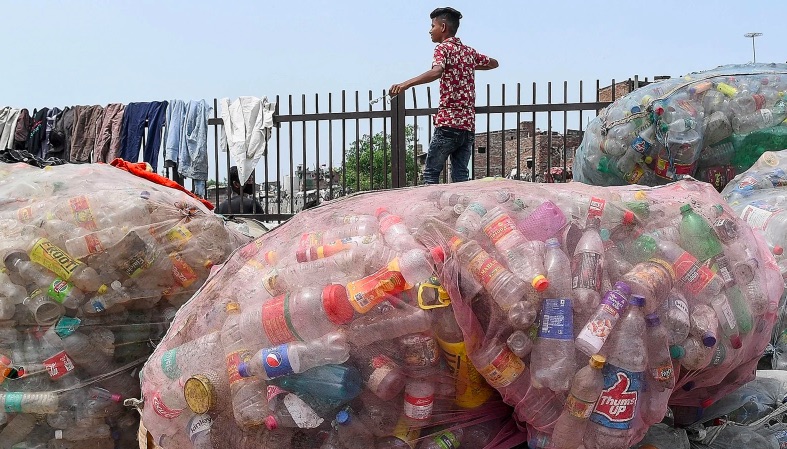
This could all be turned into useful chemicals. Photo: Prakash Singh (Getty Images)

Polyethylene comes in several different forms and is used in everything from plastic bags and food packaging to electrical insulation and industrial piping. Since it’s so common and our recycling system is so broken, we end up throwing away a shitload of the stuff. It can end up in landfills or the ocean where it breaks down veeeery slowly, or get burned up in waste incinerators that emit toxic chemicals.

But in the new study, the authors found a way to speed up the process of breaking down polyethylene and turn it into alkylaromatic molecules, which are used as surfactants in cosmetics and laundry detergent, lubricants for machinery, and refrigeration fluids.

“Globally, it’s a $9 billion market today,” Susannah Scott, a chemical engineer at University of California, Santa Barbara who co-authored the study, said in an email in reference to alkylaromatic molecules. “There is economic value and scale here.”

(Article continued in the right side of the page)

Question for this article:

How can we ensure that science contributes to peace and sustainable development?

(Article continued from the left side of the page)

This isn’t the first time scientists have figured out how to break down polyethylene—there are other methods of chemically recycling the material. But conventional methods of breaking the plastic down require heating it up to temperatures between 983 and 1832 degrees Fahrenheit (500 and 1000 degrees Celsius) and using solvents or added hydrogen to speed up the process.

By contrast, the authors’ new method only requires heating it up to around 570 degrees Fahrenheit (300 degrees Celsius) and uses no solvents or added hydrogen, instead relying on only a comparatively gentle catalyst of platinum with aluminum oxide. Their process helped disassemble the plastic’s polymers in a less rough manner, allowing them to extract the valuable intact alkylaromatic molecules. Scott said the catalyst works to “cut the bonds which hold the polymer chain into smaller pieces,” eventually turning the solid plastic into a liquid they can extract the valuable chemicals from.

The authors’ new process is far less energy intensive than other means of breaking down polyethylene. That’s good news for the environment. It’s also cheaper, which is good news for companies who may want to scale this up. The technique isn’t ready for that scaling up just yet, but the discovery could eventually be used to give plastics a new life as valuable raw materials instead of as polluting waste.

“We dig a hole in the ground, we produce, we make, we use, we throw away,” Mahdi Abu-Omar, a chemical engineer at University of California, Santa Barbara who co-authored the study, said in a statement. “So in a way, this is really breaking that way of thinking. There’s interesting science to be done here that will lead us into new discoveries, new paradigms, and new ways of doing chemistry.”

To be clear, this new method should in no way give the petrochemical industry license to produce even more plastic. Though it’s great to have a better alternative to tossing it out, the creation of polyethylene also threatens public health through toxic emissions as well as the climate. We still need to be working to wean the world off of plastic production and consumption in the first place. But the new technology could help play a role in eventually reducing the amount of waste that gets produced and help clean up the mess we already have on our hands.

77 Heads of State and Ministers address UN High Level Meeting on Nuclear Weapons

DISARMAMENT & SECURITY .

A message from Unfold Zero

77 Heads of State and Ministers took the opportunity to address the United Nations High Level Meeting on the Total Elimination of Nuclear Weapons held yesterday (October 2) in the UN General Assembly and by virtual participation.

This is probably the highest number of Presidents, Prime Ministers, Foreign Ministers and Defence Ministers to have addressed any of the high level meetings which have taken place annually since 2013 to commemorate the International Day for the Total Elimination of Nuclear Weapons. Such participation indicates widespread global concern, especially amongst non-nuclear governments, about the threat from nuclear weapons.


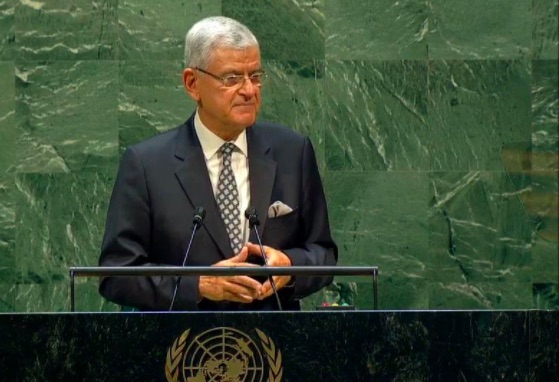
Volkan Bozkir, General Assembly President

Representatives from several regional groups and international organisations, as well as two representatives from global civil society, also addressed the meeting. The civil society representatives called on UN Member States to ‘de-escalate the nuclear arms race, redirect nuclear weapons budgets and investments to meet human security needs, and commit to the total elimination of nuclear weapons by 2045, the 100th anniversary of the UN.’

Click here for the full list of speakers for the event.

UN leadership

The event was chaired by H.E. Vlokan Bozkir, President of the UN General Assembly, who opened the event with a strong presentation reminding us that the UN was born out of the ashes of WWII and the nuclear bombs dropped on Japan, and calling on UN member states to fulfill their obligations to end the nuclear arms race and achieve the comprehensive elimination of nuclear weapons.

H.E. António Guterres, UN Secretary-General, followed with an impassioned speech warning that the world continues to live in the shadow of nuclear catastrophe. He urged nuclear armed states to take practical steps to reduce nuclear risks, and on all members of the Non-Proliferation Treaty to work towards a positive outcome to the Review Conference next year that takes forward concrete nuclear disarmament steps.

(Continued in right column)

Question related to this article:
 
Can we abolish all nuclear weapons?

(Continued from left column)

Statements by governments were introduced by their UN ambassadors sitting in the UN General Assembly, but then presented by the leaders (Presidents and Ministers) by pre-recorded video statements due to pandemic constraints on UN physical meetings.

The six hours of statements included many reports on nuclear disarmament action and calls for further action. These included to:

-adopt nuclear risk reduction measures such as de-alerting and no-first-use;

– support existing nuclear-weapon-free-zones and establish additional ones especially one in the Middle East;

– cut nuclear weapons budgets/investments and redirect these to addressing the pandemic and achieving the sustainable development goals;

– support existing treaties such as the NPT, Comprehensive Test Ban Treaty and the Treaty on the Prohibition of Nuclear Weapons;

– negotiate a comprehensive nuclear weapons convention which includes the nuclear-armed countries and would prohibit and eliminate nuclear weapons globally;

– commit to the total elimination of nuclear weapons by the 100th anniversary of the UN.

Click here for a short video (2mins) with selected quotes from speakers at the High Level Meeting. Click here for the video recording of Session 1 (3 hours). The videos of both sessions and all presentations will be posted online here early next week.

Civil society presentations

Two members of global civil society were invited to make presentations to the High Level event. They are Mr Saber Chowdhury MP (Bangladesh), Co-President of Parliamentarians for Nuclear Non-Proliferation and Disarmament, and Ms Vanda Proskova (Czech Republic), Vice-Chair of PragueVision Institute for Sustainable Security and one of the convenors of #Wethepeoples2020.

Mr Chowdhury noted that ‘We all have a key role to play and engage with governments to ensure implementation of nuclear disarmament obligations, and in diverting resources from nuclear weapons to positive impacts for the economy, livelihoods and protection of nature.’ (Click here for his video presentation).

Ms Proskova noted that nuclear weapons ‘are dangerous whether they are used on purpose or due to a miscalculation. They are extremely harmful to the environment which we are so vehemently trying to protect. In the 21st century they are simply obsolete. And, what is more, they are phenomenally expensive.’ (Click here for her video presentation).

Both of the civil society representatives called on UN members to de-escalate the nuclear arms race, redirect nuclear weapons budgets and investments to meet human security needs, and commit to the total elimination of nuclear weapons by 2045, the 100th anniversary of the UN.

October 2nd a Nonviolence Day in the White West

EDUCATION FOR PEACE .

An article from Pressenza (reprinted under a Creative Commons Attribution 4.0 International license)

This year it’s really complicated in this part of the world to hold a joyful celebration about nonviolence. The International Day of Nonviolence is a celebration of Gandhi’s birthday and an opportunity to commemorate the work of many others who have opened a path a to nonviolent conflict resolution, built a culture of peace, opposed systemic discrimination, and fought against the destruction of humanity’s habitat.


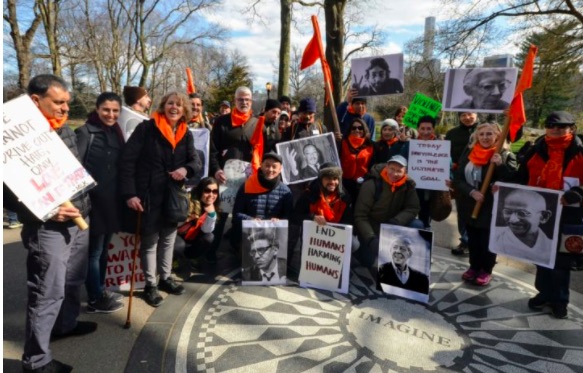
NYC Walk for Nonviolence (Image by David Andersson)

It is very suspicious that mainstream media will be not be covering this day, since corporate media makes large profits from reporting all forms of violence and bias. There will be no trending on Twitter, no special debate in Congress. Joe Biden will not be announcing his plans for developing nonviolence curricula for Kindergarten to college students. CEOs won’t unroll their strategy for reinvesting the money, concentred today in very few hands, to serve the community at large. And we probably won’t see the police addressing their entrenched discrimination against communities of color, and talking about how to stop being hypermilitarized agents beating and killing people on the street. This list can go on and on.

Now, of course, we have seen some opportunist politicians asking protestors — after seeing the killing of their brothers by police — to organize nonviolently, but without themselves condemning the immoral and disproportionate use of violence by the police and city officals. For them, it seems nonviolence is to be used by minorities fighting against a violent system that created the problem at the first place.

(Article continued in the right column)

Question for this article:

Can peace be guaranteed through nonviolent means?

(Article continued from the left column)

Today, we recognize nonviolence’s power of transformation. Nonviolence has transformed countries, changed the face of continents, and given cultural identity to discriminated communities. We are perhaps in front of the total collapse of this violent system we live in and we need to actively build a culture of nonviolence. It is the only real option for the future of the human race and our environment.

In closing, here are few words from Silo, an Argentinian leader in nonviolence, extracted from one of his most important speeches, “The Healing of Suffering,” given in Punta de Vacas, Argentina on May 4, 1969:

“There are other forms of violence that are imposed by the Philistine morality. You wish to impose your way of life upon another; you wish to impose your vocation upon another. But who has told you that you are an example that must be followed? Who has told you that you can impose a way of life because it pleases you? What makes your way of life a model, a pattern that you have the right to impose on others? This, then, is another form of violence.

Only inner faith and inner meditation can end the violence in you, in others, and in the world around you. All the other doors are false and do not lead away from this violence. This world is on the verge of exploding with no way to end the violence! Do not choose false doors. There are no politics that can solve this mad urge for violence. There is no political party or movement on the planet that can end the violence. Do not choose false doors that promise to lead away from the violence in the world… I have heard that all over the world young people are turning to false doors to try to escape the violence and inner suffering. They turn to drugs as a solution. Do not choose false doors to try to end the violence.

My brother, my sister, keep these simple commandments, as simple as these rocks, this snow, and this sun that bless us. Carry peace within you, and carry it to others. My brother, my sister—if you look back in history, you will see the human being bearing the face of suffering. Remember, even as you gaze at that suffering face, that it is necessary to move forward, and it is necessary to learn to laugh, and it is necessary to learn to love.

To you, my brother and sister, I cast this hope—this hope of joy, this hope of love—so that you elevate your heart and elevate your spirit, and so that you do not forget to elevate your body.”

What has happened this year (2020) for the International Day of Peace

FREE FLOW OF INFORMATION
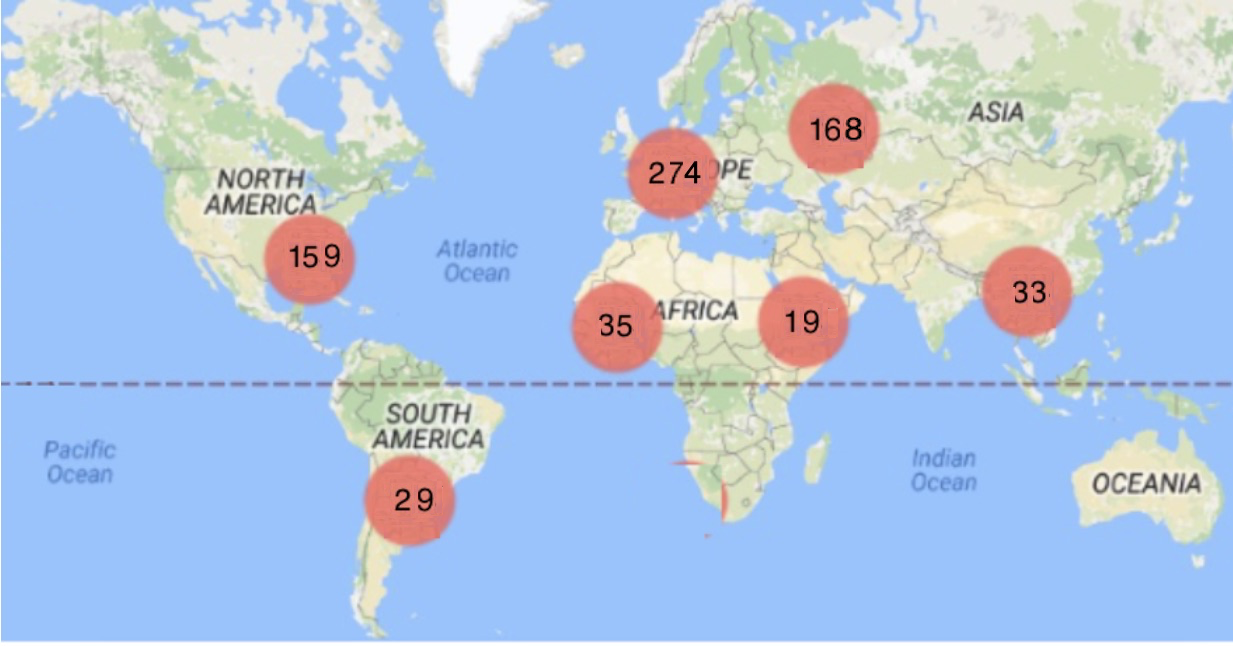
This year we give links to 274 actions carried out in 12 countries of Western Europe and 168 in 6 countries in Eastern Europe that were once part of the Soviet Union. We link to 159 actions in 5 Canadian provinces and all 50 states of the United States. There are 33 actions cited in 13 countries of Asia and the Pacific, 29 from 12 Latin American and Caribbean countries, 35 from 23 African countries, and 19 from 10 Arab and Middle Eastern countries. See the CPNN bulletin for October for a synopsis.

Detailed data may be found on the following CPNN articles:

Europe: International Day of Peace

Ex-Soviet Countries: International Day of Peace

United States and Canada: International Day of Peace

Asia and Pacific: International Day of Peace

Arab and Middle Eastern States: International Day of Peace

Latin America and Caribbean: International Day of Peace

Africa: International Day of Peace

30,000 back US campaign seeking Nobel for Cuban doctors

TOLERANCE & SOLIDARITY .

An article from the Anadolu Agency

A US campaign that asks Nobel Peace Prize nomination for Cuban doctors to praise their international efforts during the coronavirus outbreak has reached nearly 30,000 signatures.

Nobel Peace Prize for Cuban Doctors campaign has been endorsed by prominent intellectuals, artists, politicians, and citizens worldwide, according to the campaign’s website.


Cuba has maintained its vocation for solidarity amidst the pandemic, despite the tightening of the U.S. blockade. Photo: Granma Archives

Prominent endorsers include Nobel Peace Prize winner Adolfo Perez Esquivel, former President of Ecuador Rafael Correa, actors Danny Glover and Mark Ruffalo, writers Alice Walker, Noam Chomsky, and Nancy Morejon, filmmakers Oliver Stone and Petra Costa, musician Tom Morello, and singer/songwriter Silvio Rodriguez, among numerous others.


The campaign launched on June 16 describes its mission “to promote the nomination of the Cuban International Medical Brigade, called the Henry Reeve Brigade, for the 2021 Nobel Peace Prize” and “educate people about how a small, poor country has demonstrated to a world reeling from COVID-19 what global solidarity looks like.”

(continued in right column)

Question related to this article:
 
How can we work together to overcome this medical and economic crisis?

Does Cuba promote a culture of peace?

The Nobel Peace Prize: Does it go to the right people?

(continued from left column).

“Cuba is the only country to have shown genuine internationalism during this coronavirus crisis,” the website cited Chomsky, an intellectual and activist known for both his groundbreaking contributions to linguistics and his critiques of political systems.


The US “attempts to discredit Cuba’s internationalist healthcare program, from labeling it as a form of human trafficking to pushing governments not to accept Cuba’s aid,” the campaign said, adding that it plans to expose “such crass and mean-spirited sabotage.”


“Selflessness, solidarity and working for the common good characterize what the Nobel Peace Prize should be about,” it said. “These traits aptly describe Cuba’s Henry Reeve International Medical Brigade, which has saved over 80,000 lives since 2005 and has been fighting COVID-19 in 27 countries.”

Over 2,000 doctors, nurses, and medical professionals from Cuba have been collaborating in 27 countries affected by the coronavirus and providing urgently needed assistance in Andorra, Angola, Antigua and Barbuda, Barbados, Belize, Cape Verde, Dominica, Grenada, Guinea, Haiti, Honduras, Italy, Jamaica, Kuwait, Mexico, Mozambique, Nicaragua, Peru, Qatar, Saint Lucia, Saint Kitts and Nevis, Saint Vincent and the Grenadines, South Africa, Suriname, Togo, Trinidad and Tobago, and Venezuela.


The medical brigade received Dr. LEE Jong-wook Memorial Prize for Public Health from the World Health Organization in 2017.

The petition, with over 29,700 signatures currently, has a goal to reach 35,000 signatures.

Since originating in China last December, the novel coronavirus infected over 16.26 million people worldwide so far, with fatalities nearing 650,000, according to figures compiled by the US-based Johns Hopkins University.

The global recoveries currently stands around 9.4 million.

Annual meeting of the United Nations High-Level Forum on the Culture of Peace

FREE FLOW OF INFORMATION

An annoucment from the President of the United Nations General Assembly

. . . In 2020, despite the difficulties in ensuring business continuity in the wake of the ongoing COVID-19 pandemic, it is of utmost importance that the United Nations continues to support the global movement to promote the culture of peace, its Declaration and Programme of Action, and that our response and recovery efforts are guided towards implementation of the 2030 Agenda for Sustainable Development.


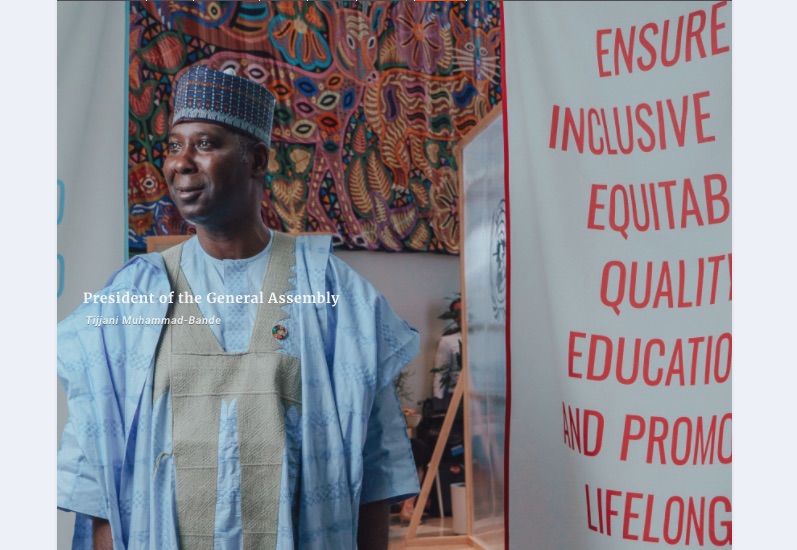
President of the General Assembly, Tijjani Muhammad-Bande

The Culture of Peace: Change our world for the better in the age of COVID-19

This year’s High-Level Forum is intended to be an opportunity for an exchange of views on possible ways to further promote the culture of peace, while the world is striving to recover and respond to the global pandemic and trying to address other pressing issues affecting the lives of many people around the globe. The COVID-19 situation has underscored the urgent need to leverage a culture of peace as a means of bridging divides across and within societies, as well as ensuring peaceful coexistence as a foundation for advancing the Sustainable Development Goals.

International cooperation and multilateral partnerships are necessary to tackle the pandemic and other global threats. Concrete action is needed by all stakeholders to realize this vision through education, inclusion, poverty eradication, and social cohesion, with more participation from women, the youth, and other segments of society.

The theme for the 2020 High-Level Forum will be “The Culture of Peace: Change our world for the better in the age of COVID-19”.

(continued in right column)

Question(s) related to this article:

What is the United Nations doing for a culture of peace?

(continued from left column)

Building global solidarity is the need of the time and can be achieved through promoting inter-cultural and inter-religious dialogue that enable communities to come together to better understand each other and stand against the spread of hate, intolerance, division, and discrimination. The resilient nature of people to overcome the challenges with renewed optimism should be strengthened and put at the core of all our collective response and recovery plans, so that this crisis does not exacerbate the already high levels of inequality and discrimination. Vulnerable populations with less access to health care, basic public services, and economic resources should be our top priority. The event will provide a platform to explore opportunities to change our world for the better after the pandemic.

Participation

Member States and Observers of the General Assembly are invited to participate in the virtual High-Level Forum. The meeting will be webcast and it is open to UN agencies, civil society organizations, and other stakeholders.

Format of the High-Level Forum

The High-Level Forum on the Culture of Peace, convened by the President of the 74th Session of the UN General Assembly, will take place on Thursday, 10 September 2020, via online WebEx platform from 10 am to 1 pm. The event will consist of an opening segment and a plenary segment. The opening segment will feature statements by the President of the General Assembly and the Secretary-General [tbc]. The plenary segment will comprise statements by Member States and Observers of the General Assembly, as well as other participants, time permitting.

Member States are encouraged to deliver statements on behalf of a group of States, whenever possible. Member States are encouraged to limit their statements to three (3) minutes for individual delegations and five (5) minutes for statements made on behalf of a group of States. There will be a pre-established list of speakers and it will be open for registration before the event. In view of time constraints for the online plenary segment, delegations that did not have the opportunity to speak can send their statements for uploading on the PGA’s website. A President’s summary of the meeting will be circulated to Member States upon its conclusion.

Details pertaining to the virtual arrangements for the meeting will be circulated in due course. Further information regarding this meeting will be made available on the PGA’s website: https://www.un.org/pga/74.

United Nations: Nothing less than equality and a seat at the table for youth

. TOLERANCE & SOLIDARITY .

An article from UN Women

UN Women, in collaboration with ITU (the UN agency for information and communication technologies), and youth and gender equality activists around the world, celebrated International Youth Day on 12 August with a virtual event. Co-hosted by international activist and Miss Universe, Zozibini Tunzi, the event featured performances by international artists and vibrant conversations about social justice, peace and security and the impact of COVID-19 on youth.


Watch this video on www.youtube.com.

Opening the event, Zozi welcomed participants and shared her thoughts on what International Youth Day meant to her. Young leaders from Japan (Satoko Yamaguchi ), Kenya (Kathy Kyler), South Africa (Munnira Katongele), and the United States of America (Ayanna Depas) also shared their visions for Youth Day.

Following a musical performance by Maia Reficco (Argentinian-American singer) and a message from the Beijing +25 Youth Task Force, UN Women Executive Director Phumzile Mlambo-Ngcuka reminded youth leaders and audiences that while UN Women was still “a young girl, [of] ten years old, [it is] made up of people with many years of fighting for gender equality.” In her remarks, the Executive Director stressed the need for intergenerational collaboration. “We are encouraged by your radical impatience; it is most refreshing. We need you to be at the table where decisions are being made…in the streets…on the podiums,” she said.

Fire-chat conversations were led by UN Secretary-General’s Youth Envoy Jayathma Wickramanayake and Hajer Sharief, human rights activist and the co-founder of “Together we build it”.

(continued in right column)

Question related to this article:
 
Youth initiatives for a culture of peace, How can we ensure they get the attention and funding they deserve?

(continued from left column)

In a conversation with Ms. Wickramanayake about activism and intersectionality during COVID-19, youth activists highlighted the importance of responsible storytelling to inspire and mobilize action, and to prevent the erasure of diverse youth voices.

“Every activist has a story to tell, and every story has a solution to give, and every solution has a life to change,” said youth climate justice activist, Vanessa Nakate (Uganda).

Samantha Paige Davis, Black Swan Academy Founder and Executive Director (USA), spoke about the importance of intersectionality: “When you start recognizing the layers of identity, it allows us to create solutions that meet the most marginalized among us. [And] when you centre the voices, the experiences and stories of the most marginalized in our communities, then we all benefit.”

The panelists concluded by sharing their vision of post-pandemic “new normal”. Ines Yabar, activist from Peru, emphasized the need for change, action and solidarity, making sure that diverse youth have space at the table to make the decisions that shape their lives.

The second panel discussion focusing on peace and security featured . Fatima Askira, Founder/Executive Director of Borno Women Development Initiative; Juanita Ibanez Santamaria, Colombian political scientist; and Mallika Iyer, Global Network of Women Peacebuilders. According to Malika Iyer, “gender equality is inextricably linked to conflict prevention, sustainable peace and women’s empowerment.” A gender equal world must also be peaceful, she said, adding that, “peace cannot just be defined as an absence of war or armed conflict, but should include human security, harmonious government and good governance.”

The panelists agreed that upcoming anniversaries and milestones for women’s rights and peace and security, such as the UN Security Council resolution 1325 (adopted in 2000), the Beijing Declaration and Platform for Action (adopted in 1995), the 10th anniversary of UN Women and 75th birthday of the United Nations, offer opportunities to push for transformative changes on the ground.

Award-winning performers and spoken word artists, such as 25 May Movement, Malkia Band, Yvonne H+, Maia Reficco Viqueira, Manizha, and Masha Brodskaya, also participated at the virtual event.

The event closed with a call to action by youth outlining 5 demands: gender equal Legislation, women in leadership and policy making positions, ending gender based violence, equal access to education; and, youth leadership.

(Thank you to Phyllis Kotite, the CPNN reporter for this article.)

First Person: Turning ‘apathetic people into climate activists’; a young person’s view

. . SUSTAINABLE DEVELOPMENT . .

An article from the United Nations News Service

An 18-year-old environmental campaigner from the United States has told UN News how she wants to “turn apathetic people into climate activists”. Sophia Kianni, whose family originally comes from Iran, is one of seven young people from across the world who have been selected to participate in the UN Secretary-General’s Youth Advisory Group on Climate Change. The group which was launched at the end of the July aims to engage young people in “an open and transparent dialogue” about climate issues.


Sophia Kianni is an 18-year-old climate and environmental activist from the United States. Photo by Joe Hobbs.

“I first became interested in the effects of climate change as an Iranian-American when I visited my relatives in Iran as a 12 or 13-year old. I noticed how polluted the sky was; I couldn’t see the stars at night. I realized this was a symptom of the climate crisis that was particularly bad in the Middle East, where temperatures are rising at a rate of more than twice the global average.

I talked to my relatives about the pollution and was startled they knew pretty much nothing about climate change even though they were adults and so it became my pet passion to educate them about the climate crisis. 

I understood that Iran as a country is facing many challenges and recognized that climate change was maybe not at the forefront of people’s minds, but I still thought that my Iranian family deserved to know about the climate crisis. 

Awareness growing

When I told them what that actually meant, and that I was worried about my future, they were pretty shocked. And following those conversations they have tried to be more conscientious about the impact of their daily activities, for example driving less and switching off lights. These are small steps to minimize their carbon footprint but if everyone took these steps it would make a huge difference.

I also realized there was no information in their language Farsi, so decided to translate information for them from English sources with the help of my mum.

(continued in right column)

Question for this article:

Are we seeing the dawn of a global youth movement?

(continued from left column)

This experience with my relatives in Iran inspired me to establish my international nonprofit organization, Climate Cardinals, which has just launched, and which has over 5,000 volunteers translating climate information into more than 100 languages and dialects, including everything from Spanish to Haitian Creole, or Farsi to an Indonesian dialect. 

These volunteers have an average age of 16-years-old. We started by translating 3,000 pages of a sustainable fashion glossary as well as a forest climate glossary for which we are now awaiting feedback. 

One-person show, to ‘gigantic’ project

So, a small one-person show of educating my family has turned into a gigantic project with over 5,000 people involved and now I am helping to educate thousands and thousands of people. I am very excited about our partnership with Radio Javan (Persian language internet radio station based in the United States) which has a reach of 11 million people on social media. So, I moved from educating 11 family members to 11 million people and it made me realise that small actions are the gateway for gigantic visions to develop. Everyone has a power to affect change in their own way.

Most young people I talk to believe the climate crisis is a big deal but their passion to change depends on how much information they have; the more we talk, the more we raise awareness, the more people understand how pressing this is. For me, this is about turning apathetic people into climate activists.

Message to UN Secretary-General

Our group has been meeting online and we are due to talk the UN Secretary-General in the next couple of weeks. We will be giving him feedback on his climate strategy and how the UN can better engage young people in the process. Personally, I would like to tell him that we need climate information in more than just the UN languages. 

The UN should also be engaging even younger people. At 18, I am the youngest in the group, but there are also many activists who are between the ages of 14 and 17, and their voices are very important. If more younger people are engaged in the climate discussion it is more likely they will become climate activists. 

The Individual v the political process 

Ultimately, I am optimistic that we can reverse climate change, but a lot of this will fall into the political process as no matter how much I or other individuals do on a personal level, it is really up to the government to pass comprehensive climate legislation. I really hope people become more engaged in the political process and educate themselves on which candidates support climate change policies.

The younger generation is more progressive so I am hopeful in the future we will be able to elect more politicians who care about climate change issues, and who will pass aggressive legislation.”

(Thank you to Phyllis Kotite, the CPNN reporter for this article.)