Tag Archives: global

Ministers approve BRICS Environment declaration

. . SUSTAINABLE DEVELOPMENT . .

An article by Mayara Souto from BRICS News

BRICS Environment ministers approved a ministerial declaration on Thursday, April 3, at a high-level meeting in Brasilia. In the letter, the countries reiterate the importance of “environmental multilateralism” and “balanced and inclusive global governance” to achieve common goals to protect the environment. “We recognize the urgent need to address global and regional environmental challenges in a collaborative and science-based way,” reads an excerpt from the text.


Environment ministers from the 11 BRICS member countries approved the final declaration of the Environment Working Group on Thursday (March 3). Image: Isabela Castilho/BRICS Brasil

In her opening speech, Brasil’s Environment Minister Marina Silva highlighted the importance of the Global South to multilateralism and international cooperation.
“In the coming decades, the strength of our [BRICS] economies will make us even more influential. Today, we represent about half of the world’s population and 39% of the global GDP [Gross Domestic Product]. More than ever, BRICS is an increasingly fertile space for innovation, rich in cultural diversity, with strategic resources, and an immense quantity and quality of natural capital,” said the minister.

“Our countries are providers of services and ecosystems that are essential to the planet’s balance. They are also essential support to nature-based solutions that are in tune with the Earth’s capacity to assimilate. We are in a good position to lead a fair ecological transition that strengthens a more cooperative and less unequal multipolar world,” continued Marina Silva, who also welcomed the group’s new member countries: Egypt, Ethiopia, Indonesia, Iran, Saudi Arabia, and the United Arab Emirates.

Global warming

The ministerial declaration on the Environment includes the seven proposals that resulted from discussions regarding the four priority axes presented by the Brazilian presidency — desertification, land degradation, and drought; preservation, restoration, and enhancement of ecosystem services; plastic pollution and waste management; and collective leadership for climate action, in synergy with the United Nations 2030 Agenda for Sustainable Development.

The group highlights the impacts of climate change, and the “need to accelerate mitigation and adaptation actions” through the transition of economies to low carbon. The Paris Agreement is recognized in the declaration as an important commitment to the establishment of Nationally Determined Contributions (NDCs) — which seek to reduce greenhouse gas emissions to limit global warming to 1.5ºC.

Minister Marina Silva highlighted that BRICS is essential to maintaining this goal, especially in the current international context. “The rise of unilateralism and extremism is jeopardizing global stability and deepening injustices, affecting the most vulnerable populations in particular. This instability is further aggravated in the context of the climate emergency in which we are living. We have broken successive temperature records. Last year was the hottest in history, surpassing the critical limit of 1.5ºC for the first time. In this context, President Luiz Inácio Lula da Silva has reiterated the strategic role of BRICS as a space for dialogue and collective construction of solutions,” she declared.

(Article continued in the right column)

Question for this article:

What is the contribution of BRICS to sustainable development?

(Article continued from the left column)

Nevertheless, the BRICS WG also draws attention to the “national capacities and circumstances” of the group’s countries to combat climate change. The text encourages technology transfer and “adequate climate finance for developing countries,” which is the main challenge of COP30 (the United Nations Climate Conference), also under Brazilian presidency and to be held in November in Belém, Pará.

“BRICS represents almost 50% of the world’s population and almost 40% of the world’s GDP. Therefore, it is an absolutely important group from both a geopolitical and economic standpoint. And, naturally, when we talk about economics, it has everything to do with the issue of climate change — because solutions to climate change are naturally connected to changes in countries’ economies,” said Ambassador and president of COP30 André Corrêa do Lago, who was also present at the event.

The president of COP30 also highlighted the Brazilian presidency at COP for a new type of climate fund. “Financing has been a challenge since the beginning of the Climate Convention negotiations — and it is an extremely difficult and controversial issue. The fund that Brasil is proposing — the Tropical Forests Forever Facility (TFFF) — is especially innovative. There are different ways to finance forests for each type of activity. There was no formal mechanism designed specifically for forest conservation, and the TFFF addresses exactly that. It seeks to solve a problem that has not yet been solved,” he said.

Technical cooperation

Technical cooperation was highlighted as essential for the BRICS countries to advance in sustainable development. Strategic partnerships and the sharing of initiatives and technologies are being planned towards the group’s objectives. In this sense, the ministers established investment in “research and innovation for the development of green technologies and sustainable solutions.” There is also a provision for the creation of platforms to facilitate the exchange of information and experiences on the subject.

The conservation of biodiversity and the sustainable use of countries’ natural resources were also presented as a BRICS commitment to “combating the degradation of terrestrial and marine ecosystems.” Moreover, the group urged for the implementation of the Kunming-Montreal Global Biodiversity Framework — signed at the 15th Conference of the Parties to the UN Convention on Biological Diversity in Montreal, Canada, in 2022. The agreement establishes targets to reverse biodiversity loss by 2050.

Circular economy and integrated waste management were also included in the declaration as a way to reduce plastic and promote recycling. “We reiterate our commitment to eliminating environmental pollutants and developing sustainable value chains,” the document states.

Finally, the BRICS Environment ministers pledge to increase environmental education and raise public awareness regarding environmental responsibility through campaigns, educational programs, and community projects.

According to the text, the initiatives that were jointly signed by BRICS countries will be monitored regularly. “We conclude this Declaration by reaffirming our determination to work together towards a sustainable and prosperous future for all BRICS countries and for the world,” the document concludes.

Marina Silva added that, in addition to the ministerial declaration, the representatives of the 11 member countries also approved a work plan that includes a memorandum of understanding on environmental cooperation for the 2024-2027 period. The document provides for around 50 practical activities in strategic fields such as air quality, environmental education, biodiversity, waste and chemical management, water resources, coastal and marine areas, and climate change.

– – – – – –

If you wish to make a comment on this article, you may write to coordinator@cpnn-world.org with the title “Comment on (name of article)” and we will put your comment on line. Because of the flood of spam, we have discontinued the direct application of comments.
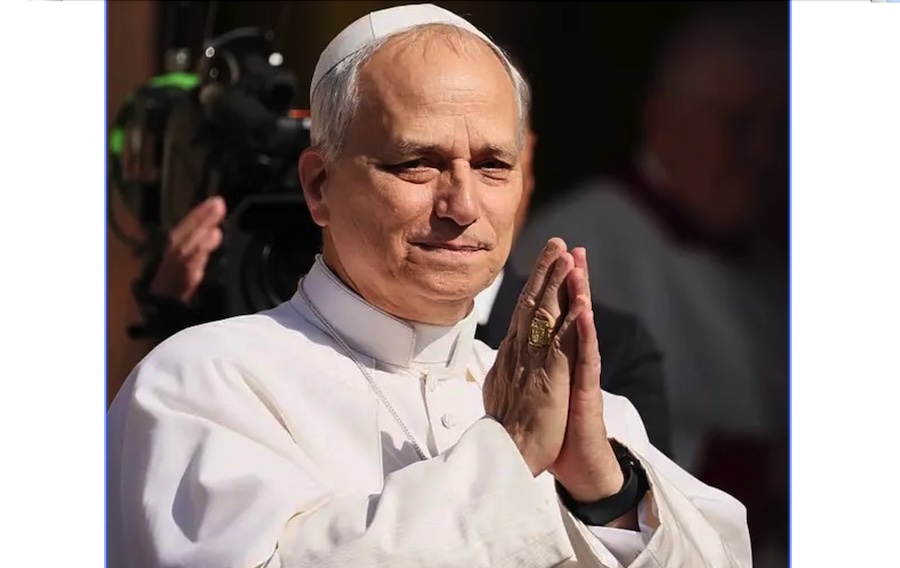

UNAOC and Religions for Peace:  “A Call for Peace, the End of Wars and Respect for International Law

. TOLERANCE & SOLIDARITY .

A press release from Religions for Peace

The United Nations Alliance of Civilizations (UNAOC) and Religions for Peace (RfP) are joining forces to launch “A Call for Peace, the End of Wars and Respect for International Law”, an initiative aiming to amplify a condemnation against war while fostering a message of peace and upholding respect for international law.


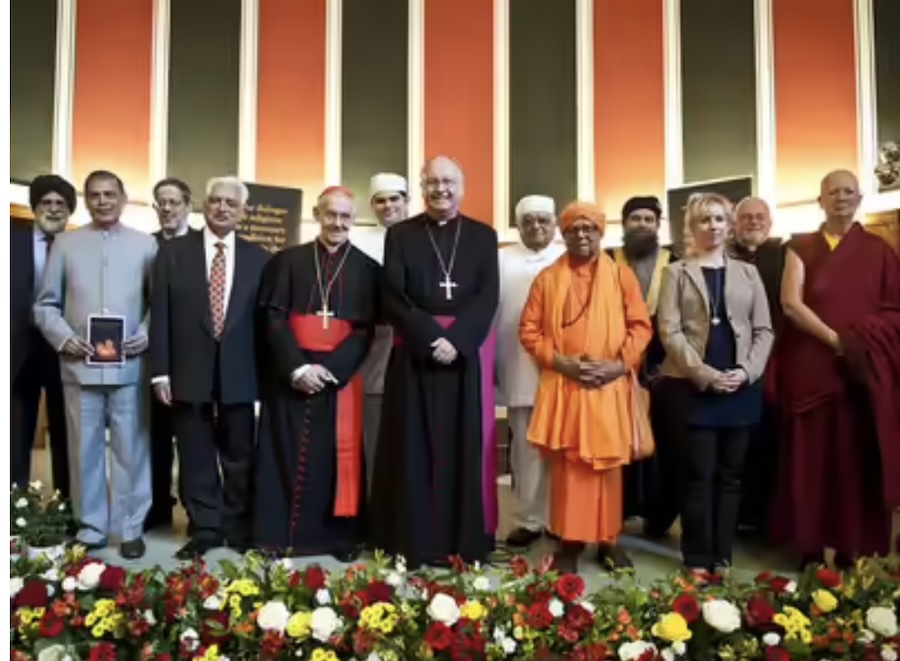
A Call for Peace – Press Conference UNAOC-RfP on April 3, 2025

The initiative, presented on April 3 at the UNAOC headquarter in New York, will be held on 25–26 April 2025 in Gernika, Spain, a town that has become a universal symbol of the horrors of war and the enduring spirit of peace. The two-day event will kick off on 25 April with roundtable discussions at the Liceo Theatre, featuring religious leaders, faith-based actors, and civil society representatives, followed by a screening of “Why War”, a film by renowned filmmaker Amos Gitai. On 26 April, the high-level opening ceremony and the official launch of the “Call for Peace” initiative will take place in Fronton Jai Alai, with distinguished speakers led by Mr. Miguel Ángel Moratinos, Under-Secretary-General and High Representative for UNAOC, and Dr. Francis Kuria, Secretary-General of RfP.

(continued in right column)

Question related to this article:
 
How can different faiths work together for understanding and harmony?

(continued from left column)

“The enduring symbolism of Gernika, and its powerful message of peace and resilience, resonates more profoundly today than ever before,” emphasized Mr. Miguel Ángel Moratinos, High Representative for UNAOC. “In a world increasingly fractured by violence and division, this initiative is a powerful reminder that peace is not merely an ideal; it is a shared imperative. As we gather in Gernika, we reaffirm our collective responsibility to reject war, uphold international law, and champion dialogue over discord. Let this be a global call to action toward a future rooted in dignity, justice, and our common humanity.”

“In a world where the echoes of past conflicts still resonate and new wars threaten to engulf us, Religions for Peace stands alongside the UNAOC in this urgent call for peace,” remarked Dr. Francis Kuria, Secretary-General of Religions for Peace. “We recognize the profound spiritual and moral imperative to dismantle the structures of violence and build bridges of understanding. This initiative, launching from the
historic town of Gernika, is not merely a call to end wars but a summons to cultivate a global culture of peace, rooted in respect for international law and the inherent dignity of every human being.”

– – – – – –

If you wish to make a comment on this article, you may write to coordinator@cpnn-world.org with the title “Comment on (name of article)” and we will put your comment on line. Because of the flood of spam, we have discontinued the direct application of comments.
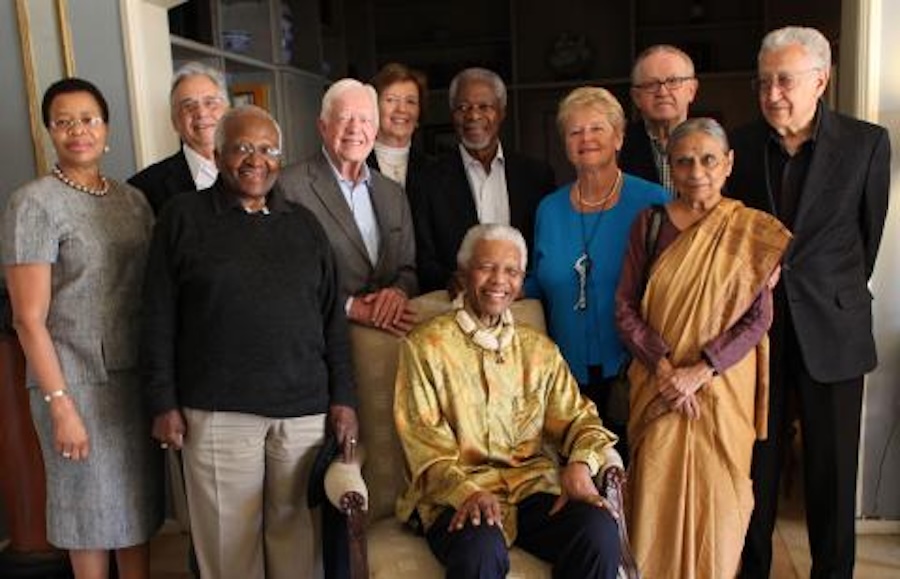
Voice of the Global South: Multilateralism Can and Must Deliver

FREE FLOW OF INFORMATION .

An opinion piece by Luiz Inácio Lula da Silva, Cyril Ramaphosa and Pedro Sánchez, heads of state of Brazil, South Africa and Spain published by the Transcend Media Service

The year 2025 will be pivotal for multilateralism. The challenges before us — rising inequalities, climate change, and the financing gap for sustainable development — are urgent and interconnected. Addressing them requires bold, coordinated action — not a retreat into isolation, unilateral actions, or disruption.

Three major global gatherings offer a unique opportunity to chart a path towards a more just, inclusive and sustainable world: the Fourth International Conference on Financing for Development (FfD4) in Seville (Spain), the 30th Conference of the Parties (COP30) to the United Nations Framework Convention on Climate Change (UNFCCC) in Belém (Brazil) and the G20 Summit in Johannesburg (South Africa). These meetings must not be business as usual: they must deliver real progress.

A multilateral moment we cannot waste

Trust in multilateral institutions is under strain, yet the need for dialogue and global cooperation has never been greater. We must reaffirm that multilateralism, when ambitious and action-oriented, remains the most effective vehicle for addressing shared challenges and advancing common interests.

We must build on the successes of multilateralism, in particular the 2030 Agenda and the Paris Agreement. The FfD4, COP30 and G20 must serve as milestones in a renewed commitment to inclusiveness, sustainable development, and shared prosperity. This will require strong political will, the full participation of all relevant stakeholders, a creative mindset and the ability to understand the constraints and priorities of all economies.

Tackling inequality through a renewed financial architecture

Income inequality is widening—both within and between nations. Many developing countries struggle under unsustainable debt burdens, constrained fiscal space, and barriers to fair access to capital. Basic services such as health or education must compete with growing interest rates.

This is not just a moral failing; it is an economic risk for all. The global financial architecture must be reformed to provide countries in the Global South with greater voice and representation and fairer and more predictable access to resources.

(article continued in right column)

Question related to this article:

Where in the world can we find good leadership today?

(article continued from left column)

We must advance debt relief initiatives, promote innovative financing mechanisms, and work on identifying and addressing the causes of the high cost of capital faced by most developing countries. The G20, under the South African presidency, is prioritising these three areas.

At the same time, Seville’s FfD4 will be a defining moment to secure commitments for stronger international financial cooperation for sustainable development, including through better taxation of global wealth and negative externalities, the enhancement of domestic resource mobilisation and for a more impactful and effective rechannelling of Special Drawing Rights.

Just transitions towards climate-resilient development

For many developing countries, just climate transitions remain out of reach due to a lack of funds and development constraints. This must change. At COP30 in Belém, a summit hosted in the heart of the Amazon, we must ensure that our climate finance commitments translate into concrete action.

The success of COP30 will depend on whether we can bridge the gap between promises and delivery. Under the UNFCCC, key foundations for COP30 will be the submission of new and ambitious Nationally Determined Contributions (NDCs) by all parties and the Baku to Belém Roadmap to scale up financing to developing country parties for climate action from all public and private sources to at least $1.3 trillion per year by 2025.

We need to significantly increase climate adaptation finance, leverage private sector investment and ensure that multilateral development banks take a greater role in climate financing. The FfD4 in Seville will complement these efforts by ensuring that climate financing does not come at the cost of development.

An inclusive response to global threats

The world is increasingly fragmented, and this is precisely why we must redouble our efforts to find common ground. Seville, Belém and Johannesburg must serve as beacons of multilateral cooperation, showing that nations can unite around common interests.

In Seville, we will work to mobilise both public and private capital for sustainable development, recognising that financial stability and climate action are inseparable. In Belem, we will stand together to protect our planet. And in Johannesburg, the G20 will reaffirm the importance of inclusive economic growth.

As we look ahead to 2025, we call on all nations, international institutions, the private sector and civil society to rise to this moment. Multilateralism can and must deliver — because the stakes are too high for failure.

– – – – – –

If you wish to make a comment on this article, you may write to coordinator@cpnn-world.org with the title “Comment on (name of article)” and we will put your comment on line. Because of the flood of spam, we have discontinued the direct application of comments.
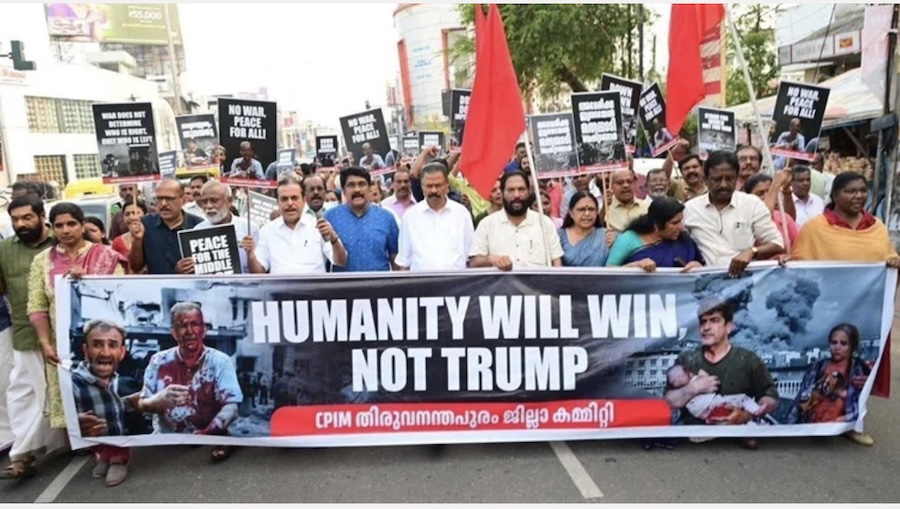
On the ground at UN women’s conference in New York City

. . WOMEN’S EQUALITY . .

An article from the Catholic Register

Every March thousands of government officials, activists and policy makers descend on the United Nations (UN) headquarters in New York City for two weeks of both high-level meetings and side-events at the Commission on the Status of Women (CSW).


UN Women Executive Director Sima Bahous delivers remarks at the opening of the 69th session of the Commission on the Status of Women, 10 March 2025, UN headquarters. Photo: UN Women/Ryan Brown.

The CSW began in 1946 as one of the original sub-commissions of the UN’s Economic and Social Affairs Commission (ECOSOC). Its purpose, according to the UN website, is to promote “gender equality, the rights and the empowerment of girls.” 

Since March 10 when the 69th CSW session began, the streets around UN headquarters on East 45th have been filled with men and women from every corner of the world. African women, wearing traditional dress underneath hastily purchased sweaters as protection against the East River wind, walk alongside young female urbanites carrying tote-bags that proclaim, “Women belong in all places where decisions are being made,” that a quote of the late U.S. Supreme Court Justice Ruth Bader Ginsburg.

(Article continues in right column.)

Questions related to this article:

Does the UN advance equality for women?

(Article continued from left column.)

In the line-up in front of the UN Pass and ID office, waiting to receive my press pass, I was sandwiched between a woman who was a director of “Gender Equality and Social Inclusion” at a UK-based think tank and a tiny, red-lipsticked New Yorker who works for NGO Girls Not Brides. The two women were quite excited when they heard I was a journalist but went completely silent when I told them I worked for The Catholic Register.

According to the CSW website, the commission is a “one-of-a-kind platform for feminists from around the world to advocate, learn and share experiences.” 

This year is a particularly important one for the CSW as it marks 30 years since the fourth World Conference on Women at which the Beijing Declaration and Platform for Action was adopted. Signed by 189 countries, the 1995 global policy document outlines 12 focus points which includes women and the economy, human rights and the environment. Since the adoption of the declaration, subsequent commissions have been engaged with member countries monitoring and reporting on progress in those 12 areas.

Sima Bahous, executive director of UN Women, introduced the 69th CSW with the note, “while we have not yet known a world of full equality for all women and girls, the global community collectively imagined it in the 1995 Beijing Declaration and Platform for Action.” [Click here for her speech.]

Every year, much of the work of the commission takes place in the hundreds of side events both on the grounds of the UN headquarters and offsite in nearby hotels. Organized by non-governmental organizations in conjunction with member state delegations, the topics range from the realities of sex-selective practices to the role AI might play in combating human trafficking. 

The Canadian delegation co-hosted several side events in the first week, including one co-hosted with Sierra Leone, Plan International, UNICEF and CHOICE for Youth & Sexuality, entitled, “Stories from the future: Charting a path towards the future girls want.”

This year, Minister for Women and Gender Equality and Youth of Canada Marci Ien leads the Canadian delegation. Ien has stated that the primary focus of Canada’s advocacy at the commission will be “Women’s empowerment and the advancement of 2SLGBTQI+ rights.”

– – – – – –

If you wish to make a comment on this article, you may write to coordinator@cpnn-world.org with the title “Comment on (name of article)” and we will put your comment on line. Because of the flood of spam, we have discontinued the direct application of comments.
CODEPINK at International Working Women’s Day 2025

. . WOMEN’S EQUALITY . .

An article from Codepink

This year’s International Working Women’s Day was a welcome respite from the chaotic, maddening, and often heart-wrenching news cycle that is defining 2025. Our local chapters showcased last weekend that we will never let ourselves be defined by, nor distracted by the chaos and cruelty that’s being unleashed on us and our sisters all over the world. Instead, we focused on meeting people where they are at and growing the movement one person at a time.


From Los Angeles to Dallas, from Massachusetts to London, UK, our local chapters centered international working women’s resistance to send a powerful and urgent reminder that if women around the world are standing together – liberation from imperialism and militarism is inevitable! 

CODEPINK’s birth 23 years ago also culminated in powerful action on IWWD 2003, kicking off our alternate, feminist vision for peace against the backdrop of U.S. militarism and violence against women at home and in the Global South. 

Our chapters are doing the hard work of movement building. Many of them showed up to Women’s Day events in their community and brought flyers that educate on war and peace in a way that makes sense to anyone and everyone. This sparked lively conversation with people our movement wouldn’t otherwise reach. Scroll down to read more and see action photos!

CODEPINK Bay Area honored the revolutionary struggles of working women within Turtle Island and the Global South by holding community-led workshops to oppose fascism. Bay Area Organizer Cynthia stated, “The event was a beautiful collaboration of many groups. People were happy to receive our CODEPINK flyers. A highlight was the Palestinian Feminist Collective workshop where we learned about the crucial role of women in Palestinian life and resistance.”

CODEPINK London, UK took to the streets to mark the International Feminist Strike 2025 as part of a global anti-colonial movement.

We asked our CODEPINK London Regional Organizer, Nuvpreet: In the spirit of IWWD, what does true solidarity with international women look like? 

(Article continued in right column)

Questions related to this article:

Do women have a special role to play in the peace movement?

(Article continued from left column)

“As feminists in the imperial core, we must recognize that our governments fund, support, and maintain systems of militarism and colonial domination that harm women across the world. Our role is to oppose and end these systems so that women across the world can live in peace.”

CODEPINK Milwaukee did not let their local IWWD protest forget the women of Palestine! They brought signs, chants and extra PINK to the streets of Milwaukee! The women of Palestine are our sisters!!!

CODEPINK North Carolina showed up at their first event together with the message that militarism and war has no place in our feminism! Or at IWWD!

We asked our National Co-Director, Danaka: How do we care for ourselves and each other all year round? 

“It’s pretty easy to get swept up in the constantly devastating news cycle. But I try and remember that feeling defeated isn’t helping anyone…it’s not helping me, and it’s certainly not doing anything for women in the Global South who my country is bombing, starving, or exploiting. When I practice my feminist values of care, solidarity, and curiosity – how could I ever feel hopeless? There’s billions of people in the world with kind hearts, we just need to organize them.” 

CODEPINK NYC joined partners to host an educational screening of Leila and the Wolves (Leila wa za’ib) followed by a discussion on women leading resistance and liberation movements. 

Kurt from CODEPINK NYC reflected after, “The discussion was just as impactful as the movie itself. It felt good to be in a room where people could share their thoughts openly, even when the topics were tough. I walked away feeling really grateful for the chance to connect in community over such an important film. Thanks to everyone who made the event happen!” 

Our chapters have their work cut out for them as they disrupt the war narrative everywhere. And the work hasn’t stopped at IWWD! Last week, CODEPINK London, UK made news launching  BasesOffCyprus, a brand new coalition-led campaign to end joint US/UK surveillance flights aiding Israel’s genocide, which forced the UK government to publicly respond. Our chapter in Missouri is organizing to stop Israel Chemicals Limited from opening up a new facility in St. Louis. CODEPINK North Dakota is working on kicking Elbit Systems out of their state. The chapter in Chicago is part of a massive coalition to divest from Israeli bonds. They are taking on the war machine locally while educating and activating their friends and neighbors. 

Thank you to all those that brought messages of peace and justice to their International Working Women’s Day actions! We cannot do this work without each of our amazing local leaders, online organizers and global partners. 

– – – – – –

If you wish to make a comment on this article, you may write to coordinator@cpnn-world.org with the title “Comment on (name of article)” and we will put your comment on line. Because of the flood of spam, we have discontinued the direct application of comments.
Sign the Peace Clock Manifesto

DISARMAMENT & SECURITY .

An article from Code Pink

Join us to pivot from Doom to Peace and disarm the world from nuclear weapons. Sign the Manifesto!

Over the years, the hands of the clock have been reset, forward and backward, as scientists and policy makers estimated how immediate the nuclear danger loomed, based on the perils faced by other countries obtaining nuclear weapons as well as new arms control measures, weapons limitations, and agreements, particularly between the US and Russia for disarmament measures. At its most optimistic, the Doomsday hands were moved to 17 minutes to midnight in 1991 when the US and USSR announced the complete cessation of nuclear testing.

Shockingly, despite years of nuclear arms control measures, resulting in arsenals down from a high of 70,000 bombs at the peak of the world’s nuclear insanity, to about 12,000 today, 11,000 of which are in the US and Russia with nearly 4,000 poised and ready to go, with another 1000 held by the six other nuclear weapons states—UK, France, China, India, Pakistan, Israel, and North Korea– the clock has never been set closer to Doomsday than it is today—At 90 seconds to midnight! (1)

It’s time to transform the clock and change the conversation! Dire warnings about Doomsday have done little to increase our world’s safety these 77 years. It’s time to pivot our focus from doom to the many small necessary steps we each need to engage in to create peace. The fear of doom encourages compromise with those who are only interested in building Empire and the war economy. This never brings us to our goal of peace. We must stop giving our blessing and consent to endless steps to “control” arms that lead to ever more danger as illustrated by the aging Doomsday clock.

Instead, we must demand their abolition, as we move to a nuclear free world at peace unthreatened by catastrophic annihilation and the ultimate climate change; a nuclear winter.

Let us deemphasize procedural steps that keep up stuck, which scholars have already named: ‘anti-preneurism’ steps towards illusory progress. (2)

(Continued in right column)

Question related to this article:
 
Can we abolish all nuclear weapons?

(Continued from left column)

We are at a turning point in history. It is time to change the conversation with bold new proposals. Proposals that are guaranteed to bring us a respite from the growing terror. Proposals that will bring a shift in planetary consciousness allowing us to respond cooperatively to the impending cataclysmic climate disaster down the road! Proposals that will usher in a rising dawn and change our focus from Doom to Peace. Mother Earth grows impatient with the folly of humankind.

We will take steps that lead to peace on earth and mobilize, expose and render powerless the MICIMATT (Military, Industrial, Congressional, Intelligence, Media, Academic Think Tank complex) in our work for peace. Bringing about:

° US acceptance of Russian and Chinese proposals for treaties to ban weapons in space and cyberwar

° The reinstatement of the 1972 Anti-Ballistic Missile Treaty with Russia and removal of US missiles from Romania and Poland

° Removal of US nuclear weapons from five NATO states in a deal for Russia removing its recently placed nuclear weapons in Belarus

° All nuclear weapons off high alert and separate the warheads from their delivery systems as China does – following the wisdom of the East

° The dissolution of NATO and respect of a reformed United Nations empowering global democracy, where all countries have decision-making power, not just imperial powers.

° US, China, Russia, India, Pakistan, UK, France, North Korea, and Israel completely disarm.

Russia and China have offered to be willing partners in these initiatives. They have been proposing them to the United States and voting on them in the UN for more than ten years. Let us together make this real for the people and the planet.

1 Status Of World Nuclear Forces

2 Resistance to the emergent norm to advance progress towards the complete elimination of nuclear weapons

– – – – – –

If you wish to make a comment on this article, you may write to coordinator@cpnn-world.org with the title “Comment on (name of article)” and we will put your comment on line. Because of the flood of spam, we have discontinued the direct application of comments.

Global Day of Action to Close Bases

FREE FLOW OF INFORMATION

An announcement from World Beyond War

We call on individuals and organizations around the world to join the Global Day of Action to #CloseBases on February 23 by organizing protests at military base sites near you.

The thousands of military bases, both foreign and domestic, around the world are a critical piece of the war machine that must be dismantled. Closing bases is a necessary step to shift the global security paradigm towards a demilitarized approach that centers common security — no one is safe until all are safe.

Video for Global Day of Action

Top 5 Reasons Why We’re Calling for a Global Day of Action to #CloseBases

1. Bases often perpetuate colonialism, removing Indigenous people from their lands. From Panama to Guam to Puerto Rico to Okinawa to dozens of other locations across the world, militaries have taken valuable land from local populations, often pushing out Indigenous people in the process, without their consent and without reparations. For example, the entire population of the Chagos Islands was forcibly removed from the island of Diego Garcia by the UK so that it could be leased to the U.S. for an airbase.

2. Bases cost an exorbitant amount of $$. The cost of U.S. foreign military bases alone is estimated at $80 billion a year, money that could be better spent on healthcare, education, renewable energy, and so much more.

3. Bases exacerbate environmental damage and the climate crisis. Military emissions are exempted from climate agreements, like the Kyoto Protocol. The construction of bases has caused irreparable ecological damage, such as the destruction of coral reefs and the environment for endangered species in Henoko, Okinawa. Furthermore, it is well documented at hundreds of sites around the world that military bases leach toxic so-called “forever chemicals” (PFAS/PFOS) into local water supplies, which has had devastating health consequences for nearby communities.

Continued in right column)

Questions related to this article:
 
How can we be sure to get news about peace demonstrations?

(Continued from left column)

4. Bases can have violent and harmful impacts on local communities. Militaries have a notorious legacy of sexual violence, including kidnapping, rape, and murders of women and girls in nearby communities. Yet troops stationed at foreign bases are often afforded impunity for their crimes due to Status of Forces Agreements (SOFAs) with the so-called “host” country. Bases can also bring a rise in property taxes and inflation in areas surrounding them which has been known to push locals out.

5. Bases heighten tensions and provoke war-making. The presence of hundreds of thousands of troops, massive arsenals, and thousands of aircraft, tanks, and ships in every corner of the globe facilitates war-making and promotes an arms race. Additionally, bases make locations into targets for attack. And foreign bases implicate countries in the crimes of foreign militaries.

Actions Around the World on February 23

Click here for the map with details on the planned actions.

Click here for the Action Planning Toolkit.

Core Mobilization Organizers

International Peace Bureau (Global)
No to War – No to NATO Network (Global)
Pace e Bene (U.S.)
RootsAction (U.S.)
Veterans For Peace (U.S.)
War Industry Resisters Network (U.S.)
War Resisters’ International (Global)
World BEYOND War (Global)

Click here and go to the bottom of the page for the full list of endorsing organizations.

RESULTS

Reports from the Global Day of Action to Close Bases

– – – – – –

If you wish to make a comment on this article, you may write to coordinator@cpnn-world.org with the title “Comment on (name of article)” and we will put your comment on line. Because of the flood of spam, we have discontinued the direct application of comments.
An excerpt from remarks by President Trump at the World Economic Forum

DISARMAMENT & SECURITY .

Excerpt from a press release of The Whitehouse

(Editor’s note. The following excerpt from remarks by President Trump at the World Economic Forum illustrates the impression one gets from the new President that it is impossible to know if his words can be taken seriously. Or are they just part of a game he is playing with the world, much like Charlie Chaplin’s portrayal of Hitler playing with a toy balloon of the world. Let us hope they can be taken seriously in this case.)

How do you see the relationship between the U.S. and China in the next four years under your leadership?

THE PRESIDENT:  He called me.  But I see it very good.  I think that we’re going to have a very good relationship.  All we want is fairness.  We just want a level playing field.  We don’t want to take advantage.  We’ve been having massive deficits with China.  Biden allowed it to get out of hand.  He’s — $1.1 trillion deficit.  It’s ridiculous, and it’s just an unfair relationship. 

And we have to make it just fair.  We don’t have to make it phenomenal.  We have to make it a fair relationship.  Right now, it’s not a fair relationship.  The deficit is massive, as it is with other countries — a lot of Asian countries, actually.  But we have deficits that are very big, and we can’t keep doing that, so we’re not going to keep doing that. 

But I like President Xi very much.  I’ve always liked him.  We always had a very good relationship.  It was very strained with COVID coming out of Wuhan.  Obviously, that strained it.  I’m sure it strained it with a lot of people, but that strained our relationship.  But we always had a great relationship, I would say, and we look forward to doing very well with China and getting along with China. 

 Hopefully, China can help us stop the war with, in particular, Russia-Ukraine.  And they have a great deal of power over that situation, and we’ll work with them. 

And I mentioned that with — during our phone conversation with President Xi, and hopefully we could work together and get that stopped. 

We’d like to see denuclearization.  In fact, with President Putin, prior to a — an election result, which was, frankly, ridiculous, we were talking about denuclearization of our two countries, and China would have come along.  China has a — a much smaller, right now, nuclear armament than us or field than us, but they’re — they’re going to be catching it at some point over the next four or five years. 

And I will tell you that President Putin really liked the idea of — of cutting way back on nuclear.  And I think the rest of the world, we would have gotten them to follow.  And China would have come along too.  China also liked it. 

Tremendous amounts of money are being spent on nuclear, and the destructive capability is something that we don’t even want to talk about today, because you don’t want to hear it.  It’s too depressing. 

(Continued in right column)

Question related to this article:
 
Can we abolish all nuclear weapons?

(Continued from left column)

So, we want to see if we can denuclearize, and I think that’s very possible.  And I can tell you that President Putin wanted to do it.  He and I wanted to do it.  We had a good conversation with China.  They would have been involved, and that would have been an unbelievable thing for the planet.

And I hope —

MR. BRENDE:  Mr. President, when you’re —

THE PRESIDENT:  — it can be started up again.

MR. BRENDE:  — back here in Davos next year, will — will there be then a peace agreement with — with Ukraine and Russia by then?

THE PRESIDENT:  Well, you’re going to have to ask Russia.  Ukraine is ready to — to make a deal. 

Just so you understand, this is a war that should have never started.  If I were president, it would never have started.  This is a war that should have never, ever been started.  And — and it wasn’t started during my — there was never even talk about it.  I knew that it was the apple of President Putin’s eye, but I also knew that there was no way he was going in, and he wasn’t going to go in. 

And then, when I was out, bad things happened, bad things were said, a lot of stupidity all around, and you end up with what you have.  Now you have all these bombed-out cities — they look like demolition sites — with many people killed. 

I think the — the thing that you’ll see about Ukraine is that far — far more people have died than is being reported. 
And I’ve seen that.  But far, far more people have died.

When you look at a city that’s become a demolition site, where big buildings have been collapsed by missiles hitting them and everything else, and they say, “One person was slightly injured.”  No, no, many people were killed.  Those are big buildings.  I was surprised at how — that was my business.  These are buildings that go two and three blocks long.  They’re 20 stories high.  They’re big, powerful buildings.  Then they were knocked down, and there were a lot of people in those buildings.  They had announced that two people were injured.  That’s not true.  So, I think you’re going to find that there were many more people killed in Ukraine and the Ukraine war than anybody has any idea. 

But if you look now, so many of the — the people being killed are soldiers just facing each other with guns, rifles, and drones — the new form of warfare — drones.  And it’s a very sad thing to see.

And when you see pictures of the fields that I see, nobody wants to see it.  You’ll never be the same.

– – – – – –

If you wish to make a comment on this article, you may write to coordinator@cpnn-world.org with the title “Comment on (name of article)” and we will put your comment on line. Because of the flood of spam, we have discontinued the direct application of comments.
Mazin Qumsiyeh: Old story- new twist

FREE FLOW OF INFORMATION .

A blog Jan 24, 2025 by Mazin Qumsiyeh (abbreviated)

Will history repeat itself but now with a very different outcome especially in the era of global environmental catastrophe powered by greed and militarism? To review reality locally and globally helps us find answers. Locally, Israeli apartheid forces are now doing in our parts of the West Bank what they did to Gaza. Ethnic cleansing, destruction of property, and massive violations of human rights ranging from right to move right to worship, right to simple dignified life.  People here are scared that this is merely the beginning of accelerated genocide and ethnic cleansing  as perpetrated in Gaza.  

We have repeatedly warned of the consequences of Western collusion with genocide and ecocide.  The fate of Gaza will be the fate of humanity if not enough people wake up in time to the global reality of simply unsustainability of “might makes right” colonial policies.  

At Trump’s inauguration, the billionnaires were in the front row while his picks for secretaries were behind them. This image sums the momentous transformations gripping our planet. It used to be argued that the deep state consist of moneyed interests, largely hidden. Now we reached a point that murderous moneyed interests no longer work behind the scenes. The ultraright and fascists and neoNazis and Zionists are front and centre and openly cause millions to suffer with impunity. They even brag about their “common interests”.

For example, let us take the spectacle of the “World Economic Forum”  this past week (for a run-in I had with this forum in 2006, see http://qumsiyeh.org/theworldeconomicsforumcontroversy/). The right wing CEOs and government officials like the President of Argentina openly declared building an alliance of leaders around the world who believe and practice policies of “money trumps people”. At the same forum convicted felon Donald Trump delivered a belligerent, triumphalist, and (textbook) colonialist speech touting a vision of the world where elite business interests trump human rights.

(article continued in right column)

Question related to this article:

Presenting the Palestinian side of the Middle East, Is it important for a culture of peace?

The fate of Gaza, will it be the fate of humanity?

(article continued from left column)

Eisenhauer warned US citizens in his farewell speech: “In the councils of government, we must guard against the acquisition of unwarranted influence, whether sought or unsought, by the military–industrial complex. The potential for the disastrous rise of misplaced power exists, and will persist. We must never let the weight of this combination endanger our liberties or democratic processes. We should take nothing for granted. Only an alert and knowledgeable citizenry can compel the proper meshing of the huge industrial and military machinery of defense with our peaceful methods and goals so that security and liberty may prosper together.”

Eisenhauer did not anticipate how horrific it would be in the 21st century nor did not anticipate an alliance of neocolonial powers reinvigorated and working towards the same  goals: making the rich richer, the poor poorer, and wrecking the global environment while unleashing militarism and wars in unprecedented cruelly like we see in Palestine (genocide and ecocide). Our species is at a pivotal moment in history never experienced before. We are then many, they are the few. If more of the many mobilize quickly we may still have a chance to save ourselves and our planet. . . .

Stay Humane and keep hope alive

Mazin Qumsiyeh
A bedouin in cyberspace, a villager at home
Professor, Founder, and (volunteer) Director
Palestine Museum of Natural History
Palestine Institute of Biodiversity and Sustainability
Bethlehem University
Occupied Palestine
http://qumsiyeh.org
http://palestinenature.org
facebook pages
Personal https://www.facebook.com/mazin.qumsiyeh.9
Institute https://www.facebook.com/PIBS.PMNH

– – – – – –

If you wish to make a comment on this article, you may write to coordinator@cpnn-world.org with the title “Comment on (name of article)” and we will put your comment on line. Because of the flood of spam, we have discontinued the direct application of comments.
UN-Tourism Candidate is Placing Tourism at the Heart of Peace and Reconciliation

. . SUSTAINABLE DEVELOPMENT . .

An article from eTurboNews

Mouhamed Faouzou Deme from Senegal has made headlines in Africa, wanting to become Africa’s choice in the upcoming UN Tourism election for Secretary-General.

He is the only one of the four competing candidates for the highest UNWTO post who provided feedback to eTurboNews on the role of tourism for peace. Once Secretary-General Zurab took his helm in 2018, UNWTO’s long-year relationship with the International Institute for Peace of Tourism was eliminated, forcing IIPT chairman Louis D’Amore to cancel his carefully planned summit in Montreal. IIPT never fully recovered from this disappointment after this.

Its former Secretary-General, Dr. Taleb Rifai, fostered this unique relationship between UNWTO and IIPT. Mouhamed pledged to reinstate this, should he become Secretary-General, and responded to WTN. He stated:

Tourism stakeholders, professionals, and political actors have continued to recall the importance of placing tourism at the heart of peace and reconciliation programs to enable the sector to mobilize its capacity for action.

This is often in favor of investment, development, and social inclusion.

Adherence to freedom, justice, democracy, tolerance, solidarity, cooperation, pluralism, cultural diversity, dialogue, and understanding promotes peace.

(article continued in right column)

Questions related to this article:
 
How can tourism promote a culture of peace?

(article continued from left column)

Tourism is a vector of peace, respect, openness, and dialogue.

Tourism has the value of peace because it is only built and carried out in an environment of security, stability, and conviviality.

The main idea behind the concept of peace in tourism is that peace exists when people travel freely around the world.

It helps travelers to get to know new people, cultures, and values.

This experience can increase mutual understanding between people who have lived in diverse cultural contexts.

Furthermore, peace tourism aims to reduce the root causes that create situations where violence is perceived as inevitable.

It does not replace other types of tourism practices but rather aims to facilitate their improvement.

Its impact goes far beyond economic benefits. It is interesting to look at tourism as a social force rather than an industry and see how we can use it to establish a culture of peace.

Tourism connects people and the planet. It is a vector of trust and goodwill.

Understanding culture can change behavior and consolidate peace.

Tourism’s role in supporting peace is also reflected in its contribution to the fight against poverty, the preservation of culture, and protecting the environment.
– – – – – –

If you wish to make a comment on this article, you may write to coordinator@cpnn-world.org with the title “Comment on (name of article)” and we will put your comment on line. Because of the flood of spam, we have discontinued the direct application of comments.