As Israeli Forces Seize Final Sumud Boat, Another Flotilla Sails Toward Gaza

. TOLERANCE & SOLIDARITY .

An article by Jessica Corbett in Common Dreams (reprinted under Creative Commons CC BY-NC-ND 3.0)

As Israeli forces on Friday captured the last remaining vessel from the Global Sumud Flotilla that aimed to break Israel’s blockade of the Gaza Strip and deliver humanitarian aid, another group of boats was headed for the Palestinian territory.

The 11 vessels, most of which started sailing last week, are “carrying over 150 healthcare workers, journalists, and activists,” according to organizers, the Freedom Flotilla Coalition (FFC) and Thousand Madleens to Gaza.

“As journalists and medical professionals, we carry the responsibility to speak truth and preserve life,” said Dr. Ricardo Corradini, a general surgeon from Italy, in a statement. “This mission is an appeal to our colleagues—and to the institutions that represent us globally—to break their silence, uphold their ethics, and stand on the right side of history.”

FFC highlighted earlier this week that the ship “Conscience, bombed by Israel off the coast of Malta in May 2025, has returned to serve as a vehicle for medics and media determined to reach their colleagues in besieged Gaza.”

Huwaida Arraf, an FFC steering committee member aboard Conscience, said that it “is the latest and largest boat in this historic flotilla—and its name represents not only steadfast resistance to Israel’s illegal blockade, but a call to awaken the conscience of the world.”

Since Israeli forces began intercepting Global Sumud Flotilla vessels late Wednesday, a fresh wave of global protests has occurred. People around the world have repeatedly taken to the streets over the past two years, as Israel has responded to the Hamas-led October 7, 2023 attack by devastating infrastructure across Gaza, including healthcare facilities, wounding at least 169,165 Palestinians, and slaughtering at least 66,288.

Experts warn the true death toll in Gaza is likely much higher. Among the dead are many doctors and nurses—one count, from Healthcare Workers Watch, said at least 1,200 as of February. Israel’s killing of Gaza’s healthcare professionals continued this week with the death of Omar Hayek from Doctors Without Borders, or Médecins Sans Frontières (MSF).

The Israeli attack that killed Hayek and wounded four others “took place on a street where our teams were waiting to take a bus to the MSF field hospital in Deir al-Balah. All staff were wearing MSF vests, clearly identifying them as medical humanitarian workers,” the group said Thursday. “We express deep sorrow and outrage over the killing, which occurs less than two weeks after another MSF colleague, Hussein Alnajjar, was killed by the Israeli forces, in Deir al-Balah.”

Also among the dead are over 200 journalists, with recent tallies ranging from 223 to 270. The Israeli government has prevented international reporters from entering Gaza—and has been widely accused of intentionally killing Palestinian journalists who have reported on the genocide while trying to survive it.

Global press freedom groups have frequently spoken out against Irsael’s treatment of journalists, including this week, when Israeli forces took members of the media into custody while blocking the Global Sumud Flotilla from reaching Gaza.

“Arresting journalists and preventing them from doing their work is a serious violation of the right to inform and be informed,” said Martin Roux, head of the Crisis Desk at Reporters Without Borders, or Reporters Sans Frontières (RSF), in a Thursday statement.

(continued in right column)

Question related to this article:
 
How can we best express solidarity with the people of Gaza?

(continued from left column)

“RSF condemns the illegal arrest of the news professionals who were on board these ships to cover a humanitarian operation of unprecedented scale,” Roux continued. “The Israeli army, which has killed over 210 Palestinian journalists in the Gaza Strip, is continuing its media blockade of the Gaza Strip with these illegal arrests at sea, with the obvious goal of covering up the crimes it is committing against the Palestinian population. RSF urges Israel to respect the status of journalists, protect them, and guarantee their safety in accordance with international law.”

Early Friday, the flotilla announced on Instagram that “Marinette, the last remaining boat of the Global Sumud Flotilla, was intercepted at 10:29 am local time, approximately 42.5 nautical miles from Gaza.”

According to the flotilla, whose more than 450 members included politicians, actors, and activists from dozens of countries:

“Over 38 hours, Israeli occupation naval forces illegally intercepted all 42 of our vessels—each carrying humanitarian aid, volunteers, and the determination to break Israel’s illegal siege on Gaza.

“Marinette sailed forward with the spirit of sumud—steadfastness—even after seeing the fate of 41 boats before her.

“But this is not the end of our mission. Our determination to confront Israel’s atrocities and stand with the Palestinian people remains unshaken.

“As people rise up in cities worldwide to demand an end to these horrors and to take a stand for humanity, we rise together with one voice.

“We will not stop until the genocide ends. We will not stop until Palestine is free.”

Until the interception, the flotilla faced repeated attacks widely believed to be from Israel, whose Ministry of Foreign Affairs on Friday continued to smear the peaceful humanitarian mission as the “Hamas-Sumud provocation” and a “sham.”

“Already four Italian citizens have been deported. The rest are in the process of being deported. Israel is keen to end this procedure as quickly as possible,” the ministry said on social media. “All are safe and in good health.”

In a video circulating online, Israeli National Security Minister Itamar Ben Gvir can be seen repeatedly calling Global Sumud Flotilla activists “terrorists” as they were waiting for their transfer to an Israeli prison

In a Friday statement about the Global Sumud Flotilla, Nihad Awad, national executive director of the Council on American-Islamic Relations (CAIR), the largest Muslim civil rights group in the United States, said that “the detention of these humanitarian volunteers, including American citizens, is deeply troubling and completely unacceptable.”

“These are civilians engaged in delivering essential aid to people in desperate need in Gaza,” he continued. “Denying them legal counsel, holding them incommunicado, and putting them at risk for simply performing humanitarian work is a flagrant violation of human rights and the principles the United States stands for. We urge the US government to act immediately to secure their safe release and make clear that targeting Americans performing humanitarian missions will not be tolerated.”

Under President Donald Trump and his Democratic predecessor, the United States has provided Israel with diplomatic support on the global stage and billions of dollars in military aid. Joined at the White House on Monday by Israeli Prime Minister Benjamin Netanyahu—who is wanted by the International Criminal Court—Trump unveiled a proposed peace plan for Gaza.

In a long post on his Truth Social platform Friday morning, Trump railed against Hamas and gave the group that has governed Gaza for the past two decades until Sunday at 6:00 pm Eastern Time to agree to his proposal. Trump wrote, “If this LAST CHANCE agreement is not reached, all HELL, like no one has ever seen before, will break out against Hamas.”

– – – – – –

If you wish to make a comment on this article, you may write to coordinator@cpnn-world.org with the title “Comment on (name of article)” and we will put your comment on line. Because of the flood of spam, we have discontinued the direct application of comments.
Bernie Sanders: We Must Fight Like Hell Against Trump’s Authoritarianism

. HUMAN RIGHTS .

An article by Bernie Sanders in Common Dreams (reprinted  under Creative Commons CC BY-NC-ND 3.0)

Make no mistakes about it, we are living in dangerous and unprecedented times as we combat Trump‘s oligarchy, authoritarianism, kleptocracy, and his horrific attacks against working families.


Demonstrators march through downtown protesting the agenda of the Trump Administration on September 30, 2025 in Chicago, Illinois. (Photo by Scott Olson/Getty Images)

We have more income and wealth inequality than we’ve ever had; we have more corporate control of the media than we’ve ever had; we have more billionaire money buying elections than we’ve ever had.

We have a major housing and educational crisis, people are going to the grocery store and can’t afford the food their families need, and we have a health care system that is completely broken.

Meanwhile, we have a president who is a pathological liar, who has little regard for the rule of law, who is suing media outlets that criticize him, threatening to jail his political opponents and talking about the military invading U.S. cities as practice.

History has always taught us that real change never takes place from the top on down. It always occurs from the bottom on up. It occurs when ordinary people get sick and tired of oppression and injustice—and fight back.

And on Tuesday night, as you know, the government shut down because—for the first time in modern history—Donald Trump and the Republican Party are approaching a budget conversation that requires 60 votes with a take it or leave it approach.

I will not take it.

I will not allow Donald Trump and the Republican Party to take away health care from 15 million people by making the largest cut to Medicaid and the Affordable Care Act in history.

I will not allow Donald Trump and the Republican Party to increase health insurance premiums by 75 percent, on average, for over 20 million Americans who get their health care through the Affordable Care Act.

I will not allow Donald Trump and the Republican Party to fund this by giving a $1 trillion tax break to people like Jeff Bezos, Elon Musk, and the other oligarchs in the top 1 percent.

(Article continued in the right column)

Questions related to this article:

The struggle for human rights, is it gathering force in the USA?

(Article continued from the left column)

I will not allow Donald Trump and the Republican Party to undermine modern medicine and the health and well-being of our children by rejecting the scientific evidence regarding vaccines.

I will not allow Donald Trump and the Republican Party to allow this country to be moved toward authoritarianism by putting federal troops on city streets without a request from a governor or mayor.

I was asked ahead of the vote if I would just continue to vote NO over and over again until these issues are addressed, and you are damn right I will.

Donald Trump and my colleagues in the Republican Party may not stay up late at night worrying about people who can’t afford health care, the medicine they need to survive, groceries and an education for their children, but I do.

Republicans will not have my vote to fund the government unless they find a sense of morality and do the right thing on health care, income and wealth inequality, and stopping Donald Trump’s march toward authoritarianism.

I want the Republicans to go back to their districts and ask their constituents whether or not they believe it’s a good idea to take away health care from millions of Americans to give Bezos and Musk a tax break.

I suspect they will not like the answer they hear.

So no. Republicans will not have my vote to fund the government unless they find a sense of morality and do the right thing on health care, income and wealth inequality, and stopping Donald Trump’s march toward authoritarianism.

Until that happens it is important for all of us to stand up and make our voices heard.

Will it be easy? Of course not.

Is it possible? Only if everyone does their part.

Let me remind you, history has always taught us that real change never takes place from the top on down. It always occurs from the bottom on up. It occurs when ordinary people get sick and tired of oppression and injustice—and fight back. That is the history of the founding of our nation, the abolitionist movement, the labor movement, the civil rights movement, the women’s movement and more.

Sisters and brothers, we are living in dangerous times. Maybe more dangerous than any point in American history since the Civil War.

But this is a struggle that, for ourselves and future generations, we cannot lose.

Let us go forward together in solidarity

– – – – – –

If you wish to make a comment on this article, you may write to coordinator@cpnn-world.org with the title “Comment on (name of article)” and we will put your comment on line. Because of the flood of spam, we have discontinued the direct application of comments.
Students Stage Walkouts in Dozens of Spanish Cities to ‘Stop the Genocide’ in Gaza

. TOLERANCE & SOLIDARITY .

An article by Brett Wilkins from Common Dreams (reprinted  under Creative Commons CC BY-NC-ND 3.0)

Tens of thousands of students walked out of classrooms in cities and towns across Spain on Thursday to protest Israel’s ongoing US-backed genocide in Gaza and abduction of Global Sumud Flotilla members, dozens of whom are Spanish.


Students in Málaga, Spain march behind a banner reading “Stop Everything to Stop the Genocide” on October 2, 2025. (Photo by Jesus Merida/SOPA Images/LightRocket via Getty Images)

The National Students’ Union organized Thursday’s protests under the slogan “stop the genocide against the Palestinian people.” Demonstrations, which took part in at least 39 cities and towns, varied in size from small groups to thousands who turned out in Barcelona and the capital Madrid, where students held banners with messages like “Stop Everything to Stop the Genocide,” “All Eyes on the Global Sumud Flotilla,” and “Free Palestine!”

“We’re not going to look the other way,” the union said in a statement. “The Palestinian cause is the cause of the youth and the millions who stand for human rights and social justice. That is why… we called the general student strike to empty the classrooms and fill the streets with dignity.”

Maria, a Spanish student interviewed by Turkey’s Anadolu Ajansı in Madrid, said: “While young people like us are being killed and subjected to genocide in Palestine, we cannot be in class. The whole world must do everything it can to stop this genocide.”

Another Madrid protester, Francesca—an Italian student studying in Spain—told Anadolu that “we must pressure governments to stop Israel.”

(continued in right column)

Question related to this article:
 
How can we best express solidarity with the people of Gaza?

(continued from left column)

“Allowing genocide in full view of the world is unacceptable,” she added. “The killing of women, children, and students in Palestine must end.”

In Barcelona—whose former leftist Mayor Ada Colau was among the dozens of Spaniards who set sail for Gaza from the port city—an estimated 6,500 students and others took to the streets Thursday.

“What I can do is be here, with my presence,” student Donia Armani told El País. “The more people, the better; so the Palestinians will not be alone.”

Armani’s mother added, “The Palestinians are like a brotherly people, we feel a lot from the absurd images we see.”

Ana, a 14-year-old student protesting in Barcelona, said: “I think it’s very bad what’s happening,” adding that Israel does “not let food arrive and also bombs them, which causes many, especially small children, to die, and I am very sorry.”

Thursday’s walkouts took place as Israeli forces continued assaulting Gaza on Thursday, killing scores of Palestinians amid a backdrop of ongoing famine and forced displacement. Since October 2023, Israeli forces have killed at least 66,225 Palestinians in Gaza, although experts say the actual death toll is much higher. At least 168,938 other Palestinians have been wounded, and thousands more are missing and presumed dead.

Spain’s socialist-led government has been a leading critic of Israel’s genocide in Gaza, taking numerous proactive steps including cutting off arms transfers to the erstwhile ally, prohibiting the shipment of fuel to the Israeli military, formally recognizing Palestinian statehood, and backing South Africa’s genocide case currently before the International Court of Justice in The Hague.

The Spanish Foreign Ministry says at least 30 Spaniards are among the many Global Sumud Flotilla activists seized by Israeli forces in international waters overnight Thursday while attempting to deliver desperately needed humanitarian aid to Gaza.

– – – – – –

If you wish to make a comment on this article, you may write to coordinator@cpnn-world.org with the title “Comment on (name of article)” and we will put your comment on line. Because of the flood of spam, we have discontinued the direct application of comments.
As Trump Escalates Attacks on Dissent, Oct. 18 ‘No Kings’ Protests Set to Be Even Bigger Than June

. HUMAN RIGHTS .

An article by Jessica Corbett from Common Dreams (reprinted  under Creative Commons CC BY-NC-ND 3.0)

As President Donald Trump and his allies continue to target immigrants, journalists, and anyone else critical of the increasingly authoritarian administration, organizers are gearing up  for another round of “No Kings” rallies across the United States, which they expect will draw even more demonstrators than a similar day of action  in June.


Protestors march during a “No Kings” demonstration on June 14, 2025 in Los Angeles, California. (Photo by Jay L Clendenin/Getty Images)

“Sustained, broad-based, peaceful, pro-democracy grassroots movements win. Trump wanted a coronation on his birthday, and what he got instead was millions of people standing up to say NO KINGS,” Indivisible co-founder and co-executive director Ezra Levin said in a Tuesday statement. “No Kings Day on June 14 was an historic demonstration of people power, and it’s grown into a broad, diverse movement.”

“While Trump escalates his attack with occupations of American cities and secret police forces terrorizing American communities, normal everyday people across this country are showing up every single day with courage and defiance. On October 18, we’re going to show up in the largest peaceful protest in modern American history,” he added. “Millions will come together in more cities than ever to say collectively: No kings ever in America.”

Indivisible is planning next month’s peaceful protests alongside groups including the ACLU, American Federation of Teachers, Common Defense, 50501, Human Rights Campaign, League of Conservation Voters, MoveOn, National Nurses United, Public Citizen, Service Employees International Union, and United We Dream.

Organizers announced  the second Not Kings mobilization earlier this month. As a federal government shutdown loomed on Tuesday, they said that over 2,110 protests are now planned across all 50 states—more than those that drew over 5 million people to the streets in June.

(Article continued in the right column)

Questions related to this article:

The struggle for human rights, is it gathering force in the USA?

(Article continued from the left column)

“We the People of the United States of America reject the Trump regime’s repeated assaults on our freedoms,” said 50501 national press coordinator Hunter Dunn. “This administration has invaded our cities, dismantled our social services, and tossed hard-working Americans into concentration camps. He has sacrificed our Constitution on the altar of fascism. On October 18th, the American people will gather together to practice two time-honored American traditions: nonviolent protest and anti-fascism.”

Trump has deployed the National Guard in Los Angeles, California, and Washington, DC, and this week is moving to do the same in Portland, Oregon, and Chicago, Illinois—where US Immigration and Customs Enforcement (ICE) agents are already carrying out the deadly  “Operation Midway Blitz” as part of Trump’s national push for mass deportations. The administration is also specifically targeting pro-Palestinian foreign students, which a federal judge on Tuesday rebuked  with what one reporter called “the most scathing legal rebuke of the Trump era.”

Also on Tuesday, during an unusual gathering of US military leadership in Virginia, Trump declared that the country is “under invasion from within” and generals should use American cities as “training grounds,” while Defense Secretary Pete Hegseth pledged to overhaul the inspector general process: “No more frivolous complaints, no more anonymous complaints, no more repeat complaints, no more smearing reputations, no more endless waiting, no more legal limbo, no more sidetracking careers, no more walking on eggshells!”

Meanwhile, Jacob Thomas, a military veteran and communications director for Common Defense, said that “as veterans and patriots who swore an oath to protect and defend the Constitution and the freedoms that it enshrines, we are appalled at the lengths President Trump and his billionaire buddies have gone to to strip our neighbors and communities of the rights, dignity, and freedoms owed to everyone residing in this country.”

“We must all do our part to fight back against his authoritarianism and military occupation of cities,” he continued. “We cannot allow a wannabe dictator to destroy our democracy, gut veteran healthcare, keep people from accessing the ballot box, and tank our economy. We must all join together in solidarity to fight back and secure our freedoms. Two hundred and fifty years ago, Americans stood up to a tyrant king, generations later our great-grandparents defeated fascism abroad. Now it is up to us to defeat fascism at home.”

– – – – – –

If you wish to make a comment on this article, you may write to coordinator@cpnn-world.org with the title “Comment on (name of article)” and we will put your comment on line. Because of the flood of spam, we have discontinued the direct application of comments.
What would a general strike in the US actually look like?

. HUMAN RIGHTS .

An article by Jeremy Brecher from Waging Nonviolence

Something is in the air: A perception that American democracy and livable conditions for working people may only be saved by the kind of large-scale nonviolent direct action variously called “general strikes,” “political strikes,” or, as I will refer to all of them, “social strikes.”

Calls for mass disruptive action are coming from unlikely places, like Anthony Romero, executive director of the ACLU, an organization normally associated with legal action through the courts. When Romero was asked in a recent interview what would happen if the Trump administration systematically defied court orders, he replied, “Then we’ve got to take to the streets in a different way. We’ve got to shut down this country.”

Similarly senior Democratic Rep. Jim McGovern said, “We can’t just sit back and let our democracy just fall apart. What we need to think about are things like maybe a national strike across this country.”

Some in organized labor are also entering the fray. Sara Nelson, head of the Association of Flight Attendants, recently said that American workers — no matter what they do or what sector they are in — now have “very few options but to join together to organize for a general strike.” (She led the organizing for a national general strike that successfully deterred Trump’s attempt to shut down the government in his first term.)

Meanwhile, online, there are even more ad hoc efforts demonstrating the tactic’s appeal right now. For instance, more than 300,000 people have signed cards pledging to participate in a general strike.

Calling for general strikes is a staple of the radical toolkit. (I’ve made questionable efforts to call two or three myself over the past half-century.) But why has the idea of such mass actions suddenly appeared on the lips of such a wide range of people? There are three principal reasons:

1. The wide range of people being harmed by the MAGA juggernaut gives credibility to actions based on wide public participation.

2. The demolition of key institutions of democracy, constitutionalism and the rule of law is threatening to leave few alternatives to popular uprising.

3. The fecklessness of the leadership of the Democratic Party, as sublimely illustrated by Sen. Chuck Schumer’s passage in March of the devastating MAGA budget, has led to despair about resistance within the institutions of government.

These inescapable realities are forcing people to think in unaccustomed ways.

I use the term “social strikes” to describe mass actions people take to exercise power by withdrawing cooperation from and disrupting the operation of society. The goal of a social strike is to affect not just the immediate employer, but a political regime or social structure. Such forms of mass direct action provide a possible alternative when institutional means of action prove ineffective. In all their varied forms they are based on Gandhi’s fundamental perception that “even the most powerful cannot rule without the cooperation of the ruled.”

(Article continued in the right column)

Questions related to this article:

The struggle for human rights, is it gathering force in the USA?

(Article continued from the left column)


What are social strikes?

Social strike is a broad term that encompasses a wide range of activities that use the withdrawal of cooperation and mass disruption to affect governments and social structures. While the U.S. has a tradition of social and labor movements using mass action and local general strikes, it does not have a tradition of using people power for the defense of democracy. However, in other countries where democratic institutions have been so weakened or eliminated that they provide no alternative to tyranny, such methods have been used effectively.

Tyrannical regimes from Serbia to the Philippines to Brazil and many other places have been brought down by nonviolent revolts that made society ungovernable. More recent examples include the “popular impeachment” of the governor of Puerto Rico in 2019 after the leaking of scurrilous discussions in a chat group by top government leaders and the massive uprisings that removed the president of Korea as he instigated a coup last December. In March 2025 alone there were general strikes in Belgium, Argentina, Serbia and Korea — all directed against government austerity policies or, in the case of Korea, unconstitutional seizure of government power.

Various kinds of social strikes have occurred in U.S. history. The U.S. has seen at least half-a-dozen phases of intense class conflict like those Rosa Luxemburg called “periods of mass strike.” These often involved popular action that went far beyond, though usually included, the withdrawal of labor power that conventionally define a strike. Mass strikes have included general strikes, mass picketing, occupation of workplaces and government buildings, nonviolent direct action, shutdowns of commerce, blocking of traffic and other disruption of everyday activities. Mass strikes have often been met with severe repression and at times involved violent conflict with company guards, police, state militias and the U.S. Army.

The U.S. has also seen a handful of actions that fit the classical definition of a “general strike” as a coordinated work stoppage by trade unions in many different sectors.

The closest the U.S. has come to a national general strike was in 1886, when a strike for the eight-hour day became a general strike in Chicago and some other locations. Since then there have been a handful of general strikes in individual cities, for example the Seattle general strike in 1919 and the general strikes in Oakland and Stamford, Connecticut in 1946. They have all been sympathetic strikes to support particular groups of workers in struggles with their employers.

Such union-called general strikes, however, have been a rarity in U.S. labor history. American unions are bound by laws specifically designed to prevent them from taking part in strikes about issues outside their own workplace, such as sympathy strikes and political strikes. In most cases their contracts include “no-strike” language that bans them from striking during the contract. Unions that violate these prohibitions are subject to crushing fines and loss of bargaining rights. Their leaders can be — and have been — packed off to jail.

Historically, American unions have often opposed their members’ participation in strikes that union officials have not authorized because they wished to exercise a monopoly of authority over their members’ collective action. In labor movement jargon, such unauthorized actions were condemned as “dual unionism.” U.S. unions have often disciplined and sometimes supported the firing and blacklisting of workers who struck without official authorization. As a result, unions have often deterred their members from participating in mass strike actions even when the rank and file wanted to.

– – – – – –

If you wish to make a comment on this article, you may write to coordinator@cpnn-world.org with the title “Comment on (name of article)” and we will put your comment on line. Because of the flood of spam, we have discontinued the direct application of comments.
Million-strong general strike blocks Italy for Palestine

. TOLERANCE & SOLIDARITY .

An article from the Peoples Dispatch

On September 22, approximately one million people across Italy staged a general strike in support of Palestine and the Global Sumud Flotilla, offering a vision of solidarity sharply at odds with the one displayed by European leaders at the United Nations these days. Ports, train stations, and major junctions were shut down as workers, many of whom members of the grassroots union Unione Sindacale di Base (USB), brought the country to a halt.

(Editor’s note: Italian unions again called a general strike for Friday, October 3, in solidarity with the international aid flotilla for Gaza, while protests sprang up in a number of cities late on Wednesday after reports that the ships had been intercepted by military personnel.)


USB’s fire brigades members lead strike rally. Source: USB

In Rome alone, 300,000 demonstrators occupied the city’s main railway hub before marching through the streets. “The call came from Genoa’s dockworkers, and here we are: we’ve blocked everything,” the protesters proclaimed. Among those leading the crowd were firefighters’ union representatives, who told il manifesto: “First responders will never be complicit in genocide, and we are protesting a government that is entrapping us in rearmament.”

Port cities against arms trade and genocide

Earlier this month, as the Global Sumud Flotilla prepared to launch, members of the dockworkers’ collective CALP in Genoa vowed to halt port operations if Israel attacked or blocked the fleet. Weeks later, following continuous local mobilizations and public assemblies, they made good on their promise. Thousands shut down Genoa’s port from the early morning hours, joined by workers in the strategic harbors of Trieste, Venice, and Livorno. Rallies erupted in Bologna, Milan, Turin, Naples, across Sicily and Sardinia, and in dozens of other localities, where teachers, parents, and students walked out of schools together, chanting for a free Palestine.

Speaking from the Genoa blockade, Marta Collot of the left party Potere al Popolo stressed that the strike demonstrated concrete solidarity with Palestinians, affirmed support for their legitimate resistance, and denounced European complicity in genocide. “Embargo and sanctions: these must be our priorities,” Collot said.

(continued in right column)

Question related to this article:
 
How can we best express solidarity with the people of Gaza?

(continued from left column)

Authorities responded to the massive mobilization with violence. Police forces used water cannons against protesters demanding an end to Italy’s arms trade with Israel and calling for severing all political and economic ties. Despite growing public pressure, Giorgia Meloni’s government has refused to act against Israel, instead continuing communications with Israeli officials and arms deliveries through the state-linked company Leonardo.

Only days before the strike, Infrastructure and Transport Minister Matteo Salvini, leader of the far-right Lega, appeared in an interview with Israeli media, in which he supported Israel’s “right to build itself a serene future” as occupation forces inflicted even more destruction upon Gaza City. In its campaign “to build a serene future,” Israel has killed at least 65,000 Palestinians in Gaza, including over 1,000 health workers and hundreds of journalists. While some government figures signaled mild unease about recent attacks, Salvini set out his allegiance in very clear terms: “Defending Israel’s right to exist is complicated right now, but friends are revealed in the most difficult moments.”

In some strike locations, protesters singled out Salvini’s statements in their speeches. In Venice, they sent what they termed a special message to “a special enemy,” insisting that their loyalty was with Palestinians under attack and their energy committed to building international solidarity.

International solidarity is “alive and kicking”

The mass character of Monday’s strike likely shook much of Italy’s political class. In recent years, the government had passed measures to restrict demonstrations and downplayed the organizing capacity of trade unions and the left. Yet weeks of continuous protests culminating in the general strike undermined these efforts.

“Workers have returned to center stage and are calling on citizens, all citizens, to stand up. They are not doing so for a contract renewal but to demand justice for a distant and tormented people,” USB declared on the day of the strike. “In this age of selfishness and individualism, this seems unthinkable. But no, solidarity between peoples and brotherhood beyond borders are not dead and buried values; on the contrary, they are alive and kicking.”

For Potere al Popolo’s Giuliano Granato, the strike also captured broader anger. “Palestine has given a name to our discontent,” he told Peoples Dispatch. “The outrage, protest, and anger over the massacre of the Palestinian people has intersected with years of oppression, repression, and deteriorating material conditions. For young people in particular, there is the absence of a future, fear, and the awareness of living in societies where only the horrendously rich and powerful have a say.”

The momentum built by the strike is set to continue. Italian dockworkers will host an international sectoral meeting on September 26–27, bringing together trade unions capable of disrupting Europe’s arms flows to Israel. National demonstrations in solidarity with Palestine are also planned for October 4, as eyes remain fixed on the Global Sumud Flotilla. If Israel attempts to stop it, Italian workers have already shown they are ready to block the country – sending a signal that could inspire others to organize along the same lines.

– – – – – –

If you wish to make a comment on this article, you may write to coordinator@cpnn-world.org with the title “Comment on (name of article)” and we will put your comment on line. Because of the flood of spam, we have discontinued the direct application of comments.

English bulletin October 1, 2025

INTERNATIONAL DAY OF PEACE – 2025

Over the course of the last eight years at CPNN we have published a survey of events around the world to celebrate the International Day of Peace (IDP). The number of events we could find grew from 562 in 2017 to 942 in 2023.

Unfortunately, due to technical problems, it has not been possible for us to make such a survey in 2025, and instead we have published a few articles from every region of the world.

North America: Campaign Nonviolence, organized by the NGO Pace e Bene, listed many thousands of actions for weeks between the IDP and the Interntional Day of Nonviolence. The list included actions that took place in 137 localities, including events in 32 of the 50 United States. The goal of the Campaign is to ‘build a culture of peace and active nonviolence, free from war, poverty, racism, and environmental destruction’.

Latin America. As usual there were many celebrations of the IDP in Argentina and Mexico. The article we chose to print in CPNN was from the Raúl Corales Fornos School in Ciego de Ávila, Cuba. The event began with a moving musical performance, a reading of a poem about peace by students from different grades, who presented plays, dances, and songs. The students then delivered messages full of hope and optimism, shared their reflections on peace and the need to build a better future for all.

Western Europe: Once again this year the Belgian Coalition Against Nuclear Weapons invited cities and municipalities in Belgium to participate in the International Day of Peace by hoisting the peace flag on their municipal building(s). The initiative grew from 189 municipalities in 2024 to nearly 200 this year. There were also many events in France sponsored by Mouvement de la Paix and the CGT trade unions but their website shows only those that took place in 2024.

Eastern Europe: In previous years, we have been impressed by the large number of IDP celebrations in the schools, libraries and cities of both the Ukraine and the Russian Federation, despite the devastation of their war and the forbidding of mentioning the word “war” or criticizing the war. This year the number of celebrations was reduced, but we republished examples from the Yeisk Polytechnical College in Russia and from the Humanitarian Hub of the Donetsk Region of the Ukraine. The Hub houses Ukrainian refugees who fled from the city of Donetsk when it was captured by Russia. Meanwhile, the widespread celebration of the IDP in Belarus continued and we republished an article from a school in Baranvichi.

Middle East and North Africa. In this region, Israel’s genocide of the Palestinian people was the subject of the IDP. In their statement marking the International Day of Peace, the Muslim Council of Elders said that peace is the essence of the message of Islam. They added that celebrating the International Day of Peace while the Gaza Strip is witnessing a horrific humanitarian tragedy puts the human conscience to a real test. This requires the international community to shoulder its legal and moral responsibilities and act urgently to save innocent civilians in the Gaza Strip, halt the killing, starvation, and forced displacement policies, work to deliver humanitarian and relief aid, find a just and comprehensive solution to the Palestinian issue, and recognize the legitimate right of the Palestinian people to establish their independent state with Jerusalem as its capital.

South Asia. Many celebrations took place in India. An inspiring and heart-touching program was organized at the Baha’i House in Indore, in which the Baha’i community brought people of all religions and faiths on one platform and spread the message of peace. The highlight of the event was the collective Peace Pledge, in which all the participants pledged to cultivate inner peace, promote dialogue, and protect nature and all living creatures.

East Asia. It has become a tradition in Japan to celebrate the IDP with calligraphy. These events are held annually by the Wa Project TAISHI at shrines across the country. On the 21st, at Gokoku Shrine in Kagoshima City, calligraphers Matsuda Yoshinobu and Ueno Hiroko, both natives of the prefecture, and students from the calligraphy club at Shonan High School wrote messages of peace.

Sub-Saharan Africa. IDP celebrations were the occasion to call for peace and nonviolence in the electoral process. In Tanzania, the 3-day Youth, Peace and Security Forum in Dar es Salaam drew young people from across the country, alongside religious leaders, diplomats, civil society groups, and government officials. The forum addressed four priorities: youth participation in decision-making, the role of young people in digital spaces, economic empowerment as a safeguard against crime, and youth-led climate action.

United Nations: UN Secretary-General Antonio Guterres called on the international community to “silence the guns, end the suffering, build bridges, and create stability and prosperity.” Peace cannot wait,” as the warring world is crying out for peace, said the UN chief. “This year’s International Day of Peace urges each of us to give voice to that call.”

NORTH AMERICA


Campaign Nonviolence Action Days Sept 21 – Oct 2, 2025

WEST EUROPE


Belgium: 200 cities and towns will raise the flag of peace during eight days

EAST EUROPE

Baranvichi, Belarus: Peace Day: The first school is a territory of kindness and unity!

MIDDLE EAST AND NORTH AFRICA


On the International Day of Peace, Muslim Elders: The Gaza Tragedy Is a Test of the Global Conscience


LATIN AMERICA


Cuba: International Day of Peace commemorated in schools in Ciego de Ávila

EAST ASIA


Japan: September 21st is International Peace Day: Calligraphers and high school students pray for peace through calligraphy in Kagoshima City

SOUTH ASIA


India: The call for peace resonated at the Baha’i House Indore as the International Peace Day was celebrated with enthusiasm

SUB-SAHARAN AFRICA


Tanzania marks peace day amid election calls for calm

“Right to Dream” project by Myrian Castello, from Brazil

…. HUMAN RIGHTS ….

Post from email of Glêner Piantino on 25 September.
 
If it is the role of a city councilor to create municipal laws, what is the role of a co-councilor? According to co-councilor Myrian Castello – from the Coletiva Semear São Lourenço – PV, it is to go further and create something greater in the sense of a federal law. On September 24, the co-founder of the NGO Fábrica dos Sonhos had her constitutional amendment bill approved by the Special Committee of the Chamber of Deputies, in Brasília, DF.
 
Entitled “Right to Dream”, the project proposes to include this right as a constitutional amendment, grounded on the legal foundations of the articles of the Federal Constitution, the Universal Declaration of Human Rights, and the Convention on the Rights of the Child, all of which defend the right to full freedom of thought.

Widely accepted and approved in its legitimate proposal, the project argues for bringing the dream to the center of the legal, political, and social debate as a public policy, in the face of a context of social inequality, intolerance, discrimination, prejudice, and violations of human rights within the political and economic scenarios we live in.
 
More than an abstract concept, Myrian Castello’s initiative was thorough and incisive in justifying the right of underprivileged classes to achieve the dream of a better future, with new opportunities and real improvements in life.

(Article continued in the right column)

(Click here for the original Portuguese of this post.)

Question related to this article:

What is the state of human rights in the world today?

(Article continued from the left column)

In her speech, Myrian emphasized:
“Our project is a concrete proposal for social transformation. No one should take away from us the power to dream. We have presented an unprecedented bill to make the right to dream a fundamental human right in Brazil. Every human being,” she continued, “regardless of race, gender, age, or place, has the right to dream, imagine, and create realities based on ethics and love. When we defend the right to dream, we are defending what is most precious in human freedom: the possibility to imagine futures, to escape oppression, and to propose new ways of living,” she concluded.
 
Fábrica dos Sonhos is a Civil Society Organization (CSO), multidisciplinary, non-profit, and active in several social fronts. Its projects include education and citizenship, entrepreneurship and income generation, empowerment of youth and women, environment, sustainability, and community culture. Currently, the NGO carries out extensive activities in the municipality of São Lourenço, under the coordination of Alessandra Mattos Ferreira, the current executive secretary of the organization.
 
Myrian Castello is also a co-parliamentarian of the Coletiva Semear-PV candidacy of São Lourenço, represented by councilor Herbert Santo de Lima and also integrated by co-councilors Demian Mendes Lage and Theo Bajgielman Ayres.
 
“The project is the first known record in Minas Gerais — and the first in São Lourenço — of a proposal born within a local NGO being accepted by the Chamber of Deputies to proceed as a Proposed Constitutional Amendment (PEC).”
(Based on Art. 60 of the Federal Constitution and official records of the Chamber for SUG 3/2022 – Fábrica dos Sonhos.)
 #RightToDream #DreamsThatTransform #collectivetrajectory
 
Watch in full.
 
– – – – – –

If you wish to make a comment on this article, you may write to coordinator@cpnn-world.org with the title “Comment on (name of article)” and we will put your comment on line. Because of the flood of spam, we have discontinued the direct application of comments.
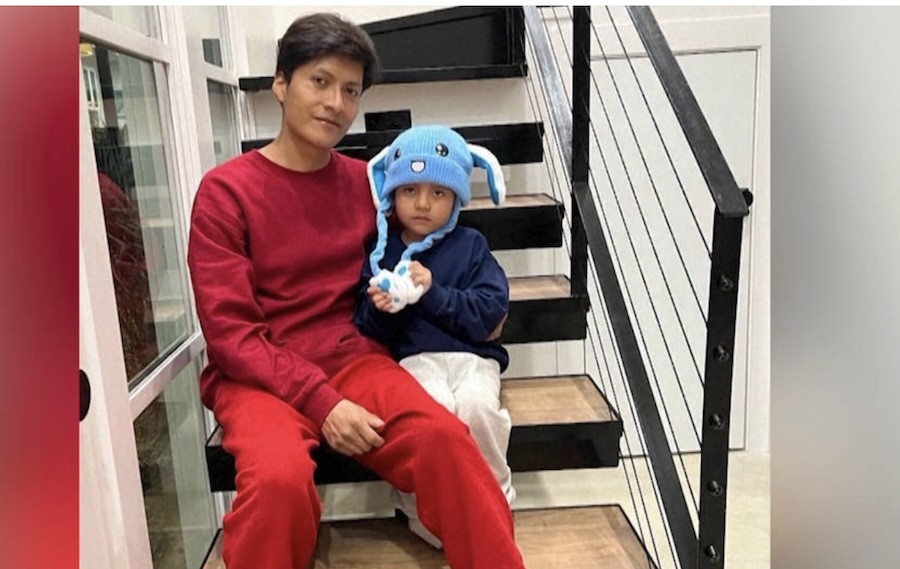
Japan: September 21st is International Peace Day: Calligraphers and high school students pray for peace through calligraphy in Kagoshima City

FREE FLOW OF INFORMATION .

An article from Newsdig (Translated from Japanese by Google translator)

Today, September 21st, is the United Nations’ International Day of Peace. At a shrine in Kagoshima City, calligraphers from the prefecture and high school students took up their brushes to write messages of hope for peace.

This event is held annually by the Wa Project TAISHI at shrines across the country to coincide with International Peace Day on September 21st.


(Click on image to enlarge)

(article continued in right column)

Question related to this article:

What is happening for the International Day of Peace?

(article continued from left column)

On the 21st, at Gokoku Shrine in Kagoshima City, calligraphers Matsuda Yoshinobu and Ueno Hiroko, both natives of the prefecture, and students from the calligraphy club at Shonan High School wrote messages of peace.

(Wada Haruka, Calligraphy Club Leader, Shonan High School) “This year marks the 80th anniversary of the end of the war, and I’m glad that I was able to write at this event while praying for world peace.”

(Calligrapher Matsuda Yoshinobu) “I hope that young people today will have even just a few opportunities to think about peace.”

The message written on the 21st will be displayed at Gokoku Shrine until the 1st of next month.

– – – – – –

If you wish to make a comment on this article, you may write to coordinator@cpnn-world.org with the title “Comment on (name of article)” and we will put your comment on line. Because of the flood of spam, we have discontinued the direct application of comments.
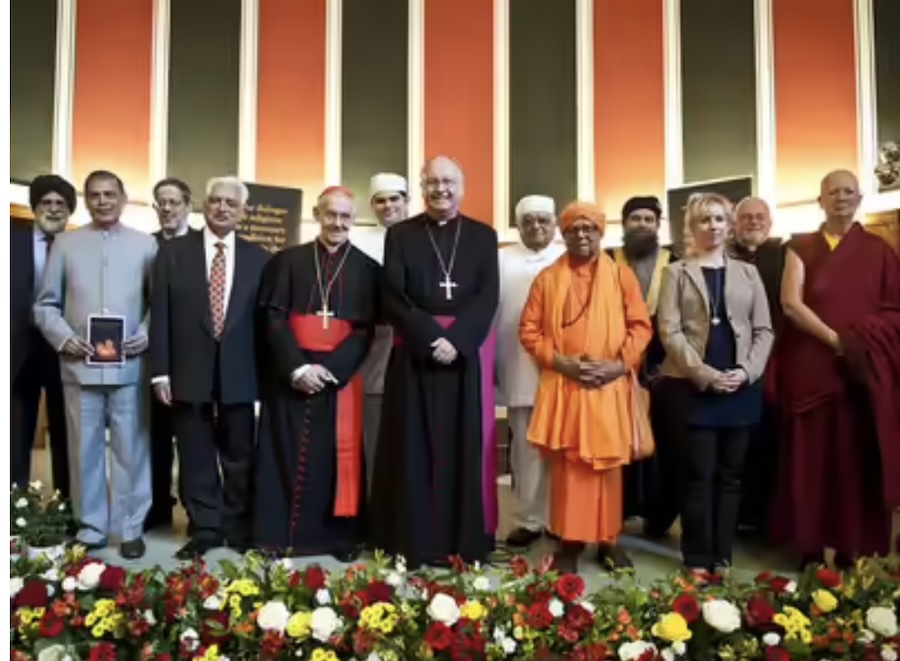
Tanzania marks peace day amid election calls for calm

FREE FLOW OF INFORMATION .

An article from The Citizen, Tanzania

Dar es Salaal. Tanzania will join the world in marking the International Day of Peace on September 21, 2025, with this year’s commemoration carrying special weight as the country approaches the General Election.

Calls for calm have grown louder from both national leaders and grassroots groups, highlighting the importance of safeguarding harmony as political competition intensifies.


(Click on image to enlarge)

President Samia Suluhu Hassan and Zanzibar President Hussein Ali Mwinyi have both placed peace at the heart of their campaign messages.

Speaking in Makunduchi, Zanzibar, on Wednesday, September 17, 2025, President Hassan urged Tanzanians to embrace unity during the election period, saying: “Peace is the foundation of our democracy. Without it, no election, no development, and no progress can take place.”

President Mwinyi echoed her message, reminding citizens that Tanzania’s tradition of tolerance and cohesion must never be taken for granted.

“We must all stand guard to protect our peace. It is our greatest strength as a nation,” he said.

(article continued in right column)

Question related to this article:

What is happening for the International Day of Peace?

(article continued from left column)

Their remarks set the tone for this year’s International Day of Peace events in Tanzania, which opened on September 18, 2025, with the second Youth, Peace and Security Forum in Dar es Salaam.

The three-day forum has drawn young people from across the country, alongside religious leaders, diplomats, civil society groups, and government officials.

Its theme, ‘Youth and Peace: Take Action Now to Sustain a Culture of Peace’, highlights the role of young people in shaping a stable future.

The African Leadership Initiative for Impact (ALII), Executive Director, Mr Joseph Malekela, said the forum would address four priorities: youth participation in decision-making, the role of young people in digital spaces, economic empowerment as a safeguard against crime, and youth-led climate action.

“Young people make up the majority of Tanzania’s population. When empowered on peace and security, they become the backbone of a resilient nation,” Mr Malekela said.

He revealed the forum would end with a peace walk from Coco Beach to the Julius Nyerere International Convention Centre (JKCI) as a public demonstration of unity.

The Ministry of Labour, Youth, Employment, and Persons with Disabilities has also pledged support.

– – – – – –

If you wish to make a comment on this article, you may write to coordinator@cpnn-world.org with the title “Comment on (name of article)” and we will put your comment on line. Because of the flood of spam, we have discontinued the direct application of comments.