Colombia: Highlights of the 39th Cycle of Peace Talks in Havana

FREE FLOW OF INFORMATION

A blog from Virginia Bouvier, US Institute of Peace (abridged)

As the Colombian government and the FARC prepare to return to the peace table in Havana tomorrow, August 20th, for the 40th cycle of talks, I offer here a brief recap and analysis of the flurry of activities since my last post on the peace process in mid-July.

bouvier

The Interlude between Sessions

When the 38th cycle closed on July 12, following the most violent period seen since the beginning of peace talks in 2012, the Colombian government and the FARC peace delegations issued a joint statement committing themselves to a new dual strategy that would hasten a final peace accord in Havana on the one hand,  and de-escalate the conflict in Colombia on the other.  (See joint statement here.)

The first part of the strategy includes “technical, continuous and simultaneous work on the key points of the Agenda while the accords are being crafted at the table.”  In particular, the parties agreed to move forward on establishing the terms for a bilateral ceasefire and the setting aside of arms.  To this effect, they invited the UN Secretary General and the UNASUR president (currently Uruguay) to delegate representatives to serve on the Technical Subcommission on Ending the Conflict in Havana in order to help them design relevant systems for monitoring and verification.

Complementing this intensification of technical work, In relation to the second part of the strategy, the FARC extended the unilateral ceasefire it had announced on July 8 from one month to four months, and the government said it would undertake de-escalation and confidence-building measures, as yet to be defined, in tandem with the FARC’s ability to maintain the unilateral suspension of “all offensive actions.”  (See Santos’s statement here.) . . .

Mood Shifts for 39th Cycle of Talks 

During the 39th round of talks that began on July 23 and ended on August 2, there seemed to be a renewal of confidence in the peace process, spawned by the parties’  expressed willingness to accelerate the pace in Havana and to de-escalate the violence in Colombia.  The unilateral ceasefire and the suspension of the bombings, FARC lead negotiator Iván Márquez noted, “unleashed this new ambience of confidence that has allowed the talks to speed up and to advance new consensuses.” (See Márquez’s statement here.)

(Article continued in right column)

Question(s) related to this article:

What is happening in Colombia, Is peace possible?

(Article continued from left column)

There were a number of additional advances during the 39th round:

▪ The parties produced a report on the joint de-mining project underway in Antioquia with the Colombian Army and the FARC (View the report here.);

▪ Peace delegation members in Havana were reinforced with new team members and advisors;

▪ Discussions moved forward on preliminary agreements for an integrated approach to truth, justice, reparations and non-repetition; and

▪ Work of the technical subcommission for ending the conflict continued to refine strategies for a final bilateral ceasefire and cessation of hostilities. . .

Victims and Transitional Justice

During the 39th cycle, the parties continued to work on the issue of victims, including the related issues of truth, justice, reparations, and guarantees of non-repetition.  According to lead negotiator Iván Márquez, the parties are designing an “unprecedented and innovative” integrated system to put these different aspects of victims’ rights at the center of the process.  (See more here.)

Civil Society Demands Inclusion 

While Havana negotiators have debated the details of the agenda in relative isolation, civil society has continued to make known its desire to be more regularly engaged in the process, including at the peace tables themselves.  On August 12, Todd Howland, Colombia representative of the UN High Commissioner of Human Rights, called on the parties to invite authorities of the indigenous and Afro-Colombian communities to the peace table in order to guarantee the vision and collective rights of these communities. (See more here.)

Inputs in the form of letters, conferences, publications, recommendations continue to be generated and express the particular interests and concerns of different sectors and regions of Colombia.  Victims’ groups, obviously, are particularly interested in ensuring that their rights are not slighted at the table.  On July 30, family members of victims of disappearance and kidnapping that form part of the NGO Fundación País Libre sent a letter to the government and FARC negotiators with some new inputs and a caution that if their needs are not met, they will not hesitate to seek remedies in international arenas.  (Read their letter here.) The victims called for a transitional justice process that guarantees victims’ rights and called on the parties to strengthen the institutional structures that provide human rights protections. . . .

 Church Goes to Havana, Explores Potential Role at the Peace Table

In early August, Msr. Luis Augusto Castro, the head of the Colombian Bishops’ Conference, announced that members of the church leadership would travel to Havana to assess the support that the Pope and the Vatican might provide to the peace process.  The upcoming visit of Pope Francisco to Cuba on September 19-22 on his way to the United States offers a potential opportunity for direct engagement with the parties at the peace table.  Pope Francis will be the third pope to visit Cuba and his trip is a primarily seen as a way to  recognize the improved U.S. – Cuba relationship–and the role that the Vatican and the pope played in the 18 months of secret negotiations that contributed to that improvement.  (See the phenomenal story by Peter Kornbluh and William LeoGrande here.)  Nonetheless, many Colombians are hoping that the Pope’s visit to Cuba will also offer an opportunity for the Pope to give support to the peace process.  In this regard, members of the Colombian church, lead by the head of the Colombian Bishops’ Conference  Msr. Augusto Castro, traveled to Havana in mid-August to meet with the parties and discuss whether it would be advantageous for the Pope to meet with the parties or to send a delegate to participate in the peace talks. (Read more here.) . . .

US: We’re winning the fight for diplomacy

DISARMAMENT & SECURITY .

A communication from Jo, Alejandro, Victoria, Matt, and the rest of the team at Moveon.Org

Republican leaders are admitting that they’re losing the fight over the diplomatic deal with Iran. Despite tens of millions spent by war hawks to sabotage the agreement, more and more Democrats are choosing diplomacy over war.

iran

They have the money. We have the people and the momentum.

We saw that yesterday, as thousands of MoveOn members and anti-war allies gathered outside more than 200 congressional offices and delivered petitions signed by hundreds of thousands of Americans. Members came together from MoveOn, Americans United for Change, Council for a Livable World, CREDO Action, DailyKos, Democracy for America, Friends Committee on National Legislation, National Iranian American Council, Peace Action, Win Without War, and more.

And this grassroots activism is leading to results: In the past 24 hours, Representatives Susan Davis, Bonnie Coleman Watson, and Ed Perlmutter have all come out for the deal. Representative Alan Lowenthal announced his decision to support the deal just in advance of the petition delivery, and he came out to announce it to MoveOn members in person.

We’re building something together, and the result—a diplomatic resolution to prevent Iran from obtaining a nuclear weapon—will be historic.

Click here to see more images from yesterday’s national day of action

The fight isn’t over. When members of Congress return to Washington in just over a week, they’ll be deluged with propaganda by the war hawks who want to sabotage this deal.

We’ll keep up the pressure—and keep building the momentum for peace. We have just a few weeks to stop a war, but we know that we can do it together.

Thanks for all you do.

Question for this article:

Peace Agreement in South Sudan

DISARMAMENT & SECURITY .

An article by Tiffany Easthom, Country Director in South Sudan, Nonviolent Peaceforce

“This week [August 28], the final signature was placed onto the South Sudan peace agreement.  In doing so, all parties to the conflict have indicated their intentions to end the violent conflict that has rocked South Sudan for the past 21 months.  While the signing of the agreement is not a guarantee of peace, it is a public declaration of constructive, peaceful and positive intentions to end the war.

new sudan

 Having been on the front line of the conflict since the first day, the Nonviolent Peaceforce team is greatly relieved at the signing of the agreement and we want to extend our appreciation and support to the parties as they move into this new phase. We look forward to seeing strong, people centred leadership and action to move into the implementation of this agreement starting with an urgent and immediate cessation of hostilities.  Getting to peace is as complicated if not more so than getting to war.  The road ahead will be a long one that will take the dedication of all South Sudanese and the support of the international community to engage in reconciliation, justice and reconstruction.

 The people of South Sudan deserve real peace and the opportunity to build the country that was so long struggled for. The Nonviolent Peaceforce team is committed to supporting our South Sudanese brothers and sisters in working for peace.”

(Thank you to Janet Hudgins, the CPNN reporter for this article.)

Question for this article:

India: No More Hiroshima: No More Nagasaki: Peace Museum  

DISARMAMENT & SECURITY .

An article by Dr. Balkrishna  Kurvey, Indian Institute for Peace, Disarmament & Environmental Protection

On the eve of Hiroshima & Nagasaki Atomic bombing, Hiroshima Day was observed in the Raman Science Center, Nagpur. on 6th August 2015.  This is renowned Science Center of Government of India, Ministry of Culture. The theme was ” Environmental Impact of  Atomic Bomb Explosion”

Kurvey4

Selected High school Students from Nagpur were invited.
To catch them young, we are targeting youngsters who will be future citizens of the country to inculcate the idea of a Nuclear Weapon Free World.

Photographic exhibition  of Hiroshima & Nagasaki bombing was also displayed for the public from 6th to 9th August 2015 in the Raman Science Center.

Hiroshima Day was also arranged in Department of Environmental Science, Sardar Patel Mahavidyalaya (College), Chandrapur, India. This  prestigious teaching Institute of Central India  has more than 7200 students. Students of graduate, post-graduate, Ph.D. and some medical students attended the seminar. The theme was “Nuclear Weapons Disarmament and Environmental Protection  and Peace”  

I based my address on the study carried out by International Physicians for for Prevention of Nuclear war & Physicians For Social responsibility “Two Billion People  at Risk”, December 2013. 

In a  limited regional nuclear war between  India and Pakistan, if 150 Hiroshima type Bombs were used, what will be environmental consequences in Asia  in particular and world in General was the theme of the talk.

Unfortunately, there is mistrust, misunderstanding and animosity between India and Pakistan. Any fanatic military officer or political leader could start a nuclear war. Also due to misunderstanding or zealous military officials, nuclear war could be startes. 20 million people would be killed. Great cities of the sub-continent would be destroyed and much of South Asia would be blanketed with radioactive fallout. Climate experts show clearly that even this limited nuclear conflict would affect weather pattern throughout the world. Due to soot and debris injected in the atmosphere 74% of the sun light would be obstructed. Nuclear Winter would emerge. Ozone depletion would increase the incidence of cancer globally. Due to cold and darkness, crops could not be grown and because of non-availability of food grains,  1 billion people in global south would die of starvation and 1 billion others would suffer. Agriculture would be affected in the western hemisphere.

This would be the result of only a limited regional Nuclear War in South Asia. If the superpowers engage in nuclear war, it would be doomsday. Planet earth will suffer untold consequences and the human race would face extinction.

Public education and awareness is the key as there is no medicine. Prevention is the only way to safeguard the  human race.

Participants  and teachers asked many question, which were aptly answered.

Question for this article:

ICRC re Arms Trade Treaty: We must stop irresponsible arms trade or transfers

DISARMAMENT & SECURITY .

A declaration by the International Committee of the Red Cross

First Conference of the States Parties to the Arms Trade Treaty, Cancun, Mexico, 24-27 August 2015. Statement delivered by Peter Maurer, President of the ICRC, as a video address at the Conference.

icrc-english-french
ICRC Video

I am honored to be addressing you today on this historic occasion of the First Conference of the States Parties to the Arms Trade Treaty (ATT), a treaty that promises to reduce the tremendous human suffering caused by the widespread and poorly regulated availability of conventional weapons.

The ATT establishes a global norm for responsible arms transfers. By requiring States Parties to consider respect for international humanitarian law and human rights law in their arms transfer decisions and to take measures to prevent the diversion of weapons, this Treaty will help to ensure that arms do not end up in the hands of those who would use them to commit war crimes, serious violations of human rights and other serious crimes.

In adopting the ATT, States have recognized that arms and ammunition can no longer be regarded as just another form of commercial goods. They have recognized that arms transfers require particular caution because of the devastating and irreparable harm that is caused when weapons fall into the wrong hands. And they have explicitly recognized that cooperation, transparency and information sharing underpin the responsible arms trade, and are critical to building confidence among States and therefore to the Treaty’s effectiveness.

The ATT’s aim to increase responsibility and transparency in the international trade in conventional arms will depend not only on the implementation of the Treaty’s requirements by States Parties, but also on the openness and transparency of the forums set up under the Treaty to review its implementation and operation, notably of the Conference of the States Parties. A strong level of transparency, notably in the initial and annual reports required under the Treaty, and in the review of the operation of the Treaty by the Conference of the States Parties will facilitate cooperation and build the confidence necessary for the Treaty’s success. The ICRC urges States Parties to keep this in mind in the decisions that they will take this week, notably on the rules of procedure and on the reporting mechanism.

(Article continued on the right column)

(Click here for a version of this article in French or here for a version in Spanish.)

Question for this article:

Do you think handguns should be banned?, Why or why not?

(Article continued from the left column)

The significance of the ATT, and the milestone that this First Conference of the States Parties represents, cannot be overstated. If we have reached this point today, it is thanks to all those who have worked tirelessly over the last decade and a half to make this Treaty a reality: the States that drove the process leading to the ATT’s adoption; the United Nations and the International Red Cross and Red Crescent Movement, which each drew attention to the high human costs of poorly controlled arms transfers; and, of course, the non-governmental organizations which first called for an arms trade treaty some fifteen years ago. In this respect, the crucial role played by the “Control Arms” coalition of NGOs in bringing about the ATT, and the invaluable expertise and assistance that they are now providing to universalization and implementation efforts, must be recognized.

The concerted efforts of States, international organizations, NGOs and the ICRC must be sustained and hopefully increased in the Treaty’s implementation phase, of which this First Conference of the States Parties is the starting point. Our work has only just begun. Not only must we strive to achieve the broadest possible adherence to the Treaty, notably by States involved in the arms trade, but also crucially we must ensure that the Treaty’s core obligations are faithfully implemented, notably through the establishment of robust national control systems.

In this regard, I remain concerned about the gap that subsists between the duty to ensure respect for international humanitarian law in arms transfers, and the actual transfer practices of too many States. The ICRC is directly confronted with this gap, in many countries where we witness the appalling consequences for civilians of the widespread availability and misuse of weapons, which facilitate violations of international humanitarian law, endanger vital medical and humanitarian assistance, provoke displacement and prolong armed conflicts. As weapons continue to flow, either through overt or covert transfers or through diversion, to some of the most brutal armed conflicts such as those seen in parts of the Middle East and of Africa today, there is an urgent need to close the gap between law and practice.

The true measure of success of the ATT is the extent to which this gap will be filled and the Treaty changes people’s lives in the years to come. If States were to join the Treaty but continue to transfer arms to belligerents with a record of committing war crimes or serious violations of human rights, this would severely undermine the ATT’s humanitarian purpose and its credibility.

CICR: Nous devons stopper le commerce et les transferts irresponsables d’armes

.DESARMAMENT & SECURITE.

Une déclaration par la Comité International ce la Croix-Rouge

Première Conférence des États parties au Traité sur le commerce des armes, Cancun, Mexique, 24-27 août 2015. Allocution vidéo prononcée par Peter Maurer, président du CICR, lors de la Conférence:

icrc-english-french
ICRC Video

Je suis honoré de prendre aujourd’hui la parole devant vous en ce moment historique, à l’occasion de la première Conférence des États parties au Traité sur le commerce des armes, un traité dont il y a tout lieu d’espérer qu’il réduira les terribles souffrances humaines causées par la disponibilité généralisée et insuffisamment réglementée des armes classiques.

Le Traité sur le commerce des armes établit une norme mondiale pour des transferts d’armes responsables. En obligeant les États parties à prendre en compte le respect du droit international humanitaire et du droit des droits de l’homme dans leurs décisions sur les transferts d’armes et à adopter des mesures visant à empêcher le détournement de ces armes, le Traité contribuera à ce que les armes ne se retrouvent pas dans les mains de ceux dont on peut attendre qu’ils les utilisent pour commettre des crimes de guerre, des violations graves des droits de l’homme et d’autres crimes graves.

En adoptant le Traité sur le commerce des armes, les États ont reconnu qu’il n’est plus guère possible de considérer les armes et les munitions comme une catégorie de marchandises comme les autres. Ils ont reconnu que les transferts d’armes exigent une prudence toute particulière en raison des dommages dévastateurs et irréparables que les armes provoquent lorsqu’elles tombent entre de mauvaises mains. Et ils ont explicitement reconnu que la coopération, la transparence et l’échange d’informations sous-tendent un commerce responsable des armes, et sont essentiels à l’instauration de la confiance entre les États et donc à l’efficacité du Traité.

La réalisation du Traité, dont le but est d’accroître la responsabilité et la transparence dans le commerce international des armes classiques, dépendra non seulement de la mise en œuvre des exigences du Traité par les États parties, mais aussi de l’ouverture et de la transparence des forums mis en place pour l’examen de sa mise en œuvre et de son fonctionnement, en particulier de la Conférence des États parties.

(Voir suite sur colonne de droite. . . )

(Cliquez ici pour la version anglaise de cet article ou ici pour la version espagnole.)

Question for this article:

Do you think handguns should be banned?, Why or why not?

(. . . suite)

Un niveau élevé de transparence, notamment dans les rapports initiaux et annuels requis au titre du Traité, et dans l’examen du fonctionnement du Traité par la Conférence des États parties, facilitera la coopération et instaurera la confiance nécessaire au succès du traité. Le CICR demande instamment aux États parties de garder cette idée à l’esprit lorsqu’ils prendront des décisions cette semaine, notamment concernant le règlement intérieur et le mécanisme d’établissement des rapports.

L’importance du Traité, et l’étape décisive que constitue cette première Conférence des États parties, ne sauraient être surestimées. Si nous sommes parvenus aujourd’hui à ce stade, c’est grâce à tous ceux qui ont œuvré sans relâche durant ces quinze dernières années pour que le Traité devienne réalité. Parmi eux, les États qui ont fait avancer le processus jusqu’au stade de l’adoption du Traité, l’Organisation des Nations Unies et le Mouvement international de la Croix-Rouge et du Croissant-Rouge, qui tous ont attiré l’attention sur le coût humain élevé des transferts d’armes insuffisamment contrôlés ; et, bien sûr, les organisations non gouvernementales qui furent les premières à réclamer un traité sur le commerce des armes il y a une quinzaine d’années. À cet égard, il faut reconnaître le rôle capital joué par la coalition des ONG « Control Arms » dans la réalisation du Traité, ainsi que l’expertise et l’assistance inestimables qu’elle apporte aujourd’hui aux efforts d’universalisation et de mise en œuvre.

Il convient de soutenir les efforts concertés accomplis par les États, les organisations internationales, les ONG et le CICR, qui, nous l’espérons, seront renforcés durant la phase de mise en œuvre du Traité, dont cette première Conférence des États parties est le point de départ. Notre travail ne fait que commencer. Nous devons à la fois nous efforcer de parvenir à l’adhésion la plus large possible du Traité, notamment par les États impliqués dans le commerce des armes, mais nous devons aussi impérativement veiller à ce que les obligations fondamentales du Traité soient fidèlement mises en œuvre, notamment par la mise en place de régimes de contrôle rigoureux au niveau national.

Sur ce point, je suis inquiet par l’écart qui existe entre le devoir d’assurer le respect du droit international humanitaire lors des transferts d’armes, et les pratiques effectives de transferts de trop nombreux États. Le CICR est directement confronté à cet écart dans nombre de pays où nous voyons les conséquences terribles de la disponibilité généralisée et l’utilisation abusive des armes, qui facilitent les violations du droit international humanitaire, entravent l’assistance médicale et humanitaire vitales, provoquent des déplacements et prolongent les conflits armés. Comme les armes continuent d’affluer, par le biais de transferts ouverts ou clandestins, ou par détournements, vers des conflits armés d’une très grande violence, tels que ceux que nous observons aujourd’hui dans certaines parties du Moyen-Orient et d’Afrique, il est urgent de combler l’écart entre le droit et la pratique.

C’est en voyant comment le Traité sur le commerce des armes comblera cet écart et changera la vie des populations dans les années à venir que l’on pourra véritablement mesurer son succès. Si les États adhérent au Traité, mais continuent de transférer des armes aux belligérants en commettant des crimes de guerre ou des violations graves des droits de l’homme, cela compromettra gravement l’objectif humanitaire du Traité sur le commerce des armes et sa crédibilité.

CICR: Comercio de Armas: debemos poner fin a la transferencia ilegal de armas

. . DESARME Y SEGURIDAD . .

Un declaración de la Comite Internacional de la Cruz Roja

Primera Conferencia de los Estados Partes en el Tratado sobre el Comercio de Armas, en Cancún, México, del 24 al 27 de agosto. Declaración del presidente del CICR, Peter Maurer, transmitido a la Conferencia en forma de mensaje en vídeo:

icrc-spanish
video

Tengo el honor de dirigirme a ustedes hoy, en esta ocasión histórica que representa la Primera Conferencia de los Estados Partes en el Tratado sobre el Comercio de Armas, instrumento que promete reducir los enormes sufrimientos humanos causados por la disponibilidad generalizada y deficientemente reglamentada de armas convencionales.

El Tratado sobre el Comercio de Armas establece una normativa mundial para que las transferencias de armas se efectúen de manera responsable. Al exigir a los Estados Partes que tomen en cuenta el respeto del derecho internacional humanitario y el derecho de los derechos humanos en las decisiones relacionadas con la transferencia de armas y que adopten medidas para prevenir la desviación de armas, este Tratado ayudará a que las armas no terminen en manos de quienes las usarían para cometer crímenes de guerra, violaciones graves de los derechos humanos y otros delitos graves.

Al adoptar este instrumento, los Estados han reconocido que ya no es posible considerar las armas y las municiones sólo como un artículo comercial más. Han reconocido que las transferencias de armas exigen precauciones particulares debido a los daños devastadores e irreparables que causan cuando las armas caen en las manos equivocadas. Y han reconocido explícitamente que el comercio de armas responsable se basa en la cooperación, la transparencia y el intercambio de información, elementos críticos para la construcción de confianza entre los Estados y, por ende, para la eficacia del Tratado.

El objetivo del Tratado, consistente en incrementar la responsabilidad y la transparencia del comercio internacional de armas convencionales, dependerá no sólo de que los Estados implementen los requisitos en él establecidos, sino también de la apertura y la transparencia de los foros establecidos en virtud del Tratado para examinar su implementación y su funcionamiento, en particular de la Conferencia de los Estados Partes. Un fuerte nivel de transparencia, sobre todo en los informes inicial y anual estipulados en el Tratado y en la revisión de su funcionamiento por la Conferencia de los Estados Partes, facilitará la cooperación y fomentará la confianza necesaria para el éxito del Tratado. El CICR insta a los Estados Partes a tener presente este aspecto en las decisiones que adopten esta semana, particularmente con respecto a las normas de procedimiento y al mecanismo de presentación de informes.

(El artículo continúa en el lado derecho de la página)

( Clickear aquí para la version inglês o aquí para la version francês)

Question for this article:

Do you think handguns should be banned?, Why or why not?

(Artículo continúa desde la parte izquierda de la página)

Nunca se resaltará lo suficiente la enorme importancia del Tratado sobre el Comercio de Armas y del hito que representa esta Primera Conferencia de los Estados Partes. Si hoy hemos alcanzado esta instancia, es gracias a todos los que trabajaron incansablemente durante la última década y media para hacer realidad este Tratado: los Estados que impulsaron el proceso que condujo a su adopción; las Naciones Unidas y el Movimiento Internacional de la Cruz Roja y de la Media Luna Roja, cada uno de los cuales llamó la atención acerca del alto costo humano de las transferencias deficientemente reglamentadas; y, por supuesto, las organizaciones no gubernamentales que primero exhortaron a adoptar un tratado sobre el comercio de armas, hace unos quince años. En este sentido, se ha de reconocer el importante papel desempeñado por la coalición de ONG “Control Arms” en la concreción del Tratado, así como los valiosos conocimientos y la asistencia que ahora aportan a las actividades relativas a su universalización e implementación.

En la fase de implementación del Tratado, cuyo punto de partida es esta Conferencia, se deben sostener y, si es posible, intensificar los esfuerzos concertados de los Estados, las organizaciones internacionales, las ONG y el CICR. Nuestra labor recién comienza. No sólo debemos luchar para lograr la mayor adhesión posible al Tratado, sobre todo de los Estados que participan en el comercio de armas, sino que además es fundamental asegurar que sus obligaciones esenciales se implementen al pie de la letra, particularmente a través del establecimiento de sistemas nacionales de control eficaces.

En este sentido, me preocupa la brecha entre el deber de hacer respetar el derecho internacional humanitario en el ámbito de las transferencias de armas y las prácticas de transferencia que numerosos Estados aplican en la realidad. El CICR es testigo directo de esta brecha en muchos países, en los que presenciamos las terribles consecuencias para los civiles de la disponibilidad generalizada de armas y de su uso indebido, que facilitan las violaciones del derecho internacional humanitario, ponen en peligro la asistencia médica vital y la ayuda humanitaria, provocan desplazamientos y prolongan los conflictos armados. Mientras las armas siguen fluyendo, sea a través de transferencias abiertas o encubiertas o de la desviación, hacia algunos de los conflictos armados más brutales, como los que hoy se desarrollan en algunas partes de Oriente Próximo y de África, existirá la urgente necesidad de acortar la distancia entre el derecho y la práctica.

La verdadera dimensión del éxito del Tratado sobre el Comercio de Armas será la medida en que este instrumento logre acortar esa distancia y cambiar la vida de las personas en los años venideros. Si los Estados se adhieren al Tratado pero siguen transfiriendo armas a beligerantes con antecedentes de haber cometido crímenes de guerra o violaciones graves de los derechos humanos, la finalidad humanitaria y la credibilidad del Tratado sobre el Comercio de Armas quedarán considerablemente menoscabadas.

UN: High Level Forum on a Culture of Peace

FREE FLOW OF INFORMATION

A letter from the The President of the UN General Assembly

To all permanent representatives and permanent observers to the United Nations New York

Further to my letter dated 27 July 2015 on the convening of a High-Level Forum on a culture of Peace on 9 September 2015 at the United Nations Headquarters in New York, I have the pleasure to transmit herewith a Concept Note with more details.

HLF

As the international community moves toward the adoption of a transformative post-2015 development agenda by world leaders at a Summit in September 2015, the important linkage between peace and development has been underscored in the Sustainable Development Goals.

The High-Level Forum will highlight the importance of implementation of the Declaration and Programme of Action on a Culture of Peace and the need to further strengthen global movements to promote a culture of peace.

I have the honor to invite Member States and Observers to participate at the highest possible level. A provisional program will be provided in due course.

Please accept the assurances of my highest consideration.

Sam K. Kutesa, 12 August 2015

[Editor’s note: Click here for the Concept Note, which indicates that the Forum will have two panels: Promotion of the Culture of Peace in the context of the Post-2015 sustainable development agenda; and Role of the media in the promotion of the culture of peace.

Question(s) related to this article:

USA: Julian Bond (1940-2015): Remembering Civil Rights Freedom Fighter Who Chaired NAACP, Co-founded SNCC

FREE FLOW OF INFORMATION

An excerpt from Democracy Now by Amy Goodman

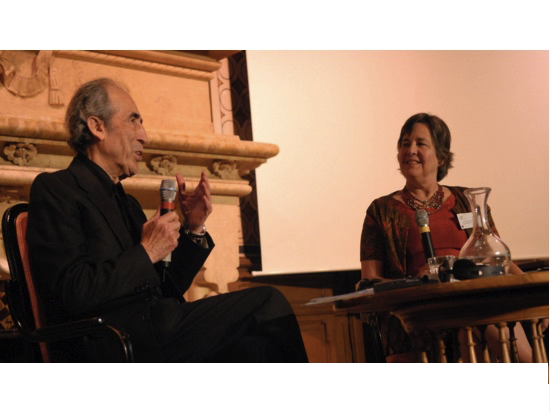
Today [August 17], in a Democracy Now! special, we remember the life of civil rights pioneer Julian Bond, who died on Saturday at the age of 75.

julianbond
Video of the program

Bond first gained prominence in 1960 when he organized a series of student sit-ins while attending Morehouse College. He went on to help found SNCC, the Student Nonviolent Coordinating Committee. After the passage of the 1965 Voting Rights Act, Bond was elected as a Democrat to the Georgia House of Representatives. But members of the Legislature refused to seat him, citing his vocal opposition to the Vietnam War. Bond took the case to the Supreme Court and won. He went on to serve 20 years in the Georgia House and Senate. At the 1968 Democratic National Convention in Chicago, Julian Bond became the first African American nominated for U.S. vice president by a major political party. But he had to withdraw his name because he was just 28 years old — seven years too young to hold the second-highest elected office. Julian Bond would go on to co-found the Southern Poverty Law Center. He served as the organization’s first president from 1971 to 1979. From 1998 to 2010, he was chairman of the NAACP. We speak to Eleanor Holmes Norton, delegate to Congress representing the District of Columbia; former NAACP president Benjamin Jealous; Pulitzer Prize-winning historian Taylor Branch; and Richard Cohen, president of the Southern Poverty Law Center. “He never thought the movement was about only blacks, so he was easily able to grapple with the movement that involved women, that involved the LGBTQ community, that involved climate change,” said Norton.

In a statement, President Obama said, quote, “Julian Bond was a hero and, I’m privileged to say, a friend. Justice and equality was the mission that spanned his life. Julian Bond helped change this country for the better.”

(Thank you to Janet Hudgins, the CPNN reporter for this article.)
Question(s) related to this article:

USA: These Former Debt Collectors Decided to Ditch the Industry, Buy Up Medical Debt, and Forgive It

. . SUSTAINABLE DEVELOPMENT . .

An article from Araz Hachadourian, Yes! Magazine (reprinted according to terms of Creative Commons)

When Paola Gonzalez received a phone call from RIP Medical Debt, she was certain what she heard was a mistake. A prank, maybe. The caller said a $950 hospital bill had been paid for in full: It would not affect her credit and she wouldn’t have to worry about it again. “They wanted to pay a bill for me,” she said. “I was just speechless.”

debt

The 24-year-old student from Roselle Park, New Jersey, has lupus, a chronic autoimmune disease that in 2011 put her in and out of hospitals for a year. Even with insurance she faces a barrage of medical bills that often get pushed aside. “I can’t always work,” Gonzalez said. “I’ll be fine today and sick tomorrow. It’s really amazing that people would help out like this.”

Gonzalez is one of many people who have had a debt paid by RIP Medical Debt, a nonprofit founded by two former debt collectors, Jerry Ashton and Craig Antico, that buys debt on the open market and then abolishes it, no strings attached. In the year since RIP Medical Debt started, the group has abolished just under $400,000, according to Antico. On July 4, it launched a year-long campaign to raise $177,600 in donations, which it will use to abolish $17.6 million of other people’s debt.

Millions of people are, in Ashton’s words, “sitting at the kitchen table and you have to decide, ‘Do I buy medication today or do I pay the water bill or do I pay the debt collector?’… We decided we should take the debt collector out of the equation.”

It works like this: typical collection agencies will buy debts from private practices, hospitals, and other collection agencies that don’t find it worthwhile to pursue the debt themselves. The buyers often get a steal, buying a debt for pennies on the dollar while charging the debtor the full amount, plus additional fees.

According to a 2013 report from the Federal Trade Commission, from 2006-2009 the nine biggest debt collection companies purchased about $143 billion of consumer debt for less than $6.5 billion; 17 percent of it was medical.

Antico and Ashton are plugged into the same marketplace. They say that with the money they raise, they buy the debt for around one percent of the amount it’s worth (when debtors settle directly with collection agencies, they pay an average of 60 percent of the loan.) Then, they forgive it.

Some debt-sellers find the cash in hand more valuable. Some doctors want the debt forgiven to help maintain a relationship with their patients.

Ashton worked in the debt collections business for more than 30 years. As he learned about its tactics, he was moved to start his own consulting firm with the goal of keeping people out of collections. He said the industry treated debts as “commodities” and sold them for a profit while the debtor struggled to pay off the full amount. “That I find to be unconscionable,” says Ashton.

(Article continued in the right side of the page)

Question for this article:

Helping the poorest of the poor help themselves, if millions took it up, could it be the foundation of a just world?

(Article continued from the left side of the page)

He was inspired to rethink debt by the Occupy Wall Street movement and its offshoot, Strike Debt, which started the Rolling Jubilee, a program that began buying debt and abolishing it in October 2012.

Medical debt contributed to almost 60 percent of the bankruptcies in the United States in 2013. So when Rolling Jubilee shifted its focus to student loans, Ashton and Antico decided to pick up the torch.

“You don’t wake up one morning and decide to have a $150,000 mastectomy,” says Ashton. “This is not elective debt.”

For people with chronic illness, like Gonzalez, or those who require extended care, the prospect of a growing pile of debts that cannot be paid is simply frightening. For many, it leads to neglect of care they need: an estimated 25 million adults will not take medicine as prescribed because they cannot afford it; others will avoid the doctor altogether.

This is why RIP Medical debt sees the outstanding bills not just as unpaid, but ultimately unpayable. When buying debts, Ashton and Antico seek out patients whose payments create an immense burden—patients who either earn twice below the national poverty level or whose payments would require five percent or more of their income. They work with the hospitals and medical practices when purchasing debt portfolios to identify debtors who need aid the most.

Many of the people who need aid are not properly identified when they go through a hospital registration process. According to Antico, typically 5-10 percent of all hospital cases are uncompensated. When those who cannot pay are billed, those bills often turn into unpaid debts. “This is a systemic issue. It’s not their fault they got sick and incurred debt,” says Antico. “You can’t imagine how bad they feel and they shouldn’t have to.”

Crowd-funding for debt relief is becoming an increasingly popular trend. Back in 2002, a church in Virginia got together to eliminate its members credit card debts. Rolling Jubilee has abolished nearly $32 million in loans since it began. A UK man even tried to crowd-fund a bailout for Greece, raising almost €2 million from strangers by pointing out that Greece’s €1.6 billion debt simmers down to €3 from every European.

RIP Medical Debt has been criticized by some within the debt abolition movement for structuring itself as a nonprofit organization that pays for work (though Ashton and Antico work as volunteers, they pay outside contractors for things like website maintenance and design); whereas the above efforts and the original Rolling Jubilee focused entirely on grassroots organization and mutual aid.

Still, Ashton and Antico see potential for the project as an opportunity people to help their community. “I think everybody giving to everybody is how we should approach this,” Antico says.

As for Gonzalez, while she is excited and grateful for the bill that was paid, her ongoing condition means she still has a lot of debt to get through. Right now she’s focused on avoiding bankruptcy and managing the bill from her primary doctor while the others are pushed to the side. “I just hope that eventually I’ll be able to pay it off,” she said. “This is the first time I’ve been healthy for a couple months straight so I hope that it stays that way.”

(Thank you to Janet Hudgins, the CPNN reporter for this article.)