Brazil: Public hearing discusses education for culture of peace

EDUCATION FOR PEACE .

An article from Aqui Acontece (translated by CPNN)

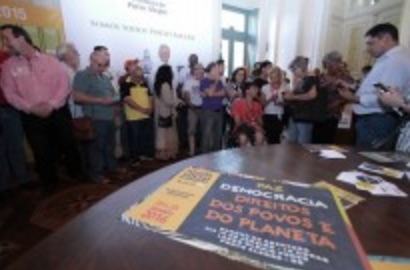
The Commissions of Culture and Education of the House of Representatives today (8 October) held a public hearing to discuss educational experiences focused on culture of peace. The debate was suggested by Jandira Feghali (Communist Party of Brazil – Rio de Janeiro) and Aliel Machado (Communist Party of Brazil – Paraná ).

brazil
Click on photo to enlarge

Jandira Feghali says there is a culture of “systemic violence” in schools in Brazil. “Children, adolescents and adults suffer daily from direct violence (assault, bullying, etc.) and indirect violence (lack of school material conditions and surroundings),” she says.

The congresswoman recalls that culture of peace issues are already widely promoted by international bodies like the United Nations and the United Nations Educational, Scientific and Cultural Organization (UNESCO).

“In Brazil, Peace studies has emerged in various universities, generating quality arguments, and dozens of cities have developed everyday projects of education for peace, generating changes in the focus of coping with violence by learning nonviolence or peace, “said Mrs.

The parliamentarian also quotes the National Education Plan (PNE), which provides policies to combat violence in schools, “including the development of actions aimed at training educators to detect the signs of the causes of violence, such as domestic and sexual violence, favoring the adoption of adequate measures to promote the construction of a culture of peace and a school environment with security for the community. ”

Representative Aliel Machado says that even with that provision in the PNE, it is necessary to deepen the discussion and propose “effective actions and long-term in schools as part of their planning and daily school practices”. “Schools should incorporate daily practices of education for peace,” he suggests.

(click here for the original Portuguese version of this article)

Question for this article:

Peace Studies in School Curricula, What would it take to make it happen around the world?

Guests invited to the debate included:

– The special advisor to the Ministry of Education, Helena Singer;

– coordinator for the implementation of prevention actions for public safety of the Department of Policies, Programs and Projects of the Ministry of Justice, Priscilla Oliveira;

– Professor of the Department of Education and the Program of Graduate Studies in Education of the Brazilian Federal University of Ceará (UFC), Kelma Socorro Alves Lopes de Matos;

– Professor at the Federal University of Bahia (UFB) and founder and director of the National Institute of Education for Peace and Human Rights (Inpaz), Feizi Masrour Milani;

– Professor of the State University of Ponta Grossa (UEPG-PR) and coordinator of the Center for Studies and Teacher Training in Education for Peace and Coexistence of UEPG, Nei Alberto Salles Filho; and

– The founder of the Organization for Relational Intelligence and Master in Social Psychology at the Psychology Institute of the University of São Paulo (USP), and visiting professor at the University of California, Santa Barbara (USA), João Roberto de Araújo.

Brasil: Audiência discutirá educação voltada à cultura da paz

. . . EDUCACIÓN PARA LA PAZ . . .

Um artigo de Aqui Acontece

As comissões de Cultura; e de Educação da Câmara dos Deputados realizam hoje (08 de outubro) uma audiência pública para debater experiências educacionais voltadas à cultura de paz. O debate foi sugerido pela deputada Jandira Feghali (PCdoB-RJ) e pelo deputado Aliel Machado (PCdoB-PR).

brazil
Click on photo to enlarge

Jandira Feghali afirma que há uma cultura de “violência sistêmica” nas escolas no Brasil. “Crianças, adolescentes e adultos sofrem cotidianamente com a violência direta (agressão, bullying, etc.) e com a violência indireta (falta de condições materiais da escola e entorno)”, ressalta.

A deputada lembra, no entanto, que questões referentes à cultura de paz já são amplamente difundidas por organismos internacionais, como a Organização das Nações Unidas (ONU) e a Organização das Nações Unidas para a Educação, a Ciência e a Cultura (Unesco).

“No Brasil, os estudos da paz são emergentes em diversas universidades, gerando qualidade de argumentos, além de dezenas de cidades que desenvolvem projetos cotidianos de educação para a paz, gerando mudanças no foco do enfrentamento das violências para a aprendizagem de não violência ou da paz”, explica a deputada.

A parlamentar cita também o Plano Nacional de Educação (PNE), que prevê políticas de combate à violência nas escolas, “inclusive pelo desenvolvimento de ações destinadas à capacitação de educadores para detecção dos sinais de suas causas, como a violência doméstica e sexual, favorecendo a adoção das providências adequadas que promovam a construção da cultura de paz e um ambiente escolar dotado de segurança para a comunidade”.

O deputado Aliel Machado afirma que, mesmo com essa previsão no PNE, é preciso aprofundar a discussão e propor “ações efetivas e a longo prazo nas escolas, como parte integrante do seu planejamento e das práticas escolares cotidianas”. “As escolas podem incorporar em seu dia a dia práticas da educação para a paz”, sugere.

(Clique aqui para a versão inglês.)

Question for this article:

Peace Studies in School Curricula, What would it take to make it happen around the world?

Convidados

Foram convidados para o debate:

– a assessora especial do Ministério da Educação, Helena Singer;

– a coordenadora de Implementação das ações de prevenção em segurança Publica do Departamento de Políticas, Programas e Projetos do Ministério da Justiça, Priscilla Oliveira;

– a professora do Departamento de Fundamentos da Educação e do Programa de Pós-Graduação em Educação Brasileira da Universidade Federal do Ceará (UFC), Kelma Socorro Alves Lopes de Matos;

– o professor da Universidade Federal da Bahia (UFB) e fundador e diretor do Instituto Nacional de Educação para a Paz e os Direitos Humanos (Inpaz), Feizi Masrour Milani;

– o professor da Universidade Estadual de Ponta Grossa (UEPG-PR) e coordenador do Núcleo de Estudos e Formação de Professores em Educação para a Paz e Convivência da UEPG, Nei Alberto Salles Filho; e

– o fundador e orientador estratégico da organização Inteligência Relacional, Mestre em Psicologia Social pelo Instituto de Psicologia da Universidade de São Paulo (USP), e professor visitante da Universidade da Califórnia, Santa Bárbara (EUA), João Roberto de Araújo.

A audiência está marcada para as 10 horas, no plenário 10.

Bolivia: March of University Students to Promote Culture of Peace

. . WOMEN’S EQUALITY . .

An article by Roberto Patiño, El País online (translated by CPNN)

As part of the activities for the International Day against Violence towards Women, the students at Dominic Savio Private University (UDPS) staged a march with signs and banners that carried messages for a Culture of Peace.

bolivia

With T-shirts and white blouses, without firecrackers or thunderous noise, they arrived at the Plaza Luis de Fuentes and held a simple meeting. According to UPDS student, Paola Piotti, it we need to understand that the culture of peace is the only way to overcome violence in the country. She stressed that they did not shout or sing in the march because peace is transmitted through a silence in which everyone can be in communion.

For her part, the Secretary of Women and Family for the Municipal Government of Tarija, Patricia Paputsakis, remarked that these young people have committed themselves to stop the violence and to be agents of transformation in a campaign launched by her office.

She maintained that a “Culture of Peace is a change in attitudes and behavior so that we resolve differences through non-violent practices, through dialogue, conciliation and mediation. It does not involve hitting, insults or psychological violence.” In turn, the rector of UDPS, Mary Virginia Ruiz, said that the phrase Culture of Peace denotes harmony and love. Although problems persist they can always be solved through dialogue, and it is the women who can put a stop to violence.

(click here for the original article in Spanish)

Question related to this article:

Bolivia: Universitarias marcharon promoviendo Cultura de Paz

. IGUALDAD HOMBRES/MUJERES .

Un artículo por Roberto Patiño, El País on line

En el marco de las actividades implementadas a partir del Día del Mujer y en contra de la violencia hacia este género, estudiantes de la Universidad Privada Domingo Savio (UPDS) realizaron una marcha con carteles y pancartas que llevaban mensajes por una Cultura de Paz.

bolivia

Con poleras y blusas blancas, sin petardos ni truenos, llegaron a la Plaza Luis de Fuentes y realizaron un sencillo mitin. En el acto, la estudiante de la UPDS, Paola Piotti, apuntó que es necesario entender que la Cultura de Paz es la única forma que se tiene para superar la violencia en el país. Destacó que en la marcha no hubo gritos ni cánticos porque la paz se transmite a través del silencio en el que todas las personas puedan estar en comunión.

Por su parte, la secretaria de la Mujer y la Familia del Gobierno Municipal de Tarija, Patricia Paputsakis valoró que los jóvenes se comprometan a frenar la violencia, a ser agentes de transformación en esta campaña lanzada por su despacho.

“La Cultura de Paz – sostuvo- es un cambio de actitudes de conducta que podamos tener para poder solucionar las diferencias a través de prácticas no violentas, a través del diálogo, de la concertación, de la mediación y en el que no intervengan golpes, insultos ni violencia psicológica”. A su vez, la rectora de la UPDS, María Virginia Ruiz, subrayó que la frase Cultura de Paz denota armonía, amor, aunque los problemas siempre persistan pero se trata de resolverlos mediante el diálogo y que las mujeres son quienes deben ponerle freno a la violencia.

( Clickear aquí para la version inglês.)

Question related to this article:

Film review: A hidden reality in Honduras is the protagonist of “Fertile Ground”

. . SUSTAINABLE DEVELOPMENT . .

An article from a Mecate Corto, November 2013

“The reality changes very fast in Aguán,” it is said near the end of the documentary Fertile Ground, which in the time of two hours documents three years of fighting, losses and victories of the peasant movement for the reclaiming of stolen land in the Aguán Valley of Honduras.

tierra2

Certainly, things change quickly. Too often, women and children say goodbye to their husbands and fathers at sunrise, and when they do not return at sunset, they realize that they have been killed. That’s part of the changing reality for thousands of landless peasants in Honduras, especially for farmers who three years ago began to claim the land that had been taken and monopolized by large landowners in the Lower Aguán Valley. The crisis has already claimed the lives of some 60 farmers.

“To show the world that there are human stories behind the numbers, that is what led me to make this documentary. A written report does not do justice to what is happening in Honduras especially with regard to occupation of the land”, says the director of the film, Jesse Freeston. Jesse has worked in journalism for many years and has covered the news in Honduras, but now he gives us a new genre about the reality hidden by the daily news.

“In Honduras there will never be peace if there is no land for the poorest,” says a peasant captured by the Freeston’s camera. And the causes are profound for the war that the taken the lives of thousands of Honduran men and women on a daily basis.

Freeston believes there is fertile land in Honduras, but much of it is owned by only a few rich families which makes the country one of the most unequal and violent in the world. We have to understand this, says Freeston, if we are to make changes in the reality of violence that is seen and discussed by the rest of the world.

“The documentary has the power to bring the audience to Aguán in order to hear what the people there have to teach us” says the filmmaker.

The documentary Fertile Ground was premiered in Honduras last month and tells the story of the Unified Peasant Movement of Aguan, Muca; and the repression suffered by the farmers living in communities on land that they had recovered from the landowner Miguel Facussé. In this case, the attacks came from the armed guards hired by Facussé, but in other cases this repression was at the hands of the armed forces of the State and of the National Police.

(The article is continued on the right side of this page)

(Click here for the original Spanish version of this article.)

Question for this article:

What is the relation between peasant movements for food sovereignty and the global movement for a culture of peace?

(This article is continued from the left side of the page)

Freeston managed to capture the brutality with which the peasants and children were evicted again and again, even though he had to travel to many different places. He caught and shows the raw images of peasants who have been killed, the cry of women who not only lost their husbands, but often, their children as well, in spontaneous abortions.

The film shows the strength of women leaders as the “Queen” of the community, El Elixir, who, despite the ever present threats, continues to believe that another Honduras is possible for future generations to live in dignity.

The director also shows us scenes of the big businessmen and politicians who promote a development that does not help the majority of the population. He leads us to understand that what happens in the Aguán is part of a state policy that focuses on delivering the country to the highest bidders, both local entrepreneurs and foreign governments and transnational entrepreneurs.

However, Freeston also shows us the victories that the farmers have obtained despite the obstacles.
“All the people you see in this documentary are suffering, but they are also advancing. Their emotions are mixed: loss, joy and sadness. We see the Aguán not only as a reservoir of sadness but also of victories.”

Among the victories are those of the Salama Cooperative, the Cooperative Prieta and the San Esteban Cooperative, which represent models of friendly production at the level of peasant life, and which provide the kind of dignified life that the State has failed to promote.

Freestone shows how the reality of Aguan is linked to the 2009 Honduran coup d’etat which caused a rupture in Honduran history. In the film Fertile Ground we can see how the coup brings the people to the streets in resistance and leads to a great social movement. We see how it is linked to the land conflicts in Aguan where the peasants are inspired to struggle.

In Honduras, the agrarian reform of 1960 ended 30 years later with the Law on Agricultural Modernization in which thousands of farmers sold their land because they had no access to the means of production. In the Aguán valley, people like Miguel Facussé were the big winners of this government law, but three years ago the peasants rose up to claim the injustice that 100,000 of them work on land that no longer belongs to them.

“We are not fish that live in the sea, or birds that live in the air, we are human who must live off the land”, this phrase not only opens the film Fertile Ground as the peasant’s slogan, but is also the demand that we hear in the desperate cries for justice, like seeds in the earth for the dream of a better Honduras.

Película: Una realidad oculta en Honduras es la protagonista de “Tierra Fértil”

. . DESAROLLO SUSTENTABLE . .

Un artículo de a Mecate Corto, Noviembre 2013

“La realidad cambia muy rápido en el Aguán”, dice una narración casi al finalizar el documental Tierra Fértil, una producción que en dos horas refleja tres años de lucha, pérdidas y triunfos del movimiento campesino por la recuperación de tierras en el valle del Aguán en Honduras.

tierra2

Sin duda, las cosas cambian rápido, muchas mujeres y niños se despidieron de sus esposos y padres al salir el sol, pero al atardecer sabían que no los volverían a ver, sabían que los habían asesinado. Esa es una parte de la realidad cambiante para miles de campesinos sin tierra en Honduras, y especialmente para los campesinos que comenzaron hace 3 años la recuperación de tierras acaparadas por grandes terratenientes en el Bajo Aguán. Una crisis que ha cobrado la vida de alrededor 60 campesinos.

“Mostrar al mundo que hay muchas historias detrás de las cifras que conocemos, eso me llevó a hacer este documental, un reportaje no era suficiente para contar lo que está sucediendo en Honduras y en especial en esta problemática de la tierra”, cuenta el director de Tierra Fértil, Jesse Freeston quien se ha dedicado al periodismo por muchos años y ha cubierto las noticias en Honduras, pero ahora presenta en un nuevo género esa realidad oculta por la noticia diaria.

“En Honduras nunca habrá paz si no hay tierra para los más empobrecidos”, decía una campesina captada por la cámara de Freeston. Y esa guerra que se lleva la vida de miles de hondureños y hondureñas diariamente tiene causas profundas.

Freeston cree que en Honduras hay tierra fértil, mucha tierra pero en pocas manos, convirtiendo al país en uno de los más desiguales y violentos del mundo. Esas causas hay que conocerlas, dice Freeston para poder cambiar un poco esa realidad violenta de la que tanto se habla en el mundo.
“El documental tiene el poder de llevar a la gente que lo ve al lugar que quieres enseñar, yo quiero llevar a la gente al Aguán”, explica el cineasta.

El documental Tierra Fértil fue pre-estrenado en Honduras el pasado mes y cuenta la historia del Movimiento Unificado Campesino del Aguán, Muca; así como la represión que viven los campesinos y campesinas en las comunidades recuperadas, represión desde la guarda armada del terrateniente Miguel Facussé, en este caso, pero también represión por parte de las fuerzas armadas del Estado así como de la Policía Nacional.

(El artículo continúa en el lado derecho de la página)

( Clickear aquí para la version inglês )

Question for this article:

What is the relation between peasant movements for food sovereignty and the global movement for a culture of peace?

(Artículo continúa de la parte izquierda de la página)

Freeston estuvo en los lugares precisos para captar la brutalidad con la que los campesinos y campesinas, niños y niñas eran desalojados una y otra vez en distintos sitios. Captó y nos muestra las imágenes crudas de los labriegos asesinados, el llanto de las mujeres que no solo perdieron sus esposos sino en muchas ocasiones, sus hijos en abortos espontáneos.

Nos muestra la fuerza de mujeres líderes como Reina de la comunidad El Elixir, que aun en medio de las amenazas cree que otra Honduras es posible para que vivan dignamente las futuras generaciones.

Pero también el director estuvo en medio de los grandes empresarios y políticos que promueven un desarrollo que no concuerda con la mayoría de la población. Nos lleva a entender que lo que sucede en el Aguán es parte de una política de Estado que se enfoca en entregar el territorio a los mejores postores, en muchas ocasiones son empresarios nacionales y en otras muchas, empresarios trasnacionales y hasta gobiernos extranjeros.

Sin embargo, Freeston también nos muestra esos triunfos que los campesinos y campesinas han obtenido a pesar de los obstáculos.

“Toda la gente que se ve en este documental está sufriendo, pero también están ganando, han habido muchas emociones, pérdidas, alegría y tristeza. Siempre vemos al Aguán como una reserva de tristeza pero también hay triunfos”.

Triunfos como la Cooperativa Salamá, la Cooperativa Prieta y la Cooperativa San Esteban, que han representado un modelo de producción amistoso con el nivel de vida campesino, dándole una vida digna que el Estado no ha tenido como prioridad dar a este sector empobrecido.

Esta realidad del Aguán, Freeston sabe enlazarla con la coyuntura del golpe de Estado, que causó una ruptura en la historia hondureña. En Tierra Fértil podemos ver cómo el golpe de Estado lleva a las calles a un pueblo en resistencia y va creciendo el movimiento social, esto sin duda tiene repercusiones en los conflictos de tierra en el Aguán en los que los campesinos y campesinas se sienten más respaldados para iniciar la lucha.

En Honduras, la reforma agraria de 1960 terminó en los 30 años después con la Ley por la Modernización Agrícola en la que miles de campesinos vendieron sus tierras por falta de acceso a los medios de producción. En el Aguán, personajes como Miguel Facussé representan los grandes ganadores de este movimiento de fichas por parte del gobierno, sin embargo hace tres años los campesinos se levantan a reclamar la injusticia de que 100 mil de ellos no tienen tierras para cultivar y la tierra es de quien la trabaja.

“Nosotros no somos peces para vivir del mar, ni aves para vivir del aire, somos humanos para vivir de la tierra”, esta frase no solo abre el documental Tierra Fértil, no es solo una consigna campesina, es la exigencia que muchas veces queda en los gritos desesperados por justicia, pero se siembra en la tierra de una mejor Honduras soñada.

Peace signatories bring their expertise to Colombia

FREE FLOW OF INFORMATION

An article from La Prensa Grafica, El Salvador (reprinted without commercial interest – translated by CPNN)

Chile has established a group of experts in El Salvador to “provide visible Latin American support” for the peace process between the Colombian government and the FARC. Personalities who made history in the pursuit and achievement of peace more than two decades ago are sharing their knowledge and experiences to contribute to the negotiation process between the Colombian government and the Revolutionary Armed Forces of Colombia (FARC).

amigos
The Ambassador of Chile, Maria Inés Ruz, is one of the managers for the formation of the group that will bring its experience to the Colombian peace process.

David Escobar Galindo, Alfredo Cristiani, Nidia Diaz, Fidel Chavez Mena, Ana Guadalupe Martinez, Oscar Santamaría and Salvador Samayoa are some of the personalities who make up the second group Friends for Peace in Colombia, which will be established in our country and start working from Friday 16 October.

Its formation has been initiated by the Government of Chile, which in 2012 established in Santiago the first group of friends and has been present at the Colombia dialogue table.

In recent years, the country, under President Michelle Bachelet, has been a facilitator in various peace processes, including Peru-Ecuador and Haiti.

(article continued on the right side of the page)

(click here for the Spanish version of this article.)

Question for this article:

What is happening in Colombia, Is peace possible?

(article continued from the left side of the page)

Now Chile has decided to install a second group of friends in El Salvador, to make “more visible Latin American support to this process.” They have taken into account the peace process in our country in 1992 that ended the grievous armed conflict of the eighties with the signing of the peace accords in Chapultepec, Mexico.

“What better venue than El Salvador, who managed a peace process recognized by the United Nations. From my point of view, even though problems remain and the country has not yet established a definitive process of dialogue and consultation, it is apparent that there are great efforts to promote a culture of peace. In this regard we believe that El Salvador can be very important in this support, “said Maria Ines Ruz, Chilean ambassador in our country.

“Everyone (in the group) with whom I have spoken have considered it a very positive initiative and are willing to contribute. The first official meeting of the group will be on October 16. It is an open initiative, with the idea that the members themselves should identify realistic courses of action, “added the diplomat.

The Friends Group for Peace in Colombia to El Salvador will be include Miguel Saenz Varela, Eduardo Sancho, Francisco Jovel, Hector Dada Irezi Jose Maria Tojeira, Wilfredo Hernandez (Vice President of PARLACEN) and Amparo Marroquín (Ph.D.).

“The contribution of these professionals certainly will be very important to the negotiating table in Colombia. These are highly experienced people with extensive academic ability and great experience. Their knowledge and experiences are going to be very important,” reiterated the Chilean ambassador.

The diplomat Luis Meira and the ex-subsecretary of Aviation Raul Vergara will assist in the establishment of the group, representing Chile at the Colombian negotiating table.

The line of work and contributions to be made by this group will be defined by the members once they have been established. But the ambassador Ruz has a vision about it: “I see them giving lectures in different places here in El Salvador and abroad. I see them systematizing their experience and writing books, as there is much they can write here as a contribution. I also expect them to travel to Colombia and Chile, “said the diplomat.

Groups such as that in Santiago de Chile and in El Salvador will not be the only ones, Ruz added. Others will eventually be implemented in several countries in the region, to which the Chilean embassy would be in a position to contribute.

Firmantes de paz aportarán su experiencia en Colombia

. LIBERTAD DE INFORMACIÓN .

Un artículo de La Prensa Grafica (reimpreso sin fines comerciales)

Chile decidió instalar el grupo en El Salvador para hacer “más visible el apoyo latinoamericano” al proceso de paz entre el Gobierno colombiano y las FARC. Nombres que hicieron historia en la búsqueda y logro de la paz en el país, hace ya más de dos décadas, compartirán sus conocimientos y experiencias para contribuir con el proceso de negociación entre el Gobierno colombiano y las Fuerzas Armadas Revolucionarias de Colombia (FARC).

amigos
La embajadora de Chile, María Inés Ruz, ha sido una de las gestoras para la conformación del grupo que aportará su experiencia en el proceso de paz colombiano.

David Escobar Galindo, Alfredo Cristiani, Nidia Díaz, Fidel Chávez Mena, Ana Guadalupe Martínez, Óscar Santamaría y Salvador Samayoa son algunas de las personalidades que conformarán el segundo Grupo Amigos por la Paz de Colombia, que será instaurado en nuestro país y comenzará a funcionar a partir del viernes 16 de octubre.

Su conformación es a iniciativa del Gobierno de Chile, que en 2012 instauró en Santiago el primer grupo de amigos y que ha estado presente en calidad de acompañante en la mesa de diálogo colombiana.

En los últimos años, este país que preside Michelle Bachelet ha sido facilitador en procesos de paz como el de Perú-Ecuador y en Haití.

Por eso Chile ha decidido instalar el segundo grupo de amigos en El Salvador, para hacer “más visible el apoyo latinoamericano a este proceso”. Además, se tomó en cuenta a nuestro país por el proceso de paz que puso fin al conflicto armado que se encrudeció en la década de los ochenta y concluyó en 1992 con la Firma de los Acuerdos de Paz en Chapultepec, México.

(El artículo continúa en el lado derecho de la página)

(Clickear aqui para la version inglês.)


Question related to this article:

What is happening in Colombia, Is peace possible?

(El artículo continúa desde el lado izquierdo de la página)

“Qué mejor que El Salvador, que vivió un importante proceso de paz, así lo ha considerado Naciones Unidas. Desde mi punto de vista, a pesar de que hay problemas y que es un país donde todavía no se ha consolidado definitivamente un proceso de diálogo y concertación, sí es evidente que hay grandes esfuerzos por promover una cultura de paz. En ese sentido consideramos que El Salvador puede ser muy importante en este acompañamiento”, explicó María Inés Ruz, embajadora de Chile en nuestro país.

“Todas las personas (del grupo) con las que he conversado han considerado que es una iniciativa muy positiva y están dispuestos a contribuir. La primera reunión oficial del grupo será a partir de ese mismo día (16 de octubre ) y es una iniciativa abierta, es decir que la idea es que los propios integrantes identifiquen líneas de acción que sean muy realistas”, agregó la diplomática.

El Grupo Amigos por la Paz de Colombia de El Salvador estará integrado también por Miguel Sáenz Varela, Eduardo Sancho, Francisco Jovel, Héctor Dada Irezi, José María Tojeira, Wilfredo Hernández (vicepresidente del PARLACEN) y Amparo Marroquín (Doctora en Filosofía).

“El aporte de todos estos profesionales sin duda alguna va a ser muy importante para la mesa de negociación de Colombia. Es una gente de amplia experiencia, con una amplia capacidad académica y con una tremenda trayectoria. Sus conocimientos y vivencias van a ser de mucha importancia”, reiteró la embajadora chilena.

Para la instauración del grupo asistirán el diplomático Luis Meira y el exsubsecretario de Aviación Raúl Vergara, representantes de Chile en la mesa de negociación colombiana.

La línea de trabajo o los aportes a realizar por este grupo serán definidos por los mismos integrantes una vez que se hayan instaurado. Pero la embajadora Ruz tiene una visión al respecto.

“Yo los veo dando conferencias en distintos lugares aquí en El Salvador y en el extranjero. Yo los veo también sistematizando su experiencia y escribiendo libros, hay mucho que escribir aquí y eso puede ser un aporte. Los veo también viajando a Colombia y a Chile”, aseguró la diplomática.

Grupos como el de Santiago de Chile y el de El Salvador no serían los únicos, complementó Ruz. Otros serán instaurados eventualmente en varios países de la región, para lo cual la embajada chilena estaría en la disposición de contribuir en la organización de otras instancias.

Cuba Declares Itself to be in Favor of a Culture for Peace

FREE FLOW OF INFORMATION

An article from Prensa Latina

Cuba defended at the United Nations Educational, Scientific and Cultural Organization (Unesco) a culture for peace in a world hit by terrible wars and terrorist actions.

cuba
click on the photo to enlarge
Juan Antonio Fernandez speaking at UNESCO

Our rich diversity is being undermined by the fanatical extremism of those who consider that their options are unique, said Juan Antonio Fernandez, representative of the Caribbean nation to the Executive Council of that institution.

They pretends to impose a monotonous and unacceptable uniformity, including through the deliberate destruction of the World Heritage sites, he said.

Fernandez stressed that the accelerating climate change, a consequence among other factors, of irrational patterns of production and consumption of the first world, threaten the survival of the human species.

He stated that Unesco makes an even greater contribution to the search for peace and the promotion of sustainable development, while reiterated the need of carrying out a holistic and comprehensive reform of that organization and its governance.

The Proclamation of Latin America and the Caribbean as a Peace Zone in the Second Summit of the Community of Latin American and Caribbean States held in Havana, establishes the respect for the principles and norms of the International Law and a peace culture in this effort, he said.

The official said education is essential to overcome ignorance. Science is the best antidote against obscurantism and the fight of viruses and pandemics.

Culture is the key to understanding the richness of diversity and appreciate the irreplaceable wonders of world universal heritage. The information and communication facilitate the mutual understanding and debate of ideas, he stressed. According to Cuba, there is no more urgent and necessary task that to concentrate all our energies and efforts in the implementation of the Post 2015 Development Agenda, which our Heads of State and Government recently adopted at the UN General Assembly, he added.

( Click here for the Spanish version.)


Question related to this article.

Aboga Cuba en la Unesco por cultura de paz

. LIBERTAD DE INFORMACIÓN .

Un artículo de La Agencia Cubana de Noticias

Cuba se pronunció hoy [13 oct] ante la Organización de las Naciones Unidas para la Educación, la Ciencia y la Cultura (Unesco) por una cultura de paz en un mundo golpeado por guerras atroces y actos terroristas.

cuba
click on the photo to enlarge
Juan Antonio Fernández habla ante la UNESCO

Informa la agencia Prensa Latina, que en su intervención el representante de la nación caribeña ante el Consejo Ejecutivo de esa institución, Juan Antonio Fernández, consideró que “nuestra rica diversidad está siendo socavada por el extremismo fanático de quienes consideran que sus opciones son las únicas”.

“Pretenden imponer una monótona e inaceptable uniformidad, incluso mediante la destrucción deliberada de sitios del Patrimonio Mundial”, apuntó Fernández.

Remarcó que el acelerado cambio climático, consecuencia entre otros factores, de los irracionales modelos de producción y consumo del primer mundo, pone en peligro la supervivencia misma de la especie humana.

Llamó a que la Unesco realice una contribución aún mayor en la búsqueda de la paz y la promoción del desarrollo sostenible, al tiempo que reiteró la necesidad de efectuar una reforma holística e integral de ese organismo y su gobernanza.

La Proclama de América Latina y el Caribe como Zona de Paz en la II Cumbre de la Comunidad de Estados Latinoamericanos y Caribeños en La Habana, consagra el respeto de los principios y normas del Derecho Internacional y una cultura de paz en este empeño, enfatizó.

El funcionario apuntó que la educación es esencial para vencer la ignorancia. La ciencia resulta el mejor antídoto frente al oscurantismo y el combate de los virus y las pandemias, dijo.

La cultura constituye la clave para comprender la riqueza de la diversidad y apreciar las insustituibles maravillas del patrimonio universal de la humanidad. La información y las comunicaciones facilitan el conocimiento mutuo y el debate de las ideas, resaltó.

Asimismo, llamó a dejar a un lado los egoísmos e intereses estrechos, a escoger el camino de la inclusión y el diálogo participativo, y a que se reafirme el compromiso de una Organización al servicio de todos y con todos.

A juicio de Cuba, no hay tarea más urgente y necesaria que concentrar todas nuestras energías y esfuerzos en la implementación de la Agenda para el Desarrollo Post 2015, que recién acaban de adoptar nuestros Jefes de Estado y de Gobierno en la Asamblea General de las Naciones Unidas, añadió.

En tal sentido, agregó, necesitamos una Organización fuerte y dotada de los recursos humanos y financieros imprescindibles con el fin de desempeñar su labor con mayor eficacia y eficiencia, para contribuir desde su mandato y sin descanso al cumplimiento de los objetivos del desarrollo.

Fernández reiteró el compromiso de la nación caribeña con la Unesco y los valores que ésta representa.

Cuba, que ha sembrado tanta solidaridad, espera el próximo 27 de octubre, un apoyo abrumador de la comunidad internacional en ocasión de la votación en la Asamblea General de las Naciones Unidas que demandará, una vez más, poner fin a la larga e injusta política de bloqueo que le impone Estados Unidos, concluyó.

( Clickear aquí para la version inglês.)


Question related to this article.