2017 Declared the Year of the Promotion of the Culture of Peace in El Salvador

FREE FLOW OF INFORMATION

An article from Prensa Latina

The Legislative Assembly of El Salvador declared today [January 12] that 2017 will be recognized as the Year of the Promotion of the Culture of Peace. The initiative was presented to parliament by the Executive and backed by negotiators and signatories of the Peace Accords, in the context of the 25th Anniversary of the Peace Accords, signed in 1992, Mexico, which ended 12 years of armed conflict.

According to the endorsed motion, 25 years after the signing of the Peace Accords, it is necessary to return to the spirit of the Accords and to raise awareness in the present and future generations of preserving peace in a firm and lasting way.

The declaration aims to promote civic and ethical values ​​in Salvadoran society, to lead to the promotion of solidarity in a framework of harmonious and peaceful coexistence.

It also seeks to transmit the values ​​of peace and non-violence to the population, understanding peace not only as an absence of war, but as the result of a state of equality, justice and solidarity and the eradication of any kind of violence, either direct or structural.

Click here for the original Spanish version of this article.

Question(s) related to this article:

Bid Adieu To Voice Of International Law Jurist C.G Weeramantry…

DISARMAMENT & SECURITY .

An article from Live Law by Ashutosh Kumar, Assistant Professor, Geeta Law Institute, Kurushetra University.

International Jurist and renowned Scholar from third World Mr. C.G Weeramantry, former Vice-President of International Court of Justice and former judge of Srilanka Supreme court, passed away on 5 Jan 2017, leaving behind the legacy of his intellectual work in international law which will remain forever for world peace, humanity and environment.. His immense contribution to international law requires no introduction. In capacity as ICJ, Judge Mr. Weeramantry, gave new horizon to nuclear disarmament and nuclear non-proliferation. His crystal clear work in dissenting opinion in Legality of Threat or Use of Nuclear Weapon case (I.C.J. Advisory Opinion, 1996 I.C.J. 226), ICJ 1996 made alarming request to world that use of nuclear weapon in any form is illegal and harmful to world peace. His opinion brought an era of non-proliferation diplomacy and call for nuclear disarmament.

He directly observed that the use or threat of use of nuclear weapons is illegal in any circumstances whatsoever. It violates the fundamental principles of international law, and represents the very negation of the humanitarian concerns which underlie the structure of humanitarian law. It offends conventional law and, in particular, the Geneva Gas Protocol of 1925, and Article 23(a) of the Hague Regulations of 1907. It contradicts the fundamental principle of the dignity and worth of the human person on which all law depends. It endangers the human environment in a manner which threatens the entirety of life on the planet. His keen sensitivity towards world peace and establishment of international rule of law affirms the faith on international law in saving planet from scourge of war.

(Continued in right column)

Question related to this article:

Can we abolish all nuclear weapons?

(Continued from left column)

The second most important contribution of Mr. Weeramantry was towards balance between environmental protection and economic development in light of sustainable development. His separate opinion in Gabčíkovo-Nagymaros case ( Hungary vs. Slovakia)[ Gabichikovo-Nagymaros Project (Hungary/Slovakia)Summary of the Judgment of 25 September 1997] added new dimension to the concept of sustainable development which is an eye opener for environmental policy maker as well as for environmental assessment asking to balance between economic development and ecology which is established norms of sustainable development. His prolific scholarly and vibrant writings on issues of world environment, human rights provided solution to emerging challenges of Environmental instability and crisis during armed conflict which can easily be referred in case of confusion on the subject.

As a international law jurist his vibrant writings has been quoted by many international bodies on issue of nuclear arm race and nuclear disarmament. He was among few third world jurist across the globe who brought the problems of third world countries at international fora asking for special attention. He was staunch supporter of international rule of law, nuclear disarmament, peace, environmental protection and equality which has been always the need of an hour for world peace and cooperation. His open and liberal approach towards human rights and adherence to principle international law projected universal solution to make world a safe and rational place for survival of mankind in association of nature. With his sad demise world has lost a great reformer and international jurist whose decisions and writings will always enlighten the path of humanity and peace across the globe.

Chinese diplomat calls for new security concept at UN debate

FREE FLOW OF INFORMATION

An arrticle from Global Times

A senior Chinese diplomat on Tuesday [January 10] called for forging a new security concept while attending the UN open debate on conflict prevention and sustainable peace. “No single country can achieve absolute security purely on its own, nor can any country harvest security from the insecurity suffered by others,” said Wu Haitao, China’s deputy permanent representative to the UN.


Wu Haitao, China’s deputy permanent representative to the UN

The international community must firmly uphold the purposes and principles of the UN Charter, and foster a common, integrated, cooperative and sustainable new security concept, he said.

It is important to build a global partnership based on dialogue instead of confrontation, partnership instead of alliance, to give full play to the crucial role of the UN and its Security Council in stemming war and maintaining peace, and to build a shared security architecture based on equity, justice, joint contribution and shared benefits, he said.

Wu also urged promoting common development “as peace and development are interdependent and mutually enforcing,” adding that causes of security and threats, such as war, conflicts and terrorism can all be traced back to poverty and backwardness.

Thus, relevant solutions are also to be found in development, he noted.

“It is important to effectively implement 2030 Agenda for Sustainable Development, forge a global governance concept based on the principles of achieving shared growth by pooling together our minds and strength,” he said.

Wu also said “preventive diplomacy and peace building” must be strengthened, adding peaceful solutions must be favored at all times in dispute settlement and confrontations should be resolved through political means.

While calling for respecting diversity of civilizations, Wu said “there is no superior civilization, culture or religion,” adding “there must be mutual respect, equal treatment among all civilizations, cultures and religions.”

“The United Nations should advocate a culture of peace,” he said.

By affirming harmony can be achieved through diversity and strength can be attained by embracing inclusiveness and differences, the UN should actively promote dialogue, mutual learning among different civilizations, cultures and religions, he said.

Question(s) related to this article:

Open Letter to President-elect Donald Trump on Nuclear Weapons

DISARMAMENT & SECURITY .

A letter prepared by and published by The Nuclear Age Foundation

As president of the United States, you will have the grave responsibility of assuring that nuclear weapons are not overtly threatened or used during your term of office.

The most certain way to fulfill this responsibility is to negotiate with the other possessors of nuclear weapons for their total elimination. The U.S. is obligated under Article VI of the Nuclear Non-Proliferation Treaty to engage in such negotiations in good faith for an end to the nuclear arms race and for nuclear disarmament.

A nuclear war, any nuclear war, would be an act of insanity. Between nuclear weapons states, it would lead to the destruction of the attacking nation as well as the attacked. Between the U.S. and Russia, it would threaten the survival of humanity.

There are still more than 15,000 nuclear weapons in the world, of which the United States possesses more than 7,000. Some 1,000 of these remain on hair-trigger alert. A similar number remain on hair-trigger alert in Russia. This is a catastrophe waiting to happen.

Even if nuclear weapons are not used intentionally, they could be used inadvertently by accident or miscalculation. Nuclear weapons and human fallibility are a dangerous mix.

Nuclear deterrence presupposes a certain view of human behavior. It depends on the willingness of political leaders to act rationally under all circumstances, even those of extreme stress. It provides no guarantees or physical protection. It could fail spectacularly and tragically.

You have suggested that more nations – such as Japan, South Korea and even Saudi Arabia – may need to develop their own nuclear arsenals because the U.S. spends too much money protecting other countries. This nuclear proliferation would make for a far more dangerous world. It is also worrisome that you have spoken of dismantling or reinterpreting the international agreement that places appropriate limitations on Iran’s nuclear program and has the support of all five permanent members of the United Nations Security Council plus Germany.

As other presidents have had, you will have at your disposal the power to end civilization as we know it. You will also have the opportunity, should you choose, to lead in ending the nuclear weapons era and achieving nuclear zero through negotiations on a treaty for the phased, verifiable, irreversible and transparent elimination of nuclear weapons.

We, the undersigned, urge you to choose the course of negotiations for a nuclear weapons-free world. It would be a great gift to all humanity and all future generations.

(Continued in right column)

Question related to this article:

Can we abolish all nuclear weapons?

(Continued from left column)

Partial list of initial signatories. For full list and link to add your signature, click here.

David Krieger, President, Nuclear Age Peace Foundation

Richard Falk, Senior Vice President, Nuclear Age Peace Foundation

Daniel Ellsberg, Distinguished Fellow, Nuclear Age Peace Foundation

Noam Chomsky, Professor Emeritus, Massachusetts Institute of Technology

Oliver Stone, Film director

Setsuko Thurlow, Hiroshima Atomic Bomb Survivor

Anders Wijkman, Co-President, Club of Rome

Helen Caldicott, Founding President, Physicians for Social Responsibility

Ben Ferencz, Former Nuremberg war crimes prosecutor

Robert Jay Lifton, Columbia University

Hon. Douglas Roche, O.C., Former Canadian Ambassador for Disarmament

Martin Hellman, Professor Emeritus, Stanford University

Robert Laney, Chair, Nuclear Age Peace Foundation

Rick Wayman, Director of Programs, Nuclear Age Peace Foundation

Ruben Arvizu, Latin America Representative, Nuclear Age Peace Foundation

Jonathan Granoff, President, Global Security Institute

Medea Benjamin, Co-Founder, Code Pink

Peter Kuznick, Professor of History and Director of the Nuclear Studies Institute, American University

Barry Ladendorf, President, Veterans for Peace

Dr. Hafsat Abiola-Costello, Founder and President, Kudirat Initiative for Democracy

Marie Dennis, Co-President, Pax Christi International

Confessions of a Megalomaniac by Uri Avnery of Gush Shalom (Israel)

. .DISARMAMENT & SECURITY. ,

An article by Uri Avnery from Transcend

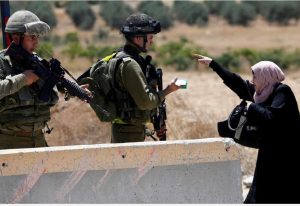
The Arab taxi driver who brought me to Ramallah had no trouble with the Israeli border posts. He just evaded them.

Saves a lot of trouble.

I was invited by Mahmood Abbas, the President of the Palestinian National Authority (as well as of the PLO and the Fatah movement) to take part in joint Palestinian-Israeli consultations in advance of the international conference in Paris.

Since Binyamin Netanyahu has refused to take part in the Paris event side by side with Mahmood Abbas, the Ramallah meeting was to demonstrate that a large part of Israeli society does support the French initiative.

SIMPLE AS it sounds, the Ramallah meeting was not simple at all.

Before the death of Yasser Arafat in 2004, such meetings were almost routine. Since our groundbreaking first meeting in Beirut in 1982, during the Israeli blockade, Arafat met many Israelis.

Arafat had almost absolute moral authority, and even his home-grown rivals accepted his judgment. Since, after our first meeting, he decided that Israeli-Palestinian meetings served the cause of Palestinian-Israeli peace, he encouraged many such events.

After his murder, the opposite trend gained the upper hand. Palestinian extremists held that any meetings with Israelis, whoever they might be, served “normalization” – a terrible, terrible bogeyman.

Abbas has now put an end to this nonsense. Like me, he believes that Palestinian statehood and independence can come about only through a joint struggle of the peace forces on both sides, with the help of international forces.

In this spirit, he invited us to Ramallah, since Palestinians are not normally allowed into Israeli territory.

He seated me next to him on the stage, and so the meeting started.

MAHMOOD ABBAS – or “Abu Mazen”‘, as he is generally known – was gracious enough to mention that he and I have been friends for 34 years since we first met in Tunis, soon after the PLO had left Beirut and moved there.

Through a number of years, when my friends and I came to Tunis, the same procedure was followed: first we met with Abu Mazen, who was in charge of Israeli affairs, and drew up plans for joint action. Then we all moved to Arafat’s office. Arafat, who had an almost uncanny capacity for making quick decisions, would decide within minutes “yes” or ‘no”.

There could hardly be two more different characters than Abu-Amar (Arafat) and Abu-Mazen. Arafat was a “warm” type. He embraced and kissed his visitors in the old Arab style – a kiss on each cheek for ordinary visitors, three kisses for preferred ones. After five minutes, you felt as if you had known him all your life.

Mahmood Abbas is a much more reserved person. He embraces and kisses too, but it does not come quite as naturally as with Arafat. He is more withdrawn. He looks more like a high-school principal.

I have a lot of respect for Mahmood Abbas. He needs tremendous courage to do his job – the leader of a people under brutal military occupation, compelled to cooperate with the occupation in some matters, endeavoring to resist in others. The aim of his people is to endure and survive. He is good at that.

When I complimented him on his courage, he laughed and said that it was more courageous of me to enter Beirut during the siege of 1982. Thanks.

The Israeli government succeeded, even before Netanyahu, in splitting the Palestinians in the country into two. By the simple device of refusing to honor their solemn pledge under Oslo to create four “safe passages” between The West Bank and Gaza, they made a split almost inevitable.

(article continued in right column)

Question related to this article:

Presenting the Palestinian side of the Middle East, Is it important for a culture of peace?

How can a culture of peace be established in the Middle East?

(article continued from left column)

Now, while officially treating the moderate Abbas as a friend and the extremist Hamas in Gaza as an enemy, our government behaves exactly the other way. Hamas is tolerated, Abbas is considered an enemy. That seems perverse but is really quite logical: Abbas can sway public opinion throughout the world in favor of a Palestinian state, Hamas cannot.

AFTER THE Ramallah meeting, in a private session, I submitted to Abbas a plan for consideration.

It is based on the appreciation that Netanyahu will never agree to real peace negotiations, since these will lead inevitably to the Two-State Solution, tut-tut-tut.

I propose to convene a “Popular Peace Conference”, which will meet, say, once a month inside the country. In each session, the conference will deal with one of the paragraphs of the future peace agreement, such as the final location of the borders, the character of the borders (open?), Jerusalem, Gaza, water resources, security arrangements, refugees, and so on.

An equal number of experts and activists from each side will deliberate, put everything on the table and thrash it all out. If agreement can be reached, wonderful. If not, the proposals of both sides will be clearly defined and the item left for later.

In the end, after, say, half a year, the final “popular peace agreement” will be published, even with defined disagreements, for the guidance of the peace movements on both sides. Deliberations on the disagreements will continue until agreement is found.

Abbas listened attentively, as is his wont, and in the end I promised to send him a written memorandum. I just did so, after consulting with some of my colleagues, like Adam Keller, the Gush Shalom spokesman.

Mahmood Abbas is now preparing to attend the Paris conference, the official aim of which is to mobilize the world for the Two-State Solution.

SOMETIMES I WONDER how I do not get infected with megalomania. (Some of my friends believe that this cannot happen to me, since I already am a megalomaniac.)

A few weeks after the end of the 1948 war, a tiny group of young people in the new State of Israel met in Haifa to debate a path to peace based on what is now called the Two-State solution. One was a Jew (me), one a Muslim and one a Druze. I, just released from hospital, was still wearing my army uniform.

The group was completely ignored by everybody. No takers.

Some ten years later, when I was already a member of the Knesset (as, by the way, were the other two), I went abroad to see who could be convinced. I wandered around Washington DC, met with important people in the White House, the State Department and the UN delegations in New York. On the way home I was received in the Foreign Offices in London, Paris and Berlin.

No takers, anywhere. A Palestinian state? Nonsense. Israel must deal with Egypt, Jordan et al.

I made many dozens of speeches about this proposal in the Knesset. Some powers started to take it up. The first was the Soviet Union, though rather late, under Leonid Brezhnev (1969). Others followed.

Today there is no one around who believes in anything but the Two-State Solution. Even Netanyahu pretends to believe in it, if only the Palestinians would become Jews or emigrate to Greenland.

Yes, I know that I didn’t do it. History did it. But I might be excused for feeling just a tiny little bit of pride. Or a mini-megalomania.

THE TWO-STATE SOLUTION is neither good nor bad. It is the only.

The only solution there is.

I know that there are a number of good, even admirable people who believe in the so-called One-State Solution. I would ask them to consider the details: what it would look like, how it would actually function, the army, the police, the economy, the parliament. Apartheid? Perpetual civil war?

No. Since 1948 everything has changed, but nothing has changed.

Sorry, the Two-State Solution is still the only game in town.

The Elders welcome Paris Mideast peace conference, urge all P5 states to show leadership

. .DISARMAMENT & SECURITY. ,

A press release from The Elders

The Elders welcomed the latest international conference on the Israeli-Palestinian conflict held in Paris on 15 January 2017 at the initiative of the French Government, and commended their leadership in pushing for a viable two-state solution.

They urged all the wider international community, and in particular all five permanent members of the United Nations Security Council, to play an active and concerted role to secure a lasting and just peace for the peoples of Israel and Palestine.

The Elders reiterated their support for UN Security Council Resolution 2334 passed in December 2016 which condemned all settlement activity in the occupied Palestinian territories, including East Jerusalem, and all acts of violence and terror. They hoped this consensus in the Council is maintained in the coming months as the best chance of ensuring the survival of the two-state solution.

Kofi Annan, Chair of The Elders, said:

“The French government has worked hard over the past twelve months to garner international support for a viable two-state solution. It is vital that these calls are heeded and efforts redoubled by all key players, especially on the UN Security Council. Israeli and Palestinian leaders, and all States in the region and beyond, must abjure obstructionism which will only prolong the sufferings of Israelis and Palestinians alike.”

Lakhdar Brahimi, Elder and international conflict mediator, said:

“Yesterday’s Paris conference sent out an important message to the world. Scores of nations gathered, demonstrating the international community’s desire to promote the best hope for a sustainable peace for Israelis and Palestinians: two states living peacefully side by side. Any moves that imperil that solution, including settlement activities in the occupied Palestinian territories, are incompatible with international law and UN resolutions, including Security Council Resolution 2334 of December 2016.”

Question related to this article:

Making history in the United Nations: the General Assembly adopts a Declaration on the Right to peace promoted by civil society organizations

FREE FLOW OF INFORMATION

An article by David Fernández Puyana from Elaph

On 19 December 2016, the plenary of the UN General Assembly (UNGA) ratified by a majority of its Member States the Declaration on the Right to Peace as previously adopted by the UNGA Third Committee on 18 November 2016 in New York and the Human Rights Council (HRC) on 1 July 2016 in Geneva. This Declaration was presented by the delegation of Cuba with the support of many other delegations and some civil society organizations.

Along the inclusive and transparent negotiation process of the Declaration, conducted by the Chairperson-Rapporteur of the Open Ended Working Group (OEWG) on the right to peace Ambassador Christian Guillermet-Fernández of Costa Rica, all delegations and some civil society organizations actively participated in the three consecutive sessions of the OEWG in Geneva (2013-2015).

Thanks to this consensual approach, a majority of Member States supported the Declaration on the Right to Peace, which is the clear result of a complex and difficult negotiation process. This positive approach was elaborated in light of the following elements: firstly, international law and human rights law; secondly, the mandate of the HRC in the field of human rights and thirdly, the human rights elements elaborated by the resolutions on the right of peoples to peace adopted by the HRC in the past years.

As indicated by a Group of Western States within the Third Committee, the Declaration has some value because it develops the New Agenda 2030 and also reinforces the three UN pillars – peace and security, development and human rights-. Also they pointed out that the Preamble of the Declaration additionally contains many elements that will benefit for the clarity and greater balance in order to ensure and to represent the full range of views among memberships.

In the adoption of the Declaration on the Right to Peace by the Third Committee and the plenary of the UNGA, the mobilization and strong voice of some civil society organizations was properly heard in its 71st session, when they openly called on Member States to take a step forward by adopting a declaration that can be meaningful for generations to come.

The UNESCO Chair on Human Rights, Democracy and Peace at the University of Padova (Italy) in a legal study about the Declaration adopted by the HRC concluded in November 2016 that «the conjunction of Article 1 with the very title of the Declaration presupposes that a human right to peace does already exist as implicitly proclaimed by Article 28 of the Universal Declaration of Human Rights: “Everyone is entitled to a social and international order in which the rights and freedoms set forth in this Declaration can be fully realized”.

As suggested by the Foundation Culture of Peace, this Declaration will pass to the UN history for being the first peace Declaration adopted by the General Assembly in this new Millennium. They also stressed in its statement that “the UNESCO initiative in which in 1997 Member States were invited to discuss a draft Declaration on the Human Right to Peace soon will be realized within the General Assembly”.

On 2 September 2016 the International Association of Peace Messenger Cities adopted the Wielun Declaration in Poland by which it welcomed the adoption by the HRC of the Declaration on the Right to Peace contained in the annex to its resolution 32/28 and called upon the General Assembly of the United Nations to adopt this Declaration by consensus.

An important group of civil society organizations, led by the International Association of Democratic Lawyers (IADL), Comunità Papa Giovanni XXIII (APG23) and the UN Network of United Network of Young Peacebuilders (UNOY), stressed in an Open Letter addressed to the diplomatic community of November 2016 that: “in today’s world, devastated by armed conflicts, hate and poverty, the recognition and declaration by an overwhelming majority of states that “Everyone has the right to enjoy peace”, would send to Humanity, and in particular to young and future generations, a very much needed message of peace and hope …. The adoption of the UN Declaration on the Right to Peace will represent a little step forward toward the fulfilment of the solemn promises we made in 1945”. This letter was supported by some 60 NGO with UN-ECOSOC Status and well-known peace and human rights activists.

(Article continued in right column)

Question(s) related to this article:

What is the United Nations doing for a culture of peace?

(Article continued from left column)

In parallel, the Chairperson of the Drafting Group on the right to peace at the Advisory Committee (AC) of the HRC, Ms. Mona Zulficar, and the Chairperson-Rapporteur of the OEWG at the HRC, Ambassador Christian Guillermet-Fernández, published in the Arab newspaper Elaph in December 2016 a reflection in which they stressed that the OEWG witnessed that the text presented by the AC was not properly supported by Member States. For this reason, the Chairperson-Rapporteur decided to promote the effective implementation of the Declaration and Programme of Action on a Culture of Peace, taking into account that all the main elements on the right to peace identified by the AC had been elaborated in the Programmes of Action on Vienna and Culture of Peace.

Finally, on 22 October 2016, Paz sin Fronteras (PSF), created by Mr. Miguel Bosé and Mr. Juanes, began the campaign called #RightToPeaceNow by which well-known personalities urged Member States of the Third Committee of the General Assembly to adopt a Declaration on the Right to Peace at the end of the 71th regular session. Throughout this campaign, several personalities of the world of culture and art raised their voices to demand a Declaration on the Right to Peace through their media and social networks. They expressed their support so that the process was definitively closed in New York with the adoption of a Declaration on the Right to Peace, such as occurred in this case.

It is strongly desirable for the promotion of peace worldwide to strengthen the positive trend on this matter already initiated by Cuba within the UN Commission on Human Rights in 2002 and after developed at the HRC in 2006. In particular, some Latin American, African and Asian States, which currently support the right to peace, abstained on this topic in both the Commission and the HRC. However, after many years of intensive work by different stakeholders, at present all the Latin American, the African and most of the Asian States positively support this notion. In addition, it should be taken into account that currently an important number of Western States abstained for the first time ever in the General Assembly.

In order to strengthen the positive trend and to move towards a more consensual and inclusive approach, the legislator desired to stress the idea that everyone has the right and is entitled to enjoy and access the benefits stemmed from peace, human rights and development, founding pillars of the whole UN system. Denying this access to the three pillars is to deny the same existence of the United Nations.

The three UN pillars have been recognized by the HRC as a fundamental element aimed to promoting the right of peoples to peace. In particular, resolutions 11/4 of 2009, 14/3 of 2010 and 17/16 of 2011 on the right to peace have constantly stressed these pillars in its operative sections. In this line, the resolution 60/251 of the HRC adopted by the General Assembly on 15 March 2006 recognized in its preambular paragraph 6 that “peace and security, development and human rights are the pillars of the United Nations system and the foundations for collective security and well-being, and recognizing that development, peace and security and human rights are interlinked and mutually reinforcing.”

In 1996, the General Assembly recognized by consensus in its resolution Resolution 48/126 the human rights approach of the right to in peace. In particular, art. 1.4 of the UNESCO Declaration of the Principles of Tolerance states that “human beings, naturally diverse in their appearance, situation, speech, behaviour and values, have the right to live in peace and to be as they are”.

And as indicated by Oscar Arias, Nobel Peace Prize Laureate and former President of Costa Rica, “Peace is a never ending process… It cannot ignore our differences or overlook our common interests. It requires us to work and live together”.

* Christian Guillermet Fernández, former Chairperson/Rapporteur of the Working Group on the Right to Peace (2013-2015)

* David Fernández Puyana, former legal Assistant of the Chairperson/Rapporteur (2013-2015)

(Thank you to the Global Campaign for Peace Education for calling our attention to this article)

2017 International Year of Sustainable Tourism for Development

. . SUSTAINABLE DEVELOPMENT . .

An article from the United Nations World Tourism Organization

The United Nations 70th General Assembly has designated 2017 as the International Year of Sustainable Tourism for Development (A/RES/70/193). This is a unique opportunity to raise awareness on the contribution of sustainable tourism to development among public and private sector decision-makers and the public, while mobilizing all stakeholders to work together in making tourism a catalyst for positive change.


Official Video for the International Year

In the context of the universal 2030 Agenda for Sustainable Development and the Sustainable Development Goals (SDGs), the International Year aims to support a change in policies, business practices and consumer behavior towards a more sustainable tourism sector than can contribute to the SDGs.

The #IY2017 will promote tourism’s role in the following five key areas:

(1)        Inclusive and sustainable economic growth

(2)        Social inclusiveness, employment and poverty reduction

(3)        Resource efficiency, environmental protection and climate change

(4)        Cultural values, diversity and heritage

(5)        Mutual understanding, peace and security.

(article continued in right column)

(Click here for the french version of this article or click here for the Spanish version)

Question related to this article:

How can tourism promote a culture of peace?

(article continued from left column)

The World Tourism Organization (UNWTO), the United Nations Specialized Agency for Tourism, has been mandated to facilitate the organization and implementation of the International Year, in collaboration with Governments, relevant organizations of the United Nations system, international and regional organizations and other relevant stakeholders.

Join us in celebrating 2017 as the International Year of Sustainable Tourism for Development!

In historic decision, CRTC rules that all Canadians must have access to reliable, world-class mobile and residential Internet

FREE FLOW OF INFORMATION

An article from Open Media

December 21, 2016 – The Canadian Radio-television and Telecommunications Commission (CRTC) has just ruled that all Canadians must have access to reliable, world-class mobile and residential Internet services. The decision underpins a call for a new national strategy from the CRTC and citizens alike, resulting from the Commission’s Review of Basic Telecommunications Services consultation.

OpenMedia, which led a nearly 50,000-strong citizen movement for Internet as a basic service (and facilitated more than 95% of the comments to the CRTC proceeding), describes today’s decision as truly historic. The ruling will be a game-changer for rural and underserved communities across Canada where Internet access is either unavailable or unaffordable, due to a digital divide keeping almost one in five Canadians offline.

“Canadians asked for universal Internet access, support for rural communities, world-class speeds, unlimited data options, and minimum guarantees for the quality of their Internet. And today, we won it all!” said Josh Tabish, campaigns director for OpenMedia. “With this ruling, the CRTC has finally listened to Canadians and agreed that residential and mobile Internet is a basic service required for modern life, as important as the telephone.”

Tabish continued: “For too long, rural and underserved communities all across Canada have faced an uphill battle to participate meaningfully in our digital economy. Today’s decision will go a long way toward closing this digital divide. Now that the CRTC has spoken, we need to hold the Trudeau government accountable for ensuring this exciting vision becomes a reality.”

(Article continued in right column)

Latest Discussion

Is Internet freedom a basic human right?

(Article continued from left column)

Key points from today’s CRTC decision, and the accompanying national broadband strategy:

100% of Canadians must have access to reliable, world-class mobile and fixed Internet services.

The decision includes: Internet access defined as a basic service, access to world-class speeds, options for unlimited data packages, and a level playing field for rural and remote Canadians.

New network speed targets of 50 Mbps download speed and 10 Mbps upload speed, and the ability to subscribe to fixed Internet package with an unlimited data option.

Canadians from coast to coast to coast must have access to high-speed mobile and residential Internet connections. To fund this, the CRTC will redistribute hundreds of millions of dollars from telecommunications company revenues over the coming years.

Going forward, rural, remote, and urban communities must be able to access Internet speeds five times as fast as the U.S. minimum (10/1) and the government will encourage the widest availability of the fastest 4G/LTE mobile networks.

Finally, the CRTC issued a new report outlining the imperative for a national broadband strategy and what the federal government should consider when building it.

Throughout our participation in this proceeding, OpenMedia argued that only a properly-funded national strategy can tackle Canada’s digital divide. We asked the CRTC to create new rules to ensure all Canadians have access to guaranteed minimum service levels on fixed and mobile networks — rules that will enable all Canadians to enjoy equal opportunity to participate in the social and economic activities afforded by Internet access at a fair price.

Our community-driven submission argues that these new rules should not hinder industry, but should instead promote investment, competition, and openness.

Canadians can call on the government to build on the CRTC’s vision to create a national broadband strategy at https://act.openmedia.org/broadband-plan

‘Cyprus can be symbol of hope’ the world badly needs, says UN chief Guterres as conference opens

FREE FLOW OF INFORMATION

An article from the United Nations News Centre

A United Nations-supported conference on Cyprus opened in Geneva today [12 January], bringing together the Greek Cypriot and the Turkish Cypriot leaders in a dialogue chaired by Secretary-General António Guterres.. .


Secretary-General António Guterres with Nicos Anastasiades, President of the Republic of Cyprus (left) and Mustafa Akinci, Leader of the Turkish Cypriot Community (right) in Geneva. UN Photo/Jean-Marc Ferré
Click on photo to enlarge

A United Nations-supported conference on Cyprus opened in Geneva today [12 January], bringing together the Greek Cypriot and the Turkish Cypriot leaders in a dialogue chaired by Secretary-General António Guterres.

Speaking at a press conference during a recess, the UN chief said “it is my hope that there will be a breakthrough” that the people of Cyprus deserve and the world needs.

(Article continued in the right column)

(Click here for this article in French or click here for the article in Spanish.)

Questions related to this article:

Can Cyprus be reunited in peace?

(Article continued from the left column)

“We are facing so many situations of disasters. We badly need a symbol of hope. I strongly believe Cyprus can be the symbol of hope at the beginning of 2017,” he added.

The conference brought together not only the Greek Cypriot and Turkish Cypriot leaders, but also the so-called guarantor powers – Greece, Turkey and the United Kingdom for the first time.

Mr. Guterres paid tribute to the statesmanship displayed by Greek Cypriot leader Nicos Anastasiades and Turkish Cypriot leader Mustafa Akinci for about 20 months of negotiations toward a united Cyprus.

The Secretary-General described the opening session of today’s talks as “extremely constructive,” adding that during lunchtime, the participants had open debate and brainstorming, in which “it was possible to identify, not only the very important progress that was made in the negotiations, as taken in the last few days on the first five chapters, but also to identify the complexity of the problems related to security and guarantees that need to be addressed and resolved.”

In that lunch, he continued, “it was possible to clearly come to the conclusion that we need to find instruments, instruments that allow for the implementation of the settlement that would be achieved in a way that guarantees simultaneously the response to the security concerns of the Turkish Cypriot community and the security concerns of the Greek Cypriot community.”

Mr. Guterres said the goal is neither a calendar nor a vanity fair, but to get the necessary results.