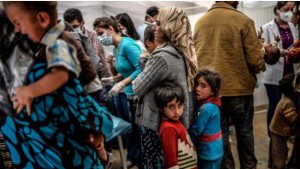
The refugee crisis, Who is responsible?

. . . TOLERANCE & SOLIDARITY . . .

As a response to this question, CPNN readers are encouraged to read the full text of the analysis of the refugee crisis in Europe by Kofi Annan, former Secretary-General of the United Nations, in a speech on October 9, 2015.

Here are a few excerpts from his speech:

* * * * * *

The refugee crisis is a by-product of at least three broader trends:

First and foremost, it is the result of the breakdown of the authoritarian state order in the Middle East and Africa after the destruction of authoritarian states in Iraq and Libya, as well as the Arab Spring.

What we are witnessing today is not just a series of civil wars, but also a geopolitical struggle to redefine the balance of powers in the Middle East.

Second, the inability of the Security Council to find a compromise that can resolve the crisis in Syria has undermined its own authority and perpetuated the conflict.

Finally, the growing migratory flows are also compounded by demographic growth in countries in the Middle East and Sub-Saharan Africa that are unable to generate sufficient employment for young people.

The populations of Sub-Saharan Africa and Middle East have multiplied by four since 1950 . On current trends, both will double again their 2000 populations by 2050.

This underlying trend is exacerbating political instability in the Middle East and Africa and fuelling migration.

Europe sees the massive influx of refugees and migrants from the Middle East and Africa as a threat.

In reality, it is an endorsement of the European project, an opportunity, but also a challenge that will require decisive action.

Europe is a symbol of freedom, prosperity and justice that attracts immigrants. At a time when the EU is not popular within its own borders, Europeans should reflect on the significance of their popularity abroad.

But migrants should not be regarded merely as beneficiaries of Europe’s bounty: they also represent an opportunity for Europe itself.

By definition, immigrants are entrepreneurial people. After all, they have taken huge risks to seek a better life for themselves and their families.

It should not, therefore, come as a surprise that they are over-represented amongst entrepreneurs. In fact, more than 40 per cent of the Fortune 500 companies were founded by an immigrant or the child of an immigrant .

I am certain that many of the wealthy philanthropists in this room, like Mr. Arton himself, are immigrants or children of immigrants.

Moreover, immigrants can help to compensate for the ageing population of many European countries, and can therefore help sustain their welfare states into the future.

* * * * * *

The historic refugee crisis Europe is facing today is so hard to solve because it is not a one-off, humanitarian phenomenon.

It is, in fact, a by-product and symptom of much deeper political problems that beset regional and global order.

It will therefore require concerted action not just in and by Europe, but amongst the regional powers of the Middle East, and the global powers of the Security Council.

Like climate change, it is one of those issues that epitomise our era of globalisation, when crises in one part of the world can no longer be isolated or ignored by the rest.

Once again, international cooperation and dialogue will be the key to finding solutions.

According to an African proverb, if you want to go fast, go alone. But if you want to go far, go together.

We have a long way to go; we can only do so if we go together.

This question applies to the following CPNN articles:

The sea rescue association SOS MEDITERRANEE wins the Right Livelihood Award 2023

Spain: More than 140 people participate in the first Congress ‘Aragon, culture of peace

Some villages in France have found a second life by welcoming refugees

United Kingdom : Little Amal: Coventry welcomes giant refugee puppet to city

Milan, Italy: Anti-racism protesters denounce Italy’s right-wing government

Italy: Mayors of Florence, Palermo and Naples “Rebelled” against a Tough Anti-Immigrant Law

France: Culture for Peace Award to The Artists in Exile Workshop

The Elders challenge leaders to confront migration lies and make UN deal a success

Artist’s Portraits Show Migrant Caravan’s Hope, Joy: ‘These Are Regular People’

UNESCO recognizes Cortes de Baza for Dialogue and Coexistence

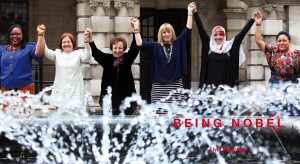
Nobel Women’s Initiative: Standing with Rohingya Women, Spotlighting Survivors for World Refugee Day

The Coming Wave of Climate Displacement

France / Refugees. Resumption of Trial of Martine Landry, Member of Amnesty International France and Anafé Unfairly Pursued for “Crime of Solidarity”

Germany: The dead refugees lament! Action September 5

Barcelona demonstration calls for the reception of refugees

Una multitud clama en Barcelona por la acogida de refugiados

From the “jungle” to the theater, refugees replay their exile to Europe

De la “jungle” au théâtre, des réfugiés rejouent leur exil vers l’Europe

The international Society Culture of Peace: Solidarity concerts in Athens and Mytilini / Lesbos

Greece: Union pushes for access to education for all refugee children

The Elders hail Germany’s engagement on refugee and migration issues

USA: Refugee Orchestra Project Showcases Refugees” Impact through Music on World Refugee Day

Grecia: Un sindicato nacional ejerce presión en favor del acceso a la educación para todos los niños refugiados

Grèce: Un syndicat national exerce des pressions afin de garantir l’accès à l’éducation de tous les enfants réfugiés

MOAS & EMERGENCY NGO partner up to provide rescue and medical care to migrants in the Mediterranean

Hundreds join refugee solidarity rally in Madrid, slamming NATO invasions

Latin America heeds the cries of refugees

The International Cities of Refuge Network (ICORN)

USA: Indiana Said No; New Haven Said Yes To Refugees

France: Comment venir en aide aux réfugiés ?

France: How to help the refugees?

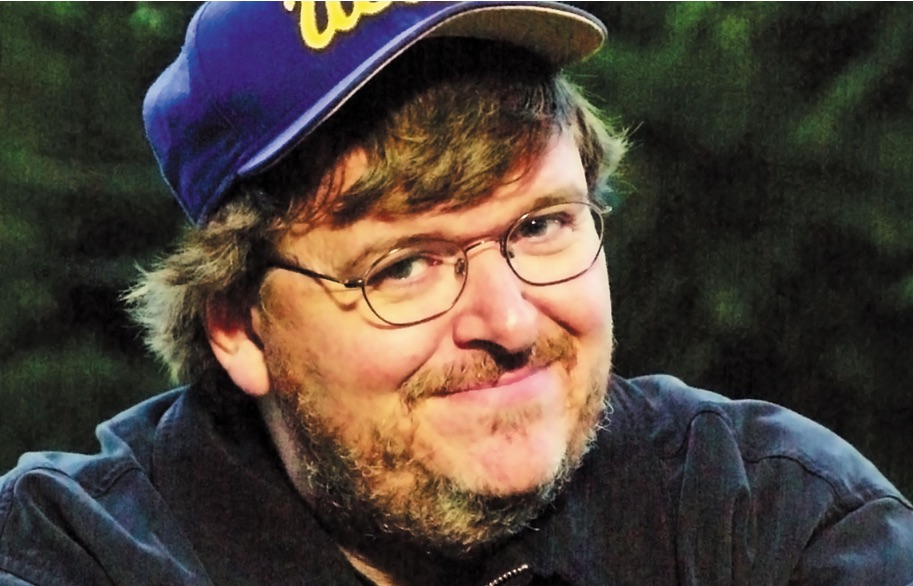
Michael Moore (USA): My home is open for Syrian refugees

Spain: The Spanish Commission for Refugee Aid

UNHCR welcomes first arrivals of Syrian refugees in Canada

The Barcelona Declaration – Refugees: Meeting the Challenge to Our Humanity

USA: 18 mayors join forces to commend Obama administration, and call on them to accept more refugees amid Syrian crisis

2015 MacBride Prize to Lampedusa (Italy) and Gangjeon Village, Jeju Island (S. Korea)

Is dropping more bombs on Syria way to solve refugee crisis?

USA: Restorative Practices in Schools

. . DEMOCRATIC PARTICIPATION . .

Excerpts from September and August News Roundups by Restorativeworks.net

Detroit Public Schools says crime reports down 29% due to restorative practices. The article notes: “This year, restorative practices training will cover two new areas: trauma and grief counseling to help students dealing with death and other hardships, and ‘conferencing training’ to assist students’ transition back into school after a suspension or expulsion.”

restorative

NAACP (Chattanooga) seeks alternative discipline methods for schools.” This TV news video includes footage from a recent professional development event and a brief interview with IIRP Instructor Steve Korr. . .

During a discussion circle in a Chicago school, students learn empathy when they discover they each have had first-hand exposure to gun violence and one classmate had a gun pointed at her head.

The International Bullying Prevention Association will hold its annual conference Reaching New Heights in Bullying Prevention through Empathy and Kindness in Denver, CO, November 8-10 and will feature a pre-conference workshop on restorative practices with IIRP Lecturer Elizabeth Smull.

(This article is continued on the right side of this page.)

Discussion question

Restorative justice, What does it look like in practice?

(Article continued from left side of this page.)

The American Federation of Teachers — one of the nation’s largest unions — takes on the issue of racial justice using restorative practices. . .

A new report by The Advancement Project, the Alliance for Quality Education, Citizen Action of New York and the Public Policy and Education Fund reveals that “Buffalo, NY, Schools’ new code of conduct results in more days in school, fewer suspensions.” . .

Restorative practices are being used in more and more schools throughout the U.S. Here are a few examples that came to our attention this month:
San Diego, CA (cuts suspensions by 60%)
Hamilton, OH
Waco, TX
Rochester, NY
Beloit, WI (PBIS program to incorporate restorative practices)
Santa Ana, CA
Jefferson Parish, LA (prompted by employees and complaints by the Southern Poverty Law Center)
Springdale, AK
The State of Illinois (Governor signs sweeping school discipline bill championed by students)

International dialogue on gender equality in the media to be held in Geneva

. WOMEN’S EQUALITY .

An article from UNESCO

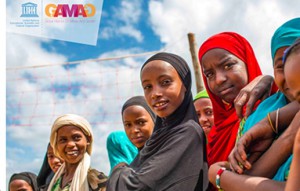
From 7 to 10 December, UNESCO and the Global Alliance on Media and Gender (GAMAG) will hold the first International Development Cooperation Meeting on Gender and Media and the first General Assembly of the Global Alliance on Media and Gender (GAMAG), in Geneva, Switzerland.

geneva
Pupils participating in a physical education class at Tutis Primary School in Oromia State of Ethiopia, November 2013. © UNICEF Ethiopia

The events are co-hosted by the Republic of Lebanon and the Hellenic Republic (Greece) and supported by close to 20 UN organizations. Both events will coincide with the International Human Rights Day, December 10.

Women’s participation, their leadership and fair representation in media and technology are way below that of their male counterparts. After four decades of research and development actions, little change can be celebrated.

The world famous actor* Geena Davis observed that at the present rate, it will take another 70 years to achieve gender equality in the media. This is more than four times the number of years agreed upon by the international development community to achieve the new sustainable development goals, by 2030. A dialogue of a different order is needed.

Gender inequalities in the media and technology are rooted in cultures, traditions, stereotypes, beliefs and a lack of awareness of the negative gains of these inequalities on economic and sustainable development. Such social practices are no longer separated by remote geographical boundaries. Dialogue then becomes crucial to bring about a deeper understanding and agreement on a common path to change.

Therefore, the main aim of the high-level events is to initiate a dialogue about global development cooperation framework to achieve gender equality in and through media. The meeting will include various development actors such as UN agencies, funds and programmes, national and regional development organizations, governments, private sector and other international development organizations. Ministers, ambassadors, media, civil society, private sector, and development executives as well as leading experts are invited to attend.

(Article continued in right column)

Question for this article

Does the UN advance equality for women?

(Article continued from left column)

Topics will include ingredients for global development cooperation framework on gender and media, the emerging online media and youth, gender and media as a business and development model, and strategic link between policy and research on gender and media.

To register for these events please click here.

GAMAG is a UNESCO-initiated groundbreaking partnership among over 800 media, civil society, academic, private and governmental organizations. Its purpose is to be the global mechanism through which Section J, gender and media, of the Beijing Declaration and Platform for Action (BDPA) can be systematically implemented and monitored. It is governed by 20 member organizations that form the international steering committee.

Before GAMAG there was no defined global framework for follow up on Section J of the BDPA. The twin events from 7-10 December 2015 will build on the global partnerships started through GAMAG. Yes We Must! Reaching Gender Equality by 2030.

Register now for these events and join GAMAG.

For more information please visit our website.

USA: How we stopped Keystone, together

. . SUSTAINABLE DEVELOPMENT . .

An article and video from MoveOn .org

Today [November 6], President Obama officially rejected TransCanada’s application to build the Keystone XL pipeline. This major win for our climate is the result of relentless and passionate grassroots organizing in nearly every corner of our nation. This victory is a testament to the incredible power we have, when we stand together as a movement, to shape our country and change the course of history—which is exactly what we’ll need to do to keep securing transformative actions that can reverse the course of human-made climate change and hold corporations and politicians who continue to imperil the climate by denying science accountable.

keystone
Video: How the Keystone Fight Was Won

Our friends at 350­.org have created a video about how, together, we achieved this victory. Will you watch and share their video and celebrate this historic moment?

Over the last few years, hundreds of thousands of MoveOn members have joined the movement to stop the Keystone XL pipeline—putting an end to this massive dirty energy project that would have grossly deepened our dependence on the fossil fuels accelerating climate change.

By joining with communities along the pipeline route, ranchers, farmers, Native American tribes, climate activists, and union members, we accomplished something truly remarkable. Your signatures, phone calls, donations, and local rallies and events over the years helped power this victory.

As we continue the fight to keep fossil fuels in the ground and hold corporations like Exxon Mobil accountable for their crimes against our climate, we’ll remember to hold up today’s rejection of the Keystone XL pipeline as a reminder that—even against billion dollar industries—change is possible.

Please, take a minute to watch and share this video from our friends at 350.org.

Thanks for all you do.

–Corinne, Anna, Nick, Victoria, Jadzia, and the rest of the team

Want to support our work? MoveOn member contributions have powered our work together for more than 17 years. Hundreds of thousands of people chip in each year—which is why we’re able to be fiercely independent, answering to no individual, corporation, politician, or political party. You can become a monthly donor by clicking here, or chip in a one-time gift here.

Question for this article:

We are the solution: African women organize for land and seed sovereignty

. . SUSTAINABLE DEVELOPMENT . .

An article by Simone Adler and Beverly Bell, for Other Worlds

Mariama Sonko is a farmer and organizer in Casamance, Senegal. She is the National Coordinator of We Are the Solution, a campaign for food sovereignty led by rural women in West Africa.

food sovereignty
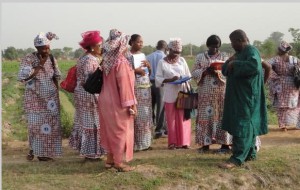
Mariama Sonko, third from right, with a women farmers’ organization.
Photo courtesy of Fahamu.

Traditional, small-holder peasant agriculture is done by women. Women are the ones who save the seeds – the soul of the peasant population. This is to honor what women have inherited from their ancestors: the conservation of seeds as part of their knowledge to care for the whole family and nourish their communities.

The green revolution introduced GMOs in Africa. Technicians and researchers come to tell our producers about agriculture from the outside. They tell us that these modern varieties of [GMO] seeds are going to increase our yield. So we will produce a lot, fill up our stores – but soon we will be sick and in the cemeteries. Isn’t it better to grow less, eat well, have good health, live a long life, and pay attention to the generations to come? We reject agriculture that pollutes with chemicals, pesticides, GMOs.

Achieving our goals is a difficult struggle because we have few resources fighting against multinational corporations who have a lot of money. But development in Africa can’t take place on the backs of Africans, and Africa can’t develop without looking ahead for the children.

We Are the Solution is a campaign in West Africa led by rural women from Senegal, Burkina Faso, Mali, Ghana and Guinea, though we are a campaign of both women and men. Our vision is to truly promote ancestral knowledge and put pressure on our government to take seriously the preservation of our peasant agriculture.

The campaign has three objectives. First is the use and promotion of traditional knowledge transmitted from generation to generation, which supports food sovereignty and the preservation of peasant seeds. The second objective is to restore national policies favorable to agroecological peasant farming. And the third objective is the promotion of African agricultural production.

Women, Land, and Agriculture

In the agricultural sphere, development rests in the hands of the women, and their role is being proven repeatedly. We Are the Solution raises awareness and consciousness, key to changing the mentality of the people, on the importance of women in family farming and agricultural production.

Women are the primary workers of the land and the majority of the workforce in agriculture, involved in every step of agricultural production: in the fields, 70% of African agriculture is done by women; in conservation, women are the ones making efforts to conserve the native seeds; in animal husbandry; in food processing; in marketing; in selling food at the local level; and as consumers.

(continued in right column)

Question for this article:

What is the relation between movements for food sovereignty and the global movement for a culture of peace?

(Article continued from the left column)

In Africa, it’s said that land belongs to men as the heads of household. If women can’t access land, don’t have control of that land, or don’t own land, there is a problem. We are campaigning for women to have land ownership, and trying to raise this consciousness among men.

At the national level in Senegal, there’s a new law in effect that states that all citizens have the right to own land. But in practice, we still have the tradition. These women, most of whom are illiterate and rural, are socialized to believe that this longstanding culture can’t be changed. Our job is to [help them] understand they have the same rights as men, and that women owning land contributes to the well-being of the family and assures that they are fed.

At the local level, some women have risen up and demanded that land be put in their names, and now they are land-owners. Women’s associations have acquired blocks of land of up to one or two hectares, but frankly, there’s not much they can produce on that. To develop agriculture we need to cultivate larger plots or install irrigation, but this isn’t permitted because women don’t have a say in land use. There is idle land available and not enough men to work it all, yet they don’t want to turn it over to women. So the effort of raising awareness and advocacy goes on.

Agroecology, Sacred Seeds, and Food Sovereignty

Women peasant organizations are leading the movement for seed and food sovereignty. We should eat what we produce and produce what we eat.

Agroecology protects all living things and treats nature as sacred. Our seeds are ancient, and each is tied to a certain place. The traditional practice of seed selection preserves the environment and sustains biodiversity, while using our resources which are affordable and accessible. These seeds don’t need any modification.

We are seeing new diseases due to the diet arising from everything that is imported, and as a result of underestimating the value of traditional dishes of grains and vegetables.

Though many have gone to chemical agriculture, our movement has identified several traditional practices that we’re sharing with our sisters and brothers. We Are the Solution organizes workshops, forums, and community radio broadcasts to bring our message down to the popular, rural level and inform the grassroots about the advantages of traditional agroecological or peasant agriculture.

In Casamance [a region of Senegal], We Are the Solution has established a platform of 100 grassroots associations. We now have a model farm field and a store for marketing our family farm products from various kinds of production and hand-tool farming. The store is there to help us promote ecologically produced products produced by women. We are also trying to organize a forum on local consumption.

Overall, women are taking leadership roles in the countries in which We Are the Solution is active, promoting agroecology and seed and food sovereignty as the only viable system for the long-term. This way we can have healthy lives and protect the environment.

This is the first article in a 7-part series which features interviews with grassroots African leaders working for seed and food sovereignty, the decolonization of Africa’s food system, and the preservation of traditional farming practices. This series is made possible with support from New Field Foundation and Grassroots International. Many thanks to Stephen Bartlett for translation of the interview.

Open Data – Still Closed to Latin American Communities

FREE FLOW OF INFORMATION

An article by Emilio Godoy, Inter Press News Service (reprinted with permission) (abridged)

. . . The link between open data and projects that have an influence on local communities and the environment was one of the issues at the Open Government Partnership Global Summit held Oct. 27-29 in Mexico City. Taking part in the summit were representatives of governments and civil society and academics from the 65 countries participating in the Partnership, created in 2011 under the aegis of the United Nations. Of that total, 15 countries are from Latin America.

opendata
Alicia Bárcena, executive secretary of ECLAC, and other heads of international agencies discuss the need for greater transparency on the part of governments, during the Open Government Partnership Global Summit in Mexico City. Credit: ECLAC

During the summit’s forums and workshops, the delegates of organised civil society called for a strengthening of open data policies and faster progress towards compliance with Principle 10, which cannot happen unless there is movement towards total information openness.

It is common practice in the region for communities to be uninformed about the very existence of mining, oil, energy and other kinds of projects even when carried out in their immediate vicinity, as they are neither previously consulted nor given access to information. Permits and concessions are off their radar.

Countries in the region ratified the declaration on the application of Principle 10 of the Rio Declaration, signed during the U.N. Conference on Sustainable Development (Rio+20), held in Rio de Janeiro in June 2012.

According to information shared by participants during the open government summit in Mexico, the question of the environment is limited to instructions to disseminate public consultations in the environmental impact assessment process in the Second Plan of Action on open data 2013-2015.

Currently, Mexico is collecting proposals to design a third, more ambitious, plan.

One of its key focuses is “natural resource governance”, which encompasses climate change, fossil fuels, mining, ecosystems, the right to a healthy environment, and water resources for human consumption.

For its part, Peru has been discussing since May a “strategy on openness and reuse of open government data” for the period 2015-2019, which would include environmental questions.

In August, Argentina presented the first part of its “second plan for open government 2015–2017”, which also fails to include major environmental considerations.

“The problem is severe; it is not enough to just be transparent,” said Carlos Monge, the representative in Peru of the U.S.-based non-governmental Natural Resource Governance Institute. “There is a question of timing. When do citizens need that information? After the fact?

“That’s a mistake. We need to think about how to make information available before decisions are reached, as well as information about the impact of those decisions,” he told IPS.

(Article continued in the right column)

Question(s) related to this article:

Free flow of information, How is it important for a culture of peace?

(Article continued from the left column)

Monge complained that since 2014 countries like Bolivia, Colombia, Ecuador and Peru have reformed their legislation to lower environmental standards, with the aim of drawing investment in the mining and oil industries, due to the drop in global demand for raw materials, one of the pillars of their economies.

The “Global Atlas of Environmental Justice” lists 480 environmental conflicts in 16 Latin American and Caribbean nations, related to activities like mining, fossil fuels, waste and water management, access to land and infrastructure development.

The initiative forms part of the European project “Environmental Justice Organizations, Liabilities and Trade” and is coordinated by the University of Barcelona Institute of Science and Technology and drawn up by experts from 23 universities and environmental justice organisations from 18 countries.

The majority of the disputes, the atlas says, are concentrated in Colombia (101), Brazil (64), Ecuador (50), Peru (38), Argentina (37) and Mexico (36).

When they are in the dark about infrastructure or mining or oil industry projects in their local surroundings, communities suffer what U.S. Professor Rob Nixon calls “slow violence” from environmental problems arising from the exploitation of natural resources, which generates conflicts and further impoverishes local populations.

Alicia Bárcena, executive secretary of the Economic Commission for Latin America and the Caribbean (ECLAC), complained during the summit that local communities are not previously informed about extractive industry projects and said the region is not yet ready to meet open data requirements.

“It’s important for them to have information on concessions, contracts, impacts, revenue, consultations, so they are aware beforehand of the effects,” she told IPS.

The countries of this region agreed in November 2014 on the negotiation of a treaty on Principle 10, in a process facilitated by ECLAC, which is about to open a regional natural resource governance centre.

Tomás Severino, director of the Mexican NGO Cultura Ecológica. who is taking part in Mexico’s open data initiatives and in the Principle 10 regional negotiating process, stressed the need to modify laws to bring them into line with these schemes.

“We need participation and consultation mechanisms,” he said.

Monge cited two processes that he said should be given institutional structures. “Zoning and consultation imply the generation of a lot of information. If they want to carry out a project, the information on money, water and territory should be made transparent,” he said.

The first refers to zoning of residential, industrial or ecological areas, by the municipal authorities, and the second involves asking local populations whether or not they want a project to go ahead.

“Consultation is one of the most effective instruments. Principle 10 addresses it before a project is carried out,” Bárcena said.

(Thank you to Janet Hudgins, the CPNN reporter for this article.)

Angola to host biennial on culture of peace in Africa

FREE FLOW OF INFORMATION

An article from Agência Angola Press

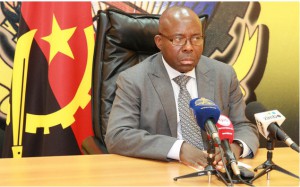
The Minister of Higher Education, Adão do Nascimento, announced to the representatives of Member States of UNESCO that Angola will host as from next year, a biennial on the Culture of Peace in Africa.

Angola
The Minister of Higher Education, Adão do Nascimento
Foto de Francisco Miudo

Speaking at the 38th session of the UNESCO General Conference, taking place in Paris on 3-18 November, the official said that the biennial will, among other issues, assess the compliance by Member States of the African Union, the Action Plan approved in Luanda in March 2013.

To the minister, this biennial is more of a pragmatic approach for the materialization of UNESCO’s secular motto, namely “bearing the wars in the minds of men, it is in the minds of men that the defenses of peace must be erected”.

The head of the Angolan delegation to the General Conference welcomed the UNESCO appeals to the international community to engage in the unconditional defense of the assets of the humanity heritage, victims of indiscriminate destruction, as unfortunately happens in various parts of the world.

The Minister of Higher Education highlighted the efforts made by Angola to involve the various stakeholders under the public and private initiatives with domestic and foreign partners.

( Click here for the French version of this article or here for the Spanish version.)


Question related to this article.

L’Angola abrite le biennal sur la culture de paix en Afrique

LIBERTE DE L’INFORMATION

Un article de Agência Angola Press

Le ministre angolais de l’Enseignement Supérieur, Adão do Nascimento, a annoncé aux représentants des Etats membres de l?UNESCO que l’Angola abriterait à partir de l’année prochaine, un biennal sur la culture de paix en Afrique.

Angola
Le ministre angolais de l’Enseignement Supérieur, Adão do Nascimento
Foto de Francisco Miudo

Intervenant à la 38ème session plénière de la conférence générale de l’UNESCO qui se déroule à Paris depuis le 3 novembre, le gouvernant a dit que le biennal ferait, entre autre, une évaluation sur l’accomplissement par les Etats membres de l’Union Africaine, du Plan d’action approuvée à Luanda, en mars 2013.

Selon lui, ce biennal est plus qu’une voie pragmatique pour la matérialisation du thème séculier de l’UNESCO concrètement comme les guerres naissent de l’esprit des hommes, c’est de l’esprit des hommes que doivent être élevés les défenseurs de la paix.

Le chef de la délégation angolaise à la conférence générale a salué les appels de l’UNESCO pour que la communauté internationale s’engage dans la défense inconditionnelle des biens du patrimoine de l’humanité, victimes de destruction indiscriminée, comme cela se passe malheureusement dans plusieurs régions du monde.

( Cliquez ici pour une version anglaise de cet article ou ici pour une version espagnole.)


Question related to this article.

Angola alberga bienal sobre cultura de paz en África

. LIBERTAD DE INFORMACIÓN .

Un artículo de Agência Angola Press

El ministro de Enseñanza Superior, Adão do Nascimento, anunció a los representantes de los Estados Miembros de la UNESCO que Angola va a albergar, a partir del próximo año, una bienal sobre la Cultura de Paz en África.

Angola
Ministro de Enseñanza Superior – Adão do Nascimento
Foto de Francisco Miudo

Al intervenir en la 38ª sesión plenaria de la Conferencia General de la UNESCO, que tiene lugar en París desde el día 3 de este mes, el gobernante dijo que la bienal hará, entre otras, una evaluación del cumplimiento, por los Estados Miembros de la Unión Africana, del Plan de Acción aprobado en Luanda, en Marzo de 2013.

Para el ministro, esta bienal es una vía pragmática para la materialización del lema secular de la UNESCO, concretamente “naciendo las guerras en el espíritu de los hombres, es en el espíritu de los hombres que deben ser erguidos los baluartes de la paz”.

El jefe de la delegación angoleña a la conferencia general saludó los apelos de la UNESCO para que la comunidad internacional se empeñe en la defensa incondicional de los bienes del patrimonio de la Humanidad, víctimas de destrucción indiscriminada, tal como acontece infelizmente en varios puntos del mundo.

El ministro de Enseñanza Superior destacó los esfuerzos llevados a cabo por Angola, para englobar los más diversos actores en el cuadro de las iniciativas públicas y privadas con colaboradores nacionales y extranjeros.

En su intervención, Adão do Nascimento se refirió a las actividades más notorias de los últimos años, tal como el II Festival Nacional de la Cultura, considerando el momento más alto de la celebración y exaltación de la cultura angoleña, y el Encuentro Nacional sobre la Museología en Angola, que permitió compartir y enriquecer la visión sobre la política de museos del país.

( Clickear aquí para la version inglês de este artículo o aquí para la version francês.)


Question related to this article.

As the UN Celebrates Empowerment of Women, a New Survey Shows Major Frustrations

. WOMEN’S EQUALITY .

An article by Danielle Goldberg and Mavic Cabrera-Balleza for Pass Blue

Fifteen years ago, the United Nations Security Council unanimously adopted a resolution on women, peace and security, a landmark international law that demands women’s participation in decision-making on international peace and security.

passblue

Though seldom recognized, the fundamental roots of this resolution, known as 1325, came from women’s actual experiences in armed conflict and their struggles for peace, championed by women’s organizations and civil society groups around the world.

As governments, donors and the UN come together this month to renew their commitments to the resolution’s mandate and address constraints and obstacles that keep it from fully being carried out, it is critical that these parties continue to engage civil society organizations as equal partners. After all, we are the ones who are implementing the resolution on the ground.

In this light, the Global Network of Women Peacebuilders, in partnership with Cordaid, the International Civil Society Action Network and the NGO Working Group on Women, Peace and Security, all civil society organizations working hard on this mandate, conducted a survey earlier this year among other civil society organizations to solicit their views on the implementation of 1325.

Findings from the survey fed directly into the recently published global study commissioned by the UN secretary-general, Ban Ki-moon, to highlight “good practice examples, gaps and challenges, as well as emerging trends and priorities for action on UNSCR 1325 implementation.”

What stands out in the survey, featuring 317 responses from a wide range of organizations in 71 countries, is that women’s participation at all levels of decision-making in official peace and conflict negotiations and processes is still far from sufficient. As a result, a majority of respondents identified this as a top priority in the future agenda.

The ability to hold governments and armed groups accountable for grave human-rights violations against women was viewed as a significant achievement of 1325, though many groups qualified this gain.

Despite their leadership in the implementation of the resolution, overall respondents rated 1325 as only “moderately effective” because many of those surveyed think that the transformative potential of the resolution has not been fulfilled across the world. As one civil society group specifically noted, “The resolution is yet to witness groundbreaking achievement for strengthening the status of women in Nepal.”

Among positive reflections on the effectiveness of 1325, respondents said that it has mobilized women around the world and lent credibility and structure to their work. As one group in the Democratic Republic of the Congo said, “It has given us a platform to globalize all issues related to women.”

(Article continued in right column)

Question for this article:

UN Resolution 1325, does it make a difference?

(Article continued from the left column.)

Many respondents believe that the numerous women, peace and security resolutions stemming from 1325 have changed the dominant perception of women as victims to being agents of change and peace-builders.

Nonetheless, widespread concern was messaged in the survey that shifting paradigms on the women, peace and security agenda at the global level have not affected girls and women at the local level enough. In turn, respondents affirmed the need to tailor implementation of the 1325-related resolutions to the local realities of women and girls to ensure that such programming reaches remote areas.

Respondents also made key observations and recommendations regarding the resolution’s main pillars: women’s rights to participation and representation; conflict prevention and women’s protection; justice and accountability; and peace-building and recovery.

Participants in the survey want to see a reprioritization of conflict prevention, disarmament and demilitarization at the core of the 1325 agenda. They urge governments to move beyond a narrow focus of preventing sexual and gender-based violence, for instance, and instead use 1325 to address the causes of conflict, including gender norms — patriarchal cultures, for example — that drive conflict and insecurity.

Respondents reported an increase in women’s engagement in peace-building and recovery. Many also affirmed the importance of embedding “local” solutions into a comprehensive and innovative approach to peace, security and development. As a group in Burundi noted, “Gender must be at the heart of socioeconomic development and peace consolidation.”

Attesting to the lack of sufficient funding for their work, respondents urged donors to invest in programming and establish funding mechanisms that ensure rapid, direct access to resources, particularly for local women’s groups.

The survey also identified such emerging issues as the impact of violent extremism and terrorism on women and girls; the intersection among climate change and natural disasters and violent conflict; the correlation between peace and security and health pandemics; and the effect of mass media and information and communications technologies on the lives of women and girls.

To address these cross-cutting challenges, the survey again showed the importance of conflict prevention and redefining security based on the experiences of women on the ground.

Fifteen years after the adoption of 1325, survey results have made it clear that despite all the challenges, civil society remains highly committed to achieving the transformative potential of this landmark resolution. Moreover, their practical experiences demonstrate that the best solutions remain in the hands of civil society and that the most profound barrier remains political will.

As the Security Council meets this week and activities are held worldwide to commemorate this anniversary, those who carry out the mandate of 1325 must return to its roots by fully engaging civil society and local communities directly affected by violent conflicts. Only then can the promise of 1325 truly become a reality.