Seychelles set to become hub for peace studies

… EDUCATION FOR PEACE …

An article from Seychelles Nation

The University of Seychelles has announced that it is considering setting up an international centre for peace studies and diplomacy with the expert guidance and experience of Seychelles’ founding President Sir James Mancham. In fact the idea of Seychelles hosting an international centre for peace studies and diplomacy is an initiative of Sir James.

Seychelles

The University of Seychelles (UniSey) has said this is an ambitious and timely project that will add to the reputation of Seychelles as a peaceful nation making a further contribution to global society. “And it will support the university’s drive to develop niche areas of research and course opportunities,” added the UniSey.

Why peace studies?

The subject of peace studies is as intriguing as it is important:

* it is about war as well as peace;

* it embraces terrorism along with national confrontations;

* it is an academic study but also highly practical;

* it ranges from the boundaries of religion to the hard edge of geopolitics;

* it encourages abstract debate but cannot shy away from problem-solving;

* it draws on a variety of disciplines but belongs to none; and

* it addresses contrasting instances of conflict in different parts of the world.

Given the ubiquitous nature of national and international conflicts – and consequent attempts to resolve them – it is hardly surprising that peace studies has taken its place on the world stage. There is much to be understood, much to be done. But the ground is by no means saturated, the need to do more by no means met. The new centre will have an important role to play.

Why Seychelles?

Politically, the Republic of Seychelles is a small island state that is a friend of other nations and a threat to none; its neutrality is a key consideration. Indeed, neutrality made possible a much-lauded attempt by the President, James Michel, to broker an agreement between opposing factions in Madagascar at a time of political deadlock.

Socially, the country has an enviable record of ethnic harmony. It is widely regarded as a peaceful society. Where better to locate an international centre for peace studies?

Geographically, it is located in the Indian Ocean, just a few hours from the African continent and the Middle East, two regions where national and regional conflicts are too often in evidence.

Environmentally, Seychelles is a mecca for tourists who value the exceptional quality of its islands and turquoise seas. As a tranquil backcloth to negotiations on war and peace, it is hard to imagine a more conducive setting.

(Continued in right column)

Question for this article:

Where is peace education taking place?

(Continued from left column)

But there is another reason too why this is an ideal location. For many years, the first President of the Republic of Seychelles, Sir James Mancham, has forged links with a wide range of international organisations and he, himself, is a renowned spokesperson for peace and reconciliation. Only recently he was awarded the prestigious Africa Peace Award 2016.

For all these reasons, Seychelles lends itself to this innovative proposal to establish a permanent centre for peace studies in the Indian Ocean.

What is proposed?

The mission of the centre will be to offer an international hub for the study of peace and to play an active role in conflict resolution as well as the training of diplomats.

The vice-chancellor of the University of Seychelles will be personally responsible for its development, helped by a project manager who will, initially, research the field and prepare the ground for the formation of the centre. Funds will be sought externally for specialist appointments and for the provision of a well-appointed office suite, located within the Anse Royale campus of the university.

The early appointment of a professor of peace studies and the support of visiting academics will provide specialist guidance to develop an appropriate programme of research and activities.

Although the centre will be located at Anse Royale it is anticipated that high-level talks might be arranged in secluded surroundings on one of the nation’s many islands.

What activities will take place?

The proposed professor of peace studies will provide both academic leadership and proven negotiating skills.

The centre will be a hub of information and also a meeting place for practitioners and scholars alike. Conferences will be a feature of the centre’s activities.

Under the auspices of the UniSey, it will offer a Master’s Degree in peace studies for local as well as international students, together with opportunities for doctoral and post-doctoral research.

Increasingly, consultancy will play a key role in the work of the centre, with assignments to undertake different aspects of conflict resolution.

How will it be funded?

The involvement of the vice-chancellor and the appointment of the project manager will be provided by the UniSey, while Sir James Mancham will be on hand with expert advice.

Applications will be made to external funding agencies to enable the appointment of a specialist professor peace studies and for the provision of suitable accommodation.

How will it be managed?

A Board of Trustees – to be chaired by Sir James Mancham – will be appointed, with responsibility to ensure that the mission of the centre is maintained and that funds are spent wisely and responsibly. The Trustees will also be responsible for the appointment and strategic monitoring of the performance of the professor. On a day-to-day basis, the centre and its employees will be directly accountable to the vice-chancellor of the UniSey.

(Thank you to the Global Campaign for Peace Education for calling this article to our attention)

UK: Quakers hold conference on peace education for schools

… EDUCATION FOR PEACE …

An article from Ekklesia

On a day when Britain awakes, divided and disappointed by the EU Referendum and bruised by acrimonious campaigning, Quakers in Britain will host a ground-breaking national conference for teachers to learn how to equip pupils to handle conflict in a constructive way and to develop critical thinking skills. Educationalists from more than 80 schools across Britain will attend Learning Through Peace at Friends House in London. Quakers will work with others – Spiritual England, Peacemakers, The University of Winchester – to build the long-term merits of peace education.

quakers

Peace education teaches alternatives to violence. For more than 350 years, Quakers have worked for peace, not power, for co-operation, not aggression. This work includes peacebuilding in violent conflict, to challenging militarisation in schools and promoting peer mediation in the playground. The conference falls on the eve of Armed Forces Day and on the centenary of conscientious objectors courageously facing court martial and sentences of death for refusing to fight in World War I.

Isabel Cartwright, Peace education programme manager for Quakers in Britain, said “The Peaceful Schools Movement is so important. It’s civil societies’ way of helping teachers, governors, parents/carers, students and others, to inspire each other to take new steps to build a culture of peace, starting in our schools.”

(Continued in right column)

Question for this article:

Where is peace education taking place?

(Continued from left column)

“The United Nations Committee on the Rights of the Child, earlier this month, called for the UK government to ‘intensify its efforts to tackle bullying and violence in schools, including through teaching human rights and improving students’ conflict resolution skills’,” she explained.

Learning though Peace is a national conference for primary schools. It will bring together head teachers, deputy and assistant head teachers, school staff and school governors. Schoolchildren will be helping facilitate workshops, taking part in the panel discussion and acting as roving reporters throughout the day.

There will be workshops and sessions. Organisations taking part include Quakers peace education staff, and Anna Lubelska, founder of the Peaceful Schools Movement ‘Go Givers’, Peace Jam UK, which links up with Nobel Peace Prize winners, Amnesty International and Spaces for Spiritual Living. Resources will be shared including Quaker Peacemakers’ Learning for Peace.

* More on Learning Through Peace here.

* Quakers are known formally as the Religious Society of Friends. Around 23,000 people attend 480 Quaker meetings in Britain. Their commitment to equality, justice, peace, simplicity and truth challenges them to seek positive social and legislative change. Quakers in Britain: http://www.quaker.org.uk/

(Thank you to the Global Campaign for Peace Education for calling this article to our attention)

Teachers lead the way towards Peace in their Classrooms and Communities in Rakhine State, Myanmar

… EDUCATION FOR PEACE …

An article from UNESCO Bangkok

The Ministry of Education in Myanmar and UNESCO are jointly implementing the “Education for Peace and Development in Northern Rakhine State” project through funding support from the Belgium government. Teachers, principals and education officers from Rakhine State have been trained in life skills for peace and conflict transformation in partnership with the Centre for Diversity and National Harmony. This reaffirms the commitment of the Ministry of Education to promote peace education as a means for fostering mutual respect for cultural diversity at a school level.

Myanmar

The overall aim of the peace education project is to enhance the capacity of principals, school teachers, students and their parents to facilitate inclusive problem-solving processes and consensus-building around community priorities and to strengthen the commitment to an inclusive civic national identity.

UNESCO has developed school-based peace education training resources with four components: training of trainers, teacher training, teacher and student guide for the classroom and working with parents. The resources are activity-based with combinations of learning outcomes/competency development delivered through a mixture of concepts, structured learning exercises, experiential learning, posters, drama, art and story-telling that lead to a culture of peace and building a safe school and community. In May this year, 41 participants from 17 townships in Rakhine state attended the training of trainers in Yangon and subsequently 250 staff from 98 schools in Buthidaung, Maungdaw, Rathedaung, Minbya and Mrauk-U received teacher training in their respective townships.

Through a conflict-sensitive approach to education, the pilot training of trainers and teacher training aim to promote inter-cultural awareness and peaceful co-existence. The project activities promote the long term goal of education to overcome discrimination and exclusion through human rights-based, quality education. The Ministry of Education is keen to see the training modules developed for this project rolled out in the whole of Rakhine state as well as in other ceasefire areas.

(Thank you to the Global Campaign for Peace Education for calling this article to our attention)

Questions for this article:

Bosnia and Herzogovina: Celebrating 10 years of global education for peace at UWC Mostar

… EDUCATION FOR PEACE …

An article from the United World Colleges

This year, graduation season has been particularly special for the whole community at UWC Mostar, which has just celebrated its 10th year anniversary! UWC Mostar was established against the background of the violent breakdown and division of former Yugoslavia along ethnic and religious lines that occurred between 1991 and 1995. During the conflict, over 140,000 people died, over 50% of the population was displaced and over one million people sought refuge in other countries. In this context, the opening of UWC Mostar not only provided a new educational model that was radically different from the prevailing national educational system in place since the war, but it also demonstrated the relevance of the UWC mission in the 21st century: using education as a force for a more peaceful future.

Bosnia
Click on photo to enlarge

In fact, since the war, UWC Mostar was the first school in Bosnia and Herzegovina having students from across the country being taught by the same teachers and in the same classroom. This deliberately inclusive educational model, which makes students from all backgrounds work and learn together, was – and is – very different from the segregational educational system still prevailing across Bosnia and Herzegovina (BiH) today. Pilvi Torsti, Chair of the Foundation Education in Action, UWC Adriatic graduate from Finland and one of the master minds behind starting UWC Mostar, underlined the active role of the college in fighting this model and make education a means for peace among people: “The wider influence of the work has even led to court rooms: UWC Mostar has been used to make the case against segregated educational system in this Canton. It is a miracle that we are all here today”.

UWC Mostar’s mission was and continues to be a most relevant one: to equip the next generations of young people in Bosnia and Herzegovina with the knowledge, skills, leadership qualities and international values, necessary to bridge the still existing ethnic divisions and move their country into a more peaceful future. But UWC Mostar has become much more than a model for inclusive education for young people from Bosnia and Herzegovina: its student body includes individuals from all over the Balkans and from countries across the world, with a special emphasis on students from post-conflict countries.

(Articles continued in right column)

Question for this article:

Where is peace education taking place?

(continued from left column)

Mary Ann Hennessey, Head of Office of the Council of Europe in Bosnia and Herzegovina and member of the Board of the College Foundation, who took part in the recent celebrations for the college’s 10 year anniversary, underlined: “From 2006 the United World College Mostar has been enrolling students from BiH and from around the world, providing an example of openness and diversity which lies at the heart of a modern, student-centred education. In doing this, and building relationships with local educational partners, UWC Mostar contributes to the transition from a post-conflict society to a society which can make a success of the European integration process, and eventually transition to a genuine modern, European Union economy, society and polity”.

UWC Mostar’s inclusive approach is also reflected in the words of Jasminka Bratić, Chair of UWC Mostar Board, who commented: “Mostar was the right place for founding a college. The College where children are educated about mutual differences in the atmosphere of equality and tolerance, where they are taught to respect those differences, to develop their critical thinking, creativity, social compassion and responsibility”. She also added: “Not long ago Bosnia and Herzegovina has applied for EU membership. But Mostar can boast about having its own UNITED NATIONS for the past ten years, where people of different cultures, nations, religions and traditions live and work in peace and harmony within the city and Gimnazija building”.

Being situated in a city which was divided by the war, UWC Mostar consciously spread its residences across the city to enable the students to integrate with different communities – and to become a living proof how people can live together independent of their ethnic, religious, national or linguistic background. Today, it is the interaction of students with the local community which has become the essence of UWC Mostar and one of its most unique characteristics. By establishing its community service programme in cooperation with more than 15 institutions and associations in Mostar, UWC Mostar gave impetus to the development of a community of volunteers in a society in which voluntary work was not firmly established. Sharing one school building with a local school and through scientific fairs and competitions, UWC Mostar played a key role in gathering students and teachers from both the Bosniak and Croat side of the educational system to work together.

This year, UWC Mostar is celebrating 10 years of work and achievements – and the whole UWC community celebrates with them! During the celebration, Pilvi Torsti, shared her thoughts on the past and the future of UWC Mostar: “So dear guests, this is what I wish all of us to recognise today: UWC Mostar celebrates today 10 years of start-up history, start-up mentality, start-up people. That start-up has educated almost 800 students (including current 1st years). 1000 Bosnian teachers have taken part in workshops. Now it is the challenge to turn the start-up into a long term successful venture with many new ‘firsts’. And that is the challenge for you all – there is nobody somewhere out there to do it but you!”

(Thank you to the Global Campaign for Peace Education for calling this article to our attention)

Colombia, Minister of Education: The education sector is crucial for the consolidation of peace

… EDUCATION FOR PEACE …

An article of RCN Radio along with comments by Gina Parody, Minister of Education, reprinted by El Pilon (translated by CPNN)

The Minister of Education, Gina Parody, speaking at the meeting of secretaries of education from across the country, invited them to teach a new generation of peace, preparing children and young people to consolidate peace. The meeting took place in the municipality of Villa de Leyva in Boyaca department.

Colombia
Minister of Education, Gina Parody

The directors of the 95 Ministries of Education in the country are meeting from 29 June to 1 July, to take stock of education management and to meet the sector’s challenges in the light of the peace agreement to be signed in Havana, Cuba.

Secretaries of Education and the Education Minister are addressing a number of issues including educational infrastructure, the full school day, enrollments, quality of education, early childhood education and budgetary concerns, among others.

Remarks by Gina Parody, Minister of Education:

The government of President Juan Manuel Santos has set a goal: see the country experience its first generation that does not live even one day at war: a generation of peace. With the silence of the guns Colombia can turn the page and start writing the chapter of peace and equity. To write that chapter of hope and reconciliation, Colombia is prepared with the most valuable legacy that we can give our children: education.

For the first time, the government has allocated a larger budget for education of our children and young people, that the budget for war. We are convinced that it is in the classrooms that the new generation will begin to rewrite the history of Colombia as a country in peace.

(Articles continued in right column)

(Click here for the original articles in Spanish)

Questions for this article:

Where is peace education taking place?

(continued from left column)

And we’re already advancing! With every action we take in favor of education, we move forward towards peace. For example, we have established free education in all public schools in the country, from kindergarten to grade eleven; today thanks to this 7,620,397 children and young people are preparing for the future and their families simply by sending them to school.

We declare education to be compulsory until the 11th grade, to ensure that children wield pencils rather than guns. We started the Full School Day, ensuring that children spend more time in school and less on the streets. Today there are more than 500 thousand children who benefit from this measure, by 2018 it will be 2.3 million children, and by 2030 all children in public schools will be studying eight hours a day.

Our children will not only have more hours of study but also more spacious and modern spaces that facilitate learning. Our goal is to build 30,000 new classrooms by 2018, equivalent to 1,500 schools.

We are opening the possibility for low-income youth to prepare in the best universities in the country, we are gaining brilliant minds in the service of peace and rather than in the battlefields. With the program ‘Ser Pilo Paga’ 40,000 young people and their families will transform their lives.

We are working to improve the conditions of our teachers, because they are the heroes of education, whose dedication and commitment are forming the generation of peace. We are delivering 4,600 master’s scholarships and more than 20,000 digital tablets with instructional materials. To this are added 78,000 million pesos of incentives to reward their efforts and to improve the quality of our education.

With actions like these, we can be sure and without doubt, that the future and progress of our country will be defined in the classroom and not in the fields of war, because the soul of peace is education.

Freedom Flotilla will sail until the blockade of Gaza is permanently and fully lifted

DISARMAMENT & SECURITY .

An article by the Women’s Boat to Gaza

September, Cigdem Topçuoglu, whose husband was killed by Israel on board of Mavi Marmara in 2010, will be sailing with women from all over the world on the Freedom Flotilla Coalition’s latest mission, the Women’s Boat to Gaza (WBG). Ms. Topçuoglu’s action symbolizes Freedom Flotilla Coalition’s (FFC) position regarding the Israeli blockade of Gaza. It must be fully and unconditionally lifted.

gaza
Click on photo to enlarge

The Gaza Strip is the largest open air prison in the world. More than 1.8M persons have been living under an inhuman an illegal Israeli blockade since 2007. The blockade is killing Gaza. Five UN special rapporteurs found that the blockade of Gaza is illegal collective punishment.

MK Haneen Zoabi, who participated in the 2010 on board the Mavi Marmara, said that the reconciliation agreement between the two countries is a clear “admission of murder” by Israel. Ms. Zoabi called for more flotillas in order to remove “the criminal siege on Gaza”.

Laura Arau, an organizer with the FFC and herself a Mavi Marmara passenger said, “Keep in mind that the FFC is not affiliated with any government or political party,” and made a call to civil society: “Nothing can justify the suffering of the families of the activists who were murdered on board the Mavi Marmara in 2010 nor the daily violations of the human rights in Palestine. We, people of the world, must take action when our governments remain silent and are complicit to war crimes.”

Husein Oruç, member of IHH Humanitarian Relief Foundation and also an organizer with the FFC, said that “all the participants, all the families, all the members of Mavi Marmara are saying we are not looking for apologies, we are not looking for compensation.Our main purpose for going to Gaza was to end the blockade. If the agreement does not have this, it is unacceptable.”

In mid September the Women’s Boat to Gaza will sail with the same goal which is to break the illegal and inhumane blockade of Gaza. The Freedom Flotilla will continue until the port of Gaza is open, and Palestinians of Gaza have the ability to fish, to import and export freely, and to lead a normal life without daily fear and suffering. Norwegian organizer Gerd von der Lippe asserts that “the Freedom Flotilla will continue to sail until the illegal and inhumane blockade of Gaza is permanently lifted.”

Question related to this article:

Presenting the Palestinian side of the Middle East, Is it important for a culture of peace?

Readers’ comments are invited on this article and question. See comments section below.

Londrina, Brazil: Fifth Municipal Conference on Culture of Peace

.. DEMOCRATIC PARTICIPATION ..

An event posted on the facebook of Londrina COMPAZ (translated by CPNN)

The Fifth Municipal Conference on Culture of Peace of the Londrina COMPAZ (Municipal Council of Culture of Peace) took place June 1 and 2. The event was open to the public with every citizen invited to participate. The conference theme was “Restorative Justice and the Culture of Peacebuilding.

Londrina
Judge Leoberto Brancher

“Positive thinking generates positive words and images that create a culture of peace in Londrina, and which radiates outward to all of Paraná and Brazil. A better world needs more positive relationships between people. For this change must begin within each one of us.”

The movement for peace and nonviolence in Londrina celebrates sixteen years, It is formalized by the creation of the Municipal Week of Peace and Municipal Day of Peace according to Local Governmet Act 8437. The law establishes a Municipal Organizing Committee for the event. Since May, 2008, COMPAZ and the organization Londrina Pazeando have performed this function.

According to journalist André Trigueiro, “there is no sustainable world without peace, and Londrina makes it tangible.” A pioneer in our region, he spoke about the contribution of the press in building a sustainable world.

Among the speakers were Professor Lia Diskin, co-founder of the Association Palas Athena, Judge Leoberto Brancher, Special Presidential Assessor for the diffusion of restorative justice in Brazil, and Paulo Roberto de Souza, Professor of the Course of Human Rights at the University UEM.

(Click here for the article in Portuguese)

Questions for this article:

English bulletin July 1, 2016

. . . PEACE IN COLOMBIA . . .

The government of Colombia and the FARC guerilla movement have agreed on a ceasefire and plan for demobilization. The bilateral ceasefire and surrender of the weapons will begin with the signing of the final peace agreement (expected in July) and this last point will have a term development of 180 days. A monitoring group composed of delegates from the UN will be created by the FARC and the Colombian government to verify the delivery of the guns. Also announced was the creation of areas and camps for demobilized guerrillas and commitment by the authorities to combat paramilitary groups, by means of a special unit of the Colombian police.

As stated by the UN Secretary-General Ban Ki-Moon, “Today the Colombian peace process validates the perseverance of all those around the world who work to end violent conflict not through the destruction of the adversary, but through the patient search for compromise.”

According to analysts, “What remains between now and a final, conflict-ending peace accord are details. Some of these will be thorny, and may require weeks or even a few months to unravel. But the hardest parts of the FARC peace process are now in the past.”

Already, the first United Nations observers have arrived to help with the demobilization process.

The Colombia people are celebrating but still fearful, as described by Amada Benavides, Fundación Escuelas de Paz: “Today at 12:39 when President Santos and the FARC leader signed the agreement, all of us, our partners and myself, only can to cry. After 60 years of war, we not really believe what it happened in that moment. Many of us never think in could seeing this moment.  At night, we had a workshop about Women, Diversity and Peace, and the feeling turned between hope, fear and anxiety. Hope for the possibilities the agreement has. Fear for many populations is not yet convinced in the benefits of peace; and anxiety for all the work we have in this moment. Peacebuilding moment starts just now. Today we need more support than ever.”

Last month the government and FARC signed an agreement to ensure that their peace accords will be binding on future governments of Colombia. This is important because there is already an opposition movement in Colombia headed by an ex-president who say they will try to overturn the accords.

As we have often said, peace is too important to be left alone in the hands of the national government. What is important is that it is being taken up by people at all levels in Colombia.

A key role is played by teachers and the movement for peace education, as in a recent meeting in Bogota: “Participants . . . included teachers, academics and trainers who shared their experiences and daily reflections. Together, they reaffirmed that there will be no peace unless there is peace education to transform the culture, and this requires a renewal of pedagogy.”

Artists and cultural actors have an important role to play, as described by the Director of a theatre in Medellin: “We have to to disarm our words because they are still loaded with violence. That will take a lot of pedagogy and here culture can help a lot. We need to heal, to seek the truth, to have some kind of repair,”

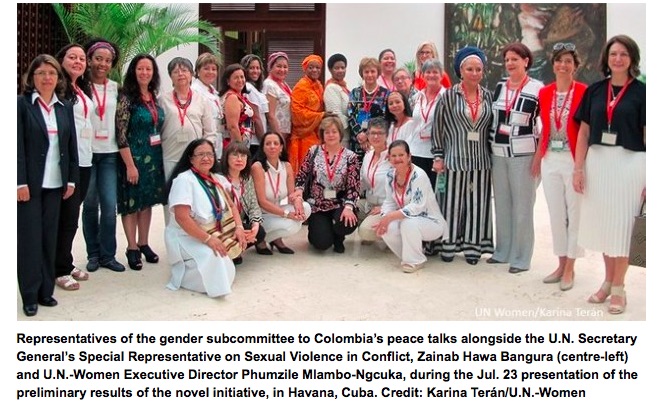
Colombian women, under the banner of “One Million Women for Peace,” are demanding a greater role in the peace process, saying that “Peace in Colombia Is Impossible Without Us”. The newly-formed bloc aims to create a community movement to provide popular backing for the peace process. The movement brings together farmers, artists, journalists, youth and political representatives of indigenous and Afro-Colombian communities.

It is especially important to establish peace at the level of local government. For example, the city of Cali, Colombia, has established a “Plan for Peace and Peaceful Coexistence”. It is a guide prepared by the Peace Advisory Council, in consultation with different social actors such as the High Council for Peace and Human Rights of the Government of Valle, the Archdiocese, universities along with staff of the mayor’s office in Cali and agencies such as the Post-Conflict Advisory Council.

As stated by Raul Castro, who mediated the accords, “The achievement of peace in Colombia represents a hope for millions of people on the planet, whose main concern continues to be human survival in a world shaken by violence and wars. Peace is not a utopia; it is a legitimate right of every human being and of all peoples. It is a fundamental condition for the enjoyment of all human rights, particularly the supreme right to life.”


FREE FLOW OF INFORMATION

acuerdo

Ceasefire between FARC and the government of Colombia is sealed in Cuba

WOMEN’S EQUALITY


Guatemalan Women Healing Toward Justice: Speaking tour

EDUCATION FOR PEACE


Ivory Coast: UNESCO announces the creation of a school for the Culture of Peace in Yamoussoukro

HUMAN RIGHTS


‘March of Silence’ in Uruguay sends message of remembrance to South America

TOLERANCE AND SOLIDARITY


Togo in the struggle against terrorism: The “Pacific Magazine” plays its part

SUSTAINABLE DEVELOPMENT


The film “Demain”, a manifesto?

DISARMAMENT AND SECURITY

UNSC

The Elders welcome Paris conference as step towards two-state solution for Israel-Palestine

DEMOCRATIC PARTICIPATION


The Peace Prize for city initiatives in conflict prevention, resolution or peace building

First Group of UN Peace Process Observers Arrive in Colombia

FREE FLOW OF INFORMATION

An article from Telesur

The first group of United Nations observers arrived in Colombia to help with the monitoring and verification of the recently signed bilateral cease-fire between the government and the Revolutionary Armed Forces of Colombia, a U.N. spokesperson Farhan Haq confirmed Tuesday.

observers
brief video of celebrations

The role of the U.N. observers is critical to the success of the peace process, as they will work to ensure all parties are complying with the terms of the agreement.

“For now, the team on the ground is engaging in preparatory activities, while the Special Representative of the Secretary-General Jean Arnault is actively engaged in the discussions in Havana about cease-fire implementation,” said Haq.

The 23-member team, which is comprised of observers from Argentina, Bolivia, El Salvador, Guatemala, Mexico, Paraguay, and Uruguay, will be joined by a second team in late July when the final agreement is expected to be signed.

The June 23 agreement between the FARC, as the guerrilla army is known, and the government, gave terms for implementing the cease-fire, but not a specific date.

According to Haq, “The United Nations will be able to begin monitoring and verifying activities as soon as a final peace agreement is signed and the bilateral cease-fire comes into effect.”

Twenty civilian staff from the U.N. were already in Colombia to coordinate and establish the basis for the verification process.

The United Nations has been a strong adovocate of the peace process, with Secretary-General Ban Ki-moon having traveled to Havana, Cuba, site of the peace talks, to participate in the ceremony celebrating the signing of the bilateral cease-fire.

Question(s) related to this article:

Ivory Coast: UNESCO announces the creation of a school for the Culture of Peace in Yamoussoukro

… EDUCATION FOR PEACE …

An article by Abidjan.net (translated by CPNN)

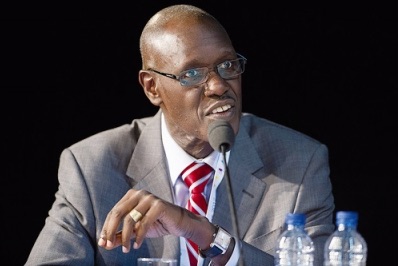
The Deputy Director for Africa of the United Nations Educational, Scientific and Cultural Organization (UNESCO), Edouard Firmin Matoko announced Tuesday the creation of a school for the Culture of Peace in Yamoussoukro , the Ivorian political capital, during a meeting.

Matoko
Edouard Firmin Matoko

Called the “Pan-African center for research and advanced training in the culture of peace”, the school is expected to open in a year at the latest”, or in 2017. Mr. Matoko spoke during a workshop of experts from UNESCO, the African Union (AU) and the State of Côte d’Ivoire.

The school will be housed within the Felix Houphouet Boigny Foundation for Peace Research, he continued hoping that “the procedures will move rapidly.”

“Following validation by the Cabinet in Ivory Coast, the creation of this school must be submitted to the Conference of Heads of State and Government of the African Union in July in Kigali (Rwanda)”, he added.

The educational content, teachers’ profiles and the cost of training have not yet been defined for the Pan-African center for research and advanced training in the culture of peace, but the objective will be ” capacity building of decision-makers in the values ​​of peace and citizenship”, according to the permanent ambassador of Côte d’Ivoire to UNESCO, Denise Houphouet.

(Click here for the original French version)

Question for this article: