Colombia Includes Gender Focus for a Stable, Lasting Peace

. . WOMEN’S EQUALITY . .

An article by Patricia Grogg for Inter Press Service News Agency (IPS)

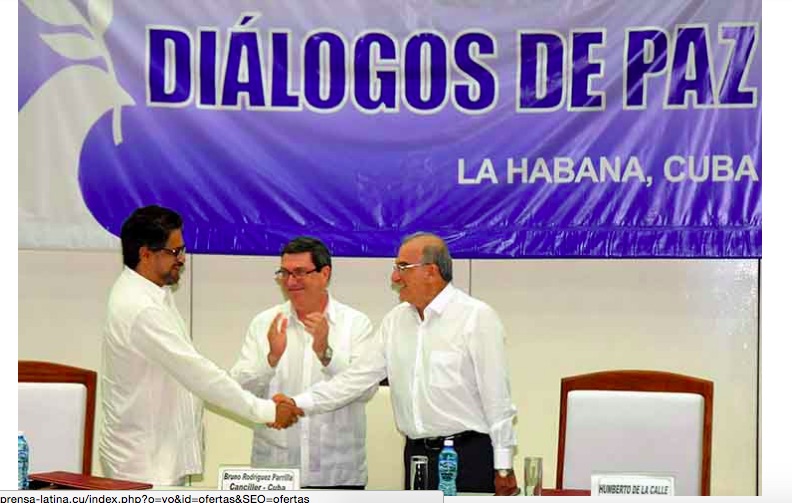
The novel inclusion of a gender perspective in the peace talks that led to a historic ceasefire between the Colombian government and left-wing guerrillas is a landmark and an inspiration for efforts to solve other armed conflicts in the world, according to the director of U.N.-Women in Colombia, Belén Sanz.

gender-1
(Click on photo to enlarge and to read caption)

In statements to IPS, Sanz described as “innovative and pioneering” the incorporation of a gender subcommittee in the negotiations between the administration of President Juan Manuel Santos and the Revolutionary Armed Forces of Colombia (FARC), which began in November 2012 in the Cuban capital and ended in late June with a definitive ceasefire.

She said the large proportion of women who spoke with the negotiating teams, in regional and national forums, and during visits by victims and gender experts to Havana showed the growing openness on both sides to the inclusion of gender proposals in the final accord and the mechanisms for its implementation.

The results of the work by the subcommittee, made up of representatives of both sides, were presented in Havana during a special ceremony on Jul. 23, exactly one month after the ceasefire was signed, putting an end to over a half century of armed conflict.

Taking part in the ceremony were U.N.-Women Executive Director Phumzile Mlambo-Ngcuka; the U.N. Secretary General’s Special Representative on Sexual Violence in Conflict, Zainab Hawa Bangura; and Sanz, whose office has worked closely with the subcommittee.

Other participants were María Paulina Riveros, the Colombian government’s delegate to the subcommittee, and Victoria Sandino, the FARC’s representative, along with the rest of the members of the subcommittee, the delegates to the peace talks, and representatives of the countries that served as guarantors to the peace process.

The results of the subcommittee´s work, presented on that occasion, include the incorporation of a gender perspective and the human rights of women in each section of the agreement, starting with guarantees for land access and tenure for women in rural areas.

Other points agreed on were women’s participation in decision-making to help ensure the implementation of a lasting, stable peace; prevention and protection measures for a life free of violence; guarantees of access to truth and justice and measures against impunity; and recognition of the specific and different ways the conflict affected women, often in a disproportionate manner.

“These are some examples that can be illustrative and inspiring for other peace processes around the world,” Sanz said from Bogotá, after her return to the Colombian capital.

In her view, “these strides forward represent milestones in the promotion of women’s rights and the transformation of gender inequality during the construction of and transition to peace, which could be exported to other places in the world and adapted to their particular conditions and contexts.”

(Article continued in the right column)

Question for this article

Do women have a special role to play in the peace movement?

(Article continued from the left column)

The introduction of a gender focus also includes the search for ensuring conditions for people of different sexual orientations to have equal access to the benefits of living in a country free of armed conflict.

“For women and people with different sexual identities to be able to enjoy a country at peace is not only a basic human rights question: without their participation in the construction of peace and, as a result, without their enjoying the benefits of peace, peace and stability themselves are threatened,” said Sanz.

She cited a study commissioned in 2015 by U.N. Secretary-General Ban Ki-moon, 15 years after the approval of Security Council Resolution 1325, designed to promote the participation of women in peace processes.

The report showed that women’s participation increases by 20 percent the probability that a peace agreement will last at least 20 years, and by 35 percent the chance that it will last 15 years.

“So if women don’t participate in peace-building processes, not only as ‘beneficiaries’ but as drivers of change and political actors, it’s hard to talk about a stable, lasting peace,” said Sanz.

The U.N. study also shows the risks faced by women in the post-peace deal stages.

According to the report, women in areas affected by the conflict have fewer economic opportunities and suffer the emotional and physical scars of the conflict, without support or recognition – besides often facing routine violence in their homes and communities and shouldering the burden of unpaid care for children and the elderly and household tasks.

In a broader sense, “the structures of inequality remain in place and measures are needed to dismantle them, as well as a commitment by society as a whole,” said Sanz, who described a transition process like the one that Colombia is facing as “a key opportunity” to transform women’s status in society.

She said the continued work of the gender subcommittee is “crucial”, as well as that of women’s organisations, with the support of international aid, in order to incorporate provisions in the agreements to enable these situations of inequality to gradually be transformed, with a view to the period following the signing and implementation of the accords.

The inclusion of gender provisions in peace agreements “opens a window of opportunity for the transformation of existing structures of inequality and can also be an opportunity for other peace processes, during the signing of the agreements and the stage of implementation,” said the head of U.N.-Women.

According to estimates, women account for over 40 percent of the members of the FARC, whose exact numbers are not publicly known.

Overall, women represent slightly over half of the general population of 48 million. However, Colombia is one of the countries in Latin America with the lowest levels of female representation in politics.

In 2015, women represented only 14 percent of town councilors, 17 percent of the members of the lower house of Congress, 10 percent of mayors and nine percent of governors. These figures are still far below the parity that would do justice to the proportion of women in society, states a U.N.-Women report.

Madrid Mayor: “Cities can end the democratic apathy”

. . DEMOCRATIC PARTICIPATION . .

An article by Rubén Amón, Mathieu de Taillac, and Alessandro Oppes in El Pais English Reprinted for non-commercial purpose and abbreviated by CPNN

In this joint interview by EL PAÍS, Le Figaro and La Repubblica, Manuela Carmena takes stock of her first year in office and talks about politics, ideology and the larger role of cities in the world. . .

Madrid2

Question. Do you think there is a feminine sensitivity in the way public affairs are run in some places? There are female mayors in Paris, Rome, Barcelona, Madrid…

Answer. Yes. I have insisted repeatedly on the fact that women’s culture is more closely linked to daily, practical affairs. It is the culture of life. Development policies underscore the active role of women, their role in family economics. Poverty programs rely on women. If there had been women at the helm of Spain’s parties after the December 20 election, we would have had an agreement.

Q. What about the debate over big cities that take on state-level issues, from the environment to immigration?

A. Cities are taking on many powers that we have lawfully won. It happened with the refugees. We reached deals with the UNHCR to carry out a refugee welcome plan. We have the ability to set up structures, emergency services. It’s simpler for us than for a big state apparatus. We have taken in people who arrived through irregular channels. They were helped. We have networks that the state lacks. We have to move on from a functional role to one of real power. We are closer to the problems on the ground.

Q. Do you consider it necessary to implement a cooperation network among the great European capitals?

A. There is a link among the cities. There are common concerns. I am thinking about participatory budgets. We did it in Madrid, but they could be organized with other cities for common projects. Lisbon, Paris and Madrid form a historical axis. Cities can end the democratic apathy. And like [UN Secretary General] Ban Ki-moon says, apathy is poison to democracy. European cities can counter this lack of mobilization. We need a framework for the relationship among them. We are capitalizing on a way of living history. We are in a position to master a formal framework that that has surpassed the capacity of nations. Communications have put an end to borders, they have destroyed them. Cities have become the arena with the greatest potential for citizen empowerment.

(Article continued in right column)

(Click here for a Spanish version of this article)

Question related to this article:


How can culture of peace be developed at the municipal level?

(Article continued from left column)

Q. At the same time, a major competition is now underway over the “bounty” represented by Brexit.

A. There is a loyal competition underway. Madrid is very well placed – because of our growth potential, our young people’s talent and our competitive salaries. Also, Madrid is a very safe city, its transportation system is practically unmatched and the climate is extraordinary. We need to make the most of all those qualities.

Q. The Paris attacks led Madrid to organize a Peace Forum, to try to implement together with the French capital a preventive policy of sorts.

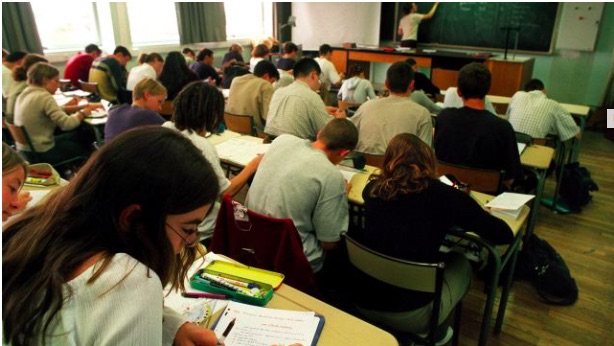
A. Yes, because we are aware that the big cities are also host to negative elements and a breeding ground for violence – from gender violence to young criminal gangs. It all needs to go through a pro-peace education. And it starts at school. We want children to learn the value of dialogue and mediation, and for them to learn to solve their own problems among themselves.

Q. But don’t you get the impression that all the major attacks in London, Paris, Madrid and Brussels have created a terrorist psychosis?

A. No matter how much cities feel psychosis over terrorism, citizens will not give up on life in their city. I did not see such a psychosis in Paris. I don’t see it in Madrid, either, despite our own experience with terrorism. Cities do no give up on the notion of life that easily. And they are less susceptible than it may seem from the outside.

Q. You’ve already said you will not seek re-election. What kind of city would you like to leave behind?

A. I would like to have achieved two things. For people to value the change in attitude, the closeness to the citizens, the clean ethics. And for them to appreciate the improvements to the city: Madrid will have more flowers, it will be greener and cleaner, more balanced and more fair.

(Thanks to the Global Campaign for Peace Education for publicizing this article).

Trees talk to each other and recognize their offspring

. . SUSTAINABLE DEVELOPMENT . .

An article by Derek Markham in Treehugger

The Lorax might have spoken for the trees, but it turns out that trees can speak for themselves. At least to other trees, that is. While it’s not news that a variety of communication happens between non-human elements of the natural world, the idea of mycelia (the main body of fungi, as opposed to the more well-known fruiting bodies – mushrooms) acting as a sort of old-school planetary internet is still a fairly recent one, and may serve as a spore of a new breed of forestry, ecology, land management.

Simard
TED talk by Suzanne Simard

Paul Stamets famously posited that “mycelia are Earth’s natural Internet,” and a variety of research has borne out that concept, but like many things we can’t see an obvious connection between, most of us tend to ignore the micro in favor of the macro. And when it comes to conservation and natural resources, our systems may be falling prey to the lure of reductionist thinking, with a tree being considered merely a commodity in the forest, which can be replaced simply by planting another tree. In fact, many reforestation efforts are considered successful when a large number of trees are replanted in areas where clearcutting has rendered large tracts of land treeless, even if those replanted trees are essentially turning a once diverse forest into a monocropped ‘farm’ of trees.

(Article continued in the right column)

Question for this article

When you cultivate plants, do you cultivate peace?

(Article continued from the left column)

A recent talk at TEDSummit 2016 by forest ecologist Suzanne Simard seems to put the lie to the idea that a forest is merely a collection of trees that can be thought of as fully independent entities, standing alone even while surrounded by other trees and vegetation. As Simard, who has put in about three decades of research work into Canada’s forests, puts it, “A forest is much more than what you see.”

“Now, we know we all favor our own children, and I wondered, could Douglas fir recognize its own kin, like mama grizzly and her cub? So we set about an experiment, and we grew mother trees with kin and stranger’s seedlings. And it turns out they do recognize their kin. Mother trees colonize their kin with bigger mycorrhizal networks. They send them more carbon below ground. They even reduce their own root competition to make elbow room for their kids. When mother trees are injured or dying, they also send messages of wisdom on to the next generation of seedlings. So we’ve used isotope tracing to trace carbon moving from an injured mother tree down her trunk into the mycorrhizal network and into her neighboring seedlings, not only carbon but also defense signals. And these two compounds have increased the resistance of those seedlings to future stresses. So trees talk.” – Simard

I’m a bit of a fungi nerd, and with good reason, as fungi are one of the key elements of life on Earth while being one of the least understood, at least in terms of the sheer volume of varieties and how they interact with the rest of the systems on the planet. I’m currently reading Radical Mycology: A Treatise on Seeing and Working With Fungi, which is an incredible foray into the world of fungi, and was kind of blown away by the fact that of an estimated 15 million species on Earth, some 6 million of them may be fungi, and yet only about 75,000 of them, or 1.5%, have been classified as now. This means that the study of mycology is one of the areas of the life sciences that is still relatively untapped, and because of what we’re now starting to learn about fungal networks and mycelial ‘internets,’ could be a key element in our journey to a more sustainable world.

(Thank you to Janet Hudgins, the CPNN reporter for this article.)

Women-led initiatives promote nonviolence in the US

DISARMAMENT & SECURITY .

An article from the Nobel Womens Initiative

In July we witnessed several horrible incidents of gun violence in the United States. These tragedies draw our attention to the systemic problems of racism and poverty as factors that play a role in determining who experiences the brunt of this violence. Women on the front lines are taking action to heal communities impacted by this violence and prevent future gun deaths. Here are just 5 of the many incredible initiatives women in the United States are leading to reduce gun violence.

women-led
Moms Demand Action
Click on photo to enlarge

1. Mothers Against Senseless Killings (MASK)

Mothers Against Senseless Killings was started by a group of African American mothers in Chicago who wanted to create a community free of gun violence claiming young lives in their community. Taking matters into their own hands, the group started a program called Moms on Patrol. This project emphasizes the power of community members, and mothers in particular, as agents of social change. MASK also started the Abel Project to plant trees in memory of community members who have been killed by gun violence. These events help the communities grieve and encourage a sense of unity and responsibility for each other.

2. Moms Demand Action

In response to the Sandy Hook Elementary School shooting in 2012, Stay-at-home mom Shannon Watts founded Moms Demand Action. Since then, Moms Demand Action has become a a nation-wide grassroots organization that advocates for change at the local, state and national level to end the epidemic of gun violence in the United States. Their campaigns include calling for the prohibition of firearms in public spaces such as grocery stores and cafes; postcard campaigns to elected officials on holidays such as Valentine’s and Mother’s Day; and the Mother’s Dream Quilt Project, which creates quilts symbolizing the human toll of gun violence.

(Article continued in right column)

Question related to this article:

Do you think handguns should be banned?, Why or why not?

(continued from left column)

3. INCITE!

INCITE! is a national activist organization built by feminist women, gender non-conforming and trans people of colour to address violence against their community members. The group organizes direct action, critical dialogue and grassroots activities. Their projects include producing a radio show, organizing rallies on street harassment, training women of colour on self-defence and building and running a clinic, among other things. INCITE! Has also developed a toolkit to address gun violence as it manifests within their community—particularly against women and trans people of colour.

4. The Wear Orange Movement

In response to the shooting and death of 15-year-old Hadiya Pendleton, a group of her friends began wearing orange to remember her life. They chose orange because they said it’s what hunters wear to protect themselves and others from being shot. The Wear Orange Movement sparked by this group of girls in her memory grew and is now nation-wide. National Gun Violence Awareness Day is on June 2nd, and people across the country wear orange, share their stories and protest to demand change.

5. Women Against Gun Violence

Betty Friedan, author of The Feminine Mystique and Los Angeles Police Commissioner Ann Reiss Lane co-coordinated a conference in 1993 that sought to articulate gun violence as a woman’s issues and a public health concern. Out of this conference, Women Against Gun Violence was born. Their projects include a speaker’s bureau of adults and youth who have lost a loved one to gun violence or have survived gun violence themselves, gun violence prevention workshops and gun lock distribution, and developing educational materials for parents and children in elementary schools.

(Thank you to Janet Hudgins, the CPNN reporter for this article.)
A solar-powered plane just flew around the world

. . SUSTAINABLE DEVELOPMENT . .

An article by Kate Yoder for Grist

The scrappy plane we’ve all been rooting for just completed the first solar-powered flight around the world, no fossil fuels burned. On Tuesday, Solar Impulse 2 ended its epic 24,500-mile journey and landed back home in Abu Dhabi.

airplane

The one-seater plane, sporting 17,000 solar cells on its wings, is as wide as a Boeing 747 but light as a feather — well, as light as a car, anyway. Though the 16-month trip was largely a stunt to promote renewable energy, it’s a milestone for aviation as well.

Bertrand Piccard, one of two Swiss pilots who flew the Solar Impulse, predicted that medium-size electric planes will begin carrying passengers within the next decade. We’re a fan of that possibility — and the EPA might be, too. The agency recently announced plans to begin limiting carbon emissions from airplanes since they pose a threat to public health.

One thing we can say now: Renewable energy is gellin’ — as in Magellan.

(Thank you to Janet Hudgins, the CPNN reporter for this article.)
Question for this article

English bulletin August 1, 2016

PEACE EDUCATION AROUND THE WORLD .

History is not always reflected in the headlines of the mass media. Sometimes it is the “slow news” – events that are not considered newsworthy – that accumulate and change the course of history. A good example is slow but steady progress in peace education, which we salute in this month’s bulletin.

The website of the Global Campaign for Peace Education gives us a good overall view of the extent of peace education in the world today. One can begin simply with the list of their national and local endorsing organizations, who come from over 50 countries and all six continents.

This month we feature recent articles reprinted by the Global Campaign for Peace Education from around the world: from Myanmar, Bosnia, United Kingdom, Rwanda, Georgia, United States and the Seychelles.

In Myanmar, the Ministry of Education and UNESCO are jointly implementing the “Education for Peace and Development in Northern Rakhine State” project. Teachers, principals and education officers have been trained in life skills for peace and conflict transformation

In Bosnia, the United World Colleges of Mostar are celebrating their 10th anniversary. UWC Mostar was the first school having students from across the country being taught by the same teachers and in the same classroom, unlike the segregational educational system still prevailing in the rest of the country.

In the U.K., Quakers will host a ground-breaking national conference for teachers to learn how to equip pupils to handle conflict in a constructive way and to develop critical thinking skills. Educationalists from more than 80 schools across Britain will attend Learning Through Peace at Friends House in London.

The Rwanda Peace Education Program is coming to a close after three years of building sustainable peace in communities across the country. The conclusion will be marked by a Peace Week that includes various activities to share the success of the program and encourage all Rwandans to be champions of peace in their own villages and families.

In Georgia, The European Intercultural Forum has just finalised the narrative report of their 1st training course in the frame of the Training Programme “Education for Peace – Developing Competences for Peace Education in the Youth Field”. The project aims to strengthen the competences of youth workers and youth educators and empower young people to become pro-active agents of peaceful change via local community initiatives addressing societal conflicts.

In the U.S., the Ashland (Oregon) Peace Commission works with the city’s schools and their MindUp Curriculum which offers peace education tools that encourage listening and compassion and promote an environment of understanding, as well as with the Medford-based Resolve Center for Dispute Resolution and Restorative Justice.

The University of Seychelles has announced that it is planning to set up an international centre for peace studies and diplomacy with the expert guidance and experience of Seychelles’ founding President Sir James Mancham. The proposed professor of peace studies will provide both academic leadership and proven negotiating skills. The centre will be a hub of information and also a meeting place for practitioners and scholars alike. Conferences will be a feature of the centre’s activities. Under the auspices of the UniSey, it will offer a Master’s Degree in peace studies for local as well as international students, together with opportunities for doctoral and post-doctoral research.

Just to complete our tour of the world, we mention four other recent CPNN articles about progress in peace education in Colombia, Brazil, Japan and Ivory Coast.

The Colombia Minister of Education, Gina Parody, speaking at the meeting of secretaries of education from across the country, invited them to teach a new generation of peace, preparing children and young people to consolidate peace. Among her remarks was the following: “For the first time, the government has allocated a larger budget for education of our children and young people, that the budget for war. We are convinced that it is in the classrooms that the new generation will begin to rewrite the history of Colombia as a country in peace.”

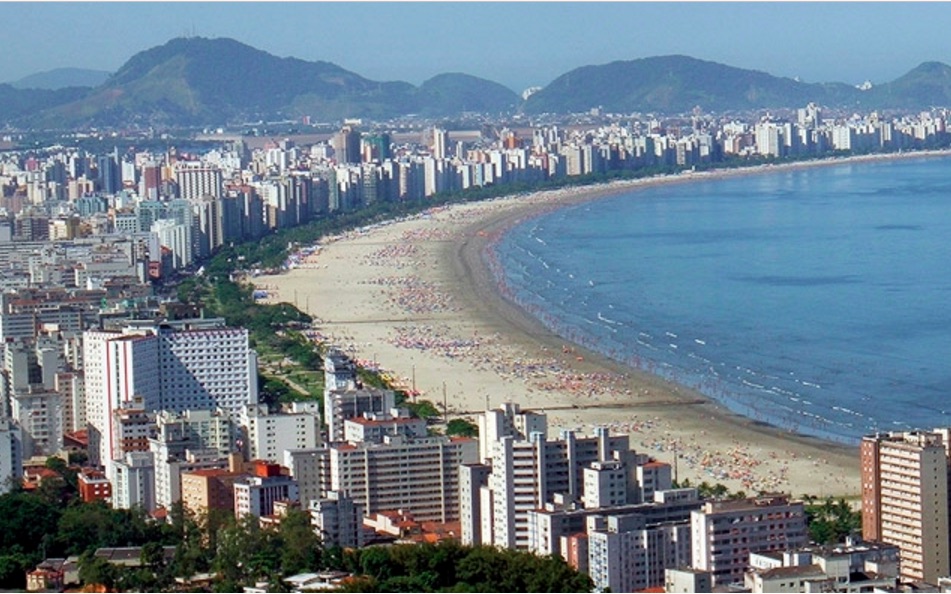
In São Vicente, Brazil, a team of educators is carrying out a program of Training for Peace Education of 60 hours for professionals from all the public education units in partnership with the Secretary of Education.

In Hiroshima, the Mayors for Peace Network organizes in partnership with the Hiroshima Peace and Culture Foundation and the Hiroshima University, a summer program that provides students with a general understanding of the nature and attributes of war and peace by illuminating various aspects of wartime experiences, including the atomic bombing of Hiroshima, and, at the same time, by exploring contemporary issues related to world peace in the era of globalization

In Yamoussoukro, Ivory Coast, the Deputy Director for Africa of UNESCO, Edouard Firmin Matoko announced the creation of a school for the Culture of Peace. Called the “Pan-African center for research and advanced training in the culture of peace”, its objective will be ” capacity building of decision-makers in the values ​​of peace and citizenship”.

Finally, there are two major events coming up where peace educators and others interested in peace are invited to come and advance their international links. The Congress of the International Peace Bureau, the oldest global peace network, founded in 1891/92, will take place at the end of September this year in Berlin, while the 9th international conference of the International Network of Museums for Peace will be held in Belfast in April 2017.

      
EDUCATION FOR PEACE

gcpe
The Global Campaign for Peace Education

WOMEN’S EQUALITY


Tunisia moves closer to achieving gender equality in politics

FREE FLOW OF INFORMATION


Culture of Peace: Artistic Creations by African Youth

HUMAN RIGHTS


Malaysia: Tenaganita Still Fighting for Women Workers’ Rights, 25 Years On

TOLERANCE AND SOLIDARITY


Petition: Another Route to Peace

SUSTAINABLE DEVELOPMENT


Africa: Sustainable development: The future of the land is in green energy

DISARMAMENT AND SECURITY


Florianópolis, Brazil: World Peace Forum: a space to build a better world

DEMOCRATIC PARTICIPATION


Londrina, Brazil: Fifth Municipal Conference on Culture of Peace

Africa: Sustainable development: The future of the land is in green energy

. . SUSTAINABLE DEVELOPMENT . .

An article by Idrissa Sané for Le Soleil Online (translated by CPNN)

The availability of energy is essential for development. For this, the experts who took part in the Global local forum advocate the exploitation of the opportunities offered by renewable energy in Africa.

durable
Abdoulaye Sène, president of the Global local forum

The Global local Forum ended yesterday, July 22 in Dakar, with a range of recommendations. Stakeholders suggested that local authorities should play a more prominent role in the development of energy policy, including energy-saving initiatives. “We need to make energy policy a priority of local decentralized cooperation. Mosques, city halls, county councils must be illuminated with renewable energy, “suggested Abdoulaye Sène, president of the Global local forum.

In addition, there is a return on investment through the training of human resources for maintenance of batteries and storage and transportation of energy equipment. “We need local ecosystems. We need to have trained people capable of doing equipment maintenance,” suggested Mr. Sène. The deputy also emphasized the need for decentralized governance of energy policy. For his part, Seydou Sy Sall, the General Delegate for the promotion of the urban centers of Diamniadio and Lake Rose, proposed a pause in construction and also in the spatial distribution of habitats. He regretted that the construction of houses and buildings has not taken into account the need for climatic zoning.

(Article continued on the right column)

(Click here for the original version of this article in French)

Question for this article:

What is the relation between the environment and peace?

(Article continued from the left column)

In fact, one needs to take into consideration the temperature, humidity and even sunlight. “Climatic zoning has been known, but we do not refer to it. We can not build the same kind of model in Diourbel as in Dakar. These two cities do not record the same temperatures, “argued Mr. Sall.

Earlier, the chief of staff of the Ministry of Local Governance, Development and Planning, Alassane Mbengue, pleaded for the recovery of solid waste production by developing energy sectors as done already in many countries.

The chairman of the Business Council of renewable energy in Senegal (Copères), Abdul Fall, advocated for the mobilization of funding that encourages policies contributing to the preservation of the environment. “The state and the communities should set goals for energy independence. Africa should not be so poor in energy, since it has so much potential in renewable energy, “he said.

The President of the Network of farmers organizations (Ropa), Mamadou Sissoko, called for the establishment of permanent mechanisms for consultation and dialogue at the grass roots level. It is necessary, he insisted, that those who benefit from policies and projects should be involved in the process of their development.

Brazil: Public schools of São Vicente transform education through the culture of peace

… EDUCATION FOR PEACE …

An article by Herbert Lima and Myrian Castello 

A Culture of Peace committee composed of educators Carla Souza, Damiana Albuquerque, Herbert Santo., Ingrid Geraldo, Lourdes Santo., Myrian Castello, Regina Morais, Sandra de Aragão, Tatiana Rodrigues and Wagner Bessa, is carrying out a program of Training for Peace Education of 60 hours for professionals from all the public education units of São Vicente in partnership with the Secretary of Education.

Vicente
(Click on photo to enlarge)

The main objectives of the training are

– Stimulating new ways of living together;

– Improve group relations and climate at schools;

– Plan positive changes after identification of common problems;

– Create communication networks and undertake ACTIONS;

– Enable an affective perspective at the school units and work collectively on awareness and preparation of actions for local development

– Work for a culture for peace in education in order to assess, sustain, co-create solutions and view results.

To achieve these goals the training consists of seven modules in two stages:

Stage 1:
Contact
Consciousness
Transforming Action
Recognition
Connecting Action

Stage 2:
Practice
Presenting Actions

(Article continued in right column)

(Click here for the article in Portuguese)

Questions for this article:

What is the best way to teach peace to children?

Where is peace education taking place?

(Article continued from left column)

The modules were inspired by the following organizations and methodologies:

The Pedagogy of Cooperation and Culture of Peace: A method of teaching and cooperative learning, where each and every person is considered to be a master-apprentices engaged in the discovery of themselves and the world, through the encounter with others, in the face of problem situations challenging them to find cooperative solutions for the success and well-being of everyone.

Pallas Athena: The organization Palas Athena promotes and incubates programs and projects in the areas of Education, Health, Human Rights, Environment and Social Promotion, in order to improve human society through the mutual understanding of cultures and the articulation of knowledge.

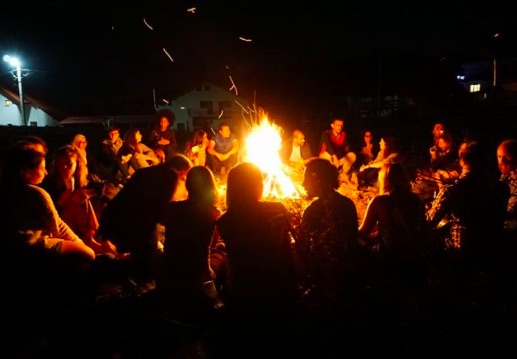
Oasis Game: The Oasis Game is a support tool for citizen mobilization for the realization of collective dreams.

Nonviolent Communication: supports the establishment of partnership and cooperation relations through effective and empathetic communication. It emphasizes the importance of determining actions the basis of common values.

Restorative justice is a paradigm, the opposite of punishment, based on values, which aims to repair the damages caused by an offense committed by one of the parties involved – victim, offender and community – and, where possible, the reconstruction of broken relationships.

Circle Dances: These promote group unity and community spirit, and interculturalism, as everyone joins hands and supports and assists each other.

Psychomotricity: The method of studying a person through his body movements in relation to his/her internal and external world.

During the modules, the training involved 93 teaching units and about 300 education professionals who were able thereby to promote a culture of peace within and outside the school walls.

A number of activities were carried out by managers in partnership with the community around the school.

Research carried out in the modules showed a high level of involvement and satisfaction of participants who requested the continuation and expansion of training.

The activities were carried out from January to June and will be continued.

For more information, contact comissaoculturadepaz@gmail.com

Innovative program for leadership, ethics and culture of peace helps to transform young Brazilians

FREE FLOW OF INFORMATION

by Herbert Lima, 29 years old and one of the program participants.

If our culture promotes so many kinds of violence, how can we transform it into a culture of peace?

youth
(Click on photo to enlarge)

The idea of leadership, such as so many others is changing. We do not live in an era of constant transformation, but the change of an era. We have enough knowledge to build a society that favors an harmonic co-existence with others with ourselves and the ecosystems we are in. In order to promote such changes however, a change in vision and a new action is needed, and that is the goal of the program “Ethics and Culture of Peace – Youth leadership for Citizen Coexistence”, promoted by the organization Palas Athena and organized in 4 workshops and 3 nature imersions, with a total of 30 hours of activities. This program was designed by Palas Athena, which has worked with leaders from government and private companies, local leaderships and educators from all over Brazil for more than 40 years (more information here: )

As participants, 44 young leaders with different backgrounds in social transformation were selected. The selection process was conducted in a way to guarantee the diversity of the group. All of them now are following up their training and have already generated good results.

“It is really a remarkable program for us, I do believe that all knowledge that I receive here today I will be able to share in my daily activities, and certainly I am a better person since I start to know all these amazing people here. I will be able to work even more for the culture of peace and make the world a better place.”

(Click here for the article in Portuguese)

Question for this article:

Young people from all over the world come together at Hiroshima to learn about peace and nuclear disarmament

FREE FLOW OF INFORMATION

An article by Herbert Lima and Myrian Castello 

The Mayors for Peace Network organizes in partnership with the Hiroshima Peace and Culture Foundation and the Hiroshima University, a summer program in Japan called Hiroshima and Peace. The aim is to provide students with a general understanding of the nature and attributes of war and peace by illuminating various aspects of wartime experiences, including the atomic bombing of Hiroshima, and, at the same time, to explore contemporary issues related to world peace in the era of globalization

Hiroshima
Students in the Summer Program, “Hiroshima and Peace” (2015)
(Click on photo to enlarge)

The program is hosted by different experts on the field from around the globe and has the special participations of two survivors of the bomb who give testimonials to the young students. This year, 40 young people from different countries were selected to participate in the program that lasts 10 days and it is included in the official calendar of events in memory of the many killed in the atomic bomb attack during the second world war on the city of Hiroshima in August, 1945.

To know more about the program, visit the Hiroshima City university website: www.hiroshima-cu.ac.jp/Hiroshima-and-Peace/index.htm

To know more abou the Mayors for Peace network, access: www.mayorsforpeace.org/

(Click here for the article in Portuguese)

Question for this article: