No Rio, Cardeal Turkson afirma que paz exige conversão

. TOLERÂNCIA E SOLIDARIEDADE .

Um artigo de Radio Vaticana

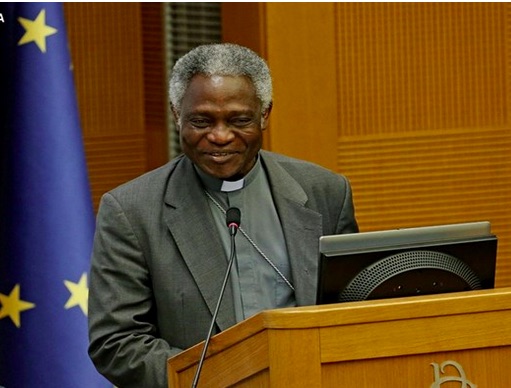
O Cardeal Presidente do Pontifício Conselho Justiça e Paz, Peter Turkson, defendeu na manhã desta terça-feira (1º/9), durante o Simpósio Internacional “Promoção da cultura da paz num mundo em conflito”, em andamento no Rio de Janeiro, cinco elementos essenciais para se construir uma sociedade mais justa e pacífica: discernimento e realidade; visão do todo; confiança e paciência; a cultura da paz e o compromisso com o diálogo.

turkson

Ao afirmar que a “paz tem uma irmã e ela se chama justiça”, o Cardeal Turkson destacou que “os promotores da paz tendem a emergir de situações de sofrimento, não dos ambientes acadêmicos”.

Sinais dos tempos

Contudo, neste contexto, destacou que, para que os oprimidos não se tornem opressores, é preciso recordar que o “compromisso com a justiça e a não-violência está intrinsicamente conectado à conversão”.

Sobre o discernimento para promover as mudanças necessárias para o futuro, o Cardeal afirmou que ler os sinais dos tempos não é algo que acontece automaticamente, é preciso aprender e praticar.

“Sinais genuínos são resultado do passado com todos seus erros e esforços e provêm a base e os desafios para aquilo que devemos fazer para construir o hoje de acordo com uma visão de futuro”, afirmou.

Cultura da Paz

Ao abordar o tema da visão do todo, o cardeal ganês refletiu sobre o egoísmo que impede reconhecer no outro um semelhante. “Indivíduos que se refutam a mudar contribuem para sociedades injustas e conflituosas”, disse, e acrescentou: “Uma cultura da paz é desenvolvida por aqueles que praticam a paz em sua vida diária. Não pode existir justiça entre os homens se não há justiça para com Deus”.

O Cardeal afirmou ainda que é preciso confiança e paciência para construir a cultura da paz uma vez que esta somente acontece quando todos trabalham unidos. “Por isso, a unidade – uma diversificada e altruísta unidade – pacientemente prevalece sobre o conflito”. A chave para unir na diversidade, concluiu o Cardeal Turkson, é um forte compromisso com o diálogo.

(Clique aqui para o versão deste artigo em Inglês)

Question for article

The Elders urge world leaders to take bold and decisive action on climate in 2015

. . SUSTAINABLE DEVELOPMENT . .

A press release from The Elders

Ahead of the UN Sustainable Development Goals summit, The Elders call on world leaders to agree on a common approach that yields a “radical and sustainable” plan to tackle climate change.

elders

In a letter to heads of state and government attending the launch of the new UN Sustainable Development Goals in New York on 26 September, The Elders told leaders:

“2015 is the year in which the community of nations will conclude two of the most important international processes of our times […] You have a decisive role to play in charting the course of history.”

The Sustainable Development Goals are the successors to the UN’s Millennium Development Goals which ran from 2000 to 2015. The COP 21 summit in Paris in December is seen by scientists as the last opportunity to commit to meaningful action to prevent a future climate catastrophe.

The Elders warned:

“If action is not taken immediately to stop and reverse current climate trends, we shall face a world with average global temperatures several degrees higher than when we were children.”
Specifically, they urged leaders attending the launch of the SDGs to:

– Inject a new sense of urgency into the Paris negotiations to secure an international binding agreement that would limit the increase in average global temperature to less than two degrees Celsius;

Establish a goal for all nations to reach carbon neutrality by 2050 and agree a timetable to phase out fossil fuel subsidies, with early action on coal;

– Commit to mechanisms within the Paris agreement that can assess progress and ratchet up the commitment of all signatories on climate mitigation and adaptation efforts every five years;

– Approve a financial package that increases investment in clean energy and supports climate adaptation by poor countries.

Even at this late stage, The Elders believe that transformative leadership can yield radical and sustainable results, telling heads of state and government:

“You can prove to be an historic generation of leaders who will have a profound and positive impact that echoes throughout the century […] the courage and conviction you show will be remembered for decades to come.”

(Thank you to Janet Hudgins, the CPNN reporter for this article.)

Question for this article:

USA: Campaign Nonviolence Week of Action II, September 20-27, 2015

EDUCATION FOR PEACE .

An article by Pace e Bene

Build a culture of peace, mainstream nonviolence, take action September 20-27, 2015!

Campaign Nonviolence is a new, long-term movement to mainstream nonviolence and to foster a culture of peace free from war, poverty, climate crisis, and the epidemic of violence.

campaign

Campaign Nonviolence invites us to:

– Practice nonviolence toward ourselves, toward all others, and toward a world longing for peace, economic justice, environmental healing, and effective nonviolent solutions

– Explore, study, and unleash the principles and methods of nonviolence in our lives, our communities, and our societies

– Connect the dots and join forces in the long-term struggle to abolish war, end poverty, reverse the climate crisis, and take a stand against all violence, including the structural violence of racism, sexism, homophobia, economic inequality, and all forms of oppression, and

– Discover and deepen the power of nonviolence, including the vision and tools for nonviolent change that Mohandas Gandhi, Dr. Martin Luther King, Jr., and many other people and movements have activated for social and personal transformation.

Campaign Nonviolence launched this long-term movement September 21-27, 2014 with 239 actions and events in every part of the nation.

CNV marches, rallies, vigils, prayer services, fasts and festivals took place over seven days in September from American Samoa to Maine, from Washington State to Florida, and from California to New Hampshire. Events also took place in Afghanistan, Colombia, and Canada. See this update for stories and pictures from this week of nonviolence.

To develop this week of actions, Campaign Nonviolence organized in every state in the country, led skill-building trainings across the nation, completed a national speaking tour, established nonviolence study groups nationwide, and was endorsed by over 185 national and local organizations.

Now, we are taking the next step. We encourage people everywhere to study nonviolence, practice nonviolence, build out the infrastructure of nonviolence, and take nonviolence public — including taking action again this year during Campaign Nonviolence Week of Action II, September 20-27, 2015.

See more about what’s next below!

Questions for this article:

Afghan Girl, Sakina, Buries Toy Gun and Says…

DISARMAMENT & SECURITY .

An article by Dr. Hakim, Voices for Creative Nonviolence

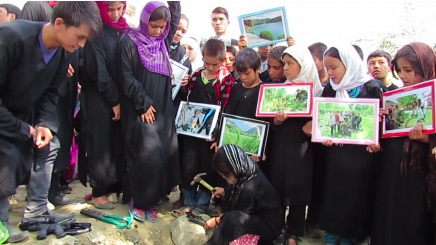
Ten-year-old Sakina, an Afghan street kid, had this to say, “I don’t like to be in a world of war. I like to be in a world of peace.” On 27th August 2015, Sakina and Inam, with fellow Afghan street kids and the Afghan Peace Volunteers, held a mock funeral for weapons and celebrated the establishment of a green space in Kabul.
afghan
Sakina breaks a toy gun

Dressed in long black coats, they broke and buried toy guns in a small spot where, over the past two years, they have been planting trees.

Sakina breaks a toy gun before burying it. Inam and other street kids await their turn.

Inam, a bright-eyed ten year old, caught the group’s energetic desire to build a world without war. “I kept toy guns till about three years ago,” he acknowledged with a smile.

On the same day, Nobel Laureate Oscar Arias Sanchez, ex-President of Costa Rica, was in Mexico for the Arms Trade Treaty’s First Conference of States Parties.

In his statement at the Conference, he told the story of an indigenous Guatemalan woman who thanked him for negotiating a peace accord 28 years ago. The mother had said, “Thank you, Mr. President, for my child who is in the mountains fighting, and for the child I carry in my womb.”

No mother, Guatemalan or Afghan, wants her children to be killed in war.

Oscar Arias Sanchez wrote: “I never met them, but those children of conflict are never far from my thoughts. They were [the peace treaty’s] true authors, its reason for being.”

I’m confident that the children of Afghanistan were also in his thoughts, especially since he had a brief personal connection with the Afghan Peace Volunteers in 2014, having been part of a Peace Jam video message of solidarity to the Volunteers, wearing their Borderfree Blue Scarves which symbolize that “all human beings live under the same blue sky”.

I thank Mr Oscar Arias Sanchez for his important work on the Arms Trade Treaty, though I sense that an arms trade treaty isn’t going to be enough.

Afghan children are dying from the use of weapons.

To survive, they need a ban against weapons. Regulations about buying and selling weapons perpetuate a trade that is killing them.

I saw Inam and other child laborers who work in Kabul’s streets decisively swing hammers down on the plastic toy guns, breaking off triggers, scattering nozzles into useless pieces and symbolically breaking our adult addiction to weapons.

(Article continued on the right column)

Question for this article:

“Put down the gun and take up the pen”, What are some other examples?

Is peace possible in Afghanistan?

(Article continued from the left column)

Children shouldn’t have to pay the price for our usual business, especially business from the U.S., the largest arms seller in the world. U.S. children suffer too, with more U.S. people having died as a result of gun violence since 1968 than have died in all U.S. wars combined. U.S. weapon sellers are killing their own people; by exporting their state-of-the-art weapons, they facilitate the killing of many others around the world.

After burying the toy guns, surrounded by the evergreen and poplar trees which they had planted, the youth shed their black coats and donned sky-blue scarves.

Another world was appearing as Sakina and Inam watched young friends plant one more evergreen sapling.

Inam knew that it hasn’t been easy to create this green space in heavily fortified Kabul.

The City Municipality said they couldn’t water the trees (though it is just 200 metres away from their office). The Greenery Department weren’t helpful. Finally, the security guards of the Afghan Independent Human Rights Commission just across from the garden, offered to help, after the Volunteers had provided them with a 100-metre water hose.

Rohullah, who coordinates the environment team at the Borderfree Nonviolence Community Centre, expressed his frustration. “Once, we had to hire a private water delivery service to water the tree saplings so they wouldn’t shrivel up. None of the government departments could assist.”

Sighing, he added ironically, “We can’t use the Kabul River tributary running just next to the Garden, as the trash-laden trickle of black, bracken water is smelly and filthy.”

Meanwhile, in the rest of the country, according to figures from the National Priorities Project, a non-profit, non-partisan U.S. federal budget research group, the ongoing Afghan War is costing American taxpayers US $4 million an hour.

It is the youth and children who are making sense today, like when Nobel Laureate Malalai Yousafzai said recently that if the whole world stopped spending money on the military for just 8 days, we could provide 12 years of free, quality education for every child on the planet.

“I don’t like to work in the streets, but my family needs bread. Usually, I feel sad,” Inam said, looking away, “because I feel a sort of helplessness.”

Oscar Arias Sanchez said at the Arms Trade Treaty’s First Conference, “And we must speak, today – in favour of this crucial treaty, and its swift and effective implementation. If we do, then when today’s children of conflict look to us for guidance and leadership, we will no longer look away in shame. We will be able to tell them, at long last, that we are standing watch for them. We are on guard. Someone is finally ready to take action.”
That morning, I heard the voices of Sakina, Inam and the Afghan youth ring through the street, “#Enough of war!”

It wasn’t a protest. It was the hands-on building of a green spot without weapons, and an encouraging call for others to do so everywhere.

Through their dramatic colours and clear action, they were inviting all of us, “Bury your weapons. Build your gardens.”

“We will stand watch for you!”

(Thank you to Janet Hudgins, the CPNN reporter for this article.)
Germany: PRO ASYL presents human rights award to U.S. AWOL soldier

… HUMAN RIGHTS …

An article by Connection e.V. – International Support of Conscientious Objectors and Deserters

On September 12, 2015, in Frankfurt/Main the foundation, PRO ASYL will present its this year’s human rights award to the U.S. AWOL soldier and asylum candidate in Germany, André Shepherd. The international conscientious objector network, Connection e.V., salutes this decision.

asylum
André Shepherd

“A tremendous amount of courage is required to oppose the Iraq War as André Shepherd did”, declared Rudi Friedrich today for Connection e.V. “Until today, André Shepherd has still unsuccessfully tendered hopes of receiving a positive ruling concerning his asylum case. With his refusal to participate in crimes against humanity, he clearly not only questions the legality of the Iraq War, but also shows that this legally legitimate decision against participation in war should be supported through a granting of asylum.”

In the invitation for the presentation of this award PRO ASYL declared: “With his application for asylum, André Shepherd assumes in this case the burden of establishing a legal precedence. Through his persistent resistance, he has risked his right to a normal existence in the United States. Almost eight years after his decision to seek asylum, André Shepherd continues to argue his case in court, knowing that his example is also that of the many servicemen resisting illegal wars. His efforts have made him a paragon of resolution and humanity. The foundation PRO ASYL gratefully presents him the 2015 PRO ASYL-Hand Award.

The award will be presented on Saturday, September 12, 2015, at 2 PM in the “Haus am Dom”, Domplatz 3, 60311 Frankfurt. Further information is available here.

(Thank you to Janet Hudgins, the CPNN reporter for this article.)

Question(s) related to this article:

Freedom of Expression and Assembly in Vietnam and Cambodia

… HUMAN RIGHTS …

An article from Amnesty International Canada

On September 2, 17,000 prisoners are expected to be released in an act of mass amnesty marking Vietnam’s National Day. This is the largest expected prisoner release in Vietnam’s history.

amnesty
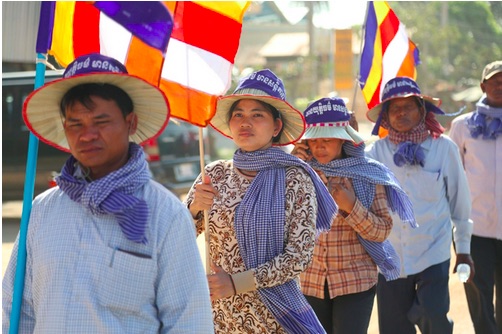
Housing rights march, Cambodia, December 2013

We are working to ensure that the governments of Vietnam and Cambodia adhere to international human rights laws and standards related to freedom of expression and assembly. We will not only take action ourselves towards government officials but we will support those parts of civil society in each country which are aware of their rights under international law and are attempting to enforce them. In particular there is an increased willingness on the part of many Cambodians to stand up for their rights. Information about the lack of access to freedom of expression and assembly – and its place in international human rights law – will be shared with local activists.

Vietnam has at least 75 prisoners of conscience and 100’s of political prisoners, in addition to many national human rights defenders and activists whose activity is criminalized rather than seen as acceptable under international standards. Also Cambodia harasses, intimidates and imprisons those who attempt to exercise their right to expression and assembly – and offers impunity to those who perpetrate human rights abuses against them.

We will work through online awareness campaigns and individual actions on behalf of prisoners of conscience and those in need of urgent action.
In 2014 we managed to initiate a mission to Vietnam – the first in decades. In both countries there were welcome releases of small numbers of individuals for whom Amnesty had campaigned. 2015 will see us continue our research leading to action on behalf of individual prisoners of conscience and human rights defenders. A report on the right to freedom of peaceful assembly in Cambodia is planned.

(Thank you to Janet Hudgins, the CPNN reporter for this article.)
Question(s) related to this article:

In Japan, Tens of Thousands Anti-War Protesters Reject Return to Militarism

DISARMAMENT & SECURITY .

An article by Jon Queally, Common Dreams (reprinted according to guidelines of Creative Commons)

Tens of thousands of people gathered outside the Japanese parliament building on Sunday to reject plans put forth by Prime Minister Shinzo Abe that would see an aggressive expansion of the nation’s armed forces despite a long-standing constitutional mandate for a “defense only” military posture.

japan
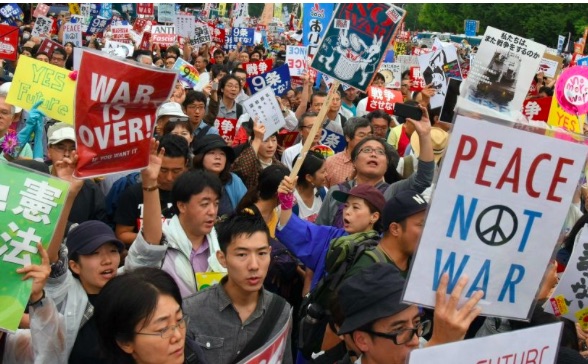
Protesters hold up banners reading ‘No To War,’ during a rally to protest against Prime Minister Shinzo Abe’s drive to enact two controversial security bills on Sunday in Ogimachi Park in Osaka’s Kita Ward. (Photo: KYODO)

The enormous crowd—estimated by organizers as more than 120,000 people—is opposing a set of bills moving through the country’s legislature which would allow the country’s military to engage in overseas fighting and ratchet up spending on new weapons systems. Despite loud public protest against the plan, Abe has continued to defend the plan. Demonstrators carried banners reading “Peace Not War” and “Abe, Quit!”

“Sitting in front of TV and just complaining wouldn’t do,” Naoko Hiramatsu, a 44-year-old associate professor in French and one of the Tokyo protesters, told Reuters. Holding his four-year-old son in her arms, she continued, “If I don’t take action and try to put a stop on this, I will not be able to explain myself to my child in the future.”

As the Asahi Shimbum reports:
In one of the largest postwar demonstrations in Japan, tens of thousands of protesters swarmed in front of the Diet building in Tokyo on Aug. 30 to oppose the Abe administration’s contentious security legislation.

Following a wave of weekly protests near the Diet building in recent months, rally organizers had worked to mobilize 100,000 participants from across the nation.

Amid the gloomy and rainy weather, protesters held up placards and banners and chanted slogans against the legislation, which is being pushed through the Diet.
A huge banner hanging from dozens of balloons read: “Abe, Quit!”

Opponents blasted the security bills on concerns that they would drag Japan into unwanted conflicts overseas.

Organized by a union of three different anti-war citizens’ groups, the Japan Times reports Sunday’s rally was arguably the most massive in a string of similar protests in recent months.

Question for this article:

Should Japan be allowed to militarize?

Bulletin français 1 septembre 2015

COLOMBIE SE PRÉPARE A LA PAIX

Le gouvernement de Colombie et les FARC entrent dans leur 40e cycle de pourparlers de la paix. Après un demi-siècle de guerre civile qui a déchiré son pays, le peuple de Colombie est optimiste quant à la fin de la guerre et se prépare pour la paix.

Les pourparlers ont repris le 20 août à Cuba avec “un renouveau de confiance dans le processus de paix crée par la volonté des deux parties prenants d’accélérer le rythme de leurs négociations à La Havane et la désescalade de la violence en Colombie”. L’une des décisions prises lors des conversations récentes était la promesse de créer une commission de vérité. Une étude récente réalisée par les Nations Unies montre que, tandis que les pourparlers de paix progressaient, le niveau de la violence diminuait.

Selon les explications de Amada Benavides dans sa lettre de Colombie à CPNN: «Le processus de négociation vers un accord de paix avec les FARC a provoqué des avancées dans de nombreux domaines, y compris l’éducation pour la paix. Pour la première fois en Colombie, celle-ci est explicitement mentionnée, et dans ce sens nous avons plusieurs nouvelles initiatives … dont la Réunion nationale sur éducation pour la paix, qui se tiendra les 1er et 2 Octobre.” Amada Benavides ajoute: «Étant donné que nous avons travaillé plus de 15 ans pour souligner la nécessité de l’éducation pour la paix en Colombie, nous vivons vraiment un moment excitant.”

L’éducation pour la paix est en train de devenir une matière obligatoire dans les écoles en Colombie. Selon la loi 1732, adoptée en 2014, le gouvernement national a décrété que “l’éducation pour la paix doit être presente dans tous les établissements d’enseignement dans le pays”. La culture de la paix et le développement durable doivent être appliqués dans le programme scolaire avant le 31 Décembre 2015. Ils doivent apparaitre dans les domaines suivants: les sciences sociales, l’histoire, la géographie, la politique et la constitution de la démocratie, les sciences de la vie, l’éducation à l’environnement, l’éthique, les valeurs et les principes humains.

Il y a également des nombreuses initiatives locales et régionales dans le cadre des négociations de paix entre le gouvernement et les FARC:

Les actions de la Communauté de paix de San José de Apartadó dans les dernières années ont crée un précédent important. Existant officiellement depuis 1996, elle a su résister à la guerre civile grâce à un large éventail de tactiques non-violentes: déclarations publiques, création d’institutions éducatives et de marchés alternatifs. Cette diversité tactique impressionnante a gagné un considérable soutien international et, à ce jour, contribue à maintenir la liberté de la Communauté.

En Cundinamarca, une réunion régionale a été consacrée au renforcement de la politique nationale de la coexistence, de la sécurité et de la réconciliation. Jérôme Gordillo, secrétaire du gouvernement de Cundinamarca, a déclaré qu’il est de la responsabilité des maires et des médiateurs de gérer efficacement le processus de paix.

Dans la ville de San Agustin, la Faculté de l’éducation de l’Université Surcolombiana a célébré la première Biennale internationale de l’éducation et de la culture de la paix du 13 au 15 Août.

Dans la ville de San Agustin, la Faculté de l’éducation de l’Université Surcolombiana a célébré la première Biennale internationale de l’éducation et de la culture de la paix du 13 au 15 Août.

A Carthagèna, a été convoqué la première réunion pour construire une Assemblée régionale des Caraïbes pour la paix . Cette réunion a été soutenue par le syndicat des travailleurs USO et par la société Ecopetrol. Des délégués de Atlantico, Bolivar, Sucre, Córdoba, Cesar et Guajira y ont assistés.

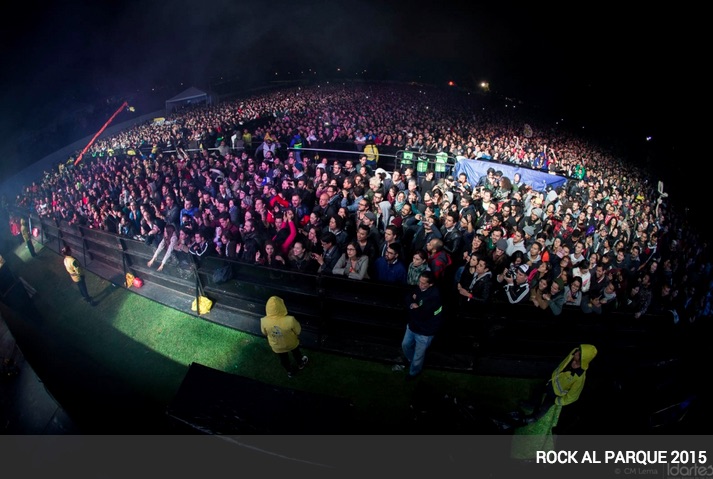
A Bogotá, plus de 350.000 personnes ont participés au Festival “Rock dans le Parc” qui a été consacrée cette année à la culture de la paix.

À l’échelle nationale, la Deuxième Assemblée nationale pour la paix se tiendra en Novembre prochain. Quatre groupes de discussion et 10 assemblées régionales vont avoir lieu dans Antioquia, Barrancabermeja, Cartagena, Choco, Villavicencio, Neiva, Puerto Asis, Tibu, Arauca et Popayan. Ils porteront sur trois thèmes: 1) la politique de l’exploitation minière et de l’énergie; 2) le développement et la paix régionale et 3), la culture de la paix et le suivi des accords de paix.

Dans de nombreuses régions éloignées en Colombie, la radio est le seul media auquel les gens ont accès. Pour cette raison, le Bureau du Haut Commissaire pour la Paix cette année a commencé à former les journalistes et les animateurs travaillant dans des centaines de petites stations radio à travers le pays. Il s’agit de radio communautaire dont le but est d’animer les programmes qui mettront les citoyens et les citoyennes en contact avec le processus de paix.

En bref, le peuple de Colombie se prépare pour la paix à tous les niveaux. Il nous donne ainsi des leçons pour l’éventuelle transition de la culture de guerre mondiale à une culture de la paix.

      
LIBERTÉ DE L’INFORMATION

benavides

Letter from Colombia

ÉQUALITÉ HOMMES/FEMMES


To Hell and Back: How Rwanda’s Women Helped It Become a World Leader

DISARMAMENT ET SECURITÉ


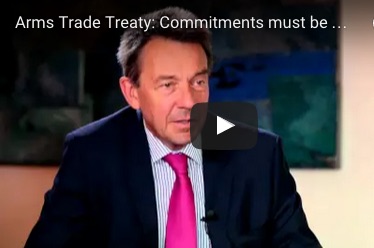
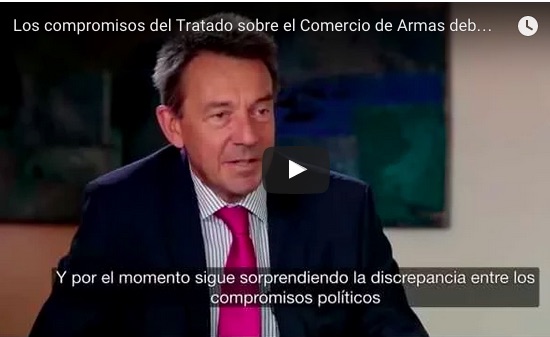
CICR: Nous devons stopper le commerce et les transferts irresponsables d’armes

DROITS DE L’HOMME


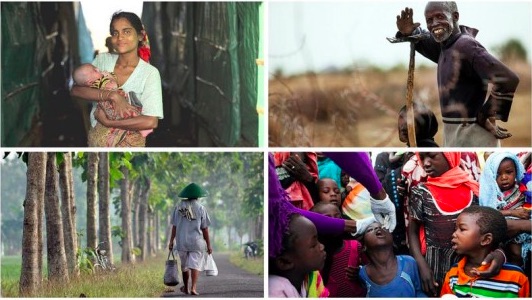
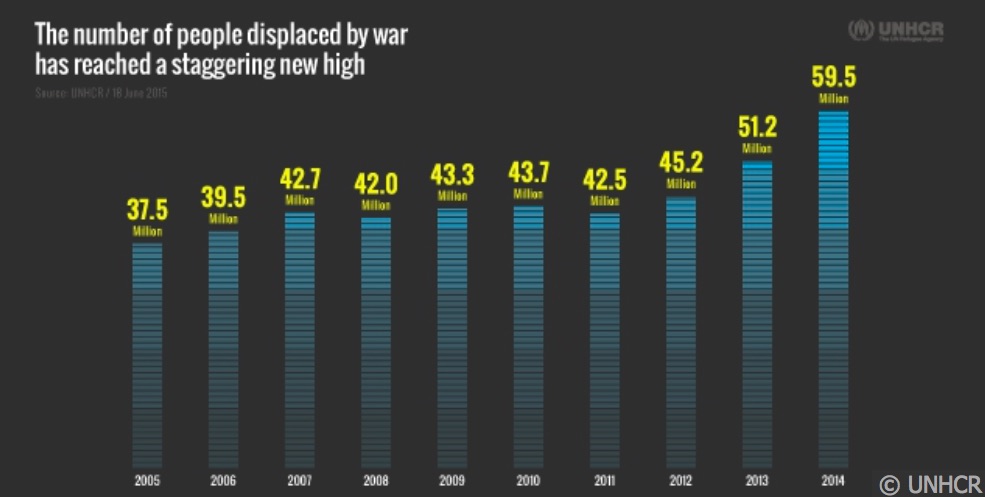
L’ONU: Des déplacements de populations plus importants que jamais

DÉVELOPPEMENT DURABLE


Les Etats membres de l’ONU s’accordent sur le nouveau programme de développement

PARTICIPATION DÉMOCRATIQUE


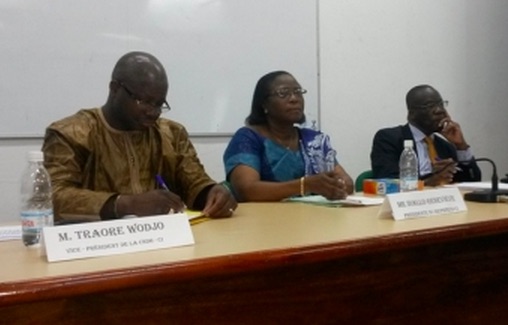
Côte d’Ivoire: Le REPSFECO-CI invite les acteurs à un processus électoral apaisé

TOLERANCE ET SOLIDARITÉ


Bulgarie: Soins pour les victimes de violence et soutien psychologique pour les enfants et les adolescents en difficulté

ÉDUCATION POUR LA PAIX


Colombia: Rock in the Park 2015 – Music for the 21st Century

Boletín español el 1 de setiembre 2015

COLOMBIA SE PREPARA PARA PAZ

A medida que el gobierno de Colombia y las FARC entran el ciclo 40 de las conversaciones por la paz para, el pueblo de Colombia están optimistas de que está llegando en fin del conflicto armado de más de medio siglo .que ha desgarrado su país, y se están preparando para la paz.

Las conversaciones de paz  comenzaron de nuevo en el 20 de agosto en La Habana con “una renovación de la confianza en el proceso de paz, generada por la voluntad de las partes para acelerar el ritmo en La Habana y de de-escalada de la violencia en Colombia”. Entre sus decisiones en las conversaciones recientes está la promesa de crear una comisión de la verdad. Según un reciente estudio realizado por la Naciones Unidas, a medida que las conversaciones de paz han avanzado, el nivel de violencia ha disminuido.

Como Amada Benavides explica en su carta a CPNN de Colombia, “El proceso de negociación de un acuerdo de paz con las FARC ha avanzado muchos temas, entre ellos la educación para la paz. Por primera vez en Colombia se está explícitamente mencionado, y no por otros nombres, y en este sentido tenemos varias iniciativas nuevas… [incluyendo el] Reunión Nacional sobre la Educación para la Paz , que se celebrará el 1 y 2 de octubre “. Y añade: “Dado que hemos estado trabajando más de 15 años para presentar la necesidad de la educación para la paz en Colombia, esto es realmente un momento muy emocionante.”

Educación para la paz está convirtiendo en una asignatura obligatoria en las escuelas de Colombia. Según la ley 1732, adoptada en 2014, el gobierno nacional ha decretado que “la enseñanza de la Paz está regulada en todas las instituciones educativas del país”. Cultura de paz y el desarrollo sostenible se llevarán a cabo en el programa académico antes de diciembre 31 de 2015, en las áreas de ciencias sociales, la historia, la geografía, la política y la constitución de la democracia, ciencias de la vida, la educación ambiental, la ética, los valores y principios humanos.

Hay muchas iniciativas de paz locales y regionales en el contexto de las negociaciones entre el gobierno y las FARC:

Un precedente importante en los últimos años se ha establecido por la Comunidad de Paz de San José de Apartadó, establecido formalmente en 1996, que ha resistido a la participación en la guerra civil a través de una amplia gama de tácticas no violentas comprendida entre declaraciones públicas y la creación de instituciones y mercados educativos alternativos. Esta impresionante diversidad táctica ha ganado considerable apoyo internacional y, a este día, ayuda a mantener la libertad de la Comunidad.

En Cundinamarca una reunión regional se dedicó a fortalecer la política nacional de la convivencia y la seguridad en el tema de la reconciliación.  Jerónimo Gordillo, secretario de Gobierno de Cundinamarca, dijo que es responsabilidad de los alcaldes y defensores del pueblo manejar de manera eficiente el proceso de paz.

En la ciudad de San Agustín, la Facultad de Educación de la Universidad Surcolombiana celebró la  primera Bienal Internacional de la educación y cultura de la paz del 13 al 15 agosto.

En Cartagena, fue convocada la primera reunión regional para construir un Asamblea Regional para Paz del Caribe. La reunión fue apoyada por el sindicato laboral de los trabajadores -USO- y la empresa Ecopetrol.  Asistieron delegados de Atlántico, Bolívar, Sucre, Córdoba, Cesar y Guajira.

En Bogotá, más de 350.000 personas asistieron al Festival Rock al Parque que fue dedicado este año a la cultura de la paz.

A nivel nacional, la Segunda Asamblea Nacional por la Paz se llevará a cabo en noviembre. Se incluirá cuatro conversaciones y 10 asambleas regionales que tendrán lugar en Antioquia, Barrancabermeja, Cartagena, Choco, Villavicencio, Neiva, Puerto Asís, Tibú, Arauca y Popayán. Se centrarán en tres temas: 1) la política de la minería y la energía; 2) el desarrollo regional y la consolidación de la paz; y 3) la cultura de la paz y el seguimiento de los acuerdos de paz.

En muchas regiones remotas de Colombia, la radio es el único medio de comunicación al que las personas tienen  acceso. Por esta razón, la Oficina del Alto Comisionado para la Paz de este año comenzó a capacitar a periodistas y locutores que trabajan en cientos de pequeñas estaciones de radio comunitarias en todo el país para administrar los programas que traen los ciudadanos en contacto con el proceso de paz.

En suma, el pueblo de Colombia se está preparando para la paz en todos los niveles, que nos proporciona lecciones para la eventual transición de la cultura de guerra mundial a una cultura de paz.


LIBERTAD DE INFORMACIÓN

benavides

Carta de Colombia

IGUALDAD HOMBRES/MUJERES


To Hell and Back: How Rwanda’s Women Helped It Become a World Leader

DESARME Y SEGURIDAD


CICR: Comercio de Armas: debemos poner fin a la transferencia ilegal de armas

DERECHOS HUMANOS


UN: Worldwide displacement hits all-time high as war and persecution increase

DESAROLLO SUSTENTABLE


ONU: Líderes mundiales logran consenso sobre la nueva Agenda para el Desarrollo Sostenible

PARTICIPACIÓN DEMOCRATICA


Côte d’Ivoire: REPSFECO-CI promotes a peaceful electoral process

TOLERANCIA Y SOLIDARIDAD


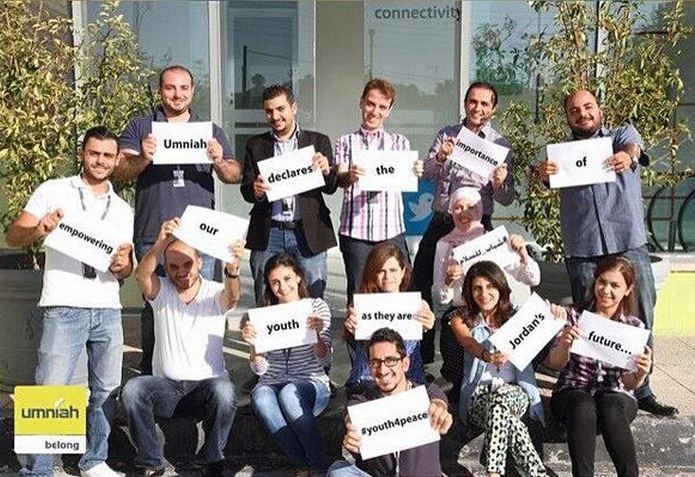
A gathering of young peace-builders towards a strengthened policy framework on Youth, Peace and Security

EDUCACIÓN PARA PAZ


Colombie: Rock al Parque 2015 – Una Tendencia del Siglo XXI

English bulletin September 1 2015

. COLOMBIA PREPARES FOR PEACE .

As the government of Colombia and the FARC enter their 40th cycle of peace talks, the people of Colombia are optimistic that an end is in sight to the half century of civil war that has torn their country apart and they are preparing for peace.

The peace talks reconvened August 20 in Havana with “a renewal of confidence in the peace process, spawned by the parties’  expressed willingness to accelerate the pace in Havana and to de-escalate the violence in Colombia.” Among their decisions in recent talks was the promise to create a truth commission. As the peace talks have advanced, the amount of violence has decreased according to a recent study by the United Nations.

As Amada Benevides explains in her letter to CPNN from Colombia, “The process of negotiating a peace agreement with the FARC has advanced many topics, including education for peace. For the first time in Colombia it is being mentioned explicitly, and not by other names, and in this sense we have several new initiatives . . . [including a] National Meeting on Education for Peace, to be held on 1 and 2 October.” She adds, “Since we have been working more than 15 years to put forward the necessity of peace education in Colombia, this is really a very exciting time.”

Peace education is becoming a required subject in the schools of Colombia. According to law 1732, adopted in 2014, the national government has decreed that “the teaching of Peace is regulated in all educational institutions of the country”. Culture of peace and sustainable development are to be implemented in the academic syllabus before December 31, 2015, in the areas of social sciences, history, geography, politics and democracy constitution, life sciences, environmental education, ethics, human values and principles.

There are many local and regional peace initiatives in the context of the talks between the government and FARC:

An important precedent over the years has been set by the Peace Community of San José de Apartadó, formally established in 1996, which has been able to resist involvement in the civil war by means of a vast array of nonviolent tactics ranging from public declarations to establishing alternative educational institutions and markets. This impressive tactical diversity has gained considerable international support and, to this day, helps sustain the Community’s resilience. 

In Cundinamarca a regional meeting was devoted to strengthening the national policy of coexistence and security in the issue of reconciliation. Jerome Gordillo, secretary of Government of Cundinamarca, said that is the responsibility of mayors and ombudsmen to efficiently handle the peace process.

In the city of San Agustin, the Faculty of Education of Surcolombiana University held the first International Biennial of education and culture of peace from 13 to August 15.

In Cartagena, the first regional meeting was held to construct a Caribbean Regional Peace Assembly. The meeting was supported by the workers’ labor union -USO- and the company Ecopetrol. It was attended by delegates from Atlantico, Bolivar, Sucre, Córdoba, Cesar and Guajira.

In Bogota, more than 350,000 people attended the Rock in the Park Festival which was dedicated this year to the culture of peace.

At a national level, the Second National Assembly for Peace will take place in November. It will will include four conversations and 10 regional assemblies which will take place in Antioquia, Barrancabermeja, Cartagena, Choco, Villavicencio, Neiva, Puerto Asis, Tibu, Arauca and Popayan. They will focus on three themes: 1) mining and energy policy; 2) regional development and peacebuilding and 3), culture of peace and followup to the peace accords.

In many remote regions in Colombia, radio is the only medium to which people have access. For this reason, the Office of the High Commissioner for Peace this year began training journalists and announcers working at hundreds of small community radio stations across the country to manage programs that bring citizens in touch with the ongoing peace process.

In sum, the people of Colombia are preparing for peace at all levels, providing us lessons for the eventual transition from the global culture of war to a culture of peace.


FREE FLOW OF INFORMATION

benavides

Letter from Colombia

WOMEN’S EQUALITY


To Hell and Back: How Rwanda’s Women Helped It Become a World Leader

DISARMAMENT AND SECURITY


ICRC re Arms Trade Treaty: We must stop irresponsible arms trade or transfers

HUMAN RIGHTS


UN: Worldwide displacement hits all-time high as war and persecution increase

SUSTAINABLE DEVELOPMENT


UN: Consensus Reached on New Sustainable Development Agenda to be adopted by World Leaders in September

DEMOCRATIC PARTICIPATION


Côte d’Ivoire: REPSFECO-CI promotes a peaceful electoral process

TOLERANCE AND SOLIDARITY


A gathering of young peace-builders towards a strengthened policy framework on Youth, Peace and Security

EDUCATION FOR PEACE


Colombia: Rock in the Park 2015 – Music for the 21st Century