Category Archives: Africa

The Third World March for Peace and Nonviolence Takes Its First Steps in Africa

DISARMAMENT & SECURITY .

An article from Pressenza (translation by CPNN)

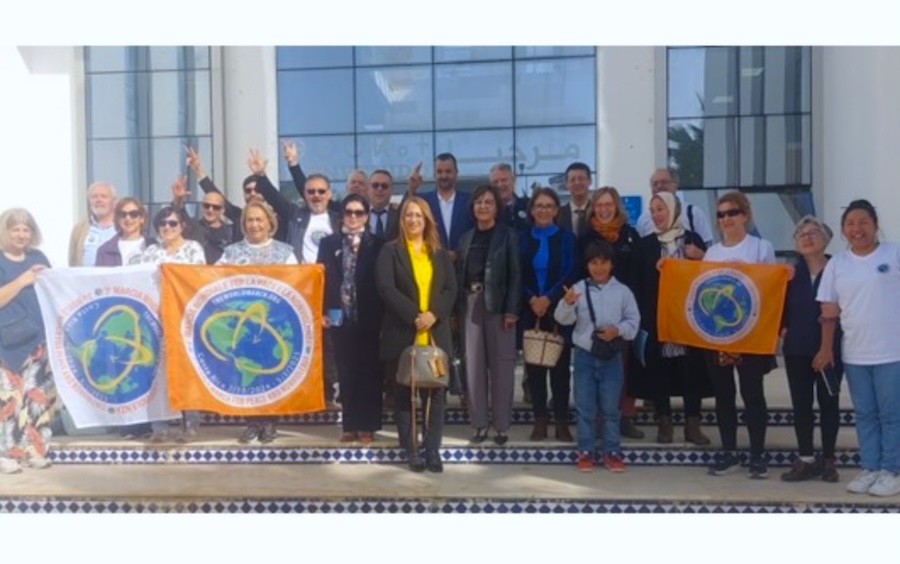
Under the slogan “For Peace and Nonviolence”, the Third World March for Peace and Nonviolence reached Tangier, where the Seventh Humanist Forum was held from 27 to 30 November 2024, organised by the Humanist Embassy. The Forum is an international platform that brings together humanist activists from around the world to exchange ideas and strengthen efforts to build a world of peace and nonviolence.

Key Events and Themes

Participants: Humanist Embassy – World Without Wars and Without Violence – Convergence of Cultures – Humanist Association for Peace and Education in Nonviolence.

The Forum featured a series of cultural sessions and workshops focusing on the following issues:

1. Promoting the values ​​of peace and coexistence among peoples,

2. Raising awareness of the dangers of violence and promoting a culture of peace and non-violence,

3. Exchanging humanist experiences and practices in the field of peacebuilding and non-violence.

(article continued in right column)

(Click here for the original article in French.)

Question for this article:

The World March for Peace and Nonviolence: What is its history and its effects?

(article continued from left column)

International Presence

The Forum attracted more than 250 participants, including a foreign delegation of 30 humanist activists from ten countries, giving the event an international dimension and allowing the exchange of knowledge and experiences between participants from diverse cultural and geographical backgrounds.

Tangier hosted the seventh edition of the Humanist Forum

The launch of the 7th Forum in Tangier was characterized by a large and diverse audience, with the opening of the event serving as a pivotal platform for the exchange of ideas and visions on peace and non-violence. The opening session was characterized by inspiring presentations and interventions that highlighted the multiple aspects of these humanist issues by the national and international representatives of the Humanist Embassy.

The presentations were intellectually rich and culturally diverse, with the speakers sharing their personal experiences and experiences in order to promote dialogue and understanding between different cultures. The forum also allowed participants to interact with the speakers, which made the discussions more lively and enriching

Participants expressed their satisfaction with this unique event that aims to create a global platform bringing together activists, thinkers and decision-makers to share successful experiences in promoting the values ​​of peace and tolerance. The forum continued with roundtable discussions and workshops highlighting practical solutions to the challenges facing the world today in the areas of non-violence and sustainable development.

Welcoming the World March for Peace and Nonviolence

The Forum was marked by the hosting of the World March, it was organized by World Without War and Nonviolence. The march left Costa Rica on October 2, 2024 and arrived in Morocco through the gateway to Africa, Tangier, on November 27, 2024. The event was an opportunity to highlight the importance of international cooperation to promote the values ​​of peace, especially since the march will continue its journey to African countries in order to convey its message to a greater number of people.

Thus, the Forum is part of the World March, aimed at establishing a culture of peace. It coincides with the launch of the third World March, thus strengthening the vision of the Forum while expanding its impact.
– – – – – –

If you wish to make a comment on this article, you may write to coordinator@cpnn-world.org with the title “Comment on (name of article)” and we will put your comment on line. Because of the flood of spam, we have discontinued the direct application of comments.

Women of Côte d’Ivoire commit to the Culture of Peace: more than 5,000 women expected at the Palais des Sports on December 21

. WOMEN’S EQUALITY .

An article from Abidjan.net (translation by CPNN)

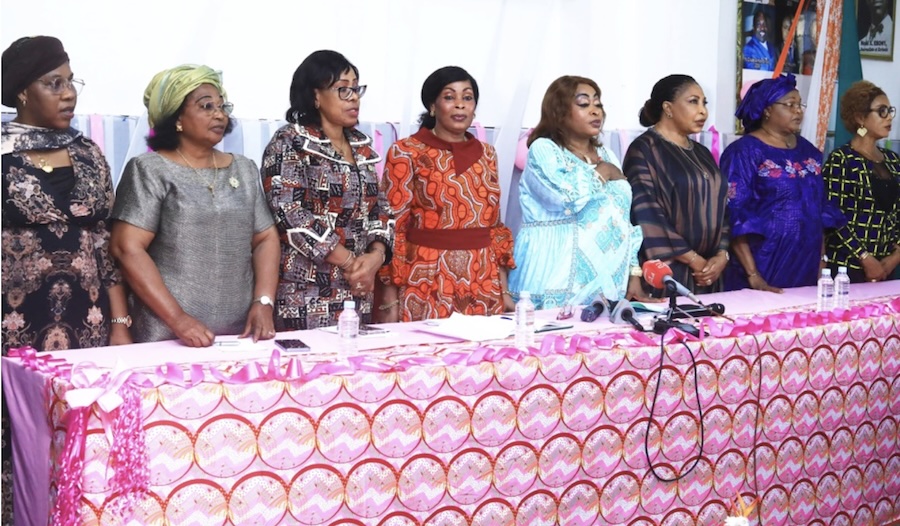
Peace will be celebrated on Saturday, December 21, 2024, by more than 5,000 women, at the Palais des sports in Abidjan-Treichville, an initiative of the Caucus of Women of Côte d’Ivoire for Peace. MP [Parliamentarian] Mariam Traoré, President of the Organizing Committee of this gathering made the announcment on Tuesday, December 10, during a press conference at the Maison de la Presse in Abidjan-Plateau.

She explained that it is a gathering of women “from the institutions of the Republic, elected officials, women from public and private administration, women economic operators around the theme of peace”, specifying that the meeting is intended to be an apolitical activity.

In her speech, Mariam Traoré insisted on the importance of peace for women. “The women of Côte d’Ivoire want peace to be sustained. Especially as the upcoming elections approach, they want to fully play their part by calling on all actors in our society to make the defense of peace an absolute priority”, she insisted.

(Article continued in right column)

(Click here for the original in French.)

Questions for this article

Can the women of Africa lead the continent to peace?

(Article continued from left column)

According to the speaker, the Caucus will also take this opportunity to highlight the great contribution of President Alassane Ouattara in making decisions adapted to the needs of promoting women and the population in general. “We want to thank him for the peace and stability restored in our country. To mark this moment, we will release doves of peace,” she stressed.

“We, the women of Côte d’Ivoire, want peace and we are ready to work with all parties to achieve it,” assured the Tengrela MP. In the same vein, Mariam Traoré stressed the importance of peace, which she considers the most precious state to which all peoples of the world aspire. “For several years, our country has been living in tranquility and security; this contributes to ensuring the harmonious development of our nation and our activities,” she rejoiced.

The MP also urged Ivorians to preserve this stability, particularly as the next elections approach. “We must all work, each at our own level, to protect this peace that our country has taken so long to find.”

The ceremony is under the high patronage of Adama Tounkara, Mediator of the Republic, and under the patronage of Adama Bictogo, President of the National Assembly and the co-sponsorship of Henriette Dagri Diabaté.

– – – – – –

If you wish to make a comment on this article, you may write to coordinator@cpnn-world.org with the title “Comment on (name of article)” and we will put your comment on line. Because of the flood of spam, we have discontinued the direct application of comments.

Third edition of dialogue on youth, peace, security in Africa opens in Bujumbura, Burundi

DISARMAMENT & SECURITY .

An article from the Nile Post

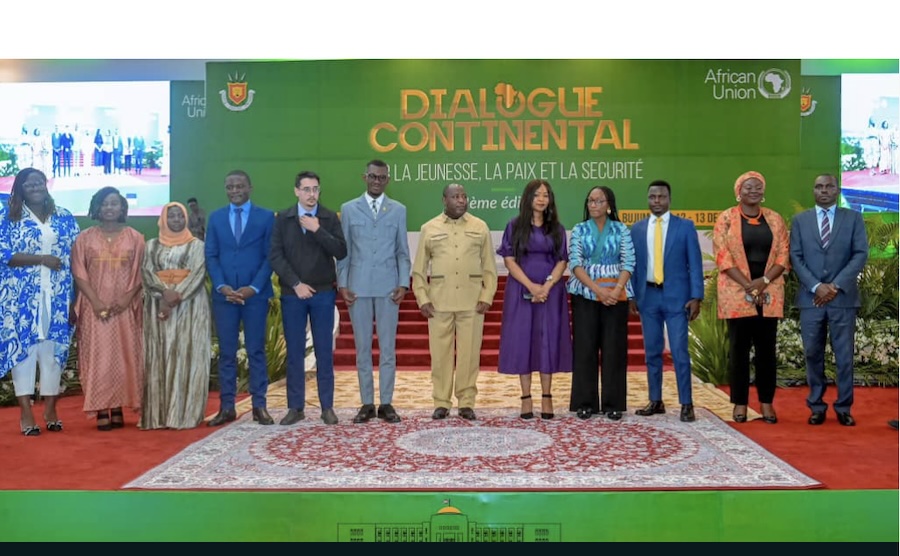
The third edition of the youth, peace and security in Africa dialogue organized by the African Union has opened in Bujumbura, Burundi.

The objective of the dialogue is to promote the youth peace and security agenda through advocacy and participation of young women and men across the Continent to meaningfully contribute to the implementation of the Youth, Peace, and Security (YPS) Agenda in Africa.

The dialogue running under the theme, ‘Empowering African Youth for Peace: Education and Enhanced Coordination as a Catalyst for the Implementation of the YPS Agenda’ is being held at the at the Kiriri Presidential Palace and President  Évariste Ndayishimiye who is also the African Union champion of the YPS agenda is among the participants.

With more than 60% of Africa’s population under the age of 25, the youth are a critical force for shaping Africa’s future.

(article continued in right column)

(Click here for an article on this subject in French.)

Question for this article:

Can the African Union help bring a culture of peace to Africa?

(article continued from left column)

However, the continent still faces challenges in peace and security, including armed conflicts, political instability, and the rise of extremist groups, which disproportionately impact youth, women, and other vulnerable populations.

The dialogue in Bujumbura has brought together key stakeholders to assess progress, identify challenges, and explore strategies for mainstreaming peace education in school curriculums and mobilizing resources for YPS initiatives.

Over 1,200 participants, including policymakers, young leaders, and representatives of international institutions are attending.

The third edition of the dialogue has brought together key stakeholders in the implementation of the youth, peace and security agenda at the continental, regional and member states levels in order to assess the progress made so far, the challenges and opportunities for enhanced coordination, collaboration and complementarity.

On the other hand, the dialogue seeks to engage the participants in reflecting on effective ways to promote peace education in Africa.

(Editor’s note: Further information is available on the Twitter page of the African Union Youth Ambassadors for Peace.

– – – – – –

If you wish to make a comment on this article, you may write to coordinator@cpnn-world.org with the title “Comment on (name of article)” and we will put your comment on line. Because of the flood of spam, we have discontinued the direct application of comments.

Final Report of the 2023 Biennale of Luanda, “Pan-African Forum for the Culture of Peace”

FREE FLOW OF INFORMATION

The Third edition of the Biennale of Luanda, “Pan-African Forum for the Culture of Peace” took place from 22 to 24 November 2023, as described briefly at the time in CPNN. The final report is now available, and we provide excerpts from its executive summary as follows:

The Biennale of Luanda, “Pan-African Forum for the Culture of Peace”, is a joint initiative of the Government of the Republic of Angola, UNESCO and the African Union that aims to promote conflict resolution and prevention of violence, encouraging cultural exchange and intergenerational dialogue in Africa. It is a broad platform for reflection and promotion of objectives, projects, visions, principles and values, which brings together Heads of States and Governments, young leaders, international organizations, financial institutions, private sector, civil society, scientific and artistic communities and sports, to address, disseminate ideas and inspire emblematic and sustainable individual and collective actions in favor of peace in Africa and the world. . . .


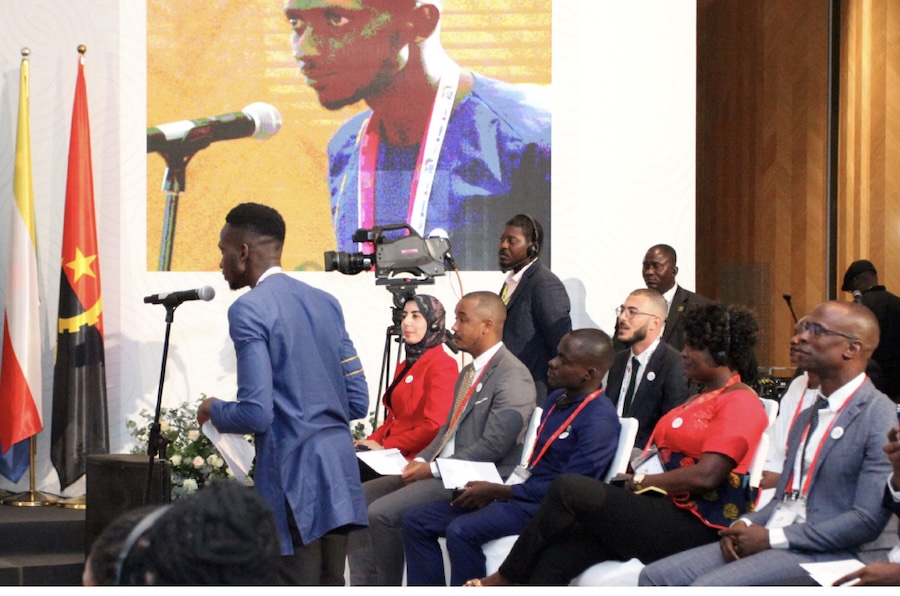
Vladmir Cuba, young representative of Guinea-Bissau, during the Intergenerational Dialogue

The third edition of the Biennale brought together a notable contingent of world leaders and representatives from different nations. Four Heads of State, three Vice Presidents, four former Heads of State and Advisors of the African Union, in addition to representatives from 23 countries, honored the event with their presence. The participation surpassed the mark of 2970 participants from several continents, including Africa, Europe, Asia and the Americas. The opening ceremony presided over by His Excellency the President of the Republic of Angola, João Manuel Gonçalves Lourenço, and marked by the presence of His Excellency the Chairman of the African Union Commission, Moussa Faki Mahamat, and the Deputy Director-General of UNESCO, Mr. Xing Qu, consolidated the Biennale as a forum for global dialogue to build a culture of peace.

Key outcomes included the recognition of youth and women as key actors in peacebuilding efforts, the importance of technology and education in achieving gender equality, and the role of Africa’s cultural heritage in promoting cross-cultural understanding. The event emphasized the need for intergenerational dialogue, collaborative partnerships, and innovative financing practices to drive positive change. Recommendations focused on fostering intergenerational collaboration, amplifying the voices of youth and women, effective resource allocation, and strengthening partnerships to advance the goals of peace and sustainable development in Africa. . . . .

The Luanda Biennale’s success in convening diverse voices, promoting dialogue, and empowering the next generation of peacebuilders reflects its commitment to serving as a pivotal platform for fostering peace, unity, and prosperity in Africa. The event’s legacy lies in its ability to inspire, connect, and empower individuals to contribute to the continent’s transformation, leaving a lasting impact on the discourse on peace and sustainable development in Africa. The Biennale’s strategic alignment with global and African agendas underscores its significance in shaping a narrative of progress, collaboration, and unity for the African continent.

(Continued in right column)

Question related to this article:

The Luanda Biennale: What is its contribution to a culture of peace in Africa?

(Continued from left column)


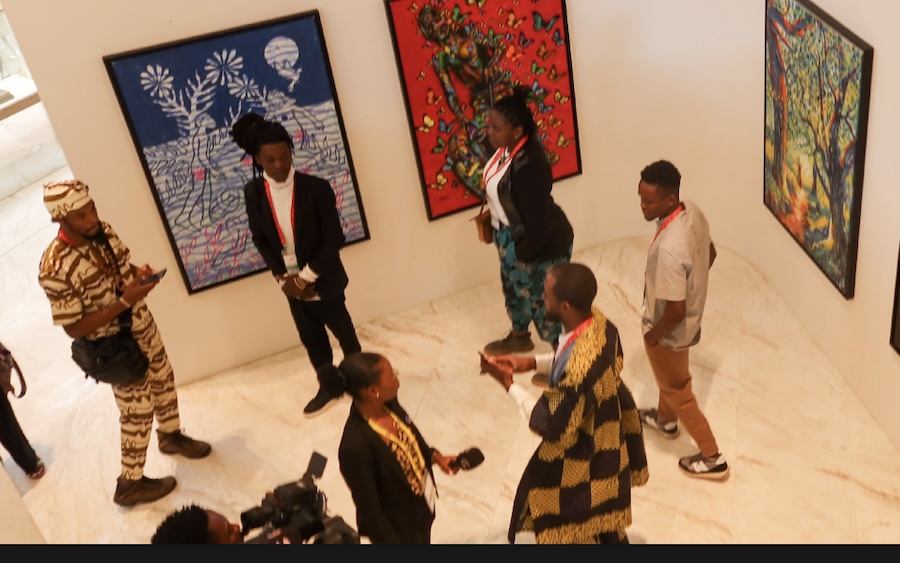
Exhibition by the artists of the ResiliArt Project

The event program, in addition to six discussion panels and parallel activities, had as its highlight an intergenerational dialogue between African leaders and young people. This interaction, under the motto “Young people, actors in promoting the culture of peace and social transformations on the continent”, provided a rich space for exchanging experiences and innovative ideas, strengthening the role of young people in building a more peaceful and fair future for Africa.

The High-Level Panel offered young leaders the opportunity to learn from the experience of the older generation and present their innovative ideas to promote peace and social transformation. This intergenerational dialogue was fundamental to strengthening the involvement of young people in decision-making processes and building a more promising future for the continent.

The Second Panel highlighted the importance of technology and education in achieving gender equality. Participants recommended the development of an action plan in partnership with UNESCO, aiming to promote digital education, science and the culture of peace and non-violence from childhood.

The Third Panel, dedicated to the role of women in promoting peace, security and development, recommended empowering women in decision- making processes and expanding their participation in peacekeeping missions. The implementation of the African Charter on Human and Peoples’ Rights and UN Resolution 1325 was highlighted as fundamental to achieving these objectives.

The Fourth Panel addressed the need to transform education and financing systems in Africa. Recommendations included the adoption of innovative policies, investment in research and the establishment of intergenerational partnerships to support economic and social projects for social development and the maintenance of peace on the continent.

The Fifth Panel discussed the challenges and opportunities for economic growth on the African continent. Among the recommendations were the stimulation of entrepreneurship, the simplification of business creation processes, the promotion of commercial exchanges between member states of the African Union. But also, encourage the construction of communication, transport, energy and water infrastructures, from the perspective of shared resources.

The Sixth Panel addressed climate change and its impacts on Africa. Participants recommended the use of the Clean Development Mechanism to generate financial benefits for the continent and invest in projects that promote adaptation to climate change and the mitigation of its effects.

– – – – – –

If you wish to make a comment on this article, you may write to coordinator@cpnn-world.org with the title “Comment on (name of article)” and we will put your comment on line. Because of the flood of spam, we have discontinued the direct application of comments.

Niger: Amid social challenges, youth advance culture of peace

. TOLERANCE & SOLIDARITY .

An article from Bahai

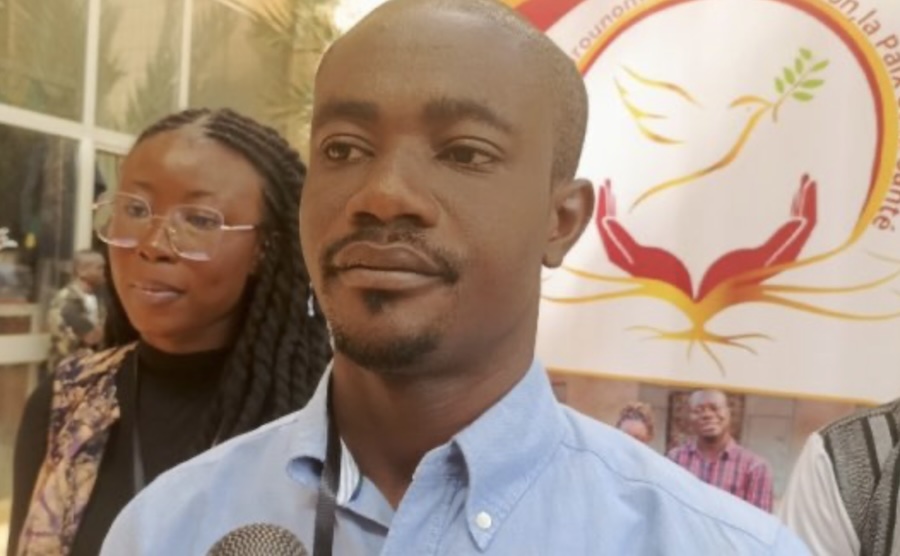
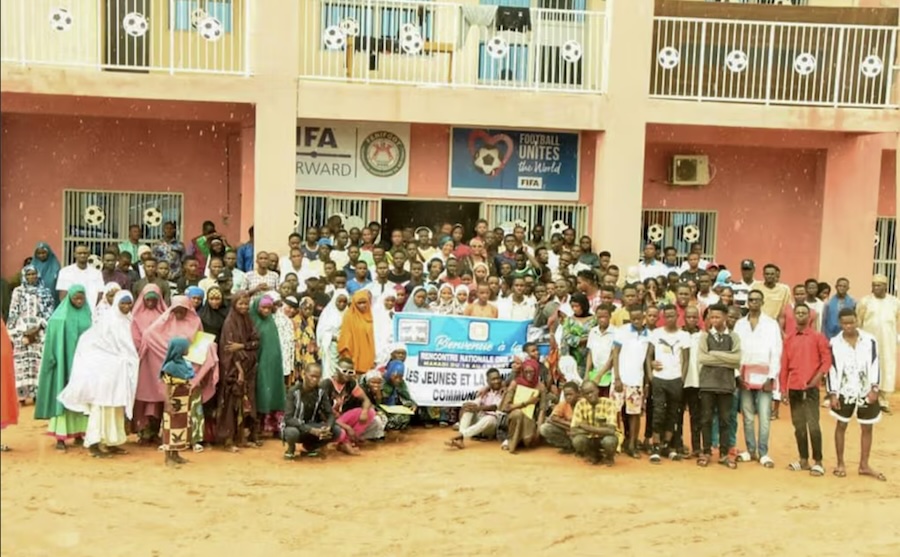
 In a region where youth are increasingly recognizing their capacity to contribute to social harmony, more than 300 young people from across Niger gathered in Maradi recently to explore the part they can play in building peaceful communities.

“Through Bahá’u’lláh’s vision of a peaceful world, we understand that young people must arise and bring about transformation, making their contributions to creating a modern and spiritually grounded civilization,” said Aboubacar, 24, one of the conference participants in comments to the News Service.

The conference, which brought together participants from 21 localities across the country, exemplified in its very structure the commitment to transcending barriers that divide people—conversations and study took place in four languages: French, Zarma, Hausa, and Gourmanchéma. Through this multilingual exchange, participants explored concepts such as the relationship between personal spiritual growth and service to society.

“We learned that these two aims reinforce each other,” explained Tahere, 18, another participant. “Spiritual development gives us the strength and motivation to serve, while service to humanity becomes a way to put spiritual values into practice.”

She described how the gathering itself became a transformative space, where participants from diverse backgrounds strengthened bonds of friendship while examining false dichotomies that often confront youth. “We sometimes think we must choose between our personal development and service to society, but the conference helped us see how these reinforce each other as we work to build a better world.”

Countering religious extremism

The significance of these efforts to contribute to social harmony was highlighted at the conference’s opening session by Illiassou Nomawou, Secretary General of the Maradi regional government, who attended on behalf of the Governor. Speaking to the attendees, he emphasized how the Bahá’í community’s educational initiatives are helping to foster constructive patterns of thought and action in a region where religious extremism poses challenges to social cohesion.

“You have set an example through your dedication to unity and your prayers for the country,” Mr. Nomawou said. “The authorities are calling for greater fraternity… and this is precisely what you are doing.” The Secretary General observed how the spiritual and moral educational programs these young people participate in helps them develop the qualities and capacities needed for constructive citizenship. “This will truly contribute to the development of the country,” he added.

(Click here for this article in French.)

(continued in right column)

Question related to this article:
 
Youth initiatives for a culture of peace, How can we ensure they get the attention and funding they deserve?

(continued from left column)

Overcoming passivity through service to society

Discussions at the conference examined the choices facing youth today and the harmful forces that breed passivity.

“Young people face a crucial choice,” said Abdourahaman, 23. “We can either arise to contribute to the spiritual and moral education of the rising generations, helping to create peaceful communities, or remain passive in the face of forces that threaten social harmony.”

He emphasized how indifference to seemingly small conflicts can have far-reaching consequences that eventually affect an entire community. “The conference helped us understand that we cannot be mere observers of harmful social forces affecting our neighborhoods and villages—we must be active participants in building peace.”

The conference highlighted how one of the most powerful ways for youth to act on this commitment is to accompany younger generations through the same educational programs that had awakened their own minds to the possibilities of what could be and nurtured in them capacities to serve.

“If we want to contribute to positive change, then we need to support each other through all trials and difficulties,” said Illia, 25. “We must be like the strands of a broom tied together by a single knot.”

Collective vision galvanizes action

Through sharing their experiences, participants saw how their modest efforts, when viewed together, revealed a powerful pattern of transformation—that the moral and spiritual education of children and youth enables them to apply principles such as the equality of women and men, unity in diversity, and consultation to the building of agreement and the overcoming of conflict in their daily lives.

Seeing this pattern of transformation in their collective experience galvanized participants to strengthen their commitment to fostering communities characterized by unity and peace.

The youth realized that to sustain and expand these efforts, more young people would need to arise to serve as facilitators of educational programs in their neighborhoods. In the weeks following the conference, some 100 participants dedicated themselves to intensive periods of study and practice to take on this role, preparing to facilitate moral and spiritual education programs for children and youth in their communities.

“The conference helped us understand that youth represent the future of our country,” said Badi, 17. “By serving society, we can simultaneously grow personally and increase our ability to contribute to social progress.”

– – – – – –

If you wish to make a comment on this article, you may write to coordinator@cpnn-world.org with the title “Comment on United Nations Alliance of Civilizations” and we will put your comment on line. Because of the flood of spam, we have discontinued the direct application of comments.

Cameroon: young African scholars rally to cultivate culture of peace

. . DEMOCRATIC PARTICIPATION . .

An article from News Watch Cameroon

Young people are generally vulnerable to radicalisation by extremist groups, but experts say the young people, especially in Africa, are hardly invited to the dialogue table where peace processes are being discussed. Some young African scholars want to change the narrative.

Drawn from over 20 countries on the continent, the students of the Pan African University Institute of Governance, Humanities and Social Sciences (PAUGHSS), the African Union’s premiere institution of higher learning, have taken part in a strategic discussion on how to promote a culture of peace on the continent.


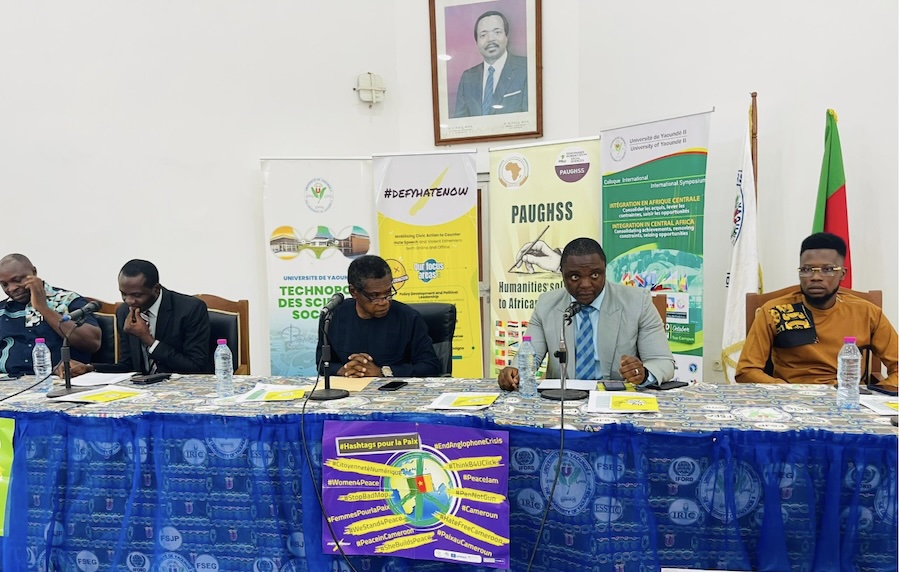
Inaugural panel of two-day strategic discussion on “Cultivating a Culture of Peace”

Hosted by PAUGHSS in collaboration with Civic Watch, implementing organisation of the #defyhatenow initiative in Cameroon, the two-day strategic discussion on “Cultivating a Culture of Peace” in Cameroon and across Africa held at the campus of the University of Yaounde II, Soa on the outskirts of the Cameroon capital from November 28 to 29. It was organised as part of activities to mark the UN International Day of Peace, albeit belatedly. The day is observed globally on September 21 of each year.

Desmond Ngala, Founder of Civic Watch and #defyhatenow Country Project Manager for Cameroon said conflicts affect young people on a daily basis and there is need that the age group be brought to the dialogue table to discuss peace processes. By organising the two-day discussion, with varsity dons, experts and the young African scholars, he said, they want to get expertise “but also experiences from different countries across Africa”.

“I must tell you that more and more, young people are not invited to the dialogue table as far as questions of peace are concerned. By organizing this strategic discussion, we are also pushing out the highest call—let’s bring young people to the table”, said Ngala.

(continued in right column)

(Click here for another version in French of this article)

Question related to this article:
 
Youth initiatives for a culture of peace, How can we ensure they get the attention and funding they deserve?

(continued from left column)

Organisers of the two-day gathering said this year’s theme, “Cultivating a Culture of Peace” matches their institutions’ mutual objectives of fostering peace, unity, and understanding amongst the people in Cameroon and Africa, and is also a powerful reminder that for peace to be possible, everyone must play a part.

New threats require new reforms

In his inaugural lecture, Prof Joseph Vincent Ntuda Ebode, Director of the Center of Research for Political and Strategic Studies of the University of Yaounde II said at the end of the Cold War, the African Union put in place a Peace and Security mechanism to prevent conflicts and ensure stability of countries across the continent. However, the emergence of new threats that were inexistent at the time the instrument was put in place require new reforms at the level of the continental body.

“For example, the AU peace and security mechanism focused on combatting inter-tribal conflicts within countries. By the time it was established, terrorism was not a general threat as it is today. This new threat cannot be managed like inter-tribal conflicts. So, to solve the problem of terrorism for example, we need a new reform at the level of the AU that will put in place forces to fight it,” said Prof Ntuda Ebode who is an expert in International Security and Defense.

Diverse cultures, one objective

In order to promote peace across countries of the continent today, it is undeniable that young people must be taught values such as dialogue, diversity and social cohesion, according to Dr Biloa, PAUGHSS Deputy Director. He said during the two-day discussion, they were going to imbibe in the young scholars the idea that the values will lay the foundation for the construction of Africa and the development of African countries.

“The two-day discussion has brought together young people from different regions of Africa—with diverse cultures, but with one objective—cultivate a culture of peace across the continent,” said Dr Biloa.

Like the other speakers, Prof Arrey William Herman of the Protestant University of Central Africa said it important include all segments of the population in peacebuilding processes for as he puts it: “any peace built for the people without the people is peace built against the people”.

Besides masterclasses and panel discussions with experts from UN agencies, development partners, diplomatic corps, government, and academia, the young scholars also shared experiences of what peace means to them.

– – – – – –

If you wish to make a comment on this article, you may write to coordinator@cpnn-world.org with the title “Comment on (name of article)” and we will put your comment on line. Because of the flood of spam, we have discontinued the direct application of comments.

Rwanda: Positive masculinity as a weapon of peace

. . WOMEN’S EQUALITY . .

An article by Isabelle Grégoire from the International Development Research Centre (reprinted as non-commercial use)

After the 1994 genocide, 70% of Rwanda’s population was made up of women who had become heads of household. An unprecedented demographic situation that has led this formerly patriarchal country down the path of gender equality. Today, the government even promotes positive masculinity.
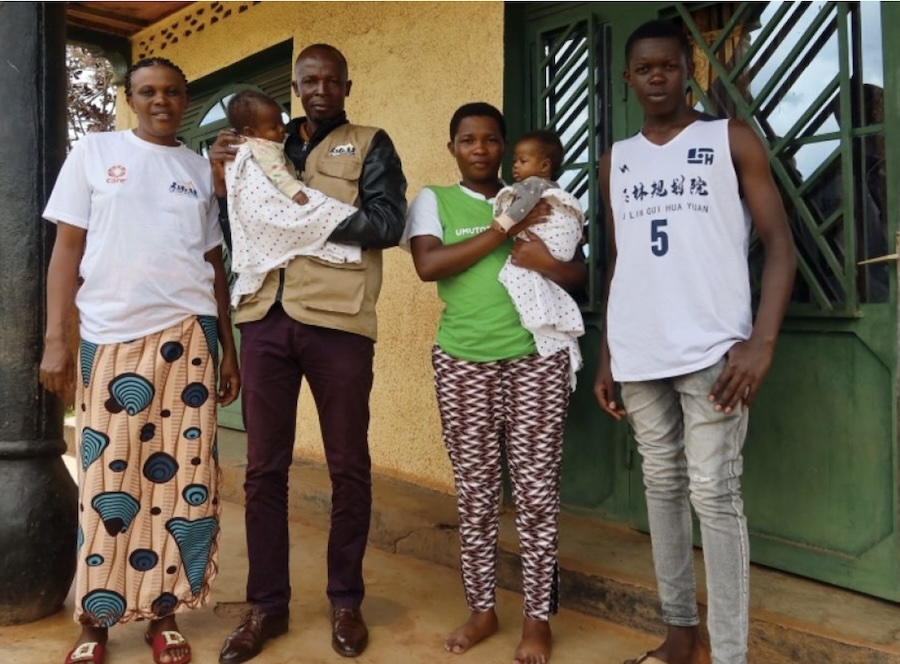

Thanks to the BAHO workshops, Théoneste Nyakabaji has gone from being an absent father to his earlier children to being a committed father to his two twin daughters. He is pictured with his wife, Claudine Umugwaneza (left) and four of their children. Photo by Isabelle Grégoire, L’Actualité.

What’s the potion you’re giving your man? I want the same for mine!” Claudine Uwiragiye, 27, a farmer in the Musanze district in the foothills of Volcanoes National Park in northern Rwanda, has been asked this question a hundred times. The neighbours and friends of this graceful woman in her red and yellow wrap skirt were convinced that she had bewitched her husband, so much had he changed. Previously domineering, violent and more present at the “cabaret” (local bar) than at home, 30-year-old Jean-Dedieu Manihiro, also a farmer, has become a caring spouse and father in just a few months. He is as active in raising their two children as in household chores.

“I can do anything, except breastfeed,” he says laughing as he extends his arms to his youngest daughter, who joins us in their modest house built with rammed earth on one of the “thousand hills” that have earned Rwanda its nickname. In tears, the two-year-old toddler has just stumbled into the courtyard surrounded by squash, beans and banana plantations. A hug, a few soft words in Kinyarwanda (the country’s main language) and the little girl has already forgotten her boo–boo. “He’s not the same man anymore,” says Claudine, sitting beside him on one of the wooden benches that furnish the room with its dirt floor and walls adorned with faded photos of their wedding in 2017.

“At first, when the village boys saw me peeling potatoes or cradling my baby, they laughed at me,” says Jean-Dedieu, wearing a striped polo shirt and black pants in green rubber boots. “For them, I was no longer a man.” However, little by little, they realized that the change was for the better. Not only did the family no longer have to live with banging and screaming, they had also managed to improve their income. “I no longer spend all my harvest money on alcohol, and we manage our budget together.”

However spectacular, Jean-Dedieu’s transformation has nothing to do with magic. Rather than make him drink an elixir, Claudine persuaded him to sign up with her for the Bandebereho (“role model,” in Kinyarwanda) program, a “Journey of Transformation” of 17 weekly sessions of three hours each, offered to young parents by the Rwanda Men’s Resource Centre (RWAMREC). “Otherwise, I would’ve ended up reporting him to the police.”

Based in Kigali, this NGO works to eradicate violence against women by promoting “positive masculinity.” To convince the most stubborn, male facilitators — from the targeted communities — repeatedly visit households in conflict, the list of which is provided to them by local authorities. The “role models,” like Jean-Dedieu, are encouraged to support them by becoming “agents of change” in their village.

According to the 2020 National Institute of Statistics report, 46% of married Rwandan women have suffered domestic violence, and 60% consider it acceptable. A culture of silence continues to prevail, even though the number of cases reported and examined has more than doubled in five years, topping 14,500 cases in 2021–2022.

“It’s impossible to change social norms and achieve gender equality if men aren’t involved,” says Fidèle Rutayisire, 48, executive director of RWAMREC, which he founded in 2006. A lawyer by training and a convinced feminist, he himself grew up in a violent home. “It’s easier for men to be changed by their peers than by women,” he asserts. The aim is to put an end to the myths associated with masculinity; for example, that only women can look after children, or that it’s acceptable to beat your wife if she burns a meal. But also to enable women to emancipate themselves through paid employment.

Some 50,000 men are reached each year by the Resource Centre through its various programs (including Bandebereho), deployed throughout this country of 14 million inhabitants. “It’s a drop in the bucket compared to what’s needed, but it’s essential work: too many homes are still plagued by violence,” observes Fidèle Rutayisire, with a round face and a gentle look behind his glasses. The violence was inherited from the genocide that tore Rwanda apart in 1994. In 100 days, a million Tutsis were exterminated, mostly with machetes, by the Hutu majority group. Between 250,000 and 500,000 women were raped, many of whom became pregnant (between 10,000 and 25,000 “children of hate” are thought to have been born of these rapes). Although 65% of the population is now under the age of 30 and did not experience these horrors, the trauma remains, both for the children of the genocidaires and those of the survivors.

At the end of the genocide, 70% of Rwanda’s population was made up of women who had become heads of household (widows, wives of genocidaires in prison or exile, orphans). They have therefore played a major role in the reconciliation and reconstruction of the country. As the Constitution prohibits all forms of discrimination, there are no longer any privileges linked to ethnicity (Tutsis, Hutus, Twas), religion (Christians, Muslims) or region… everyone is Rwandan. In 30 years, immense progress has been made (education, health, safety, cleanliness, etc.). And this small, green country in the Great Lakes region, landlocked between the Democratic Republic of the Congo (DRC), Tanzania, Uganda and Burundi, is the only one in the world to have a majority of women in Parliament (61% of the members of parliament).

“In our post-conflict society, the only option was to bring citizens together on an equal footing,” says Liberata Gahongayire, president of Pro-Femmes/Twese Hamwe (“All together,” in Kinyarwanda), a collective involved in the process since 1994 (mobilization of women, revision of laws). However, we had to redouble our efforts. “In addition to the ethnic divisions that had torn families and society apart, patriarchal tradition relegated women to the background,” continues this historian, a researcher at the Centre de gestion des conflits de l’Université du Rwanda and the Université Libre de Bruxelles. “Many were illiterate and had never worked outside the fields.” Over the years, laws guaranteeing their rights have been passed — access to education, maternity leave, abortion (limited to critical cases), criminalization of domestic violence, the right to contraception (from age 18), and to inheritance.

Alongside the pioneering RWAMREC, many other organizations are focusing on positive masculinity. Like the Pro-Femmes organization, which includes it in its “gender equality transformation journey” for women and couples. “Positive masculinity has a dual purpose: to reduce gender-based violence and to improve the socio-economic situation of families, and therefore of the nation,” says Liberata Gahongayire.

Another major player is the British NGO Aegis Trust, designer and manager (on behalf of the Rwandan government) of the Genocide Memorial, perched on a hill in the capital, where the remains of 250,000 victims of the genocide against the Tutsis are laid to rest. Aegis Trust offers peace education programs aimed at a wide range of audiences (political decision-makers, teachers, young people, etc.), with a particular focus on positive masculinity.

“Our training courses open up dialogue in schools, at work and in the religious domain, and show the indispensable contribution of men in promoting gender equality.”

The Rwandan government encourages and supports the movement. Involving men in this promotion of equality is one of the priorities of the new gender policy, launched in 2021 by the Ministry of Gender and Family Promotion. The Ministry of Health is committed to the wider deployment of the Bandebereho program, supported by the International Development Research Centre (IDRC) in Ottawa.

The concept of positive masculinity is also spreading elsewhere in Africa. After the DRC and Senegal, South Africa hosted the African Union’s 3rd Men’s Conference on Positive Masculinity to end violence against women and girls in 2023. The African Union is encouraging civil society, religious leaders and economic players to work together. It’s a long-term project, as there is strong resistance everywhere: men fear being ridiculed and losing their power.

Considered a model of African development, Rwanda has been led since 2000 by President Paul Kagame, 66, who was re-elected on July 15 for a fourth term. A former commander in the Rwandan Patriotic Front, which stopped the genocide in 1994, he is hailed for having reconciled and modernized the country. Agriculture (coffee, tea, sorghum, etc.) still accounts for 25% of GDP and 56% of jobs. Nevertheless, the “land of a thousand hills” is enjoying annual economic growth of around 7% to 8%, thanks in particular to business and upmarket tourism. As clean as it is safe, the capital, Kigali, with its 1.7 million inhabitants, boasts grand hotels and an iconic convention centre, inspired by an old royal palace. Luxury guest houses have sprung up around national parks such as Volcanoes — where a permit for a brief visit to the mountain gorillas costs USD1,500.

Few people openly criticize Paul Kagame in Rwanda, but his detractors criticize him for his authoritarianism — widespread surveillance, non-existent press freedom, muzzling of opponents… He was recently returned to power with 99.15% of the vote. Rwandans are also subject to strict rules intended to strengthen national unity. For example, all pupils in the public sector, boys and girls alike, must have their heads shaved for reasons of hygiene and equality. And every last Saturday of the month, citizens are required to take part in umuganda (community work), or face a fine.

Nevertheless, inequalities remain. The second most densely populated country in Africa (after Mauritius), Rwanda ranks 161st (out of 193) on the UN Human Development Index, which measures health, education and the standard of living to determine the degree of “development.” And despite the fact that women make up a majority in Parliament, the patriarchy is still alive and well. Boys still grow up with the idea that they are superior to girls, and sexist violence persists.

“The woman is the heart of the home, the man is the master of the family,” according to a Rwandan saying. Roles are still firmly entrenched, especially in rural areas where 83% of the population lives. Submissive and self-effacing, the abagore (women) work in the fields with their babies strapped to their backs, walk for miles to fetch water, and do most of the unpaid work. The abagabo (men) are the breadwinners, they make all the decisions for the family, feel that sex is their right, and enjoy their free time as they please.

These differences become apparent during the Bandebereho workshops. On the day of my visit, some 30 men and women are sitting in a circle in a room at the health centre in Gitare, Northern Province. Most came on foot along a red laterite track, with the bluish peaks of the volcanoes marking the border with Uganda in the background. After the dances, songs and motivational slogans that precede each session, five male volunteers leave while the facilitator sets up the equipment for a role-play of domestic chores: cloth doll, laundry tub, broom, water pot and container.

Back in the room, each man mimes a task — rocking the baby, sweeping the yard, preparing dinner… — before leaving the stage, relinquishing his responsibility to the remaining men. In the end, only one is left to do it all, not knowing what to focus on. “And he doesn’t even have any dishes to wash!” exclaims one participant, to general hilarity. “It was super-stressful!” admits the visibly disoriented volunteer. “I suddenly realized how much my wife does at home: she never rests!”

(Article continued in right column)

(click here for the article in French.)

Question related to this article:

Protecting women and girls against violence, Is progress being made?

What role should men play to stop violence against women?

(Article continued from left column)

In addition to role-playing and homework, participants in Bandeberehosessions are expected to contribute to group discussions. And reflect on their behaviour, which is often identical to that of their fathers. “The men learn to talk about their private lives and open up about their emotions, something they’re not used to doing,” says Emmanuel Karamage, a sturdy 50-year-old who coordinates the initiative for the Musanze district. “Then, they communicate better with their spouses at home.”

At a session I attended, the local leader launched a debate on sexual consent. “Before RWAMREC, there was no such thing as consent: my husband would come home drunk from the cabaret and throw himself at me without even saying hello,” says a 30-something mother of four. “If I didn’t give in, he’d hit me.” There are embarrassed murmurs from the men in the audience: they too used to act like this, but swear they’ve changed. “We’ve even introduced foreplay!” says one of them, grinning from ear to ear.

The practical exercises are also revolutionary. Like carrying a baby on your back, an ancestral technique handed down from mother to daughter. “Our fathers never did this, and nobody taught us how to do it,” says Jean-Baptiste Singiranumwe, a 31-year-old farmer. A father of two, he completed his transformation in 2022. He welcomes me to the family home in Kamugeni, in the North — an ochre house, flanked by a chicken coop and lined with pious inscriptions. Jean-Baptiste is quick to show me how he places his youngest child, delighted, on his back with the help of a wrapper, under the tender gaze of his wife, Claudine Nyiramunezero. With steady movements that he rehearsed many times in class with a doll, he beams with pride. “I feel super-connected to my child.”

A brutal ex-alcoholic, Jean-Baptiste nevertheless made life hell for his wife, who later confided in me that she’d thought of leaving him and even killing him. He was eventually sentenced to two years of prison, after violent fights in the village. Upon his release, the local RWAMREC animator, a neighbour who knew him well, came to talk to him about Bandebereho. As in the case of Jean-Dedieu and the dozens of men initiated into positive masculinity that I met during this reporting assignment, his transformation was radical. At least, that’s what they say, with the approval of their wives, even when I talk to them alone.

From the outside, this may seem inconceivable. How can such macho men change so completely in such a short time? According to Fidèle Rutayisire, founder of RWAMREC, various factors come into play, including the training style (participative), the proximity of the trainers and the unconditional support of local leaders.

A local councillor and a policeman were also present at a BAHO (Building and Strengthening Healthy Households) workshop, another RWAMREC program, which I attended in Gatsibo, Eastern Province. Both spoke to encourage the participants. “RWAMREC is helping us to stabilize security in the region,” said the policeman, standing straight in his black boots. “Peace at home is the first pillar of our country’s development.”

To better understand the real impact of positive masculinity programs in Africa, a major study was conducted by the Washington-based International Center for Research on Women (ICRW), with financial support from IDRC in Ottawa. Published in 2023, this study  (“Promoting positive masculinity  for sexual and reproductive health and rights and gender equality in informal settlements in sub-Saharan Africa”) covered three countries (DRC, Rwanda and Nigeria) and compared the attitudes and perceptions of men who had or had not participated in these programs (1,500 interviewees).

First observation: being made aware of positive masculinity doesn’t necessarily lead to a positive change in behaviour. “Many NGOs offering these programs lack sufficiently skilled staff and the financial resources to ensure the assessment and follow-up necessary,” observes Chimaraoke Izugbara, director, Global Health, Youth & Development at ICRW. The programs examined varied in quality, both in terms of duration (from a simple one-hour presentation to a more elaborate training course) and content. “They focus on harmony in couples, but don’t always encourage men to critically self-reflect on gender norms,” continues the Nigerian-born researcher, reached at his Washington office. “What’s more, they are often implemented without considering the country’s socio-economic and cultural context.”

Collaborating on this study in Rwanda, researcher Ilaria Buscaglia interviewed participants in the Bandebereho program, which is doing well. “The men who follow this path evolve significantly, they don’t justify any form of gender-based violence, drink less and participate more in domestic tasks,” observes this Italian anthropologist, who has been based in Rwanda since 2013, where she has worked for various NGOs, including the Men’s Resource Centre. “But more needs to be done to change gender norms: at the moment, men ‘help’ their wives and welcome the improved household income, but they consider themselves to be the heads of the family.”

The study by the Washington-based International Center for Research on Women also highlights the fact that certain themes associated with positive masculinity have a hard time breaking through, even among respondents who have attended these programs. For example, most of them have never been tested for HIV/AIDS. The same rejection applies to sexual diversity. “Homophobia is still very present, and none of these programs mention it,” says Ilaria Buscaglia. The subject is taboo (for religious and other reasons) in the three countries studied, including Rwanda, even though homosexuality is not criminalized on Rwandan soil — unlike in many African countries. “The mere mention of LGBTQ+ rights can derail all our efforts on gender equality.”

There is still a lot of work to be done to change mentalities. The large-scale deployment of the Bandebereho program, which started in 2023, could contribute to this. Previously extended to 30,000 couples, this time it aims to reach 84,000 families in the Northern Province by 2027. Carried out by the Ministry of Health and the Rwanda Biomedical Centre in partnership with RWAMREC, this initiative is co-funded by Global Affairs Canada and IDRC ($1.2 million), and has also received support from Grand Challenges Canada ($1 million) and the Global Innovation Fund ($2.5 million).

To better reach families, the Ministry of Health relies on the network of community health workers (CHWs), volunteers who fill the gaps left by a shortage of medical staff throughout Rwanda. Some 1,600 CHWs (out of the country’s 60,000), trained by RWAMREC, recruit couples and offer the 17 Bandebereho sessions in their communities. The program will be monitored throughout the process. In the long term, the initiative, integrated into the health system, could be extended to all 30 of the country’s districts.

Inspired partly by the Rwandan experience, positive masculinity programs are proliferating in sub-Saharan Africa, especially in poor urban areas, where the need is great. As the ICRW study points out, a growing number of Africans are forced to live in slums, where gender-based violence, unwanted pregnancies and unsafe sexual practices are exploding. In addition, as in Nigeria and the DRC, years of armed conflict, insecurity and violence have increased toxic masculinity and the lack of services for sexual and reproductive health and rights.

Ivorian sociologist Ghislain Coulibaly, 45, father of three, is one of the continent’s most ardent advocates of positive masculinity. A former technical advisor to Côte d’Ivoire’s Ministry of Women, Family and Children, and an excellent communicator, he is the author of a TEDx conference  on the subject, broadcast on YouTube. This earned him mockery and threats on social media. “Why do you want to reverse the social order?”

“A minority of Ivorian men are really aware of what’s at stake,” says the sociologist from his home in Abidjan, Côte d’Ivoire. “Many believe that I’m dismantling their power to give it to women, and that positive masculinity perverts the values of Ivorian society.” He’s also a target for some women, who feel he takes up too much space and should let them fight their own battles.

This does not discourage him. “These criticisms are part of the societal evolution.” In 2019, Ghislain Coulibaly created the Réseau des hommes engagés pour l’égalité de genre (RHEEG) in Côte d’Ivoire. A network that has already inspired others: in the DRC in 2022 and in Cameroon this year. RHEEGs offer, among other things, activities to raise awareness among the police and military (DRC) and in elementary schools (Côte d’Ivoire).

He believes there is hope. “With the advent of digital technology and social networks, young people are much more open to other cultures and ways of doing things,” he says. “There is also an increasing number of young girls going to school.” This should rebalance male–female power dynamics. “Education is the driving force behind this transformation.”

This is also the aim of the Rwandan feminist NGO Paper Crown, which works with 14-to-19-year-olds. Its flagship program, My Voice, My Power (a four-hour weekly workshop lasting 18 weeks), aims to change young people’s minds about gender norms, and to turn them into leaders capable of influencing their peers and parents alike.

On this Saturday morning in April, about 50 registered teenagers have come to the Kayonza youth centre in the Eastern Province, a two-hour drive from Kigali, where they are conducting the training. It’s hard to tell the boys from the girls: they all wear their hair cropped, in loose-fitting T-shirts and sports shorts. After a snack of doughnuts provided by the NGO, the girls stay in the breezy room, while the boys head to a tent set up a few yards away on a grassy field.

“Before mixing the groups, we start by making it clear to the girls that social barriers limit their development, but that they have rights,” explains Clementine Nyirarukundo. Long braids, jeans and sneakers, the manager of programs and partnerships at the NGO conducts the workshop with the teenagers. “This helps them gain self-confidence.” Most of those present are still intimidated and tend to speak softly, with their gaze downcast. A visit from a Canadian journalist doesn’t help matters. But Clementine quickly puts them at ease. Today’s lesson focuses on a new method for resisting assaults (defining boundaries, de-escalation, physical self-defence tactics…). Little by little, the girls get bolder and share their experiences. Clementine insists on the importance of asserting yourself, looking up and making eye-contact when speaking.

In the tent, the boys also work on themselves. They draw self-portraits and write on each body part what affected them as children: their fears, their aspirations, their good and bad habits related to gender (entering a girl’s room without her permission, giving her a bad reputation, fighting…). “Be honest, don’t embellish anything!” says Théophile Zigirumugabe, their trainer. Jovial and eloquent, he captures their attention by using their language, foul language included. The practical exercises — aimed at both boys and girls — also include putting a condom on a banana. Earlier this morning, period products were the focus. Without any embarrassment, a slim 15-year-old presented a sanitary napkin to his group, unfolded it and placed it carefully on a pair of underwear brought by the trainers. “It eliminates the shame associated with periods,” says Clementine. “We want to show that it’s normal and that it’s part of daily life.”

There are loud shouts from the girls’ workshop at the other end of the field: “No! No! No!” The boys barely look up from their drawings. They know what’s happening. Divided into two rows facing each other, the girls practise saying “no!” to an assailant while waving a hand in front of them. “The aim is to use the voice rather than force,” says Clementine Nyirarukundo. “Everyone needs to understand that it’s a weapon.” A weapon far more powerful than any magic potion.

Isabelle Grégoire visited Rwanda at the invitation of the International Development Research Centre.

This article was originally published in the November 2024 issue  of L’actualité, under the title “L’arme de paix de la masculinité positive”
 
– – – – – –

If you wish to make a comment on this article, you may write to coordinator@cpnn-world.org with the title “Comment on (name of article)” and we will put your comment on line. Because of the flood of spam, we have discontinued the direct application of comments.
Uganda: Championing a Culture of Peace – A Training Toolkit on Conflict Prevention

. EDUCATION FOR PEACE .

An announcement from the Julius Nyerere Leadership Centre

Championing A Culture of Peace: A Training Toolkit on Conflict Prevention, Transformation and Peace Building. The Curriculum builds on lessons learned by the Eminent Women in the WSR-Uganda* (2016), whose work confirmed that a culture of peaceful elections needs to be inculcated in the country.

 Author and publisher: Women’s International Peace Centre   

 Publication date: November 8, 2024

(The publication is online here.)

CONTENTS

Introduction
Customised Curriculum Overview
Structure of the Curriculum
Content and Process of the Curriculum

1. Election Framework And Procedures
What Is Democracy
Understanding Multiparty Democracy
Women and Governance
The Electoral Cycle
Actors And Agents of Electoral Conflict

(continued in right column)

Question for this article:

Culture of peace curricula: what are some good examples?

(continued from left column)

2. Early Warning
Understanding Early Warning
Dynamics in Conflict Monitoring
The Conflict Monitor
Basics Of Monitoring and Information Gathering

3. Understanding of Conflict and Tools for Analysis
What Is Conflict
Perceptions
Interpersonal Conflict
Conflict Dynamics
Needs, Interests And Positions
Governance Systems and Conflict Triggers
Sysmptom vs Root Cause
Conflict and Natural Resources
Natural Resource Conflict in War and Post War Societies

4. Communication and Disemination of Human Rights
Violations, Threats, Instability
What to Report About
Tools for Conflict Reporting

5. Conflict Prevention Early Response
Institutionalised Early Warning Mechanisms for Conflict Prevention
Disaster Preparednss: Warning & Response Mechanism in Uganda
Civil Society-Led Initiative
Human Rights Defenders Rapid Response
Women’s Situation Room on EWER To Election Violence (Early Warning Early Response)

6.Peace Building and Security
Pillars of Peace
Lobbying and Advocacy
Negotiation Skills for Peace Builders
African Traditional Mechanisms for Peace Building
Feminist Leadership and Movement Building

*The WSR (Women’s Situation Room was started in 2011 by Angie Brooks International Center, mobilising women, youth and media to reduce tension and ensure peaceful elections in Liberia. The model has had success in different parts of Africa. The WSR was set up in Uganda elections of 2016 as a model approach to mitigation of election related violence.

– – – – – –

If you wish to make a comment on this article, you may write to coordinator@cpnn-world.org with the title “Comment on (name of article)” and we will put your comment on line. Because of the flood of spam, we have discontinued the direct application of comments.
Côte d’Ivoire: Radio de la Paix

FREE FLOW OF INFORMATION .

Excerpt from Radio de la Paix

Radio de la Paix has been broadcasting on Ivorian territory since March 1, 2017. It is ​​run by the Félix Houphouët Boigny Foundation for Peace Research in Yamoussoukro.

(continued in right column)

(Click here for the French original of this article.)

Question(s) related to this article:

How can peace be promoted by radio?

(continued from left column)

Radio de la Paix took over from ONUCI FM, the radio station of the United Nations Operation in Côte d’Ivoire (ONUCI). This initiative was part of the transfer of residual activities of ONUCI in order to consolidate the achievements in the field of communication. It was recommended by the Secretary-General of the United Nations in his special report on ONUCI, on March 31, 2016, to the Security Council, which accepted it.

Radio de la Paix meets professional requirements that guarantee editorial independence, exclusivity and impartiality in the treatment of information. Radio de la Paix’s missions are to promote social cohesion, reconciliation, gender and respect for human rights in the service of peace in Côte d’Ivoire.

Radio de la Paix welcomes listeners who wish to know its information and programs and contribute to the dissemination of the culture of peace in Côte d’Ivoire, but also in French-speaking Africa.

From Paris to Caracas, thousands march in support of Gaza around the world, one year after October 7

. TOLERANCE AND SOLIDARITY . .

An article from Le Parisien (translated by google)

“Freedom and justice for the Palestinians!” Thousands of people demonstrated in support of Gaza across Europe and South Africa on Saturday for the first anniversary of the bloody conflict between Israel and the Palestinian Islamist movement Hamas.

Holding placards and Palestinian and Lebanese flags, several thousand protesters marched through the centre of the British capital late in the morning. Leading the march were former Labour leader Jeremy Corbyn (now an independent) and former Scottish Prime Minister Humza Yousaf.


London, October 5, 2024. Many protesters wore keffiyehs, symbols of the Palestinian struggle. Reuters/Chris J Ratcliffe

“Stop the bombing”, “Free, free Palestine” and “Stop bombing hospitals” were among the most popular slogans chanted in London by protesters, who marched peacefully. “We need a ceasefire now. How many more innocent Palestinians or Lebanese people have to die?” asked Sophia Thomson, 27, who was demonstrating with friends. “The fact that there are so many of us shows that the government is not speaking for the people,” she added.

A demonstration in memory of the 1,205 people killed in the unprecedented Hamas attack in Israel on October 7 is also due to be held in London on Sunday.

In Dublin, the Irish capital, several hundred people demonstrated in support of the Gazans, shouting “freedom and justice for the Palestinians”.

In Berlin, a pro-Palestinian demonstration brought together more than a thousand people and another pro-Israeli demonstration brought together around 650, according to the police. Outside the procession of this last demonstration, 26 people who had accosted the demonstrators were arrested, a police spokesperson told AFP.

In Rome, pro-Palestinian youth clashed with the police, with bottles thrown, firecrackers, tear gas and water cannons used, after a demonstration that brought together thousands of people. “Italy must stop selling and sending weapons to Israel”, “Free Palestine” and “Israel, a criminal state”, the demonstrators shouted.

During the offensive led in response by Israel, at least 41,825 Palestinians have been killed in Gaza, the majority of them civilians, according to data from the Hamas government’s Ministry of Health, deemed reliable by the UN. In Lebanon, according to the authorities, more than 2,000 people have been killed since October 2023.

Representatives of LFI at the Paris demonstration

In France, several thousand people marched in Paris and several other cities to show their “solidarity with the Palestinian and Lebanese peoples” and to ask the French government to do more.

In Paris, 5,000 demonstrators, according to the police, marched from Place de la République to Place de Clichy, shouting “Palestine will live, Palestine will win”. At the head of the procession were several political figures from the radical left, including representatives of La France Insoumise Jean-Luc Mélenchon and Manon Aubry. Among them, MP Thomas Portes, interviewed by AFP, once again asked President Emmanuel Macron to “recognise the State of Palestine”.

At the microphone of a truck present in the procession, Jean-Luc Mélenchon reiterated his call for students to “flaunt the colors of Palestine” and “Lebanon” from October 8, in response to a ministerial circular on maintaining order in universities on the eve of October 7, the anniversary of the Hamas attack in Israel.

(continued in right column)

(Click here for the original article in French.

Question related to this article:

Presenting the Palestinian side of the Middle East, Is it important for a culture of peace?

(continued from left column)

But for Mohammed Ghili, 52, a member of the association Solidarité Palestine, if “it’s good news, it comes far too late” in the face of what he calls “genocide”. In the crowd, Maya, 37, a French-Lebanese physics researcher who arrived from Beirut a week ago, said she was “stunned by the media coverage” of the escalation in Lebanon. “We don’t hear about the bombing of civilians”.

Among the thousand people who also marched in Lyon according to the prefecture, Jérôme Faÿnel, president of a local collective supporting the Palestinian people, said that it was an opportunity for him to denounce the anniversary of “one year of unheard-of brutality”.

In Toulouse, 300 demonstrators chanted the name of “Georges Abdallah”, in reference to the Lebanese pro-Palestinian activist Georges Ibrahim Abdallah, imprisoned for 40 years for complicity in murder. His 11th request for release is to be examined on 7 October. “How can a court decision be issued on 7 October?” exclaimed Soraya, 50, who did not wish to give her last name. She denounces “a bias” on the part of the justice system, one year to the day after the unprecedented attack by Hamas.

Flo, 22, an unemployed resident of Vienne (Isère), who did not wish to give his last name, came to demonstrate as he has been doing for a year, and for him, it is a “fight”: not a “symbolic fight”, but a “fight for justice” for the Palestinian and Lebanese people.

In Nantes, two marches bringing together some 350 people in total, according to an AFP journalist, marched through the streets of the city center. In Strasbourg, there were 200 demonstrators, as in Bordeaux, where they observed a minute of silence “in homage to the martyrs” before walking peacefully, chanting “Palestine will live, Palestine will win”.

Gatherings in Switzerland and South Africa

In Basel, Switzerland, thousands of people also gathered in a park near the train station for a national pro-Palestinian demonstration called by the Swiss-Palestine Federation and a hundred or so organizations.

In Madrid, 5,000 people, according to the authorities, demonstrated at the call of the Solidarity Network against the Occupation of Palestine (RESCOP), with placards saying “Boycott Israel” or “Humanity is dead in Gaza”. The demonstrators called on Prime Minister Pedro Sanchez, who has taken a number of critical positions against Israel in recent months, to break off diplomatic relations with the country.

In Venezuela, hundreds of supporters of the government of Nicolás Maduro and members of the Arab community demonstrated in front of the UN headquarters in Caracas. Carrying a 25-metre-long Palestinian flag and shouting “Long live free Palestine” or “Iran, Iran, strike Tel Aviv”, the Chavistas presented the UN with a document calling for an end to the “genocide” of the Palestinian people and for “concrete actions” against Israel.

In South Africa, in central Cape Town, hundreds of people demonstrated, waving Palestinian flags and chanting anti-Israel slogans at a pro-Gaza rally. Holding placards accusing Israel of genocide and racism, the protesters – many wearing keffiyehs, a symbol of the Palestinian struggle against Israel – marched toward the South African parliament.

“Israel is a racist state” and “We are all Palestinians,” protesters chanted. Some of them said they supported South Africa’s complaint to the International Court of Justice (ICJ). Pretoria maintains that Israel’s offensive in Gaza violates the 1948 UN Genocide Convention.

Many South Africans compare Israel’s stance toward the Palestinians to apartheid, the segregationist regime imposed by the white minority in the country until the first multiracial elections in 1994.

(Editor’s note: The video of the rally in New York City is especially impressive.)

– – – – – –

If you wish to make a comment on this article, you may write to coordinator@cpnn-world.org with the title “Comment on (name of article)” and we will put your comment on line. Because of the flood of spam, we have discontinued the direct application of comments.