Category Archives: global

Book review: A Student’s Guide to Starting a Career Working for Peace

… EDUCATION FOR PEACE …

A publication notice from Information Age Publishing

Author: David J. Smith, George Mason University

A volume in the series: Peace Education. Editor(s): Laura Finley, Barry University. Robin Cooper, Nova Southeastern University, published 2016

This book is a guide for college students exploring career options who are interested in working to promote peacebuilding and the resolution of conflict. High school students, particularly those starting to consider college and careers, can also benefited from this book.

peace jobs

A major feature of the book is 30 stories from young professionals, most recently graduated from college, who are working in the field. These profiles provide readers with insight as to strategies they might use to advance their peacebuilding careers.

The book speaks directly to the Millennial generation, recognizing that launching a career is a major focus, and that careers in the peace field have not always been easy to identify. As such, the book takes the approach that most any career can be a peacebuilding career provided one is willing to apply creativity and passion to their work.

CONTENTS
Peace Education Series Introduction, Laura Finley and Robin Cooper Preface. Acknowledgments. CHAPTER 1. What is a Peace Job? CHAPTER 2. Preparing for and Finding a Peace Job. CHAPTER 3. Peacebuilding Careers in Diplomacy. CHAPTER 4. Enforcing Peace and Justice Through Human Rights and Law. CHAPTER 5. Working in Conflict: NGO, IGO, Humanitarian, and Military Careers. CHAPTER 6. Teaching About Peace and Conflict. CHAPTER 7. Activism: Social Justice and Environmental Action. CHAPTER 8. A Healing Approach: Health, Community, and Faith-Based Strategies. CHAPTER 9. Creating Peace: The Arts, Science, Technology, and Media. CHAPTER 10. Pursuing Peacebuilding Education. APPENDIX A: 86 Peace Jobs for College Grads. APPENDIX B: Peace Jobs Glossary. APPENDIX C: Peace Jobs Career Resources. APPENDIX D: Additional Readings. About the Author.

(Thank you to Alicia Cabezudo for calling this to our attentionI)

Question for this article:

Calls for UN Security council reform at Istanbul summit

DISARMAMENT & SECURITY .

An article by Handan Kazanci & Ilgin Karlidag, Anadolou Agency, Turkey

World leaders in Istanbul have called for an urgent change to the United Nations Security Council, limiting the power of veto by its five permanent members, including Russia.

ArabLeague
Ahmed Ben Hali with UN Secretary-General Ban Ki-Moon
Click on photo to enlarge

Arab League Assistant Secretary-General Ahmed Ben Hali told the World Humanitarian Summit in Istanbul on Tuesday: “Reform of the UN Security Council is urgently needed. “The use of veto should be rationalized. There should be a departure from the approach of management of crisis … to depart from double standards in dealing with issues of peace and security and to prosecute those committing war crimes and crimes against humanity.”

The Arab League consists of 22 member states, including Algeria, Egypt, Iraq, Jordan, Qatar and Saudi Arabia.

Ben Hali’s comments echoed those of summit host and Turkey’s president, Recep Tayyip Erdogan, who on Monday said the UN Security Council must “urgently” change in order to fulfill its functions.

Each of the permanent members – Russia, China, France, the United Kingdom and the United States – have the power of veto, allowing them to block draft council resolutions – even when these have broad international support.

Erdogan called for the veto by the council’s five permanent members to be limited, a move which Russia – a permanent member of the UN Security Council – is against.

In 2012, Russia and China vetoed a UN Security Council resolution calling for Syrian President Bashar al-Assad to step down. The move sparked criticism worldwide and prevented substantial UN-backed action with regards to the Syrian civil war.

Russian President Vladimir Putin declined his invitation to the Istanbul summit, the humanitarian news agency IRIN reported on May 10. In his place, Putin sent a delegation, whose head, Russian Deputy Emergencies Minister Sergey Voronov, said on Tuesday that his country opposes any limitations to the power of veto by any permanent member of the Security Council.

According to James Nixey, the head of the Russia and Eurasia Programme at London-based Chatham House, Putin’s non-attendance at the summit is not surprising. “Vladimir Putin would be rather embarrassed at a world humanitarian summit considering the criticism his regime takes for its aggressive behavior abroad and its human rights record at home,” told Anadolu Agency on Tuesday. “Russia views its veto as pure power, and there is zero chance that it would endorse any move to give up wielding such power, which it has used so effectively in the past,” he added.

Criticized internationally for its role in backing the Assad regime, Russia said in a statement obtained by IRIN that it “refuses to be bound by the results of a process it says failed to include its views”.

Question for this article:

Tens of Thousands Take Part in Global Actions Targeting World’s Most Dangerous Fossil Fuel Projects

. . SUSTAINABLE DEVELOPMENT . .

An article from Ecowatch (abridged)

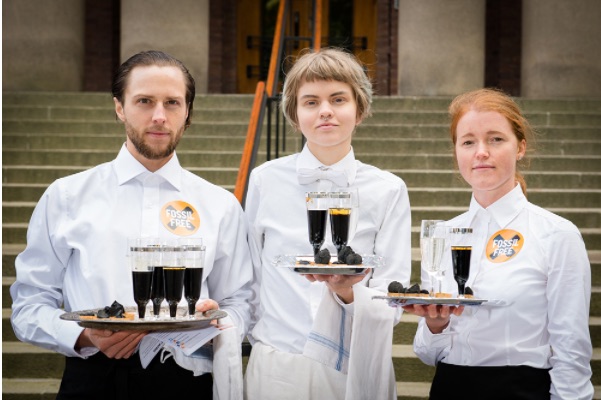
Twelve days of unprecedented worldwide action against fossil fuels concluded Sunday showing that the climate movement will not rest until all coal, oil and gas is kept in the ground. The combined global efforts of activists on six continents now pose a serious threat to the future of the fossil fuel industry, already weakened by financial and political uncertainty.

ecowatch
The UK’s largest opencast coal mine was shut down for a day.
Photo credit: Tim Wagner

Tens of thousands of activists took to the streets, occupied mines, blocked rail lines, linked arms, paddled in kayaks and held community meetings in 13 countries, pushing the boundaries of conventional protest to find new ways to demand coal, oil and gas stay in the ground. Participants risked arrest—many for the first time—to say that it’s time to Break Free from the current energy paradigm that is locking the planet into a future of catastrophic climate change. . .

Highlights include:

Thousands worldwide risked arrest during the actions, many for the first time.

$20 million worth of coal shipments were halted by activists shutting down the largest coal port in the world in Newcastle, Australia.

The UK’s largest opencast coal mine was shut down for a day.

Hundreds stood up to South Africa’s most powerful family with a march that delivered coal to their front door, despite their attempts to silence civil society by pressuring police to revoke permits for a march.

Dozens of people occupied train tracks overnight on both coasts of the United States to stop oil-filled ‘bomb trains’ from rolling through communities — including less than 100 feet from low-income public housing in Albany, New York.

3,500 people shut down one of Europe’s biggest carbon polluters in Germany, occupying a lignite mine and nearby power station for more than 48 hours, reducing the plant’s capacity by 80 percent.

10,000 marched against a proposed coal plant in Batangas, the Philippines.

3,000 sent an ear-splitting message to Indonesia’s president with a whistle demonstration against coal in Jakarta, and a few days later 12 activists climbed the cranes supplying coal for the Cirebon Coal Power Plant, and dropping banners to “Quit Coal” and for “Clean Energy, Clean Air.”

Community members blocked traffic outside the gates of Brazil’s largest thermal coal plant, in Ceará.

On land and water, indigenous communities and local activists blockaded the Kinder Morgan tar sands facility in Metro-Vancouver, unceded Coast Salish Territories.

150+ local activists marched and occupied the entrance of two fossil fuel refineries, which are the largest unaddressed source of carbon pollution in the Northwest of the U.S.

In Aliaga, Turkey 2,000 people marched to the gates of the Izmir region’s largest coal dump, and surrounded it with a giant red line, as a call to end plans for the massive expansion of coal in the country.

“The global climate justice movement is rising fast. But so are the oceans. So are global temperatures. This is a race against time. Our movement is stronger than ever, but to beat the odds, we have to grow stronger,” Naomi Klein, award winning journalist/author, said.

Question for this article:

United Nations High Level Thematic Debate on Peace and Security: Closing remarks

FREE FLOW OF INFORMATION

An article from the webpage of the the President of the United Nations General Assembly

Honourable Ministers, Excellencies, distinguished guests, ladies and gentlemen. We have come to the end of what I believe has been a truly enriching discussion on the UN’s role in maintaining global peace and security. I would like to thank all those who contributed so actively to this event including our speakers, those of you visiting from capitals, our interpreters, colleagues in DGACM, civil society representatives and of course, you, the membership.

unga

Discussions these past few days demonstrate that across the membership, there is a feeling that we are at a watershed moment in terms of both the challenges we are facing in maintaining international peace and security and the way we must tackle those challenges.

Taken together, the recommendations included in the three UN reviews and other relevant processes, provide us with a very solid basis from which to move forward.

Indeed, through this debate we have identified some of the key themes and connectors between these reviews, but what we need now is sustained political engagement and actual implementation.

Shortly after this meeting, I will therefore produce a summary of the key messages from this debate which I will share with both member states, the current Secretary-General and Secretary-General candidates.

I also intend to invite the Secretary-General to brief the membership on how the UN is jointly implementing the relevant recommendations emerging from all three reviews and to consider producing a possible roadmap to that effect.

Among the key messages and my own personal reflections are the following:

First, on the need to rebuild trust.

The UN’s inability to protect civilians in conflicts; the disturbing allegations of sexual abuse and exploitation by peace keepers; the lack of adequate tools to respond to complex conflicts, to international terrorism or to global challenges with a clear security dimension, have undermined global confidence in the UN’s role in maintaining peace and security.

On this seventieth anniversary, therefore, we need to enhance the trust on which institutional cooperation is build.

Trust between member states, large and small and between member states and the UN, that we will adhere the commitments of the UN Charter to ensure our collective security; that we will uphold our obligations under international humanitarian law; that we will rejuvenate the ability of the United Nations to confront new and evolving threats.

(Article continued in the column on the right)

Questions related to this article:

Can the UN help move the world toward a culture of peace?

(Article continued from the column on the left)

Second, on prevention.

As Leymah Gbowee reminded us – if we spend peanuts on prevention and trillions on war, then we cannot expect to achieve peace.

Greater resources, analysis, research should therefore be dedicated to the UN’s diplomatic and preventive functions.

Furthermore, the search for conflict resolution whether through UN managed missions, efforts pursued with regional organizations or multi-national action authorized by the security council, must be ground in an overall political framework.

Third, on the role of women. Practically everyone agrees that women must be more involved right across the continuum of sustaining peace.

But agreement is not enough. Leadership and targeted steps to make this happen are needed now.

Similarly tools must be developed to place communities at the heart of peace operations.

Fifth, in today’s world the UN must increasingly look to build partnerships at political and operational level with regional and sub-regional organizations; with other multi-lateral partners, with civil society and with the private sector.

Sixth, we have to reduce fragmentation across the three UN pillars notably by enhancing the Peacebuilding Commission’s role and by taking the SDGs as our collective vision and guide. Greater efforts should also be made to improve the effectiveness and efficiency of the UN, including at Headquarters.

Seventh, in relation to the fight against radicalism and terrorism, consideration should be given to identifying concrete ways for the UN to effectively contribute to the international efforts to counter terrorist entities when encountered in mission environments.

Eighth, large-scale displacement may be a consequence of instability or feed into new or existing tensions. Properly responding to these flows in the longer term demands that we focus on addressing the underlying root causes.

And finally, taking office on 1 January 2017, the next Secretary-General will

need to foster support from the UN Security Council and all Member States’ to advance peace, justice and security across our world. In particular, she or he will need support to implement the practical recommendations contained in the three reviews.

_________

To conclude, let us remember that the current or the future Secretary-General can only do so much.

Ultimately, the shift we need – in mind-set, in our financing and partnership mechanisms, in our systems and operations – will only happen if it is supported and driven by governments and leaders around the world

I hope that you and your leaders will rise up to this challenge.

I thank you again for your participation and continued support.

A Joint Declaration on the Environment, Social Inequality and Elimination of Nuclear Threat, with a Proposal for UN reform

DISARMAMENT & SECURITY .

From the Website of the Joint Declaration

We, individuals and institutions that are profoundly concerned about the earth’s present state, particularly by potentially irreversible social and environmental processes, and about the lack of an effective, democratic multilateral entity respected by all that is essential for world governance at this extraordinarily complex and changing time,

mayor

URGE YOU

to adhere to this joint declaration in order to contribute to the rapid adoption of the following measures, the grounds for which are attached hereto as Document I and Document II.

Environment

The current tendencies, resulting from a deplorable economic system based solely on making fast profits, must be urgently reversed to avoid reaching a point of no return. Both President Obama –“we are the first generation to feel the effect of climate change and the last generation who can do something about it”- as well as Pope Francis –“(…) intergenerational solidarity is not optional, but rather a basic question of justice, since the world we have received also belongs to those who will follow us”- have with wisdom and leadership warned of the immediate actions that must be taken concerning climate change. We must invent the future. The distinctive creative capacity of human beings is our hope. As Amin Maalouf has underscored, “unprecedented situations require unprecedented solutions”.

We live at a crucial moment in the history of mankind in which both population growth and the nature of our activities influence the habitability of the earth (anthropocene).

All other interests must be subordinated to an in-depth understanding of reality. The scientific community, guided by the “democratic principles” so clearly set forth in the UNESCO Constitution, should counsel political leaders (at the international, regional, national and municipal levels) concerning the actions to be taken, not only in their role as advisors, but also to provide foresight. Knowledge to foresee, foresight to prevent.

It is clear that accurate diagnoses have already been made but that they haven’t led to what is really important: the right and timely treatment.

Communications media and social networks must constantly strive to achieve a resounding outcry, a sense of solidarity and responsibility, adopting personal and collective resolutions at all levels –including radical changes in institutions- capable of halting the current decline before it is too late.

As President Nelson Mandela reminded us, “the supreme duty of each generation is to properly take care of the next”.

2-Social inequality and extreme poverty

It is humanly intolerable that each day thousands of people die of hunger and neglect, the majority of them children between the ages of one and five, while at the same time 3 billion dollars are invested in weapons and military spending. This is particularly true when, as is currently the case, funds for sustainable human development have been unduly and wrongfully reduced. The lack of solidarity of the wealthiest toward the poor has reached limits that can no longer be tolerated. For the transition from an anti-ecological economy of speculation, delocalization of production and war to a knowledge-based economy for global sustainable and human development, and from a culture of imposition, violence and war to a culture of dialogue, conciliation, alliances and peace, we must immediately proceed to do away with the (G7, G8, G20) groups of plutocrats and re-establish ethical values as the basis for our daily behaviour.

3-Elimination of the nuclear threat and disarmament for development

The nuclear threat continues to pose an unbelievably sinister and ethically untenable danger. Well-regulated disarmament for development would not only guarantee international security, but would also provide the necessary funds for global development and the implementation of the United Nations’ priorities (food, water, health, environment, life-long education for all, scientific research and innovation, and peace).

(continued in right column)

(Click here for a version of this article in Spanish.)

Question for this article:

Proposals for Reform of the United Nations: Are they sufficiently radical?

(continued from left column)

For these so relevant and urgent reasons

WE PROPOSE

Calling an extraordinary session of the United Nations General Assembly to adopt the necessary urgent social and environmental measures and, moreover, to establish the guidelines for the re-founding of a democratic multilateral system. The “new UN System” with a General Assembly of 50% of States representatives and 50% of representatives of civil society, and adding to the present Security Council and Environmental Council and a Socio-Economic Council, has been studied in depth. In all cases, no veto but weighted vote.

***

In view of the poor progress made toward fulfilling the Millennium Objectives (ODM) and, given the present lack of solidarity, increased social inequality and subordination to the dictates of commercial consortia, no one believes that the Sustainable Development Objectives (SDOs) to be adopted in September will actually be implemented.

The solution is inclusive participative democracy in which all aspects of the economy are subordinated to social justice.

Jose Luis Sampedro left a fantastic legacy to young people: “You will have to change both ship and course”. The attached report (I) outlines recent events and projects that leave room for optimism. Human beings, who today may express themselves freely thanks to digital technology, now have global awareness while, moreover, decision making is increasingly influenced by growing numbers of women, the cornerstone of this new era. A historical turning point is drawing near that will enable us to take the reins of our common destiny in our own hands.

First Signatories

Federico Mayor (President of the Foundation for a Culture of Peace and former Director General of UNESCO)

Mikhail Gorbachev (Former President of the Soviet Union, President of Green Cross International and World Political Forum)

Mario Soares (Former President of Portugal and President of the Fundaçao Mario Soares)

Javier Pérez de Cuéllar (Former General Secretary ONU)

Garry Jacobs (Chief Executive Officer of the World Academy of Art & Science)

Colin Archer (Secretary General), Ingeborg Breines (Co-President) and Reiner Braun (Co-President) of the International Peace Bureau

Roberto Savio (Founder and President of IPS- International Press Service)

François de Bernard (President and Co-Founder of the GERM (Group for Study and Research on Globalization)

Alexander Likhotal (Green Cross International)

Miguel Ángel Moratinos (ex Ministro Español de Asuntos Exteriores – Presidente de REDS)

Ricardo Díez Hochleitner (Presidente de Honor del Capítulo Español del Club de Roma)

José Manuel Morán (Vicepresidente Capítulo Español del Club de Roma)

Trinidad Bernal (Secretaria General Fundación ATYME)

Julio E. Celis (Danish Cancer Society)

Jean Paul Carteron (Chairman and Founder Crnas Montana Forum)

Anwarul Chowdhury (Ambassador, Founder Global Movement for the Culture of Peace and former Under-Secretary-General and High Representative of the UN New York)

Denis Torres (Instituto Martin Luther King – Managua, Nicaragua)

María Novo (Catedrática UNESCO de Educación Ambiental y Desarrollos Sostenible Universidad Nacional de Educación a Distancia (UNED) – España)

Rustem Khairov (Director International Foundation for Survival and Development Humanity)

Alejandro Tiana Ferrer (Rector Universidad de Educación a Distancia (UNED))

Negoslav Ostojic (ECPD)

Prof. José María Sanz (Rector Universidad Autónoma de Madrid)

Prof. Rafael Garesse (Vicerrector de Innovación y Política Científica de la Universidad Autónoma de Madrid)

Anaisabel Prera Anaisabel Prera Flores (DEMOS Institut Guatemala – former Minister of Culture of Guatemala and Director of FCP in Madrid (2000-2004)

Frank LaRue (Demos Institut Guatemala)

Anabella Rivera (Demos Institut Guatemala)

Jordi Armadans, Director de FundiPau (Fundació per la Pau)

Enrique Barón Crespo

Carlos Jiménez Villarejo

Juan José Tamayo

Manuel Núñez Encabo (Fundación Antonio Machado)

Juan Manuel de Faramiñan

Emilio Muñoz

Natalia Muñoz-Casayús

María Quintana Romero

Jerónimo Asensio Rueda

Intergovernmental Negotiations on Security Council Reform

FREE FLOW OF INFORMATION

Based on news from various news services as indicated by the links

Meeting on May 2 at the United Nations, the ambassadors making up the Intergovernmental Negotiations on Security Council reform clashed on the question of enlarging the Council to include more permanent members. When the UN was founded in the rubble of World War II, the five victors — Britain, China, France, the Soviet Union and the US — assumed for themselves permanent council memberships and veto powers. According to the ambassador, their “special powers are a holdover from 1945 in a world that has dramatically changed with the rise of new powers and the UN itself increasing its membership by nearly three times, from 51 to 193.”

unsc
The chamber of the United Nations Security Council
Click on photo to enlarge

The ambassador from India called for the addition of new permanent members, referring to a negotiating document which is based on a survey of UN members on council reforms. Of the 122 countries that made written submissions for the survey, 113 — or more than 90 percent — supported expanding both categories of council membership, he said. They include the 54 members of the African Union, 42 from the L.69, which is a group supporting reforms, the Caribbean Community (CARICOM) members, the G4 and 21 others, in addition to two permanent members, Brtain and France, he said. He spoke on behalf of India, Brazil, Germany and Japan, the so-called G4 group.

Pakistan objected to the proposal by India that it should be added as a permanent member of the Council, along with Brazil, Germany and Japan, the so-called G4 group.

And the Democratic People’s Republic of Korea strongly opposed permanent membership of Japan – another member of the G4.

A 13-member group known as Uniting for Consensus (UfC), which included Pakistan and is led by Italy, reiterated its opposition to adding any permanent members, the core of its position on the reform process.

(Article continued in the column on the right)

Questions related to this article:

Can the UN help move the world toward a culture of peace?

(Article continued from the column on the left)

Another approach was proposed by the Ambassador from Ireland, as follows:

In relation to today’s topic of “categories of membership”, Ireland is not convinced by arguments for the creation of new permanent members of the Council. Democratic accountability is a watchword for almost every global institution. The Security Council should be no different. To create new permanent seats – which would not be subject to periodic election by the membership – would risk compounding many of the problems of the present dispensation.

At the same time, we fully recognise that there are countries which, due to their ability to contribute significantly to the maintenance of international peace and security, should be able to play a stronger role on the Council than allowed by the current arrangements. For this reason, although we are open to considering various models for expansion, we are positively disposed towards the creation of a new category of seats with an 8 year term. Ireland believes there should be 6 seats in this category, with 2 each from the African and Asia-Pacific group, and 1 each from WEOG and GRULAC.

We also believe an expansion of the current category of 2 year seats is warranted, including to ensure that smaller states can continue to serve regularly on the Council. These should increase by 5 to 15, with the African group taking 2 of the new seats, and the Eastern European group, the AsiaPacific group and GRULAC taking 1 each.

It would be for further consideration whether seats in either of these categories would be eligible for immediate re-election. The overall regional breakdown of seats under the model outlined above would result in 7 Council members from Africa, 6 members from WEOG, 6 from Asia Pacific, 4 from GRULAC, and 3 from Eastern Europe.

This would result in a Council of 26 seats, which would, in our view, be a good balance between representativeness and efficiency. As previously outlined, we continue to favour eventual abolition of the veto, and, as we would do not favour creating any new permanent members of the Council, the extension of the veto to any new member does not arise.

UN chief candidates pressed on how to tackle global challenges

FREE FLOW OF INFORMATION

An article by Gu Zhenqiu for Xinhuanet

The first public interviews with the current nine candidates vying to be next UN secretary-general and a three-day event which is first of its kind in the 70-year history of the world body, concluded here [at the United Nations] Thursday [April 14] with 193 UN member states judging their performance and answers to the questions from the globe.

unsecgen
This combination photo shows the candidates for the next United Nations Secretary-General. Upper row from left to right: Igor Luksic, Montenegro’s deputy prime minister and foreign minister, Danilo Turk, former president of Slovenia, Antonio Guterres, former prime minister of Portugal and former UN High Commissioner for Refugees. Middle row from left to right: Vesna Pusic, former Croatian foreign minister, Irina Bokova, director-general of United Nations Educational, Scientific and Cultural Organization (UNESCO), Natalia Gherman, former minister of foreign affairs and European integration of Moldova. Bottom row from left to right: Srgjan Kerim, President of the 62th session of the United Nations General Assembly, and former minister of foreign affairs of Macedonia, Helen Clark, former Prime Minister of New Zealand and Administrator of the United Nations Development Programme (UNDP), Vuk Jeremic, President of the 67th session of the United Nations General Assembly, and former Foreign Minister of the Republic of Serbia. (Xinhua/Li Muzi)
Click on photo to enlarge

The questions – which also came from members of civil society – to the five men and four women along with their answers were heard via webcast. In fact, the public hearings, also known as “informal dialogues” within the United Nations, rekindled the debate on how to make the global organization more relevant, transparent, efficient and effective in efforts to deal with grave global challenges, such as climate change and terrorism.

The questions, put forward either by a diplomat on the scene or a child through video, were intended to help choose the best person to succeed the current UN Secretary-General Ban Ki-moon, whose tenure is to end on Dec. 31.

The questions were challenging, illustrating high expectations of the international community to see a strong UN chief at the helm of the world’s most universal and authoritative organization.

There were questions that illustrated how different countries have different concerns based on their national interests.

For instance, African and Caribbean countries worry about a lack of access to concessional funds from industrialized nations in their development efforts, while Algeria and other states also voiced concerns at the unbalanced and inequitable composition of UN staff at headquarters in New York in terms of gender and geography.

(Article continued in the column on the right)

Questions related to this article:

Can the UN help move the world toward a culture of peace?

(Article continued from the column on the left)

African and Asian countries asked questions on how the next UN head will strengthen cooperation between the United Nations and regional organizations. Other countries, including Sierra Leone, wondered how the UN would execute its “zero tolerance” policy in a bid to end sexual abuse by peacekeepers in conflict-torn countries such as the Central African Republic.

A representative from Rwanda, who complained that “the conflict” raged in a regular pattern, particularly in Africa,” asked Helen Clark, one of the nine candidates and former prime minister of New Zealand, what measures she would take to reverse the trend.

Riyad Mansour, the permanent observer of Palestine to the United Nations, asked the candidates how they would end the Isareli-Palestinian conflict.

Small island countries, on the other hand, said they have been haunted by the impact of climate change. “What would you do to make sure countries take actions to stop catastrophic climate change?” a child asked via video.

Meanwhile, Brazil, Germany, India and Japan, which form the Group of Four (G4), asked most of the nine candidates about how he or she would reform the UN Security Council, the most powerful body in the UN family. Each of the G4 aspire to become permanent members.

There were also questions related to gender equality, human rights, sustainable development, the UN budget, UN management and UN peacekeeping operations.

Mogens Lykketoft, President of the UN General Assembly, told reporters that the event is just a “starting point” in the process of selecting the next UN secretary-general.

“I am surprised by the large number of countries and members of civil society coming forward to ask questions,” Lykketoft said. “It’s more than I expected.”

At this moment, there is still no public comments either by diplomats or senior UN officials on the performance of the nine candidates. People here at the United Nations are still arguing whether gender or geographical rotation should be the only criteria for the selection of the new top diplomat in the world.

But a key question remains: what impact will the open interviews have on the final decision by the UN Security Council, the 15-nation UN body which has the final say in deciding who will be the next UN chief?

Under the UN Charter, the secretary-general is chosen by the 193-member General Assembly on the recommendation of the 15-member Security Council.

In practice, this has meant that the council’s five permanent members, namely Britain, China, France, the United States and Russia, have veto power over the candidates. That will not change in deciding who succeeds Ban.

Annual Report of The Elders

FREE FLOW OF INFORMATION

Excerpts from the section for a “Stronger UN” in the Annual Report of the The Elders and excerpts from their proposal “Four Ideas to Save the Peace.” The Elders are a small, dedicated group of individuals including former Heads of State and former Heads of International Organizations convened by Nelson Mandela in 2007 to use their collective experience and influence to help tackle some of the most pressing problems facing the world today.

In 2015, The Elders launched a major new initiative aimed at strengthening the United Nations in its core responsibility for the preservation of peace and security worldwide. . . The Elders’ proposals were publicly launched at the Munich Security Conference in early February before a large audience of top government officials and parliamentarians from around the world. After the presentation, the Elders – Martti Ahtisaari, Kofi Annan, Gro Harlem Brundtland, and Graça Machel – held a series of private bilateral meetings with other delegations. An Op-Ed signed by Kofi Annan and Gro Brundtland which outlined “Four Ideas to Save the Peace” was published simultaneously in nine countries, in different languages. The Elders participated in five meetings on different aspects of the subject in New York alone (three of them well-attended events at UN Headquarters). . .

elders
The Elders grouped around Nelson Mandela. Left to right: Graca Machel, Fernando Cardoso, Desmond Tutu, Jimmy Carter, Mary Robinson, Kofi Annan, Gro Harlem Brundlandt, Martti Ahtisaari, Eli Bhatt and Lakhdar Brahimi.

Click on photo to enlarge

Together with Liechtenstein, a close ally for this initiative, in early September, The Elders convened a private meeting in Vaduz of active and retired senior officials with first-hand knowledge of the Security Council. The subsequent report was disseminated in New York to all UN delegations in September and was later the subject of a meeting at the UN Headquarters at which Lakhdar Brahimi spoke. . . .

It is clear that The Elders have acted as a catalyst for intergovernmental action at the UN with respect to the Secretary-General selection process. Their leadership has been frequently cited by civil society activists in this and other areas of proposed reform such as restraint by the five permanent members of the Security Council in the use of their veto powers in cases of mass atrocities and expansion of the Council to bring in new semi-permanent members. This last proposal is aimed at breaking the deadlock of the past two decades in intergovernmental negotiations at the UN which has stymied progress towards making the Council more democratic and representative of today’s world. In the coming year, The Elders aim to build on the solid achievements of 2015 under this initiative. . . .

(Article continued in the column on the right)

Questions related to this article:

Where in the world can we find good leadership today?

(Article continued from the column on the left)

FOUR IDEAS TO SAVE THE PEACE

1. A new category of members [of the UN Security Council] . . .

Let the states which aspire to permanent membership accept instead, at least for the time being, election to a new category of membership, which would give them a much longer term than the two years served by the non-permanent members, and to which they could be immediately re-elected when that term expires. This would enable them to become de facto permanent members, but in a more democratic way, since it would depend on them continuing to enjoy the confidence of other member states. By making the Council more democratic, this change would increase its legitimacy in the eyes of the world, thereby enhancing its authority and so also making it more effective.

2. A pledge from permanent members [of the UN Security Council] . . .

We therefore call on the five existing permanent members to pledge themselves to greater and more persistent efforts to find common ground, especially in crises where populations are being subjected to, or threatened with, genocide or other atrocity crimes. States making this pledge will undertake not to use, or threaten to use, their veto in such crises without explaining, clearly and in public, what alternative course of action they propose, as a credible and efficient way to protect the populations in question. This explanation must refer to international peace and security, and not to the national interest of the state casting the veto, since any state casting a veto simply to protect its national interests is abusing the privilege of permanent membership. And when one or more permanent members do feel obliged to cast a veto, and do provide such an explanation, the others must undertake not to abandon the search for common ground but to make even greater efforts to agree on an effective course of action.

3. A voice for civil society [in the UN Security Council] . . .

We call on all members of the Security Council to make more regular and systematic use of the “Arria formula” (under which, in the last two decades, Security Council members have had meetings with a wide variety of civil society organisations), to give groups representing people in zones of conflict the greatest possible opportunity to inform and influence Council decisions. At present, meetings under the Arria formula are too often attended only by junior officials, whose reports can easily be ignored. In future, we call on the heads of the delegations of all countries serving on the Security Council, including the permanent members, to attend all meetings held under this formula in person. Members of the Council must use such meetings to ensure that their decisions are informed by full and clear knowledge of the conditions in the country or region concerned, and of the views of those most directly affected.

4. A more independent Secretary-General

We call on the General Assembly to insist that the Security Council recommend more than one candidate for appointment as the Secretary-General of the United Nations, after a timely, equitable and transparent search for the best qualified candidates, irrespective of gender or regional origin. We suggest that the next Secretary-General be appointed for a single, non-renewable term of seven years, in order to strengthen his or her independence and avoid the perception that he or she is guided by electoral concerns. She or he must not be under pressure, either before or after being appointed, to give posts in the Secretariat to people of any particular nationality in return for political support, since this is clearly contrary to the spirit of the Charter. This new process should be adopted without delay, so that the United Nations can make full use of it to choose the best person to assume the post in January 2017.

Mennonite Central Committee: Peace education in photos

EDUCATION FOR PEACE .

An article compiled by Elizabeth Kessler for the Mennonite Central Committee

Our Global Family education program supports nine projects that focus on peace education. Students learn about diversity, forgiveness and the skills they need to mediate conflicts between their peers. These programs are all located in places that have a history of violent conflict, and our local partners believe that the children who learn nonviolence have the potential to grow to be leaders of change.

mennonites
Click on photos to enlarge
Photo credits (left to right): Dave Klassen, Khamsa Homsombath, Ryan Rodrick Beiler, Majeda Al Saqqa, Edupaz, Sezam, Grassroots Development Initiative, Help the Afghan Children

Nigeria

Patrick Asuquo Effiwatt is the head boy at Township Primary school in Plateau State, Nigeria. He is also one of the student leaders in the school’s Peace Club, which was set up by our partner Emergency Preparedness Response Teams (EPRT). EPRT is working to start 50 new peace clubs in secondary schools across the state.

Each club brings students together to learn how to resolve conflict between their peers. “I have been part of the Peace Club for two years now, and it has impacted my life greatly,” testifies Patrick. “Conflict is a given. But there are ways to settle differences that lead to forgiveness and nonviolence. I want to be part of those solutions.”

Caroline Emmanuel told us, “I once mediated between my grandmother and my aunt when a serious disagreement erupted.” She’s a member of the Mangu Hale school Peace Club, one of the clubs set up by EPRT. The members of the club have been praised by the school’s parent committee for the positive impact they have had on the school.

Laos

These kids are learning about trust through a teambuilding activity at a peacebuilding summer camp organized by Mittapab (Friendship), a group of educators and young adults who teach peace skills to their peers in Vientiane, Laos. Global Family provides resources for workshops, internships and the peacebuilding summer camp.

Sunsany Khodphoutone, the leader in the red shirt, has been a volunteer since 2011.

“I take my role as a peacebuilder seriously,” he says. “Sometimes I am so excited about what I have learned that I can’t help but teach everyone I come into contact with…. I really love what Mittapab is doing—more than my study subject at college. I will continue to improve myself to be a good leader and peacebuilder for the future of Laos.”

Gaza

Suheil Arandas (age 10, in the red shirt) participates in a dance class at Shoroq wa-Amal. Shoroq wa-Amal means “Sunshine and Hope”, and is a program for refugee children at the Khan Younis refugee camp in Gaza. The Culture and Free Thought Association (CFTA), a Global Family partner, is providing leadership training and healthy outlets for expression for the children, many of whom have lost loved ones to violence. The CFTA believes that trauma healing is an important building block for a future of peace in Palestine and Israel. Global Family provides stipends for counsellors to meet with the students.

Ahmed Zokmatt, another student at Shoroq wa-Amal, draws a crowd of children protesting for their right to feel safe.

Ahmed was devastated by the death of his cousin, who was killed in an Israeli air strike during the 2014 Israel-Hamas conflict. “He was a dear friend of mine,” he says. “When I knew Ibrahim was coming to visit I could not sleep from happiness. We would laugh, eat, play and he would sleep next to me. I am in disbelief that I will never see him again.”

(Article continued in right column)

Question for this article:

Can peace be guaranteed through nonviolent means?

(Article continued from left column)

While at Shoroq wa-Amal, Ahmed expresses his feelings through drawing and painting.

“I want to tell the world that children in Gaza have the right to play, smile, be happy and feel safe and secure,” Ahmed said.

Colombia

Luis Esteban Estupiñan Mosquera teaches English and physical education in Cali, Colombia. He has been a teacher for 14 years, but came to a new school in 2014 where MCC partner Edupaz has been working to teach students, teachers and parents how to mediate conflicts.

At the schools where he taught before, Luis says the teachers didn’t know how to handle conflict, and used “punitive methods” with the students. Many of the students come from families that fled violence in rural Colombia during the decades-long civil war, and still experience the effects of street violence and domestic violence.

Coming to this new school changed things for Luis. “The fact that this school is teaching alternatives to managing conflict has changed a lot in my performance as a teacher and in my personal life,” he says. “I have now learned how to teach my students to avoid conflict. This is wonderful!”

Bosnia and Herzegovina

Dženaida Dizdarevic Subašic is a teacher and participant of Education for the Future, a Global Family-supported program in Bosnia and Herzegovina that trains primary school teachers in modelling tolerance and acceptance of differences.

Neighbouring communities in Bosnia and Herzegovina are ethnically divided, and children go to separate religious schools. By promoting trauma healing, peacebuilding and reconciliation, teachers can have a positive impact on how Christians and Muslims coexist.

Dženaida was skeptical about the training at first, but she now teaches nonviolent communication to her students. “Skills learned in nonviolence workshops also help students have better relationships and more respect in dealing with each other,” she says.

Kenya

This photo was taken at Rae Kanyika Primary School in Kisumu, Kenya. Christopher Omondi, on the right, is conducting a session on leadership with the Student Leaders Council of the school. Christopher is a volunteer with Grassroots Development Initiative (GDI), a local organization in Kisumu that works to promote peaceful environments in schools.

In April 2016, GDI will become one of Global Family’s newest partners. Global Family will provide funding to train teachers in restorative discipline as an alternative to corporal punishment. GDI will also train teachers in conflict resolution and confronting gender discrimination.

Afghanistan

Atifa is a grade seven student in Paghman District, Kabul Province, Afghanistan. She is proud to have been able to settle disputes between her classmates ever since taking a peace education course offered by Help the Afghan Children, a Global Family partner.

Help the Afghan Children (HTAC) works in 15 schools in Paghman District, offering peace education as well as computer classes with support from Global Family. While it is usually difficult to directly measure the impact of peace education, we know that aggressive conflicts between students in Paghman District dropped by 63% between 2011 and 2013, and two-thirds of students were seen to be modelling the behaviour taught in HTAC classes.

2016 World Press Freedom Index ­– leaders paranoid about journalists

FREE FLOW OF INFORMATION

An article from Reporters without Borders

Most of the movement in the World Press Freedom Index unveiled today by Reporters Without Borders is indicative of a climate of fear and tension combined with increasing control over newsrooms by governments and private-sector interests.

press-freedom
Click on the image to enlarge

The 2016 World Press Freedom Index reflects the intensity of the attacks on journalistic freedom and independence by governments, ideologies and private-sector interests during the past year.

Seen as a benchmark throughout the world, the Index ranks 180 countries according to the freedom allowed journalists. It also includes indicators of the level of media freedom violations in each region. These show that Europe (with 19.8 points) still has the freest media, followed distantly by Africa (36.9), which for the first time overtook the Americas (37.1), a region where violence against journalists is on the rise. Asia (43.8) and Eastern Europe/Central Asia (48.4) follow, while North Africa/Middle East (50.8) is still the region where journalists are most subjected to constraints of every kind.

Three north European countries head the rankings. They are Finland (ranked 1st, the position it has held since 2010), Netherlands (2nd, up 2 places) and Norway (3rd, down 1). The countries that rose most in the Index include Tunisia (96th, up 30), thanks to a decline in violence and legal proceedings, and Ukraine (107th, up 22), where the conflict in the east of the country abated.
(Article continued in the right column.)

(Click here for the French version of this article or click here for the Spanish version.)

Question(s) related to this article:

Free flow of information, How is it important for a culture of peace?

(Article continued from left column)

The countries that fell farthest include Poland (47th, down 29), where the ultra-conservative government seized control of the public media, and (much farther down) Tajikistan, which plunged 34 places to 150th as a result of the regime’s growing authoritarianism. The Sultanate of Brunei (155th, down 34) suffered a similar fall because gradual introduction of the Sharia and threats of blasphemy charges have fuelled self-censorship. Burundi (156th, down 11) fell because of the violence against journalists resulting from President Pierre Nkurunziza’s contested reelection for a third term. The same “infernal trio” are in the last three positions: Turkmenistan (178th), North Korea (179th) and Eritrea (180th).

“It is unfortunately clear that many of the world’s leaders are developing a form of paranoia about legitimate journalism,”[ according to] RSF secretary-general Christophe Deloire “The climate of fear results in a growing aversion to debate and pluralism, a clampdown on the media by ever more authoritarian and oppressive governments, and reporting in the privately-owned media that is increasingly shaped by personal interests. Journalism worthy of the name must be defended against the increase in propaganda and media content that is made to order or sponsored by vested interests. Guaranteeing the public’s right to independent and reliable news and information is essential if humankind’s problems, both local and global, are to be solved.”

Published annually by RSF since 2002, the World Press Freedom Index is an important advocacy tool based on the principle of emulation between states. Because it is now so well known, its influence over the media, governments and international organizations is growing.

The Index is based on an evaluation of media freedom that measures pluralism, media independence, the quality of the legal framework and the safety of journalists in 180 countries. It is compiled by means of a questionnaire in 20 languages that is completed by experts all over the world. This qualitative analysis is combined with quantitative data on abuses and acts of violence against journalists during the period evaluated.

The Index is not an indicator of the quality of the journalism in each country, nor does it rank public policies even if governments obviously have a major impact on their country’s ranking.