Category Archives: global

47 of the world’s poorest countries are aiming to hit 100% renewable energy

. .. SUSTAINABLE DEVELOPMENT .. .

An article by Josh Hrala in Science Alert

As the world’s leading superpowers struggle to make the transition from fossil-based energy systems to more sustainable options, 47 of the world’s poorest nations have pledged to skip fossil fuels altogether and jump straight to using 100 percent renewable energy instead.

The ambitious goal was laid out by members of the Climate Vulnerable Forum (CVF) during the final day of the UN Climate Change Conference in Morocco last week, which discussed ways for countries to hit the targets set by the Paris Agreement late last year.

cvf

The idea, in a nutshell, is to have some of the world’s poorest countries skip from pre-industrialisation practices to renewables, allowing them to basically avoid the ‘messy part‘ in the middle where a need for more energy to support economic growth spurs fossil fuel use to dangerously high levels.

In economics, this sort of skipping is known as ‘leapfrogging’ and it occurs when a society skips a step of development that other countries have taken.

One of the best examples of this process is mobile phones in rural Africa.

In many African nations, people in remote areas ended up skipping the landline step, with only one land line per 33 people, and moved straight to mobile technology. Now one in 10 people have a cell phone – a transition that some have called a revolution.

Members of the CVF hope to perform the same kind of ‘leapfrogging’ with regards to energy.

The 47 members of the CVF – which includes nations like Bangladesh, Ethiopia, and Haiti – say they’ll “strive to meet 100 percent domestic renewable energy production as rapidly as possible, while working to end energy poverty and protect water and food security, taking into consideration national circumstances”.

The goal is to have all of these systems in place some time between 2030 and 2050, and the members have committed to presenting a detailed plan to the UN by 2020.

(Article continued in right column)

Question for this article:

Are we making progress in renewable energy?

(Article continued from left column)

The announcement comes at a time when countries around the world are trying to come up with a way to uphold the Paris Agreement set at the end of last year, which aims to keep global temperature levels from rising 1.5 degrees Celsius above pre-industrial levels.

“The commitments made by the Climate Vulnerable Forum today are both impressive and inspirational,” EU climate commissioner Miguel Arias Canete told Matt McGrath from the BBC.

“They have once again shown their moral leadership in this process with real-world commitments to action. These countries are already living the terrifying reality of climate change today and their very existence is on the line. The EU stands with them and their commitment to greater ambition in the years ahead.”

While large, more economically powerful countries are applauding the efforts, members of the CVF are questioning why some of the world’s super-powers are so reluctant to change course to protect our shared planet.

“We don’t know what countries are still waiting for to move towards net carbon neutrality and 100 percent renewable energy,” Edgar Gutierrez, Costa Rica’s minister for the environment, told the BBC.

“All parties should start the transition, otherwise we will all suffer.”

Another worry is that the world’s richest countries will stop providing financial support for the Paris Agreement.

The US had pledged to contribute US$3 billion to the US$100 billion pool the agreement hopes to amass by 2020, but so far, it’s only pitched in US$500 million.

These funds are supposed to provide developing countries with the capital they need to get started in changing their infrastructure, but if the richest countries refuse to pay – a threat recently made by US President-elect Donald Trump – it could seriously hinder or destroy the goals set in Paris.

Only time will tell how the situation will play out, but it’s definitely a step forward for the 47 countries of the CVF, and hopefully it will spur on other countries to take the same action.

Enough is enough: Oxfam seeks to end violence against women and girls once and for all

. . WOMEN’S EQUALITY . .

A press release from Oxfam

Gender inequality is both the cause and the consequence of violence against women and girls, said Oxfam today, as the agency launches a new global campaign called “Enough: Together We Can End Violence Against Women and Girls” to stop one of the most prolific human rights violations.

oxfam

A third of women will experience violence at some point in their life. Violence against women and girls knows no boundaries of geography or culture – it is a global crisis. However, marginalized women, including poor women and girls, are the most vulnerable to violence.

Women and girls face violence throughout their lives: more than 700 million women alive today were married as children, 200 million women and girls have undergone female genital mutilation – with the majority of girls being cut before the age of 5 – and 30 percent of women will experience intimate partner violence. Studies have found higher rates of violence among women experiencing multiple discriminations, including indigenous women, lesbian and bisexual women, and women with disabilities.

This violence is the most extreme form of gender discrimination, rooted in inequality and in a belief that it is acceptable to treat women and girls this way.

Winnie Byanyima, Oxfam International’s Executive Director, said: “At every minute of every day, violence is devastating the lives of millions of women and girls around the world. Violence keeps women and girls living in poverty, and women and girls living in poverty are the most exposed to violence. From child marriage to female genital mutilation to murder, violence against women and girls is deep rooted across the world. It is a vicious circle, but it can be broken as what has been learned can be unlearned. Enough is enough.”

To end these devastating practices against half the world’s population, Oxfam is kick-starting campaigns in Morocco, Indonesia, India, Pakistan, Guatemala, South Africa and Zambia to coincide with the UN designated International Day for the Elimination of Violence Against Women. More than 30 countries will join Oxfam’s campaign over time, mobilizing citizens and decision-makers to challenge the discrimination that drives this abuse against women and girls.

“In Morocco, there are many types of violence against women: physical, psychological, economic and legal, especially in the context of divorce,” said Saida*, speaking to Oxfam. “I got divorced because my husband obliged me to do so as I did not accept him getting married to a second wife. I was forced to leave my home, which was officially owned by my husband, with my little girl. Despite the laws, mentalities change very slowly. Neither the lawyer nor the judge helped me.” With Oxfam’s support, Saida took part in life skills workshops to learn how to support herself and her daughter. She now advises other women on how to claim their rights.

(Article continued in right column)

Question related to this article:

Protecting women and girls against violence, Is progress being made?

(Article continued from left column)

“Girls face struggles in all phases of their life. Girls are not allowed to get an education like boys,” said 12-year-old pupil Komal from Hamirpur in India’s Uttar Pradesh. According to 2015 Indian government data, this region accounted for the highest number of violent incidents against women and girls nationally, and over 40 percent of females here are illiterate. Until a few years ago, girls here were usually pulled out of school to care for their siblings, support their parents in farming or to do household chores. Through Oxfam’s work, local girls are now in school and many are doing combat sports, like wrestling. “Withthe support of my teacher, my parents let me compete and I won the silver medal in a state competition. I proved to my community that girls can succeed,” said Komal.

In Indonesia, child marriage and domestic violence are common and tolerated. Cheper, who married a child bride, now campaigns to end child marriage and violence against women in his community. He told Oxfam: “Growing up, my mother was often beaten by my father. I wanted to take my father to the police because he bit my mother, but I did not do that. The local community considered it common.” Women are usually excluded from village meetings, but through Cheper’s work, this is changing, as well as his wife now having plans to work outside the home.

“Women’s rights organizations and movements have long been challenging the acceptance and prevalence of violence against women and girls, but as it is so unjustly ingrained in societies across the world, more of us need to take action. Oxfam is committed to ending this crisis once and for all, for the benefit of everyone, as women’s rights are human rights,” said Oxfam’s Byanyima, who is also a member of the UN High-Level Panel on Women’s Economic Empowerment.

“I’m calling for people to stand up and speak out against the violence. Men need to stand up too and say that violence against women and girls is not acceptable – in institutions and in the whole of our country.” With 17 percent of women in Zambia experiencing sexual violence in their lifetime, 20-year-old university student, Nalishebo Kashina, is another of the many across the world taking action to stand up for women and girls.

Similarly in Guatemala, where indigenous women face violence and racism, women are tackling the root causes of violence. Maria Morales Jorge, who was part of setting up the Institute for the Defence of Indigenous Women, told Oxfam: “We all have the opportunity to change and reject any violence and oppression. We should all have the chance to be happy.”

Oxfam’s campaign aims to challenge and replace the long held misconception that men are superior to women and girls. To achieve this, Oxfam will support individuals and communities to understand the drivers of violence and build their capacity to say “Enough” to harmful attitudes and behaviors. Oxfam will also work to ensure women’s rights organizations and movements are supported, and to increase and implement laws and policies aimed at ending violence against women and girls.

“Before I thought marriage was everything in life: the present and the future. Now, I believe that life is much more than a husband. Life is also to have a job, to travel and to study,” said Moroccan woman survivor of violence and women’s rights advocate, Saida.

To kick-start the “Enough: Together We Can End Violence Against Women and Girls” campaign, Oxfam in Morocco, Indonesia, India, Pakistan, Guatemala, South Africa and Zambia will host a series of campaigning events. These will include film festivals, competitions for school children to design posters calling for an end to child marriage, decorating rickshaws to have positive messages on gender equality, performances of feminist songs and street theatre shows. Join Oxfam’s Enough: Together We Can End Violence Against Women and Girls” campaign.

Global Survey on Youth, Peace and Security

TOLERANCE AND SOLIDARITY .

From the website of the Youth4peace survey

The United Network of Young Peacebuilders and Search for Common Ground, on behalf of the inter-agency Working Group on Youth and Peacebuilding, are looking for your help!

We want to map youth organisations and initiatives building peace and preventing violence, to identify what they are doing, what impact they have made and their needs and goals for the future. If you are active, volunteering or professionally, within youth organisation or initiative working on topics related to peace and security, we would be very grateful if you could take 30 minutes to answer this Global Survey on Youth, Peace and Security.

survey

The survey findings will contribute to the Progress Study on Youth, Peace and Security mandated by UN Security Council Resolution 2250 and as such your answers will inform the future development of youth participation in peace and security.

[editor’s note: See CPNN article, UN Security Council adopts resolution on Youth, Peace and Security]

Note on data protection:

The information you provide will be kept anonymous and will only be used for purposes of aggregation for analysis by UNOY Peacebuilders and Search for Common Ground. If you want, you can also indicate that you accept having your contact information shared publicly. This is completely up to you, we will not share your information if you do not want us to. If you do accept sharing your contact information, we will include information about your organisation in a database of youth peace organisations and initiatives currently under development.

Instructions

This survey should be filled by one person per organization or initiative. Before you start, please check with your colleagues to make sure they haven’t already completed the survey on behalf of your organization or initiative. Given that the survey covers a range of topics related to your organization’s work, it may be helpful to seek input from your colleagues.

The survey consists of five brief sections:

Section 1: Profile
Section 2: Areas of Work and Methods
Section 3: Results and Impact
Section 4: Challenges and Issues
Section 5: Recommendations

For any questions on the survey, please contact Imre Veeneman, Program manager at UNOY Peacebuilders at survey@unoy.org.

Take part in the survey HERE.

Thank you for your participation!

Question for this article

UN Adopts Cuban Resolutions on Peace and Rejection of Mercenaries

FREE FLOW OF INFORMATION

An article from Prensa Latina

The Third Committee of the UN General Assembly has adopted today [November 18] by large majority two draft resolutions submitted by Cuba, which advocate for the right to peace and reject the use of mercenaries.

resolution

The text of the Declaration on the Right to Peace was supported by 116 countries, 34 rejected it and 19 abstained, following a vote requested by the United States, despite Cuba’s call to adopt it by consensus, considering the importance of the issue for humanity.

As usually occurs here, given the marked difference in positions between the North and the South, the document has been supported by the nations of Africa, Latin America and the Caribbean and Asia. Australia, Canada, the United States, Israel, Japan, New Zealand, South Korea and the members of the European Union were opposed.

The initiative states that all people should enjoy the right to peace, in order to guarantee human rights and development, without exclusion.

It also calls on the States to respect, implement and promote equality, justice and non-discrimination; and defend tolerance, dialogue, cooperation and solidarity.

Several countries co-sponsored the text submitted by Cuba, among them Belarus, Bolivia, China, Colombia, Egypt, Ghana, Indonesia, Nicaragua, Syria, South Africa, Venezuela and Vietnam.

Cuba’s project has been already adopted at the Human Rights Council in Geneva in July, when the international community was called for the first time to declare the existence of the right to peace on a planet scourged by wars, conflicts and crises, which cause suffering to tens of millions of human beings.

The Cuban delegation defended in the vote the right of all inhabitants of the planet to live without the impact of the scourge of war.

[The other] draft resolution introduced by Cuba, with the co-sponsorship of Angola, Belarus, Bolivia, China, Chile, Ecuador, India, Nicaragua, Nigeria, Syria, Uruguay, Venezuela and other States, obtained 117 votes for, 51 against and 5 abstentions.

Cuba has presented a similar initiative every year at the Third Committee.

Both projects will be submitted next month to the decision of the UN General Assembly, in the context of its 71st Session.

(Click here for an article in Spanish)

Question(s) related to this article:

What is the United Nations doing for a culture of peace?

[Editor’s note: Here is information about the anti-mercenary resolution, drawn from the UN website: In other action, the Committee approved a draft resolution on the use of mercenaries as a means of violating human rights and impeding the exercise of the right to self-determination, by 117 votes in favour to 50 against, with 6 abstentions. Among other things, it would have the General Assembly call upon States to take legislative measures to ensure that territories under their control were not used for — and their nationals did not take part in — the recruitment, assembly, financing, training, protection or transit of mercenaries. Slovakia’s representative, speaking for the European Union, explained that the bloc had voted against the draft because it would add private security firms to the mandate of the Human Rights Council’s Working Group on those issues.]

UN votes to outlaw nuclear weapons in 2017

DISARMAMENT & SECURITY .

An article by the International Campaign to Abolish Nuclear Weapons

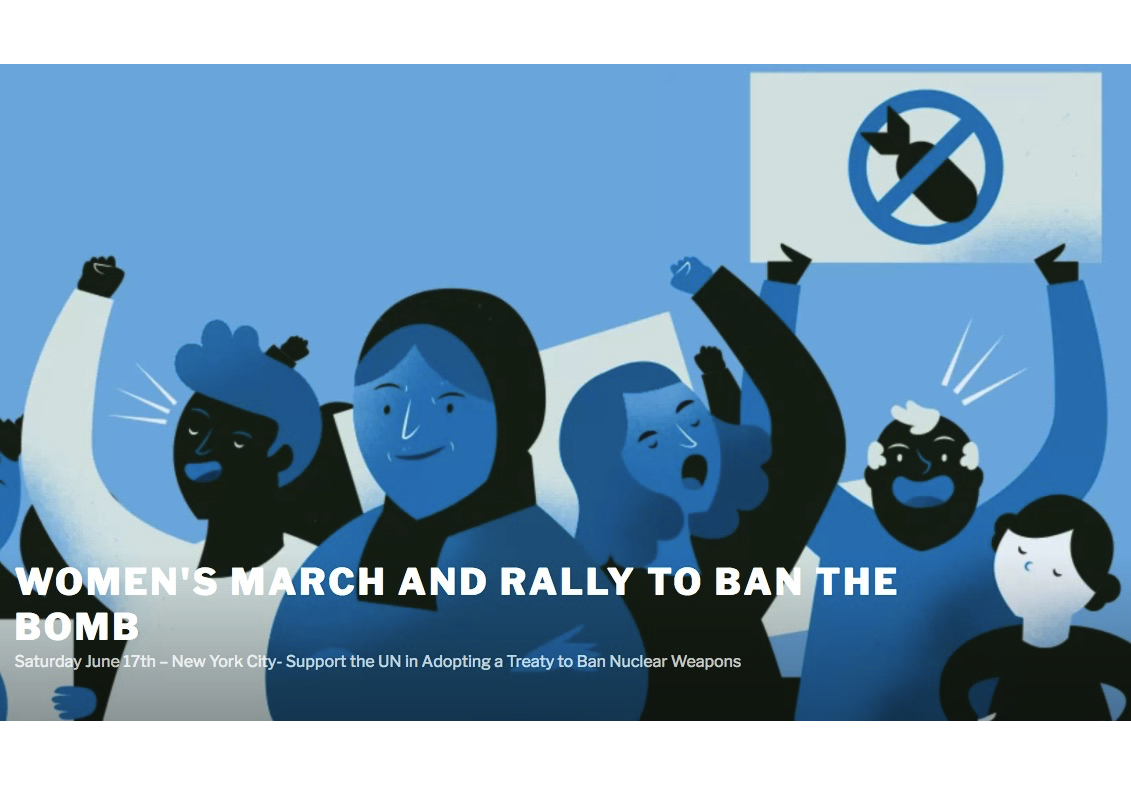
The United Nations today [October 14] adopted a landmark resolution to launch negotiations in 2017 on a treaty outlawing nuclear weapons. This historic decision heralds an end to two decades of paralysis in multilateral nuclear disarmament efforts.

icanw

At a meeting of the First Committee of the UN General Assembly, which deals with disarmament and international security matters, 123 nations voted in favour of the resolution, with 38 against and 16 abstaining.

The resolution will set up a UN conference beginning in March next year, open to all member states, to negotiate a “legally binding instrument to prohibit nuclear weapons, leading towards their total elimination”. The negotiations will continue in June and July.

The International Campaign to Abolish Nuclear Weapons (ICAN), a civil society coalition active in 100 countries, hailed the adoption of the resolution as a major step forward, marking a fundamental shift in the way that the world tackles this paramount threat.

“For seven decades, the UN has warned of the dangers of nuclear weapons, and people globally have campaigned for their abolition. Today the majority of states finally resolved to outlaw these weapons,” said Beatrice Fihn, executive director of ICAN.

Despite arm-twisting by a number of nuclear-armed states, the resolution was adopted in a landslide. A total of 57 nations were co-sponsors, with Austria, Brazil, Ireland, Mexico, Nigeria and South Africa taking the lead in drafting the resolution.

The UN vote came just hours after the European Parliament adopted its own resolution on this subject – 415 in favour and 124 against, with 74 abstentions – inviting European Union member states to “participate constructively” in next year’s negotiations.

Nuclear weapons remain the only weapons of mass destruction not yet outlawed in a comprehensive and universal manner, despite their well-documented catastrophic humanitarian and environmental impacts.

“A treaty prohibiting nuclear weapons would strengthen the global norm against the use and possession of these weapons, closing major loopholes in the existing international legal regime and spurring long-overdue action on disarmament,” said Fihn.

“Today’s vote demonstrates very clearly that a majority of the world’s nations consider the prohibition of nuclear weapons to be necessary, feasible and urgent. They view it as the most viable option for achieving real progress on disarmament,” she said.

Biological weapons, chemical weapons, anti-personnel landmines and cluster munitions are all explicitly prohibited under international law. But only partial prohibitions currently exist for nuclear weapons.

Nuclear disarmament has been high on the UN agenda since the organization’s formation in 1945. Efforts to advance this goal have stalled in recent years, with nuclear-armed nations investing heavily in the modernization of their nuclear forces.

Twenty years have passed since a multilateral nuclear disarmament instrument was last negotiated: the 1996 Comprehensive Nuclear-Test-Ban Treaty, which has yet to enter into legal force due to the opposition of a handful of nations.

(Article continued in right column)

Question related to this article:

Can we abolish all nuclear weapons?

(Article continued from left column)

Today’s resolution, known as L.41, acts upon the key recommendation of a UN working group on nuclear disarmament that met in Geneva this year to assess the merits of various proposals for achieving a nuclear-weapon-free world.

It also follows three major intergovernmental conferences examining the humanitarian impact of nuclear weapons, held in Norway, Mexico and Austria in 2013 and 2014. These gatherings helped reframe the nuclear weapons debate to focus on the harm that such weapons inflict on people.

The conferences also enabled non-nuclear-armed nations to play a more assertive role in the disarmament arena. By the third and final conference, which took place in Vienna in December 2014, most governments had signalled their desire to outlaw nuclear weapons.

Following the Vienna conference, ICAN was instrumental in garnering support for a 127-nation diplomatic pledge, known as the humanitarian pledge, committing governments to cooperate in efforts “to stigmatize, prohibit and eliminate nuclear weapons”.

Throughout this process, victims and survivors of nuclear weapon detonations, including nuclear testing, have contributed actively. Setsuko Thurlow, a survivor of the Hiroshima bombing and an ICAN supporter, has been a leading proponent of a ban.

“This is a truly historic moment for the entire world,” she said following today’s vote. “For those of us who survived the atomic bombings of Hiroshima and Nagasaki, it is a very joyous occasion. We have been waiting so long for this day to come.”

“Nuclear weapons are absolutely abhorrent. All nations should participate in the negotiations next year to outlaw them. I hope to be there myself to remind delegates of the unspeakable suffering that nuclear weapons cause. It is all of our responsibility to make sure that such suffering never happens again.”

There are still more than 15,000 nuclear weapons in the world today, mostly in the arsenals of just two nations: the United States and Russia. Seven other nations possess nuclear weapons: Britain, France, China, Israel, India, Pakistan and North Korea.

Most of the nine nuclear-armed nations voted against the UN resolution. Many of their allies, including those in Europe that host nuclear weapons on their territory as part of a NATO arrangement, also failed to support the resolution.

But the nations of Africa, Latin America, the Caribbean, Southeast Asia and the Pacific voted overwhelmingly in favour of the resolution, and are likely to be key players at the negotiating conference in New York next year.

On Monday, 15 Nobel Peace Prize winners urged nations to support the negotiations and to bring them “to a timely and successful conclusion so that we can proceed rapidly toward the final elimination of this existential threat to humanity”.

The International Committee of the Red Cross has also appealed to governments to support this process, stating on 12 October that the international community has a “unique opportunity” to achieve a ban on the “most destructive weapon ever invented”.

“This treaty won’t eliminate nuclear weapons overnight,” concluded Fihn. “But it will establish a powerful new international legal standard, stigmatizing nuclear weapons and compelling nations to take urgent action on disarmament.”

In particular, the treaty will place great pressure on nations that claim protection from an ally’s nuclear weapons to end this practice, which in turn will create pressure for disarmament action by the nuclear-armed nations.

World’s Largest Marine Reserve Created Off the Coast of Antarctica

. . SUSTAINABLE DEVELOPMENT . .

An article from Ecowatch

Today [October 28], the largest marine protected area in the world was created in the Ross Sea, off the coast of Antarctica. This is a huge victory for the whales, penguins and toothfish that live there and for the millions of people standing up to protect our oceans.

antarctica
Source: New Zealand Ministry of Foreign Affairs and Trade
(Click on image to enlarge)

For years, Greenpeace has campaigned for protection of the Ross Sea at the Commission for the Conservation of Antarctic Marine Living Resources (CCAMLR), the international body responsible for stewardship of Antarctic waters. Each year, Greenpeace, the Antarctic Ocean Alliance and millions of people around the world would call on governments to do the right thing, each time thinking this was the year it would finally happen. But year after year, there was always something blocking progress. But this year, all of CCAMLR’s members finally agreed—it’s time to make the Ross Sea a protected sanctuary!

The Ross Sea sanctuary becomes the biggest marine protected area in the world, covering 1,550,000 km2 (which is roughly the size of three Texases, two Spains, or one Mongolia), almost three quarters of which will be a fully-protected.

Known as “the Last Ocean,” the Ross Sea has been identified by scientists as the most pristine shallow ocean left on Earth. It’s stunning, but we were starting to wonder if it would ever be protected…

To finally get agreement to protect the Ross Sea a time clause of 35 years was included, which means that in 35 years CCAMLR members will again need to decide on its future. Marine protection, to be truly effective, needs to be long lasting so we have all those years ahead of us to make sure when the Ross Sea sanctuary is up for renewal, there is no resistance to making it permanent. We’re pretty confident that by 2051 it will be a simple decision!

(Article continued in the right side of the page)

Question for this article:

If we can connect up the planet through Internet, can’t we agree to preserve the planet?

(Article continued from the left side of the page)

This year has already been a huge year for ocean protection.

The Ross Sea win comes on the heels of President Obama’s decision to expand the Papahanaumokuakea National Marine Monument, making it—until now—the world’s largest marine protected area. Just days before that, Obama also made history by establishing the first National Marine Monument in the Atlantic, protecting canyons and seamounts.

Other nations have been stepping up too on protecting their national waters—such as Chile’s creation of a massive marine park around Easter Island and the UK’s commitment to create protected “Blue Belts” around its overseas territories.

As big as these new sanctuaries are, the ocean is bigger still. Despite a pledge at the World Conservation Congress this summer to protect 30 percent of our oceans by 2030 , we have a long way to go to meet that target—and Greenpeace is pushing for more, with a goal of setting aside 40 percent of our world’s oceans as fully-protected sanctuaries.

The science is clear that ocean sanctuaries are vital to protecting biodiversity, rebuilding fish populations and increasing resilience to climate change. Unfortunately, long battles like the one that led to this victory for the Ross Sea need more than just good science—they need millions of people speaking up for our oceans. Without your voices, the best scientific case in the world is not enough to stand up against the short-term interests of the powerful commercial fishing lobby.

The tide seems to be turning on marine conservation, but as the long battle to win protection for the Ross Sea shows, getting action in shared seas, beyond national jurisdiction is a massive challenge. That’s why we need to do more to protect the so-called High Seas, which at the moment not only have no protection, they don’t even have an agreed system that could protect them. But we are getting there! Greenpeace is working tirelessly to ensure that United Nations delivers sanctuaries on the high seas, as well as campaigning and mobilizing to protect some of our most precious shared seas like the Arctic. With your help, we want to do even more.

Thank you all for your part in this victory! Together, we can keep the momentum building and ensure that we’ll have healthy oceans long into the future. Let’s make this the decade of ocean protection!

Global renewables capacity overtakes coal for first time

. .. SUSTAINABLE DEVELOPMENT .. .

An article from the Climate Examiner

Renewable sources of electricity overtook coal last year to become the largest source of installed capacity in the world, the International Energy Agency has reported.

coal

Some 153 gigawatts (GW) of net renewable electricity capacity was installed around the world over the course of 2015, up 15 percent on the previous year. For comparison, Canada’s entire electricity capacity in 2014 was 133 GW.

Most of the growth has come from solar and wind, the global body said in its Medium-term Renewable Market Report published this week. Of the total, 63 GW came from onshore wind and 49 GW from solar photovoltaic.

Forty percent of the growth has occurred in China, where reportedly two turbines were built every hour on average last year. The People’s Republic is expected to continue to lead the world in growth in renewables for the foreseeable future, followed by the United States, then the European Union.

“When people talk about China, they think about coal, but it is changing,” said IEA chief Fatih Birol.

Looking forward, the renewables sector is expected to climb by 42 percent between 2015 and 2021.

(Continued in right column)

Question for this article:

Are we making progress in renewable energy?

(Continued from left column)

The organization credits what it describes as “a transformation of global power markets led by renewables” to two factors. The first is a sharp reduction in costs for solar and onshore wind. Over the coming five years, costs for solar photovoltaic are predicted to drop by a further 25 percent and for onshore wind by 15 percent.

The second major factor has been government subsidies for the installation of renewable capacity. Over the next five years, policy changes in four key countries will drive much of the new growth: the US, China, India and Mexico.

The agency is careful to point out however that it is only the capacity to generate electricity that has surpassed coal, not the actual amount of electricity produced. Because wind and solar are intermittent—producing less or no electricity when the wind isn’t blowing or the sun isn’t shining, and at other times producing more electricity than needed—the proportion of actual generation remains much lower than coal, gas, hydro and nuclear, which can generate electricity at any time of the day.

Renewable sources of electricity are predicted to deliver 28 percent of generation by 2021, up from 23 percent last year. But most of this will come from existing hydroelectric dams. Hydro represented 71 percent of global renewable generation in 2015. Wind generated 15 percent, bio-energy eight percent and solar just four percent.

The report authors also warn that despite the significant growth in the sector, this is still insufficient to meet the Paris Agreement’s 2°C maximum increase in average global temperatures above pre-industrial times by the end of the century.

In addition, the IEA notes, while growth in clean electricity capacity has soared in the last few years, renewable penetration for transport and heating remains slow.

(Thank you to Janet Hudgins, the CPNN reporter for this article.)

Bob Dylan: “Masters of War”

… EDUCATION FOR PEACE …

An article by James Albertini in Transcend

Bob Dylan was awarded the 2016 Nobel Prize for Literature. Among his many songs written over decades was “Masters of War” that included these lyrics:

dylan
Bob Dylan at Massey Hall, Toronto, April 18, 1980. Photo by Jean-Luc Ourlin in wikipedia
(Click on photo to enlarge)

    “Come you masters of war, You that build the big guns, You that build the death planes. You that build all the bombs. You that hide behind walls. You that hide behind desks. I just want you to know I can see through your masks…

    Let me ask you one question. Is your money that good? Will it buy you forgiveness.

    Do you think that it could? I think you will find When your death takes its toll

    All the money you made Will never buy back your soul…

    Not even Jesus could forgive what you do!… And I’ll stand on your grave till I’m sure you’re dead.”

Masters of War Have Names!

Top U.S. War Corporations include: Lockheed Martin Corp., Northrop Grumman Corp., Raytheon Co., Boeing Co., General Dynamics Corp., General Electric, Halliburton Co., Academi, G4S Risk Management, KBR, etc. – the list of corporate and government “Masters of War” is long, very long! [Wikipedia]

    “How many deaths will it take till we know that too many people have died? The answer my friend is blowing in the wind, the answer is blowing in the wind.”[Dylan]


Question related to this article:

IUCN Congress boosts support for Indigenous peoples’ rights

. . SUSTAINABLE DEVELOPMENT . .

An article from the IUCN (International Union for the Conservation of Nature)

Key decisions boosting support for Indigenous peoples’ rights have been adopted by IUCN State, government and civil society members today [9 September] at the IUCN World Conservation Congress taking place in Hawaiʻi.

uicn
Photo: Colectivo Siestesia – UICN América del Sur
Click on photo to enlarge

In a landmark decision, the IUCN Members’ Assembly has voted to create a new category of membership for Indigenous peoples’ organisations. This will open the opportunity to strengthen the presence and role of Indigenous organisations in IUCN – a unique membership union gathering 217 state and government agencies, 1, 066 NGOs, and networks of over 16,000 experts worldwide.

“Today’s decision to create a specific place for Indigenous peoples in the decision-making process of IUCN marks a major step towards achieving the equitable and sustainable use of natural resources,” says IUCN Director General Inger Andersen. “Indigenous peoples are key stewards of the world’s biodiversity. By giving them this crucial opportunity to be heard on the international stage, we have made our Union stronger, more inclusive and more democratic.”

“This decision is historical in that it is the first time in IUCN’s history that a new membership category has been established,” says Aroha Te Pareake Mead, Chair of IUCN’s Commission on Environmental, Economic and Social Policy (CEESP). “It also marks a turning point for the inclusion and full participation of Indigenous peoples in all aspects of IUCN’s work.

“For Indigenous peoples this provides an unprecedented opportunity to contribute to global policy on biocultural conservation, indigenous issues, traditional knowledge and the future direction of conservation as distinct peoples. I am proud of IUCN and its members for doing the right thing and enabling Indigenous peoples to speak for themselves as full members of the Union.”

IUCN Members have also called today for all protected areas to be considered as no-go areas for environmentally damaging industrial activities and infrastructure developments. IUCN Members emphasized the need for respect of Indigenous peoples’ rights as a high priority, to ensure their free, prior and informed consent in relation to activities in sacred natural sites and territories conserved by Indigenous peoples and local communities. To date, only World Heritage sites have been recognised as off limit.

(Article continued in right column)

(Click here for the Spanish version of this article or here for the French version)

Question for this article

Indigenous peoples, Are they the true guardians of nature?

(Article continued from left column)

The need for consideration of the rights of Indigenous peoples has also been emphasized as part of the decision to increase the coverage of marine protected areas in order to achieve effective conservation of the oceans.

Tomorrow IUCN Members are expected to vote on a motion related to primary forests, which highlights the role of Indigenous peoples and local communities in conserving intact forest landscapes. Ecosystems such as primary forests are vital for the protection of Indigenous cultures and livelihoods of the poorest and most marginalised communities.

Other motions important for Indigenous peoples have also been adopted on a wide range of topics.

The Members’ Assembly is the highest decision-making body of IUCN. It brings together IUCN Members to debate and establish environmental policy, to approve the IUCN Programme and to elect the IUCN Council and President.

Motions are proposed by IUCN Members every four years to set priorities for the work of IUCN. IUCN’s membership currently stands at over 1,300 and includes some of the most influential government and civil society organisations from more than 160 countries, giving the decisions taken at the IUCN Congress a powerful mandate.

Resolutions and Recommendations on important conservation issues are adopted by this unique global environmental parliament of governments and NGOs, guiding IUCN’s policy and work programme and as well as influencing many other organisations around the world.

About IUCN

IUCN, International Union for Conservation of Nature, helps the world find pragmatic solutions to our most pressing environment and development challenges. IUCN’s work focusses on valuing and conserving nature, ensuring effective and equitable governance of its use, and deploying nature-based solutions to global challenges in climate, food and development. IUCN supports scientific research, manages field projects all over the world, and brings governments, NGOs, the UN and companies together to develop policy, laws and best practice. IUCN is the world’s oldest and largest global environmental organisation, with almost 1,300 government and NGO Members and more than 15,000 volunteer experts in 185 countries. IUCN’s work is supported by almost 1,000 staff in 45 offices and hundreds of partners in public, NGO and private sectors around the world. www.iucn.org.

Boosting Renewables in Cities is Vital to Achieve Climate and Development Goals

. .. SUSTAINABLE DEVELOPMENT .. .

A press release from the International Renewable Energy Agency (IRENA)

Cities now have an unprecedented opportunity to transform and decarbonise their energy supply and use, according to a new report from the International Renewable Energy Agency (IRENA). Renewable Energy in Cities, released today [18 October] on the sidelines of the Habitat III Conference in Quito, estimates energy use in 3,649 cities and explores their potential to scale-up renewable energy by 2030. It finds that while there is no one-size fits all solution, every city has massive potential to cost-effectively boost renewable energy use at the local level.

cities
(Click on image to enlarge)

“Cities can play a transformative role in leading the world to a clean and sustainable energy future,” said Adnan Z. Amin, IRENA Director-General. “We have to rethink the entire urban energy landscape, which requires rigorous planning and holistic decision-making. Renewable energy, combined with energy efficiency, will power the future growth of cities. We must ensure this transition happens as soon as possible.”

Electricity use varies widely across cities depending on climate conditions, population density and development stage. Likewise, energy use for transport varies greatly depending on urbanisation models. Today, renewables supply only 20 per cent of this energy, but much more is possible. Renewable Energy in Cities outlines three priority areas – both in technology and in policy – where cities can take action to scale up renewables use: renewable energy in buildings (for heating, cooling, cooking, and appliances); sustainable options for transport (electric mobility and biofuels); and creating integrated urban energy systems.

Accounting for 65 per cent of global energy use and 70 per cent of man-made carbon emissions, cities must play a key role in the transition to a low-carbon economy. By highlighting best practice from cities around the world, the report shows what is possible and what policies are needed to enable the change. It also provides concrete examples of how city actors can accelerate the switch to renewable energy at the local level by acting as planners, regulators, financiers and operators of urban infrastructure.

“By 2050, urban populations are expected to double, making urbanisation one of this century’s most transformative trends,” said Mr. Amin. “Now is the time to grow with renewables, leapfrog dirty technology, and create cities of the future that people are proud to call home.”

Renewable Energy in Cities was released today in support of the United Nations Sustainable Development Goals and the Habitat III Conference taking place in Quito, Ecuador. Meeting every 20 years, this year’s Habitat Conference is focused on sustainable urbanisation. Within this context and for the first time ever, the Conference is discussing the proliferation of renewable energy as a means to achieve a sustainable urban future and common prosperity.

Download the Renewable Energy in Cities report

Question for this article: