Category Archives: global

‘Young people care about peace’: UN Youth Envoy delivers key message to Security Council

FREE FLOW OF INFORMATION

An article from the United Nations Press Service

After visiting refugee camps in Jordan, UN-backed schools in Gaza, municipalities in Kosovo and Youth Councils in Denmark, the UN’s Youth Envoy visited the Security Council on Wednesday [July 17] with a simple message from the field that “young people care about peace”.

However, Jayathma Wickramanayake made clear that “young women and men still suffer from stereotypes, myths and policy panics that harm their agency and affect realizing their full potential for peace”. 

She blamed the susceptibility to being labelled on a “small minority” of young people attracted to extremism and “fueled” by the victimization of youth, “especially young women.”

The principal consequence of framing young people as “a problem to be solved and a threat to be contained”, according to Ms. Wickramanayake, is that it contributes to their “marginalization and stigmatization”. 

Moreover, she flagged that it “detrimentally skews youth, peace and security programmatic responses towards hard security approaches and away from prevention”, while ignoring the fact that “most young people are in fact not involved in violence”. 

Youth, peace and security

The Council first addressed youth, peace and security in 2015 with an open debate on the “role of youth in countering violent extremism and promoting peace”. That led to the adoption of resolution 2250, which, among other things, urged Member States to provide young people with a conducive environment for violence-prevention activities and peacebuilding efforts. 

It also mandated an independent study on youth, peace and security that later served as the basis for resolution 2419, which recognizes the key role of young people in conflict prevention.
 
Ms. Wickramanayake cited these resolutions as important in today’s world of growing terrorism, organized crime and extremist violence, to “make sure that perspectives on youth are not distorted by contagious stereotypes that associate young people with violence”. 

(Article continued in right column)

(Click here for a French version of this article.)


Question related to this article.

Youth initiatives for a culture of peace, How can we ensure they get the attention and funding they deserve?

(Article continued from left column)

The youth envoy also addressed the need to protect young peacebuilders whose activities put them in the spotlight. 

“In the past months I have noticed with grave concern, incidents of young peacebuilders and young human rights defenders being subjected to threats, intimidation, violence, arbitrary arrest and retaliation by State and non-State Actors”, she said.

“I would like to recall and remind all of us with great emphasis that ‘protection’ is an integral pillar of the resolution 2250”, she stressed, calling on governments to “uphold and protect the fundamental rights of young people, including their freedom of expression both online and offline”. 

She reminded the Council that the Youth, Peace and Security agenda is being recognized and institutionalized within the UN as “core” to the Organization’s priorities for young people, and that the UN Youth Strategy, Youth 2030, identifies peace and resilience building as “one of its five core priorities for the UN System’s work for and with young people”. 

“With this first-ever UN Youth Strategy, we have set out on a new path and will support young people in all their diversity in accessing education, decent work, social protection and their health, while we will stand with young people when they oppose injustice and will work with them to prevent conflict and build peace”, maintained Ms. Wickramanayake.  

Through this, “the UN System will promote an environment that recognizes young people’s important and positive contributions to peace and security, while creating safe spaces and expanding opportunities for young people”, she added. 

We Are Here

With a nod to the First International Symposium on Youth Participation in Peace Processes, which was held last March in Finland, the youth envoy officially launched the policy paper WE ARE HERE: An Integrated Approach to Youth-Inclusive Peace Processes.
“I hope this is the beginning of a process…for concrete actions to bring peace”, she said. 

Ms. Wickramanayake also announced that Qatar would host the second Symposium in 2020, focusing on young women’s participation in peace processes, which she hopes “will be a good opportunity to further explore the interlinkages between resolutions 2250 and 1325”.

Sustainable peace must be democratized “to include the communities most affected”, she said, arguing that “young people are our best chance in succeeding at that”. 

(Thank you to Phyllis Kotite, the CPNN reporter for this article.)

Youth, Peace, Security Agenda Starting to Make Difference for Young People in Conflict Zones, But Much Work Remains, Advocates Tell Security Council

FREE FLOW OF INFORMATION

An article from the United Nations Press Service

The Security Council’s youth, peace and security agenda is beginning to make a difference for young people in conflict zones and other vulnerable situations, but much work remains to effectively incorporate their voices, energy and ideas into efforts to build and sustain peace, youth advocates told the 15-member organ today.

Wevyn Muganda, Programme Director for HAKI Africa, a national human rights organization in Kenya, said that, if fully implemented, the youth, peace and security agenda can transform the lives of young people and societies.  She went on to describe her Sundays spent with young people in informal “chill spots”, known in Mombasa as maskani, where she connects with influencers and activists.  She added that her blog, “Beyond the Lines”, has helped to build an online community of peacebuilders and activists.  “[United Nations] Security Council resolution 2250 (2015) has secured me and my young peers a seat in the car,” she said, emphasizing that young people must be at the wheel to reach the desired destination.  She noted, however, that police have been accused of entering these spaces to harass and illegally arrest young people.

Sofia Ramyar, Executive Director of Afghans for Progressive Thinking, said that the bombing of her family’s home in 1995 and life as a refugee in Pakistan led her to work for peaceful coexistence in Afghanistan, with human rights for all.  “I want to assure you that the youth, peace and security agenda is preparing a generation of young women and men in Afghanistan that will lead our country towards peace, development and prosperity,” she said, while acknowledging that hierarchical relationships between men and women, as well as between elders and youth, remain dominant.  “This needs to change,” she stressed.

Jayathma Wickramanayake, the Secretary-General’s Special Envoy on Youth, said “our effort to build and sustain peace needs to be democratized to include the communities most affected”, pointing out that young people provide the best chance for achieving that.  In an increasingly globalized world, Member States must keep going back to Security Council resolutions 2250 (2015) and 2419 (2018) to ensure that youth perspectives are not distorted by stereotypes that associate young people with violence, she emphasized.  With 408 million of the world’s 1.8 billion young people living in contexts affected by armed conflict, “we need to engage young people not only as beneficiaries, but as equal partners in all our efforts, especially our efforts to prevent conflict and build peace”, she added.

(Article continued in right column)


Question related to this article.

Youth initiatives for a culture of peace, How can we ensure they get the attention and funding they deserve?

(Article continued from left column)

In the ensuing debate, Council members agreed on the importance of giving young people a bigger say in peace and security matters, with many underscoring the need to address root causes of conflict, combat terrorism and violent extremism, provide better education and dignified employment, promote the rights of women and girls, and address the challenges of climate change.

Equatorial Guinea’s representative, speaking also on behalf of Côte d’Ivoire and South Africa, urged support for national Governments and regional organizations in implementing the youth, peace and security agenda at the national level.  With many young people living in fragile countries, especially in Africa, the African Union attaches great importance to youth inclusion, he said.  Several African countries are working with the United Nations Population Fund (UNFPA) to support initiatives for reducing the radicalization of young people, he noted.

Kuwait’s representative said many young people in the Middle East face challenges to the attainment of their aspirations, with poverty depriving them of the right to dignity and terrorism hijacking their innocence.  He went on to highlight progress in implementing the youth, peace and security agenda in such places as Colombia, Iraq and Kosovo.

Indonesia’s representative declared:  “It is time that we transform our youth from a demographic dividend into a peace dividend,” emphasizing that the youth, peace and security agenda is not meant for Council members alone, but for all Member States.  He went on to cite his country’s experience in empowering young people to combat radicalization, including its adoption of legislation integrating youth empowerment into the national development plan.

The representative of the United States said the Council should hear directly from young people more often.  While diplomats spend a lot of time talking behind closed doors, the reality is that young people are driving and setting the political agenda, she noted.  “They are the change that is happening,” working to end tyranny and speaking up for human rights and accountability, she added.

Agreeing that the United Nations must pay greater attention to youth, the Russian Federation’s representative emphasized, however, that the General Assembly, Economic and Social Council and their subsidiary bodies are better placed to address the subject.  Bringing it before the Council does not help the work of the Special Envoy on Youth, he said, warning also that some external players use radicalized youth to overthrow legitimate Governments.

Also speaking today were representatives of the United Kingdom, Germany, China, Dominican Republic, France, Poland, Belgium and Peru.

(click here for the full text of their statements.)

(Thank you to Phyllis Kotite, the CPNN reporter for this article.)

8th Annual UN High Level Forum on the Culture of Peace

FREE FLOW OF INFORMATION

by Anne Creter, GMCOP

The 20th anniversary of the landmark UN “Culture of Peace” Resolution passage is being observed at the UN on 13 September, at this year’s Eighth annual High Level Forum on the Culture of Peace in UN headquarters. The Global Movement for the Culture of Peace at the UN (GMCOP) is urging global citizens throughout the world to join us during this special observance — to amplify the importance of fully implementing this normative-setting Declaration and Programme of Action on a Culture of Peace Resolution A/RES/53/243 – NOW — at this perilous time of worldwide existential violence.

The resolution’s evolutionary passage in the General Assembly by consensus on 13 September 1999 was a watershed moment in UN history for it set peacebuilding standards through its many actions in 8 domains, based on the science of nonviolence and peace studies, that when fully implemented will build the culture of peace.

The High Level Forum on the Culture of Peace seeks to strengthen the Culture of Peace global movement, bringing together citizen’s groups, international agencies and governments actively working to build the Culture of Peace. This year’s High Level Forum will be convened by Her Excellency President of the General Assembly Maria Fernandes Espinoza of Ecuador. Bearing in mind the broader dimension and potential impact of the Culture of Peace, the Office of the President of the UN General Assembly chose this year’s theme to be “The Culture of Peace: Empowering and Transforming Humanity.”

(continued in right column)

Question(s) related to this article:

What is the United Nations doing for a culture of peace?

(continued from left column)

In addition to the day-long High Level Forum which is broadcast worldwide on the UN webcast – www.un.org/webcast/index.asp, a unique mind-body spirit Day -2 Culture of Peace event on Saturday, 14 September — On, By and For Youth — is being planned near the UN by Pathways for Peace. A universal meditation on the Culture of Peace is also in the works. GMCOP will provide details of these and other observances as they become available. So please stay “woke” and proactive if you want to participate.

Further, we invite you and / or your organization to align with these efforts around 13 September by creating and / or participating in events of your choosing within your community to demonstrate your commitment to the Culture of Peace. Suggested actions could be: mention Culture of Peace anniversary on your website front page, conduct a Culture of Peace workshop, initiate an educational Culture of Peace campaign, advocate with your government officials for Departments, Ministries and Infrastructures for Peace, citing the Culture of Peace resolution as the basis for them.

Pathways for Peace has set up a website dedicated to the Culture of Peace 20th anniversary that is designed to collect all the Culture of Peace actions taken around the world in observance of this milestone anniversary. A world map will be produced from the data showing the range and depth of Culture of Peace activities occurring globally. Civil society is encouraged to provide input to it at this link: www.internationaldayofpeace.org.

In conclusion, GMCOP at the UN is in the planning stages of putting together what we hope will be a fitting and memorable Culture of Peace 20th anniversary observance. Please become involved and join us. Peace is a group effort.

United Nations: More Unified, Early Action Key for Preventing Conflict, Reducing Human Suffering, Speakers Tell Security Council

FREE FLOW OF INFORMATION

An article from the United Nations

The United Nations should explore greater use of conflict prevention and mediation tools enshrined in its founding Charter, speakers told the Security Council today [June 12], as it examined the Organization’s long-standing culture of spending billions of dollars on addressing crises after failing to contain them before they fester.

“When we act early, and are united, we can successfully prevent crises from escalating, saving lives and reducing suffering – fulfilling the most fundamental mandate of the United Nations, as set out in the Preamble to the Charter,” said United Nations Secretary-General António Guterres.

Along with successful constitutional transfers of power in Mali and Madagascar, the rapprochement between Ethiopia and Eritrea and the revitalized agreement in South Sudan have created a sense of renewed hope, he said.  Elsewhere, however, such as Yemen, Syria and Libya, serious challenges remain.  Governments must make full use of the broad range of conflict prevention and resolution tools set out in Chapter VI of the Charter and the Council should use its authority to call on parties to pursue them.

Citing examples of his good offices and those of his envoys to help parties peacefully resolve differences, he said members of his High-Level Advisory Board on Mediation have given discreet counsel to him and his representatives on various political processes.  Mediation advisers on the Standby Team have supported processes in Afghanistan, South Sudan, Papua New Guinea and Syria.  The United Nations has also deepened its strategic and operational partnerships with regional and subregional organizations, with a special focus on Africa.  However, prevention and mediation will not work without broader, more unified political efforts by all States.  “That is the only way to meet our responsibilities to the people we serve,” he emphasized.

Mr. Guterres’ predecessor, Ban Ki-Moon, who is now Deputy Chair of The Elders – a group founded by Nelson Mandela of independent global leaders that promotes peace, justice and human rights – warned that the risk of nuclear conflict is at its highest in decades.  Deeply concerned about the United States’ decision to withdraw from the Iranian nuclear deal, he said there is a very real risk that the global arms control and nuclear non-proliferation architecture is in danger of collapse through neglect, hubris and ill-founded threat analysis.  That issue goes to the heart of the Council, whose five permanent members are all nuclear armed States with a unique and heavy responsibility.

Mary Robinson, former President of Ireland and Chair of The Elders, said the Council should be seen as an instrument of deliverance, a defender of rights and a provider of protection.  “But too often over the decades the Council – and, particularly, its five permanent members – has failed to live up to its responsibilities and has favoured realpolitik or short-term power stratagems rather than meeting the solemn commitments outlined in the United Nations Charter,” she said.  Moreover, insufficient attention has been paid to the role and voice of women on the ground in preventing conflict.

(continued in right column)

Question(s) related to this article:

What is the United Nations doing for a culture of peace?

(continued from left column)

Sabah Khaled Al-Hamad Al-Sabah, Minister for Foreign Affairs of Kuwait and Council President for June, speaking in his national capacity, said conflicts today are increasingly complex and intertwined, but they could have been prevented through effective use of such Council tools as Chapter VI, which reaffirms the Council’s preventative role, and Chapter VIII, which encourages the peaceful resolution of local conflicts through regional mechanisms, as well as Article 99 which refers to the Secretary-General’s good offices.  Mediation can save a lot of trouble, sorrow and pain, as well as the billions of dollars spent on peacekeeping operations and humanitarian action.

The representative of the United States, supporting that view, said mediation is an “underappreciated tool” that can save billions of dollars and many lives.  More women should participate, he said, pointing to a study that showed peace agreements are 35 per cent more likely to last for 15 years when women are involved. His own country has been a leader in mediation efforts, he said, citing successes in Northern Ireland and Bosnia and Herzegovina.

Indonesia’s delegate said the Organization should focus on helping national and regional efforts to peacefully settle disputes, noting that his country and the Association of Southeast Asian Nations (ASEAN) have relied fundamentally on dialogue and consultation.  Regional entities enjoy unique bonds of history and knowledge, he said, adding that “neighbours know best” and urging the Council to engage such entities from the earliest signs of potential conflict.  Greater funding and more reliable support from the United Nations regular budget should underpin prevention and mediation efforts.

France’s delegate said that greater investment is also needed in post-conflict peacebuilding, including reconciliation, transitional justice and reconstruction to prevent conflict from reoccurring.

The speaker for the Russian Federation warned that conflict prevention is not a panacea and should not be used as a shield for interfering in States’ internal affairs.  The situations in Iraq, Libya and Syria are examples of the consequences of shameless outside intervention, he said, adding that the most successful mediation in Venezuela is being conducted by States that are not taking sides there.  United Nations mediators should be selected on the basis of objective criteria and with respect for regional balance, he stressed.

Also speaking today were representatives of China, United Kingdom, Dominican Republic, Germany, South Africa, Peru, Equatorial Guinea, Poland, Côte d’Ivoire and Belgium.

(Thank you to Phyllis Kotite, the CPNN reporter for this article.)

Peace through Tourism: Celebrating Her Awards

. . WOMEN’S EQUALITY . .

An article from the International Institute for Peace through Tourism (IIPT)

H.E. Eliza Reid, First Lady of Iceland, was the Guest of Honour at the 4th edition of the Celebrating Her awards on 7th March at ITB Berlin [ Internationale Tourismus-Börse Berlin, the world’s largest tourism trade fair] where five inspiring women were presented awards by H.E. Eliza Reid, Dr. Taleb Rifai – former Secretary General UNWTO and Chairman IIPT International Advisory Board, Rika Jean-Francois – CSR Commissioner for ITB Berlin, Kiran Yadav – VP IIPT India and Ajay Prakash – President IIPT India. The event was conducted by Anita Mendiratta – author, tourism thought leader and Special Advisor to the Secretary General of UNWTO [United Nations World Tourism Organization].

.

The Celebrating Her award winners for 2019 are:

* H.E. Rania al Mashat – Minister of Tourism for Egypt for Tourism Policy and Leadership

* H.E Elena Kountoura – Minister of Tourism for Greece for Tourism Strategy and Resilience

* Helen Marano – Founder & President, Maranao Perspectives for Building Global Alliances that promote Tourism as a Force for Good

* Mechtild Maurer – General Director, ECPAT Germany for promoting Socially Responsible Tourism & the Prevention of Exploitation of Children

* Jane Madden – Managing Partner, Global Sustainability & Social Impact, FINN Partners for Sustainability and promoting Corporate Social Responsibility

Speaking of the awards, Ajay Prakash – President IIPT India said, ”the Awards are being held on the eve of International Women’s Day but our champions need to be felicitated every day of the year and each one of our award winners today is a champion. Gender equality, which is a critical part of the United Nations SDGs, is intrinsic to IIPT’s global aims and objectives and integral to fostering peace. It is also our intention, through these awards to create a network of powerful women across the world in the tourism sphere who could work with each other and serve as role models and mentors while representing IIPT as our Global Ambassadors of Peace and sustainable development. The IIPT India ‘Celebrating Her’ Awards, has at its heart this principle – the prioritisation of women as champions of the power of global tourism to uplift lives and livelihoods.”

(Article continued in the right column)

Question for this article

Do women have a special role to play in the peace movement?

How can tourism promote a culture of peace?

(Article continued from the left column)

In her opening address the First Lady of Iceland H.E. Eliza Reid congratulated all the winners, commended IIPT and ITB for their initiative in instituting the Awards and said that today there are considerable energies in the tourism industry to create a more sustainable, peaceful and prosperous industry and thereby help in creating a more sustainable, peaceful and prosperous world.

In his address, Dr. Rifai lauded the consistency and steadfastness of IIPT India in holding the awards every year since, he said, it is abundantly clear that humanity cannot achieve peace, development and sustainability by ignoring half the world’s population. He concluded by saying the awards were a very timely and necessary initiative and that Celebrating Her in essence was Celebrating Us.

Anita Mendiratta introduced the award winners through personal stories and anecdotes and each was invited to give a short acceptance speech.

Dr. Rania al Mashat stated that tourism was not a profession, but a passion. She accepted the award on behalf of “all Egyptian women” and expressed the hope that soon every Egyptian household would have at least one person working in the tourism industry so that the benefits could flow to all citizens.

Elena Kountoura commented on the “driving force of tourism” and its power to generate employment and improve living standards. Greece, she said, had come through many years of economic crisis and was expecting 35 million visitors this year. While thanking IIPT for the award she wryly remarked that the awards seemed to have been organised mostly by men.

Jane Madden said she had always been a champion of women and was grateful to receive an award in recognition of her work. She stated that travel had given her the opportunity to learn about other places and cultures and to educate herself and others.

Mechtild Maurer spoke of the need to sensitise everyone in the industry to the issue of the exploitation of women and children. She spoke of the need to engage with the youth, including in human rights groups, bring them to the issue and to create new leaders.

Helen Marano could not be present to receive her award but sent in a warm and personal video message expressing her happiness at being one of the recipients of a “Celebrating Her” award. She also said that the award would spur her enthusiasm. Dr. Taleb Rifai accepted the award on her behalf.

In his Vote of Thanks, Kiran Yadav – VP IIPT India congratulated all the winners, thanked the partners, especially ITB Berlin and the media partners and a special note of thanks to Anita Mendiratta who had always supported IIPT in every way.

International Institute for Peace Education 2019: Cyprus

EDUCATION FOR PEACE .

An announcement from the International Institute for Peace Education

The 2019 International Institute for Peace Education (IIPE) will be held in Nicosia, Cyprus at the Home for Cooperation (H4C)  from July 21 to July 28, 2019. This year’s institute is organized in partnership with the IIPE Secretariat and the Association for Historical Dialogue and Research (AHDR).

IIPE 2019: Cyprus will convene educators from around the globe for a week-long, residential, learning community experience in peace education. A rich exchange of peacebuilding research, academic theory, best practices, and actions will be shared with participants from around the world through IIPE’s evolving dialogical, cooperative, and intersubjective modes of reflective inquiry and experiential learning.

IIPE 2019 will focus on global issues of particular relevance to Cyprus and the adjoining region of the Mediterranean, North Africa, Southern Europe, and the Middle East – the intersection of Asia, Africa and Europe. This region is characterized on the one hand, by turmoil and tension, and on the other by the rich perpetual movements of people, ideas and experiences. While peoples’ past and present are presented in grey terms, their shared history(-ies) of coexistence, cooperation and exchange are often neglected in official discourses. In this context, recent developments with regards to war, terrorism, migration and refugedom have led to the creation of monolithic narratives and rigid identities. These excluding narratives perpetuate violent conflicts and structural conditions that limit opportunities for sustainable peace and development. IIPE 2019 will emphasize the role of educators on all levels in addressing conflict in creative ways and offering alternatives to violence in contexts such as the Cypriot one. Educating for practical and theoretical methods is of paramount importance for the creation of inclusive identities and a critical hope for the region, and for humanity as a whole.

Being concerned with reconciliation and abetting conflict, we peace educators, theorists, researchers, students, and activists together face a serious challenge. On the one hand, dynamic transitions and tensions shape our present world: new movements of peoples are working for more dignity and inclusion, while at the same time forces of power are consolidating in ways that challenge how local, regional and global citizens can contribute to this vibrant transition in nonviolent, humanizing and ecologically viable ways. IIPE 2019 Cyprus’s inquiry is centered on how might we collectively frame the challenges we face in our diverse, particular, and shared spheres? How can a relational paradigm for peace help us theorize these challenges for more dignity, inclusion, and coordination? As we engage in deep listening and critical and reflective dialogue, what new understandings will we reach? What creative practices will emerge? In examining crossover issues, we aim to bring our best selves in relation to each other so that we might meld together our best theoretical, educational, and activist practices.

Peace education and its intersections with history, political theory, conflict studies, reconciliation, the philosophy of peace, justice, and democracy in challenging times are among the areas of inquiry that will be most relevant at IIPE 2019. Applicants are invited to offer contributions on these and other thematic areas including, but not limited to:

* Identities (and anti-racist education) in divided and/or multi-faith, multi-ethnic and culturally and linguistically diverse societies

* Memory and remembrance (collective memory, communal memory, family history and memory, memory transmitted through celebrations, museums, monuments, oral history, understanding of heritage…)

* National celebrations (memory transmitted through ceremonies, anniversaries, memorials, commemorations and celebrations)

* The philosophical basis for reconciliation and peace

* Dialogue for reconciliation

* History teaching and historical dialogue as means for peacebuilding: the role of history education in conflict or post-conflict communities; peace and reconciliation; teaching history in divided societies; history education and values, beliefs and human rights

* Gender and peacebuilding in divided societies; gender and history

* Civil society, global citizenship, and local participation

* Youth and entrepreneurship

* Public space and deliberation; the city as an educating agent

(continued in right column)

Question for this article:

Peace Studies in School Curricula, What would it take to make it happen around the world?

(continued from left column)

Experiencing Cyprus

Cyprus, the island of Aphrodite, the goddess of love and beauty, has been separated for over 50 years, and, apart from a divided capital, barricades, barbwires and checkpoints, it offers numerous opportunities for exploring ancient and recent civilizations and experiencing, first hand, manifestations of the willingness to defeat time and space barriers and create spaces for creativity, imagination and sharing. The ‘wondering peace educator’ will be offered the chance to explore issues of memory and remembrance, conflicting narratives and identity and public history, while, at the same time, he/she will engage in the exchange of ideas and examples on breakthrough initiatives that have the potential to turn the island into a hub of innovation in the fields of History for Reconciliation and Education for a Culture of Peace.

In particular, all participants will have the opportunity to experience the contextual conditions existing in Cyprus regarding the conflict and become acquainted with local breakthrough initiatives on history as a means for reconciliation and education for a culture of peace. This will be enhanced through an Open Public Day, excursion(s), and unique cultural experiences in Cyprus. IIPE 2019 will also facilitate an exchange with Cypriot educators, from all communities, via the Open Public Day, which will feature immersion and exchange opportunities exploring global obstacles and possibilities for peacebuilding through education in other contexts.

About The Association for Historical Dialogue & Research (AHDR)

The Association for Historical Dialogue and Research (AHDR), based at the Home for Cooperation (H4C) which is a hub for intercommunal collaboration, dialogue, and education for a culture of peace, is the host and core resource for IIPE 2019’s thematic focus.

The AHDR is a unique multi-communal, non-for-profit, non-governmental organization established in Nicosia in 2003 that envisions a society where dialogue on issues of history, historiography and history teaching and learning is considered a means for the advancement of historical understanding and critical thinking and is welcomed as an integral part of democracy and a culture of peace. The AHDR contributes to the advancement of historical understanding amongst the public and more specifically amongst children, youth, and educators by providing access to learning opportunities for individuals of every ability and every ethnic, religious, cultural, and social background, based on the respect for diversity and the dialogue of ideas.

Since its establishment, the AHDR has broadened its mission by promoting peace education in formal and non-formal settings and is currently bringing together school children of all ages from all communities on the island through the implementation of the ‘Imagine’ Project which has received acclaim from the UN Secretary General for its role in promoting contact and cooperation between the future generations of Cyprus.

Cyprus, through the work of AHDR and H4C, is recognized as a regional center for offering state-of-the-art services for education for peacebuilding and dialogue as a means for reconciliation.

About the International Institute on Peace Education (IIPE)

The International Institute on Peace Education is a weeklong residential experience for educators and scholars hosted in a different country every other summer. The Institute facilitates exchanges of theory and practical experiences in teaching peace education and serves to grow the field. In serving the field, the IIPE operates as an applied peace education laboratory that provides a space for pedagogical experimentation; cooperative, deep inquiry into shared issues; and advancing theoretical, practical and pedagogical applications. Since its inauguration at Teachers College Columbia University in 1982, the IIPE has brought together experienced and aspiring educators, academics, professional workers, and activists in the field of peace education from around the world to exchange knowledge and experiences and learn with and from each other in its intensive residentially based learning community.

Held annually at various universities and peace centers throughout the world, the IIPE is also an opportunity for networking and community building. that has spawned a variety of collaborative research projects and peace education initiatives at the local, regional, and international levels. The International Peace Bureau, in nominating IIPE for the 2005 UNESCO Peace Education Prize described it as “probably the most effective agent for the introduction of peace education to more educators than any other single non-governmental agency.” The objectives of each particular institute are rooted in the needs and transformational concerns of the co-sponsoring host partner, their local community, and the surrounding region. More widely, the educational purposes of the IIPE are directed toward the development of the field of peace education in theory, practice, and advocacy.

Applications are due March 15, 2019, and will be reviewed by the end of March/early April. Be sure to apply early for full consideration.

*The application deadline for IIPE 2019 has passed and we are no longer accepting applications.

Sponsorship and Support

IIPE 2019 is supported by a generous grant from the  Federal Foreign Office of Germany.

The conference is also under the aegis of the President of the European Parliament with the support of the Office of the European Parliament in Cyprus.

Bolivia to Foster a Culture of Peace at UN

FREE FLOW OF INFORMATION

An article from Prensa Latina

 Bolivia will be Chair of the First Commission of Disarmament and International Security of the United Nations (UN) General Assembly with the responsibility of building a culture of peace at an international level, the newspaper Cambio pointed out on Monday [June 10].

Bolivia’s permanent representative to the UN, Sacha Llorenti, referred in an interview with Cambio newspaper to the tasks and missions with which he will start his administration.

(continued in right column)

Question(s) related to this article:

What is the United Nations doing for a culture of peace?

(continued from left column)

TAs he explained, the UNA’s First Committee’s mission starts in September. It has been scheduled for just one year, where Bolivia will argue for building a culture of peace, respectful of human rights and Mother Earth, for cordial resolution of disputes and in defense of multilateralism, international law, as well as principles and purposes of the UN Charter.

Cessation of the arms race in terms of nuclear weapons, nuclear disarmament and preventing such a war are among teh main issues stressed by Llorenti during his term of office..

We will be also working on the implementation of arrangements in relation to conventional weapons, regional disarmament agreements and other measures to guarantee the United Nations fulfills its role in terms of disarmament and international security, he added.

It is about the first time in the history of the UN that Bolivia takes on the chair of the First Committee. In this regard, the Bolivian ambassador highlighted the leadership of President Evo Morales and export models in terms of economic growth, poverty reduction, inequality, recovery of natural resources, fight drug trafficking and peaceful resolution of disputes.

He also harped on that Bolivia is nowadays enjoying an independent and sovereign diplomacy, which along with aforesaid elements allow it to reach leading roles on the international stage, he said.

The best images from school strikes around the world

. . SUSTAINABLE DEVELOPMENT . .

An article by Jill Russo in Climate Change News

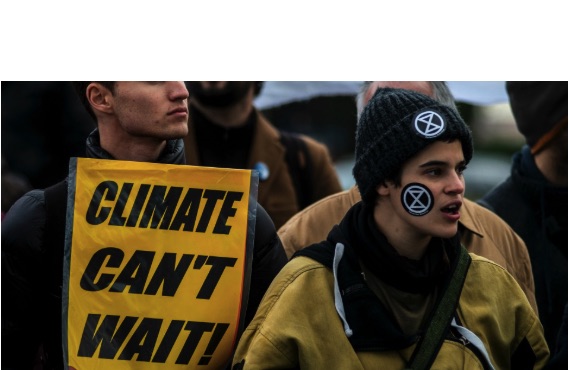
Young people hit the streets on Friday [May 24] in the latest mass demonstration instigated by the Fridays For Future  movement.


With marches in more than 1,400 cities and more than 110 countries, organisers predicted the attendance will surpass 1.4 million they say came to the global action in March.

Social feeds have filled up with images of schoolkids and supporters of all ages demonstrating all around the world.
Send in your best images by tweeting us @climatehome.


Student strikers in the Philippines on Friday (Photo: Twitter/@aghamyouth_pup)


In Germany, young activists hit the streets in the northern town of Kiel… (Photo: Twitter/@KristianBlasel)


In Syria, a student crowd hoisted a banner and did some street clean-up in the border town of Qamislo…(Photo: Twitter/@GreenRojava)


In South Korea, striking students walked the streets in Seoul…(Photo: Twitter/@SylarPark2001)


In New Zealand, a mass of people flooded into a city centre (we’re not sure which one)…(Photo: Twitter/@MikeHudema)


In India, young people showed up to demonstrate in Delhi, banner emblazoned with the Extinction Rebellion symbol…(Photo: Twitter/@Johnpauljos)

(continued in right column)

Question for this article:

Are we seeing the dawn of a global youth movement?

(continued from left column)


In Italy, climate protesters thronged the streets of Milan… (Photo: Twitter/@FYEG)


and in the German city of Cologne the medieval cathedral was swamped… (Photo: Twitter/@FFF_Koeln)


In Uganda, students prepped placards and posters before the strike…. (Photo: Twitter/@Fridays4FutureU)


In Ireland, a teacher led her class down the street early Friday morning…(Photo: Twitter/@gold_Igold)


In Washington D.C., streets rang with calls for climate action, despite the sitting president’s position…(Photo: Twitter/@ValentinaOssa11)


And in Stockholm, the girl who started it all, Greta Thunberg, is on the march for the 40th week in a row. But she’s not alone anymore…(Photo: Twitter/@GretaThunberg)


(Photo: Twitter/@GretaThunberg)

[Editor’s note: To complete the cycle of actions on all continents, see the following for photos from Chile and Mexico and from Brazil.]

Richard Falk: On Taking Controversial Public Positions: A Reflection 

FREE FLOW OF INFORMATION    

A blog by Richard Falk
 
Not long ago a cherished friend directed a remark at me during a dinner with several other friends: “You keep sticking your neck out. I used to do that, but I don’t do it anymore.” At the time, I listened, unsure whether it was a rebuke—‘isn’t it time to grow up, and stop exposing yourself to ridicule and behind the back dismissals’—or merely an observation. on different ways of growing old.  I am still unsure, but it made me think.
 
It had never occurred to me to stop signing petitions or writing blogs that staked out controversial positions, sometimes with provocative language. It seemed. like an extension of my ideas about global civic responsibility in a democratic society,a matter of trusting and acting upon the dictates of conscience and the affectionsof solidarity. I didn’t start making my views known in public spaces until my mid-30s at the onset of the Vietnam War in the 1960s. In recent years, aside from periodic writing on my blog, I am mainly responding to requests for support of activist and academic initiatives by kindred political spirits or sympathetic journalists.

I suppose that a certain level of public notoriety followed my period as UN Special Rapporteur on Occupied Palestine during the period between 2008 and 2014. During those years I was under quite frequent attack by Zionist zealots, often operating under the misleading camouflage of NGO auspices with such anodyne names as UN Watch or NGO Monitor. It was defamatory and malicious, but it left an imprint in the mud. For those who know me best the main accusations didn’t make sense. I was clearly neither an ‘anti-Semite’ nor ‘a self-hating Jew.’ I suppose it was empirically accurate to consider me as an ‘anti-Israeli and anti-Zionist extremist,’ although I don’t think of myself in this way. True, my views on Israel/Palestine and the Zionist Project were overwhelmingly in support of the Palestinian national struggle for basic rights, including the right of self-determination, but this also represented my understanding of the application of relevant rules of international law and morality. I also came to believe that the Zionist insistence on ‘a Jewish state’ was the source of legitimate Palestinian resistance, and to quell this resistance Israel resorted to the establishment of apartheid structures of discriminatory  separation and domination, the elements of apartheid as an instance of a crime against humanity (as specified in Article 7 of the Rome Statute governing the operations of the International Criminal Court). I never thought of reaching such conclusions as sticking my neck out. I thought expressing these views while holding the UN position was an aspect of doing my unpaid job. This represented my sense of professional duty, including the recognition of the importance of civil society activism devoted to obtaining global justice.
 
Back at Princeton, especially after my visit to Iran in early 1979 during the last stage of the revolution, and the pushback I received after publishing an opinion piece in the NY Times expressing my hopes and concerns about the future of the Islamic Republic,  I did myself, partly as a gesture of self-irony, adopt the metaphor of sticking my neck out, attributed this move to my love for giraffes, their grace, absence of vocal chords, and strong kick. The giraffe became my totem, and my home was soon filled with carved and ceramic giraffes acquired during my trips to Africa. A friend with gifts as a woods craftsperson even made me a life-sized replica of a baby giraffe, which was slightly taller than I, and provided a vivid reminder of this identity that dominated my Princeton living room for many years. Yet, strangely, after moving to California I never thought about sticking my neck out until my friend reminded me, and led me to think about whether I am frozen in patterns of behavior apt only for those who are young or middle aged. The question for me is not whether we should stop caring after 80, but only whether it is unseemly for the elderly to keep acting.  Or perhaps having chosen ‘retirement’ from Princeton implies that I should stop actingas if I care, and leave the future to those young enough to have a more significant stake in what is happening and where it is leading.
 
A related kind of feedback from someone even closer was along the same lines, but could be classified as ‘a loving rebuke.’ It was the insistence that I was ‘obsessed’ with Israel/Palestine, and I should move on to other concerns as bad or worse than the Palestinian ordeal, with the example given of the horrifying persistence of the Yemen War with atrocities an almost daily occurrence. Here, I resist more than I reflect. Yet this is a matter of heart as well as head. From both sides, as my loving friend also insisted that she was saving my reputation from being permanently mired in mud, telling me I was smearing my own legacy by continuing to speak out critically of Israel and Zionism.

(Article continued in the column on the right)

Questions related to this article:

Where in the world can we find good leadership today?

(Article continued from the column on the left)

I have long believed that outsiders have much blood on their hands in relation to evolution of Palestine and Israel ever since the issuance of the Balfour Declaration in 1917. Beyond this, the United States had the leverage, responsibility, and opportunity for decades to make a political compromise happen, but refused to explore such an option evenhandedly. Instead, the U.S. Government, especially after 1967, subsidized Israel’s militarization to the point where it has become a substantially autonomous and affluent regional power, and yet continues to receive more than $3.8 billion per year, proportionately to population far more than any other country. A compromise might have accommodated Palestinian basic grievances sufficiently to produce a sustainable peace, although it would still have required the Palestinian people to swallow a large dose of injustice taking the form of outside forces imposing an alien political template on their future, which is the essence of colonialist expansion.
 
During the Trump presidency with its unseemly responsiveness to Netanyahu’s wishes, the situation facing the Palestinian people has further deteriorated in rather dramatic ways: the American embassy has been moved to Jerusalem, the Golan Heights have been formally annexed following a green light from Washington, unlawful settlement building has accelerated, funding for essential UNRWA education and health services have been cut to zero, and even the pretension of the near universal international commitment to the two-state solution has been pointedly abandoned. Waiting for ‘the deal of the century’ seems likely to be either a matter of waiting for Godot or an ultimatum disguised as a peace plan demanding Palestinian surrender to Israeli one-statism.
 
And there is the outrage of a well-funded campaign to brand supporters of BDS and justice for the Palestinians as anti-Semites. This was never done during the global anti-apartheid movement after it adopted a BDS approach to South African apartheid. Why is Israeli apartheid being treated so differently? With amoral opportunism, debasing Jewish memories of the Holocaust, Zionist zealots, with money and encouragement from Tel Aviv and wealthy diaspora donors, are distorting reality by using Nazi genocidal tactics against Jews to intimidate those seeking justice for both peoples.  What is as bad is the degree to which most of the governments of the West go along with this smear campaign even altering the definition of anti-Semitism to conform with these lamentable tactics. To get the fuller picture this use of anti-Semitism as a smear tactic confuses the threats associated with the return of real hatred of Jews as embedded in the scary second coming of fascism with diaspora Jews again cast in the role of the unassimilable other, a degenerate enemy of the global wave of ultra-nationalism.
 
With this understanding, I can no more turn away from the Palestinians than those closest to me. It would represent a tear in the fabric of the life and love I have lived and affirmed. It is, for better or worse who I am and who I will always be. It may dim my image in the mind of many decent people of liberal persuasion, but I value self-respect and personal sovereignty more than the conditional affection of others. Having written in this vein, I also wish to affirm my identity as a Jew, and my realization of the desperation ignited by the Nazi experience. Yet such an experience could as easily have been tinged with compassion rather than a racist willingness from its very origins of an intention to displace, dominate, and victimize the majority long-term residents of Palestine. Offsetting this intention by reference to a Jewish biblical or historical entitlement has neither legal nor moral weight in my opinion.
 
Having so far affirmed continuity of belief and practice, there is something to be said in favor of discontinuity, breaking old habits inspired by giraffes running across an African savannah or overcoming obsessions even if morally inspired and intellectually justified. Choosing discontinuity has something to do with learning how to age so that the inner self takes command. The Hindu tradition emphasizes stages of life, to be a house-holder or family person until the age of 60, and after that go forth alone to nurture spirituality generally long marginalized by the pressures of ordinary life, if not dormant. Thinking along such lines, may make my defense of continuity of engagement seem shallow, if not wrong or at least exhibiting a stubborn streak.
 
Having so pondered and reflected, I am no nearer to closure. It feels inauthentic to abandon unfulfilled commitments, and yet to reconcile myself to being nothing more than a pale projection of my past seems a defeat. At least, this semi-meditation has made me more knowingly confused, and I share it on my blog because I feel that the dilemmas of ageing confront us all at some point, and are rarely faced clearly in Western culture, often inducing various degrees of denial, depression, and feelings of lost relevance and disengagement. I have chosen activism to the end, both continuing with sports to the limit of my ability and to honor the political commitments of a citizen pilgrim (dedicated to a journey to a desired and desirable political community that functions now only as an imaginary, yet has the ambition to become a political project) to the best of my ability.      

[Editor’s note. On a subject that CPNN has recently reviewed, see also Richard Falk’s recent blog about Julian Assange in which he sites the Nuremberg Principles of 1946, including “Complicity in the commission of a crime against the peace, a war crime, or a crime against humanity… is a crime under international law.” He concludes that “Fairly read, this proposition would suggest that the U.S. Government moves to prosecute Assange are themselves crimes, while the acts of Assange are commendable efforts to prevent international crimes from continuing.”

The Global Campaign for the Prevention of Child Marriage

. HUMAN RIGHTS .

Sent to CPNN by Ksenija Cipek

The Global Campaign for the Prevention of Child Marriage (GCPCM) was launched in March 2019 by Mr. Shahin Gavanji and Ms. Ksenija Cipek, and the primary goal of this Campaign is raising awareness and illuminating people’s minds to address child marriage in the world. The managers of campaign believe that education is a powerful strategy to prevent child marriage in the world.

[Editor’s note. Click here for the official UN Human Rights Commission statement on child marriage as a violation of human rights.]


This Campaign is not a Charity or an NGO, it is just a FREE PROGRAMM available to communities to help spread awareness about child marriage and everyone who joins to this Campaign does on a voluntary basis.  

(article continued in right column)

Question related to this article:

Rights of the child, How can they be promoted and protected?

(article continued from left column)

This Campaign has just begun a global project for which is called “195 children messages from 195 countries “and everyone from any country can join freely and work voluntary.

In the project “195 children messages from 195 countries”, children of the world, are invited to send their drawings and paintings to Campaign.

Children will write their dreams for their future, and, as a united voice in the world to prevent child marriage, they can convey their letters to all by the help of GCPCM.

The Campaign has received letters from children from 39 countries so far and hopes to receive letter from all countries in the world.

All children who send letter become Honorable Lavender Ambassador, because children are real Ambassadors of the Campaign!

DEAR CHILDREN ALL AROUND THE WORLD, SEND US YOUR LETTERS AND PAINTINGS AS A SUPPORT TO GLOBAL CAMPAIGN FOR THE PREVENTION OG CHILD MARRIAGE!

(E-MAIL: gcecm.official@gmail.com)
Our Instagram page: https://www.instagram.com/gcpcm.official
Our LinkedIn page: https://www.linkedin.com/feed/update/urn:li:activity:6520690215374319616