Category Archives: global

What has happened this year (2019) for the International Day of Peace

FREE FLOW OF INFORMATION
This year we give links to 280 actions carried out in most of the provinces and all the states in Canada and the USA. Next is Europe with 144 actions in 21 countries. There are 50 actions cited in 16 Asian countries, 53 from 17 Latin American and Caribbean countries, 54 from 6 countries formerly part of the Soviet Union, 53 from 27 African countries, and 21 from 14 Arab and Middle Eastern countries. See the CPNN bulletin for October for a synopsis.

Detailed data may be found on the following CPNN articles:

United States and Canada: International Day of Peace

Europe: International Day of Peace

Asia and Pacific: International Day of Peace

Ex-Soviet Countries: International Day of Peace

Arab and Middle Eastern States: International Day of Peace

Latin America and Caribbean: International Day of Peace

Africa: International Day of Peace

Global climate strike: When, where and how you can join and take action

. . SUSTAINABLE DEVELOPMENT . .

An article by Jackson Ryan from CNET

On Sept. 20, students and adults will rally across the globe, demanding immediate action on climate change. Here’s where you can join them.


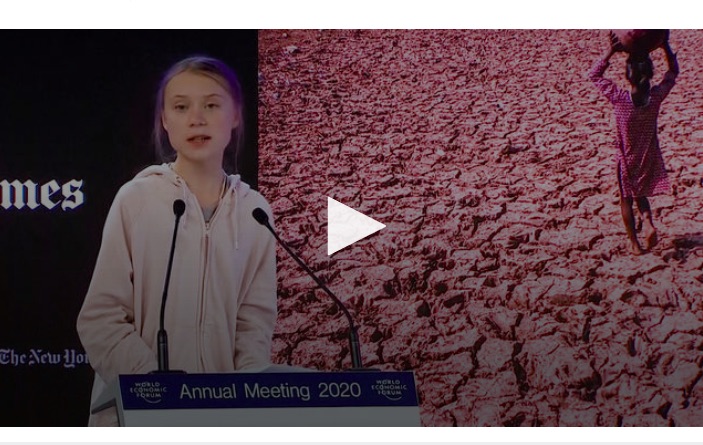
Greta Thunberg leads the Fridays for Future Rally.
Ernesto Rucio/Getty

The planet is in a pretty bad way. The Arctic has been burning and fires still rage in the Amazon rainforest. Iceland recently held a funeral for a 700-year-old glacier killed by climate change. One million species are threatened with extinction and some have already been lost. We are living through a crisis — and the kids are absolutely not alright with where our planet is headed. Over the coming week, students and adults will join together in global strikes to demand action on climate change.

If you want to know the what, when and where of the September Global Climate Strikes, we have you covered.

(article continued in right column)

Question for this article:
Despite the vested interests of companies and governments, Can we make progress toward sustainable development?

(Article continued from the left column)

What is the Climate Strike?

When Greta Thunberg, a Swedish school student, sat in front of the Swedish parliament building with her hand-painted “Skolstrejk för klimatet” sign, she kick-started a worldwide movement. It wasn’t the first time school kids had walked out of school to demand change, but Thunberg’s one-person strike on the steps of parliament drew global attention. On Fridays leading up to the 2018 Swedish election, she’d miss class to protest, sign in hand.

Thunberg has become the face of the new movement, inspiring students across the world to leave school and demand action on climate change. In March, students took to the streets in over 2,000 cities asking adults to take responsibility for the climate crisis. Smaller strikes occurred in May, June and August.

The next series of strikes are set to be the biggest yet and will see students and adults walk out of their schools and workplaces to “demand an end to the age of fossil fuels.”

When is the Climate Strike?

The upcoming strikes will take place on two successive Fridays designed to coincide with an emergency climate action summit being held at the United Nations in New York beginning on Sept. 23.

On Sept. 20 and Sept. 27, thousands of climate strikes will take place in cities across the world. Thunberg herself will be attending the climate strike in New York City on Sept. 20, but no matter where you are across the world, a climate strike is likely within your vicinity.

Where can I join a strike?

A massive number of strikes are registered on the Global Climate Strike website, so that’s a great place to start if you’re seeking a nearby climate strike to attend.    

URI International Peacebuilding Network Joins with Worldwide Groups Calling for Peace 

FREE FLOW OF INFORMATION

A press release from Globe News Wire

With tensions growing between people of different ethnicities and faiths across the planet, and humanitarians increasingly worried about healing the rifts, URI (United Religions Initiative) and likeminded organizations worldwide are coordinating efforts to lift up the International Day of Peace (“Peace Day”) on September 21.


Children in Sri Lanka celebrate Peace Day with “Understanding Cultural and Religious Values,” a URI grassroots member group.

The worldwide URI community, which consists of more than 1,000 grassroots interfaith groups (called Cooperation Circles) working in 108 countries, celebrates Peace Day every September 21. This occasion was established in 1981 by a unanimous United Nations resolution which provided a shared date for all humanity to commit to peace above all differences, and to contribute to building a worldwide culture of peace.

(continued in right column)

Question(s) related to this article:

What has happened this year (2019) for the International Day of Peace?

(continued from left column)

This year, the celebration is particularly significant: It is the 20th Anniversary of the UN Resolution on the Programme of Action on a Culture of Peace – a resolution which is needed more strongly than ever in the current political climate. The 2019 Peace Day theme is also particularly timely: “Climate Action for Peace.” The theme draws attention to the importance of combatting climate change as a way to protect and promote peace throughout the world.

Throughout September 2019, URI Cooperation Circles around the world will celebrate peace with events such as school programs, community marches, film showings, interfaith meals, silence walks, shared prayers, candle lightings, musical performances, and more. You can see a sampling of last year’s URI’s Peace Day 2018 celebrations here.

The United Nations Peace Day celebrations will take place at the UN Headquarters on Friday, 20 September 2019, beginning at 9:00am in the Peace Garden. A student observance will follow, where about 700 high school and college students will interact with UN Messengers of Peace, including young people from the United Nations Mission in Kosovo participating via videoconference. URI invites you to take part as well via webtv.un.org.

From September 11 – 21, many URI Cooperation Circles will be celebrating 11 Days of Global Unity: 11 Days to Transform Your World. This is a worldwide platform for the promotion of peace, justice, sustainability and transformation. URI invites you to take part in any or all of these September events to bring more awareness to the need for unity in the world.

Twenty Years of the Culture of Peace: On the Road to Achieving the Sustainable Development Goals

FREE FLOW OF INFORMATION

An article from the International Peace Institute

On September 12th, IPI together with the Al-Babtain Cultural Foundation cohosted a policy forum entitled “Twenty Years of the Culture of Peace: On the Road to Achieving the Sustainable Development Goals.”


video

In 1999 the United Nations General Assembly unanimously adopted the Declaration and Programme of Action on a Culture of Peace (Resolution 53/243) calling for a transition from a culture of war to a culture of peace. Twenty years later, international actors and analysts are increasingly looking at what makes a society peaceful and how we can sustain it. The 1999 declaration identified political, economic, environmental, educational, and health-related components to the culture of peace, presaging the holistic approach agreed to in the 2030 Agenda for Sustainable Development.

(continued in right column)

Question(s) related to this article:

What is the United Nations doing for a culture of peace?

(continued from left column)

This event served as a kick-off to the 20th-anniversary celebration of the adoption of the Declaration and Programme of Action on a Culture of Peace. It allowed participants to reflect on and discuss the connections between the Sustainable Development Goals (SDGs) and the culture of peace ahead of the forum. Speakers examined these linkages in order to advance the culture of peace at the multilateral level and, in turn, help to accelerate the implementation of the SDGs.

Opening remarks:

H.E. Ms. María Fernanda Espinosa Garcés, President of the UN General Assembly

Ambassador Anwarul K. Chowdhury, Founder of the Global Movement for The Culture of Peace (GMCoP) and Former Under-Secretary-General and High Representative of the UN

Speakers:

H.E. Mr. Masud Bin Momen, Permanent Representative of Bangladesh to the UN

Ms. Jimena Leiva Roesch, Senior Fellow, International Peace Institute

Moderator:

Dr. Adam Lupel, Vice President, International Peace Insitute

Campaign Nonviolence Action Week, September 14-22

. .DISARMAMENT & SECURITY. .

from Pace e Bene

NUMBER OF ACTIONS PLANNED AS OF SEPTEMBER 14: 3284

SEE THE FULL LIST OF PLANNED ACTIONS

ACTION ORGANIZERS – SEND US YOUR POST-ACTION PHOTOS AND REPORTS HERE

MARCHING, ORGANIZING AND SPEAKING OUT FOR A NEW CULTURE OF NONVIOLENCE, FOR AN END TO WAR, POVERTY, RACISM, AND ENVIRONMENTAL DESTRUCTION.


Every year, Campaign Nonviolence organizes a national week of action across the United States and around the world, built around the third week of September, near Sept. 21st, International Peace Day. For the last five years, we have organized an unprecedented national grassroots movements with actions in every state where people connect the dots between the issues of injustice and violence, including war, poverty, racism and environmental destruction, and hold public events, actions and marches demanding immediate positive social change.

In September, 2018, the Campaign Nonviolence National Week of Action held over 2,660 actions, events and marches across the USA and in 25 countries. This was an historic unprecedented new form of organizing in the US, and we invite you to help us build up this national week of action.

(Article continued in right column)

Question for this article:

The peace movement in the United States, What are its strengths and weaknesses?

(Article continued from left column)

The only way positive social change has happened in the US is from bottom up, people power, grassroots movements of nonviolence, so we invite everyone to join this Campaign Nonviolence National Week of Action Sept. 14-22, 2019, as an organizing tool, to help get the movement moving, to invite people of all walks of life to take to the streets against violence and injustice, and to carry on Dr. King’s vision of what we could become—a new culture of nonviolence. Join the growing Campaign Nonviolence national week of action movement by signing up for an action today, or join with others planning an event. See the full list of action organizers planning an event and reach out to them to join in!

To support these powerful forms of action, Campaign Nonviolence invites people everywhere to:

Take the Campaign Nonviolence Pledge

Host or attend a Nonviolence Training in preparation for your action

Start a Nonviolence Study Group

Spread the word on Facebook  and Twitter

Find tools and resources for Action Week. Get the CNV action toolkit, flyers, graphics, action ideas and more! See below.

Read the 10 Tips for Great Actions and read about some great actions ideas.

Join action organizers around the country as we come together for the next Campaign Nonviolence National Conference in Albuquerque, New Mexico August 6-9, 2020 to mark the 75th anniversary or Hiroshima and Nagasaki featuring Martin Sheen, Dolores Huerta, Richard Rohr and more!

UN General Assembly celebrates 20 years of promoting a culture of peace

FREE FLOW OF INFORMATION

An article from UN News

Just as the greatest global challenges cannot be solved by a single country, peace cannot be pursued in isolation, outgoing UN General Assembly President María Fernanda Espinosa said on Friday [September 13].

Ms. Espinosa was speaking at a high-level forum to mark the 20th anniversary of the General Assembly’s adoption of a Declaration and Programme of Action on a Culture of Peace.

“Because peace is more than the absence of war, it needs constant nurturing through the pursuit of dignity and equality, of human rights and justice, of respect and understanding, and of cooperation and multilateralism”, she said.

As UN Chef de Cabinet Maria Luiza Ribeiro Viotti pointed out, although peace is at the heart of the work of the United Nations, it is something that must be addressed daily.

“A culture of peace is inseparable from human rights, respect for diversity, and fairer societies,” she said.

“One main challenge as we strive to achieve the Sustainable Development Goals is to build more preventive and inclusive approaches that ensure the participation of women, young people and vulnerable, marginalized and non-represented groups.”

The Chef de Cabinet said working to achieve peace not only covers traditional notions of security but also challenges such as social injustice, the normalization of hate speech, terrorism, violence against women, and conflict.

(continued in right column)

Question(s) related to this article:

What is the United Nations doing for a culture of peace?

(continued from left column)

Leymah Gbowee from Liberia knows many of these issues first-hand. She won the 2011 Nobel Peace Prize for her role in uniting Christian and Muslim women to help end her country’s 14-year civil war.

She said peace is seen as the absence of bad, rather than the presence of good. However, instead of being “a fairytale of bland happiness”, she views it as quite radical.

“If we dig a little deeper into what a culture of peace actually looks like, it pushes us beyond understanding peace as the absence of conflict and being a positive state itself”, Ms. Gbowee told the gathering.

“A culture of peace creates an environment where people thrive and have their needs met. It looks like a population of satisfied people: healthy children, educated children, a functional health system, responsive justice structure, an empowered, recognized, appreciated and fully compensated community of women; food on the table of every home, and a lot more. It is the full expression of human dignity.”

The high-level commemorative event marked Ms. Espinosa’s final session presiding over the General Assembly, where all 193 Member States have equal representation.

In her goal to bring the UN’s main deliberative and policy-making organ closer to everyday people, she chose the traditional ruler of the Ashanti people of Ghana to deliver the keynote address: a historic first.

Representing a kingdom that has existed since the 17th century, Otumfuo Osei Tutu II ascended the podium wearing kente cloth and accompanied by two praise-singers.

He highlighted some of the UN’s accomplishments in preserving global security: for example, staving off nuclear war and preventing conflict between nations. However, as he observed, the landscape today is different.

“Warfare is no longer the threat we face from states; it is now a danger we face on a daily basis from our citizens and from all quarters. This new threat comes on the heels of an unprecedented trust deficit in political leadership at the national level. The effect of this trust deficit is to erode the capacity of political leaders to rally their people to coalesce around national interests. The consequence for peace and security cannot be overstated”, he said.

The Ashanti leader called for a new partnership between elected authorities and traditional governance, in the spirit of authentic collaboration.

Kazakh capital to host 2019 UNWTO Urban Tourism Global Summit on SDGs

. . SUSTAINABLE DEVELOPMENT . .

An article from The Astana Times

The United Nations World Tourism Organisation (UNWTO) and the Nur-Sultan Akimat (city administration) will organise the eighth UNWTO Global Summit on Urban Tourism under the Smart Cities, Smart Destinations theme in the Kazakh capital Oct. 9-12. The summit will contribute to the UN New Urban Agenda and Sustainable Development Goals (SDGs).

The summit will bring together representatives from national tourism administrations, city authorities and related stakeholders to exchange expertise and set a shared vision to advance urban tourism. Participants will discuss sustainability, accessibility, innovations and inclusion of tourism in the urban agenda contributing to the progress of the 17 UN Sustainable Development Goals. The gathering will focus specifically on Goal 11, which is to make cities and human settlements inclusive, safe, resilient and sustainable.

“According to the UN, in 2015, 54 percent of the world’s population lived in urban areas and, by 2030, this share is expected to reach 60 percent. Along with other key pillars, tourism constitutes a central component in the economy, social life and the geography of many cities in the world and is, thus, a key element in urban development policies… Tourism is intrinsically linked to how a city develops itself and provides more and better living conditions to its residents and visitors,” reported the summit’s website emphasising the importance of the chosen topic.

(continued in right column)

Question related to this article:

How can tourism promote a culture of peace?

(continued from left column)

The summit will focus on how developing smart cities can address urban challenges. The participants will discuss sustainability, accessibility, urban management, innovation and technology, stressing the importance of including tourism in the wider city agenda as a contributor to inclusive, resilient and sustainable urban development.

During the summit’s first day, the International Congress and Convention Association (ICCA) will give a masterclass on trends in the convention industry, focusing on topics such as how to be a successful destination for meetings and organise sustainable meetings.

The second day will start with an opening ceremony including Nur-Sultan Akim (Mayor) Altai Kulginov, Kazakh Prime Minister Askar Mamin, UNWTO Secretary-General Zurab Pololikashvili and other higher officials. The participants will adopt the Smart Cities, Smart Destinations Declaration. This will be followed by the mayors’ meeting, where “mayors from around the world will share insights on how to translate a smart city into a smart destination,” and other panel sessions and on the topic.

The summit’s last day will be dedicated to innovative and technological solutions in tourism, the role of public and private partnerships in technologies to develop the sphere and urban destinations’ accessibility through “increased awareness of the opportunities it brings and the emergence of new innovative solutions.”

The decision to have the event in Nur-Sultan was made at the seventh UNWTO Global Summit in Seoul last year. UNWTO Secretary-General Zurab Pololikashvili and the then Nur-Sultan Akim (Mayor) Bakhyt Sultanov signed April 5 an agreement at the UNWTO Mayors Forum for Sustainable Urban Tourism in Lisbon, where the akim presented information about Nur-Sultan’s infrastructure.

The UNWTO is responsible for the promotion of responsible, sustainable and universally accessible tourism around the world. It promotes tourism as a driver of economic growth, inclusive development and environmental sustainability and offers leadership and support to advance knowledge and tourism policies worldwide. The organisation has 158 member countries, six associate members and more than 500 affiliate members.

The UNWTO Global Summit is designed to encourage new approaches to tourism and its impact on urban destinations. Previously, the event took place in Seoul (2018), Kuala Lumpur (2017), Luxor (2016), Marrakesh (2015), Barcelona (2014), Moscow (2013) and Istanbul (2012).

A Global Appeal to Save International Law

FREE FLOW OF INFORMATION .

An online petition at Global Appeal 4 Peace

“We, the undersigned, demand of our governments in their interactions with all nations – for the sake of world peace, international security and the peaceful co-existence of all peoples – to respect the principles of the United Nations Charter, and to follow and defend international law. We urge them to immediately join this initiative and help redirect the world toward an era of global stability and cooperation.”

To endorse this »Global Appeal to Save International Law« please use the E-mail form here to sign.
 
You can view the complete list of the signatories here: http://globalappeal4peace.net/signatories

[Editor’s note: CPNN has signed on to the following appeal and readers are encouraged to do the same]

Since 1945, the Charter of the United Nations has been the most important contract for relations between the nation-states of the world – the very foundation of international law. Today, however, international law and the structure of a rules-based order that the UN Charter defines are in grave danger.

(continued in right column)

Question(s) related to this article:

What is the United Nations doing for a culture of peace?

(continued from left column)

During the Cold War, international law faced many difficult challenges. Throughout that time, a whole series of destructive military conflicts could not be prevented, while in other cases, the UN was able to mediate or de-escalate them.

After the fall of the Berlin Wall, there was widespread hope that peace and international law would prevail, but instead, the UN Charter was further disregarded.
 
From the beginning of the 21st century until today, with the dramatic increase of extrajudicial military interventions that clearly contradicted international law, the erosion of the UN Charter has accelerated and the basic principles of non-interference and non-aggression are now openly and brazenly ignored.

Due to this dangerous deterioration of the rule of law, on February 14, 2019, representatives of numerous UN member states gave a press conference at the UN led by the Venezuelan Foreign Minister, Jorge Arreaza, stating that this is the moment to ratify, confirm and defend the peace and sovereignty of nations and the UN Charter.
 
Between July 20 and 21, 2019, Venezuela hosted the Ministerial Meeting of NAM, the Non-Aligned Movement. Founded in 1961 NAM is the second largest multilateral body in the world after the UN, and it is an organization of 120 member states that advocates the strengthening of international security and self-determination, while rejecting interference in the internal affairs of other countries. NAM ultimately adopted a declaration reaffirming the principles of the press conference at the UN led by the Venezuelan Foreign Minister Arreaza on February 14, 2019.
 
This declaration includes respect for the fundamental rights and freedoms for all, regardless of the race, sex, language or religion. The declaration not only applies to non-interference in Venezuela, but also to all other nations facing multiple threats, illegal sanctions and destabilization throughout the Middle East, Africa, Asia, Eastern Europe and the Caribbean.
 
This declaration particularly addresses the dangerous escalation of tensions, threats, trade wars and sanctions against Russia, China and Iran. We realize that the erosion of international law and multilateral systems will also undermine humanity’s efforts to prevent catastrophic climate change.


Building infrastructures for peace

. . DEMOCRATIC PARTICIPATION . .

An article by Saul Arbess and David Wick for the Ashland Tidings

Much in the way that we have a military, energy and financial infrastructure, we also need an infrastructure for peace, a critical oversight in virtually all governments in the world.

In nearly every state, military infrastructure exists, often the most heavily financed, resourced and comprehensive infrastructure of government. They are in a high level of readiness for both defense and potential aggression against other states or responding to internal conflict, typically by suppression, thus favoring war and a military view of security — that is, an armed, unstable peace.

The military approach relies on threat rather than the creation of an enduring culture of peace, based upon our common security as citizens of planet Earth and the human right to peace and security of the person and community.

A good definition of infrastructure for peace comes from the United Nations Development Program: “An infrastructure for peace is a network of interdependent systems, resources, values and skills held by government, civil society and community institutions that promote dialogue and consultation; prevent conflict and enable peaceful mediation when violence occurs in a society.”

One could see infrastructure for peace as a parallel structure to the generally highly developed and readily mobilized military infrastructure with its national, regional and local organization, except that an infrastructure for peace is not hierarchical, but most effective when organized from the bottom up — that is, intervention should occur at the level where conflict is manifest and utilize traditional peace-building methods with trusted leadership at each level, not necessarily politicians.

A principal strength of infrastructure for peace is that it develops a permanent peace-building structure on the ground at all levels, rather than an ad hoc system of responding to conflict as it arises and then disbanding until the next conflict event occurs. An infrastructure for peace would allow for early warning and intervention in potential conflict scenarios and timely responses when violent conflict has emerged.

At the local level, the Ashland Peace Commission can be seen in this light. At the state level, there is the Democratic Party of California’s resolution calling for the state to create a department of peace. At the national level, there is the U.S. Institute of Peace that unfortunately only has the powers of persuasion, and the current bill for a U.S. Department of Peacebuilding.

(Article continued in right column)

Question related to this article:

How can we develop the institutional framework for a culture of peace?

(Article continued from left column)

Canada has created the position of Ambassador for Women, Peace and Security with both domestic and international responsibilities, supporting the role of women in all aspects of peace work.

In every case and at every level, the goal is to transform conflict by peaceful means, with violence not seen as an option. This means that all parties to a conflict are represented — both those directly involved and external interests as well, and are adequately resourced to present and support their interests in the absence of coercion.

Restorative Justice is an excellent model for this approach, active in many countries, including the U.S.

To build an infrastructure for peace nationally, there is the movement for departments or ministries of peace promoted by the Global Alliance for Ministries and Infrastructures for Peace. Currently the Solomon Islands (2005), Nepal (2007), Costa Rica (2009), the Autonomous Region of Bougainville – Papua New Guinea (unknown date) and, most recently, Ethiopia (2018) have created such infrastructures for peace.

Afghanistan is moving in this direction. In Africa, following electoral violence, both Ghana and Kenya have formed peace-building programs without a formal department as such.

Here are some guidelines for the establishment of infrastructures for peace:

1. It works best when there is a comprehensive strategy in place involving the government and all stakeholders at the national, regional and local level.

2. Each level in the structure needs to have some autonomy so that responses to conflict can be made rapidly at the appropriate level. Local peace committees can often function where government cannot or may be regarded with suspicion. Local peace committees have been effective in defusing electoral violence by creating a dialogue between opposing sides and insuring free and fair elections, mediation and reconciliation between parties.

3. Local peace committees are encouraged to utilize traditional and culturally appropriate decision-making structures, where legitimacy exists among the parties to conflict and not necessarily rely on modern state ideas of formal organization.

Saul Arbess is co-founder of the Global Alliance for Ministries and Infrastructures for Peace and the Canadian Peace Initiative. Arbess will be one of the speakers at the Ashland Global Peace Conference Sept. 21. He will be presenting a talk on infrastructures for peace. Conference information can be found at ashlandglobalpeaceconference.com. David Wick is executive director of the Ashland Culture of Peace Commission.

New Pax Christi leaders believe nonviolence education can change world

EDUCATION FOR PEACE .

An article by Dennis Sadowski from Crux: Taking the Catholic pulse

Pax Christi International has two new co-presidents and while they hail from different continents, they share the view that rampant violence is posing ever-growing danger to the world.

Loreto Sister Teresia Wamuyu Wachira of Nairobi, Kenya, and Bishop Marc Stenger of Troyes, France open their three-year term hoping that the organization can boost training in nonviolence, especially among young people. They see such training as necessary so that eventually dialogue and communication become the prime options to resolve differences rather than the use of hateful words, physical attacks and even warfare.


Bishop Marc Stenger of Troyes, France, and Loreto Sister Teresia Wamuyu Wachira of Nairobi, Kenya, were elected co-presidents of Pax Christi International during the organization’s annual general meeting June 26-27 in Brussels. (Credit: CNS photo/Christi International.)

“Nonviolence is very, very important,” Wachira told Catholic News Servicefrom Kenya. “We have to try. It may take a long time and we may be going against the grain, but I believe we must move in the right direction.”

Stenger wrote in an email that the organization “can open avenues and provide guidance for promoting sustainable peace through nonviolent strategies.”

(Article continued in the right column)

Question for this article:

Can peace be guaranteed through nonviolent means?

(Article continued from the left column)

“It can do this,” he explained, “in connection with the infrastructure available to the Church at all levels – universities, seminaries, dioceses, etc. – stressing the social teaching of the Church, always to be read in the light of the Gospel.”

While starting their term during Pax Christi International’s annual general meeting June 26-27 in Brussels, the co-presidents had yet to formally meet face-to-face. Wachira was unable to attend because of visa issues. But both said they have talked via online video conferencing and were eager to move forward on the organization’s priorities addressing nonviolent alternatives.

Both peace leaders have promoted nonviolence in their ministry roles. Wachira has been a teacher and principal in Loreto-run schools in the East African nation, concentrating on training young women for peacemaking and reconciliation work.

She also advises her congregation’s office at the United Nations in New York on the role of peacemaking in the world’s trouble spots.

Stenger for years has written on nonviolence and the importance of building a culture of peace in local communities. His involvement with the Catholic peace organization dates to 1999, when the French bishops’ conference proposed he become president of that country’s Pax Christi body.

The bishop also has addressed the precarious situation of Christians in Iraq, and after a 2002 visit to Colombia, which then was in the midst of a long-running civil war, he called on all parties to respect human rights in order to achieve peace.

In his email, the bishop expressed concern that the world’s nuclear powers are seeking to expand their nuclear weapon arsenals after decades of reductions. Plus, he said, the widening distribution of conventional arms is destabilizing societies and increasing injustice in many nations, causing people to flee for safer lands.
Stenger has been a leading voice in the French Church on the role of people of faith stepping up to protect the environment. He has repeatedly called for strong global action to address climate change.