Category Archives: EDUCATION FOR PEACE

Philippines: Peace Education among top priorities in the new Bangsamoro Government

EDUCATION FOR PEACE .

An article from the Office of the Presidential Adviser on the Peace Process

“Kung gusto natin ng kapayapaan, simulan natin sa silid-aralan (If we want peace, let’s start in the classroom).”

This was emphasized by Commissioner Susana Anayatin of the Bangsamoro Transition Commission (BTC) during the sectoral forum on the Bangsamoro Organic Law (BOL) on Wednesday [December 6] here in [Cotabato City].
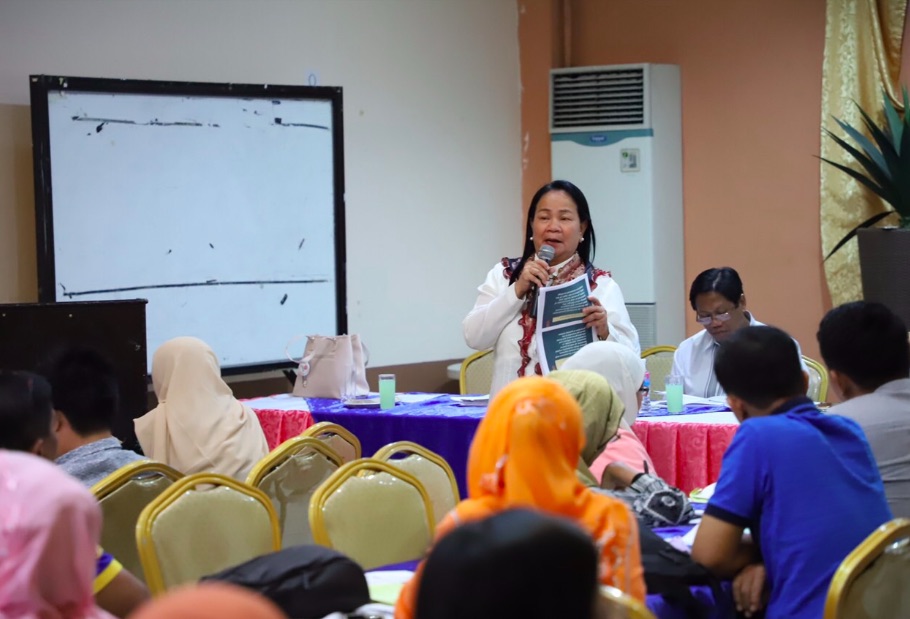
Saying the education sector holds a vital role in shaping the minds of the youth, Anayatin urged school officials to support the advocacy for peace provided in the BOL.

“The Bangsamoro Government shall institutionalize peace education in all levels. Sa magiging curriculum natin, i-mainstream na iyong framework of peace such as respect for human rights, conflict resolution, alternative dispute resolution, and environmental care,” Anayatin said.

In September 2006, then-President Gloria Macapagal Arroyo signed Executive Order 570 which requires elementary and secondary schools all over the country to include peace education in their curriculum.

Anayatin, however, said past administrations failed to fully implement the order especially in public schools.

(Article continued in right column)

Questions for this article:

Can peace be achieved in Mindanao?

Where is peace education taking place?

(continued from left column)

“Ang karamihan po sa sumunod doon ay private schools. Sa Bangsamoro, susundin po natin ang kautusan na iyon. Di po iyan bagong kautusan pero inilagay natin sa batas 

(It was mostly implemented by private schools. In the Bangsamoro, we will follow this order. It’s not a new order but it’s something we placed in the law),” she added.

Anayatin said this measure will prevent the recruitment of the youth to violent extremist groups.

“Maraming kabataan ang di nakakapag-aral. Iyong iba naging rebelde, iyong iba naging terorista na ngayon. Iyong nangyari sa Marawi, mga professionals ang ibang nandoon. Bakit? Sapagkat nawawalan na sila ng tiwala sa gobyerno,” Anayatin said.

(A lot of young people are not able to go to school anymore. Some become rebels, others terrorists. Those who laid siege to Marawi included professionals. Why? Because they lost trust in government.)

For his part, Office of the Presidential Adviser on the Peace Process (OPAPP) Undersecretary Nabil Tan urged the participants through a video message to maximize the opportunity as they play a vital role in passing on information about the landmark measure.

The same sentiment was shared by Edgar Sumapal, OIC Assistant of Cotabato City Schools Division.

“As an educator and school leader, it is incumbent upon us to provide accurate information about the BOL,” Sumapal said.

The forum, which was attended by around 100 officials and administrators from Cotabato City Schools Division, was held to provide updates on the conduct of the plebiscite and shed light on the pressing issues surrounding the BOL.

Among the resource speakers present during the forum were BTC Commissioners Mohagher Iqbal, Maisarah Dandamun-Latiph, Ibrahim Ali, and Atty. Lanang Ali.

(Thank you to the Global Campaign for Peace Education for calling this article to our attention.)
Mexico: Promoting the subject “Culture of Peace” at all academic levels

… EDUCATION FOR PEACE …

An article from ONU Noticias México (translation by CPNN)

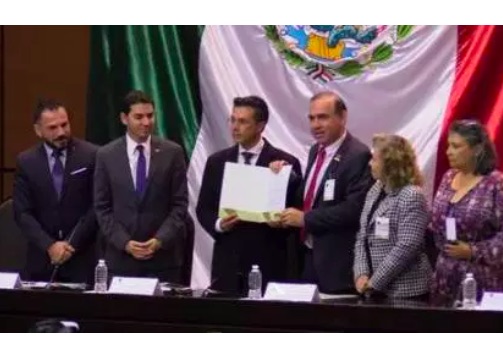
The Office in Mexico of the United Nations for Education, Science and Culture (UNESCO), will accompany the process of discussion and analysis of the initiative that promotes the incorporation of the subject “Culture of Peace” at all academic levels , according to the President of the Commission of Culture and Cinematography, Sergio Mayer Bretón, speaking last Monday, December 17.

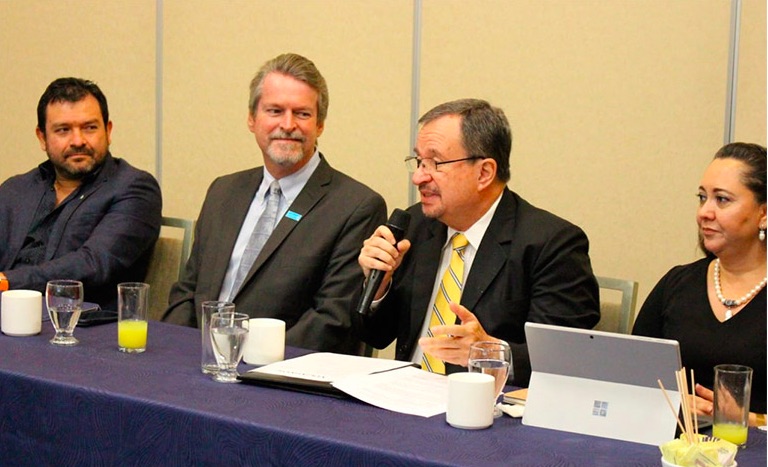
Photo: UNESCO Mexico Frédéric Vacheron, Representative from UNESCO Mexico (left); Sergio Mayer, President of the Commission of Culture and Cinematography (center, wearing glasses), Francisco Guerra, Coordinator of the World Embassy of Activists for Peace in Mexico; Bertha Rodríguez, Sria. Gral. Of AAPAUNAM (checkered jacket).

(Article continued in right column)

Questions for this article:

Where is peace education taking place?

(continued from left column)

The proposal was promoted by the World Embassy of Activists for Peace in Mexico and proposes additions in the General Education Law to include this chair in the Mexican educational system.
In this regard, Frédéric Vacheron, Representative a.i. from the UNESCO Office in Mexico, explained that this action represents a great opportunity to rethink the tools to support the construction of a Culture of Peace in Mexico, in which education plays a fundamental role.

He commented that the Sustainable Development Goals of the 2030 Agenda and the UNESCO conventions ratified by Mexico, are commitments and tools to achieve the culture of peace and promote and protect human rights, and offered the accompaniment of the Office in Mexico in the discussion and analysis of this initiative.

For more information, click here.

(Click here for the original article in Spanish)

Pre-screening of the film “The Forgiven” starring Forest Whitaker at UNESCO

EDUCATION FOR PEACE .

An article from UNESCO

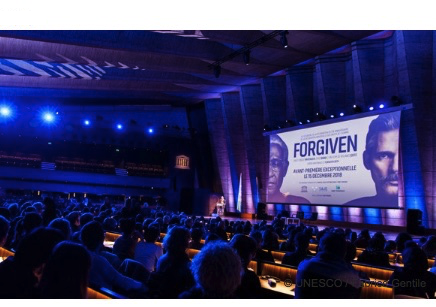
UNESCO hosted the pre-screening of the film “The Forgiven”, in the presence of Audrey Azoulay, Director-General of UNESCO, Forest Whitaker, Actor and UNESCO Special Envoy for Peace and Reconciliation, and Roland Joffé, Film Director, and Jean Lemierre, President of BNP Paribas, at UNESCO Headquarters in Paris, on 15 December 2018. The event, organized in partnership with SAJE Distribution and BNP Paribas, supported by Air France, closed UNESCO’s yearlong celebration of the 70th anniversary of the Universal Declaration of Human Rights.


© UNESCO / Fabrice Gentile

Audrey Azoulay expressed her delight that UNESCO, house of education, the sciences and culture, was chosen to screen the film “The Forgiven” at such a special occasion. Recalling the role of cinema in fostering exchange, understanding and empathy, the Director-General praised Forest Whitaker for his tireless efforts as UNESCO Special Envoy to “repair broken connections, particularly among youth populations.” Jean Lemierre added that “it is essential that companies engage with young people, and help empower them to take charge of their destiny.”

(review continued in right column)

(Click here for a French version of this article.)

Question(s) related to this article:

What are some good films and videos that promote a culture of peace?

(review continued from left column)

“The Forgiven” is a film based on the play The Archbishop and the Antichrist by Michael Ashton that tells a story involving Archbishop Desmond Tutu’s search for answers during the Truth and Reconciliation Commission, and his meetings with the fictional character Piet Blomfeld. After the end of apartheid, Archbishop Desmond Tutu (Forest Whitaker) is running the Commission and visits Cape Town’s Pollsmoor Maximum Security Prison to meet with Piet Blomfeld (Eric Bana), an ex-South African Defence Force officer and Afrikaner Weerstandsbeweging member, to assess his candidacy for amnesty. Blomfeld is a potential witness to murders committed during the time of Apartheid, particularly the murder of the teenage daughter of Mrs Morobe, who begs the Archbishop to find answers about her missing daughter.

The film’s message of forgiveness and healing as prerequisites for just and compassionate societies especially resonates this year as we celebrate the 70th anniversary of the Universal Declaration of Human Rights and 100 years since the birth of Nelson Mandela.

“It is always inspiring to see people coming together to watch a movie about justice, ” said Forest Whitaker. “It is really an honor to be part of the UNESCO community – such a beautiful context for the film to be shown – a context of education, of bringing peace in the minds of people. I hope that the movie conveys the message of peace-building of which I learned so much in South Africa.”

The pre-screening was followed by a discussion with Roland Joffé and Forest Whitaker moderated by Nada Al-Nashif, Assistant Director-General of UNESCO for Social and Human Sciences. For Joffé this film aimed to bring to the fore the humanity that is inherent in and connects every individual. Whitaker noted how important it is that every person decides to take a stand in favour of human rights. “We have to look even at the smallest of situations and see how we can change them. You can do it … with your heart! Change will occur.”

“The Forgiven” was screened at the London International Film Festival in October 2017 and was released in the United States of America on 9 March 2018. The film will be released in France on 9 January 2019.

France: Culture for Peace Award to The Artists in Exile Workshop

EDUCATION FOR PEACE .

Excerpts from the website of L’Atelier des Artistes en Exil: (translation by CPNN)

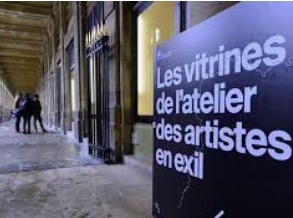
The Artists in Exile Workshop (L’Atelier des Artistes en Exil) has won the Culture for Peace Award, given by the Chirac Foundation .


about the workshop

Europe is witnessing on its territory the greatest population movement of its seventy years. Among these people are artists forced to flee their country. Being a refugee is not a profession, but the role of art is to say and show what disturbs and to make heard the voice of the oppressed. It is through the voice of its artists that the cultures of countries at risk may continue to be perpetuated. Thus, it is important that refugee artists can continue to practice their art.

This is why the workshop of artists in exile proposes to identify artists in exile of all origins, all disciplines, to accompany them according to their situation and their needs, to offer them workspaces and put them in contact with professionals (French and European networks), in order to give them the means to practice their art and restructure themselves.

The artists’ workshop in exile is also developing its own multidisciplinary festival, Visions d’exil, in collaboratio with partner venues.

our mission

a dedicated place for the aa-e at 102 rue des Poissonniers 75018 Paris

(Article continued in right column)

(Click here for the original French version of this article.)

Question for this article:

Do the arts create a basis for a culture of peace?, What is, or should be, their role in our movement?

The refugee crisis, Who is responsible?

(Article continued from left column)

The artists’ workshop in exile offers:

* a welcome and advice area where artists are received individually and where their needs are identified;

* a convivial space where artists can come, have computers connected to the internet, meet in small numbers, organize appointments;

* spaces of artistic practice where artists can come to work

. . . punctually or in the form of residences, punctuated by demonstrations

. . . under the direction of professionals, art workshops before an amateur audience.

you are an artist in exile …

You were a professional artist in your country, you had an artistic activity in your country, you want to restart or develop your practice, the workshop can:

* take stock of your situation;

* provide meeting and work places;

* find equipped workspaces:

* arrange meetings with professionals;

* organize moments of visibility with the public;

* link with other artists to exchange or complete a project;

* help write a resume or an artistic file;

* relay your profile and projects on its website;

* assist the editing of your project;

* set up courses and trainings;

* inform about the French cultural system;

* facilitate administrative procedures;

* provide advice and indicate the right legal and social interlocutors;

* propose the conduct of workshops.

Central African Republic: Bangui opens training workshop on mediation and conflict resolution

… EDUCATION FOR PEACE …

An article from Agence Centafricaine de Presse (translation by CPNN)

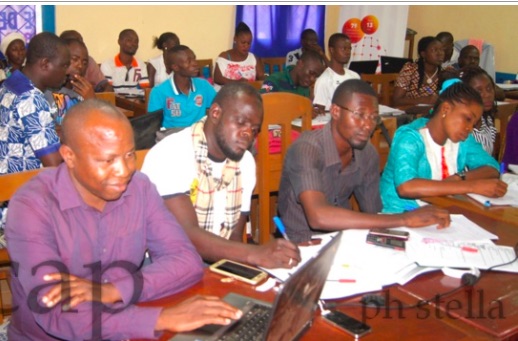
The vice-rector of the University of Bangui, Olga Yongo, opened on Monday, December 10, 2018 in Bangui, a training workshop on mediation and conflict resolution for students of the University.


View of training participants

Vice-Rector Olga Yongo explained that this seminar, which runs from December 10th to 14th, inaugurates a vast training program on intercultural dialogue at the University of Bangui.

(click here for the French version)

Question for this article:

Mediation as a tool for nonviolence and culture of peace

She emphasized that the aim of this workshop is to strengthen the role of participants in promoting a culture of dialogue and peace based on the principles dialogue, mediation, conflict resolution and the spread of a culture of peace.

She encouraged the participants to take the greatest benefit from the presence of high-level local trainers among them, and she was convinced, given the relevance of the themes and the quality of the programmed communications, that the results of this work would live up to their expectations.

“I can not end my remarks without expressing my gratitude to the Regional Director of the Central Africa and Great Lakes Office of the Francophone University Agency (AUF), who put the technical, financial and intellectual resources at the disposal of the organization of this seminar,” she continued.

The Vice-Rector also expressed her thanks to all those who agreed to participate in the seminar and to make a contribution to the promotion of peace.

The Head of the Francophone Digital Campus, Anicet Doumous, for his part, indicated that the AUF, with regard to axis 9 of its strategic plan 2017-2021, decided to organize the training workshop in collaboration with the University of Bangui.

Honduras: Program in 130 schools reduces violence and promotes culture

… EDUCATION FOR PEACE …

An article from La Tribuna, Honduras

A report has been published for the cooperative program between the Ministry of Education and UNICEF for the Construction of Peace, Coexistence and Citizenship. The report describes the results achieved in the reduction of violence and the strengthening of a culture of peace and coexistence in the 130 educational centers that participated in this initiative.


UNICEF and the Ministry of Education provide a vision to the country of protective school environments that can prevent bullying and other forms of violence against Honduran children. Both institutions, together with the International Center for Education and Human Development (CINDE), seek to realize this vision through the Program.

(Articles continued in right column)

(Click here for the original article in Spanish)

Questions for this article:

What is the relation between peace and education?

Where is peace education taking place?

(continued from left column)

According to the report presented, during the year 2018, 64,699 children and adolescents have benefited from the strategy.

Similarly, 6,500 parents and 520 teachers and counselors have improved their knowledge and skills in the prevention of violence in schools.

According to the report presented, 72% of the schools that participate in the strategy have reduced the acts of violence against children and adolescents.

Another key element in the reduction of violence in schools has been the creation of school and community coexistence committees that encourage the participation of children in the management of the school environment.

Children and adolescents consulted have indicated that 80% of educational centers take into account their opinions in the construction of the coexistence response plan.

Marcial Solís, Minister of Education, said that “strengthening institutions is important, but much more important is that girls, boys and young people enjoy attending school, have security and confidence.”

The representative of UNICEF Honduras, Mark Connolly, said that “today we have seen concrete results, girls and boys who can attend the school to learn useful things for their lives, in violence-free environments.

Spain: Professor Marta Gonzalo, Keynote Speaker at the International Congress of Mediation and Culture of Peace

… EDUCATION FOR PEACE …

An article by Raúl García Hémonnet for the Universidad Rey Juan Carlos (translated by CPNN)

Marta Gonzalo, professor of private international law at the Universidad Rey Juan Carlos (URJC), has been the European and Spanish representative in the second edition of the International Congress of Mediation and Culture of Peace. Her intervention focused on comparing experiences and mediation proposals between Latin America and the European Union.

The Second Edition of the International Congress of Mediation and Culture of Peace, held at the end of November in Panama, brought together academics and professionals from countries such as Panama, Argentina, Costa Rica, Cuba and other European countries. The meeting served to carry out a joint reflection on the current panorama of mediation and the different paths towards the Culture of Peace.

(continued in right column)

(click here for the Spanish version)

Question for this article:

Mediation as a tool for nonviolence and culture of peace

(continued from left column)

The URJC professor focused on making several concrete proposals in her keynote address: ‘Experiences and proposals for mediation compared: Latin America – European Union’

Through these proposals, she invited all attendees to conduct collaborative practices in conflict management. Not only from the point of view of mediation and law but also from a real and effective collaboration from all areas involved in the resolution of conflicts.

She called for collaboration of legal, social, political and cultural actors to favor mediation and seek collaborative solutions to conflicts that satisfy all those involved. Based on these elements, the professor urged changes in all areas, proposing specific measures in the host country, Panama, with concrete proposals about information, education, legislation, training and dissemination.

She also invited all attendees to join the Conference of Universities for the Study of Mediation and Conflict (CUEMYC) and to work in the international framework and in a global manner on practices that encourage and encourage mediation towards an authentic culture of peace.

Presentation in Abidjan of a training manual on the culture of peace and social cohesion

… EDUCATION FOR PEACE …

An article from the Journal de Cameroun (translation by CPNN)

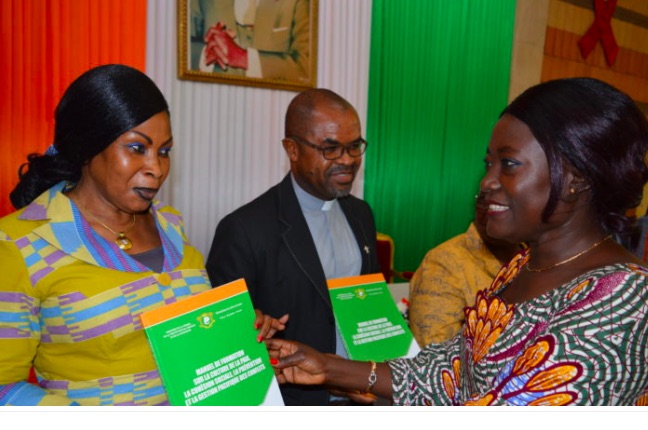
A training manual on the culture of peace, social cohesion, prevention and peaceful conflict management was presented on Thursday [November 29] in Abidjan by the Ivorian Minister for Solidarity, Social Cohesion and the Fight against Poverty. Prof. Mariatou Koné. The 235-page manual is structured around four modules: culture and peacebuilding, social cohesion, conflict prevention and peaceful conflict management.


“With today’s launching of this handbook, Côte d’Ivoire has just taken another step on the road to consolidating peace and strengthening social cohesion. This manual comes at the right time (…), “said Minister Mariatou Koné after thanking the country’s technical and financial partners, including the United Nations Population Fund (UNFPA), the United Nations United Nations Educational, Scientific and Cultural Organization (UNESCO) and the United Nations Peacebuilding Fund (PBF).

“Thank you for devoting your mandate, in the aftermath of the 2011 post-election crisis, with the valuable assistance of your staff, to keep Ivorians away from fear of others by investing in the development and promotion of tools. for political, intercultural, interreligious and intercommunity dialogue, “she said.

For Minister Koné, this manual is a powerful vehicle to strengthen living together and also to build the new Ivorian, “inviting each and everyone to appropriate it effectively as an instrument to build a culture of peace, which must be translated into all our daily behaviors and visible in our ways of living with others.”

(Article continued in right column)

(Click here for the original article in French)

Questions for this article:

How can we promote a human rights, peace based education?

(Article continued from left column)

“To be at peace with others, to be at peace with oneself, is the ongoing challenge to create the conditions for sustainable development in the service of individual and collective well-being. Nothing can stop us from pursuing this goal,” she concluded.

The purpose of the module on the culture of peace and peacebuilding is to provide participants in training sessions with a clear understanding of peace and the culture of peace, as well as the conditions for its consolidation. It also aims to enable them to know and appropriate the values ​​and attitudes that peace and the culture of peace bring to the everyday life of every citizen.

As for the module on social cohesion, in addition to fixing the lexical field of the concept, it deals with its implications of life in society, particularly through the need for reconciliation and the key steps that such a process requires in a society in crisis. .

For its part, the Conflict Prevention Module promotes common traditional and modern conflict prevention practices and their functioning. These are broken down in such a way as to enable learners to make a deeper knowledge of them, but especially because they can be mobilized by them to anticipate conflicts.

Finally, the module on conflict management engages participants in training sessions in a collective reflection that allows them to relativize and defuse conflict, define it correctly and have a clear representation by determining the role that it can play in a society, its different types, its causes, the actors who are stakeholders and the attitudes that should be adopted when it occurs.

In 2015, a study was made about social cohesion and peace in Côte d’Ivoire, with the technical and financial support of the United Nations Development Program (UNDP). The study highlighted the need for better peace-building with three essential tools. a National Strategy for Reconciliation and Social Cohesion 2016-2020; a new National Social Cohesion Program for the period 2016-2020; and a handbook for the harmonization of skills in the field of social cohesion. culture of peace and social cohesion.

India: Cultures from around world converge at folk dance fest

EDUCATION FOR PEACE .

An article from the Times of India

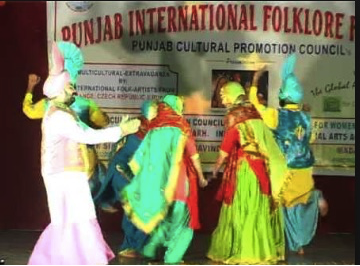
It was a coming together of cultures from around the world at the Punjab International Folk Dance Festival organized by the Punjab Cultural Promotion Council (PCPC) in collaboration with Ishmeet Singh Institute at the Ishmeet auditorium on Monday evening.

The fusion of African, Colombian, Cuban, Mexican, Punjabi bhangra and Indian classical dances was well received by the audience, students and dignitaries. La Escuela de Danzas Folcloricas-Palma Africana folk dance ensemble from Colombia was the highlight of the mega event.

Bringing the diverse cultures of the world on one platform, the event propagated the message of love, peace and harmony. Colombians led by group director Madam Maria Carmen Melendez took the stage by storm with their vibrant presentation of folk dances mapale, mix carnaval, salsa and guacherna on the scintillating beats of Colombiano music comprising drums (Tambora) and a pair of Maracas, displayed by artist Alfonso.

(continued in right column)

Question for this article:

Do the arts create a basis for a culture of peace?, What is, or should be, their role in our movement?

(continued from left column)

Sharing the theme, festival director Dr Davinder Singh Chhina said that PCPC has invited 43 international folk delegations from all over the world to attend the dance festival since 2002 to promote culture of peace, international friendship, multiculturalism and cultural diversity.

The Cumbia dance represented the culture hybrid of European, African and other indigenous communities while spreading the message of happiness; Bambuco, a musical on Colombia, emulated the process of love expressed by farmers, while Guacherna depicted festivities of Barranquilla, the native city of the guest delegations.

Carnaval De Barranquilla was a cultural representation and a mix of different dancing styles which expressed the period of colonization. The salsa beats took the audience on a tour of Cuba, while mapale and bullerengue depicted the cultural diversity of Colombia.

Closing the concert, Colombians performed bhangra along with Punjabi artists. Colombian artists Carmen Sanjuan, Dany, Alfonso and Andrea were all praise for the hospitality and vast heritage of Punjab.

USA: Conference to explore effect of early childhood development on world peace

… EDUCATION FOR PEACE …

An article from Yale University

In partnership with UNICEF and Queens University Belfast, the Early Childhood Peace Consortium (ECPC) at the Yale Child Study Center will host an open house conference at the Omni Hotel in New Haven this Thursday, Nov. 29 from 9:30 a.m. to 3:30 p.m. The organizing question for the event will be: “Can early childhood development advance ‘The Culture of Peace?’”


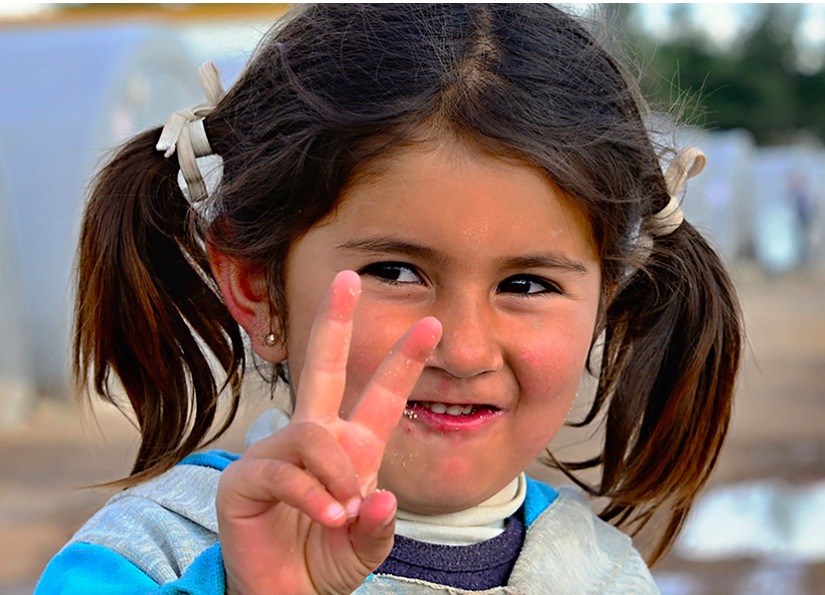
Syrian girl holding up peace sign in a Turkish refugee camp. (© Radek Procyk – dreamstime.com)

“The goal of the ECPC is to shed light on the contribution of the science of early childhood development to creating a path to peace,” said Rima Salah, chair of the ECPC and assistant clinical professor in the Child Study Center. “Working towards a common goal of reducing and preventing violence against children, the unified group that makes up the ECPC recognizes the power of investing in the early years to build peaceful societies.”

(Article continued in right column)


Question related to this article:

What is the best way to teach peace to children?

(Article continued from left column)

At Thursday’s conference, the ECPC will provide an update on its research and advocacy efforts, including how it seeks to advance early childhood development, care, and education by building peace and fostering social cohesion among individuals, groups, communities, and nations. During the event, the ECPC will also officially launch its online platform, a resource that aims to help users build with “blocks of peace” for the children of the world.

Keynote speakers for the program include Pia Rebello Britto, chief and senior adviser of early childhood development at UNICEF; Sherrie Rollins Westin, president of global impact and philanthropy at Sesame Workshop; and H.E. Ambassador Anwarul K. Chowdhury, founder of the Global Movement for The Culture of Peace, former under-secretary general and high representative of the United Nations. Presenters from six low- and middle-income countries will also discuss the early childhood development programs they are creating with colleagues at UNICEF and Queen’s University Belfast, Yale, New York University, and Harvard to build social cohesion and peace within their countries.

“The ECPC has brought together a multi-disciplinary, multi-sectored, and multi-dimensional range of experts who have worked in the fields of early childhood development and peace-building initiatives around the globe, that up to this point, have been working in silos,” said Dr. James Leckman, ECPC executive committee member and the Neison Harris Professor in the Child Study Center. “Science says that peace is possible — and the science of early childhood development can facilitate the development of a more peaceful world.”

The ECPC is founded on the idea that the global community must address the root causes of violence and conflict and that families and children can be agents of change for peace. The consortium is building an inclusive movement for peace, social justice, and prevention of violence through using early childhood development strategies that enable the world community to advocate peace, security, and sustainable development. For more information on the ECPC, visit the consortium’s website.