Category Archives: EDUCATION FOR PEACE

World Movement of Poetry: for the Culture of Peace

EDUCATION FOR PEACE .

An article from Ici Beyrouth (translation by CPNN)

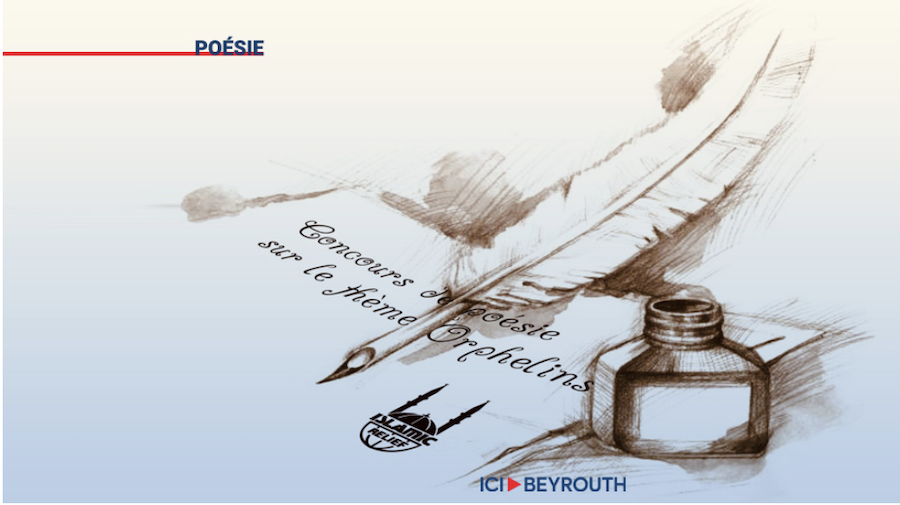
The World Poetry Movement (WPM), an international organization that brings together poets and poetry promoters from five continents, expresses its concern and opposition to the armed conflict between Russia and Ukraine, whose two sovereign nations are protagonists, and pleads for a peaceful solution. History teaches us that war is not a solution to conflicts, but a scourge that affects humanity as a whole and it is our duty to warn of the real danger of a nuclear escalation, the possibility of which constitutes a imminent threat to life on the planet. As poets, we embrace the word as a means of sensitive creation, but also as a political and social tool for building a fairer, more equitable and more humane world.

(continued in right column)

(click here for the French original of this article)

Question for this article:

How can poetry promote a culture of peace?

(continued from left column)

Therefore, the WPM welcomes the initiatives of China, Brazil and other countries that have come out in favor of a negotiated solution to the conflict between Russia and Ukraine. We join the call of the social movements in dialogue as the only method of resolving this conflict and all other international conflicts. It should be noted that, from the ideological point of view, the World Poetry Movement (WPM) is a plural space that unites poets of all different persuasions and positions.

This plurality has not been an obstacle to uniting to defend the cultural and political diversity to which the peoples of the world are entitled. We know from experience that what we have in common can prevail over small differences: the love of life. To paraphrase Saint Augustine, in the face of war, we ask no one how he thinks, but how he loves.

That is why we cannot and do not want to be indifferent to the conflict between Russia and Ukraine or forget that there are currently many other wars in the world that are ignored by international public opinion. The war in Yemen, the Israeli Palestinian conflict, the crisis in Myanmar, the situation in Syria, Colombia, among others, are painful events that require equal attention and actions from humanity as a whole to reach solutions. fair and peaceful. It is our duty, as poets, to be witnesses and champions of human values, but also to mobilize poetry and citizens for the construction of real solutions.

Combining words with action is the only way we know to achieve the utopia of a world for peace, for justice and for life, everywhere and for everyone.

Promotion of the Culture of Peace: Salimane Karimou Launches the Project “Youth for Peace in Northern Benin”

… EDUCATION FOR PEACE …

An article from Matin Libre (translation by CPNN)

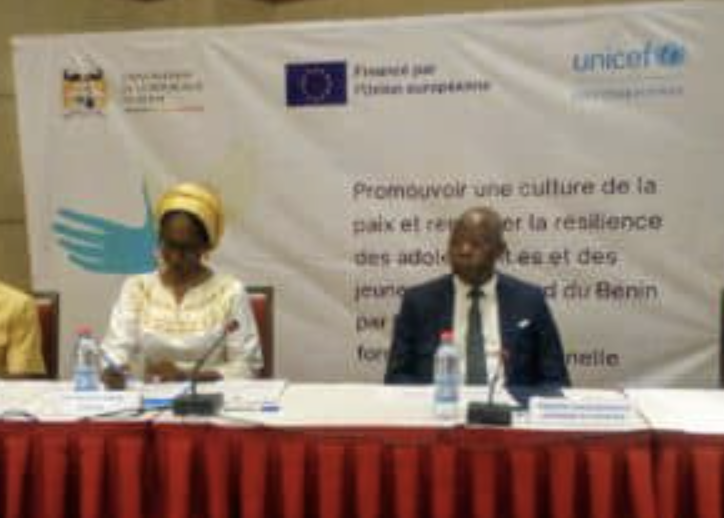
The Minister of Preschool and Primary Education, Salimane Karimou, presided, this Thursday, April 27, 2023 at the Golden Tulip in Cotonou, over the official launch of the project “Youth for Peace in Northern Benin”. Funded by the European Union and implemented by UNICEF Benin in collaboration with the government, this project aims to promote a culture of peace and strengthen the resilience of adolescents and young people in northern Benin by education and vocational training.


During the ceremony that served as a springboard for the official launch of this project, several speeches were made. In the presence of all the parties concerned, the Representative of UNICEF Benin, Djanabou Mahondé, began by thanking all the structures that made possible this tripartite partnership in favor of children, adolescents and young people in the North.

(This article is continued in the column on the right.)

(click here for the French original of this article)

Question for this article:

What is the relation between peace and education?

(Article continued from left column)

She mentioned that”The project, which will be implemented until June 2024 for a value of approximately 2.5 million US dollars, or 1.5 billion CFA francs, places particular emphasis on children out of school, children in Koranic schools, but also girls, and young people looking for alternative education or training, who all find themselves in situations of vulnerability that expose them to risks, but also deprive them of their fundamental rights. Indeed, the launch of this project responds to an important need to work with and for young people, in order to make them agents of positive change and ambassadors of peace, while Benin, like other coastal countries of the sub-region, has been facing the consequences of the Sahel crisis in the northern border areas for several months.”

Following her, Sylvia Hartlief, Ambassador of the European Union in Benin praised the government and particularly the Minister Salimane Karimou for the efforts made in consolidating education in the border departments. “The objective is to provide Beninese children and adolescents with solid educational achievements and essential skills to better integrate into a constantly changing socio-economic environment, and to promote the role of children and young people in the safeguarding peace and social cohesion in the country. An objective of which we all measure the importance and the urgency, when we know that nearly two million children are out of school in Benin, more than half of them in the 4 departments of the North (Alibori, Atacora, Borgou and Donga). The European Union is proud to support you, to accompany you, in partnership with Unicef, whose legitimacy and quality of support in the service of education no longer need to be demonstrated.”

Speaking of this project, the Minister, Leader of the Ministers of Education informs that it will take place in the department of Atacora in Cobly, Kerou, Materi, Natitingou; in the department of Alibori in Banikoara, in Karimama and in the department of Donga in Ouaké. This program, he said, responds perfectly to the ambition of the government to ensure continuous improvement of access to basic social services and social protection. “Peace education aims to combat a culture of war by promoting a culture of peace. It calls into question the principle according to which violence is innate in humans and aims to put students at the center, able to resolve conflicts without violence, “he said, while reassuring himself that this program will enable impacted children, adolescents and young people to become responsible, peace-loving citizens. He finally proceeded to the official installation of the committee to lead this project.

Brazil: Lula creates working group to combat violence in schools

. EDUCATION FOR PEACE .

An article from Migalhas (translation by CPNN)

President Lula has signed a decree creating an inter-ministerial working group, with the aim of implementing policies to prevent and confront violence in schools.

The decree was published in the DOU, this Thursday, 6. The measure was created after the massacre at a day care center in Blumenau/SC, where four children died.

(Article continued in right column)

(Click here for the original article in Portuguese.)

Question related to this article:
 
What is the relation between peace and education?

(Article continued from left column)

The working group will be coordinated by the Ministry of Education and involves seven additional ministries and two secretariats. With an initial duration of 90 days, the group must propose various measures, including the eventual publication of decrees and bills to combat these crimes. One focus could be internet regulation mechanisms, where hate groups that encourage this type of attack proliferate.

Other measures

The Minister of Justice and Public Security, Flávio Dino, announced the release of R$ 150 million to expand school patrols across the country, amid the wave of attacks on schools and day care centers.

Another measure is to intensify the monitoring of threats and planning on the internet for attacks on schools. According to Flávio Dino, 50 federal police officers will exclusively monitor this type of crime, from a center at Diop – Integrated Operations Division, linked to Senasp – National Secretariat for Public Security of the ministry, with direct support from the state police . Until now, there were 10 police officers involved in this work.

Culture of peace

The Minister of Justice also defended the involvement of the media and private entities and civil society in a major national mobilization in favor of a culture of peace, which includes, for example, the adoption of protocols in cases like this, to avoid a excessive exposure of the perpetrators of this type of attack, who seek precisely the spotlight.

Here is the decree in full.

Azueï: the union of Dominicans and Haitians through art

TOLERANCE & SOLIDARITY .

An article by María Luisa López in Acento

For a group of Dominicans and Haitians to come together to create art may seem unusual, given the complex relationship between the Dominican Republic and Haiti.

However, in August 2015, a small group of people decided to come together to create a project that would promote a culture of peace and thus guarantee a space for dialogue through art and culture between the two peoples.
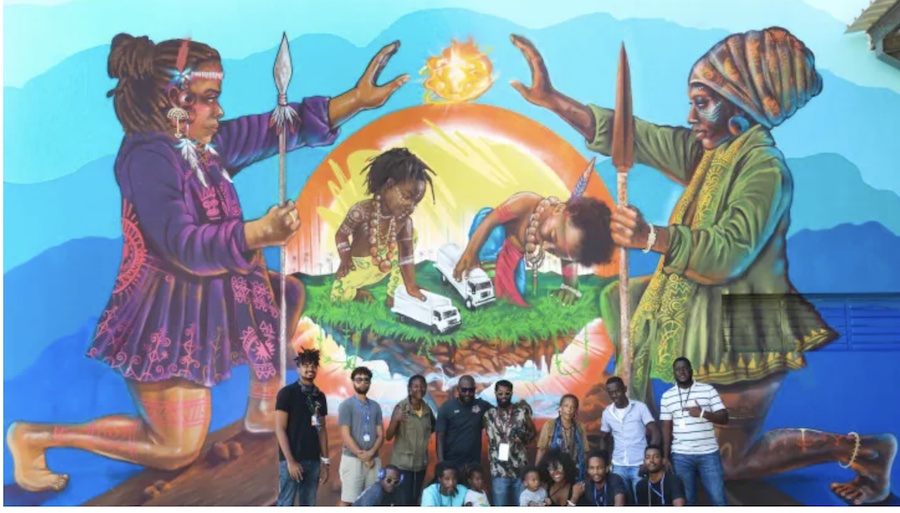

Here is the wall painted on the border by graffiti artists from the Azueï movement. Photo: Josué Azor

The meeting took place on the shores of the lake that separates Haiti from the Dominican Republic: Azueï. From there arose the name of this movement between local artists and from the neighboring country with which they also seek to undo prejudices, value the wealth of the island’s heritage and the proximity of both cultures.

“We decided to create a movement to have another way of doing things with each other. To strengthen the culture between the two nations, create joint works and through this common creation we are discovering each other”, Rachèle Magloire, president of the Azueï association in Haiti, told ACENTO.

In this regard, the filmmaker also narrates her own experience: “I particularly never had a Dominican friend. That never even occurred to me. The dynamics of collaboration and solidarity between the two countries had been completely broken. Now I even speak a little Spanish and I have Dominican friends.”

Younès Karroum, a founding member of the movement, explains that Azueï is multidisciplinary, since it is made up of musicians, graffiti artists, filmmakers and social activists.

When asked about the complexity that uniting citizens of both nations can entail, due to the cultural differences of each one, Karroum highlights artistry and trust.

“The keys to how to generate trust do not lie in the discourse, but in how to work in the arts; to find, first, a common language to be able to build whatever. For that, you have to identify the other as someone with whom I can share, I can work, and this is built through practice and the dynamics of creation… ”, he says.

To this he adds that, many times, the complex thing is to put aside the national reading that one can have when going from one country to another.

“In other words, when we have these meetings, these moments, I take off this contextual reading cap that I can have from my country and I take the gaze of the other and try to have another vision. Open your mind. And this works in Azueï. Azueï artists have developed this new identity that “we are Azueï”. And the discourse of the artists themselves has evolved a lot in these seven years because we already assume things from the other that we did not assume before ”, she specifies.

(Click here for the original version in Spanish.)

(Continued in right column)

Question related to this article:

Solidarity across national borders, What are some good examples?

Do the arts create a basis for a culture of peace?

(Continued from left column)

An island united by art

Both Magloire and Karroum agree that art is the most suitable way to unite both peoples, and they assure that the key that has worked for them is to do it from a constructive position.

They define art as a key tool to change mentalities, both Dominicans and Haitians, and the perception they have of each other.

“Because I think that, in the end, there have been voluntary policies to paint a neighbor in a way for political interests and this with many resources, in the Dominican Republic in particular. This has generated the establishment of a mentality towards the other based only on these criteria, not based on day-to-day reality. In the Dominican Republic there is a lot of interaction with Haitians. There are many examples of solidarity. There are many organizations working on the issue, there are many cases of positive relationship”, indicates Karroum.
.
On his side, Magloire also puts the issue of discrimination in context and assures that it not only occurs towards Haitians, but also towards Dominicans.

“We also see discrimination against Haitians because our artists were imprisoned or mistreated. We have some who live here. But we also discovered discrimination against Dominicans. Racism is not only against Haitians. There is deep racism here (on the island), which is not talked about,” he indicates.

Activities in the country

These days, Azueï is immersed in a tour of the Dominican Republic that has included demonstrations, workshops, rehearsals, recording of documentaries and music sessions.

“The activities began in February with a residency at Xiomara Fortuna’s Campeche ecological ranch with the graffiti artists from the Azueï team, and representatives of Haitian and Dominican cultural organizations that we have financed within the QuisqueyArt project to encourage exchanges beyond us. Other organizations are invited to undertake these cultural exchanges. Because in the Dominican there is a need for cultural projects with Haiti, and just as in Haiti this connection is needed”, Karroum points out.

He explains that their residence, carried out as a dynamic of conflict transformation through the arts, worked on the concept for a mural on the border between Dajabón and Juana Méndez.

Among the activities of the tour in the country they also included a conversation
with the entire team of the movement in El Portal Cultural, in the Colonial City.
In the same place on Friday, they will have a session with all the Azueï musicians for those who want to go and play with them.

And to close the tour they will perform a concert at the Cultural Center of Spain, in the Colonial City, at 8:00 p.m., in which they will play all the songs from their album Artybonito.
From Madagascar: Identity specificity and civilization of the universal

EDUCATION FOR PEACE .

An article by Julien Rakotonaivo in L’Express de Madagascar (translation by CPNN)

….the appreciation of Friendship, the culture of Fihavanana, the culture of peace is a Culture that looks like us, a culture that looks like us. It shows that we are not essentially an “ethnic” Nation based on races, castes, tribes, but more a “civic” Nation based on values: the values of freedom, democracy, solidarity, respect for human dignity, for the language and culture of others (hence the importance of multilingualism).


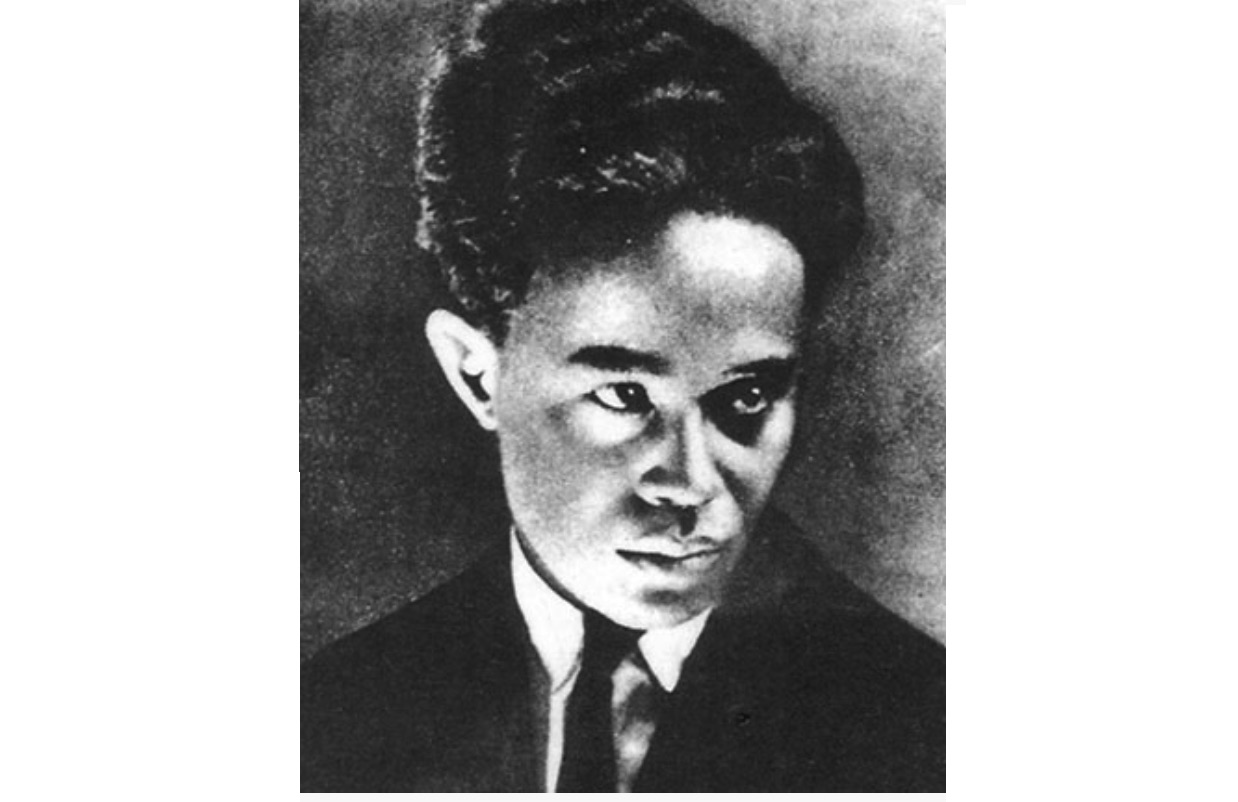
Photo of Jean Joseph Rabearivelo from Wikipedia

But this transversality of Culture should not annihilate our specific identity. Far from it ! And in this regard, I like to refer to Jean Joseph RABEARIVELO, the most illustrious of our poets, undisputed master of WORDS both in Malagasy and in French (and even in Spanish) even though he left the School at 13… He defined himself as “A scholar of color, crazy about the French language, but burning to remain fundamentally Malagasy”…

(continued in right column)

(click here for the French original of this article)

Question for this article:

How can poetry promote a culture of peace?

(continued from left column)

In this year 2023, we should mark the 120th anniversary of the birth of this genius, whose destiny was shattered on a good day or rather a bad day of June 23, 1937…). And to drive the point home, or rather icing on the cake, I deliver for our wisdom, by way of conclusion, the admirable and edifying words of Mahatma GANDHI as follows: “I do not want my house to be closed on all sides and that the windows are obstructed. I want the Culture of all countries to permeate my home as freely as possible but I refuse to be swept away by any of them.

Through cultural diversity, which should be nurtured by a permanent dialogue without ulterior motives, we are rich in our differences! The epic stories of Homer (through the Iliad and the Odyssey), the immortal works of Shakespeare and the Universal Theater of Molière, the Sonata of the divine Mozart, the Trumpet of Luis Armstrong, the magic flute of Rakoto Frah, the dreams of Martin Luther King (I have a dream!), the Island of Syllables by flames by Jacques Rabemananjara, Ethiopiques and Nocturnes by Léopold Serdâr Senghor, the legend of the centuries by Victor Hugo, the poems by Rimbaud and Verlaine. I’ll stop the list! It’s far from exhaustive…Let’s drink to these inexhaustible sources of the civilization of the universal.

-Let us assume our differences

-Let us overcome our differences

– Cultivate our attractions

-Let us join together our hopes to fully enjoy our shared passion for positive interculturality.

Mexico: Meeting for a culture of peace in teacher training schools held in San Lázaro

. EDUCATION FOR PEACE .

An article from Canal del Congress

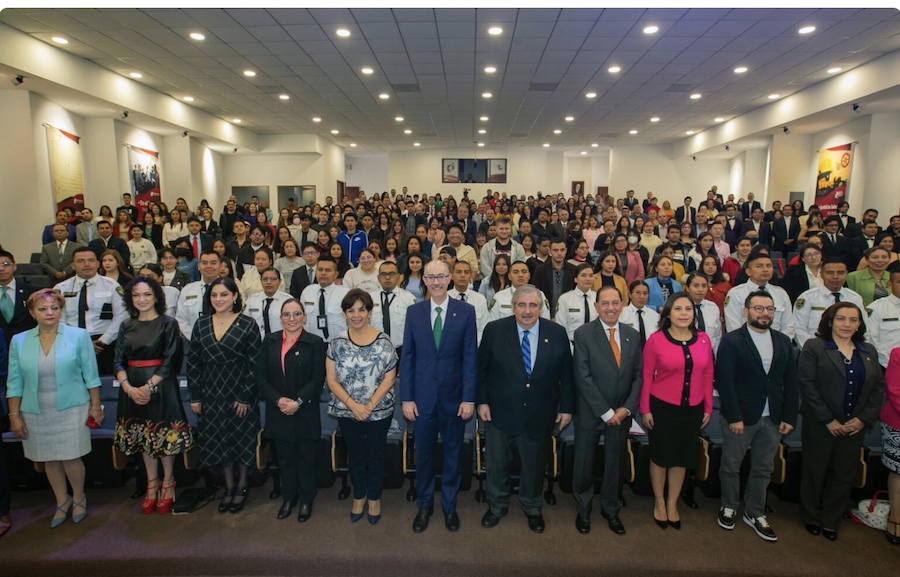
The “2nd International Meeting for a Culture of Peace in Normal Schools”, (teachers training schools) was held in the Chamber of Deputies, where cultural authorities from the legislature and students from Mexico and Colombia agreed on the need to implement actions to eradicate conflicts. inside and outside normal schools.

(Article continued in right column)

(Click here for the original article in Spanish.)

Question related to this article:
 
What is the relation between peace and education?

(Article continued from left column)

In this regard, the coordinator of Information Services, Libraries and Museums, Carolina Alonso Peñafiel, pointed out that it should be a priority to strengthen human rights and competencies in terms of peaceful relations and conflict prevention, so it is necessary to establish solutions as an integral part of educational programs.

Meanwhile, the director of Libraries, María Vázquez Valdez, said that this meeting represents an opportunity to establish ties, strategies and reflections to develop a fabric on peace between Mexico and Colombia, in order to open a peaceful path in schools and communities, to sow peace and overcome violence.

The event was attended by students and professors from normal schools in Mexico and Colombia, who exchanged ideas to help eradicate acts of violence within their institutions and thereby build safe communities. In their interventions, they proposed awareness and sensitization workshops, to create communication networks between students and to reinforce respect for cultures and ideologies, generating environments of peace, harmony and allocating resources to safe spaces for students with disabilities.

Meanwhile, teachers and students from normal schools in Colombia indicated that, given the contexts in which their institutions are developed, it is necessary to eradicate violence and move towards building peace inside and outside the schools, through inclusion and interculturality within the framework of peace.

28TH FESPACO: Gold for Tunisia and silver for Burkina

EDUCATION FOR PEACE .

An article by Issa Siguire in Le Pays de Burkina Faso (translation by CPNN)

The lanterns of the 28th edition of the Pan-African Film and Television Festival of Ouagadougou (FESPACO) went out on March 4, 2023. It was Youssef Chebbi of Tunisia, who won the Etalon d’or de Yennenga, with his film “Ashkal”. Burkinabe director Apolline Traoré wins the Silver Stallion.


Tunisian director Youssef Chebbi succeeds Somalian Khadar, director of the film “The Gravedigger’s Wife”, by winning the Yennenga Gold Stallion, with his film “Ashkal” at the 28th edition of FESPACO. Absent at the ceremony, his representative received the trophy and the sum of 20 million CFA francs in his name. `

Directors Apolline Traoré from Burkina and Angela Wamai from Kenya, 2nd and 3rd respectively, win the Silver and Bronze Stallions.

For Dora Bouchoucha, president of the jury, the process which led to the choice of the film brings together political considerations, entertainment and cinematographic creativity. “In the Three Stallions, there is all that. But the one that had more creativity, more cinematic talent, was the Ashkal movie,” she explained.

Even if Apolline Traoré did not win gold, she says she is proud to win the Silver Stallion: “We have problems. This Gold would have comforted the people of Burkina Faso but if it can do it for the Tunisian people who also have problems, so be it. After my special prizes, I can not dare to say that I am not happy, “she rejoiced.

As for the Minister in charge of the Arts of Burkina Faso, Jean Emmanuel Ouédraogo, he was delighted with the holding of the festival which, in his opinion, shows to the eyes of the whole world that Burkina Faso is still a country to be visited. “It was also a way for us to show that despite all the difficulties and security pressure, Burkina Faso remains standing as well as African culture”.

And to express the gratitude of Burkina to Mali, guest country of honor and to its counterparts from the sister countries of Côte d’Ivoire, Chad, Senegal, Guinea Conakry, like the Minister in charge of Culture of Burkina, that of Mali, Andogoly Guindo, welcomed the masterful organization. “I would like, at this stage, to renew the gratitude of the Malian government, of the Malian people to the Head of State of Burkina Faso. We can safely say that this 28th edition has kept its promises”, he declared.

It should be noted that the results of the 28th edition of FESPACO were drawn up by its General Delegate, Moussa Alex Sawadogo. According to him, more than 10,000 accredited people, including 2,413 film and audiovisual professionals and 1,328 journalists, made the trip to experience the festival of African cinema live. 95 directors of film festivals responded to the call of the biennial of African cinema. Better still, some fifty countries from diverse backgrounds were welcomed to the capital of African cinema, Ouagadougou.

“I take this opportunity to convey all my gratitude to the institutional and private partners from America, Europe and Africa without forgetting the State of Burkina Faso and Mali, guest of honor country which, by their presence, their support financial, material and technical, for their multifaceted contributions, gave the celebration an exceptional beauty. Our congratulations go to all the winners of the 28th edition of FESPACO, recipients of special prizes or prizes from the official juries“, said Moussa Alex Sawadogo, before announcing that the 29th edition of the biennial of African cinema will take place from February 22 to March 1, 2025.
 
(continued in right column)

(Click here for the original French version of this article.)

Question for this article:

Film festivals that promote a culture of peace, Do you know of others?

(continued from left column)

The 28th edition of FESPACO in numbers

– More than 10,000 accredited participants
– 2,413 film and audiovisual professionals
– 1,328 journalists
– 95 directors of film festivals
– 50 from different countries were welcomed in the capital of African cinema;
– 1,200 films were viewed
– 170 officially selected films
– 12 sections;
– 365 screening sessions
– 9 rooms
– 36 screening sessions in Kaya on eight (08) selected sites
– 96 booths out of 98 occupied at the 21st MICA
– 218,000,000 CFA francs distributed under the official prize list and special prizes.
– 22 participants in the Yennenga Academy including 16 girls
– 08 candidates for five scholarships provided for the Yennenga Post-production;
– 17 participants for the Yennenga Co-production;
– 16 papers
– 5 practical workshops
– 57 archive professionals took part in the workshops.

Sources: Press kit

They said:

Minister in charge of the Arts of Burkina Faso, Jean Emmanuel Ouédraogo: “African culture remains standing”

“It was a huge challenge for Burkina to organize this 28th edition of FESPACO. Tonight, we can say that it is a challenge that has been met. It is a way for us to say that despite all the difficulties, including those of security, Burkina Faso remains standing. African culture remains standing and I think it is a great proof of this state of mind that has been given through the organization of this edition. Mali is the guest country of honour. It is hand in hand, with Mali, that the organization was carried out. We had the honor and the pleasure of counting among us counterparts from our brother countries, from Côte d’Ivoire, Chad, Senegal and Guinea Conakry. I think it’s a very good lesson in solidarity that has been given through this edition. »

Minister of Culture and Francophonie, Françoise Remarck: “FESPACO is essential and demonstrates that African culture and cinema are important elements for the influence of our continent”

“I really salute the organizing committee for the work done. I salute the commitment of my colleague from communication and culture in Burkina Faso. I thank him for all the attention towards me and my delegation. The level of competition was high. These biennales demonstrate that our countries were right to invest in cinema. Some organized countries raise the level but we also see the arrival of new countries such as CAR, Mauritius, Cape Verde. This means that by implementing cinema policies, by investing, it pays off. We are extremely happy to be here. We congratulate all those who have been selected and of course, all the winners. FESPACO is essential and demonstrates that African culture and cinema are important elements for the influence of our continent. They make it possible to highlight our personal stories, to change the narrative about us and all this is to be credited to FESPACO. We are very proud of it and we are very happy with what we have seen. We take this opportunity to say thank you to Burkina Faso. We congratulate the organizing committee which, despite the rather special condition, did not give up, on the contrary, took up the challenge and we are very proud of it. »

Apolline Traoré, director and Etalon d’Argent: “We will continue to fight”

” We have problems. This Gold would have comforted the people of Burkina Faso but if it can do it for the Tunisian people who also have problems, so be it. After my special prizes, I can’t dare say that I’m not happy. It wouldn’t be good of me. Even if I don’t have the Gold Stallion, I have the Silver Stallion and I’m happy about it. I’m not giving up, I’ll keep fighting. I had also hoped that a woman would win the Etalon d’or for the first time, even if it wasn’t necessarily me. But we will continue to fight. »

Chloé Aïcha Boro, Burkinabe director: “FESPACO makes us and we make FESPACO”

“As a rule, the artists that we are, we criticize. We criticize the policies, the organization. We are in our role and it is normal. This announcement, we must salute the fact that they have maintained the edition despite the security context. As for the organization, it’s FESPACO and there’s always a mess. We love and we hate it at the same time. FESPACO is our home. It makes us and we make the FESPACO”. 

Colombia: Secretaries of culture meet in Villavicencio to build a Culture of Peace’

EDUCATION FOR PEACE .

An article from Periódico del Meta (translation by CPNN)

During the first day of the ‘Meeting of Culture Managers 2023’, the culture secretaries of the country’s 32 departments, capital cities and some districts, as well as the Ministry of Culture, Arts and Knowledge, arrived in Villavicencio in order to build joint agendas through the exchange of experiences regarding the Culture of Peace in the territories.


Meeting of Culture Secretaries. Photo: @Corcumvi

“This meeting is very important because in the 25 years of the Ministry of Culture, it is the first time that an event has been held in southern Colombia. This department and municipality have been selected for the diversity that they represent.. They suffered from the war, and now they seek to develop their culture and the arts”, explained Edith Agudelo, director of Corcumvi.

(continued in right column)

(Click here for the original Spanish version of this article.)

Question for this article:

Do the arts create a basis for a culture of peace?

What is happening in Colombia, Is peace possible?

(continued from left column)

Likewise, the Vice Minister of Regional Development and Heritage (e), Adriana Molano Arenas, explained that one of the strategic axes of the Ministry of Culture is to build a Culture of Peace throughout the country, mainly in territories that have been culturally forgotten.

“The way in which it is going to be distributed is what we have to design together. However, we want to make it clear that within the framework of our axes of transformation of the Government of social justice and cultural justice, our distribution will take them all into account, but it will have a priority in the municipalities that have been forgotten and marginalized from cultural policies in the past”, stated Molano.

Some of the issues that are on the agenda are heritage, libraries, artistic training, the National Concertation Program, the dignity of artists, ancestral cultures and finally, peasant cultures, one of the priorities of the Ministry of Culture.

“One of the ministry’s priorities is the development of a peasant culture program, we are doing it together with the Colombian Institute of Anthropology and in coordination with various ministries, such as agriculture and the environment,” added the official.

During the meeting, the Minister of Culture (e.), Jorge Ignacio Zorro Sánchez, stressed their intention to generate a change in the country, through agreements that have been planned together.

“This meeting confirms previous agreements that have been determined jointly with the regions. We are sure that this will be the best path for the change and transformations that the nation requires, because it is built collectively with all of them, valuing our differences as an enriching element of democratic societies”, said Jorge Zorro.

Havana Book Fair urges a culture of peace for the development of peoples

EDUCATION FOR PEACE .

An article from TV Santiago

A panel on the intellectual production of the South was held today (February 12) at the XXXI International Book Fair in Havana, Cuba. It stressed the need to build a culture of peace based on the progress of the nations of the world.

Taking place at the Nicolás Guillén Hall of the San Carlos de La Cabaña Fortress, the conversation included the interventions of Patricia Ariza Flórez, Minister of Culture, Arts and Knowledge of Colombia; Aliou Sow, Minister of Culture and Historical Heritage of Senegal, and Enrique Ubieta, director of Cuba Socialista magazine.

Ariza Flórez pointed out that there cannot be a social change without a cultural change and that the government of Gustavo Petro is in this endeavor because it pursues, in addition to improvements in people’s living conditions, the search for peace.

She commented that in the South American country the war sustained by the State and armed groups for 60 years caused a fragmentation of the social fabric of Colombia as a nation.

(continued in right column)

(Click here for the original Spanish version of this article.)

Question for this article:

Do the arts create a basis for a culture of peace?

(continued from left column)

The actress and theater director also stressed that the construction of a culture of peace is essential to repair the damage that violence and massacres left on her land and that, for this, the knowledge of indigenous and Afro-descendant populations must be taken into account. .

“We want peace to become a way of being, staying and reacting, and in this sense the Group of 77 plus China, with Cuba at the forefront, has to work to stop regional and world conflicts such as the one between Russia and Ukraine,” she insisted.

Colombia, assured Ariza Flórez, has sufficient authority to speak of peace because it is building it.

She said that through art, which she considers an exercise in freedom and also responsibility, one can contribute to eliminating stigmas, mitigating the complex climatic situation that the planet is experiencing, and recognizing the contribution of the plurality of cultures on the continent.

Aliou Sow, the head of Senegalese Culture and Historical Heritage, explained that the arts can generate solutions to the problems of humanity, beyond serving as a way of denouncing.

She stressed that nations must get to know each other without superficialities in order to work together, honestly and freely for the sake of sustainable development.

She asserted that each culture must be considered dignified, without one prevailing over another, and all people dedicated to this sector must be involved in the fight against the problems that affect humanity. Responses and alternatives should be based on the most positive values.

The XXXI International Book Fair of Havana will take place until February 19 and, later, it will be transferred to the rest of the national territory to culminate on March 19 in Santiago de Cuba.

Mr. Rajagopal P. V. to receive the Niwano Peace Prize

EDUCATION FOR PEACE .

A press release from Niwano Peace Foundation

The 40th Niwano Peace Prize will be awarded to Mr. Rajagopal P. V. of India in recognition of his extraordinary work in the service of Justice and Peace. Mr. Rajagopal’s actions in favor of the poorest and most marginalized of his country, carried out through peaceful and nonviolent methods, and his struggle for the recognition of the equal human dignity and equal rights of every man and woman, irrespective of cast or gender, inspires great admiration. His particular accomplishments that garner the highest esteem include negotiating the surrender and facilitating the rehabilitation of gangs, the education of young people in the service of the poor, and, well aware that the primary needs of the poor are water, land, and forests, his commitment to care for the environment.

The presentation ceremony will take place in Tokyo, Japan, on Thursday, May 11, 2023. In addition to an award certificate, Mr. Rajagopal P. V. will receive a medal and twenty million yen.

To avoid undue emphasis on any particular religion or region, every year the Peace Foundation solicits nominations from people of recognized intellectual and religious stature around the world. In the nomination process, some 600 people and organizations, representing 125 countries and many religions, are asked to propose candidates. Nominations are rigorously screened by the Niwano Peace Prize Committee, which was set up in May of 2003 on the occasion of the 20th Anniversary of the Niwano Peace Prize. The Committee presently consists of nine religious leaders from various parts of the world, all of whom are involved in movements for peace and inter-religious cooperation.

Here are some comments by members of the Committee on the selection of Mr. Rajagopal P. V. for this year’s award:

– Rajagopal uses the Gandhian technique of foot-marches for promoting world peace… He has trained many young men and women in nonviolent social practices. His organization is also dedicated to improving the livelihoods of poor people and farmers in India. He is also addressing the problems of climate change and its impact on the lives of the people, especially the marginalized people. A Gandhian like Rajagopal is deserving of the Niwano Peace Prize. (Dr. Ranjana Mukhopadhyaya)

[His] lifelong commitment and work based on Gandhian principles of ‘satyagraha’ and nonviolent activism. [He] addresses structural violence through multiple types of people’s movements which find unique ways to address their most pressing needs and capacities. His approach has global vision, yet began in local Indian communities that spread throughout the country. [He]catalyzed and led many foot marches for land and livelihood rights, tribal rights, some of which have led to land being returned and responsive substantial changes in public policy. (Mr. Somboon Chungprampree)

(Click here for an article in French on this subject.)

Question related to this article:

How can just one or a few persons contribute to peace and justice?

– With this world characterized by different forms of violence, new approaches are needed to deal with teaching people about non-violence. Also, as the future lies with young people, it is important to actively involve them into promoting world peace and discourage all the wars that are destroying life and the environment. The ideologies such as those based on Gandhi on peace and non-violence could be the pillar or resuscitation of humanity and living together in harmony. People like Mr. Rajagopal, who is the Founder of Ekta Parishad organisation dedicated to Gandhian ideologies of promoting peace and non-violence are key figures that are needed in this world. He believes that peace and non-violence can be addressed successfully through dialogue.

His dedication for world peace made him to organize a year – long nonviolent march covering 12,000 kilometres across ten countries. His activism for peace and justice based on spiritual practice and his focus on young people who are the leaders of the future, can change the present violent nature of this world. His extra strength of not only concentration on his country but spreading his teachings to others globally in the promotion of justice and nonviolence can heal the world. His recognition of the problem of climate change which also affects the lives of people, is also very important as people live in this earth but destroying the environment which results in violent climate changes that kill lots of people, something that could be prevented. He believes that through dialogue the world could work towards the eradication of poverty, encourage social inclusion, act on different ways to deal with climate crisis and halt conflict and violence. (Dr. Nokuzola Mndende)

The Niwano Peace Prize

The Niwano Peace Foundation established the Niwano Peace Prize to honor and encourage individuals and organizations that have contributed significantly to inter-religious cooperation, thereby furthering the cause of world peace, and to make their achievements known as widely as possible. The Foundation hopes in this way both to enhance inter-religious understanding and cooperation and to encourage the emergence of still more persons devoted to working for world peace.

The Prize is named in honor of the founder and first president of the lay Buddhist organization Rissho Kosei-kai, Nikkyo Niwano. For Niwano, peace was not merely an absence of conflict among nations, but a dynamic harmony in the inner lives of people as well as in our communities, nations and the world. Seeing peace as the goal of Buddhism, Niwano devoted much of the latter half of his life to promoting world peace, especially through inter-religious discussion and cooperation.

Here are CPNN articles about some of the previous winners of the Niwano prize:

CJP co-founder and first director John Paul Lederach awarded Niwano Foundation Peace Prize

Adyan Foundation in Lebanon to Get 35th Niwano Peace Prize

2016 – Center for Peace Building and Reconciliation in Sri Lanka, to receive the Niwano Peace Prize

2015 – Esther Abimiku Ibanga, Founder of The Women Without Walls

2014 – Dena Merriam, Founder and leader of The Global Peace Initiative of Women

2012 – Rosalina Tuyuc Velasquez: Constructing an Inclusive Guatemala