Category Archives: HUMAN RIGHTS

Amnesty International : 33 human rights wins to celebrate this year

… . HUMAN RIGHTS … .

An article from Amnesty International

It’s been a busy year for Amnesty International with positive changes taking place around the world. Laws have been rewritten, awards have been won, prisoners of conscience released and our supporters have continued to campaign with passion to ensure people can live free from torture, harassment or unjust imprisonment. Here’s a round-up of human rights wins to celebrate this year…
January

Global: Amnesty International’s ground-breaking report  on how health workers around the world had been exposed, silenced and attacked during the Covid-19 pandemic resulted in Ibrahim Badawi, a doctor, and Ahmad al-Daydoumy, a dentist, being released from detention in Egypt in January and March this year. They were just two of the many health workers arbitrarily detained in 2020 in Egypt, on vague and overly broad charges of “spreading false news” and “terrorism”, which Amnesty highlighted in its research.

February

Sri Lanka: Following the outbreak of Covid-19 in Sri Lanka, a number of people from the Muslim community were forcibly cremated on the instructions of the authorities and against the wishes of the deceased’s families. Amnesty International called for Sri Lanka’s authorities to respect the right of religious minorities to carry out the final rites of their relatives in accordance with their own traditions unless restrictions were needed to prevent the spread of COVID-19. Amnesty also engaged with Organization of Islamic Cooperation (OIC) states to impress upon the Sri Lankan government to change this discriminatory policy, and placed op-eds in Pakistan and Bangladesh ahead of a key session of the United Nations Human Rights Council. As a result, Sri Lankan authorities decided to end the practice of forced cremations for victims of Covid-19 in February.


March

Bahrain: Amnesty International helped to secure several prisoner releases in Bahrain this year, including four children who had been tried as adults. In March, a Bahraini court suspended a six-month prison sentence against the four and placed them in a rehabilitation programme instead – one week after Amnesty issued an urgent action. In April, there was more good news with the release of prisoner of conscience, Mohammed Hassan Jawad, who had been serving a 15-year prison sentence for his peaceful participation in the 2011 uprising. Amnesty International has been campaigning for his release for a decade. In another breakthrough, on 11 March, the European Parliament adopted a resolution  on Bahrain’s human rights situation and its treatment of human rights defenders, followed by another  in September on Emirati prisoner of conscience Ahmed Mansoor – which echoed Amnesty’s recommendations.

Japan: In March, a Japanese court ruled that the government’s failure to recognize same-sex marriage was unconstitutional – the country’s first-ever judicial ruling on marriage equality. The decision was a ground-breaking step for same-sex couples in their pursuit of equal rights and could set an important precedent for similar cases filed by other same-sex couples in Japan. This followed campaign calls and petitions  from Amnesty International and others.

Iraq: The Iraqi parliament passed the Yezidi Survivors Law  which provides a framework for reparations for many survivors of ISIS atrocities in northern Iraq, including women and girls who were subjected to sexual violence and child survivors who were abducted before the age of 18. This was a key recommendation in a report published last year  by Amnesty International on the physical and mental health crisis endured by Yezidi children separated from their families. The report was also referenced by Angelina Jolie in a speech  to the UN Security Council regarding sexual violence in conflict. Additional bylaws were passed in September.

Global: In March, October and November, the International Criminal Court (ICC) announced it would open formal investigations into the situation in the Occupied Palestinian Territory, the Philippine  government’s deadly ‘war on drugs’ and crimes against humanity in Venezuela. Amnesty International has been documenting crimes against humanity in all these countries for several years, its research was cited dozens of times in the Prosecutor’s filing.

Madagascar: After months of refusing to acknowledge https://www.dailymaverick.co.za/article/2021-03-22-danger-and-despair-in-madagascar-president-rajoelina-opts-for-miracle-cure-over-covid-19-vaccine/Covid-19, the Malagasy government finally dropped its policy of refusing to order Covid-19 vaccines following pressure from Amnesty  and others – giving more people a chance to access life-saving vaccines.

South Africa: In March, police revived an investigation into the 2017 murders of best friends Popi Qwabe and Bongeka Phungula, after receiving a petition  signed by more than 341,000 Amnesty International supporters worldwide demanding that their killers be brought to justice. The police have now completed their investigation and handed over the case to the country’s National Prosecuting Authority. After years of distress and anger over irregularities and delays in the original police investigation, Popi and Bongeka’s friends and families finally have reason to believe that justice for their loved ones is on the horizon. “I feel optimistic,” said Popi’s sister Thembelihle. “I feel like finally, something is about to change.”

April

Global: Amnesty International released its flagship annual report, The State of the World’s Human Rights. This latest edition covered the human rights situation in 149 countries and was translated into a record 38 languages. It also included specific advocacy calls on a range of human rights issues.


May

Global: Amnesty International won a prestigious Webby Award  for its microsite on the abuse of tear gas by police forces around the world. The site was originally launched in mid-2020, and is frequently updated with new content and evidence of abuses. The material is also still being cited in ongoing advocacy, including in recent US Congressional debates around regulating or banning police use of tear gas.

June

Burundi: NGO worker and human rights defender Germain Rukuki was released from prison  after spending more than four years behind bars for standing up for human rights. Initially sentenced to 32 years in prison on baseless charges, Germain was jailed before getting a chance to hold his youngest child, born just weeks after he was detained in July 2017. After more than 400,000 actions calling for his release, Germain is looking to be reunited with his family, who fled the country for fear of reprisals.

China: Amnesty International published an extensive report detailing how the draconian repression faced by Muslims in China’s Xinjiang Uyghur Autonomous Region amounts to crimes against humanity. The report garnered significant global media coverage, and was followed up with a campaign calling for the closure of the internment camps. To date, the ‘Free Xinjiang Detainees’ petition  has been signed by more than 323,000 people around the world and Amnesty International’s national teams in 10 countries have held petition handover events.

Pakistan: Amnesty International successfully campaigned for the acquittal and release of  Shafqat and Shagufta Emmanuel, a Christian couple, who spent seven years on death row on blasphemy charges.

USA: Decode Surveillance  NYC saw more than 7,000 Amnesty International supporters from 144 countries map 15,000 surveillance cameras across New York City which can be used by the NYPD to track people using facial recognition software. The results of the innovative project helped campaigners push local legislators for a ban on the use of the discriminatory technology.

Nepal: After the launch of Amnesty International’s report, “Struggling to breathe”: The second wave of Covid-19 in Nepal, which was followed by sustained campaigning and advocacy initiatives, the Japanese government donated 1.6 million vaccines to Nepal, Bhutan donated 230,000 and the UK donated 130,000 doses.

(Article continued in right column)

Question(s) related to this article:
 
What is the state of human rights in the world today?

(Article continued from left column)

Nigeria: The Court of Justice of the Economic Community of West African States (ECOWAS) granted an order to prohibit Nigerian authorities from prosecuting anyone using Twitter in the country. This victory for freedom of expression came after Amnesty International  helped Nigerian NGO, the Socio-Economic Rights and Accountability Project (SERAP), to bring a case against the Nigerian authorities over their threat to prosecute anyone using Twitter after they implemented a blanket ban on the social platform in June.

July

Nicaragua: After more than two years locked up in an immigration detention facility in California where she was abused and denied access to adequate medical care, Maura Martínez, a transgender woman originally from Nicaragua, was finally freed in July.  Martínez had spent half her life in the United States where she sought safety after experiencing relentless gender-based violence while living in Mexico. However, after a legal incident, US authorities detained and threatened to deport her. Thanks to a global campaign by Amnesty International and partner organizations, she is now free and able to live in the USA while she awaits the adjudication of her asylum claim.

Honduras: On 5 July 2021, a court in Honduras convicted David Castillo, the former manager of the company Desarrollos Energéticos and the person in charge of the Agua Zarca hydroelectric project, of participating in the 2016 murder of the human rights defender Berta Cáceres. Amnesty International has campaigned for justice for Berta for years and continues to demand that all those responsible for ordering or carrying out her murder face justice.

Denmark: In early 2021, the Danish government proposed a draft law to parliament granting police the power to issue a “security-creating assembly ban” if a group of people exhibited “insecurity-inciting behaviour”. Amnesty Denmark and partners successfully prevented the Danish government from passing the law, which would have put undue restrictions on the right to protest. They won the Civic Pride Award 2021  for their campaigning. Another award winner was Amnesty Hungary, which campaigned against the abusive and stigmatising LexNGO law, as part of the Civilisacion coalition. Over 3 years, the coalition fought LexNGO, taking the case to the European Court of Justice, which eventually led to the repeal of the law.

Sierra Leone: After years of sustained campaigning from Amnesty International and others, the parliament voted to abolish the death penalty in Sierra Leone  for all crimes. The Act, approved by parliament in July, was being finalised before President Julius Maada Bio can sign it into law. The process of commuting all outstanding death sentences has already begun. As of 30 June 2021, 21 countries in Sub-Saharan Africa had abolished the death penalty for all crimes.

Latin America: Amnesty International celebrated the achievements of its five-year human rights education programme, It’s My Body!, which set out to educate young people in Argentina, Chile and Peru about sexual and reproductive rights, enabling them to make positive changes in their community. Hundreds of young people were trained to provide support to others and the impact has been incredible. In Argentina, one young person successfully reformed a school curriculum to include comprehensive sexuality education, while in Peru, young people who took part in the project trained parents and teachers across the country.

USA: After the previous US federal administration carried out 13 executions in six months, on 1 July 2021, the US Attorney General Merrick Garland announced the establishment of a moratorium on executions pending the review of policies and procedure by the Department of Justice. Amnesty International has been one of the organizations campaigning for this outcome and will continue to work until this temporary measure is turned into permanent abolition of the US federal death penalty [and all death sentences are commuted.

August

Afghanistan: Following the collapse of the Afghanistan government after the Taliban seized power in mid-August 2021, Amnesty International researchers continue to investigate atrocities committed by the group and were able to verify two massacres of Hazara people in the provinces of Ghazni  and Daykundi  by Taliban fighters. These reports were among the first evidence that the Taliban continued to persecute marginalized communities in Afghanistan as they took control of the country. Amnesty International also published powerful testimony from girls  who were excluded from school, amidst ongoing Taliban threats and violence.


September

Guinea: After months of campaigning  from Amnesty International and its supporters, pro-democracy activist Omar Sylla was unconditionally released on 6 September, the day after the military led a coup against President Alpha Conde. Following his release, dozens of political activists were also released and charges were dropped by the judiciary.

Tunisia: Research by Amnesty International helped to end the practice of arbitrary travel bans imposed on many Tunisians following President Kais Saied’s seizure of exceptional powers. After Amnesty published a story on the situation, the president issued a statement  on 17 September ordering the border police “not to impose any travel ban on people unless through a judicial order”.

Global: Following years of advocacy, pressure and engagement from Amnesty International, the Human Rights Council recognized the Right to a Safe Clean Healthy and Sustainable Environment and created a Special Rapporteur on Human Rights and Climate Change – an emphatic statement leading up to COP26 about the link between human rights and the environmental crisis.

Central African Republic: Two men suspected of crimes against humanity Mahamat Said Abdel Kani and Eugene Barret Ngaikosset were finally arrested, with Ngaikosset placed in custody by the Special Criminal Court (SCC). It was the first time the SCC publicly named  a suspect and it came after Amnesty International called  for the SCC to address its lack of transparency. Amnesty International has been advocating for justice for war crimes and crimes against humanity committed in CAR for a number of years and our work – together with others – contributed to these two individuals being arrested.

October

Global: The European Parliament’s Daphne Caruana Prize for Journalism was awarded to the Pegasus Project, which saw Amnesty partner with major media organizations to expose the vast scale of violations perpetrated through secretive cyber surveillance. The revelations made global headlines and led to spyware company NSO Group being blacklisted by the USA, as well as triggering investigations in multiple countries, and calls for the surveillance industry to be properly regulated.

Moldova: The parliament of Moldova ratified the Council of Europe Convention on the Prevention and Suppression of Violence against Women and Domestic Violence (Istanbul Convention), opening the door to better protection and support to survivors of domestic violence and violence against women. According to the Moldovan government, the country has already adapted more than 20 legislative acts to meet the requirements of the convention. To date, the only other country in Eastern Europe and Central Asia to ratify the convention, in addition to Moldova, is Georgia. Amnesty has been actively promoting women’s rights and the fight against domestic violence for years.

Kosovo: Following an intervention from Amnesty International, Austrian-based Kelkos Energy withdrew its baseless defamation lawsuits  against environmental activists Shpresa Loshaj and Adriatik Gacaferi, who had publicly raised concerns about the environmental impact of hydropower projects. Austrian-based Kelkos Energy was using these lawsuits to intimidate and silence Shpresa and Adriatik from speaking out about the possible environmental damage caused by the company’s exploitation of Kosovo’s natural resources.

Turkey: A court acquitted  18 students and an academic who had been prosecuted for taking part in a peaceful campus-based Pride parade in Ankara in May 2019, which was met with police using pepper spray, plastic bullets and tear gas. Their acquittal after a protracted legal battle was a victory for justice. The case of the METU students was part of Amnesty International’s flagship Write for Rights campaign in 2020. More than 445,000 people from 43 countries demanded their acquittal.

Global: Following pressure from Amnesty’s international and partner organisations, the Executive Office of the UN Secretary-General announced plans to mainstream children’s rights within the UN system. The announcement followed a successful UN side-event organised jointly by Amnesty International and its partners, featuring an address by Amnesty’s Secretary General, Agnes Callamard.

November

Guinea Bissau and Niger: Guinea Bissau and Niger declared  they would allow individuals and NGOS to submit complaints to the African Court on Human and Peoples’ Rights, bringing the number of countries to sign the declaration to eight. Amnesty’s advocacy campaign was pivotal, thanks to its educational video, social media campaign and sustained engagements with African Union actors and civil society groups.

The Elders: Israel’s designation of Palestinian NGOs as “terrorist” undermines core democratic principles

    . . HUMAN RIGHTS . .

    A press release from The Elders

    The Elders express their grave concern at Israel’s recent designation of several Palestinian civil society organisations as “terrorist”, and wider misuse of anti-terrorism frameworks to restrict civil society.


    Photo: joiseyshowaa

    (continued in right column)

    Question related to this article:

    Presenting the Palestinian side of the Middle East, Is it important for a culture of peace?

    Israel/Palestine, is the situation like South Africa?

    (continued from left column)

    Juan Manuel Santos, former President of Colombia, Nobel Peace Laureate and member of The Elders, said: 

    “Israel’s recent designation of six Palestinian NGOs as “terrorist organisations” is part of a wider pattern of repression of Palestinian and Israeli civil society, and undermines core democratic principles. Global anti-terrorism frameworks such as the Financial Action Task Force standards should not be misused to restrict the legitimate work of civil society. Any designation must be proportionate and evidence-based. I urge the Israeli government to lift the designation or provide sufficient justification of it, and to recommit to the preservation of civic space and democratic freedoms.”

    Hina Jilani, human rights advocate, Co-chair – Task Force on Justice, said:

    “Human rights defenders and wider civil society play an indispensable role in our democracies.  When they are silenced, governments can no longer be held accountable. The designation of six Palestinian NGOs as “terrorist organisations” by Israel without adequate explanation puts their vital work and survival at risk, and sets a dangerous precedent. The Elders stand in solidarity with the NGOs, and call on donor governments to stand firm in their support for Palestinian civil society.”

Fourth Paris Peace Forum ends with a series of initiatives

. HUMAN RIGHTS .

An article from China.org (translation by CPNN)

The 4th edition of the Paris Peace Forum, which brought together 1,000 participants in Paris and 15,000 online, ended this Saturday (November 13) with a series of initiatives, including the launch of an international appeal to defend the rights of the child in the digital environment.


Frame from video of the Forum

The international regulation of digital technology was one of the main issues of this edition of the Paris Peace Forum. In addition to the opportunities it opens up for children, the digital environment can also expose them to “illegal or hateful” content online and to cyberbullying, hence the decision of this forum to host the launch of a international call to defend the rights of the child in the digital environment.

This appeal was signed by major digital platforms, including Amazon, Google, YouTube, and Twitter, a dozen non-governmental organizations and nearly a dozen states, according to a press release from the Forum.

The signatories also pledged through series of actions “to enable children to use digital tools safely and to benefit to their full potential, without being exposed to abuse,” the document said.

(Article continued in right column)

(Click here for the original in French.)

Questions related to this article:

Rights of the child, How can they be promoted and protected?

(Article continued from left column)

Still in the digital domain, the United States and the European Union have joined the Paris Call for Confidence and Security in Cyberspace. Launched in 2018 during the first edition, this call invites “to react together in the face of new threats that endanger citizens and infrastructures”.

The “Net Zero Space” initiative which calls for a sustainable use of outer space by 2030, with the objective of reducing pollution of the “Earth’s orbit” environment has also been launched as part of the project. of the forum.

The Armed Forces of 22 countries, represented at the forum by their Minister of Defense, are also committed to reducing their impact on the climate.

The Forum participants thus recalled the importance of cooperation in responding to the challenges facing the world. This is for example the case of the call to defend the rights of the child in the digital environment. “Taking back control of a number of digital business operations can only go through international cooperation,” explained the president of the Paris Peace Forum, Pascal Lamy.

In a message addressed to the participants of this forum, the Secretary General of the United Nations, Antonio Guterres stressed the importance of dialogue and solidarity to reduce the fractures that threaten the world. “No state will be able to absorb them alone. Solidarity is our only chance,” he stressed.

It is this same global solidarity through cooperation that will rid the world of the COVID-19 pandemic, according to the Director General of the World Health Organization (WHO), Tedros Adhanom Ghebreyesus.

“The pandemic will end when the world decides to put an end to it. It is in our hands. It is a question of political will and courage”, announced the head of the WHO during the forum.

The Paris Peace Forum is an international event focusing on issues of global governance and multilateralism. This fourth edition, which was held from November 11 to 13, brought together 45 heads of state and government and leaders of international organizations.

Amnesty International: Leaders’ catastrophic failure on climate at COP26 shows they have forgotten who they should serve and protect – humanity at large

. HUMAN RIGHTS .

An article from Amnesty International

Leaders have catastrophically betrayed humanity at large by failing to protect people most affected by the climate crisis and instead caving into the interests of fossil fuel and other powerful corporations, Amnesty International said today as the climate conference, COP26, concludes for another year.  Following two weeks of negotiations by world leaders in Glasgow, Amnesty’s Secretary General, Agnès Callamard, said:

“The United Nations Climate Change Conference has failed to deliver an outcome that protects the planet or people. Instead it has betrayed the very foundations on which the United Nations was built – a pledge first not to countries, nor states, but to the people. Throughout their negotiations, our leaders have made choices that ignore, chip away or bargain away our rights as human beings, often discarding the most marginalised communities around the world as expendable collateral damage.

(Article continued in the right column)

Questions related to this article:

Sustainable Development Summits of States, What are the results?

What is the relation between climate change and human rights?

(Article continued from the left column)

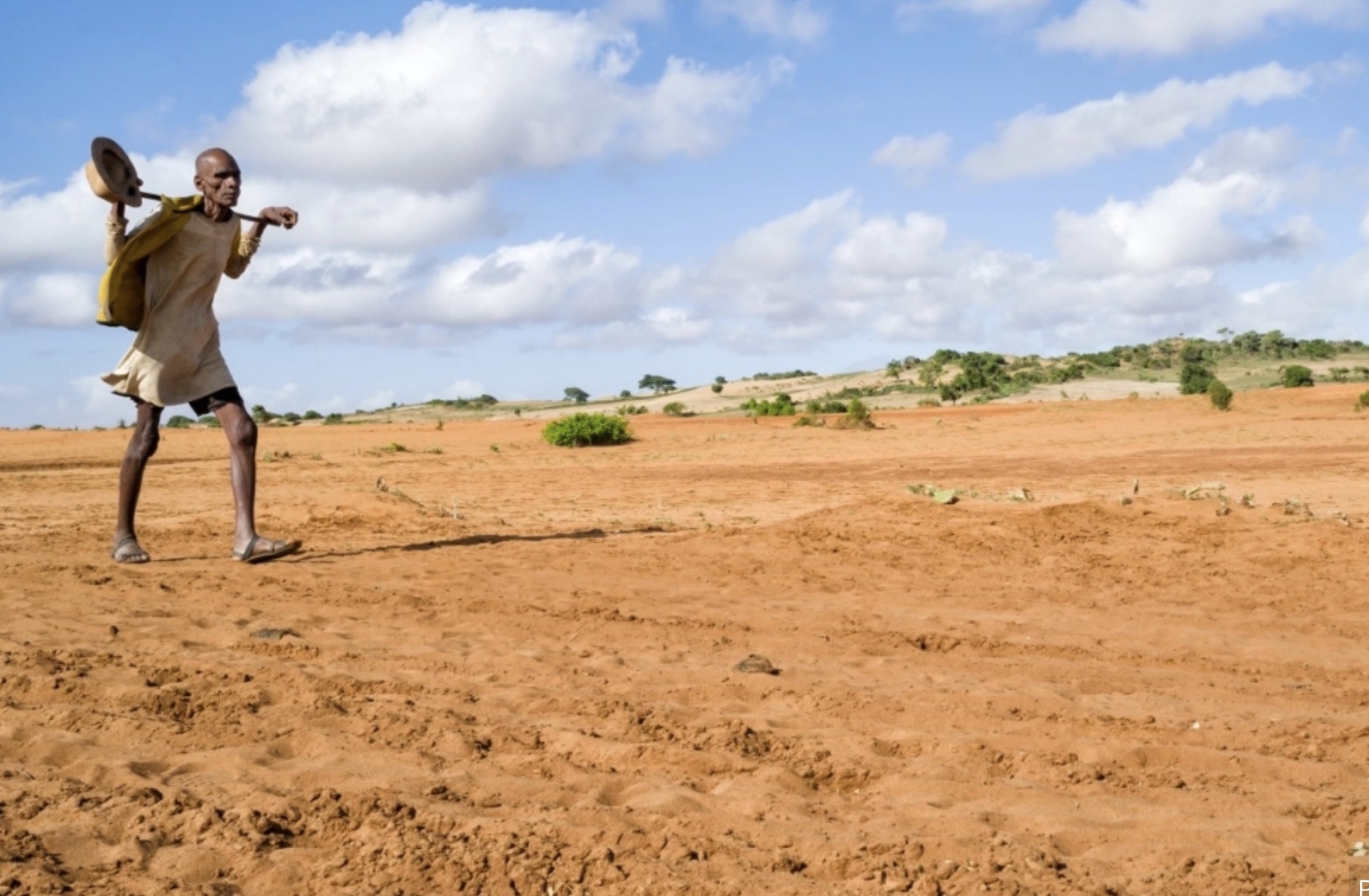
“Their failure to commit to maintaining the global temperature rise at 1.5°C will condemn more than half a billion people, mostly in the global south, to insufficient water and hundreds of millions of people to extreme heatwaves. Despite this disastrous scenario, wealthy countries have failed to commit money towards compensating communities suffering loss and damage as a result of climate change. Neither have they committed to providing climate finance to developing countries primarily as grants, a decision that threatens poorer countries – the least equipped to cope with the climate crisis – with unsustainable levels of debt.

“It is bitterly disappointing to see the many loopholes in the COP26 agreement which bow to the interests of fossil fuel corporates rather than our rights. The agreement fails to call for the phasing out of all fossil fuels and all fossil fuel subsidies – demonstrating the lack of ambition and bold action needed at this critical time. In addition, the focus on carbon offsetting by rich countries, without even putting in place adequate environmental and human rights protection  measures, ignores the threat to Indigenous peoples and communities who risk being evicted from their land to make way for these schemes. It is a hollow and unacceptable substitute for real zero emissions targets. 

“The decisions made by our leaders in Glasgow have grave consequences for all of humanity. As they have clearly forgotten the people they serve, the people must come together to show them what can be achieved. Over the next 12 months, we must stand together to call on our governments to take ambitious action on climate change that puts people and human rights at its centre. If we do not put our hearts and minds into solving this existential threat to humanity, we lose everything.”

USA: Women Rally for Abortion Justice Amid ‘Unprecedented Attack’ on Reproductive Rights

. HUMAN RIGHTS .

An article from Common Dreams (licensed under Creative Commons – CC BY-NC-ND 3.0. )

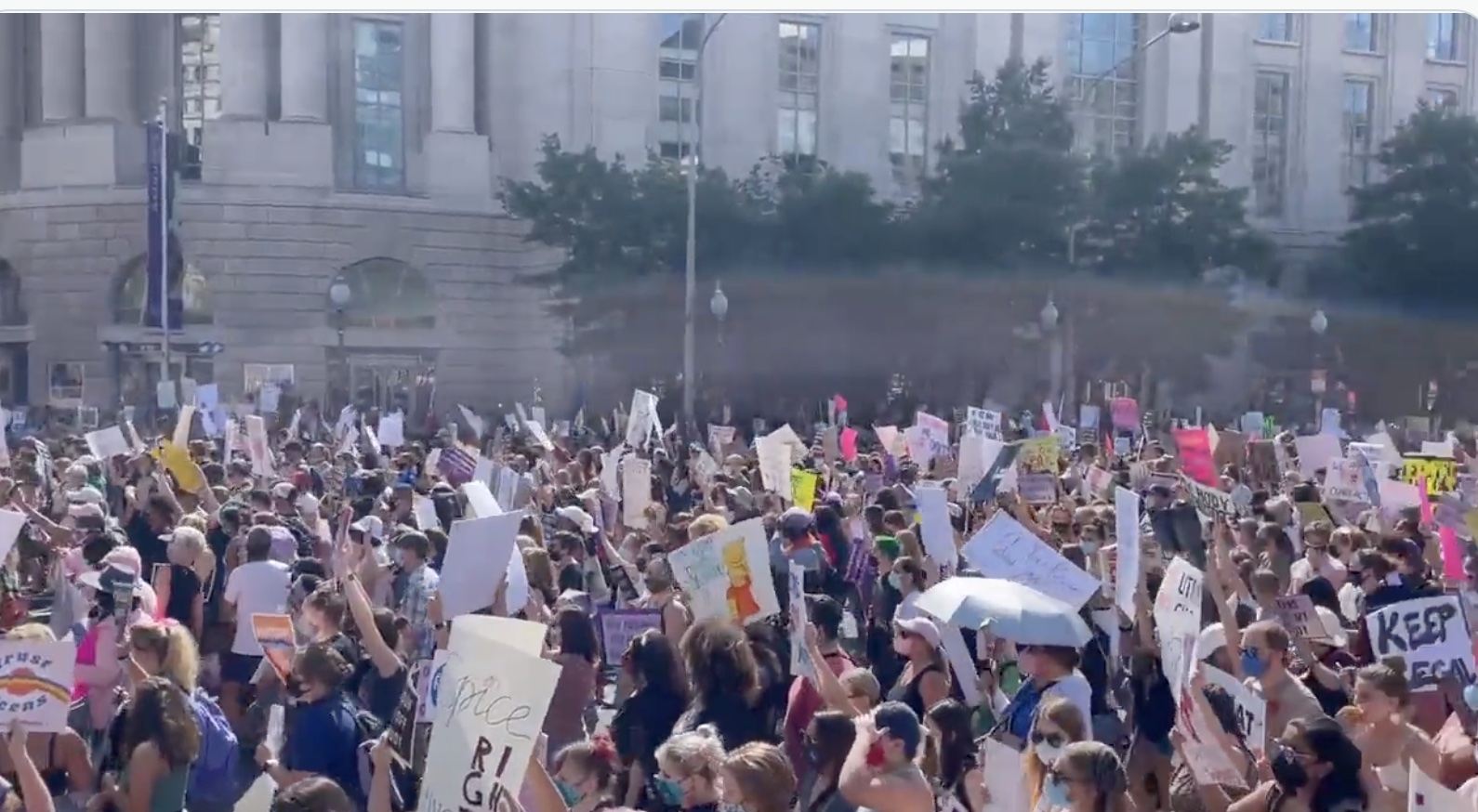
Amid an escalating Republican assault  on reproductive rights and a looming U.S. Supreme Court reckoning, women and allies across the United States and around the world took to the streets Saturday to #RallyForAbortionJustice and defend Roe v. Wade.


(frame from video by @Molly JongFast
)

Tens of thousands of demonstrators marched in Washington, D.C, New York City, Los Angeles, and more than 600 other cities and towns, according to Women’s March, the event organizer.

“No matter where you live, no matter where you are, this moment is dark—it is dark—but that’s why we’re here,” Alexis McGill Johnson, president of Planned Parenthood, told  participants at the Washington, D.C. protest. “It is our job to imagine the light, even when we can’t see it. It is our job to turn pain into purpose. It is our job to turn pain into power.”

At the Houston rally—where signs read “Abort Abbott” in protest of S.B. 8, Texas’ draconian abortion law signed earlier this year by Republican Gov. Greg Abbott—more than 10,000 people turned out, with many chanting, “Our bodies, our choice.”

In Washington, D.C., Women’s March executive director Rachel O’Leary Carmona described the wave of GOP anti-choice laws in at least 16 states as an “unprecedented attack” on reproductive rights.

(Article continued in the right column)

Questions related to this article:

The struggle for human rights, is it gathering force in the USA?

How effective are mass protest marches?

Abortion: is it a human right?

(Article continued from the left column)

“For a long time, groups of us were ringing the alarm bell around abortion access and many of us were told we were hysterical and Roe v. Wade will never be overturned,” Carmona told  USA Today. “But now it’s clear that our fears were both rational and proportional.”

Women’s March  says  that by refusing to block the Texas law—which bans abortions after six weeks  without  exceptions for rape or incest, and offers $10,000 bounties for vigilantes who successfully sue anyone who “aids or abets” the medical procedure—the Supreme Court “effectively took the next step towards overturning Roe v. Wade.”

In May, the Supreme Court announced it will hear a challenge to Mississippi’s near-total abortion  ban , a case that author Lauren Rankin  warned  “may very well be the death knell for Roe v. Wade” given the high court’s conservative supermajority.

 Nearly all  House Democrats  came together  last week to pass the  Women’s Health Protection Act  (WHPA) in response to the Texas law and amid  mounting fears  that the Supreme Court will overturn Roe.  According to  the advocacy group Equal Access to Abortion, Everywhere, the WHPA would establish “a statutory right for health care providers to provide, and their patients to receive, abortion care free from medically unnecessary restrictions, limitations, and bans that delay, and at times, completely obstruct, access to abortion.”

However, the bill faces an uphill battle in an evenly split Senate in which anti-choice Democrat Joe Manchin of West Virginia and Sen. Bob Casey (D-Pa.)  oppose  the measure.

Sen. Elizabeth Warren tweeted Saturday that Americans “support the right to a safe, legal abortion.”

Speakers at Saturday’s rallies emphasized the harm caused by anti-choice laws. Planned Parenthood of Illinois senior director of public policy Brigid Leahy  told  the Associated Press at the Springfield march that women started traveling to Illinois two days after the Texas law took effect.

“They are trying to figure out paying for airfare or gas or a train ticket, they may need hotel and meals,” she said. “They have to figure out time off of work, and they have to figure out childcare. This can be a real struggle.”

“Week for Peace 2021” Initiative for the consolidation of peace in Colombia

. . HUMAN RIGHTS . .

An article from Area Cucuta

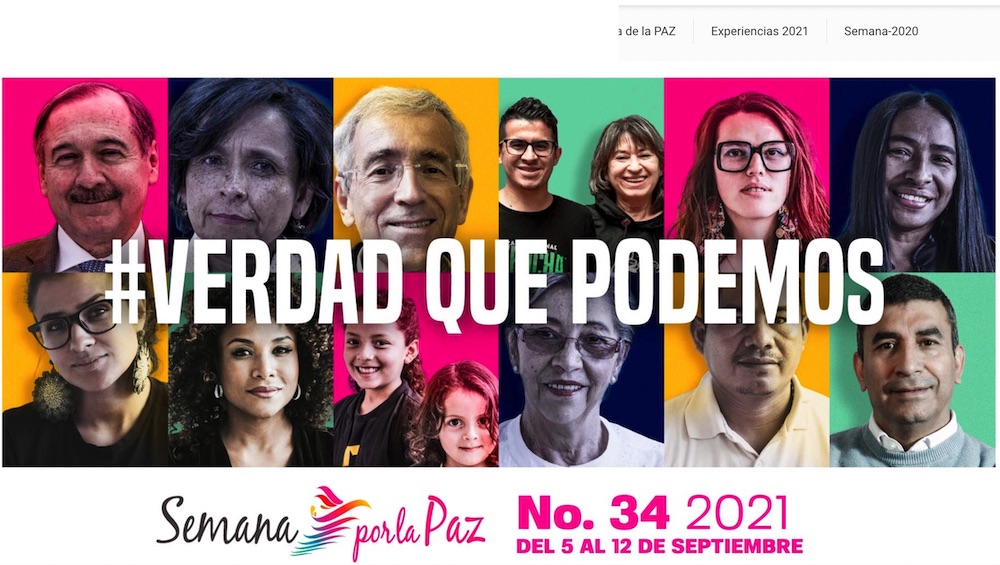
The increase in femicides, domestic violence, murders against social leaders and the growth of poverty, indicates that the struggle in Colombia to achieve a healthy territory is still a challenge. For this reason, it is important that between September 5 and 12, version 34 of the “Week for Peace” will be held. The initiative of peace-building organizations of Colombian civil society, has, since 1987, made visible the daily effort of people , collectives and institutions that work in the construction and consolidation of peace, the redignification of the victims, the care and respect of life in and from the regions of the country.

The initiative invites people to find ways of reunion and solidarity for reconciliation with life and biodiversity. It includes the participation of the Truth Commission, National Secretariat for Social Pastoral, United Nations Verification Mission in Colombia, Center for Memory, Peace and Reconciliation (CMPR), Redepaz, Universidad Javeriana, the National Network of Regional Development Programs and Paz (Redprodepaz) and for the fourth consecutive year Compensar, among other organizations. The slogan is “The Truth we can !”
(continued in right column)

(click here for the article in Spanish.).)

Question related to this article:

Truth Commissions, Do they improve human rights?

Can festivals help create peace at the community level?

What is happening in Colombia, Is peace possible?

(continued from left column)

According to statistics from the Database of Collective Actions for Peace (Datapaz) of the Center for Popular Research and Education (CINEP / PPP), this is the month that historically presents the highest levels of mobilization and that between 1987 and 2016, most of the mobilizations (86%) were oriented to the promotion of peace. For this reason, this year it emphasizes the practices developed by individuals, groups, families, social organizations and communities, focused on truth and reconciliation. It shows how people organize themselves to re-signify and overcome the factors that generate violence, enable peaceful coexistence and commit all the actors in the conflict and civil society in improving the living conditions of the community.

“We are convinced that reconciliation is the best way to rebuild the social fabric, in a year impacted by the pandemic and by historical social demands. For this reason, in order to make visible the different collective initiatives of integral well-being that are had, Compensar is committed to the development of the country with different programs to attend early childhood in rural territories, complementary school days in Bogotá, Soacha, Caparrapí, Yacopí, La Palma and La Peña or programs for the elderly in Caparrapí. In this way, it will be possible to consolidate a culture of peace ”, assured Margarita Añez, director of Compensar’s Welfare and Social Development Unit.

In this line, the Week for Peace aims to describe the main tasks of peacebuilding and defense of human rights that must be promoted at the moment in the country, in accordance with the moment of legitimate social protest that Colombia is experiencing, the The Covid-19 pandemic, the final report that the Truth Commission has been preparing, and the progress and difficulties in the implementation of the Peace Agreement, both in public institutions and in civil groups of ex-combatants, victims and society in general. .

In this way, it will be recognized as a process that requires commitments and agreements, which are woven in a differential and multiscale way from the different social, community and territorial processes committed to the defense of human rights, human dignity and the comprehensive implementation of the agreement. of peace, having as a fundamental axis the work carried out by the Truth Commission.

Thus, the formation of a more equitable society will be achieved for the construction of a plural, participatory and lasting peace, with a view to national reconciliation.

58 Years After Historic Rally, Thousands March on Washington for Voting Rights, DC Statehood

. HUMAN RIGHTS .

An article by Julia Conley from Common Dreams (licensed under Creative Commons (CC BY-NC-ND 3.0). to republish and share widely)

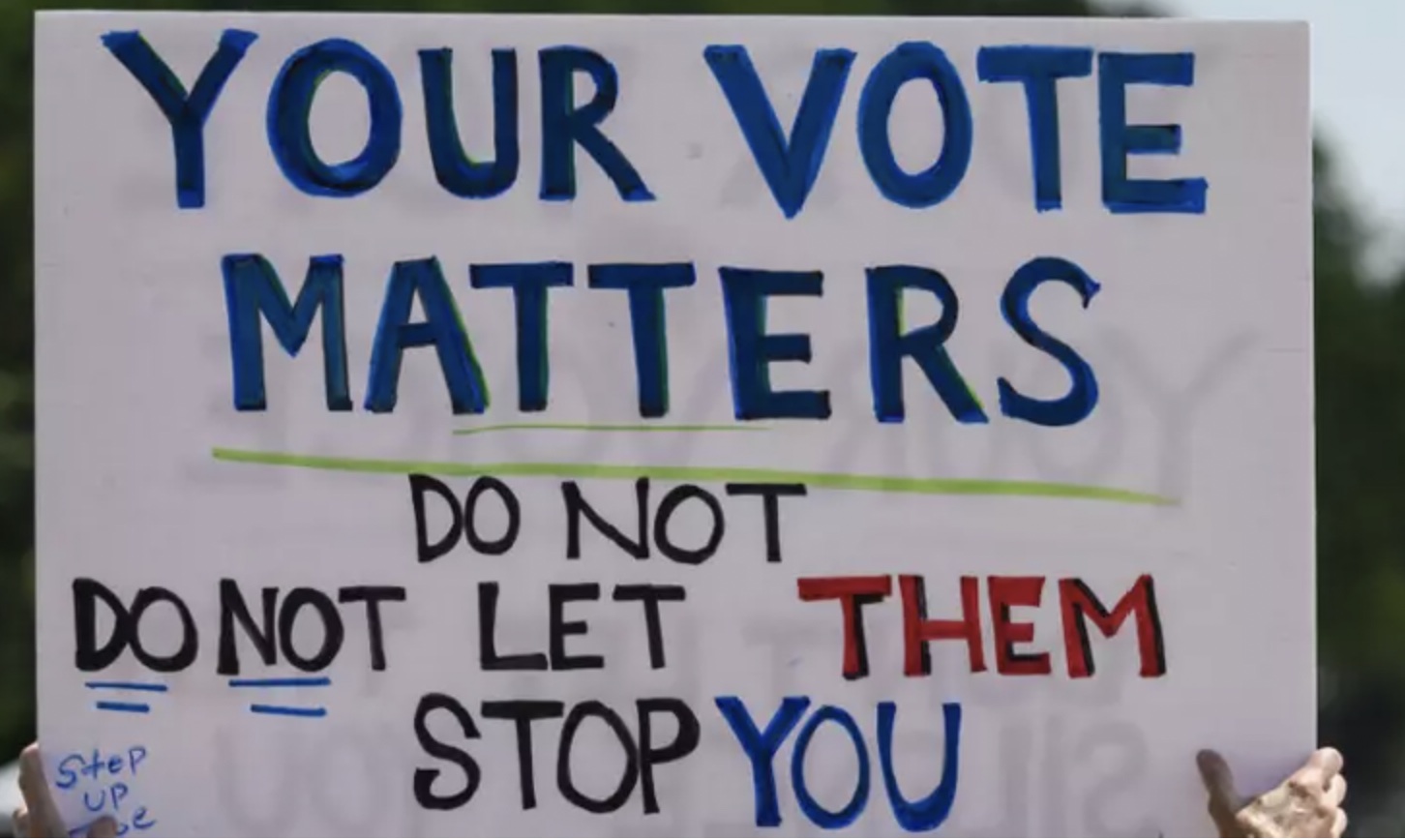
A summer marked by rallies, motorcades, and pressure campaigns targeting lawmakers standing in the way of voting rights legislation culminated on Saturday in the 2021 March on Washington, where thousands demanded that Congress pass far-reaching measures to protect and expand the right to vote. 
Demonstrators traveled  from across the country to mark the 58th anniversary of the historic 1963 March on Washington for Jobs and Freedom.

As groups including the Poor People’s Campaign, Stand Up America, and Public Citizen have for months, thousands of protesters called on Congress to pass the For the People Act and the John Lewis Voting Rights Advancement Act and to eliminate the legislative filibuster to do so if necessary.

The  For the People Act  would grant statehood to Washington, D.C.; ban partisan gerrymandering; implement automatic voter registration for federal elections, and take other major steps to expand voting rights.
 

(Article continued in the right column)

Questions related to this article:

The struggle for human rights, is it gathering force in the USA?

How should elections be organized in a true democracy?

(Article continued from the left column)

The John Lewis Voting Rights Advancement Act would restore full anti-discrimination protections to the Voting Rights Act of 1965.
 
Rev. Dr. William J. Barber II, co-chair of the Poor People’s Campaign, was among  those who spoke  at the event—officially  called  “March On for Washington and Voting Rights”—as well as Reps. Cori Bush (D-Mo.) and Mondaire Jones (D-N.Y.), relatives of the late Rep. John Lewis, and family members of George Floyd.
 
Addressing the crowd about statehood for Washington, D.C., Barber said the district’s nearly 700,000 residents have “been robbed” for more than 200 years.
 
“I didn’t say a thief came in,”  said  the reverend. “A thief is different than a robber. A thief is sneaky. But a robber takes your rights right in front of you.”
 
While right-wing Democrats including Sens. Joe Manchin (D-W.V.) and Kyrsten Sinema (D-Ariz.) are threatening the passage of far-reaching voting rights legislation with their support for the filibuster and claims that the bills are too “partisan,” Republican state legislators have  introduced  more than 360 bills restricting the right to vote, and dozens are moving towards passage. 
 
Speakers including the Rev. Liz Theoharis, who co-chairs the Poor People’s Campaign with Barber, connected ongoing attacks on voting rights to the climate emergency, economic justice, and the recent actions of the right wing-led Supreme Court—which gutted the Voting Rights Act in 2013 and this week  blocked  the Biden administration’s extended eviction moratorium.

“We must protest, we must rally, we must organize and mobilize and sit in and stand up,” said Theoharis. “Not just for a day. Not just for a summer. But until all people are housed, until all people are fed, until all people earn a living wage.”

It’s Apartheid, Say Israeli Ambassadors to South Africa

. . HUMAN RIGHTS . .

A article by Ilan Baruch and Alon Liel from Transcend Media Service

 During our careers in the foreign service, we both served as Israel’s ambassador to South Africa. In this position, we learned firsthand about the reality of apartheid and the horrors it inflicted. But more than that – the experience and understanding we gained in South Africa helped us to understand the reality at home.

For over half a century, Israel has ruled over the occupied Palestinian territories with a two-tiered legal system, in which, within the same tract of land in the West Bank, Israeli settlers live under Israeli civil law while Palestinians live under military law. The system is one of inherent inequality. In this context, Israel has worked to change both the geography and the demography of the West Bank through the construction of settlements, which are illegal under international law. Israel has advanced projects to connect these settlements to Israel proper through intensive investment in infrastructure development, and a vast network of highways and water and electricity infrastructure have turned the settlement enterprise into a comfortable version of suburbia. This has happened alongside the expropriation and takeover of massive amounts of Palestinian land, including Palestinian home evictions and demolitions. That is, settlements are built and expanded at the expense of Palestinian communities, which are forced onto smaller and smaller tracts of land.

(continued in right column)

Question related to this article:

Israel/Palestine, is the situation like South Africa?

(continued from left column)

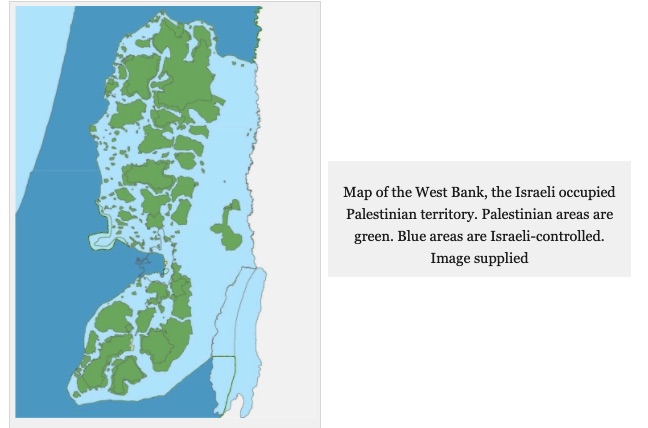
This reality reminds us of a story that former Ambassador Avi Primor described in his autobiography about a trip that he took with then-Minister of Defense Ariel Sharon to South Africa in the early 1980s. During the visit, Sharon expressed great interest in South Africa’s bantustan project. Even a cursory look at the map of the West Bank leaves little doubt regarding where Sharon received his inspiration. The West Bank today consists of 165 “enclaves” – that is, Palestinian communities encircled by territory taken over by the settlement enterprise. In 2005, with the removal of settlements from Gaza and the beginning of the siege, Gaza became simply another enclave – a bloc of territory without autonomy, surrounded largely by Israel and thus effectively controlled by Israel as well.

The bantustans of South Africa under the apartheid regime and the map of the occupied Palestinian territories today are predicated on the same idea of concentrating the “undesirable” population in as small an area as possible, in a series of non-contiguous enclaves. By gradually driving these populations from their land and concentrating them into dense and fractured pockets, both South Africa then and Israel today worked to thwart political autonomy and true democracy.

This week [June 8, 2021], we mark the fifty-fifth year since the occupation of the West Bank began. It is clearer than ever that the occupation is not temporary, and there is not the political will in the Israeli government to bring about its end. Human Rights Watch recently concluded that Israel has crossed a threshold and its actions in the occupied territories now meet the legal definition of the crime of apartheid under international law. Israel is the sole sovereign power that operates in this land, and it systematically discriminates on the basis of nationality and ethnicity. Such a reality is, as we saw ourselves, apartheid. It is time for the world to recognize that what we saw in South Africa decades ago is happening in the occupied Palestinian territories too. And just as the world joined the struggle against apartheid in South Africa, it is time for the world to take decisive diplomatic action in our case as well and work towards building a future of equality, dignity, and security for Palestinians and Israelis alike.
_____________________________________________
Ilan Baruch served as Israeli Ambassador to South Africa, Namibia, Botswana, and Zimbabwe.
Dr. Alon Liel served as Israeli Ambassador to South Africa and as Director General of the Israeli Ministry of Foreign Affairs.

#NowIsTheTime – A global call to President Biden

. HUMAN RIGHTS .

A statement from the Now Is the Time Coalition

A global coalition of leaders – from civil society through to academia, politics and Nobel laureates – have joined together in signing an open letter to call on President Biden to help bring an end to Israel’s institutionalized domination and oppression of the Palestinian people and protect their fundamental human rights. See the statement and the full list of signatories below.


(Click on image to enlarge)

14 June 2021
 
Dear President Biden,

We, the undersigned global coalition of leaders – from civil society to business, the arts and faith communities, politics and Nobel laureates – call for U.S. leadership to take action to help bring an end to Israel’s institutionalized domination and oppression of the Palestinian people and protect their fundamental human rights. A sustainable and just peace – for all people – will remain elusive if U.S. policy holds to a political status quo devoid of justice and accountability.

Your administration has committed to a foreign policy “centered on the defense of democracy and the protection of human rights.” More recently, you stated, “I believe the Palestinians and Israelis equally deserve to live safely and securely, and enjoy equal measures of freedom, prosperity, and democracy.” For Palestinians, the space between these statements and their daily lives could not be wider.

Even after a formal ceasefire, Israeli police and settler violence against Palestinians continues. The forced dispossession of Palestinians across the occupied West Bank, including families living in the East Jerusalem neighborhoods of Sheikh Jarrah and Silwan, and aggressive actions by Israeli forces against peaceful protesters and worshippers at Al-Aqsa Mosque, are the latest evidence of a separate and unequal governing system. These policies unravel the social fabric of communities and undermine any progress toward a democratic, just and peaceful future. The logic driving them has led to the recent displacement of 72,000 Palestinians in Gaza who must also survive the ongoing humanitarian crisis caused by a 14-year blockade. “

(article continued in right column)

Question related to this article:

How can a culture of peace be established in the Middle East?

(article continued from left column)

Moving forward, the United States must address the root causes of the violence which successive administrations have neglected. Your administration must apply concerted diplomatic pressure to help end the ever-expanding discrimination and systemic oppression and ensure accountability for Israeli authorities that violate Palestinian rights.

Only a consistent application of a rights-centered foreign policy can signal to Israel’s leaders that violations of international law will no longer go unaccounted for. Mr. President, now is the time to set a new benchmark in American foreign policy that leads with justice and paves the way toward lasting peace.

Signatories:

Political Figures

Academia

Global Icons

Lawyers and Jurists

University Associations

Media

Faith Leaders

Civil Society Organizations

Civil Society Leaders

Activists

Business Leaders

Creatives

Entertainment Industry

Medical Professionals

(Thank you to Phyllis Kotite, the CPNN reporter for this article.)

Ceasefire can’t hide scale of destruction in Gaza, UN warns, as rights experts call for ICC probe

. . HUMAN RIGHTS . .

An article from the United Nations

The humanitarian community has welcomed the ceasefire agreed in the Occupied Palestinian Territory and Israel but warned that the destruction in Gaza will take years, if not decades, to fix.

Speaking from Gaza, Matthias Schmale from the UN relief agency for Palestinians UNRWA, said that there was no “going back to normal” in the enclave, after more than 10 days of rocket fire and airstrike exchanges between the warring parties that have killed more than 250 people and injured thousands.


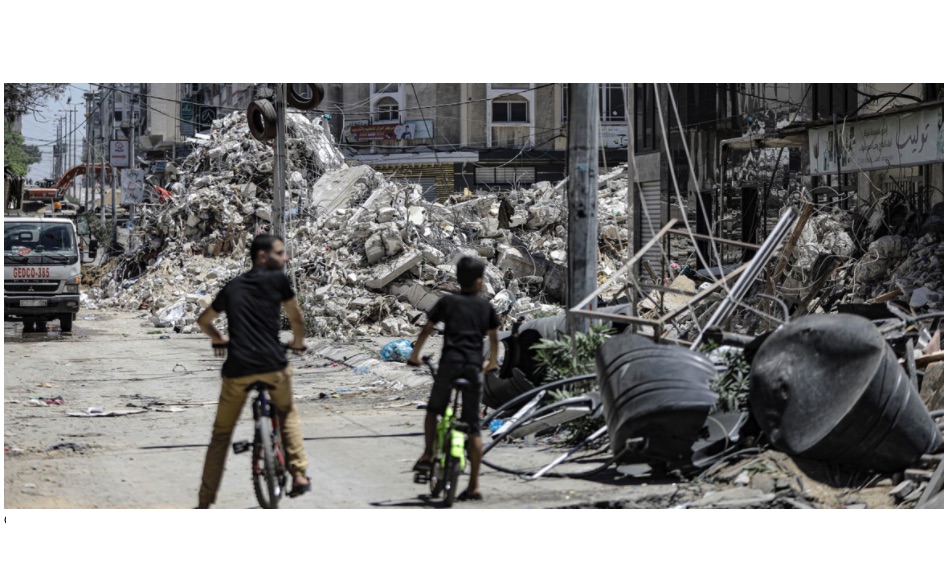
© UNRWA/Mohamed Hinnawi A tower block lies in ruins in Gaza city following an Israeli air strike.

“Going back to normal life means having to watch very carefully where we are going; unexploded devices, we know that at least one school, one of our 278 schools, where we have established two deeply buried bombs, and we have alerted the Israeli authorities”, he said. “Obviously we cannot just rush back into our buildings and schools, we have to make sure they’re safe.”

The senior UNRWA official also noted that the Kerem Shalom crossing was due to open for several hours on Friday but that for the duration of the clashes, it had not been possible to get people out for medical treatment, or aid reinforcements in.

Mr. Schmale noted that UNRWA staff who are mainly residents of the region said that the violence had been “worse in intensity and terror than 2014”, before echoing the UN Secretary-General’s call  for a meaningful political process to resolve the grievances of both Palestinians and Israelis.

War still looms

“Normality here also means 50 per cent employed and rising…I’m convinced after being here two and a half years that we will be back in war unless underlying causes are not addressed; and from a Gaza perspective that means giving people and especially young people a dignified perspective of a dignified life”, he said.

“If you have your own money and take home your own money to buy food instead of depending on handouts from the UN”, the top UN official added, “you’re less likely to run into groupings like Hamas”.

The UN Emergency Relief Coordinator, Mark Lowcock, allocated $4.5 million towards the cost of meeting rising needs across Gaza on Friday. The money comes from the Central Emergency Response Fund (CERF), which is in addition to $14.1 million allocated on Thursday. It is expected that an inter-agency Flash Appeal for the occupied Palestinian territory will be issued next week. 

(continued in right column)

(click here for the article in Spanish.).)

Question related to this article:

Israel/Palestine, is the situation like South Africa?

How can war crimes be documented, stopped, punished and prevented?

(continued from left column)

UNICEF delivers aid containers

The UN Children’s Fund, UNICEF, delivered 18 containers of aid on Friday following the resumption of relative calm in the Gaza Strip, through the Kerem Shalom crossing, to support children and families in need.

Among the items delivered were first-aid kits, blood supply bags and solution, fire extinguishers, antibiotics and other infection-control kits, together with 10,000 doses of the Sinopharm COVID-19 vaccine.

“We are extremely thankful that a ceasefire agreement in the Gaza strip came into effect at 2am this morning, because the human toll there has been huge”, said Lucia Elmi, UNICEF Special Representative in Palestine. “This will allow families to have much-needed respite and allow for the delivery of much-needed humanitarian assistance and personnel to the Gaza Strip”, she added.

UN rights experts call for ICC probe

UN independent human rights experts on Friday called on all parties  to the conflict in Gaza and Israel to respect the ceasefire, and urged an investigation by the International Criminal Court (ICC) into the attacks on civilian populations and other “gross violations of human rights”, according to a statement released through the UN rights office (OHCHR).

The experts pointed to the forced evictions of Palestinian families living in Sheikh Jarrah and Silwan, in Occupied East Jerusalem, as the spark that set off a full-blown war.

They said that at least 222 people, including 63 children, were killed in Gaza and 12 people died in Israel as a result of the fighting.

More than 450 buildings in the Gaza Strip were completely destroyed or damaged by missiles, the statement continued. Among them were six hospitals, nine healthcare centres and a water desalination plant, supplying around 250,000 Palestinians with clean drinking water, as well as a tower which housed media outlets including the Al Jazeera network, and Associated Press (AP). 

‘Asymmetry of power’

“Owing to the vast asymmetry of power, the victims of this conflict are disproportionately Palestinians in Gaza, of whom over 74,000 have been forcibly displaced and made homeless, mostly women and children”, the experts said. 

“The conflict has led to a new wave of unprecedented mass destruction of civilian homes and infrastructure, including electrical grids in Gaza, and indiscriminate or deliberate missile attacks on civilians and residential areas in Israel and Gaza, that violate not only international human rights standards, but amount as well to crimes under international law for which there is individual and State responsibility”, the experts continued.

The experts said that all “indiscriminate or deliberate bombardment of civilians and towers housing civilians, media organizations and refugee camps in Gaza and Israel are war crimes that are, prima facie, not justified by the requirements of proportionality and necessity under international law. All parties who engage in such attacks must bear individual and State responsibility as appropriate.”

Independent Special Rapporteurs, are appointed by the UN Human Rights Council to monitor specific countries or thematic issues.  They serve in their individual capacity and are not UN staff, nor are they paid by the Organization.