Category Archives: WOMEN’S EQUALITY

Women Unite for Global Action on Peacebuilding: The Women’s International “Peace Meet” (Jalgaon, India)

. . WOMEN’S EQUALITY . .

An article by Anne M Pearson published in December 2016 Newsletter of Women’s Peace Brigade International (Mahila Shanti Sena)

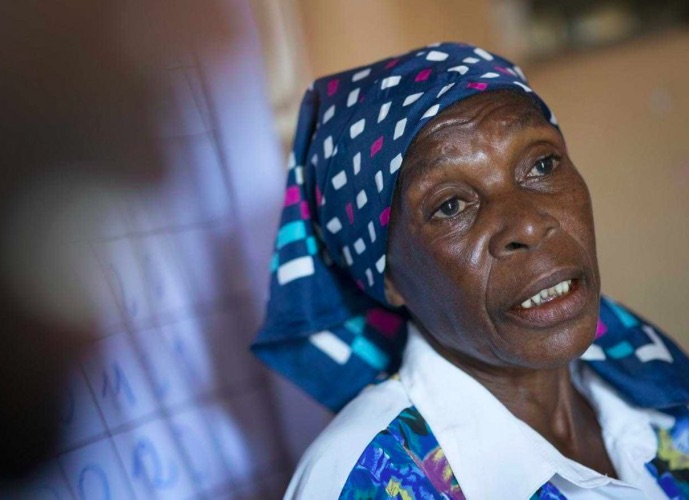
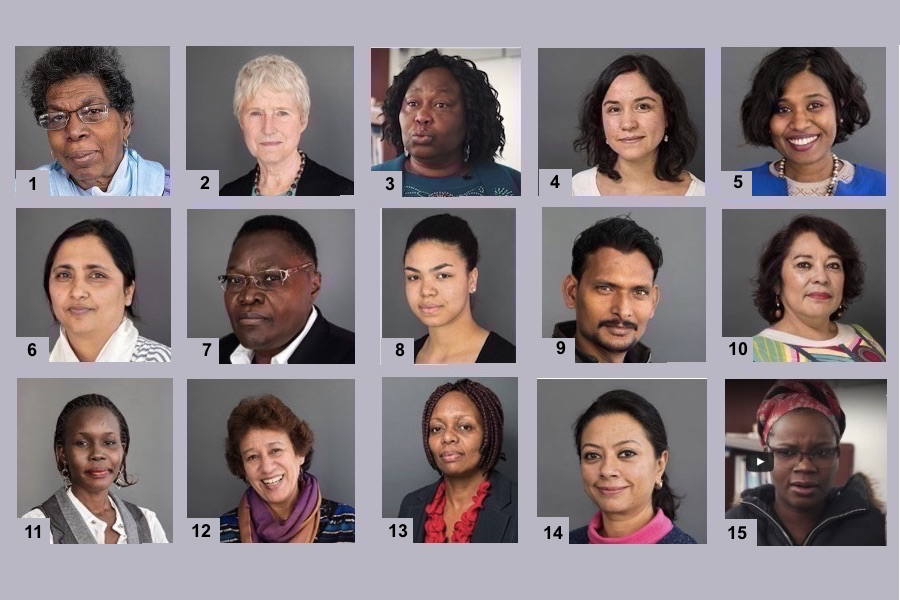
From October 2 to October 13 2016, I had the privilege of participating in a gathering of 41 women from 24 countries, along with over 150 Indian women at the impressive location of the recently built Gandhi Peace Research Centre in the Jain Hills, near Jalgaon, Maharashtra. We were invited by the organization Ekta Parishad, a Gandhian-inspired NGO who have worked with India’s landless and poorest of the poor for almost three decades. Toronto-raised but long-standing Indian resident and Hindi-speaking Jill Carr-Harris was the chief organizer who welcomed us and set the theme for the meeting.


(Click on photo to enlarge)

It was an extraordinary opportunity to meet and learn from women of diverse ages, education and cultural backgrounds, each dedicated to promoting peace and social justice in her own home country. At the gathering, fifty “peace champions” from localities throughout India were honoured for their courageous and tireless work for their communities. Key questions addressed throughout the four days of plenary sessions and workshops were: How do women cope with the deep injustices and violence they encounter in their everyday lives? And, what nonviolent strategies have worked to address those injustices?

There was a remarkable consistency in the stories we heard from such disparate countries as Nigeria, Kenya, Brazil, Kampuchea, Philippines, and Nepal and of course India. But even from the so-called “North”, women from Spain, Sweden, the US, Canada, Germany, and Azerbaijan confirmed the prevalence of (systemic and reactionary) violence, mistrust, and fear being allowed to flourish through forces of division and disintegration. At the same time, we also heard positive stories, from all the women, of the forces of integration and community building, and specific forms of nonviolent activism that is taking place. Thus, what we heard and learned evoked both feelings of deep sadness and outrage on the one hand, and admiration and hope on the other.

Following the Jalgaon meeting, most of the international women and a group of Indian women and men, pre-divided into five subgroups, left Maharashtra by train and went to different areas of Madhya Pradesh to begin four days of visits to Dalit and Adivasi villages whose populace had been working with Ekta Parishad. My group went to Gwalior to begin with, and after an overnight stay and meetings with journalists, Gandhian activists and academics, we proceeded to visit villages in the Chambal and Shivpuri Districts. While this short article cannot begin to capture all that I learned, I share a few highlights, including these facts: 50 million people in India have no land
title and can be evicted at any time for any reason; there are many “pro-poor” policies and pieces of legislation in India, but they don’t tend to be implemented—not without sustained pressure from the people. “Pro-rich” policies are implemented.

(Article continued in the right column)

Question for this article

Do women have a special role to play in the peace movement?

(Article continued from the left column)

In each village we met with women (who warmly greeted us with hand-made malas), and heard their concerns, challenges and successes in overcoming barriers. All of the villages were composed of Sahariya Adivasis, considered by many Indians, we were told, as the “lowest of the low”. In Chambal district the main problems identified were conflicts with the National Forestry Department over land use, food and water security, conflict over resources, and violence against women, including the kidnapping of girls (for ransom or sometimes as wives for boys, due to big gender gap in this region).

In India, we were told, women are not recognized as farmers; men are farmers because they are the recognized “owners” of the land, even while women work the land at least as much as men do. This practice is starting to change as land is being registered in both the names of the wife and the husband as villagers begin to receive, after years of agitation, their certificates of land ownership.

In one village, we heard that 15-20 years ago the villagers collected firewood from the forest and took it to Gwalior to sell. Prior to 30 years ago families had occupied the “forest land”. They had cleared some of the land of shrubs to plant seasonal food crops, but forestry officials would come and destroy their crops or otherwise harass them, for example, by spreading seeds of the large thorn bushes called “bulbul’ (the removal of which was dangerous). Then, some 20 years ago, they met Ekta Parishad workers and were inspired to form a grameen bank to pool their resources and they filed claims for rights to forest land. Three or four times their claims were rejected at the sub-divisional and district levels. Villages were united and had the funds for collective action—to engage in marches and regular follow-up with the officials. They filed claims for 72 families; now 35 have received certificates of land ownership for a total of 132 acres of land. Nowthey can grow enough food to feed their families.

Lee McKenna, from Toronto, who was in another group, shared a description from talking with a woman leader in the village of Tulgat (Budelkhand district): The villagers had been having conflict with Forest Department and the women were fed up and gathered in a large group in front of the Forest Department office. The police came. They asked the women: Who is your leader? They replied: “We are
500 leaders. Bring 50 trucks and be ready to take us all, including the mice of the fields!” The police asked the women: “Who gave you permission (to gather like this)?” They replied: “We took the permission of our hunger!” The police tried to take the men away, loading them up in trucks from the back. The women yanked the men out from the front. “We made chapatis and brought them to the men.” The police said “these women are so troublesome!”

Clearly, women (and social-justice-seeking men) need to be “troublesome” if we are
to advance towards a culture of peace that so many of us yearn for. Gandhi’s voice was ever in the background of our conversations: “Nonviolence must express itself through the acts of selfless service of the masses”, and “If nonviolence is the law of our being, the future is with women.”
Plans are underway for future gatherings of international women in 2017 and beyond.

UN Women: 16 days of activism against gender violence

. . WOMEN’S EQUALITY . .

An article from UN Women

From 25 November, the International Day for the Elimination of Violence against Women, to 10 December, Human Rights Day, the 16 Days of Activism against Gender-Based Violence Campaign is a time to galvanize action to end violence against women and girls around the world. The international campaign originated from the first Women’s Global Leadership Institute coordinated by the Center for Women’s Global Leadership in 1991.

In 2016, the UNiTE campaign strongly emphasizes the need for sustainable financing for efforts to end violence against women and girls towards the fulfilment of the 2030 Agenda for Sustainable Development.
One of the major challenges to efforts to prevent and end violence against women and girls worldwide is the substantial funding shortfall. As a result, resources for initiatives to prevent and end violence against women and girls are severely lacking. Frameworks such as the Sustainable Development Goals, which includes a specific target on ending violence against women and girls, offer huge promise, but must be adequately funded in order to bring real and significant changes in the lives of women and girls.

(article continued in right column)

(Click here for a Spanish version of this article or here for a version in French.)

Question related to this article:

Protecting women and girls against violence, Is progress being made?

(article continued from left column)

To bring this issue to the fore, the UN Secretary-General’s campaign UNiTE to End Violence against Women’s call for the 16 Days of Activism against Gender-Based Violence in 2016 is ‘Orange the World: Raise Money to End Violence against Women and Girls’. The initiative provides a moment to bring the issue of sustainable financing for initiatives to prevent and end violence against women to global prominence and also presents the opportunity for resource mobilization for the issue.

Join us!

Share your photos, messages and videos showing how you orange the world at facebook.com/SayNO.UNiTE and twitter.com/SayNO_UNiTE using #orangetheworld and #16days. For more information about “Orange the world,” see this year’s Call to Action and download the fundraising toolkit. For more information about Orange Day, please contact Anna Alaszewski, UNiTE Campaign Coordinator,  anna.alaszewski[at]unwomen.org

(Thank you to Janet Hudgins, the CPNN reporter for this article)

Guatemala: Transforming justice for women in Latin America

. . WOMEN’S EQUALITY . .

An article by Claudia Paz y Paz Bailey and Melanne Verveer in openDemocracy (Claudia Paz y Paz Bailey was attorney general of Guatemala from 2010 until 2014)

In order to effectively reduce female murders, Latin American nations must combat one of the leading causes of death for women—gender-based violence—whereby perpetrators target victims because of their gender and act in the context of unequal power relations between men and women.

Guatemala presents a case study of how innovative 24-hour courts and revised trainings for law enforcement can increase convictions related to gender-based violence and ultimately reduce the number of female murders.


Claudia Paz y Paz Bailey
(Click on photo to enlarge)

Guatemala’s high female murder rate—9.1 murders for every 100,000 women between 2007 and 2012—is impacted by regional crime, drug trafficking, and gang violence. But at least half of female murders in Guatemala are femicides.

Guatemala was the first country to officially recognize femicide—the murder of a woman because of her gender—as a crime in 2008. Four years later, the country created a national database to record basic data on all cases of violent deaths of women. This database allowed the Attorney General’s office to identify weaknesses in the investigation of femicides and the gender-based violence that often precedes them, and subsequently to develop pilot programs to address crimes associated with violence against women before they escalated to murder.

Most notably, the Attorney General’s office and the Supreme Court of Justice collaborated in 2012 to establish a 24-hour court to handle urgent investigative measures required in gender violence crimes immediately. The court operated inside the Comprehensive Care Model (Modelo de Atención Integral) created in 2009, and offered a model of comprehensive services: forensic experts, police, psychologists, clinical physicians, and prosecutors were all brought together in a single space in Guatemala City to serve the survivors of gender-based violence.

In the Comprehensive Care Model, it was the institutions that revolved around women, rather than women having to travel to each institution or worse, having to choose between medical care and access to justice. The 24-hour court, one of the first in Latin America, immediately increased the number of protection measures and arrest warrants authorized, and led to an increase in the number of people sent to prison for violence against women and sexual exploitation.

(article continued in right column)

(Click here for the original Spanish version of this article.)

Question related to this article:

Protecting women and girls against violence, Is progress being made?

(article continued from left column)

At the same time, Guatemala also took efforts to address prejudicial or inadequate investigations, which limited women’s access to justice. The Attorney General’s office had found that officers in charge of gender-based violence investigations tended to blame the victim because of her way of dressing, her prior conduct, or her prior or family relationship with the perpetrator. It was common to hear “algo haría” (she must have done something) or “ella se lo buscó” (she was looking for it).

Investigators also failed to take account of the context of crime: they frequently neglected to inquire whether there had been prior acts or reports of violence against women or sexual violence concurrent with the murder, or whether the victim resided in an area where any criminal organization operated.

Further, violence against women was treated with little importance by judges. This translated into delays before evidence could be collected or an arrest warrant or a search warrant was issued; these cases were the last in line on the agenda of court hearings.

In response, Guatemala began to offer specialized training for prosecutorial officers investigating cases of sexual violence, violence against women, and femicides. Once a victim approached the Attorney General’s office, she was made to feel protected. New instructions guided the investigations of intimate femicide, sexual femicide, and femicide in the context of a criminal group or organization, especially gangs or organizations associated with drug trafficking.

In the year following these innovations, the convictions for female murders in Guatemala rose from 55 to 91. This increase in convictions translated into far fewer cases, from 393 (178 resulting in death) in 2010 to 193 (103 resulting in death) in 2013 in Guatemala City.

The trend in convictions and cases was not observed at the national level, where the model has yet to be fully implemented. This must be done: Guatemala must expand 24-hour courts and trainings for law enforcement around the nation, and throughout the region. This deployment should be accompanied by non-criminal measures for preventing violence against women, such as educational policies and those aimed at greater gender equality in economic and political matters.

Many survivors of gender-based violence in Guatemala have told us that, today, they know justice is possible in Guatemala. While Guatemala is still struggling to effectively combat violence against women, these localized interventions present a promising model for expanding women’s access to justice in the region.

(Thank you to Janet Hudgins, the CPNN reporter for this article)

Nicaragua: Culture of Peace Proposed to Eradicate Violence

. . WOMEN’S EQUALITY . .

An article in El Nuevo Diario (translated by CPNN)

Karla Miranda, a third year psychology student, speaking about violence against women, said that aggressors should be evaluated by psychologists to understand the cause of their attitude. “Violent behavior often originates from childhood, so it is important that we know the history of these people in order to assess the origins of violence,” she said.

This was said yesterday at the fair called Growing a Culture of Peace, held at the University Cátolica (Unica), in the framework of the International Day for the Elimination of Violence Against Women, with the aim of promoting values ​​in society and raising awareness on this topic.


Rosa Salgado, with microphone, speaks before students of the Catholic University. (Photo: Melvin Vargas)
(Click on photo to enlarge)

Johnny Hodgson, career coordinator for the campus, explained that the fair was developed with different talks, information stands and cultural events so that students and experts could address the issues of violence.

“We did not just want to be part of the International Day for the Elimination of Violence Against Women, but rather to do something more integral, where everyone is involved. In addition, we promote spaces to come and share how to face, understand and avoid violence, “said Hodgson.

Karla Miranda added that “another important aspect is that in raising children, it is necessary to educate in values, so that the children grow up with the value to not violate either girls or children. That is why this topic must be addressed at the level of the family. ”

Miranda recalled that in 2013 the World Health Organization (WHO) declared violence against women as a public health problem and in that sense added that psychological violence is the one that most affects and causes the most damage.

(article continued in right column)

(Click here for the original Spanish version of this article.)

Question related to this article:

Protecting women and girls against violence, Is progress being made?

(article continued from left column)

Ana Hidalgo Mendoza, Miranda’s colleague, commented that violence is a cycle that comes from the home. “The child who sees that his father violates his mother will grow up with that profile, believing that it is normal behavior, and in the case of the girls, they will believe that they must be submissive and when they are raped, they will believe that it is ok” “He added.

VALUE FORMATION

Rosa Salgado, representative of the disabled with the Office of the Attorney General for Human Rights (PDDH), addressed violence against women with disabilities.

Salgado said that a solution is the formation in values ​​that must be started from the home and the different spaces of society and education, “so that in this way we appropriate the understanding of human rights for ourselves. and that we make use of the legal instruments “.

“To the extent that we recognize how we can help and improve the quality of life of a person with a disability, conditions will be improved by preventing violence,” she said.

SCHOOL HARASSMENT

Eliuth Martínez, a teacher at the Unica and a pedagogical advisor at the Directorate of Special Education at the Ministry of Education (Mined), commented that throughout the school year they continued to develop a non-bullying campaign, as this problem began to emerge in classrooms.

According to Martinez, since last year the campaign has trained 6,000 to 8,000 teachers.

“It was enough to have 1 to 3 cases for the Government to act immediately. Today we can say that we have good results from the center and the delegates and even a free telephone line was set up to report these types of violence,” added the teacher.

About 35% of all women will experience violence, either in or out of the couple, at some point in their lives, according to WHO data published in 2013.

Martinez recently attended a case of a visually impaired girl who was believed to experience bullying on the part of her colleagues, to which the Mined immediately acted in conjunction with the educational councils, investigated the case and began work not only with the teachers but also with the students and the school in general.

Mexico: Need to promote a culture of peace, to end violence against women: CEAMEG

. . WOMEN’S EQUALITY . .

An article from Sistema Michoacan for Radio and Television (translation by CPNN)

Mexico City.- The director general of the Center for Studies on the Advancement of Women and Gender Equality (CEAMEG) of the Chamber of Deputies, Adriana Ceballos Hernández, said that violence against women harms society every day, and, although there are important advances, there is still much to be done.

In inaugurating the forum “For a culture of peace”, she emphasized that violence should be eliminated in the relations of women and men, inculcating in people the knowledge of rights from childhood, respecting political rights of gender and understanding that abuse affects everyone around, especially children.

She considers it necessary to promote a culture of harmony in all fields of action.

The director of Social Studies of the Position and Condition of Women and Gender Equality of CEAMEG, Judith Díaz Delgado, explained that their organization works mainly for the prevention of violence.

She said that “we live in a violent Mexico with an absence of peace, in which seven out of ten suffer some type of abuse, so we can not say that there is a culture of peace.”

Guadalupe Salas y Villagómez, director of Promotion and Training of Women and Equality, of the National Human Rights Commission (CNDH), said that the CNDH is dedicated to raising awareness of human rights, equality between women and men, as well as awareness about gender-based abuse.

Finally, Ana Paula Hernández Romano, founder of Proyecto Paz A.C, pointed out that Mexico is far down the list in the 140th place of nations for providing a state of well-being. Meanwhile, the National Survey of Victimization and Perception on Public Safety (ENVIPE) for 2016, indicates that most Mexicans perceive that the problem of violence and insecurity is even greater than the problem of poverty and unemployment.

(Click here for the original Spanish version of this article.)

Question related to this article:

Enough is enough: Oxfam seeks to end violence against women and girls once and for all

. . WOMEN’S EQUALITY . .

A press release from Oxfam

Gender inequality is both the cause and the consequence of violence against women and girls, said Oxfam today, as the agency launches a new global campaign called “Enough: Together We Can End Violence Against Women and Girls” to stop one of the most prolific human rights violations.

oxfam

A third of women will experience violence at some point in their life. Violence against women and girls knows no boundaries of geography or culture – it is a global crisis. However, marginalized women, including poor women and girls, are the most vulnerable to violence.

Women and girls face violence throughout their lives: more than 700 million women alive today were married as children, 200 million women and girls have undergone female genital mutilation – with the majority of girls being cut before the age of 5 – and 30 percent of women will experience intimate partner violence. Studies have found higher rates of violence among women experiencing multiple discriminations, including indigenous women, lesbian and bisexual women, and women with disabilities.

This violence is the most extreme form of gender discrimination, rooted in inequality and in a belief that it is acceptable to treat women and girls this way.

Winnie Byanyima, Oxfam International’s Executive Director, said: “At every minute of every day, violence is devastating the lives of millions of women and girls around the world. Violence keeps women and girls living in poverty, and women and girls living in poverty are the most exposed to violence. From child marriage to female genital mutilation to murder, violence against women and girls is deep rooted across the world. It is a vicious circle, but it can be broken as what has been learned can be unlearned. Enough is enough.”

To end these devastating practices against half the world’s population, Oxfam is kick-starting campaigns in Morocco, Indonesia, India, Pakistan, Guatemala, South Africa and Zambia to coincide with the UN designated International Day for the Elimination of Violence Against Women. More than 30 countries will join Oxfam’s campaign over time, mobilizing citizens and decision-makers to challenge the discrimination that drives this abuse against women and girls.

“In Morocco, there are many types of violence against women: physical, psychological, economic and legal, especially in the context of divorce,” said Saida*, speaking to Oxfam. “I got divorced because my husband obliged me to do so as I did not accept him getting married to a second wife. I was forced to leave my home, which was officially owned by my husband, with my little girl. Despite the laws, mentalities change very slowly. Neither the lawyer nor the judge helped me.” With Oxfam’s support, Saida took part in life skills workshops to learn how to support herself and her daughter. She now advises other women on how to claim their rights.

(Article continued in right column)

Question related to this article:

Protecting women and girls against violence, Is progress being made?

(Article continued from left column)

“Girls face struggles in all phases of their life. Girls are not allowed to get an education like boys,” said 12-year-old pupil Komal from Hamirpur in India’s Uttar Pradesh. According to 2015 Indian government data, this region accounted for the highest number of violent incidents against women and girls nationally, and over 40 percent of females here are illiterate. Until a few years ago, girls here were usually pulled out of school to care for their siblings, support their parents in farming or to do household chores. Through Oxfam’s work, local girls are now in school and many are doing combat sports, like wrestling. “Withthe support of my teacher, my parents let me compete and I won the silver medal in a state competition. I proved to my community that girls can succeed,” said Komal.

In Indonesia, child marriage and domestic violence are common and tolerated. Cheper, who married a child bride, now campaigns to end child marriage and violence against women in his community. He told Oxfam: “Growing up, my mother was often beaten by my father. I wanted to take my father to the police because he bit my mother, but I did not do that. The local community considered it common.” Women are usually excluded from village meetings, but through Cheper’s work, this is changing, as well as his wife now having plans to work outside the home.

“Women’s rights organizations and movements have long been challenging the acceptance and prevalence of violence against women and girls, but as it is so unjustly ingrained in societies across the world, more of us need to take action. Oxfam is committed to ending this crisis once and for all, for the benefit of everyone, as women’s rights are human rights,” said Oxfam’s Byanyima, who is also a member of the UN High-Level Panel on Women’s Economic Empowerment.

“I’m calling for people to stand up and speak out against the violence. Men need to stand up too and say that violence against women and girls is not acceptable – in institutions and in the whole of our country.” With 17 percent of women in Zambia experiencing sexual violence in their lifetime, 20-year-old university student, Nalishebo Kashina, is another of the many across the world taking action to stand up for women and girls.

Similarly in Guatemala, where indigenous women face violence and racism, women are tackling the root causes of violence. Maria Morales Jorge, who was part of setting up the Institute for the Defence of Indigenous Women, told Oxfam: “We all have the opportunity to change and reject any violence and oppression. We should all have the chance to be happy.”

Oxfam’s campaign aims to challenge and replace the long held misconception that men are superior to women and girls. To achieve this, Oxfam will support individuals and communities to understand the drivers of violence and build their capacity to say “Enough” to harmful attitudes and behaviors. Oxfam will also work to ensure women’s rights organizations and movements are supported, and to increase and implement laws and policies aimed at ending violence against women and girls.

“Before I thought marriage was everything in life: the present and the future. Now, I believe that life is much more than a husband. Life is also to have a job, to travel and to study,” said Moroccan woman survivor of violence and women’s rights advocate, Saida.

To kick-start the “Enough: Together We Can End Violence Against Women and Girls” campaign, Oxfam in Morocco, Indonesia, India, Pakistan, Guatemala, South Africa and Zambia will host a series of campaigning events. These will include film festivals, competitions for school children to design posters calling for an end to child marriage, decorating rickshaws to have positive messages on gender equality, performances of feminist songs and street theatre shows. Join Oxfam’s Enough: Together We Can End Violence Against Women and Girls” campaign.

USA: To Counter Trump, Women Are Mobilizing for Massive March on Washington

. . WOMEN’S EQUALITY . .

An article from Common Dreams (reprinted according to the Creative Commons Attribution-Share Alike 3.0 License)

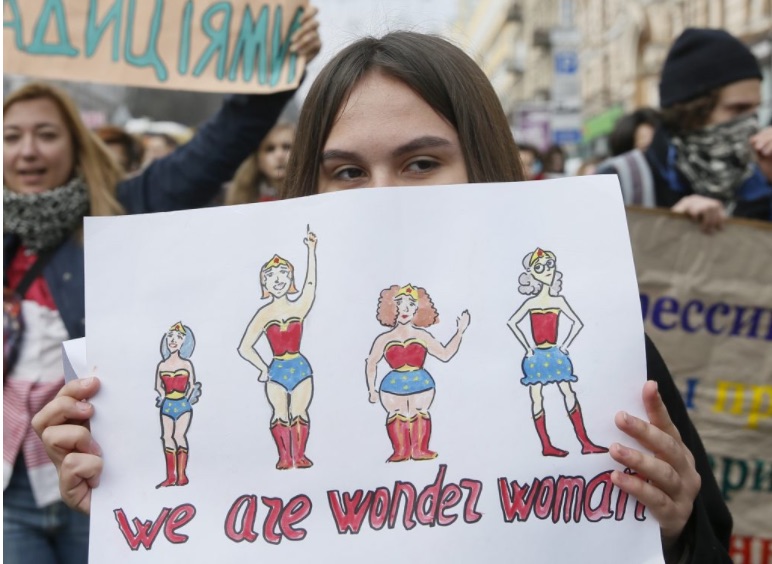
In response to the imminent Donald Trump presidency, women’s rights advocates nationwide are mobilizing. Men and women from around the country will descend on Washington, D.C., on January 21, 2017 for a “Women’s March on Washington” that organizers hope will see millions in the street, a day after President-elect Trump’s inauguration.

womens-march
(Photo: Women’s March on Washington/Facebook)
(Click on photo to enlarge)

The demonstrators repudiate the sexist, racist, and Islamophobic remarks that were a touchstone of Trump’s presidential campaign.

Various Facebook pages about the march—organizers in each state are creating their own delegation—have all gone viral, a testament to the powerful opposition to a Trump presidency and what that will mean for women, among other marginalized groups. So far, over 83,000 people have signed up to take part.

“We stand together in solidarity with our partners and children for the protection of our rights, our safety, our health, and our families—recognizing that our vibrant and diverse communities are the strength of our country,” the organizers write.

They continue:

The rhetoric of the past election cycle has insulted, demonized, and threatened many of us—women, immigrants of all statuses, those with diverse religious faiths particularly Muslim, people who identify as LGBTQIA, Native and Indigenous people, Black and Brown people, people with disabilities, the economically impoverished and survivors of sexual assault. We are confronted with the question of how to move forward in the face of national and international concern and fear.

In the spirit of democracy and honoring the champions of human rights, dignity, and justice who have come before us, we join in diversity to show our presence in numbers too great to ignore. The Women’s March on Washington will send a bold message to our new administration on their first day in office, and to the world that women’s rights are human rights. We stand together, recognizing that defending the most marginalized among us is defending all of us.

“The Jan. 21 protest takes its name from the 1963 March on Washington, a historic civil rights rally on the [National] Mall where the Rev. Martin Luther King Jr. delivered his ‘I Have a Dream’ speech,” reports the Washington Post. “The rally will also pay tribute to the 1997 Million Woman March in Philadelphia, in which hundreds of thousands of African American women are reported to have participated.”

Questions for this article

Do women have a special role to play in the peace movement?

The post-election fightback for human rights, is it gathering force in the USA?

[Editor’s note: Here is the official statement from the facebook page of the march:

On January 21, 2017 we will unite in Washington, DC for the Women’s March on Washington. We stand together in solidarity with our partners and children for the protection of our rights, our safety, our health, and our families — recognizing that our vibrant and diverse communities are the strength of our country.

The rhetoric of the past election cycle has insulted, demonized, and threatened many of us–women, immigrants of all statuses, those with diverse religious faiths particularly Muslim, people who identify as LGBTQIA, Native and Indigenous people, Black and Brown people, people with disabilities, the economically impoverished and survivors of sexual assault. We are confronted with the question of how to move forward in the face of national and international concern and fear.

In the spirit of democracy and honoring the champions of human rights, dignity, and justice who have come before us, we join in diversity to show our presence in numbers too great to ignore. The Women’s March on Washington will send a bold message to our new administration on their first day in office, and to the world that women’s rights are human rights. We stand together, recognizing that defending the most marginalized among us is defending all of us.

We support the advocacy and resistance movements that reflect our multiple and intersecting identities. We call on all defenders of human rights to join us. This march is the first step towards unifying our communities, grounded in new relationships, to create change from the grassroots level up. We will not rest until women have parity and equity at all levels of leadership in society. We work peacefully while recognizing there is no true peace without justice and equity for all. HEAR OUR VOICE.

And here are their Guiding Principles:

The Women’s March on Washington is guided by basic principles of human rights with a value on human dignity. We are committed to practicing the following:

➢ Women’s rights are human rights, regardless of a woman’s race, ethnicity, religion, immigration status, sexual identity, gender expression, economic status, age or disability.

➢ We practice empathy with the intent to learn about the intersecting identities of each other. We will suspend our first judgement and do our best to lead without ego.

We follow the principles of Kingian nonviolence, which are defined as follows:

Principle 1:

Nonviolence is a way of life for courageous people. It is a positive force confronting the forces of injustice and utilizes the righteous indignation and spiritual, emotional, and intellectual capabilities of people as the vital force for change and reconciliation.

Principle 2:

The Beloved Community is the framework for the future. The nonviolent concept is an overall effort to achieve a reconciled world by raising the level of relationships among people to a height where justice prevails and persons attain their full human potential.

Principle 3:

Attack forces of evil, not persons doing evil. The nonviolent approach helps one analyze the fundamental conditions, policies and practices of the conflict rather than reacting to one’s opponents or their personalities.

Principle 4:

Accept suffering without retaliation for the sake of the cause to achieve our goal. Self-chosen suffering is redemptive and helps the movement grow in a spiritual as well as a humanitarian dimension. The moral authority of voluntary suffering for a goal communicates the concern to one’s own friends and community as well as to the opponent.

Principle 5:

Avoid internal violence of the spirit as well as external physical violence. The nonviolent attitude permeates all aspects of the campaign. It provides a mirror type reflection of the reality of the condition to one’s opponent and the community at large. Specific activities must be designed to maintain a high level of spirit and morale during a nonviolent campaign.

Principle 6:

The Universe is on the side of justice. Truth is universal and human society and each human being is oriented to the just sense of order of the universe. The fundamental values in all of the world’s great religions include the concept that the moral arc of the universe is long but it bends towards justice. For the nonviolent practitioner, nonviolence introduces a new moral context in which nonviolence is both the means and the ends.

India: Buddhist nuns bike Himalayas to oppose human trafficking

. . WOMEN’S EQUALITY . .

An article by Nita Bhalla for Nonviolent Conflict News with credit to Thomson Reuters Foundation,

– Clad in black sweatpants, red jackets and white helmets, the hundreds of cyclists pedaling the treacherously steep, narrow mountain passes to India from Nepal could be mistaken for a Himalayan version of the Tour de France. The similarity, however, ends there. This journey is longer and tougher, the prize has no financial value or global recognition and the participants are not professional cyclists but Buddhist nuns from India, Nepal, Bhutan and Tibet.

Five hundred nuns from the Buddhist sect known as the Drukpa Order, on Saturday complete a 4,000-km (2,485 mile) bicycle trek from Nepal’s Kathmandu to the northern city of Leh in India to raise awareness about human trafficking in the remote region.

nepal
Photo Credit: Live To Love International / Handout via Reuters

“When we were doing relief work in Nepal after the earthquakes last year, we heard how girls from poor families were being sold because their parents could not afford to keep them anymore,” 22-year-old nun Jigme Konchok Lhamo told the Thomson Reuters Foundation.

“We wanted to do something to change this attitude that girls are less than boys and that it’s okay to sell them,” she said, adding that the bicycle trek shows “women have power and strength like men.”

South Asia may boast women leaders and be home to cultures that revere motherhood and worship female deities, but many girls and women live with the threat of violence and without many basic rights.

From honor killings in Pakistan to foeticide in India and child marriage in Nepal, women face a barrage of threats, although growing awareness, better laws and economic empowerment are bringing a slow change in attitudes.

“KUNG FU” NUNS

The bicycle trek, from Nepal into India, is nothing new for the Drukpa nuns.

This is the fourth such journey they have made, meeting local people, government officials and religious leaders to spread messages of gender equality, peaceful co-existence and respect for the environment.

They also deliver food to the poor, help villagers get medical care and are dubbed the “Kung Fu nuns” due to their training in martial arts.

Led by the Gyalwang Drukpa, head of the Drukpa Order, the nuns raise eyebrows, especially among Buddhists for their unorthodox activities.

“Traditionally Buddhist nuns are treated very differently from monks. They cook and clean and are not allowed to exercise. But his Holiness thought this was nonsense and decided to buck the trend,” said Carrie Lee, president of Live to Love International, a charity which works with the Drukpa nuns to support marginalised Himalayan communities.

(Article continued in right column)

Question related to this article:

Protecting women and girls against violence, Is progress being made?

(Article continued from left column)

“Among other things, he gave them leadership roles and even introduced Kung Fu classes for the nuns after they faced harassment and violence from the general public who were disturbed by the growing shift of power dynamics,” she said.

Over the last 12 years, the number of Drukpa nuns has grown to 500 from 30, said Lee, largely due to the progressive attitudes of the 53-year-old Gyalwang Drukpa, who was inspired by his mother to become an advocate for gender equality.

The Gyalwang Drukpa also participates in the bicycle journeys, riding with the nuns as they pedal through treacherous terrain and hostile weather and camp out in the open.

“PRAYING IS NOT ENOUGH”

The Drukpa nuns say they believe they are helping to change attitudes.

“Most of the people, when they see us on our bikes, think we are boys,” said 18-year-old nun Jigme Wangchuk Lhamo.

“Then they get shocked when we stop and tell them that not only are we girls, but we are also Buddhist nuns,” she said. “I think this helps change their attitudes about women and maybe value them as equals.”

South Asia, with India at its centre, is also one of the fastest growing regions for human trafficking in the world.

Gangs dupe impoverished villagers into bonded labour or rent them to work as slaves in urban homes, restaurants, shops and hotels. Many girls and women are sold into brothels.

Experts say post-disaster trafficking has become common in South Asia as an increase in extreme events caused by global warming, as well as earthquakes, leave the poor more vulnerable.

The breakdown of social institutions in devastated areas creates difficulties securing food and supplies, leaving women and children at risk of kidnapping, sexual exploitation and trafficking.

Twin earthquakes that struck Nepal in April and May 2015, which killed almost 9,000 people, left hundreds of thousands of families homeless and many without any means of income, led to an increase in children and women being trafficked.

More than 40,000 children lost their parents, were injured or were placed in precarious situations following the disaster, according to Nepali officials.

The Drukpa nuns said the earthquakes were a turning point in their understanding of human trafficking and that they felt a need to do more than travel to disaster-hit mountain villages with rice on their backs.

“People think that because we are nuns, we are supposed to stay in the temples and pray all the time. But praying is not enough,” said Jigme Konchok Lhamo.

“His Holiness teaches us that we have go out and act on the words that we pray. After all, actions speak louder than words,” she said.

(Thank you to Janet Hudgins, the CPNN reporter for this article.)

Africa: CEDEAO: Women are called on to establish a durable peace

. WOMEN’S EQUALITY .

An article by Tata Sane for Le Soleil

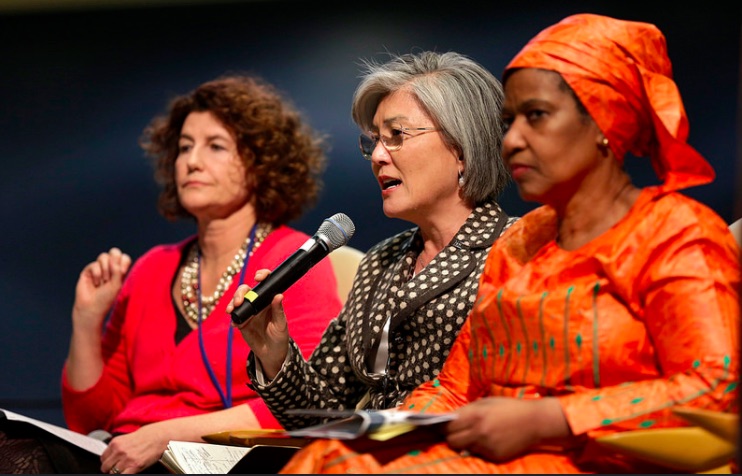
Women have always been the fundamental actors in the search for peace. This was reiterated yesterday in the meeting organized by the Working Group, “Women, Peace and Security in West Africa”, in partnership with the United Nations Office for West Africa and the Sahel (Unowas). The activity is held in preparation for the International Day of Peace, edition 2016. It is, according to the representative of Senegal on the working group “Women, Peace and Security in West Africa,” a favorable opportunity to reflection and exchange on the mechanisms of action and intervention of women and youth to consolidate peace and sustainable security in the Sahel which has been strongly shaken recently by the threats of extremists.

cedeao
(Click on photo to enlarge.)

Diago Ndiaye believes that facing the terrorist threats that spare no nation, women must play their role in order to build a lasting peace. In his message issued on the occasion of this day, the Secretary-General of the United Nations stated that “peace can not be reduced to a simple truce. Peace means building on a global scale, a society in which people live free of poverty and everyone benefits from prosperity.” Therefore, sustainable development is essential for the establishment of a stable peace. Respect for human rights is also a prerequisite. “The lack of resources is often the cause of conflicts. Therefore, we must rely on the sustainable development program for 2030 to prevent conflicts by ensuring that no one is left behind,” added the Secretary-General.

(Article continued in the right column)

(Click here for the original French version of this article.)

Question for this article

What has happened this year (2016) for the International Day of Peace?

(Article continued from the left column)

A high-level panel on the role and position of women and youth in the processes and peace and security programs in Senegal was scrutinized. Considering the theme “Women’s Leadership, peace, security, conflict prevention, mediation and peacebuilding: What role for women? “Dr. Christiane Agboton Johnson recalled that the 17 sustainable development goals that have been chosen for this year all contribute to the building of peace.

The involvement of women and youth

Speaking of women’s role, Ms. Agboton remarks that all women have a role to play at different levels. However, she wondered how this can be done so that women become a force for change. “Today, after all is said and done, has this potential been realized? Women represent 50% of the population, but, nevertheless, conflicts persist. This is the meaning of my question about how they can become a force for change, “she said. The gender adviser to the United Nations Office for West Africa and the Sahel (Unowas) recalled Resolution 2250 of the United Nations on youth, peace and security.

Agathe Telou believes that this resolution comes at a time when all players require the involvement of young people in search of peace worldwide. “This resolution recognizes the efforts that young people provide to help establish peace and security in the ECOWAS space,” she advised. Mrs. Agathe Telou addressed the sub-theme “Youth, Peace and Security: Resolution 2250 of the UN Security Council.”

Hundreds of Thousands Join Saudi Women-Led Campaign to End Male Guardianship in the Kingdom

. . WOMEN’S EQUALITY . .

This article originally appeared on Global Voices on September 4 (reprinted here according to terms of Creative Commons)

As part of the efforts to end the draconian laws against women in the Gulf state, Saudi women launched a campaign demanding an end to male guardianship for basic practices such as work, property ownership and travel. Using the hashtag #TogetherToEndMaleGuardianship and its Arabic version #سعوديات_نطالب_باسقاط_الولاية (which translates to ‘Saudi women demand the end of guardianship’), hundreds of thousands of supporters worldwide took part in this campaign.

saudi
Video:”Trapped with abuse”

The campaign was sponsored by Human Rights Watch and follows the release of its lengthy report entitled “Boxed In: Women and Saudi Arabia’s Male Guardianship System”. In it, the international human rights organization explains that:

“In Saudi Arabia, a woman’s life is controlled by a man from birth until death. Every Saudi woman must have a male guardian, normally a father or husband, but in some cases a brother or even a son, who has the power to make a range of critical decisions on her behalf. As dozens of Saudi women told Human Rights Watch, the male guardianship system is the most significant impediment to realizing women’s rights in the country, effectively rendering adult women legal minors who cannot make key decisions for themselves.”

The report included three short videos illustrating the effects of the system on women’s lives, as well as statements from Saudi women’s rights activists and citizens who find the law to be socially and economically crippling.

Question related to this article:

Protecting women and girls against violence, Is progress being made?

As one Saudi activist and former school principal, 44-year-old Hayat, told Human Rights Watch on December 7, 2015:

“The guardianship system also impacts women’s ability to seek work inside Saudi Arabia and to pursue opportunities abroad that might advance their careers. Specifically, women may not apply for a passport without male guardian approval and require permission to travel outside the country. Women also cannot study abroad on a government scholarship without guardian approval and, while not always enforced, officially require a male relative to accompany them throughout the course of their studies.

It can mess with your head and the way you look at yourself. How do you respect yourself or how [can] your family respect you, if he is your legal guardian?”

Human Rights Watch also explained that the religious reasons supposedly justifying the male guardianship system have been repeatedly challenged:

“Saudi Arabia’s imposition of the guardianship system is grounded in the most restrictive interpretation of an ambiguous Quranic verse—an interpretation challenged by dozens of Saudi women, including professors and Islamic feminists, who spoke to Human Rights Watch. Religious scholars also challenge the interpretation, including a former Saudi judge who told Human Rights Watch that the country’s imposition of guardianship is not required by Sharia and the former head of the religious police, also a respected religious scholar, who said Saudi Arabia’s ban on women driving is not mandated by Islamic law in 2013.”

This is why, among many reasons, the guardianship system is being challenged — on Twitter and elsewhere — by Saudi women and their supporters. According to Vocativ, as of August 4, 2016, at least 170,000 tweets have been posted in both Arabic and English.

(Thank you to Janet Hudgins, the CPNN reporter for this article)