Category Archives: SUSTAINABLE DEVELOPMENT

India : ‘Delhi Chalo’ explainer: What the farmers’ protest is all about

. . SUSTAINABLE DEVELOPMENT . .

An article from Mint

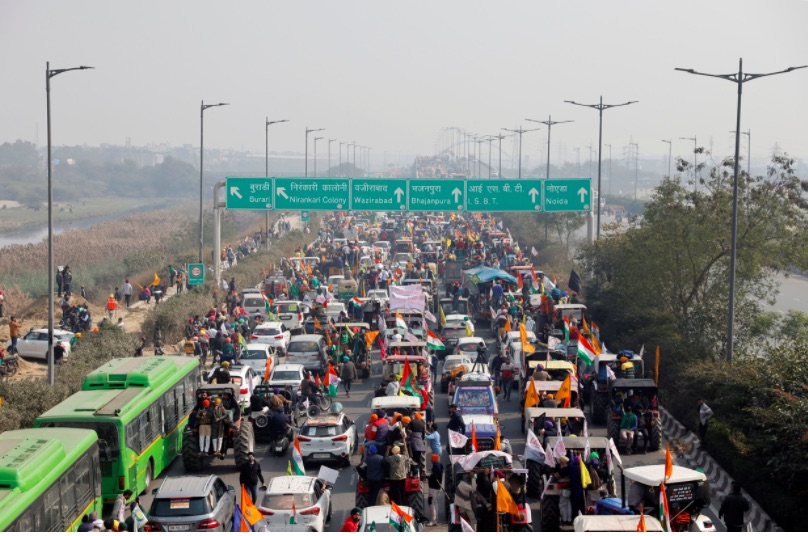
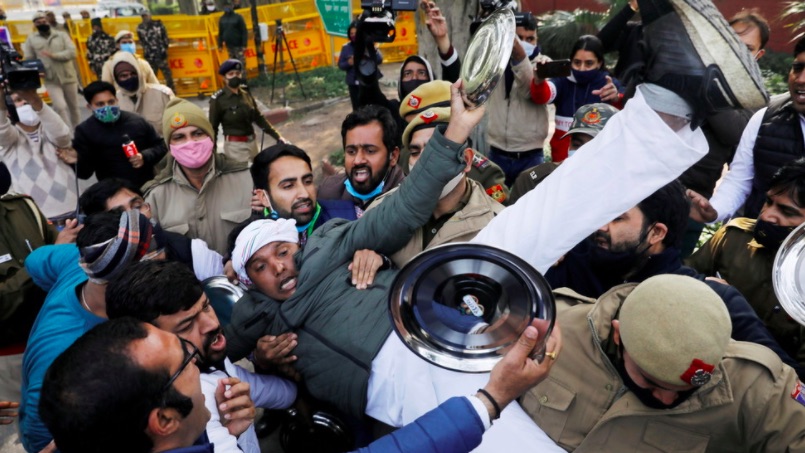
Thousands of farmers have reached the national capital [the Centre] on their tractor-trolleys and other vehicles, responding to the “Delhi Chalo” call against the agri-marketing laws enacted at the Centre in September.


Farmers having food at a Langar during ‘Delhi Chalo’ protest against farm laws, at Singhu Border in New Delhi. (ANI)

On Saturday morning, it wasn’t clear if they will agree to move to the Burari ground on the outskirts of the city, where police said they can continue with their protest. Many protesters were demanding a better venue in the centre of Delhi. Originally, the protest was meant to be on November 26 and 27.

A look at the protest so far: Day 1: On Thursday, thousands of farmers crossed from Punjab to Haryana. At border points, the Haryana Police tried to stop them, using water cannons and teargas. But later they were allowed through. There were skirmishes with police at other points as well on the highway to Delhi as it passed through BJP-run Haryana. A large group of protesters camped for the night near Panipat. Day 2: Protesters assembled at Delhi’s border at Tigri and Singhu. Police used teargas and water cannons to stop them from breaking through barricades, which included sand-laden trucks. In the evening, they offered to let them into the city and continue their protest at Burari ground. But many appeared reluctant. Day 3: The standoff continued on Saturday morning at Delhi’s border. More farmers were making their way from Punjab and Haryana.

What farmers fear: Farmer unions in Punjab and Haryana say the recent laws enacted at the Centre will dismantle the minimum support price (MSP) system. Over time big corporate houses will dictate terms and farmers will end up getting less for their crops, they argue. Farmers fear that with the virtual disbanding of the mandi system, they will not get an assured price for their crops and the “arthiyas” — commission agents who also pitch in with loans for them — will be out of business. Their demands: The key demand is the withdrawal of the three laws which deregulate the sale of their crops. The farmer unions could also settle for a legal assurance that the MSP system will continue, ideally through an amendment to the laws.

(The article is continued on the right side of this page)

Question for this article:

What is the relation between movements for food sovereignty and the global movement for a culture of peace?

How effective are mass protest marches?

(This article is continued from the left side of the page)

They are also pressing for the withdrawal of the proposed Electricity (Amendment) Bill 2020, fearing it will lead to an end to subsidised electricity. Farmers say rules against stubble burning should also not apply to them. Key players: The `Delhi Chalo” call was given by the All India Kisan Sangharsh Coordination Committee. Several other organisations including Rashtriya Kisan Mahasangh and factions of the Bharatiya Kisan Union (BKU) came out in support.

The march is being held under the banner of Samyukta Kisan Morcha. The Rashtriya Kisan Mahasanghathan, Jai Kisan Andolan, All India Kisan Mazdoor Sabha, Krantikari Kisan Union, Bharatiya Kisan Union (Dakaunda), BKU (Rajewal), BKU (Ekta-Urgahan,) BKU (Chaduni) are among the participants.

Most protesters are from Punjab, but there is a substanial number from Haryana as well. There have been scattered support for the “Delhi Chalo” protest from Uttar Pradesh, Rajasthan, Madhya Pradesh and Uttarakhand.

Earlier protests: Before “Delhi Chalo” farmers in Punjab and Haryana held sit-ins and blocked roads in sporardic protests. Punjab farmer unions then announced a “rail roko” agitation, which lasted for abour two months, leading to a suspension of trains to the state and shortages in critical areas, including coal for thermal power stations.

At one point, the unions relaxed the agitation to let goods trains through, but the Railways insisted that they will either run both freight and passengers trains or none. The contentious laws The Farmers’ Produce Trade and Commerce (Promotion and Facilitation) Act, 2020, The Farmers (Empowerment and Protection) Agreement of Price Assurance and Farm Services Act, 2020 and The Essential Commodities (Amendment) Act, 2020.

The Congress-majority Punjab Assembly reacted to these central laws by passing Bills meant to “negate” their effect in the state. The Punjab Bills, however, are still awaiting assent of the state Governor.

What the Centre says The Narendra Modi government says the new laws will give more options to the farmers to sell their crops and get them better prices. It has assured that there is no move to end the MSP system, and the new Acts do not refer to it.

Before the Delhi Chalo agitation began, the Centre had invited representatives from over 30 farmer unions for a meeting with Union Agriculture Minister Narendra Singh Tomar on December 3. An earlier meeting on November 15 had remained inconclusive.

Iceland moved from oil to geothermal in only 12 years

.. SUSTAINABLE DEVELOPMENT ..

An article from Electric Energy Online

When the oil crisis struck in the early 1970s, the world market price for crude oil rose by 70%. At the same time, heat from oil served over 50% of the population in Iceland.  The oil crises caused Iceland to change its energy policy, reducing oil use and increasing domestic energy resources, such as hydropower and geothermal.


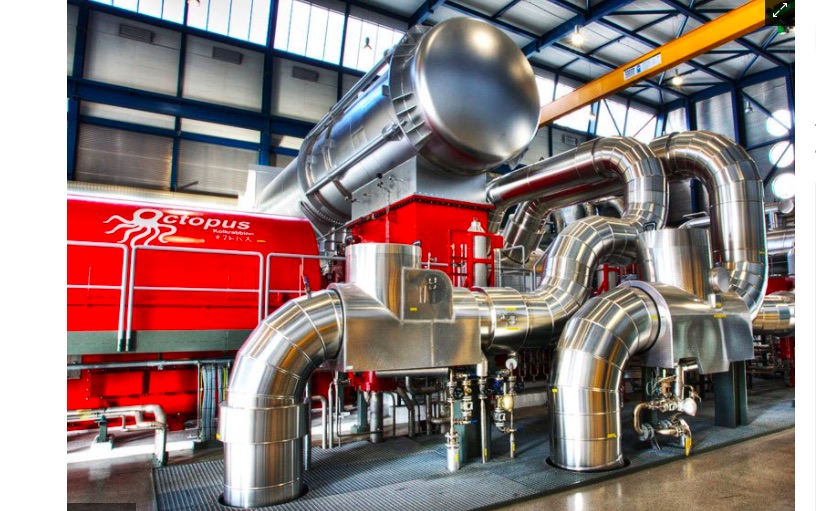
Iceland’s giant geothermal plants

(Continued in right column)

Question for this article:

Are we making progress in renewable energy?

(Continued from left column)

This policy meant exploring new geothermal resources and building new heating utilities across the country. Due to the urgency and constructive cooperation, it took only 12 years to decrease oil for heating from 50% 1973 to 5% 1985. This involved transforming household heating systems from oil to geothermal heat, based on constructive cooperation between the state, cities, municipalities and private partners.

This proves that big transformation can happen within countries in short period of time based on cooperation. That is a lesson that can be useful to everyone to fight the climate crises today.

FAO : Strong support for innovation and digital technologies in Latin America and the Caribbean

. . SUSTAINABLE DEVELOPMENT . .

An article from the United Nations Food and Agriculture Organization

The 36th Session of FAO’s Regional Conference for  Latin America and the Caribbean  ended today with FAO Members in the region agreeing to join efforts to fight COVID-19 and promote sustainable agri-food systems through innovation, digital technologies, partnerships and enhanced data, particularly to strengthen food value chains and support smallholders farmers and the most vulnerable communities.


FAO Director-General QU Dongyu and Edward Centeno Gadea, Minister of Agriculture and Livestock, Nicaragua and Conference Chair

During the three-day virtual meeting (19 – 21 October) hosted by the Government of Nicaragua, all 33 Members, as well as representatives from civil society and the private sector, highlighted the importance of developing and applying innovative approaches to overcome the challenges facing food and agriculture in the region, particularly in relation to scaling up the use of digital tools.

“We need innovation, science and digital technologies to reach the Sustainable Development Goals,” said FAO’s Director-General, QU Dongyu, during the event, stressing that innovation and digital technologies “are the only way out for us to go forward.”

Several Latin American and Caribbean countries stressed that policies and programmes to promote digital solutions should mainly target small and medium-sized family farmers and poor and vulnerable rural communities, bridging the gaps in the rural population and leveraging their potential for inclusive and sustainable development. The International Platform for Digital Food and Agriculture, whose development has been led by FAO, was mentioned as an important tool for the exchange of experience and coordination among countries.

The Director-General noted that digital technology also contributed to make the Regional Conference a tremendous success in terms of attendance. The level of participation was unprecedented. The event was attended by one Prime Minister, three Ministers of Foreign Affairs, 50 ministers and 40 vice-ministers, and 346 other government officials, as well as 103 Observers from a wide diversity of sectors and organizations. Furthermore, close to 30,000people are estimated to have followed the Conference through digital platforms.

“The Digital FAO is more transparent, more open to dialogue, more inclusive, and, above all, more responsive to the needs and priorities of its Members,” Qu said.

Enhanced partnerships and data

The Regional Conference affirmed that in the midst of the COVID-19 pandemic, it is fundamental to strengthen partnerships, multilateralism and international solidarity. In this sense, countries welcomed FAO’s comprehensive COVID-19 Response and Recovery Programme and requested support from the UN agency for the design, implementation and assessment of public policies and programmes. These, they noted, should focus  on job creation, social and productive inclusion, healthy food for the whole population, school feeding, access to water for production and consumption and increasing productivity.

“The FAO COVID-19 Response and Recovery Programme is now in motion. We must work together to minimize the impact that the pandemic will have on our food systems, livelihoods and health,” the Director-General said.

(The article is continued on the right side of this page)

(Click here for a Spanish version of this article.)

Question for this article:

What is the relation between movements for food sovereignty and the global movement for a culture of peace?

(This article is continued from the left side of the page)

The importance of data collection and analysis for the development of a new generation of public policies and programmes was also highlighted by countries, as well as agreements and alliances between the public, private, scientific, academic and civil society sectors, to promote governance of food systems that enable healthy diets and sustainable food systems.

In this context, countries supported the Hand-in-Hand Initiative to promote effective cooperation mechanisms between recipient and donor countries, as well as to mobilize resources from financial institutions and the private sector, particularly to reduce the development gaps that affect lagging rural territories in the region. The initiative is equipped with state-of-the-art tools – the Hand in Hand Geospatial Platform and the Data Lab for Statistical Innovation – to support countries and other stakeholders with data collection and analysis for decision-making and impact assessment.

Transforming food systems towards better nutrition in the region 

The Regional Conference held a special event organised by the Committee on World Food Security (CFS) to discuss ways to transform food systems and ensure healthy diets for all, entitled “Driving Transformation Toward Sustainable Food Systems and Healthy Diets.”

The region of Latin America and the Caribbean is undergoing a rapid nutritional transition. Since 2014, hunger has grown again by 13 million people, and the economic impact of the COVID-19 pandemic is likely to lead to an increase in the incidence of hunger. Today, almost 48 million people suffer from hunger in the region. At the same time, obesity levels are also on the rise affecting around 25 percent of the population.

“We need to join all our efforts and work together, now more than ever before”, said FAO Director-General QU Dongyu opening the special event. “Because, we are not on track to eradicating hunger, food insecurity and all forms of malnutrition by 2030. And because the COVID-19 pandemic comes at a time when food insecurity was already increasing in the region”.

He noted that the pandemic and the related containment measures are especially damaging for Small Island Developing States, which heavily depend on food imports, and called on the countries in the region to step up efforts to make their food systems more efficient, healthy and sustainable, stressing that agri-food systems transformation should be country-owned and country-led.

For his part, the CFS Chairperson and Permanent Representative of Thailand to the Rome-based Agencies, Thanawat Tiensin, noted that the CFS Voluntary Guidelines on Food Systems and Nutrition are currently under negotiation by all CFS members and are expected to be adopted at the next CFS Plenary session in February 2021. He urged all stakeholders including governments, parliamentarians, private sector and civil society to improve cross-sectoral policy coordination and join efforts to turn policies into action.

During the event, the FAO Director-General and the CFS Chairperson were joined by Senator Jorge Pizarro of Chile, President of the Parliament of Latin America and the Caribbean (PARLATINO); Marisa Macari, El Poder del Consumidor, Mexico, Representative of the CFS Civil Society Mechanism; and Maria Nelly Rivas, Cargill, Representative of the CFS Private Sector Mechanism, as well as regional policy-makers and experts. 

The CFS was established in 1974, hosted by FAO, as an intergovernmental body to serve as a forum in the United Nations System for review and follow-up of policies concerning world food security. It is considered the most inclusive platform in the UN System.

In his closing remarks to the Regional Conference, the Chairperson and Minister for Agriculture and Livestock of Nicaragua, Edward Centeno Gadea, highlighted the importance of FAO’s work to support rural families, particularly the most vulnerable ones, and affirmed that “fighting against poverty is an act of peace.”

More information about the Regional Conference for Latin America and the Caribbean can be found here.

South Australia Got 100% Of Its Electricity From Solar For 1 Hour

.. SUSTAINABLE DEVELOPMENT ..

An article by Zachary Shahan from Clean Technica

Once upon a time, it was “common knowledge” in the energy industry that solar energy couldn’t contribute more than 5% share of electricity supply. For a long time, this was claimed to be an upper limit that utilities could handle. My, how things have changed!

South Australia is one of the best examples. The Australian state gets more than 20% of its electricity from rooftop solar power alone, and nearly 70% from all types of wind and solar together.


Photo of solar panel installation in South Australia

South Australia also broke an interesting milestone earlier this month. For one hour on October 11, South Australia got 100% of its electricity from solar power. It is reportedly the largest jurisdiction in the world to do so.

“This is truly a phenomenon in the global energy landscape,” Australian Energy Market Operator (AEMO) chief executive Audrey Zibelman said.

Indeed.

“Never before has a jurisdiction the size of South Australia been completely run by solar power.”

(Continued in right column)

Question for this article:

Are we making progress in renewable energy?

(Continued from left column)

A whopping 77% of that electricity came from rooftop solar panels. The other 23% came from large-scale solar projects.

Even hitting this big milestone, AEMO expects 36,000 more rooftop solar power systems will be installed in South Australia in the next 14 months.

Naturally, solar power didn’t provide precisely 100% of electricity demand in that one hour on October 11. Excess electricity from those solar power sources went into batteries or got sent to Victoria, a neighboring state, via a transmission connector.

Approximately one-third of households in South Australia, 288,000 of them, now have rooftop solar panels.

Naturally, there’s one great way that South Australians can soak up that tremendous amount of solar energy — buy an electric car and charge it while the sun is out and shining.

South Australia has been a fascinating region of the world for renewable energy and energy storage for years. Here are a few other stories about the Australian state:

With Most Electricity From Renewables, South Australia Has Lowest Utility Cost

Tesla Virtual Power Plant In Australia Outperforms Expectations

Tesla Grid-Scale Battery In South Australia To Get 50% Larger

Nothing Succeeds Like Success — Tesla Virtual Power Plant In South Australia Could Expand To 50,000 Homes

Tesla’s Battery In South Australia Breaks Stranglehold Of Natural Gas Industry

Scientists Found A New Way To Break Down the Most Common Plastic

. . SUSTAINABLE DEVELOPMENT . .

An article by Dharna Noor in Gizmodo

The petrochemical industry produces more than 88 million tons of polyethylene, making it the most common plastic in the world. Scientists have found a new way to upcycle it, according to a study published in Science on Thursday. It could help deal with the growing plastic pollution crisis.


This could all be turned into useful chemicals. Photo: Prakash Singh (Getty Images)

Polyethylene comes in several different forms and is used in everything from plastic bags and food packaging to electrical insulation and industrial piping. Since it’s so common and our recycling system is so broken, we end up throwing away a shitload of the stuff. It can end up in landfills or the ocean where it breaks down veeeery slowly, or get burned up in waste incinerators that emit toxic chemicals.

But in the new study, the authors found a way to speed up the process of breaking down polyethylene and turn it into alkylaromatic molecules, which are used as surfactants in cosmetics and laundry detergent, lubricants for machinery, and refrigeration fluids.

“Globally, it’s a $9 billion market today,” Susannah Scott, a chemical engineer at University of California, Santa Barbara who co-authored the study, said in an email in reference to alkylaromatic molecules. “There is economic value and scale here.”

(Article continued in the right side of the page)

Question for this article:

How can we ensure that science contributes to peace and sustainable development?

(Article continued from the left side of the page)

This isn’t the first time scientists have figured out how to break down polyethylene—there are other methods of chemically recycling the material. But conventional methods of breaking the plastic down require heating it up to temperatures between 983 and 1832 degrees Fahrenheit (500 and 1000 degrees Celsius) and using solvents or added hydrogen to speed up the process.

By contrast, the authors’ new method only requires heating it up to around 570 degrees Fahrenheit (300 degrees Celsius) and uses no solvents or added hydrogen, instead relying on only a comparatively gentle catalyst of platinum with aluminum oxide. Their process helped disassemble the plastic’s polymers in a less rough manner, allowing them to extract the valuable intact alkylaromatic molecules. Scott said the catalyst works to “cut the bonds which hold the polymer chain into smaller pieces,” eventually turning the solid plastic into a liquid they can extract the valuable chemicals from.

The authors’ new process is far less energy intensive than other means of breaking down polyethylene. That’s good news for the environment. It’s also cheaper, which is good news for companies who may want to scale this up. The technique isn’t ready for that scaling up just yet, but the discovery could eventually be used to give plastics a new life as valuable raw materials instead of as polluting waste.

“We dig a hole in the ground, we produce, we make, we use, we throw away,” Mahdi Abu-Omar, a chemical engineer at University of California, Santa Barbara who co-authored the study, said in a statement. “So in a way, this is really breaking that way of thinking. There’s interesting science to be done here that will lead us into new discoveries, new paradigms, and new ways of doing chemistry.”

To be clear, this new method should in no way give the petrochemical industry license to produce even more plastic. Though it’s great to have a better alternative to tossing it out, the creation of polyethylene also threatens public health through toxic emissions as well as the climate. We still need to be working to wean the world off of plastic production and consumption in the first place. But the new technology could help play a role in eventually reducing the amount of waste that gets produced and help clean up the mess we already have on our hands.

Montreal: Demonstration for “climate justice”

. . SUSTAINABLE DEVELOPMENT . .

An article from the Tribune de Geneva (translation by CPNN)

Several thousand people demonstrated in Montreal on Saturday for “climate justice”. Several organizations had called for the rally to advocate for the social project “linking ecological action to social justice”. “Social justice – climate justice – same fight,” proclaimed a large banner, while another called for a “just and green revival”.


As of September 27, 2019, nearly half a million people had already marched through the streets of Montreal. AFP

(article continued in right column)

(Click here for the original article in French

Question for this article:

Despite the vested interests of companies and governments, Can we make progress toward sustainable development?

Are we seeing the dawn of a global youth movement?

(Article continued from the left column)

Last year, on September 27, nearly half a million people marched through the streets of Montreal with Swedish activist Greta Thunberg as part of the “global climate strike.” The march was called “the biggest demonstration in Quebec history” by one of the organizers.

Children’s shoes

Among the organizations that called for the demonstration on Saturday, on the occasion of the world day of climate mobilization, were notably the student coalition for an environmental and social shift (CEVES), “the planet is invited to parliament” and the ” coalition for the de-financement of the police ”.

The protest began in front of a downtown monument that until recently housed the statue of a former prime minister of Canada. The bronze statue of John A. Macdonald, accused of carrying out a policy of forced assimilation of indigenous populations, was thrown to the ground in late August during an anti-racism rally.

Children’s shoes were placed in front of the monument to symbolize the threat of climate change to new generations.

First Person: Turning ‘apathetic people into climate activists’; a young person’s view

. . SUSTAINABLE DEVELOPMENT . .

An article from the United Nations News Service

An 18-year-old environmental campaigner from the United States has told UN News how she wants to “turn apathetic people into climate activists”. Sophia Kianni, whose family originally comes from Iran, is one of seven young people from across the world who have been selected to participate in the UN Secretary-General’s Youth Advisory Group on Climate Change. The group which was launched at the end of the July aims to engage young people in “an open and transparent dialogue” about climate issues.


Sophia Kianni is an 18-year-old climate and environmental activist from the United States. Photo by Joe Hobbs.

“I first became interested in the effects of climate change as an Iranian-American when I visited my relatives in Iran as a 12 or 13-year old. I noticed how polluted the sky was; I couldn’t see the stars at night. I realized this was a symptom of the climate crisis that was particularly bad in the Middle East, where temperatures are rising at a rate of more than twice the global average.

I talked to my relatives about the pollution and was startled they knew pretty much nothing about climate change even though they were adults and so it became my pet passion to educate them about the climate crisis. 

I understood that Iran as a country is facing many challenges and recognized that climate change was maybe not at the forefront of people’s minds, but I still thought that my Iranian family deserved to know about the climate crisis. 

Awareness growing

When I told them what that actually meant, and that I was worried about my future, they were pretty shocked. And following those conversations they have tried to be more conscientious about the impact of their daily activities, for example driving less and switching off lights. These are small steps to minimize their carbon footprint but if everyone took these steps it would make a huge difference.

I also realized there was no information in their language Farsi, so decided to translate information for them from English sources with the help of my mum.

(continued in right column)

Question for this article:

Are we seeing the dawn of a global youth movement?

(continued from left column)

This experience with my relatives in Iran inspired me to establish my international nonprofit organization, Climate Cardinals, which has just launched, and which has over 5,000 volunteers translating climate information into more than 100 languages and dialects, including everything from Spanish to Haitian Creole, or Farsi to an Indonesian dialect. 

These volunteers have an average age of 16-years-old. We started by translating 3,000 pages of a sustainable fashion glossary as well as a forest climate glossary for which we are now awaiting feedback. 

One-person show, to ‘gigantic’ project

So, a small one-person show of educating my family has turned into a gigantic project with over 5,000 people involved and now I am helping to educate thousands and thousands of people. I am very excited about our partnership with Radio Javan (Persian language internet radio station based in the United States) which has a reach of 11 million people on social media. So, I moved from educating 11 family members to 11 million people and it made me realise that small actions are the gateway for gigantic visions to develop. Everyone has a power to affect change in their own way.

Most young people I talk to believe the climate crisis is a big deal but their passion to change depends on how much information they have; the more we talk, the more we raise awareness, the more people understand how pressing this is. For me, this is about turning apathetic people into climate activists.

Message to UN Secretary-General

Our group has been meeting online and we are due to talk the UN Secretary-General in the next couple of weeks. We will be giving him feedback on his climate strategy and how the UN can better engage young people in the process. Personally, I would like to tell him that we need climate information in more than just the UN languages. 

The UN should also be engaging even younger people. At 18, I am the youngest in the group, but there are also many activists who are between the ages of 14 and 17, and their voices are very important. If more younger people are engaged in the climate discussion it is more likely they will become climate activists. 

The Individual v the political process 

Ultimately, I am optimistic that we can reverse climate change, but a lot of this will fall into the political process as no matter how much I or other individuals do on a personal level, it is really up to the government to pass comprehensive climate legislation. I really hope people become more engaged in the political process and educate themselves on which candidates support climate change policies.

The younger generation is more progressive so I am hopeful in the future we will be able to elect more politicians who care about climate change issues, and who will pass aggressive legislation.”

(Thank you to Phyllis Kotite, the CPNN reporter for this article.)

‘Incredible Green Wave’ in French Elections Celebrated as ‘Mandate to Act for Climate and Social Justice’

. . SUSTAINABLE DEVELOPMENT . .

An article Jessica Corbett from Common Dreams (reprinted under a Creative Commons Attribution-Share Alike 3.0 License)

“It’s an incredible green wave.”

That is how Yannick Jadot, a European Parliament lawmaker from the Europe Écologie Les Verts (EELV) Party, described a slate of victories for the Greens in the second round of local French elections on Sunday.


Photo of Anne Hidalgo from France24

The second round of voting, which followed the first round on March 15, was postponed due to the ongoing coronavirus pandemic. Yet even with the delay, Sunday saw “an historic level of abstention,” the Guardian reported. “More than 60% of local mayors had been already decided in the first round, but many major cities and towns, including Paris, Marseille, Toulouse, and Lyon, remained up for grabs.”

EELV secretary Julien Dayou hailed the election results as “historic” in a statement Sunday. “Today, ecology is taking a big step. A giant step,” he declared. “It is THE mandate to act for climate and social justice. The French are ready for change. The French are ready for change. Great, so are we.”

Exit polling showed EELV candidates—who, in some cities, joined forces with other leftist parties—winning in Annecy, Besançon, Bordeaux, Grenoble, Lyon, Marseille Poitiers, Strasbourg, and Tours, according to Reuters and EuroNews, which noted that “the alliances they formed will also see them play key roles in other local councils across the country, including in Montpellier but also in Paris.”

Paris Mayor Anne Hidalgo, a member of the Socialist Party who first took office in 2014, won another six-year term by a large share of votes in the French capital Sunday. Hidalgo recently created the “Paris in Common, Ecology for Paris” alliance with David Belliard, leader of the Green Party fraction in the Council of Paris and a mayoral candidate who came in fourth during the first round of voting in March.

“You chose hope, you chose unity, you chose a Paris that breathes, a Paris that will be more pleasant to live in, a more united city, which leaves no one on the side of the road,” Hidalgo said after her victory Sunday. “I hope that all the forces working in service of our fellow citizens are involved in the transformation of our city, which is all the more urgent because of the crisis we are going through.”

The mayor—who earlier this month released a manifesto with Belliard that calls for banning diesel cars, halving parking spaces, and reducing speed limits—told voters that “with you we will build the Paris of tomorrow.”

“A Paris that gives resources to its public services so that they can carry out their missions, in particular for the health of Parisians,” she said. “A Paris that allows everyone to change their way of life, to move better, to eat better, with respect for our environment as a common value. A united Paris that helps those who need it most. A Paris of difference that fights all forms of discrimination. A Paris that gives its youth a real chance and that gives them the keys to act.”

The wins for the Greens across France came as La République En Marche! (LREM), a centrist party launched by Emmanuel Macron just before his 2017 presidential victory, “received a drubbing on Sunday in municipal elections,” as Reuters reported.

(article continued in right column)

Question for this article:


Despite the vested interests of companies and governments, Can we make progress toward sustainable development?

(Article continued from the left column)

Macron had hoped the elections would help anchor his young party in towns and cities across France, including Paris, ahead of an anticipated 2022 reelection bid.

But aides had more recently been playing down expectations and the sweeping wins by the Greens, who in some cities joined forces with leftist allies, may compel Macron to reshuffle his government to win back disenfranchised left-wing voters.

“Ecology is the area where Macron is perceived as having done nothing,” Frederic Dabi, director of pollster Ifop, told Reuters. “The French will want results on green issues.”

In a perceived nod to the election results on Monday, Macron announced that a new law would be drawn up before the end of the summer to “reconcile economy and ecology.” The president said that €15 billion would be invested in “the ecological conversion of our economy” over two years, through the end of his first term.

Sibeth Ndiaye, a spokesperson for the Macron government, previously told French television that the elections results were “extremely disappointing.” In what reporters described as the “rare” and perhaps “only bright spot” for Macron, Prime Minister Édouard Philippe won his mayoral race in Le Havre with 59% of the vote.

As The Guardian reported: Jérôme Fourquet of the pollsters Ifop said local elections were historically a way for the population to punish those in power. However, he said it would be difficult to interpret Sunday’s results because LREM, a fledgling party created to carry Macron to power in 2017, had few outgoing mayors. While Macron’s centrist party is dominating French politics at a national level, having fragmented the traditional right and left, it has little representation locally.

“LREM will score badly because it has no outgoing mayors to lose, it has to win,” Fourquet said. “And most French mayors come from the traditional right and left. This means, in terms of sanctioning those in power, it will not be easy to read.”

He added: “Nationally, there are two main forces in politics right now, the Rassemblement National and Macron. At a national level, Marine Le Pen is his main opponent. But these two forces are not present at a local level, where Les Républicains and the Parti Socialiste are most solid.”

The French city Perpignan on Sunday elected as mayor far-right candidate Louis Aliot, a former romantic partner of Le Pen, the Rassemblement National (RN) leader.

In a Monday analysis for The Local, Paris-based journalist John Lichfield argued that the triumph of the Greens in major cities “transforms the political landscape” but “it doesn’t mean that France will elect a Green President in 2022. The quarrelsome French Greens will find it hard to transfer their successes to national level.”

After detailing some of the major losses on Sunday, Lichfield wrote, “We are now in strange territory for French politics.” He explained:

Everything was once predictable. There were two main “families,” center-right and center-left, who took turns to govern, nationally and locally, in much the same way once they were in power. The whole two round system of elections was designed to reflect—and preserve—that status quo.

…The EELV may now emulate its green German sister party and take over the center-left lane in French politics from the divided Socialists. Even so, the dawn of the Greens threatens to add yet another competing “family” to a French political system designed for only two.

Lichfield made similar points in a series of tweets Sunday. Writer Benjamin Ramm responded by saying that “much of the important work done by the Greens is at municipal level. This is where they show that they can govern. And this in turn shapes the national landscape.”

Russia: Ambassadors of Specially Protected Natural Territories

. . SUSTAINABLE DEVELOPMENT . .

Excerpts from the website of Vuz Ecofest (translated from the Russian by CPNN)

Here are the results from the Competiton for young leaders who are ready to contribute to the development of conservation in the Russian Federation.

The organizers of the Competition in 2020-2021 are the Autonomous Non-profit Organization “Territory of Sustainable Development” within the framework of the “VuzEcoFest-2020” and the ANO “Wildcamp National Park Development Center (Wild Camp)”. It receives information support from the Ministry of Natural Resources and Ecology of the Russian Federation and the Autonomous Non-profit Organization “Good Surfing – Travels with Meaning”.

The winners of the Competition are provided with an opportunity to participate in the design and educational program for one year on the development topics of protected areas of the Russian Federation, as well as the opportunity to communicate with a curator, mentor and expert.

The main objectives of the Competition are :

1. Attracting the attention and interest of young people to study and preserve the natural and cultural heritage of the Russian Federation, popularizing the activities of protected areas.

2. The involvement of young people in the development of ecological tourism in the Russian Federation.

3. Identification of young leaders who are ready to contribute to the formation of geo-brands of protected areas.

4. Teaching young people the knowledge and skills to work in institutions that manage protected areas, the formation and training of personnel reserve for them.

5. Promoting the development of nature conservation, environmental education of citizens, the formation of support for the system of protected areas from the general public.

From July 7, 2020 to June 1, 2021, the winners go through the educational and design program, which consists of the following stages:

July – August 2020 – introductory lectures, acquaintance with ambassadors, mentors, curators, experts; study of documents, functions of protected areas, analysis of recognition of protected areas geobrand, drawing up a portrait of protected areas;

September-October 2020 – studying the theory of wildlife management in Russia and abroad, leadership and team training; development, together with the mentor and leader of the work plan for the formation / development of the brand of protected areas;

(continued in right column)

Question for this article:

What is the relation between the environment and peace

(continued from left column)

October 2020 – June 2021 – project work on community formation, communication strategies and marketing of protected areas with regular practical tasks; promotion of the protected areas brand and implementation of the developed plan.

During July 2021, the “Best Protected Area Ambassador 2020-2021” will be determined based on the results of practical tasks, taking into account the mentor’s recall and presentation of the work done.

The winners and their protected areas.

Elizaveta Ramilevna Tairova
State Natural Reserve Utrish

Ekaterina Yuryevna Semenova
Polistovsky State Nature Reserve

Anna Alexandrovna Baeva
Caucasian State Natural Biosphere Reserve named after H.G.Shaposhnikov

Arina Veniaminovna Zaporozhtseva
Black Lands State Reserve

Margarita Vasilievna Reznichenko
Natural and historical park “Moskvoretsky” (Moscow)

Marina Borisovna Popova
Lapland State Nature Biosphere Reserve

Mariam Amayakovna Andreasyan
National Park “Bashkiria”

Sergey Igorevich Guryanov
National Park “Khvalynsky”

Elena Dmitrievna Syromyatnikova
Darwin State Nature Biosphere Reserve

Andrey Vasilievich Izmailov
Natural and Historical Park Pokrovskoye-Streshnevo (Moscow)

Anna Valerevna Begeba
Kenozersky National Park

Anastasia Igorevna Dubrovskaya
Natural and historical park “Kuzminki-Lublino” (Moscow)

Daniil Valentinovich Luchkin
Taganay National Park

Ekaterina Vadimovna Gushchina
Alanya National Park

Victoria Gennadyevna Koltinova
Curonian Spit National Park

(Thank you to Anastasia Okorochkova, for sending this to CPNN.)

Feeding the people in times of Pandemic: The Food Sovereignty Approach in Nicaragua

. . SUSTAINABLE DEVELOPMENT . .

An article by Rita Jill Clark-Gollub, Erika Takeo and Avery Raimondo for the Council on Hemispheric Affairs (See original for 48 footnotes)

An array of UN agencies is predicting a global hunger pandemic triggered by COVID-19 lockdowns, with the head of the World Food Program stating that there is “a real danger that more people could potentially die from the economic impact of COVID-19 than from the virus itself.”[1] At least 10 million more Latin Americans are expected to join the 3.4 million who were already experiencing chronic food insecurity.[2] These devastating effects will be long-term, as each percentage point drop in global GDP is expected to cause 0.7 million more children to be stunted from undernutrition.[3] There are clear signs that the food shortages have already arrived, as flags indicating hunger are spotted outside homes from Colombia to the Northern Triangle of Central America,[4] while violently repressed hunger protests have occurred in places such as Honduras[5] and Chile.[6] As a street vendor in El Salvador put it, “If the virus doesn’t kill us, hunger will.”[7]

But in the second poorest country in the Western Hemisphere, there are no hunger flags flying. The market stalls are stocked, customers are buying, and prices are stable. Nicaraguan small farmers produce almost all the food the nation consumes, and have some left over for export. We will examine how this is possible.


Lucila Reyes of the Marlon Alvarado community, in Santa Teresa, Carazo where women play an active role in the construction of food sovereignty through peasant organizations and government programs. Shown with tomatoes grown in her agroecological garden. Photo-credit: Asociación de Trabajadores del Campo (Rural Workers Association or ATC)]

At the June 9, 2020 launching of his Policy Brief: The Impact of COVID-19 on Food Security and Nutrition,[8] UN Secretary-General António Guterres not only called for urgent action to address this hunger crisis, but also to take the opportunity to shift towards more sustainable food systems. This transition is something that the world’s peasants have been calling for since they founded La Vía Campesina (LVC) in 1993. It is now urgent to listen to what over 200 million peasants, women farmers, indigenous and Afro-descendant peoples, fisherfolk, and pastoralists have been saying about our food systems:

“The pandemic has highlighted yet another ill of countries becoming too dependent on large international food industries [and their international supply chains]. For decades, governments did little to protect small farms and food producers which were pushed out of business by these growing dysfunctional corporate giants. … They stood idle as their countries grew increasingly dependent on a few major suppliers of food who forced local producers to sell their produce at unfairly low prices so corporate executives can keep growing their profit margins.”[9]

Agribusiness is also exacerbating the world’s most pressing problems: its Confined Animal Feeding Operations (CAFOs) crowd immune-stressed animals, making them susceptible to viruses that can cross over to humans;[10] its fossil fuel- and chemical-intensive practices account for at least a third of the greenhouse gas emissions driving climate change;[11] and its genetically modified seeds are known to diminish biodiversity. Moreover, in Latin American commercial food systems, it is fueling price increases during the pandemic.[12]

La Vía Campesina’s answer is food sovereignty, which is defined as “the right of people to healthy and culturally appropriate food produced through ecologically sound and sustainable methods, and their right to define their own food and agriculture systems.”[13] It prioritizes: 1. local agricultural production in order to feed the people; and 2. peasants’ and landless people’s access to land, water, seeds, and credit. This approach actually works in combating hunger, as peasants and smallholders produce 70-75 percent of the world’s food on less than one quarter of the world’s farmland.[14] When peasant movements partner with progressive governments, the results can be astounding, as in the case of Nicaragua.

The peasant movement in Nicaragua

The Asociación de Trabajadores del Campo (Rural Workers Association or ATC) was founded during the war to overthrow the U.S.-backed Somoza dictatorship, one year before the 1979 victory of the Sandinista People’s Revolution. It brought together peasants, both small farmers wanting to procure their own land as well as farm workers organizing for union rights. The ATC has continued to represent these groups of workers throughout its 42-year history and was one of the national organizations that founded La Vía Campesina in 1993.[15]

In the 1980s, the Nicaraguan revolutionary government launched a massive land reform program, which distributed about half the country’s arable land (5 million acres) to 120,000 peasant families. Several other peasant groups formed during that first decade of the revolution as the cooperative farming movement prospered, even coming to include the families of former contra fighters, who had been adversaries of the Sandinista government. Later, during the neoliberal administrations of 1990-2006, these groups worked to defend the gains of the revolution, sometimes including worker occupations of state farms to prevent them from being privatized. By 2006, and inspired by the 1987 Constitution that guarantees protection against hunger,[16] some 73 Nicaraguan organizations belonged to the Interest Group for Food and Nutritional Sovereignty and Security (GISSAN) that was advocating for a Food Sovereignty Law. Several of them helped the Sandinista National Liberation Front (FSLN) get elected back into office at the end of that year.[17]

Food Sovereignty since 2007

In the current stage of Sandinista governance that started in 2007, the strategy to increase food sovereignty by providing land has continued. Almost 140,000 land titles (some from land distributed during the 1980s land reform) were issued to small producers from 2007 to 2019. Women have particularly benefited from receiving proper titles to their land (55 percent) and 304 indigenous and Afro-descendant communities on the Caribbean coast have received collective titles. The titled area amounts to 37,842 Km2, or 31.16 percent of the national territory.[18]

Social programs that help small farmers feed themselves and their communities have imbued life in the countryside with dignity while reducing hunger. These initiatives are inspired by Augusto C. Sandino’s vision of an economy based on land-owning peasants and indigenous peoples farming in organized cooperatives—a core component of the FSLN’s Historic Program. Law 693 on Food and Nutritional Sovereignty and Security, enacted in 2009, was one of the first in Latin America to recognize the concept of food sovereignty and actually build it with government support.[19] The commitment of the FSLN government to food sovereignty has led to dozens of programs to improve the livelihoods and autonomy of small farmers while strengthening local food systems.

The signature initiative is the Hambre Cero (Zero Hunger) program which began in 2007 and provides pigs, cows, chickens, plants, seeds, and building materials to women in rural areas to diversify their production, improve the family diet, and strengthen women-led household economies.[20] By 2016, the program had benefited 150,000 families or 1 million people, increasing both their food security and the nation’s food sovereignty.[21]

Interviews completed as part of a solidarity testimonies project[22] with ATC members in the Marlon Alvarado community, many of whom are also beneficiaries of government programs, illustrate the impact of Hambre Cero. For example, one woman said:

“I have always been in social movements, since I was young. We are a group of women working here. We are united and in solidarity, all of us. …The ATC has taught us about women’s entrepreneurship… The government is encouraging us to always cultivate our land, so that we have our food. They give us citrus, they give us bananas, papaya, lemons. We just have to go harvest. We have jocote, mango. They always continue the [Hambre Cero] program so that we grow something. In our plot, we are always growing something.”

Another woman in the same community said:

“I have two male pigs, boars, for breeding: if someone else has a sow, they bring it to the boar and I get a piglet in return. For every sow they bring to the boar, I get a little pig. Or if someone says to me, ‘I have all the piglets sold; I’ll give you the money. What do you say?’ ‘Okay,’ I say. We agree.”

Additionally, the Ministry of the Family, Community, and Cooperative Economy (MEFCCA) and municipal governments organize farmers markets to improve peasant incomes while making nutritious, locally-grown food accessible to consumers, that is produced without chemical fertilizers or pesticides. The Nicaraguan Institute of Agricultural Technology (INTA) works to improve and maintain the country’s genetic material by organizing community seed banks,[23] and the National Technological Institute (INATEC) provides free technical degrees in agriculture, livestock care, value-added processing, and beekeeping, to name a few.[24] A new program called NicaVida will reach 30,000 rural families with tools, fencing, water tanks, chickens, and other materials to improve family diets and household economies in the Dry Corridor[25] areas which are particularly impacted by climate change.[26]

The breadth and territorial reach of these programs keep Nicaragua’s peasants and small farmers free from dependence on global markets; their diversified production is organized to feed their families and local communities, with increasing access to seeds, water, and credit, thereby creating the conditions to achieve food sovereignty.

(Article continued on right side of page)

Question for this article:
 
What is the relation between movements for food sovereignty and the global movement for a culture of peace?

How can we work together to overcome this medical and economic crisis?

(article continued from left side of page)

A poverty and hunger fighting program targeting urban residents is Zero Usury, which is part of the national food ecosystem since it serves many who work in open-air markets. This program, administered by the MEFFCA, gives low interest loans and grants to small business owners (primarily women) and offers free entrepreneurship training, funded in part by Venezuela and other ALBA countries. Over 800,000 women have benefited from the program since 2007, which has been crucial to the success of the popular economy (self-employed workers, small farmers, family businesses, and cooperatives) which accounts for over 70 percent of employment.

Long-time activist and current presidential advisor Orlando Núñez explains the philosophy behind these programs and why they work:

“The heart of the Hambre Cero program is giving capital to peasant families. A cow is capital because she reproduces; sows, seeds, and hens reproduce. The first message is not to treat people like poor people; they are only poor because they have been impoverished. … Offering poor people a glass of milk or a slice of bread is an act of charity, not revolution. … The revolutionary thing about Hambre Cero in Nicaragua is that it treats people like economic actors. …That is the most revolutionary message of the Sandinista revolution.”[27]

The initiatives for this second phase of the Sandinista Revolution are all complemented by the grassroots work of social movements. The ATC and LVC have established a campus of the Latin American Institute of Agroecology (IALA) in Nicaragua for youth from Nicaragua and throughout the Mesoamerican and Caribbean region. The school not only imparts technical training on agro ecological production of crops and animals, but also political and ideological education so that students come to understand today’s clash between two models of agriculture: one (the agribusiness model) in which food is a business for the benefit of corporations, and another (the food sovereignty model) in which food is a human right for all. The program encourages peasants to be each other’s teachers and have agency over their own lives, reclaiming their peasant identity and culture. It is an education that focuses on staying in the countryside and producing food that stays within the local market.

Throughout the country the ATC and other peasant organizations have been organizing local workshops to train agroecological promoters, support women’s cooperatives in marketing their farm products, formalize peasants’ land titles, and prepare on-farm biofertilizers and composts. All of this supports the construction of food sovereignty.

Hunger outcomes in Nicaragua and Central America

All indications are that these programs have resulted in a better fed population in Nicaragua. In its 2019-2023 Strategic Plan for Nicaragua, the United Nations World Food Program said that “In the last decade… Nicaragua is one of the countries that has reduced hunger the most in the region,”[28] while the government reports that chronic child malnutrition dropped from 21.7 percent in 2006 to 11.1 percent in 2019 for children under 5 years of age.[29] Nicaragua was also one of the first countries to achieve Millennium Development Goal Number 1 of cutting undernutrition in half from 2.3 million in 1990-1992 to 1 million in 2014-2016, placing it among the countries of the region that had reduced hunger the most in the previous 25 years. Vitamin A deficiency among children under 5 was also eliminated.[30]

Nicaragua’s advances are reflected in the Food and Agriculture Organization’s Hunger Map.[31] Unfortunately, that map shows that neighboring Honduras and El Salvador did not achieve the Millennium Development Goal on hunger reduction, and that Guatemala did not even make progress. This stagnancy may be related to the fact that US exports to the Northern Triangle countries increased substantially since the signing of the Dominican Republic-Central American Free Trade Agreement (CAFTA-DR). These three countries imported about US$5.9 billion of agriculture products from the world in 2016, including beans and dairy products from Nicaragua, and corn, soybean meal, wheat, poultry, rice, and prepared foods from the US. Imports of many of these US foods increased by 100 percent or more from 2006-2016, coming to comprise about 40 percent of all food imports for these countries.[32] Unfortunately, food prices in these countries are on the rise precisely when people have less income with which to purchase food due to COVID-19 lockdowns at home and in the US, from which Central American countries receive remittances. Parts of Guatemala are already receiving half the remittances they received at this time last year.[33] Even Nicaragua’s wealthier neighbor to the south, Costa Rica, has become dependent on imported beans, rice, beef, and corn after opening the market through free trade agreements. At a recent LVC regional meeting, a Costa Rican peasant leader discussed how vulnerable the country has become, saying “COVID is stripping us bare.” Not only are grain prices rising while vegetable crops rot because they cannot reach consumers, unemployment is expected to double from 12.5 percent to 25 percent,[34] and 57 percent of Costa Ricans report having trouble making ends meet.[35] This brings major worries of increased hunger.

Food sovereignty and the pandemic in Nicaragua

Ninety percent of the food consumed in Nicaragua is produced within the national borders, 80 percent of it by peasants.[36] This includes all of the beans, corn, fruits, vegetables, honey, and dairy products, while there is sufficient surplus of beans and dairy to export. Nicaragua’s food self-sufficiency is growing precisely while other developing countries are increasingly becoming agro-exporters of a few crops (e.g. pineapples or bananas) while ever more dependent on imports to feed their populations. Rice is the only component of the basic diet that is not completely homegrown, but domestic rice production has increased from meeting 45 percent of the country’s demand in 2007 to 75 percent of demand today. The government is working with producers to bring it up to 100 percent within 5 years. Nicaragua is indeed very close to achieving food sovereignty, the true anti-hunger model, which bodes well for times of crisis such as now with the economic impacts of the pandemic and the interruption of food distribution supply chains in other countries.

In the context of the pandemic, both the government and social movement organizations are determined to take food sovereignty to the next level. For example, the government just launched a National Plan for Production focused on increasing production of basic grains to cover all internal food needs, and also guarantee the production of crops for export.[37] Food stocks are normal, prices are stable, production has continued normally since there has not been a work lockdown and most food is produced in small family units, and the rains have started for what looks to be a good planting season. Meanwhile, the Nicaraguan member organizations of LVC are launching the Agroecological Corridor, a process of territorializing agroecology based on peasant-to-peasant exchanges as a response to the threats being posed by climate change.[38] Because training of youth also must continue, coursework at LVC’s flagship Latin American Institute of Agroecology is taking place online[39] while the institute’s campus is implementing a full food production plan that includes grains, root vegetables, and animals. LVC has also launched the emergency campaign “Return to the Countryside”[40] to be adopted not just in Nicaragua, but internationally.

Other challenges to Nicaragua during the pandemic

COHA has previously reported on the Nicaraguan government’s robust response to COVID-19 within the health sphere, amidst a vigorous disinformation campaign waged against the population and government in what clearly appears to be a regime change operation funded by the US.[41] That regime change effort is no doubt partially inspired by Nicaragua’s food sovereignty policy, which threatens the dominance of US corporate agribusiness around the globe. For example, USAID has flooded food systems with Monsanto (now Bayer) GMO seeds in countries ranging from India[42] to Iraq[43] to several countries of Africa[44] and Latin America.[45] This approach could be undermined if more developing countries decide to produce their own food through agroecological practices.

USAID was one of the agencies funding opposition groups involved in a violent attempted coup in Nicaragua in 2018, as is well-documented in Live from Nicaragua: Uprising or Coup?[46] It is not surprising, then, that the representative of Cargill in Nicaragua and head of the U.S.-Nicaragua Chamber of Commerce was one of the leaders of the opposition during the attempted coup.[47] While Nicaragua does not have the oil and minerals that draw international attention to Venezuela and Bolivia, agribusiness is a hugely profitable industry and the Nicaraguan peasants are setting a powerful example by rejecting it and feeding their people to boot.

Fighting a disinformation campaign while the country faces the same pandemic that has overwhelmed much wealthier countries will certainly be challenging for Nicaragua, particularly since unilateral coercive measures illegally imposed by the US block access to aid funds. But at least her people have the comfort of knowing that there will be no death caused by hunger. In fact the food system recently withstood a formidable test during the 2018 coup attempt, when violent roadblocks held all the main roads and highways captive. Thanks to local food production and distribution systems, and clever determination to circumvent the roadblocks, people using the popular economy were still able to get food and at relatively stable prices, even when the Walmart-owned supermarket chains had empty shelves.

In an interview in late April, the leader of a peasant women’s organization was asked about Nicaragua’s handling of the coronavirus. Her concern was not as much about catching the virus as that,

“We will have food. It’s true that it is going to be hard; we will probably have a recession. But the important thing is that we have all the basic foodstuffs. We Nicaraguans are not quite 100 percent food self-sufficient. But we [in the Fundación Entre Mujeres] will do everything within our power to be as self-sufficient as we can so that the government does not need to give us aid and can give it to people who have greater needs than we have. We are taking a stance of dignity, being part of the solution.”[48]

That attitude, coupled with a commitment to agroecology and food sovereignty, is what has Monsanto/Bayer, Cargill, and their guardians at USAID worried.