All posts by CPNN Coordinator

About CPNN Coordinator

Dr David Adams is the coordinator of the Culture of Peace News Network. He retired in 2001 from UNESCO where he was the Director of the Unit for the International Year for the Culture of Peace, proclaimed for the Year 2000 by the United Nations General Assembly.

Senegal’s First Female Graffiti Artist Is Leaving a Fearless Mark

EDUCATION FOR PEACE .

Ricci Shryock for Takepart

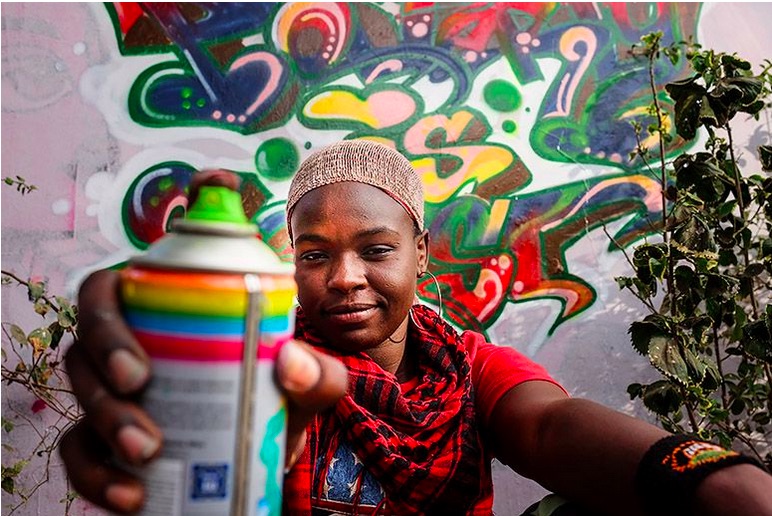
Dieynaba Sidibe is challenging views on women’s roles and calling for equality, one spray-paint can at a time.

Growing up in Senegal’s capital of Dakar, Dieynaba Sidibe loved painting and often used her pocket money to buy art supplies. One day, she came home to find that her mother had thrown out all of her paints. Women shouldn’t be painting, her mother believed, and she encouraged her daughter to be a doctor instead.


senegal

“It was war,” recalls Sidibe of the hard-fought years when she went against her parents’ wishes to follow her passion. “Society has created a place for women, and when you try and go outside of that, there’s a problem.

Despite the pushback, she continued painting and, after turning 18, moved on to graffiti through an interest in hip-hop culture and slam poetry. “I found I could express myself better on a wall as there was more space than a canvas.”

At 24, Sidibe is now considered Senegal’s first female graffiti artist.

She learned the craft thanks to fellow members of a hip-hop community at the Africulturban Center outside Dakar. “It was a little surprising because she was a woman,” says the center’s president, Matador, né Babacar Niang. “It was new for me because after 20 years, the only women we had here were interested in rap, and she was interested in graffiti as well.”

Matador encouraged her interest and saw her desire to break barriers as a positive shift. “I thought that she could bring something new to hip-hop culture because people thought only men were doing graffiti,” he says. “With graffiti she can show the role of women in society. If it’s coming from a woman, it’s even stronger.”

Graffiti art is frequently employed in West Africa as a tool for social change. Sidibe, who goes by the artist name Zienixx, uses it to promote women’s rights, including equal pay and educational access.

Through her work, she wants people to confront inequality in society and recognize the strength of women. “All women, everywhere—whether they are fishmongers, graffiti artists, or office workers—we are all fighters,” she says. “Women are fighting to be free to do what they want, to do work that pleases them, to be paid equally to men, and to follow their passion.”

Matador agrees: “There are so many families in Senegal whose mothers keep them together. These women wake up at four in the morning to go to the market and sell fish, and with the money they make they buy food and make a meal. The young men are asleep that whole time, so they wake up and find food, [and] they have no idea what their mothers went through to get that meal on the table.”

While Sidibe’s family now supports her graffiti art, she’s reflective of the fight it takes for women to exert their independence and abilities.

(Thank you to Janet Hudgins, the CPNN reporter for this article.)

Latest Discussion

Nonviolent Peaceforce: Urgent Update from South Sudan

TOLERANCE AND SOLIDARITY .

An article by Shannon Radsky, Koch Team Leader for Nonviolent Peaceforce in South Sudan

“You have seen the sun, now show me the moon.”

Koch County is not a place that many would readily consider home. It’s the kind of field site that frustrates you to your core. The heat melts you down to a pool of incoherent mutterings, while mosquitos buzz around your ears, keeping you from that desperately needed sleep. It’s not an easy place. It’s not meant to be. But, the people of this often forgotten county sandwiched in the middle of Unity State – they make a person want to stay. Like the Nuer proverb, “You have seen the sun, now show me the moon,” those of Koch never cease to teach us lessons of life and perseverance. Their struggle is both unparalleled to many and shared by most. Still, this proverb best depicts the relationship that binds our NP Team together. As internationals, we came to the county prepared to implement unarmed civilian peacekeeping, but we quickly realized that our teammates had much more to teach us. We learned from them. We learned from each other. We worked together for peace. Then, the current fighting erupted.

sudan

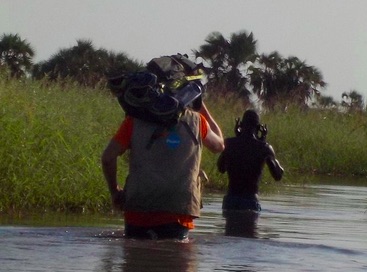
It’s difficult to describe what a Nonviolent Peaceforce team looks like in the deep field. Some would undoubtedly call us a motley crew, while others would say we’re a band of peace-seeking adventurers. For us, the only word worth its weight is family. We’ve walked hundreds of kilometers together. We’ve driven for days on motorbikes stacked 2 to 3 people high with 50 kilos strapped to our backs and dangling from our sides. We’ve ridden until our thighs, backs and butts screamed with agony. We’ve slept on the ground, in churches, in tukuls, under the stars and in the rain. We’ve slogged through mud, crossed rivers and faced heat stroke together. We’ve also shared countless cups of chai, meals and stories. We’ve worked side-by-side for days and nights. Led trainings, fostered dialogue and brought people together. We’ve grown to know each other’s lives and each other’s motivations, even amidst the violence that persists. There’s simply no other term befitting of our teammates, no other term but family.

From the beginning, we’ve sought to practice the principles of do no harm where we live and work. For us, that means accounting for the safety and security of our national teammates. We’ll never stop worrying about Duop, a man who cares fiercely about his loved ones and whose resolve is striking and admirable. Or about Mary, our Queen Mother and protector. A woman who will trick you with a seemingly shy and silent demeanor but whose voice is bold and whose love for South Sudan is unwavering. Or about Rebecca, a determined leader, eager to learn, and whose aspirations are as high as the Nile is long. Or about Michael. Michael, a man whose patience surpasses anyone I’ve ever met and whose gentle nature is bewildering, given he has already experienced a lifetime of violence. These men and women are civilians. They work for peace. They are our brothers and sisters.

When the day came in early May for the Koch site to be evacuated, our deepest fears were realized. We feared our teammates would be forced to hide and our communication would grow more and more infrequent. Without communication, we were compelled to wait. We searched for information about them wherever we went. We scanned the faces we met every day, hoping that out of the hundreds we saw we’d recognize just one. With every new story of abuse, death and horror we heard we feared that those we care about grew further away from us. Yet, we continued to search for them and after weeks without any word, a glimmer of hope appeared. We reestablished contact. For now, we know they are safe and we are finding ways to assist them. We won’t give up on our family.

(Thank you to Janet Hudgins, the CPNN reporter for this article.)

Question for this article

10 More Ways Syrian Women Are Building Peace and Democracy

. . WOMEN’S EQUALITY . .

An article by Kristin Williams for The Institute for Inclusive Security

What does bravery look like? What strength and character does it take to risk imprisonment, torture, and even death for the sake of a future you may not see?
I know what it looks like. I’ve witnessed it in Syrians of all ages, religions, and ethnicities. I’ve seen it in hundreds of simple and not-so-simple acts of defiance, retold to me matter-of-factly over tea. I marvel at it every time the women who travel from inside Syria to attend our trainings manage to laugh or smile, which is often. When they willingly return to their besieged country vowing to work even harder for peace, its presence overwhelms me.

syria
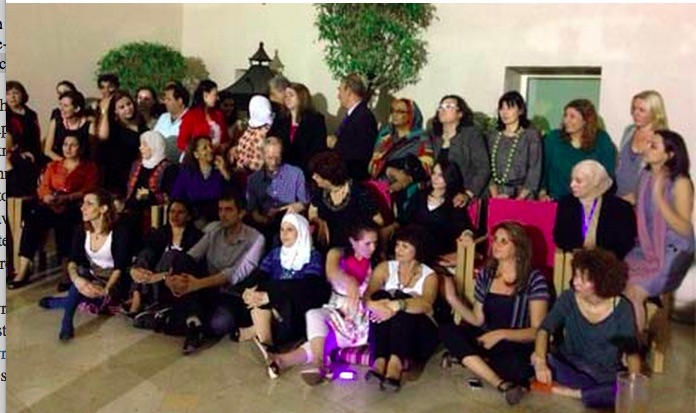
Participants at a Syrian Women’s Peace initiative (Photo: Nada El-Kouny)

Syrian women have made the exceptional ordinary. The stories I’ve heard over the last few years are only a fraction (in case you missed it, here’s another 10 Ways Syrian Women Are Building Peace and Democracy), yet they epitomize what is possible in this “intractable” conflict.

So what does bravery look like? It looks like this.
Note: because of the security risks, all names and exact locations have been omitted.

1. Stopping child marriage

To cope with the economic devastation of war, many Syrian families are selling their teenage daughters into marriage. In one ISIS-controlled city—where foreign fighters, in particular, offer hefty dowries—an estimated two in ten girls are victims of this practice.

There, a group of female activists is going house to house to convince families that early marriage is damaging to girls’ physical and mental health. If ISIS finds out, they’ll execute the women. But the group uses this conservatism to their advantage—under the full-length abayas they’re forced to wear, the women are free to move through checkpoints without being identified. They’ve saved at least 50 young girls over the course of three months.

2. Uniting refugees and host communities

Four million Syrians have fled the country to seek safety in Turkey, Jordan, Lebanon, and Iraq. This influx, now going on four years, has understandably caused tensions between refugees and the communities that host them. It costs governments significant money to host large refugee populations, and Syrians may compete with locals for employment.

One group of female refugees in southern Turkey is trying to bridge the gaps between their Turkish and Syrian classmates at university. They’ve developed activities to help students recognize and discuss common areas of interest, such as literature and history. Another group is providing refugees with Turkish language training, the first step toward communicating across divides.

3. Policing the streets

By now, you’ve heard about the female Kurdish peshmerga fighters who are battling the Islamic State in both Syria and Iraq. But there are other women providing much-needed security and rule of law in one opposition-held city. Two years ago, 20 of them banded together to form an all-female police brigade. At first, the community shunned them; but now they’ve gained trust, respect, and even their own station.

They’ve proven particularly adept at working with female victims—especially of gender-based violence—who report crimes more often to the women’s brigade. Unlike policemen, they can enter conservative households when only women are present, providing families with critical services.

4. Listening to marginalized groups

Women in rural villages face a unique set of challenges. Their political, economic, social, and security needs may be different from those of women in large and small cities. Yet, because of their remote location, they are often overlooked.

Female activists in one region controlled by the al-Nusra Front organized a campaign to conduct a series of consultations with 10 villages in the neighboring mountains. They found out about many problems, including that al-Nusra militants were randomly arresting young men from one of the villages. With the local women, they staged a sit-in; the detainees were released two days later. They are also developing economic empowerment programs for rural women to address crippling poverty.

(Continued on right side of page)

Questions for this article

Do women have a special role to play in the peace movement?

How can there be a political solution to the war in Syria?

(Article continued from left side of page)

5. Reopening schools

In ISIS-controlled areas, where one of the extremists’ first actions was to stamp out education, opening a school is among the riskiest endeavors anyone can undertake. Despite that danger, one group of women negotiated to open two private schools. They marched to the office of a local leader and convinced him that Islamic scripture favors education.

They can only keep the schools open two hours a day because the electricity is out the rest of the time. But they’ve enrolled hundreds of children who had been denied education for much of the last year; thus far, ISIS has left them alone to teach.

6. Helping families survive

The lack of job opportunities inside Syria and within refugee communities makes women and children particularly vulnerable. In addition, women are not always able to work outside the home, both because of their family duties and because their movement may be more restricted.

Several groups of activists are developing women’s professional skills, teaching them computing, first aid, English, and how to make handicrafts and clothes. In one area near Idlib, they formed an institute that’s trained over 300 people. Another group in a refugee area of Turkey established a cheap hostel for single Syrian women, to reduce the risk that they may turn to prostitution, forced marriage, or other exploitative activities in order to survive.

7. Reforming corrupt courts

The judicial system in Syria is shattered. The regime uses courts, including a special one set up via a sweeping “Counterterrorism Law” two years ago, to stifle dissent and punish peaceful activists. The Islamic State and others implement sharia courts that have publicly executed hundreds of people for petty “crimes.”
In one Kurdish area, there’s a different problem: the reigning political party established autonomous “people’s courts” that follow neither Syrian nor international law. One group of female activists, including several lawyers, is challenging this system, which they say allows loyalists to escape punishment while targeting those who support the opposition. They are uniting different groups to speak out against the sweeping authority of these judicial dictators.

8. Vaccinating children

Women have distributed and monitored humanitarian aid throughout the war. Many are also stepping in to provide essential services that, in peacetime, would be the responsibility of the government.

For instance, a group of women near Idlib led a campaign to vaccinate newborns during the critical first few days of life. Partnering with a local medical aid organization, they spent seven months bringing vaccines directly to people’s homes, since the regime continues to bomb the city. They successfully immunized about 600 children during each month of the campaign.

9. Disarming youth

In one city near Idlib, many children between the ages of 13 and 18 have obtained weapons, attempting to imitate their fathers. But the proliferation of arms is turning schoolboy fights into dangerous street brawls. In addition, there are many militias in the area that are recruiting youth for the frontlines.

A group of women is pushing the local council to stem this dangerous trend. They’ve asked the authorities to pass a law stating that children under age 18 cannot carry weapons and that arms purveyors cannot sell to them. The local council promised to do so months ago, but the women are maintaining pressure until the law passes.

10. Mobilizing a movement for peace

All of the women Inclusive Security trains, with our local partner the Center for Civil Society and Democracy, commit to mobilizing a “peace circle” of at least ten other women when they return to their home communities. Most of the activities above were initiated by these leaders, who taught others the same skills: how to analyze the problems in their local areas and determine strategies for addressing them.

In addition, “peace circles” have run awareness raising campaigns for coexistence and human rights, supported current and former detainees with legal and psychological counseling, successfully lobbied to remove names from the regime’s list of wanted activists, and much more. The energy and creativity of these women is boundless. They are Syria’s best hope for a peaceful future.

FAO: World hunger falls to under 800 million, eradication is next goal

. . SUSTAINABLE DEVELOPMENT . .

An article by the United Nations Food and Agriculture Organization

The number of hungry people in the world has dropped to 795 million – 216 million fewer than in 1990-92 – or around one person out of every nine, according to the latest edition of the annual UN hunger report (The State of Food Insecurity in the World 2015 – SOFI).

hunger
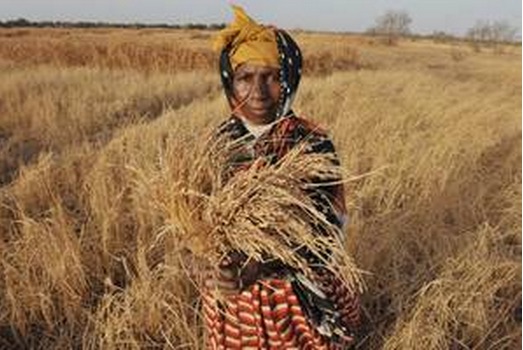
A woman farmer in The Gambia shows a dry tuft of rice in a drought period.

In the developing regions, the prevalence of undernourishment – which measures the proportion of people who are unable to consume enough food for an active and healthy life – has declined to 12.9 percent of the population, down from 23.3 percent a quarter of a century ago reports SOFI 2015, published today by the Food and Agriculture Organization of the United Nations (FAO), the International Fund for Agricultural Development (IFAD) and the World Food Programme (WFP).

A majority – 72 out of 129 – of the countries monitored by FAO have achieved the Millennium Development Goal target of halving the prevalence of undernourishment by 2015, with developing regions as a whole missing the target by a small margin. In addition, 29 countries have met the more ambitious goal laid out at the World Food Summit in 1996, when governments committed to halving the absolute number of undernourished people by 2015.

“The near-achievement of the MDG hunger targets shows us that we can indeed eliminate the scourge of hunger in our lifetime. We must be the Zero Hunger generation. That goal should be mainstreamed into all policy interventions and at the heart of the new sustainable development agenda to be established this year,” said FAO Director General José Graziano da Silva.

“If we truly wish to create a world free from poverty and hunger, then we must make it a priority to invest in the rural areas of developing countries where most of the world’s poorest and hungriest people live,” said IFAD President Kanayo F. Nwanze. “We must work to create a transformation in our rural communities so they provide decent jobs, decent conditions and decent opportunities. We must invest in rural areas so that our nations can have balanced growth and so that the three billion people who live in rural areas can fulfil their potential.”

“Men, women and children need nutritious food every day to have any chance of a free and prosperous future. Healthy bodies and minds are fundamental to both individual and economic growth, and that growth must be inclusive for us to make hunger history,” said WFP Executive Director Ertharin Cousin.

Progress towards fully achieving the 2015 food security targets was hampered in recent years by challenging global economic conditions.

Extreme weather events, natural disasters, political instability and civil strife have all impeded progress – 24 African countries currently face food crises, twice as many as in 1990; around one of every five of the world’s undernourished lives in crisis environments characterized by weak governance and acute vulnerability to death and disease.

SOFI 2015 notes that over the past 30 years crises have evolved from catastrophic, short-term, acute and highly visible events to protracted situations, due to a combination of factors, especially natural disasters and conflicts, with climate change, financial and price crises frequently among the exacerbating factors.

Hunger rates in countries enduring protracted crises are more than three times higher than elsewhere. In 2012 some 366 million people were living in this kind situation – of whom 129 million were undernourished – 19 percent of all food-insecure people on the planet.

(Article continued on the right column)

(Click here for a version of this article in French or here for a version in Spanish.)

Question for this article:

Can UN agencies help eradicate poverty in the world?

(Article continued from the left column)

Yet, alongside these challenges, the world population has grown by 1.9 billion since 1990, making reductions of the number of hungry people all the more striking, the report says.
Bright lights and darker shadows on the hunger map

Large reductions in hunger were achieved in East Asia and very fast progress was posted in Latin America and the Caribbean, southeast and central Asia, as well as some parts of Africa, showing that inclusive economic growth, agricultural investments and social protection, along with political stability makes the elimination of hunger possible. Above all, the political will to make hunger eradication a paramount development objective has fostered progress.

Sub-Saharan Africa is the region with the highest prevalence of undernourishment in the world – at 23.2 percent, or almost one in every four people. However, African nations that invested more in improving agricultural productivity and basic infrastructure also achieved their MDG hunger target, notably in West Africa.

The proportion of hungry people in Latin America and the Caribbean has dropped from 14.7 percent to 5.5 percent since 1990, while the share of underweight children (below 5 years of age) also declined sharply. A strong commitment to hunger reduction was translated into substantial social protection programmes which, coupled with strong economic growth, drove continent-wide progress.

Diverse trends were observed in different parts of Asia. Countries in Eastern and Southeast Asia have achieved steady and rapid reduction in both malnourishment indicators, buoyed by investment in water and sanitation infrastructure as well as favourable economic prospects.
In southern Asia, the prevalence of undernourishment has declined modestly, to 15.7 percent from 23.9 percent, but much greater progress was made in reducing underweight among young children.

Severe food insecurity is close to being eradicated in North Africa, with the prevalence of undernourishment below 5 percent, while dietary quality is of growing concern in the region, where there is a rising prevalence of overweight and obesity.

In West Asia, where hygiene conditions are generally advanced and child underweight rates low, the incidence of hunger has risen due to war, civil strife and consequent large migrant and refugee populations in some countries.

While there is no one-size-fits-all solution for how to improve food security, the SOFI report outlines several factors that played a critical role in achieving the hunger target.

First, improved agricultural productivity, especially by small and family farmers, leads to important gains in hunger and poverty reduction. High performers on that front in Africa met the MDG hunger target while those that made slower progress did not.

Second, while economic growth is always beneficial, not least because it expands the fiscal revenue base necessary to fund social transfers and other assistance programmes, it needs to be inclusive to help reduce hunger. Inclusive growth provides a proven avenue for those with fewer assets and skills in boosting their incomes, and providing them the resilience they need to weather natural and man-made shocks. Raising the productivity of family farmers is an effective way out of poverty and hunger.

Third, the expansion of social protection – often cash transfers to vulnerable households, but also food vouchers, health insurance or school meal programs, perhaps linked to guaranteed procurement contracts with local farmers – correlated strongly with progress in hunger reduction and in assuring that all members of society have the healthy nutrition to pursue productive lives.

Some 150 million people worldwide are prevented from falling into extreme poverty thanks to social protection, according to SOFI – but more than two-thirds of the world’s poor still do not have access to regular and predictable forms of social support. Transfers help households manage risk and mitigate shocks that would otherwise leave them trapped in poverty and hunger.

The full State of Food Insecurity in the World 2015 report is available online, here.

(thank you to Janet Hudgins, the CPNN reporter for this article.)

FAO: Le nombre de personnes souffrant de la faim passe sous la barre des 800 millions. Prochain objectif: l’éradication

. . DEVELOPPEMENT DURABLE . .

Un article par l’Organisation des Nations Unies pour l’alimentation et l’agriculture

Le nombre de personnes victimes de la faim dans le monde s’établit à 795 millions – soit 216 millions de moins qu’en 1990-92 –, ce qui équivaut à 1 personne sur 9, d’après la dernière édition du rapport annuel des Nations Unies L’État de l’insécurité alimentaire dans le monde 2015 (SOFI).
hunger
Cette agricultrice gambienne montre une touffe sèche de riz durant une période de sécheresse

Le nombre de personnes victimes de la faim dans le monde s’établit à 795 millions – soit 216 millions de moins qu’en 1990-92 –, ce qui équivaut à 1 personne sur 9, d’après la dernière édition du rapport annuel des Nations Unies L’État de l’insécurité alimentaire dans le monde 2015 (SOFI).

Dans les régions en développement, la prévalence de la sous-alimentation – qui mesure la proportion de personnes privées de la nourriture indispensable pour mener une vie saine et active – est tombée à 12,9 pour cent de la population, par rapport aux 23,3 pour cent enregistrés il y a un quart de siècle, selon le SOFI 2015, publié aujourd’hui conjointement par l’Organisation des Nations Unies pour l’alimentation et l’agriculture (FAO), le Fonds international de développement agricole (FIDA) et le Programme alimentaire mondial (PAM).

Une majorité des pays faisant l’objet d’un suivi par la FAO (72 sur 129) ont atteint la cible de l’Objectif du Millénaire pour le développement, consistant à réduire de moitié la prévalence de la sous-alimentation d’ici 2015. Les régions en développement dans leur ensemble, quant à elles, l’ont manquée de peu. Par ailleurs, 29 pays ont réalisé l’objectif plus ambitieux énoncé au Sommet mondial de l’alimentation en 1996: diviser par deux le nombre absolu de personnes sous-alimentées d’ici 2015.

“La quasi-réalisation des cibles de l’OMD relatives à la faim nous montre que nous sommes tout à fait en mesure d’éliminer la faim de notre vivant. Nous devons être la génération Faim Zéro. Ce but devrait être incorporé dans toutes les interventions de politique et au cœur même du nouvel agenda de développement durable qui sera mis en place cette année”, a déclaré le Directeur général de la FAO, José Graziano da Silva.

“Si nous aspirons réellement à créer un monde exempt de pauvreté et de faim, notre priorité doit être d’investir dans les zones rurales des pays en développement où vivent la plupart des populations les plus pauvres et les plus affamées de la planète”, a souligné le Président du FIDA, Kanayo F. Nwanze. “Il nous faut œuvrer pour générer une transformation au sein de nos communautés rurales afin qu’elle offrent des emplois décents, des conditions de vie décentes et des opportunités décentes. Nous devons investir dans les zones rurales pour la croissance équilibrée de nos nations de sorte que les trois milliards d’habitants peuplant ces zones puissent réaliser leur potentiel”.

“Les hommes, les femmes et les enfants ont besoin d’une alimentation nutritive tous les jours pour avoir une chance d’accéder à un avenir libre et prospère. Des esprits sains dans des corps sains sont essentiels pour la croissance aussi bien individuelle qu’économique, et cette croissance doit être inclusive afin que la faim dans le monde ne soit plus qu’un mauvais souvenir”, a affirmé la Directrice exécutive du PAM, Mme Ertharin Cousin.

Or, les progrès accomplis vers la pleine réalisation des objectifs de sécurité alimentaire 2015 ont été entravés ces dernières années par un contexte économique mondial difficile.

Phénomènes météorologiques extrêmes, catastrophes naturelles, instabilité politique et troubles intérieurs sont autant de facteurs responsables de cette situation. Vingt-quatre pays d’Afrique sont actuellement confrontés à des crises alimentaires, soit le double par rapport à 1990; une personne affamée sur 5 environ vit dans des conditions de crise caractérisées par une faible gouvernance et une vulnérabilité aiguë à la mort et à la maladie.

Le rapport SOFI 2015 fait remarquer qu’au cours des trente dernières années, les crises ont évolué, passant d’événements catastrophiques, à court terme, intenses et à haute visibilité, à des situations prolongées, du fait de toute une série de facteurs, en particulier de catastrophes naturelles et de conflits, souvent exacerbés par le changement climatique, la crise financière et les crises de prix.

Les taux de la faim dans les pays victimes de crises prolongées sont trois fois plus élevés qu’ailleurs. En 2012, cette situation concernait quelque 366 millions de personnes, dont 129 millions étaient sous-alimentés, soit 19 pour cent de toutes les victimes d’insécurité alimentaire de la planète.

(Voir suite sur colonne de droite. . . )

(Cliquez ici pour la version anglaise de cet article ou ici pour la version espagnole.)

Question for this article:

Can UN agencies help eradicate poverty in the world?

(. . . suite)

Pourtant, parallèlement, 1,9 milliard d’habitants sont venus gonfler les rangs de la population mondiale depuis 1990, ce qui rend d’autant plus impressionnantes les réductions du nombre de personnes victimes de la faim, souligne le rapport.

D’importantes réductions de la faim ont été réalisées en Asie de l’Est. L’Amérique latine et les Caraïbes, l’Asie du Sud-Est et l’Asie centrale, ainsi que certaines parties de l’Afrique ont affiché des progrès très rapides, montrant que la croissance économique inclusive, les investissements dans l’agriculture et la protection sociale, dans un contexte de stabilité politique, rendent l’élimination de la faim possible. C’est, avant tout, la volonté politique de faire de l’éradication de la faim un objectif de développement primordial qui est à l’origine des progrès.

L’Afrique subsaharienne est la région qui accuse la prévalence la plus élevée de sous-alimentation dans le monde – 23.2 pour cent, soit près d’une personne sur 4. Toutefois, les nations africaines qui ont investi davantage dans la productivité agricole et les infrastructures de base ont su réaliser leur objectif OMD, notamment en Afrique de l’Ouest.

La proportion de personnes souffrant de la faim en Amérique et aux Caraïbes a chuté de 14,7 pour cent à 5,5 pour cent depuis 1990, tandis que la part des enfants de moins de 5 ans en sous-poids a également reculé sensiblement. Une forte détermination à réduire la faim s’est traduite par des programmes de protection sociale qui, assortis de la croissance économique, ont impulsé les progrès à l’échelle du continent.

Diverses tendances ont été observées dans différentes parties d’Asie. Les pays d’Asie de l’Est et du Sud-Est ont réduit de façon constante et rapide les deux indicateurs de sous-alimentation, soutenus par l’investissement dans les infrastructures en eau et l’hygiène, ainsi que par des perspectives économiques favorables.

En Asie du Sud, la prévalence de la sous-alimentation a baissé modérément, passant de 23,9 à 15,7 pour cent, mais des progrès bien plus importants ont été accomplis dans la réduction de l’insuffisance pondérale des jeunes enfants.

Une grave insécurité alimentaire est sur le point d’être éradiquée en Afrique du Nord, où la prévalence de la sous-alimentation s’établit à moins de 5 pour cent, tandis que la hausse de la prévalence du surpoids et de l’obésité suscite des préoccupations croissantes dans la région.

En Asie de l’Ouest, où les conditions d’hygiène sont généralement avancées et où les taux d’insuffisance pondérale des enfants sont faibles, l’incidence de la faim a augmenté à cause de la guerre, des troubles intérieurs et, partant, de populations massives de migrants et de réfugiés dans certains pays.

S’il n’existe pas de solution universelle pour améliorer la sécurité alimentaire, le rapport SOFI évoque plusieurs facteurs qui ont joué un rôle déterminant dans la réalisation de la cible OMD.

En premier lieu, une meilleure productivité agricole, en particulier de la petite agriculture et de l’agriculture familiale, se traduit par des gains importants dans la réduction de la faim et de la pauvreté. Les pays les plus performants en Afrique ont rempli l’engagement de l’OMD, contrairement à ceux dont les progrès ont été plus lents.

Deuxièmement, si la croissance économique est toujours bénéfique – ne serait-ce que parce qu’elle élargit la base de revenus fiscaux nécessaire pour financer les transferts sociaux et autres programmes d’assistance –, elle doit être inclusive pour contribuer à réduire la faim. La croissance inclusive a fait ses preuves pour améliorer les revenus des plus démunis (d’actifs et de compétences), en leur conférant la résilience nécessaire pour affronter les chocs naturels et anthropiques. Augmenter la productivité des agriculteurs familiaux est un moyen efficace de sortir de la pauvreté et de la faim.

Troisièmement, l’expansion de la protection sociale – les transferts d’espèces aux ménages vulnérables, mais aussi les bons d’alimentation, les dispositifs d’assurance santé ou les repas scolaires, éventuellement assortis de contrats d’achat garantis avec les agriculteurs locaux – a été fortement liée aux progrès de réduction de la faim en veillant à ce que tous les membres de la société aient une bonne nutrition pour mener une vie productive.

Environ 150 millions de personnes à travers le monde échappent au piège de la pauvreté extrême grâce à la protection sociale, selon le SOFI, mais plus des deux tiers des pauvres de la planète n’ont toujours pas accès à une forme régulière et prévisible de soutien social. Les transferts d’espèces aident les ménages à gérer les risques et à atténuer l’impact des chocs pour ne pas s’enliser dans la pauvreté et la faim.

Le rapport intégral L’État de l’insécurité alimentaire dans le monde 2015 est accessible ici.

(Merci à Janet Hudgins, le reporter pour cet article.)
FAO: La cifra de víctimas del hambre baja de los 800 millones: el próximo objetivo es la erradicación

. . DESAROLLO SUSTENTABLE . .

Un artículo de la Organización de las Naciones Unidas para la Alimentación y la Agricultura

El número de personas hambrientas en el mundo se ha reducido a 795 millones (216 millones menos que en 1990-92 ), lo que supone casi una persona de cada nueve, según datos de la última edición del informe anual sobre el hambre de la ONU (El estado de la inseguridad alimentaria en el mundo 2015 – SOFI, por sus siglas en inglés).

hunger
Una campesina de Gambia muestra una mata seca de arroz a causa de la sequía

El número de personas hambrientas en el mundo se ha reducido a 795 millones (216 millones menos que en 1990-92 ), lo que supone casi una persona de cada nueve, según datos de la última edición del informe anual sobre el hambre de la ONU (El estado de la inseguridad alimentaria en el mundo 2015 – SOFI, por sus siglas en inglés).

En las regiones en desarrollo, la prevalencia de la subalimentación, -que mide el porcentaje de personas que no pueden consumir alimentos suficientes para llevar una vida activa y saludable- se ha reducido al 12,9 por ciento de la población, respecto al 23,3 por ciento de hace un cuarto de siglo, según el SOFI 2015, publicado hoy por la Organización de las Naciones Unidas para la Alimentación y la Agricultura (FAO), el Fondo Internacional de Desarrollo Agrícola (FIDA) y el Programa Mundial de Alimentos (PMA).

La mayoría de los países analizados por la FAO -72 de 129- han alcanzado la meta de los Objetivos de Desarrollo del Milenio de reducir a la mitad la prevalencia de la subalimentación en 2015, mientras que las regiones en desarrollo en su conjunto no lo han alcanzado por un pequeño margen. Además, 29 países han cumplido el objetivo más ambicioso establecido en la Cumbre Mundial sobre la Alimentación en 1996, cuando los gobiernos se comprometieron a reducir a la mitad la cifra absoluta de personas subalimentadas para 2015.

“El haber casi alcanzado las metas sobre el hambre de los ODM nos muestra que podemos realmente eliminar el flagelo del hambre en el curso de nuestras vidas. Debemos ser la generación del Hambre Cero. Ese objetivo debe integrarse en todas las intervenciones públicas y en el centro de la nueva agenda de desarrollo sostenible que se establecerá este año”, afirmó el Director General de la FAO, José Graziano da Silva.

“Si realmente queremos crear un mundo libre de la pobreza y el hambre, debemos dar prioridad a invertir en las zonas rurales de los países en desarrollo, donde viven la mayor parte de las personas más pobres y hambrientas del mundo”, señaló por su parte el Presidente del FIDA, Kanayo F. Nwanze . “Tenemos que trabajar -añadió- para transformar nuestras comunidades rurales y que ofrezcan puestos de trabajo dignos, con condiciones y oportunidades decentes. Tenemos que invertir en las zonas rurales para que nuestras naciones puedan tener un crecimiento equilibrado y que los tres mil millones de personas que viven en las zonas rurales puedan desarrollar su potencial”.

“Hombres, mujeres y niños necesitan cada día alimentos nutritivos para tener la posibilidad de un futuro libre y próspero. Un cuerpo y una mente sanos son fundamentales para el crecimiento individual y económico, y ese crecimiento debe ser inclusivo para que convirtamos el hambre en algo del pasado”, afirmó a su vez la Directora Ejecutiva del PMA, Ertharin Cousin.

El progreso hacia el logro total de los objetivos de seguridad alimentaria de 2015 se ha visto obstaculizado en los últimos años por las dificultades económicas a nivel mundial.

Los fenómenos meteorológicos extremos, los desastres naturales, la inestabilidad política y los conflictos civiles han impedido el progreso: 24 países africanos se enfrentan actualmente a crisis alimentarias, el doble que en 1990; alrededor de una de cada cinco de las personas subalimentadas del mundo vive en contextos de crisis que se caracterizan por una débil gobernanza y una elevada vulnerabilidad a la muerte y la enfermedad.

El SOFI 2015 señala que durante los últimos 30 años las crisis han evolucionado desde eventos catastróficos graves, a corto plazo y de gran visibilidad a situaciones prolongadas, debido a una combinación de factores, especialmente desastres naturales y conflictos, agravados con frecuencia por el cambio climático, las crisis financieras y las fluctuaciones de precios.

Las tasas de hambre en los países que sufren de crisis prolongadas son más del triple que en otros lugares. En 2012 unos 366 millones de personas vivían en situaciones de este tipo -de las cuales 129 millones estaban subalimentadas-, lo que supone el 19 por ciento de todas las personas que padecen inseguridad alimentaria en el planeta.

(El artículo continúa en el lado derecho de la página)

( Clickear aquí para la version inglês o aquí para la version francês)

Question for this article:

Can UN agencies help eradicate poverty in the world?

(Artículo continúa desde la parte izquierda de la página)

Sin embargo, junto a estos retos, la población mundial ha aumentado en 1 900 millones desde 1990, con lo que la reducción del número de personas hambrientas es más significativa, dice el informe.

Las mayores reducciones del hambre se lograron en Asia oriental y hubo un progreso muy rápido en América Latina y el Caribe, el Sudeste asiático y Asia Central, así como en algunas zonas de África, demostrando que el crecimiento económico inclusivo, las inversiones agrícolas y la protección social -junto con la estabilidad política-, hacen posible la eliminación del hambre. Por encima de todo, el factor que ha impulsado este progreso ha sido la voluntad política para hacer de la erradicación del hambre un objetivo primordial de desarrollo.

África subsahariana es la región con la mayor prevalencia de subalimentación del mundo: el 23,2 por ciento, casi una de cada cuatro personas. Sin embargo, los países africanos que invirtieron más en la mejora de la productividad agrícola y en infraestructuras básicas, también alcanzaron sus metas de hambre de los ODM, en particular en África occidental.

La proporción de personas que padecen hambre en América Latina y el Caribe se ha reducido del 14,7 por ciento al 5,5 por ciento desde 1990, mientras que la proporción de niños con falta de peso (de menos de 5 años de edad) también se redujo notablemente. Este fuerte compromiso con la reducción del hambre se tradujo en importantes programas de protección social que -unidos a un sólido crecimiento económico- impulsaron los avances en todo el continente.

En Asia se observaron tendencias desiguales en diferentes regiones. Los países de Asia oriental y el Sudeste asiático han logrado la reducción constante y rápida de ambos indicadores de la malnutrición, impulsados por la inversión en infraestructuras hídricas y saneamiento, así como por perspectivas económicas favorables.

En Asia meridional, la prevalencia de la subalimentación ha disminuido ligeramente, al 15,7 desde el 23,9 por ciento, pero se ha conseguido un progreso mucho mayor en la reducción de la insuficiencia ponderal entre los niños pequeños.

En África del Norte se está cerca de conseguir erradicar la inseguridad alimentaria severa, con una prevalencia de la subalimentación por debajo del 5 por ciento, a la vez que la calidad de la dieta representa una creciente preocupación en la región, que ha experimentado un aumento de la prevalencia del sobrepeso y la obesidad.

En Asia occidental, donde las condiciones de higiene son en general satisfactorias y las tasas de insuficiencia ponderal en los niños son bajas, la incidencia del hambre se ha incrementado debido a la guerra, los conflictos civiles y sus secuelas de un elevado número de migrantes y refugiados en algunos países.

Si bien no existe una única solución válida sobre cómo mejorar la seguridad alimentaria, el informe SOFI describe varios factores que han jugado un papel destacado para alcanzar las metas en la lucha contra el hambre.

En primer lugar, la mejora de la productividad agrícola -especialmente por los pequeños campesinos y los agricultores familiares-, conduce a aumentos importantes en la reducción del hambre y la pobreza. Los países que lograron avances importantes en ese frente en África cumplieron con la meta del hambre de los ODM, mientras que los que tuvieron un progreso más lento no la alcanzaron.

En segundo lugar, mientras que el crecimiento económico es siempre beneficioso -sobre todo porque amplía la base de ingresos fiscales necesaria para financiar las transferencias sociales y otros programas de asistencia-, debe ser inclusivo para ayudar a reducir el hambre. El crecimiento inclusivo ofrece una vía de utilidad probada para que los tienen menos activos y habilidades incrementen sus ingresos, y les proporciona la resiliencia que necesitan para capear las crisis naturales y originadas por el hombre. El aumento de la productividad de la agricultura familiar es una forma efectiva para salir de la pobreza y el hambre.

En tercer lugar, la ampliación de la protección social -a menudo transferencias de efectivo a los hogares vulnerables, pero también bonos de comida, programas de seguro médico o de comidas escolares, vinculados a veces a contratos garantizados de compra con los agricultores locales- se reflejó en gran medida en el progreso en la reducción del hambre y en garantizar que todos los miembros de la sociedad contasen con una nutrición saludable para llevar una vida productiva.

Unos 150 millones de personas en todo el mundo no caen en la pobreza extrema gracias a la protección social, según el SOFI, pero más de dos tercios de los pobres del mundo todavía no tienen acceso a formas regulares y predecibles de asistencia social. Las transferencias ayudan a los familias a gestionar el riesgo y mitigar los impactos que de otro modo los mantendrían atrapados en la trampa de la pobreza y el hambre.

El informe completo de El estado de la inseguridad alimentaria en el mundo 2015 está disponible en línea, aquí

(Gracias a Janet Hudgins, el reporter de este articulo.)

Sanctions against Israel: Round up from 2014

DISARMAMENT AND SECURITY .

An article by the BDS Movement (excerpts – one per month)

Here’s our round up of some of the key BDS developments of 2014. The Palestinian Boycott, Divestment and Sanctions National Committee (BNC), the coalition of Palestinian civil society organisations that works to lead and support the boycott, divestment and sanctions (BDS) movement, warmly thanks each and every person who supported and contributed to the BDS movement this year. . .

bds
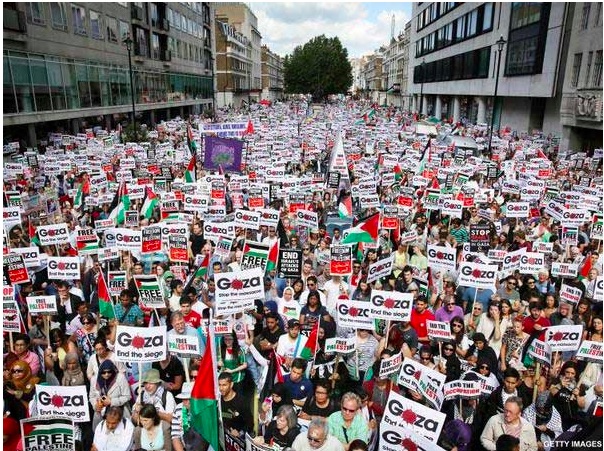
On August 9, hundreds of thousands of people took to the streets as part of an international Day of Rage initiated by groups in Gaza. Anti-apartheid hero Desmond Tutu called the day one of the biggest ever international mobilisations on a single issue. Photo from Getty images.

January:

In a move that laid the foundation for other European funds to follow suit later in the year, Dutch pension fund PGGM announced it was divesting tens of millions of euros from 5 of Israel’s biggest banks due to their deep involvement in Israel’s crimes against Palestinians. The fund manages the pensions of 2.5 million people. . .

February

Luxembourg’s state pension fund FDC excludes nine major Israeli banks and firms and one US company because of their involvement in Israeli settlements and human rights violations in the occupied Palestinian territories. Meanwhile, Denmark’s largest bank Dankse Bank blacklists Israel’s Bank Hapoalim over settlement construction. . .

March

. . . Victory in Galway as Irish students’ Union votes to join BDS movement
The motion at the National University of Ireland in Galway was passed by an almost 2 to 1 margin and follows on from the Teachers Union of Ireland’s 2013 endorsement of an academic boycott of Israel. . .

April

. . . Students at the University of New Mexico, Wesleyan University in Connecticut, and University of California Riverside vote to support divestment from companies that help Israel violate international law. Meanwhile, the largest student petition in Florida’s history calls for divestment.

May

The Bill Gates Foundation, one of the largest private foundations in the world, divests from G4S. A petition signed by more than 14,000 people and demonstrations outside Gates Foundation offices in London, Johannesburg and Seattle called on the the Gates Foundation to divest from G4S because of its role in providing equipment and services to prisons where Israel holds and tortures Palestinian political prisoners. . . .

June

Years of grassroots organising pays off as the Presbyterian Church (USA) general assembly in Detroit votes to divest its holdings from three US corporations – Hewlett Packard (HP), Motorola Solutions and Caterpillar – on the basis of their well-documented record of complicity in the oppression and denial of human rights of Palestinians.

(article continued in the right column)

Question related to this article:

Presenting the Palestinian side of the Middle East, Is it important for a culture of peace?

Israel/Palestine, is the situation like South Africa?

(article continued from the left column)

July

As Israel began its massacre of Palestinians in Gaza, governments and people of conscience across the world take action to pressure Israel to comply with international law and human rights. Key developments includes:

The Chilean parliament votes to suspend negotiations on a new trade deal with Israel, and Brazil, Chile, Ecuador, El Salvador and Peru withdraw their ambassadors.

A call for a military embargo on Israel launched by 6 Nobel laureates and dozens of celebrities is signed by more than 60,000 people. . .

Dublin city council passes a resolution calling for a military embargo and the suspension of the EU-Israel Association Agreement.

In Turkey, at least 12 local municipalities, a number of major business associations and a major trade union issue calls for a boycott of Israeli products . . .

August

Thousands of supporters of Palestinian rights in the San Francisco Bay take part in pickets and demonstrations that have prevented an Israeli ship from docking at the port in Oakland for four consecutive days. By the end of August, the unloading of Israeli ships has been prevented or disrupted at ports in Oakland, Tacoma, Seattle and Long Beach. . .

September

.. . French multinational Veolia, which has lost billions of dollars of contracts as a result of campaigns over its construction of infrastructure for illegal Israeli settlements, intends to “step back from Israel as a market place” and sell most parts of its Israeli interests during 2015.

October

SodaStream announces it is to close its factory in the illegal Israeli settlement of Mishor Adumim following a high profile boycott campaign against the company that saw retailers and investors across the world cut links with the company. . .

November

. . . The University of California at Los Angeles becomes the sixth of nine undergraduate campuses in the UC system to call for divestment, while the biggest ever student referendum at the University of Exeter calls for the student union to join the BDS movement. . .

December

The Brazilian state of Rio Grande do Sul cancels a major collaboration deal with Israeli military company Elbit Systems in the wake of protests over the firm’s role in oppression of Palestinians.

– See more at: http://www.bdsmovement.net/2014/round-up-13017#sthash.0bcXOTfS.dpuf

(Thank you to Mazin Qumsiyeh for pointing out this article to us.

Editor’s note. Since publishing this article, we have found comments both pro and con this controversial issue. For a comment against BDS, see https://www.transcend.org/tms/2015/06/bds-the-new-enemy.

And for a comment for BDS, see http://america.aljazeera.com/opinions/2015/6/is-bds-the-only-pro-israel-option-left.html

Finally, it should be noted that the boycott is effective. According to a UN report, foreign investment in Israel fell by 50% last year.

Speech of Sierra Leone Foreign Minister to the Organization of Islamic Cooperation

TOLERANCE AND SOLIDARITY .

Reprinteded from Sierra Express Media (abridged)

Asalamu Alaikum. It is a great honour and pleasure for me to address the 42nd Session of the Council of Foreign Ministers of the OIC. In doing so, let me at the outset, convey fraternal greetings from His Excellency, Dr. Ernest Bai Koroma, President of the Republic of Sierra Leone . . .

oic
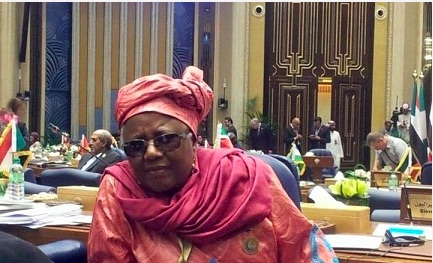
Acting Minister of Foreign Affairs and Head of Sierra Leone’s delegation to the conference, Dr. Ebun Adebola Strasser King

The theme of this 42nd Session of the Council of Foreign Ministers “Joint Vision in Promoting tolerance and Rejecting Terrorism” is apt and appropriate. Indeed, we are convening at a time when the global community has had to grapple with the consequences of a range of natural disasters, deadly epidemics and, in particular, an increasing wave of terrorist insurgencies and unrests across the globe. . . .

On the sub-regional front, we are particularly grateful for the timely and coordinated response of the global community in complementing the efforts of our three countries; Guinea, Liberia and Sierra Leone in the fight against the Ebola scourge. As struggle to put the Ebola Disease behind us, we look forward to further support through the OIC Trust Fund for the most affected countries in addressing the humanitarian and post-Ebola recovery projects.

Despite the isolation, stigmatization, travel restrictions and economic difficulties endured by these countries; the Ebola Virus Disease (EVD) has now been considerably subdued as exemplified by the recent declaration of Liberia as Ebola free, single digits or zero infection rates in Sierra Leone and reduced infection rate in Guinea. . .

Mr. Chairman,

Peace and development are mutually reinforcing and therefore the more nations continue to dive into conditions of instability, the more elusive are the prospects for socio-economic growth and prosperity. Thus the urgency of the need to work together as a united front and with one voice in finding urgent solutions to the causes of conflicts and acts of terrorism cannot be over-emphasised.

Inaction, or doing little, is an unintended complicity in the commission of atrocities on the vulnerable sectors of society – women, children and the elderly, who are always the most affected in situations of conflicts, acts of insecurity and terror. Partial to the theme of this session, we must endeavour to undertake initiatives ranging from humanitarian activities to mediation with a view to nurturing and promoting the culture of peace and tolerance among peoples. Sierra Leone therefore welcomes dialogue and peaceful settlement of international disputes and will continue to work and support the efforts of the OIC in achieving a peaceful and stable society in all the member countries for its entire people to enjoy prosperity.

We wish to underscore that this noble organisation must strive to portray peace initiatives and ideas coupled with the humanitarian values of the region which must be used as a strong weapon in the fight against Islamophobia. Sierra Leone calls on the OIC to intensify its efforts to uproot terrorism, by sharing relevant information, respect and tolerate each other and to collectively condemn acts of terrorism anywhere in the world. . .

Question for this article

Film: Costa Rica Abolished its Military, Never Regretted it

FREE FLOW OF INFORMATION

An article by David Swanson (abridged)

The forthcoming film, A Bold Peace: Costa Rica’s Path of Demilitarization, should be given every possible means of support and promotion. . . In 1948 Costa Rica abolished its military, something widely deemed impossible in the United States. This film documents how that was done and what the results have been. I don’t want to give away the ending but let me just say this: there has not been a hostile Muslim takeover of Costa Rica, the Costa Rican economy has not collapsed, and Costa Rican women still seem to find a certain attraction in Costa Rican men.

costarica

How is this possible? Wait, it gets stranger.

Costa Rica provides free, high-quality education, including free college, as well as free healthcare, and social security. Costa Ricans are better educated than Americans, live longer, are reported as happier (in fact, happiest in the world in various studies), and lead the world in the use of renewable energy (100% renewable energy lately in Costa Rica). Costa Rica even has a stable, functioning democracy . . .

Costa Rica has developed a culture of peace, including an educational system that teaches children nonviolent conflict resolution. . . How did this come to be? The film provides more context than I was previously aware of. Rafael Calderón Guardia, president from 1940 to 1944, began the welfare state in a major way through a unique pre-Cold War coalition of support that included the Catholic church and the communist party. In 1948 Calderón ran for president again, lost, and refused to recognize the results. A remarkable man named José Figueres Ferrer, also known as “Don Pepe,” who had educated himself at Boston Public Library and returned to Costa Rica to start a collective farm, led a violent revolution and won.

Figueres made a pact with the communists to protect the welfare state, and they disbanded their army. And after his own troops threatened a rightwing coup, he disbanded his own army, that of the nation of Costa Rica, saying:

“Los hombres que ensangrentamos recientemente a un país de paz, comprendemos la gravedad que pueden asumir estas heridas en la América Latina, y la urgencia de que dejen de sangrar. No esgrimimos el puñal del asesino sino el bisturí del cirujano. Como cirujanos nos interesa ahora, mas que la operación practicada, la futura salud de la Nación, que exige que esa herida cierre pronto, y que sobre ella se forme cicatriz más sana y más fuerte que el tejido original.

“Somos sostenedores definidos del ideal de un nuevo mundo en América. A esa patria de Washington, Lincoln, Bolívar y Martí, queremos hoy decirle: ¡Oh, América! Otros pueblos, hijos tuyos también, te ofrendan sus grandezas. La pequeña Costa Rica desea ofrecerte siempre, como ahora, junto con su corazón, su amor a la civilidad, a la democracia” . . .

(Article continued in right column)

Question(s) related to this article:

Does Costa Rica have a culture of peace?

(Article continued from left column)

Figueres used a citizens militia and then disbanded it. He expanded the welfare state, extended the right to vote to women and Afro-Caribbeans, and nationalized banks and electricity. Then he retired peacefully, later to be elected president twice more, in 1953 and 1970. He lived until 1990, the victorious general who did what Eisenhower never dared: abolished the military industrial complex.

The U.S. government, under President Reagan, tried to force Costa Rica into military conflict, but Costa Rica proclaimed neutrality. It did not maintain this neutrality as absolutely as one might like, but it never became home to a big U.S. military base as did Honduras.

In 1985, Oscar Arias was elected president on a peace platform, defeating Calderón’s son campaigning on a platform of militarization. Although the U.S. was threatening sanctions, and although 80% of the Costa Rican people opposed the Sandinista government in Nicaragua, over 80% in Costa Rica opposed any militarization. Reagan scared Americans of communists in Nicaragua, but seems not to have scared the Ticos at all. On the contrary, Arias met repeatedly with Reagan, turned him down on at least all the main points, and gathered nations together to negotiate peace in Central America — for which he was given a Nobel Peace Prize that may have actually served an appropriate purpose.

What withstood Reagan’s pressure was not an individual or a political party, but Costa Rica’s culture of peace. A new threat came in 2003, when Costa Rica joined the Coalition of the Willing (to attack Iraq). Costa Rica provided only its name, no actual participation. But a law student named Luis Roberto Zamora Bolanos successfully sued his own government in Costa Rican courts and forced Costa Rica out of the coalition.

While the film doesn’t go into it much, the same lawyer sued Arias and others repeatedly to keep weapons companies and U.S. ships out of Costa Rican territory. In 2010 the U.S. helped overthrow the president of Honduras and flew him to Costa Rica. The U.S. uses its drug war as an excuse to put military ships in Costa Rican waters.

In 2010 Nicaragua took over a Costa Rican island, at least in the view of Costa Rica. Had Costa Rica possessed a military, a war would likely have begun. While Costa Rica did send its “police” to the area, not one bullet was fired. Rather the dispute was resolved in international courts, as all such disputes should be. . .

The film presents a fair portrait, flaws included. I watched it with my 9-year-old son who now wants to move there. The film includes video of past and current presidents, activists, professors, and journalists. It even includes extensive commentary from Luis Guillermo Solís Rivera as a long-shot presidential candidate seeking to uphold Costa Rica’s pacifist traditions in a manner that Japan’s president is of course not attempting. Then we see Solís surge ahead and win. He is now president.

Costa Rica is an inspiration to those of us seeking to abolish war.

Le Bénin encourage le dialogue interreligieux contre Boko Haram

. . . TOLERANCE ET SOLIDARITE . . .

Un article de La Croix

« Symposium international du Centre panafricain de prospective sociale pour la paix et le développement par le dialogue interreligieux et interculturel ». Tel est le titre du grand colloque organisé à Cotonou, au Bénin, du mardi 26 au jeudi 28 mai, en vue d’« une mobilisation générale contre le péril Boko Haram ».

benin

Ce colloque s’inscrit dans la continuité de celui consacré au dialogue interreligieux, organisé à Cotonou en mars 2014, sous la présidence du cardinal Jean-Louis Tauran, président du Conseil pontifical pour le dialogue interreligieux, qui avait mis l’accent sur les facteurs favorisant l’extrémisme islamiste violent : tensions entre les communautés ethnico-religieuses, illettrisme, faiblesse de la gouvernance, systèmes de justice inadaptés et insuffisance des dialogues interreligieux, notamment islamo-chrétien.

Annoncé par le président béninois lui-même, Boni Yayi, en novembre dernier, ce symposium est placé sous le signe de l’éducation à la paix et de la lutte contre l’extrémisme religieux en Afrique (Boko Haram, AQMI…).

« La force militaire ne suffira pas à annihiler ce mouvement djihadiste qui a fleuri sur le terreau de la déshérence d’une population ayant un accès très faible à l’éducation et à la santé », déclarait il y a quelques semaines le nouveau président nigérian Mohammadu Buhari, cité dans le communiqué de presse du colloque béninois.

« Ce symposium veut s’appuyer sur le dialogue interreligieux et interculturel pour tisser la paix autour de préoccupations concrètes de lutte contre la pauvreté », déclarait Albert Tevoedjre, ancien médiateur du Bénin et président du Centre panafricain de prospective sociale, lors d’une rencontre avec la presse le 20 mai.

Il s’agit d’établir « des rapports de confiance entre les fidèles de différentes religions en vue de mieux construire ensemble une société de développement et de paix et mobiliser les ardeurs autour de tâches concrètes reconnues prioritaires par tous », expliquait encore Albert Tevoedjre.

Portée par le gouvernement béninois, cette initiative africaine bénéficie de nombreux soutiens, dont ceux du Programme des Nations unies pour le développement (Pnud), de l’Unesco, de la Cédéao (Organisation économique créée par le traité de Lagos en 1975 et regroupant quinze États de l’Ouest africain)… En offrant sa disponibilité pour devenir « promoteur de la paix par un autre chemin », le Bénin veut aussi susciter un réseau de parlementaires africains pour « veiller à l’inscription dans la loi de finances de chaque État des moyens nécessaires à la réalisation des objectifs visés ».

Parmi les 200 participants de tous les continents annoncés, figurent divers universitaires d’Égypte, du Liban ou d’Indonésie, et des personnalités telles Abderhamane Sissako, réalisateur du film Timbuktu, ou Nassir Abdulaziz Al-nasser, représentant des Nations unies, ainsi que William F. Vendely, secrétaire général de Religions pour la paix et Francis Kuria Kagema, secrétaire général du Conseil africain des responsables religieux.

Plusieurs dirigeants africains sont également présents, à commencer par le président nigérian Olusegun Obasanjo, ainsi que de nombreux responsables musulmans africains et européens : Muhammad Saa Abubakar III, sultan de Sokoto au Nigeria ; Shaban Mujabe, grand mufti de l’Ouganda ; l’Algérien cheikh Khaled Ben Tounès, président mondial de l’association « Les Amis de l’islam » ; l’imam de Banguy (Centrafrique) ; Azzedine Gaci, recteur de la mosquée de Villeurbanne (France)…

Sont annoncées aussi de hautes personnalités de l’Église catholique : le cardinal burkinabé Philippe Ouédraogo, archevêque de Ouagadougou ; le cardinal nigérian John Onaiyekan, archevêque d’Abuja ; Mgr Jean Zerbo, archevêque de Bamako (Mali) ; Mgr Paul Simon Ahouanan, archevêque de Bouaké (Côte d’Ivoire) et président de la nouvelle Commission nationale de réconciliation et d’indemnisation des victimes (Conariv) ; Mgr Jean-Marc Aveline, évêque auxiliaire de Marseille…

(Cliquez ici pour une traduction anglaise)

Question liée à cet article:

Islamic extremism, how should it be opposed?