All posts by CPNN Coordinator

About CPNN Coordinator

Dr David Adams is the coordinator of the Culture of Peace News Network. He retired in 2001 from UNESCO where he was the Director of the Unit for the International Year for the Culture of Peace, proclaimed for the Year 2000 by the United Nations General Assembly.

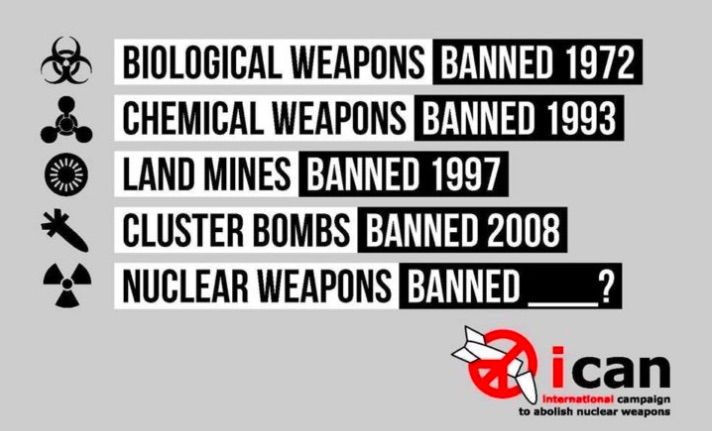
Can we abolish all nuclear weapons?

TFF PressInfo # 354: Open Letter – Political responsibility in the Nuclear Age – January 21st, 2016

By Richard Falk, David Krieger and Robert Laney

Prefatory Note

What follows here is An Open Letter to the American People: Political Responsibility in the Nuclear Age. It was jointly written by Richard Falk in collaboration with David Krieger and Robert Laney. The three of us have been long connected with the Nuclear Age Peace Foundation, NAPF.

The NAPF focuses its effort on the menace posed by nuclear weaponry and the urgency of seeking nuclear disarmament. The nuclear agreement with Iran and the North Korean nuclear test explosion are reminders of the gravity of the issue, and should serve as warnings against the persistence of complacency, which seems to be the prevailing political mood judging from the policy debates that have taken place during the early stages of the 2016 presidential campaign.

This complacency is encouraged by the media that seems to have forgotten about nuclear dangers since the end of the Cold War, except for those concerned with proliferation of the weaponry to countries hostile to the United States and the West (Iran, North Korea).

Our letter proceeds on the assumption that the core of the problem is associated with the possession, development, and deployment of the weaponry, that is, with the nine nuclear weapons states. The essence of a solution is to eliminate existing nuclear weapons arsenals through a phased, verified process of nuclear disarmament as legally mandated by Article VI of the Non-Proliferation Treaty (1968).

We would be grateful if you could help us reach the widest possible audience through reposting and dissemination via social media networks.*

• •

Dear fellow citizens:

By their purported test of a hydrogen bomb early in 2016, North Korea reminded the world that nuclear dangers are not an abstraction, but a continuing menace that the governments and peoples of the world ignore at their peril. Even if the test were not of a hydrogen bomb but of a smaller atomic weapon, as many experts suggest, we are still reminded that we live in the Nuclear Age, an age in which accident, miscalculation, insanity or intention could lead to devastating nuclear catastrophe.

What is most notable about the Nuclear Age is that we humans, by our scientific and technological ingenuity, have created the means of our own demise. The world currently is confronted by many threats to human wellbeing, and even civilizational survival, but we focus here on the particular grave dangers posed by nuclear weapons and nuclear war.

Even a relatively small nuclear exchange between India and Pakistan, with each country using 50 Hiroshima-size nuclear weapons on the other side’s cities, could result in a nuclear famine killing some two billion of the most vulnerable people on the planet. A nuclear war between the U.S. and Russia could destroy civilization in a single afternoon and send temperatures on Earth plummeting into a new ice age.

Such a war could destroy most complex life on the planet. Despite the gravity of such threats, they are being ignored, which is morally reprehensible and politically irresponsible.

We in the United States are in the midst of hotly contested campaigns to determine the candidates of both major political parties in the 2016 presidential faceoff, and yet none of the frontrunners for the nominations have even voiced concern about the nuclear war dangers we face. This is an appalling oversight. It reflects the underlying situation of denial and complacency that disconnects the American people as a whole from the risks of use of nuclear weapons in the years ahead.

This menacing disconnect is reinforced by the media, which has failed to challenge the candidates on their approach to this apocalyptic weaponry during the debates and has ignored the issue in their television and print coverage, even to the extent of excluding voices that express concern from their opinion pages. We regard it as a matter of urgency to put these issues back on the radar screen of public awareness.

We are appalled that none of the candidates running for the highest office in the land has yet put forward any plans or strategy to end current threats of nuclear annihilation, none has challenged the planned expenditure of $1 trillion to modernize the U.S. nuclear arsenal, and none has made a point of the U.S. being in breach of its nuclear disarmament obligations under the Nuclear Non-Proliferation Treaty.

In the presidential debates it has been a non-issue, which scandalizes the candidates for not raising the issue in their many public speeches and the media for not challenging them for failing to do so. As a society, we are out of touch with the most frightening, yet after decades still dangerously mishandled, challenge to the future of humanity.

There are nine countries that currently possess nuclear weapons. Five of these nuclear-armed countries are parties to the Nuclear Non-Proliferation Treaty (U.S., Russia, UK, France and China), and are obligated by that treaty to negotiate in good faith for a cessation of the nuclear arms race and for nuclear disarmament.

The other four nuclear-armed countries (Israel, India, Pakistan and North Korea) are subject to the same obligations under customary international law. None of the nine nuclear-armed countries has engaged in such negotiations, a reality that should be met with anger and frustration, and not, as is now the case, with indifference.

It is not only the United States that is responsible for the current state of denial and indifference. Throughout the world there is a false confidence that, because the Cold War is over and no nuclear weapons have been used since 1945, the nuclear dangers that once frightened and concerned people can now be ignored.

Rather than fulfill their obligations for negotiated nuclear disarmament, the nine nuclear-armed countries all rely upon nuclear deterrence and are engaged in modernization programs that will keep their nuclear arsenals active through the 21st century and perhaps beyond.

Unfortunately, nuclear deterrence does not actually provide security to countries with nuclear arsenals.

Rather, it is a hypothesis about human behavior, which is unlikely to hold up over time. Nuclear deterrence has come close to failing on numerous occasions and would clearly be totally ineffective, or worse, against a terrorist group in possession of one or more nuclear weapons, which has no fear of retaliation and may actually welcome it.

Further, as the world is now embarking on a renewed nuclear arms race, disturbingly reminiscent of the Cold War, rising risks of confrontations and crises between major states possessing nuclear weapons increase the possibility of use.

As citizens of a nuclear-armed country, we are also targets of nuclear weapons.

John F. Kennedy saw clearly that “Every man, woman and child lives under a nuclear sword of Damocles, hanging by the slenderest of threads, capable of being cut at any moment by accident, or miscalculation, or by madness. The weapons of war must be abolished before they abolish us.”

What President Kennedy vividly expressed more than 50 years ago remains true today, and even more so as the weapons proliferate and as political extremist groups come closer to acquiring these terrible weapons.

Those with power and control over nuclear weapons could turn this planet, unique in all the universe in supporting life, into the charred remains of a Global Hiroshima.

Should any political leader or government hold so much power?

Should we be content to allow such power to rest in any hands at all?

It is time to end the nuclear weapons era. We are living on borrowed time.

The U.S., as the world’s most powerful country, must play a leadership role in convening negotiations. For the U.S. to be effective in leading to achieve Nuclear Zero, U.S. citizens must awaken to the need to act and must press our government to act and encourage others elsewhere, especially in the other eight nuclear-armed countries, to press their governments to act as well.

It is not enough to be apathetic, conformist, ignorant or in denial. We all must take action if we want to save humanity and other forms of life from nuclear catastrophe.

In this spirit, we are at a stage where we need a robust global solidarity movement that is dedicated to raising awareness of the growing nuclear menace, and the urgent need to act nationally, regionally and globally to reverse the strong militarist currents that are pushing the world ever closer to the nuclear precipice.

Nuclear weapons are the most immediate threat to humanity, but they are not the only technology that could play and is playing havoc with the future of life. The scale of our technological impact on the environment (primarily fossil fuel extraction and use) is also resulting in global warming and climate chaos, with predicted rises in ocean levels and many other threats – ocean acidification, extreme weather, climate refugees and strife from drought – that will cause massive death and displacement of human and animal populations.

In addition to the technological threats to the human future, many people on the planet now suffer from hunger, disease, lack of shelter and lack of education. Every person on the planet has a right to adequate nutrition, health care, housing and education. It is deeply unjust to allow the rich to grow richer while the vast majority of humanity sinks into deeper poverty.

It is immoral to spend our resources on modernizing weapons of mass annihilation while large numbers of people continue to suffer from the ravages of poverty.

Doing all we can to move the world to Nuclear Zero, while remaining responsive to other pressing dangers, is our best chance to ensure a benevolent future for our species and its natural surroundings.

We can start by changing apathy to empathy, conformity to critical thinking, ignorance to wisdom, denial to recognition, and thought to action in responding to the threats posed by nuclear weapons and the technologies associated with global warming, as well as to the need to address present human suffering arising from war and poverty.

The richer countries are challenged by migrant flows of desperate people that number in the millions and by the realization that as many as a billion people on the planet are chronically hungry and another two billion are malnourished, resulting in widespread growth stunting among children and other maladies.

While ridding the world of nuclear weaponry is our primary goal, we are mindful that the institution of war is responsible for chaos and massive casualties, and that we must also challenge the militarist mentality if we are ever to enjoy enduring peace and security on our planet.

The fate of our species is now being tested as never before.

The question before us is whether humankind has the foresight and discipline necessary to forego some superfluous desires, mainly curtailing propensities for material luxuries and for domination of our fellow beings, thereby enabling all of us and succeeding generations to live lives worth living. Whether our species will rise to this challenge is uncertain, with current evidence not reassuring.

The time is short and what is at risk is civilization and every small and great thing that each of us loves and treasures on our planet.

* This Open Letter has been published in The Nation on January 14, 2016.

This question pertains to the following articles

An excerpt from remarks by President Trump at the World Economic Forum

Nihon Hidankyo’s Nobel Peace Prize Win Could Not Have Come at a More Important Moment

UN chief warns of nuclear ‘danger’ as world remembers Hiroshima; urges elimination of weapons

Hiroshima Peace Declaration 2024

UN Security Council Holds Rare Nuclear Disarmament Debate

Nuclear Abolitionists Occupy New York

UN pushes disarmament talks amid fears that drums of nuclear war are beating again

2023 World Conference against A and H Bombs

Hiroshima Peace Declaration 2023

US prelates lead ‘Pilgrimage of Peace’ to Japan seeking abolition of nuclear weapons

A united civil society push for Spain to join the TPNW

Mayors for Peace: The Hiroshima Appeal

NPT Review Conference ends without agreement: What next?

Mayors for Peace: Delegation attended the 10th NPT Review Conference

Nagasaki mayor warns of ‘crisis’ on atom bomb anniversary

Full text of Hiroshima Peace Declaration on 77th A-bomb anniversary

Humanity’s just one misunderstanding away from ‘nuclear annihilation’ warns UN chief

Vienna: first Meeting of States Parties to the Treaty on the Prohibition of Nuclear Weapons

The Bourgogne Franche-Comté collective for the abolition of nuclear weapons

Europe: Mayors and local leaders play a key role in advancing the nuclear prohibition

SIPRI: Global nuclear arsenals are expected to grow as states continue to modernize

Ulaanbaatar Statement on Nuclear-Weapon-Free Zones

U.S. Conference of Mayors Adopts Sweeping Resolution: “Forging a Path to Peace and Common Security”

Russia, China, Britain, U.S. and France say no one can win nuclear war

Open Letter from Mayors for Peace to States Parties of NPT (Nuclear Proliferation Treaty)

UN pledges full support to Nagasaki voices fuelling ‘powerful global movement’ against nuclear arms

UNAC statement: Ban nuclear weapons starting with the US! Remember Hiroshima and Nagasaki

Nagasaki Peace Declaration

The City of Hiroshima: PEACE DECLARATION

Mayors for Peace Adopts New Vision and Action Plan

Mayors for Peace : Report on 2020 Vision (Emergency Campaign to Ban Nuclear Weapons)

Red Cross: Nuclear Weapons Are Finally Outlawed, Next Step Is Disarmament

France: Gatherings in Front of the National Assembly and the Embassies of the Nuclearized Countries

United Nations: Guterres hails entry into force of treaty banning nuclear weapons

Joint statement by World Future Council members and Right Livelihood Laureates : Abolish Nuclear Weapons to Assure a Sustainable Future

Nuclear deterrence gives ‘false sense of security,’ Vatican official says

Peter Kuznick on the Significance of the Treaty on the Prohibition of Nuclear Weapons

Red Cross : Nuclear ban: “Today is an historic day. We call on world leaders to act with courage and join the right side of history”

The Elders call on world leaders to take action or risk nuclear catastrophe

UK: Oxford City Council says “no” to nuclear weapons

ICAN cities appeal : Support from Mayors for Peace

Youth representatives speak out for Nuclear Disarmament at the NY City Hall

New York City hearings pave the way for nuclear weapons divestment

Gorbachev: Nuclear Weapons Putting World In ‘Colossal Danger’

Full text of Nagasaki Peace Declaration on the 74th A-bomb anniversary

Officials Urge Disarmament ‘Stepping Stones’

French Organizations Commemorate the Rejection of Nuclear Weapons by the UN in 1946

2019 Doomsday Clock Statement

A divided UN General Assembly votes on nuclear disarmament resolutions

Nuclear Abolition Day: Security Council session clashes with UN High-Level Meeting

USA: Former Marine to Create Legacy of Peace

Women legislators release appeal for common security for a sustainable and nuclear-weapon-free world

UN chief launches new disarmament agenda ‘to secure our world and our future’

Nuclear Weapon States’ Long Arm Seen Behind Deferral of Landmark UN Conference

Physician Leaders Urge All States to Sign Nuclear Weapons Treaty

USA: Oak Ridge Environmental Peace Alliance

Campaign for Compliance with the Nuclear Ban Treaty

March 28: 1st meeting of UN High-Level Conference on Nuclear Disarmament

Nobel Peace Prize Lecture – 2017 – Beatrice Fihn

Nobel Peace Prize Lecture – 2017 – Setsuko Thurlow

Spanish action to support the Treaty on the Prohibition of Nuclear Weapons

Pope Francis denounces nuclear weapons possession

Prague: International youth conference: Reaching High for a Nuclear-Weapon-Free World

Spreading Hiroshima’s Message of Peace

The Nobel Peace Prize for 2017

United Nations High-Level Meeting on the Total Elimination of Nuclear Weapons

At the United Nations, leaders voice support for nuclear ban treaty

Parliamentarians for Nuclear Nonproliferation and Disarmament releases Action Plan for a Nuclear-Weapon-Free World

Belarus: OSCE parliamentarians adopt Minsk Declaration with comprehensive recommendations for peace and prosperity

Unfold Zero: Making Use of the New Nuclear Ban Treaty

Historic agreement banning nuclear weapons a “victory for our shared humanity”, ICRC says

Richard Falk: Challenging Nuclearism: The Nuclear Ban Treaty Assessed

UN conference adopts treaty banning nuclear weapons

UN: Conference Considers Revised Draft of Proposed Legally Binding Instrument to Prohibit Nuclear Weapons

UN nuclear ban treaty negotiations: transit, threat and nuclear weapons financing

UN Conference Concludes First Reading of Draft Legally Binding Instrument to Prohibit Nuclear Weapons

Banning landmines taught us how to bring about real change in the world, now we’re sharing these lessons to ban nuclear weapons

Countries for and against the UN resolution to launch negotiations for a treaty to prohibit nuclear weapons

United Nations: WILPF statement to the 2017 NPT Preparatory Committee

Brooklyn, US: Forum: One Struggle, Many Fronts: No Nukes, War, Wall or Warming

United Nations: Women’s Rally and March to Ban the Bomb

Abolition 2000 Annual Meeting: Supports Women’s March. Calls for Nuclear Risk Reduction

UN commences nuclear abolition negotiations

Bid Adieu To Voice Of International Law Jurist C.G Weeramantry…

Open Letter to President-elect Donald Trump on Nuclear Weapons

Civil Society and the UN High Level Conference on Nuclear Disarmament

UN votes to outlaw nuclear weapons in 2017

UN talks recommend negotiations of nuclear weapons ban treaty

Banning Nukes: Divergence and Consensus at the UN Working Group on Nuclear Disarmament

USA: Over Seventy Prominent Scholars and Activists Urge Obama to meet Hibakusha, Take Further Steps on Nuclear Disarmament

The historic visit of Barack Obama to Hiroshima marks a new stage in the international mobilization against nuclear weapons

Text of President Obama’s Speech in Hiroshima, Japan

David v Goliath: Marshall Islands take on nuclear powers at UN court

33 Latin American and Caribbean states endorse Austrian Pledge and call for negotiations on a nuclear ban treaty

– – – – Links for the following articles published prior to 2015 do not work because they were made by a version of PERL programming that is no longer supported. With three easy steps, you can find the article by its number. First, click on it before returning to this page. Your browser will say that the article is not available but in the address listed you can see that it was located at ViewArticle=xxxx where xxxx is the number of the article. Returning to this page, then click here for the listing of all years. Then click on the year that contains the number for the article you seek. It will send you to the page where you can easily search for the article by its title. – – – –

Peace and Planet Events, April 24-26 in New York City

La reunión humanitaria de mayor convocatoria mundial toma posición contra las armas nucleares

La plus grande réunion humanitaire du monde prend position contre les armes nucleares

World's Largest Humanitarian Meeting Takes Position against Nuclear Weapons

Ten Actions for Nuclear Abolition Day – June 2

U.S. Conference of Mayors Adopts Strong New Mayors for Peace Resolution

Poster exhibition on the atomic bomb damage

Oslo: Historic global conference prepares ground for new initiative towards ban treaty

Nuclear arms: the big questions…

Armes nucléaires : les bonnes questions…

The Hiroshima Appeal

Les Forces Nucléaires Diminuent, mais leur Modernisation se Poursuit, selon le SIPRI

Las Fuerzas Nucleares se Reducen pero Continúa su Modernización, Afirma el SIPRI

Nuclear forces reduced while modernizations continue, says SIPRI

U.S. Conference of Mayors Adopts Bold Resolution on Nuclear Disarmament

Nuclear disarmament: Greenpeace Champions the Marshall Islands

Movimiento Cubano por la Paz y la Soberanía de los Pueblos

Cuban movement for peace and sovereignty of peoples

Nuclear Weapons Production in the US

Sir Joseph Rotblat: A Legacy of Peace (1908-2005)

Click here for earlier CPNN discussions on this subject.
United Nations: Experts call for efforts to save indigenous languages

TOLERANCE AND SOLIDARITY .

An article from Xinhua News

Endangered indigenous languages are being brought back from the brink of extinction but there is still much work to be done, a group of indigenous language experts told reporters here Thursday [United Nations, January 21].


indigenous
Edward John (FLICKR)

“There are examples of us not just holding onto our languages, but using them to educate new generations, using them in our homes again,” said Amy Kalili, an expert in the Hawaiian language, who participated in a panel of indigenous language experts here this week.

The panel provided examples of indigenous languages being revitalized around the world, from Maori in New Zealand to Hawaiian in Kalili’s native Hawaii.

It is now possible to study in the Hawaiian language from infancy through to doctoral level, said Kalili, mostly due to community efforts to save the language from extinction.

Kalili said that saving indigenous languages would also benefit the global community through preserving vital indigenous knowledge.

“The wealth of knowledge that we have to offer the global community is codified in our native languages,” she said.

However, Grand Chief Edward John from the Tl’azt’en Nation in British Columbia, Canada said that sadly one Indigenous language dies every week or two weeks.

“If there’s an animal or plant or fish going extinct, people are up in arms over that, but when a language is going extinct, no one says anything,” he said.

And while technology may offer some assistance, it is not the answer in and of itself, said John.

“We now need to get the elders into these gadgets so that they can use this technology to teach the young people,” he said. “Technology in and of itself won’t be the answer, but it’s a tool.”

Tatjana Degai from Kamchatka in the far East of Russia said that despite a multicultural approach and government support for indigenous languages in Russia, some languages are still on the brink of extinction.

“Our language is surviving, in Russia which is a multicultural country (with) over 200 different languages”, she said.

“Some languages are spoken by a million people, some languages are spoken by thousands, and mostly it is indigenous languages of the people of North Siberia and the far-East which are at the brink of extinction,” she said.

There are between 6,000 and 7,000 languages globally, said John. One of the panel’s recommendations is for countries to help map out the indigenous languages within their own borders, he added.

Question for discussion

Iraqi teachers’ campaign strives to end violence against women

. . WOMEN’S EQUALITY . .

An article from Education International

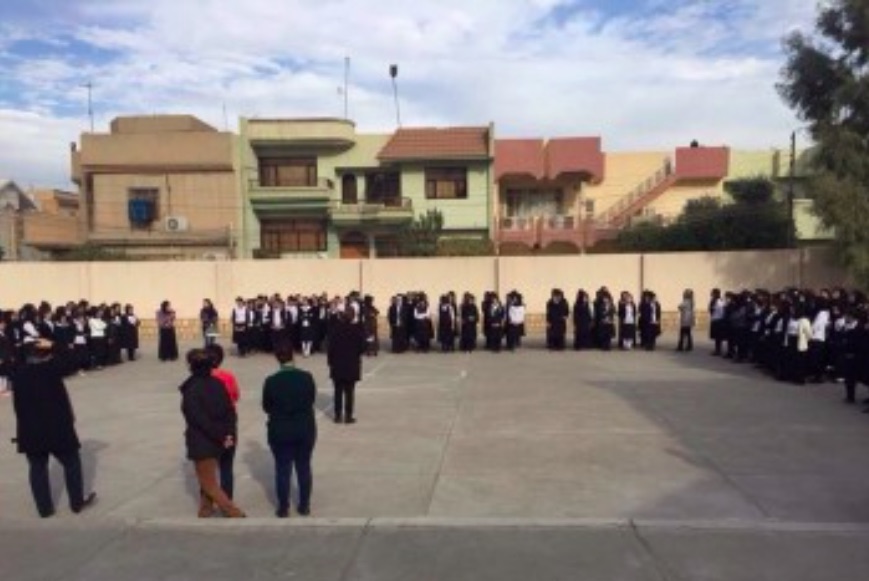
In conjunction with the United Nations’ recent 16 Days of Activism against Gender-Based Violence, Iraqi teachers organised a number of activities under the theme of “Home Peace to World Peace, Peaceful Education for All.”

iraqi
Activities organised during the campaign to end violence against women in an Iraqi school

To bring awareness and generate concrete steps to eliminating violence against women, Iraq’s Kurdistan Teachers’ Union (KTU) launced a series of initiatives to mobilise the public. 

“In addition to these activities, and in coordination with KTU representatives in all schools following KTU guidelines, we raised awareness about the importance of giving equal education opportunities for all,” said KTU President Abdalwahed M. Haje.
Local culture sometimes becomes a barrier to these opportunities, however, and the KTU asked parents to support the effort towards reducing the rate of uneducated children which stands at 12 per cent. The KTU also asked the government and the Education Ministry to provide more tools to reduce the rate of uneducated adults.

Events organised by the KTU included the following: 

• Participating in a large community event in the presence of the President of the Council of Ministers and his deputy, MPs, ministers, women’s organisations, and civil society at the start of the national campaign on 16 November

• Organising five meetings in the governorates of Erbil, Duhok, Sulemanyah, and Kirkuk, in which hundreds of women participated. These meetings emphasised the importance of the campaign, respecting women, enforcing equality, and explaining applied international regulations

• Organising two seminars with key speakers and civil activists Newroz Hawezy and Hero Kamal. A lot of data and statistics on violent acts and solutions to them were presented, as well as human rights regulations. In terms of employment opportunities, it was stressed that education fares well with a ratio of female to male teachers of 53:47

• Setting up two photography exhibitions. The first one in Erbil featured numerous pictures and graphs stressing the role of women in society in the past, and also highlighted the violence they can experience. The second exhibition in Sulemanyah displayed photographs about women’s role in organising their families, management, economic, and agricultural roles. Both exhibitions highlighted that a healthy community is a community with an equal participation for both genders.

(click here for the article in Spanish or here for the article in French.)

Question related to this article:

Des enseignant(e)s irakien(ne)s lancent une campagne pour mettre fin à la violence à l’égard des femmes

. . . EGALITE HOMMES/FEMMES . . .

Un article de Internationale de l’Education

Conjointement à la campagne des 16 jours d’activisme contre la violence sexiste des Nations Unies, les enseignant(e)s irakien(ne)s ont organisé différentes activités autour du thème « De la paix nationale à la paix mondiale, une éducation pacifique pour tous ».

iraqi
Les activités organisées durant la campagne pour mettre fin à la violence contre les femmes dans une école irakienne.

Afin de sensibiliser la population au problème de la violence à l’égard des femmes et de mettre en place des mesures concrètes visant à éradiquer ce fléau, le syndicat irakien Kurdistan Teachers Union (KTU) a lancé une série d’initiatives.

« Outre ces activités, et en collaboration avec les représentantes et représentants du KTU dans toutes les écoles se soumettant aux directives du syndicat, nous avons sensibilisé la population à l’importance d’une égalité des chances en matière d’éducation », a déclaré le Président du KTU, Abdalwahed M. Haje.

Cependant, la culture locale s’érige parfois en obstacle. C’est pourquoi le KTU a invité les parents à soutenir les efforts visant à réduire le taux d’enfants non scolarisés, qui s’élève actuellement à 12 %. Le KTU a également appelé le gouvernement et le ministère de l’Education à lui fournir davantage d’outils afin de réduire le nombre d’adultes n’ayant pas reçu d’éducation.

Voici quelques exemples d’événements organisés par le KTU:

• Participation à un grand événement communautaire, rassemblant le Président du Conseil des ministres et son adjoint, les parlementaires, les ministres, les organisations de femmes et la société civile, à l’occasion du lancement de la campagne nationale le 16 novembre.

• Organisation de cinq réunions dans les provinces d’Erbil, de Dahuk, de Souleimaniye et de Kirkouk, auxquelles ont participé des centaines de femmes. Ces rencontres ont mis l’accent sur l’importance de la campagne, sur le respect des femmes, sur le renforcement de l’égalité et sur l’explication des réglementations internationales en vigueur.

• Organisation de deux séminaires accueillant deux intervenant(e)s et militant(e)s, Newroz Hawezy et Hero Kamal, qui ont présenté un grand nombre de données et de statistiques sur les actes de violence et les solutions trouvées, ainsi que sur les réglementations en matière de droits humains. En termes d’opportunités d’emploi, il a été souligné que l’éducation se portait bien, et affichait un ratio de 53 hommes pour 47 femmes.

• Organisation de deux expositions de photographies. La première, organisée à Erbil, proposait des images et des graphiques mettant en exergue le rôle que jouaient les femmes dans la société par le passé, ainsi que la violence dont elles sont victimes. La deuxième, tenue à Souleimaniye, présentait des photographies autour du rôle de la femme dans l’organisation d’un foyer, ainsi que dans les domaines de la gestion, de l’économie et de l’agriculture. Ces deux événements ont mis en lumière le fait qu’une communauté saine, c’est une communauté dans laquelle les hommes comme les femmes participent de façon équitable.

(Cliquez ici pour une version espagnole de cet article ou ici pour une version anglaise.)

Pregunta(s) relacionada(s) al artículo

La campaña de los docentes iraquíes tiene por objeto acabar con la violencia contra las mujeres

. IGUALDAD HOMBRES/MUJERES .

Un artículo de Internacional de la Educación

leyenda:

Juntamente con la reciente campaña de 16 Días de Activismo contra la Violencia de Género de las Naciones Unidas, los docentes iraquíes organizaron una serie de actividades bajo el tema “De la paz en el hogar a la paz en el mundo, una educación pacífica para todos y todas”.

iraqi
Actividades organizadas durante la campaña para poner fin a la violencia contra las mujeres en una escuela iraquí.

Para crear concienciación y tomar medidas concretas para eliminar la violencia contra las mujeres, el Sindicato de Docentes de Kurdistán (KTU) de Irak puso en marcha una serie de iniciativas destinadas a movilizar a los ciudadanos.

“Además de estas actividades, y en coordinación con los representantes de KTU en las escuelas que siguen las directrices de KTU, hemos fomentado la sensibilización sobre la importancia de ofrecer igualdad de oportunidades educativas para todos”, dijo el Presidente de KTU, Abdalwahed M. Haje.

La cultura local a veces se convierte en un obstáculo para ofrecer estas oportunidades y KTU pidió a los padres que apoyaran los esfuerzos que se realizaban para reducir la tasa de niños que no recibían instrucción, que se sitúa en el 12%. KTU también solicitó al gobierno y al ministerio de educación que proporcionen más recursos para reducir la tasa de adultos analfabetos.

Entre los eventos organizados por KTU figuran los siguientes:

• La participación en un gran evento comunitario que contó con la presencia del Presidente del Consejo de Ministros y su vicepresidente, diputados parlamentarios, ministros, organizaciones de mujeres y la sociedad civil y tuvo lugar el 16 de noviembre cuando se lanzó la campaña nacional.

• La organización de cinco reuniones en las provincias de Erbil, Duhok, Sulemanyah y Kirkuk, en las cuales participaron cientos de mujeres. En estas reuniones se puso de relieve la importancia de la campaña, del respeto hacia las mujeres, de velar por la igualdad y se explicaron las normas internacionales vigentes.

• La organización de dos seminarios con oradores destacados y los activistas civiles Newroz Hawezy y Hero Kamal. Se presentaron una gran cantidad de datos y estadísticas relativos a los actos de violencia y las soluciones a los mismos, así como los reglamentos en materia de derechos humanos. En términos de oportunidades de empleo, se destacó que en el ámbito de la educación la proporción de mujeres y hombres docentes era de 53:47, lo cual era satisfactorio.

• La creación de dos exposiciones de fotografía. La primera en Erbil presentaba numerosas imágenes y gráficos que destacaban el papel que habían tenido las mujeres en la sociedad en el pasado y también ponía de relieve la violencia que podían sufrir. La segunda exposición en Sulemanyah exhibía fotografías sobre el papel que desempeñaban las mujeres en la organización de sus familias y sus funciones en la administración, la economía y la agricultura. Ambas exposiciones destacaron que una comunidad sana es una comunidad que cuenta con una participación equitativa de ambos géneros.

( Clickear aquí para la version inglês o aquí para la version francês.)

Question related to this article:

Hundreds join refugee solidarity rally in Madrid, slamming NATO invasions

TOLERANCE AND SOLIDARITY .

An article from Russia Today

Around 800 protesters marched Friday night [December 18] in Madrid to show support for refugees on the Global Day of Action against Racism. The protesters chanted anti-war slogans, and demanded that the EU open its borders and close refugee detention centers.

Madrid rally
Video of Madrid rally

Around 800 protesters marched Friday night in Madrid to show support for refugees on the Global Day of Action against Racism. The protesters chanted anti-war slogans, and demanded that the EU open its borders and close refugee detention centers.

The march started at Madrid’s Atocha railway station, and ended up near the Spanish Foreign Ministry, under the slogan: “We are all migrants and refugees, we all have rights.”

Protesters’ main demands were to push the Spanish government and the EU to open its borders for incoming refugees, disband the EU’s border control authority Frontex, close immigration detention centers and to stop making bilateral agreements with neighboring Morocco and Turkey who were “not respecting human rights.”

The demonstrators also chanted anti-war slogans slamming NATO and military interventions.

“No to NATO! It is a means that has proven to be handled by interests that do not correspond with the majority of citizens,” an activist told RT’s Ruptly video agency. “It is a tool to create a world based on the power of the 1 percent that, blinded by their interests, continues to implement a warmonger system.”

Palestinian flags and slogans reading “Shame wall” (apparently referring to border fences that prevent refugees from crossing into the EU) and “No human is illegal” were also seen in the crowd.

Similar rallies were taking place across Europe on Friday, marking the Global Day of Action against Racism.

In Greece, thousands of refugees and left activists took to the streets, shouting: “Open the borders!” demanding the refugees be granted permission to continue their journey to wealthier northern European countries. The march ended on Syntagma Square and the EU Commission Offices in Athens, being guarded by riot police.

Refugee solidarity events also took place in Italy, Austria and France, with participants also voicing demands to lift restrictions on crossing borders and speaking out against stricter rules for granting asylum.

Europe is now experiencing the largest influx of refugees from Middle East and North Africa since WWII. Hundreds of thousands were forced to leave their countries in pursuit of a safer life after the wave of Western-organized coups and bloody civil wars all across the region.

Question for discussion

The peace process in Colombia: A Chronology

FREE FLOW OF INFORMATION

Taken from Deutsche Welle (translated by CPNN)

The following is a chronology of the highlights of the peace process begun three years ago and culminating in March. The countdown starts from the expected date for the final signing.

Colombia
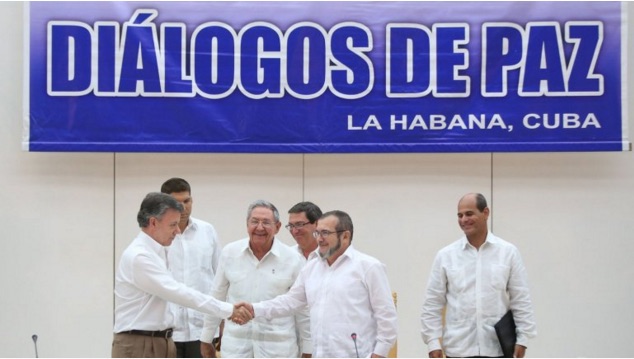
Juan Manuel Santos shakes hands with Timochenko in Havana during the peace dialogus. Photo by Reuters

The Government of Colombia and the FARC negotiated in Havana, Cuba an accord to end the armed conflict after more than half a century that has cost the lives of 220,000 people, has left about 7 million victims, 62% of its territory affected by landmines and incalculable damage to the environment due to massive clearing for coca cultivation, illegal mining and attacks on the national pipeline.

Five points are on the table: agrarian reform, abandoning arms, political participation of the ex-insurgents, drug trafficking and reparation for victims. Additional agreements concern implementation, verification and countersignature of the accords.

2 0 1 6

March 23: Expected date for final signing of the peace process

January 13: The negotiating teams of the Government of Colombia and the FARC began the last stage of the peace talks, which will work in permanent session to accelerate the process and meet deadlines.

2 0 1 5

December 15: Agreement about victims including a comprehensive system for reparation, justice, truth and guarantees of non-repetition. This step was, according to President Juan Manuel Santos, “the most important advance in the negotiating agenda.”

November 22: The Colombian government announced pardon of 30 FARC prisoners in different jails for the crime of rebellion.

November 10: “Timoshenko”, spokesman of the FARC, announced that on September 30 he ordered all structures of the guerrillas to suspend arms purchases in order to reduce the intensity of the armed conflict.

October 28: President Santos said the government and the FARC can reach an agreement to start a bilateral ceasefire before January 1, 2016, to which the FARC suggest to start before Christmas.

October 23: The High Commissioner for Peace of Colombia, Sergio Jaramillo said the FARC promised to deliver remains of people who died when they were in their possession for which they have the support of the International Committee of the Red Cross (ICRC ).

October 17: The government and the FARC announced an agreement to jointly seek more than 25,000 people who have been reported missing by various sources as a result of the armed conflict.

(article continued on the right side of the page)

(click here for the Spanish version of this article.)

Question for this article:

What is happening in Colombia, Is peace possible?

See the CPNN bulletin for September 1, 2015, concerning the Colombia Peace Process.

(article continued from the left side of the page)

October 10: FARC spokesman Timoshenko stated that the FARC must suspend recruitment in order to facilitate the peace process.

September 23: President Santos met in Havana with the FARC leader, Rodrigo Londoño, alias “Timoshenko”. They made an historic handshake and agreed that peace will be signed no later than March 23, 2016, after presentation of the basic agreement on justice.

September 15: The government presented to Congress a legislative bill to facilitate rapid implementation of peace agreements.

July 10: The negotiators announced a plan to reduce the intensity of the conflict and accelerate the achievement of agreements that allow reaching a bilateral and definitive cease-fire.

June 4: The parties agreed to the creation of a Truth Commission that will be launched when peace is signed.

March 7: The government and the FARC announced an agreement for joint humanitarian de-mining.

2014

December 17: The FARC announced an indefinite cease unilateral ceasefire starting on December 20.

August 16: A first group of twelve victims of armed conflict met with the negotiators, followed by another four groups totalling 60 people.

June 7: The government and the FARC announced that five delegations of victims would attending hearings with negotiators in Cuba over the coming months.

May 16: The Government and FARC reached an agreement on drug trafficking and illegal crops, the third item on the agenda.

2 0 1 3

May 26: The government and the FARC announced the first agreement of the negotiating agenda at the point of land and rural development.

August 20: The FARC acknowledged for the first time their “share of responsibility” for the casualties caused by the armed conflict.

November 6: The parties announced the second agreement of the five items on the agenda, political participation of the guerrillas.

2 0 1 2

October 17: Government negotiators and the FARC established in Oslo that the roundtable would begin in Havana the following month.

August 26: Start of negotiations for the final signing of the peace process. Government delegates and the FARC decided that Havana would be the host for negotiations towards a “General Agreement ending the conflict and building a stable and lasting peace” with the support of Cuba and Norway as guarantors.

Proceso de paz en Colombia: una cronología

. LIBERTAD DE INFORMACIÓN .

Extraído de Deutsche Welle

La siguiente es una cronología de los hechos más destacados del proceso de paz iniciado hace tres años y que culminaría en marzo. La cuenta regresiva la empezamos con la fecha prevista para la firma definitiva.

Colombia
Juan Manuel Santos junto Timochenko en La Habana en los diálogos de paz entre el gobierno de Colombia y las FARC. Crédito: Reuters

El Gobierno de Colombia y las FARC negocian en La Habana, Cuba, un acuerdo para acabar el conflicto armado de más de medio siglo, que le ha costado la vida a 220.000 personas, ha dejado unos 7 millones de víctimas, un 62% de su territorio afectado por minas antipersona e incalculables daños al medio ambiente, debido a la tala masiva para el cultivo de coca, la explotación ilegal de minas y de atentados al oleoducto nacional.

En la mesa se debaten 5 puntos: reforma agraria, abandono de las armas, participación política de exinsurgentes, narcotráfico y reparación a víctimas. En otro campo adicional se acuerda la implementación, verificación y refrendación de los acuerdos.

2 0 1 6

23 de marzo: Probable firma final del proceso de paz

13 de enero: Los equipos negociadores del Gobierno de Colombia y las FARC iniciaron la última etapa de las conversaciones de paz, en la que trabajarán en sesión permanente para acelerar el proceso y cumplir los plazos.

2 0 1 5

15 de diciembre: Cierre del capítulo de víctimas que incluye un sistema integral para la reparación, justicia, verdad y garantías de no repetición. Este paso constituye, según el presidente Juan Manuel Santos, “el más importante avance de la agenda de negociación”.

22 de noviembre: El Gobierno colombiano anuncia que indultará a 30 guerrilleros de las FARC presos en distintas cárceles del país por el delito de rebelión.

10 de noviembre: “Timochenko”, líder vocero de las FARC anuncia que el 30 de septiembre ordenó a todas las estructuras de la guerrilla suspender la compra de armas para reducir la intensidad del conflicto armado.

28 de octubre: Santos afirma que el Gobierno y las FARC pueden llegar a un acuerdo para iniciar un alto el fuego bilateral antes del 1 de enero de 2016, a lo cual las FARC sugieren que se inicie antes de la Navidad.

23 de octubre: El alto comisionado para la Paz de Colombia, Sergio Jaramillo, afirma que las FARC se comprometieron a entregar restos de personas que murieron cuando estaban en su poder para lo cual contarán con el apoyo del Comité Internacional de la Cruz Roja (CICR).

17 de octubre: El Gobierno y las FARC anuncian un acuerdo para buscar conjuntamente a más de 25.000 personas que, según diversas fuentes, han sido dadas por desaparecidas en el marco del conflicto armado.

(El artículo continúa en el lado derecho de la página)

(Clickear aqui para la version inglês.)


Question related to this article:

What is happening in Colombia, Is peace possible?

Ver el boletín de CPNN: Colombia se prepara para la paz.

(El artículo continúa desde el lado izquierdo de la página)

10 de octubre: “Timochenko” considera que las FARC deben suspender los reclutamientos ante los avances del proceso de paz.

23 de septiembre: Santos se reúne en La Habana con el jefe de las FARC, Rodrigo Londoño, alias “Timochenko”, con quien protagoniza un histórico apretón de manos y acuerda que la paz se firmará a más tardar el 23 de marzo de 2016, tras la presentación de las bases de un acuerdo sobre justicia.

15 de septiembre: El Gobierno presenta al Congreso un proyecto de Acto Legislativo para facilitar la rápida implementación de acuerdos de paz.

10 de julio: Los negociadores anuncian un plan para reducir la intensidad del conflicto y agilizar la consecución de acuerdos que permitan llegar a un alto el fuego bilateral y definitivo.

4 de junio: Las partes acuerdan la creación de una Comisión de la Verdad, que se pondrá en marcha cuando se firme la paz.

7 de marzo: El Gobierno y las FARC anuncian un acuerdo para hacer el desminado humanitario conjunto.

2 0 1 4

17 de diciembre: Las FARC anuncian un alto el fuego unilateral indefinido que comienza el 20 de diciembre.

16 de agosto: Un primer grupo de doce víctimas del conflicto armado participa en una audiencia con los negociadores, al cual le siguen otras cuatro, para un total de 60 personas.

7 de junio: El Gobierno y las FARC anuncian que cinco delegaciones de víctimas asistirán a audiencias con los negociadores en Cuba a lo largo de los meses siguientes.

16 de mayo: El Gobierno y las FARC llegan a un acuerdo sobre narcotráfico y cultivos ilícitos, el tercer tema de la agenda.

2 0 1 3

26 de mayo: El Gobierno y las FARC anuncian el primer acuerdo de la agenda de negociación, en el punto de tierras y desarrollo rural.

20 de agosto: Las FARC reconocen, por primera vez, que tienen “parte de responsabilidad” en las víctimas causadas por el conflicto armado.

6 de noviembre: Las partes anuncian el segundo acuerdo de los cinco temas de la agenda, sobre participación política de la guerrilla.

2 0 1 2

17 de octubre: Negociadores del Gobierno y las FARC establecen en Oslo la mesa de diálogo que se llevará a cabo en La Habana a partir del mes siguiente.

26 de agosto: Inicio de las negociaciones para la firma final del proceso de paz. Delegados del Gobierno y de las FARC mantendrán La Habana como sede y se basarán en el “Acuerdo general para la terminación del conflicto y la construcción de una paz estable y duradera”, con el apoyo de Cuba y Noruega como garantes.

UN Secretary-General’s Remarks at General Assembly Presentation of the Plan of Action to Prevent Violent Extremism

TOLERANCE AND SOLIDARITY .

Taken from the UN website, 15 January 2016

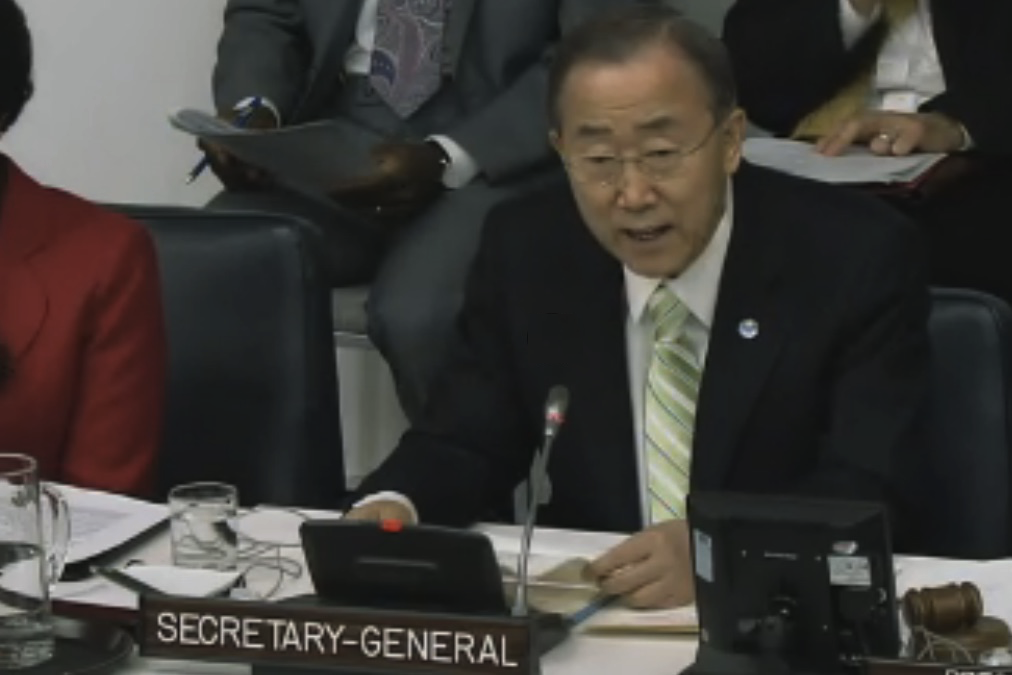
I would like to thank your Excellency, Mr. President for organizing this very important occasion for me to brief the General Assembly about my Plan of Action to Prevent Violent Extremism, and to call for a new global partnership to confront this menace.

ban ki-moon

You have had a chance to review the plan, which is the product of many months of consultations. Let me thank you for your engagement and good ideas.

I would like to make a few brief comments, but I would also like to hear from you.

Violent extremism is a direct assault on the United Nations Charter and a grave threat to international peace and security.

We are all appalled by the barbaric crimes that terrorist groups such as Daesh, Boko Haram and others are committing against humanity.

They have brazenly kidnapped young girls, systematically denied women’s rights, destroyed cultural institutions, warped the peaceful values of religions, and brutally murdered thousands of innocents around the world.

These groups have become a magnet for foreign terrorist fighters, who are easy prey to simplistic appeals and siren songs.

The threat of violent extremism is not limited to any one religion, nationality or ethnic group.
Let us also recognize that today, the vast majority of victims worldwide are Muslims.
Addressing this challenge goes to the heart of the United Nations. And it compels us to act in a way that solves – rather than multiplies — the problem.

Many years of experience have proven that short-sighted policies, failed leadership, heavy-handed approaches, a single-minded focus only on security measures and an utter disregard for human rights have often made things worse.

Let us never forget: Terrorist groups are not just seeking to unleash violent action, but to provoke a harsh reaction.

We all lose by responding to ruthless terror with mindless policy – policies that turn people against each another, alienate already marginalized groups, and play into the hands of the enemy.

We need cool heads and common sense. We must never be ruled by fear – or provoked by those who strive to exploit it.

Countering violent extremism should not be counter-productive.

My Plan of Action takes a practical and comprehensive approach to address the drivers of violent extremism. It focuses on violent extremism which can be conducive to terrorism.

It puts forward more than 70 recommendations for concerted action at the global, regional and national levels, based on five inter-related points:

Number one, we must put prevention first.

The international community has every right to defend against this threat using lawful means, but we must pay particular attention to addressing the causes of violent extremism if this problem is to be resolved in the long run.

There is no single pathway to violent extremism. But we know that extremism flourishes when human rights are violated, political space is shrunk, aspirations for inclusion are ignored, and too many people – especially young people – lack prospects and meaning in their lives.

As we see in Syria and Libya and elsewhere, violent extremists make unresolved and prolonged conflicts even more intractable.

We also know the critical elements for success: Good governance. The rule of law. Political participation. Quality education and decent jobs. Full respect for human rights.

The recent report of the High-level Panel on Peace Operations, the 2030 Agenda for Sustainable Development, the reviews of the Peacebuilding Architecture and the Women, Peace and Security agenda – as well as Security Council Resolution 2250 on Youth, Peace and Security — have all stressed that we need to make prevention work.

(article continued on the right side of the page)

Question for this article

Islamic extremism, how should it be opposed?

Readers’ comments are invited on this question and article. See below for comments box.

(article continued from the left side of the page)

We need to make a special effort to reach out to young people and recognize their potential as peacebuilders.

Through a global partnership, we need to build on the positive vision of the future that many young people are themselves constructing. The protection and empowerment of women must also be central to our response.

Second, principled leadership and effective institutions.

Poisonous ideologies do not emerge from thin air. Oppression, corruption and injustice are greenhouses for resentment. Extremists are adept at cultivating alienation.

That is why I have been urging leaders to work harder to build inclusive institutions that are truly accountable to people. I will continue to call on leaders to listen carefully to the grievances of their people and then act to address them.

Third, preventing extremism and promoting human rights go hand-in-hand.

All too often, national counter-terrorism strategies have lacked basic elements of due process and respect for the rule of law.

Sweeping definitions of terrorism or violent extremism are often used to criminalize the legitimate actions of opposition groups, civil society organizations and human rights defenders. Governments should not use these types of sweeping definitions as a pretext to attack or silence one’s critics.

Once again, violent extremists deliberately seek to incite such over-reactions. We must not fall into the trap.

Fourth, an all-out approach.

The Plan proposes an “all of Government” approach.

We must break down the silos between the peace and security, sustainable development, human rights and humanitarian actors at the national, regional and global levels—including at the United Nations.

The Plan also recognizes that there are no “one size fits all” solutions.

That is why the Plan calls for national ownership, recommending that each Member State adopt a National Plan of Action that sets priorities, such as promoting access to justice, strengthening institutions, and investing in education programmes that foster pluralism.

We must also engage all of society – religious leaders, women leaders, youth groups leaders in the arts, music and sports, as well as the media and private sector

Fifth, UN engagement.

I intend to strengthen a UN system-wide approach to supporting Member States’ efforts to address the drivers of violent extremism.

Acting within their mandates, UN missions and country teams will support Member States when developing National Plans of Action and will review their own activities.

I am also creating a UN system-wide High-Level PVE Action Group, to spearhead the implementation of this Plan at both the Headquarters and field levels.

The Plan before you builds on your own efforts and initiatives, including General Assembly resolutions on the Global Counter-Terrorism Strategy and a “World against Violence and Violent Extremism”, as well as Security Council measures, including resolutions 2178 on foreign terrorist fighters and 2253 on Daesh.

Some Member States have already pledged to help transform the Plan from ideas to reality. I look forward to the International Conference on the Plan of Action that the Swiss Government has offered to co-organize with the United Nations in Geneva in April.

Above all, the Plan is an urgent call to unity and action. The General Assembly is the only forum with the legitimacy and universality to address this problem in all its complexity.

Together, let us pledge to forge a new global partnership to prevent violent extremism.

Thank you.

Native Cultures Push For Sustainable Food Solutions

. . SUSTAINABLE DEVELOPMENT . .

An article by Carla Capalbo for Zester Daily

Six hundred representatives of native communities around the world recently gathered in Shillong, northeastern India, for Indigenous Terra Madre (ITM), an event that helps forge a global network of indigenous peoples, activists and their supporters.

indigenous terra madre
Members of Meghalaya tribes dance during the Indigenous Terra Madre gathering. Credit: Copyright 2015 Carla Capalbo

The event, under the auspices of Slow Food, takes place every four years. This ITM was held in cooperation with the Indigenous Partnership for Agrobiodiversity and Food Sovereignty (supported by the Christensen Fund) and was hosted by the Indian region of Meghalaya and the North East Slow Food Agrobiodiversity Society. Their individual stories vary but are closely linked.

Focus on food sovereignty

Chi Suwichan is a member of the Karen tribe of northern Thailand. His people have lived there for centuries, yet the current Thai government does not recognize them as citizens. Maria Bautista Leon, from the Tzeltal indigenous people of Chiapas, Mexico, and a descendant of the Mayans, is protesting the increase of monoculture and the threat of genetically modified corn in her country. Winona LaDuke, a Native American activist of the Ojibwe tribe, has led battles to save her people’s local wild rice as she fights for tribal land claims.

The focus at ITM is on environmental, biodiversity, food sovereignty and other sustainability issues linked to these communities’ way of life, many of which are increasingly under threat. Members of 140 tribes from 58 countries on five continents attended the 5-day event. Open meetings were arranged by themes, including: learning about food systems from matriarchal societies; building bridges between the private sector and indigenous communities; oral history; pastoralists and their challenges; and the future of food.

Prince Charles, who has long been a champion of these kinds of issues, sent a video message for the inauguration. “In our modern world, we are totally disconnected from indigenous knowledge,” he said. “The essential unity of things as reflected in nature has become dangerously fragmented. The modern world has shifted away from the holistic indigenous cosmology of seeing ourselves within nature to us standing apart from it. We must look after the earth and help it maintain its health and balance.” He suggests we listen to indigenous wisdom for the guidance we need to live in harmony with our planet.

(continued in right column)

Questions for this article:

What is the relation between peasant movements for food sovereignty and the global movement for a culture of peace?

Indigenous peoples, Are they the true guardians of nature?

(Article continued from the left column)

Uniting voices for change

Carlo Petrini, who founded Slow Food 30 years ago in Italy and later created Terra Madre to bring together food-making communities from all corners of the globe, also spoke at the meeting. “Our planet is suffering from the greed of those who want to steal its resources,” he began. “We hope the Climate Change conference in Paris will make constructive decisions about this disaster. Our food has lost its value. It has been turned into a commodity to be paid as little as possible for. The truth is that 500 million small household food communities feed 70 percent of the world, yet they are treated the worst of all. The large multinationals claim ownership of their seeds and promote intensive, genetically modified farming and monocultures that are destroying the lives of these indigenous food-producing communities. There can be no sustainability if we don’t change this model.”

With most delegates attending in their native dress, the get-together was colorful, musical and emotional. At large communal meals hosted by local chefs (the most memorable was an invitation to dinner for everyone at the Shillong Sikh’s Gurdwara temple), there was plenty of time for people to share stories, problems and solutions.

“My people’s history was written in song, in folk tales and by calling the mountains and rivers names in our language,” said Suwichan, one of 500,000 Karen in northern Thailand. “We used traditional natural farming, with a seven-year rotation for our rice and other crops. But since the government has declared our area a national park we are no longer allowed to practice this kind of farming, which has forced us to use chemical fertilizers. We lived in symbiosis with the forest and relied on it for wild plants and foods as we protected it. Now our forest has been designated a wildlife reserve and we are no longer allowed to take anything out of it. But they never consulted us about this, they never consulted our ancestors or our community leaders. My parents say we are now like orphan chickens, that we each have a small voice, but together with the others at ITM it may become louder.”

‘A universal language’

“As Carlo Petrini says, we need to defend our native plants and animal breeds, our flavors and methods, for they are a universal language,” LaDuke said. “We have fought to reject the patents industrial agriculture has tried to put on our indigenous varieties. Our food is pre-colonial, pre-GMO and pre-petroleum. We are part of a movement to stop the theft of our seeds and land, and the theft of our economies. We fight against the politics of those who try to oppress us, and the closer the links between all of our tribes can get, the stronger our resistance will be.”