Tag Archives: global

Bob Dylan: “Masters of War”

… EDUCATION FOR PEACE …

An article by James Albertini in Transcend

Bob Dylan was awarded the 2016 Nobel Prize for Literature. Among his many songs written over decades was “Masters of War” that included these lyrics:

dylan
Bob Dylan at Massey Hall, Toronto, April 18, 1980. Photo by Jean-Luc Ourlin in wikipedia
(Click on photo to enlarge)

    “Come you masters of war, You that build the big guns, You that build the death planes. You that build all the bombs. You that hide behind walls. You that hide behind desks. I just want you to know I can see through your masks…

    Let me ask you one question. Is your money that good? Will it buy you forgiveness.

    Do you think that it could? I think you will find When your death takes its toll

    All the money you made Will never buy back your soul…

    Not even Jesus could forgive what you do!… And I’ll stand on your grave till I’m sure you’re dead.”

Masters of War Have Names!

Top U.S. War Corporations include: Lockheed Martin Corp., Northrop Grumman Corp., Raytheon Co., Boeing Co., General Dynamics Corp., General Electric, Halliburton Co., Academi, G4S Risk Management, KBR, etc. – the list of corporate and government “Masters of War” is long, very long! [Wikipedia]

    “How many deaths will it take till we know that too many people have died? The answer my friend is blowing in the wind, the answer is blowing in the wind.”[Dylan]


Question related to this article:

IUCN Congress boosts support for Indigenous peoples’ rights

. . SUSTAINABLE DEVELOPMENT . .

An article from the IUCN (International Union for the Conservation of Nature)

Key decisions boosting support for Indigenous peoples’ rights have been adopted by IUCN State, government and civil society members today [9 September] at the IUCN World Conservation Congress taking place in Hawaiʻi.

uicn
Photo: Colectivo Siestesia – UICN América del Sur
Click on photo to enlarge

In a landmark decision, the IUCN Members’ Assembly has voted to create a new category of membership for Indigenous peoples’ organisations. This will open the opportunity to strengthen the presence and role of Indigenous organisations in IUCN – a unique membership union gathering 217 state and government agencies, 1, 066 NGOs, and networks of over 16,000 experts worldwide.

“Today’s decision to create a specific place for Indigenous peoples in the decision-making process of IUCN marks a major step towards achieving the equitable and sustainable use of natural resources,” says IUCN Director General Inger Andersen. “Indigenous peoples are key stewards of the world’s biodiversity. By giving them this crucial opportunity to be heard on the international stage, we have made our Union stronger, more inclusive and more democratic.”

“This decision is historical in that it is the first time in IUCN’s history that a new membership category has been established,” says Aroha Te Pareake Mead, Chair of IUCN’s Commission on Environmental, Economic and Social Policy (CEESP). “It also marks a turning point for the inclusion and full participation of Indigenous peoples in all aspects of IUCN’s work.

“For Indigenous peoples this provides an unprecedented opportunity to contribute to global policy on biocultural conservation, indigenous issues, traditional knowledge and the future direction of conservation as distinct peoples. I am proud of IUCN and its members for doing the right thing and enabling Indigenous peoples to speak for themselves as full members of the Union.”

IUCN Members have also called today for all protected areas to be considered as no-go areas for environmentally damaging industrial activities and infrastructure developments. IUCN Members emphasized the need for respect of Indigenous peoples’ rights as a high priority, to ensure their free, prior and informed consent in relation to activities in sacred natural sites and territories conserved by Indigenous peoples and local communities. To date, only World Heritage sites have been recognised as off limit.

(Article continued in right column)

(Click here for the Spanish version of this article or here for the French version)

Question for this article

Indigenous peoples, Are they the true guardians of nature?

(Article continued from left column)

The need for consideration of the rights of Indigenous peoples has also been emphasized as part of the decision to increase the coverage of marine protected areas in order to achieve effective conservation of the oceans.

Tomorrow IUCN Members are expected to vote on a motion related to primary forests, which highlights the role of Indigenous peoples and local communities in conserving intact forest landscapes. Ecosystems such as primary forests are vital for the protection of Indigenous cultures and livelihoods of the poorest and most marginalised communities.

Other motions important for Indigenous peoples have also been adopted on a wide range of topics.

The Members’ Assembly is the highest decision-making body of IUCN. It brings together IUCN Members to debate and establish environmental policy, to approve the IUCN Programme and to elect the IUCN Council and President.

Motions are proposed by IUCN Members every four years to set priorities for the work of IUCN. IUCN’s membership currently stands at over 1,300 and includes some of the most influential government and civil society organisations from more than 160 countries, giving the decisions taken at the IUCN Congress a powerful mandate.

Resolutions and Recommendations on important conservation issues are adopted by this unique global environmental parliament of governments and NGOs, guiding IUCN’s policy and work programme and as well as influencing many other organisations around the world.

About IUCN

IUCN, International Union for Conservation of Nature, helps the world find pragmatic solutions to our most pressing environment and development challenges. IUCN’s work focusses on valuing and conserving nature, ensuring effective and equitable governance of its use, and deploying nature-based solutions to global challenges in climate, food and development. IUCN supports scientific research, manages field projects all over the world, and brings governments, NGOs, the UN and companies together to develop policy, laws and best practice. IUCN is the world’s oldest and largest global environmental organisation, with almost 1,300 government and NGO Members and more than 15,000 volunteer experts in 185 countries. IUCN’s work is supported by almost 1,000 staff in 45 offices and hundreds of partners in public, NGO and private sectors around the world. www.iucn.org.

Boosting Renewables in Cities is Vital to Achieve Climate and Development Goals

. .. SUSTAINABLE DEVELOPMENT .. .

A press release from the International Renewable Energy Agency (IRENA)

Cities now have an unprecedented opportunity to transform and decarbonise their energy supply and use, according to a new report from the International Renewable Energy Agency (IRENA). Renewable Energy in Cities, released today [18 October] on the sidelines of the Habitat III Conference in Quito, estimates energy use in 3,649 cities and explores their potential to scale-up renewable energy by 2030. It finds that while there is no one-size fits all solution, every city has massive potential to cost-effectively boost renewable energy use at the local level.

cities
(Click on image to enlarge)

“Cities can play a transformative role in leading the world to a clean and sustainable energy future,” said Adnan Z. Amin, IRENA Director-General. “We have to rethink the entire urban energy landscape, which requires rigorous planning and holistic decision-making. Renewable energy, combined with energy efficiency, will power the future growth of cities. We must ensure this transition happens as soon as possible.”

Electricity use varies widely across cities depending on climate conditions, population density and development stage. Likewise, energy use for transport varies greatly depending on urbanisation models. Today, renewables supply only 20 per cent of this energy, but much more is possible. Renewable Energy in Cities outlines three priority areas – both in technology and in policy – where cities can take action to scale up renewables use: renewable energy in buildings (for heating, cooling, cooking, and appliances); sustainable options for transport (electric mobility and biofuels); and creating integrated urban energy systems.

Accounting for 65 per cent of global energy use and 70 per cent of man-made carbon emissions, cities must play a key role in the transition to a low-carbon economy. By highlighting best practice from cities around the world, the report shows what is possible and what policies are needed to enable the change. It also provides concrete examples of how city actors can accelerate the switch to renewable energy at the local level by acting as planners, regulators, financiers and operators of urban infrastructure.

“By 2050, urban populations are expected to double, making urbanisation one of this century’s most transformative trends,” said Mr. Amin. “Now is the time to grow with renewables, leapfrog dirty technology, and create cities of the future that people are proud to call home.”

Renewable Energy in Cities was released today in support of the United Nations Sustainable Development Goals and the Habitat III Conference taking place in Quito, Ecuador. Meeting every 20 years, this year’s Habitat Conference is focused on sustainable urbanisation. Within this context and for the first time ever, the Conference is discussing the proliferation of renewable energy as a means to achieve a sustainable urban future and common prosperity.

Download the Renewable Energy in Cities report

Question for this article:

China financing renewable energy

. .. SUSTAINABLE DEVELOPMENT .. .

Information drawn from various sources as indicated

China is playing a major role in financing renewable energy.

According to the UNEP study of Global Trends in Renewable Energy , as of 2015, China has invested $101.9 billion in renewable energy, 36% of the world’s total. The US is a distant second, at $44.1 billion.

china
New investment in renewable energy by country and asset class, 2015, and growth on 2014 – Source: UNEP, Bloomberg new energy finance
(Click on image to enlarge)

Of course, the bulk of their investment is in China itself, but their investment is also noticeable in Latin America.

According to PV Magazine, Argentina is investing US $ 340 million in three solar facilities to generate 100 megawatts each. They are being built by three Chinese enterprises: Power China, Shanghai Electric and Talseun

Also in Argentina, according to Rio Negro, the country is investing US $250 million in wind farms to be supplied by Envision Energy, a Chinese firm.

Meanwhile, in Mexico’s inaugural power auction in April, according to PV Magazine , the Chinese solar power firm JinkoSolar signed long-term power purchase agreements with Mexico’s Federal Electricity Commission for three solar projects due to produce 188 MW by April 2018. According to the Bloomberg Company JinkoSolar is one of the fastest growing companies in the world.

According to Business News Americas, almost all the major solar power module manufacturers are Chinese, while five of the top ten wind blade manufacturers are Chinese – led by Goldwind, the biggest wind turbine supplier in the world. Goldwind has said it is interested in developing manufacturing facilities in Brazil and has also supplied turbines to projects in Ecuador, Panama, Bolivia and Chile.

Looking to the future, according the the UNEP study, China’s R&D spending challenged Europe’s for the first time in 2015, each investing $2.8 billion.. In third place, the US edged up to $1.5 billion. Solar continues to dominate renewable energy R&D, with spending rising to $4.5 billion and equal to that in all the other sectors combined.

Question for this article:

You’ll never believe how cheap new solar power is

.. SUSTAINABLE DEVELOPMENT ..

An article by Joe Romm in Think Progress (abbreviated)

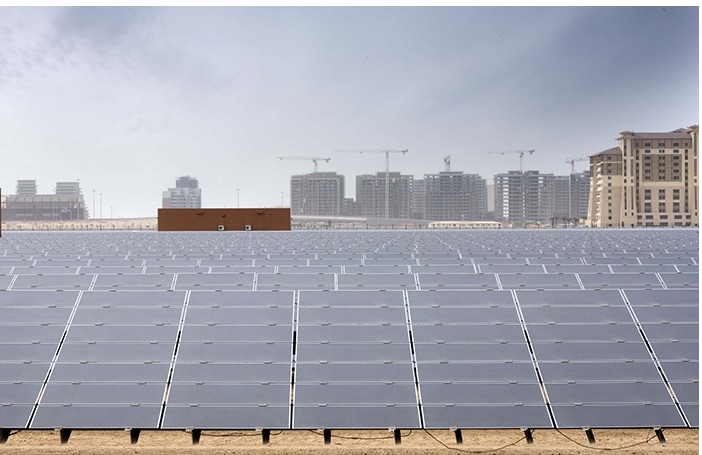
Solar energy has grown 100-fold in this country [USA] in the past decade. Globally, solar has doubled seven times since 2000, and Dubai received a bid recently for 800 megawatts of solar at a stunning “US 2.99 cents per kilowatt hour” — unsubsidized! For context, the average residential price for electricity in the United States is 12 cents per kilowatt-hour.

solar
Solar’s exponentially declining costs and exponentially rising installations
(the y-axis is a logarithmic scale).
(Click on image to enlarge)

Solar energy has been advancing considerably faster than anyone expected just a few years ago thanks to aggressive market-based deployment efforts around the globe. Since it’s hard to keep up with the speed-of-light changes, and this is the fuel that will power more and more of the global economy in the near future, here are all the latest charts and facts to understand it. If you are looking for one chart to sum up the whole solar energy miracle, Bloomberg New Energy Finance (BNEF) Chairman Michael Liebreich has one from his keynote address at BNEF’s annual conference in April titled “In Search of the Miraculous” [see chart above]:

Thanks to sustained long-term deployment programs, Liebreich explained, “We’ve seen the costs come down by a factor of 150 since 1975. We’ve seen volume up by 115,000.” “How much more miracle-y do you need your miracles to be,” Liebreich added.

What that chart doesn’t reveal is that the price drop and the sales volume increase are directly linked. There is a learning curve: Over the past four decades, for every doubling in scale of the solar industry, the price of solar modules has dropped roughly 26 percent. . .

BNEF projects that by 2040, the world will invest an astonishing $3.4 trillion in solar. That’s more than the projected cumulative investment of $2.1 trillion for all fossil fuels — and $1.1 trillion in new nuclear — combined.

The result of these investments and the continued learning by solar (and wind) makes “these two technologies the cheapest ways of producing electricity in many countries during the 2020s and in most of the world in the 2030s. . . ”

This year we learned “City of Palo Alto considers solar power contract at under $37/MWh.” Bloomberg reported last week that “Berkshire Hathaway Inc.’s NV Energy agreed to pay 3.87 cents a kilowatt-hour for power from a 100-megawatt project that First Solar Inc. is developing.”

It is worth remembering that U.S. solar power bids include the 30 percent Investment Tax Credit. According to one analysis, NV Energy’s “$.0387/kWh would potentially turn into about $.07/kWh if we backed out the 30% Federal Tax Credit and 60% depreciation in Year One.”

The bids seen around the world this year without subsidies or incentives are even more stunning. Dubai Electricity and Water Authority (DEWA) received a bid this year for 800 megawatts at a jaw-dropping “US 2.99 cents per kilowatt hour.”

Two other bids were below US 4 cents/kWh, and the last two bids were both below 4.5 cents/kWh — again all of these bids were without subsidies!

That 2.99 cents bid is way down from a 2015 deal Dubai signed for more than 1000 megawatts at 5.84 cents over 25 years. So Dubai has seen a 50 percent price drop in solar in just 18 months.

(Continued on right side of page)

Question for this article:

Are we making progress in renewable energy?

(Article continued from left side of page)

And these prices aren’t unique to the Middle East. As Bloomberg New Energy Finance reported in April, Enel Green power signed a contract for $.036/kWh in in Mexico — 3.6 cents.

With prices dropping so fast, sales of solar PV [photovoltaic] systems have been soaring, as you can imagine.

From 2005 through 2015, annual PV sales in this country went up 100-fold! And projections suggest that solar sales may double this year, driven by Congress’s five-year renewal (with phase-out) of the solar Investment Tax Credit (ITC). . .

The solar miracle has been driven by major state, national, and international policies. BNEF Chair Liebreich calls this “The March of the Price Signal” — the rapid expansion of global deployment programs, especially market-based mechanisms such as renewable portfolio standards and reverse auctions.

Unfortunately, other countries have had bigger and more reliable deployment programs whereas our erratic policies generally diminish or disappear whenever and wherever conservatives assume control. In the past decade in particular, massive government-led deployment policies in China and Germany have been a major driver of the world’s stunning price drop.

The good news is that solar power in this country has a very bright future, thanks to the renewal of the ITC. By one recent projection, the U.S. could hit 100 gigawatts total installed capacity by 2021. That said, India also plans to hit 100 gigawatts by 2022.

China, however, plans to triple solar PV capacity to 150 gigawatts installed by 2020! So the race is definitely on.

No wonder the International Energy Agency concluded last fall: “Driven by continued policy support, renewables account for half of additional global generation, overtaking coal around 2030 to become the largest power source.”

The ‘Other’ Form Of Solar Energy, Which Can Run At Night

Earlier this month, I wrote about the “other” form of solar, concentrating solar thermal power, which uses sunlight to heat water and uses the steam to drive a turbine and generator. That heat can be stored over 20 times more cheaply than electricity — and much more efficiently — so CSP [Concentrated Solar Power] can provide power long after the sun has gone down.

Now that China appears to be placing a large bet on solar thermal electric, it seems likely CSP will also start coming down the learning curve, which will help it increase sales, which in turn will keep it coming down the learning curve — a virtuous circle that PV is already benefiting from.

The 2014 STE Technology Roadmap from the International Energy Agency (IEA) projected that while PV could generate 16 percent of the world’s electricity by 2050, as much as 11 percent could be generated by STE [solar thermal energy] at the same time.

Given how fast solar PV has been coming down in price — and given the world’s commitment in Paris last December to keep ratcheting down carbon pollution in the coming decades to keep total global warming “well below 2°C” — it seems entirely possible if not likely that solar power will outperform the IEA’s scenario.

Indeed, it’s precisely because clean energy has been moving at the speed of light that “almost everything you know about climate change solutions is probably outdated,” as I’ve been detailing for months. Stay tuned to this channel for more surprises.

(Thank you to Janet Hudgins, the CPNN reporter for this article.)

Countries Adopt Kigali Amendment to Phase Down HFCs

. . SUSTAINABLE DEVELOPMENT . .

A blog by David Doniger and Alex Hillbrand for the Natural Resources Defense Council (NRDC)

At 6:55 on Saturday morning [October 14], more than 140 countries sealed a landmark deal, called the Kigali Amendment, to phase down the powerful climate-warming pollutants called hydrofluorocarbons (HFCs) under the Montreal Protocol, the treaty that saved the ozone layer.

nrdc
Source: Guus Velders, RMI, reprinted by NRDC by permission
(click on image to enlarge)

Almost ten years after NRDC and others first proposed amending the Montreal treaty to curb HFCs, countries reached a deal that will avoid rampant growth in these dangerous chemicals, eliminate most current uses over time, and replace them with a new generation of alternative chemicals and products that are climate-friendlier and more energy-efficient.

The HFC agreement establishes timetables for all developed and developing countries to freeze and then reduce their production and use of HFCs, chemicals used in air conditioning, refrigeration, insulating foams, and other applications.

HFCs are the fastest growing climate pollutants, and they pack hundreds to thousands of times the climate-warming punch of carbon dioxide, pound for pound. Scientists estimate that HFCs could add up to 0.5° Celsius to global temperatures by century’s end if their growth is not checked, dooming our chances to meet the Paris Climate Agreement’s target of holding warming below 2.0°Celsius.

But the new agreement will avoid this disaster. A new analysis by Dr. Guus Velders and colleagues projects that the Kigali amendment will avoid nearly 90 percent of the temperature increase that HFCs could have caused.

NRDC estimates that the agreed HFC phase-down will avoid the equivalent of more than 80 billion tons of CO2 over the next 35 years. (This includes controls on emissions of HFC-23 emissions occurring as a byproduct of HCFC-22 production, which also was agreed in Kigali.)

This is equivalent to knocking out the entire planet’s fossil-fuel CO2 emissions for more than two years.

(Interview continued in the right side of the page)

Question for this article:

Despite the vested interests of companies and governments, Can we make progress toward sustainable development?

(Interview continued from the left side of the page)

This is the biggest step to protect against catastrophic climate change that countries have taken in the year since the landmark Paris agreement.

The HFC phase-down will trigger further reductions in CO2 emissions from power plants because more efficient air conditioners and other equipment will require less electricity.

Under the amendment, developed countries agreed to make their first HFCs cuts by 2019; in fact, the U.S., the European Union, and other countries have already started. Developed countries will also take the lead in bringing climate-friendly, energy-efficient alternatives to market.

China, Brazil, South Africa, Argentina, and more than 100 other developing countries committed to freeze their HFC production and use by 2024, and reduce in subsequent steps. India, Gulf States, and Pakistan agreed to make HFC reductions on a slower track, starting with a freeze in 2028 (three years earlier than India had originally proposed).

Developed nations committed to provide additional funds through the Montreal Protocol’s Multilateral Fund to support developing countries in achieving their commitments. The agreement also opens the door for countries that choose to move faster to benefit from early MLF funding, and for the MLF to support energy efficiency improvements alongside the reduction of HFCs.

While funding for the MLF’s next three-year cycle will be negotiated next year, developed country parties have pledged new funding to support developing countries’ adoption of alternatives. A group of countries pledged to provide an additional $27 million in “fast start” financing for next year, and this will be matched by $53 million from a coalition of 19 philanthropies, for a total of $80 million.

U.S. Secretary of State John Kerry, speaking to the plenary Friday afternoon, urged countries to deliver an ambitious agreement and to bet on the future of clean energy technology, noting that “ten years in this world of technology is a lifetime – many lifetimes, in fact.”

So, on a warm Kigali night in October, the Montreal Protocol that saved the ozone layer has taken on its shoulders the responsibility to help solve the global climate crisis. If this treaty succeeds as spectacularly as before, tonight will mark a major turning point in the fight to keep our planet safe for generations to come.

Pangolins, elephants win big protections at United Nations wildlife gathering

.. SUSTAINABLE DEVELOPMENT ..

An article from Humane Society International

There’s mostly good news, but also some disappointing outcomes, coming from Johannesburg and the meeting of delegates from 183 nations at the Convention on International Trade in Endangered Species of Wild Fauna and Flora (CITES). In a marker of continuing momentum for our anti-ivory-trade campaign, the parties have approved a resolution recommending the closure of domestic ivory markets that contribute to poaching and the illegal ivory trade. This is the first time that a United Nations body has agreed on the urgency of shutting down ivory markets worldwide, and the resolution comes in the midst of a dramatic rise in poaching and the illegal wildlife trade. Legal markets have served as a convenient cover to launder illicit ivory and to perpetuate market demand, and there is no excuse to permit these markets.

wildlife
The parties rejected a proposal to allow limited international trade in rhinoceros horn. Bob Koons

Sign the pledge: Don’t Buy Wild!

The delegates have also recommended that all eight species of pangolins, the world’s most trafficked mammals, should be given the highest protection under Appendix I. Pangolins are covered by keratin scales, and these and other body parts are used in medicines and tonics in some Asian and African countries. The United States imports tens of thousands of pangolin products every year, which find their way into markets around the country, including in Oregon where The HSUS is working to pass a measure protecting 12 types of animals affected by the global poaching epidemic, including elephants, sea turtles, and pangolins. HSI led the fight at CITES for the pangolin proposal.

The parties to CITES also rejected a proposal from Swaziland to allow limited international trade in rhinoceros horn, which could have had potentially disastrous consequences for the remaining global rhino populations. The proposal would have legitimated rhino horn as a commodity, increasing demand in consumer countries, complicating enforcement, and opening a loophole through which horns from poached rhinos could be laundered into the legal trade. This proposal would have also undermined the commendable efforts undertaken by consumer countries to reduce demand for rhino horn, as exemplified by HSI’s demand reduction education campaign, waged in cooperation with the government of Vietnam.

Three other big wins today were the recommendations to list silky sharks, thresher sharks, and devil rays on Appendix II of CITES, which would provide protections for these species from overexploitation for international trade. These two species of shark are in decline due to finning and overfishing, and devil rays are being increasingly targeted for their gill plates, which are virtually indiscernible from manta ray gill plates, a species already protected under CITES.

(Continued on right side of page)

Question for this article:

What is the relation between the environment and peace?

(Article continued from left side of page)

Besides these victories, we have helped secure greater protections for Barbary macaques, African grey parrots, and 56 species of reptiles. African grey parrots are one of the most widely traded birds for the exotic pet trade. Although many are bred in captivity, up to an estimated 18,000 greys are removed from the wild each year, mainly in the Democratic Republic of Congo. As a result, wild populations have declined by as much as 49 percent in the past 47 years. CITES has recommended an Appendix I listing for this species, which will stop international commercial trade in these wild birds. Fifty-six species of reptiles that are traded in the exotic pet trade were recommended for new or increased CITES protection, including Central America’s arboreal alligator lizards, African pygmy chameleons, Vietnam’s psychedelic rock gecko, Tanzania’s turquoise dwarf gecko, Madagascar’s Masobe gecko, the Borneo earless monitor lizard, and the crocodile lizard of Vietnam and China.

Our CITES team also fought back against a proposal from Canada to reduce protection for the peregrine falcon. The proposal sought to permit commercial trade in the wild birds who are very popular for the falconry trade throughout the Middle East.

But while the delegates at CITES agreed to close domestic ivory markets, they failed to recommend that the African elephant receive the highest level of international protection under Appendix I. The proposal, which would have prohibited all international commercial trade in African elephant body parts, failed to garner enough votes. We are especially disappointed that the United States opposed this upgrading, a stance somewhat inconsistent with its prior good works and its declarations on elephant protection.

In a second disappointing outcome, the parties did not agree to list all African lions on Appendix I. There might be fewer than 20,000 of these lions left in the world. The marginal action they did take will prohibit countries like South Africa, Namibia, Zimbabwe, and Tanzania from selling parts of wild lions, but it won’t prevent trophy hunters from killing lions and shipping them back to the hunter’s home country. Fortunately, for 2016, the United States suspended imports of all lion trophies. The CITES decision also won’t stop the international commercial trade in lion bones from cruel lion farming operations, such as those in South Africa, which offer canned lion hunting, cub petting, and lion walks.

The United States is a top destination for wildlife products, and our work here is aligned with global conservation priorities. We have helped shepherd passage of groundbreaking laws in several states to help combat the illegal wildlife trade, as well as push for strong federal rules. But this is a problem that also requires nations throughout the world to take action. That’s why CITES is such an important gathering, and it’s why our HSI team members are fighting for animal friendly measures and fighting off threats that would imperil animals in even more dramatic ways. Become a Wildlife Defender.

(Thank you to Janet Hudgins, the CPNN reporter for this article)

Catholic institutions around the world announce they are divesting from fossil fuel extraction, marking the largest faith-based divestment announcement

.. SUSTAINABLE DEVELOPMENT ..

An article from 350.org (reprinted in accordance with the “mission of building a global movement to solve the climate crisis”)

Today (October 3), on the Feast of St. Francis of Assisi, Catholic institutions and communities from all over the world celebrated the culmination of the month-long Season of Creation with the largest joint announcement of their decision to divest from fossil fuels.

catholic

The Catholic communities committing to switch the management of their finances away from fossil fuel extraction include: The Jesuits in English Canada; the Federation of Christian Organisations for the International Voluntary Service (FOCSIV) in Italy; the Presentation Society of Australia and Papua New Guinea; SSM Health in the United States; the Diocese of the Holy Spirit of Umuarama in the Brazilian state of Paraná; the Missionary Society of St. Columban, based in Hong Kong and with a global presence in 14 countries; and the Salesian Sisters of Don Bosco – Daughters of Mary Help of Christians in Milan and Naples (Italy).

Commitments range from divesting from coal, as is the case of the US healthcare institution SSM, to redirecting the divested funds into clean, renewable energy investments, as FOCSIV has announced. As for the Brazilian Diocese of Umuarama, it is both the first diocese and the first Latin American institution to commit to divest from fossil fuels; the Diocese is taking steps to become low-carbon and is part of COESUS, a coalition fighting fracking in Latin America.

(Continued on right side of page)

Question for this article:

Divestment: is it an effective tool to promote sustainable development?

(Article continued from left side of page)

The fossil fuel divestment movement was acknowledged during the presentation of Pope Francis’s message on the World Day of Prayer for Creation by Cardinal Peter Turkson, president of the Pontifical Council for Justice and Peace, when he pointed out that Pope Francis suggests that “social pressure—including from boycotting certain products—can force businesses to consider their environmental footprint and patterns of production. The same logic animates the fossil fuel divestment movement.”

Major Orthodox, Catholic, Protestant, and Anglican organizations came together between September 1st (World Day of Prayer for Creation) and October 4th to observe the Season of Creation, calling on the 2.2 billion Christians worldwide to pray and take action to care for the Earth.

The urgent need to stop all new fossil fuel infrastructure was highlighted by a recent report which found that the potential carbon emissions from the oil, gas and coal in the world’s currently operating fields and mines would increase our planet’s temperature beyond 2°C by the end of this century, and even with no coal, the reserves in oil and gas fields alone would cause warming beyond 1.5ºC.

The campaign to divest from fossil fuels is the fastest growing divestment campaign in history, according to  a report by the University of Oxford. Up to date, nearly 600 institutions worth over $3.4 trillion globally have announced divestment commitments.

This is the latest in a row of recent announcements involving faith communities and climate change. Earlier this month, it was announced that over 3,000 UK churches had switched or planned to move to green energy in 2016; Morocco, where COP22 will gather this December, will give 600 mosques a green makeover by March 2019:  in September, the Indian government asked ashrams to invest in solar power; and just last week the Anglican Church of Southern Africa passed a motion during its provincial Synod to divest from fossil fuels.

(Thank you to Janet Hudgins, the CPNN reporter for this article)

Celebration of the International Day of Peace around the world

FREE FLOW OF INFORMATION

A survey by CPNN

We found 182 events in 85 counties for the International Day of Peace listed in “Google News” during the week of September 17-24 under the key words for the International Day of Peace in English, French, Spanish, Portuguese, Russian, Ukrainian and Arabic. We may assume that that there were articles in other national languages that are not listed here. For details, click on one of the following seven regions listed after the map.

world map idp
For details of the map, click here and then enlarge by repeatedly clicking on the “+” sign of the map enlargements.

As you can see from the preceding map, the events were rather evenly spread around the world. For maps by region and details about events, see the following.

From Canada and the United States there were articles about 38 events in 6 Canadian provinces and 30 US states in addition to over 600 actions organized by the Campaign Nonviolence.

From Africa there were articles about 16 events in 15 countries.

From the Arab states there were articles about 14 events in 11 countries.

From Asia there were articles about 22 events in 11 countries.

From Western Europe there were articles about 29 events in 8 countries.

From Russia and the Ukraine there were articles about 24 events.

From Latin America and the Caribbean there were articles about 39 events in 14 countries.

An analysis of the data is provided in this month’s CPNN bulletin.

(Survey continued in right column)

Question for this article

What has happened this year (2016) for the International Day of Peace?

(Survey continued from left column)

In addition to local and national events, there were major international mobilizations for the International Day of Peace.:

At the United Nations , the Secretary-General celebrated the Day in the Peace Garden at United Nations Headquarters by ringing the Peace Bell and observing a minute of silence. Women Nobel Peace Prize laureates and the United Nations Messengers of Peace were invited to participate in the ceremony. And the United Nations Education Outreach Section hold a global student videoconference.

The African Union represented all of its countries in its campaign for “silencing of the guns” by 2020, while CEDEAO called for the women of West Africa to establish a durable peace in that region.

Choirs with a million singers around the world were said to have taken part in One Day One Choir to send a message of peace and unity on International Day of Peace.

Mayors and activists from around the world took part in an International Forum of ‘Mayors for Peace.

Peace One Day 2015

FREE FLOW OF INFORMATION

Excerpts from the report of Peace One Day

The Peace One Day 2015 Report found that in 2015, around 10% of the world population was aware of peace day and its activities. An estimated 1.5 billion people were exposed to Peace Day messages through activities ranging from dances to media campaigns

peaceoneday
A frame from the Peace One Day Video

2015 media campaigns:
Close to 130 million individuals were made aware of Peace Day through collaborative social media campaigns – the UN’s #ForgiveforPeace and USIP’s #PeaceDayChallenge initiatives had 2 billion impressions.

2015 faith groups:
Religious bodies and leaders, including the Catholic Church, the World Council of Churches, the Organization of Islamic Cooperation, Sri Sri Ravi Shankar, the World Jewish Congress, HH Dalai Lama, Sri Karunamayi, and United Sikhs made over 300 million people aware.

2015 government & UN:
6 million people were made aware through government & UN activities, including the African Union’s Make Peace Happen campaign, and programmes across different UN agencies.

2015 corporate activities:
Corporate activities made close to 170 million aware. Burger King’s McWhopper Peace proposal to McDonald’s generated close to 9 billion impressions and was the single highest contributor towards generating awareness of Peace Day in 2015. Other majorcampaigns included Google’s homepage feature, and Coca-Cola’s Peace Day Anthem ONE.

Iconic monuments across the world were turned into art installations, including the Kunsthistorisches Museum in Austria, the Pyramids in Egypt, the Olympic Stadium in China, and Museu Oscar Niemeyer in Brazil.

In partnership with Zumba Fitness Headquarters in Miami, the #Dance4Peace campaign produced over 600 videos across 67 countries

Question for this article