Tag Archives: global

Executive Director remarks at the UN Security Council open debate on women, peace and security

. WOMEN’S EQUALITY .

An article from UN Women

Under-Secretary-General of the United Nations and Executive Director of UN Women, Phumzile Mlambo-Ngcuka presented the Secretary-General’s report on women, peace and security to the UN Security Council on 25 October, in New York.

Date: Thursday, October 25, 2018
(As delivered)

It is an honour to address the Security Council and to present the Secretary-General’s report on women and peace and security. I thank Bolivia for all the support they have given us in preparing for this debate

This report is a loud alarm bell on systemic failures to bring women into peacemaking in a meaningful manner.

The trend is, women are being excluded from the peace processes. The ones who do not wage war seem to be disqualified from making peace, while those who may be implicated in making war, seem to find it easier to be at the peace tables. 

I together with DPKO, have just come back from a joint UN/AU mission to South Sudan. The women we met there told us how they long for peace and to resume their lives, after nearly five years of suffering from a civil war that they are not responsible for waging. They said, “we are here because we want to reconcile even though we have never quarreled.”

While they still fear for the future, they appreciated the ‘Revitalized Agreement’ on the resolution of the conflict, which offers new hope for the country and an unmissable opportunity to build peace, with a 35 per cent quota for the representation of women. 

Their fears are however bolstered by the fact that, in these early days of the revitalized agreement, in the National Pre-Transitional Committee – there is just one woman among the ten persons nominated to be members of the committee, this is not the agreed 35 per cent. 

The report today details inescapably how this is not an exception but the rule. How there is at the same time hope for progress, and how we are failing to make it a reality.

But hope is something that we cannot and must never lose.
It shows us undeniable possibilities with undeniable failures, which are costing the lives of women and girls.

They do not wage war, but they die and suffer from it.
A year ago in this chamber, I raised the alarm at the numbers shown by the indicators we track yearly on peace processes and mediation.

Today I want to raise the alarm once more with the hope to jolt us into greater action, as indicators show numbers have stagnated or dropped again. 

For that reason, we focused this year’s report on the need for women’s meaningful contribution to peace, and we call on you to take the much-needed concrete actions. 

We need you to be vigilant about ending superficial efforts to include women that do not genuinely extend the opportunity to influence outcomes. 

We wanted to show that the extreme political marginalization at peace tables is often worse in the institutions set up to implement those agreements. 

And we wanted to spotlight the many ways in which women are keep on being active and resilient. They are active in negotiating ceasefires, civilian safe zones, demobilization of fighters, or humanitarian access at the local level, or drawing up protection plans at the community level, like in Syria, Yemen, Afghanistan or the Central African Republic. 

We want the UN membership to pay due attention to these dynamics, make them visible in forums like this one, and use them to support the women’s political agency, provide financial resources and enable women to do even more.

The continued tolerance for the limited recognition of women’s expertise and lived experience is a setback for all of us. Statistics on women’s involvement speak for themselves.

Between 1990 and 2017, under our watch, women constituted only two per cent of mediators, eight per cent of negotiators, and five per cent of witnesses and signatories in major peace processes. Only three out of 11 agreements signed in 2017 contained provisions on gender equality, continuing last year’s worrisome downward trend. Of 1,500 agreements signed between 2000 and 2016, only 25 raise the role of women’s engagement in the implementation phase.

In Yemen, current efforts at resuming dialogue do not include women, beyond setting up observer bodies to advise the UN Special Envoy. Even in a consultative meeting in London this summer organized by the UN, convening 22 prominent Yemeni leaders to discuss the peace talks, there were only 3 Yemeni women invited.

In Mali, women average a dismal three per cent of the membership of the multiple national committees set up to monitor and implement the peace agreement.

In the Central African Republic, mediation efforts are focused on the presidency and the 14 armed groups and exclude women altogether.

In Afghanistan, the government and its international partners invest efforts in including women in the High Peace Council and provincial peace councils, but when it comes to actual talks with the Taliban, women’s absence is noticeable.

Undeniably, there are possibilities, but also undeniably there are failures and determined women.

In 23 rounds of Afghanistan-Taliban peace talks between 2005 and 2014, women were at the table just twice. Now that there are offers to resume peace talks without pre-conditions, Afghan women peacebuilders want to be at the table and want to make a difference.

Finally, here is a number that is more positive. Security Council decisions about country-specific or regional situations that contained language on women, peace and security increased from 50 to 75 per cent. This must lead to increased action on the front lines. 

The number of women leaders and civil society representatives who briefed the Security Council also increased significantly. 

I thank Council members for these efforts and their continued participation in the Informal Experts Group on Women, Peace and Security, currently co-chaired by Sweden and Peru, in collaboration with the United Kingdom. 

But we need to use all available diplomatic channels and political influence to ensure that these decisions in New York are making a difference on the ground. This is simply not happening in the most meaningful way.

The bigger picture of gender inequality in conflict and post conflict countries is something we need to continue to watch.

Today’s report gives us a broad picture of the many remaining areas of challenge to reach equal representation of women in the vital processes of our nations.

For example, only 16 per cent of parliamentarians in conflict and post-conflict countries are women – same as last year, and the year before that. 

There is 20 per cent representation of women in countries that use quotas and just 12 per cent in countries that do not use quotas. It is for that reason that we appreciate the leading from the front demonstrated by our Secretary-General and call for special measures in the manner in which he is driving the parity process within the United Nations.

This Council just visited the Democratic Republic of Congo ahead of crucial elections. Only 12 per cent of registered candidates are women, just like in the previous elections seven years ago. And women are suffering intimidation.

Of the 17 countries that have elected a woman head of state or government, none are post-conflict countries at this point.

I ask again, as I did last year, we need to heed the call and address the patterns these numbers show us. On our part we will continue to follow up with you on to address this situation with vigilance and make a significant difference.

(continued in right column)

Question for this article

Does the UN advance equality for women?

Prospects for progress in women’s equality, what are the short and long term prospects?

(continued from left column)

It is not only women whose opportunities are being limited. In many conflict settings, girls are one and a half times more likely to be out of primary school and whole communities are set back. The numbers of children lacking education in conflict areas calls for a concrete response and solution, with schools and second chance education.

Child marriage rates are also affected by war. In Yemen, the rate of child marriage was 66 per cent in 2017. It was 52 per cent last year. And 32 per cent before the recent conflict erupted.

Unsurprisingly, but tragically, maternal mortality rates are almost twice the global ratio in conflict and post-conflict countries. Of the 830 women and adolescent girls who die every day from causes related to pregnancy and childbirth, 507 die in countries that are considered fragile because of conflict and disaster.

To address these issues and support the regeneration of families and communities, we need strong and targeted investments in women in conflict areas.

This is just not happening enough, despite undeniable goodwill towards the women peace and security agenda in countries that are affected.

The clear gender inequality in women’s access to resources is not simply caused by the presence of conflict. It is also a reflection of non-prioritization of women’s needs and the relegation of women to small-scale and local peripheral initiatives. 

In the Sahel, where we visited with Deputy Secretary-General, the African Union and Minister Wallstrom, we saw the dire poverty of women and communities in the Lake Chad basin. 

We saw households with no electricity in a part of the world which has the highest penetration of the sun on earth and is more suitable than anywhere else in the world for sustainable energy generation from solar power.

Yet clinics lack power. Women have no cold storage for their fish and the fresh produce needed for food security—which contributes in some cases even more to peace than the military.

In conflict-affected countries, only 11.5 per cent of landholders are women.

Although bilateral aid to promote gender equality in fragile country situations rose by 17 per cent compared to the previous year, it still only amounts to five per cent of total bilateral aid spent on programmes with gender equality as the primary objective.

In the DRC, for example, aid from OECD-DAC to gender equality was only 8 USD per capita last year. The same year, the UN documented a 56 per cent increase in sexual violence.

The share of the aid channeled through non-governmental women’s organizations has stagnated.

Our financial commitments do not match the extent to which we rely on these groups.

Yes, there has been undeniable progress, because the actions undertaken with civil society continue to be favoured as a way to operate. This must turn into concrete action and better investment in these groups.

Civil society and women’s organizations have been failed in the midst of record-breaking numbers of side events at intergovernmental meetings. Our plea is to refocus our energies and resources. I believe there is goodwill and we all want what is best for women and girls.

While we have disappointing indicators on women and girls, global military spending has reached 1.74 trillionUSD, a 57 per cent increase since 2000. Some countries allocate more public money to the military than to education or health.

Ninety per cent of grassroots women’s organizations working in areas directly impacted by terrorism and violent extremism state that current counterterrorism measures have an adverse impact on work for peace, women’s rights and gender equality.

We must respond to the many violations against the human rights of women and girls within these groups, and to the social stigma, economic hardship and discrimination women and girls experience when returning to their homes and communities when they have been part of violent groups.

These challenges are best addressed by actions that protect and promote the rights of victims and are fundamentally based in human rights law.

Women human rights defenders, who are on the front lines, are fighting a lonely battle. Many die a lonely death from weapons that are meant to protect them.

Let us look ahead with hope, and the knowledge of what we are capable of together.

This includes what we can do with women such as the African Women Leaders Network, which has been given a boost by the support of Germany and has focal points already in more 30 African countries.

We are already gearing up for the 20th anniversary of Security Council resolution 1325, which will be an opportunity to shape the agenda for the next decade with new commitments and priorities.

We have to start now to gear up towards better results.

We need more positive signs such as those I saw in Somalia where we need to help accelerate positive change.

There will be opportunities for everyone to weigh in, including at next year’s meeting of the Women, Peace and Security Focal Points Network in Windhoek, Namibia, which will carry a special symbolism for those that have been in this movement for a while. 

For now, I want to share three priorities for 2020.

This August, the world mourned the loss of Kofi Annan. Part of his legacy was that the UN debated and decided to stop supporting peace agreements that included blanket amnesties. I think that, two decades later, it is time for the UN to have a similar conversation about supporting, brokering and paying for peace negotiations that exclude women. This is in your hands. This was raised by women from civil society at the forum this Council was invited to earlier this week, at the initiative of Sweden.

Secondly, one of the many positive examples in the report is the UN Peacebuilding Fund’s steadily growing support to projects advancing gender equality and women’s empowerment.

Finding ways to make the 15 per cent minimum target a reality across all relevant entities and other peace and security funds is a point we can all focus on. Joint programming on rule of law in conflict and post-conflict countries, and addressing educational and Economic resilience, or multi-partner trust funds in fragile settings, should be at the start of all conversations about financing.

And finally, we need to do much more to protect women activists, peacebuilders and human rights defenders in conflict-affected countries. We applaud the historic participation of a Palestinian woman representing civil society in addressing this Security Council for the first time. 

We commend the Nobel Committee’s recognition to Denis Mukwege and Nadia Murad for their advocacy on behalf of victims of wartime sexual violence. It is an example of the importance of this issue, to which my esteemed colleague SRSG Pramila Patten devotes all her time and energy. 

I met many exceptionally courageous women in my recent travels to Somalia, South Sudan, the Sahel and the Rohingya refugee camps in Bangladesh.

Many of them are here today. But many could not be here. 

In 2017, half of the women honoured in the annual tribute of the Association for Women in Development were murdered in conflict affected countries. 

But the list is much longer when we include women political leaders, journalists, justice actors and security sector personnel, and those perceived to be LGBTI or who challenge traditional gender roles simply by their involvement in public life. 

It is my strong wish that we will find the political will to do much more about this epidemic of killings of women over the next decade than we have in this past one.

Change is within our hands. Let us work for positive indicators for the next report and let us make sure that next Secretary-General’s report will be able to show that we are turning the corner.

Thank you.

GAPMIL gives Global Media and Information Literacy Awards 2018

FREE FLOW OF INFORMATION

An article from UNESCO

he UNESCO-linked network called the Global Alliance for Partnership on Media and Information Literacy (GAPMIL) presented the third edition of its Global Media and Information Literacy Awards this week.

The network recognised Ms Jane Tallim and Ms Cathy Wing of MediaSmarts in Canada, Jordan Media Institute in Jordan, Mr Hemmo Bruinenberg in the Netherlands, and the Autonomous University of the State of Morelos, Mexico.

The network recognised Ms Jane Tallim and Ms Cathy Wing of MediaSmarts in Canada, Jordan Media Institute in Jordan, Mr Hemmo Bruinenberg in the Netherlands, and the Autonomous University of the State of Morelos, Mexico.

The Awards ceremony was held at the Opening Session of the Global MIL Week 2018 Feature Conference in Kaunas, Lithuania.

Jane Tallim and Cathy Wing of MediaSmarts received the top prize. They have been central to MIL in Canada since they joined MediaSmarts in 1995. They both served as co-executive directors from 2008-2018. During that time, they were responsible for Young Canadians in a Wired World, one of the world’s largest and longest-running research projects on youth and the Internet. They also developed the resource, Use, Understand and Create: A Digital Literacy Framework for Canadian Schools.

Under Jane and Cathy’s leadership, MediaSmarts has also contributed to the adoption of media and information literacy in Canada by advising on curriculum and by training teachers, both personally and through the creation of self-directed professional development materials.

There was a tie for the second place of the GAPMIL Global MIL Award 2018 between the Jordan Media Institute and Hemmo Bruinenberg from the Netherlands.

In partnership with UNESCO and the European Commission, Jordan Media Institute launched a project to integrate MIL into Jordan’s schools and universities and raise awareness among the public in 2016, and has been actively engaging decision makers in advocating for MIL and succeeded in including MIL in national strategies on youth and combating extremism and violence at universities.

(Article continued in right column)


Question related to this article.

Is Internet freedom a basic human right?

(Article continued from left column)

Through this partnership, JMI trained 74 teachers and professors and 390 students from eight public schools and two universities. Some of the teachers and students have set up MIL Clubs for students in grades 7-9.  The JMI team drafted six documents that were based on UNESCO MIL literature including a policy paper and syllabus for schools and textbook for universities. They also succeeded in encouraging the University Al Al-Bayt to introduce MIL course this fall.
 
The other winner of the second prize, Hemmo Bruinenberg introduced a visual literacy project called Ithaka Film Festival led by his organization the Video Bakery and the Ithaka International Transition Classes. Over a three-day period, immigrant and refugee students make their own film with professional equipment from extensive research to the media creation and production.

Students not only work on media and information literacy skills, but also as social skills, empowerment, Dutch language and therefore facilitating their integration in Dutch society. The Ithaka Film Festival shows how a media and information literacy project can contribute to the development of skills among a vulnerable group of young students, and how MIL can be integrated in secondary school education in a sustainable way. The project promotes tolerance and cultural equality a better representation in Dutch society.

According to Alton Grizzle, the UNESCO Programme Specialist with responsibility for UNESCO global actions on MIL, “recognition by GAPMIL motivates, stimulates, and appropriates the sharing of MIL experiences and knowledge.” He continued: “When the hard work and innovation of actors in the MIL is celebrated by the community, this creates new MIL champions.”

The third place for the GAPMIL Global MIL Awards goes to the Autonomous University of the State of Morelos (UAEM), Mexico. UAEM initiated a Massively Open Online Course (MOOC) aimed at promoting information literacy to fight disinformation. The University is using e-learning and ICT to meet not only the needs of its students and educators, but also of the wider society in Mexico and in the Spanish Speaking part of the world.

A total of 2,775 participants registered in the first edition of this MOOC and it has potential for future editions. It educated people to develop competences as critic and reflective news consumers, and to promote harmonic interactions in social media. All content for the MOOC is originally produced by e-UAEM, and this course is part of the university’s Digital Culture Programme.

The UNESCO-led GAPMIL is a network of networks that promotes international cooperation to ensure that all citizens have access to media and information competencies. It currently has over 500 member organizations (including other networks) from over 110 countries.


Song for Peace: For the Children

EDUCATION FOR PEACE .

Special to CPNN

Dear Culture of Peace News Network,

I recently released the enclosed song For The Children. In this song children sing for peace; I believe it can have an impact on the mission of peace in the world.

I would like to donate the use of the song and would like to inquire whether it would be possible to incorporate it into your platform?

Here are the lyrics and a link to the song on Sound Cloud.

Sincerely,
Kim Maerkl

Atlantic Crossing Records
Seewies Strasse 4
82340 Feldafing
Germany
Tel.: +49 (0)8157 922711
k.maerkl@atlantic-crossing.com
www.atlantic-crossing.com

(words of the song on the right side of the page)

Question for this article:

What place does music have in the peace movement?

Listen to my voice
It’s crying in the night
I’m looking for a star
To wish upon tonight

Please remember me
I only wish for peace
To stop the hate of man
And live in harmony

Someday, all the wars will stop and
We can begin to
Look around and see that
We are all just the same
All hope for love and joy
In life to share on earth

We can’t lose our dreams
They carry us through life
And hope is all we have
When suffering is wide

Like the stars so bright
Love fills us with its light
And gives us strength to walk
Through all the darkest nights

Live life, don’t wait for tomorrow
Do what you can
To relieve someone’s sorrow
And believe in a dream
Don’t be afraid to
Fill your heart with love, not hate

Listen to my voice
It’s crying in the night
I’m looking for a star
To wish upon tonight

Please remember me
I only wish for peace
To stop the hate of man
And live in harmony

Inter-Parliamentary Union: 139 parliaments demand immediate action on climate change

.. DEMOCRATIC PARTICIPATION ..

An article from the Inter-Parliamentary Union

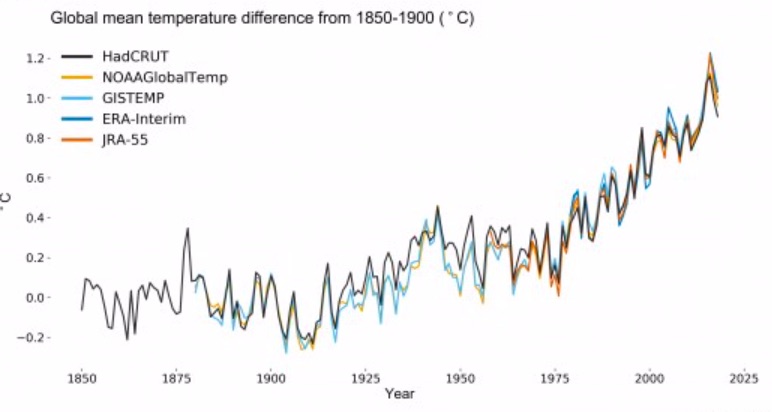
With catastrophic climate change threatening to hit many parts of the world in just over a decade, 149 national parliaments have adopted an emergency resolution calling for decisive action. Concluding the 139th Assembly of the Inter-Parliamentary Union (IPU), the resolution, called Climate change – Let us not cross the line, follows the report published last week by the UN Intergovernmental Panel on Climate Change (IPCC). According to the IPCC report, limiting global warming to 1.5°C requires urgent and unprecedented changes in all aspects of society.

The emergency resolution was adopted in the context of the Assembly’s umbrella theme of science, technology and innovation to bridge the widening gap between policy-making and science.

Gabriela Cuevas, IPU President, said “I believe that more than ever, the international community must center the majority of its efforts to attain the urgent transformation our world requires if we are to avert the environmental crisis foreseen by the UN and by the scientific community. Through the adoption of the emergency item on Climate Change, the IPU expresses its commitment to supporting national parliaments in the implementation of all relevant public policies, budgeting strategies and resource mobilization for the efficient and adequate adoption of the Paris Agreement. Time is of the essence for this situation; we call on all our parliamentarians to act now to preserve environmental balance.“

Martin Chungong, IPU Secretary General, said “Parliaments are instrumental in preventing the world from crossing the line of no return. This resolution is a call to action for MPs to translate the Paris Agreement into concrete national legislation and adequate budget allocations. The global parliamentary community owes it to the people it represents, especially the younger generations, to take action now.”

(continued in right column)

Questions for this article:

How can parliamentarians promote a culture of peace?

Despite the vested interests of companies and governments, Can we make progress toward sustainable development?

(continued from left column)

Led by a coalition of Small Island Developing States (SIDS), the IPU resolution urges all parliaments to spearhead national efforts to combat climate change. It calls for IPU member parliaments to support the implementation of the 2016 Paris Agreement, included mobilizing resources and simplifying procedures for accessing climate change funding. The resolution calls for all countries to work more closely with SIDS to meet ambitious targets to mitigate the worst effects of climate change.

SIDS face major and specific challenges in the next few years. MPs at the IPU Assembly presented various examples of climate change that are already affecting the lives of the people they represent. Villages are being relocated because of rising sea levels in Fiji and other small Pacific island states; scarcity of water and desertification are threatening the well-being and survival of many in Africa and the Middle East.

Special guest, Henk Rogers, Founder of the Blue Planet Foundation in Hawaii, spoke of the power of children to change the way we live by influencing their families and communities. He also emphasized the importance of strong partnerships. For example, Hawaii has passed legislation to encourage clean energy in partnership with electricity companies.

For many years, the IPU has been calling for legislative action on climate change and risk reduction. Since 2009, it has organized parliamentary meetings at each Global Conference of the Parties to the United Nations Convention on Climate Change (COPs) to increase the parliamentary contribution to global negotiations. With the adoption of this emergency resolution, the IPU will mobilize its member parliaments at the COP24 taking place in Krakow, Poland, later this year.

The 139th IPU Assembly brought together over 1500 delegates including 56 Speakers of Parliament, 52 Deputy Speakers, and over 750 MPs. Women MPs accounted for 33% of the total number of MPs in attendance, one of the highest percentages at an IPU Assembly. Young MPs under 45 made up 19% of the parliamentarians, the first time that the IPU is tracking this statistic.

Education for girls projects in Jamaica and Egypt win UNESCO prize

. WOMEN’S EQUALITY .

An article from Their World

Kemoshia Gibbs was only 13 when she found out she was pregnant. She cried every day – and so did her mother. “I was so ashamed, depressed, stressed, confused, frustrated, sad and had anger issues,” she said. “I faced a mix of feelings, all bundled up in one. I was afraid to go outside. It was as if I was confined to the bedroom.”

Kemoshia left her high school and moved into the Women’s Centre of Jamaica programme. It helps to provide continuing education, health services and other assistance for girls who drop out during pregnancy – and then assists their reintegration into school.

After having a son, and with the organisation’s help, she moved back into the regular school system in 2014. Determined to succeed, she juggled with the demands but graduated as the top female student at Godfrey Stewart High.

Kemoshia – who hopes to have a career in humanities or food science and technology – said: “I am forever grateful for the contribution of the Women’s Centre in my life. They were there when my life was a mess.”

(Article continued in right column)

Question for this article

Gender equality in education, Is it advancing?

Prospects for progress in women’s equality, what are the short and long term prospects?

(Article continued from left column)

That work has seen the Women’s Centre of Jamaica named as one of two winners of this year’s UNESCO Prize for Girls’ and Women’s Education. The other is the Misr El-Kheir Foundation from Egypt, for providing community-focused educational opportunities to children aged from six to 14 in remote areas.

They received their $50,000 prizes at a ceremony in Paris. Zoe Simpson, Executive Director of the Women’s Centre of Jamaica, told Their News: “The UNESCO prize will be used to further enhance and expand the virtual delivery of special preparatory classes to the rural centres.  

“The classes prepare the older adolescent mothers to sit the external examinations that enable them to matriculate to tertiary-level studies.”

The Misr El-Kheir Foundation  won for a project called Educational Opportunities for Children in Underserved Villages through Community Schools.

This provides community-focused educational opportunities to children aged from six to 14 in remote areas. It particularly focuses on girls who are not enrolled in primary education or who have dropped out due to early marriage or other obstacles. 

Mohamed Abdel Rahman, Deputy Managing Director of Misr El Kheir Foundation, said: “We build schools inside the communities. We get the teachers from within the same communities. So the girls have the right to education and easy access to schools.”

The UNESCO prize – funded by the Chinese government – was launched in 2016 to recognise the Sustainable Development Goals on education and gender equality. 

(Thank you to Janet Hudgins, the CPNN reporter for this article.)

Schoolgirls become world leaders for the day in equal rights campaign

. WOMEN’S EQUALITY .

An article from Their World

To mark International Day of the Girl today, more than 1000 girls have taken over some of the top jobs around the globe. – from executives at Google and Facebook to government posts and local councils. It’s all part of a campaign called Girls Get Equal, launched on International Day of the Girl by the child rights organisation Plan International. 


Amazing #GirlsTakeover news from Peru. Emily has taken over from her country’s President! “I received the enormous responsibility to become President and represent the voices of Peruvian girls, especially those who live in rural areas like me.“#DayoftheGirl

Around the world, girls are denied equal access to education and opportunity – just because they are girls.

Almost one in 10 girls are not in primary school, according to new United Nations figures. Girls of every age are more likely to be excluded from education than boys. And that leaves them at risk of child labour, early marriage and exploitation.

Among today’s takeovers is Emily – president of Peru!

In Paraguay, 11-year-old schoolgirl Nara has also become president for the day. She dreams of becoming an engineer – but she also fears sexual assault after several of her friends were attacked and raped.

“My example for other girls as president is never give up and be confident in yourself. It’s not just the boys who can achieve things,” Nara told the Thomson Reuters Foundation.

“I would like that girls are treated as equals. Men always leave us behind and place barriers in our way.”

(Article continued in right column)

Question for this article

Prospects for progress in women’s equality, what are the short and long term prospects?

(Article continued from left column)

Nara said sexual violence is one of the biggest problems holding girls back in Paraguay.

“The thing that’s most difficult for girls here is the abuse, the harassment, the rapes,” she said. “Girls feel trapped inside themselves because of the violence they have experienced.”

Reports show about 18 million girls aged 15 to 19 are victims of sexual violence each year – often leading to school dropout and reinforcing cultural practices such as early marriage.

Millions of girls are harassed on their way to and from school. Even when they get there, they can suffer sexual violence and bullying.

For last year’s International Day of the Girl, Theirworld looked at  13 reasons why girls are not in school. They include early marriage, pregnancy, conflict, disabilities and a lack of female teachers and role models.

More than 50 million child marriages could be prevented by 2030 if all girls finished secondary school, the charity Save the Children said today.

As well as education, the rights of girls and women are routinely being overlooked. A 2017 global survey of 30,000 young people by the World Economic Forum found more than half of young women felt their views were not heard or not taken seriously.

Only about one in four parliamentarians worldwide is a woman, while fewer than one in five government ministers is female.

As part of Girls Get Equal, other takeovers today include girls running the parliaments of Zimbabwe and Western Australia.

Anne-Birgitte Albrectsen, chief executive of Plan International, said: “It’s girls’ turn to take the lead – to be seen, heard and valued as equals.”

(Thank you to Janet Hudgins, the CPNN reporter for this article.)

United Nations Special Climate Report: 1.5ºC Is Possible But Requires Unprecedented and Urgent Action

. . SUSTAINABLE DEVELOPMENT . .

An article from The United Nations

Limiting global warming to 1.5ºC would require rapid, far- reaching and unprecedented changes in all aspects of society, the Intergovernmental Panel on Climate Change (IPCC) said on Monday [October 8] in a new assessment. With clear benefits to people and natural ecosystems, limiting global warming to 1.5ºC compared to 2ºC could go hand in hand with ensuring a more sustainable and equitable society, .

The Special Report on Global Warming of 1.5ºC was approved by the IPCC on Saturday in Incheon, Republic of Korea. It will be a key scientific input into the Katowice Climate Change Conference in Poland in December, when governments review the Paris Agreement to tackle climate change.

“With more than 6,000 scientific references cited and the dedicated contribution of thousands of expert and government reviewers worldwide, this important report testifies to the breadth and policy relevance of the IPCC,” said Hoesung Lee, Chair of the IPCC.

Ninety-one authors and review editors from 40 countries prepared the IPCC report in response to an invitation from the United Nations Framework Convention on Climate Change (UNFCCC) when it adopted the Paris Agreement in 2015.

The report’s full name is Global Warming of 1.5°C, an IPCC special report on the impacts of global warming of 1.5°C above pre-industrial levels and related global greenhouse gas emission pathways, in the context of strengthening the global response to the threat of climate change, sustainable development, and efforts to eradicate poverty.

“One of the key messages that comes out very strongly from this report is that we are already seeing the consequences of 1°C of global warming through more extreme weather, rising sea levels and diminishing Arctic sea ice, among other changes,” said Panmao Zhai, Co-Chair of IPCC Working Group I.

Limiting global warming

The report highlights a number of climate change impacts that could be avoided by limiting global warming to 1.5ºC compared to 2ºC, or more. For instance, by 2100, global sea level rise would be 10 cm lower with global warming of 1.5°C compared with 2°C. The likelihood of an Arctic Ocean free of sea ice in summer would be once per century with global warming of 1.5°C, compared with at least once per decade with 2°C. Coral reefs would decline by 70-90 percent with global warming of 1.5°C, whereas virtually all (> 99 percent) would be lost with 2ºC.

“Every extra bit of warming matters, especially since warming of 1.5ºC or higher increases the risk associated with long-lasting or irreversible changes, such as the loss of some ecosystems,” said Hans-Otto Pörtner, Co-Chair of IPCC Working Group II.

Limiting global warming would also give people and ecosystems more room to adapt and remain below relevant risk thresholds, added Pörtner. The report also examines pathways available to limit warming to 1.5ºC, what it would take to achieve them and what the consequences could be.

“The good news is that some of the kinds of actions that would be needed to limit global warming to 1.5ºC are already underway around the world, but they would need to accelerate,” said Valerie Masson-Delmotte, Co-Chair of Working Group I.

The report finds that limiting global warming to 1.5°C would require “rapid and far-reaching” transitions in land, energy, industry, buildings, transport, and cities. Global net human-caused emissions of carbon dioxide (CO2) would need to fall by about 45 percent from 2010 levels by 2030, reaching ‘net zero’ around 2050. This means that any remaining emissions would need to be balanced by removing CO2 from the air.

(Article continued in the right side of the page)

Question for this article:

Despite the vested interests of companies and governments, Can we make progress toward sustainable development?

(Article continued from the left side of the page)

“Limiting warming to 1.5ºC is possible within the laws of chemistry and physics but doing so would require unprecedented changes,” said Jim Skea, Co-Chair of IPCC Working Group III.

Allowing the global temperature to temporarily exceed or ‘overshoot’ 1.5ºC would mean a greater reliance on techniques that remove CO2 from the air to return global temperature to below 1.5ºC by 2100. The effectiveness of such techniques are unproven at large scale and some may carry significant risks for sustainable development, the report notes.

“Limiting global warming to 1.5°C compared with 2°C would reduce challenging impacts on ecosystems, human health and well-being, making it easier to achieve the United Nations Sustainable Development Goals,” said Priyardarshi Shukla, Co-Chair of IPCC Working Group III.

The decisions we make today are critical in ensuring a safe and sustainable world for everyone, both now and in the future, said Debra Roberts, Co-Chair of IPCC Working Group II.

“This report gives policymakers and practitioners the information they need to make decisions that tackle climate change while considering local context and people’s needs. The next few years are probably the most important in our history,” she said.

Special Report

The Report was prepared under the scientific leadership of all three IPCC working groups. Working Group I assesses the physical science basis of climate change; Working Group II addresses impacts, adaptation and vulnerability; and Working Group III deals with the mitigation of climate change.The IPCC is the leading world body for assessing the science related to climate change, its impacts and potential future risks, and possible response options.

The Paris Agreement adopted by 195 nations at the 21st Conference of the Parties to the UNFCCC in December 2015 included the aim of strengthening the global response to the threat of climate change by “holding the increase in the global average temperature to well below 2°C above pre- industrial levels and pursuing efforts to limit the temperature increase to 1.5°C above pre-industrial levels.”

As part of the decision to adopt the Paris Agreement, the IPCC was invited to produce, in 2018, a Special Report on global warming of 1.5°C above pre-industrial levels and related global greenhouse gas emission pathways. The IPCC accepted the invitation, adding that the Special Report would look at these issues in the context of strengthening the global response to the threat of climate change, sustainable development, and efforts to eradicate poverty.

Global Warming of 1.5ºC is the first in a series of Special Reports to be produced in the IPCC’s Sixth Assessment Cycle. Next year the IPCC will release the Special Report on the Ocean and Cryosphere in a Changing Climate, and Climate Change and Land, which looks at how climate change affects land use.

The Summary for Policymakers (SPM) presents the key findings of the Special Report, based on the assessment of the available scientific, technical and socio-economic literature relevant to global warming of 1.5°C.

Key statistics of the Special Report on Global Warming of 1.5ºC

91 authors from 44 citizenships and 40 countries of residence

14 Coordinating Lead Authors (CLAs)
60 Lead authors (LAs)
17 Review Editors (REs)
133 Contributing authors (CAs) Over 6,000 cited references
A total of 42,001 expert and government review comments
(First Order Draft 12,895; Second Order Draft 25,476; Final Government Draft: 3,630)

The Nobel Prize for Peace 2018

. . WOMEN’S EQUALITY . .

An announcemet from The Nobel Prize Organization

The Norwegian Nobel Committee has decided to award the Nobel Peace Prize for 2018 to Denis Mukwege and Nadia Murad for their efforts to end the use of sexual violence as a weapon of war and armed conflict. Both laureates have made a crucial contribution to focusing attention on, and combating, such war crimes. Denis Mukwege is the helper who has devoted his life to defending these victims. Nadia Murad is the witness who tells of the abuses perpetrated against herself and others. Each of them in their own way has helped to give greater visibility to war-time sexual violence, so that the perpetrators can be held accountable for their actions.

The physician Denis Mukwege has spent large parts of his adult life helping the victims of sexual violence in the Democratic Republic of Congo. Since the Panzi Hospital was established in Bukavu in 1999, Dr. Mukwege and his staff have treated thousands of patients who have fallen victim to such assaults. Most of the abuses have been committed in the context of a long-lasting civil war that has cost the lives of more than six million Congolese.

Denis Mukwege is the foremost, most unifying symbol, both nationally and internationally, of the struggle to end sexual violence in war and armed conflicts. His basic principle is that “justice is everyone’s business”. Men and women, officers and soldiers, and local, national and international authorities alike all have a shared responsibility for reporting, and combating, this type of war crime. The importance of Dr. Mukwege’s enduring, dedicated and selfless efforts in this field cannot be overstated. He has repeatedly condemned impunity for mass rape and criticised the Congolese government and other countries for not doing enough to stop the use of sexual violence against women as a strategy and weapon of war.

(Article continued in right column)

(click here for the article in French.)

Question related to this article:

Protecting women and girls against violence, Is progress being made?

What role should men play to stop violence against women?

(Article continued from left column)

Nadia Murad is herself a victim of war crimes. She refused to accept the social codes that require women to remain silent and ashamed of the abuses to which they have been subjected. She has shown uncommon courage in recounting her own sufferings and speaking up on behalf of other victims.

Nadia Murad is a member of the Yazidi minority in northern Iraq, where she lived with her family in the remote village of Kocho. In August 2014 the Islamic State (IS) launched a brutal, systematic attack on the villages of the Sinjar district, aimed at exterminating the Yazidi population. In Nadia Murad’s village, several hundred people were massacred. The younger women, including underage children, were abducted and held as sex slaves. While a captive of the IS, Nadia Murad was repeatedly subjected to rape and other abuses. Her assaulters threatened to execute her if she did not convert to their hateful, inhuman version of Islam.

Nadia Murad is just one of an estimated 3 000 Yazidi girls and women who were victims of rape and other abuses by the IS army. The abuses were systematic, and part of a military strategy. Thus they served as a weapon in the fight against Yazidis and other religious minorities.

After a three-month nightmare Nadia Murad managed to flee. Following her escape, she chose to speak openly about what she had suffered. In 2016, at the age of just 23, she was named the UN’s first Goodwill Ambassador for the Dignity of Survivors of Human Trafficking.

This year marks a decade since the UN Security Council adopted Resolution 1820 (2008), which determined that the use of sexual violence as a weapon of war and armed conflict constitutes both a war crime and a threat to international peace and security. This is also set out in the Rome Statute of 1998, which governs the work of the International Criminal Court. The Statute establishes that sexual violence in war and armed conflict is a grave violation of international law.  A more peaceful world can only be achieved if women and their fundamental rights and security are recognised and protected in war.

This year’s Nobel Peace Prize is firmly embedded in the criteria spelled out in Alfred Nobel’s will. Denis Mukwege and Nadia Murad have both put their personal security at risk by courageously combating war crimes and seeking justice for the victims. They have thereby promoted the fraternity of nations through the application of principles of international law.

Indigenous Peoples Link Their Development to Clean Energies

.. SUSTAINABLE DEVELOPMENT ..

An article by Emilio Godoy for the Inter Press Service (reprinted by permission)

Achuar indigenous communities in Ecuador are turning to the sun to generate electricity for their homes and transport themselves in canoes with solar panels along the rivers of their territory in the Amazon rainforest, just one illustration of how indigenous people are seeking clean energies as a partner for sustainable development.

“We want to generate a community economy based on sustainability,” Domingo Peas, an Achuar leader, told IPS. Peas is also an advisor to the Confederation of Indigenous Nationalities of the Ecuadorian Amazon, which groups 28 indigenous organisations and 11 native groups from that South American country.


United Nations Special Rapporteur on the Rights of Indigenous Peoples, Victoria Tauli-Corpuz of the Philippines (3rd left), calls for the full participation of indigenous communities in clean energy projects during the forum Our Village in San Francisco, California. Credit: Emilio Godoy/IPS

The first project dates back to the last decade, when the Achuar people began to install solar panels in Sharamentsa, a village of 120 people located on the banks of the Pastaza River. Currently they are operating 40 photovoltaic panels, at a cost of 300 dollars per unit, contributed by private donations and foundations.

The villagers use electricity to light up their homes and pump water to a 6,000-litre tank.

“There is a better quality of services for families. Our goal is to create another energy model that is respectful of our people and our territories,” Peas said.

The Achuar took the next step in 2012, when they started the Kara Solar electric canoe motor project. Kara means “dream” in the Achuar language.

The first boat with solar panels on its roof, with a capacity to carry 20 people and built at a cost of 50,000 dollars, began operating in 2017 and is based in the Achuar community of Kapawi.

The second canoe, with a cost of 35,000 dollars, based in Sharamentsa – which means “the place of scarlet macaws” in Achuar – began ferrying people in July.

The investment came partly from private donations and the rest from the IDEAS prize for Energy Innovation, established by the Inter-American Development Bank, which the community received in 2015, endowed with 127,000 dollars.

The Achuar people’s solar-powered transport network connects nine of their communities along 67 km of the Pastaza river – which forms part of the border between Ecuador and Peru – and the Capahuari river. The approximately 21,000 members of the Achuar community live along the banks of these two rivers.
“It was an indigenous idea adapted to the manufacture of canoes. They use them to transport people and products, like peanuts, cinnamon, yucca and plantains (cooking bananas),” in an area where rivers are the highways connecting their settlements, said Peas.

The demand for clean energy in indigenous and local communities and success stories such as the Achuar’s were presented during the Global Climate Action Summit, convened by the government of the U.S. state of California.

The event, held on Sept. 13-14 in San Francisco, was an early celebration of the third anniversary of the historic Paris Agreement on climate change, reached in the French capital in December 2015.

Native delegates also participated in the alternative forum “Our Village: Climate Action by the People,” on Sept. 11-14, presented by the U.S. non-governmental organisations If Not US Then Who and Hip Hop Caucus.

In addition to Ecuador, innovative experiences have also emerged from indigenous communities in countries such as Australia, Bolivia, Canada, Guatemala, Malaysia, Nicaragua, the Philippines, and the United States, according to the forum.

(Continued in right column)

Question for this article:

Are we making progress in renewable energy?

Indigenous peoples, Are they the true guardians of nature?

(Continued from left column)

For example, in Bolivia there is an alliance between the local government of Yocalla, in the southern department of Potosí, and the non-governmental organisation Luces Nuevas aimed at providing electricity from renewable sources to poor families.

In Yocalla, a municipality of 10,000 people, mainly members of the Pukina indigenous community, “755 families live in rural areas with limited electricity; the national power grid has not yet reached those places,” project consultant Yara Montenegro told IPS.

Thanks to the programme, which began in March, 30 poor families have received solar panels connected to lithium batteries, produced at the La Palca pilot plant in Potosí, which store the fluid.

Each system costs 400 dollars, of which the families contribute half and the organisation and the government the other half. The families can connect two lamps, charge a cell phone and listen to the radio, replacing the use of firewood, candles and conventional batteries.

The development of clean sources plays a decisive role in achieving one of the 17 Sustainable Development Goals (SDGs), which make up the 2030 Agenda for Sustainable Development.

Goal seven aims to establish “affordable and non-polluting energy” – a goal that also has an impact on the achievement of at least another 11 SDGs, which the international community set for itself in 2015 for the next 15 years, within the framework of the United Nations.

In addition, the success of the Sustainable Energy for All Initiative (SE4All), the programme to be implemented during the Decade of Sustainable Energy for All 2014-2024, which aims to guarantee universal access to modern energy services, and to double the global rate of energy efficiency upgrades and the share of renewables in the global energy mix, depends on that progress.

But most of the groups promoting an energy transition do not include native people, points out the May report “Renewable Energy and Indigenous Peoples. Background Paper to the Right Energy Partnership,” prepared by the Indigenous Peoples’ Major Group for Sustainable Development (IPMG).

That group launched a Right Energy Partnership in July, which seeks to fill that gap.

For Victoria Tauli-Corpuz of the Kankanaey Igorot people, who is the U.N. Special Rapporteur on the Rights of Indigenous Peoples, energy represents “a problem and a solution” for indigenous people, she told IPS at the alternative forum in San Francisco.

“The leaders have fought against hydroelectric dams and I have also seen projects in the hands of indigenous peoples,” she said.

Because of this, “the communities have to be at the centre to decide on and design projects that help combat poverty, because they allow electricity without depending on the power grid, and they strengthen the defense of the territory and benefit the people,” she said.

“It’s about guaranteeing rights and defining development processes,” she summed up.

Examples of projects that can be replicated and expanded, as called for by the U.N special rapporteur, are provided by communities such as Sharamentsa in Ecuador and Yocalla in Bolivia.

Sharamentsa operates a 12 kW battery bank that can create a microgrid. “A power supply centre is planned that allows the generation of value-added products, such as plant processing,” Peas said.

In Yocalla, the plan is to equip some 169 families with systems in December and then try to extend it to all of Potosí. But Montenegro pointed out that alliances are needed so that the beneficiaries can pay less. “In 2019 we will analyse the impact, if the families are satisfied with it, if they are comfortable,” she said.

This article was produced with support from the Climate and Land Use Alliance.

(Thank you to Janet Hudgins, the CPNN reporter for this article.)

Nuclear Abolition Day: Security Council session clashes with UN High-Level Meeting

DISARMAMENT & SECURITY .

An article from Unfold Zero

The UN General Assembly held a high level meeting on nuclear disarmament on Wednesday last week (September 26) to commemorate the International Day for the Total Elimination of Nuclear Weapons.

Presidents, prime ministers, foreign ministers and other leaders from around the world used the opportunity to promote key initiatives and measures for nuclear disarmament including the comprehensive nuclear test ban treaty, nuclear-weapon-free zones, de-alerting, no-first-use, stockpile reductions, the Korean peace and denuclearization process, the Iran nuclear nonproliferation deal, the recently adopted treaty on the prohibition of nuclear weapons and the global elimination of nuclear weapons through a nuclear weapons convention.

However, apart from India and Pakistan, the nuclear armed States were noticeably missing from the meeting. The P5 (China, France, Russia, UK and the USA) were instead down the hall in the Security Council chambers for a competing event on non-proliferation of weapons of mass destruction chaired by US President Donald Trump. Their absence from the High Level Meeting highlighted the fact that the P5 place very little priority on their obligations to eliminate their own weapons of mass destruction, focusing instead on preventing others from acquiring such weapons.


Photo by John Angelilio

Youth activist calls on states to ‘Move the Nuclear Weapons Money’

‘The United Nations and its member countries should focus more on disarmament for sustainable development’, says 18 year old environmental activist and youth leader Kehkashan Basu who was selected by the President of the UN General Assembly as one of the two representatives of civil society to address the September 26 UN High Level Meeting.

(Continued in right column)

Question related to this article:

Can we abolish all nuclear weapons?

(Continued from left column)

‘Every second, a person dies of hunger. Which means that by the time I finish speaking, 500 more people would have died of hunger and starvation,’ Ms Basu told the UN session. ‘And yet the nuclear-armed States continue to spend billions of dollars for building nuclear stockpiles, ostensibly in the name of security, but in reality threatening current and future generations and violating the rights of children to a peaceful and non-irradiated planet.’

‘Our banks, universities, cities, pension funds and governments continue to invest in the corporations manufacturing and promoting the nuclear arms race for their own personal gain with no consideration for the ethics of investing in death,’ she said.

‘Civil society organisations, in cooperation with parliamentarians from around the world, have launched the Move the Nuclear Weapons Money campaign to cut the $100 billion annual nuclear weapons budget and reallocate these resources into the Sustainable Development Goals and other areas of human and environmental need. This includes direct cuts to nuclear weapons budgets, and divestment from the nuclear weapons industry. Already four governments and a number of cities, banks and investment funds have adopted nuclear weapons divestment policies.’ (Click here to read the full speech and see the video of Ms Basu’s speech).

Ms Basu was also a keynote speaker at Youth, disarmament and sustainable devlopment, an international youth forum held in New York to commemorate UN Peace Day (Sep 21) and International Day for the Total Elimination of Nuclear Weapons.

Special screenings of ‘The Man who saved the World’

The International Day for the Total Elimination of Nuclear Weapons is held on September 26, the anniversary of the incident in 1983 when a nuclear war almost erupted by accident. On this day, the Soviet nuclear early warning center Serpukhov-15 detected ballistic missiles heading towards Moscow. Stanislav Petrov, duty officer at the time, reported a ‘false alarm’ despite the information, and probably averted a nuclear ‘retaliation’ from the Soviet Union.

The story of this incident, and the follow-up visit by Stanislav Petrov to the USA 30 years later, is told in the award winning movie ‘The Man Who Saved the World.’ The movie was shown in a number of special screenings around the world to commemorate the International Day.