Tag Archives: global

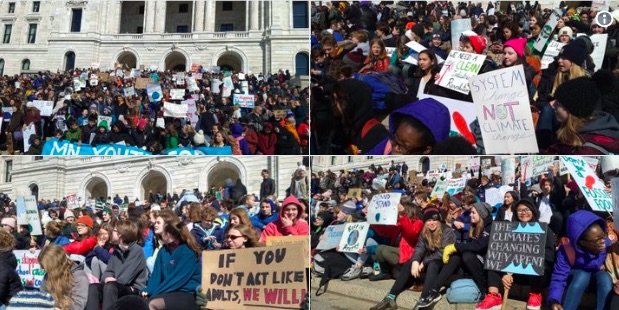
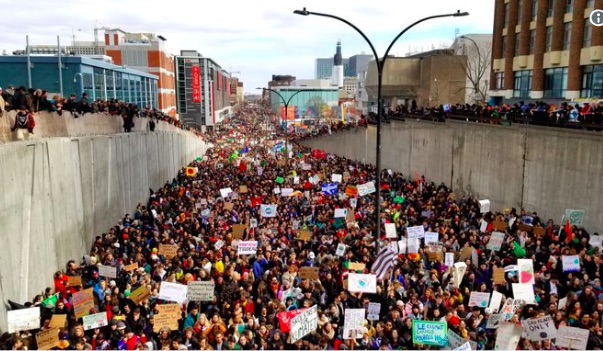
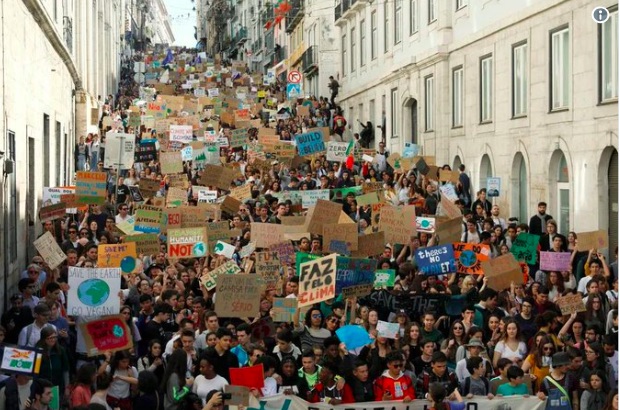
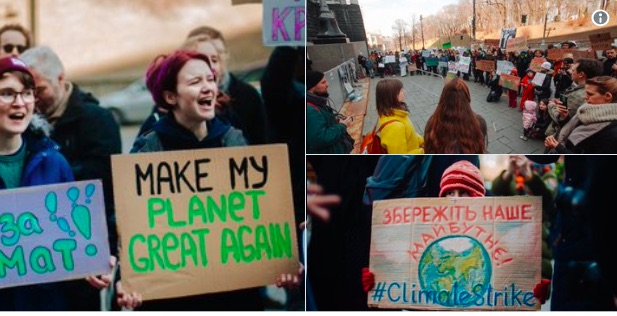
Greta Thunberg: My Message to Davos Elites: Act As If Our House Is on Fire. Because It Is.

. . SUSTAINABLE DEVELOPMENT . .

An article from Common Dreams reprinted under under a Creative Commons Attribution-Share Alike 3.0 License

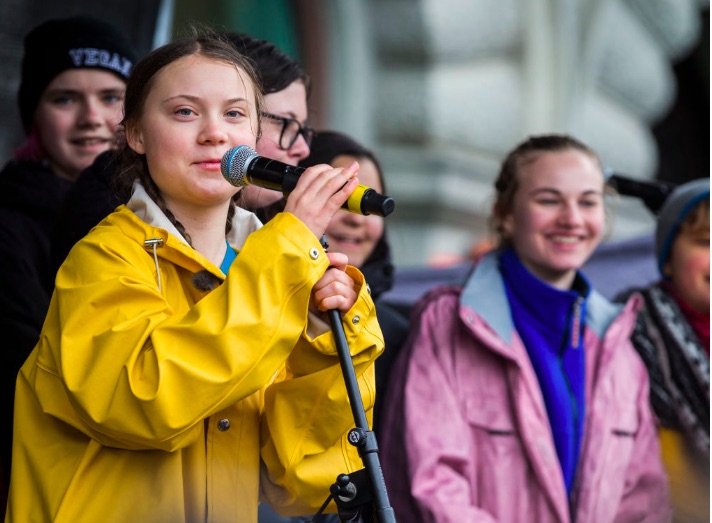
The following is a slightly edited version of remarks delivered by 16-year-old Swedish climate activist Greta Thunberg to attendees at the World Economic Forum in Davos, Switzerland on Friday, January 25, 2018.

video of Greta’s speech

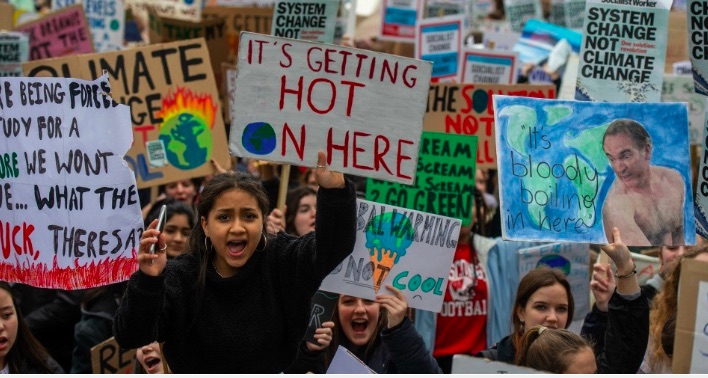
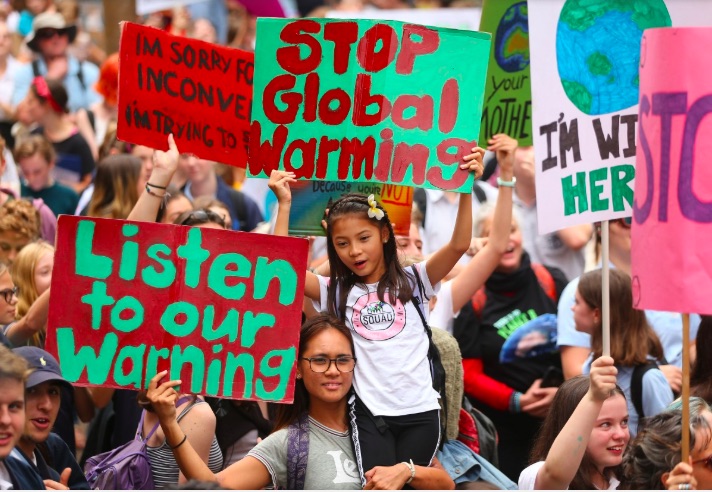
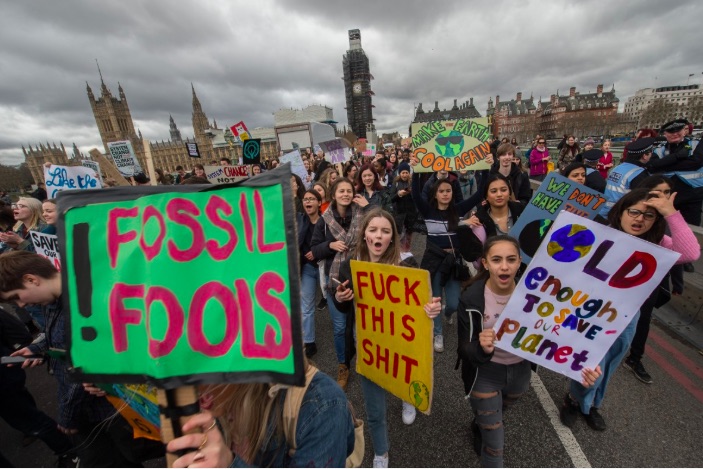
Our house is on fire. I am here to say, our house is on fire.
According to the IPCC (Intergovernmental Panel on Climate Change), we are less than 12 years away from not being able to undo our mistakes. In that time, unprecedented changes in all aspects of society need to have taken place, including a reduction of our CO2 emissions by at least 50%.

And please note that those numbers do not include the aspect of equity, which is absolutely necessary to make the Paris agreement work on a global scale. Nor does it include tipping points or feedback loops like the extremely powerful methane gas released from the thawing Arctic permafrost.

At places like Davos, people like to tell success stories. But their financial success has come with an unthinkable price tag. And on climate change, we have to acknowledge we have failed. All political movements in their present form have done so, and the media has failed to create broad public awareness.

But Homo sapiens have not yet failed.

Yes, we are failing, but there is still time to turn everything around. We can still fix this. We still have everything in our own hands. But unless we recognize the overall failures of our current systems, we most probably don’t stand a chance.

We are facing a disaster of unspoken sufferings for enormous amounts of people. And now is not the time for speaking politely or focusing on what we can or cannot say. Now is the time to speak clearly.

Solving the climate crisis is the greatest and most complex challenge that Homo sapiens have ever faced. The main solution, however, is so simple that even a small child can understand it. We have to stop our emissions of greenhouse gases.

Either we do that or we don’t.

(article continued in right column)

Question for this article:


Despite the vested interests of companies and governments, Can we make progress toward sustainable development?

(Article continued from the left column)

You say nothing in life is black or white. But that is a lie. A very dangerous lie. Either we prevent 1.5C of warming or we don’t. Either we avoid setting off that irreversible chain reaction beyond human control or we don’t.

Either we choose to go on as a civilization or we don’t. That is as black or white as it gets. There are no grey areas when it comes to survival.

We all have a choice. We can create transformational action that will safeguard the living conditions for future generations. Or we can continue with our business as usual and fail.

That is up to you and me.

Some say we should not engage in activism. Instead we should leave everything to our politicians and just vote for a change instead. But what do we do when there is no political will? What do we do when the politics needed are nowhere in sight?

Here in Davos—just like everywhere else —everyone is talking about money. It seems money and growth are our only main concerns.

And since the climate crisis has never once been treated as a crisis, people are simply not aware of the full consequences on our everyday life. People are not aware that there is such a thing as a carbon budget, and just how incredibly small that remaining carbon budget is. That needs to change today.

No other current challenge can match the importance of establishing a wide, public awareness and understanding of our rapidly disappearing carbon budget, that should and must become our new global currency and the very heart of our future and present economics.

We are at a time in history where everyone with any insight of the climate crisis that threatens our civilization—and the entire biosphere—must speak out in clear language, no matter how uncomfortable and unprofitable that may be.

We must change almost everything in our current societies. The bigger your carbon footprint, the bigger your moral duty. The bigger your platform, the bigger your responsibility.

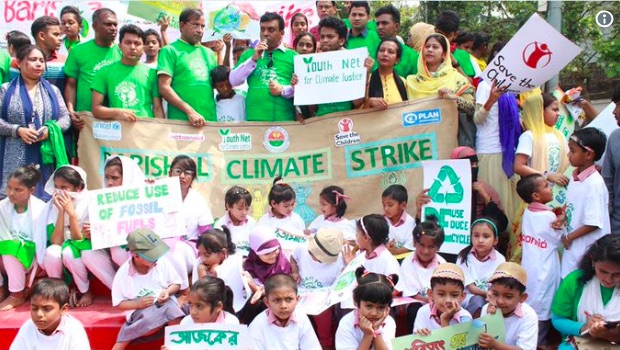
Adults keep saying: “We owe it to the young people to give them hope.” But I don’t want your hope. I don’t want you to be hopeful. I want you to panic. I want you to feel the fear I feel every day. And then I want you to act.

I want you to act as you would in a crisis. I want you to act as if our house is on fire. Because it is.

(Thank you to Janet Hudgins, the CPNN reporter for this article.)
“Peace and Love rooms in schools”

… EDUCATION FOR PEACE …

Sent to CPNN by Shahin Gavanji, World Peace Ambassador

Here on the earth, we have thousands of religions and ideologies in which their creators were completely sure about their authenticity. But every day we are faced with wars and bloodsheds. We should ask ourselves why?

When I was a kid I wanted to grow up and tell the world “I love you, let’s love each other and be friends”, so that no kid should be without shelter and food. But as I was growing up a question troubled me: what does peace mean? Is it just the absence of war? Or does it mean something beyond that? I saw countries in which there is no war but nobody gives water to the tree of love. Indeed what happen to the world if the tree of love becomes thirsty?


Shahin Gavanji on left
(click on photo to enlarge)

(Article continued in right column)


Question related to this article:

What is the best way to teach peace to children?

(Article continued from left column)

Then an idea came to my mind. What we teach to our children in childhood and adolescence is the same as what they will build in the world. Our children spend most of their time in schools. They get familiar with physics and mathematics, but nobody make them familiar with the most important subjects which are Love and Friendship. Indeed there is no lesson related to these important subjects. In my opinion if in every school we make a room with the name” Peace and Love room”, students will get familiar with the basis of peace and love.

With attention to students we can increase the self confidence between them so that they understand that they can help humankind at the national and international levels. We should teach the student how to love other in this industrial world. Every student can communicate with students in other schools. They should learn “international love” by sending a letter or a picture. In this room the students should learn the equality of men and women.

In this way children can grow up with Love as an essential part of their lives, because they have become familiar with it for many years and it was one of the most important challenges they have faced.

By the use of this idea we can create a world without enmity and hatred, a world of social justice without poverty, racism and any racial discrimination. We can live in a world with social safety, equity, peace and love and the tree of love will no longer be thirsty anywhere in the world.

Book review: On the frontlines of peace

EDUCATION FOR PEACE .

An article from  Peace News

In places like South Sudan, Syria and Congo failed peace pacts have devastating consequences. Now, renowned author Séverine Autesserre is writing a new book [“On the frontlines of peace”] that focuses on a different approach to peace than traditional high-level negotiations: ‘peace from below’. And where it’s working.


video

“Peace from below is peace built by ordinary people, people like you and me,” Dr Autesserre, a professor of Political Science at Barnard College, Columbia University, said. 
 
“It’s peace that’s built by teachers who go and decide to meet with former students who have become militia leaders, it’s peace built by uncles, mothers, fathers, cousins, who go and meet with family members who are fighting. It’s peace built by local leaders as well, by traditional chiefs or local mayors or local elite who decide to do whatever they can to mediate conflict within their communities.”
 
Just one peace summit, arranged at a national or international level can cost millions, so why aren’t the big negotiations working?
 
“There is absolutely nothing wrong with peace by political leaders,” said Dr Autesserre. “Except that very often it doesn’t happen, it just doesn’t work.”

”What happens is political leaders sign agreements, sometimes they hold elections, and very often the media headlines praise peace, and then a week or two later – sometimes just days after – violence flares up again. Often it never actually ended, and in many cases it lasts for years after.”
 
(Continued in right column)

Question for this article:

What are the most important books about the culture of peace?

(Continued from left column)

“The problem is that currently we are always focusing our efforts on the top, on political leaders, on elite, and we very rarely support peace at the grassroots.”
 
But Dr Autesserre explained that lasting peace requires both these top-down and ground-up approaches. 
 
“Because very often the causes of violence themselves are both top-down and bottom-up. The causes are both political leaders who are fighting (presidents, rebel leaders who are fighting) but also ordinary people who are fighting or who are supporting combatants.”

In the Democratic Republic of the Congo the residents on the island of Idjwi have used a ‘peace from below’ approach to avoid violence, despite surrounding conflict claiming millions of lives.

“Idjwi has all of the conditions that have led to violence in surrounding provinces in other parts of Congo,” said Dr Autesserre. “So you have ethnic tension, you have land conflict, you have geo-strategic location, mineral resources, I could go on and on. But the inhabitants of Idjwi have managed to build peace, and maintain peace, by building on ordinary people and local leaders.”


”What they’ve done is promoted what they call a ‘culture of peace’ – they are very, very proud of their identity as a peaceful island.”


The island’s schools, churches and local organizations strengthen peace here, and respect for local customs also helps. For example, the community sometimes build on blood pacts, a kind of traditional promise between two families who to refrain from violence against each other.

A lack of research means grassroots peacebuilding needs more attention in the academic sphere, but there’s one common theme Dr Autesserre has observed in the various locations she’s studied.
 
“It’s, again, the involvement of ordinary people and local leaders,” she said. 
 
“It’s really the fact that every single member of the community feels that is it his or her responsibility to help build peace, rather than waiting on a Hail Mary, or rather than waiting on a savior, rather than waiting for political leaders, or for United Nations peacekeepers to come and build peace, it’s really taking peace in to their own hands and trying to build peace on an everyday level. That’s what really matters.”

2019 Doomsday Clock Statement

DISARMAMENT & SECURITY .

Press release by The Bulletin of the Atomic Scientists

Humanity now faces two simultaneous existential threats, either of which would be cause for extreme concern and immediate attention. These major threats—nuclear weapons and climate change—were exacerbated this past year by the increased use of information warfare to undermine democracy around the world, amplifying risk from these and other threats and putting the future of civilization in extraordinary danger.


Video of announcement

In the nuclear realm, the United States abandoned the Iran nuclear deal and announced it would withdraw from the Intermediate-range Nuclear Forces Treaty (INF), grave steps towards a complete dismantlement of the global arms control process. Although the United States and North Korea moved away from the bellicose rhetoric of 2017, the urgent North Korean nuclear dilemma remains unresolved. Meanwhile, the world’s nuclear nations proceeded with programs of “nuclear modernization” that are all but indistinguishable from a worldwide arms race, and the military doctrines of Russia and the United States have increasingly eroded the long-held taboo against the use of nuclear weapons.

On the climate change front, global carbon dioxide emissions—which seemed to plateau earlier this decade—resumed an upward climb in 2017 and 2018. To halt the worst effects of climate change, the countries of the world must cut net worldwide carbon dioxide emissions to zero by well before the end of the century. By such a measure, the world community failed dismally last year. At the same time, the main global accord on addressing climate change—the 2015 Paris agreement—has become increasingly beleaguered.The United States announced it will withdraw from that pact, and at the December climate summit in Poland, the United States allied itself with Russia, Saudi Arabia, and Kuwait (all major petroleum-producing countries) to undercut an expert report on climate change impacts that the Paris climate conference had itself commissioned.

(Continued in right column)

Question related to this article:

Can we abolish all nuclear weapons?

(Continued from left column)

Amid these unfortunate nuclear and climate developments, there was a rise during the last year in the intentional corruption of the information ecosystem on which modern civilization depends. In many forums, including particularly social media, nationalist leaders and their surrogates lied shamelessly, insisting that their lies were truth, and the truth “fake news.” These intentional attempts to distort reality exaggerate social divisions, undermine trust in science, and diminish confidence in elections and democratic institutions. Because these distortions attack the rational discourse required for solving the complex problems facing humanity, cyber-enabled information warfare aggravates other major global dangers—including those posed by nuclear weapons and climate change—as it undermines civilization generally.

There is nothing normal about the complex and frightening reality just described.

The Bulletin of the Atomic Scientists Science and Security Board today sets the Doomsday Clock at two minutes to midnight—the closest it has ever been to apocalypse. Though unchanged from 2018, this setting should be taken not as a sign of stability but as a stark warning to leaders and citizens around the world. The current international security situation—what we call the “new abnormal”—has extended over two years now. It’s a state as worrisome as the most dangerous times of the Cold War, a state that features an unpredictable and shifting landscape of simmering disputes that multiply the chances for major military conflict to erupt.

This new abnormal is simply too volatile and dangerous to accept as a continuing state of world affairs.

Dire as the present may seem, there is nothing hopeless or predestined about the future. The Bulletin resolutely believes that human beings can manage the dangers posed by the technology that humans create. Indeed, in the 1990s, leaders in the United States and the Soviet Union took bold action that made nuclear war markedly less likely—and that led the Bulletin to move the minute hand of the Doomsday Clock far from midnight.

But threats must be acknowledged before they can be effectively confronted. The current situation—in which intersecting nuclear, climate, and information warfare threats all go insufficiently recognized and addressed, when they are not simply ignored or denied—is unsustainable. The longer world leaders and citizens carelessly inhabit this new and abnormal reality, the more likely the world is to experience catastrophe of historic proportions.

Mairead Maguire Nominates Julian Assange for the 2019 Nobel Peace Prize

FREE FLOW OF INFORMATION

An article from Transcend Media Service

Nobel Peace laureate Mairead Maguire wrote today [7 Jan 2019] to the Norwegian Nobel Committee nominating Julian Assange, Editor-in-Chief of WikiLeaks, for the 2019 Nobel Peace Prize.


Ms. Maguire wrote:

“Julian Assange and his colleagues in WikiLeaks have shown on numerous occasions that they are one of the last outlets of true democracy with their work for freedom of speech.  Their work for true peace by making public our governments’ actions at home and abroad has enlightened us to their atrocities carried out in the name of so-called democracy around the world.  This included:

* Footage of carnage perpetrated by NATO/US military

* Release of email correspondence revealing conspiracy for regime change in Middle Eastern countries

* Elected officials paid to deceive the public

“This is a huge step in our work for disarmament and nonviolence worldwide. Julian Assange, fearing deportation to the U.S. to stand trial for treason, sought out asylum in the Ecuadorian embassy in 2012.   Selflessly, he continues his work from there increasing the risk of his prosecution by the American government. 

(Article continued in the column on the right)

Question related to this article:
 
Julian Assange, Is he a hero for the culture of peace?

(Article continued from the column on the left)

“In recent months the U.S. has increased pressure on the Ecuadorian government to take away what remains of his freedom.  He is now prevented from having visitors, telephone calls or other electronic communications, thereby removing his basic human rights.  This has put a great strain on Julian’s mental and physical health.  It is our duty as citizens to protect Julian’s human rights and freedom of speech as he has fought for ours on a global stage.

“It is my great fear that Julian, who is an innocent man, will be deported to the U.S. where he will face unjustified imprisonment.  We have seen this happen to Chelsea (Bradley) Manning who allegedly supplied WikiLeaks with sensitive information from NATO/US Middle Eastern wars and subsequently spent multiple years in solitary confinement in an American prison.   If the US succeeds in their plan to extradite Julian Assange to US to face a grand jury, this will silence journalists and whistle-blowers around the world in fear of dire repercussions.

“Julian Assange meets all criteria for the Nobel Peace Prize.   Through his release of hidden information to the public we are no longer naïve to the atrocities of war, neither oblivious to the connections between big business and the acquisition of resources and spoils of war.

“As his human rights and freedom are in jeopardy, the Nobel Peace Prize would afford Julian much greater protection from governments’ forces.

“Over the years there have been controversies over the Nobel Peace Prize and some of those to whom it has been awarded.  Sadly, I believe it has moved from its original intentions and meaning.  It was Alfred Nobel’s will that the prize would support and protect individuals at threat from government forces in their fight for nonviolence and peace, by bringing awareness to their precarious situations.  Through awarding Julian Assange the Nobel Peace Prize, he and others like him will receive the protection they truly deserve.

“It is my hope that by this we can rediscover the true definition of the Nobel Peace Prize.

“I also call on all people to bring awareness to Julian’s situation and support him in his struggle for basic human rights, freedom of speech, and peace.”

[Editor’s note: See also https://www.transcend.org/tms/2019/01/giuliani-says-assange-should-not-be-prosecuted/.

Cyprus: International Institute on Peace Education 2019

EDUCATION FOR PEACE .

An announcement from the Global Campaign for Peace Education

The 2019 International Institute for Peace Education (IIPE) will be held in Nicosia, Cyprus at the Home for Cooperation (H4C)  from July 21 to July 28, 2019. This year’s institute is organized in partnership with the IIPE Secretariat and the Association for Historical Dialogue and Research (AHDR).


IIPE 2019: Cyprus will convene educators from around the globe for a week-long, residential, learning community experience in peace education. A rich exchange of peacebuilding research, academic theory, best practices, and actions will be shared with participants from around the world through IIPE’s evolving dialogical, cooperative, and intersubjective modes of reflective inquiry and experiential learning.
Educating for a Culture of Peace in Divided Societies: History, Dialogue, and Multiperspectivity Toward Reconciliation

IIPE 2019 will focus on global issues of particular relevance to Cyprus and the adjoining region of the Mediterranean, North Africa, Southern Europe, and the Middle East – the intersection of Asia, Africa and Europe. This region is characterized on the one hand, by turmoil and tension, and on the other by the rich perpetual movements of people, ideas and experiences. While peoples’ past and present are presented in grey terms, their shared history(-ies) of coexistence, cooperation and exchange are often neglected in official discourses. In this context, recent developments with regards to war, terrorism, migration and refugeedom have led to the creation of monolithic narratives and rigid identities. These excluding narratives perpetuate violent conflicts and structural conditions that limit opportunities for sustainable peace and development. IIPE 2019 will emphasize the role of educators on all levels in addressing conflict in creative ways and offering alternatives to violence in contexts such as the Cypriot one. Educating for practical and theoretical methods is of paramount importance for the creation of inclusive identities and a critical hope for the region, and for humanity as a whole.

Being concerned with reconciliation and abetting conflict, we peace educators, theorists, researchers, students, and activists together face a serious challenge. On the one hand, dynamic transitions and tensions shape our present world: new movements of peoples are working for more dignity and inclusion, while at the same time forces of power are consolidating in ways that challenge how local, regional and global citizens can contribute to this vibrant transition in nonviolent, humanizing and ecologically viable ways. IIPE 2019 Cyprus’s inquiry is centered on how might we collectively frame the challenges we face in our diverse, particular, and shared spheres? How can a relational paradigm for peace help us theorize these challenges for more dignity, inclusion, and coordination? As we engage in deep listening and critical and reflective dialogue, what new understandings will we reach? What creative practices will emerge? In examining crossover issues, we aim to bring our best selves in relation to each other so that we might meld together our best theoretical, educational, and activist practices.

(Continued in right column)

Question for this article:

Where is peace education taking place?

(Continued from left column)

Peace education and its intersections with history, political theory, conflict studies, reconciliation, the philosophy of peace, justice, and democracy in challenging times are among the areas of inquiry that will be most relevant at IIPE 2019. Applicants are invited to offer contributions on these and other thematic areas including, but not limited to:

* Identities (and anti-racist education) in divided and/or multi-faith, multi-ethnic and culturally and linguistically diverse societies

* Memory and remembrance (collective memory, communal memory, family history and memory, memory transmitted through celebrations, museums, monuments, oral history, understanding of heritage…)

* National celebrations (memory transmitted through ceremonies, anniversaries, memorials, commemorations and celebrations)

* The philosophical basis for reconciliation and peace

* Dialogue for reconciliation

* History teaching and historical dialogue as means for peacebuilding: the role of history education in conflict or post-conflict communities; peace and reconciliation; teaching history in divided societies; history education and values, beliefs and human rights

* Gender and peacebuilding in divided societies; gender and history

* Civil society, global citizenship, and local participation

* Youth and entrepreneurship

* Public space and deliberation; the city as an educating agent

Experiencing Cyprus

Cyprus, the island of Aphrodite, the goddess of love and beauty, has been separated for over 50 years, and, apart from a divided capital, barricades, barbwires and checkpoints, it offers numerous opportunities for exploring ancient and recent civilizations and experiencing, first hand, manifestations of the willingness to defeat time and space barriers and create spaces for creativity, imagination and sharing. The ‘wondering peace educator’ will be offered the chance to explore issues of memory and remembrance, conflicting narratives and identity and public history, while, at the same time, he/she will engage in the exchange of ideas and examples on breakthrough initiatives that have the potential to turn the island into a hub of innovation in the fields of History for Reconciliation and Education for a Culture of Peace.

In particular, all participants will have the opportunity to experience the contextual conditions existing in Cyprus regarding the conflict and become acquainted with local breakthrough initiatives on history as a means for reconciliation and education for a culture of peace. This will be enhanced through an Open Public Day, excursion(s), and unique cultural experiences in Cyprus. IIPE 2019 will also facilitate an exchange with Cypriot educators, from all communities, via the Open Public Day, which will feature immersion and exchange opportunities exploring global obstacles and possibilities for peacebuilding through education in other contexts.

Australia: Conference Calls for Mainstreaming Human Rights Education

. HUMAN RIGHTS .

An article by Neena Bhandari from InDepth News

More investment is needed in human rights education and strengthening of civil society to address inequality and sustainability – the main objectives of the United Nations Sustainable Development Goals. This was the key message from the Ninth International Conference on Human Rights Education (ICHRE) held in Sydney, Australia.


A glimpse of the exhibition on human rights education. (Photo credit: NGO Working Group on Human Rights Education and Learning)

Drawing inspiration from the Universal Declaration of Human Rights (UDHR), which marks its 70th Anniversary this year, the ICHRE 2018  (November 26-29) recommended all stakeholders to mainstream human rights education as a tool for social cohesion towards peaceful coexistence; and strive to bridge the significant gap between integrating human rights education in the curricula and its implementation.

“Beyond human rights education, people have to be enabled and empowered to exercise their inalienable rights, to live by those rights, and to uphold their rights and the rights of others,” said Dr Mmantsetsa Marope, Director of UNESCO’s International Bureau of Education, in her opening address.

She highlighted: “Three core factors – good governance, good health, and quality and relevant education – converge to enable and empower people to create and live a culture of human rights. These three factors are paramount, because they determine other factors that can facilitate or impede the realization of human rights.”

The sixth consultation of the implementation of UNESCO’s 1974 Recommendation  in 2016 reported that more effort was required to strengthening teachers’ capacity to implement human rights education.

Equitas – International Centre for Human Rights Education, which provides tools and training to teachers and people working with children to integrate human rights values and approaches in the work that they do, reaches out to 100,000 young people across 50 communities in Canada each year.

Equitas Executive Director Ian Hamilton told IDN, “Currently our programme is focused on helping to educate primary school children aged between 6 and 12 years and adolescent youth between 13 and 18 years.

“Through our program, Play It Fair  we use a series of games and activities to introduce human rights to children and encourage them to think critically about what is happening around them and how they can promote human rights values – equality, respect, inclusion and exclusion.

“For example, we ask children to play musical chairs the traditional way and then play a cooperative version and use that as an entry point to talk about inclusion and exclusion.”

Hamilton added: “We have seen that these tools also transform the people, who are working with children. They learn the content about the same time as the children, but it also makes them feel empowered, being equipped to deal with these issues.” 


Equitas also works with young adults using similar participatory approaches and results, and through its virtual forum: speakingrights.ca.

Youth is the focus of the fourth phase  (2020-2024) of the UN World Programme for Human Rights Education launched in September 2018.

Elisa Gazzotti, Programme Coordinator and Co-chair NGO Working Group on Human Rights Education and Learning, Soka Gakkai International Office for UN Affairs in Geneva, told IDN, “We use the technique of storytelling to engage young people to share how through human rights education they were able to steer their lives in a positive direction and become fully engaged actors in their communities.”

“We organised a workshop here around Transforming Lives – the power of human rights education exhibition, which was co-organised by SGI together with global coalition for human rights education HRE2020, the NGO Working Group on Human Rights Education and Learning and others in 2017 to celebrate the fifth anniversary of the adoption of the UN Declaration on Human Rights Education and Training. It shows how human rights education has transformed the lives of people in Burkina Faso, Peru, Portugal, Turkey and Australia,” Gazzotti added.

(Article continued in right column)

Questions for this article:

How can we promote a human rights, peace based education?

(Article continued from left column)

Arash Bordbar, a third-year engineering student at the Western Sydney University and Chair of the UNHCR Global Youth Advisory Council had fled Iran at the age of 15 years and stayed in Malaysia for five years before being resettled in Australia in 2015. He is now a youth worker at the Community Migrant Resource Centre, where he is supporting newly arrived migrants get education and find employment.

Similarly Apajok Biar, 23, who was born in Kakuma Refugee Camp in Kenya and came to Australia in 1997 with her family under a Humanitarian visa, is chairperson and co-founder of South Sudan Voices of Salvation Inc, a not-for-profit youth run and led organisation. As youth participation officer at Cumberland Council in Sydney, she has been working to ensure that young people from all backgrounds have the opportunity to have a say in decisions that affect them at all levels – local, state, international.

“Knowledge of these rights can both improve relations between people of different ethnicity and belief, and nourish civil society,” said Dr Sev Ozdowski, Conference Convener and Director of Equity and Diversity at Western Sydney University.

Over 300 representatives from international human rights organisations, civil society, educational institutions, media and citizens participated in the ICHRE 2018, a series initiated by Dr Sev Ozdowski, to advance human rights education for the role it plays in furthering democracy, the rule of law, social harmony and justice.

While UDHR has been reinforced by several legal instruments, including conventions, charters, declarations, and national legislation, and the global discourse has broadened to include gender equality, people living with disabilities and LGBTIQ communities, the biggest challenge is the threat facing human rights organisations and defenders.

“That is the most dangerous threat because if we silence those voices then our capacity to educate and mobilise the public reduces and we will end up excluding most people,” Equitas Executive Director Hamilton told IDN.

In many countries, human rights are still not a priority. Tsering Tsomo, Executive Director of Tibetan Centre for Human Rights and Democracy, an NGO based in Dharamsala (India) said: “In Tibet, the Chinese authoritarian regime has criminalised the UDHR itself by punishing people who translated the UDHR in Tibetan language and disseminated it amongst Tibetans.

“This happened in 1989 when 10 Tibetan monks were sent to jail for propagating the UDHR, just a year after the Chinese government publicly acknowledged the existence of Human Rights Day. Along with celebrating the 70th anniversary, we also observe the 30th anniversary of the imprisonment of the 10 Tibetan monks.”

UDHR holds the Guinness Book World Record as the most translated document. It is now available in more than 500 languages and dialects.

“In Tibet, there is a lot of rhetoric about human rights, but no implementation. Instead there is total impunity for the crimes committed by security forces and an upsurge in government spending on domestic security, which has long surpassed defence spending. This has resulted in a series of human rights violations.

“The challenge for the UN and human rights organisations is to counter the economic and political pressure exerted by powerful countries in reframing the international human rights discourse and in silencing critical civil society voices,” Tsomo told IDN.

Speaking on the path from UDHR to the World Programme for Human Rights Education, Cynthia Veliko, South-East Asia Regional Representative of the High Commissioner for Human Rights, Office of the High Commissioner for Human Rights (OHCHR) in Bangkok said: “The shocking retrenchment in leadership on human rights in many States across the globe over the past few years poses a real threat to the historic progress made, often painstakingly, over the decades that followed the 1948 adoption of the UDHR.”

“The continued realisation of the principles set out in the UDHR ultimately cannot be achieved without human rights education. It is an essential investment that is required to shape future world leaders with the principles of humanity and integrity that are required to build and sustain a humane world,” Veliko added.

The ICHRE 2018 Declaration  also raised concerns on the human rights implications of insufficient progress in climate change mitigation and adaptation, increasing food and water insecurity, rising sea levels, inter-state and internal conflict leading to increased migration, escalating new arms race among major powers, and rising levels of violence – particularly violence against women and children.

The Declaration called for greater awareness of the opportunities and risks of new forms of communication and media opportunities, which will help engage and reach more children and young adults, but also pose the threat of human rights abuse online.

(Thank you to the Global Campaign for Peace Education for calling our attention to this article.)

Gilets Jaunes [Yellow Vests]: the “contagion” has reached 22 countries in the World !! The media silence is deafening …

. . SUSTAINABLE DEVELOPMENT . .

An article from Reveillez-vous

The French media are careful not to broach this subject: the movement of the Gilets Jaunes (Yellow Vests) is being taken up all over the world: in Europe, in Africa, in America, in Asia … To counter (at my small level) this media silence , I propose you a “world tour of the Gilets Jaunes” …


Pic19-009 LAHORE: Dec19 Engineers protesting for their demand at irrigation office. ONLINE PHOTO by Malik Sajjad

In Taiwan, the League for Tax and Legal Reform (which has been fighting since December 2016 for tax justice), organized a Gilets Jaunes march on December 19th. In Taipei (capital of Taiwan), more than 10,000 protesters answered the call
(Source: Taïwan News)

In Bulgaria, anti-government protesters started wearing yellow vests as early as 16 November (Source: LCI)

In Canada, Gilets Jaunes from Alberta and the provinces of Saskatchewan are protesting the government carbon tax and the recent signing of a migration pact( Source: CTV News)

In Croatia, on December 15, 2018, Yellow Vests demonstrated in Zagreb, Pula and Rijeka (Source: Index.hr)

In Egypt, a lawyer was arrested for 15 days after publishing a photo of himself wearing a yellow vest to support protests in France (Source: Jerusalem Post). The sale of yellow vests has even been banned in Egypt !!( Source: The Guardian)

In Germany, Gilets Jaunes protested in front of the Brandenburg Gate and Munich (Source: Spiegel)

In Hungary, thousands of Gilets Jaunes have protested the Orban government in the streets of Budapest ( Source: Le Monde)

In Iraq, on December 5th, Gilets Jaunes demonstrated in Basra to get more job opportunities and better public services. The government fired on the demonstrators with live ammunition (Source: NBC News)

In Israel, economic uncertainty and corruption led to a gathering of Gilets Jaunes in Tel Aviv on Dec. 14 (Source: Jerusalem Post)

In Italy, the Gilets Jaunes inspired a pro-government but anti-European movement: “We are inspired by the French Gilets Jaunes, but we are motivated by other issues. Unlike the French, we support our government. We protest against Europe. We want Europe to no longer interfere with Italian politics.” (Source: The Guardian)

In Jordan, protesters critical of the country’s economic situation began to don yellow vests as protests spread outside the capital (Source: The National)

(Article continued in right column)

(Click here for the French version of this article)

Questions for this article

What is the future of the Gilets Jaunes movement?

(Article continued from left column)

In the Netherlands, on 1 December, Gilets Jaunes demonstrated in Dutch cities. New demonstrations took place on 8 December, during which peaceful protesters passed through Rotterdam ( Source: NL Times)

In Pakistan, hundreds of engineers organized a day of protest in Lahore wearing yellow vests (see photo above) (Source: Pakistan Today)

In Poland, December 12, a group of farmers blocked the A2 motorway
30 kilometers from Warsaw, claiming compensation for the pigs they were forced to slaughter (due to African swine fever) and protesting against the importation of untagged Ukrainian agricultural products from their country of origin. Agriculture Minister Jan Krzysztof Ardanowski met with protesters to explain that the government would meet all their demands ( Source: New York Times)

In Portugal, on 21 December 2018, a gathering of Gilets Jaunes was organized under the slogan “Vamos Parar Portugal”, which translates roughly to “Stop Portugal” ( Source: Euronews)

In Russia, on December 23, 2018, protesters wore yellow vests at a rally against the increase in parking fees in Moscow (Source: Kommersant)

In Serbia, a civil rights organization “Združena akcija Krov nad glavom” (translation: combined action, a roof over the head) began to wear yellow vests in their demonstrations to oppose expulsion of a resident of Mirijevo district in Belgrade and to show solidarity and a common cause with the movement of French Gilets Jaunes (Source: N1 Info)

In Tunisia, a derivative group, the Gilets Rouge (“Red Vests”), appeared on Facebook, calling for protests against the country’s economic situation(Source: Independent)

The symbol of yellow vests was also used by protesters in the UK, Sweden and Greece (Source: BBC)

In Belgium, the “Gilets Jaunes” movement has been very active for one month.
Riot police in Brussels were hit by billiard balls and cobblestones on 30 November. They fought back with water cannons. 60 arrests were made for public disorder(Source: Mercury News)

Several oil depots were blocked in Wallonie on November 16, 2018 ( Source: Le Monde). Some Belgian Gilets Jaunes have started to form a political party for the Belgian federal elections planned in 2019 under the name of “Mouvement citoyen belge” (Source: Le Soir)

On December 8, protesters demanding the resignation of Prime Minister Charles Michel tried to cross a riot fence. Police used tear gas and water cannons to disperse the protesters. Protesters threw stones, flares and other items on the police, Hundreds of protesters were arrested (Source: Belfast Telegraph)

The media are careful not to talk about this global contagion of the “Gilets Jaunes” phenomenon. This is to avoid motivating even more Gilets Jaunes in France !! Charge to us to circulate this information

(Thank you to Kiki Chauvin, the CPNN reporter for this article.)

Fossil Free Movement: 1000 Divestment Commitments and Counting

. . SUSTAINABLE DEVELOPMENT . .

Excerpts from the website of Go Fossil Free

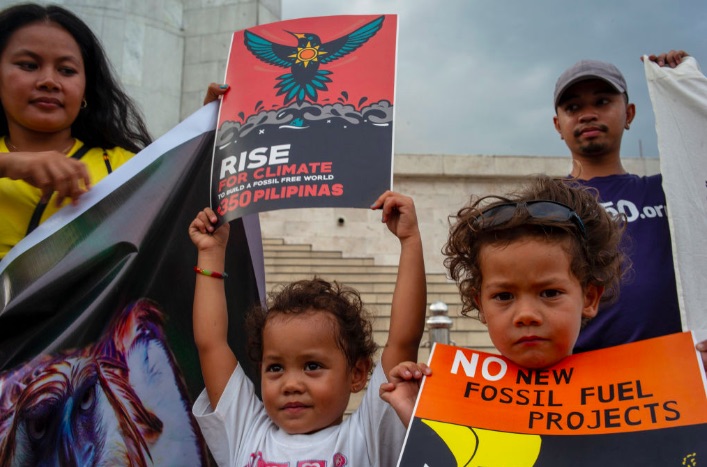
As the world wakes up to urgency of keeping global warming below 1.5C, a major milestone has been reached in the worldwide movement to stop investments in the fossil fuel companies driving the climate crisis. Over 1000 institutions with managed investments worth almost USD $8 trillion have committed to divest from fossil fuels.

Since 2012 the number of institutions commiting to fossil fuel divestment has increased rapidly and spread globally. From 181 institutions and $50 billion worth of assets committed to divestment at the end of 2014, to almost $8 trillion today.

The reach and impact of this new global movement is huge, major institutions committing to remove, in whole or in part, nearly $8 trillion in assets from fossil fuel investments. The momentum has been driven by a people-powered grassroots movement, ordinary people on every continent pushing their local institutions to take a stand against the fossil fuel industry and for a world powered by 100% renewable energy.

In the financial world, divestment has taken on a momentum of its own as well. Fund managers and fiduciaries are increasingly aware of the risks of climate breakdown and deciding of their own accord to divest from morally unsound and financially risky industries.

The 1000th institution to divest is the Caisse des dépôts et consignations (CDC), which manages France’s public sector pensions, savings, and investments worth €173 billion (USD $196 billion). It recently announced that from 2019 it will no longer invest in companies that generate more than 10% of their business from coal. . . .

(continued in right column)

Question for this article:

Divestment: is it an effective tool to promote sustainable development?

(continued from left column)

What started as a trickle of early divestment announcements from pioneering progressive institutions like the Quakers and a small number of universities has now swept up some of the world largest pension funds and insurers, dozens of world-class universities, the world’s largest sovereign wealth funds, the country of Ireland, major capital cities, as well as philanthropic foundations, health associations and worldrenowned cultural institutions. . . .

The impact

While some continue to dismiss divestment, arguing it will have no discernible impact on the bottom line of fossil fuel companies, they miss the point of the movement entirely — Our theory of change is two fold:

1. Create an opportunity for millions of people to get directly involved in challenging the drivers of climate breakdown

2. Stigmatise the fossil fuel industry and reduce its power over politicians and climate policy. We measure how well the Fossil Free campaign is doing not only by the amount of money divested from any particular oil company.

We measure success by how publicly an institutions makes its Fossil Free commitments, by how many activists are taking action online and in the streets and by how socially acceptable it is to invest in or be publicly associated with the reckless fossil fuel industry.

When institutions as diverse as the British Medical Association, Caisse des Dépôts et Consignations (the French public financial institution), New York City, Capetown, the World Council of Churches, the Rockefeller Brothers Fund, Stockholm University, Tate Britain museums and Allianz Insurance all turn their backs on the fossil fuel industry, the signals are starting to get through loud and clear to a wide-cross section of society.

Fossil fuel companies have never had a worse reputation or been more on the defensive than today. Solar power, wind energy, tidal, geothermal and advances in battery storage and hydroenergy are leaping ahead of antiquated fossil fuels like coal and tarsands in terms of affordability, popular public support, and cost-effectiveness per kilowatt hour. The success and profile of the divestment movement has created the space for governments to advance climate policy and legislation, and in some cases to go further and directly challenge fossil fuel companies through litigation.

Pre-screening of the film “The Forgiven” starring Forest Whitaker at UNESCO

EDUCATION FOR PEACE .

An article from UNESCO

UNESCO hosted the pre-screening of the film “The Forgiven”, in the presence of Audrey Azoulay, Director-General of UNESCO, Forest Whitaker, Actor and UNESCO Special Envoy for Peace and Reconciliation, and Roland Joffé, Film Director, and Jean Lemierre, President of BNP Paribas, at UNESCO Headquarters in Paris, on 15 December 2018. The event, organized in partnership with SAJE Distribution and BNP Paribas, supported by Air France, closed UNESCO’s yearlong celebration of the 70th anniversary of the Universal Declaration of Human Rights.


© UNESCO / Fabrice Gentile

Audrey Azoulay expressed her delight that UNESCO, house of education, the sciences and culture, was chosen to screen the film “The Forgiven” at such a special occasion. Recalling the role of cinema in fostering exchange, understanding and empathy, the Director-General praised Forest Whitaker for his tireless efforts as UNESCO Special Envoy to “repair broken connections, particularly among youth populations.” Jean Lemierre added that “it is essential that companies engage with young people, and help empower them to take charge of their destiny.”

(review continued in right column)

(Click here for a French version of this article.)

Question(s) related to this article:

What are some good films and videos that promote a culture of peace?

(review continued from left column)

“The Forgiven” is a film based on the play The Archbishop and the Antichrist by Michael Ashton that tells a story involving Archbishop Desmond Tutu’s search for answers during the Truth and Reconciliation Commission, and his meetings with the fictional character Piet Blomfeld. After the end of apartheid, Archbishop Desmond Tutu (Forest Whitaker) is running the Commission and visits Cape Town’s Pollsmoor Maximum Security Prison to meet with Piet Blomfeld (Eric Bana), an ex-South African Defence Force officer and Afrikaner Weerstandsbeweging member, to assess his candidacy for amnesty. Blomfeld is a potential witness to murders committed during the time of Apartheid, particularly the murder of the teenage daughter of Mrs Morobe, who begs the Archbishop to find answers about her missing daughter.

The film’s message of forgiveness and healing as prerequisites for just and compassionate societies especially resonates this year as we celebrate the 70th anniversary of the Universal Declaration of Human Rights and 100 years since the birth of Nelson Mandela.

“It is always inspiring to see people coming together to watch a movie about justice, ” said Forest Whitaker. “It is really an honor to be part of the UNESCO community – such a beautiful context for the film to be shown – a context of education, of bringing peace in the minds of people. I hope that the movie conveys the message of peace-building of which I learned so much in South Africa.”

The pre-screening was followed by a discussion with Roland Joffé and Forest Whitaker moderated by Nada Al-Nashif, Assistant Director-General of UNESCO for Social and Human Sciences. For Joffé this film aimed to bring to the fore the humanity that is inherent in and connects every individual. Whitaker noted how important it is that every person decides to take a stand in favour of human rights. “We have to look even at the smallest of situations and see how we can change them. You can do it … with your heart! Change will occur.”

“The Forgiven” was screened at the London International Film Festival in October 2017 and was released in the United States of America on 9 March 2018. The film will be released in France on 9 January 2019.