Tag Archives: Europe

Report of the 2nd International Conference on “Peace Education for Peacebuilding” (Armenia)

… EDUCATION FOR PEACE …

An article from the Global Campaign for Peace Education

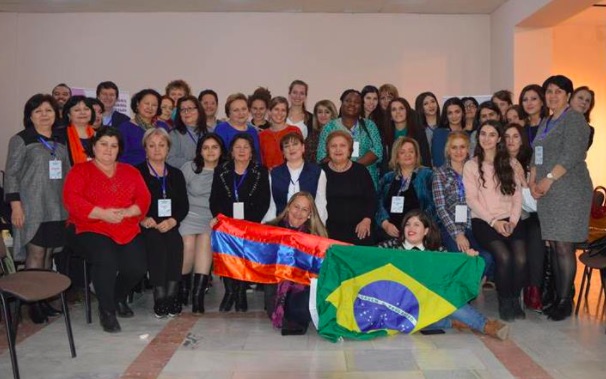
The international conference has passed, but the impressions gained during the event [Gyumri, Armenia, December 1-2, 2017] and the fruitful collaboration among the 130 participants from 25 countries remain. It was the second conference on peacebuilding, hosted by “Women for Development” NGO, follow-up of the one in 2007. While the first event intended to present mainly the work of WFD itself, this year’s conference also facilitated the intellectual exchange of others, offering platform, voice and translation and bringing together different field specialists. Among the keynote speakers were Werner Wintersteiner (Austria), Jennifer Batton (USA), Sanam Naraghi-Anderlini (UK), Isabella Sargsyan (Armenia), Gulnara Shahinian (Armenia).


Conference participants

Speakers from Austria to Australia, Ghana to Colombia and Netherlands to Japan, reflected on past experiences and proposed future goals on diverse topics such as domestic violence, violent extremism, global citizenship, Caucasian conflict resolution and many more. The participants and the speakers affirmed that all the challenges and problems faced worldwide in establishing peace and in the area of peacebuilding demand active participation of various representatives of the society.

Through the conference, they expressed the appeal to contribute to the expansion of peace education through formal and non-formal teaching and the creation of a culture of peace among schoolchildren and youth as an essential means to establishing peace and preventing violence and terrorism.

The conference and the following workshop-day enabled practitioners form different continents to introduce their best practices, success stories, to expand their professional network and to exchange opinions on the ongoing challenges, which accompany the implementation of peace education worldwide. Surprisingly, there were plenty of similarities in spite of the specific regional context.

(continued in right column)

Question for this article:

Where is peace education taking place?

(continued from left column)

The impact and the outreach of the event would not have been possible without the support, sponsorship and collaboration of GPPAC’s Peace Education Working Group taking part actively on the side of the speakers.

Jennifer Batton, keynote speaker and experienced professional, opened the conference and offered priceless input on peace education in the United States. Her GPPAC colleagues: Iryna Brunova-Kalisetska (Ukraine), Carlos José González Hernández (Colombia), Charlotte Divin (Netherlands), Tatjana Popovic (Serbia), Ahmed Bukli (Iraq), Kesia-Onam Bijou Birch (Ghana), Gary Shaw (Australia), Nina Bagdasarova (Kyrgyzstan), Kazuya Asakawa (Japan) and Isabelle Peter (Switzerland) all contributed both to the conference programme and later provided hands-on exercises during the post-conference workshop day in Gyumri Commercial Center on 03.12.

The official host of the conference itself was Gyumri Technology Center, the most modern equipped building in the city, which offered great opportunity for impeccable programme flow, parallel workshops and cozy time between the sessions during the coffee-break and the lunch on the spot.

The conference offered the participants the opportunity to get to know the Armenian culture, including the typical folks dance Khochari, performed together with a local dance group in the Youth Center Hayordac Tun. There they were also shown an exhibition of children’s painting – the result of the art contest “I am a Sower of Peace”, carried out annually by “Women for Development” NGO. Another evening highlight was the visit to Black Fortress – an old abandoned Russian fortress with spectacular architecture.

The closing of the conference was marked by classical live music, a lot of positive energy and mutual gratitude for the productive exchange and, last but not least, by the celebration of WFD NGO 20th anniversary since its foundation in December 1997 in Gyumri.

There was great interest in the work of the international speakers from the side of the local residents in Gyumri. Following the conference, GPPAC Peace Education Working Group members Kesia-Onam Bijou Birch, Carlos José González Hernández and Ahmed Baqir Bukli were welcomed by the rector and the professors of Shirak State University. The guests met with the rector Sahak Minasyan and vice-rector Anahit Farmanyan who asked for a possible collaboration with the GPPAC members via WFD NGO, for sharing the experience and lessons learnt in different countries with the purpose to integrate “Conflict management education” in the University in a non-formal education method.

“Women for Development” NGO as host of the international conference “Peace Education for Peacebuilding” and as an active player on the field for the past 15 years believes that the integration of peace education into the education system worldwide is one of the most important steps in the journey of achieving peace. That is at the same time the reason to dedicate its efforts towards the goal and the motivation for the future projects.

Programme unites Greek and Turkish Cypriot students

DISARMAMENT & SECURITY .

An article from the Famagusta Gazette

A special programme bringing together 2500 students from 50 Turkish Cypriot and 50 Greek Cypriot schools from all areas of Cyprus will continue this year.

“Grounded in a holistic understanding of a Culture of Peace and Non-Violence, the programme is being implemented in two stages: in the first stage, experienced trainers visit the schools of participating students and teachers in both communities to facilitate activities that deal with stereotypes, extremism and intolerance and prepare them for bi-communal contact at the H4C,” a UNFICYP press release announced [UNFICYP=United Nations Peacekeeping Force in Cyprus].

(Continued in right column)

Question related to this article:

Can Cyprus be reunited in peace?

(Continued from left column)

In the second stage, groups of students from the two communities are paired and meet in the buffer zone where they participate in either peace education workshops with the AHDR or sports activities with PeacePlayers International.

The ‘Imagine’ programme is supported by the Federal Foreign Office of Germany and has received special praise by the United Nations Secretary General in his two latest Reports on the United Nations operation in Cyprus, the press release concluded.

The `Imagine` programme runs under the auspices of the Technical Committee on Education and implemented by the Association for Historical Dialogue and Research (AHDR) and the Home for Cooperation (H4C) with the support of the UN Peacekeeping Force in Cyprus.

Norway: ‘Biggest Pile of Money on the Planet’ To Dump Fossil Fuels Holdings

. . SUSTAINABLE DEVELOPMENT . .

An article by Julia Conley for Common Dreams (reprinted according to terms of Creative Commons Attribution-Share Alike 3.0 License)

Environmental advocates on Thursday applauded the latest organization to shift away from continued support of the fossil fuel industry—Norway’s national bank.

In a move 350.org co-founder Bill McKibben called “astonishing,” Norges Bank, which oversees the world’s largest sovereign wealth fund, advised the Norwegian government to dump all of its shares in oil and gas companies, leaving those entities out of its $1 trillion fund.


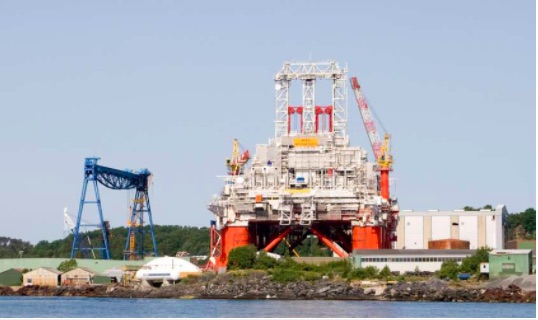
About six percent of Norway’s sovereign wealth fund is invested in oil and gas companies—but the countries central bank advised that all those shares be dumped, amid falling oil prices and expectations of a dim future for fossil fuels. (Photo: Guy Beauchamp/Flickr/cc)

The bank’s decision comes two years after Norway’s parliament approved a measure calling for the fund to begin divesting from coal companies.

Norges Bank made the new recommendation in light of falling oil prices. Oil and gas are seen as increasingly risky investments as more countries turn to cleaner energy sources in order to meet requirements under the Paris climate agreement, which aims to keep global warming under two degrees Celsius above pre-industrial levels.

(continued in right column)

Question for this article:

Divestment: is it an effective tool to promote sustainable development?

(continued from left column)

While Norway has built much of its sovereign wealth through oil and gas development in the past—six percent of the fund is invested in fossil fuels—it’s now home to a fast-growing solar power sector, with solar installations rising by 366 percent from 2015 to 2016.

“It is not surprising that we see the world’s largest sovereign wealth fund managers no longer prepared to take the increasing risk associated with oil and gas assets, which do not have a long-term future,” said Paul Fisher of the Cambridge Institute for Sustainability Leadership, in an interview with the Guardian.

McKibben compared the bank’s recommendation to “the moment when the Rockefellers divested the world’s oldest oil fortune” in 2014, when the heirs to Standard Oil said that if founder John D. Rockefeller were alive in the 21st century, “he would be moving out of fossil fuels and investing in clean, renewable energy.”

“This is the biggest pile of money on the planet, most of it derived from oil—but that hasn’t blinded its owners to the realities of the world we now inhabit,” said McKibben.

Nicolò Wojewoda of 350.org Europe was also hopeful about the implications of Norges Bank’s decision, calling it “yet another nail in the coffin of the coal, oil, and gas industry.”

“To stop climate catastrophe, fossil fuels need to stay in the ground. Investing in them is no longer financially sound, nor morally acceptable, and this proposal is a clear recognition of that,” Wojewoda added.

Spanish action to support the Treaty on the Prohibition of Nuclear Weapons

DISARMAMENT & SECURITY .

An article by Rafael de la Rubia from Pressenza (reprinted according to terms of Creative Commons Attribution 4.0 International license)

On 7 July 2017, at the initiative of the United Nations, 122 countries concluded negotiations and elaboration of a Treaty on the Prohibition of Nuclear Weapons. Subsequently, on 20 September 2017, the process of signing the treaty was opened, with the well-founded expectation that more than 50 countries would ratify it as a condition for the treaty to enter into force.

On 15 November, in the Spanish Congress of Deputies, an event will be held to address the global context of the deterioration of global security and the increasing risk of the use of nuclear weapons and to review the main international initiatives that are under way to prevent it.


(Click on image to enlarge)

In a global context in which, once again, the danger of nuclear war is growing following successive nuclear tests by North Korea and the threat by President Trump to unleash “fire, fury and frankly power, the likes of which this world has never seen before,” it seems necessary for the Spanish Parliament to debate this issue and adhere to the international treaties and actions under way.

(Continued in right column)

(Click here for a French version of this article or here for a Spanish version)

Question related to this article:

Can we abolish all nuclear weapons?

(Continued from left column)

Several social organisations such as World without Wars and Violence, the Spanish Peace Research Association, the Peace Culture Foundation and the Women’s International League for Peace and Freedom – Spain, among others, have taken the initiative to take this debate to the Spanish Parliament, calling on parliamentary groups to take a stand on this matter and to ask the government why Spain is not among those 122 countries that have been working on the elaboration of this Treaty, and calling on all deputies and senators in Spain to attend the event that will take place on Wednesday, the 15th of November, at 4pm in the Clara Campoamor Hall in the Spanish Congress.

In the event the global context with respect to nuclear weapons and the NPT will be discussed, as well as other nuclear disarmament initiatives. In addition, the Network of Parliamentarians for Nuclear Non-Proliferation and Disarmament (PNND), an international inter-parliamentary forum with the participation of more than 700 parliamentarians from 75 countries working on nuclear disarmament, will also be presented.

To this end, Alyn Ware, the international coordinator of PNND, has been invited to participate. In 2009 he was awarded the Right Livelihood Award, popularly known as the Alternative Nobel Peace Prize, for his “effective and creative work over two decades to promote peace education and rid the world of nuclear weapons”. These awards have been presented annually since the Swede, Jakob von Uexkull, established them in 1980 to “honour and support those who propose concrete and exemplary solutions to the challenges of today’s world”. In 2009, Ware was reported by the press as “a tireless defender of peace and nonviolence”.

Furthermore, the Conference on Nonviolence in preparation for the 2nd World March for Peace and Nonviolence which will take place at Cybele Palace, headquarters of the Madrid City Council, on Friday 17, will review the initiatives for nuclear disarmament and will explicitly support Spain’s accession to the Treaty on the Prohibition of Nuclear Weapons.

Contact: info@mundosinguerras.es

Historic peacebuilding program launches in Bosnia and Herzegovina

. TOLERANCE & SOLIDARITY .

An article from the Catholic News Agency

When Pope Francis visited Bosnia and Herzegovina two years ago, he found a country still healing from a devastating conflict two decades earlier. The three-year Bosnian War killed around 100,000 people and displaced a million more. Although ethnic and religious violence tapered off after the peace treaty of 1995-96, deep cultural and religious divides are enduring.

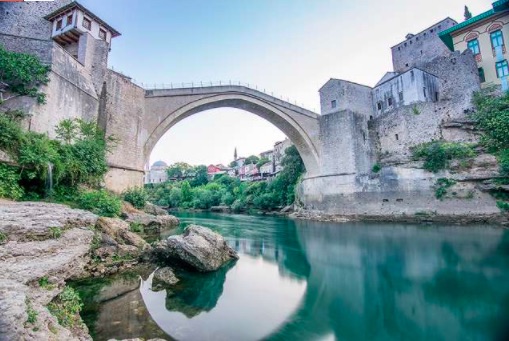
Now, a historic master’s program has been created in Sarajevo that primarily focuses on Interreligious Studies and Peacebuilding, taught by the three major theological seminaries of Catholic, Islamic and Orthodox thought.

“This program represents efforts of the three faculties to work, on a scientific basis, on peace-building and reconciliation in this country,” said Darko Tomasevic, the dean of the Catholic Theological Faculty at the University in Sarajevo.

“Above all, we want to ensure as good a foundation as possible for a better future for Bosnia and Herzegovina, in the capacity that we, as institutions within religious communities and churches, can provide,” Tomasevic said.

The first of its kind in the region, the master’s program was coordinated by Catholic Relief Services, in conjunction with the Faculty of Islamic Sciences, the Catholic Theological Faculty and Orthodox Theological Faculty of St. Basil of Ostrog.

According to Zuhdija Hasanovic, the dean of the Faculty of Islamic Sciences at the University in Sarajevo, the program is an effort to be more intentional about healing the country’s divisions with an attitude of respect.

“Each of the faculties works on developing a sense of respect for ‘others,’ or different ones, but this study program is something special and it will, hopefully, yield results,” he said.

(continued in right column)

Question related to this article:
 

How can different faiths work together for understanding and harmony?

(continued from left column)

The first class began on Oct. 26, and the program will run over the course of the next year. Professors and teachers from all three seminaries will lead the program, which now includes 23 students. The course is aimed at students who are have backgrounds in theology, social sciences and humanities, and are interested in interreligious studies and peacebuilding.

“Joint-study programs like this one offer a unique opportunity to use religious as a catalyst for peace,” stated Marc D’Silva, the CRS country representative in Bosnia and Herzegovina.

“This program will show how religious institutions can train a new generation of religious and civil society leaders to be advocates for a more just and better society,” D’Silva continued.

The master’s program is currently only being offered to local students, but there are hopes of expanding the course to international students. CRS is also promoting scholarships, internships and job opportunities with local government officials and civil society organizations in the country.

The official international humanitarian agency of the Catholic community in the U.S., Catholic Relief Services has had a presence in Bosnia and Herzegovina since 1993, when it began offering emergency relief services to victims of the war in Sarajevo. Post-war, CRS continued to offer aid by helping displaced families return to their homes. The organization has a continued presence in the country today through education, psychological support, rebuilding homes and promoting livelihoods.

Pope Francis’ pastoral visit to Bosnia and Herzegovina in 2015 was seen as an important step in unity, in a nation where religion is closely tied to ethnicity. Forty percent of the country’s 3.8 million population are Muslim/Bosniak and another 40 percent are Orthodox/Serbian. Fifteen percent are Catholic/Croats.

“There is no other foundation on which the culture of peace can be based, but on interreligious dialogue,” stressed Vladislav Topalovic, dean of the Orthodox Theological Faculty “St. Basil of Ostrog” of the University in East Sarajevo.

“It is our only exit, our only path on which we can base that culture of peace, and trust among all of us in Bosnia and Herzegovina.”

Malta: Launching The Global Council For Tolerance And Peace (GCTP)

. . DEMOCRATIC PARTICIPATION . .

An article from the GCTP News

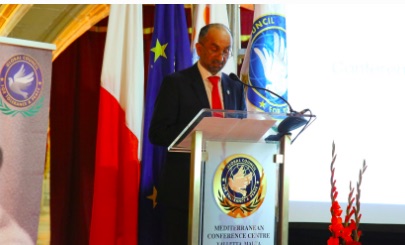
The Global Council for Tolerance and Peace was launched today at a major official ceremony held at the Mediterranean Conference Center in Malta at the joint invitation of the United Nations Population Fund (UNFPA), the Government of Malta and GCTP.

Malta’s Prime Minister Joseph Muscat announced his support for the council, calling for fighting poverty, injustice, ignorance and discrimination in order to build lasting peace. He affirmed that he believes in the goals of the GCTP, its mission and its ability to make the required change at the global level and that he will not only support it but will work with it, noting the importance of establishing the International Parliament for Tolerance and Peace, stressing the neutrality of Malta and its commitment to human rights, tolerance and peace.

Ahmed bin Mohammed al-Jarwan,
president of the Global Council for Tolerance and Peace

The ceremony was attended by the Prime Minister of Malta, a number of ministers of foreign affairs, education, youth and culture from several countries, representatives of the United Nations and a host of ambassadors, heads of international organizations, universities and media. It began with a documentary film that included a speech by UN Secretary-General Antonio Guterres, warning that “our world faces many great challenges, conflicts, inequality, deadly intolerance and security threats, including nuclear weapons. We have the tools and the will to overcome these challenges.

Guterres said: How can we help millions of people suffering from large-scale wars and prospects, almost never-ending? There is no winner in these wars, everyone loses especially that the new global terrorist threat affects us all and destabilizes the stability. Let us put peace first, let peace always be our goal and guide.

The master of ceremony Joseph Deeb started the day. In addition to the Maltese Prime Minister’s speech, Deputy Prime Minister, and Minister of Foreign Affairs of the Republic of Kosovo Behgjet Pacolli and Foreign Affairs Minister of Malta, Carmelo Abela, who both stressed the importance of launching the Global Council for Tolerance and Peace at this particular time in the face of terrorism, extremism, hatred, racism etc. and the urgent need for joint global action based on the right education of the youth and the empowerment of women to build a better tomorrow for future generations.

(Article continued in right column)

Question related to this article:

How can we develop the institutional framework for a culture of peace?

(Article continued from left column)

Address by the President of the Council

“The danger of terrorism, fanaticism, hatred, racism, ethnic cleansing, sectarian and racial extremism is increasing and growing like cancer … These phenomena go beyond the limits of reason and the borders of nations and threaten the lives of people, citizens of different countries and civilizations, threaten development and security and jeopardize world peace.” Said Ahmed bin Mohammed al-Jarwan, president of the Global Council for Tolerance and Peace. “Convictions are no longer sufficient. It is no longer possible for armies and police alone to combat these terrible phenomena. No country or institution can rely solely on its own capacities to address the problem of terrorism, racism, extremism, violence, and discrimination.

We are here today for this reason, we are here to launch this global endeavor, the Global Council for Tolerance and Peace.”

“This newly created Council is an international organization based on democratic principles and derives from international law and agreements its own system of work.” Added H.E. al-Jarwan. “The Council signed a memorandum of understanding with the United Nations Population Fund (UNFPA) for cooperation and the building of international partnerships. The Council is composed of eminent international figures who maintain a sound reputation and experience in areas related to peace and tolerance.”

“Among the roadmap in the strategic planning of the Council are the following:

• Establish an international parliament for tolerance and peace, raise tolerance values, promote preventive diplomacy, support regional and global youth initiatives, launch a global prize for those who contribute to the protection of world peace, and develop and implement joint programs, events, and conferences to promote tolerance and peace.”

Al-Jarwan added: “I am honored at the launch of the Global Council for Tolerance and Peace to invite parliaments and think tanks of young people, intellectuals, economists, sociologists and scholars to join this Council in order to spread a culture of tolerance and peace and to be the force of change on the world stage.”

He concluded by saying: “Together, we can build a more tolerant and secure world.

Together we can build a future in which love triumphs over hatred, tolerance over revenge, openness over intolerance, and knowledge over ignorance.”

Dr. Louay Shabaneh, UNFPA Director for the Arab Region, confirmed the commitment of the international community to the initiative of the Global Council for Tolerance and Peace, and the partnership with the Council to achieve the goals of development, tolerance and human rights.

Prague: International youth conference: Reaching High for a Nuclear-Weapon-Free World

DISARMAMENT & SECURITY .

An article from Abolition 2000

A conference for young academics, professionals and activists to advance initiatives and build cooperation for nuclear disarmament will be held just before the Prague Insecurity Conference, which flows on from the Prague Agenda Conferences held annually since former U.S. President Barack Obama gave his historic speech in Prague putting forward the vision and commitment to achieve a nuclear-weapon-free world.


(Click on image to enlarge)

There is now a different U.S. administration, as well as new political realities and international conflicts to be addressed in order to reduce the risks of nuclear confrontation and make progress toward the elimination of nuclear weapons. There are also new opportunities including the Treaty on the Prohibition on Nuclear Weapons (TPNW) adopted at the United Nations in July 2017, and the UN High-Level Conference on Nuclear Disarmament (UNHLC) which will take place in May 2018.

A key focus of the conference will be to explore the political and economic dynamics of nuclear weapons policies, and the ways in which youth can engage with parliamentarians, governments, UN agencies and other civil society networks to influence policy and support the UN processes, especially the 2018 UNHLC.

The conference will include workshop sessions, networking, action planning and a visit to the ATOM Museum, a former nuclear weapons depot approximately one-hour drive from Prague.

(Continued in right column)

Question related to this article:

Can we abolish all nuclear weapons?

A UN High-Level Conference on Nuclear Disarmament: Distraction or progress?

(Continued from left column)

Workshop sessions, with opening presentations by youth, include:

1 Nuclear risk reduction and incremental disarmament measures;

2 Nuclear weapons and sustainable development – economic aspects including nuclear divestment;

3 The TPNW and other international law prohibiting nuclear weapons;

4 2018 UNHLC on nuclear disarmament;

5 Engaging parliamentarians, UN, mayors and other key constituencies;

6 Planning youth actions and intergenerational cooperation.
Click here for the conference flyer.

To register please contact Marzhan Nurzhan marzhan@pnnd.org

Cosponsors: Abolition 2000, Basel Peace Office , Parliamentarians for Nuclear Non-Proliferation and Disarmament , Střediska Bezpečnostní Politiky, Unfold Zero and Prague Vision

The conference is being organised by the Abolition 2000 Youth Network, a working group of Abolition 2000, the global civil society network to eliminate nuclear weapons. The Abolition 2000 youth network brings together young activists from Abolition 2000 member-organisations and affiliated networks including Amplify, Ban All Nukes generation (BANg), Chain Reaction 2016, CTBTO Youth Group, Global Zero, IALANA, ICAN, IPPNW Student Network, PNND youth, Parliament of the World’s Religions youth, Pugwash Student and Youth, UNFOLD ZERO, Youth Future Project and others.

Madrid will again host the World Forum for Peace in 2018

.. DEMOCRATIC PARTICIPATION ..

An article from La Vanguardia (reproduction strictly for non-commercial purpose)

The Spanish capital will host again in November 2018 the second edition of the World Forum for Education for Peace which it held in April this year, with the participation of over 400 international representatives who sought solutions to the different types of urban violence.


Manuela Carmena

Mayor Manuela Carmena, has announced that Madrid will once again host the event in remarks to journalists at the end of an event commemorating United Nations Day. She said that the Spanish capital has “identified with peace as a possible instrument of governance and development. ”

(continued in right column)

(Click here for the Spanish original of this article)

Questions for this article:

How can culture of peace be developed at the municipal level?

(continued from left column)

The forum, promoted by the mayor of Madrid and her Parisian counterpart, Anne Hidalgo, will stay for the second consecutive year in Madrid because “it is necessary to fix well” the forum, according to the mayor, who wants “Madrid to remain the capital of peace”.

In the first edition held between 19 and 21 April, experts from more than 70 countries, a hundred of them mayors, addressed solutions to various forms of interpersonal violence, which has generated between 2000 and 2014 the death of six million people, more than those killed in wars.

The King inaugurated the meeting in which local governments and civil society organizations signed the “Madrid Commitment of Cities of Peace” to promote “a culture of peace”, to create actions against violence that go beyond “punishment” and fight against corruption.

The meeting addressed different types of violence: youth gangs, racism, homophobia, gender violence, school bullying and urban inequality.

On this occasion, according to EFE municipal sources, the team of Manuela Carmena will work to include personalities of the highest level, and the Forum will be attended by the United Cities and Local Governments (UCLG).

The first edition was held in the impoverished district of Villaverde (in the south of the Spanish capital), which welcomes large numbers of emigrants and unemployed citizens.

Spain: Melilla Unesco Center will host the presentation ‘Islam: Culture of peace and non-violence’

. TOLERANCE & SOLIDARITY .

An article from Islamedia (translated by CPNN)

The Unesco Center in Melilla announced yesterday [October 17] the celebration of the conference: ‘Islam: Culture of peace and non-violence’. The talk will take place in the Salón de Grados of the Campus of the University of Granada in Melilla, at 19:30 hours.


Amaruch Mohamed and Juan Antonio Vera (Photo: Christian Calvo)

The speaker, Amaruch Mohamedi Amaruch, is a doctor in the area of ​​Didactics of Language and Literature (University of Granada) and has obtained the Degree of Expert in Islamic Legislation by the European Institute of Human Sciences (in Chateau Chinoun, France).

Islamic religion

He also has linguistic competence in Tamazight and has completed the Higher Cycle of Arabic and French by the Official Language School of Melilla. He is currently a teacher of Islamic Religion on the staff of the Ministry of Education, Culture and Sport.

Common origin

In his presentation, the lecturer plans to delve into the common origin of the three major monotheistic religions of the world, the Jewish, Christian and Muslim faiths, in the figure of the prophet Abraham and religion in young people today.

This conference is an event organized by the Unesco Center of Melilla, with the sponsorship of the Institute of Cultures and with the collaboration of the University Campus of Granada in our city. Last week another conference was held in the series that addressed the melting pot of cultures that is Spain.

(Click here for the original Spanish version of this article).

Question related to this article:

Europe: International Day of Peace

FREE FLOW OF INFORMATION

A survey by CPNN

The following 96 events in 27 European countries were listed in “Google News” during the week of September 21-28 under the key words “International day of peace”, “journée internationale de la paix”, “dia internacional de paz” and “dia internacional da paz”. In addition, this includes many events listed on the following websites:
“>Global Feast for Peace,
“>Peace Wave,
UN event map for the International Day of Peace.
Campaign Nonviolence
– and the twinning project “I want peace”.
No doubt there were many events listed on the Internet in national languages other than those for which we searched; this can be seen from the map where events were much more clustered on the left where national languages are English, French, Spanish and Portuguese.
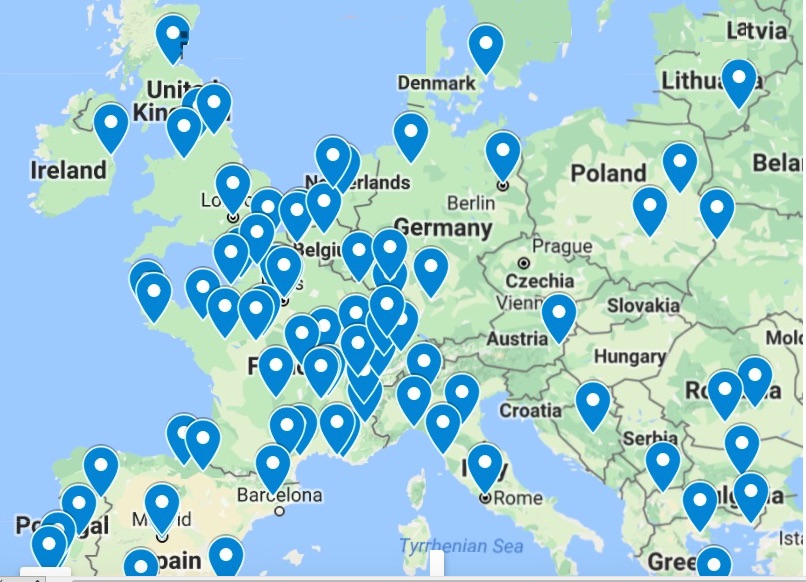


Here are excerpts from the articles originally published in French on the Internet (translations by CPNN):

MOUSCRON, BELGIUM : A colorful and symbolic exhibition of children’s art for peace was inaugurated on Wednesday, the eve of the International Day of Peace, in the reception hall of the Administrative Center of Mouscron

FRANCE, over 50 cities : On the occasion of the International Day of Peace promoted by the United Nations and on the initiative of Mouvement de la Paix and its associatied trade union and institutional partners, including L’Humanité many meetings are scheduled in over fifty cities [capitalized with links for those with with Internet articles]. In the Alpes de Haute-Provence in Manosque; in the Hautes-Alpes at Laragne-Montéglin, GAP and La Roche-des-Arnauds; in Ardèche to Tournon-Tain; in the Ardennes in Charleville-Mézières, in Bouches-du-Rhône in MARSEILLE and Aubagne; in the Calvados at Caen and Arromanches; in Correze; in Haute-Garonne in Toulouse; in the Hérault at Juvignac; in Ille-et-Vilaine in RENNES; in Isère at Saint-Martin-d’Hères; in the Lot at Cahors; in the Morbihan at Hennebont and Lanester; in the Nièvre; in the Pyrenees-Orientales in Alenya; in Saône-et-Loire at LE CREUSOT; in Savoie in Chambéry; in Paris ; in the Yvelines at Achères, CARRIÈRES-SOUS-POISSY and POISSY; in the Tarn at Albi, Cordes-sur-Ciel, Damiatte, Gaillac, Saint-Benoît-de-Carmaux, Senouillac; in the Hauts-de-Seine at Nanterre and Malakoff; in Seine-Saint-Denis in Tremblay-en-France, Saint-Ouen, Saint-Denis, Bagnolet, Stains, Montreuil, Aubervilliers, Blanc-Mesnil, Bobigny and Villetaneuse; in the Val-de-Marne in Villejuif, Boissy-Saint-Léger and Vitry-sur-Seine.

In addition to the preceding list, internet information is available for marches and other initiatives associated with the Mouvement de la Paix in the following cities in France:

ANGERS, BESANÇON , BÉZIERS, BLOIS, BREST, CORRÈZE,GONFREVILLE L’ORCHER, MARTIGUES, MOULINS, QUIMPER, RIVE-DE-GIER, SAINT-ETIENNE, SENS, STRASBOURG, THIONVILLE

AMBOISE, FRANCE : Two paintings were unveiled yesterday morning in the courtyard of the Paul-Louis-Courier school in Amboise, as part of the International Day of Peace organized by the United Nations. These drawings were made last June by the three classes that participated in the action proposed by the local InnerWheel club, which, like every year, relays this international day by establishing a partnership with a school in the city.

BOULOGNE-SUR-MER, FRANCE : Photo of gathering around the Ginkgo biloba tree for the International Day of Peace.

CHAMPIGNY, FRANCE : This Thursday, the new collective Campinois pour la Paix invites everyone to participate in a projection-debate around the film “The bomb and us”, within the framework of the International Day of the Peace.

DIEPPE, FRANCE : In order to celebrate the International Day of Peace on September 21, the municipality of Dieppe has invited young and old to share in the forecourt of the town hall to draw a dove with colored chalk. “This is the 9th time that the city of Dieppe has participated in the demonstrations in favor of peace,” explains Yves Bégos, Dieppe city councilor.

EMBRUN, FRANCE : Videos, music, choir on the theme of peace

LILLE, FRANCE : Gathering for the “International Day for Peace” organized by AFPS 59/62, Northern Palestinian Community, LDH, MRAP, CSP59, Collective Africa, Communist Coordination, Movement of Young Communists, Tourcoing Gaza Solidarity peace and the call of the AFD 59/62 joined by MRAP, LDH, MJC, Collectif Afrique, … more than fifty people demonstrated this Wednesday 20/09 from the Gd Place to the Prefecture of Lille for the liberation of Salah. Portraits of Salah and Marwan Barghouti were hung on the “balcony” of the North Theater, denouncing the links of the French State with the colonial state and demanding the immediate release of Salah Hamouri. More than a dozen of our Palestinian friends were present.

LONGCHAMP, FRANCE : The Longchamp Ceramics and Crafts School in its own way appropriated the International Day of Peace by making students think and create works of art. This first initiative for the establishment will perhaps lead to the creation of a charitable association.

OUISTREHAM RIVA-BELLA, FRANCE : On September 21st, on the occasion of the International Day of Peace, the Maison de l’Europe de l’Eure – Center Europe Direct is organizing the Citizen Dialogue “Let’s talk about Europe in the Normandy region: Europe, Peace … Really ?”.

PEYRIAC-MINERVOIS, FRANCE : Festival of Peace, in Peyriac-Minervois, sunday, september 24, 2017, Foyer of Campagnes

SAINT JULIEN MONTDENIS, FRANCE : Shared picnic and festive afternoon to celebrate International Day of Peace

UNIEUX, FRANCE : Concert – Chorale, International Day of Peace, 21/09/2017 at 20h00, Théâtre Le Quarto, Organized by the Town Hall of Unieux

SAILLON, SWITZERLAND : In order to create a public event and support this UN initiative, several spiritual associations of the Valais have decided to organize a meditation at a symbolic place: the vinyard of Farinet. It is open to any belief or spiritual practice, welcome on September 18, 2016 from 2.30 pm.

GENEVA, SWITZERLAND : Location: Palais des Nations. Building on the success of the four previous editions, the Geneva Peace Talks will be held for the 5th time on September 21, 2017. Organized under the theme “Building bridges”, the purpose of the Geneva Peace Talks is to promote the end of closed to work together to generate common solutions and understanding in times when uncertainty has become the new standard. By telling us their stories, speakers will share their experiences and ideas, inspiring and discussing the role that each and every one of us can play in building bridges.

* * * * * * * *

Here now are excerpts from articles published on the Internet originally in English:

ZENICA, BOSNIA-HERZOGOVINA : As part of planning for the International Day of Peace set to take place on 21st September, 2017, GNRC–Bosnia and Herzegovina led by the Women’s Association for Interreligious Dialogue in Family and Society (Mosaic) working in partnership with the World Vision International, held an awareness workshop for women in Zenica.

STOCKHOLM , SWEDEN – In celebration of International Day of Peace today, Yogayama and Anna Gordh Humlesjö invite you to celebrate Yoga for Peace with us this Saturday, September 23rd. Practicing yoga alone might not end all conflict in the world but when practicing yoga and meditation and cultivating peace within ourselves we can hopefully, through our conscious actions, contribute to more peace in the world.

BINGLEY, UNITED KINGDOM – People from all cultures mark International Peace Day at Bankfield Mercure Hotel in Bingley.

CHESHIRE, UNITED KINGDOM : At the Arches, Community Primary School, today, was the International Day of Peace. We talked about what peace means to us and where we go to get our 5 minutes of peace, just like Mrs Large. For peace in our classroom it is important that we respect each other. We talked about how we can respect each other. We decorated hands to show our promise to respect each other and learn together.

LONDON UNITED KINGDOM : Gala performance in partnership with Children of Peace and The International Peace Institute to celebrate the opening of ‘Oslo’ in the West End.

(Survey continued in right column)

Question for this article

What has happened this year (2017) for the International Day of Peace?

(Survey continued from left column)

Here now are excerpts from articles published on the Internet originally in Spanish or Portuguese (translations by CPNN):

ALICANTE, SPAIN : Celebration of the International Day of Peace in the Maloca Workshop with Exhibition of Children’s Drawing Competition on Peace . . . Poems for Peace, Dance Perfomance for Peace, Photocall

CORDOBA, SPAIN : September 20 Mural painting in schools – September 21 Raising the flag of Peace in the Plaza San Martín. Lecture by the Secretary of Health. September 22 de septiembre Closing: Festival for love of life

EUSKADI, SPAIN : The Youth Council of Euskadi (EGK), in collaboration with the Bilbao City Council, will celebrate the #GazteokBizikidetzan event on Thursday, September 21, on the occasion of the International Day of Peace, in which a group of young people from Euskadi will meet in the Plaza del Arriaga to discuss and reflect on coexistence.

PINTO, SPAIN : The City of Pinto celebrates this date with activities especially aimed at children and young people of the municipality. This includes the reading of a manifesto drafted by the Council of Children of Pinto which will highlight the defense of peace and various proposals to maintain it from the point of view of the children of the municipality.

MADRID, SPAIN : On Thursday, September 21, the Movement for Peace, MPDL, organizes a public event in the Plaza de Callao in Madrid at 7 pm to commemorate the International Day of Peace.

PAMPLONA, SPAIN : On the occasion of the commemoration of the International Day of Peace, which is celebrated on September 21, the Government of Navarre has organized a recital of music and poetry at the Auditorio de Barañain on Wednesday, at 7:30 p.m., as a preamble to the event institutional event of the 22nd, in which Tudela will recognize the work of Federico Mayor Zaragoza in favor of a culture of peace.

ROME, ITALY : To celebrate the International Day of Peace, on Thursday (21), the Coliseum in Rome will receive 7,000 drawings made by students from more than 30 different countries. The exhibition is called “Colors of Peace” and its purpose is to share a future of peace and unity. It begins today (21) and will be available to the public until September 24. The drawings of the students will be hung in the grids that surround the monument, creating the concept of a great union through the paintings.

BELMONTE, PORTUGAL : An initiative of the Municipal Library of Belmonte, the International Day of Peace is celebrated on September 21 on Rua Pedro Álvares Cabral. All participants are urged to dress in white. After the march the participants will go to the mall where there will be many activities.

BRAGANÇA, PORTUGAL : 400 students from the Emídio Garcia School Group in Bragança marked the International Day of Peace in front of the Cathedral of Bragança. The children and elderly people participated through poetry and music allusive to the theme of peace. In the end they built a dove, the symbol par excellence of peace.

LINDA-A-VELHA, PORTUGAL : The Lourdes Norberto Municipal Auditorium hosted a 21 September International Peace Day. In the debate, the following spoke: Carlos Carvalho from the CPPC [Portuguese Council for Peace and Cooperation ] National Directorate, Amilcar Campos CPPC activist, Augusto Flor, President of the Portuguese Confederation of Recreation, Culture and Sport Collectivities, and Célia Portela from the Union of Lisbon Trade Unions / CGTP-IN, followed by a discussion with the participants. This was followed by a cultural act in which poetry was recited by Armando Caldas and Fernando Tavares Marques and a musical moment with the intervention of singer Batista.

MADEIRA, PORTUGAL : Today, the International Day of Peace calls for a a moment of reflection. In Madeira, a meditation will take place in the garden of Galeria dos Prazeres, starting at 7pm.

OLIVEIRA DO HOSPITAL, PORTUGAL : Three hundred children from the 1st CEB of the School Group of Oliveira do Hospital participated this Wednesday in a worldwide initiative, the International Labyrinth Marathon, to commemorate the International Day of Peace. It took place at Fiais da Beira in the replica of the Labyrinth of Chartres that is owned by the couple Lydus Kramer and Maaike Niemantsverdriet. As the children walked through the labyrinth, Graça Silva, a councilor of Education, welcomed those present for their participation in this worldwide movement that started here in the locality of Fiais da Beira.

RIO MAIOR, PORTUGAL : The city of Rio Maior was once again the stage of a series of initiatives aimed at marking the “International Day of Peace” including students of the various educational establishments of the city together drawing a symbol of human peace and an afternoon in which the musical animation was in charge of the School of Music.

SINTRA, PORTUGAL : Sintra’s Town Hall joins the celebrations of the International Day of Peace, with a symposium on the theme “Sintra as an example of communion between peoples and cultures”, on September 21 at 4:00 p.m., in the National Palace of Sintra.

In addition to the above events with pages on the Internet, there are a number of events in Europe listed on the event map for the International Day of Peace, including:

VILVOORDE, BELGIUM – Together with the local Flemish community, communities like the Congolese, Moroccan, Turkish and Spanish ones, share their culture with each other through food, artistic performances

TALLINN, ESTONIA – The Estonian Quakers are organizing a small public gathering to celebrate the UN Peace Day.

VILNIUS, LITHUANIA – 66 schools and kindergartens from Lithuania join the World’s events for the World Peace Day through meditation and Peace dance of the Earth.

MERSFOORT, NETHERLANDS – (Soul) Concert for World Peace.

OSLO, NORWAY – The students and families at Oslo Rock School join together to perform John Lennon’s Imagine.

PRAHOVA , ROMANIA – Peace drawings by an English class for peace day

SCORNICESTI, ROMANIA – Plant a tree for peace by Secondary School Gh..Popescu

EDINBURGH, SCOTLAND, UNITED KINGDOM – “Stand-Up For International Peace” and “Peace Day Comedy” at over 50 global comedy clubs with the goal of bringing much needed public awareness for Peace Day.

DUBLIN, IRELAND – “Stand-Up For International Peace” and “Peace Day Comedy” at over 50 global comedy clubs with the goal of bringing much needed public awareness for Peace Day.

Some European events are listed on the Peace Wave webpage of the International Peace Bureau:

COPENHAGEN, DENMARK – Aktiv mod Krig will prepare a Peace Boat Trip in the canals of Copenhagen on September 21sT

MUTLANGEN, GERMANY – On September 23rd there will be a meeting with about 60 people to commemorate 40 years of “Ohne Rüstung Leben” (Living without Arms).

BOLOGNA, ITALY – On 21 September inauguration of Senzatomica Exhibition at Pieve di Cento, near Bologna.

CASTIGLIONCELLO, ITALY – A high level conference organized by Pugwash and Union of Scientists for Disarmament, 21-22-23 September

LONDON, UNITED KINGDOM – CND groups and members will hold a local constituency lobby and make appointments to see their MPs Friday 22nd or Saturday 23rd September to discuss supporting the UN treaty.

Many cities and communities are members of the International Peace Cities network and the following European cities are listed on the Global Feast Map as celebrating a feast to mark the International Day of Peace. They include:

CYPRUS: NICOSIA
GERMANY: BERLIN
NETHERLANDS: AMSTERDAM
SWITZERLAND, BERN, LUCERNE
UNITED KINGDOM: COVENTRY, BRADFORD,

Campaign Nonviolence lists European activities in:

UNITED KINGDOM: LONDON, YORK,
GERMANY: BREMEN, KAISERSLAUTERN
SWITZERLAND: BASEL

Also there are many European entries for the International Day of Peace on the website of the twinning project “I want peace”. They include:

AUSTRIA : OBERWART,
BULGARIA : KAZANLAK,
GERMANY, BERLIN
GREECE: ALEXANDROUPOLIS, ARTEMIS, GALATISTA, ALLARTOS
ITALY : ORNAGO, GENOVA
MACEDONIA : KIZOA, SKOPJE
POLAND : DALESZYCE, SIEDLCE
PORTUGAL : ESPINHO, ALJUSTREL
SPAIN : NAVÀS, LA CANDELARIA, LA GAVIOTA
UKRAINE: NOVOVOLYNSK