Tag Archives: global

The damage foreign military bases do in 2025

DISARMAMENT AND SECURITY .

A report from World Beyond War

A new report by World BEYOND War finds that military bases used by foreign militaries are growing in number, as are public protests and advocacy against those bases. Of 1,247 foreign military bases in the world, 877 of them, by latest count, are U.S. bases outside of the United States. Eighteen other nations, combined, have 370 bases outside their borders.

The full report is available below or as a PDF here.

While U.S. bases are in 95 foreign countries all over the globe and virtually encircling the borders of Russia and China, the nation with the second-most foreign bases, Türkiye, has them all near Türkiye, with the exception of one base in Somalia, and the majority of them in Syria and Iraq where Türkiye has been waging wars. During U.S. wars in Iraq and Afghanistan, the United States added, and later closed, hundreds of bases. Türkiye and the U.S. are allied members of NATO and weapons traders, and the United States maintains a military presence at nine bases within Türkiye, at one of which it keeps nuclear weapons. The only other nation on Earth with even a tenth as many foreign military bases as the United States is the United States’ very closest military ally, the United Kingdom, some of whose bases are joint U.S.-UK operations.

The combined foreign military bases of the top three nations on the list, NATO members all, total 1,127. The fourth nation on the list, NATO’s raison d’être, Russia, has 29 foreign military bases. These are all found in 10 countries, all of which are near Russia, apart from one base in Sudan.

Foreign bases are catching on in a minor way with other nations. And governments like that of Djibouti that host bases for numerous nations for a fee increase the risk of sparking conflict. But foreign bases remain primarily and uniquely a U.S. enterprise, with no other foreign basing approaching in scale that of U.S. basing in nations such as Germany, Japan, and South Korea. The biggest change in U.S. bases in the past three years is the creation of dozens of new bases in Norway, Sweden, and Finland. The U.S. has also opened new bases in Western Asia, Somalia, South Africa, Panama, Puerto Rico, and Peru, and significantly in the parts of the world southeast of China: Taiwan, the Philippines, Guam, the Northern Marianas, Papua New Guinea, and Australia.

(article continued in right column)

Question related to this article:

Can foreign military bases be shut down?

(article continued from left column)

People have built popular movements to prevent planned bases and to close existing bases at many locations around the world, and increasingly they are in touch with each other. On February 23, 2025, and surrounding days, individuals and organizations around the world took coordinated action to call for the closure of all military bases as part of the Global Day of Action to Close Bases. In over 60 locations people protested the foreign bases of various countries, including the United States, the UK, and Russia. See https://DayToCloseBases.org

Bases are often on stolen land and often perpetuate systems of segregation and colonialism. They do incredible environmental damage, tend to increase sexual violence and drunkenness, cost a financial fortune, prop up brutal governments, and facilitate drone attacks and wars.

In some places, movements against bases have achieved official support. The Governor of Okinawa has repeatedly visited the United States to insist that military bases be closed. Almost 20 years ago, the Government of Ecuador evicted the U.S. military and banned foreign bases. More recently, the Ecuadorian government has violated its Constitution to allow foreign bases in the Galapagos Islands and proposed to do the same on the mainland, despite opposition from members of Parliament.

In some places, bases have been prevented or closed. In 2024, after years of struggle, supported by World BEYOND War and others, the Save Sinjajevina campaign met with the Prime Minister of Montenegro and gained his promise that there would be no military training ground built at Sinjajevina in Montenegro. This was to have been a massive and destructive project for the benefit of NATO and the U.S. military. In 2006, people in the Czech Republic learned of plans to create U.S. bases in their country. They organized and prevented those bases from being built. In 2007 localities in the Czech Republic held referenda that matched national opinion polls and demonstrations; their opposition moved their government to refuse to host a U.S. base. In Colombia, a popular movement has prevented construction of a base for use by the U.S. military on Providencia Island, and a new movement to prevent such a base on Gorgona Island is drawing on the lessons from that success.

As shown in the new report, complaints against foreign military bases are numerous. Bases deny sovereignty, make nations into targets, make wars more likely, support unpopular governments, do extensive environmental damage, proliferate nuclear weapons, provide criminal immunity to occupying troops, and create a segregated structure in which people do not all have the same rights.

The U.S. public, and as far as can be determined, every other public whose government has foreign bases, has never been asked to decide on creating or closing such bases, and very rarely if ever even been surveyed in an opinion poll on the matter.

– – – – – –

If you wish to make a comment on this article, you may write to coordinator@cpnn-world.org with the title “Comment on (name of article)” and we will put your comment on line. Because of the flood of spam, we have discontinued the direct application of comments.
BRICS Summit signs historic commitment in Rio for more inclusive and sustainable governance

. . SUSTAINABLE DEVELOPMENT . .

An article by Maiva D’Auria from BRICS Brasil

 Foto: Alexandre Brum/BRICS Brasil

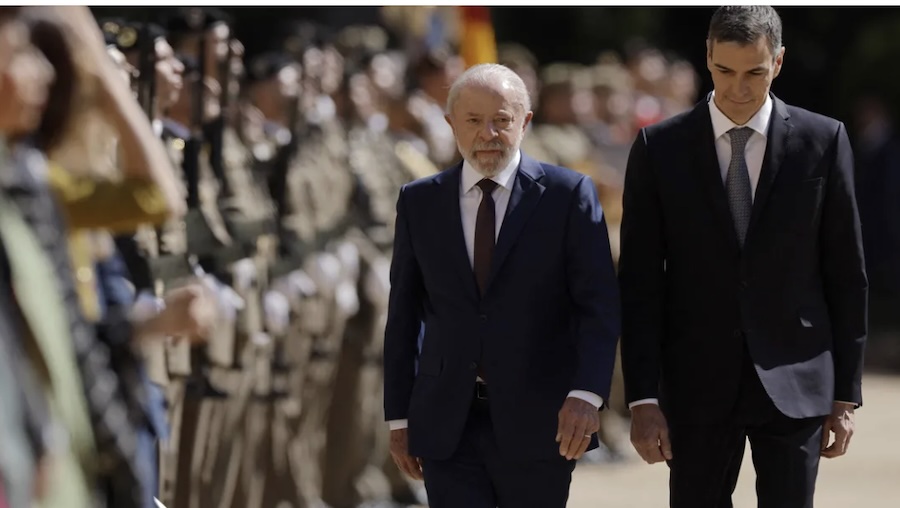
On Saturday, 6 July, the leaders of the 11 largest emerging economies signed the Joint Declaration of the 17th BRICS Summit  in Rio de Janeiro.

Entitled “Strengthening Global South Cooperation for More Inclusive and Sustainable Governance”, the document seals the group’s commitment to strengthening multilateralism, defending international law, and striving for a more equitable global order.

It reflects months of intense coordination, with over 200 meetings held and 200 new cooperation mechanisms created or reinforced in areas such as eradicating hunger, tackling climate change, and developing emerging technologies.

“We want to reaffirm our commitment to the BRICS spirit of mutual respect and understanding, sovereign equality, solidarity, democracy, openness, inclusion, collaboration and consensus. Building upon the past 17 BRICS Summits, we are now extending our commitment to strengthening cooperation within the expanded BRICS, based on three pillars of cooperation: politics and security, economy and finance, and cultural and people-to-people cooperation. We are also enhancing our strategic partnership to benefit our peoples by promoting peace, a fairer and more representative international order, a revitalized and reformed multilateral system, sustainable development, and inclusive growth,” states one of the 126 commitments made by the leaders.

At the Summit, BRICS member countries reaffirmed their commitment to multilateralism and to defending international law, including the purposes and principles enshrined in the UN Charter. The document also calls for the increased participation of developing countries, particularly those in Africa, Latin America and the Caribbean, in global decision-making processes and structures.

In light of today’s multipolar realities, the countries agreed that it is essential for developing countries to strengthen their efforts to promote dialogue and consultations in pursuit of more just and equitable global governance, and of mutually beneficial relations among nations. “We recognize that multipolarity can create opportunities for developing countries and emerging markets (DCEMs) to realize their constructive potential and benefit from inclusive and equitable economic globalization and cooperation that is universally advantageous. We want to emphasize the importance of the Global South as a driver of positive change, especially amid significant international challenges—including escalating geopolitical tensions, economic slowdown, accelerated technological transformation, protectionist measures and migration challenges.”

Finance

In the financial realm, the 11 countries emphasized the need to increase IMF quotas and World Bank shareholding of emerging and developing countries.

“We want to reiterate that IMF quota realignment should not come at the expense of developing countries, but rather reflect the relative positions of countries in the global economy and increase DCEM quotas”

(Article continued in the right column)

(Click here for the article in Portuguese).

Question for this article:

What is the contribution of BRICS to sustainable development?

(Article continued from the left column)

Health

When it comes to health, the countries acknowledged the interconnected nature of global health challenges and their cross-border implications. They reaffirmed their commitment to strengthening global health governance by enhancing international cooperation and solidarity.

“We are committed to actively supporting efforts to strengthen the global health architecture by promoting equality, inclusion, transparency, and responsiveness. This ensures that no country is left behind in achieving the health-related Sustainable Development Goals,” BRICS’ joint understanding argues.

Another milestone is the launch of the Partnership for the Elimination of Socially Determined Diseases, which promotes health equity and demonstrates the BRICS’ commitment to addressing the root causes of health disparities, such as poverty and social exclusion.

Artificial Intelligence

For the first time, artificial intelligence (AI) governance plays a prominent role in the BRICS agenda, offering a shared Global South perspective on this innovative technology and bringing economic and developmental aspects to the forefront of the discussion. In their joint declaration, the countries recognize that AI presents a unique opportunity to drive progress toward a more prosperous future. However, to achieve this, global AI governance must mitigate potential risks and meet the needs of all countries, including those in the Global South. “A collective global effort is needed to establish AI governance that upholds our shared values, addresses risks, builds trust, and ensures broad and inclusive international collaboration and access.”

Climate change

In preparation for COP30—also under Brazilian leadership in November—the countries recognized the Tropical Forest Forever Fund (TFFF) as an innovative mechanism to mobilize long-term financing for tropical forest conservation, encouraging ambitious donations from potential partners.

“Our Climate Framework Declaration charts a roadmap for the next five years to transform our capacity to raise resources for fighting climate change. With the collective scale of the BRICS, we will combat the climate crisis while make our economies stronger and fairer,” the document states.

Promoting Peace, Security, and International Stability

One of the pillars of the declaration is its commitment to addressing ongoing conflicts in various parts of the world, and the current polarization and fragmentation of the international order. The leaders express concern over the current trend of sharply rising global military expenditures at the expense of adequate financing for the development of emerging countries. They advocate for a multilateral approach that respects diverse national perspectives and positions on crucial global issues, including sustainable development, hunger and poverty eradication, and global climate action. They also express deep concern over attempts to link security with the climate agenda.

In addition to the traditional leaders’ declaration, three other documents reflecting the priorities of the Brazilian presidency were approved: the BRICS Leaders’ Framework Declaration on Climate Finance, the BRICS Leaders’ Declaration on Global Governance of Artificial Intelligence, and the BRICS Partnership for the Elimination of Socially Determined Diseases. “These initiatives reflect our joint efforts to promote inclusive and sustainable solutions to pressing global issues.”

– – – – – –

If you wish to make a comment on this article, you may write to coordinator@cpnn-world.org with the title “Comment on (name of article)” and we will put your comment on line. Because of the flood of spam, we have discontinued the direct application of comments.

Lula opens BRICS Summit with call for investment in peace and security

FREE FLOW OF INFORMATION .

An article from BRICS Brazil

At the opening of the 17th BRICS Summit this Sunday, July 7, in Rio de Janeiro, President Luiz Inácio Lula da Silva presented an overview of the multilateralism crisis, highlighting the emergence of multiple conflicts and their impacts on national autonomy, security, and the global economy.

During the plenary session entitled “Peace, Security, and the Reform of Global Governance,” Lula was unequivocal in urging countries to shift spending away from military efforts and toward the implementation of the United Nations’ 2030 Agenda—not toward war.

“It is easier to allocate 5% of GDP to military spending than to commit the 0.7% promised for Official Development Assistance. This shows that the resources to implement the 2030 Agenda do exist—they are simply not made available due to a lack of political will. It is always easier to invest in war than in peace,” said the Brazilian president.

Lula also underscored the role of the founding BRICS countries in building “a new multipolar reality for the 21st century.”

Advocating for a reform in global governance, he emphasized the bloc’s ability to become “a force capable of promoting peace and of preventing and mediating conflicts” thanks to its diverse realities.

“We can lay the groundwork for a renewed system of governance. To overcome the crisis of trust we now face, we must fundamentally reform the Security Council by making it more legitimate, representative, effective, and democratic,” Lula argued.

Read President Lula’s full speech during the BRICS session on ‘Peace and Security, Reform of Global Governance

For the fourth time, Brasil is hosting a BRICS Summit. Of all of them, this one is taking place amid the most adverse scenario.

The United Nations recently marked its 80th anniversary on June 26 of this year, and we are witnessing an unprecedented collapse of multilateralism.

The advent of the UN marked the defeat of Nazi-Fascism and the birth of a sense of collective hope.

The vast majority of countries that currently comprise the BRICS were among its founders.

Ten years later, the Bandung Conference refuted the division of the world into zones of influence and advanced the fight for a multipolar international order.

BRICS is an heir of the Non-Aligned Movement.

With multilateralism under attack, our autonomy is once again in check.

Advancements that were arduously achieved, such as the climate and trade regimes, are at risk.

Amid the worst sanitary crisis in decades, the global health system is being subjected to an unprecedented attack.

Absurd intellectual property demands still restrict access to medication.

International law has become a dead letter, as has the pacific resolution of controversies.

We are before an unprecedented number of conflicts since World War II.

NATO’s recent decision feeds the arms race.

It is easier to designate 5% of the GDP to military spending than to allocate the 0.7% that has been promised for Official Development Assistance.

This demonstrates that the resources for the implementation of the 2030 Agenda do exist; however, they are not available due to a lack of political priority.

It is always easier to invest in war than in peace.

The UN Security Council meetings often follow a script we know all too well: they end in a loss of credibility and paralysis.

Lately, the Council is not even consulted before acts of war begin.

Old rhetorical maneuvers are just being recycled to justify illegal interventions.

(article continued in right column)

(Click here for the speech in Portuguese.)

Question related to this article:

Where in the world can we find good leadership today?

(article continued from left column)

Just as we saw with the Organization for the Prohibition of Chemical Weapons in the past, the instrumentalization of the International Atomic Energy Agency’s work now risks the reputation of an organization that is fundamental for maintaining peace.

The fear of a nuclear catastrophe has returned to our daily lives.

To the detriment of negotiated solutions, recurring violations of state territorial integrity are undermining efforts to stop the proliferation of atomic weapons.

Without the support of International Law, the failure of the actions in Afghanistan, Iraq, Libya, and Syria tends to repeat itself with even graver impacts.

The consequences for the stability of the Middle East and North Africa, particularly in the Sahel, have been disastrous and are felt to this day.

In the void left by unresolved crises, terrorism has found fertile ground.

Hate ideology must not be associated with any religion or nationality.

Brasil repudiated the attacks in Kashmir.

Absolutely nothing justifies the terrorist actions perpetrated by Hamas.

However, we cannot remain indifferent to the genocidal practices by Israel in Gaza, the indiscriminate killing of innocent civilians, and the use of starvation as a weapon of war.

The solution to this conflict will only be possible with the end of the Israeli occupation and the establishment of a sovereign Palestinian State within the 1967 borders.

The Brazilian Government denounced the violations of Iran’s territorial integrity, just as it had done in the case of Ukraine.

The parties engaged in the war in Ukraine must urgently deepen a direct dialogue that aims for a ceasefire and a lasting peace.

The “Friends for Peace” group, formed by China and Brasil and comprising countries from the Global South, aims to identify potential avenues for ending hostilities.

Meanwhile, other extremely serious crises around the world remain ignored by the international community.

In Haiti, we had MINUSTAH — but the international community abandoned the country too soon. Brasil supports the urgent expansion of the role of the UN Mission in that country, combining actions in the fields of security and development.

Ladies and Gentlemen,

During the eight decades of functioning of the United Nations, not everything was a failure.

The Organization played a central role in the decolonization process.

The prohibition of the use of biological and chemical weapons is an example of what the commitment to multilateralism can achieve.

The success of UN missions in East Timor demonstrates that it is possible to promote peace and stability.

Since 1968, Latin America has chosen to be a Nuclear Weapons Free Zone.

The African Union also consolidates its leadership in conflict prevention and resolution on the continent.

If international governance does not reflect the 21st century’s new multipolar reality, it is up to the BRICS to contribute to bringing it up to date.

The bloc’s representativeness and diversity make it a powerful platform, capable of promoting peace, preventing, and mediating conflicts.

We have the opportunity to lay the foundations of a reinvigorated governance model.

To overcome the trust crisis we are immersed in, we must promote deep transformations in the Security Council.

Increase its legitimacy, representativeness, effectiveness, and democratic character.

Include new permanent members from Asia, Africa, Latin America, and the Caribbean.

This is more than a question of justice.

This will ensure the very survival of the UN system.

This is the spirit of the “Call to Action on Global Governance Reform”, launched by Brasil’s G20 Presidency.

Postponing this process makes the world much more unstable and dangerous.

Each day that goes by with an archaic and excluding international structure is a day lost in the search for solutions to the grave crises that beset humanity.

Thank you very much.

– – – – – –

If you wish to make a comment on this article, you may write to coordinator@cpnn-world.org with the title “Comment on (name of article)” and we will put your comment on line. Because of the flood of spam, we have discontinued the direct application of comments.

Oxfam reaction to Spain, Brazil and South Africa launching a new coalition to tax the super-rich

. . SUSTAINABLE DEVELOPMENT . .

An article from Oxfam

In response to Spain, Brazil and South Africa’s new global coalition to tax the super-rich, launched today at the Fourth Financing for Development Conference in Seville, Oxfam Tax Justice Policy Lead Susana Ruiz said: 

“We welcome the leadership of Brazil, Spain and South Africa in calling for taxes on the super-rich. People around the world are pushing for more countries to reject the corrupting political influence of oligarchies. Taxation of the super-rich is a vital tool to secure sustainable development and fight inequalities. The wealth of the richest 1% has surged $33.9 trillion since 2015, enough to end annual poverty 22 times, yet billionaires only pay around 0.3% in real taxes.  


“This extreme inequality is being driven by a financial system that puts the interests of a wealthy few above everyone else. This concentration of wealth is blocking progress towards the Sustainable Development Goals and keeping over three billion people living in poverty: over half of poor countries are spending more on debt repayments than on healthcare or education. 

“In a tense geopolitical environment, Spain, Brazil and South Africa have taken an important step in forging an alliance here at the UN conference in Seville to show political will for taxation of the super-rich. Now other countries must follow their lead and join forces. This year, the FFD in Seville, COP30 in Brazil and G20 in South Africa are key opportunities for international cooperation to tax the super-rich and invest in a sustainable future that puts human rights and equality at its core.”

(Article continued on the right column)

Question for this article:

Opposing tax havens and corruption: part of the culture of peace?

(Article continued from the left column)

Notes to editors

Download the Oxfam report “From Private Profit to Public Power: Financing Development, Not Oligarchy ” which was launched ahead of the Fourth Financing for Development Conference with new analysis on economic inequality.

Greenpeace and Oxfam International commissioned a study this month on public opinion on taxing the super-rich. The research was conducted by first party data company Dynata  in May-June 2025, in Brazil, Canada, France, Germany, Kenya, Italy, India, Mexico, the Philippines, South Africa, Spain, the UK and the US. The survey had approximately 1200 respondents per country, with a margin of error of +-2.83%. Together, these countries represent close to half the world’s population. See the results here.

Oxfam will be hosting a major high-level event together with Club de Madrid, at 7pm on July 1, 2025, in Seville, joined by high-level government representatives on the media briefing note. Journalists are invited to attend and will be prioritized for questions. Please register here.

Moreover, an official side event on inequality and tax reform will take place at 2.30pm on July 1, 2025, at the FIBES Exhibition Centre room 20 joined by high-level government representatives from Brazil, Spain and South Africa, international organizations and global experts. See note here.

Contact information

Cass Hebron in Seville | cass.hebron@oxfam.org | +32485913688 

For real-time updates, follow us on X  and Bluesky, and join our WhatsApp channel  tailored specifically for journalists and media professionals.

– – – – – –

If you wish to make a comment on this article, you may write to coordinator@cpnn-world.org with the title “Comment on (name of article)” and we will put your comment on line. Because of the flood of spam, we have discontinued the direct application of comments.

Fourth Annual 24-Hour Peace Wave

DISARMAMENT AND SECURITY .

An announcement from World Beyond War

Easy way to get to this page: http://24hourpeacewave.org

The Fourth Annual 24-Hour Peace Wave is coming on July 12, 2025.

Contact us to participate.

The peace wave is a 24-hour-long Zoom featuring live peace actions in the streets and squares of the world, moving around the globe with the sun. The peace wave visits dozens of locations around the globe and includes rallies, concerts, production of artworks, blood drives, installation of peace poles, dances, speeches, and public demonstrations of all variety.

In 2025 we are encouraging participants to address the need to abolish nuclear weapons.

(article continued in right column)

Question related to this article:

The Peace Wave: Its history and effects

(article continued from left column)

All parts will have machine-translated captions in Zoom. Some parts will have human voice interpretation.

Organized by: International Peace Bureau, Stop the War Coalition Philippines, Gensuikyo, and World BEYOND War.

The Peace Wave will happen on July 12, 2025, from 0:00 to 24:00 UTC. In Japan that is 9 a.m. July 12 to 9 a.m. July 13. In Europe that is 2 a.m. July 12 to 2 a.m. July 13. In U.S. and Canada Eastern Time that is 8 p.m. July 11 to 8 p.m. July 12.

Get the Zoom Link to Watch the Peace Wave
Host Contact Info: David, david@worldbeyondwar.org

Embed the Registration Form on Your Own Website

See Past Years’ Peace Waves.
https://worldbeyondwar.org/wavesofpast/

(Click here for this article in French or here for the article in Spanish).

– – – – – –

If you wish to make a comment on this article, you may write to coordinator@cpnn-world.org with the title “Comment on (name of article)” and we will put your comment on line. Because of the flood of spam, we have discontinued the direct application of comments.

Mediation injects new impetus of peace into a turbulent world

. . DEMOCRATIC PARTICIPATION . .

An editorial from the Global Times

On May 30, the signing ceremony of the Convention on the Establishment of the International Organization for Mediation (IOMed) was held in Hong Kong. Senior representatives from 85 countries and nearly 20 international organizations gathered in the city, and 33 countries signed the convention on the scene and became founding member states.


Photo: www.fmprc.gov.cn

As the world’s first intergovernmental organization dedicated to resolving international disputes through mediation, the IOMed provides a new platform for mediating disputes between countries, disputes over investment between the state and the people of other countries, and international commercial disputes.

The establishment of the IOMed is a historic breakthrough in the international dispute settlement mechanism. For a long time, settlement of international dispute has mainly relied on judicial adjudication and arbitration mechanisms, both of which have certain limitations. Mediation is based on respecting the wills of the parties, and explores win-win solutions through the assistance of a neutral third party, with the final decision made by the disputing parties. Hong Kong’s judicial practice shows that the settlement rate of court mediation cases is about 50 percent, which fully proves the unique value of mediation in resolving complex contradictions. This approach, which contains the wisdom of “harmonious coexistence,” has opened up a new path for dealing with international disputes with large cultural differences and high political sensitivity.

At present, the world is undergoing rapid change of a century, and various contradictions are intertwined. Using a “Cold War” confrontational mindset to deal with various global and regional issues has clearly deviated from the needs of the times and the development trend of the rule of law. In the existing international judicial system, developing countries often face difficulties such as lack of voice, insufficient applicability of rules, and high costs. However, some major countries are accustomed to handling international disputes through unilateral sanctions, often bypassing existing international rules and mechanisms and acting on their own. This not only fails to solve problems, but also gives rise to more contradictions.

(Editorial continued in right column)

Question related to this article:

How can we develop the institutional framework for a culture of peace?

Mediation as a tool for nonviolence and culture of peace

Does China promote a culture of peace?

(Editorial continued from left column)

The international community has never been so eager to resolve disputes peacefully. From the historic reconciliation between Saudi Arabia and Iran in Beijing to the signing of the Beijing Declaration on ending the division by various Palestinian factions, countries have seen the great potential and possibility of resolving differences through dialogue. The birth of the IOMed is timely, and its establishment is an important step in promoting the development of the international order to a more just and reasonable direction.

The IOMed advocates for the peaceful and amicable settlement of international disputes, aiming to build more harmonious international relations and embody an inclusive and pluralistic culture of the rule of law. Against the backdrop of profound adjustments in the global order, the IOMed provides the international community with a public good of global rule of law that is peaceful, just, trustworthy, and efficient.

At the level of international law, the IOMed represents an innovative response to the United Nations (UN) Charter’s principle of peaceful dispute settlement. It breaks through the traditional methods of handling disputes – whether between countries, between countries and investors, or between equal commercial entities – offering the greater flexibility, convenience, lower costs and more effective implementation. At the same time, it complements and enhances existing international dispute settlement mechanisms such as litigation and arbitration, helping to build a more comprehensive and diversified system for resolving international disputes.

Through consultations among the negotiating parties, Hong Kong was agreed to be the headquarters of the IOMed – a strong recognition by the international community of the culture of the rule of law under “one country, two systems.” The return of Hong Kong itself is a successful example of dispute settlement, and its prosperity and stability stand as a testament to the vitality of “one country, two systems.”

With the advantages of both common law and civil law traditions, a mature legal environment, and extensive experience in “super mediation”, Hong Kong – an international metropolis backed by the motherland and connected to the world — offers an ideal environment for the development of the IOMed. This “rising star of international rule of law,” the IOMed, will surely shine in tandem with the “pearl of the orient,” creating a future of shared brilliance.

As the world reaches the crossroads of history, what countries are calling for is not an arena of power, but a dialogue platform that transcends the zero-sum mentality of “you win, I lose” and promotes the friendly settlement of disputes. This is the mission of the IOMed. It carries not only the practical need to resolve disputes, but also the civilized pursuit of eliminating conflicts through dialogue and resolving disputes through consultation. The healthy growth of this seedling of peace requires the care and support of the international community. We welcome more countries to join hands to nurture it.

– – – – – –

If you wish to make a comment on this article, you may write to coordinator@cpnn-world.org with the title “Comment on (name of article)” and we will put your comment on line. Because of the flood of spam, we have discontinued the direct application of comments.

The Sarajevo Declaration of the Gaza Tribunal (28 May 2025)

DISARMAMENT AND SECURITY .

An article by Richard Falk from the Transcend Media Service

The Sarajevo Declaration of the Gaza Tribunal, a consensus document prepared in conjunction with participants in the first of two Public Sessions of the Gaza Tribunal, was released on 28 May 2025. The second session of the tribunal is scheduled for late October. The proceedings in Sarajevo consisted of survivor testimony from Gaza, invited expert speakers, a round-table on media complicity, and the reports of three chambers tasked with documenting evidence and consequences of alleged genocide and crimes associated with forcible application of the Settler Colonial Project to Gaza following 7 Oct, as well as the failure of the UN, growing public protests, and of leading governments to bring the genocide to an end in accordance with international law and hold the perpetrators accountable.

The Sarajevo Declaration is a comprehensive text intended to convey the orientation, broad scope of the goals of civil society solidarity activation and reflecting the diversity of concerns among members of the Gaza Tribunal community. Sarajevo was our chosen site to express symbolic solidarity with an earlier genocide at Srebrenica that occurred 30 years ago. Encourage wide sharing of the Sarajevo Declaration. It is my honor to serve as president of the GTP in concert with dedicated scholars, witnesses, and activists from around the world, including the inspiring participation of our Palestinian sisters and brothers.

The Sarajevo Declaration of the Gaza Tribunal

28 May We, the members of the Gaza Tribunal, having gathered in Sarajevo from 25 to 29 May 2025, declare our collective moral outrage at the continuing genocide in Palestine, our solidarity with the people of Palestine, and our commitment to working with partners across global civil society to end the genocide and to ensure accountability for perpetrators and enablers, redress for victims and survivors, the building of a more just international order, and a free Palestine.

We condemn the Israeli regime, its perpetration of genocide, and its decades-long policies and practices of settler colonialism, ethno-supremacism, apartheid, racial segregation, persecution, unlawful settlements, the denial of the right to return, collective punishment, mass detention, torture and cruel and inhuman treatment and punishment, extrajudicial executions, systematic sexual violence, demolitions, forced displacement and expulsions, ethnic purges and forced demographic change, forced starvation, the systematic denial of all economic and social rights, and extermination.

We are horrified by the Israeli regime’s systematic devastation of Palestinian lives, lands, and livelihoods, including its intentional destruction of all sources and systems for food, water, healthcare, education, housing, culture, as well as mosques, churches, aid facilities, and refugee shelters, and its targeting of medical personnel, journalists, aid workers, and United Nations staff, and its direct targeting of civilians, including children and older persons, women and men,  girls and boys, persons with disabilities and those with medical conditions.

We demand an immediate withdrawal of Israeli forces and an end to the genocide, to all Israeli military action, to forced displacement and expulsions, to settlement activities, to the siege of Gaza and restrictions on movement in the West Bank. We call for the immediate and unconditional release of all prisoners, including the thousands of Palestinian women, men and children held in abusive Israeli detention facilities. We insist on the immediate resumption of massive humanitarian aid to all of Gaza without restriction or interference, including food, water, shelter, medical supplies and equipment, sanitary equipment, rescue equipment, and construction materials and equipment. We call as well for a complete withdrawal of all Israeli forces from all Lebanese and Syrian territory.

We call for an end of the smearing of UNRWA and other humanitarian workers, for the free and unhindered access of UNRWA and all other United Nations and humanitarian organizations in all areas of Gaza and the West Bank, for full compensation by the Israeli regime for damage caused to UN and humanitarian facilities, alongside full compensation and reparations to the Palestinian people, and for full accountability for the harassment, abduction, torture, and murder of UNRWA and other humanitarian workers and their families.

We call on all governments and on regional and international organizations to end the historic scandal of inaction that has characterized the past nineteen months, to urgently respond with all means at their disposal to end the Israeli assault and siege, to uphold international law, to hold perpetrators to account, and to provide immediate relief and protection to the people of Palestine.

We denounce the continued complicity of governments in the perpetration of Israeli war crimes, crimes against humanity, and genocide in Palestine, and the shameful role of many media corporations in covering up the genocide, dehumanizing Palestinians, and in the dissemination of propaganda fueling anti-Palestinian racism, war crimes, and genocide.

We equally denounce the wave of persecution and crackdowns on human rights defenders, peace activists, students, academics, workers, professionals, and others, perpetrated by Western governments, police agencies, the private sector, and educational institutions. We honor those who, despite this persecution, have had the courage and moral convictions to stand up and speak out against these historic horrors, and we insist on the full protection of the human rights of free expression, opinion, assembly, and association, as well as the right to defend human rights without harassment, retaliation, or persecution.

We reject the unjust tactic of smearing as “antisemites” or “supporters of terrorism” all those who dare to speak up and act to defend the rights of the Palestinian people and to condemn the injustices and atrocities of the Israeli regime and its perpetration of apartheid and genocide, or those who criticize the ideology of political Zionism. We stand in solidarity with all those who have been smeared or punished in this way.

We are convinced that the struggle against all forms of racism, bigotry, and discrimination necessarily includes the equal rejection of Islamophobia, anti-Arab and anti-Palestinian racism, and antisemitism. It also includes an acknowledgment of the horrific effects that Zionism, apartheid, and settler-colonialism have had and continue to have on the Palestinian people. We commit to fighting all such scourges.

We also reject the destructive ideology of political Zionism, as the official state ideology of the Israeli regime, of the forces that colonized Palestine and established the Israeli state on its ruins, and of pro-Israel organizations and proxies today. We insist, in the words of the Universal Declaration of Human Rights, that all human beings are born free and equal in dignity and rights, and that there are no exceptions to this rule. We call for decolonization across the land, an end to the ethno-supremacist order, and the replacement of political Zionism with a dispensation founded on equal human rights for Christians, Muslims, Jews, and others.

(article continued in right column)

Question related to this article:

How can war crimes be documented, stopped, punished and prevented?

How can a culture of peace be established in the Middle East?

(article continued from left column)

We are inspired by the courageous resistance and resilience of the Palestinian people in the face of over a century of persecution, and by the growing movement of millions standing in solidarity with them around the world, including the principled advocacy and nonviolent action of thousands of Jewish activists who have rejected the Israeli regime and its ethnonationalist ideology, and have declared that the Israeli regime neither represents them nor acts in their name.

We recognize the right of the Palestinian people to resist foreign occupation, colonial domination, apartheid, subjugation by a racist regime, and aggression, including through the use of armed struggle, in accordance with and as recognized in international law and as affirmed by the United Nations General Assembly.

We recall that the Palestinian right to self-determination is jus cogens and erga omnes (a universal rule not subject to exception and binding on all states) and is non-negotiable and axiomatic. We recognize that this right includes political, economic, social, and cultural self-determination, the right to return and full compensation for all harms suffered in a century of persecution, to permanent sovereignty over natural resources, and to non-aggression and non-intervention. We respect Palestinian aspirations and full Palestinian agency and leadership over all decisions affecting their lives, and we stand in solidarity with them.

We are gravely concerned at the direction of international relations, international politics, and international institutions, and by attacks on those international institutions that have challenged genocide and apartheid in Palestine. We believe that the normative foundations of the global order, grounded in human rights, the self-determination of peoples, peace, and the international rule of law, are being sacrificed at the altar of ruthless political realism and obsequious deference to power, with the people of Palestine left undefended and vulnerable on the front lines. We insist that another world is possible and intend to fight to bring it about.

We fear that the nascent and flawed international normative order, built up since the Second World War, with human rights at its center, is at risk of collapse as a result of the sustained attack waged on the system by the Israeli regime’s Western allies in their quest to buttress Israeli impunity. We pledge to oppose this attack and to work to protect and advance the project of building a world in which human rights are governed by the rule of law, beginning with the struggle for Palestinian freedom. And we believe that the weaknesses and inequities hard-wired into the international system from the start, including the geopolitical right of exception codified in the United Nations Security Council veto, the disempowerment of the General Assembly, and the structural obstacles that mitigate against the enforceability of International Court of Justice (ICJ) decisions, must be reformed and rectified.

We demand immediate action to isolate, contain, and hold accountable the Israeli regime through universal boycott, divestment, sanctions, a military embargo, suspension from International organizations, and the prosecution of its perpetrators, and we commit ourselves to this cause. We equally demand individual criminal accountability for all Israeli political and military leaders, soldiers, and settlers implicated in war crimes, crimes against humanity, genocide, or gross violations of human rights, as well as accountability for all persons and organizational actors guilty of complicity in the regime’s crimes, including external proxies of the Israeli regime, government officials, corporations, arms manufacturers, energy companies, technology firms, and financial institutions.

We applaud the International Court of Justice (ICJ) for its ongoing historic genocide case against the Israeli regime and for its landmark advisory opinion findings on the illegality of the Israeli occupation, of the apartheid wall, and of the Israeli practice of apartheid and racial segregation, and its findings that the rights of the Palestinian people are not dependent upon or subject to negotiation with their oppressor and that all states are obliged to abstain from treaty, economic, trade, investment, or diplomatic relations with Israel’s occupation regime. We celebrate the principled action of South Africa in bringing to the ICJ the historic genocide case against the Israeli regime.

We call on all states to ensure the implementation of all provisional measures adopted by the ICJ in the genocide case against Israel, to fully respect the findings of the ICJ in its advisory opinion of July 2024, to comply with all elements of the United Nations General Assembly resolution of 13 September 2024 (A/ES-10/L.31/Rev.1), ending all arms trade with and implementing sanctions on the Israeli regime, and to support accountability for all Israeli perpetrators.  We urge civil society organizations and social movements around the world to initiate and strengthen campaigns to support the ICJ’s decisions and opinions on Palestine, and to press their own governments to abide by them.

We similarly applaud the International Criminal Court for (albeit belatedly) issuing arrest warrants for two senior Israeli regime leaders and call on the ICC to both expedite action on these cases and to issue further warrants for other Israeli perpetrators, both civilian and military.  We call on all ICC State Parties to urgently act on their obligations to arrest these perpetrators and hand them over for trial, and we demand that the United States lift all ICC sanctions and cease all obstruction of justice.

We express our gratitude and admiration to the independent special procedures of the United Nations Human Rights Council for their expert contributions and for their strong and principled voices in holding the Israeli regime to account and defending the human rights of the Palestinian people. They have shown themselves to be the conscience of the organization, and we call on the United Nations and all member states to defend and support these mandate holders without fail. We applaud, as well, the principled action of those United Nations agencies that have acted to defend the rights of the Palestinian people and to provide aid and relief to the survivors of genocide in Palestine in the face of unprecedented risks and obstacles, foremost among them, UNRWA.

We believe that the world is approaching a dangerous precipice, the front edge of which is in Palestine. Dangerous forces in both the public and private spheres are pushing us toward the abyss. The events of the past nineteen months, and our own deliberations, have convinced us that both key international organizations and most countries of the world, whether acting individually or collectively, have failed in defending the human rights of the Palestinian people and in responding to the Israeli regime’s genocide in Palestine.

We are convinced that the challenge of justice now falls to people of conscience everywhere, to civil society and to social movements, to all of us. As such, our work in the coming months will be dedicated to meeting this challenge. Palestinian lives are at stake. The international moral and legal order is at stake. We must not fail. We will not relent.

– – – – – –

If you wish to make a comment on this article, you may write to coordinator@cpnn-world.org with the title “Comment on (name of article)” and we will put your comment on line. Because of the flood of spam, we have discontinued the direct application of comments.

Pope Leo XIV appeals for ‘no more war’ in first Sunday message

TOLERANCE AND SOLIDARITY .

An article by Joshua McElwee, Philip Pullella and Keith Weir in Reuters (reprinted by permission)

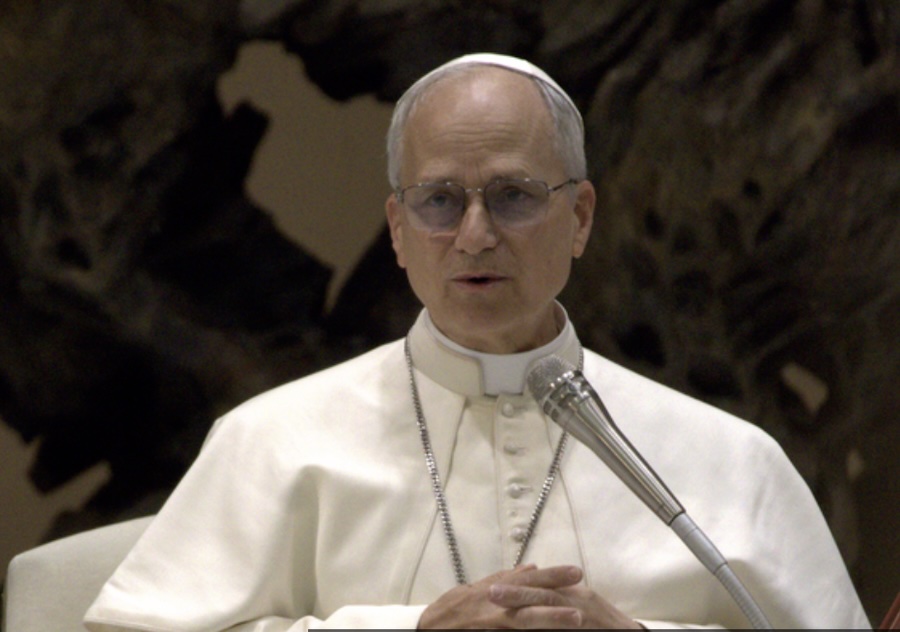
Pope Leo XIV appealed to the world’s major powers for “no more war” in his first Sunday message [May 11] to crowds in St. Peter’s Square since his election as pontiff.

The new pope, elected on May 8, called for an “authentic and lasting peace” in Ukraine, a ceasefire in Gaza, and the release of all Israeli hostages held by militant group Hamas.


Video of Pope’s message.

Speaking in fluent Italian, Leo also welcomed the recent fragile ceasefire between India and Pakistan, negotiated overnight, and said he was praying to God to grant the world the “miracle of peace.”

“No more war!” the pope said, repeating a frequent call of the late Pope Francis and noting the recent 80th anniversary of the end of World War Two, in which some 60 million people were killed.

Leo said today’s world was living through “the dramatic scenario of a Third World War being fought piecemeal,” again repeating a phrase coined by Francis.

Tens of thousands of people in St. Peter’s Square and on the Via della Conciliazione leading to the Vatican broke into applause at the call for peace on what was a joyous occasion despite Leo’s solemn message.

The new pope said he carries in his heart the “suffering of the beloved people of Ukraine.”

Hours after Russian President Vladimir Putin proposed direct talks with Ukraine aimed at ending the bloody three-year war, Leo appealed for negotiations to reach an “authentic, just and lasting peace”.

(Continued in right column)

Questions related to this article:
 
Religion: a barrier or a way to peace?, What makes it one or the other?

(Continued from left column).

The pope also said he was “profoundly saddened” by the war in Gaza, calling for an immediate ceasefire, humanitarian aid and release of the remaining hostages held by Hamas.

Leo said he was glad to hear of the recent India-Pakistan ceasefire and hoped negotiations would lead to a lasting accord between the nuclear-armed neighbors.

Leo, the former Cardinal Robert Prevost, is the first U.S.-born pontiff and was a relative unknown on the world stage before his election.

He previously served for decades as a missionary in Peru before first becoming a cardinal to take up a senior Vatican role two years ago.

Leo’s first Sunday address coincided with a previously planned pilgrimage to Rome by marching bands from around the world.

Minutes before the pope addressed the crowd, bands marched up the broad boulevard leading to the Vatican playing songs such as Y.M.C.A. by the Village People, the theme from the film Rocky, and music by John Philip Sousa, who composed the marching classic “Stars and Stripes Forever”.

Peruvian Gladys Ruiz, who lives in Rome, was among the crowd in the square, estimated at more than 100,000 by Italian authorities. Calling Leo a “Peruvian pope” Ruiz said his election is “a great honour for us”. Leo has dual citizenship, having gained Peruvian citizenship in 2015.

Also present were Dennis Gilligan and wife Maureen from Boston, Massachusetts, visiting Rome for their anniversary. He said he had passed up an opportunity to see Pope John Paul II when he visited Boston in 1979.

“I regretted it all my life,” he said. “This was very moving.”

The crowd was also entertained by bands from Italy, Mexico and other parts of Latin America who came to Rome for the ongoing Catholic Holy Year.

In all of his appearances since his election, Leo has not made any mention of the country of his birth, angering some U.S. conservative commentators.

– – – – – –

If you wish to make a comment on this article, you may write to coordinator@cpnn-world.org with the title “Comment on (name of article)” and we will put your comment on line. Because of the flood of spam, we have discontinued the direct application of comments.

2025 Goldman Environmental Prize Winners ‘Serve as Powerful Reminders of What Is Possible’

. . SUSTAINABLE DEVELOPMENT . .

An article by Jessica Corbett from Common Dreams

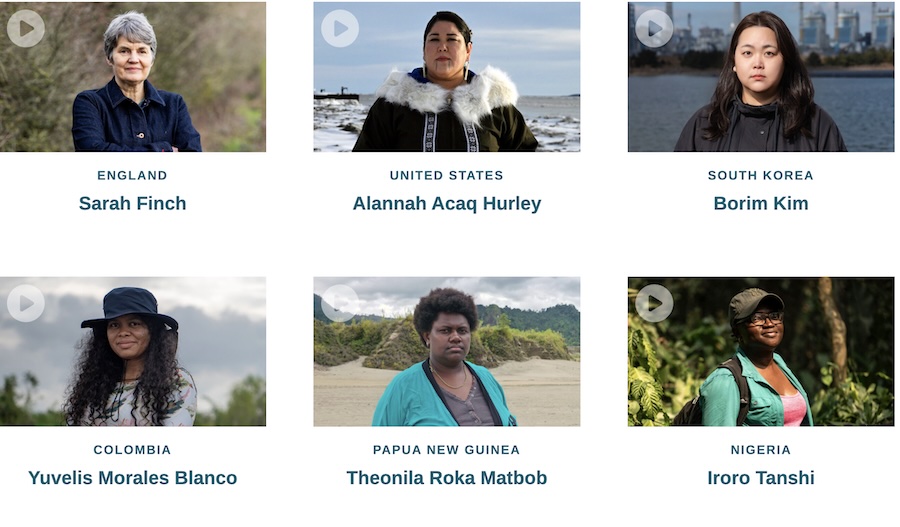
Seven grassroots Earth defenders from around the world were announced on Monday as the 2025 Goldman Environmental Prize winners.

“It’s been a tough year for both people and the planet,” said Jennifer Goldman Wallis, vice president of the Goldman Environmental Foundation, in a statement. “There’s so much that worries us, stresses us, outrages us, and keeps us divided. However, for me, these environmental leaders and teachers—and the global environmental community that supports them—are the antidote.”


2025 Goldman Prize winner Carlos Mallo Molina (right) and the Innoceana team work on scuba gear. (Photo: Goldman Environmental Prize)

“If we apply the same passion and logic that we use in the protection of our own families to our broader communities and ecosystems, then we will win,” she continued. “In these difficult times for environmental activists, these seven individuals serve as powerful reminders of what is possible through determination, resilience, and hope.”

Since 1989, the foundation has awarded the annual prize to individuals from the world’s six inhabited continental regions “for sustained and significant efforts to protect and enhance the natural environment, often at great personal risk.”

Africa: Semia Gharbi of Tunisia

Gharbi, a 57-year-old scientist and environmental educator, led a campaign against a corrupt waste trafficking scheme between Italy and Tunisia that led to the arrest of over 40 people from both countries and stronger European Union export rules.

(article continued in right column)

Question for this article:

Despite the vested interests of companies and governments, Can we make progress toward sustainable development?

(Article continued from the left column)

Asia: Batmunkh Luvsandash of Mongolia

After being born to a nomadic herder family and working as an electrical engineer for construction and mining projects, 81-year-old Luvsandash used his expertise to fight to protect 66,000 acres of Dornogovi province from extractive activities.

Europe: Besjana “Besi” Guri and Olsi Nika of Albania

The efforts of Guri, a 37-year-old who trained as a social worker, and Nika, a 39-year-old biologist and aquatic ecologist, to safeguard the Vjosa River from a hydropower dam development led to Albania and Europe’s first new national park protecting a wild river and its tributaries.

Islands: Carlos Mallo Molina of the Canary Islands

Mallo Molina, a 36-year-old born in mainland Spain, left his job as a civil engineer specializing in port construction to launch the conservation group Innoceana, which fought to protect the Canary Islands’ marine ecosystem from the proposed Fonsalía Port.

North America: Laurene Allen of the United States

Allen, a 62-year-old clinical social worker, campaigned for the closure of the Saint-Gobain Performance Plastics plant in Merrimack, New Hampshire, and continues to fight for cleanup efforts and stricter regulations regarding per- and polyfluoroalkyl substances (PFAS), commonly called “forever chemicals” because they persist in the environment and people’s bodies for long periods.

South and Central America: Mari Luz Canaquiri Murayari of Peru

Canaquiri Murayari is the 56-year-old president of the Kukama women’s organization Asociación de Mujeres Huaynakana Kamatahuara Kanawon, which won a landmark Rights of Nature court ruling that granted legal personhood to the Marañón River.

This year’s prize winners are set to be celebrated on Monday at an in-person and livestreamed ceremony in San Francisco, California, at 5:30 pm Pacific Daylight Time.

– – – – – –

If you wish to make a comment on this article, you may write to coordinator@cpnn-world.org with the title “Comment on (name of article)” and we will put your comment on line. Because of the flood of spam, we have discontinued the direct application of comments.

Pope Francis tried to change the Catholic Church for women, with mixed success

. . WOMEN’S EQUALITY . .

An article from The Conversation

Pope Francis, the head of the Catholic Church, died on Easter Monday at the age of 88. On Easter Sunday, he used his message and blessing to appeal for peace in Middle East and Ukraine.

Pope Francis will be remembered as a pastoral leader who cared deeply about the environment and those impacted by migration, poverty and war.

During his Pontificate, he did make important changes to the patriarchal structure of the Catholic Church – but did he go far enough?


Pope Francis meets a group of nuns at the Vatican. Andrew Medichini/AP

A pope for all?

Throughout his papacy, Pope Francis highlighted the struggles of women  in society. He took important steps to expand opportunities for women in the church and address its patriarchal structure.

This was showcased by his inclusion of women in the 2024 synod  (a global meeting of the whole church, represented by bishops) and his granting of voting  rights for 57 women out of a total of 368 attendees.

His appointment of around 20 women  to positions of authority in the Vatican is unprecedented.

This includes the recent 2025 appointment  of an Italian religious sister, Simona Brambilla, to lead a Vatican department.

During his papacy, Pope Francis also strongly supported the ongoing involvement of women in positions of leadership in the Roman Curia (the governance body of the church).

At local levels, in parishes, he made it possible for women to be formally appointed to the positions of catechist and lector  – roles previously reserved for men.

He also emphasised a need for more women to study and teach theology.

An ‘urgent challenge’

However, these changes barely scratched the surface  of securing full equality for women in the Catholic Church.

Pope Francis himself stated  women still encountered obstacles, and opportunities for women to participate were under-utilised by local churches.

In his autobiography, published in January this year, he wrote of the “urgent challenge” to include women in central roles at every level of church life.

He viewed this move as essential to “de-masculinising” the church and removing the problem of clericalism.

Importantly, the reasoning that underpins women’s limited role in the life of the church remains unchanged.

In particular, Pope Francis referred to gender stereotypes and supported the theology of complementarianism (a view that women are different but equally valued, where their central contribution is to motherhood, femininity and pastoral care responsibilities).

(Article continued in right column)

Questions related to this article:

Prospects for progress in women’s equality, what are the short and long term prospects?

(Article continued from left column)

While Pope Francis was genuinely committed to dialogue about and with women, his legacy remains contradictory.

Equality is still lacking

Women have been appointed to administrative and management positions, but decision making and ministry still largely rest with clerical men.

Pope Francis’ emphasis on the “feminine nature” women bring to roles, rather than their gifts and talents, limited women.

And although he called out discrimination against women in broader society, he expressed opposition to contemporary feminism, which he titled “gender ideology” and “machismo with a skirt”.

Moreover, despite ongoing discussions, Pope Francis appeared to be unresponsive to calls for a greater role for women in ministry.

Women cannot preach during Mass or be ordained to the priesthood or deaconate, despite multiple attempts by Catholic reform groups to advocate for women’s inclusion.

The 2023  International Survey of Catholic Women, which surveyed more than 17,000 Catholic women from 104 countries and eight language groups, found women across the world were keen for church reform that recognises women’s leadership capacities and ongoing contribution to church communities.

More than eight in ten (84%) of the women surveyed supported reform in the church. Two-thirds (68%) agreed women should be ordained to the priesthood, and three-quarters (78%) were supportive of women preaching during Mass.

The survey reported  on the deep frustration and despair women experienced for not having their gifts and talents recognised.

Women also stated they are dissatisfied with the burden of labour they carry in the church.

In this regard, Pope Francis did not address the financial burdens and exploitation of Catholic women who work for the church without adequate recognition or pay. This leaves women, particularly those working in parishes, open to exploitation.

More worryingly, decades after cases of abuse  were reported to the Vatican, Pope Francis publicly acknowledged  that women, particularly nuns, were significantly affected by spiritual and sexual abuse.

While this recognition is important, church responses to abuse remain inadequate and more needs to be done to safeguard women in pastoral settings.

With regard to sexual and reproductive decision-making, the International Survey of Catholic Women found the majority of respondents wanted more freedom of conscience around such issues. This is because when they are denied by church law, women’s agency was diminished and their vulnerability to situations of gendered violence increased.

The papacy of Pope Francis has made no reforms in this area, leaving many Catholic women frustrated and disappointed.

Hope for the future?

More than 60 years ago, Vatican II generated hope for change among Catholic women.

Pope Francis reignited that hope, and listened. But responses have been too slow and Catholic women are still waiting for genuine reform.

– – – – – –

If you wish to make a comment on this article, you may write to coordinator@cpnn-world.org with the title “Comment on (name of article)” and we will put your comment on line. Because of the flood of spam, we have discontinued the direct application of comments.