Tag Archives: Europe

Germany Culture of Peace Weekend December 4-6

FREE FLOW OF INFORMATION

Information received by email from the Kultur des Friedens Society (translated by CPNN from the German original)

Webinar December 4
The role of the US – AFRICOM, Stuttgart with representatives from the USA and various African countries.

Nationwide day of action December 5, 2020, DISARMING INSTEAD OF ARMING! NEW POLICY NOW! I.


Photo from the website of abruesten.jetzt.

On Saturday, December 5th, 2020, 1.30 p.m., Marktplatz Stuttgart, CALL with Jürgen Wagner (Militarization Information Center Tübingen)
Henning Zierock (Society for Culture of Peace) Sidar Carman (ver.di District Stuttgart) Ekkehard Rössle Duo (on saxophone and drums)
Information on the nationwide day of action, https://abruesten.jetzt/

(continued in right column)

Question for this article:

How can we be sure to get news about peace demonstrations?

(continued from left column)

We demand: an immediate stop in the procurement of armaments, a reduction in the defense budget, and an increase in social spending in the areas of housing, health and education
No purchase of armed drones Signing of the nuclear weapons ban treaty by the federal government, building a partnership relationship with China and Russia Eucom and Africom close – creating social housing, extensive investments in climate protection
Organizer: FRIEDENSTREFF Stuttgart-Nord Supporters: DFG-VK Stuttgart, DGB Stuttgart, DIDF Stuttgart, DIE LINKE Stuttgart, DKP Fellbach, DKP Stuttgart, FRIEDENSTREFF Cannstatt, Society Culture of Peace, IPPNW Stuttgart, Naturfreunde Stuttgart, Life Without Armor, Pirate Party Stuttgart, SÖS Stuttgart, Ver.di district of Stuttgart, Waldheim Stuttgart eV / Clara Zetkin House, future forum of the Stuttgart trade unions

On the day of action there is an alliance of the peace and refugee movement to show solidarity with refugees on Saturday December 5th. at 3 p.m., Tübinger Platanenallee
followed by a demonstration “Moria is not forgotten. Evacuate the refugee camps”. Speeches, etc. of the culture of peace and the anti-rig alliance of Tübingen
especially about the connection between armament, militarization and the cause of flight war.

December 6, 2 pm. “Freedom for Julian Assange” rally on December 6th, 2020 at 2 pm on the Schlossplatz in Stuttgart.

Save Julian Assange’s life! Stuttgart Peace Prize Laureate 2020 Julian Assange’s clock is ticking – on January 4th, 2021 the verdict on his impending extradition from London
to the USA. Call for a worldwide rally from Stuttgart:
Die AnStifter, The nationwide vigils for Julian Assange (freeassange.eu./Free Assange Committee Germany), Reporters Without Borders, German journalists and
Journalists Union, Society Culture of Peace, pax christi, Chaos Computer Club Stuttgart, Amnesty International Stuttgart, EcolLeaks, “Art Action” Anything to say ”
Link to the rally on Sunday, December 6th, 2020 : https://www.youtube.com/watch?v=uDD77Z9agEM&feature=youtu.be

The people of France : No to a police state!

. . HUMAN RIGHTS . .

Photos by Dea Drndraska (Reproduced by permission)

This week again, like one week ago, the people of France have clearly indicated that they don’t want the new law proposed by the Macron government for “sécurité globale” a measue that would penalize the diffusion of photos of the police. Here are some of their signs from the demonstration in Paris on 28 November.


Click here for the French version)


Iceland moved from oil to geothermal in only 12 years

.. SUSTAINABLE DEVELOPMENT ..

An article from Electric Energy Online

When the oil crisis struck in the early 1970s, the world market price for crude oil rose by 70%. At the same time, heat from oil served over 50% of the population in Iceland.  The oil crises caused Iceland to change its energy policy, reducing oil use and increasing domestic energy resources, such as hydropower and geothermal.


Iceland’s giant geothermal plants

(Continued in right column)

Question for this article:

Are we making progress in renewable energy?

(Continued from left column)

This policy meant exploring new geothermal resources and building new heating utilities across the country. Due to the urgency and constructive cooperation, it took only 12 years to decrease oil for heating from 50% 1973 to 5% 1985. This involved transforming household heating systems from oil to geothermal heat, based on constructive cooperation between the state, cities, municipalities and private partners.

This proves that big transformation can happen within countries in short period of time based on cooperation. That is a lesson that can be useful to everyone to fight the climate crises today.

France: Thousands protest against bill to curb filming of police

. . HUMAN RIGHTS . .

An article from DW Akademie

Several thousand people marched in French cities on Saturday to protest a draft law that would make it a crime to circulate an image of a police officer’s face with the intention that they be harmed, in a move condemned as an afront to press freedom.


The largest gathering was at the Trocadero Square near the Eiffel Tower in Paris. Journalist groups, as well as the Yellow Vest and Extinction Rebellion movements, and demonstrators waving flags of the communist and green parties attended the protests.

Thousands of protesters chanted “Freedom, freedom” and “Everyone wants to film the police.” Some also held signs that read: “We’ll put down our phones when you put down your weapons.”

Similar demonstrations took place in Marseille, Lille, Montpellier, Rennes, Saint-Etienne and Nice.

Supporters of the law say police officers and their families need protection from harassment, both online and in-person when off duty. Opponents say the law would infringe journalists’ freedom to report, and make it harder to hold police accountable for abuses such as excessive use of force.

Offenders would face a maximum penalty of up to one year in prison and a €45,000 ($53,000) fine.

(article continued in right column)

Click here for an article on this subject in French)

Questions related to this article:

How effective are mass protest marches?

(article continued from left column)

‘A green light for the worst elements’

Edwy Plenel, chief editor of the investigative news website Mediapart, said the proposed legislation was a “green light for the worst elements in the police.”

“Those in power are increasingly trying to prevent citizens, journalists and whistleblowers from revealing the failures of the state. When this happens, democracy fades away,” said Plenel.

“We are not here to defend a privilege of our profession, press freedom and journalists’ freedom. We are here to defend fundamental rights, the rights of all people,” he added.

The Office of the UN High commissioner for Human Rights, and France’s human rights ombudsman, have also voiced concerns that the draft law could undermine fundamental rights.

In response to widespread criticism, Prime Minister Jean Castex said on Thursday that the measure would be amended to specify that it “won’t impede the freedom of information” and that it will focus only on images broadcast with “clear” intent to harm a police officer.

However, critics say the amendment does not go far enough. Emmanuel Poupard, secretary-general of the National Journalists Union (SNJ), said that he thinks the new amendment still “doesn’t change anything.”

The law “has only one goal: to boost the sense of impunity of law enforcement officers and make invisible police brutality,” said Poupard.

Lawmakers are scheduled to vote on the bill on Tuesday.

In July, three French police officers were charged with manslaughter over the death of a delivery man, Cedric Chouviat, that bystanders caught on video. Chouviat’s death had similarities with the killing of George Floyd in the United States, which sparked mass protests around the world, including in France.

France: Youth in Normandy Mobilize for Human Rights and the Freedom Prize

. TOLERANCE & SOLIDARITY .

Special to CPNN from Gwenaëlle Beauvais, Territorial Director, UNIS CITE Normandie (translation by CPNN)

For more than 20 years, the Unis Cité association has mobilized young people, in teams and in diversity, to carry out missions of general interest. The goal of these young people: is to find meaning by making themselves useful to others, to find their place in their relations with different people and opinions, to train and gain self-confidence.

(continued in right column)

Question related to this article:
 
Youth initiatives for a culture of peace, How can we ensure they get the attention and funding they deserve?

(continued from left column)

This year, in Normandy, 48 volunteers are mobilizing to meet with high school students across the region to raise awareness about Human Rights and Freedom. They are trained by the Institute of Human Rights and supported by the Regional Council to initiate debates with the pupils, to make them think and to support their engagement within the framework of the initiative Freedom Prize.

This program allows young people to speak freely and, thanks to the exchange between peers, to promote the initiative and expression of high school students in the region. It is part of a unique system , the Freedom Prize, which invites young people aged 15 to 25 from Normandy, other regions of France and internationally, to nominate each year a person or an organization engaged in a recent fight and exemplary in favor of freedom.

Recent winners of the Freedom Prize have been :
— 2019: Greta Thunberg, Swedish environmental activist committed to the fight against global warming
— 2020: Loujain Al Hathloul, Saudi women’s rights activist

(Click here for the original French version of this article)

Abortion Without Borders: Standing with Polish Women

TOLERANCE & SOLIDARITY .

An article by: Merle Hoffman in We-news

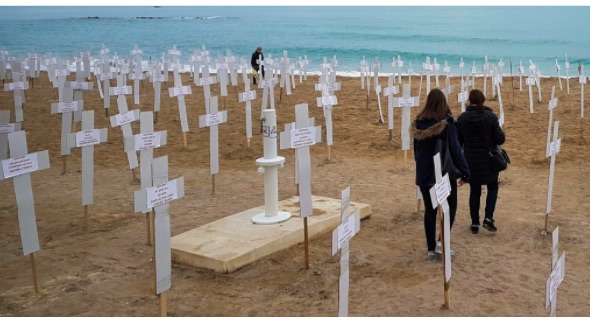
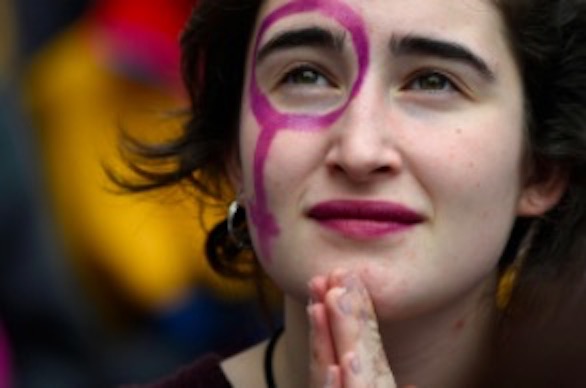
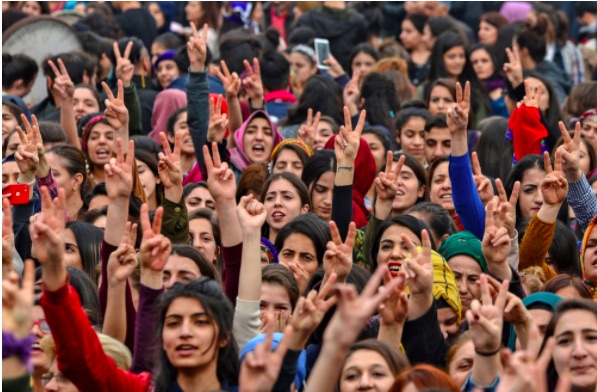
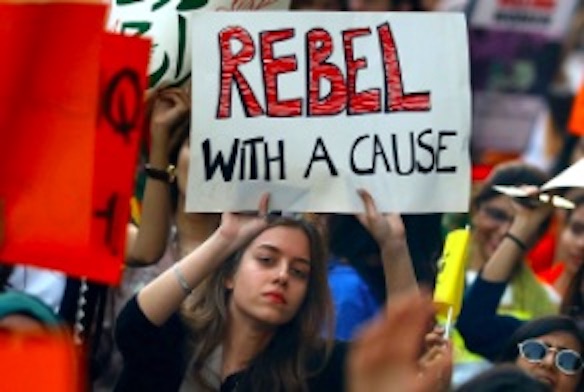
Have you seen those extraordinary photos? The women of Poland, thousands and thousands of them, pouring into the streets, disrupting business as usual and denouncing the government’s new ban on abortion. They carried symbols of red thunderbolts, umbrellas and wire coal hangers – hangers! A universal symbol of dangerous, illegal abortions which they refused to accept.

I immediately flashed back to the action I had led decades earlier in front of St. Patrick’s Cathedral in NYC in 1989, surging across Fifth Avenue with hundreds more to the Cathedral steps. I held high a six-foot replica of a wire hanger, chanting with the many others, “Not the Church, not the State, Women will Decide our Fate!” Two of our crew stood before the massive bronze doors and held up a huge Proclamation which began, “On behalf of the women of New York City and their sisters throughout the country and out of love for the truth and the desire to bring it to light, we stand here today…”

This action was inspired by then Cardinal O’Connor’s active support for anti-abortion blockades of clinics. It was the first pro-choice civil disobedience action, an historic event that could not be ignored by the media. The New York Times quoted me as saying, “Women’s rights are in a state of emergency,” and the Philadelphia Enquirer stated the action marked “an important strategic change in the movement.” Oh, how I want to be there in Poland with these fearless and inspiring women, storming into the streets and challenging government and religious institutions. Marching and chanting, full of revolutionary rectitude!

Unfortunately, it wasn’t possible to travel to Poland directly due to the Coronavirus, but I needed to do something. I contacted a feminist academic and writer in Warsaw involved in the protests. I was asked to write a letter of support from American Feminists that could be widely disseminated and published in a major newspaper. So I did, and Phyllis Chesler, Gloria Steinem, Frances Kissling, Naomi Wolf and others soon signed on. (See the letter, below.) It was published earlier this week in both Polish and English in the women’s extra to Poland’s largest daily news outlet, GAZETA WYBORCZA and was shared widely on social media by The Women’s Strike (the leading organization behind the demonstrations) as well as by local women’s groups. (Read article here.)

[Editor’s note. Another letter of support for the struggle of Polish women was written by Amnesty International, Human Rights Watch and the Center for Reproductive Rights.]

Just as I am now inspired by the courage of the Polish women, so was I inspired to travel to Russia and assist in developing women’s health services there when I heard the story of one woman who came to Choices Women’s Medical Center for her 36th abortion. I was also inspired by attacks on women’s clinics to organize the St. Patrick’s action, and I have been inspired to carry on this work at Choices – with my wonderful staff – by the memory of holding the hand of the first patient who stepped through our doors nearly 50 years ago. It’s always the women’s stories, the women’s needs and women’s bravery.

The good news from Poland today is that the courage and persistence of Polish women have forced the government to pause and step back from implementing its all but total, viciously cruel ban, even forbidding abortions where the fetus has severe abnormalities. The fight is not over, but we are confident the women of Poland will continue to inspire the rest of us.

Question related to this article:

Solidarity across national borders, What are some good examples?>

Abortion: is it a human right?

Letter of Support: November 4th, 2020

To the Great Women of Poland,

The world is in awe of your principled activism and is filled with admiration for your courage and commitment. American Feminists stand with you. We salute and support you with love and pride.

You have marched by the thousands in response to the October 22nd Tribunal ruling which denied abortion even in cases of fetal abnormality in what has been called the largest demonstration in the country since the fall of communism.

Ignoring threats of prosecution, violence from the Right, and the dangers posed by a surging Coronavirus, while displaying symbols of Red Thunderbolts, Hangers and Umbrellas, your resistance intensifies daily. You have challenged formerly “untouchable” institutions and are a stellar example of what people everywhere need to do in the fight against oppression and for women’s freedom.

Julia Przylebska, President of the Tribunal, has stated that allowing abortions in cases of fetal abnormality legalizes “eugenics” and because the Polish Constitution guarantees a right to life, terminating a pregnancy based on the health of the fetus amounts to “a directly forbidden form of discrimination.” This latest ruling imposes a near total ban in Poland that already has some of the strictest abortion laws in Europe.

You have had the courage to say no to this egregious diminishment of women’s humanity and moral agency.

Legal abortion is an integral core of women’s health and is the necessary condition for women’s freedom. We all know that nothing stops abortion – no law, no government, no religious authority. Making abortion illegal only makes it dangerous and deadly.

You demand legalization of abortion in the name of all your daughters, mothers, sisters, and grandmothers who alone and in pain lost their lives in back alleys or on dirty kitchen tables for their right to choose.

Women of Poland-We stand with you and attest that Women’s Rights are Human Rights.

Women are full moral agents with the right and ability to choose when and whether or not they will be mothers.

Abortion is a choice made by each individual for profound personal reasons that no man nor state should judge or control.

The right to make reproductive choices is women’s legacy throughout history and belongs to every woman regardless of age, class, race, religion, ethnicity, or sexual preference.

Abortion is a life-affirming act chosen within the context of women’s realities, women’s lives, and women’s sexuality.
Abortion is often the most moral choice in a world that frequently denies healthcare, housing, education, and economic survival to women.

Women’s rights remain in a state of emergency. If not now, when? If not you–then who?

We stand with you in solidarity

(click here for list of signatories)

Youth invited to sign letter to disband NATO

. .DISARMAMENT & SECURITY. .

An invitation from the International Network to Delegitimize NATO

Youth are invited here to sign the following letter addressed to NATO Secretary General Jens Stoltenberg,

We want to voice our opposition to the fact that you will host the NATO 2030 Youth Summit on November 9th.
 

As young people concerned about our future and the future of our planet, we are very concerned that the focus of the event is ‘keeping NATO strong militarily, making it stronger politically and more global’. We do not believe that strengthening NATO is the best way to secure our future. Instead we would like to see NATO disbanded.

One of the main challenges of the 21st century is to reimagine our concept of security. We are living in the midst of the Covid-19 pandemic, of unfolding climate change disaster and racial unrest. Addressing these challenges is the priority, by working alongside the international community and cooperation of the people, not strengthening a nuclear-armed military alliance that provokes mistrust and conflict.

NATO is committed to an interventionist military agenda and causes instability across the globe.

(continued in right column)

Questions for this article:

Can NATO be abolished?

(continued from left column)
 
We urge you to use the NATO 2030 Youth Summit to discuss how we build a more sustainable, more peaceful and fairer world, and to start the discussion about how the world that we will inherit would be better served by bringing an end to your alliance.

Best wishes,

The next generation,

Bela Irina Castro, Research Manager and Junior Researcher at the
Centre for Social Studies, University of Coimbra, Portugal

Sean Conner, Staff International Peace Bureau, USA

Dr. med. Lisann Marie Drews, Physician and member of IPPNW & Stop Airbase Ramstein Campaign, Germany

Eskil Grav, Staff International Peace Bureau, Norway

Sara Medi Jones, Campaign for Nuclear Disarmament, UK

Ellie Kinney, Youth and Student CND convenor, UK

Vanessa Lanteigne, National Coordinator of the Canadian Voice of Women for Peace

Quique Sánchez Ochoa, Project manager at Centre Delàs of Peace Studies and GCOMS, Spain │
Lisa Silvestre, Mouvement de la Paix, France

Lucas Wirl, International Network No to War – No to NATO, Germany

Mikis Wulkow, Peace Activist, Germany

UN 75 online festival in UK : Peace and security workshop

FREE FLOW OF INFORMATION

Based on information from Announcement of online festival for UN 75th anniversay and workshop results received by email from David Wardrop

A festival marking the UN’s 75th anniversary and addressing the overwhelming insecurity induced by Covid-19 was sponsored on October 18 and 24 by the United Nations Association of London, Peace Child International and the Polden Puckham Charitable Foundation. Here are the results from the peace and security workshop.

For improvements in issues such as health, food, the economy and the environment and digital transparency and equity to gain a firm hold in the community, the presence of peace is vital. To show how we approach this challenge, we use the UN’s Culture of Peace Initiative to break down peace into manageable elements. These are Education for Peace; Sustainable Development; the Equality of Women; Human Rights; Disarmament and Security; Democratic Participation; Tolerance and Solidarity; and the Free Flow of Information. The UN General Assembly proclaimed 2001-2010 to be the UN Decade for the Culture of Peace.

1 Education for Peace
Need for capacity development Education, by its nature, shapes and transforms society, playing a key role in peacebuilding. Capacity development issues for conflict prevention should aim to improve individual skills and organisational procedures, mitigating the risk of conflict. It must also assist educational planners on conflict prevention measures , ensuring they have skills and knowledge necessary for the development of curricula that reflect principles of peacebuilding, tolerance and human rights.
Strengthening the role of youth Education policy-makers and planners can benefit from emerging thinking on how young people learn to adapt their education and training systems as part of the technological age, and thereby help them become leaders and role models in society both within and outside school. Youth can be mobilised to contribute to conflict prevention and peacebuilding activities with different groups of students, acting as mentors and mediators to younger children and peers, participating in intra-community projects, especially in sensitive areas, and humanitarian and emergency aid, taking on electoral responsibilities, and managing cultural of peace centres.

2 Sustainable Development
Security Council: an obstacle The UN Security Council’s delay in support the Secretary-General’s call for a Global Ceasefire shocked all, especially as UNICEF reported 250 million children caught in the armed conflict. That impasse hindered sustainable development in many ways. The UN’s 70-years old Uniting for Peace resolution, first used in 1950 when the Security Council failed to act, allows the General Assembly to take over in such cases and ‘use all means to maintain international peace and security’. Further use of the Uniting for Peace option could make it clear to the five permanent member states that they should reform – or get out of the way.
Smart Sustainable Cities In 30 years, 70% of us will live in cities so the Smart Sustainable Cities project offers an effective solution to the world’s growing population. By integrating technology with sustainable management strategies, we can utilise resources more efficiently. A healthier environment, optimised traffic flow and sanitation systems, can give cities in developed and developing countries the chance to reduce the knowledge gap. This resonates with the UN’s SDGs, and with civic leadership, an important condition for the Culture of Peace Initiative is secured.

3 Equality of Women
Women on the front foot Whereas the UN’s challenge had traditionally been the protection of women, it agreed in 2000 a new approach, to bring women to the forefront in overcoming the challenges to peace, especially in peacekeeping. In 1993, women made up 1% of UN peacekeepers, now 6%, and 10% in UN police but for 2028, it plans to raise these to 15%, and 20% in police units. To expedite this, the UN will bring in better recruitment, retention and training and provide better accommodation, sanitation, health care and protective equipment.

Women on the front line These initiatives help women from the communities where the UN peacekeepers are deployed. The claim, once thought as extravagant, that ‘There is no sustainable peace without the full and equal participation of women’ is now accepted. In Sudan, it was brave women who were the driving force in the protest movement. In African SADC states , 50% of election candidates must be women. Women leaders in African states are true game changers. We must support them.

4 Human Rights
Support the UN Peacebuilding Commission Early operationalising of pre-emptive conflict prevention can work towards an ideal environment of ‘Positive Peace’ in which elevated economic and societal outcomes, paired with a diminished number of grievances, lowers levels of violence and the will to resort to it. Positive peace can be easily understood as a society free from the structural problems that would lead its citizens to resort to violent actions.
Expand Accountability Mechanisms to Defend International Human Rights Through building on initiatives such as the Responsibility to Protect, UN member states must commit to upholding human rights standards, initiate unanimous international reactionary efforts when violations begin to occur, and cultivate a normative shift towards a culture that rejects human rights violations and resort to conflict as viable options.

5 Disarmament and Security
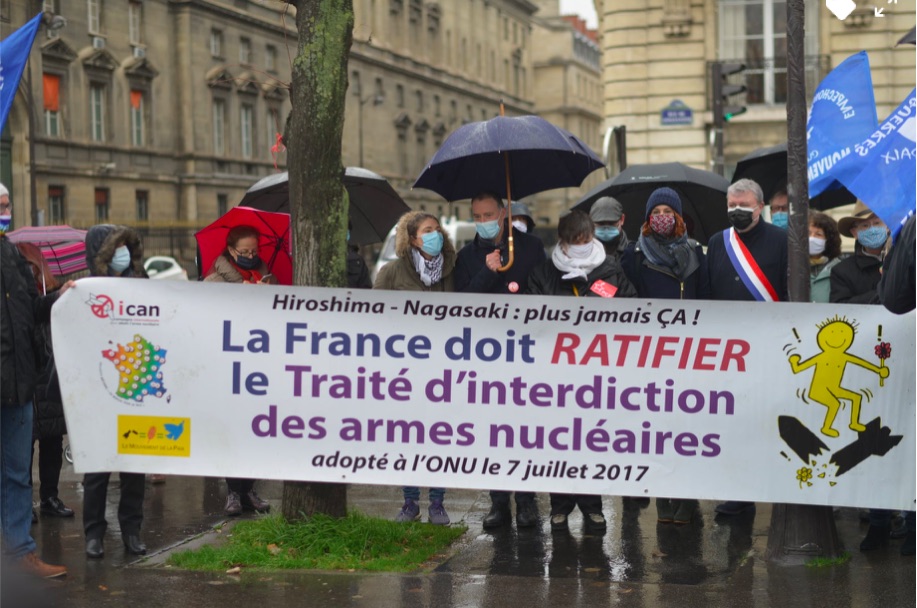
Support the #ICANSAVE My City campaign By happy chance, UN Day witnessed the ratification of the 2017 UN Treaty on the Prohibition of Nuclear Weapons and was welcomed by many. The most effective support for this is through the #ICANSAVE MY CITY campaign started by ICAN which was awarded the 2017 Nobel Peace Prize. Using social media, all should campaign for their own city to join the programme
Lethal Autonomous Weapons (killer robots) Young people should support initiatives like Pugwash, currently organising an ethical science festival for young people and extending their mission beyond nuclear weapons to tomorrow’s horror weapon, the killer robot. University UN societies across the country could lead workshops for younger people in the surrounding areas.

6 Democratic Participation
Youth involvement More than ever before, the UN seeks to link with today’s youth. Research shows that the young and those in developing countries are more optimistic about the future than their elders. And yet, new surveys report young people in the USA, UK and Australia are questioning the value of democracy. In response, we must ensure youth is represented even in the highest fora, starting with a UN Youth Council, despite local and national cultural obstructionism.
Listening to minorities The Black Lives Matter initiative challenges even the liberal minded to review perceptions of others.
Communities link up worldwide The Open Government Partnership linking governments and civil society in 78 countries encourages rich and poor to showcase successful case studies and identify ‘bright lights’, those communities which are exemplars of reform. More voices, more progress.

7 Tolerance and Solidarity
Tolerance Tolerance is an important peacemaker being not the indifference we sometime show another, rather by showing curiosity in the other, a desire to understand the other side of the argument. Be the first to try to understand the other person!
Solidarity When the UN was founded, all had lived through a pandemic, a global depression, genocide and world war. They knew all about solidarity. How do we rate? Some countries took months to show such solidarity in joining the COVAX p rogramme even though ‘vacci-nationalism’ is not only unfair, but self-defeating. In preparing for the next pandemic, let’s show the same solidarity as shown in 1945.

8 Free Flow of Information<
Sharing best practice. Much media work in conflict management has focused on the media sector itself rather than examining its interplay with sub-systems and the overall system, itself in danger of overlooking necessary linkages between peacebuilding and state-building institutions and media institutions. To generate more effective media development in post-conflict environments, especially where internet access is poor, media-military dialogues can assist build trust and understanding between these two sectors and beyond, to the communities they serve.
Media regulatory reform This should play a role in political settlements in fragile states. The regulatory framework should accommodate proportionate political coverage of parties and mechanisms to include minority political and cultural interests. There must be clarity in setting guidelines for licenses to accommodate all media actors, including the small and independent.

Iranian film “Castle of Dreams” wins at Religion Today filmfest in Italy

EDUCATION FOR PEACE .

An article from the Tehran Times

The Iranian award-winning drama “Castle of Dreams” has won the award for best feature film at the 23rd Religion Today Film Festival in Italy.

<
Photo: “Castle of Dreams” by Reza Mirkarimi

Last Wednesday [September 30], Trento as the greenest Italian city hosted the closing ceremony of the festival, which selected the motto “Earth I Care”.

Directed by Reza Mirkarimi, the film is about two young children whose mother has just died, and their father, Jalal, after long years of absence, returns to sort things out, but he does not want to take the children with him.

(continued in right column)

Question for this article:

Film festivals that promote a culture of peace, Do you know of others?

(continued from left column)

In addition, “Ojagh” by Iranian filmmaker Ali Bolandnazar also won the award for best short documentary. It is a study of the rituals of the Qashqai Turkic tribe regarding fire.

In the documentary competition, Iranian filmmaker Hamid Jafari’s “The Wind” received a special mention, while “Mother Fortress” by Italian director Maria Luisa Forenza was named best.

“The Wind” is about the Zar traditional ceremony in southern Iran. Spirits ride the wind of the seas and spread illness into the bodies of human beings. Zar is synonymous with the wind which carries illness. The Zar ceremony can free the body from evil spirits with the assistance of music and song.

The Grand Prize in the Spirit of Faith went to “Order and Soul” by Hungarian director Suzsanna Bak.

Founded in 1997, the Religion Today Film Festival is organized every year by Associazione BiancoNero. The event has been the foremost international and itinerant film festival dedicated to cinema and religions for a culture of peace and dialogue between faiths, cultures, peoples and individuals.

Spain: L’Alfàs participates in a conference on the Culture of Peace organized by the Fons Valencià de la Solidaritat

.. DEMOCRATIC PARTICIPATION ..

An article from L’Alfas

The Councilor for Cooperation and Volunteering of the Municipality of l’Alfàs del Pi, Isabel Muñoz, attended the Conference ‘ODS 16: Ciutadania per la Pau, Educació en i per al Conflicte’, organized by the Fons Valencià per la Solidaritat in Gandía . The initiative is part of the ‘Valencia for Peace’ project, which is co-financed by the Diputación de Valencia, and whose main objective is to raise awareness and promote the Culture of Peace and SDG 16, regarding the construction of peaceful, fair and inclusive societies.

The event was attended by Federico Mayor Zaragoza, president of the Culture of Peace Foundation and former Secretary General of UNESCO, and Jesús E. Núñez, co-director of the Institute for Conflict Studies and Humanitarian Action. In addition to their speeches, the documentary ‘Els Fils del Tauler’, by the Collectiv Mirades, was screened, and a debate was opened with the director and with two refugees who star in the film.

(continued in right column)

(Click here for the Spanish original of this article)

Questions for this article:

How can culture of peace be developed at the municipal level?

(continued from left column)

“These conferences have been of great interest to us, because they follow the same strategy that the City Council of l’Alfàs has been promoting for years, spreading the Culture of Peace through mediation in the educational and family sphere with workshops, courses and conferences aimed mainly at the educational community,” explained Isabel Muñoz.

L’Alfàs del Pi is a pioneer in the application of mediation in conflict resolution in the school environment, a project aimed at improving coexistence in classrooms and preventing violent attitudes. The school mediation program began a decade ago at IES L’Arabí and, given the good results, in 2015 it was extended to the three public Primary schools: Veles e Vents, Racó de l’Albir and Santíssim Crist del Bon Encert.

Following in the same vein, the City Council of l’Alfàs promoted four years ago the creation of a mediation service for families from the educational field whose main objective is to promote a climate of dialogue that enriches coexistence in the family environment.

The Councilor for Cooperation and Volunteering has reiterated “the commitment of l’Alfàs del Pi to the Sustainable Development Goals and the 2030 Agenda’, for which different activities and initiatives are promoted throughout the year.

L’Alfàs del Pi joined the Fons Valencià per la Solidaritat in 2019, an association in which more than a hundred municipalities of the Valencian Community are integrated to develop cooperation projects for development and awareness and education in values.