Norway: ‘Biggest Pile of Money on the Planet’ To Dump Fossil Fuels Holdings

. . SUSTAINABLE DEVELOPMENT . .

An article by Julia Conley for Common Dreams (reprinted according to terms of Creative Commons Attribution-Share Alike 3.0 License)

Environmental advocates on Thursday applauded the latest organization to shift away from continued support of the fossil fuel industry—Norway’s national bank.

In a move 350.org co-founder Bill McKibben called “astonishing,” Norges Bank, which oversees the world’s largest sovereign wealth fund, advised the Norwegian government to dump all of its shares in oil and gas companies, leaving those entities out of its $1 trillion fund.
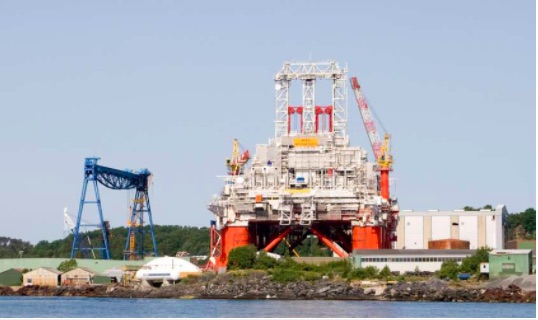

About six percent of Norway’s sovereign wealth fund is invested in oil and gas companies—but the countries central bank advised that all those shares be dumped, amid falling oil prices and expectations of a dim future for fossil fuels. (Photo: Guy Beauchamp/Flickr/cc)

The bank’s decision comes two years after Norway’s parliament approved a measure calling for the fund to begin divesting from coal companies.

Norges Bank made the new recommendation in light of falling oil prices. Oil and gas are seen as increasingly risky investments as more countries turn to cleaner energy sources in order to meet requirements under the Paris climate agreement, which aims to keep global warming under two degrees Celsius above pre-industrial levels.

(continued in right column)

Question for this article:

Divestment: is it an effective tool to promote sustainable development?

(continued from left column)

While Norway has built much of its sovereign wealth through oil and gas development in the past—six percent of the fund is invested in fossil fuels—it’s now home to a fast-growing solar power sector, with solar installations rising by 366 percent from 2015 to 2016.

“It is not surprising that we see the world’s largest sovereign wealth fund managers no longer prepared to take the increasing risk associated with oil and gas assets, which do not have a long-term future,” said Paul Fisher of the Cambridge Institute for Sustainability Leadership, in an interview with the Guardian.

McKibben compared the bank’s recommendation to “the moment when the Rockefellers divested the world’s oldest oil fortune” in 2014, when the heirs to Standard Oil said that if founder John D. Rockefeller were alive in the 21st century, “he would be moving out of fossil fuels and investing in clean, renewable energy.”

“This is the biggest pile of money on the planet, most of it derived from oil—but that hasn’t blinded its owners to the realities of the world we now inhabit,” said McKibben.

Nicolò Wojewoda of 350.org Europe was also hopeful about the implications of Norges Bank’s decision, calling it “yet another nail in the coffin of the coal, oil, and gas industry.”

“To stop climate catastrophe, fossil fuels need to stay in the ground. Investing in them is no longer financially sound, nor morally acceptable, and this proposal is a clear recognition of that,” Wojewoda added.
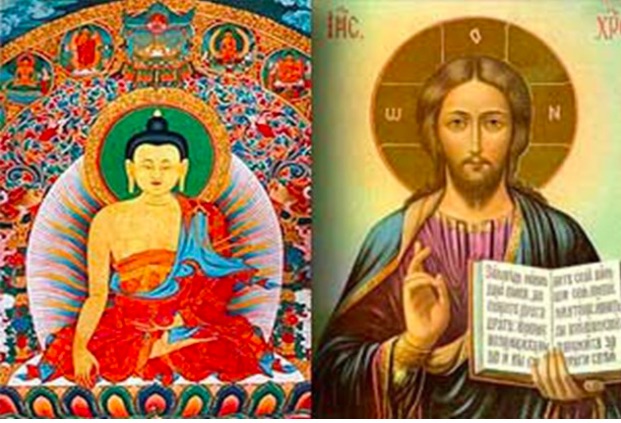
Taiwan: The sixth Buddhist-Christian talk in progress

. TOLERANCE & SOLIDARITY .

An article from Radio Vatican

The sixth Buddhist-Christian talk is taking place in Taiwan from Monday to Thursday [November 13-16] on the theme “Christians and Buddhists: Let’s walk together the Way of Nonviolence”.

The four day event is being organized by the Pontifical Council for Interreligious Dialogue (PCID) and is represented by delegates from 18 countries mostly Asians.

The Secretary of PCID, Bishop Miguel Ángel Ayuso Guixot opened the inaugural session illustrating the role of the Dicastery since its founding in 1964. For more than fifty years he recalled, the PCID has been involved in dialogue and collaboration with Buddhists all over the world. The first Buddhist-Christian formal talk was held at the Fokuangshan Monastery in Taiwan in 1995 on the theme “convergences and divergences” between the two religions. The second meeting was held in 1998 at the Asirvanam Benedictine Monastery Bangalore, India on “word and silence”. The third was held in Tokyo, Japan, in 2002 at Rissho Kosei-kai, on “Sangha in Buddhism and Church in Christianity.” The fourth was “Interior Peace, peace among peoples” and was held in Rome in 2013 and the fifth on “Buddhists and Christians together encourage fraternity” was held in Bodh Gaya, India, in 2015.

(continued in right column)

Question related to this article:
 
How can different faiths work together for understanding and harmony?

(continued from left column)

The current theme of the assembly is taken from the traditional message that PCID sends to the Buddhists for the Vesakh festival, which this year emphasized in particular the urgent need to promote a culture of peace and nonviolence.

“Terrorism is on the increase, as well as the number of people killed in terrorist attacks and most victims are women and children” said the Bishop. Moreover, in most cases, conflicts cross the frontiers and especially affect the poor countries, he added. Making a mention of domestic violence especially come across by women the bishop said that the study of violence is not a simple academic exercise but a matter of life and death. Some of us come from conflict-torn societies, some others experience the long-term or short-term effects of past wars. Some are victims or witnesses of unreasonable atrocities. In many of our countries, we daily hear the cry of the victims of violence he observed. Yet he said, uncontrolled nationalism, sexism, racism, caste, ethnic and religious fundamentalism may numb our hearts and blind our eyes to the suffering of so many people, hence the Buddhists and Christians work together to prevent and defeat violence he concluded.

More than 1.3 million people around the world die each year because of violence; and about 1.2 billion, or one fifth of the world’s population, are affected by some form of violence or insecurity.

Cardinal P Jean-Louis Tauran, President of PCID will take part in the concluding session of the assembly on Thursday.

India: Peace fiesta underway at Wokha

.. DEMOCRATIC PARTICIPATION ..

An article from Eastern Mirror Nagaland

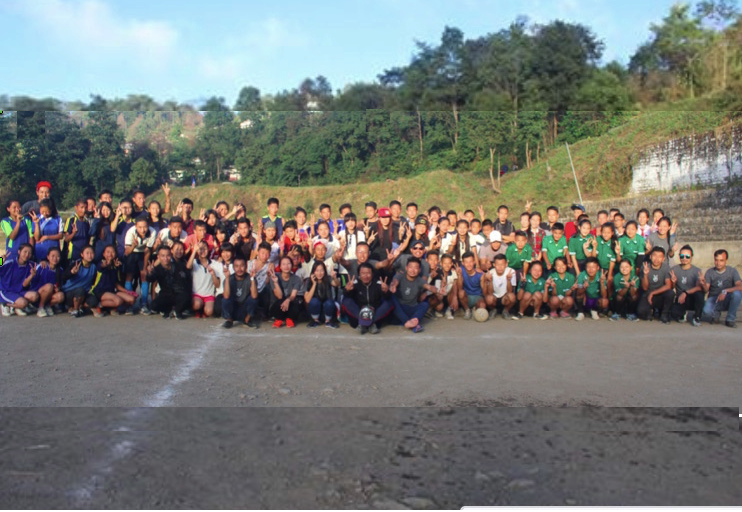
Peace Counts Wokha launched the third peace programme (Peace fiesta) a two day event on promoting peace at Don Bosco Higher Secondary School Wokha, ground under the theme Peace within, peace outside on Friday.


Peace Counts Wokha, as seen on their Facebook page
(click on photo to enlarge)

Ashanthung Humtsoe, General Secretary, Lotha Students’ Union exhorting and declaring the event open thanked the organisation for promoting peace through sports and encouraging the youths to come together, stating that the youths are the future of tomorrow in building the nation.

(continued in right column)

Questions for this article:

Can festivals help create peace at the community level?

(continued from left column)

Where he also informed that the world is today passing through an environment full of tension, violence, declining values, injustices, reduced tolerance and respect for human rights due to modernisation making smaller chance for peaceful coexistence with the gun culture taking a dominant position in most of the developing countries, threatening the future of the youths who deserve a peaceful and better quality of life.

He also highlighted the need to create a culture of peace and conflict free environment with youth’s involvement stating that the youths need to start thinking different and “be the change” where youth’s should learn to combine their enthusiasm with patience, realizing the importance of living together and should be responsible to defend the frontiers of peace and non-violence.

The two day event will feature painting, essay writing and poetry competition with poster expiation from peace builders around the world and hand prints of peace camping will also be organised for all the participants.

Sixteen (16) teams from various schools, colony and organisations from Wokha registered for participation in the event.

South Korea: Artists, activists to promote peace in Cheongju

EDUCATION FOR PEACE .

An article by You Soo-sun in Peace News

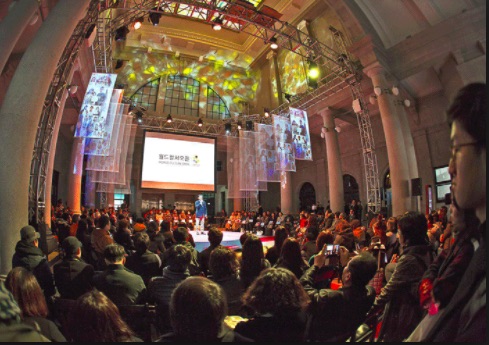
An international event will bring 500 cultural activists to Cheongju, North Chungcheong Province, Friday [November 10].

Under the theme “Designing a Culture of Empathy, Culture of Peace,” artists, experts and activists representing 50 countries including the U.S. , Yemen, Japan, Rwanda and France will gather for the three-day event, Better Together 2017.


The event is being run by World Culture Open (WCO), an international network of global activists, and is funded by North Chungcheong Province and the Ministry of Culture, Sports and Tourism.

Since 1999, WCO has initiated numerous projects with the aim of bringing the world closer together.

The network has invited over 500 people from various fields including the arts, humanities, science, education and environment to share how they have utilized their talents to improve the global community.

Read the whole story in Artists, activists to promote peace in Cheongju | Korea Times.

Question for this article:

Tunis: Strengthening the scientific partnership between Iran and the Arab countries

. . SUSTAINABLE DEVELOPMENT . .

An article from Web Manager Center (translated by CPNN)

Arab and Iranian academics who attended the third international scientific congress of universities in Iran and the Arab world, held in Tunis on November 11-12, stressed the importance of strengthening the cultural and civilizational exchange between the countries of the Arab world to break the stereotypes created by politicians and the media that no longer fit the reality of today.

The conference culminated in the publication of a press release containing scientific recommendations, including the valorization of the fruitful scientific partnership between Arab and Iranian universities and the need to engage in in-depth dialogues to develop scientific strategies capable of strengthening academic relations between both parties for a better and promising future to the Arab-Persian academic partnership.

(Article continued in the right side of the page)

(Click here for the original French version of this article.)

Question for this article:

How can we ensure that science contributes to peace and sustainable development?

(Article continued from the left side of the page)

The recommendations also emphasized the importance of science as a human heritage that transcends ethnic conflict, calling for enhanced exchanges and the promotion of objective information and the culture of peace and tolerance.

The participants also called for a real debate among Muslims to better position Islam with other religions and to promote the common scientific heritage to educate young people with common civilizational foundations and spread the Arabic and Persian languages. They also stressed the importance of promoting the efforts of translation as a means of spreading the culture and science of the countries and the intensification of academic meetings and exchanges between Arab and Iranian students, professors and researchers.

It should be noted that this congress, organized under the supervision of the University of Manouba, saw the participation of presidents of Arab universities in Tunisia, Lebanon, Algeria, Libya, Morocco, Iraq and Tunisia. Syria in addition to the participation of 11 Iranian universities.

Conferences on the sidelines of this event focused on ways to strengthen the university partnership between the countries of the Arab world and Iran.

Spanish action to support the Treaty on the Prohibition of Nuclear Weapons

DISARMAMENT & SECURITY .

An article by Rafael de la Rubia from Pressenza (reprinted according to terms of Creative Commons Attribution 4.0 International license)

On 7 July 2017, at the initiative of the United Nations, 122 countries concluded negotiations and elaboration of a Treaty on the Prohibition of Nuclear Weapons. Subsequently, on 20 September 2017, the process of signing the treaty was opened, with the well-founded expectation that more than 50 countries would ratify it as a condition for the treaty to enter into force.

On 15 November, in the Spanish Congress of Deputies, an event will be held to address the global context of the deterioration of global security and the increasing risk of the use of nuclear weapons and to review the main international initiatives that are under way to prevent it.


(Click on image to enlarge)

In a global context in which, once again, the danger of nuclear war is growing following successive nuclear tests by North Korea and the threat by President Trump to unleash “fire, fury and frankly power, the likes of which this world has never seen before,” it seems necessary for the Spanish Parliament to debate this issue and adhere to the international treaties and actions under way.

(Continued in right column)

(Click here for a French version of this article or here for a Spanish version)

Question related to this article:

Can we abolish all nuclear weapons?

(Continued from left column)

Several social organisations such as World without Wars and Violence, the Spanish Peace Research Association, the Peace Culture Foundation and the Women’s International League for Peace and Freedom – Spain, among others, have taken the initiative to take this debate to the Spanish Parliament, calling on parliamentary groups to take a stand on this matter and to ask the government why Spain is not among those 122 countries that have been working on the elaboration of this Treaty, and calling on all deputies and senators in Spain to attend the event that will take place on Wednesday, the 15th of November, at 4pm in the Clara Campoamor Hall in the Spanish Congress.

In the event the global context with respect to nuclear weapons and the NPT will be discussed, as well as other nuclear disarmament initiatives. In addition, the Network of Parliamentarians for Nuclear Non-Proliferation and Disarmament (PNND), an international inter-parliamentary forum with the participation of more than 700 parliamentarians from 75 countries working on nuclear disarmament, will also be presented.

To this end, Alyn Ware, the international coordinator of PNND, has been invited to participate. In 2009 he was awarded the Right Livelihood Award, popularly known as the Alternative Nobel Peace Prize, for his “effective and creative work over two decades to promote peace education and rid the world of nuclear weapons”. These awards have been presented annually since the Swede, Jakob von Uexkull, established them in 1980 to “honour and support those who propose concrete and exemplary solutions to the challenges of today’s world”. In 2009, Ware was reported by the press as “a tireless defender of peace and nonviolence”.

Furthermore, the Conference on Nonviolence in preparation for the 2nd World March for Peace and Nonviolence which will take place at Cybele Palace, headquarters of the Madrid City Council, on Friday 17, will review the initiatives for nuclear disarmament and will explicitly support Spain’s accession to the Treaty on the Prohibition of Nuclear Weapons.

Contact: info@mundosinguerras.es

Jordan: Peace through science

. . SUSTAINABLE DEVELOPMENT . .

An editorial from the Jordan Times

His Majesty King Abdullah inaugurated on Tuesday at the Dead Sea the World Science Forum 2017, which this year had “Science for peace” as its theme, a topic strongly supported by this distinguished meeting that normally seeks to highlight the role of science in building and fostering a culture of peace at all levels of society, and the potential of science to create mechanisms that promise peaceful opportunity.


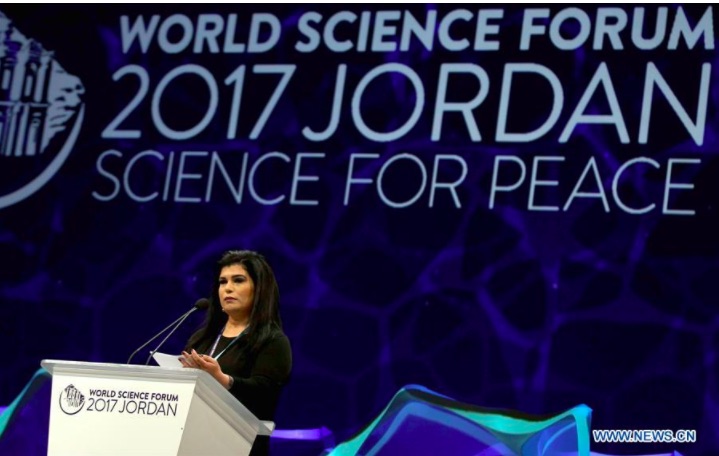
Jordanian Princess Sumaya, chair of the World Science Forum 2017 and president of the Royal Scientific Society, speaks during the opening ceremony of the World Science Forum 2017 in Sweimeh, Jordan, on Nov. 7, 2017. Photo from Xinhua Net

The forum, first held in Hungary in 2003, was attended this year by visiting Hungary President János Ader, who joined some 3,000 scientists, policymakers, Nobel laureates, academics and investors from over 120 countries at this meeting held for the first time in the area.

The King honoured several prominent Jordanian scientists who made remarkable achievements in various fields and said, on the occasion, that knowledge can help realise stability and development for “our world and the future of our generations”.

With so much turmoil and fighting laying the Middle East to waste, it is no wonder that this year’s forum wishes to highlight the role of science in building and fostering peace.

But equally important to achieving peace is food, water and security, as highlighted by the Hungarian president who, mentioning the region’s rich historical lessons, pointed out the reasons this year’s forum focuses on these issues: “If we look at only its past 100 years, we can see that competition for natural resources — like arable land, water and energy — has almost always contributed to conflicts within and between countries. It is no accident that this year’s forum focuses on the issues of food security, water and energy. All three of these areas are fundamental to security.”

(Article continued in the right side of the page)

Question for this article:

How can we ensure that science contributes to peace and sustainable development?

(Article continued from the left side of the page)

They certainly are, particularly when knowing that, as the president said, 2 billion people have no access to safe drinking water, 4 billion have no access to adequate sanitation, in 36 countries, per capita water supplies have fallen to a critical level and around 80 per cent of waste water is dumped, untreated, into the biosphere, all problems with great potential to create instability or worse.

As such, HRH Princess Sumaya, chairperson of this year’s forum and president of the Royal Scientific Society, expressed hope that the “stark and shared” challenges and “critical needs of our world” can be addressed, “to create a future that is worthy of our human spirit”.

As she also aptly put it, “knowledge is the key to our future, and science and technology must be empowered to acknowledge those truths that are challenged today”.

Indeed, only through knowledge and daring pioneering work can mankind hope to better its lot, harness nature’s bounty and caprices, overcome petty instincts and avoid savage conduct; only thorough scientific knowledge can it understand the world around, live harmoniously and succeed in combating the scourges of our days: radicalism and terrorism.

Only through it can it hope to survive as a species and save this planet so aggressively exploited.

Theoretical physicist, best-selling author and renowned futurist Michio Kaku said it better: “The future belongs to the educated, dreamers and the curious young people… .”

The UN Committee on Economic, Social and Cultural Rights is now considering articulating a “general comment” on the right to science as a means to upgrade human thinking and intellectual integrity, an issue on which the forum organisers might wish to collaborate with the UN.

Knowledge means power, progress and emancipation. Spreading it is the duty of all those who possess it. The forum is essential to that endeavour.

4th Dakar International Forum on Peace and Security in Africa

DISARMAMENT & SECURITY .

An article from Panapress

The 4th Dakar International Forum on Peace and Security in Africa ended on Tuesday afternoon in Diamniadio, Senegal, after two days of work marked by a high-level panel led by Presidents Macky Sall of Senegal, Paul Kagame of Rwanda, and Ibrahima Boubacar Keita of Mali.

The three heads of state particularly emphasized the need for Africa to rely first on itself to ensure its security before appealing to the international community.


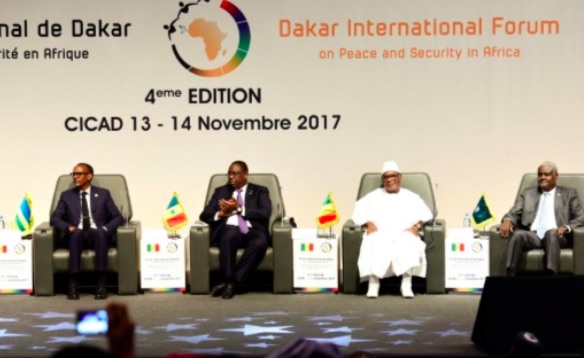
(From l) Rwanda’s president Paul Kagame, Senegal’s president Macky Sall, Mali’s president Ibrahima Boubacar Keita and AU Commission head Moussa Faki Mahamat at the opening of the Peace and Security forum in Dakar. By SEYLLOU (AFP)

“We must commit ourselves to solving our problems before resorting to foreign aid. I do not believe that Africa’s defense will come from outside. I do not believe it. Africa must first take charge of its security and our partners will come in support,” said President Sall.

The Prime Minister of Chad, Albert Pahimi Padacké, the Chairperson of the African Union Commission (AU), Moussa Faki Mahamat, the French Minister of Armed Forces, Ms. Florence Parly, and the Deputy Minister at the Japanese Ministry of Foreign Affairs , Masahisa Sato, also took part in this panel.

(Article continued in right column)

(Click here for the original French version of this article.)

Question for this article

Islamic extremism, how should it be opposed?

(Article continued from left column)

The Prime Minister of Chad, Albert Pahimi Padacké, the Chairperson of the African Union Commission (AU), Moussa Faki Mahamat, the French Minister of Armed Forces, Ms. Florence Parly, and the Deputy Minister at the Japanese Ministry of Foreign Affairs , Masahisa Sato, also took part in this panel.

The sentiment of the three heads of state is shared by Padacké who highlighted the efforts made by his country to help its neighbors, Niger, Nigeria and Cameroon, to fight against Bokko Haram, which is rampant in the Lake Chad Basin.

“We have to rely on ourselves first, because the security of the continent and Africans are at stake. It is our responsibility to protect our countries and our people. We can always appeal to the international community, but we must not depend on it,” he said.

“Chad does not host any terrorist organization, but it was the first to intervene in Mali and devotes significant resources to the fight against terrorism that is raging among its neighbors,” he said, wondering how long his country can hold out if its efforts are not supported?

However, they all recognize the need for subregional and global cooperation to fight terrorism, particularly in Africa.

Discussions focused on several themes including terrorism and violent extremism, Africa and emerging security challenges, migration and security challenges, the fight against terrorist financing, maritime security and safety in Africa, as well as cybersecurity, information governance and the digital space.

This “Mature Forum” was organized by the Ministry of Foreign Affairs and by Senegalese from abroad with the support of the French Ministry of Defense and many other partners.

Placed this year under the theme “Security Challenges in Africa: for integrated solutions”, the meeting brought together “more than 400 participants” including regional and international actors, political and military authorities, experts, academics, diplomats, representatives of international organizations and civil society.

The organization of the forum was decided in December 2013 in Paris during a France-Africa summit on the fight against terrorism.

Burkina Faso: A forum talks about peace

. TOLERANCE & SOLIDARITY .

An article by Irmine Kinda for Burkina 24

The first international youth forum on the culture of peace is taking place this Wednesday, November 15, 2017 in Ouagadougou under the sponsorship of Michel Kafando, former President of Burkina Faso. The forum brings together the different religions to discuss, revisit the holy texts, see what these texts say about the peace, and to promote peaceful coexistence in spite of religious differences.

The background of this first forum is the African initiative of education for peace and development through interfaith and intercultural dialogue launched in Cotonou in May 2015 and the historic UN Security Council Resolution 2250 on youth, peace and security. Organizers include the Burkina Faso Interfaith Youth Network (BFIYN) and the JEC (Jeunesse Etudiante Catholique du Burkina Faso).

The forum gathers from November 15 to 18, 2017 young participants of various religions. While recognizing the need for military action in the fight against growing terrorism, they want to bring their touch as sentinels of peace. And to do this, the promoter of the Forum, Henri Kaboré, has retained for this first forum the theme: “Youth committed to a culture of peace through interreligious dialogue”

(continued in right column)

(Click here for the original French version of this article)

Question related to this article:
 
How can different faiths work together for understanding and harmony?

(continued from left column)

For this first edition 120 participants are expected and the coordinator stressed that the focus will be on the representation of young people coming from the various religious denominations including Islam, Christianity and African traditional religion. Young people will have the opportunity to meet, exchange, accept their differences and realize that they are all creatures of God, called to love each other and to protect human life that is sacred.

“Difference is a wealth and not a disadvantage (…). Without peace, there is no development (…). Young people are actors of peace and development “, emphasized the initiator and the coordinator of the Forum, Henri Kaboré.

The forum’s sponsor, Michel Kafando, praised the youth initiative. Indeed, he says, “in a world where youth represents the essential in its number, it is necessary that this youth can truly make its mark in the search for peace. This forum focuses on interreligious dialogue. That means that this youth is aware that our world is disrupted and that our future is youth. By raising the issue and ensuring that through these various meetings, there is a general consciousness so that through exchanges we can find a solution that makes this world more peaceful. I accepted to sponsor this forum because I believe that the youth has a very big role to play “.

The opening of this forum also saw the presence of the deputy Jacob Ouedraogo, president of the commission of laws in the National Assembly and the general secretary of the religion for christ, Dr. Francis Kayena. The two co-chairs of the forum congratulated and encouraged the young people and said they would spare no effort to accompany them in the quest for peace.

Historic peacebuilding program launches in Bosnia and Herzegovina

. TOLERANCE & SOLIDARITY .

An article from the Catholic News Agency

When Pope Francis visited Bosnia and Herzegovina two years ago, he found a country still healing from a devastating conflict two decades earlier. The three-year Bosnian War killed around 100,000 people and displaced a million more. Although ethnic and religious violence tapered off after the peace treaty of 1995-96, deep cultural and religious divides are enduring.

Now, a historic master’s program has been created in Sarajevo that primarily focuses on Interreligious Studies and Peacebuilding, taught by the three major theological seminaries of Catholic, Islamic and Orthodox thought.

“This program represents efforts of the three faculties to work, on a scientific basis, on peace-building and reconciliation in this country,” said Darko Tomasevic, the dean of the Catholic Theological Faculty at the University in Sarajevo.

“Above all, we want to ensure as good a foundation as possible for a better future for Bosnia and Herzegovina, in the capacity that we, as institutions within religious communities and churches, can provide,” Tomasevic said.

The first of its kind in the region, the master’s program was coordinated by Catholic Relief Services, in conjunction with the Faculty of Islamic Sciences, the Catholic Theological Faculty and Orthodox Theological Faculty of St. Basil of Ostrog.

According to Zuhdija Hasanovic, the dean of the Faculty of Islamic Sciences at the University in Sarajevo, the program is an effort to be more intentional about healing the country’s divisions with an attitude of respect.

“Each of the faculties works on developing a sense of respect for ‘others,’ or different ones, but this study program is something special and it will, hopefully, yield results,” he said.

(continued in right column)

Question related to this article:
 

How can different faiths work together for understanding and harmony?

(continued from left column)

The first class began on Oct. 26, and the program will run over the course of the next year. Professors and teachers from all three seminaries will lead the program, which now includes 23 students. The course is aimed at students who are have backgrounds in theology, social sciences and humanities, and are interested in interreligious studies and peacebuilding.

“Joint-study programs like this one offer a unique opportunity to use religious as a catalyst for peace,” stated Marc D’Silva, the CRS country representative in Bosnia and Herzegovina.

“This program will show how religious institutions can train a new generation of religious and civil society leaders to be advocates for a more just and better society,” D’Silva continued.

The master’s program is currently only being offered to local students, but there are hopes of expanding the course to international students. CRS is also promoting scholarships, internships and job opportunities with local government officials and civil society organizations in the country.

The official international humanitarian agency of the Catholic community in the U.S., Catholic Relief Services has had a presence in Bosnia and Herzegovina since 1993, when it began offering emergency relief services to victims of the war in Sarajevo. Post-war, CRS continued to offer aid by helping displaced families return to their homes. The organization has a continued presence in the country today through education, psychological support, rebuilding homes and promoting livelihoods.

Pope Francis’ pastoral visit to Bosnia and Herzegovina in 2015 was seen as an important step in unity, in a nation where religion is closely tied to ethnicity. Forty percent of the country’s 3.8 million population are Muslim/Bosniak and another 40 percent are Orthodox/Serbian. Fifteen percent are Catholic/Croats.

“There is no other foundation on which the culture of peace can be based, but on interreligious dialogue,” stressed Vladislav Topalovic, dean of the Orthodox Theological Faculty “St. Basil of Ostrog” of the University in East Sarajevo.

“It is our only exit, our only path on which we can base that culture of peace, and trust among all of us in Bosnia and Herzegovina.”