Terrace Farming – an Ancient Indigenous Model for Food Security

. SUSTAINABLE DEVELOPMENT .

Marianela Jarroud, Inter Press Service News Agency (reprinted by permission)

Terrace farming as practiced from time immemorial by native peoples in the Andes mountains contributes to food security as a strategy of adaptation in an environment where the geography and other conditions make the production of nutritional foods a complex undertaking.

terraces
Terraces built by Atacameño Indians in the village of Caspana in Alto Loa, in the northern Chilean region of Antofagasta. This ageold farming technique represents an adaptation to the climate, and ensures the right to food of these Andes highlands people. Credit: Marianela Jarroud/IPS
Click on photo to enlarge

This ancient prehispanic technique, still practiced in vast areas of the Andes highlands, including Chile, “is very important from the point of view of adaptation to the climate and the ecosystem,” said Fabiola Aránguiz.

“By using terraces, water, which is increasingly scarce in the northern part of the country, is utilised in a more efficient manner,” Aránguiz, a junior professional officer on family farming with the United Nations Food and Agriculture Organisation (FAO), told IPS from the agency’s regional headquarters in Santiago, some 1,400 km south of the town of Caspana in Chile’s Atacama desert.

In this country’s Andes highands, terrace farming has mainly been practiced by the Atacameño and Quechua indigenous peoples, who have inhabited the Atacama desert in the north for around 9,000 years.

Principally living in oases, gorges and valleys of Alto Loa, in the region of Antofagasta, these peoples learned about terrace farming from the Inca, who taught them how to make the best use of scant water resources to grow food on the limited fertile land at such high altitudes.

The terraces are “like flowerbeds that have been made over the years, where the existing soil is removed and replaced by fertile soil brought in from elsewhere, in order to be able to grow food,” the Agriculture Ministry’s secretary in Antofagasta, Jaime Pinto, told IPS.

“This has made it possible for them to farm, because in these gorges where they terrace, microclimates are created that enable the cultivation of different crops,” Pinto, the highest level government representative in agriculture in the region, said from the regional capital, Antofagasta.

The official said that although water is scarce in this area, “it is of good quality, which makes it possible, in the case of the town of Caspana, to cite one example, to produce garlic or fruit like apricots or apples on a large scale.”

According to official figures, in the region of Antofagasta alone there are some 14 highlands communities who preserve the tradition of terrace farming, which contributes to local food security as well as the generation of income, improving the quality of life.

Communiities like Caspana, population 400, and the nearby Río Grande, with around 100 inhabitants, depend on agriculture, and thanks to terrace farming they not only feed their families but grow surplus crops for sale.

But people in other villages and towns in Alto Loa, like Toconce, with a population of about 100, are basically subsistence farmers, despite abundant terraces and fertile land. The reason for this is the heavy rural migration to cities, which has left the land without people to farm it, Pinto explained.

(Article continued in right column)

Question for this article

Indigenous peoples, Are they the true guardians of nature?

(Article continued from left column)

“Ours is fertile land,” Liliana Terán, a 45-year-old mother of four and grandmother of four who belongs to the Atacameño indigenous community, told IPS. One of her income-generating activities is farming on the small terrace she inherited from her mother in Caspana.

“Whatever you plant here, grows,” she added proudly.

The name of her indigenous village, Caspana, means “children of the valley” in the Kunza tongue, which died out in the late 19th century. The village is located 3,300 metres above sea level in a low-lying part of the valley.

Caspana is “a village of farmers and shepherds” reads a sign carved into stone at the entrance to the village, which is inhabited by Atacameño or Kunza Indians, who today live in northwest Argentina and northern Chile.

Each family here has their terrace, which they carefully maintain and use for growing crops. The land is handed down from generation to generation.

Each village has a “juez del agua”, the official responsible for supplying or cutting off the supply of water, to ensure equitable distribution to the entire village.

“The water flows down through vertical waterways between the terraces, from the highest point of the river, and is distributed in a controlled mmaner,” said Aránguiz.

“With this system, better use is made of both irrigation and rainwater, and more water is retained, meaning more moisture in the soil, which helps ease things in the dry periods,” she added. “And the drainage of water is improved, to avoid erosion and protect the soil.”

All of these aspects, said the FAO representative, make terrace farming an efficient system for fighting the effects of climate change.

“Well-built and well-maintained terraces can improve the stability of the slopes, preventing mudslides during extreme rain events,” she said, stressing “the cultural importance of this ancestral technique, which strengthens the economic and social dynamics of family agriculture.”

Aránguiz pointed out that indigenous people in the Andes highlands have kept alive till today this tradition which bolsters food security. She specifically mentioned countries like Bolivia and Peru, noting that terrace farming is used in the latter on more than 500,000 hectares of land.

Luisa Terán, 43, who has an adopted daughter and is Liliana’s cousin, works the land on her mother’s terrace.

When IPS was in the village the day before the traditional ceremony when the local farmers come together to clean the waterways that irrígate the terraces, Luisa was hard at work making empanadas or stuffed pastries for the celebration.

“This ceremony is very important for us,” as it marks the preparation of the land for the next harvest, she said.

Pinto underlined that “maintaining these cultivation systems is a responsibility that we have, as government.”

He said that through the government’s Institute of Agricultural Development, the aim is to implement a programme for the recovery and maintenance of terraces that were damaged in the most recent heavy storms in northern Chile.

In addition, projects are being designed “to help young people see agricultural development as an economic alternative.”

This goes hand in hand with the fight against inequality, Pinto said.

“We are working on creating the conditions for food autonomy and it is this kind of cultivation that can generate contributions to agricultural production to feed the region,” he added.

Edited by Estrella Gutiérrez/Translated by Stephanie Wildes

(Thank you to Janet Hudgins, the CPNN reporter for this article.)

United Nations: Whistleblowers Need Protection

FREE FLOW OF INFORMATION

An article by Elizabeth “Liz” Hempowicz, Public Policy Associate, POGO (Project on Government Oversight

Daniel Kaye, the United Nations’ Special Rapporteur for Freedom of Expression, recently submitted a report to the General Assembly on the protection of whistleblowers and sources. The report highlights key elements of protections for whistleblowers, and is based in part on participation by 28 States as well as individuals and non-governmental organizations (NGOs). Among a host of best-practice protections featured in the report, the Special Rapporteur focuses particular attention on national security whistleblowers and sources, those whistleblowers who are often subject to criminal prosecution for exposing serious problems.

Whistleblowers
Image: Adapted from Jared Rodriquez / Truthout

Notably, the report recommended a public interest balancing test for disclosures in the national security field that could be used to claim protection from retaliation or as a defense when facing prosecution. This balancing test would promote disclosures where the public interest in the information outweighs any identifiable harm to a legitimate national security interest, and requires that the whistleblower disclose no more information than reasonably necessary to expose wrongdoing. A defense for blowing the whistle in the national security field would be a welcome one, as these whistleblowers often face prosecution under the Espionage Act, which could mean years of costly litigation for simply trying to expose practices that make us less secure. This balancing test is similar to one proposed last year by Yochai Benkler, a law professor and co-founder of the Berkman Center for Internet and Society, and supported by the Project On Government Oversight.

The full report contains many best-practice recommendations that our Congress should consider to strengthen whistleblower protections domestically.

(Thank you to Janet Hudgins, the CPNN reporter for this article.)

Question(s) related to this article:

Free flow of information, How is it important for a culture of peace?

Here is a response to the question from David Adams

Perhaps the simplest way to illustrate the essential importance of free flow of information for a culture of peace is to discuss the importance of the control of information for the culture of war.

Here are excerpts from an Washington Post investigation two years ago entitled Top Secret America: A hidden world, growing beyond control. To read the original, click here.

“* Some 1,271 government organizations and 1,931 private companies work on programs related to counterterrorism, homeland security and intelligence in about 10,000 locations across the United States.

* An estimated 854,000 people, nearly 1.5 times as many people as live in Washington, D.C., hold top-secret security clearances.

* In Washington and the surrounding area, 33 building complexes for top-secret intelligence work are under construction or have been built since September 2001. Together they occupy the equivalent of almost three Pentagons or 22 U.S. Capitol buildings – about 17 million square feet of space.

* Many security and intelligence agencies do the same work, creating redundancy and waste. For example, 51 federal organizations and military commands, operating in 15 U.S. cities, track the flow of money to and from terrorist networks.

* Analysts who make sense of documents and conversations obtained by foreign and domestic spying share their judgment by publishing 50,000 intelligence reports each year – a volume so large that many are routinely ignored.” . . .

“Every day across the United States, 854,000 civil servants, military personnel and private contractors with top-secret security clearances are scanned into offices protected by electromagnetic locks, retinal cameras and fortified walls that eavesdropping equipment cannot penetrate. . .

Much of the information about this mission is classified. That is the reason it is so difficult to gauge the success and identify the problems of Top Secret America, including whether money is being spent wisely. The U.S. intelligence budget is vast, publicly announced last year as $75 billion, 21/2 times the size it was on Sept. 10, 2001. But the figure doesn’t include many military activities or domestic counterterrorism programs.”

As we said in the draft Declaration and Programme of Action on a Culture of Peace that we sent from UNESCO to the UN General Assembly in 1998:

“98. It is vital to promote transparency in governance and economic decision-making and to look into the proliferation of secrecy justified in terms of ‘national security’, ‘financial security’, and ‘economic competitiveness’. The question is to what extent this secrecy is compatible with the access to information necessary for democratic practice and social justice and whether, in some cases, instead of contributing to long-term security, it may conceal information about processes (ecological, financial, military, etc.) which are a potential threat to everyone and which need therefore to be addressed collectively.”

United States: Religious Groups Mobilize to Promote Feminism and Faith

. WOMEN’S EQUALITY .

An article by Eleanor J. Bader, Truthout (reprinted by permission)

Several weeks ago, in early October, a host of religious leaders stood in front of the 41-year-old Preterm clinic in Cleveland, Ohio, to thank God for abortion providers and bless their work. Sponsored by the Ohio Religious Coalition for Reproductive Choice (RCRC), the bold ceremony was meant to publicize the fact that in many traditions – including mainline Protestant, Jewish and Muslim – abortion is considered an acceptable, and yes, moral, option.

parenthood
Sammie Moshenberg from the National Council of Jewish Women speaks at an event combating unemployment in Washington, DC, June 18, 2014. (Photo: Center for Effective Government)

“We went to Preterm because anti-abortion legislators have been aggressively working to push abortion out of reach for Ohio women,” Lisa Weiner-Mahfuz, RCRC vice president of programs and fund development, told Truthout. “This includes unnecessary restrictions on abortion care providers, like Preterm, to force them to close. Ohio RCRC believes it’s time for the progressive religious community to stop silently watching women be attacked for their decision to have an abortion and start sharing their beliefs out loud.”

The decision by clergy to move from private, closed-door pastoral counseling sessions into public activities like the clinic blessing was further provoked by recent attempts to defund Planned Parenthood. The threat against the reproductive health organization galvanized faith groups throughout the United States, among them Catholics for Choice, the National Council of Jewish Women, the Muslim Education Center for Creative Academics, the Union for Reform Judaism, the Unitarian Universalist Women’s Federation and the United Church of Christ, prompting them to ramp up their visible support for reproductive rights and gender justice.

They mobilized quickly, among other things, gathering signatures from more than 50 denominational heads and prominent religious leaders on a letter to the Senate affirming widespread religious support for choice. “A world without Planned Parenthood would be disastrous for women and their families,” the missive declared. As part of a massive outcry from Americans in every corner of the country, the effort succeeded: At least for now, Planned Parenthood funding is safe.

Of course, that’s good news, but the progressive faith community is not retreating in the face of the averted crisis. Instead, it’s taking affirmative steps to promote gender equity more broadly. Furthermore, feminists of faith are linking reproductive well-being to efforts to improve sexual health, end rape culture, promote LGBTQ equality and stop domestic violence. They’re also working to protect immigrants, and ameliorate poverty and hunger, placing these issues under the broad rubric of reproductive justice. And although this effort is not wholly new – religious reproductive and social justice groups have existed for decades – the fact that clergy are taking to the streets and entering the halls of Congress is noteworthy.

Carol Hornbeck, a marriage and family therapist who has been involved in faith-based reproductive justice work since the 1980s, sees these moves as imperative and says that without an intersectional analysis of oppression, religious bodies will become irrelevant.

“Many mainline Protestant churches are fighting for their survival,” she said. “At the same time, the church renewal movement is trying to be authentic and bring millennials into organized congregations. Many of the millennial women they hope to attract have had abortions and have been more open and outspoken about this than previous generations. These young women have no patience for the silence of the church on important social issues – whether Black Lives Matter, reproductive justice or LGBTQ inclusion – and are reinventing the institution.”

At the heart of the reinvention, Hornbeck adds, is a willingness to tackle controversial topics, speak truthfully about lived experiences and call out hypocrisy.

This is music to divinity student Abbi Heimach-Snipes’ ears. Now in her final year at Chicago’s McCormick Theological Seminary, she says that when the most recent attacks on Planned Parenthood became public, she and her peers felt “frustrated and upset” but saw the right-wing assault as inseparable from the fight for racial justice, and against homophobia, transphobia, sexism and the violence that disproportionally impacts low-income communities of color.

(Article continued in right column)

Question related to this article:

Protecting women and girls against violence, Is progress being made?

Abortion: is it a human right?

(Article continued from left column)

But how best to use the power of the institutional church – or other established religion bodies – to address these concerns? Although Heimach-Snipes is no stranger to political protests, regularly attending demonstrations and rallies, she said that many congregations can do more to advance a progressive political agenda. She calls the church she attends, Urban Village, a model and describes a recent Sunday gathering that confronted sexual violence.

“One of the pastors there, Rev. Emily McGinley, has organized a sermon series on sexuality,” Heimach-Snipes said. “A few weeks ago she preached on Second Samuel, about the rape of King David’s daughter, Tamar, by her brother Amnon. Tamar’s father and his other sons silenced her and did not hold Amnon accountable. This led to more silence and more terror. Rev. McGinley spoke about power dynamics and tied the story to today’s rape culture. We then looked at ways we can begin to stop the silence.” Heimach-Snipes described the sermon and subsequent discussion as powerful, even profound.

In addition, she added, each Sunday, Urban Village invites congregants to share the issues they’re struggling with. Whether it’s sexual violence, substance abuse, police brutality, landlord-tenant conflicts or something else, the stories become part of what Heimach-Snipes calls “community memory.” This, in turn, serves as a way to publicly address trauma, abuse or injury while simultaneously acknowledging the testifier’s strength and problem-solving abilities. Churches like Urban Village may not be entirely typical, but they’re not anomalous – all over the country congregations are serving as conversational launching pads and are taking action on issues that impact their communities.

On a more policy-driven level, faith-based advocacy groups around the United States are engaged in educational work to promote increased access to services and entitlements. The National Council of Jewish Women, for example, is part of a coalition to support HEAL (Health Equality and Access Under the Law) for Immigrants and Families, a federal bill to extend Medicaid and Child Health Insurance Program benefits to lawful immigrants, and is pushing lawmakers to support the EACH Act, intended to overturn the Hyde Amendment and allow Medicaid recipients to use their coverage to pay for abortions. They’re also urging Congress to pass the Women’s Health Protection Act to make it unlawful for states to single out reproductive health facilities for stricter regulation than other types of medical centers.

What’s more, like other reproductive justice proponents, the National Council of Jewish Women’s advocacy goes beyond abortion and birth control to include improving community health, with goals that involve raising the minimum wage, ending police brutality and promoting gun control.

Still other groups, like the Catholic Network Lobby and the New Sanctuary Movement, are promoting women’s rights by focusing on unfair taxation, immigration reform and opposition to punitive welfare policies.

“Abortion access does not play an active part in our work,” said community organizer Nicole Kligerman of the Philadelphia New Sanctuary Movement. “But other reproductive health-care issues are paramount. We know the importance of prenatal care and early intervention but mothers and babies can’t get nutritional support through the Women, Infant, Children program [WIC] if they’re not citizens. This inequity occurs at the intersection of child welfare, reproductive health and immigrant rights.”

Placing reproductive health into a broad social justice frame holds great significance for feminists of faith who understand that moral and ethical choices have political implications. Do we believe we have the capacity to make thoughtful decisions for ourselves? Does free will give us the right to decide when and whether to become parents? Does it allow us to be who we are and love who we love? Or does it condemn us for anything that deviates from expected norms?

For RCRC’s Lisa Weiner-Mahfuz, promoting reproductive justice requires us to think about the kind of world we wish to live in. “We can’t ignore that abortion is still a trigger in the ways it has always been a trigger,” she said, “but it is tied to a broader agenda that is all about policing Black, Brown, disabled, poor, queer, and immigrant bodies, especially if they’re female.” This is why, she says, RCRC has developed a comprehensive training plan to enable clergy to provide compassionate pastoral care and equip them to be reproductive justice advocates in their congregations and communities.

“We have a large number of multifaith religious leaders, all of whom affirm that reproductive health centers are sacred spaces,” Weiner-Mahfuz said. “They’re working to build visibility so that it is clear that most people of faith support reproductive justice, LGBTQ rights and racial equality. We’re standing up and saying that theology should not be used against women, people of color or families. We’re amplifying the message that God’s love is consistent, and for everyone.”

(Thank you to Janet Hudgins, the CPNN reporter for this article.)

Bolivia, Ecuador, Venezuela Agree to Defend Mother Earth at COP21

. . SUSTAINABLE DEVELOPMENT . .

An article from the Latin American Herald Tribune

The presidents of Bolivia, Ecuador and Venezuela agreed to speak for “Pachamama,” or Mother Earth, and civil society at the 21st United Nations Climate Change Conference, or COP21, in Paris this December.

cochabamba
Presidents Correa, Morales and Maduro. Foto: ABI

Bolivian President Evo Morales, along with Rafael Correa and Nicolas Maduro, his counterparts from Ecuador and Venezuela, respectively, emphasized on Monday the role of society in defending the environment, at the closing of the II World People’s Conference on Climate Change in Bolivia’s Cochabamba.

The three-day forum, during which social organizations, trade unions and indigenous groups from several countries met to discuss climate issues, concluded with a series of proposals, which the presidents assured will be presented at the Paris summit.

United Nations Secretary General Ban Ki-moon also attended the first two days of the conference and was optimistic about a sound and credible global agreement on climate change at COP21.

Civil society representatives proposed the creation of an environmental justice court, recognition of indigenous ancestral knowledge, and demanded developed countries should recognize their climate debt as a legal and moral obligation.

Correa advocated applying the so-called “environmental justice” as a solution to climate change, so the “most polluting countries recognize the damage” they have caused in other nations through exploitation of natural resources and pollution.

He also suggested technology and know-how to fight climate change should be declared “global public assets” to ensure all countries have free access to them, and stressed the need for a “Universal Declaration of Nature’s Rights.”

“Our peoples are wise, they know exactly what they want, and what the path to follow is,” Morales said, expressing confidence in ancestral knowledge of indigenous people.

While Maduro made a call for being alert against “cheating” during the Paris climate summit, Cuban Foreign Minister Bruno Rodriguez warned, his country won’t accept any new agreement that dilutes rich and developed nations’ existing obligations.

Rodriguez also demanded rich countries provide financial aid as well as clean and green technologies to help fight climate change.

Other notable figures who participated in the forum included the 1980 Nobel Peace laureate from Argentina, Adolfo Perez Esquivel; former Spanish Judge Baltasar Garzon and Spanish MEP Estefania Torres, representing the European United Left group.

(Click here for an article in Spanish on this subject.)

Question for this article:

Finaliza en Bolivia Cumbre Mundial sobre Medio Ambiente

. . DESAROLLO SUSTENTABLE . .

Un artículo de Prensa Latina

Cochabamba, Bolivia, 12 oct. La II Cumbre Mundial sobre Medio Ambiente finalizó hoy aquí con la exigencia de los países del Sur de cambiar el sistema de consumo y crear un nuevo orden económico en favor de todos por igual. En la clausura el presidente ecuatoriano Rafael Correa advirtió que solo con justicia ambiental se resolverán los grandes problemas generados por el cambio climático y remarcó que ello ocurrirá “cuando los grandes contaminadores se vean obligados a compensar por sus acciones”.

cochabamba
Los presidentes Correa, Morales y Nicolás Maduro. Foto: ABI

El mandatario ecuatoriano destacó que el capitalismo salvaje no va a poder solucionar los problemas ambientales, como tampoco pudo hacerlo, dijo, el socialismo tradicional, que no disputó la noción de desarrollo con el capitalismo’.

No obstante, resaltó que el socialismo del siglo XXI presenta al mundo una nueva visión de desarrollo, prestada de los pueblos ancestrales, que significa vivir bien, satisfaciendo las necesidades de base en armonía con la naturaleza y con las demás culturas.

Su homólogo Nicolás Maduro, instó a hacer de la Cumbre Climática de las Naciones Unidas sobre Cambio Climático (COP-21) en París, la reunión de los movimientos sociales movilizados para defender la vida de la Madre Tierra.

Nuestro compromiso es llevar adelante sus propuestas a la Cumbre de París, de aquí saldrá la voz de las masas, de los pueblos indígenas, de los movimientos sociales para exigir a los países industrializados, a las oligarquías, al sistema económico de consumo, la construcción de un nuevo orden universal, limpio, transparente y para beneficio de todos por igual, remarcó.

Maduro remarcó que en la referida cumbre no se aceptarán más mentiras, porque “estamos cansados de escuchar muchas promesas de inversiones millonarias pero observamos poca acción y resultados, cero”.

(El artículo continúa en el lado derecho de la página)

( Clickear aquí para una version inglês )

Question for this article:

What is the relation between the environment and peace?

(Artículo continúa de la parte izquierda de la página)

Patria es Humanidad, como dijo el prócer revolucionario cubano José Martí, y así unidos, todos los países del Sur podremos conseguir salvar la Madre Tierra, aseveró.

Por su parte, el canciller de Cuba, Bruno Rodríguez Parrilla, llamó a los pueblos del mundo a defender los derechos de la Madre Tierra por encima de las guerras y el desarrollo de armas nucleares.

Cuando los países en desarrollo, de África y América Latina y el Caribe sufren los daños del cambio climático, pero sobre todo cuando sufren los desmanes del capitalismo depredador de la naturaleza, llamamos a defender los derechos de la Madre Tierra por sobre las guerras, las armas nucleares y la economía de consumo, afirmó.

Rodríguez Parrilla, rememoró que los países industrializados desean imponer a los del Sur patrones de consumo insostenibles y que estos deben ser renovados por un nuevo sistema económico mundial.

Al respecto adelantó que en la Conferencia sobre el Clima de la ONU en París, los países del Sur no aceptarán un acuerdo que diluya las responsabilidades de los países desarrollados.

Allá exigiremos que esos países, las transnacionales, paguen la deuda ecológica, paguen la deuda externa que hace rato está pagada, precisó.

El diplomático cubano felicitó a los organizadores del evento y manifestó al presidente Evo Morales, el respaldo incondicional de su país al proceso de cambio y a la causa marítima boliviana.

Morales, mientras tanto, agradeció el apoyo del canciller cubano, de los presidentes Correa y Maduro, de las tantas autoridades que asistieron al cónclave pero principalmente, de los miles de delegados de los movimientos sociales que son la esencia de estas cumbres que buscan poner cota a la crisis medioambiental.

Si no paramos este calentamiento, las juventudes van a ser víctima del capitalismo. Si no paramos el calentamiento qué será de las nuevas generaciones, comentó Morales, quien advirtió que el calentamiento global y el cambio climático son problemas que nos deja el capitalismo.

Al mismo tiempo, recordó que cientos de años de saqueo, desde el 12 de octubre de 1492, dañaron a la Madre Tierra por el afán de llevarse los recursos de una región que siempre fue muy rica.

Canada: Students at Simon Fraser University launch divestment campaign

. . SUSTAINABLE DEVELOPMENT . .

An article by Emma Warner Chee, The Peak, SFU student newspaper

In light of the 50th anniversary of SFU [Simon Fraser University], Embark (formerly Sustainable SFU), SFU 350, and Divest SFU believe it is the perfect time for the university to become a leader in the climate justice movement, starting with a divestment from the fossil fuel industry. The groups are collaborating to launch a divestment campaign this fall that will see various actions and events in the months to come.

sfu
Embark is among three student groups pushing SFU to divest from fossil fuels. Image Credit: Lisa Dimyadi

The extraction and consumption of fossil fuels account for the greatest level of carbon emissions by humans, and are thus the greatest threat to the climate. A report from the UN’s International Panel on Climate Change last year indicates that if carbon emissions are not drastically reduced by 2017, and global temperatures rise by just two degrees celsius, the effects of climate change would be irreversible.

As fourth-year environmental science student and Divest SFU campaigner Tessica Truong pointed out, the impacts of climate change are already being felt in the global south.

Sea levels and temperatures are rising, land is disappearing, drought is causing food insecurity, and the occurrence and severity of natural disasters is increasing, all of which are causing displacement and creating climate refugees.

Truong stated, “It is unethical to be profiting from fossil fuels as an educational institution, when the effects of fossil fuels on the climate are being paid for by others around the world.”

Started in 2013, the Divest SFU campaign was created to petition the SFU Board of Governors to take their endowment fund investments out of the fossil fuel industry in an effort to limit the growth of the industry.

(Article continued in the right column)

Question for this article:

Despite the vested interests of companies and governments, Can we make progress toward sustainable development?

See comment below.

(Article continued from the left column)

They approached the board in the spring of 2014 with the backing of student groups on campus as well as many faculty members, some showing their support by signing off on an open letter to administration.

The university consequently adopted the United Nations’ Principles for Responsible Investment and also created the Responsible Investment Committee in 2014, the latter of which aims to “review and make recommendations related to responsible investment proposals,” among other responsibilities.

Following the presentation, SFU released this statement from former VP Finance and Administration Pat Hibbitts: “The Divest SFU students made a compelling case about the role of investment in economic policy and we considered their request seriously.” She continued. “This new policy provides for governance of our investment strategy consistent with the UN PRI and our investment objectives.”

However, as Divest SFU sees it, no definitive action has been taken toward divestment, and the campaign continues.

Divestment from fossil fuel campaigns have been taking off in universities across Canada, the United States, and Europe. Stanford University, for instance, has been successful in convincing their board of governors to divest from the coal industry, and is now working toward divestment from all fossil fuels.

At McGill University, students set up a tent city on campus to protest the university’s fossil fuel investment. UBC350 held a referendum in which 77 per cent of students and 62 per cent of faculty voted in favour of divestment. Other institutions, such as Vancity credit union, proudly state that they are not invested in the fossil fuel industry.

One of the main arguments against divestment is that with the world’s already heavy reliance on fossil fuels, it won’t change anything.

Truong acknowledged that “SFU alone will not stop fossil fuel industries, but we do have the power to change the direction, and show leadership.”

(Thank you to Janet Hudgins, the CPNN reporter for this article.)

Film review: The Impeccable Timing of ‘This Changes Everything’

. . SUSTAINABLE DEVELOPMENT . .

An article by Emily Schwartz Greco, Institute for Policy Studies

Writer Naomi Klein and her filmmaker husband Avi Lewis lucked out with the release of their new documentary, This Changes Everything. This film about why humanity must kick our fossil-fuel habit before it wrecks the planet arrived at an ideal time.

Klein film

For one thing, Hillary Clinton belatedly came out against the Keystone XL pipeline. The Democratic Party’s presidential frontrunner called the effort to funnel dirty oil extracted from Canada’s tar sands through six states a “distraction from the important work we have to do to combat climate change.”

And Royal Dutch Shell has put its plans to drill for Arctic oil on ice. Despite pouring $7 billion into that gambit, the company bowed to the bleak outlook for petroleum prices and environmental pressure.

Klein narrates the film, which illustrates many observations she made in her best-selling book with the same title. In print and on the screen, she and Lewis stoke optimism instead of feeding the sense of futility that often hinders climate action.

Lewis and Klein are Canadian, so it’s no surprise that the documentary dwells on Alberta. That’s the where the long-delayed Keystone XL pipeline, which Clinton embraced when she served in the Obama administration, would originate.

The film begins with footage of the industrial wasteland that tar sands mining has carved from the Canadian province’s mist-laced boreal forests.

A beige moonscape cross-cut by veins of gooey bitumen looks like abstract art, or mounds of mocha-fudge gelato, until viewers realize they’re glimpsing what used to be a verdant landscape straight out of a Nordic fairytale. Before mining oil from the muck below the forest floor, workers excise what the industry calls the “overburden” by felling primeval forest and scraping away the rich soil that sustains it.

(Article continued in the right column)

Question for this article:

Despite the vested interests of companies and governments, Can we make progress toward sustainable development?

(Article continued from the left column)

These gut-churning images, coupled with the disgusted response of native people witnessing the destruction of their ancestral lands, brings the long-term costs of powering our economy with fossil fuels into focus.

This Changes Everything also zooms in on folks in Montana, India, and everywhere in between on the frontlines of climate resistance. Increasingly, they’re winning battles.

The documentary also brings viewers to Fort McMurray, an Alberta boomtown where hard-drinking workers are becoming millionaires without growing any roots. There, boilermaker Lliam Hildebrand stares nervously into the camera. He labels tar sands mining “barbaric” and says he finds the prospect of shifting to wind and solar energy “exciting.”

After all, “the renewable energy industry would employ exactly the same workers that the oil sands does,” Hildebrand explains. “Pipefitters, boilermakers, electricians…There’s absolutely no reason to not make the transition.”

Following a limited release in theaters, the film will become an educational tool anchored to climate change discussions in communities large and small.

Lewis and Klein planned the release to coincide with the final negotiations for a new United Nations climate treaty, which will begin in Paris on November 30.

Their New York City premiere on October 2 coincided with the devastating floods that swamped Columbia, Charleston, and smaller South Carolina towns. More than two feet of rain fell in some areas. All that water killed 17 people, caused more than $1 billion in damage, and raised questions about how frequent this kind of extreme weather will become thanks to climate change.

Less than two weeks earlier, Leonardo di Caprio and other investors had announced in the Big Apple that their effort to move money out of oil, gas, and coal financial assets is gaining steam. The total value of personal and institutional holdings being divested of at least some fossil-fuel exposure has topped $2.6 trillion.

There’s never been a better time to discuss the benefits of ditching oil, gas, and coal.

(Thank you to Janet Hudgins, the CPNN reporter for this article.)

France: Territories of zero long-term unemployed

… HUMAN RIGHTS …

An article from ATD Fourth World

As part of the World Day to Overcome Extreme Poverty, the “Territories of zero long-term unemployed”, an experiment initiated by ATD Fourth World, launched a strike notice of the unemployed. On October 15, around friendly pickets, everyone will work.

chomage

As part of the World Day to Overcome Extreme Poverty, the “Territories of zero long-term unemployed”, an experiment initiated by ATD Fourth World, launched a strike notice of the unemployed. On October 15, around friendly pickets, everyone will work.

The strike of the unemployed, what is it?

In the same way that employees disgruntled by their working conditions cease their activity, unemployed citizens who protest against the deprivation of employment begin a strike.

Instead of remaining idle, the unemployed and those who support them perform useful work that is not being done otherwise. (see press release).

Why?

The “Territories of zero long-term unemployed” proposes to create new jobs funded by the transfer of the costs of long-term unemployment. This will need a law authorizing it. Introduced by Laurent Grandguillaume, deputy of the Côte-d’Or, the bill will receive its first reading at the National Assembly the week of November 23, 2015.

What is being done in what places?

There is no shortage of work that needs to be done nor the skills to do it. The project stakeholders, the unemployed, entrepreneurs, elected officials, have identified social needs that are not satisfied, and on October 15, strikers will complete the related work in the following regions.

 Ille-et-Vilaine: Saint Ganton and Pipriac

– Creation of a garden shared between the nursing home and home of persons with disabilities
– Landscaping the site of a Neolithic village
– Miscellaneous maintenance and beautification of the town center
– Timely support to the work of harvesting a vegetable garden
– Helping children cross streets to go to schools in Pipriac and Saint-Ganton,
– Collecting cardboard and paper from companies
– Various administrative tasks in the city councils of the two towns, as well as in businesses.

Meurthe-et-Moselle: Colombey and South Toulois

– Work at the leisure center of Favières,
– Workshop for apple juice manufacturing at the “cuvée des bras perdus”
– A hall for trades and know-how

Deux-Sèvres: Grand Mauleon

-Cleaning brush from public spaces
-Setting up recycling collection with the elderly
-Workshops for reading, computer-initiation and creation of a tourist circuit.

Nièvre: in Prémery, Community of Municipalities Entre Nièvres and forests

– -Part of the premises of a disused factory will be rehabilitated to accommodate local enterprises

( Click here for the French version of this article.)

Question for this article:

Can state funds be used to provide work for the unemployed?

France: Territoires zéro chômeur de longue durée

. . DROITS DE L’HOMME . .

Un article de ATD Quart Monde

Dans le cadre de la Journée mondiale du refus de la misère, les « Territoires zéro chômeur de longue durée », une expérimentation initiée par ATD Quart Monde, lancent un avis de grève du chômage. Le 15 octobre, autour de piquets de grève conviviaux, chacun se mettra au travail.

chomage

La grève du chômage, qu’est-ce que c’est?

De la même manière que des salariés mécontents de leurs conditions de travail cessent leur activité, des citoyens qui protestent contre la privation d’emploi entament une grève du chômage.

Les chômeurs et les personnes qui les soutiennent effectueront des travaux utiles qui ne sont pas réalisés actuellement (cf dossier de presse).

Pourquoi ?

Le projet « Territoires zéro chômeur de longue durée » se propose de créer de nouveaux emplois financés par le transfert des coûts liés au chômage de longue durée. Mais cela est impossible sans une loi qui l’y autorise. Portée par Laurent Grandguillaume, député de la Côte-d’Or, cette proposition de loi sera examinée en première lecture à l’Assemblée Nationale la semaine du 23 novembre 2015.

Quels travaux dans quels lieux ?

Ce n’est ni le travail, ni les compétences qui manquent. Les acteurs du projet – chômeurs, entrepreneurs, élus… – ont identifié des besoins sociaux non satisfaits.Le 15 octobre, les grévistes accompliront les travaux correspondants dans chacun des territoires.

Ille-et-Vilaine : Pipriac et Saint Ganton

Création d’un jardin partagé entre la maison de retraite et le foyer de vie de personnes handicapées, travaux de terrassement sur le site du village néolithique, travaux divers d’entretien et d’embellissement du centre bourg, appui ponctuel au travail de récolte d’un maraîcher, faire traverser les enfants devant les écoles de Pipriac et Saint-Ganton, collecte de cartons et papiers auprès d’entreprises, travail administratif divers dans les deux mairies et en entreprise.

Meurthe-et-Moselle : Pays de Colombey et du Sud Toulois

A la base de loisirs de Favières, un atelier de fabrication de jus de pommes « cuvée des bras perdus » et une « Halle des compétences » qui permettra de décliner les métiers et savoirs-faire identifiés.

Deux-Sèvres : Grand Mauléon

Débroussaillage d’espaces publics, mise en place d’une collecte de recyclables auprès des personnes âgées, ateliers de lecture, d’initiation à l’informatique et création d’un circuit touristique.

Nièvre : à Prémery, Communauté de communes Entre Nièvres et forêts

Une partie des locaux d’une usine désaffectée sera remise en état pour aménager la première entreprise conventionnée du territoire.

Pour en savoir plus, téléchargez le communiqué et le dossier de presse

( Clickez ici pour la version anglaise de cet article.)

Question for this article:

Can state funds be used to provide work for the unemployed?

Healing Memories: An Exchange With Peacemaker Mohamed Sahnoun

FREE FLOW OF INFORMATION

Excerpts from an article by Katherine Marshall, Huffington Post (reprinted according to fair use)

Venerable Algerian and United Nations diplomat Mohamed Sahnoun worries that neither world leaders nor the United Nations and national governments are facing up to the unprecedented problems the world confronts. What is sorely needed, he argues passionately, is a new, integrated, and bold approach that he terms “human security.” In a series of recent interviews, he reflected on what that means in practice, what he hopes will come next, and why spirituality, which underpins an ethical approach, belongs at the heart of global efforts. . .

sahnoun

Your determination created the five year Human Security Forum that meets each year at Caux, Switzerland. What did you want to accomplish?

We face deep insecurities in today’s world, but also great opportunities. Notwithstanding countless setbacks, I truly believe we are moving towards a greater sense of common purpose and solidarity as a world community. People in all walks of life know far more about what is happening and thus can be mobilized. Autocratic leaders are losing their grip. But we miss opportunities constantly, partly because attention is deflected by conflicts and crises. I feel urgently that we are at a unique point in history and simply must act with far more energy and cohesion. We must go to the root causes of the fears and apprehensions that give birth to insecurity.

Dialogue can be dismissed as simply talk yet you have dedicated much of your life to promoting and engaging in dialogue. How did you start?

When I was very young, tensions were everywhere in Algeria, my home. Even children in different neighborhoods fought over territory. Some instinct and drive made me a peacemaker then and ever since. I refuse to be a hostage to insecurity. I experienced insecurity personally: torture and prison, and that deepened my conviction that only by talking to one another can we have lasting solutions. From the 1960s when my job was to help sort out boundary disputes among Africa’s newly independent countries to today, there is simply no alternative to dialogue. . .

What has the Caux Forum achieved since its launch in 2008?

The Forum has produced a deep analysis of the diverse and complex dimensions of human insecurity. There are five pillars, five priorities: Healing Memory, thus overcoming the mistrust created by the wounds of history; Just Governance, to work for integrity, transparency and justice worldwide; Living Sustainably, which calls us to move towards greener economies and lifestyles; Inclusive Economics, to create a global economy that benefits everyone and Intercultural Dialogue, that works for peace and physical security. Such a joint intellectual and practical appreciation is what has been missing.

(Article continued in the column on the right)

Question(s) related to this article:

Where in the world can we find good leadership today?

(Article continued from the column on the left)

Interreligious dialogue is well and deeply established at Caux. It is a place where Muslims, Christians, Jews and people of other religions can come together and negotiate. It offers a safe place where people can build trust in one another. It offers the chance to understand what human security really means. Security is often equated purely with physical security, especially in America. The language of security is a language of power and polarization. Our central purposes is to change that language. We want instead a language of human values, a language of ethics.

I emphasize especially healing wounded memories, because they play such an important role in conflicts. For example, in Algeria and Northern Ireland feelings, the product of long conflicts and pain and violence, run so deep that special efforts are needed to heal. That is true in many places: the Balkans, Japan, Korea and Africa. We need more and better ideas.

Linking governance and security takes the Forum into new territory. What should be done?

Bad governance often causes conflict. In some areas, the way to improve governance is obvious. But what is needed most of all is more ethics. Suddenly, for example in the Arab Spring, there seems to be an emerging awareness that we need an ethical culture. The problems of endemic poverty, violations of human rights, and injustice, cry out for a deeper and more consciously ethical approach. Civil society is helping to enhance that awareness, demanding harder work and less selfishness. The past tendency was to defend one’s city, one’s nation, one’s tribe or congregation. In the Cold War where ideologies seemed clear, there were sharply defined sides. But today, with our globalized world, we need a global solidarity that includes everyone. That is truly a new demand.

What about the economic challenges that face the world?

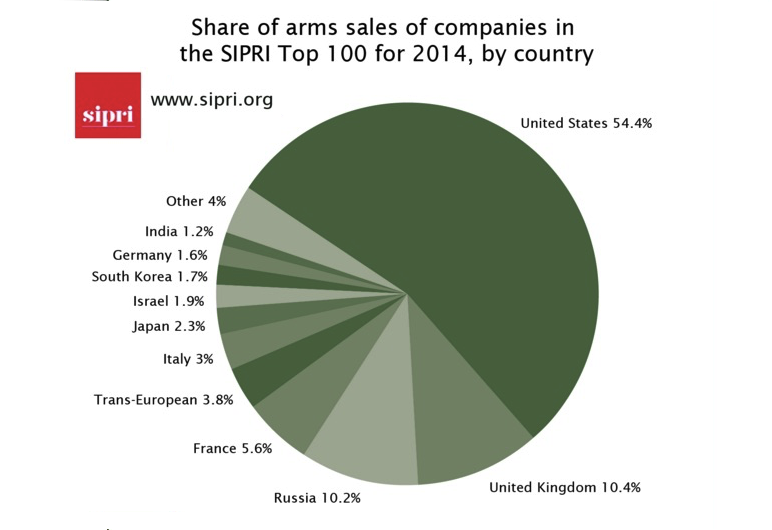
Economics can be very divisive, as divisive as bad governance. The reality and the perception that global affairs are managed by an oligarchy, a small group of powerful people, are corrosive. Spending on the military is a scandal — USD 1.5 trillion, an unimaginable sum, while less than U.S. $100 billion is spent on development. We spend 15 times more to kill each other than to heal. We must correct that. The sources of tension are obvious in trade patterns, again where oligarchies dominate. The U.S. subsidies for cotton are just one example of what are evident and very visible injustices.

The infamous “clash of civilizations” that Samuel Huntington spoke about is often misread, in Washington, as a clash of religions. It is not one religion, or language, or ethnic group or class against another. It is a clash of ethics. In Somalia, the clash is not about religion — the people share a common religion, language and ethnicity, yet they are plagued by conflict, as clans and families fight one another.

There can be no ethical culture without a clear and strong notion of justice. All people feel injustice. The principles of justice apply to all the issues and dimensions that we are trying to address at the Caux Forum.

To shift to an ethical culture, a true dialogue of civilizations, we need to work much more and more effectively with the media, to combat images, prejudices, and painful memories. We need to do more with Parliamentarians. And we need to bring spiritual leaders into the discussions. Windows perhaps are open to all three, but we need to pry open the doors.