The Gambia: African youth calls for intergenerational bridges

FREE FLOW OF INFORMATION

An article from UNESCO

100 young leaders coming from 22 African countries gathered in Banjul, the capital of The Gambia from 9 to 10 May 2017 to develop new strategies for peacebuilding and regional solidarity in Africa. This international conference was an opportunity to celebrate the contribution of youth to the democratic transition in The Gambia and to reflect on the role of youth movements in the transition and consolidation of democracy on the African continent.

Organized under the theme “Youth, Peacebuilding and Regional Solidarity: Lessons from Africa”, the conference provided a platform to reflect on the opportunities and challenges for the development of the continent’s youth and find consensus on how to address them collectively. The forum was organized with the support of the Government of The Gambia, UNESCO, and the African Council for the Development of Social Science Research (CODESRIA).

Participants and various speakers called for more openness and interaction between generations in Africa in order to promote peace and reduce conflicts on the continent. “We need to bridge the generation gap to prevent violence and resolve conflicts in Africa,” said Ibrahim Ceesay, Executive Director of the African Artists Peace Initiative, adding that “it is important in this context to reflect on exclusion, on migratory phenomena linked to the hostile political environment and on the “mutilated promises that impede development”.

Several youth organizations and movements made this event unique by their contribution to the discussions, including the Pan-African Youth Network for the Culture of Peace (PAYNCOP), set up with the support of UNESCO, the Y’en a Marre (Senegal) movement, GambiaHasDecided, the Balai Citoyen du Burkina Faso and the Malawi Students Movement Association. Panafrican leaders also attended the forum, such as Professor Abdoulaye Bathily and the Honorable Halifa Salla, member of the Gambian parliament and outgoing Special Envoy of the UN Secretary General for Central Africa.

(continued in right column)

(Click here for the original French version of this article.)

Question(s) related to this article:

Youth initiatives for a culture of peace, How can we ensure they get the attention and funding they deserve?

(continued from left column)

Despite the measures taken to place youth issues at the heart of the development agenda and strengthen their participation in the process of governance, peace and development in the region, the social commitment of young people is still limited by challenges and weaknesses in existing networks and interventions. These challenges and weaknesses include participation without representation, limited allocation of resources for youth development, economic marginality and skill gaps.

The UNESCO Multi-Sectoral Office for the Sahel, under the leadership of Dr Maréma Thiam Touré, Head of Social Sciences, made an effective contribution to the organization of this important international initiative as part of its agenda for youth development and civic education. The Social and Human Sciences Sector of the Dakar Regional Office has set itself the task of providing young people with skills and assisting them, in collaboration with the education and culture sectors, in the promotion of Social innovation and effective participation in the development of their societies, to eradicate poverty and inequality, to consolidate a culture of peace, gender equality and intercultural dialogue. This involves information and communication sciences and technologies, in the realization of the Sustainable Development Objectives.

Africa: In a World of Turbulence, Writers Reaffirm Their Role for Enlightenment and Information

EDUCATION FOR PEACE .

An article from the Senegalese News Agency

Members of the Writers’ Union of Africa, Asia and Latin America (AAAWU) can play the role of “literary enlightenment and information” in a turbulent world . “Literature can play a very important role not only by interpreting but also by information,” said Lamine Kamara, president of the Writers’ Association of Guinea, at the opening on Monday in Dakar of the meeting of the AAAWU.

Former Guinean Foreign Minister, Kamara stressed the need “to open a space of debate through writing, so that the different points of view can confront each other.” According to him, we must “invite the reader and especially the general public to have more tolerance and intercomprehension and to avoid the spirit of violence, hatred and intolerance”.

“Facing this world of turbulence and particularly in Africa, writers have much to say,” adds Chadian poet Samafou Diguilou, president of the Association of Friends of Literature in Chad.

“I come from Chad (where), we have a very dramatic situation with the Boko Haram, a group of terrorists that is rampant in Chad and in neighboring countries such as Cameroon and Mali … the Chadian or African writer must take his pen to denounce this injustice, “continued Mr. Diguilou. The Chadian writer says he still finds it hard to understand the rationality of the members of this group. “You attack people who did not do anything to you, you come, you kill, you explode bombs, you take lives away from innocent people,” he criticized. In the face of this, “the writer, whether Chadian, Senegalese or even African is called upon to intervene.”

(continued in right column)

(Click here for the original version of this article in French)

Question for this article:

Do the arts create a basis for a culture of peace?, What is, or should be, their role in our movement?

(continued from left column)

“We do not have weapons or explosive devices like them, but we have our pen, and with this we can appeal to major international organizations like the UN, the African Union to support the actions of our countries that are concerned,’ explains the Chadian poet.

Taking as an example the role played by the first African poets in the struggle against slavery and colonization or the march towards independence, Chadian Samafou Diguilou considers that the author can use all literary genres to be hear.

Aware of the fact that literacy has been an obstacle to access to books in African countries, he proposed that we privilege works translated into local languages ​​or interpreted by artists.

The Senegalese writer Aissatou Cissé advocates “readings of peace in this world context of turbulence, verbal and physical violence”. “Every morning, when we get up, we read on the Internet, or through a newspaper or a book, and what we read does not promote the culture of peace, it disrupts even more and creates zizanie [discord], “she said.

“Children, adolescents and adults who read us need to read positive things that can boost their creativity, and it is in peace that we can create,” said the Special Advisor to the President of the Republic, Macky Sall.

The president of the club “Poetists, essayists and novelists” (PEN), Colonel Moumar Guèye invites “writers and journalists to have a responsible pen, to ensure to safeguard national cohesion and social peace”.

Senegal: A regional seminar on “The role of journalists and the media in preventing violence”

FREE FLOW OF INFORMATION

An article from Abidjan.net

The United Nations Office for West Africa and the Sahel (UNOWAS), in partnership with the United Nations Educational, Scientific and Cultural Organization (UNESCO) and the Federal Department of Foreign Affairs ( DFAE) of Switzerland is organizing a seminar on “The role of journalists and the media in preventing violence and violent extremism in West Africa and the Sahel” from 12 to 14 June 2017 in Dakar .

The seminar’s main objective is to help improve the capacity of journalists and the media to better contribute to the prevention of violence, including violent extremism in West Africa and the Sahel. It will bring together some thirty journalists and experts from the countries of West Africa and the Sahel.

This meeting follows the recommendations of the conference organized by UNOWAS in partnership with the International Institute for Peace (IPI) and the Federal Department of Foreign Affairs (DFAE) in Dakar on 27 and 28 June 2016, on the theme : “Investing in peace and preventing violence in West Africa and the Sahel: Conversation around the UN Secretary-General’s Plan of Action”. It also draws on UNESCO’s existing initiatives to promote journalism education and a culture of peace.

(Click here for the original French version of this article.)

Question(s) related to this article:

Ecuador: Students from schools commit to fostering a culture of peace

EDUCATION FOR PEACE .

An article by El Universo – Guayaquil

Officials and teachers of the Movement for Integral Popular Education and Social Promotion “Fe y Alegría”, from the coast region, have pledged to resolve conflicts based on honesty, peace and equality and promote respect for human rights and harmonious coexistence. This is part of the Semilleros de Convivencia program, promoted by the Council of the Judiciary.

The managers of eight establishments held on Monday May 22 took part in a symbolic planting of the first seed, through which they commit to implement this methodology in the educational community of 3,641 students.

Authorities and teachers committed themselves to provide tools for students and parents to resolve conflicts peacefully, through dialogue and consultation.

Iván Machado, deputy director of Centers for Mediation and Justice for Peace, said that the project “is a way of involving a whole society, schools, colleges, social groups, to forge a culture of peace.”

(continued in right column)

(Click here for the original version of this article in Spanish)

Question for this article:

Peace Studies in School Curricula, What would it take to make it happen around the world?

(continued from left column)

For the implementation of this methodology in educational establishments, motivational workshops will be held for teachers and student advisors, in topics such as harmonious coexistence, respect for the environment, teamwork, non-violence, and respect for oneself and for others..

Iván Pinchevsky, rector of the Father Francisco García Jiménez Educational Unit, stressed that this program seeks to educate children and adolescents in values ​​to promote cultural change and achieve social transformation.

In Guayaquil, the following institutions will participate in the Semilleros de Convivencia: the Francisco Garcia Jiménez Educational Unit, the José Antonio González de Durana School, the Fe y Alegría “40 y la C” Education Unit, the Francisco Gárate Elementary School. the Fiscomisional María Reina Basic School of Education, the Our Lady of Health Basic School of Education, the Esteban Cordero Borrero School, and the San Pablo Educational Unit.

The Council of the Judiciary indicated that ten other establishments of “Fe y Alegría” – costa region, will also join the project.

Côte d’Ivoire: Preservation of the peace in Port-Bouët: Communal youth give their recipes

TOLERANCE AND SOLIDARITY .

An article from Unité.ci

The Union of Youth of the commune of Port-Bouët, in collaboration with the NGO “Acting for peace and well-being” (ONGAPBE), organized on Saturday 10 June 2017 at the Hotel Communal, a seminar on “How can youth develop the culture of peace in the commune of Port-Bouët? “.


Photo legend : Seminar participants sit in a circle

Samuel Kouassi, President of the Youth Union, gave the reasons for holding such a seminar. According to him, it is the young people who in times of acute crisis are instrumentalized to commit acts of violence. “Youth can become the armed fist of people with troubled and selfish purposes. We must therefore work to ensure that this important segment of the population in our commune in particular and in the country in general find ways to protect themselves in case of crisis, disorder or disorder.” That is why he invited the leaders of young people from all parts of the commune to listen carefully to the message delivered today and put it into practice if necessary.

(continued on right side)

(Click here for the original French version)

Question for this article

Youth initiatives for a culture of peace, How can we ensure they get the attention and funding they deserve?

(continued from left side)

Mr Koffi Amani, President of ONGAPBE, gave some suggestions for young people to be peace actors in their families, neighborhoods, communities and, in turn, in Côte d’Ivoire. According to him, the seminar establishes an interactive methodology, “Collective intelligence, listening to others and networking among all the youth groups makes it possible to involve young people in the search for peace,” he said. For him, it is essential to avoid suspicions and dissension. Young people should think together by listening to each one, giving positions and listening to those of others. “The culture of peace must not be an isolated action, since it concerns everyone. With us 1 + 1 is not equal to 2, but to 11. For 11 is the figure of force, while 2 is division. Our methodology is to bring everyone together to produce the desired results, “said Koffi Amani.

He recalled that the NGO he runs has been functioning since December 2012. In January 2013, the NGO trained its facilitators who are people who publicly animate seminars, meetings or training sessions. The facilitator is called the “host.” Their methodology consists in having the participants set up in a circle. “The circle has a specificity in the sense that it allows everyone to see each other during the exchanges. Each point of the circle constituted by each participant has equal value. That is, each participant has the same importance as the others in the debate. There is no leader and everyone has the right to speak. Each one can not speak more than another and each participant can not see the right to speak back. He who has not the word should listen attentively to the one who is speaking. These are the rules we have set ourselves to inculcate certain values ​​to all those who take part in our trainings, “said the president of the NGO.

Participants talked about their experience of peace and how they once worked in their lives to bring harmony into the family, neighborhood, school, etc. It is this experience that they have been asked to remember, the day when they will be faced with a situation that requires them to commit themselves to peace.

Brazil: Public hearing discusses culture of peace in Recife

.. DEMOCRATIC PARTICIPATION ..

An article from Diario de Pernambuco

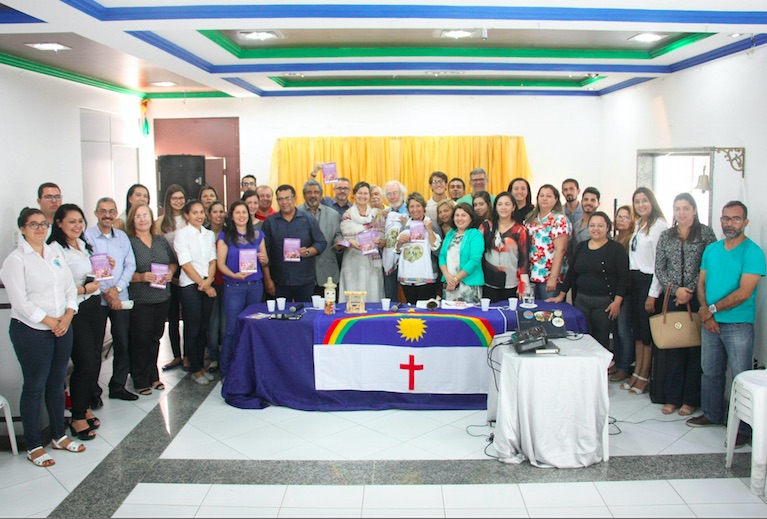
The Pernambuco Commission for Peace will take part in a public hearing on the culture of peace to be held on June 15, at the City Council of Recife. The meeting, scheduled to happen at 2:00 pm, will focus on schools and families of adolescents. According to Tiago Tércio, coordinator of the Commission, the hearing will encourage families to take more responsibility for their children, especially with children who are growing up and may enter into crime. “Violence in schools will also be discussed. If we can make families aware of leaving their children under the right supervision and with extra-school activities, we will be on the right track,” says Tiago.


Click on image to enlarge.

So far, according to the Pernambuco Peace Commission, the following are expected to take part in the hearing: city councilor Eriberto Rafael (PTC), Recife’s Secretary of Urban Security, Murilo Cavalcanti, the secretary of Social Development and Human Rights of Recife, Ana Rita Suassuna, representatives of State and municipal education departments, as well as the commander of the 13th Military Police Battalion, the Civil Police delegate Ary Siqueira and the director of the Pedro Celso School in Beberibe, Sandra Serafim. The Pernambuco Peace Commission is made up of former inmates of the Fundação de Atendimento Socioeducativo, young people who committed infractions and today struggle to help children and adolescents escape Recife’s neighborhoods where crime is flourishing.

On May 26, students from ten public schools participated in a peace march. The group left the Convention Square in Beberibe and then went to the neighborhood of Campina do Barreto, where a stage was set up and several shows were shown. In the same space there was a station with services for people dependent on drugs, set up by the Consultório de Rua with free haircuts, blood pressure measurement, etc.. The event was also organized by the Pernambuco Peace Commission, which seeks to stimulate good actions and increase the self-esteem of young people. This was the second time that the institution promoted a peace march. The first happened on May 26, 2013, in the neighborhood of Santo Amaro.

(Click here for the original article in Portuguese.)

Questions for this article:

UN: Consultation in Panama brings together youth from Latin Americans to discuss peace and security

FREE FLOW OF INFORMATION

An article from the UN Agency for Refugees (translated by CPNN)

The main challenges faced by young people in Latin America and the Caribbean are focused on issues of security, equity and governance – key elements for moving towards sustainable peace. In this context, 63 young people from different countries of the region participated in the first Regional Consultation on Youth, Peace and Security held between May 28 and June 1 in Panama City.


Caption: Maha, a young stateless person who participated in the Regional Consultation on Youth, Peace and Security, actively promotes the right of each person to have a nationality. Photo: Miguel Trancozo

The young people were selected as being agents of change in their respective countries as they work with other youth in search of a more just and prosperous society. Many of them belong to vulnerable groups and minorities, which motivates them to speak out for the changes they want to see in the world.

“When I was 15, I lost my father because of crime and violence,” says Tawana from St. Kitts and Nevis. “This was a wake-up call for me, so I decided to take a proactive role to make a difference. As soon as I return to my country, I will pass on to the young people everything that is happening in this consultation. For our country and our world, “said Tawana.

The consultation seeks to formulate proposals, based on a vision of peace and human security, with a broad participation of young people and with concrete actions, directed towards the fulfillment of Agenda 2030.

Georgeanela, a young woman from Costa Rica, points out that the most important thing is that each person has full entitlement to all human rights. That is why it is important for people to be educated with a sense of respect and tolerance in order to seek peace.

“My motivation is to formulate with other young people in the region a proposal for new opportunities and to take this opportunity to improve the quality of life for all people,” says Georgeanela.

Some proposals from young people aim to make use of new technologies and art to promote a culture of peace and security in the region.

(Article continued in the right column.)

(Click here for the original Portuguese version of this article.)

Question(s) related to this article:

What is the United Nations doing for a culture of peace?

(Article continued from left column)

According to Ricardo, from El Salvador, we must recognize that there are many opportunities and initiatives that are started by youth. One of his best achievements was when, through the creation of workshops of hip hop and artistic expressions, he helped young people to avoid entering the gangs. He offered them a chance to express themselves through dance and used it as a tool for social transformation.

As a result of his work, Ricardo and his family were threatened and therefore forced to move. But this only served as an stimulus to continue to work to prevent young people from falling into the hands of organized crime.

Fanny, a trans woman from El Salvador, fights for the rights of the LGBTI community in the country.

“Being young in El Salvador is a crime, we do not have the freedom to express ourselves, we can not walk the streets freely without being stigmatized by our own community,” he said, “being young in El Salvador means that we are all members of gangs, we are all thieves.” Fanny explains how the situation of gangs and gangs affects youth. “Some young people were killed simply because they refused to be part of it.”

Young people who try to help other vulnerable youth become victims of threats and harassment.

For Heidy, from Guatemala, “peace is to leave home, to go to work, to return and to receive a hug from my mother, knowing that I have been able to return without being raped or beaten. Peace is the little things we can do in the midst of chaos “.

A person’s vision of peace depends on context and experiences. For Maha, a stateless young woman, peace is interior, is to achieve dreams and goals. “I lost my brother a year ago because of street violence. He was born and died stateless. I was born stateless, but I want to die belonging to a country.” Building on her experience, she advocates for the 10 million stateless people for the right to have a nationality. “It’s not about politics, it’s about people and their lives,” ahe says.

Many of the participants in the consultation are taking action to promote gender equality, respect for ethnic and cultural differences, the defense of social and reproductive rights, the building of democracy and the right to a nationality.

These young people return with the great task of continuing to act in the present, targeting the future they wish to build, committing themselves to continue to influence communities and their environments to ensure a safer, more peaceful and more inclusive region.

The Government of Colombia and the ELN agree on international aid to support the peace process

FREE FLOW OF INFORMATION

An article from Sputnik (translated by CPNN)

The peace delegations of the Colombian Government and the ELN guerrillas announced on June 6 that they reached a series of agreements at the negotiating table in Ecuador during the second round of talks in that city, including international financing to push forward the peace process.


The new President of Ecuador, Lenin Moreno, assures that his administration will continue to support the peace process.

“A fund to finance the peace process has been established by negotiators for the Colombian National Government and the National Liberation Army (ELN). Its objective is to mobilize contributions from international cooperation to finance, in a transparent and flexible manner, the expenses for its development, “they said in a joint statement.

They also pointed out that during the first two weeks of negotiations in the second round of talks (which began on 16 May) they reached consensus on issues related to pedagogy and communication for peace.

According to reports, it was possible “to establish a joint team of pedagogy and communication for peace, whose general objective is to promote the construction of a culture of peace through the generation of trust and credibility, which gives greater strength to the work of the Dialogue Table and the agreements being reached. ”

Finally, they highlighted the progress in the creation of the group of countries for support, accompaniment and cooperation with the peace talks (GPAAC).

(Article continued in right column)

(Click here for the original Spanish version of this article

Question related to this article:

What is happening in Colombia, Is peace possible?

(Article continued from left column)

“The GPAAC, initially made up of Germany, Holland, Italy, Sweden and Switzerland, have defined the terms of reference that will guide their development,” the government and the guerrillas said.

The statement came after the national press reported that 206 people from different rural populations in the municipality of Santa Bárbara de Iscuandé (Nariño, southwest) were displaced last weekend by clashes between the ELN and criminal gangs.

“Community leaders reported that four older adults remain in the area where the fighting took place because of their health problems,” according to the local radio station Blu Radio. They added that the displaced are housed in homes of friends and relatives in a situation of overcrowding.

Neither the Government nor the ELN have yet commented on this situation.

The Colombian Government and the ELN have held public peace talks since last February 8, after the participation of that rebel group with the Executive was supported by sectors that consider that it is only possible to speak of a general peace for Colombia when an armistice similar to that achieved with the FARC is achieved.

The Colombian armed conflict, which has involved guerrillas, paramilitaries, state agents and drug gangs for over half a century, is the oldest war on the continent and has left some eight million victims, as well as 300,000 dead, 45,000 missing and 6 to 8 million displaced, according to official reports.

Argentina: Participants and Themes Announced for the IV Meeting of the International Peace Observatory

EDUCATION FOR PEACE .

An article from El Siglo (translated by CPNN)

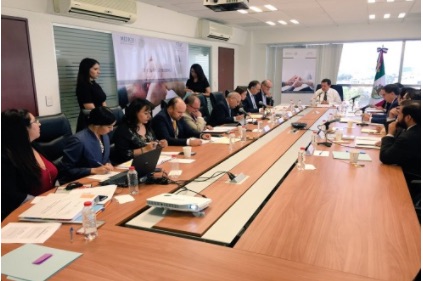
The IV International Meeting of the OIP (International Peace Observatory) will be held in Tucumán, Argentina. It is being organized by the CERECO Foundation (Center for Conflict Resolution) in conjunction with the CPNVA (Permanent Councils for Active Nonviolence). The Meeting will be held on June 27 and 28 in the facilities of the Faculty of Law and Social Sciences of the National University of Tucumán, a co-organizer of the event.


Click on image to enlarge

The meeting has the support of the Consultative Council of the Civil Society and the Argentine , Ministry of Foreign and Religious Affairs.

Mariela Domenichelli, the president of CERECO, and Ricardo Anibal Lucero, a participant in the event, explained to El Siglo that the meeting aims to open the doors of dialogue, strengthen relations between social actors from different countries with different profiles and histories so that they can share experiences and find ways of working together for a more just, united world. The meeting will make available to governments and civil society the updated state of the art in training methods for conflict prevention and resolution, as well as face-to-face and virtual training for violence prevention.

Participants include delegates of the Observatory from 9 countries (Argentina, Peru, Ecuador, Brazil, Chile, Spain, Uruguay, Mexico, Bolivia):

– Diana de la Rua (Buenos Aires) Eugenio President of the Association Respuesta para la Paz (ARP), President of International Peace Research Association Foundation (IPRAF) and Council Member of International Peace Research Association (IPRA);

(continued in right column)

(click here for the Spanish version)

Question for this article:

Mediation as a tool for nonviolence and culture of peace

(continued from left column)

– Patricia Pérez (Buenos Aires) Coordinator of the Committee on Culture of Peace and Citizenship of the Consultative Council of the Civil Society of the Argentine Chancellery;.

– Ricardo Anibal Lucero (Buenos Aires), veteran of 25 years of fieldwork for the International Organization “The Community for Human Development” in cities of Bombay and Calcutta (India), Morocco, Milan, Madrid, New York, Bogotá, Rio de Janeiro and Chile;

– Susana Bartolomeo (Buenos Aires) Trainer and Academic Coordinator of ECO Civil Association (School of Ontological Communication) and Primary Education Coach at Dardo Rocha de Martínez School;

– Mg Walter Fernández Ulloa (Ecuador), Alternate Councilor of the Council for Citizen Participation and Social Control;

– Dr. Christian Amestegui Villafañi (Bolivia), Trainer in Mediation in the Judicial Branch of the Bolivia government;

– Dr José Benito Pérez Sauceda (Mexico), Doctor of Law, Master of Science at the Faculty of Law and Criminology of the Autonomous University of Nuevo Leon;

– Commissioner Jorge Martin Ortega and Dr. Daniel Arnaldo Tolaba (Jujuy, Argentina), community mediators and specialists in gender violence and in suicide prevention. Ministry of Security. Secretariat of Community Relations, Government of Jujuy.

The Observatory sets out three main axes of work:

 – Alternative Methods of Conflict Resolution – Culture of Peace

– Human Rights and Human Security

– Active non-violence – Three ways for change

Registration is available on the website of eventowww.cerecotucuman.wixsite.com/observatoriodepaz, along with further information for the meeting. You may also write to programa.obspaz@gmail.com.

Korea: 500 Global Students to Hold Peace March near DMZ

DISARMAMENT & SECURITY .

An article from KBS radio

About 500 students from around the world plan to hold a peace march near the Demilitarized Zone(DMZ) separating the two Koreas.


(Click on image to enlarge)

Gangwon Province Office of Education said on Tuesday that it will hold the 2017 world peace education festival from May 27th to 31st in Gangneung and Goseong.

About 500 middle and high school students as well as teachers from seven countries including Japan, China, Russia and Indonesia plan to participate. 

The event is jointly sponsored by the organizing committee of the 2018 Pyeongchang Winter Olympics and the Asia-Pacific Center of Education for International Understanding under UNESCO.

Participants plan to hold a debate on ways to make a better and peaceful world in Gangneung.

They are then schedule to visit the Unification Observatory located in Goseong and hold a peace march to the nearby DMZ museum. 

(Editor’s note: It is not clear if this is the same initiative as the peace march by 300 youth in the demilitarized zone scheduled for June 23 and sponsored by the U.S.-based International Cooperation of Environmental Youth (ICEY), led by Korean-American environmentalist Jonathan Lee – see article in the Yonhap News Agency).

(Thank you to the Global Campaign for Peace Education for calling this article to our attention.)