Book review: Nonviolent Resistance Against Armed Groups in Colombia

FREE FLOW OF INFORMATION

A new book from the International Center on Nonviolent Conflict

The International Center on Nonviolent Conflict is pleased to share with you our first publication in the 2015 Monograph Series. The ICNC Monograph Series brings to fruition the scholarly work of the recipients of the 2014 ICNC Research Monograph Award, which aims to support academic research and writing that enhances the strategic practice and global understanding of civil resistance.

book

Confronted with civil war, local civilians typically either collaborate with the strongest actor in town or flee the area. Yet civilians are not stuck inexorably within this dichotomous choice. Collectively defying armed groups by engaging in organized nonviolent forms of noncooperation, self-organization and disruption is another option. 

The Power of Staying Put: Nonviolent Resistance Against Armed Groups in Colombia by Juan Masullo J. explores this option through a case study of sustained and organized civil resistance led by ordinary peasants against state and non-state repressive actors in Colombia’s longstanding civil war. It tells the story of the Peace Community of San José de Apartadó (PCSJA), formally established in 1996, which has used a vast array of nonviolent tactics ranging from public declarations to establishing alternative educational institutions and markets. This impressive tactical diversity has gained considerable international support and, to this day, helps sustain the Community’s resilience. 

The PCSJA case leaves us with an important message regarding the scale at which ongoing peace efforts in Colombia can be advanced. National peace negotiations usually take place between high-level representatives of warring parties, without involving authentic grassroots peacemakers such as the PCSJA. 

The author, Juan Masullo, is a Doctoral Researcher at the Department of Political and Social Sciences at the European University Institute (EUI). A Colombia-native and frequent visitor of the village of San José, his research interests include nonviolent strategies, social movements and collective actions.

(Thank you to Janet Hudgins, the CPNN reporter for this article.)
Question(s) related to this article:

What is happening in Colombia, Is peace possible?

This discussion question applies to the following articles:

Colombian villagers practice non-violent resistance
Legacy of a Nonviolent Political Leader: Governor Guillermo Gaviria of Colombia
Working for a Culture of Peace in the Valley of the Cauca, Colombia
Remise des Prix de la Fondation Chirac pour la prévention des conflits
Chirac Foundation Prize for Conflict Prevention
The University and the Peace Process in Colombia
La paz supera coyunturas y fronteras (Colombia y Venezuela)
Peace is not stopped by borders (Colombia and Venezuela)
Campesinos colombianos celebran primer acuerdo agrario de paz
Colombian Govt and FARC Reach Agreement on First Stage of Peace Talks
Colombia Campaña de la ONU “La Paz es mía”
UN Campaign in Colombia:
Presidente colombiano reactivará la Comisión Nacional de Paz
Colombian President to Reactivate National Peace Commission
FARC-EP y Gobierno colombiano avanzan en acuerdos para la paz
FARC-EP and Colombia Government advance in their peace accords
Colombia debe ser también la Nación más educada en derechos humanos: Presidente Santos
Colombia should also be the most educated nation in human rights : President Santos
Gabriel García Márquez and the peace process in Colombia
Colombia amanece con un presidente reelecto, esperanzada en la paz
Colombia awakens to hopes for peace with the re-election of their president
Mujer, ruralidad y memoria, entre los temas del congreso de paz (Bogotá, Colombia)
Women, rurality and historical memory among the themes of the Peace Congress (Bogotá, Colombia)
Sonia Ines Goéz Orrego on a speaking tour in the U.S. to share her experience building peace in Colombia
Pax Christi International Peace Award 2015: Women Collective for Reflection and Action (Colombia)
FARC-EP y Gobierno colombiano crearán Comisión de la Verdad
Planning for a Peace Assembly in the Colombian Caribbean
Inician construcción de Asamblea por la Paz en el caribe colombiano
Colombia: Ministerio del Trabajo acompañará, garantizará y facilitará Segunda Asamblea Nacional por la Paz
Colombia: The Labor Minister will provide full guarantees, facilitate and promote the Second National Assembly for Peace
San Agustín, Colombia: escenario de la Bienal internacional de educación y cultura de paz
San Agustin, Colombia to host International Biennial of Education and Culture of Peace
Carta de Colombia
Letter from Colombia

Colombia: Rock in the Park 2015 – Music for the 21st Century

EDUCATION FOR PEACE .

An article from Rock al Parque (translation by CPNN)

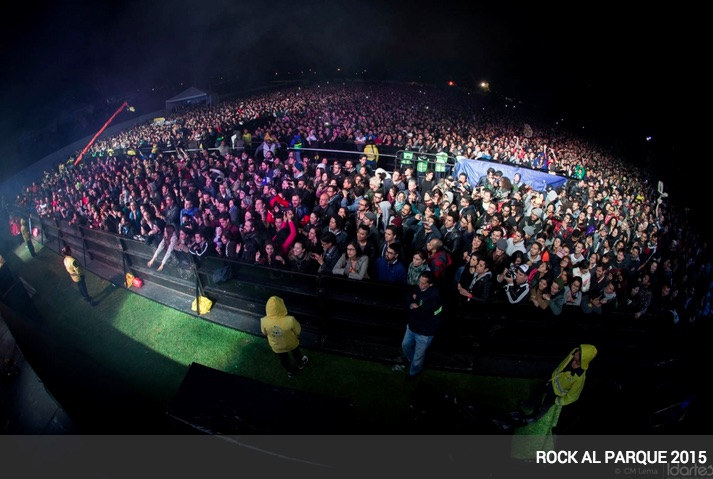
More than 350,000 people attended this year’s version of the Rock in the Park Festival which has become an institution in Bogotá. It has evolved and changed with the city, moving from generation to generation because it is alive and in this 21st edition it looks straight into the twenty-first century. This new edition of Rock in the Park, which closes after three great successful days of music, holiday, coexistence and diversity, was dedicated to the culture of peace.

rock

This version of the most iconic rock festival of the continent left with sound, and music in the air from 74 national, local and international bands that came to the stage of the Metropolitan Simon Bolivar Park and the Media Torta, providing all the power of their talent to the thousands of spectators who showed once again that the Colombia is a rocker capital.

The Rock in the Park that we know today is the result of a conscious policy of the transformative power of art and culture in contemporary societies, as Mayor Gustavo Petro said in 2014, during the celebration of the twentieth anniversary of festival

Rock in the Park has made and continues to make it possible for thousands of young people to love music and reflect on a city that has tried collectively to build a public good as now recognized nationally and internationally. As explained by Santiago Trujillo Escobar,director general of the District Institute of Arts, Idartes, “Rock in the Park is the space to exercise creative freedom to be and to let be and to celebrate life. It makes us realize that if we commit the will and energy of our bodies and conscience, we can transform this country into a more humane and just society. ”

According to Santiago, “Rock in the Park has become the place where conflicting and sometimes extreme expressions of diversity can coexist and be respected and enhanced. From the point of view of Idartes, we value and foster debate. For us criticism is always welcome. Thanks to this we have a more pluralistic and representative festival, a festival that looks straight into the XXI century”

The closing of the third day of Rock al Parque was in the hands of three international bands, Café Tacvba, Ill Nino y Adrenaline Mob. They gave memorable moments to thousands of spectators full of emotions and euphoria and voice to the demand for social change and actions for peace.

(article continued on the right side of the page)

(click here for the Spanish version of this article.)

Question for this article:

What place does music have in the peace movement?

(article continued from the left side of the page)

An example of this was when members of the Che Sudaka band decided to share the stage with David Jaramillo of Doctor Krápula to chant a rock “bambuco” dedicated to the peasants and indigenous people who resist the occupation of their land, reject transgenic seeds and claim peace ” once and for all!”. Another example was when the vocalist Jota decided to run into the arms of the public, in an unforgettable moment that adds to the many who remain in the collective memory of a rock concert that Bogota renews year after year.

Because, as noted by Bertha Quintero, Deputy Director of Arts at Idartes and protagonist of this story from the beginning: “Today the festival is at the height of the great festivals of the world.” According to her, one of its main features has been the behavior of respect and coexistence of the public who has appropriated this space.

This is supported by the Subcomandante Metropolitan Police of Bogota, Col. Aurelio Ordonez who highlighted the exemplary behavior of the citizens who ensured complete tranquility during the three day event.

But besides being exemplary, Rock in the Park has served as a platform for groups that today have a national and international scope; since 2011 the festival has presented on its stage 134 district, 75 national and 169 international bands.

It should be noted that this year, the musical palette was based on gender diversity that resulted from the programming led by Chucky Garcia, according to Santiago Trujillo.

This year, in addition to presenting bands from around the country, the festival brought talent from countries including Chile, Jamaica, South Africa, Portugal, United States, Puerto Rico, Mexico, Germany, Venezuela, Spain, Ecuador, Italy, Japan, Argentina, France, Costa Rica, England, Poland, Brazil and Bosnia, among others.

In addition Rock in the Park serves as a showcase for companies and entrepreneurs in the sector. They find here a stage for their products and a space in which participants can access a variety of cuisines and collectible articles.

The festival includes more than what is on the stage. There is an academic component that includes lectures, workshops and panels that enhance dialogue and strengthen musical practice that grows every year. This year, for example during the three days of the festival more than 140 thousand people visited the corporate site of Rock in the Park. Not to ignore those who who follow the festival through the live broadcasts by Channel Capital which also reached over 450,000 Internet users, according to the data offered by the operating director of Channel Capital, Favio Fandiño.

In sum, the 21st festival has been worthy of its century, able to project into the future with the certainty of its institutional maturity and allow thousands of young people and adults to enjoy a complete selection of the best of the rocker scene, a memorable journey through the sounds and colors the rock music from around the world

Colombie: Rock al Parque 2015 – Una Tendencia del Siglo XXI

.. EDUCACIÓN PARA LA PAZ ..

Un articulo de Rock al Parque

Más de 350.000 personas asistieron a en esta versión del Festival Rock al Parque El rock es una institución en Bogotá, que evoluciona y cambia con la ciudad, que se mueve de generación en generación porque está vivo y que en esta edición No 21 mira de frente al siglo XXI; así lo deja claro una edición más de Rock al Parque, que cierra con un éxito rotundo tres días de música, de fiesta, de convivencia y de diversidad, en los que la cultura de paz fue la nota predominante.

rock

La versión número veintiuno del festival de rock más emblemático del continente dejó en el aire las sonoridades, estéticas y propuestas musicales de 74 bandas nacionales, locales e internacionales que se subieron a los escenarios del Parque Metropolitano Simón Bolívar y al de la Media Torta, para ofrecerle toda la potencia de su talento a los miles de espectadores que demostraron una vez más, que la de los colombianos es una capital roquera.

Y es que el Rock al Parque que conocemos hoy es el resultado de una política consciente del poder transformador del arte y la cultura en las sociedades contemporáneas, como bien lo explicó el Alcalde Gustavo Petro en el 2014, durante la celebración de los veinte años del Festival

Rock al Parque ha hecho y sigue haciendo posible que miles de jóvenes vivan la música y reflejen la otra cara de una ciudad que ha sabido construir colectivamente un bien público que hoy es reconocido nacional e internacionalmente porque, como lo explica Santiago Trujillo Escobar, director general del Instituto Distrital de las Artes, Idartes, “Rock al Parque es el espacio para ejercer la libertad creativa, para ser y dejar ser, para celebrar la vida y de paso darnos cuenta de que si juntamos las voluntades y la energía de nuestros cuerpos y conciencias podemos transformar este país en una sociedad más humana y justa”.

De acuerdo con Santiago, “Rock al Parque ha sido el lugar donde las expresiones más extremas y a veces conflictivas de la diversidad se han encontrado para convivir, respetarse y potenciarse. Desde el Idartes se valora y fomenta el debate, y la crítica será siempre bien recibida, porque es gracias a eso que cada vez se logra un mejor festival, un festival más variado, más plural y más representativo, un festival que mira de frente el siglo XXI”

El cierre de la tercera jornada de Rock al Parque estuvo en manos de tres bandas internacionales que debieron enfrentarse a un Simón Bolívar a reventar en sus tres escenarios, Café Tacvba, Ill Nino y Adrenaline Mob fueron la nota final de una serie de conciertos en los que miles de espectadores vivieron momentos memorables, llenos de emociones, euforias y grandes encuentros y en donde, una vez más, se levantaron las voces que exigieron cambios sociales y acciones de paz.

(El artículo continúa en el lado derecho de la página)

(Clickear aqui para la version inglês.))


Question related to this article:

What place does music have in the peace movement?

(El artículo continúa desde el lado izquierdo de la página)

Fue así, por ejemplo, como los integrantes de Che Sudaka decidieron compartir escenario con David Jaramillo de Doctor Krápula, para cantar un bambuco roquero dedicado a los campesinos e indígenas que resisten la usurpación de sus tierras, rechazar las semillas transgénicas y reclamar la paz “¡de una vez por todas!”. Y fue así también que Jota, su vocalista, decidió lanzarse a los brazos del público, en un momento inolvidable que se suma a los muchos que permanecerán en la memoria colectiva de una Bogotá que renueva el rock año tras año.

Porque, como lo señala Bertha Quintero, Subdirectora de las Artes de Idartes y protagonista de su historia desde el inicio: “hoy el festival está a la altura de los grandes festivales del mundo”. De acuerdo con ella, una de sus principales características ha sido el comportamiento de respeto y convivencia del público que se ha apropiado de este espacio.

De eso, da fe el Subcomandante de la Policía Metropolitana de Bogotá, el Coronel Aurelio Ordoñez quien destacó el comportamiento ejemplar de los bogotanos al dar un parte de completa tranquilidad durante los tres días del evento.

Pero además de ser ejemplar, Rock al Parque ha servido de plataforma a agrupaciones que hoy en día tienen una proyección nacional e internacional; desde el 2011 se han presentado en sus escenarios 134 bandas distritales, 75 nacionales y 169 internacionales.

Hay que destacar que en su versión 2015, el festival fue, además, un éxito de programación, con una paleta musical basada en la diversidad de géneros que obedeció a un proceso de curaduría impecable, liderado por Chucky García, quien de acuerdo con Santiago Trujillo, le sabe sentir el mapa sonoro a la ciudad.

As of now, there are 33 CPNN articles on this theme, which shows the great extent to which music is the universal language of peace!

Durante esta administración el festival ha presentado bandas de todo el país, convirtiéndose en la gran pantalla de la escena nacional e internacional trayendo talentos universales de países como Chile, Jamaica, Sudáfrica, Portugal, Estados Unidos, Puerto Rico, México, Alemania, Venezuela, España, Ecuador, Italia, Japón, Argentina, Francia, Costa Rica, Inglaterra, Polonia, Brasil y Bosnia, entre otros.

Pero no hay que olvidar que Rock al Parque es también una vitrina para las empresas y emprendedores del sector, que cada año encuentran en él un escenario para sus productos y un espacio en el que los asistentes pueden acceder a una variada oferta gastronómica y de artículos coleccionables.

Está claro que el festival no se queda en las tarimas, el componente académico que incluye charlas, talleres y paneles que potencian el diálogo y fortalecen la práctica musical, crece año con año, como el festival mismo que al ritmo de las nuevas tecnologías, cada vez le ofrece más opciones a los grandes públicos. Este año, por ejemplo durante los tres días del festival más de 140 mil personas visitaron la página institucional de Rock al Parque; eso sin dejar a un lado a quienes vivieron el festival gracias a la transmisión en vivo de Canal Capital que, además, llegó a más de 450 mil cibernautas, de acuerdo con datos previos ofrecidos por el director operativo del Canal Capital, Favio Fandiño.

En suma este, el número 21, ha sido un festival digno de su siglo, capaz de proyectarse hacia el futuro con la certeza de su madurez institucional y de ofrecerle a los miles de jóvenes y adultos que lo disfrutaron una completa selección de lo mejor de la escena roquera del momento, un viaje memorable por los sonidos y los colores musicales del rock en el mundo.

A gathering of young peace-builders towards a strengthened policy framework on Youth, Peace and Security

. . TOLERANCE AND SOLIDARITY . .

An article by Meg Villanueva, based on the Forum website

On 21-22 August 2015, the first ever Global Forum on Youth, Peace and Security will bring together around 500 participants, including government representatives, practitioners and experts in peace and conflict work, youth activists and young peacebuilders from more than 100 countries. The Global Forum is a turning point towards a new international agenda on youth, peace and security. It stems from the themes debated at the Security Council Ministerial Debate on the Role of Youth in Countering Violent Extremism and Promoting Peace, organized by the Hashemite Kingdom of Jordan during its presidency of the Security Council, on 23 April 2015. The forum will build on the on-going efforts by a multiplicity of actors to decisively step-up global attention to young people’s positive contribution to peace and chart a common agenda.

meg

For the first gathering of this kind, young people, youth-led organizations, non-governmental organizations, governments and UN entities will come together to agree on a common vision and roadmap to partner with young people in preventing conflict, countering violent extremism and building lasting peace. The Global Forum will be hosted by the Hashemite Kingdom of Jordan under the Patronage of His Royal Highness Crown Prince Al Hussein bin Abdullah II, and co-organized by the United Nations represented, on behalf of the Inter-Agency Network on Youth Development (IANYD), by Office of the UN Secretary-General’s Envoy on Youth, Peacebuilding Support Office, UNFPA and UNDP, in partnership with Search for Common Ground and the United Network of Young Peacebuilders.
One of the expected outcomes of this forum is the Amman Declaration, which will present young people’s vision and roadmap towards a strengthened policy framework in support of young people’s roles in preventing and transforming conflict, countering violent extremism and building peace. This Amman Declaration is entirely developed by young people, building on the Guiding Principles for Young People’s Participation in Peacebuilding (bit.ly/1Jz90F6 or bit.ly/1GPQ1QO). UNOY Peacebuilders is coordinating the drafting of the Amman Declaration, and has involved a lot of young people from all over the world, through written consultations, questionnaires and focus-group discussions.
The Forum will engage participants in conversations on key policy recommendations towards a new international agenda on youth, peace and security, which will be captured in a final Declaration. This forum will provide a platform for exchange of experiences, innovative ideas and programmatic frameworks that work. To learn more about the key topics to be discussed, as well as inspiring young speakers, please visit https://www.unteamworks.org/Youth4Peace.

Question for this article

Germany: Journalists around the world stand up in support of Netzpolitik after outrageous ‘treason’ investigation

FREE FLOW OF INFORMATION

An article by Trevor Timm, Freedom of the Press Foundation (this article is reprinted according to the terms of Creative Commons)

Last week, the German government informed the popular news site Netzpolitik that two of its journalists were under investigation for treason for reporting on their government’s mass surveillance programs – in other words they were being investigated for doing their job. In the days since, protests were staged in Berlin that drew thousands of participants, and the Justice Minister has commendably fired the top prosecutor who originally brought the investigation. However, it’s still unclear if the investigation has been permanently closed.

journalists

Today, in a letter organized by journalist Marie Gutbub and security researcher and journalist Jacob Appelbaum, reporters and press freedom advocates from around the world have signed on to support Netzpolitik and condemn the outrageous investigation. You can read the letter in both English and German below.

The investigation against Netzpolitik.org for treason and their unknown sources is an attack against the free press. Charges of treason against journalists performing their essential work is a violation of the fifth article of the German constitution. We demand an end to the investigation into Netzpolitik.org and their unknown sources.

Die Ermittlungen gegen die Redaktion Netzpolitik.org und ihrer unbekannten Quellen wegen Landesverrats sind ein Angriff auf die Pressefreiheit. Klagen wegen Landesverrats gegen Journalisten, die lediglich ihrer für die Demokratie unverzichtbaren Arbeit nachgehen, stellen eine Verletzung von Artikel 5 Grundgesetz dar. Wir fordern die sofortige Einstellung der Ermittlungen gegen die Redakteure von Netzpolitik.org und ihrer Quellen.

[Click here for signatures listed as of August 5.]

Question(s) related to this article:

The Global Movement Of Moderates: An Effective Counter To Islamic State? – Analysis

TOLERANCE AND SOLIDARITY .

An article by Kumar Ramakrishna, Eurasia Review (Reprinted by permission)

International concern at the rapidly metastasising global threat of the brutal Al Qaeda “mutation” known as the Islamic State of Iraq and Syria (ISIS), has generated concerted discussions on effective strategies to counter its highly virulent ideology that has been widely disseminated through the Internet.

moderates

High-level summits on countering violent extremism (CVE) were held in Washington and in Sydney in the first half of this year, while more recently British Prime Minister David Cameron unveiled the United Kingdom’s new multi-faceted CVE strategy as well. In Southeast Asia, one potentially powerful idea – moderation – has been promoted as a means of neutralising the extremist appeal of ISIS.

The Global Movement of Moderates

First mentioned by Malaysian Prime Minister Najib Razak at the UN General Assembly in September 2010, the concept of moderation gained traction at the 18th ASEAN Summit in Jakarta in 2011 when ASEAN leaders endorsed the initiative to establish the Global Movement of Moderates to help shape global developments, peace and security. Subsequently the ASEAN Concept Paper on the Global Movement of Moderates (GMM) was adopted at the 20th ASEAN Summit in Phnom Penh, Cambodia in 2012.

Most recently, at the 26th ASEAN Summit in Langkawi, Malaysia on 27 April 2015, ASEAN leaders reiterated in the so-called Langkawi Declaration that the GMM initiative promotes a culture of peace and complements other initiatives, including the United Nations Alliance of Civilisations. The GMM Concept Paper recommended establishing dedicated ASEAN units to coordinate and evaluate all GMM-related activities within ASEAN and globally.

The Langkawi Declaration Programme

The Langkawi Declaration identifies several clusters of functional activities to promote the moderation norm, via collaboration between the GMM, the ASEAN Foundation and the ASEAN Institute of Peace and Reconciliation. The first cluster of activities includes organising outreach programmes, interfaith and cross-cultural dialogues at the national, regional and international levels. The second cluster involves the convening of forums to share best practices in understanding and countering violent extremist ideologies. An example is the East Asia Summit Symposium on Religious Rehabilitation and Social Reintegration held in Singapore in April 2015.

A third cluster encourages enhanced information-sharing on best practices in promoting moderation among ASEAN member states. A fourth cluster involves creating mechanisms to cultivate emerging leadership especially amongst women and youth that can help invigorate ASEAN’s drive and innovation in effectively addressing CVE issues as well as other global challenges. Importantly, a fifth cluster recognises education as an effective means of socialising the moderation norm and associated values such as respect for life, diversity and mutual understanding; this is a means of preventing the spread of violent extremism whilst addressing its root causes.

(article continued on the right side of the page)

Question for this article

Islamic extremism, how should it be opposed?

Readers’ comments are invited on this question and article. See below for comments box.

(article continued from the left side of the page)

Another cluster seeks to foster formal scholarly exchanges to amplify the collective voices of moderate intellectuals, while a seventh recognises the need for exchanging ideas with extra-regional dialogue partners, international organisations and other relevant stakeholders on successful case studies of engagement and integration policies that support moderation.

“God is in the Details”: Operationalising moderation

While this multifaceted plan of action by the GMM to promote the norm of moderation as a means of countering the violent extremism is commendable, as an ancient saying goes, “God is in the details”. A roundtable held in Singapore on 29 July 2015 identified several issues that need to be addressed for moderation to be effectively operationalised at the grassroots level, where the “immunisation” of vulnerable Southeast Asian Muslim constituencies against the digitised, apocalyptic-tinged Salafi Jihadism of ISIS is most needed.

But first, what exactly is “moderation” anyway?

Within Islam – from whose intellectual and theological resources a sustained counter-narrative campaign against ISIS must be fashioned – the idea of wasatiyah or the “Middle Way” of a “just and balanced community” seems to be one possible elucidation of the moderation norm. In this sense a true Muslim embodying wasatiyah effectively preserves his religious integrity whilst embracing tolerance toward both co-religionists of differing convictions on certain matters, as well as members of other – or even no – faiths.

Importantly, operationalising moderation must also involve developing clearer legal principles for regulating the ISIS penchant for takfir or excommunication of other groups – a habit that has all too frequently religiously legitimised their subsequent acts of extermination in grisly fashion.

Operationalising moderation further implies that Southeast Asian Muslims should be wary of uncritical acceptance of certain puritanical strains of the faith emanating from the Middle East. It has been suggested that Southeast Asian Islam – famously, Islam with a “smiling face” – is “lived Islam” which possesses ample religious authenticity vis-a-vis the imagined, virulently re-interpreted “desert Islam” of ISIS.

It is hence timely that in early August 2015 the two largest Islamic groups in Indonesia, Muhammadiyah and Nahdlatul Ulama – boasting 90 million members between them – affirmed their desire to promote a “progressive” Islam and more tellingly, an “Islam Nusantara” or “Islam of the archipelago” and that these ideas will be promoted in cyberspace as well.

Moderation is not for Muslims only

Finally, it should be recognised that the norm of moderation is not just an issue for the Muslim community alone. ISIS aside, Southeast Asia and the world has witnessed violent extremism of other religious and ethnic stripes as well. Hence within Southeast Asia at least, encouraging broader participation in further “ASEANising” the moderation concept so that is applies beyond regional Muslim constituencies would also help ensure it gets embedded in the socio-cultural and political DNA of the nascent ASEAN Community.

Ultimately, how would we know if the GMM initiative has succeeded? One clue would be when a Southeast Asian – although it is his right of “free expression” – voluntarily decides not to say or publish anything that might hurt the religious sentiments of a fellow Southeast Asian of another faith. Ancient religious texts summarise this as the principle of “not stumbling my brother”. Hence, rather than cynical self-censorship, what really lies at the heart of genuine moderation is quite simply, charity. Once Southeast Asians and others imbibe this idea, the days of ISIS and its ilk would surely be numbered.

Honduras: OAS to receive report about judicial facilitators

EDUCATION FOR PEACE .

An article from La Tribuna de Honduras (translation by CPNN)

The Judiciary of Honduras, along with the team implementing the National Service of Judicial Facilitators (SNFJ) will present a report on the progress of this service during the National Judicial Facilitators meeting today [August 8] with Secretary of the Organization of American States (OAS), Luis Almagro Lemes.

honduras
Luis Almagro Lemes, Secretary of the Organization of American States (OAS)

The authorities of this branch of government will inform the Secretary General of the OAS, Luis Almagro Lemes, about the progress, achievements and implementation of the work of this important service that already concerns 12 departments.

The SNFJ national meeting will be attended by President of the Judiciary, Jorge Alberto Rivera Avilés; President of the Republic, Juan Orlando Hernández, Secretary General of the OAS, Luis Almagro Lemes, and Pedro Buscovitz, regional coordinator of the Inter-American Judicial Facilitators Program of the OAS.

The judiciary through its National Facilitators Service meets objective number 4 of its law, by involving the population in this program.

Since 2012 this program has sworn in a total of 1,644 judicial facilitators in the 12 departments where their work contributes to the country’s system of administration of justice.

The judicial facilitators are community leaders appointed and elected by the community. They serve as a support to the magistrates in each municipality, which saves time and money for the society and contributes to building a culture of peace.

The tasks performed by Judicial Facilitators are: reconciliation, accompaniments, lectures and advice, under supervision by the judiciary and national laws.

Already this year there has been a total of 492 reconciliations. This yields a saving for the State by avoiding that these cases come to trial. It lowers the judicial backlog while providing access to justice

(click here for the Spanish version of this article.)

Question for this article:

Honduras: OEA recibirá a facilitadores judiciales en el diálogo de hoy

. . EDUCACIÓN PARA LA PAZ . .

Un artículo de La Tribuna de Honduras

El Poder Judicial de Honduras junto al equipo de ejecución del Servicio Nacional de Facilitadores Judiciales (SNFJ), presenta hoy [8 de Agosto] los avances de este servicio en el marco del Encuentro Nacional de Facilitadores Judiciales con el secretario de la Organización de Estados Americanos (OEA), Luis Almagro Lemes.

honduras
El secretario general de la OEA, don Luis Almagro Lemes

Las autoridades de este Poder del Estado darán a conocer al secretario general de la OEA, Luis Almagro Lemes, los avances, logros e implementación del trabajo de este importante servicio que ya cubre 12 departamentos del país.

El encuentro nacional del SNFJ contará con la presencia del presidente del Poder Judicial, Jorge Alberto Rivera Avilés; el Presidente de la República, Juan Orlando Hernández, el secretario general de la OEA, don Luis Almagro Lemes, y Pedro Buscovitz, coordinador regional del Programa Interamericano de Facilitadores Judiciales de la OEA.

El Poder Judicial a través del Servicio Nacional de Facilitadores cumple el objetivo número 4 de su ley, al tener un acercamiento a la población con este programa.

En tal sentido y desde el año 2012 a la actualidad este programa cuenta con un total de 1,644 personas juramentadas a lo largo de los 12 departamentos donde hasta el momento se realiza este trabajo que coadyuva con el sistema de administración de justicia del país.

Los facilitadores judiciales son líderes comunitarios nombrados y elegidos por la misma comunidad y son un apoyo a los jueces de Paz de cada municipio, ya que trabajan en sus respectivas comunidades contribuyendo con esto al ahorro de tiempo y dinero a la sociedad y contribuyendo a la construcción de una cultura de paz.

Los trabajos que realizan los facilitadores judiciales son: conciliaciones, acompañamientos, charlas y asesorías, todo con instrucción del Poder Judicial y las leyes nacionales.

Cabe destacar que en lo que va del año se cuenta con un total de 492 conciliaciones, significando un ahorro para el Estado al evitar que esos casos lleguen a juicio, lo que viene a contribuir enormemente a bajar la mora judicial y facilitar el acceso a la justicia

( Clickear aquí para la version inglês.)

Question for this article:

UN: Worldwide displacement hits all-time high as war and persecution increase

… HUMAN RIGHTS …

An article from The Office of the United Nations High Commissioner for Refugees

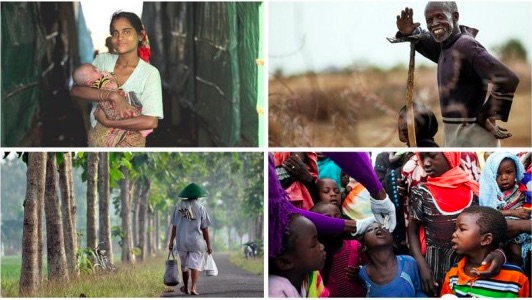
Wars, conflict and persecution have forced more people than at any other time since records began to flee their homes and seek refuge and safety elsewhere, according to a new report from the UN refugee agency. UNHCR’s annual Global Trends Report: World at War, released on Thursday (June 18), said that worldwide displacement was at the highest level ever recorded. It said the number of people forcibly displaced at the end of 2014 had risen to a staggering 59.5 million compared to 51.2 million a year earlier and 37.5 million a decade ago.

unhcr-english

The increase represents the biggest leap ever seen in a single year. Moreover, the report said the situation was likely to worsen still further.

Globally, one in every 122 humans is now either a refugee, internally displaced, or seeking asylum. If this were the population of a country, it would be the world’s 24th biggest.

“We are witnessing a paradigm change, an unchecked slide into an era in which the scale of global forced displacement as well as the response required is now clearly dwarfing anything seen before,” said UN High Commissioner for Refugees António Guterres.

Since early 2011, the main reason for the acceleration has been the war in Syria, now the world’s single-largest driver of displacement. Every day last year on average 42,500 people became refugees, asylum seekers, or internally displaced, a four-fold increase in just four years.

“It is terrifying that on the one hand there is more and more impunity for those starting conflicts, and on the other there is seeming utter inability of the international community to work together to stop wars and build and preserve peace,” Guterres added.

The UNHCR report detailed how in region after region, the number of refugees and internally displaced people is on the rise. In the past five years, at least 15 conflicts have erupted or reignited: eight in Africa (Côte d’Ivoire, Central African Republic, Libya, Mali, northeastern Nigeria, Democratic Republic of Congo, South Sudan and this year in Burundi); three in the Middle East (Syria, Iraq, and Yemen); one in Europe (Ukraine) and three in Asia (Kyrgyzstan, and in several areas of Myanmar and Pakistan).

“Few of these crises have been resolved and most still generate new displacement,” the report noted, adding that in 2014 only 126,800 refugees were able to return to their home countries — the lowest number in 31 years.
Meanwhile, decades-old instability and conflict in Afghanistan, Somalia and elsewhere means that millions of people remain on the move or – as is increasingly common – stranded for years on the edge of society as long-term internally displaced or refugees.

One of the most recent and highly visible consequences of the world’s conflicts and the terrible suffering they cause has been the dramatic growth in the numbers of refugees seeking safety through dangerous sea journeys, including on the Mediterranean, in the Gulf of Aden and Red Sea, and in Southeast Asia.

Half of all refugees are children

The Global Trends report detailed that in 2014 alone 13.9 million people became newly displaced – four times the number of the previous year. Worldwide there were 19.5 million refugees (up from 16.7 million in 2013), 38.2 million were displaced inside their own countries (up from 33.3 million in 2013), and 1.8 million people were awaiting the outcome of claims for asylum (against 1.2 million in 2013).

Most alarmingly, however, it showed that over half the world’s refugees are children.

(Article continued on right side of page.)

(Click here for the French version of this article.)

Question(s) related to this article:

The refugee crisis, Who is responsible?

What is the state of human rights in the world today?

(Article continued from left side of page.)

“With huge shortages of funding and wide gaps in the global regime for protecting victims of war, people in need of compassion, aid and refuge are being abandoned,” warned Guterres. “For an age of unprecedented mass displacement, we need an unprecedented humanitarian response and a renewed global commitment to tolerance and protection for people fleeing conflict and persecution.”

Syria is the world’s biggest producer of both internally displaced people (7.6 million) and refugees (3.88 million at the end of 2014). Afghanistan (2.59 million) and Somalia (1.1 million) are the next biggest refugee source countries.

Almost nine out of every 10 refugees (86 per cent) are in regions and countries considered economically less developed.

Europe (up 51%)

Conflict in Ukraine, a record 219,000 Mediterranean crossings, and the large number of Syrian refugees in Turkey – which in 2014 became the world’s top refugee-hosting nation with 1.59 million Syrian refugees at year’s end – brought increased public attention, both positive and negative, to questions to do with refugees.

In the EU, the biggest volume of asylum applications was in Germany and Sweden. Overall, forced displacement numbers in Europe totalled 6.7 million at the end of the year, compared to 4.4 million at the end of 2013, and with the largest proportion of this being Syrians in Turkey and Ukrainians in the Russian Federation.

Middle East and North Africa (up 19%)

Syria’s ongoing war, with 7.6 million people displaced internally, and 3.88 million people displaced into the surrounding region and beyond as refugees, has alone made the Middle East the world’s largest producer and host of forced displacement. Adding to the high totals from Syria was a new displacement of least 2.6 million people in Iraq and 309,000 newly displaced in Libya.

Sub-Saharan Africa (Up 17%)

Africa’s numerous conflicts, including in Central African Republic, South Sudan, Somalia, Nigeria, Democratic Republic of Congo and elsewhere, together produced immense forced displacement totals in 2014, on a scale only marginally lower than in the Middle East.

In all, sub-Saharan Africa saw 3.7 million refugees and 11.4 million internally displaced people, 4.5 million of whom were newly displaced in 2014. The 17 per cent overall increase excludes Nigeria, as methodology for counting internal displacement changed during 2014 and it could not be reliably calculated. Ethiopia replaced Kenya as the largest refugee-hosting country in Africa and the fifth largest worldwide.

Asia (up 31%)

Long one of the world’s major displacement producing regions, the number of refugees and internally displaced people in Asia grew by 31 per cent in 2014 to 9 million people. Continuing displacement was also seen in and from Myanmar in 2014, including of Rohingya from Rakhine state and in the Kachin and Northern Shan regions. Iran and Pakistan remained two of the world’s top four refugee hosting countries.

Americas (up 12%)

The Americas also saw a rise in forced displacement. The number of Colombian refugees dropped by 36,300 to 360,300 over the year, although mainly because of a revision in the numbers of refugees reported by Venezuela. Colombia continued, nonetheless to have one of the world’s largest internally displaced populations, reported at 6 million people and with 137,000 Colombians being newly displaced during the year. With more people fleeing gang violence or other forms of persecution in Central America, the United States saw 36,800 more asylum claims than in 2013, representing growth of 44 per cent.

The full Global Trends report with this information and more, and including data on individual countries, demographics, numbers of people returning to their countries, and available estimates of stateless population is available at < href="http://unhcr.org/556725e69.html">http://unhcr.org/556725e69.html.

L’ONU: Des déplacements de populations plus importants que jamais

.. DROITS DE L’HOMME ..

Un article de L’agence des Nations Unies pour les réfugiés

Les guerres, les conflits et la persécution ont généré le plus grand nombre – jamais observé dans l’histoire moderne – de personnes déracinées en quête de refuge et de sécurité, selon un nouveau rapport du HCR. Le tout dernier Rapport du HCR sur les Tendances mondiales, publié jeudi, fait état d’une hausse considérable du nombre de personnes forcées à fuir, avec 59,5 millions de déracinés à la fin 2014 en comparaison de 51,2 millions l’année précédente et 37,5 millions il y a une décennie. L’augmentation depuis 2013 est la plus importante jamais enregistrée en une seule année.

unhcr-french

Cette hausse majeure survient depuis début 2011 après l’éruption du conflit en Syrie qui génère désormais le plus important déplacement de populations jamais enregistré à travers le monde. En 2014, chaque jour, quelque 42 500 personnes sont devenues des réfugiés, des demandeurs d’asile ou des déplacés internes. Ce chiffre représente une augmentation par quatre en tout juste quatre ans. A travers le monde, un humain sur 122 est désormais soit un réfugié, soit un déplacé interne ou encore un demandeur d’asile. Si cette population correspondait à celle d’un pays, celui-ci se classerait au 24e rang au niveau mondial.

« Nous sommes les témoins d’un changement de paradigme, d’un glissement incontrôlé vers une ère qui est désormais le théâtre de déplacements forcés sans précédent à travers le monde. La réponse nécessaire éclipse désormais tout ce que nous avons mis en œuvre auparavant », a déclaré le Haut Commissaire des Nations Unies pour les réfugiés António Guterres. « Il est terrifiant que, d’une part, l’impunité augmente quant à l’éruption de ces conflits et que, d’autre part, la communauté internationale semble totalement incapable de travailler conjointement pour faire cesser les guerres ainsi que pour édifier et préserver la paix. »

Selon le rapport du HCR, dans toutes les régions, le nombre de réfugiés et de personnes déplacées internes est en hausse. Ces cinq dernières années, au moins 14 conflits ont éclaté ou ont repris : Huit en Afrique (en Côte d’Ivoire, en République centrafricaine, en Libye, au Mali, au nord du Nigéria, en République démocratique du Congo, au Soudan du Sud et, cette année, au Burundi) ; trois au Moyen-Orient (en Syrie, en Iraq et au Yémen) ; un en Europe (Ukraine) et trois en Asie (Kirghizistan ainsi que dans plusieurs régions du Myanmar et du Pakistan). Seul un petit nombre de ces crises ont été résolues et la plupart continuent de générer de nouveaux déplacements de populations. En 2014, seulement 126 800 réfugiés ont pu retourner dans leurs pays d’origine, c’est le nombre le plus faible enregistré en 31 ans.

Parallèlement, après plusieurs décennies d’instabilité et de conflits en Afghanistan, en Somalie et ailleurs, des millions de ressortissants de ces pays demeurent déracinés ou – et ce, de plus en plus souvent – bloqués durant des années en marge de la société et dans l’incertitude de la vie en tant que déplacé interne ou réfugié. Parmi les conséquences récentes et visibles des conflits à travers le monde ainsi que des terribles souffrances qu’ils causent, on observe une croissance spectaculaire du nombre de réfugiés en quête de sécurité qui entreprennent des traversées périlleuses en mer, y compris en Méditerranée, dans le golfe d’Aden et en mer Rouge, ainsi qu’en Asie du Sud-Est.

Plus de la moitié de la population réfugiée est composée d’enfants

Le rapport du HCR sur les Tendances mondiales montre que, pour la seule année 2014, quelque 13,9 millions de personnes sont devenues des déplacés internes, soit quatre fois le nombre observé en 2010. A travers le monde, il y avait 19,5 millions de réfugiés (contre 16,7 millions en 2013), 38,2 millions de déplacés à l’intérieur de leur propre pays (contre 33,3 millions en 2013) et 1,8 million de personnes qui attendaient le résultat de l’examen de leur demande d’asile (contre 1,2 million en 2013). Plus de la moitié de la population réfugiée est composée d’enfants, une proportion tout à fait alarmante.

« Du fait de graves pénuries de fonds et de profondes lacunes dans le régime mondial de protection des victimes de guerre, les personnes ayant besoin de compassion, d’aide et de refuge sont laissées à elles-mêmes », a indiqué António Guterres. « Dans cette ère de déplacements de population massifs et sans précédent, nous avons besoin d’une réponse humanitaire de grande ampleur et d’un engagement mondial renouvelé envers la tolérance et la protection des personnes fuyant le conflit et la persécution. »

(Voir suite sur colonne de droite. . . )

(Cliquez ici pour une version anglaise de cet article.)

Question(s) related to this article:

What is the state of human rights in the world today?

(. . . suite)

La Syrie est le plus important pays générateur au monde, à la fois de personnes déplacées internes (7,6 millions) et de réfugiés (3,88 millions à la fin 2014). L’Afghanistan (2,59 millions) et la Somalie (1,1 million) sont respectivement les deuxième et troisième pays générateurs de réfugiés.

Même dans ce contexte d’importante augmentation, la répartition mondiale des réfugiés demeure fortement biaisée. Les réfugiés continuent de rejoindre principalement des pays moins avancés, plutôt que des pays riches. Près de neuf réfugiés sur 10 (soit 86 pour cent) se trouvaient dans des régions et des pays considérés comme économiquement moins développés. Un quart de la population réfugiée se trouvait dans des pays classés parmi la liste des Nations Unies sur les Pays les moins avancés (PMA).

Europe (+ 51%)

Plusieurs sujets ont attiré l’attention du public, à la fois positivement et négativement, sur les questions de réfugiés dans cette région : le conflit en Ukraine, un chiffre tristement record de 219 000 personnes ayant tenté la traversée de la Méditerranée et le grand nombre de réfugiés syriens qui se trouvent en Turquie – un pays qui, en 2014, est devenu le plus important pays hôte de réfugiés au monde avec 1,59 million de réfugiés syriens présents à la fin 2014. Au sein de l’UE, la majorité des demandes d’asile ont été déposées en Allemagne et en Suède. Globalement, le nombre de personnes déracinées en Europe totalisait 6,7 millions à la fin de l’année, en comparaison de 4,4 millions à la fin 2013. Parmi les personnes déracinées se trouvant en Europe, une majorité d’entre elles sont des Syriens qui se trouvent en Turquie ainsi que des Ukrainiens ayant trouvé refuge en Fédération de Russie.

Moyen-Orient et Afrique du Nord (+ 19%)

Les souffrances massives résultant de la guerre en Syrie, avec 7,6 millions de déplacés internes et 3,88 millions de personnes déracinées dans la région et au-delà en tant que réfugiés, font du Moyen-Orient à la fois le générateur le plus important et le principal hôte de personnes déracinées au monde. Aux pics statistiques alarmants concernant les réfugiés syriens s’ajoutent les nouveaux déplacements de populations d’au moins 2,6 millions de personnes en Iraq – où 3,6 millions de personnes au total étaient déplacées internes à la fin 2014 – ainsi que de 309 000 personnes nouvellement déplacées en Libye.

Afrique sub-saharienne (jusqu’à 17%)

Souvent négligés, de nombreux conflits en Afrique, notamment en République centrafricaine, au Soudan du Sud, en Somalie, au Nigéria, en République démocratique du Congo et ailleurs, ont généré tous ensemble d’immenses déplacements de populations en 2014. En proportion, ils sont à peine moins élevés qu’au Moyen-Orient. En tout, l’Afrique subsaharienne comptait 3,7 millions de réfugiés et 11,4 millions de déplacés internes, dont 4,5 millions d’entre eux ont été nouvellement déplacés en 2014. Le taux de 17 pour cent d’augmentation globale exclut le Nigéria, car la méthodologie pour compter les déplacements internes a changé au cours de l’année 2014 et les statistiques ne sont pas fiables[1]. L’Ethiopie a remplacé le Kenya en tant que plus important pays hôte de réfugiés en Afrique et cette nation se classe au cinquième rang des pays hôtes à travers le monde.

Asie (+ 31%)

L’Asie est de longue date l’une des principales régions génératrices de déplacements de populations au monde. Le nombre de réfugiés et de personnes déplacées internes y a augmenté de 31 pour cent en 2014 et s’élève désormais à neuf millions de personnes. L’Afghanistan, précédemment premier pays générateur de réfugiés au monde, a cédé cette triste place à la Syrie. Les déplacements de populations se poursuivent dans et depuis le Myanmar en 2014, y compris des Rohingyas de l’Etat de l’Ouest-Rakhine ains que dans les régions du Nord-Shan et de Kachin. L’Iran et le Pakistan demeurent deux des quatre pays accueillant le plus grand nombre de réfugiés au monde.

Amériques (+ 12%)

Les Amériques ont également été le théâtre d’une hausse des déplacements forcés de populations. Le nombre de réfugiés colombiens a chuté de 36 300 et s’élève désormais à 360 300 en 2014, ceci surtout en raison d’une révision du nombre de réfugiés signalée par le Venezuela. La Colombie compte encore l’une des plus importantes populations déplacées internes, avec six millions de personnes ainsi que 137 000 Colombiens nouvellement déplacés en 2014. Avec un grand nombre de personnes fuyant la violence des gangs ou d’autres formes de persécution en Amérique centrale, les États-Unis ont vu 36 800 demandes d’asile déposées de plus qu’en 2013, soit une croissance de 44 points.

Le rapport complet du HCR (en anglais) sur les Tendances mondiales – incluant également des informations et statistiques par pays, sur les enfants réfugiés non accompagnés, sur le nombre des personnes de retour dans leur pays et sur les estimations de la population apatride – est disponible au http://unhcr.org/556725e69.html.