Ahead of International Day of Peace, UN chief appeals for cease-fire on 21 September

DISARMAMENT & SECURITY .

An article from the United Nations News Centre

Secretary-General Ban Ki-moon is calling for the laying down of arms and a 24-hour cease-fire on 21 September, which is observed around the world each year as the International Day of Peace.

un-idp

The United Nations General Assembly established the International Day of Peace in 1981 as an opportunity for people around the world to promote the resolution of conflict and to observe a cessation of hostilities.

“On this day, in the lead-up to the Day of Peace, I am asking all partners to lend their voices to this call for a laying down of arms, and to work non-stop in the days to come to bring about a 24-hour cease-fire on September 21st,” Mr. Ban said in a statement issued on Thursday.

“Let’s make this International Day of Peace a day without violence, and a day of forgiveness. If, for one day, we can live in a world without aggression and hostility, we can imagine how much more is possible,” he added.

The theme of this year’s commemoration is “Partnerships for Peace – Dignity for All,” which aims to highlight the importance of all segments of society to work together to strive for peace.

The work of the UN would not be possible without the thousands of partnerships each year between governments, civil society, the private sector, faith-based groups and other non-governmental organizations that are needed to support the Organization in achieving its goals.

Celebrations for the International Day of Peace will include a Peace Bell Ceremony at UN Headquarters in New York, featuring senior UN officials and Messengers of Peace, as well as a student videoconference. UN offices worldwide, including peacekeeping operations, will also be holding events with local communities.

(Click here for a version of this article in French or here for a version in Spanish.)

Question for this article:

Nations Unies: Ban Ki-moon pide a todos los beligerantes que depongan las armas

. . DESARME Y SEGURIDAD . .

Un artículo del Centro de Noticias ONU

El Secretario General de la ONU manifestó que es responsabilidad de todos exigir que cesen la brutalidad y la impunidad y exhortó a las partes que participan en conflictos violentos a silenciar las armas.

un-idp

El Secretario General de la ONU manifestó que es responsabilidad de todos exigir que cesen la brutalidad y la impunidad y exhortó a las partes que participan en conflictos violentos a silenciar las armas.

“Exhorto a todas las partes beligerantes a que dejen de matar, a que silencien las armas y respeten un alto el fuego a nivel mundial y creen los espacios necesarios para una paz duradera. Gente en todo el mundo sueñan con la paz”, manifestó Ban Ki-moon con ocasión del Día Internacional de la Paz.

La ONU conmemorará el lunes, 21 de septiembre, ese Día en favor de la paz en todo el mundo. Los Mensajeros de la Paz Jane Goodall y Michael Douglas, así como el Embajador de Buena Voluntad Herbie Hancock, entre otras personalidades, participarán en una ceremonia durante la que se hará sonar la Campana de la Paz.

El Titular de la ONU enfatizó en su mensaje que no hay grupo más dispuesto a ayudar a materializar el sueño de la paz que los jóvenes de hoy. Por ello, instó a los gobiernos a invertir más en ellos para que se haga realidad el potencial ingente que tienen para lograr la paz.

También alentó a movilizar a todos los grupos, organizaciones y entidades que persiguen a paz y recordó al respecto que el lema de este año es precisamente “Alianzas para la paz, dignidad para todos”.

Ban señaló además que “vivimos en tiempos de peligro, pero también es una época de grandes promesas”, y recordó que en una semana los dirigentes mundiales acudirán a las Naciones Unidas para aprobar la agenda de objetivos para un desarrollo sostenible en los próximos quince años.

( Clickear aquí para la version inglês o aquí para la version francês)

Question for this article:

Journée de la paix : Ban Ki-moon appelle à un cessez-le-feu de 24 heures le 21 septembre

. . DESARMAMENT ET SECURITE . .

Un article du Centre d’Actualités de l’ONU

A quelques jours de la Journée internationale de la paix, le Secrétaire général des Nations Unies, Ban Ki-moon, a appelé à un cessez-le-feu de 24 heures ce jour-là, qui est célébré chaque année le 21 septembre.

un-idp

Dans une déclaration à la presse publiée jeudi soir, Ban Ki-moon a rappelé que « que l’Assemblée générale des Nations Unies a déclaré que cette journée était consacrée au renforcement des idéaux de paix, à l’intérieur des pays et entre les nations et entre les peuples ».

« Elle a aussi été établie pour être une journée de non-violence et de cessez-le-feu. Le thème de la célébration de cette année est ‘Partenariats pour la Paix – la dignité pour tous’ qui vise à souligner combien il est important que tous les segments de la société travaillent ensemble pour la paix », a ajouté le Secrétaire général.

« Dans le cadre des préparatifs de la Journée de la Paix, je demande à tous les partenaires à s’exprimer en faveur de cet appel à déposer les armes, et à travailler sans relâche dans les jours à venir pour parvenir à un cessez-le-feu de 24 heures le 21 septembre », a-t-il encore dit.

( Cliquez ici pour la version anglaise ou ici pour la version espagnole. )

Question for this article:

Palestine: Breaking the Silence Tour in Hebron

DISARMAMENT & SECURITY .

An article by Jamie Stall, Holy Land Trust

Earlier this month, we had the chance to visit Hebron and participate in a city tour with Breaking the Silence, an organization founded by former Israeli combatants who served in the Occupied Territories. The aim of the organization is to raise awareness about the daily realities of those living under occupation and stimulate public discussion of these issues among Israelis.

hebron

We started off the tour near Shuhada Street, where we gathered in a hidden room behind a souvenir shop. Our tour guide, Shai, began by giving us a view into his personal experience as an IDF combatant in the West Bank. He recounted several of his experiences for the group, including being ordered to chase a young child while holding a loaded firearm because the kid was playing near a security fence, and searching Palestinian households at random for the purpose of “making the IDF’s presence felt” within the community.

After the introduction, we began walking through an almost entirely deserted “ghost town.” As it turns out, this abandoned street is called Al-Shuhada Street and was the bustling commercial center of Hebron until about 20 years ago. Shay explained that in 1994 all its businesses were closed by the army “for security purposes” following the murder of 29 Muslim worshipers at the Cave of the Patriarchs by the Israeli settler Baruch Goldstein. As we walked down the street, we encountered several placards that told a very different story about the street’s closure. According to the signs, “these stores were closed by the IDF for security reasons after the Arabs began the ‘Oslo War’ [aka The Second Intifada] in September 2000, attacking, wounding and murdering Jews on this road.” A quick fact check proves this to be false as the reason for the street’s closure, not to mention that The Second Intifada began six years after the stores were closed. There is no doubt that the Jewish settler community in Hebron did experience many detestable acts of violence, including several murders, but that does not change the fact that the sign’s claims are nonfactual propaganda meant to mislead its readers and evoke a negative opinion of the city’s Palestinians.

As we continued up Al-Shuhada Street, passing a military base and several settlements, we encountered a pedestrian checkpoint separating the settler communities and a Palestinian commercial area. As we were finishing our tour near the checkpoint, a young Palestinian man began to walk through the checkpoint while singing a song to himself. One of the Israeli soldiers on duty told him “shtok!” (“shut up!”), but he continued walking, singing to himself as before. At this point he was stopped, searched, questioned and prevented from leaving for about ten minutes, all because he was singing.

Seeing and listening to the history and present-day reality of this small slice of Hebron was not easy. Frankly, nothing in Palestine has been easy. There is so much suffering and resentment on both sides of the separation wall that it can put a damper on your hopes for a better future. But hearing courageous testimonies and messages of hope from people like Shai and Breaking the Silence bring some of that hope and optimism back. I’m so appreciative of what they are doing. May there be more people and communities like them, willing to speak out against the occupation and work for truth, peace and reconciliation.

Questions for this article:

Strong outcome of 1st Review Conference of Convention on Cluster Munitions 

DISARMAMENT AND SECURITY ..

An article from Artistes pour la Paix

The 1st Review Conference of the Convention on Cluster Munitions is wrapping up in Dubrovnik, Croatia. For the most part, this meeting has been full of good news. Colombia ratified the Convention, Cuba issued a surprise announcement that it is working towards joining the treaty as well and a number of states announced that they have finished destroying their stockpiled cluster munitions. These successes show that the treaty is working and the norm against cluster munitions is growing.

minesaction

Amidst all this success, Canada joined the United Kingdom and Australia in an attempt to weaken the norm against cluster munitions by objecting to the Dubrovnik Declaration‘s condemnation of all use of cluster munitions. For these three states, the idea that they would have to condemn all use of cluster munitions was not acceptable despite being states parties to a treaty banning cluster munitions. Mines Action Canada staff and campaigners from around the world in partnership with friendly governments lobbied hard for the declaration to stay strong. In the high level discussion state after state took the floor in support of a strong declaration condemning all use of cluster munitions.

Again and again states passionately defended the Declaration as it was and to reaffirm that any use of cluster munitions by any actor was unacceptable. In the end, the Declaration was adopted without amendment. We were thrilled to see our hard work pay off. The norm against use remains strong and so does the Convention on Cluster Munitions.

We were able to prevent Canada, the UK and Australia from weakening the declaration this time but we need your support to ensure that we will be ready next time someone threatens the norm against these inhumane weapons.

Mines Action Canada [info@minesactioncanada.org] would appreciate your support

Their site contains the following crucial information:

151 financial institutions worldwide invested US$27 billion [27 milliards de $!] in companies producing cluster munitions from 2011 to 2014, according to a report launched by Dutch peace organization PAX. The report, “Worldwide Investments in Cluster Munitions: a shared responsibility,” details the scale of investment in companies producing this banned weapon by banks, pension funds and other financial institutions around the world. Two Canadian financial institutions were singled out for their investment in cluster munition production in the report’s Hall of Shame.

While Canada and the majority of states have banned cluster munitions due to the humanitarian risk to civilian populations, production of the weapon continues in a limited number of countries yet to join the 2008 Convention on Cluster Munitions.

(Article continued in right column)

Question related to this article:

Can cluster bombs be abolished?

(Article continued from left column)

“Cluster munitions are currently killing civilians in Syria and eastern Ukraine and they continue to claim lives in Laos fifty years after they were used. Yet financial institutions have invested US$27 billion—more than twice the GDP of Laos—in producers of this inhumane weapon. Canada has banned cluster munitions and during the lengthy discussions about the legislation government officials and parliamentarians frequently stated that investment in cluster munition producers is in fact considered aiding in their production and is illegal,” said Paul Hannon, Executive Director.

The new report from PAX shows which financial institutions have invested in cluster munition producers between June 2011 and September 2014. The report’s “Hall of Shame” shows the majority of investments come from financial institutions in states that have not yet joined the Convention on Cluster Munitions. Yet financial institutions from countries like Canada that have joined the treaty are also still involved.

Royal Bank of Canada and Sun Life Financial appear on the “Hall of Shame” list for their investments in cluster munition producers. These investments are falling foul of the treaty’s prohibition on assistance in the production of the weapon and of the recently passed legislation implementing the Convention in Canada which criminalizes aiding and abetting cluster munition production.

“Cluster munitions are banned by international law; a majority of the countries in the world has recognised that this weapon is unacceptable. And yet cluster munition producers are still able to fund their activities. Financial institutions should introduce robust policies to ensure they are not supporting companies involved in the production of this banned weapon,” said Suzanne Oosterwijk, co-author of the PAX report.

While the number of financial institutions investing in companies producing cluster munitions remains high, the report shows an increase in financial institutions with policies to prohibit this practice. Seventy-six financial institutions are listed in the 2014 report as having cluster munition policies in place.

Recent use of cluster munitions in Syria and eastern Ukraine further demonstrates the urgent need to eradicate this weapon. Last month Cluster Munition Coalition member Human Rights Watch documented widespread use of cluster munitions in eastern Ukraine, in fighting between government forces and pro-Russian rebels. In Syria, civilians account for 97% of recorded deaths where cluster munitions have been used over the past two and a half years.

This report follows a similar report released by PAX on investment in nuclear weapons. The Don’t Bank on the Bomb report found that numerous Canadian financial institutions are investing in nuclear weapons production [La Financière Sun Life en tête]. Mines Action Canada calls on all Canadian financial institutions to adopt strong policies prohibiting investment in banned and indiscriminate weapons.

(Thank you to Janet Hudgins, the CPNN reporter for this article)

UK: Power to the Peaceful – Support Jeremy Corbyn – Join Stop the War

. DEMOCRATIC PARTICIPATION .

An article from Stop the War

Jeremy Corbyn’s fantastic victory in the Labour party leadership election is a huge tribute to him as a campaigner and Member of Parliament. It is also the result of the years of campaigning by the movements against war and austerity.

stopwar

Jeremy has always supported Stop the War, which has played an important part in building anti-war and peace sentiment in Britain, and he is currently our national chair.

Labour members and supporters have delivered a fitting riposte to the terrible legacy of Tony Blair, who helped to launch the ‘war on terror’ and took us into catastrophic war in Iraq.

But we know that the Tory government and its media supporters continue to press for wars and military solutions, despite the obvious failure of such strategies.

Jeremy’s victory sends a strong message against war, injustice and inequality. It raises the possibility of a real break with current foreign policy. But he will need the widest and most active possible support.

Stop the War is committed to campaigning with everyone who agrees with his ideas, to bolster anti-war opinion and strengthen the mass movement.

As David Cameron prepares for a vote in parliament to bomb Syria, the Stop the War Coalition is needed more than ever.

Please do everything possible to help and especially, join us if you can.

Join Stop the War – help spread our message and strengthen our campaign

Donate – unlike the merchants of war, we rely on our members and supporters for all our funding

Help the campaign to stop the bombing in Syria and elsewhere in the Middle East, to oppose the replacement of Trident nuclear missiles, and to prevent future wars.

Question related to this article:

Youth Congress of Esperanto held in Germany

TOLERANCE AND SOLIDARITY .

Special to CPNN by Klara Ertl

From the 2d to 9th of August 2015, the 71st International Youth Congress of Esperanto (a.k.a. “Internacia Junulara Kongreso” or IJK) took place in the city of Wiesbaden, Germany. There were 300 participants from 35 countries, mainly young adults but also children, teenagers and older adults. They all had one common language: Esperanto.

esperanto

Esperanto was initiated as an international bridge language with no country to be attached to, simple and easy to learn, and fair to everyone. Its initiator, L. L. Zamenhof from Poland, grew up in a country torn by cultural conflicts. The idea of peace was his chief motivation to dedicate all his efforts to this ambitious project, and peace still lies at the core of the Esperanto movement worldwide.

During one week, in and around the youth hostel of Wiesbaden, participants gave presentations and courses on various subjects, played music, sports and games, danced, talked, joked, debated and organized, bought and sold Esperanto books, magazines and music. They shared their knowledge, their skills and above all, their friendship. Young or old, poor or rich, and no matter which of the five continents they were from and how proficient they were at Esperanto – everyone was given a chance to express themselves, and listened to. Equality was also explicitly promoted: For example, some of the participants made an ongoing initiative to inform about and promote acceptance for transgenderism. There is a growing tendency among Esperanto speakers to add a new, gender-neutral pronoun (“ri”) to the traditional pronouns for male (“li”) and female (“ŝi”).

In 1985, at its General Conference in Sofia, UNESCO acknowledged the results obtained by the use of Esperanto in mutual understanding between peoples, and its potential for contributing to it in the future. It also invited all its Member States to introduce the study of Esperanto in schools and institutions of higher education. Though this is rarely done, it can easily be learned by informal means, especially through the Internet.

The next IJK will take place next summer in Wroclaw, Poland. But Esperanto meetings take place all year, and no matter where in the world, they create a space for cultural exchange, openness, and equality.

—-

Some links:

Homepage of TEJO (Worldwide Esperanto Youth Organization), which organizes this congress: www.tejo.org

Information about Esperanto: www.esperanto.net

Learning Esperanto: www.lernu.net

Main Esperanto Facebook group: www.facebook.com/groups/esperanto.grupo/

Question for this article

New Zealand: International Day of Peace

DISARMAMENT & SECURITY .

An article from Scoop Independent News (reprinted as Creative Commons)

The UNANZ [United Nations Association of New Zealand] celebration for the International Day of Peace will take place on Monday 21st September 2015, 5.30 – 8.30 pm at Parliament in the Legislative chamber.

new newzealand

Our Keynote Speaker, Dr Kennedy Graham MP, will set the scene by speaking on the ‘invincible power of community spirit’.

The event will take the form of a panel discussion of ideas contributed from various community groups around NZ on actions which can be taken to create a culture of peace locally. The basis for the discussion will be the 9 point summary of the 17 Sustainable Development Goals – “Transforming the World by 2030 – A New Agenda for Global Action” – to be presented for adoption at the United Nations at the end of September 2015.

The outcome of our discussion will act as a contribution from New Zealand, and will be sent to the NZ Permanent Representative to the UN and the government of NZ.

The evening will conclude with a lively performance by the Multicultural Council of Wellington; highlighting how New Zealand continues to emerge as a kaleidoscope of multiculturalism, peace and unity among nations.

Event outline

5.30pm

* Refreshments

* Welcome:

– Maori welcome

– City welcome – Her Worship the Mayor, Celia Wade-Brown

* Key-note speaker: Kennedy Graham MP, on “The Invincible Power of Community Spirit”

* Panel Chair: Dr Graham Hassall (President of the United Nations Association of New Zealand)

Questions for this article:

Ashland (Oregon, USA): Culture of Peace Commission Launches with World Peace Flame and OSF Oracle

DISARMAMENT & SECURITY .

by David Wick

The Ashland Chief of Police, an Oracle from Oregon Shakespeare Festival, and the World Peace Flame from Wales come together to launch the Ashland Culture of Peace Commission. Monday, September 21st, the United Nations International Day of Peace is the introduction of the historic Ashland Culture of Peace Commission along with the hopes of many people around the world.

Ashland
Ashland Community Tiles for Peace Wall – Ashland Library Main street

Ashland’s 1st Annual Culture of Peace Festival and Peacebuilding Resource Fair are being held 4:00pm – 8:00pm at the Ashland Elk’s Lodge, Basement Level and alley entrance (Will Dodge Way). Mayor John Stromberg provides a welcome at 5:00 pm, to be followed by an introduction of the Commission members, a lighting ceremony from the World Peace Flame in Wales (bring a candle to participate), predictions for the future of the Commission by the OSF Head Over Heels Oracle (Michele Mais), and a dedicated performance by Dancing People Company.

The Ashland Culture of Peace Commission is unique in the United States, and the world, and is acknowledged and supported by the Global Movement for the Culture of Peace at the United Nations. This culminates two years of work by a local citizens group working with the community and the Ashland City Council to create this one year pilot Commission.

Members were invited through the use of the Pathways To Peace, Peace Wheel (www.ashlandcpc.org). This process attracted the current fourteen people from various sectors of the community and more will be added. This includes members such as Police Chief Tighe O’Meara, Amy Blossom Manager of the Ashland Library, Editor of the Daily Tidings Newspaper Bert Etling and Joanne Lescher, counselor in Non-Violent Communications. The Commission will soon include students from Ashland High School and Southern Oregon University.

The Ashland Culture of Peace Commission (ACPC), endorsed by the Ashland City Council, is a body of diverse citizens who have a goal of an Ashland that identifies itself as a culture of peace, both as a commitment to itself and a presentation to the world. Essential elements are working with City Government and the Community to maintain and enhance respectful and caring relationships between all sectors of society and the environment upon which they depend. The Commission will work with serious concerns that are facing the Ashland community now, and in the future.

The Peacebuilding Resource Fair will have information and demonstration tables focused on local Peacebuilding resources such as mediation, conflict resolution, Non-Violent Communication, Restorative Justice, Collaborative law, and inner peace practices. There will also be musicians, poetry, and a grand finale dance.

A press conference will be held at 12:00 pm, September 21st with Police Chief O’Meara, Legal Counsel Eric Sirotkin and other Commission members at the ACPC office 33 First St, Suite 1, Ashland (First St/Lithia Way across from the Post Office).

For additional information www.ashlandcpc.org or contact Executive Director, David Wick 541-552-1061, davidwick111@gmail.com.

Questions for this article:

Third Regional Conference “Latin America on the quest for sustainable peace: tools and contributions”

.. EDUCATION  FOR PEACE ..

Convocation from Congress blogspot (translated by CPNN)

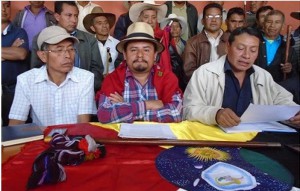
The Latin American Council for Peace Research (CLAIP), the Latin American Faculty of Social Sciences (FLACSO), and the Association against trafficking of children and women (ECPAT / Guatemala) announce the Third Regional Conference “Latin America on the quest for sustainable peace: tools and contributions” to be held in the Academic headquarters of FLACSO in Guatemala City from 26 to 28 October 2015.

CLAIP

Objective: To reflect on building a sustainable peace in Latin America, even in contexts of conflict and generalized violence, exchange new approaches to peacebuilding and the challenges we must overcome to achieve it.

Target audience: teachers, researchers, students, professionals and scholars from multiple disciplines who are interested in research and / or work on these issues in the region.

THEMES:
1. Peace and Education
2. Peace and Environment
3. Peace instead of urban violence
4. Human and gender security, development and peace
5. Democracy, Public Policy and Citizenship Building

The themes of Dialogue, Peaceful Conflict Resolution, Gender, Equity and Intercultural issues are transverse to the preceding 5 themes.

METHODOLOGY OF THE CONFERENCE:

Keynote speakers: members of CLAIP FLACSO and ECPAT.

Thematic tables: The participants will present papers approved in the relevant thematic working groups, which will be coordinated by specialists of CLAIP-ECPAT-FLACSO.

Mail Contact: claip.congreso2015@gmail.com

NOTES:

Congress languages: Castilian and Portuguese, no translation

Lodging: each must manage and make their own reservations. FLACSO is in Zone 10 of the city and it is advisable to stay in that same area. More information.

As in previous years, we plan to publish a new book by CLAIP with selected papers at the Conference. More details will be published later.

For further information consult the Congress blog or our Facebook page.

(Click here for a Spanish version of this article)

Question related to this article: