Category Archives: global

Pope urges inclusive and sustainable food systems

. . SUSTAINABLE DEVELOPMENT . .

An article by Robin Gomes from Vatican News

As the Rome-based Food and Agriculture Organization (FAO) kicks off its 4-day Conference on Monday, Pope Francis has pledged the support of the Holy See and the Catholic Church for their “dedication to a more just world, at the service of our defenseless and needy brothers and sisters”.  He urged special attention for the poor rural food producers, who are more likely to suffer from malnutrition and hunger. 


A vegetable and food vendor in a market in Jakarta, Indonesia  (ANSA)

The Pope made the remarks on Monday in a message to Michal Kurtyka, the Polish Minister of Climate and Environment, who is chairing FAO’s 42nd Conference at it headquarters in Rome, June 14-18.  While reviewing the state of food and agriculture in the world, the virtual session has as its overall theme, “Agriculture Food Systems Transformation: From Strategy to Action”.

Creating inclusive and sustainable food systems

FAO coordinates international efforts to defeat hunger and improve nutrition and food security. The Pope said that this task assumes a special prominence during the Covid-19 pandemic, as “many of our brothers and sisters still do not have access to the food they need, either in quantity or quality”.  Last year, he noted, the number of these people was the highest in the last five years. With conflicts, extreme weather events, economic crises, together with the current health crisis, the future could be worse. Hence, policies capable of tackling the structural causes of these growing vulnerabilities need to be adopted.

In this regard, a circular economy, which guarantees resources for all, including future generations, and promotes the use of renewable energies, will help create resilient, inclusive and sustainable food systems that will provide healthy and affordable diets for everyone. However, the fundamental factor in recovering from the crisis that is ravaging us is an economy tailored to mankind, not subject only to profit, but anchored in the common good, friendly to ethics and respectful of the environment.

(Article continued in right column)

Question for this article:

What is the relation between movements for food sovereignty and the global movement for a culture of peace?

(Article continued from left column)


Farming and rural communities

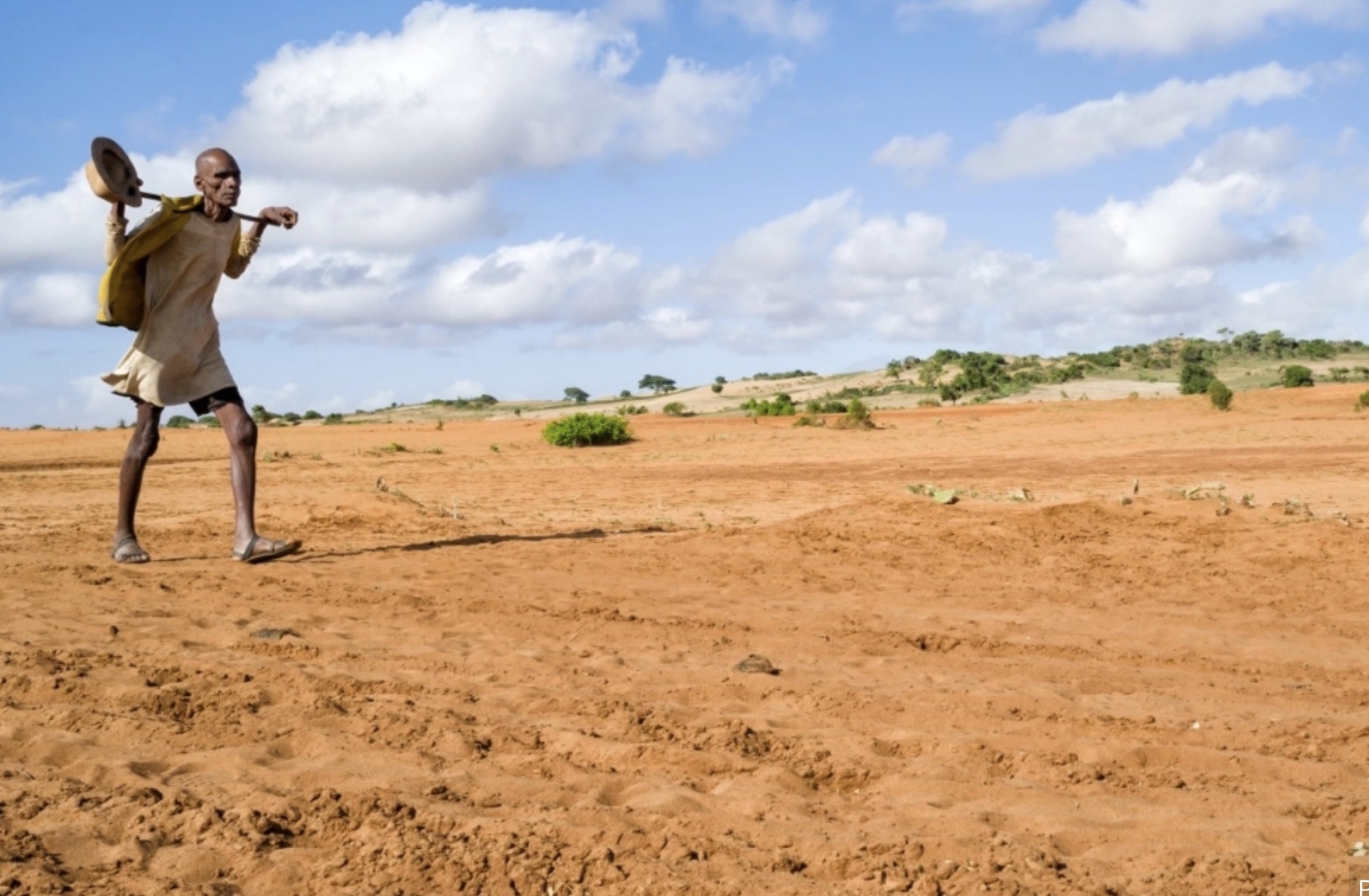
The reconstruction of post-pandemic economies should take into account the valuable role of family farming and rural communities. The Pope lamented that those who produce food are the ones who suffer from the lack or scarcity of food. “Three-quarters of the world’s poor”, he said, “live in rural areas and depend primarily on agriculture for their livelihoods”.

However, due to lack of access to markets, land ownership, financial resources, infrastructure and technologies, they are most vulnerable to food insecurity.

Pope Francis expressed appreciation for the international community’s effort to enable individual countries achieve food autonomy while preserving local ecosystems and biodiversity. He urged innovative ways to support and help small producers improve their capacities and resilience.

Fraternity vs virus of indifference

As the world prepares to re-launch after the pandemic, Pope Francis said it is fundamental to promote a culture of care against the individualistic and aggressive tendency to discard, which is very present in our societies.

“While a few sow tensions, confrontations and falsehoods”, he said, “we, on the other hand, are invited to patiently and decisively build a culture of peace, which is directed towards initiatives that embrace all aspects of human life and help us to reject the virus of indifference”.

Pope Francis said mere outlining of programs is not enough. Tangible gestures are needed that have as their point of reference the common belonging to the human family and the fostering of fraternity. Gestures that facilitate the creation of a society that promotes education, dialogue and equity.

He urged that all welcome the current trial as an opportunity to prepare for a future for all without discarding anyone, warning, “without an all-embracing vision, there will be no future for anyone”.

The Conference is FAO’s supreme governing body whose main functions are to determine the policies of the Organization, approve the budget, and make recommendations to members and international organizations. 

US-Russia Summit advances key points in international Open Letter

DISARMAMENT & SECURITY .

An email received from Unfold Zero

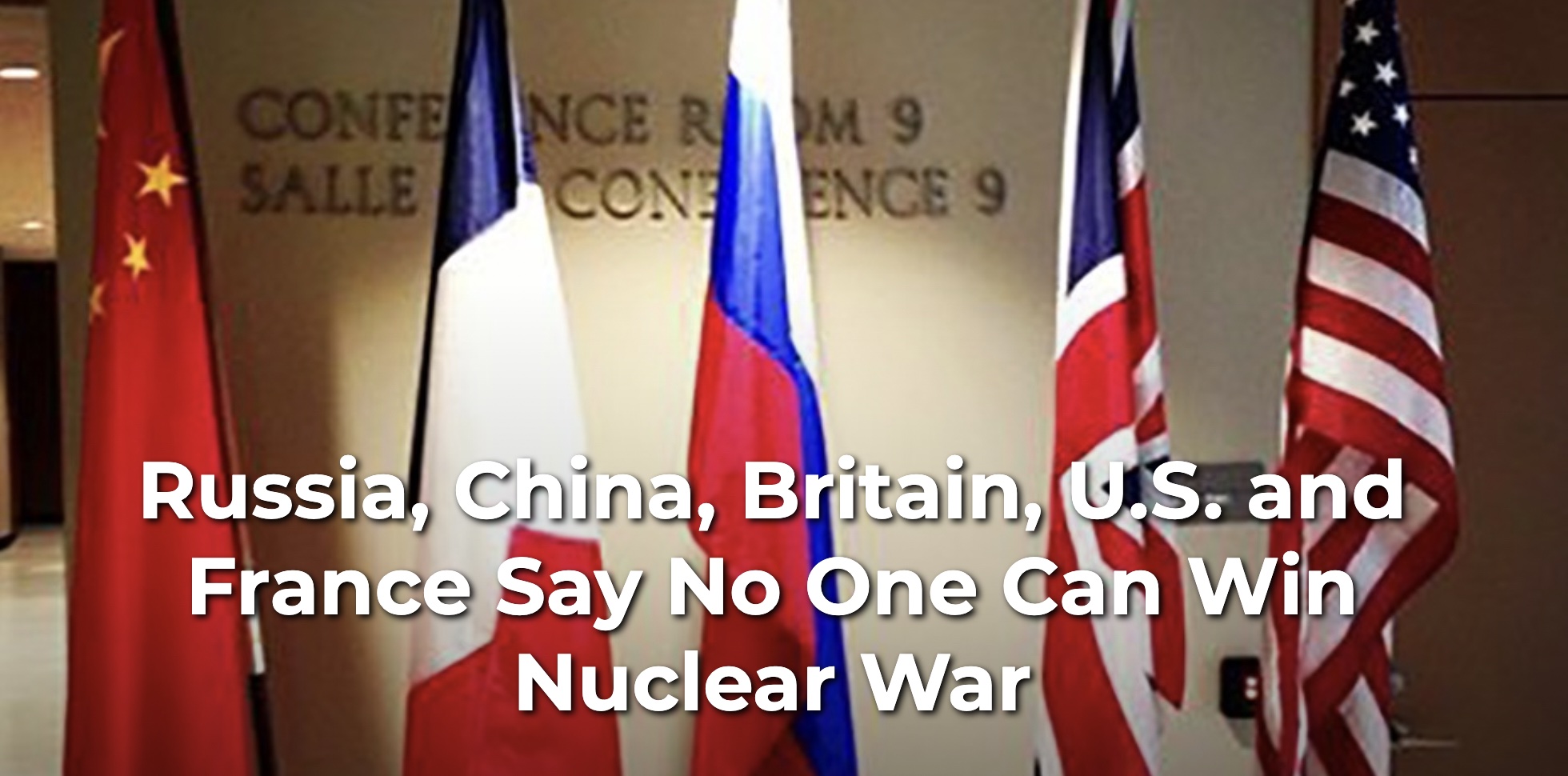
At their Summit Meeting in Geneva yesterday, President’s Biden and Putin adopted a U.S.-Russia Presidential Joint Statement on Strategic Stability in which they reaffirmed ‘the principle that a nuclear war cannot be won and must never be fought’ and announced that they will embark together on an integrated bilateral Strategic Stability Dialogue in the near future. ‘Through this Dialogue, we seek to lay the groundwork for future arms control and risk reduction measures.’

This agreement advances key points in the Open Letter to Presidents Biden and Putin in Advance of their June 16, 2021 Summit, which was sent to the two leaders last week. The Open letter was endorsed by over 1200 political, military and religious leaders, as well as legislators, academics and scientists and other representatives of civil society.


(Continued in right column)

Question related to this article:
 
Can we abolish all nuclear weapons?

(Continued from left column)

Endorsers included UN Messengers for Peace Michael Douglas and Jane Goodall; public visionary Deepak Chopra; two former UN Under-Secretary Generals for Disarmament Sergio Duarte and Nobuyasu Abe; Nobel Peace Laureate Mairead Maguire; former US Secretary of Defense William Perry, former Swedish Prime Minister Ingvar Carlsson; and a number of former foreign and defense ministers, generals, UN ambassadors and other officials of nuclear armed, allied and non-nuclear countries.

From Joint Presidential Statement to concrete policy

In addition to affirming that “A nuclear war cannot be won and must never be fought”, the Open Letter calls on the USA and Russia to make a ‘joint commitment that their nations will not use nuclear weapons first under any circumstances, and to make this a key step toward fulfilling the United Nations goal to totally eliminate nuclear weapons from the planet.’ The adoption of such No First Use (NFU) policies should be one of the objectives of the Strategic Stability Dialogue that the two leaders are embarking upon.

There is growing traction globally for the adoption of NFU policies by the nuclear armed (and allied) states, as evidenced by legislative action, public appeals and NFU campaigns including the global campaign NoFirstUse Global.

The adoption of such policies would not only reduce the risk of nuclear attacks, but aso pave the way to the adoption of more comprehensive nuclear disarmament measures toward the goal of a nuclear-weapon-free world. See Why No-First-Use.

Building peace, from the bottom up: A Q&A with Séverine Autesserre

EDUCATION FOR PEACE .

This interview, conducted by Jessica Alexander, was originally published by The New Humanitarian, a news agency specialised in reporting humanitarian crises. It is reprinted here by permission.]

As the number of displaced people around the world reached 80 million people due to conflict and persecution last year, Filippo Grandi, the UN’s high commissioner for refugees, acknowledged: “The international community is failing to safeguard peace.” 

Séverine Autesserre addresses these failures and offers a different, more hopeful outlook on ending conflict in her new book, The Frontlines of Peace, released today [May 13]. 

Severine Autesserre with UN peacekeepers

Drawing from research in 12 conflict zones around the world – from the Democratic Republic of Congo, to Afghanistan, to Colombia – Autesserre details what’s wrong with what she refers to as “Peace, Inc.” This traditional approach to ending wars, she explains, relies on foreign-led peacebuilders who lack an in-depth understanding of the societies and cultures in which they work and the causes of violence. 

Lasting peace, she explains, isn’t imported by externals, or driven from elites sitting in capitals. Instead, it relies on the activism of ordinary citizens. It’s time, Autesserre says, for those inside Peace, Inc. to change their relationships with local insiders, shed their unhelpful assumptions, and recognise the potential and power of grassroots initiatives to end conflict. 

Autesserre sat down with The New Humanitarian to talk about her new book and the ways in which international peacebuilders can do better. She describes places like Idjwi, an island in Lake Kivu in Congo that has become a peaceful sanctuary amidst a decades-long conflict. She talks about the way a mother knows that peace has come because her child starts speaking in the future tense.

And she explains why some peacebuilding efforts fail, yet others flourish. 

This interview has been edited for length and clarity. 

The New Humanitarian: Your new book is full of examples of successful local level peace initiatives. Why did you feel the need to write this book? And why are its messages especially relevant today? 

Séverine Autesserre: I didn’t set out to write a book about local peace initiatives; I wanted to write a book about how to end violence. One and a half billion people live under the threat of violence in more than 50 countries around the globe. Even countries like France and the United States are facing an increasing number of hate crimes, gang fighting, terror attacks. It’s critical that we do something.

When I started working on The Frontlines of Peace, I had already written two books and dozens of articles on why and how we fail to stop war and end violence. So I wanted to look at success – at what actually works to build peace during and after mass violence.

And it’s because I looked more at the success of peacebuilding that I ended up writing about grassroots efforts, because what works is usually innovative grassroots initiatives that are sometimes supported by foreigners, and they also often use methods that are shunned by the international elite.

TNH: Which kinds of methods are shunned? Can you give an example? 

Autesserre: Take Idjwi, an island in the middle of Lake Kivu near the border between the Democratic Republic of Congo and Rwanda. The DRC is home to one of the deadliest conflicts since World War II, but the island of Idjwi itself is a haven of peace. When you look at how Idjwi has maintained peace for the past 20 years, it’s not the usual suspects – the state or the police – who have managed to control tensions; it’s not foreign peacebuilders or peacekeeping missions or international organisations; it’s members of the community themselves.

When I talk with international peacebuilders and peacekeepers, they tell me that ordinary citizens do not have the skills to build peace; they cannot help their situation. And I show that they do.

Residents of Idjwi have what they call a culture of peace – they resolve conflicts through grassroots structures, community meetings, and many other local initiatives that international peacebuilders often dismiss as being completely irrelevant. 

People in Idjwi draw on a very strong belief that helps deter violence by both insiders and outsiders. For instance, you have blood pacts – traditional promises between two parties who agree never to hurt each other. You also have beliefs around witchcraft:

There is a myth that Idjwi is the home of the most powerful sorcerers – that makes Idjwi this kind of place where Congolese in surrounding provinces are afraid to attack because they worry that the sourcerers will attack them back. 

There are many different methods, beliefs. They vary depending on the context, but they are all very specific, local, and rooted in society and cultures. 

TNH: If these local initiatives may have a better chance, and foreign intervention may mess things up or make the situation worse, how do you distinguish which efforts are worthy? 

Autesserre: I don’t say that local initiatives have a better chance, or that foreign intervention messes things up. What I say is that certain local initiatives have a better chance, and certain foreign intervention efforts mess things up; just like there are certain local initiatives that are doomed to fail, and certain foreign intervention efforts that actually make a positive difference – both at the highest level and on the ground. 

In the book, I detail foreign peacebuilders who come from all over the world – working for different organisations in very different countries. They are what I call model interveners, who do actually make a difference at the highest level and on the ground. 

There are a few characteristics which they have in common. They don’t believe that they, as outsiders, know better, or that they have the right theories, skills, and expertise, or that they bring the ideal solutions to people’s problems. Instead, they respect local residents; they listen to them. They are open minded; they understand that other people have a different understanding of peace, democracy, and development.  

They know the local context well; they speak at least some of the local languages; and they have extensive local networks. They are in it for the long run; they stay on-site for years, sometimes decades. They don’t put themselves at the forefront of peace efforts. They don’t put their logos everywhere. Instead, they maintain a low profile and they turn the spotlight on the achievements of their local partners: elites, local staff, ordinary people. 

They are flexible. They keep adapting their strategies based on the results and feedback that they get and the way the situation evolves. They understand that sometimes there are hard choices, because all these things may not fit together so we may have to choose between worthy goals. The best interveners understand that they should not be the ones to make these choices: The people who have to live with the consequences of the decision should be the ones making it.  

TNH: So, it’s not a dichotomy of only local; it’s about having a mix?

Autesserre: Yes, we need top-down and bottom-up. We need both insiders and outsiders. We don’t want to replace top-down with bottom-up or international with local grassroots peacebuilding – we need both. But the reason why I insist on more grassroots bottom-up efforts is because currently most of the international resources and attention is on top-down efforts working at the national and international levels. We need international involvement, but as I show in the book, we also need to change the way we work at the highest level. We need to follow the characteristics of the model peacebuilders which I’ve outlined. 

(Continued in right column)

Question for this article:

What are the most important books about the culture of peace?

(Continued from left column)

TNH: How do you define success in peace efforts? 

Autesserre: When I was doing the research for the book, I didn’t come in with my own definition of success. I asked people: ‘Do you have peace in your neighborhood, your village, your district or country, and do you think this or that initiative has been successful and, if so, why?’ 

“It’s things like a mother in Congo telling me that my child is now speaking in the future tense; a woman in Colombia saying I know that there is peace in my village because I can sleep in my pajamas.”

Peace and success which I document in the book are based on what peace practitioners and people on the ground feel and experience. It can take a lot of different forms, some of which I would never have thought about. It’s not love and harmony between world leaders or country leaders. It’s things like a mother in Congo telling me that my child is now speaking in the future tense; a woman in Colombia saying I know that there is peace in my village because I can sleep in my pajamas. Before, she always thought there would be fighting during the night and she would have to get dressed and run out, so it was better to go to sleep fully dressed. To her, peace was sleeping in her pajamas. In Colombia, many people mention how they sleep as an indication of peacefulness – with the windows open, the doors unlocked. There are so many other examples: You can use the toilet in your garden when you don’t have toilets in your house at night; you don’t have to use a chamber pot. These are definitions of peace and ways that people perceive peace and success that I would have never thought about.  

TNH: We are hearing similar calls today within the humanitarian sector to take a look in the mirror, to decolonise the humanitarian system and make aid more localised. 

Autesserre: We are all due for a good look in the mirror – peacebuilding, development, humanitarians. I got a message from a friend, a leader of a big humanitarian organisation who said she’s given the book to her board and to her operations director, because we still use too much of “Aid, Inc.” I receive a lot of messages like that, by leaders or people lower down in the chain saying that they are using the book to help advocate for the ideals that they believe in and that I believe in. 

The book is hopefully helping not by showing what we do wrong, but that we can approach peacebuilding and aid differently, and it’s actually effective and possible within all kinds of organisations, countries, and cultures.

TNH: TNH has a new coverage series exploring peacebuilding  – often at the community level – and some of the reports show the power of locally driven approaches. But they also seem vulnerable to political dynamics beyond the community’s control, at the regional and national levels. How do you propose we address that?

Autesserre: A really big issue with our standard approach to peace is that many conflicts revolve around political, social, economic issues that are distinctively local – at the level of individuals, families, and the community. So our common approach [to peacebuilding], which is focused on governments and elites in capital cities, isn’t enough.

I realised this in one of my first visits to Congo in 2003. I met a woman my age, her name was Isabelle. Local militia had attacked her village. They had killed many men, raped many women, looted everything, and tried to kidnap her. Her husband defended Isabelle and said, ‘no, take me’. He went with the militia and Isabelle never saw him again. 

Isabelle told me that the rebels attacked her village not because of the national and international tensions that everyone is talking about, meaning the war between Congo and Rwanda. It was because the rebels wanted to take the land that the villagers needed to survive. I remember her story all these years because it’s about the awful consequences of local conflicts that foreign peacebuilders and peacekeepers and international organisations so often ignore. 

“What I’ve seen when investigating conflicts around the world, is that ordinary citizens and grassroots leaders have a lot more power, skills, and ways to resolve their own problems than we usually believe.”

Locally driven peace approaches are also about building on insiders: people who lead the conflict. Of course, local leaders, ordinary citizens, are not by definition better, more peaceful, or less corrupt than national and international elites. But to me, they are better placed to address the local context, the grassroots issues, because only they know the ins and outs of their specific situation.

What I’ve seen when investigating conflicts around the world, is that ordinary citizens and grassroots leaders have a lot more power, skills, and ways to resolve their own problems than we usually believe. In every single conflict that I’ve researched, in every country, I’ve found examples of ordinary citizens and grassroots activists who use their personal connections to convince the leaders of surrounding armed groups to come and negotiate. What is fascinating is how personal peacebuilding actually is. It is fathers, mothers, uncles, cousins, brothers, sisters reaching out to family members who are fighting. Teachers, who go to meet their former students, or village leaders within their own community, telling them they had to stop fighting. 

Take Somalia, which is extremely violent, has terror attacks, and violence every week, versus Somaliland, an autonomous region in the north of Somalia that has experienced very little violence for the past 20 years, very little terrorism, has a well functioning state, decent public services, and even some kind of functioning democracy. The key difference to me is that Somaliland benefited from sustained grassroots peacebuilding initiatives that were led by insiders, by Somali leaders themselves. If you look at the rest of Somalia, you see the usual top-down, outsider-led Peace, Inc. approach used. To me, Somaliland is important to keep in mind because it shows that, yes, there are places where the local peace can be jeopardised by an armed group or the government, but Somaliland shows you there are ways to make bottom-up peace very robust and sustainable. 

TNH: When you look at today’s violence in Tigray: a cross-border conflict and a civil war – surely a place where you would need foreign involvement  – what advice would you have for leaders at this stage in finding peace? 

Autesserre: You should ask people in Tigray, not me. We need to ask and not just jump in no matter what. Listen and respect the wishes of the people you’ve been talking to before jumping in. 

TNH: Local power dynamics can exclude the voices of some – like women in a place like Afghanistan. How can that be addressed? 

Autesserre: You have the same problem with national and international dynamics. The fact that local power dynamics exclude the voices of women is not specific to local dynamics. It’s something that happens with all kinds of peace agreements and peace processes. When you look at the representation of women in the current Afghan peace talks – and virtually all other international and national peace talks for that matter – it’s highly problematic.

Representation of women is very low. And it’s not only women – there are also a lot of minority communities that are excluded from these processes. 

“When you ask me, how do we address power dynamics which cut out the voice of some, you have to ask people who are excluded –  what do they want?”

One of the characteristics of the model peacebuilders that I talk about is that sometimes there are hard choices. Sometimes we have to choose between worthy goals – for instance, between peace and democracy or peace and justice. If you take peace and democracy, there has been a lot of research showing that elections organised right after the end of the conflict often fuel violence rather than promote peace. So you have tension between peace and democracy. 

It’s the people who have to live with the consequences of the decision who should be the ones making it. When you ask me, how do we address power dynamics which cut out the voice of some, you have to ask people who are excluded –  what do they want? Ask women in Afghanistan what they want us to prioritise. 

TNH: Syria talks on a possible new constitution seem stalled before they got started. Is there a point at which the UN should throw its hands up and recognise when talks aren’t going anywhere? 

Autesserre: If you’re asking me when should we stop trying to build peace, my answer is never. When should we stop using what I call the Peace, Inc. approach and consider an alternative way to build peace? Well, my answer is right now. 


Source of this article

Past virtual events in June

FREE FLOW OF INFORMATION

Here are events and application deadlines in June that were previously listed on the CPNN page for upcoming virtual events. Where possible links are provided to recordings of the events. Unless otherwise noted the events are in English.

1 junio, 10:35 AM – 12:05 PM Argentina, 15:35 España
Justicia Económica, Desarrollo Local, Convivencia y Paz (Sesión 5 – Plenaria)

El objetivo de esta sesión es abordar la importancia que tienen las ciudades y territorios y las políticas públicas impulsadas desde sus instituciones para paliar las desigualdades económicas y, de esta manera, colaborar a fortalecer el clima de convivencia y paz.
IDIOMAS ING ESP FR
— PONENTES :
Ana Barrero Tiscar
Daniel Alejandro Passerini
Franco Ianeselli
Jhon Alexander Rojas Cabrera
María Carolina Duran Peña
Peter Knip
Samuel Rizk
— ORGANIZADORES:
PNUD
YouTube recording

Wed, June 2, 2021 – noon Eastern Standard Time (USA)
Do Nonviolent Movements Aid the Peaceful Resolution of Civil War? Findings from a Global Analysis

The International Center on Nonviolent Conflict (ICNC) is pleased to host Luke Abbs as he discusses his forthcoming monograph, “The Impact of Nonviolent Resistance on the Peaceful Transformation of Civil War.” Events in the last ten years has shown the extraordinary impact that nonviolent resistance can have on political change. Echoing this sentiment, research shows that nonviolent campaigns against the government have a strategic advantage over armed rebellions and are more successful in achieving regime change and democratization.
YouTube recording

Jun 3, 2021 – 05:00 PM España
La construcción de la paz desde la cooperación transfronteriza

En este cuarto diálogo se trata de generar conversación en torno a cómo la cooperación transfronteriza puede proporcionar herramientas concretas, no sólo en término de seguridad, de políticas estatales, sino también de los gobiernos regionales y locales y de los actores locales de las comunidades. Las zonas fronterizas pueden ser lugares de oportunidades para el desarrollo y la construcción de paz.
— Presentan
AEXCID – Ángel Calle Suárez
PNUD – Johannes Krassnitzer
YouTube recording

Jun 3, 2021 – 08:00 PM in Eastern Time (US and Canada)
Eyewitness Syria: Resisting US Imperialism

On May 26, 2021 14 million Syrians voted in Presidential elections, overwhelmingly reelecting President Bashar al-Assad. An independent, international delegation of observers called the election “the legitimate, democratic expression of the Syrian people” and noted that “for many Syrians, the election represents the imminent ending of the war, the defeat of foreign plots, and hope for the future.”
— Join International Action Center organizer Ted Kelly, along with others who participated in the delegation, for an eyewitness account of the situation in Syria as the country continues to push back U.S. intervention, reasserts its sovereignty and rebuilds after years of imperialist war.
YouTube recording

Friday 4 June, 4:00 – 5:30pm PM Jerusalem-Palestine Time
Planning for sustainability in the Urban Context

Palestine Action for the Planet invites you to join us for weekly conversations towards a better future for humans and nature. For this week, we are honored to have Hiba Burqan lead the discussion on “Planning for sustainability in the Urban Context: Towards a new strategic planning model. Heba Burqan is a strategic planning master’s student, working towards investigating tools and methods in urban sustainability and development. As an architect with work experience in architectural firms, Heba investigated the last 5 years in developing exhibits and exhibitions at A.M. Qattan Foundation, and today she aspires to take this experience and utilize it in the field of community design towards sustainable urban development. We also talk about our responsibility to safeguards our environment in honor of world environment day
Register here

Jun 9, 2021 02:00 PM in Johannesburg
Ending Gender Discrimination: Equitable access to land and ownership for young women in Africa – Towards Gender Equality

Ending Gender Discrimination is demand 2 of the Africa Young Women Beijing+25 Manifesto, but also a widespread demand across the African continent, as it remains a prevalent reality. . . The webinar, co-hosted with SAYoF, will focus more particularly on a sub-demand that has emerged during consultations with young African women on the thematic of ending gender discrimination: The need to for equitable access to land ownership ensuring economic independence and personal empowerment. Young women make a stand against gender-discriminatory laws, customs and practices regulating inheritance and those which impede young women’s fair access to ownership of land and natural resources.
— The format of the webinar will be a hybrid between moderation and open discussion (Q&A).
zoom registration

June 9, 9 p.m. Eastern Standard Time (USA)
Asia-Pacific Elites: Money & Trade, and Foreign and Military Policies

State foreign and military policies don’t necessary represent the interests of a nation’s people. In the push-pull between ties with China and the United States, the foreign and military policy policies of South Korea., India and Taiwan, are powerfully influenced by the financial and trade ambitions of their elites. elites have shaped those policies..
— Speakers
— Youkyoung Ko is a consultant for Women’s International League for Peace and Freedom(WILPF) and women-led Korea Peace Now! Campaign, and a standing executive committee member of the Korea Peace Appeal Campaign. She is an expert on impacts of the US-ROK alliance and US military presence in South Korea.
— Andrew Lichterman is a policy analyst and lawyer with the Oakland,
California based Western States Legal Foundation and a member of the
Coordinating Committee of United for Peace and Justice.
— Brian Hioe is a founding editor of New Bloom and former Democracy and Human Rights Service Fellow at the Taiwan Foundation for Democracy
— Organized by the Asia Pacific Working Group – https://www.cpdcs.org/
Recording of the event

June 12, 2021 02:00 PM in Eastern Time (US and Canada)
Voices of the International Peace Movement

From nuclear weapons abolitionists in Japan to Belgians working to reduce military spending to meet urgent human needs and stanch climate change, Iranian Americans working to build a just society and prevent conflict between the U.S. and Iran., and Spaniards building an integrated justice and peace movement, we have allies and partners around the world. They and thousands of others will be gathering in Barcelona and online this October. In preparation for this World Conference, join us in conversation on June 12 where you can meet, learn from, and build partnerships with them in our Voices of the International Peace Movement.
Speakers:
Reiner Braun – Executive Director, International Peace Bureau, Berlin
Chloe Meulwaeter – Centre Delas, Barcelona
Assal Rad – Senior Research Fellow, National Iranian American Council
Quique Sanchez – International Peace Bureau, Barcelona
Alicia Sanders-Zakere – International Campaign to Abolish Nuclear Weapons, Geneva
Yayoi Tsuchida – Japan Council against A- & H- Bombs, Tokyo
Tom Unterrainer – Bertrand Russell Peace Foundation London
Recording of the event

Sunday, June 13, 2pm-4pm Eastern Standard Time USA
Remembering Ramsey Clark, hosted by the International Action Center

Ramsey Clark founded the International Action Center in 1992 as a structure to oppose U.S. wars of aggression and occupation, defend liberation struggles, defend political prisoners. IAC militants joined Ramsey Clark’s international delegations that defied the blockade of Cuba, the war and sanctions on Iraq, the U.S.-NATO war on Yugoslavia, the kidnapping of then President Aristide in Haiti or joined the wave of resistance then sweeping Latin America.
— Ramsey Clark guided the production of hundreds of books, videos, mass meetings, internet campaigns and demonstrations that the IAC organized with him. We are determined to continue this vital work and to make available many of his books to a wider audience.
YouTube recording

Sunday June 13:3pm-6:30pm Central European Time
Global NATO: a Threat to Peace – Online protest action

Since the end of the Cold War and the dissolution of the Warsaw Pact, NATO has developed into a global alliance through expansion into Central and Eastern Europe, conducting destabilizing military interventions in the ‘war against terror’ and forging bilateral and multilateral alliances worldwide. At the NATO summit, the report “NATO 2030: United for a new Era” will be discussed. In this webinar we’ll analyse NATO as a global militarist actor.
— Interpretation: English, French and Spanish
facebook recording

Monday, June 14, 2021 7:00 PM – 8:00 PM Eastern Standard Time (USA)
Finding Common Ground Turning Racism & Extremism Into Hope & Healing

Join Common Ground Committee and sponsoring partner Bridge Alliance for a special virtual event to kick off the National Week of Conversation 2021. Our guest Daryl Davis, an award-winning Black musician, race reconciliator and renowned lecturer, has used the power of human connection to convince hundreds of people to leave white supremacist groups. Fellow guest Ryan Lo’Ree, a former white supremacist and extremist, is an interventionist working to deradicalize people who have been lured into extremism and white supremacy. Register now to join them for a Zoom conversation moderated by New York Times columnist David Brooks on strategies that work to combat hate, and how we can all play a part.
YouTube recording

Monday, June 14 – 7pm to 8 pm EST
Wednesday, June 16 – 7pm to 8pm EST
Thursday, June 17 – 12pm to 1 pm EST
Discussion groups for United States: Root Causes: How Did We Get Here?

The growing divisions and distrust in our nation has led us to a dangerous point for our democracy. To put our country on a better course necessitates understanding how we got here in the first place. FixUS is hosting several small discussion groups throughout the National Week of Conversation on June 14, 16, and 17th where participants will engage with one another on what they view as the top underlying political, cultural, economic, and technological reasons for our current environment. Groups will have varying backgrounds and perspectives, and you can indicate which sessions you may be interested and able to join (via Zoom) below.
— If you’d like to see more about our work, please visit our website. If you have questions, please email fixus@fixusnow.org. Thank you!
Please fill out the form here to participate in a discussion group.

Wednesday, June 16 • noon-1:30pm Eastern Standard Time (USA)
How Civil Resistance Movements Acquire Material and Other Resources They Need: Case Studies from Northwest Mexico and Palestine Area C

The International Center on Nonviolent Conflict (ICNC) is pleased to host the authors of two forthcoming case studies on materials resources: Chris Allan and Scott DuPree, the authors of Social Movements and Material Resources in Northwest Mexico, and Mahmoud Soliman, the author of The Mobilization of Material Resources and Palestinian Nonviolent Resistance in the Occupied Territory of Area C.
YouTube recording

Thursday June 17 at 7 p.m. Eastern Standard Time (USA)
Voices Against Empire: A Discussion on Black Radical Media

Join the Black Alliance for Peace at for this discussion. We will explore the radical traditions in Black emancipatory journalism and learn about how revolutionary struggle can be supported with media that share a vision for liberation.
YouTube recording

Thursday, 17 June at 9:00am Costa Rica time
Integral design and regenerative projects through the lens of the Earth Charter

This webinar will offer unique perspectives on regeneration through Integral Design and the Earth Charter in Action. Our guest speakers will share examples of how regenerative climate parks and education programmes based on the Earth Charter are addressing environmental and social challenges in South Africa and Lesotho.
— Speakers: Bjorn Heyerdahl and Janika Heyerdahl
— Bjorn will share lessons in leadership on global citizenship from his recently published book The Midgard Viking Expedition – the Search for Intelligent Life on Earth.
— Janika will share her experience in connecting education, food security, regeneration with the Earth Charter Ethics.
YouTube recording

Jun 18, 2021 04:00 PM Central European Time
Intergenerational Dialogue Pre-GEF Paris Forum – Young Women Demands at GEF – Ticking a box or Taken Seriously?

Fostering intergenerational co-leadership and dialogues is a pillar as part of Nala’s FEM objectives, as guided by the 10th Demand of the Africa Young Women Beijing+25 Manifesto calling for intergenerational co-leadership. This includes fostering African Young Women participation in intergovernmental spaces and inclusion towards the Decade of Action.
— The intergenerational dialogue at the dawn of the Generation Equality Forum will serve as a platform to converse with youth on specific thematics which touch their livelihoods on the one hand and with African elders who have committed their work to solving the existing gender equality gaps.
— The aim of the webinar is to provide an intergenerational platform as we head towards the Generation Equality Forum, and put an emphasis on the urgency for the institutionalization of co-leadership for young women’s full and effective political participation and equal opportunities for leadership at all decision making levels in the political, social, cultural, economic and public dimensions of life, while strengthening young women’s voices and creating spaces and resources for their agendas.
Facebook recording

Jun 18, 2021 12:00 PM in Eastern Time (US and Canada)
From Dialogue to Systemic Change

Dialogue can bridge divides and decrease polarization—but can it lead to systemic change? Search for Common Ground has a 40-year track record of working on the world’s most challenging conflicts and translating dialogue into collective action and enduring change. Join us on June 18th, 12pm ET to hear personal insights about how to start with bridge-building and end with a transformed society.
Our speakers:
Shamil Idriss, CEO, Search for Common Ground
Nawaz Mohammed, Country Director, Search for Common Ground – Sri Lanka
Claudia Maffettone, Track II Mediation Program Manager, Search for Common Ground
Register here

Jun 23, 07:00 PM Eastern Standard Time (US and Canada)
Preparations for Nuclear War with China over Taiwan – Then and Now

Daniel Ellsberg has done it again! 50 years after his courageous whistleblowing release of the Pentagon’s secret Vietnam War history, The Pentagon Papers, he has again shaken the nation and the world with a new revelation. It has critically important implications for the new Cold War confrontation with China and the debate over the possibility over Congress or the the Biden Administration adopting a No First Use nuclear policy.
— For more than 60 years the government has kept secret its 1958 willingness to completely sacrifice Taiwan in order to save it. During that Taiwan crisis, the Eisenhower administration prepared and threatened to attack China with nuclear weapons. Ellsberg’s revelation demonstrates that Eisenhower and Dulles were willing to accept a retaliatory Soviet nuclear attack on Taiwan following U.S. nuclear bombing of China.
— As the U.S. and China ratchet up tensions over Taiwan, Ellsberg asserts that the Pentagon must again be debating the possibility of sacrificing Taiwan and its people to save them.
— Sponsored by Massachusetts Peace Action, the Campaign for Peace Disarmament and Common Security, and the Committee for a Sane US-China Policy
Youtube recording

Thursday, June 24, 2021 8:00pm Eastern Daylight Time (USA)
Ending America’s Forever War in Korea

On the 71st anniversary of what is officially recognized as the start of the Korean War, World BEYOND War will present a panel discussion with preeminent Korea historian Bruce Cumings, Korean-American peace activist Christine Ahn, and Youngjae KIM, a peace activist based in Seongju, South Korea. They will reflect upon the neglected history and human costs of the unresolved war and discuss what is needed to finally bring closure to America’s oldest, endless war.
— This event will include simultaneous translation in Korean.
YouTube recording

Saturday, 26th June, AGM 1:00 – 16:30, Conference 17:00 – 20:00 CEST
Peace-Building in a post-COVID-19 World

Uniting for Peace is pleased to invite you to the AGM and Spring Conference 2021 on “Peace-Building in a post-COVID-19 World”
Speakers
Chair – Rita Payne, President Emeritus, Commonwealth Journalists Association
Molly Scott-Cato, Former Member of the European Parliament
Vijay Mehta, Author and Chair, Uniting for Peace
Keith Best, Former Member of UK Parliament
Brian Cooper, Vice President, Uniting for Peace
Ahmad Shahidov, Chairman, Azerbaijan Institute for Democracy & Human Rights
Frank Jackson, Vice President, Uniting for Peace
— Meeting Details: The meeting will allow 100 partricipants on first come first serve basis.
YouTube recording

June 28 and 30
THE IMPORTANCE OF CLIMATE LITIGATION. INTRODUCTION TO THE ICJ INITIATIVE. LESSONS FROM THE ICJ ADVISORY OPINION ON NUCLEAR WEAPONS
Session A: Americas/Europe/Africa/Middle East, Monday 28 June 2021, 3pm Central Europe
Session B: Asia/Pacific, Wednesday June 30, 9am Central Europe Time

— The Normandy Chair for Peace on Law and Future Generations is cooperating with World’s Youth for Climate Justice (WYCJ) on an initiative of WYCJ to achieve an advisory opinion from the International Court of Justice (ICJ) on the issue of climate protection/stabilisation and the rights of future generations.
— This webinar (the first of four global webinars over the next five months) will cover the role of climate litigation, introduce the campaign for an ICJ case on the climate, and explore lessons learned from the historic ICJ Advisory Opinion on the Legality of the Threat or Use of Nuclear Weapons.
Click here to register for Session A
Click here to register for Session B

Wednesday, June 30 • noon-1:00pm Eastern Standard Time (USA)
Webinar: How Does Trust Shape Civil Resistance? Initial Evidence from Africa

The International Center on Nonviolent Conflict (ICNC)is pleased to host Dr. Jacob S. Lewis, the author of the forthcoming monograph Trust and Mobilization in Africa’s Third Wave of Protest. Democratic backsliding around the world has highlighted the importance of nonviolent civil resistance as a method of protecting and seeking democracy. One core component in both collective action and democracy is social trust, yet there has been comparatively little research on the role that social trust plays in shaping the onset and maintenance of civil resistance. Drawing evidence from Africa, this study examines two questions. First, do higher levels of social trust correlate with higher willingness to participate in nonviolent protests? Second, does trust correspond with increased preferences for nonviolent action? The study then verifies these individual-level findings by examining real-world data on proportional levels of violent and nonviolent conflict.
YouTube recording

Movement Letter to Facebook

FREE FLOW OF INFORMATION .

A petition from Facebook We Need to Talk


dear sheryl sandberg,

We write as civil society organizations in the United States, Palestine, and beyond, angered and disturbed by the recent censorship of Palestinian users and their supporters on your platforms. We are equally horrified by the high levels of inciting content directed towards Palestinians on Facebook’s platforms. At this moment, social media platforms like Facebook and Instagram are often Palestinian protestors’ and residents’ only tools to share information to keep each other safe in the face of repression by the Israeli government and police, and during attacks on civilians. These platforms also play a key role in Palestinian users and their allies in documenting Israeli government human rights violations, and sharing the images, videos, and accounts of the murder and violent dispossession of Palestinians being perpetrated by the Israeli government and Zionist Israeli settlers. This blatant censorship of Palestinian political content is putting these activists further at risk. 

As Palestinian residents defend their homes in Jerusalem from forced dispossession by the Israeli government and state-sanctioned Zionist settler groups, their calls for support have received widespread international attention—inspiring social media campaigns and mass protests around the world. This international outcry only grew after the Israeli military attacked Ramadan worshippers at al-Aqsa mosque and started brutally bombing Palestinian civilians in the Gaza Strip —an ongoing onslaught that killed over 200 people, including at least 60 children. And the the international community continued to mobilize as, immediately in the wake of a ceasefire, Israeli police fired stun grenades on Palestinian worshippers at the al-Aqsa complex and embarked on a mass-arrest campaign of Palestinian citizens of Israel that has resulted in over 1,500 arrests targeting protestors.

Facebook executives’ decision at this moment to directly collaborate with Israeli Defense and Justice Minister Gantz on content moderation, without appropriate parity of government engagement until prompted by civil society, is beyond outrageous. Facebook may need to consult governments on various content and policy issues in its work; however, to coordinate with the Israeli government — which the United Nations and multiple human rights organizations have called an apartheid state — publicly in the middle of a military assault on Palestinian civilians in the Gaza Strip, attacks on Palestinian citizens in Israel, and forcible displacement of Palestinians in East Jerusalem is dangerous overreach at best. 

In addition, the numerous reports of removal or chilling of political speech that several of our organizations have received over the past two weeks, combined with the report released by 7amleh last week that includes 429 reported incidents from Instagram and Facebook, raise concerns about Facebook’s relationship with the Israeli Ministry of Justice’s extra-legal Cyber Unit. The fact that since May 6 there has been widespread removal of Palestinians’ content or supportive content (including removal of content and deactivation of accounts or pages based on Community Standards violations, as well as the mass removal of Instagram stories) that after review have been restored for lack of any violation, indicates that Facebook is perhaps voluntarily agreeing to takedowns recommended by the Israeli Cyber Unit. This unclear relationship between Facebook and the Israeli Cyber Unit is concerning, as it is not subject to any formal governmental or legal process. 

Such indications of Facebook’s privileged relationship with the Israeli government contradict the assurances that Facebook community engagement and content policy representatives have repeatedly made to those of us that have engaged in good faith as stakeholders in Facebook’s content policy process, specifically over the past six months around Facebook’s possible reinterpretation of “Zionist.” When expressing concern that current or future policies (such as those stifling criticism of “Zionists” or “Zionist” institutions) would silence Palestinians and those of us organizing to hold the Israeli government accountable, we have often been assured that Facebook does not have a privileged relationship with the Israeli government —that our concerns are unfounded. Given Facebook’s decision to collaborate with the Israeli Ministry of Defense and Justice, the possible relationship between Facebook and the Israeli Cyber Unit, and The Intercept’s recent investigation regarding Facebook’s content moderation rules silencing criticism of Israel, our communities’ mistrust of the company is increasing.

Facebook must take the following urgent and crucial steps to repair this mistrust with our communities and ensure that we can count on Facebook and Instagram as free civic spaces and tools for holding governments accountable:

  1. Uphold your own commitment to respect human rights and “to be a place for equality, safety, dignity and free speech” as set in your corporate human rights policy, engage with human rights organizations and civil society groups to immediately address the concerns we have raised, and stop censoring Palestinians on your platforms.

  2. Provide transparency on how Facebook is applying content policies, such as those around hate speech and incitement of violence, as it relates to the following ethnic and religious identities and political ideologies: Palestinians, Jews, Israelis, and Zionists. 

  3. Evaluate Facebook’s relationship with the Israeli government across ministries and sever ties with Israel’s Cyber Unit, which may be directing the takedown of content that does not violate any community standards and, therefore, may be leading to the censorship or chilling of political speech. 

  4. Preserve and share all data on content removals. This includes, but is not limited to, information about which takedowns did not receive human review, whether users tried to appeal the takedown, and reported incidents from Facebook and Instagram users that were not acted upon.

  5. Allow independent researchers and stakeholders to review blocked or removed content and all data related to such content removals, subject to data protection and privacy requirements. This good-faith gesture will allow external oversight of moderation mechanisms to vetted researchers and independent stakeholders with relevant expertise to provide additional oversight of redress mechanisms and the fairness and effectiveness of appeal mechanisms, particularly for historically marginalized groups, and work to rebuild trust with those groups.

 Urgent action is required from Facebook to examine its complicity with the Israeli government’s apartheid and ethnic cleansing policies. We urge you to reply to this letter publicly and engage with us immediately. 

(Continued in the column on the right.)

Questions related to this article:

Is Internet freedom a basic human right?

Free flow of information, How is it important for a culture of peace?

(Continued from the column on the left.)

Sincerely,

(list as of May 27)

7amleh – The Arab Center for the Advancement of Social Media

Access Now

Action Center on Race and the Economy (ACRE)

Adalah Justice Project

American Friends Service Committee

American Muslims for Palestine

BDS Berlin

BDS France

Center for Constitutional Rights

CODEPINK

Council on American-Islamic Relations (CAIR)

docP – BDS Netherlands

Een Andere Joodse Stem, Another Jewish Voice, Belgium

Fight for the Future

For Us Not Amazon

Free Speech on Israel (UK)

Friends of Sabeel North America

ICNA Council for Social Justice

IfNotNow

Ireland-Palestine Solidarity Campaign

Jetpac Resource Center

Jewish Voice for Just Peace (Ireland)

Jewish Voice for Labour

Jewish Voice for Peace

Jewish Network for Palestine

Jordan Open Source Association (JOSA)

Kairos

La ColectiVA

Masaar – Technology and Law Community

MediaJustice

MENA Rights Group

Mnemonic

MPower Change

National Lawyers Guild

National Students for Justice in Palestine

Palestine Legal

Palestine Solidarity Campaign

Palestinian BDS National Committee (BNC)

Ranking Digital Rights

R3D: Red en Defensa de los Derechos Digitales

South Asian Americans Leading Together (SAALT)

SMEX

Taraaz

The Palestine Institute for Public Diplomacy

United Methodists for Kairos Response (UMKR)

Uplift – A People Powered Community (Ireland)

We Are Not Numbers

International Day of Living Together in Peace – Joint Declaration by Mouvement de la Paix and MRAP

FREE FLOW OF INFORMATION

A declaration of Friendship between peoples

May 16 has been declared by the United Nations as the International Day of Living Together in Peace in order to “regularly mobilize the efforts of the international community in favor of peace, tolerance, inclusion, understanding and solidarity, and the opportunity for all to express the deep desire to live and act together, united in difference and in diversity, with a view to building a viable world based on peace, solidarity and harmony “.

National situations are marked by acts of racism, intolerance, the development of violent and fascistic extremisms including terrorist acts, while the international situation sees the persistence of conflicts, the worrying rise of fascistic far-right movements, the growth world military spending which reached the amount never reached in the history of humanity of 2 trillion dollars in 2020. We are encouraged to give a more important place to this international day which is based on the fundamental principles of the United Nations Charter and the United Nations resolution on the Culture of Peace [see below], and more simply on the promotion of friendship between peoples.

Living together in peace means individually accepting differences, listening, showing esteem, respect and recognition towards others. However, these individual or collective attitudes and behaviors can only be fully effective if, at national and international level, economic, social, cultural and humanitarian policies are implemented to fully realize human rights (economic, social, cultural, etc.). environmental) for all without distinction of origin, sex, language or religion. At the same time, these policies must tackle all forms of discrimination affecting individuals or groups, development inequalities that exist within societies or between societies; and substitute for security based on power (in particular military) a collective security based on the realization of human rights.

It is on these foundations that the MRAP and the Peace Movement intend to strengthen their cooperation to participate in the construction of human security in its physical, economic, social, health and environmental dimensions which will promote living together in peace in allowing unification in action around humanist objectives while removing the specter of ideologies of hatred which feed on inequalities, discrimination and the absence or non-realization of human rights.

In Paris, Sunday May 16, 2021

(Click here for the original French version of this article.)

Question(s) related to this article:

What is the United Nations doing for a culture of peace?

Article 3 of resolution 53/243 of the UN General Assembly on the Declaration and Program of Action on a Culture of Peace states that “The fuller development of a culture of peace is integrally linked to:

Promoting peaceful settlement of conflicts, mutual respect and understanding and international cooperation;

Complying with international obligations under the Charter of the United Nations and international law;

Promoting democracy, development and universal respect for and observance of all human rights and fundamental freedoms;

Enabling people at all levels to develop skills of dialogue, negotiation, consensus-building and peaceful resolution of differences;

Strengthening democratic institutions and ensuring full participation in the development process;

Eradicating poverty and illiteracy and reducing inequalities within and among nations;

Promoting sustainable economic and social development;

Eliminating all forms of discrimination against women through their empowerment and equal representation at all levels of decision-making;

Ensuring respect for and promotion and protection of the rights of children;

Ensuring free flow of information at all levels and enhancing access thereto;

Increasing transparency and accountability in governance;

Eliminating all forms of racism, racial discrimination, xenophobia and related intolerance;

Advancing understanding, tolerance and solidarity among all civilizations, peoples and cultures, including towards ethnic, religious and linguistic minorities;

Realizing fully the right of all peoples, including those living under colonial or other forms of alien domination or foreign occupation, to self-determination enshrined in the Charter of the United Nations and embodied in the International Covenants on Human Rights,2 as well as in the Declaration on the Granting of Independence to Colonial Countries and Peoples contained in General Assembly resolution 1514 (XV) of 14 December 1960.

Global Calendar of Resistance to Defend Palestine!

TOLERANCE AND SOLIDARITY .

An article from the Samidoun Palestinian Prisoner Solidarity Network

Samidoun Palestinian Prisoner Solidarity Network urges all Palestinian, Arab and international supporters of Palestine to escalate their organizing and struggle to confront massacres and ethnic cleansing and support Palestinian resistance! There are currently over 200 martyrs throughout Palestine and on the borders with Lebanon, and the entire land of Palestine is rising, from the river to the sea, from Haifa to al-Lydd, from Gaza to Rafah, from Ramallah to Nablus, Umm al-Fahm, Yafa, and, of course, Palestine’s capital, Jerusalem, confronting the most brutal violence of the colonizer with steadfastness, struggle, and a revolutionary promise of a liberated future.

Everywhere, Palestinians in exile and diaspora are also rising, taking the streets, and organizing, to build the struggle for liberation, and people of conscience around the world stand with them, filling the streets of the globe with thousands and millions to confront Zionism and imperialism, and stand firmly and clearly with the Palestinian people, their resistance, return and liberation, from the river to the sea.

In this moment, it is particularly important to highlight our unconditional support for the Palestinian people and their right to resist. It is now and has always been the resistance of the Palestinian people, through all forms of struggle, that defends Palestine from colonization. Our solidarity must affirm Palestinian resistance, Palestinian return, and Palestinian liberation, throughout the entire land of occupied Palestine.

(The List below will be constantly updated – our Global Calendar – please share the link with your friends and comrades!) Your action to support the Palestinian people and the Palestinian resistance, for return to Palestine and liberation from the river to the sea is more important than ever — to honor the martyrs, to stop ethnic cleansing, and to stand with Palestine in 73 years of struggle.

READ THE FULL CALL TO ACTION in English — Arabic — German —French — Swedish

See Emergency Actions below and read our calls to action:
>>  From Gaza to Jerusalem: Confront massacres and ethnic cleansing, support Palestinian resistance!
>> Take Action! #SaveSheikhJarrah and Defend Jerusalem: Boycott Israel, Support Palestinian Resistance

TO ADD YOUR EVENT TO THE CALENDAR: Email us at samidoun@samidoun.net, message us on WhatsApp at +32466904397 or tag us on social media! We know that these events are mainly international and that the Arab people are marching everywhere for Palestine — we will be honored to add Arab events!

PLEASE NOTE: Times and details may change. Wherever we have it, we have linked to the original organizers’ accounts, posters and pages. Please follow these for the latest info – and don’t hesitate to send us updates!

Saturday, 22 May

Australia
Adelaide: Protest for Palestine : keep up the struggle – Saturday, 22 May, 11 am, Parliament House Steps, North Terrace, Adelaide, SA, Australia. Facebook: https://www.facebook.com/events/313580253483703/
Brisbane (Meanjin): Save Sheikh Jarrah – Stop the War on Gaza – Free Palestine – Saturday, 22 May, 10 am, Reddacliff Place, Brisbane, Australia. Facebook: https://www.facebook.com/events/1196514340795942
Cairns – Saturday, 22 May, 3 pm, Esplanade, outside RSL. Info https://www.instagram.com/p/CPFZASDJtFS/?utm_source=ig_web_copy_link
Hobart – Saturday, 22 May, 11 am, Elizabeth St. Mall, Hobart.
Melbourne: Nakba rally (Naarm): 73 years of Israeli colonisation must end – Saturday, 22 May 1:00 pm State Library Victoria 328 Swanston Street Melbourne, Victoria, Australia Facebook: https://www.facebook.com/events/922133665236736/
Sydney: Rally for Palestine – Saturday, 22 May, 1 pm, Archibald Fountain, Sydney. Facebook: https://www.facebook.com/events/766287080680624/
Wollongong: Free Palestine Protest – Saturday, 22 May, 1 pm, Crown St Mall, Wollongong, NSW, Australia. Facebook: https://www.facebook.com/events/1300687223679105

Bangladesh
Sylhet: Free Palestine Protest – Saturday, 22 May, 2:30 pm, Shahid Minar Sylhet. Facebook: https://www.facebook.com/events/198265548685469/

Belgium
Aalst – Saturday, 22 May, 2 pm, Werfplein, Aalst. Facebook: https://www.facebook.com/events/1472403969775985/
Brussels – Saturday, 22 May, 11 am, Mont des Arts, Brussels, Belgium. Facebook: https://www.facebook.com/events/952953458794746/
Ghent – Saturday, 22 May, 3 pm, Koning Albertpark, Ghent, Belgium. Facebook: https://www.facebook.com/events/139299338243638/
Vilvoorde – Saturday, 22 May, 6:30 pm, Europabrug, Vilvoorde, Belgium. Facebook: https://www.facebook.com/events/313927323473189/
Zelzate – Saturday, 22 May, 2 pm, Grote Markt, Zelzate. Facebook: https://www.facebook.com/events/273008551188905/

Bosnia – Herzegovina
Sarajevo – Saturday, 22 May, 11 am, Plato Prekoputa Vijecnice, Sarajevo. Info: https://twitter.com/do0kunn/status/1395505739410591744/photo/1

Canada
Charlottetown, Prince Edward Island – Saturday, 22 May, 2:15 pm, Victoria Park, Prince Edward Battery, Charlottetown, PEI. Facebook: https://www.facebook.com/events/241621111092405/
Montreal – Saturday, 22 May, 1 pm, Israeli Consulate, 1 Westmount Square, Westmount, Quebec/ Montreal. Info: https://www.instagram.com/p/CPG1zvbHRQc/?utm_source=ig_web_copy_link
Saint John, NB – Saturday, 22 May, 1 pm, King Square S (City Hall), Saint John. Info: https://www.facebook.com/events/2238217046310212/
Toronto: Rally for Palestine – Saturday, 22 May, 3 pm, Yonge-Dundas Square – March to Israeli Consulate, Toronto. More info: https://www.instagram.com/p/CPCXBg4A2nx/
Vancouver: Vigil and Rally for Palestine – Saturday, 22 May, 6 pm, Vancouver Art Gallery, Vancouver, BC. Facebook: https://www.facebook.com/events/210419577357465/
Surrey, BC: Free Palestine Protest – Saturday, 22 May, 1:30 pm, 128th and 64th Avenue, Surrey, BC
Vernon, BC – Saturday, 22 May, Office of MP Mel Arnold, 3105 – 29th St, Vernon, BC. Facebook: https://www.facebook.com/events/1178172509287812/
Winnipeg – Saturday, 22 May, 1 pm, Manitoba Legislative Building, Winnipeg. Info: https://twitter.com/IIIIIIlIIlIIIIl/status/1395505304528359428

Canary Islands
San Fernando – Saturday 22 May, 2:30 pm, Mas Palomas Plaza de los Camellos

Colombia
Bogota, Colombia – Saturday, 22 May, 2 pm, Embassy of Israel, Bogota, Colombia. Facebook: https://www.facebook.com/events/1966037970238855

Costa Rica
San José: Saturday, 22 May, 10:30 am, Parque Central de San José, Costa Rica. Red de Solidaridad con Palestina Costa Rica

Denmark
Naestved – Saturday, 22 May, 2:30 pm, Dania 15-4700 Naestved

Estonia
Tallinn – Saturday, 22 May, 1 pm, Tammsaare Park, Tallinn, Estonia. Facebook: https://www.facebook.com/events/2599915946968879/

Finland
Pori: Free Palestine – Saturday, 22 May, 1 pm, Porin Tori, Yronjkatu, Pori, Finland. Facebook: https://www.facebook.com/events/303366541285962/

France
Agen – manifestation le samedi 22 mai à 15h place du Pin
Angers – Saturday, 22 May, 5 pm, Place du Ralliement, Angers. Facebook: https://www.facebook.com/events/301645164787430/
Bordeaux – Saturday, 22 May, 3 pm, place de la Victoire. Info: https://www.facebook.com/events/372295000850445/?ref=newsfeed
Caen – Saturday, 22 May, 4 pm, Boulevard Marechal Lecler (Monoprix)
Clermont-Ferrand – Saturday, 22 May, 11 am, Place de Jaude. Info: https://www.facebook.com/Palestine63Solidarite/posts/2280491735420954
Dunkerque – Saturday, 22 May, 3 pm, Place Jean Bart
Gap – rassemblement le samedi 22 mai à 14h30 devant la Préfecture
Le Mans – Saturday, 22 May, 5 pm, Place de la Republique, Le Mans. Facebook: https://www.facebook.com/events/583738729211785/
Lille – Saturday, 22 May, 3 pm, Grand Place, Lille, France. https://www.nord-palestine.org/art-recom-2021-05-19AppelManif.htm
Lyon – Saturday, 22 May, 3 pm, place Bellecour, Lyon. Info: https://www.facebook.com/events/317949699852126/
Manosque – rassemblement porte Saunerie le samedi 22 mai à 17h
Marseille – Saturday, 22 May, 11 am, Marseille Prefecture
Metz – Saturday, 22 May, 2:30 pm, Parvis des Droits de l’Homme
Montpellier – Saturday, 22 May, 3:30 pm, Place de la Comedie, Montpellier. Facebook: https://www.facebook.com/events/766913020674459/
Mulhouse – Saturday, 22 May, 2 pm, Place de la Bourse, Info: https://www.france-palestine.org/Rassemblement-de-soutien-au-peuple-palestinien-40129
Nancy: Saturday, 22 May, 2 pm, Place Majinot
Nantes: Saturday, 22 May, 2:30 pm, 50 Otage/Rue de la Barillerie, Nantes. Facebook: https://www.facebook.com/events/476980526957725/
Nice – Saturday, 22 May, 5 pm, Place Garibaldi
Niort – Saturday, 22 May, 11 am, place Auzanneau au Clou Bouchet, Niort, France. Facebook: https://www.facebook.com/events/984478415692634/
Paris – Saturday, 22 May, 3 pm, Place de la Republique, Paris. Facebook: https://www.facebook.com/events/822209835364783/
Reims – Saturday, 22 May, 4 pm, Esplanade de la porte mars, Square Colbert, Reims.
Saint-Etienne – Saturday, 22 May, 3 pm, Place Chavanelle, march at 4 pm. Facebook: https://www.facebook.com/events/953880591836575/
Saint-Pierre des Corps – Saturday, 22 May, 10:30 am, Mairie.
Strasbourg – Saturday, 22 May, 3 pm, Place de la Universite. Facebook: https://www.facebook.com/events/3137872523150228/?ref=newsfeed
Toulouse: Protest to Support the Palestinian People – Saturday, 22 May, 10:30 am, 22 Mai 2021 10H30 Métro François Verdier – Toulouse Facebook : https://www.facebook.com/events/435688644176928/
Valence – rassemblement Place Porte Neuve samedi 22 mai de 10h à 12h

Germany
Berlin – Saturday, 22 May, 4 pm, Oranienplatz, Berlin. Info: https://www.instagram.com/p/CPHBFdkHQIs/?utm_source=ig_web_copy_link
Berlin – Saturday, 22 May, 6 pm, Alexanderstrasse, Berlin (near Park Inn Hotel)
Bonn: Protest for Palestine – Against Apartheid – Saturday, 22 May 2 pm Remigiusplatz Bonn, Germany Facebook: https://www.facebook.com/events/3868609713256013
Düsseldorf – Saturday, 22 May, 5 pm, DGB Haus, Düsseldorf. Info: https://twitter.com/judy_alchalabi/status/1395505226023673895/photo/1
Siegen – Saturday, 22 May, 4 pm, Bismarckstrasse, Siegen, Germany. Facebook: https://www.facebook.com/events/1169709046835116/

Greece
Athens – Saturday, 22 May, 5 pm, Megaro Mousikis Station, Athina. Info: https://www.facebook.com/masarbadil/posts/271686338079667

Ireland
Belfast – Saturday, 22 May, 3 pm, Custom House Square, Belfast, Ireland. Facebook: https://www.facebook.com/events/2799355397043344/
Derry – Saturday, 22 May, 3 pm, Free Derry Corner, Derry, Ireland. Facebook: https://www.facebook.com/events/3870291583025331/
Kilkenny/Drogheda – Saturday, 22 May, 2 pm, The Tholsel, Drogheda. Facebook: https://www.facebook.com/events/796673654320684/
Dublin – Saturday, 22 May, 2 pm, Spire of Dublin, Dublin, Ireland. Facebook: https://www.facebook.com/events/240520177803738/
Dún Pádraig – Stand up for Palestine: Saturday, 22 May, 2 pm, Market Street, Dun Padraig (Downpatrick), occupied Ireland. Facebook: https://www.facebook.com/events/744245109577724/
Carlow Town – Saturday, 22 May, 10 am, Town Park
Carrick-on-Suir – Saturday, 22 May, 1:30 pm, Junction Bar
Celbridge – Saturday, 22 May, 11:30 am, Castletown Gates. Info: https://twitter.com/celbridgepsc/status/1393882223020019713
Ennis/Clare County – Saturday, 22 May — Vigils throughout County Clare. To join a vigil, you must register in advance in order to ensure all actions are Covid restriction compliant. Follow directions on Facebook: https://www.facebook.com/events/939739986829202/
Clones – Saturday, 22 May, 4 pm, The Diamond (Vigil)
Cork – Saturday, 22 May, 2 pm, Cork City Library, Grand Parade
Dungarvan – Saturday, 22 May, 2:30 pm, The Square
Galway (vigil) – Saturday, 22 May, 2 pm, The Prom, Salthill
Letterkenny  – Saturday, 22 May, 3 pm, Market Square. Info: https://www.facebook.com/events/514422979602870/
Limerick – Saturday, 22 May, 12:30 pm, Bedford Row
Maynooth – Saturday, 22 May, 1:30 pm, The Square
Navan – Saturday, 22 May, 2 pm, Kennedy Plaza
Newbridge – Saturday, 22 May, 2 pm, Langton Cross, Newbridge, Ireland. Facebook: https://www.facebook.com/events/314084173444558/
New Ross – Saturday, 22 May, 1:45 pm, O’Hanrahan Bridge, New Ross
Portlaoise – Saturday, 22 May, 3 pm, March from St Peter and Paul’s Church
Tralee – Saturday, 22 May, 1:30 pm, The Square, County Kerry
Waterford – Saturday, 22 May, 2 pm, John Roberts Square, Waterford, Ireland. Facebook: https://www.facebook.com/events/218689323117527/
Wexford – Saturday, 22 May, 2 pm, Wexford Bridge.

Italy
Bassano del Grappa – Saturday, 22 May, 3:30 pm, Piazza Liberta
Brescia – Saturday, 22 May, 4:30 pm, Piazza Vittoria
Campobasso – Saturday, 22 May, 4:30 pm, Piazza Prefettura
Cesena – Saturday, 22 May, 5:30 pm, Piazetta Amendola
Genzano di Roma – Saturday, 22 May, 10 am, Piazza Tommaso Franconi, Genzano di Roma, Italy. Facebook: https://www.facebook.com/events/4060351720692350/
Lecco – Saturday, 22 May, 3 pm, Piazza Era
Mantova – Saturday, 22 May, 5 pm, Piazza Martiri di Belfiore
Milano – Saturday, 22 May, 3 pm, Arco della Pace, Milan, Italy.
Monza – Saturday 22 May, 3 pm, Largo Mazzini
Napoli – Saturday, 22 May, 6 pm, Piazza S. Croce
Padova – Saturday, 22 May, 11 am, Piazza Cavour, Padova (Padua). Facebook: https://www.facebook.com/events/924644538355834/
Palermo – Saturday, 22 May, 5:30 pm, Piazza Verdi
Poggibonsi – Saturday, 22 May, 3:30 pm, Piazza del Comune
Prato – Saturday 22 May, 3 pm, Piazza delle Carceri
Ravenna – Saturday, 22 May, 5 pm, Piazza Kennedy, Ravenna, Italy. Facebook: https://www.facebook.com/events/982645729164724/
Saronno – Saturday, 22 May, 5 pm, Piazza Volontari del Sangue
Tavagnacco – Saturday, 22 May, 10 am, Udine Piazza Primo Maggio, Tavagnacco. Facebook: https://www.facebook.com/events/1195149217604619/
Teramo – Saturday, 22 May, 6 pm, Piazza Martiri della Liberta
Torino – Saturday, 22 May, 11 am, Piazza Castello
Trieste – Saturday, 22 May, 4:30, Piazza Unita
Varese – Saturday, 22 May, 3:30 pm, Piazza San Giuseppe, Varese, Italy. Facebook: https://www.facebook.com/events/866796780388060/
Verona – Saturday, 22 May, 4 pm, Via Giardino Giusti 2

Lithuania
Vilnius – Saturday 22 May, 2 pm, Kudirkos aikste, Vilnius. Info: https://www.facebook.com/events/812643903014859/

Netherlands
Almere – Saturday, 22 May, 3 pm, Esplanade, Almere. Info: https://www.facebook.com/events/221170156176112/
Amsterdam – Saturday, 22 May, 3:30 pm, Dam, Amsterdam, Netherlands. Facebook: https://www.facebook.com/events/182038517145501/
Heerhugowaard – Saturday, 22 May, 3 pm, Stadsplein
Leeuwarden – Saturday, 22 May, 2 pm, Zaailand, Leeuwarden, Netherlands. Facebook: https://www.facebook.com/events/1087878488405650/

New Zealand
Auckland – Saturday, 22 May, 2 pm, Aotea Square, Queen Stret, Auckland, NZ. Updates for all NZ events here: https://www.facebook.com/pg/Palestine-Solidarity-Network-Aotearoa-PSNA-403868133556427/events/
Auckland (Vigil by Jews against Occupation) – Saturday, 22 May, 5 pm, Freyberg Square, Auckland. Facebook: https://www.facebook.com/events/817974682158648/
Christchurch – Saturday, 22 May, 12 pm, Bridge of Remembrance, Cashel Street, Christchurch, NZ
Dunedin – Saturday, 22 May, 1 pm, Otago Museum Reserve, Great King Street North Dunedin. March from there to the Octagon
Hamilton – Saturday, 22 May, 1:30 pm, Wairere Drive and Naylor Street, Hillcrest, Hamilton
Napier – Saturday, 22 May, 11 am, Marine Parade, end of Tennyson Street, Napier
Nelson – Saturday, 22 May, 10:15 am, 1903 Square – Trafalgar and Selwyn Place. Details: https://www.facebook.com/events/945585499315977/
Palmerston North – Saturday, 22 May, 2 pm, Te Marae o Hine, Papaioea the Square, Palmerston North, New Zealand. Facebook: https://www.facebook.com/events/4197262880332290/
Rawene – Saturday 22 May, 11 am, No 1 Parnell, Rawene, NZ. Facebook: https://www.facebook.com/events/330336465187878/
Wellington – Saturday, 22 May, 2 pm, Midland Park, 157 Lambton Quay
Whanganui – Saturday, 22 May, 10 am, Tram Shed, Taupo Quay, Whanganui, New Zealand. Facebook: https://www.facebook.com/events/2553993978229858/
Whangarei – Saturday, 22 May, 8-10 am, Water Street, near Growers Market, Whangarei. Contact: <tim.nurm@gmail.com>

Pakistan
Lahore: Free Palestine – Solidarity with Palestinian Resistance – Saturday, 22 May, 4:30 pm, Lahore Press Club, Lahore, Pakistan. Facebook: https://www.facebook.com/events/140239881476708/

South Africa
Durban – Motorcade for Palestine, Saturday 22 May, 1:30 pm, Meet at Addington Hospital. Info: https://www.instagram.com/p/CPHAxWUB_sv/?utm_source=ig_web_copy_link
Spanish State/Spain
Granada, Saturday, 22 May, 7 pm, Fuente de las Batallas, Granada. Info: https://www.instagram.com/p/CPD7rulJ6Pq/
Malaga – Saturday, 22 May, 7 pm, Pza. Merced, Malaga
Mataro, Saturday, 22 May, 6:30 pm, Parc de Cerdanyola
Murcia, Saturday, 22 May, 6:30 pm, Gran Via Alfonso X el Sabio, Murcia. Info: https://www.facebook.com/paca.lopezlabana/posts/1553584368178766
Rivas, Saturday, 22 May, 12 pm, P. de la Constitucion, Rivas. Info: https://www.facebook.com/RivasvahaciaPalestina/photos/a.1470807276570142/2852118458439010/

Sweden
Borlänge – Saturday, 22 May, 12 pm, Sveatorget, Borlänge. Info: https://www.facebook.com/rula.abughoush.3/posts/10165020184790005
Helsingborg, Saturday, 22 May, 2 pm, Gustaf Adolfs Torg, Helsingborg. Facebook: https://www.facebook.com/events/304406581286095/
Malmo, Saturday, 22 May, 4 pm, Möllevångstorget Malmö, Malmo, Sweden. Info: https://www.facebook.com/masarbadil/

Switzerland
Geneva, Saturday, 22 May, 2 pm, Palais Wilson, Geneva, Switzerland. Info: https://www.instagram.com/p/CPEJ78cpGhQ/

(continued in the right column)

Question for this article

Presenting the Palestinian side of the Middle East, Is it important for a culture of peace?

(continued from the left column)

United Kingdom
Bangor, Gwynedd – Saturday, 22 May, 11 am, Pontio by memorials, Bangor, Gwynedd, Wales. Facebook: https://www.facebook.com/events/328890178605492/
Birmingham – Saturday, 22 May, 2 pm, Victoria Square, Birmingham. Info: https://twitter.com/TINYCUPlD/status/1395490886532964353
Bournemouth: Palestine Solidarity Demo – Saturday, 22 May, 12 pm ,Exeter Road march to Bournemouth Square. Facebook: https://www.facebook.com/events/493603321888560/
Bristol – Saturday, 22 May, 2 pm, March from Shah Jalal Mosque to College Green, Bristol, UK. Facebook: https://www.facebook.com/events/311249393908827/
Cardiff – Saturday, 22 May, 12 pm, BBC Cymru building, Cardiff, Wales. Info: https://www.instagram.com/p/CPAxiIcA2Ix/
Derby – Saturday, 22 May, 2 pm, The Spot, Derby city Centre, Derby, UK. Facebook: https://www.facebook.com/events/539803320352695/
Dundee – Saturday, 22 May, 2 pm, Dundee, City Square. Info: https://www.facebook.com/events/502988511048117/
Glasgow – Saturday, 22 May, 1 pm, Sauciehall St (M&S Picket), Glasgow, Scotland. Info: https://www.instagram.com/p/CPHFI92gpzD/?utm_source=ig_web_copy_link
Glasgow – Saturday, 22 May, 2 pm, Car Caravan, 30 Finnieston St, Glasgow, Scotland. Info: https://twitter.com/fauziaahmad07/status/1395514539320414214/photo/1
Huddersfield – Saturday 22 May, 3 pm, St George’s Square, Huddersfield
Hull – Saturday, 22 May, 12 pm, Victoria Square. Info: https://www.facebook.com/events/492148565429770/
Inverness – Saturday, 22 May, 12 pm, Town House. Info: https://www.facebook.com/HighlandPalestine/posts/4458040374240039
Leamington Spa  – Saturday, 22 May, 11 am, Leamington Spa, UK. Facebook: https://www.facebook.com/events/3081528072066096/
Leeds – Saturday, 22 May, 1 pm, Leeds Town Hall, Leeds. Info: https://twitter.com/chahrazedtft/status/1395526794716004352/photo/1
Leeds – Saturday, 22 May, 2 pm, BBC Headquarters. Info: https://twitter.com/MIAxAlix/status/1395491926120570890
Liverpool – Saturday, 22 May, 1 pm, Church St, Liverpool. Info: https://www.instagram.com/p/CPEi2-XH61o/
London: National Demo for Palestine – Saturday, 22 May, 12 pm, Speakers Corner (Marble Arch Tube), London, UK.
Lowestoft – Saturday, 22 May, 1 pm, Outside Britten enter, Lowestoft, UK. Facebook: https://www.facebook.com/events/851092055752578/
Manchester: Speak Out for Palestinian Resistance – Saturday, 22 May, 12 PM, Piccadilly Gardens, Manchester. Facebook: https://www.facebook.com/events/950810015714728/
Newcastle-upon-Tyne: Protest for Palestine! – Saturday, 22 May, 12 pm, Marks and Spencer, 77-87 Northumberland Street, Newcastle upon Tyne, UK. Facebook: https://www.facebook.com/events/19684705596392/
Northampton: March 4 Palestine – Saturday, 22 May, 2 pm, BBC Radio Northampton, Abington St. Facebook: https://www.facebook.com/events/320235456125245/
Peterborough: Protest 4 Palestine – Saturday, 22 May, 2 pm, Peterborough Town Center, Peterborough. Facebook: https://www.facebook.com/events/174750394539852/
Plymouth: Stop Bombing Gaza – Saturday, 22 May, 11 am, New George St, Plymouth. Facebook: https://www.facebook.com/events/465720878064565/
Pontypridd – Saturday 22 May, 11 am, Mill Street near the bridge, Pontypridd, Wales. Facebook: https://www.facebook.com/events/246215377292865
Sheffield – Saturday, 22 May, 2 pm, Sheffield City Hall, Sheffield. Info: https://www.instagram.com/p/CPElXtmJOBa/?utm_source=ig_web_copy_link
Swindon – Saturday, 22 May, 2 pm, Morrisons, Regents Circus, Swindon. Facebook: https://www.facebook.com/events/830100164256504/
Waterdale: Vigil for Palestine – Saturday, 22 May, 2 pm, Sir Nigel Gresley Square, Waterdale, UK. Facebook: https://www.facebook.com/events/299139038487186/
Wrexham: Support Palestine – Saturday, 22 May, 11:30 am, Queen Square, Wrexham, Wales. Facebook: https://www.facebook.com/events/1399877630380056/

United States
Anaheim, CA: Saturday, 22 May, 12 pm, Brookhurst and Bail, Anaheim, CA. Facebook: https://www.facebook.com/events/2796028500727793/
Anaheim, CA – Saturday, 22 May, 1 pm, Car Caravan from Little Arabia to Santa Ana. Info: https://www.instagram.com/p/CO-2TppABEH/
Anchorage, AK: Stand with Palestine – Saturday, 22 May, 4 pm, Seward Highway and Northern Lights, Anchorage. Facebook: https://www.facebook.com/events/507826220366469/
Ann Arbor, MI: March for Palestine – Saturday, 22 May, 2 pm, Ann Arbor City Hall, 301 E Huron Street, Ann Arbor, MI. Facebook: https://www.facebook.com/events/1390478371322456
Annandale-on-Hudson, NY/Bard College – Saturday, 22 May, 8 pm, Fisher Center, Bard College. Info: https://www.instagram.com/p/CO2q7k8ALVH/
Athens, GA – Saturday, 22 May, 12 pm, UGA Arch, University of Georgia, Athens.Info: https://twitter.com/UGA_SJP/status/1395473437414600710
Baltimore – Saturday, 22 May, 5 pm, City Hall, 100 Holiday St, Baltimore, MD. Info: https://www.instagram.com/p/CPHRSHCgyrt/?utm_source=ig_web_copy_link
Bar Harbor, ME – Saturday, 22 May, 3 pm, Village Green, Bar Harbor, Maine
Binghamton, NY – Saturday, 22 May, 12 pm, Binghamton University Academic A Building, Binghamton. Facebook: https://www.facebook.com/events/474065420554402
Boston – Saturday, 22 May, 2 pm, Copley Square. Info: https://twitter.com/DeccaniBhai/status/1395528834208964610
Buffalo: Defend Palestine – Support Palestinians Resisting in Sheikh Jarrah – Saturday, 22 May 4 pm Buffalo City Hall 65 Niagara Square Buffalo, NY More info: https://twitter.com/freepal27575746
Charlotte, NC – Saturday, 22 May, 5 pm, First Ward Park, 301 E 7th St, Charlotte. Info: https://www.instagram.com/p/CPB_HAwgA8K/?utm_source=ig_web_copy_link
Chicago Hyde Park Vigil – Saturday, 22 May, 11 am, Nichols Park. Facebook: https://www.facebook.com/events/937002380435047/
Coldwater, MI – Saturday, 22 May, 2 pm, Four Corners, Coldwater, Michigan. Facebook: https://www.facebook.com/events/308516420873710/
Denver, CO – Saturday, 22 May, 4 pm, Colorado State Capitol (West Steps), Denver. Info: https://twitter.com/sarahpaira/status/1395432461073403907/photo/1
Fargo, ND – Saturday, 22 May, 4 pm, Island Park, Fargo, North Dakota. Facebook: https://www.facebook.com/events/5518948114844479/
Fayetteville, NC – Saturday, 22 May, 2 pm, Cross Creek Linear Park Fountain, Fayetteville, NC. facebook: https://www.facebook.com/events/1195980977527552/
Flagstaff, AZ – Saturday, 22 May, 4 pm, Heritage Square, Flagstaff, Arizona. Facebook: https://www.facebook.com/events/291128139324625/
Flint, MI – Saturday, 22 May, 6:30 pm, 303 E Kearsley Street, Flint, Michigan. Facebook: https://www.facebook.com/events/930422421024044/
Fort Myers, FL – Saturday, 22 May, 5 pm, meet outside Fort Myers Public Library and march from there. Info: https://fb.me/e/QRXMsDni
Grand Rapids, MI – Saturday, 22 May, 1 pm, 101 Fulton St East, Grand Rapids. Michigan.
Green Bay: Rally for Palestine – Saturday, 22 May, 2 pm, Leicht Memorial Park, Dousman St, Green Bay, WI. Facebook: https://www.facebook.com/events/3909690445781451/
Harrisonburg, VA – Saturday, 22 May, 12 pm, Court Square, Harrisonburg, Virginia. Info: https://twitter.com/AdbudMan/status/1395522379560914944/photo/1
Honolulu: Saturday, 22 May, 4 pm, Atkinson and Ala Moana, Honolulu, Hawaii. Details: https://www.facebook.com/events/782277002426898/
Houston, TX – Saturday, 22 May, 12 – 3 pm, Galleria/Post Oak and Westheimer, Houston, Texas. Info: https://www.instagram.com/p/CPESoTBAv6G/
Irvine, CA: Rally for Palestine – Saturday, 22 May, 1 pm, 1 Civic Center, Irvine CA. Contact tazeenk@hotmail.com for details.
Kansas City, MO – Saturday, 22 May, 5 pm, JC Nichols Memorial Fountain, 50 W 47th St, Kansas City, Missouri. Facebook: https://www.facebook.com/events/469619377447707/
Kirkland, Washington – Saturday, 22 May, 3 pm, Central Way, Kirkland, WA, USA
Lancaster, PA – Solidarity with Palestine – Saturday, 22 May, 5:30 pm, Penn Square, Lancaster, PA. Facebook: https://www.facebook.com/events/464408991284134/
Las Vegas – Saturday, 22 May, 5 pm, 3355 S Las Vegas Blvd, Venetian, Las Vegas, Nevada. Info: https://www.instagram.com/p/CPFLJK7NEHW/?utm_source=ig_web_copy_link
Little Rock, AR – Saturday, 22 May, 2 pm, Clinton Presidential Center, Little Rock, Arkansas. Info: https://twitter.com/m7mdkurd/status/1395490595095945219l
Los Angeles – Black and Brown Solidarity with Palestine – Saturday, 22 May, 2 pm, MacArthur Park, Los Angeles, CA. Facebook: https://www.facebook.com/events/1163196180772409/
Minneapolis, MN – Saturday, 22 May, 3 pm, Bryant Square Park, Minneapolis. Facebook: https://www.facebook.com/events/177130494323092/
Missoula, MT – Saturday, 22 May, 2 pm, Missoula County Courthouse, Missoula, Montana. Facebook: https://www.facebook.com/events/1438497219829087/
Modesto, CA – March for Palestine! Saturday, 22 May, 10 am, Vintage Faire Mall, Modesto. Facebook: https://www.facebook.com/events/308984160721348/
Modesto, CA – Free Palestine Peaceful Protest – Saturday, 22 May, 2 pm, 2020 W Briggsmore Ave, Modesto, CA.
Morgantown, WV – Saturday, 22 May, 11 am, Monongalia County Courthouse, Morgantown, West Virginia. Facebook: https://www.facebook.com/events/227910319098761/
New Brunswick, NJ – Saturday, 22 May, 4:30 pm, 126 College Ave, New Brunswick, NJ. Facebook: https://www.facebook.com/events/126194992828736
New Haven, CT: Solidarity with Palestine and Colombia – Saturday, 22 May, 12 pm, New Haven Green, New Haven, CT, USA. More info: https://twitter.com/f_maviglia/status/1392838612811665410
NYC/Queens: Sunnyside Rally to Defend Palestine – Saturday, 22 May, 1 pm, Queens Blvd and 46th St, Queens, New York. Facebook: https://www.facebook.com/events/319268132914968
Norfolk, VA – Saturday, 22 May, 3 pm, St Pauls Blvd and City Hall Ave, Norfolk, VA. Facebook: https://www.facebook.com/events/905707356642615/
Northfield, MN – Saturday, 22 May, 11 am, Bridge Square Fountain, Northfield, Minnesota. Facebook: https://www.facebook.com/events/291947609248043/
Oakland, CA – Saturday 22 May, 4 pm, Madison Park, Oakland. Info: https://twitter.com/whadayamin/status/1395491391531208704/photo/1
Oklahoma City, OK – Saturday, 22 May, 12 pm, 401 E California Ave, Oklahoma City. Info: https://twitter.com/HoudaElyazgi/status/1395519445158834178/photo/1
Orlando, FL – Saturday, 22 May, 4 pm, City Commons, 400 S Orange Ave, Orlando, Florida. Facebook: https://www.facebook.com/events/1145526945962584/
Pensacola, FL – Saturday, 22 May, 4 pm, Plaza Ferdinand VII, Pensacola, FL. Facebook: https://www.facebook.com/events/2520866384886415/
Philadelphia, PA – Saturday, 22 May, 12 pm, Rittenhouse Square Park (18th and Walnut, Philadelphia. Facebook: https://www.facebook.com/events/1239961729757163/
Pittsburgh, PA: Palestine Rally – Saturday, 22 May, 12 pm, Flagstaff Hill, Schenley Park, Pittsburgh. Facebook: https://www.facebook.com/events/181568417177736/
Portland, ME – Saturday, 22 May, 2 pm, City Hall, Portland, Maine. Facebook: https://www.facebook.com/events/346675933543990/
Portland, OR – Saturday, 22 May, 3 pm, City Hall, 1200 SW 5th Ave, Portland. Info: https://www.instagram.com/p/CPBWU1FBXhS/?utm_source=ig_web_copy_link
Raleigh, NC – Saturday, 22 May, 2 pm, NC State Capitol, Raleigh, NC. Facebook: https://www.facebook.com/events/2896942667212781/
Rochester, MN – Saturday, 22 May, 4:30 pm, Car Caravan, 1738 E Center St, Rochester, MN. Facebook: https://www.facebook.com/events/378220080195132/
Salt Lake City: Solidarity with Palestine and Colombia, Saturday, 22 May, 12:30 pm, Wallace Bennett Federal Building, Salt Lake City, UT. Facebook: https://www.facebook.com/events/301980271504392/
San Antonio, TX – Saturday, 22 May, 6 pm 300 Alamo Plaza, San Antonio, TX. Facebook: https://www.facebook.com/events/1643108575889138/
San Francisco, CA – Saturday, 22 May, 11 am Gather at 16th & Mission, 1 pm rally at Civic Center, San Francisco. Info: https://www.instagram.com/p/CPC22V0AZWg/?utm_source=ig_web_copy_link
Santa Clarita, CA – Saturday, 22 May, 1 pm, Valencia and McBean, Santa Clarita. Facebook: https://www.facebook.com/events/878494799398084/
Santa Rosa, CA – Saturday, 22 May, 12 pm, Santa Rosa Courthouse. Info: https://www.facebook.com/events/554431025552123/
Silverdale, WA – Saturday, 22 May, 12 pm, Old Mill Park, Silverdale, WA. Facebook: https://www.facebook.com/events/298705821746883/
Spokane: Free Palestine – Saturday, 22 May, 1 pm, BA Clark Park, 50 W Garland Ave, Spokane. Facebook: https://www.facebook.com/events/486774365894687
Tallahassee, FL – Saturtday, 22 May, 6 pm, Old Capital Bldg Steps, Tallahassee, FL. Info: https://www.instagram.com/p/CPEJZJXAKOu/
Tampa, FL – Saturday, 22 May, 5 pm, Curtis Hixon Park, 600 N Ashley Drive, Tampa. Info: https://www.instagram.com/p/CPFHadEAeWv/?utm_source=ig_web_copy_link
Tucson, AZ – Saturday, 22 May, 5:30 pm, Armory Park. Info: https://www.instagram.com/p/CPJKTzcHj5U/?utm_source=ig_web_copy_link
Tulsa, OK – Saturday, 22 May, 4 pm, 71st and Memorial, Tulsa. Facebook: https://www.facebook.com/events/500574884322583/
Walnut Creek, CA – Saturday, 22 May, 12:30 pm, Civic Park, Walnut Creek.

Sunday, 23 May

Australia
Canberra – Sunday, 23 May, 3:30 pm, Parliament House
Darwin – Sunday, 23 May, 9:30 am, Nightcliffe Markets
Perth: Stand with Palestine – Stop Bombing Gaza! Save Sheikh Jarrah! Sunday, 23 May, 11 am, Forrest Place, Perth, WA, Australia. Facebook: https://www.facebook.com/events/2954733614806101

Belgium
Antwerp – Sunday 23 May, 4 pm, Park Soor Noord
Asse – Sunday, 23 May, 5 pm, Zellik, Asse, Belgium. Facebook: https://www.facebook.com/events/3871338399656215/
Halle – Sunday, 23 May, 2 pm, Koning Albert 1 Park, Halle, Belgium. Facebook: https://www.facebook.com/events/934058387416866/
Lommel – Sunday, 23 May, 4 pm, Huis van de Stad, Lommel. Facebook: https://www.facebook.com/events/4084714274952401/
Sint-Truiden – Sunday, 23 May, 11 am, Grote Mart, Sint-Truiden, Belgium. Facebook: https://www.facebook.com/events/4043735885720334/

Canada
Calgary – Sunday, 23 May, 3 pm, Olympic Plaza, Calgary, Alberta. Info: https://twitter.com/llwatann/status/1395490931529318401/photo/1
Edmonton – Sunday, 23 May, 6 pm, Hawrelak Park, 9330 Groat Road, NW, Edmonton, Alberta. Info: https://twitter.com/Rabougouche/status/1395520094822813700/photo/1
Kelowna, BC – Sunday, 23 May, 2 pm, Stuart Park, Kelowna. Facebook: https://www.facebook.com/events/767998364086858/
Ottawa – Sundaay, 23 May, 1 pm, Parliament Hill, Ottawa. Info: https://twitter.com/Mimi_088/status/1395492213992349697

France
Marseille – Sunday, 23 May, 2 pm, Vieux Port
Ivry – Sunday, 23 May, 1:45 pm, Mairie d’Ivry
Paris – Sunday, 23 May, 3 pm,Place de la Republique, Paris. Facebook: https://www.facebook.com/events/547747926234908/

Guatemala
Guatemala City – Sunday, 23 May, 11 am, Obelisco Zona 10, Guatemala City. Facebook: https://www.facebook.com/events/332470798237245/

Italy
Bergamo – Sunday, 23 May, 5:30 pm, Piazza Matteotti
Biella – Sunday, 23 May, 3 pm, Piazza Martiri
Ferrara – Sunday, 23 May, 4 pm, Piazza Castello

Morocco
Rabat – Sunday, 23 May, 10 am

Netherlands
Breda – Sunday, 23 May, 2 pm, Chasseveld
Den Haag – Sunday, 23 May, 2:30 pm, The Hague, the Netherlands. Facebook: https://www.facebook.com/events/181109563894185/
Maastricht – Sunday, 23 May, 5 pm, Vrijthof, Maastricht, the Netherlands. Facebook: https://www.facebook.com/events/348750176675433/
Terneuzen – Sunday, 23 May, 1:30 pm, Vliegende Vaart
Utrecht – Sunday, 23 May, 2 pm, Jaarbeursplein, Netherlands. Info: https://www.facebook.com/events/515780226268825/

Pakistan
Karachi – Sunday, 23 May, 4 pm, Shahrah-e-Faisal, Karachi, Pakistan. Facebook: https://www.facebook.com/events/317193920027697/
Multan – Sunday, 23 May, 4:30 pm, Northern Bypass Chowk

Portugal
Beja – Sunday, 23 May, 5 pm, Praca de Republica, Beja, Portugal. Facebook: https://www.facebook.com/events/459500111812306/

South Africa
Cape Town – Sunday, 23 May, 7:15 am, Ladies Cycling Squad Ride for Palestine, Green Point Lighthouse, Cape Town. Facebook: https://www.facebook.com/events/881774359082961/
Cape Town – Sunday, 23 May, 2 pm, Three Anchor Bay, Beach Road. Info: https://www.instagram.com/p/CPGLrFADGKK/?utm_source=ig_web_copy_link
Durban – Sunday, 23 May, 10 am, Durban Beachfront. Info: https://twitter.com/CheMangera/status/1395491450956169217/photo/2
East London – Saturday, 23 May, 11 am, Buffalo City College, 8 Lukin Rd, Selborne, East London, Eastern Cape. Info: https://www.instagram.com/p/CPIYzR6jB31/?utm_source=ig_web_copy_link
Johannesburg – Sunday, 23 May, 10 am, SA Zionist Federation, 2 Elray St, Raedene Estate, Johannesburg. Info: https://www.instagram.com/p/CPAttsHDoJl/?utm_source=ig_web_copy_link

Spanish State/Spain
Almeria – Sunday, 23 May, 12 pm, El Ejido (Salida en Cruce Boulevard con C/Manolo Esccobar), Almeria
Barcelona – Sunday, 23 May, 6 pm, Pl. Catal, Barcelona, Catalonia. Info: https://www.instagram.com/p/CPF6k4Erv7I/?utm_source=ig_web_copy_link

United Kingdom
Aberdeen – Sunday, 23 May, 4 pm, Nelson St/Marischal Square, Aberdeen, Scotland.  Facebook: https://www.facebook.com/events/266089264892559/
Edinburgh – Sunday, 23 May, 2 pm, Foot of the Mound, Edinburgh, Scotland. Facebook: https://www.facebook.com/events/479122976535232/
Falmouth – Sunday, 23 May, 3 pm, The Moor, Falmouth, Cornwall, England. Facebook: https://www.facebook.com/events/862014761017049
Hitchin  – Sunday, 23 May, 11 am, Windmill Hill, Hitchin. Facebook: https://www.facebook.com/events/144983220882950/
Lichfield – Sunday 23 May, 11 am, Speakers’ Corner, Lichfield
Scunthorpe – Sunday, 23 May, 12 pm, Britannia Corner, Scunthorpe. Info: https://twitter.com/hasina47092933/status/1395495061106876421/photo/1

United States
Austin TX – Sunday, 23 May, 12 pm, Texas State Capitol, Austin, Texas. Info: https://www.instagram.com/p/CPDtdd4g9fc/?utm_source=ig_web_copy_link
Boston, MA – Sunday, 23 May, 12:30 pm, Puma Store, Sylvester Baxter Riverfront Park, Assembly Sq, Somerville. Info: https://www.instagram.com/p/CPJNf_iAbkd/?utm_source=ig_web_copy_link
Bronx/NYC, New York – Sunday, 23 May, 2 pm, Van Cortlandt Park, Bronx, NY. Facebook: https://www.facebook.com/events/515836059771438/
Dallas, TX: Action for Palestine – Sunday, 23 May, 2 pm, Belo Garden, 1014 Main St, Dallas TX. FB: https://www.facebook.com/events/297856978552708/
Detroit, MI – Sunday, 23 May, 1 pm, Granite City Detroit. 100 Renaissance Center. Info: https://twitter.com/miriamh____/status/1395491438549422090/photo/1
Fremont, CA – Sunday, 23 May, 4 pm, Paseo Padre Parkway and Stevenson Blvd, Fremont. Facebook: https://www.facebook.com/events/162120572521262/
Janesville, WI – Sunday, 23 May, 2 pm, Milton Ave Post Office, Janesville, Wisconsin. Facebook: https://www.facebook.com/events/1662800514107679/
Los Angeles, CA – Sunday, 23 May, 6:45 pm, 3rd St and Alexandria, Los Angeles. Info: https://www.facebook.com/events/220304329600619/
Louisville, KY – Sunday, 23 May, 4 pm, Waterfront Park – Flock of Finns, March Starts 4:30 pm, Louisville, Kentucky. Facebook: https://www.facebook.com/events/929545214446537/
Manchester, NH – Sunday, 23 May, 1 pm, Veterans Park, 725 Elm St, Manchester, New Hampshire – march down Elm Street
New Orleans, LA – Sunday, 23 May, 5 pm, NOLA Public Library, 219 Loyola Ave, New Orleans, Louisiana. Facebook: https://www.facebook.com/events/471351934149177/
Norfolk, VA – Sunday, 23 May, 3 pm, St Pauls Blvd and City Hall Ave, Norfolk, Virginia. Facebook: https://www.facebook.com/events/370827111026779/
Petaluma, CA – Sunday, 23 May, 12 pm, Penry Park, Petaluma, CA. Facebook: https://www.facebook.com/events/203503041616497/
Peoria, IL – Sunday, 23 May, 2 pm, Main and University, Peoria. Facebook: https://www.facebook.com/events/803485960283264/
Richland, WA: Day of Action for Palestine – Sunday, 23 May, 11 am, , John Dam Plaza, 815 George Washington Way, Richland, WA. Facebook: https://www.facebook.com/events/481108349863740/
San Diego – Sunday, 23 May, 3 pm, County Admin, 1600 Pacific Hwy, San Diego. Info: https://www.instagram.com/p/CPJN_vxA5rf/?utm_source=ig_web_copy_link
Tysons Corner, VA – Sunday, 23 May, 4 pm, Bloomingdales, Tysons Corner VA. Info: https://twitter.com/piscesdeee/status/1395490913091268610/photo/1
Urbana-Champaign, IL – Sunday, 23 May, 2 pm, Independent Media Center, march to Main Quad/Foellinger Auditorium. Info: https://www.instagram.com/p/CPEplEwgAAh/?utm_source=ig_web_copy_link
Vienna, VA – Sunday, 23 May, 4 pm, 8300 Boone Blvd, Vienna, VA. Info: https://www.instagram.com/p/CPKA6iXgnFX/?utm_source=ig_web_copy_link
Westlake Village (Los Angeles) – Sunday, 23 May, 12 pm, Thousand Oaks Boulevard and Westlake Boulevard. Info: https://www.instagram.com/p/CPG02bkg8lg/?utm_source=ig_web_copy_link
Worcester, MA: Sunday, 23 May, 12 pm, Worcester City Hall, 455 Main Street, Worcester, CA. Facebook: https://www.facebook.com/events/499459607843221/

People Around the World Stand Up in Solidarity With Palestine

TOLERANCE AND SOLIDARITY .

A photo report from Left Voice

All over the world, people are standing up in solidarity with Palestine and against Zionist displacement and murder of Palestinians.


Image by Reuters, Protest in London

New York City
@left voice New York City’s solidarity rally with Palestine. Free Palsestine. Not one cent to Israel.

@KeiPritsker Several thousands marching for Palestine in New York City
click for video

Photo by Luigi Morris

Washington DC

@aletweetsnews Protest supporting Palestine near the White House this evening, featuring a gigantic Palestinian flag and a wooden peace tank adorned with flowers paraded from the State Department, where hundreds started marching a couple of hours ago.
click for video

London

@stopthewall Solidarity protest with #Palestine in #London. Whereever you are, endorse the #BDS call, share stories about what’s happening in #Palestine, and take to the streets changing: #FreePalestine, to end #Israeli brutality and hold it to account. #SaveSheikhJarrah #GazaUnderAttack

@PSCupdates Wow. No Words. #SaveSheikhJarrah
click for video

@ftwsope 8,000 people attended this protest in London for Palestine!! #FreePalestine
click for video

(Photos continued in the right column)

Question for this article

Presenting the Palestinian side of the Middle East, Is it important for a culture of peace?

How can a culture of peace be established in the Middle East?

(Article continued from the left column)

South Africa

Turkey

Image by Reuters

Image by Reuters

Morocco

Beirut

(MEE/Kareem Chehayeb)

Pakistan

(Rizwan Tabassum/AFP)

Nobel Prize Laureates and Other Experts Issue Urgent Call for Action After ‘Our Planet, Our Future’ Summit

FREE FLOW OF INFORMATION

A press release from the National Academies of Science, Engineering and Medicine

This statement was inspired by the discussions at the 2021 Nobel Prize Summit, issued by the Steering Committee on April 29 and co-signed by Nobel Laureates and experts.

Preamble

The Nobel Prizes were created to honor advances of “the greatest benefit to humankind.” They celebrate successes that have helped build a safe, prosperous, and peaceful world, the foundation of which is scientific reason.

“Science is at the base of all the progress that lightens the burden of life and lessens its suffering.” Marie Curie (Nobel Laureate 1903 and 1911)

Science is a global common good on a quest for truth, knowledge, and innovation toward a better life. Now, humankind faces new challenges at unprecedented scale. The first Nobel Prize Summit comes amid a global pandemic, amid a crisis of inequality, amid an ecological crisis, amid a climate crisis, and amid an information crisis. These supranational crises are interlinked and threaten the enormous gains we have made in human progress. It is particularly concerning that the parts of the world projected to experience many of the compounding negative effects from global changes are also home to many of the world’s poorest communities, and to indigenous peoples. The summit also comes amid unprecedented urbanization rates and on the cusp of technological disruption from digitalization, artificial intelligence, ubiquitous sensing and biotechnology and nanotechnology that may transform all aspects of our lives in coming decades.

“We have never had to deal with problems of the scale facing today’s globally interconnected society. No one knows for sure what will work, so it is important to build a system that can evolve and adapt rapidly.” Elinor Ostrom (Nobel Laureate 2009)

The summit has been convened to promote a transformation to global sustainability for human prosperity and equity. Time is the natural resource in shortest supply. The next decade is crucial: Global greenhouse gas emissions need to be cut by half and destruction of nature halted and reversed. An essential foundation for this transformation is to address destabilizing inequalities in the world. Without transformational action this decade, humanity is taking colossal risks with our common future. Societies risk large-scale, irreversible changes to Earth’s biosphere and our lives as part of it.

“A new type of thinking is essential if mankind is to survive and move toward higher levels.” Albert Einstein (Nobel Laureate 1921)

We need to reinvent our relationship with planet Earth. The future of all life on this planet, humans and our societies included, requires us to become effective stewards of the global commons — the climate, ice, land, ocean, freshwater, forests, soils, and rich diversity of life that regulate the state of the planet, and combine to create a unique and harmonious life-support system. There is now an existential need to build economies and societies that support Earth system harmony rather than disrupt it.

OUR PLANET

“It seems appropriate to assign the term ‘Anthropocene’ to the present.” Paul Crutzen (Nobel Laureate 1995)

Geologists call the last 12,000 years the Holocene epoch. A remarkable feature of this period has been relative Earth-system stability. But the stability of the Holocene is behind us now. Human societies are now the prime driver of change in Earth’s living sphere — the biosphere. The fate of the biosphere and human societies embedded within it is now deeply intertwined and evolving together. Earth has entered a new geological epoch, the Anthropocene. Evidence points to the 1950s as the onset of the Anthropocene — a single human lifetime ago. The Anthropocene epoch is more likely to be characterized by speed, scale, and shock at global levels.

Planetary health

The health of nature, our planet, and people is tightly connected. Pandemic risk is one of many global health risks in the Anthropocene. The risks of pandemics are now greater due to destruction of natural habitats, highly networked societies, and misinformation.

The COVID-19 pandemic is the greatest global shock since the Second World War. It has caused immense suffering and hardship. The scientific response in the face of catastrophe, from detection to vaccine development, has been robust and effective. There is much to applaud. However, there have been clear failings. The poorest and most marginalized in societies remain the most vulnerable. The scale of this catastrophe could have been greatly reduced through preventive measures, greater openness, early detection systems, and faster emergency responses.

Reducing risk of zoonotic disease like COVID-19 requires a multi-pronged approach recognizing “one health” — the intimate connections between human health and the health of other animals and the environment. Rapid urbanization, agricultural intensification, overexploitation, and habitat loss of large wildlife all promote the abundance of small mammals, such as rodents. Additionally, these land-use changes lead animals to shift their activities from natural ecosystems to farmlands, urban parks, and other human-dominated areas, greatly increasing contact with people and the risk of disease transmission.

The global commons

Global heating and habitat loss amount to nothing less than a vast and uncontrolled experiment on Earth’s life-support system. Multiple lines of evidence now show that, for the first time in our existence, our actions are destabilizing critical parts of the Earth system that determine the state of the planet.

For 3 million years, global mean temperature increases have not exceeded 2°C of global warming, yet that is what is in prospect within this century. We are on a path that has taken us to 1.2°C warming so far — the warmest temperature on Earth since we left the last ice age some 20,000 years ago, and which will take us to >3°C warming in 80 years.

At the same time, we are losing Earth resilience, having transformed half of Earth’s land outside of the ice sheets, largely through farming expansion. Of an estimated 8 million species on Earth, about 1 million are under threat. Since the 1970s, there has been an estimated 68% decline in the populations of vertebrate species.

Inequality

“The only sustainable prosperity is shared prosperity.” Joseph Stiglitz (Nobel Laureate 2001)

While all in societies contribute to economic growth, the wealthy in most societies disproportionately take the largest share of this growing wealth. This trend has become more pronounced in recent decades. In highly unequal societies, with wide disparities in areas such as health care and education, the poorest are more likely to remain trapped in poverty across several generations.

More equal societies tend to score highly on metrics of well-being and happiness. Reducing inequality raises social capital. There is a greater sense of community and more trust in government. These factors make it easier to make collective, long-term decisions. Humanity’s future depends on the ability to make long-term, collective decisions to navigate the Anthropocene.

The COVID-19 pandemic, the largest economic calamity since the Great Depression, is expected to worsen inequality at a moment when inequality is having a clear destabilizing political impact in many countries. Climate change is expected to further exacerbate inequality. Already, the poorest, often living in vulnerable communities, are hit hardest by the impacts of climate, and live with the damaging health impacts of energy systems, for example air pollution. Furthermore, although urbanization has brought many societal benefits, it is also exacerbating existing, and creating new, inequities.

It is an inescapable conclusion that inequality and global sustainability challenges are deeply linked. Reducing inequality will positively impact collective decision-making.

(continued in right column)

Questions related to this article:

Where in the world can we find good leadership today?

(continued from left column)

Technology

The accelerating technological revolution — including information technology, artificial intelligence, and synthetic biology — will impact inequality, jobs, and entire economies, with disruptive consequences. On aggregate, technological advancements so far have accelerated us down the path toward destabilizing the planet. Without guidance, technological evolution is unlikely to lead to transformations toward sustainability. It will be critical to guide the technological revolution deliberately and strategically in the coming decades to support societal goals.

Acknowledging urgency and embracing complexity

The future habitability of Earth for human societies depends on the collective actions humanity takes now. There is rising evidence that this is a decisive decade (2020-2030). Loss of nature must be stopped and deep inequality counteracted. Global emissions of greenhouse gases need to be cut by half in the decade of 2021-2030. This alone requires collective governance of the global commons — all the living and non-living systems on Earth that societies use but that also regulate the state of the planet — for the sake of all people in the future.

On top of the urgency, we must embrace complexity. Humanity faces rising network risks and cascading risks as human and technological networks grow. The 2020/2021 pandemic was a health shock that quickly cascaded into economic shocks. We must recognize that surprise is the new normal and manage for complexity and emergent behavior.

OUR FUTURE

A decade of action

Time is running out to prevent irreversible changes. Ice sheets are approaching tipping points — parts of the Antarctic ice sheet may have already crossed irreversible tipping points. The circulation of heat in the North Atlantic is unequivocally slowing down due to accelerated ice melt. This may further affect monsoons and the stability of major parts of Antarctica. Rainforests, permafrost, and coral reefs are also approaching tipping points. The remaining carbon budget for a 67% probability of not exceeding 1.5°C global warming will be exhausted before 2030. At the same time, every week until 2050, the urban population will increase by about 1.3 million, requiring new buildings and roads, water and sanitation facilities, and energy and transport systems. The construction and operation of these infrastructure projects will be energy and emissions intensive unless major changes are made in how they are designed and implemented.

In 2021, major summits will generate political and societal momentum for action on climate, biodiversity, food systems, desertification, and the ocean. In 2022, the Stockholm+50 event marks the 50th anniversary of the first Earth Summit. This is an important opportunity to reflect on progress to meet the United Nations Sustainable Development Goals (SDGs), due to be completed by 2030. Yet a disconnect exists between the urgency indicated by the empirical evidence and the response from electoral politics: The world is turning too slowly.

Planetary stewardship

“We must break down the walls that have previously kept science and the public apart and that have encouraged distrust and ignorance to spread unchecked. If anything prevents human beings from rising to the current challenge, it will be these barriers.” Jennifer Doudna (Nobel Laureate 2020)

Effective planetary stewardship requires updating our Holocene mindset. We must act on the urgency, the scale, and the interconnectivity between us and our home, planet Earth. More than anything, planetary stewardship will be facilitated by enhancing social capital — building trust within societies and between societies.

Is a new worldview possible? 193 nations have adopted the SDGs. The global pandemic has contributed to a broader recognition of global interconnectivity, fragility, and risk. Where they possess the economic power to do so, more people are increasingly making more sustainable choices regarding transportation, consumption, and energy. They are often ahead of their governments. And increasingly, the sustainable options, for example solar and wind power, are similar in price to fossil fuel alternatives or cheaper — and getting cheaper.

The question at a global systems level today is not whether humanity will transition away from fossil fuels. The question is: Will we do it fast enough? Solutions, from electric mobility to zero-carbon energy carriers and sustainable food systems, are today often following exponential curves of advancement and adoption. How do we lock this in? The following seven proposals provide a foundation for effective planetary stewardship.

* POLICY: Complement GDP as a metric of economic success with measures of true well-being of people and nature. Recognize that increasing disparities between rich and poor feed resentment and distrust, undermining the social contract necessary for difficult, long-term collective decision-making. Recognize that the deteriorating resilience of ecosystems undermines the future of humanity on Earth.

* MISSION-DRIVEN INNOVATION: Economic dynamism is needed for rapid transformation. Governments have been at the forefront of funding transformational innovation in the last 100 years. The scale of today’s challenges will require large-scale collaboration between researchers, government, and business — with a focus on global sustainability.

* EDUCATION: Education at all ages should include a strong emphasis on the nature of evidence, the scientific method, and scientific consensus to ensure future populations have the grounding necessary to drive political and economic change. Universities should embed concepts of planetary stewardship in all curricula as a matter of urgency. In a transformative, turbulent century, we should invest in life-long learning, and fact-based worldviews.

* INFORMATION TECHNOLOGY: Special interest groups and highly partisan media can amplify misinformation and accelerate its spread through social media and other digital means of communication. In this way, these technologies can be deployed to frustrate a common purpose and erode public trust. Societies must urgently act to counter the industrialization of misinformation and find ways to enhance global communication systems in the service of sustainable futures

* FINANCE AND BUSINESS: Investors and companies must adopt principles of recirculation and regeneration of materials and apply science-based targets for all global commons and essential ecosystem services. Economic, environmental, and social externalities should be fairly priced

* SCIENTIFIC COLLABORATION: Greater investment is needed in international networks of scientific institutions to allow sustained collaboration on interdisciplinary science for global sustainability as well as transdisciplinary science that integrates diverse knowledge systems, including local, indigenous, and traditional knowledge

* KNOWLEDGE: The pandemic has demonstrated the value of basic research to policymakers and the public. Commitment to sustained investment in basic research is essential. In addition, we must develop new business models for the free sharing of all scientific knowledge.

CONCLUSION

Global sustainability offers the only viable path to human safety, equity, health, and progress. Humanity is waking up late to the challenges and opportunities of active planetary stewardship. But we are waking up. Long-term, scientifically based decision-making is always at a disadvantage in the contest with the needs of the present. Politicians and scientists must work together to bridge the divide between expert evidence, short-term politics, and the survival of all life on this planet in the Anthropocene epoch. The long-term potential of humanity depends upon our ability today to value our common future. Ultimately, this means valuing the resilience of societies and the resilience of Earth’s biosphere.

SIGNATURES

Signatures are listed at the end of the press release.

We the Peoples : Call for Inclusive Global Governance

. . DEMOCRATIC PARTICIPATION . .

A call from We the Peoples

The biggest challenges facing humanity such as pandemics, the climate crisis, biodiversity loss, violent conflict, forced displacement, discrimination and inequality are global and cross-cutting in nature. With each passing day, they become more pressing. International collaboration and global governance need to improve significantly and become more accountable to those affected most: the world’s citizens.

On the occasion of the UN’s 75th anniversary, heads of state and government committed to making global governance more inclusive. The UN Secretary-General promised to promote a new model based on full, inclusive and equal participation in global institutions. We agree. It is time to give people a stronger voice in global affairs and at the UN.

We call on the UN and member states to implement three specific institutional changes to strengthen the inclusive and democratic character of the UN:


(Click on image to enlarge)

A World Citizens’ Initiative

The creation of the instrument of a World Citizens’ Initiative which enables people to put forward proposals on key issues of global concern for discussion and further action at the highest political level. Any proposal that reaches a certain threshold of popular support should be put onto the agenda of the UN General Assembly or Security Council.

#WorldCitizensInitiative
Study on implementation: PDF here
More details: worldcitizensinitiative.org

(Article continued in right column)

Question related to this article:

How can we develop the institutional framework for a culture of peace?

(Article continued from left column)

A UN Parliamentary Assembly

The creation of a UN Parliamentary Assembly which allows for the inclusion of elected representatives in the agenda-setting and decision-making of the UN. The assembly will act as a representative body and watchdog connecting the people with the UN and reflecting a broad diversity of global viewpoints.

#UNParliamentaryAssembly
Study on implementation: PDF here
More details: unpacampaign.org

A UN Civil Society Envoy

Setting up the office of a UN Civil Society Envoy to enable greater participation, spur inclusive convenings and drive the UN’s outreach to the public and civil society organisations. This envoy should champion the implementation of a broader strategy for opening up the UN to people’s participation and civil society voices.

#UNCivilSocietyEnvoy
Background paper: PDF here
More details: together1st.org

These new tools will help the UN and member states to tackle global challenges more effectively. They will enhance the legitimacy of global governance and facilitate its transformational potential.

Tangible changes in the UN’s functioning are urgently needed to realize the promise of the Preamble of the UN Charter which begins with the words, “We the Peoples of the United Nations”.

Endorse here

A joint initiative of Democracy without Borders, Civicus and Democracy International