Category Archives: EDUCATION FOR PEACE

The Peace Gong E-book on promoting peace through inter-cultural dialogue and respect for diversity

EDUCATION FOR PEACE .

by Syeda Rumana Mehdi and Kanupriya Gupta

Inviting young people below 21 years of age to share short stories, poems, posters and paintings for the Peace Gong E-book.

new peace gong

“Tolerance, inter-cultural dialogue and respect for diversity are more essential than ever in a world where people are becoming more and more closely interconnected.”- Kofi Annan

The former UN Secretary General has rightly underlined the centrality of tolerance, promotion of inter-cultural dialogue and mutual respect for global peace. At a time when various parts of the world is hungering for peace and the phenomenon of racism, xenophobia, extremism and various other forms of violence are stirring the very edifice of a peaceful global society, all efforts needs to be made to promote voices of compassion and love.

All cultures of the world inherently promote the ethereal values of compassion, respect, tolerance and mutual understanding. It is only when negative elements try to exploit situations leading to self-destruction and conflicts. This is the challenge the whole humanity faces.

Promoting dialogues amongst different cultures, sharing unique stories of respect for diversity and nonviolence, bringing out the transient nature of peace in every culture will go a long way in challenging divisive forces. As Kofi Annan says people are becoming more and more closely interconnected, we need to share these stories so that we can promote mutual understanding.

In this context, The Peace Gong plans to bring together an E-book comprising of short stories, poems, posters and paintings which draws how different cultures promote the values of mutual respect, tolerance, dialogues and humanism. As the book would be aimed at youth, it can be a unique melting pot of stories and poems by young people from different cultures on peace and nonviolence.

Those below 21 years of age can send their entries. The entries can be sent to thepeacegong@gmail.com

Short stories should not be more than 1000 words in length.
Paintings and posters should be in jpg format.

A small undertaking should be sent by the writers/poets/painters that their work is original and not plagiarized.

Contributors should also send a few lines about themselves and their education along with their email and a photograph.

We plan to put together this E-book by October 2, 2015 the International Day of Nonviolence.

(Article continued in right column.)

Question for this article:

Peace-building Stories, literacy development with peace-building

(article continued from left column.)

The Peace Gong is a children’s newspaper brought out from India aiming to promote voices of young people from different cultures.

The Guiding Principles are: “Let every dream become Martin Luther King’s dream, let every step towards peace become Mahatma Gandhi’s Salt March and let every obstacle in your path become Nelson Mandela’s painful twenty-seven years in prison. Promise yourself that you will contribute your best to make the phenomenon of violence outdated, promise yourself that you will try to motivate your friends to walk on the path of nonviolence.”

Malala marks 18th birthday by opening school for girl refugees in Lebanon

EDUCATION FOR PEACE .

An article by the United Nations High Commissioner for Refugees

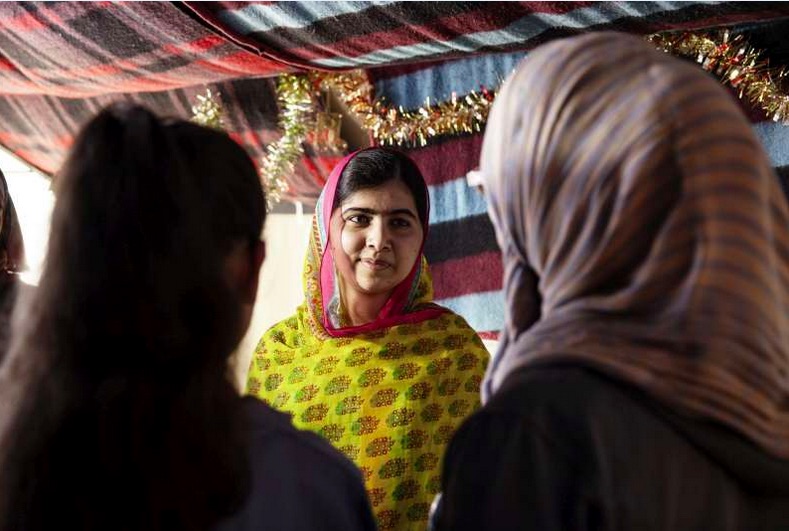
Human Rights Activist and Nobel Laureate Malala Yousafzai has marked her 18th birthday with a renewed commitment to refugees and education by inaugurating a school for more than 200 Syrian girls living in refugee camps in Lebanon’s Bekaa Valley.

Malala
Education activist and Nobel Peace Prize Laureate Malala Yousafzai celebrates her 18th birthday in Lebanon with Syrian refugees. Malala opened a new school in the Bekaa Valley funded by the Malala Fund, the non-profit she co-founded with her father Ziauddin.
©HUMAN for the Malala Fund/M. Fezehai

Opening The Malala Yousafzai All-Girls School on Sunday (July 12), she said: “I am honoured to mark my 18th birthday with the brave and inspiring girls of Syria. I am here on behalf of the 28 million children who are kept from the classroom because of armed conflict. Their courage and dedication to continue their schooling in difficult conditions inspires people around the world and it is our duty to stand by them.”

The UN High Commissioner for Refugees António Guterres welcomed the initiative.
“We are really heartened by Malala’s ardent support for the education of refugee girls whose aspirations have already been so cruelly cut short by war. These children are the future of Syria; we must not jeopardise that by denying them the basic right to education while they are in exile,” he said.

Malala, who was awarded the Nobel Peace Prize in 2014, was attacked in her native Pakistan in 2012 because of her campaign for girls’ rights and education. The new school will offer education and skills training to girl refugees aged 14 to 18.

“Whenever I ask a Syrian refugee child what they would most like to do, the overwhelming response is ‘I want to go to school.’,” Guterres added. “In Malala, we could not have a better advocate for refugee education and are very grateful for her solidarity and support.”

Yousafzai added that she believed world leaders were failing Syria’s children.

“On this day, I have a message for the leaders of this country, this region and the world: ‘you are failing the Syrian people, especially Syria’s children’. This is a heart-breaking tragedy — the world’s worst refugee crisis in decades.”

Lebanon is hosting nearly 1.2 million registered Syrian refugees, though the total number in the country may be even higher.

The influx has placed strains on Lebanon, which has just four million citizens.

UNHCR itself has been awarded the Nobel Peace Prize on two occasions, the last time in 1981.

(Thank you to Janet Hudgins, the CPNN reporter for this article.)

Question for this article:

Bolivia: Mediators are formed in culture of peace

EDUCATION FOR PEACE .

An article by Henry A. Aira Gutiérrez, Correo del Sur (translation by CPNN)

Culture of peace and conflict resolution are new phrases that Bolivians can use to avoid going to court. With the implementation of the new moral codes as of August 6, it is also the expression of the mediators, whose job is to reduce the caseload in the courts for civil and commercial matters. After selection by the Judicial Council, the mediators train for a period of 20 days.

Bolivia
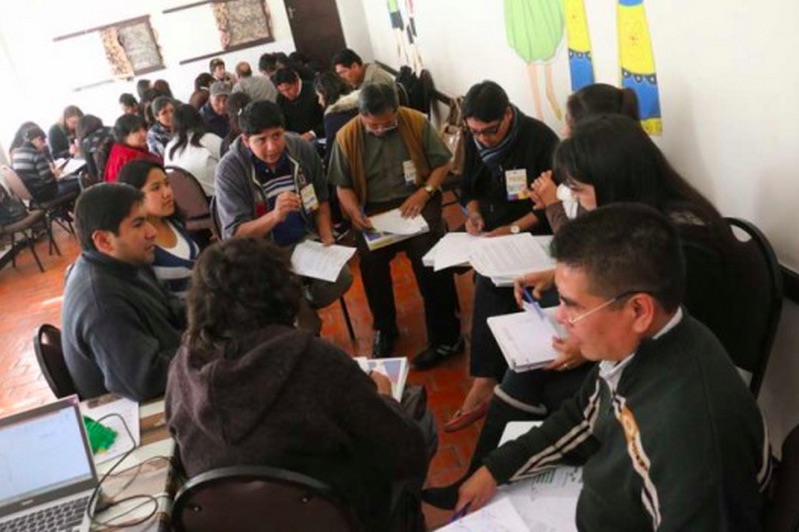
Courses in which mediators learn how to solve conflicts.

In four classrooms at Casa Tréveris, over 150 mediators receive theoretical training and practice in the functions that will serve beginning next month.

“The intensive course is organized into four modules: the first related to justice and human rights, the second dedicated to the culture of peace, conflict theory as a basis for negotiation and conciliation; the third communication and conciliation; and the fourth refers to the process of reconciliation taking into account the principles, models and phases of the facilitative model,” according to Antonio Aramayo, executive director of the UNIR Foundation, the institution in charge of the mediation training.

The new officers are trained in the instruments that will need to apply when they are to reconcile conflicts when the new Codes Morales take effect in August.

The Judiciary Act indicates that the mediation is “the means of conflict resolution and immediate direct access to justice as well as the first procedural action”. In other words, the judicial mediation aims not only to expand access to justice but to introduce the culture of peace and peaceful methods of settling conflicts to shared solutions.

“The culture of peace is a breakthrough in the country and now we are implementing the new codes in practice for the resolution of disputes through conciliation. This is good, creating a culture of peace and a country not of confrontation, but of rapid resolution of conflicts,” said Patricia Yufra, from the mediation district of Quillacollo (Cochabamba).

“We are learning how to reconcile, to look beyond the law, to analyze problems so that they (people in conflict) can resolve their conflicts and disputes peacefully and maintain their human relationships,” said Erick Suarez, Santa Cruz conciliator.

These two professional lawyers are, like many others, being trained and expected to return to their districts on August 7 to start their work.

(click here for the French version) of this article or here for the Spanish version

Question for this article:

Book review: Culture of Peace, A Utopia that is Possible

EDUCATION FOR PEACE .

A book review by Ericka Montaño Garfias in La Jornada (translated by CPNN)

Although violence has become a household word and the word peace is only an isolated reference in the media, since war is an invention of the human being, then we are capable of inventing a culture of peace. This is proposed by the American essayist David Adams in his book Culture of Peace: a Utopia that is Possible, published in Spanish by the Herder publishing house.

review
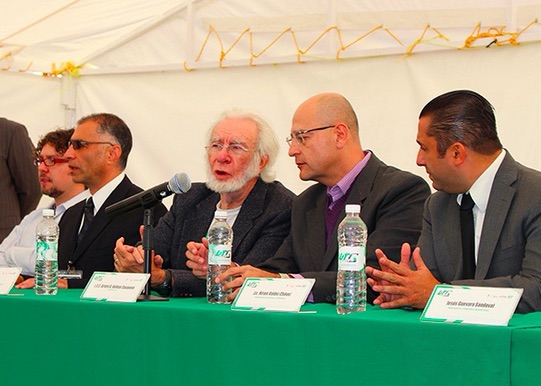
From left to right: Roberto Mercadillo, Institute of Neurobiology, Universidad Nacional Autonoma de Mexico, editor and translator of the book; Norman Bardavid, Director of Culture and Arts of Comnapaz Mexico; David Adams, author of the book; Arturo Vallejo Casanova, Rector of the Technological University of Corregidora; and Hiram Valdez, President of the National Peace Commission of Comnapaz Mexico

Culture of Peace: a possible utopia brings together three books into a single volume: The History of the Culture of War, World Peace through the Town hall: A Strategy for the Global Movement for a Culture of Peace; and I Have Seen the Promised Land: A Utopian Novella.

(Review continued in right column)

( Click here for the original version in Spanish.)

Question for this article:

What are the most important books about the culture of peace?

(Review continued from left column)

Adams, also a neurobiologist, is coordinator of Culture of Peace News Network (cpnn-world.org) and he participated in several programs and declarations of the United Nations Educational, Scientific and Cultural Organization (Unesco) in favor of peace such as the Declaration and Programme of Action on a Culture of Peace as well as the International Year for the Culture of Peace that resulted in the 2000 Manifesto with 75 million signatories worldwide promising to promote a culture of peace in everyday life.

David Adams’s approach is that if humans invented war and violence, then humans are able to invent and build peace.

According to the editor and translator, Roberto Emmanuele Mercadillo: “This work pursues a simple and basic idea: if war and violence are a creation, a cerebral and cultural construction, man can also invent and build peace in a rational and intentional way, even if it is necessary to internalize the concept of ‘other’ based on equality. The adage ‘I am the other’ should be the goal of family, school and institutional teaching to enhance the human right to peace, proposed by Unesco in 1997.”

Going beyond the responsibility of each individual, Adams also analyzes the role of civil society in creating and practicing a culture of peace through movements for peace and disarmament, ecology, human rights, democracy, women’s equality, and the free flow of information, in addition to raising the role of local governments.

Although the novel tells of a utopia, Adams is not a dreamer, or at least not entirely: he knows that the culture of peace should be understood as a process, in the original sense of the word culture. We will not just wake up one morning and discover that we have constructed a culture of peace.

(Editor’s note: The book is available from Herder in Mexico, from Herder in Spain and from Amazon in Spain.)

Colombia: Teaching peace

EDUCATION FOR PEACE .

Un blog de Ernesto Amézquita en Cronica del Quindio (translated by CPNN)

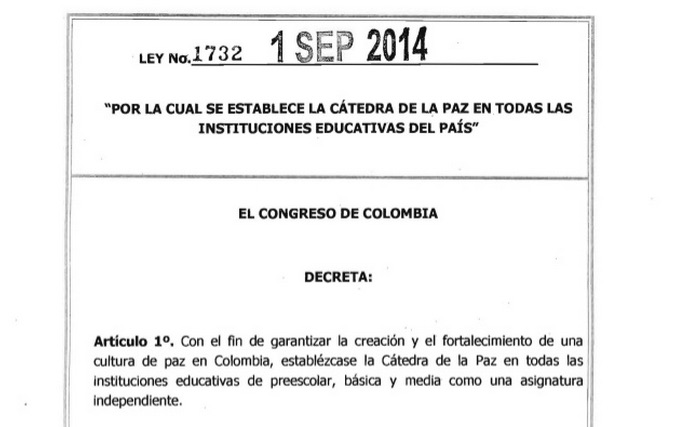
According to law 1732, adopted in 2014, the national government has issued the decree “by which the teaching of Peace is regulated in all educational institutions of the country”.

colombia
Click on photo to enlarge

It is foreseen in article number 2 that “to meet the constitutional mandate enshrined in the articles 22 and 41 of the Constitution, the teaching of Peace is compulsory.” It is so decreed that “the teaching will aim to create and consolidate a space for learning, reflection and dialogue on culture of peace and sustainable development which should contribute to the general welfare and improve the quality of life of the population.”

Historically it has been shown that it is much more productive, civilized and proactive to invest in peace instead of the criminal business of arms dealers, mercenaries and beneficiaries of war.

For Colombia, more than 60 years of violence, about 300,000 dead, millions displaced, thousands missing, wounded and false positives, massacres, millions of orphans; should be more than enough to say enough to the ignorance of death, the peace of the grave and yes to life, to peaceful coexistence, the rule of justice, concord and respect for difference.

As such, these new standards are a good contribution to teaching in the school, family, college; accompanied by administrative bodies, judicial, ecclesiastical, military, police, social, business, etc., to begin to fully implement the rejection of the warmongering, bullying, and all violent, aggressive or armed way of solving problems. Today we have alternative means, justice, both formal and informal, as specific mechanisms for he solution of conflicts.

The central of this law are the culture of peace and sustainable development to be implemented in the academic syllabus that must be incorporated before December 31, 2015, in the areas of social sciences, history, geography, politics and democracy constitution, life sciences, environmental education, ethics, human values ​​and principles.

It is clear that the teachers responsible for this initiative must be qualified, skilled and experienced in those academic areas, because otherwise the effort would be counterproductive. We don’t ask Satan to teach the Bible.

So, we must ask: When will the schools of Quindio and the rest of the country, both public and private, begin to incorporate into their academic programs, this officially mandated teaching? When will we Colombians begin to disarm our own spirits, and when will the communication media become truly objective, truthful and impartial?

With this in mind, let us welcome the teaching of peace, principles and values ​​that we have missed in these 60 years of war and fratricidal violence between brother and brother.

(click here for the original Spanish version of this article)

Other articles related to this one:

USA: Response to the Massacre in Charleston; Grieve, But then Teach and Organize Nonviolence

EDUCATION FOR PEACE .

An article by the Reverend John Dear in the Huffington Post (abridged and reprinted according to fair use)

Like millions of others, I’m grieving the death of the nine church folk killed in the unthinkable massacre inside Charleston’s Emanuel AME Church on Wednesday night. My heart goes out to the families and friends of the dead, and the church members, and I offer all my condolences, prayers, blessings and love. . .

John Dear
Click on photo to enlarge

Of course, this was a hate crime, an act of violent racism and domestic terrorism. Press reports claim that the insane young man who shot the church goers had just been given a gun by his father for his 21st birthday. No doubt he was a sociopath, an advocate of hatred and racism, a white supremacist, the normal product of our culture of guns, hatred, racism, violence and war.

Like millions of others, I feel swept up in grief. Where does one start? The police killings of African Americans such as Amadou Diallo, Oscar Grant, Trayvon Martin, Sean Bell, Eric Garner, Michael Brown, Tamir Rice, and Walter Scott (of South Carolina, in April)—these are just the well known names. Thousands have been killed. And the big massacres such as Virginia Tech college students, the Sandy Hook elementary school children, the Boston marathon runners and bystanders, and the Aurora, Colorado movie goers. One could go on.

But my grief mingles with the grief of the world, the quiet death of millions of children from extreme poverty and unnecessary disease, and the deliberate killing of children by the U.S. war machine.

Not too long ago, I spent days listening to teenagers in Kabul, Afghanistan, cry as they told me in detail how their loved ones were blown up by U.S. drones which dropped bombs upon them. I remember visiting the Catholic high school for girls in Baghdad and being surrounded by hundreds of girls who cried as they denounced the U.S. bombings and war. I recall the hundreds of people I met in the 1980s in Nicaragua, El Salvador and Guatemala who wept as they told me about the killing of their loved ones by U.S. backed death squads. I have witnessed the tears of grief brought on by the forces of death as well in India, South Africa, Egypt, Palestine, Colombia, Northern Ireland, and the Philippines.

For me, like all my activist friends, it is a lifetime of grief in solidarity with sisters and brothers around the world whose loved ones died by the systemic forces of greed, war, violence and death.

That’s why I see beyond the sickness of hatred, racism and sexism toward something deeper—an addiction to violence–to death itself–that inflicts nearly every living human being to some degree, an addiction which fuels the unjust national and global systems which bring death to so many poor people. It’s like everyone, especially us North Americans, is addicted to crack cocaine, yet we don’t know it, much less try to become sober. We’re all full of violence, and we go forward, not knowing what to do. So we maintain a culture of violence, torture, war and nuclear weapons as if that’s a perfect reasonable way to maintain a society. It’s as if we’re all living in a zombie movie.

(Article continued in the right column)

Question for this article:

Can peace be guaranteed through nonviolent means?

Are we making progress against racism?

(Article continued from the left column)

Consider the hundreds of devout Christians who attend prayer services, bible studies and Catholic masses at the Pentagon, and then go about the big business of mass murder. Or the thousands of devout Christians who attend church each Sunday in Los Alamos, New Mexico, and then spend the rest of the week devoutly building nuclear weapons. Think of the Jesuits of Baltimore who hold an annual Mass for War, who process their one hundred ROTC graduates up the main aisle at graduation mass to profess their Army Oath to Kill to the Blessed Sacrament, just as the Nazis did long ago. . .

We are all addicted to violence in one form or another. We have all surrendered to sociopathic killing in one form or another. We have refused the wisdom, the divine call, the spiritual heights of universal, loving nonviolence. But that is the only option ahead of us.

The real challenge before us, I submit, was laid down long ago by our national teacher, Rev. Martin Luther King, Jr. He invites each one of us to undergo the journey he went through toward active nonviolence. We have to renounce the ancient stupidity of “an eye for an eye thinking” (which Jesus outlawed when he commanded in the Sermon on the Mount, “But I say, offer no violent resistance to one who does evil”) and take up where Gandhi left off in his pursuit of truth and nonviolence. . .

In August, I’ll be hosting a national conference on nonviolence at the Hilton Hotel in Santa Fe, New Mexico. It’s sold out, but we will broadcast the entire historic two day event live on line for free, and I hope tens of thousands will watch it live (you can see it at: www.campaignnonviolence.org). We will have some of the nation’s greatest visionaries of nonviolence there, beginning with Dr. King’s friend Rev. James Lawson, whom King called the world’s greatest theoretician of nonviolence.

We will also broadcast live on line our peace vigils in Los Alamos, New Mexico, marking the 70th anniversary of the U.S. atomic bombing of Hiroshima and Nagasaki, on August 6th and 9th. (See: www.campaignnonviolence.org for details).

More, we are calling for a week of nonviolent action across the United States, from September 20th to 28th, as we mark International Peace Day, Sept. 21st. Last year, Campaign Nonviolence organized over 250 demonstrations against war, poverty, nuclear weapons and environmental destruction, and for Dr. King’s vision of a new culture of peace and nonviolence, in all fifty states. We hope to double that number this September, and we need more people to step up to the plate and get involved. That means, organizing a march, a rally, a prayer service or a lobby effort in your local community. If you are looking for some way to get involved, consider yourself invited. Here’s a concrete step you can take, in solidarity with thousands of others across the nation. As we take to the streets together, we will know that we are not alone. . .

Mother Jones was right. Don’t just mourn. Organize!

See you in the street!

Senegal’s First Female Graffiti Artist Is Leaving a Fearless Mark

EDUCATION FOR PEACE .

Ricci Shryock for Takepart

Dieynaba Sidibe is challenging views on women’s roles and calling for equality, one spray-paint can at a time.

Growing up in Senegal’s capital of Dakar, Dieynaba Sidibe loved painting and often used her pocket money to buy art supplies. One day, she came home to find that her mother had thrown out all of her paints. Women shouldn’t be painting, her mother believed, and she encouraged her daughter to be a doctor instead.


senegal

“It was war,” recalls Sidibe of the hard-fought years when she went against her parents’ wishes to follow her passion. “Society has created a place for women, and when you try and go outside of that, there’s a problem.

Despite the pushback, she continued painting and, after turning 18, moved on to graffiti through an interest in hip-hop culture and slam poetry. “I found I could express myself better on a wall as there was more space than a canvas.”

At 24, Sidibe is now considered Senegal’s first female graffiti artist.

She learned the craft thanks to fellow members of a hip-hop community at the Africulturban Center outside Dakar. “It was a little surprising because she was a woman,” says the center’s president, Matador, né Babacar Niang. “It was new for me because after 20 years, the only women we had here were interested in rap, and she was interested in graffiti as well.”

Matador encouraged her interest and saw her desire to break barriers as a positive shift. “I thought that she could bring something new to hip-hop culture because people thought only men were doing graffiti,” he says. “With graffiti she can show the role of women in society. If it’s coming from a woman, it’s even stronger.”

Graffiti art is frequently employed in West Africa as a tool for social change. Sidibe, who goes by the artist name Zienixx, uses it to promote women’s rights, including equal pay and educational access.

Through her work, she wants people to confront inequality in society and recognize the strength of women. “All women, everywhere—whether they are fishmongers, graffiti artists, or office workers—we are all fighters,” she says. “Women are fighting to be free to do what they want, to do work that pleases them, to be paid equally to men, and to follow their passion.”

Matador agrees: “There are so many families in Senegal whose mothers keep them together. These women wake up at four in the morning to go to the market and sell fish, and with the money they make they buy food and make a meal. The young men are asleep that whole time, so they wake up and find food, [and] they have no idea what their mothers went through to get that meal on the table.”

While Sidibe’s family now supports her graffiti art, she’s reflective of the fight it takes for women to exert their independence and abilities.

(Thank you to Janet Hudgins, the CPNN reporter for this article.)

Latest Discussion

World Education Forum adopts Declaration on the Future of Education

EDUCATION FOR PEACE .

An article from the UNESCO Media Services

A transformative vision for education over the next 15 years has been adopted at the World Education Forum, which concluded today [21 May] in Incheon, Republic of Korea. The Incheon Declaration was welcomed by the global education community, including government ministers from more than 100 countries, non-governmental organizations and youth groups. It encourages countries to provide inclusive, equitable, quality education and life-long learning opportunities for all. The Declaration will underpin the education targets in the Sustainable Development Goals that will be ratified at the United Nations in September.

education

“This Declaration is a huge step forward,” stated the Director-General of UNESCO, Irina Bokova. “It reflects our determination to ensure that all children and young people gain the knowledge and skills they need to live in dignity, to reach their potential and contribute to their societies as responsible global citizens. It encourages governments to provide learning opportunities through life, so that people can continue to grow and develop. It affirms that education is the key to global peace and sustainable development.”

The Incheon Declaration builds on the global Education for All (EFA) movement that was initiated in Jomtien, Thailand in 1990 and reiterated in Dakar, Senegal in 2000. EFA – and the Millennium Development Goal on Education – resulted in significant progress, but many of its targets, including universal access to primary education, remain unfulfilled. Currently, 58 million children remain out of school – most of them girls. In addition 250 million children are not learning basic skills, even though half of them have spent at least four years in school. The Incheon Declaration must finish the ambitious EFA and MDG agendas.

“If this generation of children is to someday reduce the inequalities and injustices that afflict the world today, we must give all our children a fair chance to learn. This must be our collective vision and commitment,” said UNICEF Executive Director, Anthony Lake.

The Incheon Declaration will be implemented through the Education 2030 Framework for Action, a roadmap for governments to be adopted by the end of the year. It will provide guidance on effective legal and policy frameworks for education, based on the principles of accountability, transparency and participatory governance. Effective implementation will require strong regional coordination and rigorous monitoring and evaluation of the education agenda. It will also require more funding, especially for the countries furthest from providing inclusive, quality education. The Declaration and Framework will urge countries to set nationally appropriate spending targets and increase Official Development Assistance to low income countries.

(This article is continued in the column on the right.)

(click here for the French version of this article or here for the Spanish version)

Question for this article:

What is the relation between peace and education?

(Article continued from left column)

Speakers at the closing ceremony included Susan Hopgood, President of Education International, Kishore Singh, Special Rapporteur on the Right to Education, Mohamed Sameh Amr, Chair of UNESCO’s Executive Board, Georg Kell, Executive Director of the UN Global Compact, António Guterres, High Commissioner of UNHCR (via video), Geeta Rao Gupta, UNICEF’s Deputy Executive Director, Keith Hansen, Global Practices Vice President of the World Bank Group, Michaëlle Jean, Secretary-General of La Francophonie, Hwang Woo Yeo, Deputy Prime Minister of the Republic of Korea and Irina Bokova, Director-General of UNESCO.

“We all agree that every student has the right to quality, free, public education,” said Susan Hopgood, the President of Education International – an organization representing more than 30 million teachers and education workers around the world. “However, in order to realize any education goals, students in every classroom must be guaranteed a well-trained, professionally-qualified, motivated and supported teacher. Providing quality education for all will require changes to education systems. To implement the Education 2030 Framework for Action and improve the quality of education, it is fundamental that our education systems are transformed into ones that foster an open and collaborative culture.”

Education is essential to achieving all of the new Sustainable Development Goals. It is necessary to eradicate poverty, boost shared prosperity and broad-based economic growth, and build peaceful, tolerant societies. Today’s Declaration demonstrates the common commitment to deliver this vision. It shows how education can transform lives.

(Thank you to Janet Hudgins, the CPNN reporter for this article.)

Nonviolent Peaceforce in Ukraine

EDUCATION FOR PEACE .

An article by Nonviolent Peace Force

After multiple exploration missions that included several rounds of consultations with Ukrainian organizations, various stakeholders, and conflict-affected communities, Nonviolent Peaceforce (NP) was invited to Ukraine to introduce Unarmed Civilian Protection (UCP) methodologies to local civil society actors and their communities. In March, NP carried out a series of trainings on UCP for Ukrainian stakeholders in the ongoing conflict. Conducted alongside the Association for Middle Eastern Studies, this was the first time UCP principles had been introduced to Ukraine.

ukraine

In March of 2015,with generous support from the Human Rights Fund of the Embassy of the Kingdom of the Netherlands in Ukraine, NP and AMES were able to introduce UCP to civil society in Ukraine for the first time, conducting a series of trainings for 40 participants. Trainings were held in two locations, Odessa and Kharkiv,with participants representingUkrainian civil society organizations, civilians in conflict-affected communities(as well border regions that have potential for escalation of violence or intercommunity tensions),IDP communities and local authorities.

The trainings covered a wide array of civilian protection and violence reduction topics, with a strong emphasis on rumor control and guiding participants in developing local rumor control monitoring mechanisms.The trainings also covered the principles of UCP, conflict mapping, early warning and response systems, and different understandings of civilian protection. Stressing nonviolence, non-partisanship and the primacy of local actors, the trainings were designed to prepare participants to better protect themselves and those around them, to be able to de-escalate tensions, and to prevent further violence in their communities against civilians.

Participants in the trainings expressed that regardless of their background, work/life experience or age, all of them are ready to learn and work for peace because it is the job of every citizen to build a peaceful society where conflict can be managed by dialogue and mutual respect.

One participant best summed up the proactive and committed spirit of the groups, stating that “I am ready to step in to the shoes of each person involved in this conflict, find their needs and work with them with the hope that we can stop the suffering of the people living in the conflict zones or hundreds of people who lost their homes and became IDPs.”

The trainings had many positive outcomes, including locally designed protection tools that will be used in the coming months.These were the result of participants preparing local civilian protection risk analyses and conceptualizing the means for locally appropriate interventions and responses for their respective communities.

Importantly, participants also identified that a countrywide community-based protection mechanism could be an extremely effective tool for a unified civil society response to the protection needs of civilians in conflict-affected communities. This mechanism could then adapt to the needs of each community as well as the challenges and capacities of local civil society organizations.

NP and its partners are currently developing various interventions to support this new initiative and exploring more concrete partnership opportunities for this protection mechanism with international actors and the donor community.
The trainings were led by Atif Hameed (Director of Programs) and assisted by Salome Bakashvili (Program Manager) and other NP and AMES staff.

(Thank you to Janet Hudgins, the CPNN reporter for this article.)

Question for this article:

Can peace be guaranteed through nonviolent means?

We have the advantage of an independent evaluation of the Nonviolent Peaceforce initiative in the Philippines conducted by Swisspeace. The evaluation is very favorable, although in the end, as one reads through it, gets the impression that such initiatives can help but cannot bring peace by themselves.

Here is the executive summary:

Nonviolent Peaceforce in the Philippines can look back at more than two years of unique, relevant contributions and constructive engagement in one of the most difficult, political and volatile, contexts to work in: Being the only international non-governmental organization working with and living in close proximity to the most conflict-affected population in Mindanao, NP in the Philippines was able to support and enhance local structures of cease-fire monitoring, early warning, cross-community dialogues, human rights protection, to offer civilian protection and help to reduce the high levels of community violence.

The accepted offer to NP in the Philippines in late 2009 by the conflict parties GRP and the MILF to join the International Monitoring Team1 (IMT) and its Civilian Protection Component is a direct expression and result of its successful contributions to non-violence and violence reduction of the last two years.

To keep up the important work of NP’s project in the Philippines in the years to come, it is essential to ensure that the activities and objectives of NPP are based on a strategically and conceptually sound footing. This seems even more important given that NPP is going through a remarkable consolidation and expansion phase at the time of report-writing.

The re-focus on its key mandate, strengths and strategic advantages in Mindanao gives NP the opportunity to further enhance its unique work in the area of nonviolence, peacekeeping and peace building.

Education awards go to Iraqi and Filipino leaders

EDUCATION FOR PEACE .

An article by Education International

Education International has named two teacher union leaders from Iraq and the Philippines to be awarded human rights and education prizes for their outstanding commitment, engagement and courage in promoting education for all.

educationinternational

Ms Luisa Bautista-Yu, from the Philippines, and Ahmed Jassam SalihAl-shiblawi, from Iraq, have been selected by Education International (EI)’s Executive Board to receive the Albert Shanker Education Award and the Mary Hatwood Futrell Human and Trade Union Rights Award, respectively. These two international solidarity prizes are given out every four years during EI’s Congress, and have become one of its biggest highlights.

Ms. Bautista-Yu has had a successful career marked by her engagement for the development of education in the Philippines. She has been involved in the education sector for decades, starting as a primary teacher and attaining the position of regional coordinator of Eastern Vinyasas, which she currently holds. Her engagement and courage were decisive during the recovery mission after Typhoon Haiyan hit the Philippines in 2013, devastating infrastructures and leaving thousands of children out of school.

Mr. SalihAl-shiblawi Ahmed Jassim Salih, National President of the technical sector of the Iraqi Teachers Union (ITU), has shown immense courage and determination in the promotion of human and trade union rights in his country. Despite constant threats and attacks on himself, his family and co-workers, he continues to lead the union with skill, expertise and bravery.

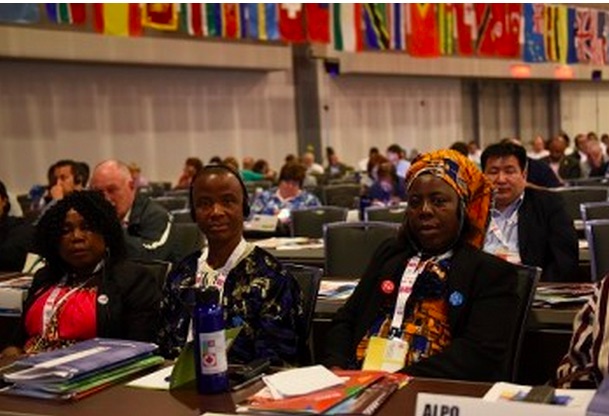
The awards will be presented at EI’s 7th World Congress this July in Ottawa, Canada. 

(Thank you to Janet Hudgins, the CPNN reporter for this article.)

(click here for the French version) of this article or here for the Spanish version

Question for this article:

What is the relation between peace and education?

Letter from Mohatma Gandhi to Maria Montessori

To Madame Montessori

Even as you, out of your love for children, are endeavoring to teach children, through your numerous institution, the best that can be brought out of them, even so, I hope that it will be possible not only for the children of the wealthy and the well-to-do, but for the children of paupers to receive training of this nature. You have very truly remarked that if we are to reach real peace in this world and if we are to carry on a real war against war, we shall have to begin with children and if they will grow up in their natural innocence, we won’t have the struggle, we won’t have to pass fruitless idle resolutions, but we shall go from love to love and peace to peace, until at last all the corners of the world are covered with that peace and love for which, consciously or unconsciously, the whole world is hungering.