FREE FLOW OF INFORMATION .
A survey by CPNN
The following 147 actions in 7 countries formerly part of the Soviet Union were listed in Google during the weeks of September 17-28 this year under the key words “Международный день мира”and “Міжнародний день миру”, as well as “International day of peace”. These include 53 events from Ukraine, 48 from the Russian Federation and 8 from regions disputed between Ukraine and Russia.
In addition to these, 16 events are listed on the maps of One Day One Choir and Montessori schools singing for peace, but with one exception below that is new this year, there is no indication which took place this year and which took place only in previous years.
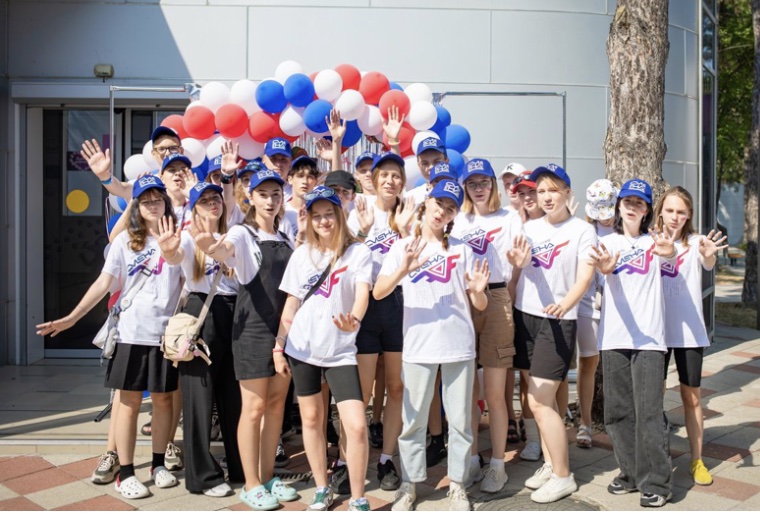
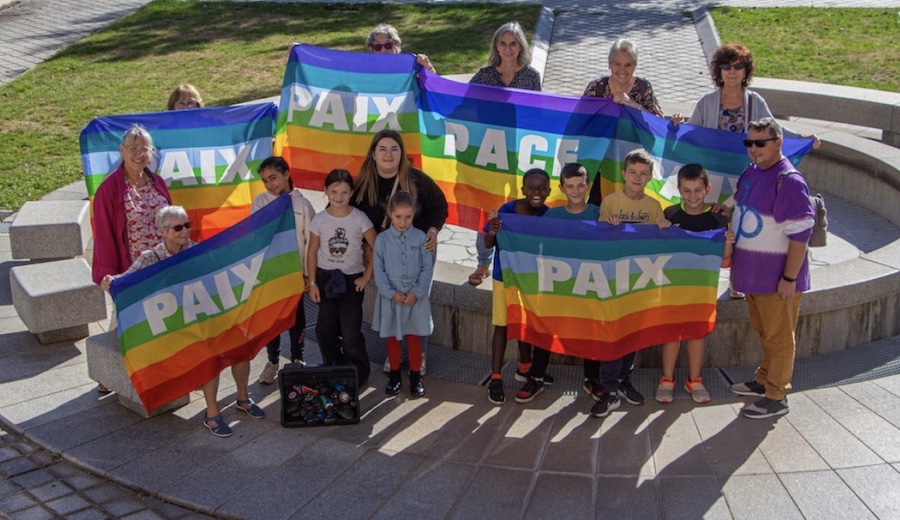
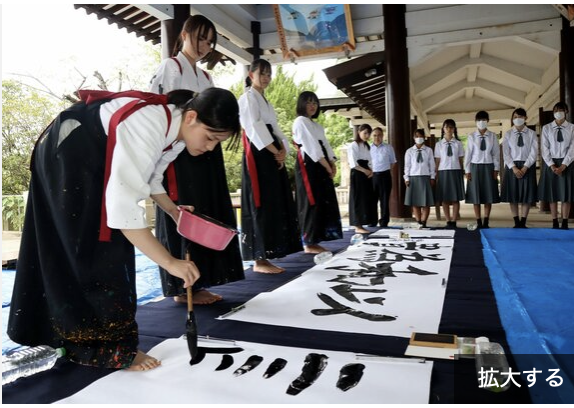
photo from Smenovtsky, Russia
Here are excerpts from the articles, translated into English.
BAKU: Employees of the Azerbaijan National Library named after M.F. Akhundzade have prepared a virtual exhibition “International Day of Peace”. According to AZERTAC , the virtual exhibition presents photographs, articles and books on the topic. Those wishing to view the virtual exhibition can use the link .
BARANAVICHY: On September 21, the world celebrates International Day of Peace . On this day, college students learned all about the history of this holiday and held the “Dove of Peace” event, where each participant could write wishes for friendship and peace on paper doves. The participants of the action collected a symbolic globe on which only peace and goodness live. (with many photos)
BOBRUISK: As part of the Peace Day, children born on September 21: Mikholap Alina, Tsyplakova Maria and Shishko Bogdan were presented with gifts from the Leninsky district organization of the city of Bobruisk of the public association “Belarusian Peace Foundation” and the Bobruisk city committee of the NGO “Belarusian Republican Youth Union”. The following performed at the festive lineup: the dance studio “Dance Laboratory”, Daria Bugaeva, Valeria Zayats and Yana Khamdamova – young specialists of our Center. The event ended with a friendly vote of all participants: “We are for peace and goodness on our Earth!” (with many photos)
BREST: On September 21, 2023, Polesie State University took part in the International Round Table “Gagarin, Space, Earth” , dedicated to the International Day of Peace. The organizer of the round table was the Volga Region Institute of Management named after P.A. Stolypin – branch of the Russian Academy of National Economy and Public Administration (Saratov, Russian Federation). The main speaker on the topic “Gagarin – Ambassador of Peace” was the head of the Saratov regional branch of the All-Russian public organization of solidarity and friendship with the Republic of Cuba “Russian Society for Friendship with Cuba”, head of the scientific and organizational department of the Institute, Ph.D. Oleg Yurievich Abakumov. (with many photos)
BYKHOV: On the occasion of Peace Day, the library of the Bykhov-1 microdistrict held an information hour “Peace in this world depends on us!” During the event, the children were told the history of this holiday, how it is celebrated in different countries of the world, about the symbol of peace – the image of a dove holding an olive branch in its beak, conflicts in the world today and much more. The children also became acquainted with the legend of the Japanese crane, which is associated with a little girl from Japan – Sadako Sasaki. At the end of the event, paper cranes and leaflets with the symbol of peace – a dove – were distributed to all those present as souvenirs. (with photos)
GOMEL CINEMA: As part of the events dedicated to the International Day of Peace, the “Doves of Peace” event was held at the “Mir” cinema for students of educational institutions in the Novobelitsky district. (with photos)
GOMEL FOUNDRY: On the International Day of Peace on September 21, activists of the factory “primary organization” of the Belarusian Republican Youth Union of the Gomel Foundry “CENTROLIT” prepared memorial cards for the organization’s employees with wishes of peace and goodness. (with photos)
GOMEL SCHOOL 27: Today is International Day of Peace. In Belarus, a Week of Peace and Creation was organized on this occasion. In the Gomel region, all schools in the world and peacekeeping units joined the marathon. In particular, school No. 27 of the regional center has been holding events, assemblies and flash mobs on the theme of mutual understanding, kindness and friendship between peoples since Monday. And the windows of the educational institution are decorated with children’s drawings. The Peace School organized an open week at the local museum: it talks about the activities of peacekeeping units and diplomatic relations with schools in other countries. Teachers and students from all over the region can visit the exhibition by agreement; excursions are held regularly. This week there is also a competition of poems and essays, a master class on making a dove, radio broadcasts, propaganda teams for first-graders, and lotteries. (with photos)
GOMEL KINDERGARTEN 18: An event dedicated to the International Day of Peace was held in our preschool institution State Educational Institution “Kindergarten No. 18 of Gomel”. . . The students learned where this holiday came from and became acquainted with the symbols of the holiday. The teachers had conversations about what peace on Earth means and how important it is maintain peace, what can each of us do for the sake of Peace and from childhood we must learn to live together, understand each other and take care of the fragile peace. The practical activity turned out to be no less interesting – the children made an appliqué of a dove (a symbol of peace), and it turned out great for them. (with photos)
GORKI: “The circle of the sun, the sky all around.” How students of Gorki Gymnasium No. 1 celebrated the International Day of Peace The event dedicated to the International Day of Peace was held with the participation of Kimmel Olga Andreevna, Chairman of the Goretsk district organization of the NGO “Belarusian Peace Foundation” (with many photos)
ILYICH VILLAGE: On September 21, at the parade ground of the Lyceum of the Ministry of Emergency Situations, a lyceum-wide ceremony was held, dedicated to the International Day of Peace and timed to coincide with the Year of Peace and Creation. The main theme of the event is “Action for Peace. . . . the floor was given to the guest of honor – the First Secretary of the Embassy of the Russian Federation in the Republic of Belarus, the head of the Russian House in Gomel, Natalya Aleksandrovna AVRALEVA, who congratulated everyone on the International Day of Peace and expressed her best wishes to the participants . . . The solemn ceremony ended with the final words of the head of the Lyceum of the Ministry of Emergency Situations, Alexei Dashkevich. Alexey Georgievich congratulated everyone on the International Day of Peace and announced that teachers would conduct Peace Lessons. According to tradition, the ceremony was completed by the passage of personnel in a solemn march. (with many photos)
IVATSEVICHY: The ceremonial assembly dedicated to the International Day of Peace was held at the lyceum of the Ivatsevichi District. Guests of honor Svetlana Pototskaya, head of the education department of the Ivatsevichi district executive committee, Denis Pokalyuk, chairman of the Ivatsevichi branch of the Belarusian Party “White Russia”, Yana Shelest, assistant prosecutor of the Ivatsevichi district, Alexander Velikoselets, chairman of the Ivatsevichi district organization of the Belarusian Peace Fund, together with Lyceum students took part in the opening of the exhibition hall “Genocide. No statute of limitations.” (with photo)
KLIMOVICHI: Peace in the eyes of children: an action and open dialogue on the International Day of Peace was held in Klimovichi. On this day, employees of the children’s reader services department of the central district library, together with the children’s art school, held the “The World Begins with You” campaign for young readers. In the city park, the event participants were told the history of the holiday and how it is celebrated in different countries of the world. The children learned that the symbol of peace is a dove carrying an olive branch in its beak, and its author is the famous Spanish artist Pablo Picasso. Together with the children, librarians attached paper doves to the balloons. (with many photos)
LIDA: The International Day of Peace is celebrated annually on September 21. Today, thematic platforms were organized for Lida schoolchildren, where everyone could express themselves. A dance flash mob “For Peace and Kindness” took place at the Palace of Culture. With this event, students from educational institutions in the region wanted to show that they stand for maintaining peace in our country. Click here for the video
BELARUS STATE MEDICAL UNIVERSITY : Information hour “International Day of Peace”. September 25, Dormitory No. 5. SSO room, 20:00. Responsible= Educators, SSO
MINSK GYMNASIUM 29: Today, on the International Day of Peace, students of the gymnasium in a solemn atmosphere joined the ranks of young Peacemakers. The gala event dedicated to the International Day of Peace was attended by the guest of honor – Leonovich Vitaly Vyacheslavovich, member of the public council of the Republican public association “Patriots of Belarus”. (with many photos)
MINSK SCHOOL 21: On September 21, at secondary school No. 21, an action dedicated to the International Day of Peace was held. Teachers, students and their parents congratulated each other on the holiday, took photographs and extended paper palms of peace and friendship.
MINSK SCHOOL 155: The capital’s schoolchildren also did not stay away from Peace Day. A gathering of creative children took place on the territory of secondary school No. 155. All of them are participants and winners of the essay competition “Prygazhosts – geta klasna!”, which was initiated by the Minsk branch of the Belarusian Peace Foundation. The guests of honor of the gathering – writers, doctors, representatives of the city administration – awarded the authors of the best works. There was also a master class on making peace symbols and a drawing competition on asphalt. There was an open-air museum “What happened – let’s not forget!” (with many photos)
MOLODECHNO: A rally dedicated to the International Day of Peace was held in Molodechno. The “From Generation to Generation” rally at the memorial complex in Victory Park brought together peacemakers of different generations who are not indifferent to the fate of their country. Representatives of local authorities, public associations and Peace Schools, and city residents took part in it. Deputy Chairman of the Molodechno District Executive Committee Alesya Lukovskaya addressed those present with a welcoming speech . . . Chairman of the Board of the Minsk regional branch of the Belarusian Peace Foundation NGO Oleg Matusevich noted that the Molodechno organization is the best in the Minsk region both in the number of events held and in their scale. . . . Peacekeepers from this gymnasium went on a bike ride to the places of military glory of the Molodechno region. (with many photos)
MOŬČADŹ: On the International Day of Peace, the action “We are for peace!” was held at the sanatorium boarding school, the kids drew pictures on the theme “How good it is to live under a peaceful sky,” each student tried to make their own bird of peace and take part in the action. The high school students discussed the relevance of the value of peace and the peaceful policy of our state. (with photo)
OSHMYANY: At secondary school No. 3, they decided to celebrate Peace Day in a special way. In the assembly hall, students gathered a lesson on legal knowledge, which was conducted by the head of the legal consultation of the Oshmyany district Svetlana Olenskaya, the head of the civil registry office of the Oshmyany district executive committee Inna Podielskaya, and the notary of the Oshmyany notary office Tatyana Lavtsel. . . . Both the adult and the child were given a paper white dove – a symbol of peace, which was then attached to planet Earth. Throughout the day, the “planet” was gradually filled with snow-white doves, which could not but rejoice. (with photos)
ROADTRAIN: In the Year of Peace and Creation, the Ministry of Education and the Republican Youth Center will hold the second season of the republican project “Road train”. Registration will last until September 8. Passengers of the train can be young people from 18 to 31 years old who are active participants in district, regional, and republican events in the field of education, culture, sports, science, and professional activities. Do good deeds, take care of others and share goodness with the whole country! The start of the project will take place on September 15 in the city of Gomel. The completion is planned to take place on September 21, the International Day of Peace, in the capital of Belarus. The main feature of the project will be visits to nursing homes, orphanages, maternity hospitals, animal shelters, where train participants will organize cultural, leisure, sports programs and master classes, as well as provide assistance in the improvement of socially significant facilities. In order to become a participant in the “Road Train #BelarusYouthCreation” project, you need to register , in the “about yourself” column, tell about yourself, your achievements and your abilities. (with logo of Road Train)
SLAVGOROD LIBRARIES: Events dedicated to the International Day of Peace were held in the district’s libraries:
Central Library at Secondary School No. 1 – thematic exhibition
Rzhavsk Branch Library – peace lesson
City Library – Branch 1 – drawing competition
Novoslobodsk Branch Library – information hour
(with photos)
SLAVGOROD SCHOOL: This morning at the first city school began with an event dedicated to the International Day of Peace. Schoolchildren read poems about peace . . . They expressed their solidarity with all peaceful people of the globe by releasing balloons with figures of white doves into the sky. (with many photos)
SLAVGOROD YOUTH: The youth of the Slavgorod region took part in a motor rally in support of peace and “digitized” the “Blue Spring.” (with many photos)
SMORGON: September 21 is International Day of Peace. The ARZAMAS Gymnasium together with the Smorgon Gymnasium took part in the action “We draw the world on the asphalt!” Students painted a picture about peace and friendship in the schoolyard. We received a photo from Arzamas, in defense of the project, the guys from the Smorgon gymnasium made a video with an original song. The author of the text is teacher of Russian language and literature E.A. Panferova, the music was composed by students of grade 9 “B”. Click here for video
TROTINSK: Every year on September 21, the international community celebrates the International Day of Peace. This Day was declared by the UN General Assembly as a day to strengthen the ideals of peace among all countries and peoples. On the eve of this date, a conversation “The White Crane – Messenger of Peace” was held at the Trostinsk Rural Library for primary school students. . During the event, the children heard the history of this holiday, how it is celebrated in different countries of the world, about the symbol of peace – the image of a dove holding an olive branch in its beak, conflicts in the world today and much more. At the end, the librarian and the children held a master class on making a white crane using the origami technique. (with photos)
VITEBSK: September 21 is International Day of Peace! Today the college held an event dedicated to Peace Day, as well as the year of peace and creation. Students and teachers today came to college with doves – a symbol of peace. They also expressed their opinion about what the word “peace” means for each of them. (with many photos)
VOLOZHIN MUSEUM: On September 21, 2023, an information hour dedicated to the International Day of Peace was held in the museum for 4th grade students of secondary school No. 1 in Valozhin. This holiday was established by the UN to preserve world peace. The children learned about the history of the holiday, its goals, and symbols. In the final part of the event, students drew a dove with an olive branch – the most recognizable symbol of peace on planet Earth. (with many photos)
VOLOZHIN SCHOOL 1: On this day, the Peace lesson “Peace on Earth is a guarantee of the future!” with the participation of a serviceman of military unit 30695 Oleg Nikolaevich Belov. The guest of the event introduced high school students to the history of the holiday, how important this day is, which has been proclaimed as a day of non-violence and ceasefire throughout the world, taking into account the current military-political situation. . . . The school held thematic information hours, and an exhibition of drawings by primary school students “We Need Peace!” was created. The guys also attended an event at the Regional Museum of Local Lore. (with many photos)
ZHABINKA: Today, September 19, secondary school No. 2 of the city of Zhabinka was solemnly awarded the honorary status of “School of Peace”. It became the 27th school in the world and the second in the Brest region (last year Staroselskaya Secondary School received this status). The date September 19 was not chosen by chance. As noted by the chairman of the board of the Brest regional branch of the public association “Belarusian Peace Foundation” Lydia Romanyuk, in Belarus Peace Day is celebrated every third Tuesday of September, and International Peace Day is celebrated on September 21. (with many photos)
OPEN SCHOOL: In September we celebrate Family Day, Mother’s Day, Day of Languages of the People of Kazakhstan, International Day of Peace. Together with the UNESCO Associated Schools, we celebrated these dates in a special way – with an online festival of lullabies. The Open School magazine thanks Yulia Ilyinichna Kim, Executive Assistant to the National Coordinator of UNESCO Associated Schools in the Republic of Kazakhstan for supporting the idea and organizational assistance in implementing the project. Click here for video.
BISHKEK: The concentration of “Peace and Conflict Study” of the Faculty of “Liberal Arts and Sciences” announces that you have the opportunity to partake in the first-ever Yntymak Week, a global event taking place right here in Bishkek on the occasion of the Global Peace Day. . . . AS A STUDENT, you may contribute to Yntymak Week by participating in Essay and Photo Contests. All students currently enrolled in universities, colleges, or other higher educational and special secondary educational institutions in Kyrgyzstan, regardless of their citizenship, are eligible to take part in the Essay Contest
In your essay, you have to address and reflect on the following questions:
● What does “peace” mean for you as an individual and a citizen of your country?
● How can you and your community contribute to peace building at local and national
levels?
● What do you think are the key drivers of sustainable peace in the world?
Three best essays will be selected and published online on the Yntymak Week website.
The winners will be notified by September 19, 2023, and invited to the Award Ceremony on the Closing Day of the Yntymak Week. A finalist of the essay contest will have an opportunity to start paid internship at one of the member organizations of the Peacebuilding Hub.
KISHINEV: MilleniuM Training and Development Institute. Dear friends and families, We are extremely happy to share with you moments from a wonderful International Peace Day, where families from Ukraine and Moldova spent a wonderful time together, making our world a little brighter. Children played together and created a soulful atmosphere and beautiful memories, and the volunteer chefs prepared delicious dishes for everyone with great love. Through good actions like this, we promote peace, friendship, understanding and unity among our communities. We thank everyone who participated and contributed to this special day. With lots of love MilleniuM team, EduJoc and Centrul de Tineret Buiucani. (with photos and video)
NIZHNYAYA ALBOTA: International Day of Peace is celebrated on September 21. The holiday covers millions of people, many countries and regions, where various actions and events are held by public and youth organizations. On this occasion, the library of the village of Nizhnyaya Albota organized the competition “The World through the Eyes of a Child.” The competition is held among all library users aged 7 to 16 years. Participants must create original drawings in A4 format using colored pencils, gouache, felt-tip pens and other drawing tools. It is important that the works are signed by the author (name, surname and age) and are not plagiarized. Participants must submit their drawings by September 20th. The library believes that this competition will allow children and teenagers to express their vision of the world through art and emphasize the importance of preserving life without war and cooperation in modern society.
STATE PRISON: Sports events dedicated to the International Day of Peace were held among persons undergoing compulsory treatment for alcoholism in labor treatment centers of the State Penitentiary Service of the Ministry of Justice of the Pridnestrovian Moldavian Republic (PMR),. . . . Women undergoing treatment for chronic alcoholism at the women’s section of the treatment center of the UMPiSR State Penitentiary Service of the Ministry of Justice of the PMR took part in a darts competition. . . . A friendly volleyball match was held at the men’s section . . .
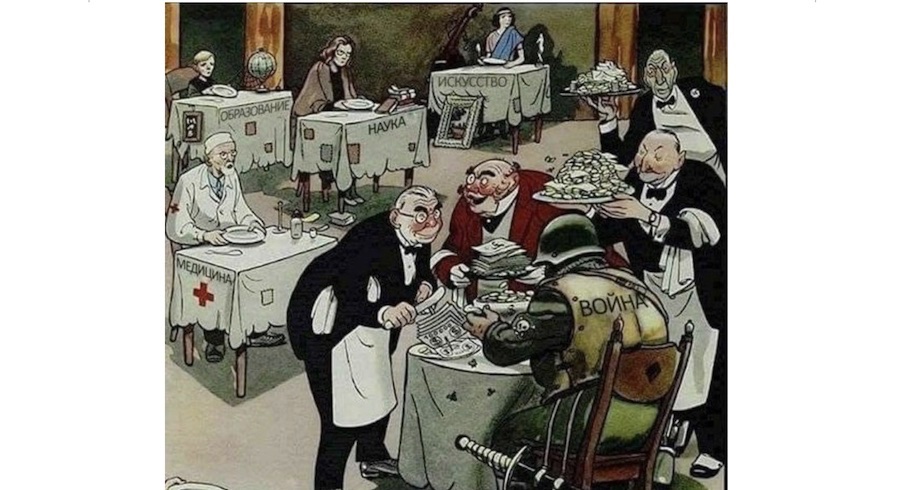
Every year on September 21, the entire planet celebrates the International Day of Peace. The cartoon by Soviet artist Yuli Ganf was published in the Krokodil magazine in 1954. And now it’s time to get it out of storage again, because, alas, it is still relevant. (Web link withheld to protect Russian authors.)
ALTAI: On the eve of the celebration of Peace Day, workers of the Kuyagan rural House of Culture and the Tourak rural club held the “Dove of Peace” and “Messenger of Peace” campaigns. The action is aimed at nurturing patriotism, a sense of solidarity, involvement in the events taking place in the world and helps to unlock the creative potential of schoolchildren. At the events, children got acquainted with the history of the birth of the Dove of Peace symbol and with the life story of their peers (Samantha Smith, Sadako Sasaki and Vitya Cherevichkina) from different parts of the planet, who, unfortunately, are no longer alive today, and about their passionate desire to live in a world without wars on Earth. These are children who have remained in their childhood. They will never grow up. The evil committed in the world did not allow them to live on Earth. . . . At the Tourak school, club employees together with children held the “White Dove of Peace” event. Schoolchildren made pigeons using the origami technique and listened to heartfelt stories about their peers, whose names are immortalized forever. (with photos)
ARKHANGELSK: The “Dove of Peace” event was held at school No. 11 in Arkhangelsk on the eve of the International Day of Peace, which is celebrated annually on September 21. Schoolchildren read poems, observed a minute of silence in memory of civilians: adults and children who died at the hands of terrorists in Donbass, and launched white doves symbolizing goodness, peace and good news. The event was organized by employees of the Patriot center. (with photo)
BAKAKOVO: Yesterday, September 21, was the International Day of Peace. A social event “Children for peace on earth!” was held at the kindergarten No. 24. The children had conversations about the history of the holiday and its meaning, listened to songs about peace and friendship: “Let there always be sunshine”, “Stork on the roof”, “Children of the Earth”, and the children also made the holiday emblem “Dove of Peace” in the form bracelets that pupils gave to passers-by and elderly people. (with photos)
BASHKORTOSTAN LIBRARIES: September 21 is the International Day of Peace. This holiday calls on all people to join forces to resist violence and aggression.
On September 20, in the rural library of the village of Petrovskoye, together with the children of the Fidgets club, they held a master class “Dove of Peace”. Guests of the event made white birds – doves – out of paper.
A thematic round table “We are together – this is our strength” took place in the Skvorchikhinsky rural library. The children drew pictures, wrote their warm wishes and put their “Letters of Happiness” in parcels that were collected by the whole village.
A Peace lesson was held at the Sairan village library. During the event, the librarian told those present about the history of this day. Afterwards, the guys cut out a figurine of the peace symbol “dove”.
“May there always be peace! “- under this name an information hour was held in the Yanurusovsky rural library, timed to coincide with World Peace Day. (with photos)
CHEBOKSARY SCHOOL NO. 61: In order to promote the formation of patriotism and citizenship in students on the eve of the International Day of Peace on September 12, 8E grade students spent their primary school years on a virtual trip to international organizations designed to strengthen peace (UN, OSCE, UNICEF, International Committee of the Red Cross and Red Crescent). (with photos)
CHEBOKSARY COLLEGE: The chief librarian of CHETK, E. A. Makarova, prepared a library video lesson “International Day of Peace” dedicated to this event. From which you can learn about the history of the holiday, traditions and procedures for celebrating the International Day of Peace. Click here for video)
CHEBOKSARY MILITARY: In Russia, some security forces and officials used the International Day of Peace to promote war among schoolchildren, reports Arbat.media. On the eve of September 21, at school 31 in Cheboksary (the capital of the Republic of Chuvashia), employees of the Federal Penitentiary Service (Punishment Service) came to the ninth-graders and conducted a lesson in courage. To do this, people in uniform brought with them weapons, a gas mask and body armor.
ENGELS, SARATOV OBLAST: On the eve of the International Day of Peace, a number of events were held at the Engels boarding house. Residents took an active part in creating drawings that reflected a world without war and showed the friendship of all children on the planet, took part in thematic conversations, and also made small white doves out of paper with their own hands, on which they wrote the names of the heroes, and tied them to balloons, filled with helium. . . . Then, in a single impulse, those gathered released balloons into the sky to the legendary song of Isaac Dunaevsky “Fly, doves, fly.” (with many photos)
ILYACHEVSK, BASHKORTOSTAN: For the International Day of Peace, which was celebrated on September 21, the Ilyachevsk Rural Library held a campaign and creative hour “Dove of Peace”. (with many photos)
IZHEVSK: September 21 is International Day of Peace. The UN General Assembly declared this day as a day dedicated to strengthening the ideals of peace by observing 24 hours of non-violence and ceasefire. The Harmony School of the city of Izhevsk took part in the “Ring of Peace, Memory and Joy” event dedicated to this day.
KHABAROVSK:
MONTESSORI SCHOOL EUREKA joined with other Montessori schools around the world to mark the International Day of Peace with song.
KIROV: Kirov Regional State Professional Educational Autonomous Institution “Yaran Technological College”. Students wrote what peace means to them. (with photos)
KIZLYAR, DAGESTAN: In School 11, activists of the First Movement organized a master class “The world is in our hands” in the school foyer. The children also distributed information booklets to school teachers and congratulated them on International Peace Day. In some classes of the school, a traditional class hour dedicated to Peace Day was held. Events dedicated to this date were also held in other schools in the city. (with a photo)
KRASNODAR: An open lecture dedicated to the celebration of the International Day of Peace was held at the Krasnodar Cooperative Institute of the Russian University of Cooperation. The lecture was prepared by Associate Professor of the Department of Law, Anna Petrakova for students of the Faculty of Law and Management. (with photos)
MARKS, SARATOV OBLAST: On the International Day of Peace, members of the YDP “Monolith” detachment with the leader, member of the Public Council at the Department of Internal Affairs, teacher of additional education of the Center “Growth Point” O. A. Galenko, together with the educational psychologist Youth Plus, A. Simakhina, held an event among students 5- 6 classes “Look how good the world you live in is!” Our main goal, noted O. A. Galenko, is to promote the formation in the younger generation of a respectful attitude towards each other and towards the entire world around us. (with photos)
MENZELINSKY DISTRICT: On September 21, a series of events dedicated to the International Day of Peace will take place in the rural houses of culture and rural clubs of the Menzelinsky district, which will allow you to reflect on what peace, kindness, mercy are – these are important concepts for absolutely everyone. The program includes: educational hour, action, drawing competition.
MOSCOW CENTER FOR CREATIVITY: We invite you to celebrate Peace Day with us. On September 19 at 17:00 we are waiting for everyone at the Structural Unit “Young Russia” at the address: Prospekt Mira, 43. At the festival you will be able to: take part in master classes, games of different nations and get acquainted with the culture of the peoples of the world and the “wider circle” event. (with poster)
MOSCOW – DIPLOMATIC ACADEMY: On September 21 at 16:30, as part of the activities of the Middle East Club of the Diplomatic Academy of the Russian Ministry of Foreign Affairs (BVK DA), a meeting dedicated to women of the Middle East will be held. On the International Day of Peace, the Club invites you to the event “Women Leaders of the Middle East: Their Contribution to Politics and Business,” dedicated to the achievements of the fair sex in the countries of the Middle East. The event program includes speeches by high-ranking guests from Arab states and the Islamic Republic of Iran, as well as a cultural part. The meeting will take place in the Assembly Hall of the Academy. (with poster)
MOSCOW – KOSINO-UKHTOMSKY DISTRICT: An educational meeting will be held in library No. 101, where children will be told about the International Day of Peace. The event will begin on September 23 at 15:00. Free admission. Children will be read poems and told about the Nobel Peace Prize and the history of the holiday.
NIZHNY NOVGOROD: Social Rehabilitation Center. On September 21, the International Day of Peace is celebrated annually, the symbol of which is the dove! This holiday calls on all people to join forces to resist violence and aggression! On this day, our students, together with their teachers, made crafts as part of the “Dove of Peace” event! (with photos)
NORKA: Norka rural library branch No. 14
Every year on September 21, the international community celebrates the International Day of Peace. The Norka Rural Library together with the Norka SDK will hold an event in which youth and children of the village of Norkino will take part. Those present will make white doves out of paper – birds of peace and goodness. During the work, they will talk about the history of the holiday and its significance for the population of the entire planet. After the event, guests of the event will distribute the “dove of peace” symbol to the village residents and keep the “dove of peace” symbol as a souvenir.
ORLYONOK, KRASNODAR: In the All-Russian Children’s Center “Orlyonok” there is a change of children’s public organizations and associations “Children’s Diplomacy of Friendship”. Its participants included 150 schoolchildren from ten regions of the country. The program is aimed at developing knowledge and skills in the field of communication, leadership, self-organization and teamwork. The key events of the project will be the Day of the RSDM “Movement of the First” and the International Day of Peace. (with many photos)
ORENBURG: The International Day of Peace is celebrated annually on September 21. In order to develop in young people a sense of personal responsibility and involvement in preserving the peace and traditions of the peoples of the multinational Orenburg region, the youth policy department of the Orenburg city administration is conducting the “Threads of Friendship” quest for students of educational organizations of higher and secondary vocational education on September 21, 2023 at 14:00. We invite a team of 10 people from your educational organization to take part in the event. Gathering and registration of participants from 13:30 at the address: Orenburg, Parkovy Ave., 6a (Perovsky Park).
ORLOV: Our college (Orlov-Vyatka Agricultural College”) held a peace lesson in which freshmen learned that the main goal of Peace Day is to achieve non-violence and a ceasefire, even if only for 24 hours. Advisor to the director for education of Darovskikh L.A. and history teacher Z.N. Sharapova emphasized the importance of this day and called on all people to join forces in the fight against violence and aggression. College volunteers conducted a master class on making a dove of peace and presented it symbolically to the residents of the city. (with photos)
PETROVSK: oday, September 21, is the International Day of Peace, which calls on all people to unite their efforts and resist violence and aggression. To this date, 6th grade students – pupils of the “Ecological Culture and Healthy Lifestyle” club of the “Growth Point” Center of School No. 1 dedicated a socially significant event.
At a meeting with primary school students, the children told them about the history and traditions of Peace Day, handed them postcards in the form of white doves, and asked the third graders to write on palm-shaped pieces of paper the words they would like to say to the people around them. Then the sixth graders organized a symbolic flash mob and launched blue balloons into the sky. (with photos)
PUSHCHINO: Pupils of the Pushchino gymnasium took part in the traditional Dove of Peace event, which takes place as a sign of support for peace on earth, as well as gratitude to veterans of the Great Patriotic War for giving us a peaceful sky. . . . Gymnasium students prepared paper doves and red balloons to participate in the event. (with photo)
REBRIKHA: On September 21, employees of the Rebrikha Central House of Culture held various events dedicated to the International Day of Peace on Revolution Square, in which more than 350 people took part. A drawing competition and a game program “May there always be peace!” were held for pupils of kindergartens “Smile”, “Swallow” and primary school students of the Rebrikha Secondary School. Also, for 2.5 hours, everyone was able to take part in the “Peace to the World!” campaign by signing their wishes on a paper dove and placing them on the “Dove of PEACE” themed banner. At the end of the festive program, a dance flash mob “A world without war!” took place, in which high school students from the Rebrikha Secondary School and students from the Rebrikha Lyceum of Vocational Education took part. (with many photos)
RYBNITSA: The International Day of Peace was celebrated in Rybnitsa. The ceremonial meeting took place at secondary school No. 6 with lyceum classes. . . . The schoolchildren wrote their wishes on paper doves. The figures were pasted onto the stand. And some of the white-winged messengers were released into the sky with balloons as a symbol of good intentions. And everyone has one wish, that the messengers of peace be able to fly to a place where there is no peace now. . . .
Also, in school number 11, a concert program dedicated to Peace Day was organized and conducted by workers of the Olympus cultural and leisure center. The program was intense. Dances, songs, miniatures, poems, instrumental solo performances. And all performed by young Rybnitsa residents. Creative performances were prepared by pupils of Rybnitsa kindergarten No. 10, a children’s art school, the Center for Children and Youth Creativity, and the Olympus leisure center. Click here for the video
ST PETERSBURG, VASILYEVSKY ISLAND: International Day of Peace will be held on Vasilyevsky Island. Every year, at the end of September, residents of the Vasileostrovsky district gather to celebrate Peace Day . Last year, the event was attended by more than 2,000 residents and guests of the island. This year the holiday has grown into the “Mir” Management Company Festival, which will delight city residents with its activities from September 23 to 24.
° Performances by creative groups: teenage and youth club “Leningradets”; contemporary creativity studio ALL Bright; beatboxing and music making schools CONNECT School; pantomime studio “WORD”; charitable public organization “Street of Peace”;
° master classes: on making fox masks from the school of speed reading IQ007; in piano playing from the current pianist of the Italian company MSC Natalia Anufrieva; for painting on a large canvas; and even playing the spoons;
° lectures: from the BioMax volunteer team, where 11th grade students will talk about first aid in various situations and show basic actions in practice; from the children’s programming school CYBERKIDS, where the topic “Child and gadgets: harm and benefit” will be discussed;
° excursions: “From the Church of the Annunciation to St. Andrew’s Cathedral. Two lines – three centuries”; “The Life and Work of Alexander Green”;
° chess tournament and simultaneous play session with international grandmaster Daniil Lvovich Linchevsky;
° graffiti festival
SARATOV: On September 21, the entire planet celebrates International Day of Peace. On this day, 2nd and 4th year students of the branch of the Engels Medical College of St. Luke (Voino-Yasenetsky) in Marx remembered the history of the holiday, significant events on planet Earth, shared their thoughts about what peace is, and first-year students with hope for peace wrote letters to the soldiers (the video can be viewed here.)
SAYANSK: September 21, 2023, within the framework of the Community Center, teachers from school No. 7 together with teachers from MDOU No. 36 “Smile” and the “Young Guard of United Russia” held the “Dove of Peace” campaign, in which schoolchildren and children from kindergarten took an active part in participation. To create a symbol of peace and goodness, volunteers of the Pulse detachment needed only paper, scissors and colored pencils. The birds made will go to the fighters in the special military operation zone. We hope that such warm news from home will give them strength and energy. ( with many photos)
SEMEYKINO VILLAGE: Today marks the International Day of Peace. This is a day of global ceasefire and non-violence. War brings grief and destruction. And this day is celebrated so that people think and stop all wars. Today, children from the 4th grade of the Semeykino educational complex No. 31 came to the library of the Semeykino village to take part in the “White Dove – a Symbol of Peace” event. After watching a thematic multimedia presentation, the children learned about the symbol of peace – the white dove. We also learned how to make a dove out of paper using the origami technique. At the end of the event, the children decorated the tree with their crafts, thereby confirming that they are for world peace. (with photos)
SMENOVTSY: On September 21, a holiday was held at the All-Russian Children’s Center “Smena” – the children solemnly celebrated the International Day of Peace. More than 1,000 children from 85 regions of Russia took part in thematic events. On the eve of the International Day of Peace, thematic events were held in Smena from September 18 to 20. At the “Peacemaking Workshop,” the children were given a master class on making paper doves of peace, which Smenovo members used to decorate the doors and windows of the Center. Participants in the cross-cutting educational module “Good in Smena” developed infographics with which they introduced their peers to the history of the holiday. And on September 21, Smena members immersed themselves in the theme of the day at the morning round dance of friendship. At the “Charge with Peace” event, the counselors told the children a legend about peace and tied a thread as a sign of unity. (with photo shown above)
SOLOVYOVKA: In Russia, some security forces and officials used the International Day of Peace to promote war among schoolchildren, reports Arbat.media . The Russian military visited schoolchildren in the village of Solovyovka in the Sakhalin region. The topic of the meeting was a story about the “Russian Peacekeeping Mission”.
Question for this article
What has happened this year (2023) for the International Day of Peace?
(Survey continued from left column)
SOROKINSKY DISTRICT, TYUMEN REGION: SOROKINSKAYA SECONDARY SCHOOL NO. 2. On September 21, the world celebrates International Day of Peace. An event dedicated to this holiday was held for 3rd grade students. The children read poems about peace and friendship, learned about the history of the International Day of Peace, and important world problems that need to be solved to maintain peace on Earth. (with photos)
STOLBOVSKY: The International Day of Peace. On this day, the “Dove of Peace” event was held at the Stolbovsky rural library. The children carefully held in their palms the symbol of peace on Earth – a white dove, thereby showing how fragile peace on the planet is. The world is in the hands of people and everyone must protect and preserve it. (with photos)
TETYUSHY, TATARSTAN: MBU “Center “Forpost” informs that today, as part of the implementation of the project “Creativity without Borders”, a creative event “Dove of Peace” dedicated to the International Day of Peace was held for young people with disabilities. . . . A specialist from the youth law enforcement movement “Forpost” began the event with a warm-up using a math tablet, then a master class was organized for the participants on making a souvenir with their own hands, symbolizing world peace.
UFA: On September 21, the world celebrates International Day of Peace. As part of developing children’s knowledge about this holiday, developing schoolchildren’s interest in the history and culture of Russia, as well as cultivating friendliness and desire in children to show creative initiative, the ability to live without conflicts, 7 “B” grade with their class teacher Tairova I.V. . visited the “Museum of Polar Explorers named after V.I. Albanov.” (with photos)
URUSSINSKY: On September 21, on the day of International Peace Day, a thematic lesson was held in the speech therapy group of Urussa kindergarten No. 4. The children were told the history of the holiday, explained the meaning of the word peace, and were introduced to the symbol of the holiday – the dove. To protect peace on Earth, children glued cut out palms. (with a photo)
USOLIE, SIBERIA: At the Central Children’s library young readers will learn the history of the holiday, the International Day of Peace, learn which bird is a symbol of peace, listen to poems, riddles, stories and a quiz about the International Day of Peace. At the end of the event, the children will draw a dove, a symbol of peaceful life.
VETLUZHSKY: Cultural and concert center. Thematic hour “International Day of Peace”. Master class “White Crane – Messenger of Peace”. Ignashova O.V., production designer of an exemplary theater.
VLADIKAVKAZ: For more than 10 years, from September 19 to 22, the Movement of Young Peacemakers of the Republic of North Ossetia-Asia has been holding an annual peacekeeping campaign “Peace Week” dedicated to the International Day of Peace. . . According to the established good tradition, young peacekeepers – students of the “Peace Schools” of Vladikavkaz, at the beginning of the “Peace Week”, laid flowers at the stele “Vladikavkaz – the city of military glory” and the memorial slab, under which lie cartridges with soil from all the hero cities and cities of military glory of Russia, and also paid tribute to the victims of the collapse of the Kolka glacier, and visited the Barbashovo Pole memorial. The 12th gathering of young peacekeepers took place in the assembly hall of the Veterans House on the International Day of Peace. After the anthems of Russia and the Republic of North Ossetia-Alania were performed, the flag of the Young Peacemakers Movement was brought into the hall. (with a photo)
VLADIVOSTOK: MBOU Secondary School No. 47. During the lesson for the International Day of Peace, students learned what needs to be done so as not to destroy peace on planet Earth. They became more familiar with such concepts as war, conflict, peace and friendship, kindness and mercy. Students also learned the history of the International Day of Peace and its symbolism. We listened to the song “Children Against War” and got acquainted with examples of children’s posters for the holiday. The symbol of this holiday was made from paper using the origami technique – the Paper Dove of Peace. We drew our own poster: “We are for peace.”
VOLGOGRAD: September 21 is International Day of Peace. The UN General Assembly declared this day as a day dedicated to strengthening the ideals of peace by observing 24 hours of non-violence and ceasefire. Every year the event is held by Lyceum No. 5 named after. Yu.A. Gagarin, Central district of Volgograd . The idea is very simple – ring the bell all together at the same time (12.00 Moscow time), notifying all residents that our planet needs peace. Schools that joined the action posted posts in the news feed of the school account along with text, photographs and videos.
YAKUTSK: Central Library System. September 21. International Day of Peace
14:00 Conversation – May there always be peace.
15:00 Conversation – Everyone needs peace
YEMVA: In Russia, some security forces and officials used the International Day of Peace to promote war among schoolchildren, reports Arbat.media .In the small town of Yemva (Komi Republic), third-graders guessed military songs and professions. The event was held under the title “The World We Need!”
YUGOVKA: The bright holiday on the International Day of Peace was held by the library named after A.K. Yugov together with the Kurgan regional branch of the international public foundation “Russian Peace Foundation”. This year, a patriotic concert was held for Kurgan schoolchildren in honor of Peace Day. It started with the Virtual Philharmonic. The performance of the Moscow State Academic Symphony Orchestra with Karl Jenkins’ work “ Cantata Memoria ” was broadcast on the big screen of Yugovka. . . . Then the young artists of the theater group “Firebird” Elena Prosekova and Semyon Pechenkin, Arseny Prosekov, as well as Sofia Uzun and Ekaterina Romanchuk performed for the audience with piercing and touching numbers. . . Political scientist Vladimir Sablin told the festival guests about the importance of peace on our planet and how important it is to unite in difficult times . Representatives of the Kurgan branch of the Russian Writers’ Union Nikolai Anoshchenko, Nikolai Pokidyshev, Vitaly Nokhrin, Valery Melnikov read poems of their own composition with reflections on peace and the horrors of war. (with many photos)
ZHUKOV: The International Day of Peace. On this holiday, in the city library of the State Educational Institution “Vozrozhdenie”, librarian N. V. Zhdakaeva conducted a peace lesson “A world that everyone needs!” There were 25 children present. At the beginning of the lesson, the children got acquainted with the book exhibition “How beautiful this world is!” and gave a definition to the word “peace”. . . . The result of the event was the creation of the planet “Friendship”, on which white doves were placed with wishes for peace, happiness, love for every person, the absence of wars, suffering, worries, because every person on the planet has the right to peace. The guys showed themselves as true artists and made their dreams of peace on Earth come true. Our children already know well that war brings many troubles and misfortunes. They understand that everything can be fixed if every person is on the side of peace and goodness. (with many photos)
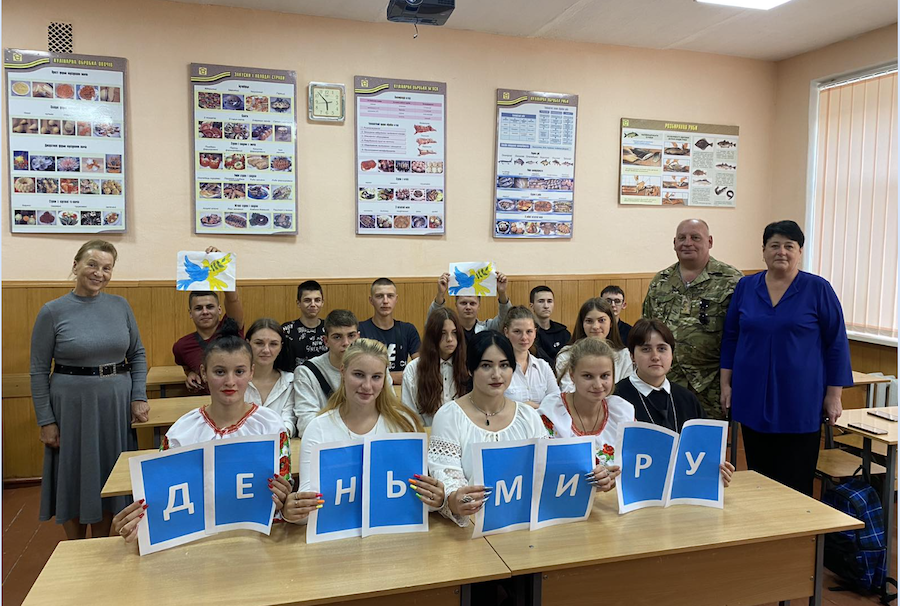
Photo from Zhmerynka, Ukraine
BILHOROD-DNISTROVSKYI
On the International Day of Peace, Bilhorod-Dnistrian police officers held a thematic event with schoolchildren. In one of the educational institutions, senior juvenile prevention inspector Oksana Kvachuk and community police officer Maryna Bob together with the students made a symbol of peace – a dove, on which they wrote wishes for victory and happiness for all Ukrainians. The children symbolically pasted the birds on the map of Ukraine. During the event, police officers told about the history of the origin of the holiday and watched a thematic video with the children. The guests tied patriotic yellow and blue ribbons to each student and presented balls. “During the war, children grew up prematurely and began to think differently. Now, instead of new toys, they dream of victory, so that their relatives, who protect our country from the enemy, will return home as soon as possible,” – shared the impressions of juvenile police officer Oksana Kvachuk. Finally, the law enforcement officers reminded the children of the rules of safe behavior at home and at school, emphasized safety measures during the war, in particular during the “Airborne alarm” signal. Click here for video
BILHOROD LIBRARIES: International Day of Peace in the libraries of Belgorod-Dnistrovskyi. In particular, in the library on Peremogy Street, children drew on the asphalt on the theme: “We are for Freedom, we are for Peace!”. ,In the branch library named after M. Kropyvnytskyi’s book exhibition “Let there be peace from now on and forever!” is on display. During the day, the children and youth service department of the Public Library held: quiz “Peace through the eyes of children”, master class “Dove of peace”, campaign “White dove, you fly into the world, let there be peace in our Ukraine!” Also, patriotic videos devoted to the Day of Peace were broadcast in the Internet centers of the libraries of CU “PBBD”. (with many photos)
BILA TSERKVA: On September 21, the world celebrates the International Day of Peace. Pupils of Bilotserkiv secondary school-primary school No. 6 “Perspektiva” actively participated in these events. The smallest pupils, who recently became schoolchildren, took part in an incredible flash mob. The children sincerely thank the fearless and brave soldiers of the Armed Forces of Ukraine for the opportunity to develop, study in spacious, comfortable classrooms, and walk the streets of our city. First-graders, whose parents protect our independence, performed a touching dance, putting their love, tenderness, and goodness into it. Small hearts united for a great cause! After all, the video of this touching flash mob will be sent to dads with the hope of VICTORY and return home. Click here for the video.
BROVARY LYCEUM NO. 11: With the aim of instilling in schoolchildren a sense of national dignity and revealing knowledge about the traditions and customs of the Ukrainian people, on September 21, 2023, on the International Day of Peace, pupils of the “Cossack Glory” and “Cossack Gart” groups held the “Dove of Peace” campaign . Eighth and ninth graders conducted the quiz “I know everything about Ukraine!” at recess. and for the correct answers to the questions they were awarded symbols of doves with wishes for peace, goodness and victory in Ukraine. (with photos)
BUCHA: Today, peace in Ukraine is not an abstract wish, it is a conscious goal, because the struggle for peaceful existence, for the right to live in one’s own state continues. And today every Ukrainian family felt the highest value of peace, which is the key to a happy life. On the occasion of Peace Day, Lyceum No. 5 held thematic events. The day began with a flash mob “The dove of peace flies to Ukraine”, which was prepared by students of grades 1-4. The book exhibition “Under a peaceful sky” is organized in the school library. During the day, the student self-government held the “Dove of Peace” campaign, during which the students of the lyceum expressed their wishes for peace and harmony. Class teachers spent hours of communication “Peace on earth – joy in the family!” (with many photos)
BUCHANSKA: Today’s Day of Peace was celebrated by pupils of the 2nd-A and 2nd-B primary school. We all long for peace, a peaceful sky, peace and tranquility on our land. Children should grow and develop in peace for happiness and goodness. We believe that our sincere wishes will bring peace to all of us. (with a photo)
CHERKASY COLLEGE: Korsun-Shevchenkivo Pedagogical Vocational College. For the International Day of Peace, a book exhibition “September 21 – International Day of Peace” was opened in the reading room of our college, where scientific, popular science, reference publications and articles from periodicals are presented, which consider the importance of maintaining peace for ensuring the sustainable progress of mankind. About the history of the Ukrainian people, their traditions and the military present. (with many photos)
CHERKASY SCHOOL 3:The students of our school also actively participated in the events dedicated to the International Day of Peace, activities took place in every class, not a single student or teacher remained indifferent. Postcards, three-dimensional – appliqués and hand-made doves of peace flowed from all classes of the elementary level of our school. For the parallel of the 1st grades, the class teachers conducted an interactive exercise with elements of a conversation about peace “Whatever our today, PEACE is our tomorrow…”, and also 1-B – colored the mega coloring page “We are for peace in the whole world”, 1 -A- drew pictures “We believe in our victory. We wish everyone peace.” 2nd graders made “Dove of Peace” appliqués, designed postcards “Children want victory! Children want peace!” and watched the video “International Day of Peace”. Children of the 3rd grade made their own paper doves, which united in a single circle to protect our Motherland from war. (with many photos)
CHERNIHIV YOUNG NATURALISTS: On the occasion of Peace Day, the thematic events “I choose Peace”, “I am for peace in Ukraine”, an hour of communication “Peace on earth – joy in the family”, master classes were held for students of education groups of the communal institution “Chernihiv Regional Station of Young Naturalists” from the production of the “Peace Dove”. (with a photo)
CHERIHIV SCHOOL 13: On the occasion of the International Day of Peace and the Liberation Day of Chernihiv, the students of school No. 13 produced a large number of doves, which symbolize world peace. Each pigeon carried a wish for a peaceful sky over our Motherland and an end to hostilities on the territory of Ukraine. They also made a collective drawing on the asphalt “Let there be peace!” The smiles on the children’s faces inspired hope that there will be no place for wars in Ukraine and throughout the world! (with many photos)
CHUMAKY, DONETSK: International Day of Peace at the Chumaky Lyceum. At a time when enemy missiles that bring death are flying over Ukrainian cities and villages, students of the 1st grade took part in the creation of the project “Children of Ukraine for world peace” to show how important peace, freedom, kindness and respect are. An educational hour and a master class “Making a dove of peace”. (with many photos)
DONETSK YOUTH PALACE:
Donetsk Youth Palace – Click here for video
DONETSK MEDICAL FACULTY: On September 21, the world celebrates the International Day of Peace. But September 21 in Ukraine is not peace, but 3,500 days of war and terrorist acts without any hint of peace. It is because of this that on September 21, 2023, the cultural and mass sector of the Medical Faculty No. 2 together with the social and humanitarian circle held a round table on the occasion of the International Day of Peace!
Very important issues were discussed at this meeting, namely:
Why does the world go to war from time to time?
Why can’t humanity live in peace?
Is the UN capable of maintaining peace?
(with photos)
DONETSK REFUGEES: Peace Day in Ukraine is celebrated on September 21. For almost ten years now, for Ukrainians, it is not peaceful, but in a struggle with Russia. All these years, Donetsk region has been the place where the hottest battles have been fought at the front. Now here, peaceful cities regularly come under Russian shelling. Residents of Donetsk region told us how they see peace for Ukraine and themselves now. (with a video of the interviews)
FASTIV: The weekend in honor of the International Day of Peace is coming soon and we invite you to celebrate this event at the Dubravushka Club . This is a special holiday that reminds us of the importance of peace in the modern world and the value in human life that is worth fighting for.
GLUKHIV: Girls of the 7-B class of the KZ SOR of the Glukhiv Lyceum boarding school with enhanced military physical training together with the teacher Myskova N.I. joined the celebration of Peace Day. Took part in an online quiz for children for the International Day of Peace. Young ladies made symbolic doves as part of the all-school flashmob “Let there be peace and silence the wars on Earth!” (with many photos)
GLUKHIV HUMANITARIAN CENTER: On the eve of the International Day of Peace, the psychologists of the humanitarian center Prolisk – Sumy , which operates with the support of UNHCR Ukraine – the UN Refugee Agency in Ukraine , held a group event “Dove of Peace” for IDPs living in the IDPs on the basis of the dormitory of the VSP “Agrotechnical College of SNAU” in the city of Glukhiv. The participants of the event received information about the history of the International Day of Peace, took part in a master class on art therapy, made a “Pigeon” craft, actively interacted in interactive games and exercises. (with photos)
KAMIANETS-PODILSKYI: Graduates and graduates of Lyceum No. 13 joined the celebration of the International Day of Peace. Schoolchildren took part in a flash mob. Dressed in embroidered dresses, holding national symbols in their hands, the children formed the word “PEACE”. Pupils chanted the words “Victory!”, “PEACE”, sang the national anthem of Ukraine. Pigeons made of white paper – a symbol of peace – looked especially good. They fluttered in the wind, inspired hope for a peaceful future, for the long-awaited Victory. (with many photos)
KAMIANSKE: Tik-tok video: September 21 is the International Day of Peace. Peace and Victory to you, Ukraine. from student self-government, Kamianske Vocational Lyceum
KHARKIV: On the International Day of Peace, the department of social and humanitarian work held informative talks for students of higher education. The cadets watched the recording of the speech of the President of Ukraine Volodymyr Zelenskyi at the UN General Assembly . . . During the conversation with the cadets, the specialist of the leisure department, Andriy Prokhorov, informed us of another rocket attack, which affected five regions of Ukraine on the very day when the entire civilized world celebrates the Day of Peace and calls for an end to hostilities. (with photos)
KRYVYI RIH: School 68. For the International day of Peace, the school library presented the thematic exhibition “We are the ones. We are for peace.” (with poster)
KYIV – SVYATOSHYHSKA DISTRICT : nternational Day of Peace. Pupils and teachers of school #13 organized and conducted a number of events aimed at popularizing the values of peace, tolerance and kindness. The day of peace at the school was rich and vivid: master classes on making the symbol of this day – doves, flash mob “Peace over Ukraine”, reflected on the question: “What is peace for you?”. The children gave different answers: for some it is safety, for others it is harmony, for others it is love. But everyone agreed that peace is the greatest wealth for humanity. This day has a special significance for Ukraine. That is why Ukrainian children especially value peace and wish it to the whole world. Thanks to our defenders! We believe in the Armed Forces of Ukraine! (with photos)
KYIV HOSPITAL: Children’s specialized hospital “Okhmatdit” presents a collection of children’s fairy tales “Bramara and the Kingdom of Assamita” on the International Day of Peace. The book was written by a psychologist, art critic, researcher of Indian culture David Sureshwar, who during the siege of Kyiv was a volunteer in the shelters, helping children overcome the horrors of war with the magic of fairy tales. As the deputy of the Kyiv City Council, the first deputy head of the permanent commission on health care, family and social policy, the co-organizer of the event Nataliya Berikashvili noted, at the presentation, all those interested will not only learn the history of writing books, but will also be able to learn how to portray the main characters in using sign language. . . . Organizers of the event: the public union “Union of Women of Ukraine” in partnership with the public organization “Ukrainian Smile” and the Finland-Ukraine Friendship Association “Kalyn”.
KITSMAN-PODILSKY UNIVERSITY: International Day of Peace is traditionally celebrated on September 21 in Ukraine and around the world.Today, peace in Ukraine is not an abstract wish, it is a realized goal, because for peaceful existence, for the right to live in one’s own state, a war continues in our country. And today every Ukrainian family felt the highest value of peace, which is the key to a happy life. The Student Council of the VSP “Kitzman Vocational College of the ZVO “PSU” joined the flash mob “We are for peace!” Click here for their video
KOZIATYN SCHOOLS: International Day of Peace. In the yard of Lyceum No. 5, a week before this date, students drew a giant dove and painted it in the colors of the national flag. They left their wishes on it: “No war”, “Peace on earth”, “Joy in the family”, “Under a peaceful sky”. . . . In Lyceum No. 3, the third-graders set their desks for the International Day of Peace lesson in a circle, the class teacher flipped through the slides, and the students listened carefully to the teacher and asked her questions. . . . Lyceum No. 1 named after Shevchenko, the event began with drawings on the asphalt by students of grades 1-4 under the slogan “Children of Ukraine for Peace on Earth.” . . . In gymnasium No. 9, even preschoolers and students of grades 1-3 joined the Day of Peace, (with many photos)
LUTSK: In Lutsk, the best readers of the charity online marathon under the hashtag Mir_Ukraine were recognized. The action took place on the International Day of Peace in the regional library for youth.The event was organized in the library courtyard with the participation of creative children’s teams, said the head of the library, Alla Yefremova. Click here for video
LVIV: On the occasion of the International Day of Peace, students of Lviv State University of Internal Affairs organized a patriotic event. Details are provided for the many names of the performers and the songs or poems performed along with photos.
MORSHYN: International Day of Peace is traditionally celebrated on September 21 in Ukraine and throughout the world . On this day, thematic events were held in educational institutions of the Morshyn community .Children painted murals with wishes for peace, happiness and a clear sky. In all educational institutions of the community, the all-school action “Dove of Peace” was held. Pupils made paper doves with wishes for peace and victory for Ukraine. (with many photos)
MYROPIL: On September 21, the world community celebrates Peace Day. On this day, the students of the 4-A class of the Myropil Lyceum under the guidance of the class teacher Tetyana Oleksandrivna Manzhesova held the action “The Dove of Peace flies to Ukraine”. Thanks to everyone who participated. The collected funds will be sent to support the Armed Forces. We wish everyone peace in everything – in families, in hearts, in our native Ukraine! May the Dove of Peace fly into each of our homes with good news on this September day! Together to victory! Click here for their video
NIZHYN: On the occasion of Peace Day and with the aim of expanding students’ knowledge about the importance of peace on Earth, the education of patriotism and love for one’s people and the Motherland, in the Nizhyn Professional College of the NUBiP of Ukraine, class leaders of academic groups held educational events, with students of various courses and specialties a flash mob was held “We for peace!” and the “Wishes for Ukraine and Ukrainians” campaign was organized, during which everyone could leave their wishes on paper figurines in the form of miniature birds. (with many photos)
ODESSA HEALTH CARE CENTER On September 21, 2023, to the International Day of Peace, employees of the Center for Primary Health Care No. 4 held a charity fair in support of the Armed Forces of Ukraine. Doctors baked goodies and sold them, and also held a bright patriotic holiday, where the musical group “4.5.0” performed. Defenders of Ukraine, who are currently undergoing treatment in our city, were also invited to the holiday. All in all, thanks to the fair, the doctors of the CPMSD No. 4 managed to collect about 50,000 hryvnias. All money will be directed to the needs of the military formations that defend Odessa. (with many photos)
ODESSA SCHOOLS For the students of Odesa schools, thematic classes, exhibitions of drawings, newspapers, and various promotions were held for the International Day of Peace. Schoolchildren joined the all-Ukrainian action “Dove of Peace”. . . Representatives of the student self-government of Odesa primary school No. 85 visited defenders-military personnel who are being treated in the Odesa military hospital and presented hygiene products, basic necessities, sweets, children’s drawings, charms made by elementary school students and, of course, letters of support. An open event “May there be peace!” was held in Odesa Lyceum No. 9. During the event, the military chaplain of the 38th anti-aircraft missile regiment met with the students, who congratulated everyone present on the International Day of Peace. At the end of the event, the students handed over the means of individual use and goodies they had baked with their own hands to defenders in the east of Ukraine. (with many photos)
ODESSA UNIVERSITY : Odessa State Environmental University. Peace Day is celebrated on September 21 all over the world. The purpose of today’s meeting, organized by the senior lecturer of the Department of Ukrainian Studies, M.I. Myroshnychenko. with students of the 3rd year of the Faculty of Environmental Protection of groups E-20, E-22i, EK-20, TZ-20, TZ-21i, was to turn to the discussion of topical issues of peace through the thematic mini-discussion “Dimension of Peace”. . . . We began to appreciate peace more and understand its true meaning. We believe that peace will surely come in our country and we will live under a peaceful sky! (with photos)
OKHTYR: September 21 – International Day of Peace. In the Okhtyr Central Public Library of the Okhtyr City Council, librarians had an hour of communication with representatives of the Okhtyr City Red Cross Organization and employees of the Okhtyr City Local History Museum “Let there be peace over Ukraine!”. (with a photo)
PEREYASLAV: Pereyaslav educational institutions held events on the occasion of the International Day of Peace, which is celebrated worldwide on September 21. In the morning, the fourth-graders of Gymnasium No. 1 organized a patriotic flash mob. . . Then the schoolchildren, together with their teachers – Natalia Lytvynenko , Nadia Filonenko , and the deputy director for educational work, Larisa Pylypenko , organized the Peace Walk. They passed by the Alley of Heroes, honoring the memory of the fallen soldiers-compatriots. And then they visited the city council: with loud slogans and patriotic songs, they greeted the leadership and employees of local self-government bodies. (with many photos)
PLESETSK: Today, in the 1st classes of the Plesetsk gymnasium, an hour of communication took place under the slogan “We are for Peace”. Where students learned about the origin of the holiday, watched a video and made postcards. We wish peace in everything – peace in families, peace in hearts and peace to our native Ukraine! (with many photos)
POGREBYSHCHE: HVS № 42 in Pogrebyshche International Day of Peace. Click here for their video
POKROV: On Peace Day, Pokrov’s children demonstrated their conscious position by participating in various activities. Pupils of the art department of the school of arts creatively approached the celebration of this date, expressing their thoughts and feelings through a drawing on the asphalt. With the help of multi-colored chalk, they tried to embody their thoughts and messages. They colorfully depicted Ukraine without war and violence, painted the houses of their dreams under a peaceful sky, the symbol of peace – doves, etc. National symbols and blue-yellow colors prevailed in the drawings. . . . Many online events were also held in cultural and educational institutions. Schoolchildren joined the challenges “Umbrella of peace”, “Ukraine wants peace”, poetic flash mob “Let there be peace in our Ukraine”.(with many photos)
POLTAVA STATE MEDICAL UNIVERSITY: On the occasion of the World Day of Peace, Oksana Krasnova, a teacher of the department of public health with medical and labor expertise, held a conversation on the topic “World Day of Peace” with students of the international faculty of the 6th year of the 23rd group. Students learned in an interesting way why and when people celebrate Peace Day; learned that the symbol of international solidarity of all the people of the world is the Bell of Peace. They remembered that the emblem of peace is the dove, which symbolizes goodness and well-being. (with photos)
POLTAVA UNIVERSITY: On the occasion of the International Day of Peace, branch library No. 13 for children of the Central Library of Poltava State University invited young users to join the flash mob “Children of Ukraine for Peace”. The visitors were waiting for the bright exhibition-appeal “We want peace in our native Ukraine”, the video clip “We are for peace”. A pleasant highlight was the viewing of children’s drawings “Peace through the eyes of children”, which young talents presented to the library. On this day, the children made their own patriotic hearts and the emblem of peace – a dove with an olive branch. (with many photos)
RIVNE LIBRARY: September 21 is celebrated in Ukraine and around the world as the International Day of Peace, which is not an abstract wish in our country today. This is a conscious goal, because the struggle for peaceful existence, for the right to live in one’s own state continues. Today, every Ukrainian family felt the highest value of peace, which is the key to a happy life. On the occasion of this event, lyceum students of the 7-A class joined the event at the Rivne Regional Library. The students made a symbol – a dove of peace – using the origami technique and expressed their wishes: “Learn to do good to people and do good on Earth. Live in peace and harmony!” (with a photo)
RIVNE REHAB CENTER: On the occasion of the Day of Peace, teachers organized a number of thematic events with the students at the “Special Child” RNRC. During the day, artistic moments, exhibitions of works and drawings were held. “International Day of Peace” information hour was organized by the teachers of the GPA. Educational activities are organized with students of grades 1-4. (with many photos)
SELYDIV, DONETSK: Selydiv Lyceum No. 1. International Day of Peace is traditionally celebrated on September 21 in Ukraine and around the world. An educational hour on the topic “We are for peace in the world” was held with the students of the 1st-V class. The children were interested in learning the history of this day and the meaning of its symbol, the white dove. The children happily made such pigeons with their own hands and “inhabited” our Ukraine with them. During the “Association bush” exercise, children wrote down associations with the word PEACE, and an online exhibition of drawings was also held. Click here for their video
SKVARYAVA: Skvaryavsky ZZSO I-III degrees. Students of the 1st grade under the guidance of Gurska G.V. prepared the event “We are for peace in Ukraine”. Hours of communication in the 2nd grade (head G.V. Fedash) “Peace on earth – joy in the family” in the 3rd grade (head N.M. Savchyn) “Under a peaceful sky” in the 4th grade (head I. Savchuk S.) “Peace on the planet – happiness for all children” encouraged students to think about the most important value of every nation – peace! (with many photos and videos on different facebook pages for each class)
SLOVIANSK, DONETSK: Pupils of Sloviansk Secondary School No. 12 joined the regional flash mob action ” Vote for PEACE!” “. We want to live in a moderate country, under a peaceful Ukrainian sky. We believe that soon we will hear the long-awaited words: “Victory! Peace in Ukraine!” Click here for their video)
TARUTYNE: Community news: a legal educational event for the international day of peace was held in the Tarutyn community with subjects of probation
On September 20, 2023, the head of Bolgrad district sector No. 2 of the branch of the State institution “Probation Center” held a legal educational event for the International Day of Peace with probation subjects for the purpose of national and patriotic education. (with a photo)
TSERKVA: Confirming Ukraine’s commitment to the ideals of peace, in accordance with the Decree of the President of Ukraine since 2002, the Day of Peace has been established in Ukraine, which is celebrated annually on September 21 – the International Day of Peace. The students of the Bilotserki Professional College of Service and Design, like every conscious Ukrainian, dream of VICTORY, the earliest possible cessation of hostilities, the return of relatives, loved ones, friends, a peaceful sky above their heads, the healing of unbearable wounds in human hearts, and wish everyone peace in to everything – in families, in hearts and in our native Ukraine! Honoring the traditions of this important day, teachers and students of education filled the associative tree of Life with inscriptions, which in their opinion are associated with the word PEACE. And on the college playground, energetic girls arranged a dancing FLASHMOB and charged everyone with positivity. Happy Peace Day! Victory to Ukraine! (with photos)
TYSHKIV: A number of events dedicated to the Day of Peace took place in educational institutions of the Tyshkiv community. A large friendly family of the elementary school took part in the action “We want peace in Ukraine!”. Throughout the day, children attached doves and palms of peace to the blackboard in the school lobby, writing their most cherished dreams and wishes on them. At the circle of decorative and applied arts “Fantasia”, students made doves of PEACE. At the end of the school day, everyone had a good time and took pictures on the soft grass of the football field.
(with many photos)
VINNYTSIA: On the occasion of the International Day of Peace, traditional events were held in lyceums and gymnasiums of our city. In the yard of Lyceum No. 5, a week before this date, students drew a giant dove, which was painted in the colors of the national flag. They left their wishes on it: “No war”, “Peace on earth”, “Joy in the family”, “Under a peaceful sky”. . . In Lyceum No. 3, the International Day of Peace event was held in each class separately. The third-graders set their desks for the International Day of Peace lesson in a circle, and the class teacher flipped through the slides, and the students listened carefully to the teacher and asked her questions about peace. . . . Lyceum No. 1 named after Shevchenko, the event began with drawings on the asphalt by students of grades 1-4 under the slogan “Children of Ukraine for Peace on Earth.” . . In the support lyceum. 2 events took place at once. In addition to the traditional thematic hours for the International Day of Peace, they held elections for the president of the lyceum. . . . In gymnasium No. 9, pupils and preschoolers took part in the peace event.(with photos)
YURYIVKA: The head of the Pavlograd district sector, Larisa Bazarna, held an event for the Day of Peace in Ukraine for probation subjects of the sector in the local library. (with photo)
ZAPORIZHIA REGIONAL CENTER: In honor of the Day of Peace, employees of the Zaporizhia Regional Center for Disease Control and Prevention of the Ministry of Health of Ukraine came in embroidered jackets and tied symbolic yellow-blue ribbons on the branches of a tree, on which they wrote down the desire for peace, harmony and well-being for our country. Together to peace! Let’s walk to Victory together! Everything will be Ukraine! Glory to Ukraine! Glory to heroes! (with photos)
ZHMERYNKA: On September 21, at the “Zhmeryn Higher Vocational School” an open event was held – a meeting with a participant in hostilities and a teacher of the school A.H. Humenyuk, dedicated to the International Day of Peace. (with many photos, one of which is shown above on this page)
ZHYTOMIR: Flash mobs for Peace Day were held in Zhytomyr educational institutions. In particular, students of Lyceum No. 32 created a circle in the form of the planet Earth, in the center of which was depicted a dove, a bird that symbolizes peace. In Lyceum No. 21, children made paper doves of peace and thus demonstrated their desire to live in a peaceful country. (with many photos)
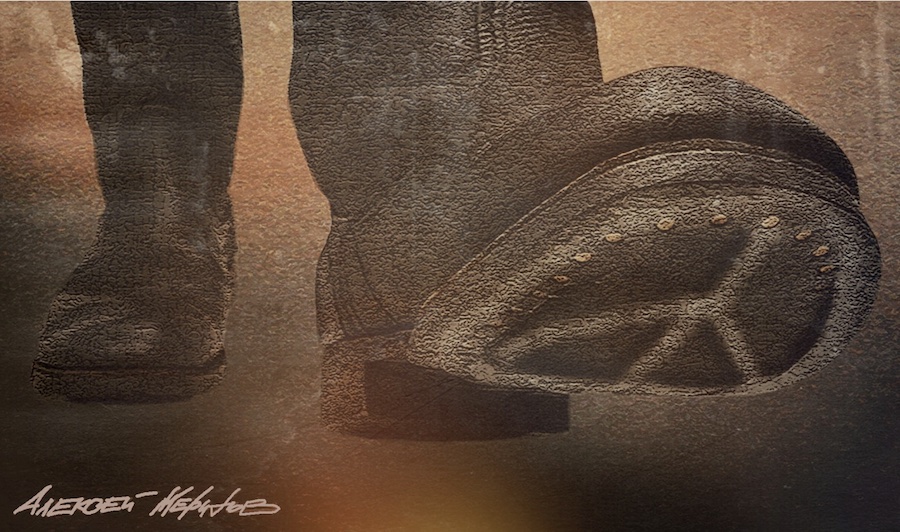
September 21 – International Day of Peace. PS what a bitter irony, what a mockery this date looks like today. That’s all I can say without using obscene language. (Web link withheld to protect Russian author.)
BRYANKA, LUGANSK: International Day of Peace is celebrated on September 21. On this day, promotions, concerts, and holidays are held in different countries. On this most beautiful bright holiday, the event “The World I Need” was held for students of UVK No. 17, dedicated to the International Day of PEACE. The event was organized with the aim of introducing children to the concept of peace, its significance and ways to maintain and strengthen peaceful relations, as this is a call to all people in the world for peace, to show care, to safe living conditions and non-violence. The children learned about the origin of the holiday, its symbol, defined the word “Peace,” read poems about peace, and sang the song “Let there always be sunshine.” (with many photos)
DONETSK PEOPLE’S REPUBLIC: Today, September 21, on the International Day of Peace, on the initiative of the Ministry of Information of the DPR, together with the Ministry of Education and Science of the DPR, a thematic exhibition of children’s drawings, as well as open letters of appeal in support of the defenders of our Motherland and wishes for a speedy Victory, was organized. . . . Students from schools in all cities and regions of the DPR took part in the exhibition with great desire. Their works have a deep artistic meaning, because every day they experience the horrors of war and, like no one else, dream of a speedy peace. In their works, the children depicted the feat of the defenders of the Republic, a planet without wars, and an image of a dove as a symbol of peace. Click here for their video
DONETSK CHILDRENS CENTER: Students of the Center for Children’s and Youth Creativity of the Kyiv district of Donetsk took an active part in the action “The Dove of Peace Soars Above Us” and created their own symbols of peace. Click here for their video
FEODOSIA, CRIMEA: International Day of Peace.
° Koktebel Children’s Art School: Exhibition of drawings “The World through the Eyes of Children
° Primorsky Children’s Art School: Info lesso dedicated to the International Day of Peace
° Nasypnovsky Culture and Leisure Center: Master Class “Drawing the Planet” and Exhibition “Peace on the Palms”
KHERSON: September 21 is celebrated as International Day of Peace. For this Day, an information hour was held at the Blagoveshchensk Sports Complex. Participants of the event became familiar with the word PEACE and its symbols. . . .At the end of the information hour, the children drew thematic drawings and a poster “WE ARE FOR PEACE!!!” (with photos)
MELITOPOL: The Konstantinovsky House of Culture hosted a reading competition “Peace-YES!”, dedicated to the International Day of Peace. The children read poetry so sincerely and emotionally that it was breathtaking. All winners, as well as participants, will be awarded sweet prizes. Click here for video
NOVOAZOVSK: International Day of Peace is a holiday dedicated to world peace. This day calls on all people to join forces to counteract violence and aggression. After all, war will not help solve problems; it only complicates life even more, bringing with it death, misfortune and grief. On September 20, 2023, an educational event “The World We Need” was held at the Novoazov Cultural and Leisure Center for the preparatory group of the folk vocal group. Participants of the event got acquainted with the day, which is a symbol of the complete renunciation of violent manifestations and the complete cessation of any military operations, learned the history of the holiday, the main tradition and motto of this day. (with a photo)
SIMFEROPOL: On September 21, all countries celebrate the International Day of Peace, established by the UN General Assembly in 1981. On the eve of this day, employees of the Simferopol branch library No. 4, together with teacher Irina Tomilova, organized an hour of good communication “Peace on the planet – happy children” for the students of the capital’s gymnasium No. 9. During the event, which began with a video clip of the song “The World I Need”, young Crimeans were introduced to the history of the holiday, its traditions and symbols: the Peace Bell, the white dove and the olive tree. branches. After listening to the song “Stork on the Roof”, the schoolchildren learned that since ancient times our people have considered the white stork to be a symbol of peace, goodness and family, which is associated with spring and the beginning new life. (with many photos)