Category Archives: WOMEN’S EQUALITY

Adobe boasts gender equality in terms of salary across 40 countries

. WOMEN’S EQUALITY .

An article from Development Discourse

Software giant Adobe Monday [October 22] said it has achieved pay parity between women and men globally across 40 countries.

The company defines pay parity as ensuring that employees in the same job and location are paid fairly, regardless of their gender or ethnicity.


Shantanu Narayen, photo from Money Inc.

As a core element of its gender pay parity initiative, the company analysed its employees’ pay within job family and location, and then made some adjustments to employees’ pay based on that review.
(Article continued in right column)

Question for this article

Prospects for progress in women’s equality, what are the short and long term prospects?

(Article continued from left column)

These global pay adjustments, including those previously made in the US and India, impacted less than five per cent of Adobe employees and less than 0.2 per cent of global payroll costs, a company release said.

“I am proud that we have taken this important step towards fair recognition of all our people’s contributions — achieving this milestone is fundamental to who we are,” Adobe president and CEO Shantanu Narayen said.

In December 2017, Adobe announced US gender pay parity, followed by India pay parity in January this year. In 2016, Adobe announced pay parity between white and non-white employees in the US.

Adobe is committed to maintaining pay parity through its hiring, acquisition integration and annual pay review processes, the statement added.

“We are proud to continue creating a culture that fairly rewards and recognizes the contributions of all our employees across the globe,” said Donna Morris, executive vice president of Customer & Employee Experience, Adobe.

USA: Planned Parenthood Strikes Back: Preparing for the Worst in the Wake of Kavanaugh’s Confirmation

. HUMAN RIGHTS .

A blog by Miranda Martin for MS Magazine

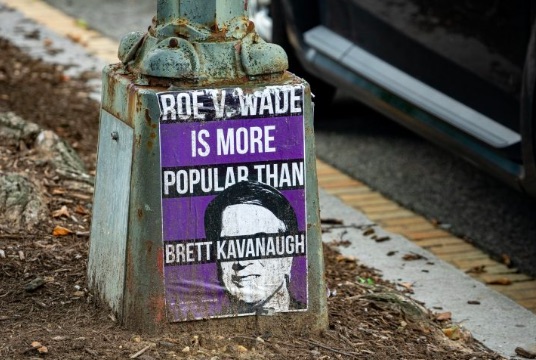
Planned Parenthood isn’t waiting to see if the worst has yet to come for Roe v. Wade in the wake of Brett Kavanaugh’s confirmation to the Supreme Court. Instead, they’re planning to launch a multi-million dollar, nationwide campaign to ensure that abortion remains accessible—even if the landmark decision legalizing it nationwide is overturned.


Photo John Bright / Creative Commons

Kavanaugh’s confirmation to the Court  tips the scales against Roe  for the first time since it was decided in 1973; he would likely cast the fifth vote necessary to overturn the decision  and give states the power, once again, to criminalize abortion providers and their patients. Kavanaugh’s record shows that he is hostile to reproductive freedoms. Should Roe be overturned, women in over 20 states across the country could lose access to safe and legal abortion overnight.

According to Planned Parenthood, overturning Roe would leave over 25 million women with access to safe, legal abortion in their own state, including over 4.3 million Latina women and almost 3.5 million Black women of reproductive age.

Planned Parenthood has been preparing for such a moment since President Trump’s election in 2016. Trump ran on a platform of outlawing abortion and talked about “punishing” women who elect to undergo the procedure on the campaign trail; his administration has consistently attacked women’s access to reproductive health care and undermined their bodily autonomy.

“We know that we’ll need an ironclad network of states and providers across the country where abortion will still be legal and accessible,” Planned Parenthood executive vice president Dawn Laguens told the New York Times,  “no matter what happens at the Supreme Court.”

(Article continued in the right column)

Questions related to this article:

The post-election fightback for human rights, is it gathering force in the USA?

Abortion: is it a human right?

(Article continued from the left column)

The “Care for All” campaign, at face value, is simple: In states where abortion access is at risk, Planned Parenthood will mobilize against legislation that further restricts or outlaws abortion. In states where abortion access will likely remain in place even with Roe, they’ll work to expand access, opening more clinics and hiring more staff in order to keep them open for longer hours in order to accommodate women crossing state lines in pursuit of care. They’ll offer women traveling long distances transportation assistance through a Regional Access Network and push to expand telemedicine abortion access, in place now in 14 states, for those who can’t make the trip. The organization’s efforts will manifest first in states where abortion policies fall short of those in place along both coasts, specifically Illinois.

“In 2018 alone, advocates introduced 869 positive measures expanding reproductive health care—the highest number of policies introduced to advance reproductive rights in a single legislative session ever,” the organization noted in a press release announcing the new multi-pronged effort. “In tandem, advocates and pro-women’s health legislators blocked or delayed 93 percent of the state-level abortion restrictions introduced in the 2018 legislative session. Now, Planned Parenthood Action Fund will kick off the 2019 legislative session by doubling down on this work.”

Abortion access remains at risk even if Roe remains in place as long as a majority of Justices sitting on the Supreme Court are opposed to reproductive freedoms. Rulings in smaller cases on abortion and contraception are now likely to result in outcomes which further inhibit access, allow for obstruction and increase the burdens imposed on women seeking care.

In order to proactively shift cultural perceptions around abortion—and thus provide a buffer against further attacks on women’s reproductive rights—the organization also plans to engage with media more effectively and more often in order to smash stigma and break the silence around what is a safe and common medical procedure with widespread public support. A recent NBC/Wall Street Journal poll showed that Planned Parenthood is popular even amongst conservative voters: 57 percent  of Trump voters oppose women being restricted from accessing birth control, healthcare and cancer screenings.

In advance of their 2019 campaign kick-off, Planned Parenthood is doing all they can to mobilize pro-choice voters with a 20 million dollar  effort in coalition with other like-minded organizations. In total, they predict that they will engage 2.5 million voters  before the midterm elections on November 6.

“We know this is a winnable fight,” the organization told the New York Times  in a statement. “Each of us deserves the right to control our own bodies, including the right to decide if and when to become a parent.”

Executive Director remarks at the UN Security Council open debate on women, peace and security

. WOMEN’S EQUALITY .

An article from UN Women

Under-Secretary-General of the United Nations and Executive Director of UN Women, Phumzile Mlambo-Ngcuka presented the Secretary-General’s report on women, peace and security to the UN Security Council on 25 October, in New York.
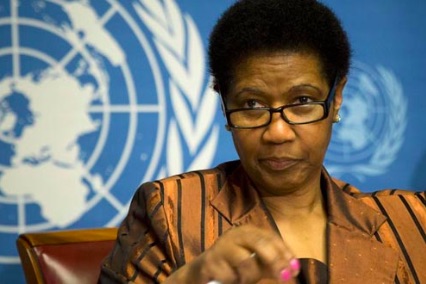
Date: Thursday, October 25, 2018
(As delivered)

It is an honour to address the Security Council and to present the Secretary-General’s report on women and peace and security. I thank Bolivia for all the support they have given us in preparing for this debate

This report is a loud alarm bell on systemic failures to bring women into peacemaking in a meaningful manner.

The trend is, women are being excluded from the peace processes. The ones who do not wage war seem to be disqualified from making peace, while those who may be implicated in making war, seem to find it easier to be at the peace tables. 

I together with DPKO, have just come back from a joint UN/AU mission to South Sudan. The women we met there told us how they long for peace and to resume their lives, after nearly five years of suffering from a civil war that they are not responsible for waging. They said, “we are here because we want to reconcile even though we have never quarreled.”

While they still fear for the future, they appreciated the ‘Revitalized Agreement’ on the resolution of the conflict, which offers new hope for the country and an unmissable opportunity to build peace, with a 35 per cent quota for the representation of women. 

Their fears are however bolstered by the fact that, in these early days of the revitalized agreement, in the National Pre-Transitional Committee – there is just one woman among the ten persons nominated to be members of the committee, this is not the agreed 35 per cent. 

The report today details inescapably how this is not an exception but the rule. How there is at the same time hope for progress, and how we are failing to make it a reality.

But hope is something that we cannot and must never lose.
It shows us undeniable possibilities with undeniable failures, which are costing the lives of women and girls.

They do not wage war, but they die and suffer from it.
A year ago in this chamber, I raised the alarm at the numbers shown by the indicators we track yearly on peace processes and mediation.

Today I want to raise the alarm once more with the hope to jolt us into greater action, as indicators show numbers have stagnated or dropped again. 

For that reason, we focused this year’s report on the need for women’s meaningful contribution to peace, and we call on you to take the much-needed concrete actions. 

We need you to be vigilant about ending superficial efforts to include women that do not genuinely extend the opportunity to influence outcomes. 

We wanted to show that the extreme political marginalization at peace tables is often worse in the institutions set up to implement those agreements. 

And we wanted to spotlight the many ways in which women are keep on being active and resilient. They are active in negotiating ceasefires, civilian safe zones, demobilization of fighters, or humanitarian access at the local level, or drawing up protection plans at the community level, like in Syria, Yemen, Afghanistan or the Central African Republic. 

We want the UN membership to pay due attention to these dynamics, make them visible in forums like this one, and use them to support the women’s political agency, provide financial resources and enable women to do even more.

The continued tolerance for the limited recognition of women’s expertise and lived experience is a setback for all of us. Statistics on women’s involvement speak for themselves.

Between 1990 and 2017, under our watch, women constituted only two per cent of mediators, eight per cent of negotiators, and five per cent of witnesses and signatories in major peace processes. Only three out of 11 agreements signed in 2017 contained provisions on gender equality, continuing last year’s worrisome downward trend. Of 1,500 agreements signed between 2000 and 2016, only 25 raise the role of women’s engagement in the implementation phase.

In Yemen, current efforts at resuming dialogue do not include women, beyond setting up observer bodies to advise the UN Special Envoy. Even in a consultative meeting in London this summer organized by the UN, convening 22 prominent Yemeni leaders to discuss the peace talks, there were only 3 Yemeni women invited.

In Mali, women average a dismal three per cent of the membership of the multiple national committees set up to monitor and implement the peace agreement.

In the Central African Republic, mediation efforts are focused on the presidency and the 14 armed groups and exclude women altogether.

In Afghanistan, the government and its international partners invest efforts in including women in the High Peace Council and provincial peace councils, but when it comes to actual talks with the Taliban, women’s absence is noticeable.

Undeniably, there are possibilities, but also undeniably there are failures and determined women.

In 23 rounds of Afghanistan-Taliban peace talks between 2005 and 2014, women were at the table just twice. Now that there are offers to resume peace talks without pre-conditions, Afghan women peacebuilders want to be at the table and want to make a difference.

Finally, here is a number that is more positive. Security Council decisions about country-specific or regional situations that contained language on women, peace and security increased from 50 to 75 per cent. This must lead to increased action on the front lines. 

The number of women leaders and civil society representatives who briefed the Security Council also increased significantly. 

I thank Council members for these efforts and their continued participation in the Informal Experts Group on Women, Peace and Security, currently co-chaired by Sweden and Peru, in collaboration with the United Kingdom. 

But we need to use all available diplomatic channels and political influence to ensure that these decisions in New York are making a difference on the ground. This is simply not happening in the most meaningful way.

The bigger picture of gender inequality in conflict and post conflict countries is something we need to continue to watch.

Today’s report gives us a broad picture of the many remaining areas of challenge to reach equal representation of women in the vital processes of our nations.

For example, only 16 per cent of parliamentarians in conflict and post-conflict countries are women – same as last year, and the year before that. 

There is 20 per cent representation of women in countries that use quotas and just 12 per cent in countries that do not use quotas. It is for that reason that we appreciate the leading from the front demonstrated by our Secretary-General and call for special measures in the manner in which he is driving the parity process within the United Nations.

This Council just visited the Democratic Republic of Congo ahead of crucial elections. Only 12 per cent of registered candidates are women, just like in the previous elections seven years ago. And women are suffering intimidation.

Of the 17 countries that have elected a woman head of state or government, none are post-conflict countries at this point.

I ask again, as I did last year, we need to heed the call and address the patterns these numbers show us. On our part we will continue to follow up with you on to address this situation with vigilance and make a significant difference.

(continued in right column)

Question for this article

Does the UN advance equality for women?

Prospects for progress in women’s equality, what are the short and long term prospects?

(continued from left column)

It is not only women whose opportunities are being limited. In many conflict settings, girls are one and a half times more likely to be out of primary school and whole communities are set back. The numbers of children lacking education in conflict areas calls for a concrete response and solution, with schools and second chance education.

Child marriage rates are also affected by war. In Yemen, the rate of child marriage was 66 per cent in 2017. It was 52 per cent last year. And 32 per cent before the recent conflict erupted.

Unsurprisingly, but tragically, maternal mortality rates are almost twice the global ratio in conflict and post-conflict countries. Of the 830 women and adolescent girls who die every day from causes related to pregnancy and childbirth, 507 die in countries that are considered fragile because of conflict and disaster.

To address these issues and support the regeneration of families and communities, we need strong and targeted investments in women in conflict areas.

This is just not happening enough, despite undeniable goodwill towards the women peace and security agenda in countries that are affected.

The clear gender inequality in women’s access to resources is not simply caused by the presence of conflict. It is also a reflection of non-prioritization of women’s needs and the relegation of women to small-scale and local peripheral initiatives. 

In the Sahel, where we visited with Deputy Secretary-General, the African Union and Minister Wallstrom, we saw the dire poverty of women and communities in the Lake Chad basin. 

We saw households with no electricity in a part of the world which has the highest penetration of the sun on earth and is more suitable than anywhere else in the world for sustainable energy generation from solar power.

Yet clinics lack power. Women have no cold storage for their fish and the fresh produce needed for food security—which contributes in some cases even more to peace than the military.

In conflict-affected countries, only 11.5 per cent of landholders are women.

Although bilateral aid to promote gender equality in fragile country situations rose by 17 per cent compared to the previous year, it still only amounts to five per cent of total bilateral aid spent on programmes with gender equality as the primary objective.

In the DRC, for example, aid from OECD-DAC to gender equality was only 8 USD per capita last year. The same year, the UN documented a 56 per cent increase in sexual violence.

The share of the aid channeled through non-governmental women’s organizations has stagnated.

Our financial commitments do not match the extent to which we rely on these groups.

Yes, there has been undeniable progress, because the actions undertaken with civil society continue to be favoured as a way to operate. This must turn into concrete action and better investment in these groups.

Civil society and women’s organizations have been failed in the midst of record-breaking numbers of side events at intergovernmental meetings. Our plea is to refocus our energies and resources. I believe there is goodwill and we all want what is best for women and girls.

While we have disappointing indicators on women and girls, global military spending has reached 1.74 trillionUSD, a 57 per cent increase since 2000. Some countries allocate more public money to the military than to education or health.

Ninety per cent of grassroots women’s organizations working in areas directly impacted by terrorism and violent extremism state that current counterterrorism measures have an adverse impact on work for peace, women’s rights and gender equality.

We must respond to the many violations against the human rights of women and girls within these groups, and to the social stigma, economic hardship and discrimination women and girls experience when returning to their homes and communities when they have been part of violent groups.

These challenges are best addressed by actions that protect and promote the rights of victims and are fundamentally based in human rights law.

Women human rights defenders, who are on the front lines, are fighting a lonely battle. Many die a lonely death from weapons that are meant to protect them.

Let us look ahead with hope, and the knowledge of what we are capable of together.

This includes what we can do with women such as the African Women Leaders Network, which has been given a boost by the support of Germany and has focal points already in more 30 African countries.

We are already gearing up for the 20th anniversary of Security Council resolution 1325, which will be an opportunity to shape the agenda for the next decade with new commitments and priorities.

We have to start now to gear up towards better results.

We need more positive signs such as those I saw in Somalia where we need to help accelerate positive change.

There will be opportunities for everyone to weigh in, including at next year’s meeting of the Women, Peace and Security Focal Points Network in Windhoek, Namibia, which will carry a special symbolism for those that have been in this movement for a while. 

For now, I want to share three priorities for 2020.

This August, the world mourned the loss of Kofi Annan. Part of his legacy was that the UN debated and decided to stop supporting peace agreements that included blanket amnesties. I think that, two decades later, it is time for the UN to have a similar conversation about supporting, brokering and paying for peace negotiations that exclude women. This is in your hands. This was raised by women from civil society at the forum this Council was invited to earlier this week, at the initiative of Sweden.

Secondly, one of the many positive examples in the report is the UN Peacebuilding Fund’s steadily growing support to projects advancing gender equality and women’s empowerment.

Finding ways to make the 15 per cent minimum target a reality across all relevant entities and other peace and security funds is a point we can all focus on. Joint programming on rule of law in conflict and post-conflict countries, and addressing educational and Economic resilience, or multi-partner trust funds in fragile settings, should be at the start of all conversations about financing.

And finally, we need to do much more to protect women activists, peacebuilders and human rights defenders in conflict-affected countries. We applaud the historic participation of a Palestinian woman representing civil society in addressing this Security Council for the first time. 

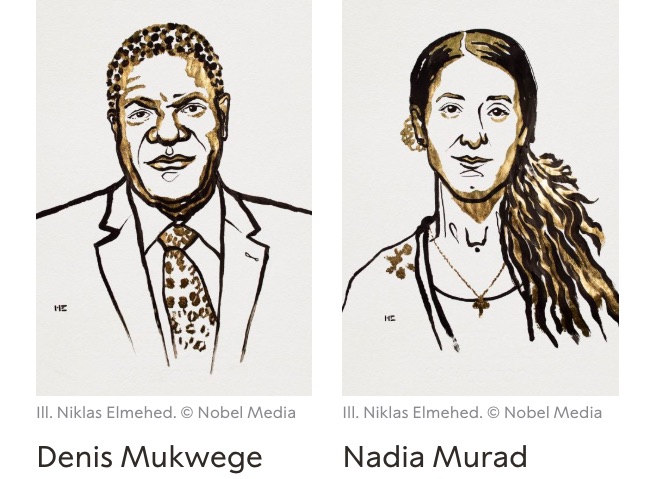
We commend the Nobel Committee’s recognition to Denis Mukwege and Nadia Murad for their advocacy on behalf of victims of wartime sexual violence. It is an example of the importance of this issue, to which my esteemed colleague SRSG Pramila Patten devotes all her time and energy. 

I met many exceptionally courageous women in my recent travels to Somalia, South Sudan, the Sahel and the Rohingya refugee camps in Bangladesh.

Many of them are here today. But many could not be here. 

In 2017, half of the women honoured in the annual tribute of the Association for Women in Development were murdered in conflict affected countries. 

But the list is much longer when we include women political leaders, journalists, justice actors and security sector personnel, and those perceived to be LGBTI or who challenge traditional gender roles simply by their involvement in public life. 

It is my strong wish that we will find the political will to do much more about this epidemic of killings of women over the next decade than we have in this past one.

Change is within our hands. Let us work for positive indicators for the next report and let us make sure that next Secretary-General’s report will be able to show that we are turning the corner.

Thank you.
Women Human Rights Defenders Gather in Bougainville

. WOMEN’S EQUALITY .

An article from the International Women’s Development Agency

Almost 200 women leaders from across Bougainville have come together to advocate for peace in their communities and gender equality for all. [Editor’s note: Bougainville is an island of Papua New Guinea.]

The women leaders are part of a network of Women Human Rights Defenders (WHRDs) in Bougainville, supported by IWDA’s partner Nazareth Centre for Rehabilitation (NCfR). WHRDs work tirelessly to defend women’s rights, acting as educators, advocates, counsellors and activists in their communities.


Women leaders gather at the 2018 Bougainville Women Human Rights Defenders Forum

The Bougainville WHRD Forum was coordinated by NCfR in partnership with IWDA. This year’s forum was unique, with local WHRD groups hosting events in several locations across Bougainville, and thousands of community members watching on.

(Article continued in right column)

Question for this article

Prospects for progress in women’s equality, what are the short and long term prospects?

(Article continued from left column)

Discussions focused on issues of family and sexual violence, community safety and security, poverty reduction, leadership, and recognition of the work of WHRDs, particularly those in rural communities. The women also discussed sexual reproductive health and rights, access to education and services and the need for action on climate change, among many other important issues.

Other organisations attended to share information with women leaders on critical topics, including representatives from the law and justice sector who discussed the Family Protection Act (FPA). The Act states that Village Magistrates have the power to issue Interim Protection Orders, encouraging women to access justice through the court system. The FPA criminalises family and sexual violence with these matters no longer considered a family issue.

Sister Lorraine Garasu, Director of Nazareth Centre for Rehabilitation, said responding to and preventing violence remained an urgent priority.

Participants of the forum had the chance to share their stories directly with high-level government officials, including the President of the Autonomous Bougainville Government, Honourable John Momis. Women leaders raised their concerns about the rights of women and children in Bougainville and other issues affecting their communities.

IWDA CEO Bettina Baldeschi was at the forum, and said she was inspired by the women’s courage and determination to stand up for change.

At the end of the forum, Nazareth Centre for Rehabilitation and IWDA officially launched the second phase of the From Gender Based Violence to Gender Justice and Healing  project.

This project is funded by the Australian Government in partnership with the Government of Papua New Guinea as part of the Pacific Women Shaping Pacific Development program. The first phase of the project ended in March, and reached almost 22,000 people in Bougainville through counselling, trainings, awareness raising and initiatives focusing on prevention of family and sexual violence, as well as on support and services for survivors.

Nurturing Girls’ School Clubs to End Child Marriage in Ethiopia

. WOMEN’S EQUALITY .

An article from UNICEF

“I went to the police station when my parents told me that I am getting married,” says Mestawet Mekuria,14, a 7th grader in Ayti Primary School, Amhara region, northern Ethiopia. She is one of 20 girl students who have been rescued from getting married in the school.


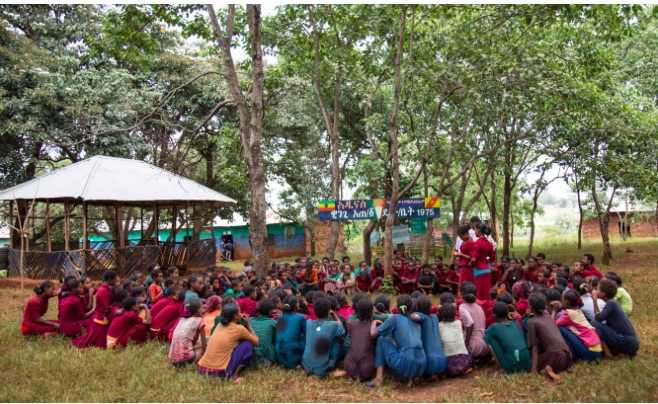
Female students of Wengi primary school in Zigem, Amhara region gather for girls club discussions on child marriage.

“I had learned about child marriage and its consequences in our school’s girls’ club. I told my parents that I do not want to get married. But they refused, and that is when I ran to the police station.” Mestawet went to the police assuming that her parents will only be warned seriously. But it was much more than that. Her parents were arrested and imprisoned for two weeks for violating the law.

“I was sad when they were arrested but they refused to listen to me.”

Child marriage, a formal marriage or informal union before age 18, is prevalent across all regions of Ethiopia. According to the 2011 Ethiopian Demographic Health Survey (EDHS), Amhara region has the second highest rate of child marriage, 56 per cent, next to Benishangul-Gumuz region which has 58.

Child marriage often perpetuates an intergenerational cycle of poverty. When girls get married at early age, their prospects for a healthy and successful life will be at stake. Evidence shows that girls who marry early are less likely to finish school and more likely to be victims of domestic violence and abuse. In addition, young teenage girls are more likely to die due to complications in pregnancy and childbirth than women in their 20s.

(Article continued in right column)

Question for this article

Prospects for progress in women’s equality, what are the short and long term prospects?

(Article continued from left column)

Strengthening girls’ club as part of the accelerated effort to end child marriage in Zigem woreda, Amhara Region was initiated in 2015 by the Bureau of Women and Children Affairs (BoWCA) through support from UNICEF-UNFPA Global Programme to Accelerate Action to End Child Marriage.

The ending child marriage programme focuses on enhancing the capacity of girls through providing life skill training, information about their rights and available services as well as enhancing the responsiveness of schools and legal services. It also targets families and communities to change their attitude towards ending the practice and show support to alternative life options for girls such as their education.

According to Abebe Adamu, one of the trainers from Bureau of Women and Children Affairs, 106 girls were rescued from getting married in 2016 and 55 girls in 2017. “The community is currently aware that child marriage is harmful,” he says. “Students are also more aware of their rights to reject any marriage proposal coming to them against their will.”

Wubayehu Tilahun, girls’ club coordinator and a teacher at Ayti Primary School is pleased with the girls’ club performance. “Seeing my students continue their education gives me a great pleasure. Here in Ayti, we have rescued 20 girls from marriage in the past two years, and we will continue to be fighting against this harmful practice.”

Although, Mestawet’s parents were angry for what happened to them, later they made peace with her through a mediation which was led by village elders. “My parents now understand about child marriage and its consequences. They are no longer angry with me,” says Mestawet.

Mestawet wants to become either a doctor or a teacher. It might be years before she realizes her dreams but in the meantime, she keeps protecting girls in her village, including her own younger sister, from getting married early.

“Child marriage is a harmful practice, and I want girls to continue with their education like me,” says Mestawet. “I have seen my classmates quit school because they are married. I always tell my friends in my village about child marriage, and I will continue to do so to others.”

(Thank you to Janet Hudgins, the CPNN reporter for this article.)

Education for girls projects in Jamaica and Egypt win UNESCO prize

. WOMEN’S EQUALITY .

An article from Their World

Kemoshia Gibbs was only 13 when she found out she was pregnant. She cried every day – and so did her mother. “I was so ashamed, depressed, stressed, confused, frustrated, sad and had anger issues,” she said. “I faced a mix of feelings, all bundled up in one. I was afraid to go outside. It was as if I was confined to the bedroom.”

Kemoshia left her high school and moved into the Women’s Centre of Jamaica programme. It helps to provide continuing education, health services and other assistance for girls who drop out during pregnancy – and then assists their reintegration into school.

After having a son, and with the organisation’s help, she moved back into the regular school system in 2014. Determined to succeed, she juggled with the demands but graduated as the top female student at Godfrey Stewart High.

Kemoshia – who hopes to have a career in humanities or food science and technology – said: “I am forever grateful for the contribution of the Women’s Centre in my life. They were there when my life was a mess.”

(Article continued in right column)

Question for this article

Gender equality in education, Is it advancing?

Prospects for progress in women’s equality, what are the short and long term prospects?

(Article continued from left column)

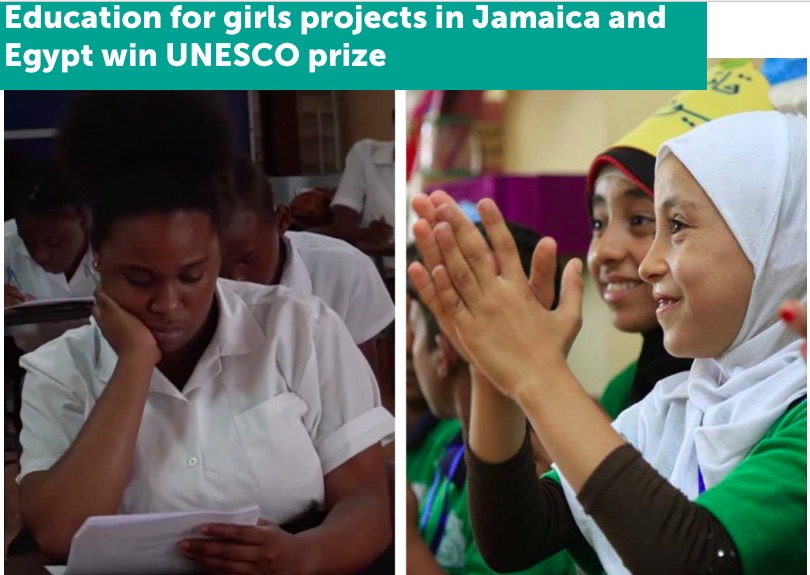
That work has seen the Women’s Centre of Jamaica named as one of two winners of this year’s UNESCO Prize for Girls’ and Women’s Education. The other is the Misr El-Kheir Foundation from Egypt, for providing community-focused educational opportunities to children aged from six to 14 in remote areas.

They received their $50,000 prizes at a ceremony in Paris. Zoe Simpson, Executive Director of the Women’s Centre of Jamaica, told Their News: “The UNESCO prize will be used to further enhance and expand the virtual delivery of special preparatory classes to the rural centres.  

“The classes prepare the older adolescent mothers to sit the external examinations that enable them to matriculate to tertiary-level studies.”

The Misr El-Kheir Foundation  won for a project called Educational Opportunities for Children in Underserved Villages through Community Schools.

This provides community-focused educational opportunities to children aged from six to 14 in remote areas. It particularly focuses on girls who are not enrolled in primary education or who have dropped out due to early marriage or other obstacles. 

Mohamed Abdel Rahman, Deputy Managing Director of Misr El Kheir Foundation, said: “We build schools inside the communities. We get the teachers from within the same communities. So the girls have the right to education and easy access to schools.”

The UNESCO prize – funded by the Chinese government – was launched in 2016 to recognise the Sustainable Development Goals on education and gender equality. 

(Thank you to Janet Hudgins, the CPNN reporter for this article.)

Schoolgirls become world leaders for the day in equal rights campaign

. WOMEN’S EQUALITY .

An article from Their World

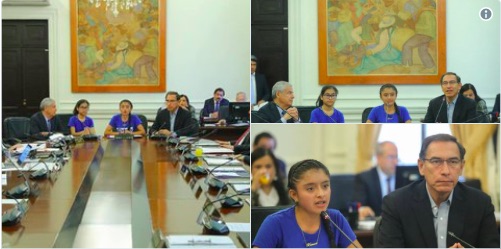
To mark International Day of the Girl today, more than 1000 girls have taken over some of the top jobs around the globe. – from executives at Google and Facebook to government posts and local councils. It’s all part of a campaign called Girls Get Equal, launched on International Day of the Girl by the child rights organisation Plan International. 


Amazing #GirlsTakeover news from Peru. Emily has taken over from her country’s President! “I received the enormous responsibility to become President and represent the voices of Peruvian girls, especially those who live in rural areas like me.“#DayoftheGirl

Around the world, girls are denied equal access to education and opportunity – just because they are girls.

Almost one in 10 girls are not in primary school, according to new United Nations figures. Girls of every age are more likely to be excluded from education than boys. And that leaves them at risk of child labour, early marriage and exploitation.

Among today’s takeovers is Emily – president of Peru!

In Paraguay, 11-year-old schoolgirl Nara has also become president for the day. She dreams of becoming an engineer – but she also fears sexual assault after several of her friends were attacked and raped.

“My example for other girls as president is never give up and be confident in yourself. It’s not just the boys who can achieve things,” Nara told the Thomson Reuters Foundation.

“I would like that girls are treated as equals. Men always leave us behind and place barriers in our way.”

(Article continued in right column)

Question for this article

Prospects for progress in women’s equality, what are the short and long term prospects?

(Article continued from left column)

Nara said sexual violence is one of the biggest problems holding girls back in Paraguay.

“The thing that’s most difficult for girls here is the abuse, the harassment, the rapes,” she said. “Girls feel trapped inside themselves because of the violence they have experienced.”

Reports show about 18 million girls aged 15 to 19 are victims of sexual violence each year – often leading to school dropout and reinforcing cultural practices such as early marriage.

Millions of girls are harassed on their way to and from school. Even when they get there, they can suffer sexual violence and bullying.

For last year’s International Day of the Girl, Theirworld looked at  13 reasons why girls are not in school. They include early marriage, pregnancy, conflict, disabilities and a lack of female teachers and role models.

More than 50 million child marriages could be prevented by 2030 if all girls finished secondary school, the charity Save the Children said today.

As well as education, the rights of girls and women are routinely being overlooked. A 2017 global survey of 30,000 young people by the World Economic Forum found more than half of young women felt their views were not heard or not taken seriously.

Only about one in four parliamentarians worldwide is a woman, while fewer than one in five government ministers is female.

As part of Girls Get Equal, other takeovers today include girls running the parliaments of Zimbabwe and Western Australia.

Anne-Birgitte Albrectsen, chief executive of Plan International, said: “It’s girls’ turn to take the lead – to be seen, heard and valued as equals.”

(Thank you to Janet Hudgins, the CPNN reporter for this article.)

The Nobel Prize for Peace 2018

. . WOMEN’S EQUALITY . .

An announcemet from The Nobel Prize Organization

The Norwegian Nobel Committee has decided to award the Nobel Peace Prize for 2018 to Denis Mukwege and Nadia Murad for their efforts to end the use of sexual violence as a weapon of war and armed conflict. Both laureates have made a crucial contribution to focusing attention on, and combating, such war crimes. Denis Mukwege is the helper who has devoted his life to defending these victims. Nadia Murad is the witness who tells of the abuses perpetrated against herself and others. Each of them in their own way has helped to give greater visibility to war-time sexual violence, so that the perpetrators can be held accountable for their actions.

The physician Denis Mukwege has spent large parts of his adult life helping the victims of sexual violence in the Democratic Republic of Congo. Since the Panzi Hospital was established in Bukavu in 1999, Dr. Mukwege and his staff have treated thousands of patients who have fallen victim to such assaults. Most of the abuses have been committed in the context of a long-lasting civil war that has cost the lives of more than six million Congolese.

Denis Mukwege is the foremost, most unifying symbol, both nationally and internationally, of the struggle to end sexual violence in war and armed conflicts. His basic principle is that “justice is everyone’s business”. Men and women, officers and soldiers, and local, national and international authorities alike all have a shared responsibility for reporting, and combating, this type of war crime. The importance of Dr. Mukwege’s enduring, dedicated and selfless efforts in this field cannot be overstated. He has repeatedly condemned impunity for mass rape and criticised the Congolese government and other countries for not doing enough to stop the use of sexual violence against women as a strategy and weapon of war.

(Article continued in right column)

(click here for the article in French.)

Question related to this article:

Protecting women and girls against violence, Is progress being made?

What role should men play to stop violence against women?

(Article continued from left column)

Nadia Murad is herself a victim of war crimes. She refused to accept the social codes that require women to remain silent and ashamed of the abuses to which they have been subjected. She has shown uncommon courage in recounting her own sufferings and speaking up on behalf of other victims.

Nadia Murad is a member of the Yazidi minority in northern Iraq, where she lived with her family in the remote village of Kocho. In August 2014 the Islamic State (IS) launched a brutal, systematic attack on the villages of the Sinjar district, aimed at exterminating the Yazidi population. In Nadia Murad’s village, several hundred people were massacred. The younger women, including underage children, were abducted and held as sex slaves. While a captive of the IS, Nadia Murad was repeatedly subjected to rape and other abuses. Her assaulters threatened to execute her if she did not convert to their hateful, inhuman version of Islam.

Nadia Murad is just one of an estimated 3 000 Yazidi girls and women who were victims of rape and other abuses by the IS army. The abuses were systematic, and part of a military strategy. Thus they served as a weapon in the fight against Yazidis and other religious minorities.

After a three-month nightmare Nadia Murad managed to flee. Following her escape, she chose to speak openly about what she had suffered. In 2016, at the age of just 23, she was named the UN’s first Goodwill Ambassador for the Dignity of Survivors of Human Trafficking.

This year marks a decade since the UN Security Council adopted Resolution 1820 (2008), which determined that the use of sexual violence as a weapon of war and armed conflict constitutes both a war crime and a threat to international peace and security. This is also set out in the Rome Statute of 1998, which governs the work of the International Criminal Court. The Statute establishes that sexual violence in war and armed conflict is a grave violation of international law.  A more peaceful world can only be achieved if women and their fundamental rights and security are recognised and protected in war.

This year’s Nobel Peace Prize is firmly embedded in the criteria spelled out in Alfred Nobel’s will. Denis Mukwege and Nadia Murad have both put their personal security at risk by courageously combating war crimes and seeking justice for the victims. They have thereby promoted the fraternity of nations through the application of principles of international law.

Morocco and Senegal promote gender equality through media

. . WOMEN’S EQUALITY . .

An article from Devdiscourse

The first traveling workshop of the project ” Prevent violence and promote gender equality through the media in Morocco and Senegal ” was held from 16 to 18 August 2018 in Thiès (Dakar-Senegal). An activity that allowed the various participating journalists to build their capacity in the mastery of the concept of gender, human rights issues and their consideration in the collection and processing of information.


©UNESCO/Théodora Samba Taliane

The project “Preventing violence and promoting gender equality through the media in Morocco and Senegal”, funded by Spain under the International Program for the Development of Communication (IPDC), has as its main objective to empower beneficiaries to promote gender equality and combat the reporting and spread of hate speech in the media while promoting a better strategic approach to the use of digital.

(article continued in right column)

Click here for the version in French)

Question related to this article:

Protecting women and girls against violence, Is progress being made?

African journalism and the Culture of Peace, A model for the rest of the world?

(article continued from left column)

The project is implemented in Senegal with the support of partners at the national level such as the Ministry of Communication, Telecommunications, Posts and the Digital Economy, the Senegalese National Commission for UNESCO (COMNAT), the Union of Associative and Community Radios of Senegal (URAC), 

A series of four itinerant workshops are planned to be held throughout Senegal. It is in this context that the first event was organized. The workshop, which was held on August 16, 17, 18, welcomed nearly 40 participants, members of the community radios as well as the online press, located in the region of Dakar and Thiès.

For three days they were trained on the concepts of human rights, gender and the Convention on the Elimination of All Forms of Discrimination against Women (CEDAW); and in journalistic techniques, on the notions of ethics and deontology in the treatment of information. 

At the end of the training sessions, the participants were asked to make radio and written productions, respecting the notions of gender, ethical and ethical according to the knowledge acquired. These productions will be monitored throughout the implementation of the project for dissemination to local communities. 

This workshop was an opportunity, especially for members of the online press, to participate for the first time in an activity dealing with gender issues, demonstrating clearly that the need for strengthening on these themes is essential, and this at all scales. The next traveling workshops will be held in Kaolack (September), St. Louis (October) and Kolda (November).

Promoting a culture of peace and gender equality is central to UNESCO’s mission. This project is part of the Organization’s drive to strengthen peace and non-violence through the media with a focus on building their capacity to advance ethical, objective and quality journalism.

Historic leap in Tunisia: Women make up 47 per cent of local government

. WOMEN’S EQUALITY .

An article from UN Women

Seven years after the 2011 Revolution and four years after the adoption of the Constitution, women now make up 47 per cent of the local council positions in Tunisia following the May 2018 elections. The dramatic increase in women members is the result of a 2016 electoral law that includes the principles of parity and alternation between men and women on candidate lists for all elections.


Ichrak Rhouma participated in the Political Academy Project. She was elected on May 6th, 2018 in Sidi Hassine council, Tunis. Photo: Aswat Nissa

In May, Ichrak Rhouma was elected to the Sidi Hassine Council in Tunis, the capital city. Prior to being elected, Rhouma participated in the Women’s Political Academy, a joint project by UN Women and the Tunisian women’s rights organization, Aswat Nissa (Women’s Voices). The Academy trained women candidates on local governance, missions and roles of municipal councils, as well as media relations. Rhouma says that the Women’s Political Academy “allowed us to deepen our knowledge on women’s rights in general, but also to learn new concepts such as gender-sensitive budgeting.”

In addition to the Academy, the project has conducted research on women’s expectations of municipal council’s activities in five regions across the country. The study’s results informed candidates’ electoral campaigns and shaped regional development planning.

(Article continued in right column)

Question for this article

Prospects for progress in women’s equality, what are the short and long term prospects?

What is the United Nations doing for a culture of peace?

(Article continued from left column)

Prior to the 2018 elections in Tunisia, UN Women and its civil society partners conducted capacity building sessions and supported the updating of the gender-sensitive election observation manual. UN Women also provided capacity building to 75 election observers who were trained on the importance of women’s participation in elections and how to observe gender-related issues during the voting stages.

UN Women also supported the Tunisian League of Women Voters (LET) to run awareness-raising campaigns to increase voter participation, especially in the regions of Sousse, Bizerte and Nabeul, which had registered the lowest rates in 2012 elections.

“The objective was to invigorate a participatory democracy and political culture within women and youth. Our awareness campaigns trained and engaged young men and women who went door to door explaining the importance of women’s participation in the political scene,” explains Nejma Ben Kheher, Project Officer at LET.

Khedher added, “Now that we have this high number of elected women in local and regional councils, we hope to continue supporting them with targeted training, such as access to information or gender-responsive budgeting to help them succeed in their mission.”

“The increased women’s representation in the municipal councils offers an opportunity to impact territorial policies in Tunisia,” said Leila Rhiwi, UN Women Representative in Maghreb. “UN Women will continue supporting the councils to integrate gender concerns into their communal development plans that foster good governance and women’s leadership.”

Tunisia is one of the few countries in the world to establish the principle and practice of equal representation of men and women across candidate lists (horizontal parity – where women should head 50 per cent of candidate lists), as well as down the candidate lists (vertical parity – alternating men and women through the list), in its electoral law. While gender parity has been achieved regarding the municipal lists, according to the High Authority for Independent Elections, more work is needed to support horizontal parity, since women only made up 29.6 per cent of positions at the head of party lists.

Tunisia will hold its parliamentary and presidential elections in 2019.