All posts by CPNN Coordinator

About CPNN Coordinator

Dr David Adams is the coordinator of the Culture of Peace News Network. He retired in 2001 from UNESCO where he was the Director of the Unit for the International Year for the Culture of Peace, proclaimed for the Year 2000 by the United Nations General Assembly.

USA: Wilmington Peace Plan

. DEMOCRATIC PARTICIPATION .

Excerpt from the website of Pacem in Terris, Wilmington, Deleware

Pacem in Terris and other non-profits in the Wilmington area (Wilmington Peacekeepers, One Village Alliance, DE Coalition Against Gun Violence, etc.) want to develop a strategic vision, plan and resource document that will bring peace to Wilmington. The plan will deal with the actions needed to transform a culture of violence to a culture of peace. The plan would include input from civic groups, city and state governments and agencies, churches, students, the elderly, and general public.


wilmington
Video of March for a Culture of Peace

Building on the very successful September 2014 March for a Culture of Peace (and Rally and Call to Action) that we organized (45 co-sponsors, 400+ participants), and subsequent public forum events every month since then, we see the need and opportunity for a Wilmington Peace Plan that presents a clear vision of our desired goal, and the means for achieving it. The strategic plan would include needed actions by city and state legislators, divisions of the city, county and state government, neighborhoods, families, churches, schools, businesses, non-profit organizations and individuals.

The accompanying resource document would be printed as well as available on the web and via smartphone app. It would include organizations throughout our region that are engaged in what we call “building a culture of peace”, and include resources and information on a wide variety of topics– from anti-bullying strategies, civic engagement, domestic violence prevention, school to prison changes, financial literacy, management and violence, gun violence reduction,, gangs and violent street groups, safe havens for youth, juvenile justice system, mental health providers, mentoring, restorative justice, support groups for ex-offenders, service organizations, street level outreach, dating violence, workplace violence prevention and other topics.

Together, the Wilmington Peace strategic plan and Wilmington Peace Resources document will present a clear vision of a possible and attractive peace-filled future; the actions and means for getting there, and the resources needed to achieve the vision and implement the plan.

Click here for Tom Davis’ recap of the December 2014 event and click here for a video of the event. Also, on December 28th, Wilmington Friends Meetinghouse had a Memorial to the Lost. Click here for the video.

Questions for this article:

Obama’s speech on gun control: the ‘fierce urgency of now.’

DISARMAMENT & SECURITY .

Some excerpts from President Obama’s speech on gun safety reform

“In Dr. King’s words, we need to feel the ‘fierce urgency of now.’ Because people are dying. And the constant excuses for inaction no longer do, no longer suffice. That’s why we’re here today. Not to debate the last mass shooting, but to do something to try to prevent the next one.”


Obama
Photo from Video of Obama speech

“How did we get here? How did we get to the place where people think requiring a comprehensive background check means taking away people’s guns? Each time this comes up, we are fed the excuse that commonsense reforms like background checks might not have stopped the last massacre, or the one before that, or the one before that, so why bother trying. I reject that thinking.”

“So let me outline what we’re going to be doing. Number one, anybody in the business of selling firearms must get a license and conduct background checks, or be subject to criminal prosecutions … We’re also expanding background checks to cover violent criminals who try to buy some of the most dangerous firearms by hiding behind trusts and corporations and various cutouts … And these steps will actually lead to a smoother process for law-abiding gun owners, a smoother process for responsible gun dealers, a stronger process for protecting the public from dangerous people.”

“All of us should be able to work together to find a balance that declares the rest of our rights are also important — Second Amendment rights are important, but there are other rights that we care about as well. And we have to be able to balance them. Because our right to worship freely and safely — that right was denied to Christians in Charleston, South Carolina. And that was denied Jews in Kansas City. And that was denied Muslims in Chapel Hill, and Sikhs in Oak Creek. They had rights, too.

Our right to peaceful assembly — that right was robbed from moviegoers in Aurora and Lafayette. Our unalienable right to life, and liberty, and the pursuit of happiness — those rights were stripped from college students in Blacksburg and Santa Barbara, and from high schoolers at Columbine, and from first-graders in Newtown. First-graders. And from every family who never imagined that their loved one would be taken from our lives by a bullet from a gun.”

Question for this article:

Will Obama’s initiative help reduce gun violence?

See below for comment form.

Sierra Leone News: Minister urge delegates to develop a culture of peace

TOLERANCE & SOLIDARITY .

An article by Edna Smalle in Awoko

The Minister of Youth Affairs, Hon. Alimamy Kamara on Friday urged youth delegates at the official opening of the first youth conference of Mano River Union (MRU) to develop a culture of peace.

Sierra Leone

The Minister of Youth Affairs, Hon. Alimamy Kamara on Friday urged youth delegates at the official opening of the first youth conference of Mano River Union (MRU) to develop a culture of peace.

While he was giving the keynote address at Kona Lodge in Freetown, on the theme “Youth Empowerment toward Sustainable Sub regional Peace and Security, the minister said there was the need for young people to congregate and discuss peace and security in the MRU. He said that young people have a stake in society and therefore should be at the forefront of enhancing social, economic and political development, noting that societal situation has provided difficult conditions for the youths.

Talking about the challenges youths are facing, he said the use of drugs and harmful substances, teenage pregnancy, migration and early marriage, among others, are all issues affecting the young.

He encouraged them to be honest to each other and to wake up and transform their communities to meet international standards. He emphasized that if they want their country to move forward they should consolidate security issues, practicalize agriculture, trade and peace, among others.

In her official statement on behalf of the MRU, the Deputy Secretary General of the union, Linda Koroma said the development of the young people is challenging as most of them have little or no technical and productive skills to address not only their livelihood but also their contribution to national and sub-regional development. She said the purpose of the meeting therefore was to create a platform where the youths can identify the challenges they are facing and how to address them.

Members of the delegation suggested among others that children be trained to be less dependent so that they can make something meaningful out of their lives; provide jobs that will enable youths get rid of poverty; and that the MRU should develop communication plan for youths.

The delegates include youth representatives from Sierra Leone, Guinea, Liberia and Cote d’ Voire.

(Thank you to the Peace Education News for informing us about this article.)

Question related to this article:

UC System [California] Divests From Private Prisons Under Pressure From Students

….. HUMAN RIGHTS …..

An article from Care2 (reproduced as a non-commercial service)

On December 18, the University of California system quietly dropped a big bomb: It will be selling off its $30 million worth of investments in private prison corporations by the 31st of the month, thanks to considerable pressure from student groups. The move is a huge step for organizations concerned about inequalities in the justice system and the conditions at for-profit prisons, which definitely generate funds for shareholders, but don’t provide adequate living conditions for their detainees. The Afrikan Black Coalition is largely responsible for the divestment, as the group was the one to put forward a resolution demanding the sale, and representatives of the ABC met with UC officials to discuss disposing of the investments in an orderly fashion — typically divestment begins quietly before official announcements, to avoid creating instability in stock prices.

california
Photo credit: Richard Masoner

The University of California system has opted to divest holdings in controversial or harmful corporations before, as for example in 2006, when it dropped firms with investments in South Sudan, and earlier this year, when it pulled out of $200 million in oil and tar sands investments. As an economic tool, divestment sends an extremely powerful message, especially when it comes from huge institutional investors like statewide university systems. Mass sell-offs like this one can be used as grounds for other organizers to pressure different institutions to make similar moves, and they also set a model for other institutional investors considering ethical financial practices. In this instance, Columbia University set the bar by dropping for-profit prison investments over the summer [See CPNN article of June 27 this year]. Choosing to be selective not just about stock performance but social impacts is also part of the UC’s investment model.

(Article continued in right column)

Question for this article

Question: Divestment, is it an effective tool to combat the violation of human rights?

(Article continued from left column)

Dropping these investments will be a blip in the system’s massive portfolio of stock, but advocates say it’s the right thing to do. The prison system is plagued with racial and economic inequalities that contribute to a disproportionate number of incarcerated people of color and low-income people, with considerable overlap between these two groups. Between issues like racial profiling, fewer resources for judicial defense, and prejudices within the legal system, people are unjustly incarcerated simply for the crime of not being white. For-profit companies like Corrections Corporation of America have taken advantage of the growing privatization of the prison industry to generate $1.7 billion in revenue in 2011 alone. Geo Group, Inc. also generates substantial profits for shareholders annually through its networks of jails, prisons and immigration detention facilities. UC will be selling off all its shares in both.

These companies function not as public enterprises, but as corporations with the goal of cutting costs wherever possible. Many have substandard physical plants, insufficient staff, inadequate prison health care and food, high rates of physical and sexual assault, and other systemic problems. Even “three hots and a cot” isn’t guaranteed behind their walls, and in 2012, the Supreme Court actually limited the ability to sue private prisons for civil rights violations. This leaves prisoners with even fewer resources to advocate for their rights and safety behind bars. While groups like the ACLU advocate and litigate for prisoners stuck on the inside, one of the best ways to strike at the heart of the private prison system is to make it less profitable with steps like dumping shares and making it a toxic investment for potential institutional investors.

This move is a strong indicator that the UC system remains committed to regularly evaluating investments and determining whether it wants to continue sinking funds into endeavors that violate ethical guidelines. It also illustrates that organized and highly active student groups can make a big difference not just on campus, but in the world in general. With protest movements like Black Lives Matter getting more active and noisy in recent years, it’s clear that the next generation of youth is growing up with a mission to make the world a better place, and the courage to lobby those most in a position to do so.

[Thank you to Janet Hudgins, the CPNN reporter for this article.]

Global arms industry: West still dominant despite decline; sales surge in rest of the world, says SIPRI

DISARMAMENT & SECURITY .

A press release by the Stockholm International Peace Research Institute

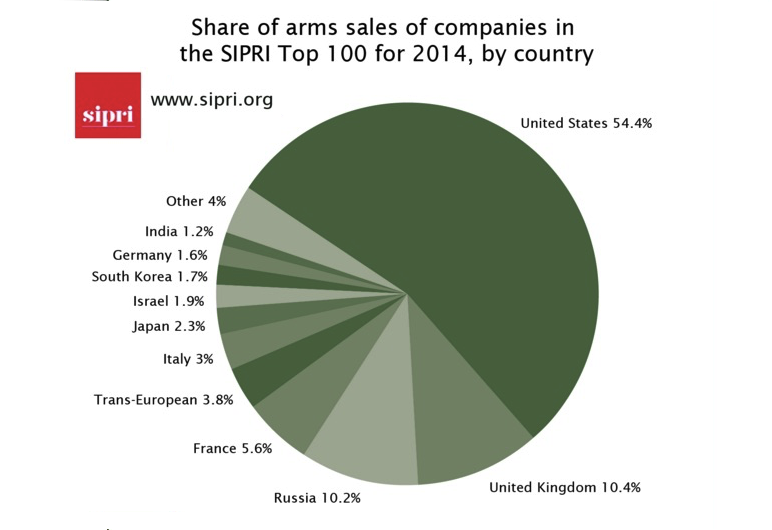
(Stockholm, 14 December 2015) Sales of arms and military services by the largest arms-producing companies—the SIPRI Top 100—totalled $401 billion in 2014 according to new international arms industry data launched today by the Stockholm International Peace Research Institute (SIPRI).

sipri

For the fourth consecutive year, sales of arms and military services by the SIPRI Top 100—the largest arms-producing companies by arms sales—have decreased. However, with a reduction of 1.5 per cent in real terms between 2013 and 2014, the global decline in SIPRI Top 100 total arms sales remains moderate. Falls in 2014 are due to lower arms sales for companies based in North America and Western Europe, as Top 100 companies located in other regions of the world have collectively increased their arms sales.

Companies based in the United States continue to dominate the Top 100, with a 54.4 per cent share of the total. US companies’ arms sales decreased by 4.1 per cent between 2013 and 2014, which is similar to the rate of decline seen in 2012–13. One company bucking the downward trend is Lockheed Martin, which has occupied the first position in the Top 100 since 2009. Its arms sales grew by 3.9 per cent in 2014 to $37.5 billion. Lockheed Martin’s lead over the second ranked company Boeing, which had total arms sales of $28.3 billion, increased by $4.4 billion in 2014.

‘With the acquisition of helicopter manufacturer Sikorsky Aircraft Corp. in 2015, the gap between Lockheed Martin and other companies ranked in the Top 10 will widen even further next year,’ says Aude Fleurant, Director of SIPRI’s Arms and Military Expenditure Programme.

Western European companies’ arms sales decreased by 7.4 per cent in 2014. Only German (+9.4 per cent) and Swiss (+11.2 per cent) companies show overall growth in their arms sales in real terms. The rise in German arms sales was due to a significant growth in turnover for German shipbuilder ThyssenKrupp (+29.5 per cent), while Switzerland’s Pilatus Aircraft benefited from growing demand for its trainer aircraft, boosting Swiss sales. The companies representing the seven remaining Western European countries in the Top 100 all show an overall decline in their sales.

Despite difficult national economic conditions, the Russian arms industry’s sales continued to rise in 2014. The number of Russian companies ranked in the Top 100 went up from 9 to 11, amounting to a share of 10.2 per cent of total Top 100 arms sales in 2014. The two completely new entrants are High Precision Systems (39th) and RTI (91st), while the newly established United Instrument Manufacturing Corporation (UIMC) has entered the list in 24th position, replacing Sozvezdie, which merged with a number of other companies to form UIMC. The Russian company showing the most significant growth in arms sales is Uralvagonzavod, with an increase of 72.5 per cent in its arms sales. Almaz-Antey, with a near 23 per cent increase in arms sales, is now in 11th position.

(Article continued on the right column)

(Click here for a version of this article in French or here for a version in Spanish.)

Question for this article:

Does military spending lead to economic decline and collapse?

(Article continued from the left column)

‘Russian companies are riding the wave of increasing national military spending and exports. There are now 11 Russian companies in the Top 100 and their combined revenue growth over 2013–14 was 48.4 per cent,’ says SIPRI Senior Researcher Siemon Wezeman.

In contrast, arms sales of Ukrainian companies have substantially declined. UkrOboronProm has fallen from 58th position in 2013 to 90th in 2014, with a drop in sales of 50.2 per cent. Motor Sich, the other Ukrainian company that was ranked in the 2013 Top 100, has left the list altogether. ‘The noticeable decline in sales for Ukrainian companies was largely due to disruption caused by the conflict in eastern Ukraine, the loss of the Russian market, and the fall in the value of the local currency,’ says Siemon Wezeman.

Emerging producers continue to strengthen their presence in the Top 100
In 2013, SIPRI introduced an ‘emerging producers’ category to better track the evolution of companies based in countries that have stated goals of military industrialization. For 2014, this category covers Brazil, India, South Korea and Turkey. The combined arms sales of companies located in these countries represents 3.7 per cent of SIPRI Top 100 total arms sales. Their revenues rose by 5.1 per cent between 2013 and 2014.

There are two Turkish arms-producing companies ranked in the Top 100: ASELSAN, which increased its sales by 5.6 per cent in 2014, but has moved down in the ranking from 66th to 73rd; and Turkish Aerospace Industry (TAI), which has entered the Top 100 at rank 89, with a growth in arms sales of 15.1 per cent. ‘Turkey is seeking more self-sufficiency for its arms supplies and this, coupled with an aggressive export drive, has contributed to the rapid growth in revenue for ASELSAN and TAI,’ says Pieter Wezeman, a Senior Researcher at SIPRI.

South Korean companies have also raised their profile in the Top 100 in 2014. ‘Fifteen companies from Asia (not including China) have made it into the Top 100,’ according to Siemon Wezeman. ‘Many of them showed quite stable levels of sales but South Korean companies increased their total sales in 2014 by 10.5 per cent compared to 2013.’ The latest South Korean entrant to the Top 100 is Hyundai Rotem, a military vehicle manufacturer.

The SIPRI Arms Industry Database was created in 1989. It contains financial and employment data on arms-producing companies worldwide. Since 1990, SIPRI has published data on the arms sales and employment of the 100 largest of these arms-producing companies in the SIPRI Yearbook.

Arms sales are defined by SIPRI as sales of military goods and services to military customers, including sales for domestic procurement and sales for export. Changes are calculated in real terms and country comparisons are only for the same companies over different years.

This is the first of three major data set pre-launches in the lead-up to the publication of the next edition of the SIPRI Yearbook. In the first half of 2016, SIPRI will release its international arms transfers data (details of all international sales, transfers and gifts of major weapons in 2015) as well as its world military expenditure data (comprehensive information on global, regional and national trends in military spending). All data will feature in the SIPRI flagship publication SIPRI Yearbook 2016 to be published in late 2016.

Industrie d’armement mondiale : l’Occident toujours dominant malgré une diminution ; les ventes flambent dans le reste du monde, selon le SIPRI

.DESARMAMENT & SECURITE.

Un communiqué de presse du Stockholm International Peace Research Institute

(Stockholm, 14 décembre 2015) — Le montant des ventes d’armes et de services à caractère militaire par les plus grandes frmes productrices — le Top 100 du SIPRI — s’élève à 401 milliards de dollars en 2014, selon les nouvelles données sur l’industrie d’armement mondiale présentées aujourd’hui par le Stockholm International Peace Research Institute (SIPRI).

sipri

Pour la quatrième année consécutive, les ventes d’armes et de services à caractère militaire répertoriées par le Top 100 du SIPRI — les plus grandes firmes productrices d’armement de par leurs ventes d’armes — ont diminué. Cependant, avec une diminution de 1,5 % en termes réels entre 2013 et 2014, la baisse globale des ventes d’armes du Top 100 reste modérée. La baisse enregistrée en 2014 est due à une diminution des ventes d’armes par les sociétés basées en Amérique du Nord et en Europe occidentale, tandis que les autres compagnies du Top 100, situées dans les autres régions du monde, ont collectivement augmenté leurs ventes d’armes.

Les compagnies basées aux États-Unis continuent de dominer le Top 100, avec une part de 54,4 % du total. Les ventes d’armes des firmes américaines ont diminué de 4,1 % entre 2013 et 2014, un taux similaire à celui de 2012-13. Une entreprise contredit cette tendance, Lockheed Martin, qui occupe la première place du Top 100 depuis 2009. Ses ventes d’armes ont augmenté de 3,9 % en 2014 avec un montant total de 37,5 milliards de dollars. Lockheed Martin devance Boeing, en seconde position, dont le montant total des ventes d’armes s’élève à 28,3 milliards de dollars, augmentant de 4,4 milliards de dollars en 2014.

« Avec l’acquisition en 2015 du fabricant d’hélicoptères, Sikorsky Aircraft Corp., l’écart entre Lockheed Martin et les autres firmes du Top 10 va se creuser davantage l’année prochaine », indique Aude Fleurant, directrice du Programme Armes et Dépenses militaires du SIPRI.

Les ventes d’armes des compagnies basées en Europe occidentale ont diminué de 7,4 % en 2014. Seules les firmes allemandes (+9,4 %) et suisses (+11,2 %) affichent une augmentation globale de leurs ventes d’armes en termes réels. La hausse des ventes d’armes allemandes est due à une croissance significative du chiffre d’affaires de l’entreprise de construction navale ThyssenKrupp (29,5 %), tandis que le suisse Pilatus Aircraft a bénéficié d’une demande croissante pour ses avions d’entraînement, stimulant les ventes suisses. Les sociétés représentant les sept autres pays d’Europe occidentale restants du Top 100, connaissent toutes une baisse globale de leurs ventes.

Malgré des conditions économiques nationales difficiles, les ventes de l’industrie d’armement russe continuent d’augmenter en 2014. Le nombre de firmes russes figurant dans le Top 100 est passé de 9 à 11, représentant une part de 10,2 % du total des ventes d’armes du Top 100 en 2014. Les deux nouveaux entrants sont High Precision Systems (39ème) et RTI (91ème), tandis que United Instrument Manufacturing Corporation (UIMC), nouvellement créée, fait son entrée à la 24ème position, remplaçant Sozvezdie qui a fusionné avec un certain nombre d’entreprises pour former UIMC. La firme russe qui enregistre la croissance la plus importante des ventes d’armes est Uralvagonzavod, avec une augmentation de 72,5 % de ses ventes. Almaz-Antey, avec une augmentation de près de 23 % de ses ventes d’armes, figure désormais à la 11ème position.

(Voir suite sur colonne de droite. . . )

(Cliquez ici pour la version anglaise de cet article ou ici pour la version espagnole.)

Question for this article:

Does military spending lead to economic decline and collapse?

(. . . suite)

« Les compagnies russes surfent sur l’augmentation des exportations et des dépenses militaires nationales. Il y a désormais 11 entreprises russes dans le Top 100 et leurs chiffres d’affaires combinés sur 2013-14 ont augmenté de 48,4 % », affirme Siemon Wezeman, chercheur en chef du SIPRI.

En revanche, les ventes d’armes des sociétés ukrainiennes ont sensiblement diminué. UkrOboronProm a chuté de la 58ème place en 2013 à la 90ème en 2014, avec une baisse des ventes de 50,2 %. Motor Sich, une autre firme ukrainienne qui figurait dans le Top 100 de 2013, est carrément sortie de la liste. « La baisse sensible des ventes des compagnies ukrainiennes est largement due au bouleversement causé par le conflit dans l’Est de l’Ukraine, la perte du marché russe et la chute de la devise », explique Siemon Wezeman.

En 2013, le SIPRI a introduit la catégorie « producteurs émergents » afin de mieux suivre l’évolution des entreprises basées dans les pays qui ont fait part de leur objectif d’industrialisation militaire. Pour 2014, cette catégorie couvre le Brésil, l’Inde, la Corée du Sud et la Turquie. Les ventes d’armes combinées des firmes basées dans ces pays représentent 3,7 % du total des ventes du Top 100 du SIPRI. Leurs revenues ont augmenté de 5,1 % entre 2013 et 2014.

Deux sociétés turques productrices d’armement sont classées dans le Top 100 : ASELSAN, qui a augmenté ses ventes de 5,6 % en 2014, mais qui a chuté de la 66ème à la 73ème place ; et Turkish Aerospace Industry (TAI), qui fait son entrée dans le Top 100 au 89ème rang, avec une croissance des ventes d’armes de 15,1 %. « La Turquie est à la recherche de davantage d’autosuffisance dans ses approvisionnements en armes et ceci, couplé à une stratégie d’exportation agressive, a contribué à la croissance rapide des chiffres d’affaires de ASELSAN et TAI », déclare Pieter Wezeman, chercheur en chef au SIPRI.

Les firmes sud-coréennes ont également gagné en position dans le Top 100 en 2014. « Quinzes entreprises d’Asie (hors Chine) ont fait leur entrée dans le Top 100 » selon Siemon Wezeman. « Beaucoup d’entre elles ont montré des niveaux assez stables des ventes, mais les sociétés sudcoréennes ont augmenté leur total des ventes de 10,5 % en 2014 par rapport à 2013 ». Le dernier sudcoréen entrant dans le Top 100 est Hyundai Rotem, un fabricant de véhicules militaires.

La base de données du SIPRI sur l’industrie d’armement a été créée en 1989. Elle contient des données financières et sur l’emploi des 100 plus grandes firmes productrices d’armement au niveau mondial. Depuis 1990, le SIPRI publie des données sur les ventes d’armes et l’emploi de ces 100 plus grandes entreprises productrices d’armements dans le SIPRI Yearbook.

Les ventes d’armes sont définies par le SIPRI comme comprenant les ventes de biens et services à caractère militaire à des clients du secteur militaire, incluant aussi bien les ventes sur le marché intérieur qu’à l’export.

Il s’agit de la première d’une série de trois comuniqués rendant public des données avant la publication du SIPRI Yearbook 2015. Dans le premier semestre de 2016, le SIPRI communiquera ses données sur les transferts internationaux d’armement (détails de toutes les ventes internationales, les transferts et les dons des principales armes en 2015), ainsi que ses données sur les dépenses militaires mondiales (informations complètes sur les tendances nationales, régionales et mondiales des dépenses militaires). L’ensemble des données sera présenté dans la publication phare du SIPRI, le SIPRI Yearbook 2016, qui sera publié fin 2016.

Industria mundial de armas: occidente continúa dominando a pesar de la reducción; las ventas aumentan en el resto del mundo, según SIPRI

. . DESARME Y SEGURIDAD . .

Nota de prensa de Stockholm International Peace Research Institute

Estocolmo, 14 de diciembre de 2015. Las ventas de armas y servicios militares por parte de las principales empresas productoras de armas —las SIPRI Top 100— llegaron a los 401.000 millones de dólares en 2014, según los nuevos datos sobre la industria militar internacional presentadas hoy por el Stockholm International Peace Research Institute (SIPRI).

sipri

Por cuarto año consecutivo, las ventas de armas y servicios militares por parte de las Top 100 del SIPRI —las mayores empresas productoras de armas según sus ventas— han bajado. Sin embargo, con una reducción del 1,5% en términos reales entre 2013 y 2014, el descenso se mantiene moderado. Las caídas de 2014 se deben a la disminución de las ventas por parte de las empresas con base en Norteamérica y en Europa occidental, mientras que las empresas Top 100 con base en otras regiones del mundo han aumentado colectivamente sus ventas.

Las empresas con base en los Estados Unidos continúan dominando el Top 100 con una proporción del 54,4% del total. Sus ventas de armas disminuyeron un 4,1% entre 2013 y 2014, un porcentaje de disminución similar al de los años 2012—2013. Una empresa que va en contra de la tendencia a la baja es Lockheed Martin, que ha ocupado la primera posición en el Top 100 desde 2009. Sus ventas de armas crecieron un 3,9% el 2014 hasta llegar a los 37.500 millones. El liderazgo de Lockheed Martin sobre la segunda compañía clasificada, Boeing, que vendió un total de 28.300 millones de dólares, se incrementó en 4.400 millones en 2014.

“Con la adquisición del fabricante de helicópteros Sikorsky Aircraft Corp. en 2015, la diferencia entre Lockheed Martin y otras empresas de la lista del Top 10 será todavía mayor el año que viene”, asegura Aude Fleurant, directora del Programa de Armas y Gasto Militar de SIPRI.

Las ventas de las empresas de Europa occidental disminuyeron un 7,4% en 2014. Sólo empresas alemanas (+9,4%) y suizas (+11,2%) tuvieron un crecimiento global de sus ventas de armas en términos reales. El aumento de las ventas alemanas fue debido a un crecimiento significativo de las ventas del constructor naval Thyssen Krupp (+29,5%), mientras que la empresa Suiza Pilatus Aircraft se benefició de una creciente demanda de sus aviones de entrenamiento, que impulsó las ventas suizas. Las empresas que representan los siete países restantes de Europa occidental en el Top 100 muestran todas ellas un descenso global en sus ventas.

(El artículo continúa en el lado derecho de la página)

( Clickear aquí para la version inglês o aquí para la version francês)

Question for this article:

Does military spending lead to economic decline and collapse?

(Artículo continúa desde la parte izquierda de la página)

A pesar de las difíciles condiciones económicas del país, las ventas de la industria rusa de armamento continuaron creciendo en 2014. El número de empresas rusas clasificadas en el Top 100 pasaron de 9 a 11, logrando el 10,2% del total de las ventas del Top 100 en 2014. Dos empresas se incorporan a la lista por primera vez, High Precisions Systems (39) y RTI (91), mientras que la reciente creada United Instrument Manufacturing Corporation (UIMC) ha entrado en la lista en la posición 24, sustituyendo Sozvezdie, que se fusionó con un grupo de empresas para formar UIMC. La compañía rusa que muestra el crecimiento más significativo en la venta de armas es Uralvagonzavod, con un incremento del 72,5%. Almaz—Antey, con cerca de un 23% de incremento de ventas, ocupa ahora la posición 11.

Las empresas rusas están liderando el incremento del gasto militar nacional y las exportaciones. Ahora hay 11 empresas rusas en el Top 100 y el crecimiento de sus ingresos combinados en 2013— 2014 fue del 48,4%” dice el investigador senior Siemon Wezeman.

En contraste, las ventas de armas de las empresas de Ucrania han disminuido sustancialmente. Ukr Oboron Prom ha caído de la posición 58 en 2013 a la 90 en 2014, con una bajada de las ventas del 50,2%. Motor Sich, la otra empresa ucraniana clasificada en el Top 100 el 2013, ha salido de la lista. “La disminución de las ventas de las empresas de Ucrania se debió principalmente a la perturbación causada por el conflicto al este del país, a la pérdida del mercado ruso, y la caída del valor de la moneda local” afirma Siemon Wezeman.

En 2013, SIPRI introdujo la categoría ‘productores emergentes’ para seguir mejor la evolución de las empresas basadas en países que han establecido objetivos de industrialización militar. En 2014, esta categoría incluye Brasil, India, Corea del Sur y Turquía. La venta combinada de armas de empresas situadas en estos países representa un 3,7% del total de la venta de armas del Top 100. Sus ingresos subieron un 5,1% entre 2013 y 2014.

Hay dos empresas turcas productoras de armas clasificadas en el Top 100: ASELSAN, que incrementó sus ventas un 5,6% en 2014, pero bajó en la clasificación desde el lugar 66 al 73; y la Turkish Aerospace Industry (TAI), que entró en el Top 100 en el lugar 89, con un crecimiento de ventas del 15,1%. “Turquía está buscando más auto suficiencia para sus suministradores de armas y eso, junto con una exportación agresiva, ha contribuido al rápido crecimiento en ingresos para ASELSAN y TAI” dice Pieter Wezeman, investigador senior de SIPRI.

Las empresas de Corea del Sur también han incrementado su perfil en el Top 100 el 2014. “Quince empresas de Asia (sin incluir China) han entrado a la lista” según Pieter Wezeman. “Muchas de ellas muestran un nivel de ventas bastante estable pero las empresas de Corea del Sur incrementaron sus ventas totales en 2014 un 10,5% en comparación al 2013. “La última empresa norcoreana que ha entrado a la lista del Top 100 es Hyunday Rotem, fabricante de vehículos militares.”

Peace in Wellington, New Zealand

.. DEMOCRATIC PARTICIPATION ..

by Celia Wade-Brown, Mayor of Wellington, in Wellington Peace Newsletter

When Wellington became a Nuclear Free capital in 1982, I was protesting against nuclear missiles at Greenham Common in the UK. Given my interest in ending nuclear warfare, it’s a real pleasure to write this first annual newsletter as Wellington’s Mayor for Peace

Wellington

Wellington City has been a member of Mayors for Peace since 1988. Mayors for Peace started in Japan, there are now 6,940 cities in 161 countries around the world who are part of Mayors for Peace. The Mayors for Peace 2020 Vision Campaign pushes for a nuclear-weapon-free world by the year 2020.

The Mayor of Hiroshima, Matsui Kazumi, invited me to become an Executive Leader of Mayors for Peace. The other thirty New Zealand Mayors for Peace supported me taking up this coordinating role. This newsletter is one outcome.

Wellington City Council endorsed the invitation and recognised that, internationally, Mayors for Peace “strive to raise international public awareness regarding the need to abolish nuclear weapons and contribute to the realisation of genuine and lasting world peace.”

This year’s Wellington Women’s Walk for Peace theme was, “Peace is everyone’s responsibility.” It was an opportunity for women of all ethnicities and beliefs to send a message to the rest of the world that we care about peace.

Peace is something that everyone here has a part in creating. It is noisy, protest-filled and democratic. It is full of debate and differing opinions. From this active view of peace, we can build collective wisdom, common action and collaboration against nuclear weapons. There are many excellent organisations and individuals acting in the interests of peace in New Zealand. Coordinating communication, events and conferences has been busy in 2015.

I also called on cities around the world to join with me in sending a simple post of a “wave goodbye to nuclear weapons” on social media on 27 April 2015 as part of Global Wave 2015.

Our pledge, as Mayors for Peace, is to engage our constituencies and cooperate in eliminating nuclear weapons. The Council focuses on supporting a number of peace events, especially International Holocaust Remembrance Day, Hiroshima Day, International Peace Day and Gandhi’s birthday, the International Day of Non-Violence.

There is a strong link between peace and resilience and I’m delighted Wellington was chosen to be part of the Rockefeller 100 Resilient Cities. Resilience is about social cohesion, neighbourhood connections and access to resources as well as physical infrastructure and long-term planning.

The Climate Change talks in Paris also highlight how, like nuclear weapons, emissions and effects are not confined by national boundaries.

Resilience, nuclear abolition and greenhouse gas emission reductions are three issues, among many, where cities can take a lead, whatever their country’s national policies. Citizens and Mayors can consider wisely, commit positively to the community’s future and act locally with a global perspective. Enjoy the following snippets about 2015 events here and abroad and I look forward to working with you in 2016!

Questions for this article:

Spain: World Summit on Sustainable Tourism

.. SUSTAINABLE DEVELOPMENT ..

An article from Biosphere Tourism

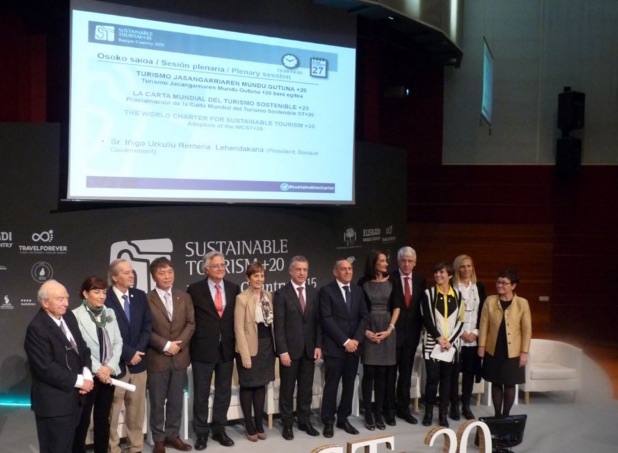
The World Summit on Sustainable Tourism held in Vitoria on 26 and 27 November 2015 was the scene of the unanimous adoption and proclamation by His Excellency Don Iñigo Urkullu, President of the Basque Government, of the World Charter for Sustainable Tourism +20. This document, which is the reformulation of the First World Charter for Sustainable Tourism, incorporates the 17 Sustainable Development Goals adopted at the United Nations Summit on Sustainable Development held in September 2015, and represents a great opportunity to firmly steer tourism towards an inclusive and sustainable way.

tourism

The World Summit on Sustainable Tourism held in Vitoria on 26 and 27 November 2015 was the scene of the unanimous adoption and proclamation by His Excellency Don Iñigo Urkullu, President of the Basque Government, of the World Charter for Sustainable Tourism +20. This document, which is the reformulation of the First World Charter for Sustainable Tourism, incorporates the 17 Sustainable Development Goals adopted at the United Nations Summit on Sustainable Development held in September 2015, and represents a great opportunity to firmly steer tourism towards an inclusive and sustainable way.

The Charter also claims the preservation of the actual quality of the destinations and the tourism industry and the ability to meet the tourist as priorities, as well as the need to promote alternative forms of tourism. Finally, it urges the authorities and related associations to this activity, to promote activities that contribute to the implementation of the principles and recommendations outlined in the World Charter for Sustainable Tourism and convene where appropriate a new meeting in order to assess achievements and establish renewed alliances.

The resolution will be presented to the UNESCO Director General, the Secretary General of the UNWTO and the Executive Director of UNEP, in order to receive support for its wide circulation among the major players of world tourism in order to guide the action of tourism in the framework of the 17 Sustainable Development Goals adopted at the United Nations Summit on Sustainable Development.

DOWNLOAD THE WORLD CHARTER FOR SUSTAINABLE TOURISM PDF

Question related to this article:

.

How can tourism promote a culture of peace?

Comment by Liliana Mota, October 23, 2013

Why tourism?

Can tourism be seen as an instrument to achieve complicity between people’s minds?

“There is nothing better that connects two people’s mind than a good conversation” The above quote could be used to describe the effect which tourism has on people. Like a great conversation, tourism could be said to play a vital role amongst people all over the world. It fosters communication in all its senses, intercultural dialogue and mutual understanding.

In today’s world it is evident that there is a shortage of moral or ethical values amongst people across the different nations in this world, resulting in a globalised world lacking these morals and ethical values. Ignorance, the failure to consider the needs of others, and selfishness are a few of the ways which hinder us from embracing diversity and a common human perspective, which would result informal empathy, internal moral compassion, tolerance of differences, historical consciousness and interpretation. The above mentioned features are intrinsic, inherent and can be found in the practice of tourism.

Tourism has been emphasized as one of the most effective instruments which continue to tackle to tackle social and economical poverty, as well as encourage the culture of peace practice amongst people. In looking at the UN architecture, one is able to see the growing implications which the tourism sector has on the world and world policies. The touristic phenomenon has achieved a world record of 5% of world’s GDP contribution and is responsible for 235 millions jobs, according to the UNWTO’s data. Often the tourism sector counts more than 20% of the countries’ GDP.

On the negative side of this, it is evident that tourism focuses on economical matters, depriving any focus on the global implications of the constant interaction tourism encourages.

In the literal sense, tourism is nothing more or less than people meeting with the willingness to understand each other’s differences and point of view and simultaneously creating the opportunity for dialogue, mutual understanding and peace to take place.

Apart from tourism, various factors could be seen to play a role in encouraging integration and diversity amongst societies across the world. For example, the cultural segment has played an essential source of people’s integration and inclusiveness in developing countries.

Education has also played a significant role in encouraging integration, and incorporation amongst people all over the world. Education has been reconsidered and proposed to being the catalyst for exchange between countries, cultures and sectors, and most importantly for enhancing the lives of people by granting them the opportunity to leave their poverty stricken lives and societies in exchange a for better future which includes job and exchange opportunities.

In the tourism world, differences play the most essential role, differences among people represents the added-value. Being different is always a positive factor that usually motivates and encourages people to get to move and engage with each other and embrace the differences with the use of spiritual, religious and cultural meanings.

This notion of tourism needs to be addressed in multilateral governance discussions, where all the main actors, the international community, the ministerial and experts, private sector, local institutions and civil society engages are all present, and are all willing to work together in combined efforts and initiatives (from poverty alleviation to the promotion of awareness of sustainable development addressing special needs like regional development, urban planning and protection of natural and cultural landscapes). This combined approach of working at the local level within communities and at the national and international level, in order to reach and engage the poor, has been considered as potentially being the “one possible and effective answer” and effective approach towards the world’s poorest areas where it can make a difference.

USA: The First Mural Museum in the World is a Culture of Peace Museum

… EDUCATION FOR PEACE …

Joanne Tawfilis

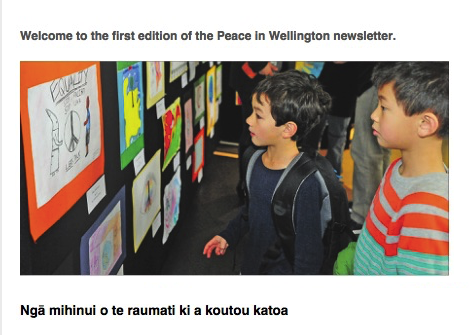
Prior to and during the International Decade for a Culture of Peace and Non Violence Among Children of the World (2001-2010) The Art Miles Mural Project began creating a series of five by twelve foot murals on canvas that encompassed all eight peace keys and more. To date, more than 4,000 murals have been created by over one-half million people from more than one hundred countries.

tawfilis
Invitation to the Opening (click to enlarge)

The murals have been exhibited in major museums and festivals throughout the world and have received a number of prestigious awards. The murals, each one totally unique and individual reflect what is seen as a “visual documentation of modern history” because they are a reflection and expression from individuals and collectively as a group. It’s really not about the number or even the quality of the murals; it has always been about the “process” of bringing people together through mural art.

In 2014, some of the mural images were exhibited at UNESCO National Headquarters in Paris and seen by thousands of people, then in a time when violence had not escalated to the level it has this past year and the work of so many participants beautifully shown to the world thanks to the sponsorship of the US Embassy on the entrance fence line there. The Culture of Peace has ALWAYS been the cornerstone of each and every mile of murals, including the most popular of the twelve themed miles; the Environment Mile. Each mile of mural consists of four hundred forty (440) murals.

On January 22, 2016 the Muramid Mural Museum and Art Center will open it’s doors to the world as the FIRST mural museum in the world and will not only exhibit physical murals, but will include projection of murals and images of the thousands of children, youth and adult creators of them from all over the world. Another wall of the museum will be constructed to present live webcasting on large screens with and from mural creators and facilitators throughout the world. Urban artists, those working and living in refugee camps, hospitals, schools and other locations will be seen! More important and special will be those painting murals in response to natural and human disasters who will create “healing murals” from all continents in the world with the Culture of Peace pillars at the heart of each.

We welcome all muralists to participate whether you are a student, a teacher, an organizer of projects or just an ordinary citizen because this 100% all-volunteer project has always been about you. Thanks to the hard work of so many volunteers and angel philanthropists, the thousands of murals have now found a home in what is now the Muramid Mural Museum and Art Center, located in Oceanside, California, USA.

Please contact: Joanne and Fouad Tawfilis at JTawfilis@aol.com or FTawfilis@aol.com

Question for this article: