All posts by CPNN Coordinator

About CPNN Coordinator

Dr David Adams is the coordinator of the Culture of Peace News Network. He retired in 2001 from UNESCO where he was the Director of the Unit for the International Year for the Culture of Peace, proclaimed for the Year 2000 by the United Nations General Assembly.

Paris: Nuit Debout (Night Standing in Place)

. . SUSTAINABLE DEVELOPMENT . .

For CPNN by Kiki Chauvin

“They turn off the lights, but we light up our brains! ”

The citizen movement “Nuit Debout” (Night Standing in Place) was born on March 31 following a demonstration against the projeted law of El Khomri a contested reform of the labor code and the release of the film by François Ruffin ” “Thank you, boss”.
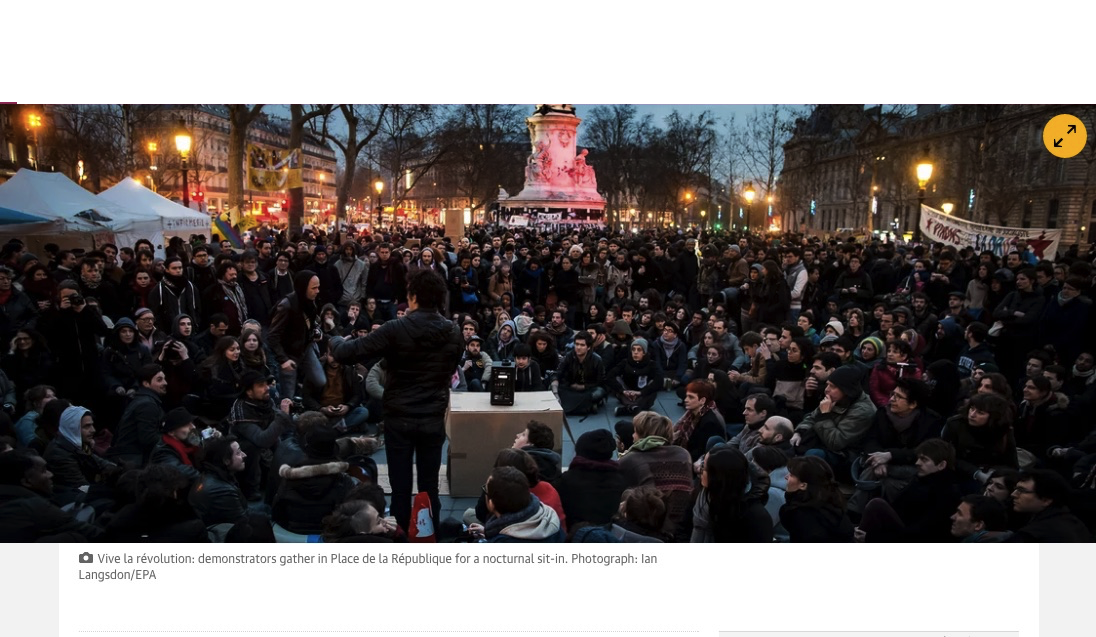
nuit
(Click on photo to enlarge)
Photograph: Ian Langsdon/EPA

The gathering, which is more or less spontaneous, is run by men and women who have rapidly organized themselves in geneal assemblies ”made with the means at hand ” and by their own skills.

La Place de la Republique has become an area of ​​freedom, where everyone, each person can speak and participate in debates and in the work of organizational or thematic commissions such as logistics (responsible for the smooth running of the gathering), communication, coordination, reception and mediation (reception and security). The Democracy Commission, is a center for debate and responsible for the voting system. Topics such as labor law, unemployment, insecurity, ender equality, the “Panama papers’’ scandal and whistleblowers are debated.
                        
The movement, which continues to grow, is surprisingly young, even though it includes some people of all ages.

The modus operandi is based on humanist, peaceful values. It is the exchange of ideas and sharing of anger in a framework of respect for others, listening and self-disciplined speech. People listen to each other in the debates and they are translated into sign language.

(Article continued in right column)

(Click here for the original article in French.)

Question for this article:

Movements against governmental fiscal austerity, are they part of the global movement for a culture of peace?

(Article continued from left column)

Although this movement is not like the traditional manifestations of Paris, its members are determined to show their insubordination by civil disobedience without adhering to political parties or official bodies.

They are determined to take back the language of revolt that has been stolen by a political class in France that has become “professional” and that has taken over the public space. They have given form to the slogan of the World Social Forum born in Brazil, “Otro mundo es posible” (Another world is possible).

This form of movement is a first in France, but it is similar to what happened in 2011 with the Arab Spring and Occupy Wall Street in the USA and the Indignados in Spain.

The mobilization is growing everywhere, in sixty French cities but also in other countries including Belgium, Germany, the Netherlands, Spain, Canada, ….

The appearance of groups of thugs in parallel around the Place de la Repulique appears to be an attempt to discredit and disturb the security of the movement which, conversely, acts without violence.

 Despite its innovative breath of fresh air and its optimistic tone of hope, one can question the result that will be achieved by this movement. Even if its aim is clearly progressive, is there not a risk of its horizontal confinement, a kind of “inbreeding” that may occur if it does not succeed in involving other social strata (workers, rural, suburban ..), moving to other “public places”, going out to the people?

In any case, the movement brings us an important message, and as described by the sociologist Albert Ogien: “It is a modern form of political action, comparable to the strikes and sit-ins of previous generations, but quite new in France ../.. ”
Nuit Debout à Paris

. . DEVELOPPEMENT DURABLE . .

Pour CPNN par Kiki Chauvin

« Ils éteignent la lumière, allumons nos cerveaux ! »

Le mouvement citoyen “Nuit debout” est né le 31 mars dernier à la suite de la manifestation contre le projet de loi du travail El Khomri, réforme contestée du code du travail et de la diffusion du film de François Ruffin ‘’ merci patron’’.

nuit
(Cliquez sur l’image pour l’élargir)
Photograph: Ian Langsdon/EPA

Ce rassemblement quasi spontané est animé par des hommes et des femmes qui se sont rapidement organisés en assemblées générales ponctuelles ’’ faites avec les moyens du bord’’ et les compétences de chacun.

La Place de la République est devenue un espace de liberté, où chacun, chacune, peut prendre la parole et participer aux débats, ainsi qu’aux travaux de commissions organisationnelles ou thématiques comme la logistique (chargée du bon déroulement), la communication, la coordination, l’accueil et la médiation (accueil et sérénité) . La commission démocratie, centre de grands débats, est responsable du système de vote. Des sujets comme la loi travail, le chômage, la précarité, l’égalité homme femme, le scandale des ‘’Panama papers’’, les lanceurs d’alerte sont débattus.

Ce mouvement qui prend de l’ampleur, est étonnamment jeune, même s’il brasse un peu tous les âges.
Son mode opératoire s’appuie sur des valeurs humanistes, pacifiques. C’est l’échange d’idées et le partage des colères dans le respect de l’autre, l’écoute, la prise de parole auto disciplinée. La parole se prend dans le calme et tous les débats sont traduits dans la langue des signes.

(Cliquez ici pour une version en anglais.)

Question pour cet article:

Movements against governmental fiscal austerity, are they part of the global movement for a culture of peace?

Même si ce mouvement n’a rien à voir avec nos manifestations habituelles, ses membres sont bien décidés à montrer leur insoumission par la désobéissance civile hors des partis politiques et des organismes officiels.

Il s’agit de reprendre la parole confisquée par une classe politique devenue ‘’professionnelle’’ en occupant l’espace public, de repenser pour construire un autre monde, car comme l’a dit le Forum social Mondial de Porto Alegre ( mettre liens…..) ‘’un autre monde est possible’’ !

Cette forme de mouvement est une première en France, à l’instar de ce qui s’est passé en 2011 avec le printemps arabe puis aux USA avec Occupy, ou avec les Indignés en Espagne.

La mobilisation se développe un peu partout , dans une soixantaine de villes françaises, mais également dans d’autres pays comme la Belgique, l’Allemagne, les Pays Bas, l’Espagne, Le Canada,….

L’apparition de groupes de casseurs, en parallèle et à la périphérie de la Place de la République semble vouloir jeter le discrédit et trouble quelque peu la sérénité du mouvement qui, à l’inverse, se comporte sans violence.

Malgré le souffle novateur, frais et optimiste qui teinte ce mouvement d’espoir, on peut se questionner sur la suite qui y sera donnée. En effet, même si l’esprit est clairement progressiste, n’y a t-il pas un risque d’enfermement horizontal qui irait vers une ‘’consanguinité’’ s’il ne s’ouvre pas plus à d’autres couches sociales ( ouvriers, monde rural, banlieues..) en se déplaçant vers d’autres ‘’places publics’’, en allant vers les gens  ?

Quoiqu’il en soit, le message est porteur et comme le definit le sociologue Albert Ogien : »C’est une forme moderne d’action politique désormais utilisée comme la grève, le sit-in…/… ce qui est tout à fait nouveau en France ../.. »

Disarm! World Congress 2016 of International Peace Bureau

DISARMAMENT & SECURITY .

Announcement by the International Peace Bureau

The World Congress of the International Peace Bureau will take place at the Technical University of Berlin, Germany, 30 September-03 October 2016:

ipb

OBJECTIVES OF CONGRESS

Bringing together a wide variety of experts, advocates and speakers from around the globe;

Including talks, presentations, roundtables, panel discussions, workshops, information booths, exhibitions, cultural activities;

High point in the recently-launched Global Campaign on Military Spending;

Apart from the Global Day of Action on Military Spending (mid-April), preparatory events will be held in major cities around the world over the coming year.

SPEAKERS

Speakers will come from a wide range of disciplines and backgrounds, including both the highest levels of society and grassroots voices, creative thinkers and cultural figures:

Nobel and Alternative Nobel Prize winners;
– elder statesmen/women;
– the social sciences, economics and politics in particular;
– the peace movement and other civil society sectors;
– parliamentarians, religious leaders, journalists, community organizers and artists…

(continued in right column)

(Click here for a version of this article in Spanish.)

Question for this article:

Does military spending lead to economic decline and collapse?

(continued from left column)

GENERAL OBJECTIVE OF CAMPAIGN

In 2014 the world’s governments spent over $1,700 billion on the military sector. We believe this money must instead be spent on:

Climate change mitigation/adaptation, preserving biodiversity;

Humanitarian programs to support the most vulnerable;

Peace: disarmament, conflict prevention & resolution, human security;

Public services / Social justice, human rights, gender equality and green job-creation;

Sustainable development, production and consumption patterns, anti-poverty programs, UN Sustainable Development Goals (SDGs).

We strongly believe the absolutely necessary ‘great transformation’ of global human society can only be achieved when also reallocating military expenditure and handling conflict differently. After all, we are facing a crisis of civilization, which is more far-reaching than an ecological and economic crisis alone.

We are living on one single Planet Earth but exploiting its resources as if we had three.

We witness how our predominant economic and developmental model has failed to provide justice, livelihood and human security for all. We now also face the resurgence of militarism and confrontational politics.

Hence, we view this priority shift in government spending as one element in a much broader global transformation towards a green, socially just and peaceful society!

The aim of this congress is to bring the issue of military spending, often seen as a technical question, into broad public debate and to strengthen the global community of activism.

Hence, we aim at wide support that goes far beyond peace organizations, such as from development, environment, faith, human rights, social welfare, women, workers’ and youth organizations.

(Thank you to Alicia Cabezudo for sending this announcement to CPNN)

Desarme! – Congreso Internacional sobre los Gastos Militares y Sociales – International Peace Bureau

. . DESARME Y SEGURIDAD . .

El anuncio por parte de International Peace Bureau

El Congreso Internacional de International Peace Bureau tendrá lugar 30 Sept – 03 Oct 2016, 
Technische Universität Berlin, Alemania

ipb

OBJETIVOS DEL CONGRESO

El objetivo principal del Congreso es exponer a un abierto debate público el tema de los gastos militares generalmente considerado como una cuestión meramente económica, así como fortalecer y promover el activismo en la comunidad internacional. El enorme y complejo desafío global del hambre, el trabajo y el cambio climático exige pasos concretos y reales – los que requieren ser formulados claramente y explicitados de acuerdo a la realidad política de cada país . . .

OTROS ASPECTOS :

El Congreso presentará:

Actividades culturales de todo el mundo – incluyendo actuaciones de artistas e instituciones provenientes de Berlin.

Posibilidades para las Organizaciones No gubernamentales y otros participantes de realizar encuentros y talleres durante el Congreso.

Posibilidades de participar en un “ Mercado de Muestras “

Asistencia a la Asamblea Trianual del INTERNATIONAL PEACE BUREAU – IPB que se desarrollará durante el Congreso , siendo el encuentro más importante de sus miembros y partners el día 3 de octubre . . .

El Congreso de Berlin opera como un importante promotor de la Campaña Internacional sobre Gastos Militares – Global Campaign on Military Spending, (GCOMS). En el mes de diciembre de 2014 el IPB anunció el inicio de una campaña anual, global y permanente para reducer el excesivo gasto militar en todo el mundo En el año 2014 los gobiernos del mundo gastaron más de 170 billones de dólares en el sector militar. . .

(El artículo continúa en el lado derecho de la página)

( Clickear aquí para la version inglês )

Question for this article:

Does military spending lead to economic decline and collapse?

(El artículo continúa desde la parte izquierda de la página)

OBJETIVO GENERAL DE LA CAMPAÑA:

Lograr la re-localización del gasto militar – especialmente en los países con alto presupuesto – y transferirlo a 5 áreas principales como parte de un gran programa de transformación global hacia la construcción de una Cultura de Paz.

Areas de transferencia propuestas:

Cambio climático : reducción y adaptación , preservación de la biodiversidad;
Paz: desarme, prevención y resolución de conflicto, seguridad humana;

Desarrollo sustentable: nuevos modelos de producción y consumo, programas para paliar la pobreza , Objetivos del Milenio para el Desarrollo de la UN;

Servicios Públicos / Justicia Social: derechos humanos, equidad de género, promoción de investigación y acciones con una perspectiva ecológica

Programas Humanitarios con el objetivo de ayudar y proteger a los sectores más vulnerables de la sociedad . . .

CONFERENCIANTES

Los conferenciantes deberán representar las voces más significativas de las organizaciones sociales ; de pensadores creativos y personajes de relevancia cultural: Premios Nobel y Premios Nobel Alternativos ; hombres y mujeres de Estado ; importantes figuras de las ciencias sociales, de la economía y de la política en particular; sectores representativos de los movimientos de paz y de la sociedad civil ; parlamentarios; líderes religiosos; periodistas ; líderes comunitarios y artistas.

(Gracias a Alicia Cabezudo para enviar este anuncio a CPNN.)

No Means No Kenya

. . WOMEN’S EQUALITY . .

An article from Ujamaa

NO MEANS NO KENYA works to provide simple, high impact Self- Defense training to as many women and children as possible worldwide. We believe prevention is key in the global rape epidemic. For far too long the overwhelming focus has been on aftercare strategies – this needs to change. It is believed that Self Defense training can raise a woman or child’s chance of prevailing in a sexual assault by up to 85%.

umamaa

It is our vision to mainstream self defense and end the fallacies and myths surrounding a woman or child’s ability to stop an assault. Our rape prevention efforts have appeared in over 40 media outlets including CNN, Huffington Post, MSNBC, Current TV, Daily Kos and Fox Sports.

No Means No Worldwide is a comprehensive rape prevention organization for girls and boys. We are a school based program that uses the IMpower system of violence prevention training. We teach classes in 6 week cycles, three times per school year, with the number of students ranging from 7000-9000 per cycle.

We believe the best response to the epidemic of sexual assault is to provide our male and female students with an awareness of the causes and effects of sexual gender based violence and the skills to intervene or prevent it.

Our research shows that in high schools where girls have taken our classes the incidence of rape drops from 20% annually to under 10%. Over half the girls in the intervention groups report having used the IMpower skills to avert sexual assault in the year after the training. Rates of disclosure increased in the intervention groups, but not in controls.

Preliminary research on our new IMpower boys curriculum shows that male students gender-negative attitudes towards women and girls were transformed to a more positive and supportive set of beliefs and behaviors. At 6-month follow-up, 334 of 676 respondents (49.4%) had witnessed a girl or woman being verbally harassed and 259 of 334 (77.5% had successfully intervened to stop the harassment. Similarly, 313 of 676 (46.3%) had witnessed a male physically threatening a girl or woman and 228 of 676 (33.7%) had witnessed a sexual assault. In these situations, 228 of 313 boys (72.8%) and 167 of 228 (73.2%) who witnessed these events, had successfully intervened to protect the victim.

(Thank you to Janet Hudgins, the CPNN reporter for this article)

Question related to this article:

UK Stop the War Coalition: Convoy to Calais

TOLERANCE AND SOLIDARITY .

Announcement from the Stop the War Coalition

Now more than ever we need a huge response to the refugee crisis to counter the racist rhetoric across Europe trying to demonise and disenfranchise victims of war, oppression and poverty. Some of the largest mass movements in Britain have joined together with major trade unions to show solidarity.

Calais

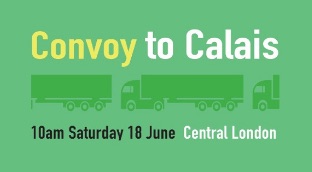
The Convoy to Calais will leave Central London for Calais on Saturday June 1 at 10 am. Organised by: Stop the War Coalition, Stand up to Racism, People’s Assembly Against Austerity, War on Want, Unite the Union, Communications Workers Union, Momentum and the Muslim Association of Britain

If you can give aid of any sort, material or financial, for our Convoy to Calais please do. Better still come on the Convoy yourself. Any vehicle will do: lorry, bus, coach, van, minibus, car, taxi, motorbike or scooter!

This is practical aid but it is also a huge moving protest at the way governments across the continent are failing refugees. This is the time to come together and say: stop the scapegoating, solidarity with the refugees.

REFUGEES ARE WELCOME HERE.

For more information email – calaisconvoy@gmail.com

Download PDF Flyers here: http://bit.ly/1SfhwLl

Download Model Resolution here: http://bit.ly/1rp3qP4

(Thank you to Janet Hudgins, the CPNN reporter for this article)

Question for discussion

Bahrain Women Association conducted a workshop on peace for Sitra Alahleya Society – Women club

. WOMEN’S EQUALITY .

Bahrain Women Association

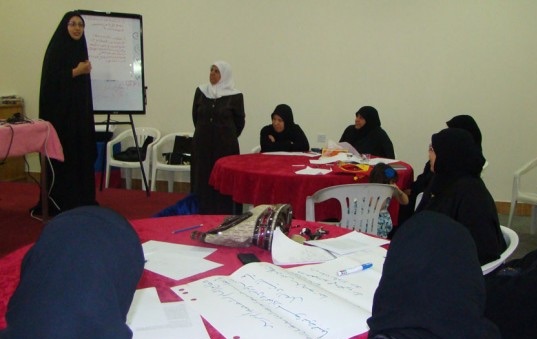
As part of the activities of ‘Women embracing peace’ project to promote culture of peace in the community, BWA organized a training workshop on the culture of peace entitled ‘Sustainable peace .. from inside out’ at ‘Sitra Alahleya Society’ – Women Club on Wednesday, September 17th. The workshop aimed to introduce the concept of culture of peace and inner peace, and to discuss how to practice peace and finally to present ways and mechanisms to promote peace.

bahrain

The workshop explained the concept of peace in family and ways and means of applying it, and peace in community which explained that the relations between human beings are based on ground of peace and that the difference between people should lead to integration and development not to conflict and disharmony. The workshop emphasized on the importance of inner peace to achieve any other peace on the external level, be it the family or community.

At the end of the workshop, participants expressed their desire to participate in more events organized by BWA in the field of peace and tolerance, to enhance their role and their ability in promoting positive change in their communities.

Question for this article

Mennonite Central Committee: Peace education in photos

EDUCATION FOR PEACE .

An article compiled by Elizabeth Kessler for the Mennonite Central Committee

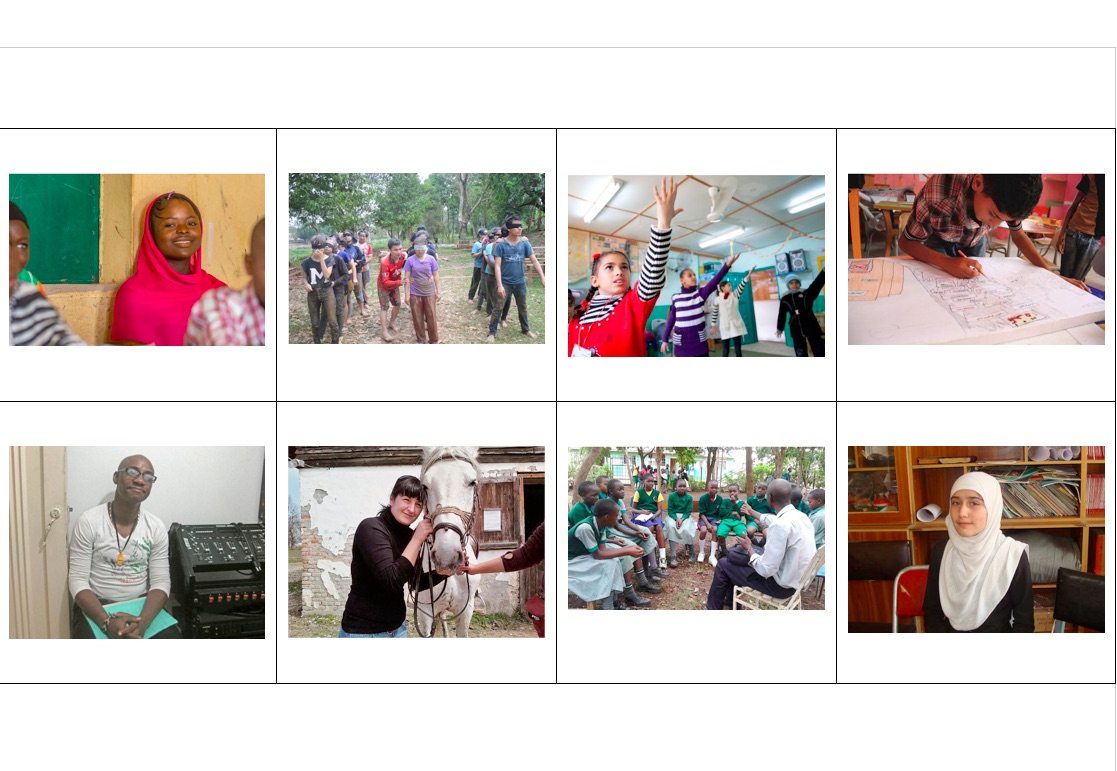
Our Global Family education program supports nine projects that focus on peace education. Students learn about diversity, forgiveness and the skills they need to mediate conflicts between their peers. These programs are all located in places that have a history of violent conflict, and our local partners believe that the children who learn nonviolence have the potential to grow to be leaders of change.

mennonites
Click on photos to enlarge
Photo credits (left to right): Dave Klassen, Khamsa Homsombath, Ryan Rodrick Beiler, Majeda Al Saqqa, Edupaz, Sezam, Grassroots Development Initiative, Help the Afghan Children

Nigeria

Patrick Asuquo Effiwatt is the head boy at Township Primary school in Plateau State, Nigeria. He is also one of the student leaders in the school’s Peace Club, which was set up by our partner Emergency Preparedness Response Teams (EPRT). EPRT is working to start 50 new peace clubs in secondary schools across the state.

Each club brings students together to learn how to resolve conflict between their peers. “I have been part of the Peace Club for two years now, and it has impacted my life greatly,” testifies Patrick. “Conflict is a given. But there are ways to settle differences that lead to forgiveness and nonviolence. I want to be part of those solutions.”

Caroline Emmanuel told us, “I once mediated between my grandmother and my aunt when a serious disagreement erupted.” She’s a member of the Mangu Hale school Peace Club, one of the clubs set up by EPRT. The members of the club have been praised by the school’s parent committee for the positive impact they have had on the school.

Laos

These kids are learning about trust through a teambuilding activity at a peacebuilding summer camp organized by Mittapab (Friendship), a group of educators and young adults who teach peace skills to their peers in Vientiane, Laos. Global Family provides resources for workshops, internships and the peacebuilding summer camp.

Sunsany Khodphoutone, the leader in the red shirt, has been a volunteer since 2011.

“I take my role as a peacebuilder seriously,” he says. “Sometimes I am so excited about what I have learned that I can’t help but teach everyone I come into contact with…. I really love what Mittapab is doing—more than my study subject at college. I will continue to improve myself to be a good leader and peacebuilder for the future of Laos.”

Gaza

Suheil Arandas (age 10, in the red shirt) participates in a dance class at Shoroq wa-Amal. Shoroq wa-Amal means “Sunshine and Hope”, and is a program for refugee children at the Khan Younis refugee camp in Gaza. The Culture and Free Thought Association (CFTA), a Global Family partner, is providing leadership training and healthy outlets for expression for the children, many of whom have lost loved ones to violence. The CFTA believes that trauma healing is an important building block for a future of peace in Palestine and Israel. Global Family provides stipends for counsellors to meet with the students.

Ahmed Zokmatt, another student at Shoroq wa-Amal, draws a crowd of children protesting for their right to feel safe.

Ahmed was devastated by the death of his cousin, who was killed in an Israeli air strike during the 2014 Israel-Hamas conflict. “He was a dear friend of mine,” he says. “When I knew Ibrahim was coming to visit I could not sleep from happiness. We would laugh, eat, play and he would sleep next to me. I am in disbelief that I will never see him again.”

(Article continued in right column)

Question for this article:

Can peace be guaranteed through nonviolent means?

(Article continued from left column)

While at Shoroq wa-Amal, Ahmed expresses his feelings through drawing and painting.

“I want to tell the world that children in Gaza have the right to play, smile, be happy and feel safe and secure,” Ahmed said.

Colombia

Luis Esteban Estupiñan Mosquera teaches English and physical education in Cali, Colombia. He has been a teacher for 14 years, but came to a new school in 2014 where MCC partner Edupaz has been working to teach students, teachers and parents how to mediate conflicts.

At the schools where he taught before, Luis says the teachers didn’t know how to handle conflict, and used “punitive methods” with the students. Many of the students come from families that fled violence in rural Colombia during the decades-long civil war, and still experience the effects of street violence and domestic violence.

Coming to this new school changed things for Luis. “The fact that this school is teaching alternatives to managing conflict has changed a lot in my performance as a teacher and in my personal life,” he says. “I have now learned how to teach my students to avoid conflict. This is wonderful!”

Bosnia and Herzegovina

Dženaida Dizdarevic Subašic is a teacher and participant of Education for the Future, a Global Family-supported program in Bosnia and Herzegovina that trains primary school teachers in modelling tolerance and acceptance of differences.

Neighbouring communities in Bosnia and Herzegovina are ethnically divided, and children go to separate religious schools. By promoting trauma healing, peacebuilding and reconciliation, teachers can have a positive impact on how Christians and Muslims coexist.

Dženaida was skeptical about the training at first, but she now teaches nonviolent communication to her students. “Skills learned in nonviolence workshops also help students have better relationships and more respect in dealing with each other,” she says.

Kenya

This photo was taken at Rae Kanyika Primary School in Kisumu, Kenya. Christopher Omondi, on the right, is conducting a session on leadership with the Student Leaders Council of the school. Christopher is a volunteer with Grassroots Development Initiative (GDI), a local organization in Kisumu that works to promote peaceful environments in schools.

In April 2016, GDI will become one of Global Family’s newest partners. Global Family will provide funding to train teachers in restorative discipline as an alternative to corporal punishment. GDI will also train teachers in conflict resolution and confronting gender discrimination.

Afghanistan

Atifa is a grade seven student in Paghman District, Kabul Province, Afghanistan. She is proud to have been able to settle disputes between her classmates ever since taking a peace education course offered by Help the Afghan Children, a Global Family partner.

Help the Afghan Children (HTAC) works in 15 schools in Paghman District, offering peace education as well as computer classes with support from Global Family. While it is usually difficult to directly measure the impact of peace education, we know that aggressive conflicts between students in Paghman District dropped by 63% between 2011 and 2013, and two-thirds of students were seen to be modelling the behaviour taught in HTAC classes.

2016 World Press Freedom Index ­– leaders paranoid about journalists

FREE FLOW OF INFORMATION

An article from Reporters without Borders

Most of the movement in the World Press Freedom Index unveiled today by Reporters Without Borders is indicative of a climate of fear and tension combined with increasing control over newsrooms by governments and private-sector interests.

press-freedom
Click on the image to enlarge

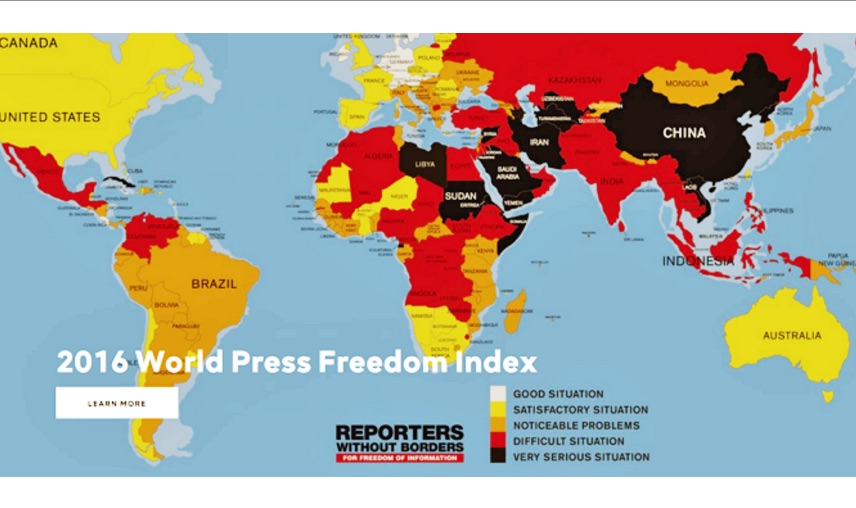
The 2016 World Press Freedom Index reflects the intensity of the attacks on journalistic freedom and independence by governments, ideologies and private-sector interests during the past year.

Seen as a benchmark throughout the world, the Index ranks 180 countries according to the freedom allowed journalists. It also includes indicators of the level of media freedom violations in each region. These show that Europe (with 19.8 points) still has the freest media, followed distantly by Africa (36.9), which for the first time overtook the Americas (37.1), a region where violence against journalists is on the rise. Asia (43.8) and Eastern Europe/Central Asia (48.4) follow, while North Africa/Middle East (50.8) is still the region where journalists are most subjected to constraints of every kind.

Three north European countries head the rankings. They are Finland (ranked 1st, the position it has held since 2010), Netherlands (2nd, up 2 places) and Norway (3rd, down 1). The countries that rose most in the Index include Tunisia (96th, up 30), thanks to a decline in violence and legal proceedings, and Ukraine (107th, up 22), where the conflict in the east of the country abated.
(Article continued in the right column.)

(Click here for the French version of this article or click here for the Spanish version.)

Question(s) related to this article:

Free flow of information, How is it important for a culture of peace?

(Article continued from left column)

The countries that fell farthest include Poland (47th, down 29), where the ultra-conservative government seized control of the public media, and (much farther down) Tajikistan, which plunged 34 places to 150th as a result of the regime’s growing authoritarianism. The Sultanate of Brunei (155th, down 34) suffered a similar fall because gradual introduction of the Sharia and threats of blasphemy charges have fuelled self-censorship. Burundi (156th, down 11) fell because of the violence against journalists resulting from President Pierre Nkurunziza’s contested reelection for a third term. The same “infernal trio” are in the last three positions: Turkmenistan (178th), North Korea (179th) and Eritrea (180th).

“It is unfortunately clear that many of the world’s leaders are developing a form of paranoia about legitimate journalism,”[ according to] RSF secretary-general Christophe Deloire “The climate of fear results in a growing aversion to debate and pluralism, a clampdown on the media by ever more authoritarian and oppressive governments, and reporting in the privately-owned media that is increasingly shaped by personal interests. Journalism worthy of the name must be defended against the increase in propaganda and media content that is made to order or sponsored by vested interests. Guaranteeing the public’s right to independent and reliable news and information is essential if humankind’s problems, both local and global, are to be solved.”

Published annually by RSF since 2002, the World Press Freedom Index is an important advocacy tool based on the principle of emulation between states. Because it is now so well known, its influence over the media, governments and international organizations is growing.

The Index is based on an evaluation of media freedom that measures pluralism, media independence, the quality of the legal framework and the safety of journalists in 180 countries. It is compiled by means of a questionnaire in 20 languages that is completed by experts all over the world. This qualitative analysis is combined with quantitative data on abuses and acts of violence against journalists during the period evaluated.

The Index is not an indicator of the quality of the journalism in each country, nor does it rank public policies even if governments obviously have a major impact on their country’s ranking.

Classement mondial de la liberté de la presse 2016 : la paranoïa des dirigeants contre les journalistes

LIBERTÉ DE L’INFORMATION

Un article de Reporters sans frontières

Reporters sans frontières (RSF) dévoile l’édition 2016 du Classement mondial de la liberté de la presse. L’évolution générale témoigne d’un climat de peur généralisée et de tensions qui s’ajoute à une emprise des Etats et des intérêts privés de plus en plus grande sur les rédactions.

press-freedom
Cliquez sur l’image pour l’élargir

Ce palmarès – qui fait référence dans l’ensemble du monde – révèle les positions relatives de 180 pays au regard de la latitude d’action de leurs journalistes. Au vu des indices régionaux, il apparaît que l’Europe (19,8 points d’indice) demeure la zone où les médias sont les plus libres, suivie (de loin) par l’Afrique (36,9), qui, fait inédit, passe devant les Amériques (37,1), l’Amérique latine étant plombée par les violences accrues contre les journalistes. Suivent l’Asie (43,8) et l’Europe de l’Est et Asie Centrale (48,4). L’Afrique du Nord/Moyen Orient (50,8) reste la région du monde où les journalistes sont les plus soumis à des contraintes de toutes sortes. A noter que plus l’indice monte, pire est la situation.

Trois pays d’Europe du nord occupent le haut du Classement des pays, la Finlande (1ère, comme depuis 2010), les Pays-Bas (2ème, +2), la Norvège (3ème, – 1). Au chapitre des évolutions notables, l’amélioration de la situation en Tunisie (96ème, + 30), grâce à une baisse des agressions et des procédures, et en Ukraine (107, + 22), due à une accalmie du conflit et à des réformes encourageantes.

(Voir suite sur colonne de droite. . . )

(Cliquez ici pour la version anglaise de cet article ou ici pour la version espagnole.)

Question(s) related to this article:

Free flow of information, How is it important for a culture of peace?

(. . . suite)

En sens inverse, on observe la dégringolade de la Pologne (47ème, – 29), sous l’effet de la remise au pas des médias lancée par le parti ultra conservateur. Beaucoup plus bas, le Tadjikistan, qui subit la dérive autoritaire du régime, dévisse (150ème, – 34). Même dégradation spectaculaire du Sultanat de Brunei (155ème, -34), imputable à l’instauration progressive de la charia et de l’épée de Damoclès d’éventuelles accusations pour blasphème. Enfin, le Burundi s’enfonce (156ème, -11), car ce pays a été le théâtre de violences envers les journalistes après la candidature contestée puis la réélection du président Pierre Nkurunziza. Au bas du Classement, un trio infernal, le Turkménistan (178ème), la Corée du Nord (179ème), l’Erythrée (180ème).

“Il est malheureusement notable que de très nombreux dirigeants dans le monde développent une forme de paranoïa contre l’exercice légitime du journalisme,” déclare Christophe Deloire, secrétaire général de RSF. “Le climat général de peur entraîne une haine croissante du débat et du pluralisme, un verrouillage des médias par des gouvernements en pleine dérive autoritaire et liberticide, l’emprise grandissante d’intérêts particuliers sur l’information dans le secteur privé. Il est essentiel de défendre le journalisme digne de ce nom face au renforcement de la propagande et de l’information sous la dictée ou sponsorisée par l’intérêt. La garantie du droit des citoyens à une information indépendante et fiable est une solution pour résoudre les problèmes locaux et globaux de l’humanité.”

Publié chaque année depuis 2002 à l’initiative de RSF, le Classement mondial de la liberté de la presse est un outil de plaidoyer essentiel fondé sur le principe de l’émulation entre Etats. Sa notoriété lui confère une influence croissante auprès des médias, des autorités publiques nationales et des organisations internationales.

Le Classement repose sur une mesure de la situation de la liberté de la presse, fondée sur une appréciation du pluralisme, de l’indépendance des médias, de la qualité du cadre légal et de la sécurité des journalistes dans 180 pays. Il est établi grâce à un questionnaire proposé en vingt langues à des experts du monde entier. A cette analyse qualitative s’ajoute un relevé quantitatif des violences commises contre les journalistes sur la période prise en compte.

Le Classement n’est pas un indicateur de la qualité de la production journalistique ni un palmarès des politiques publiques, même si les gouvernements ont une responsabilité importante.