Tag Archives: global

One day, one million strong choir on International Day of Peace

FREE FLOW OF INFORMATION

An article from Independent Catholic News

Choirs and singers across the whole world got together to send a message of peace and unity on International Day of Peace. A million people were involved in One Day One Choir, a global choral initiative started in 2014 by singer Jane Hanson to mobilise the power of singing to unite people globally.

choir
A frame from the video of One Day One Choir

A flash mob in Trafalgar Square, London, led by choir leaders Jeremy Haneman and Tom Morley, brought together singers for an impromptu performance of songs about peace.

Among the singers was 3FF’s intercultural choir the Mixed Up Chorus, which has been involved in One Day One Choir since its founding. Eli Tamir, Mixed Up Chorus member and coordinator, said: “Music is a universal language that spans cultures and can be a powerful force for understanding. Singing on Peace Day is our way of showing that there is always more that unites us than divides us. If we can sing together, we can live well together.”

In the rest of the UK, singing started in the morning and continued throughout the day in a huge range of venues and settings – from community halls to Canary Wharf, from playgrounds to prisons, faith centres, concert halls, offices and open spaces. Bradford, Coventry, Truro and Lincoln cathedrals and York Minster dedicated their evensongs to One Day One Choir, and choirs in Cornwall, Leeds, Manchester took part. Groups, schools and colleges from 40+ countries, including Iraq, Pakistan and Iran, joined in.

Jane Hanson, founder of the project – who was at the Trafalgar Square event – created the initiative with the vision of mobilising the ‘biggest choir in the world’, using the power of singing together, for unity and peace by 2018 – the 100th anniversary year of the commemoration of WW1.

Questions for this article

Indonesian Vice President: NAM must be ready to meet 21th century challenges

FREE FLOW OF INFORMATION

An article from Antara News

Indonesian Vice President Jusuf Kalla said member countries of the Non-Alligned Movement (NAM) must be able and ready to meet various challenges in the 21st century. “I need to affirm that there has been an urgent need for NAM to conduct internal reform. Reform is needed so that NAM could face the challenges in the 21st century,” he said according to a press statement from the foreign ministry received here on Sunday.

NAM
Click on photo to enlarge: (L-R, first row) President of El Salvador Salvador Sanchez Ceren, President of Ecuador Rafael Correa, Iran’s President Hassan Rouhani, the President of Venezuela Nicolas Maduro, Palestinian Authority President Mahmoud Abbas, President of Bolivia Evo Morales and the President of the Supreme People’s Assembly of North Korea Kim Yong Nam during a photo call of leaders and delegates of the countries participating in the Non-Aligned Movement Summit in Margarita, Venezuela, 17 September 2016. EPA/MIGUEL GUTIERREZ

He said the main challenges being faced by NAM at present is not a cold war but inequality and development gap between NAM member countries and internal conflict as well as conflict among NAM member countries.

To face the challenges the Indonesian vice president said NAM members need to reaffirm the principles and basic values of NAM. He also said NAM must pay attention to current realities.

“The principles and basic values of NAM are still very relevant and if they are implemented correctly they will make NAM successful in facing various challenges in the 21st century and its visions,” he said.

Kalla said in the future NAM must focus on its cooperation programs.

He said multi-lateral cooperation must remain NAMs focus and in view of that improvement of NAMs contribution in the UN especially in promoting settlement of conflicts peacefully must be increased.

In connection with that the vice president said Indonesia plans to bid for non-permanent membership in the UN Security Council for the period of 2019-2020.

(Article continued in the right column)

(Article continued from the left column)

Secondly, he said, NAM must strengthen its global culture of peace especially through inter-civilization dialogs.

Thirdly, he said, NAM members must strengthen good governance and democracy that could help efforts to minimize terrorism, radicalism and extremism potential.

Fourthly, he said, NAM must increase development cooperation especially through South-South cooperation and he considered it very important to meet the 2030 development agenda.

Besides presenting cooperation that NAM must focus on, the Indonesian vice president said NAMs 120 member countries represent 60 percent of the UN members, and so have a big bargaining power.

“This should help NAM make a success in meeting its visions and contributing to international efforts to overcome global challengers,” he said.

Vice President Jusuf Kalla alos said NAM still had an obligation that it has to pay which is supporting Palestine to get its independence.

In connection with that he again called on NAM members to give full support to Palestinian independence including through Israel-Palestine peace process to materialize the two-state solution.

The 17th NAM summit from September 13-18 on the island of Margarita, Venezuela, carried a theme of “Peace, Sovereignty and Solidarity for Development.

A number of heads of state and governments of member countries attended the meeting.(*)

[Editor’s note: Heads of state included Salvador’s President Salvador Sanchez Ceren, Ecuador’s President Rafael Correa, Iran’s President Hassan Rouhani, Venezuela’s President Nicolas Maduro, Palestinian President Mahmoud Abbas, Bolivia’s President Evo Morales, North Korea’s nominal head of state Kim Yong Nam, Zimbabwe’s President Robert Mugabe, and Cuba’s Raúl Castro, most of whom are in the accompanying photo. Most media coverage of this event was very negative, saying that it was a foreign policy disaster for Venezuela president Maduro, and this is one of the few very reports that gave some of the content of the discussions.]

United Nations: Inauguration of the Parliamentary Multi Track Initiative Council for the SDG’s and the Culture of Peace

TOLERANCE AND SOLIDARITY .

An article from Cotidianul (abridged)

At the UN headquarters in New York on September 14, the conference entitled “Inauguration of the Parliamentary Multi Track Initiative Council for the SDG’s and the Culture of Peace” was organized by the Inter-Parliamentary Coalition for Global Ethics. Emil Constantinescu [former President of Romania] was the chairman of the conference and gave the opening speech entitled “Global Peace Initiative from the Levant, the foundation for a new culture of peace,” his press office announced in a statement.

Romanian

The presidium of the conference included Ambassador Ion Jinga, Permanent Representative of Romania to the United Nations, Ambassador Katalin Bogyay, Permanent Representative of Hungary to the United Nations, Lily Valchanova Liaison Officer UNESCO, Garry Jacobs, president of the World Academy of Art and Science and the World University Consortium, and S. Bekerman, secretary general of the Interparliamentary Coalition for Global Ethics.

Participants in Sessions 1 and 2, led by President Constantinescu included Giandomenico Picco, former Under-Secretary General of the United Nations and adviser to the Oxford Research Group, Master Jun Hong Lu, president and director of the Oriental Media Buddhist Association, Rabbi Elie Abadie, Director of the Jacob E. Safra Institute of Sephardic Studies at Yeshiva University, Imam Agha Jafri, founder of the American Muslim Congress, Wafik Moustafa, president of the Conservative Arab Network, Dr. Lahoucine Khabid, president of the Atlas Center for Diplomatic Studies, ZH Khurram, secretary general of the International Youth Forum, Dr. Boris Pincus, President of Religions in Dialogue, and Rabbi Yaakov D. Cohen, founder of the Institute for Noahide Code. . .

Speech given by Emil Constantinescu:

Global Peace Initiative from the Levant, the foundation for a new culture of peace

At its annual conference in 2011 in Berlin, the Academy for Cultural Diplomacy launched a project for a new type of relations between nations and states based on understanding instead of military pressure or economic conditions. . . It seems that this kind of relationship that gives peace a chance in the globalized world can find inspiration in the ancient world of the Levant. This is not only because the Levant was the cradle of cultural diplomacy, but also because many civilizations including the Egyptian, Jewish, Assyrian, Babylonian, Phoenician, Greek, Arabic empires Roman, Byzantine and Ottoman empires were created in the Levant where they expanded exchanges of goods and ideas. South-East Europe has long been in contact with North Africa and the Middle East, and the people who live here have a long and extensive experience in intercultural dialogue.

In 2012, the Inter-Parliamentary Coalition for Global Ethics took up the initiative and expanded it globally. In 2013, at the end of the conference organized in Bucharest with a wide range of religious, academic and parliamentary representatives, a joint project was set up for the initiative. Considering that the Global Peace Initiative from the Levant could serve as a benchmark and model to achieve peace in all areas of conflict around the globe, on 24 and 25 June 2013, the Inter-Parliamentary Coalition for Global Ethics organized a conference at United Nations headquarters in New York dedicated to promoting this initiative. The Romanian Parliament endorsed it with a message of support.

(Article continued in right column)

Question for this article

Religion: a barrier or a way to peace?, What makes it one or the other?

(Article continued from left column)

In March 2014, the Inter-Parliamentary Coalition for Global Ethics organized a new conference in New York together with the Foundation for the Culture of Peace, headed by Federico Mayor.

It is planned to present the Global Peace Initiative from the Levant to the Congress of the United States, the British Parliament, the Knesset of Israel and to many other parliaments, including those of Japan and Palestine. . . .

This project, dedicated to promoting a culture of peace, invites the participation of researchers and scholars in the humanities, theologians, writers, artists, architects, musicians to build a space of knowledge and understanding through co-operation and mutual respect. A culture of peace is based on a new type of relations, not only between states, but especially between peoples who share common values that were born long before the current nation-states.

The time has come for cultural diplomacy and recognition of the old legacy of the Levant, an alternative reading of the history of this region, especially prior to the wars and conflicts of the present millennium. It offers a new approach, emphasizing what we have in common and what can unite us: principles, values ​​and skills practiced in the past, that can now be harnessed to ensure not only the stability of this region as a whole, but also building a model of cooperation and trust for all countries. It does not mean that we should deny our past, but to assume it in its tragic dimension. . .

For quite some time international organizations such as UN, UNESCO and civil society have been trying to create a political culture of security through negotiation and cooperation. To promote peace and understanding in the world they have been looking for the lowest common denominator around which we can agree. It is a welcome step and especially in the face of the many immediate threats.

My belief is that we should propose much more. If we want to achieve true peace and understanding between people we should not focus on the lowest common denominator, but to refer to the highest common denominator – faith.

Modern and postmodern societies of the 20th century have promoted equal rights and freedoms regardless of racial and ethnic differences and equal opportunities for women. But all this tends to divide society rather than unifying it. A peace based on a common ideal would be ideal, although it is a difficult task, not a peace imposed under the pressure of fear, but a peace springing from the depths of consciousness of millions of people. The treasure of the philosophical, literary, artistic millenary history of the Levant can help inspire a spiritual revolution with a profound knowledge of the human being who has been torn for millennia in the struggle between the aspiration to love one’s neighbor and the tendency to use power to oppress them or to oppress others in their own interest. We can turn this vast pedagogy of suffering into a pedagogy of reconciliation.

Twenty years ago, millions of people in Eastern Europe with empty hands, were ready to fight and die for freedom and democracy against the greatest war machine in history. In a new millennium, we can rediscover faith. Not to use it one against another, as has been done throughout the long history of mankind, but to understand our purpose on Earth. Peace is the name of God, whether we are Christian, Muslim, Jewish or faiithful to Asian religions. Only human arrogance has made us forget the Lord’s message, whatever name we give it to him in the language or our faith.

If the Levant, the cradle of the great monotheistic religions, will carry out a political and visionary project adapted the great challenges of today, it will contribute not only to a new identity of the area, but also hdlp to create a different concept of the future world called into a new humanism.”.

United Nations: World needs ‘Culture of Peace’

FREE FLOW OF INFORMATION

An article from Bangla News 24 (reprinted for non-commercial use)

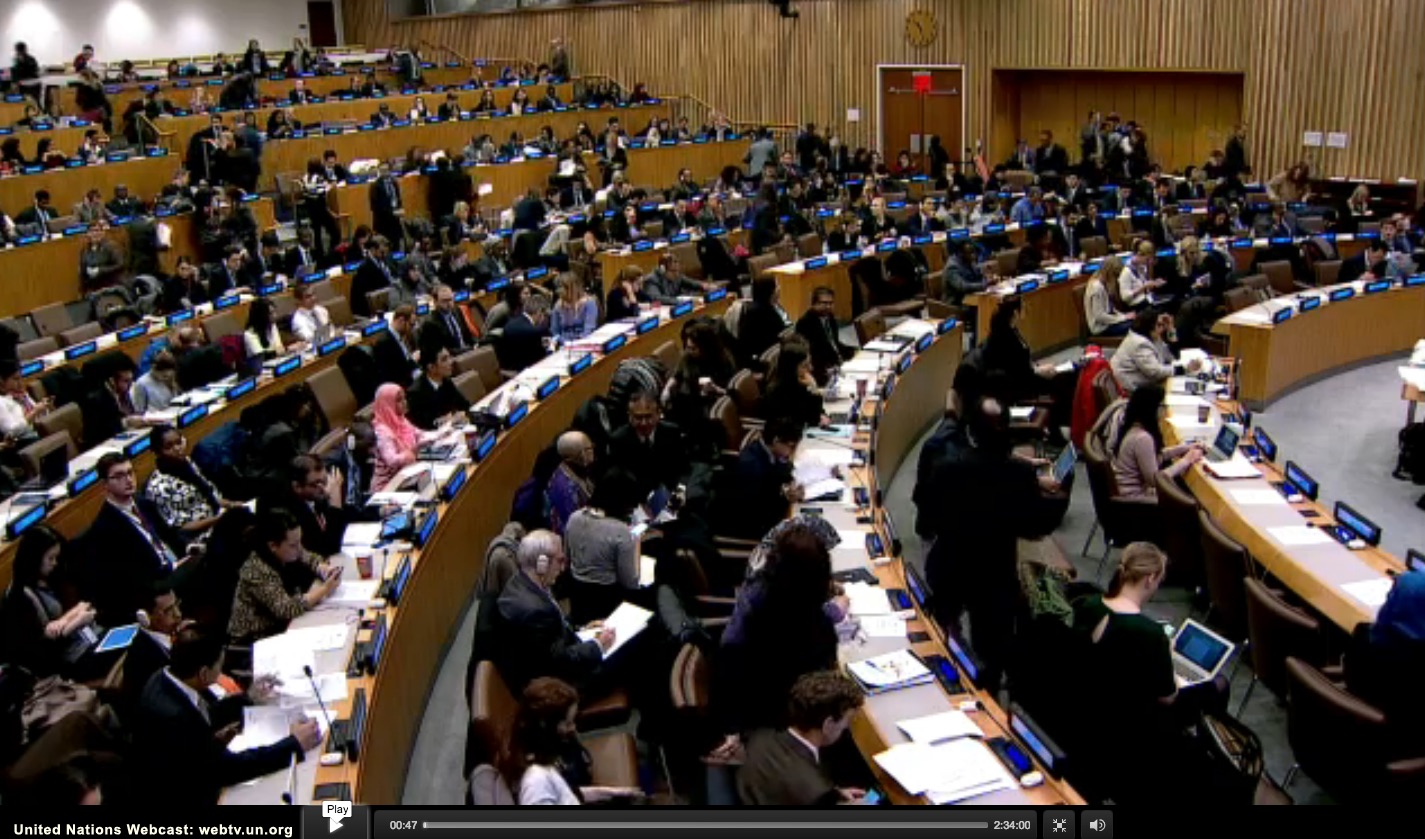
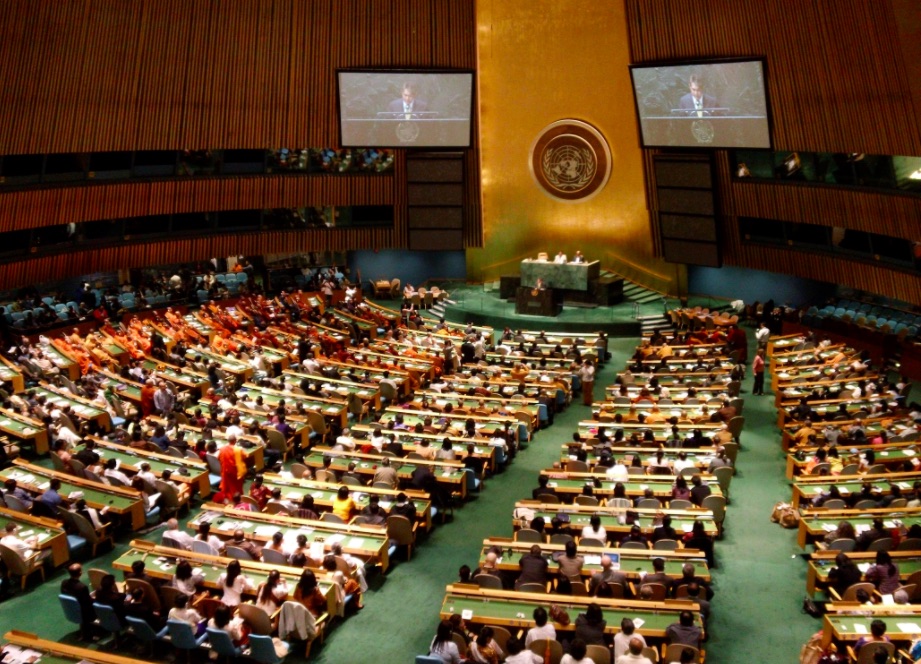
A day-long High Level Forum on a Culture of Peace was held at the Trusteeship Council Chamber at the UN Headquarters on Thursday (September 1). The High Level Forum provides an opportunity for the member states and stakeholders to have an exchange of views on ways to build and promote the Culture of Peace which is very much called for in present world.

hlf

Mogens Lykketoft, President of the 70th Session of the General Assembly, chaired the opening segment while Ambassador Edmuond Mulet, Chef de Cabinet of the Executive Office of the UN Secretary General read out message on behalf of the Secretary General Ban Ki-moon.

Ouided Bouchamaoui, Founder of The Tunisian National Dialogue Quartet, Nobel Peace Prize 2015 Laureate, made the Key Note Address. The keynote speaker highlighted the role of civil society which can play and should play to make our world a better place ensuring peace and justice for all.

It was concluded by the outstanding musical performances by FJ Music Duo.

Forty country representatives made statement in the program among Permanent Representative and Ambassador of Bangladesh Masud Bin Momen on behalf of the Bangladesh Delegation.

The statements of the President General Assembly and of the UNSG re-asserted and re-affirmed the commitment of the totality of the Member States for building the culture of peace and the international community’s determination to work more diligently for its realization.

President General Assembly, as well as, most of the delegations acknowledged the role of Bangladesh in promoting the issue of cultural of peace at the United Nations and beyond.

The Bangladesh representative said a culture of peace is an aspiration of all humanity, the essence of the UN Charter, and also an imperative in the current global context. Promoting and inculcating a mindset of a culture of peace is at the core of peaceful and mutually respectful co-existence and dialogue among different civilizations, religions, faiths and beliefs around the globe.

The afternoon session was comprised of two Panel discussions.

The title of the Panel-1 “Enhancing synergy between Sustainable Development Goals (SDGs) and eight action areas of the UN Programme of Action on Culture of Peace” which was Chaired by Anwarul K. Chowdhury, Former Under-Secretary-General and High Representative of the United Nations. Masud Bin Momen, Permanent Representative of Bangladesh to the United Nations, intervened in the Panel-1 as a Panelist. He said, a critical linkage between peace and development has been underscored in sustainable development goals for promoting peaceful and inclusive societies for sustainable development provided access to justice for all and build effective accountable and inclusive institutions at all levels.

Panel-2 discussion was on “The Role of Youth in advancing the Culture of Peace in the context of the implementation of the UN Security Council Resolution on Youth, Peace and Security”. This Panel was chaired by Katalin Annamaria Bogyay, Permanent Representative of Hungary to the United Nations.

Question(s) related to this article:

Forging a peaceful future: four years of UNICEF’s Learning for Peace Programme

… EDUCATION FOR PEACE …

An article from UNICEF

UNICEF and partners are a step closer to building peace, Eran Nagan, of the Government of the Netherlands said at a high-level event on education and peacebuilding in New York.

Mr. Nagan, First Secretary of Economic Affairs, Permanent Mission of the Kingdom of the Netherlands to the United Nations, joined some 80 UN staff, researchers, civil society, private sector representatives and members of the public to celebrate the final event of the Learning for Peace programme on Thursday, 30 June at UNICEF House. The UNICEF programme, launched in 2012 with the support of the Government of the Netherlands, helped promote peace through education in 14 conflict-affected countries: Burundi, Chad, Cote d’Ivoire, Democratic Republic of the Congo, Ethiopia, Liberia, Myanmar, Pakistan, Sierra Leone, Somalia, South Sudan, State of Palestine, Uganda, and Yemen.

UNICEF
Panelists (L-R) Patrick Fine, FHI 360 CEO; Angela Kearney UNICEF Pakistan Representative; Yasmin Haque, UNICEF Deputy Director of Emergency Programmes; Henk-Jan Brinkman UN Peacebuilding Support Office Chief of Policy Planning and Application.
Click on image to enlarge

“The teaching of tolerance, respect for the other, promoting social cohesion is a necessity of any society because it is by inserting these essential values in our youth that we forge peaceful societies for the future,” Mr. Nagan said in his key note address, praising the programme for its achievements over the last four and a half years. Learning for Peace worked with governments, education systems, and communities to design education interventions that addressed underlying causes and dynamics of conflict. The programme also included a significant research component to fill the gap in knowledge and evidence on social services for peacebuilding.

Research from UNICEF and FHI 360 found evidence that education inequities reinforce social divisions that lead to conflict – the likelihood of violent conflict doubles in countries with high education inequality between ethnic and religious groups. Conversely, conflict widens educational inequalities. Although less pronounced, the study also provides evidence that gender-based education inequality makes violent conflict more likely, and vice versa.

(Article continued in right column)

Question for this article:

Peace education at the United Nations, how does it work?

(Article continued from left column)

“I think it has direct implications for how we set priorities and what kinds of actions we take in humanitarian response, and it also has immediate implications for policies and programmes,” Patrick Fine, FHI 360 CEO, said of the research findings.

Mr. Fine, along with Angela Kearney, UNICEF Pakistan Representative; Yasmin Haque, Deputy Director, Office of Emergency Programmes, UNICEF; and Henk-Jan Brinkman, Chief of Policy, Planning and Application, UN Peacebuilding Support Office were part of a panel to share experiences, achievements and lessons learned of the Learning For Peace programme.

Ms. Kearney shared stories of innovation in education from Pakistan, where findings from the programme’s conflict analysis informed education sector plans in the provinces of Sindh and Balochistan. In South Sudan, where 70 per cent of children have never stepped inside a school, Ms. Haque said that Learning for Peace helped develop a new, inclusive education system and forged new partnerships amongst education stakeholders and development partner organizations with peacebuilding expertise.

Josephine Bourne, Associate Director of Education at UNICEF, moderated the event and stressed that the lessons-learned on conflict-sensitive and peacebuilding-oriented education programming that began through the Learning for Peace programme would continue in future projects.

“While the programme is finishing, the work does not. There’s a very strong commitment to conflict assessment and really understanding the situation of children and their access to resources and other inequalities.” Ms. Bourne said. The inequality piece is front and center, not just for education, but everything UNICEF is doing”.

At the event, UNICEF also discussed plans to employ conflict assessment, study gender-based violence, and have children participate in determining the issues that drive conflict and necessary interventions. FHI 360 is also leading an education equity research initiative in conjunction with UNICEF and other partners including USAID, Save the Children and World Vision.

For more information on the programme please visit: learningforpeace.unicef.org.

(Thank you to the Global Campaign for Peace Education for bringing this article to our attention.)

UN: International Day of Peace, 21 September

DISARMAMENT & SECURITY .

From the website of The United Nations

Each year the International Day of Peace is observed around the world on 21 September. The General Assembly has declared this as a day devoted to strengthening the ideals of peace, both within and among all nations and peoples. The Day’s theme for 2016 is “The Sustainable Development Goals: Building Blocks for Peace.”


peaceday-english
Video on peace and sustainable development goals

The 17 Sustainable Development Goals were unanimously adopted by the 193 Member States of the United Nations at an historic summit of the world’s leaders in New York in September 2015. The new ambitious 2030 agenda calls on countries to begin efforts to achieve these goals over the next 15 years. It aims to end poverty, protect the planet, and ensure prosperity for all.

The Sustainable Development Goals are integral to achieving peace in our time, as development and peace are interdependent and mutually reinforcing.

“The 17 Sustainable Development Goals are our shared vision of humanity and a social contract between the world’s leaders and the people,” said UN Secretary-General Ban Ki-moon. “They are a to-do list for people and planet, and a blueprint for success.”

Sustainability addresses the fundamental needs of the present without compromising the ability of future generations to meet their own needs. Modern challenges of poverty, hunger, diminishing natural resources, water scarcity, social inequality, environmental degradation, diseases, corruption, racism and xenophobia, among others, pose challenges for peace and create fertile grounds for conflict. Sustainable development contributes decisively to dissipation and elimination of these causes of conflict and provides the foundation for a lasting peace. Peace, meanwhile, reinforces the conditions for sustainable development and liberates the resources needed for societies to develop and prosper.

(Article continued in right column)

(Click here for a version of this article in French or here for a version in Spanish.)

Question for this article:

How are you celebrating peace day?

(Article continued from left column)

Every single one of the 17 Sustainable Development Goals is a building block in the global architecture of peace. It is critical that we mobilise means of implementation, including financial resources, technology development and transfer, and capacity-building, as well as the role of partnerships. Everyone has a stake and everyone has a contribution to make.

On 16 September 2016, from 9:00 a.m. to 9:30 a.m., the Secretary-General will celebrate the Day in the Peace Garden at United Nations Headquarters by ringing the Peace Bell and observing a minute of silence. Women Nobel Peace Prize laureates and the United Nations Messengers of Peace will be invited to participate in the ceremony. The United Nations Education Outreach Section will hold a global student videoconference on the same day, from 9:30 a.m. to 12:30 p.m., also at United Nations Headquarters.

Check out videos by youth from around the globe on how the Goals can help build peace!

“Sustainable Development Goals: Improve Life All Around The Globe” is a“> hip hop music video that was produced by FlocabularyExternal link in partnership with the Education Outreach Section of the Outreach Division of the United Nations Department of Public Information. It aims to teach young people throughout the world about the importance of the Sustainable Development Goals and how they can help build peace.

(Thank you to Janet Hudgins, the CPNN reporter for this article)

Changing the system to address injustices: discussing with Mamadou Goita on the World Social Forum

FREE FLOW OF INFORMATION

An article from CIDSE

Mamadou Goita is the Executive Director of the Institute for Research and the Promotion of Alternatives in Development (IRPAD/Afrique), based in Bamako, Mali. An active participant of the World Social Forum since its first edition in Porto Alegre, he participated in Montreal as a panelist in the workshop “Agroecology for a healthy planet” organized by Development & Peace with USC Canada, Union Paysanne and SUCO. On that occasion we had a chance to chat with him on the most pressing challenges of our time, on the possible alternatives, and on the role the World Social Forum can play.

CIDSE
Mamadou Goïta – Investing in Agriculture for Food Sovereignty conference, 16 Jan 2014, London

Mamadou Goita is the Executive Director of the Institute for Research and the Promotion of Alternatives in Development (IRPAD/Afrique), based in Bamako, Mali. An active participant of the World Social Forum since its first edition in Porto Alegre, he participated in Montreal as a panelist in the workshop “Agroecology for a healthy planet” organized by Development & Peace with USC Canada, Union Paysanne and SUCO. On that occasion we had a chance to chat with him on the most pressing challenges of our time, on the possible alternatives, and on the role the World Social Forum can play.

What is an important challenge or an injustice that the world needs to address?

There are lots of challenges that need addressing if you look at the different domains. One injustice is the fact of concentrating all the resources in the agricultural industry, while farmers through family farms are feeding the world, and this fact is recognized by all the international institutions. More than 70% of the food that is consumed in the world is produced by small-scale producers, all over the world. The imbalance of the investments in comparison with the industrial agriculture is an injustice that we need to address, the system has to change. This is concerning agriculture, but if you look at the mining resources, you see how the issue of the illicit financial flow is dominating. Those who have resources are those who are poor, exactly like the farmers are those who are hungry. So those who have natural resources in their countries, mainly in the case of Africa, they are those who are suffering from poverty. This is unjust, we need to change it! And if you look at the climate issue: those who are polluting…they are polluting the soil, they are polluting the air, are those who are still benefitting from the investments that we are doing, and this is unjust. Some countries are not polluting at all, but they are continuing to have the burden of the consequences of this. This is a matter of climate justice.

(Interview continued in right column)

Questions for this article:

World Social Forums, Advancing the Global Movement for a Culture of Peace?

What is the relation between movements for food sovereignty and the global movement for a culture of peace?

(Interview continued from left column)

Which alternatives exist for these systemic injustices?

I think first that we need to give power to people, and this means that we have to change the system. The model of governance that we have today cannot work. There are very few corporations dominating the economic system; the State has become the market selling everything and the market has become the State because it is the market that is now making the laws in our countries. The alternative would therefore be to change the system that we have today, giving power to people, listening to what we have been saying in the agricultural sector, in the mining sector, in the financial system, and in other domains like climate and so forth. We need to implement these alternatives in the sense that we need to change the world: another world is possible, but only if you go with the alternatives that we highlight here in these kinds of meetings.

What is the World Social Forum for you?

For me the World Social Forum is a citizens’ space, that can allow not only to analyze the state of the world, but also to draw alternatives and make connections among people, especially those who are committed in the fight against the system. I was lucky to participate in the very first edition of the World Social Forum and since then I missed only one. I saw the way that it has evolved from the past and how it has become today.

How did the World Social Forum change?

The change is firstly related to the context that we are living in. In 2001 things were very tough and corporations tried to hijack processes in the world. There was a lot to say to understand what was going on around the key challenges that we were facing as citizens all over the world. It was a space that was really welcomed in that period, it was necessary to have a counter-power against the corporate system that was present and against some governments that were trying to dominate. I think that a lot has been done in analyzing the context. People were also making some proposals, but on the other hand there was not a lot of follow-up on what was going on between two forums. There was also a very interesting tool in the past, that still exists but its power is now very low, it was the idea of having the “Wall of proposals”, the idea was to look at the key outcomes of the workshops and then use them as a link for collective fight.

Now that we have been growing from Porto Alegre to Mumbai, to the polycentric way of doing the World Social Forum, and back to Porto Alegre, and then to Bamako, to Caracas and Karachi, to Nairobi, Dakar, to Tunisia, then to Tunisia again and then now to Canada…things are completely different. They are different because people are not interested, the locals are not interested in the World Social Forum, or if they are interested they are not aware of what is happening. We say that the forum belongs to the citizens, it belongs to us, and it’s our space.

But if you look at what is happening this year, it’s completely different. I was coordinating the forum in Mali in 2006 and we had control on what was happening there, we refused to let policemen come, we refused to let soldiers, we decided that we would look after our own security. This year many of my friends and colleagues from Africa were denied the visa to come here, so this one is like a selective forum, where you choose who you want, and others are not welcome. But the forum is not about that!

UCLG City of Bogotá Peace Prize: Finalists selected!

.. DEMOCRATIC PARTICIPATION ..

An article from the UCLG Peace Prize

Out of many applications from across the globe, the high-level jury has now selected the five finalists for the UCLG City of Bogotá Peace Prize. This was not an easy decision, as many local governments have submitted high-quality and innovative projects. The finalists are invited to present their case to the jury and public at the world congress of the international organization of United Cities and Local Governments (UCLG).

UCLG

The finalists comprise a diverse range of innovative peace projects by local governments. Out of many initiatives across the globe that had been submitted, these following innovative projects have been selected as top contenders for the award:

* Canoas, Brazil: in Canoas, local authorities have designated Peace Territories in which they combine initiatives in technology, social inclusion and community policing to address causes of violence.

* Cali, Colombia: the Think About Peace programme comprises workshops for children and parents while training community mediators and social workers to promote peace in the community.

* Palmira, Colombia: through the Palmira, tu Voz es Paz urban music competition local authorities raise young people’s awareness of the importance of living together peacefully.

* Shabunda, Democratic Republic of Congo: in this remote area, Permanent Peace Committees have been created to establish peace, restore government authority, reintegrate members of a local militia into the community and end the area’s isolation.

* Kauswagan, the Philippines: the From Arms to Farms programme is a comprehensive approach to demobilization and reintegration of former rebel fighters, engaging them in organic farming.

These shortlisted candidates are invited to present their case to the jury and public at the World Congress of the global organization of UCLG, which will take place in Bogotá, Colombia, from 12 to 15 October 2016. There, the winner will be awarded a modest prize package, aimed at strengthening its peace projects and facilitating learning and exchange with other local governments that are facing similar challenges. We would like to thank all participants for their participation and invite all to apply again in future editions of this prize.

In the upcoming weeks we will publish articles about these projects individually, providing more in-depth information in the run-up to the final presentations in Bogotá.

Questions for this article:

UN talks recommend negotiations of nuclear weapons ban treaty

DISARMAMENT & SECURITY .

An article from The International Campaign to Abolish Nuclear Weapons (ICAN)

In a dramatic final day [August 19], the groundbreaking UN talks on nuclear disarmament concluded by making a clear recommendation to start negotiations on a treaty banning nuclear weapons.

nuclear
Photo: Xanthe Hall
Click on photo to enlarge

Known as the “Open-Ended Working Group” (OEWG), the talks have taken place in February, May and August of this year and have outlined a number of elements that should be included in a new legally binding instrument which prohibits nuclear weapons. The majority support for the ban treaty was clearly underlined by joint statements delivered by Africa, Latin America and the Caribbean, Southeast Asia and the Pacific as well as statements from several European states.

Resistance continued to come throughout the working group from a small group of states who continued to argue that nuclear weapons are essential to their national security. Despite threatening to block a report which contained a recommendation for a ban treaty, these governments did not have the leverage to thwart the successful outcome of the group.

After long deliberations, it seemed that States were going to agree to a compromised report which reflected the views of both sides of the ban treaty issue. However, after this agreement had seemingly been secured behind closed doors, Australia made a last-second turnaround and announced that it was objecting to the draft of the report and called for a vote. In spite of the opposition from Australia and several other pro-nuclear weapon states, the majority was able to carry the day. On that basis, the working group was able to recommend the start of negotiations on a new legal instrument prohibiting nuclear weapons.

This breakthrough is result of the new global discourse on nuclear weapons. Bringing together governments, academia and civil society, a series of three conferences have uncovered new evidence about the devastating humanitarian impact of nuclear weapons and the risks of their use, whether accidental or intentional. The momentum generated by the “humanitarian initiative” has now culminated with the international community on the verge of negotiating a nuclear weapons ban.

Nuclear weapons remain the only weapons of mass destruction not yet prohibited under international law, despite their inhumane and indiscriminate nature. A ban would not only make it illegal for nations to use or possess nuclear weapons; it would also help pave the way to their complete elimination. Nations committed to reaching the goal of abolition have shown that they are ready to start negotiations next year.

It is now up to the October meeting of the UN General Assembly First Committee to bring forward this process by issuing a mandate to start the negotiating process.

Question related to this article:

UN: Former child soldiers should be treated humanely “not as menaces”

DISARMAMENT & SECURITY .

An article and radio broadcast from United Nations Radio

Former child soldiers need to be treated humanely and “not as menaces” to society, an advocate for children’s rights has said. Kabba Williams was one of those forcefully recruited in Sierra Leone by the Revolutionary United Front (RUF) rebels, at the age of 7.

child
Children surrender their weapons during a ceremony formalizing their release from the SSDA Cobra Faction armed group, in Pibor, South Sudan (February 2015). File Photo: UNICEF/NYHQ2015-0201/Rich

Rescued and reintegrated into his community with the support of the UN Children’s Fund (UNICEF) and partners in 1994, he later earned a degree in literature and linguistics at Njala University. Mr Williams is currently writing a book and a portion of the proceeds will help finance rehabilitation programmes for other former child soldiers.

Deganit Perez asked him how the experience had changed him and what hope there was for people facing similar situations.

[Note: Click here to find the link for the radio broadcast.

(Thank you to Janet Hudgins, the CPNN reporter for this article.)

Question for this article: