Tag Archives: global

Mayors for Peace : Report on 2020 Vision (Emergency Campaign to Ban Nuclear Weapons)

. . DEMOCRATIC PARTICIPATION . .

A news article from Mayors for Peace

In October 2003, Mayors for Peace launched the 2020 Vision (Emergency Campaign to Ban Nuclear Weapons, hereinafter referred to as “the Vision”, see Appendix I), a set of concrete action guidelines aiming for the abolition of nuclear weapons by 2020. Based on this Vision, Mayors for Peace has promoted various initiatives aimed at achieving total elimination of nuclear weapons while the hibakusha (atomic bomb survivors) are still alive. In spite of our best efforts, these initiatives did not lead to global abolition by 2020. However, we have taken solid steps toward that goal with milestones such as the entry into force of the Treaty on the Prohibition of Nuclear Weapons (TPNW).

In conjunction with our initiatives implemented under the Vision, we have committed ourselves to the expansion of our membership. As a result, Mayors for Peace has grown into a global network of cities for peace, composed of over 8,000 member cities all around the world. By expanding our membership, we are establishing a concrete foundation for municipalities both to share challenges more directly related to the activities of local governments, as encapsulated in our objective of “realization of safe and resilient cities,” and to promote greater collaboration throughout a wide range of fields toward the abolition of nuclear weapons.

The Vision has acquired an excellent reputation and many have expressed their support for it to date—including the former Secretary-General of the United Nations Ban Ki-moon, the EU Parliament, the United States Conference of Mayors (USCM), International Physicians for the Prevention of Nuclear War (IPPNW), United Cities and Local Governments (UCLG), the Japan Association of City Mayors, and the National Council of Japan Nuclear-Free Local Authorities. Notably, the USCM has unanimously adopted Mayors for Peace resolutions for 15 consecutive years since 2006.

2. Overall Evaluation

Based on the Vision and with the hibakusha’s sincere desire for peace at its core, Mayors for Peace has been engaged in various activities (see Appendix I) to foster and expand international public support for the abolition of nuclear weapons in partnership with our diverse partners around the world, including member cities, their citizens, and many peace NGOs.

In particular, we have taken the opportunity to actively promote the principles of Mayors for Peace while attending United Nations conferences concerning nuclear disarmament, which are precisely where the norms of international society are established. These principles have been formulated both through years of persistently implementing initiatives in solidarity with other NGOs, and through carrying out activities with citizens of our member cities, such as petition drives among many others.

Amid such circumstances, in the process of drafting and negotiating for the TPNW, Mayors for Peace proposed to add an article or clause to enable later development of the treaty as circumstances evolve. The proposed addition would cover crucial issues such as verification, in order to ensure wider participation in the treaty, including by the nuclear-armed states. Such an article was subsequently stipulated in the text, and the TPNW was successfully adopted at the United Nations in July 2017. In October 2020, the number of countries ratifying the treaty reached 50, and it entered into force on January 22 this year.

Thus, two out of the four objectives set in the Vision, “immediately start substantive negotiations toward a universal nuclear weapons convention” and “conclusion of a nuclear weapons convention”, bore fruit as the TPNW, bringing beneficial and progressive outcomes. The international legal obligation not to produce, possess, use, or threaten to use nuclear weapons has been substantially reaffirmed and strengthened by the entry into force of the TPNW. Nuclear weapons are now even more stigmatized, making it much more difficult for the nuclear-armed states to use them in actual practice. However, the treaty does not legally bind nations beyond its contracting parties. Without the nuclear-armed states concluding the treaty, we expect that achievement of the global abolition of nuclear weapons will not be immediately forthcoming.

The two other objectives, “immediately de-alert all nuclear weapons” and “physical destruction of all nuclear weapons,” yet remain. The nuclear stockpile of the world did indeed decline in number, from over 16,500 in 2003, when the Vision was promulgated, to about 13,400 in 2020. Yet the current international situation surrounding nuclear weapons has worsened, with no prospect of achieving these two objectives in the near future. Specifically, nuclear disarmament under the Nuclear Non-Proliferation Treaty (NPT) regime is now stagnant. Notably, while the United States and Russia together possess more than 90 percent of the world’s nuclear weapons, their progress on nuclear disarmament has stalled, to the point that they have even stopped negotiations. Nuclear arsenals are being modernized, and nuclear warheads are getting smaller in size—in other words, being upgraded for more likely use. Progress toward the abolition of nuclear weapons is backsliding.

(article continued in right column)

Question related to this article:
 
How can culture of peace be developed at the municipal level?

Can we abolish all nuclear weapons?

(article continued from left column)

With the threat felt at this alarming trend and with growing recognition of the unacceptable humanitarian consequences of nuclear weapons, since around 2010, there has been a change in the perception of nuclear disarmament by non-nuclear weapon states. In the past, nuclear disarmament was discussed mainly in terms of security assurance between nations. However, it has now come to be addressed more with a humanitarian approach that stresses the inhumane nature of nuclear weapons. The non-nuclear weapon states, along with NGOs and civil society actors including Mayors for Peace, took action to affect this change and support each other in doing so. Such actions formed a solid base for the birth of the TPNW, and allowed the voices of the hibakusha to be highlighted in the text of the treaty.

3. Achievements Obtained through Substantial Initiatives

While promoting substantial initiatives under the Vision, Mayors for Peace has been taking concrete steps to expand and strengthen its global network of cities in solidarity across borders. In terms of its degree of influence as an organization and its comprehensive activities, it has grown into an entity expected to achieve tangible and successful outcomes. The following are achievements obtained through the implementation of substantial initiatives under the Vision.

The first of these is the expansion of our membership. Our network has grown more than 14-fold, from 554 member cities in 107 countries and regions in October 2003, when the Vision was announced, to 7,974 member cities in 165 countries and regions as of December 2020. This outstanding development shows that we have succeeded in spreading the peace-seeking spirit of Hiroshima and Nagasaki throughout the world, thus expanding the base of members of the public who support the philosophy and principles of the Vision.

With the growth of our membership, we identified a new objective as our second pillar: “realize safe and resilient cities” in drawing up the current Action Plan (see Appendix II) developed in 2017. This pillar is set forth to proactively promote efforts by member cities to address local issues they confront that are unique and distinctive to their respective regions. Although taking a different approach than the first pillar (“realize a world without nuclear weapons”), it is rooted in the same earnest desire of citizens for peace. The second pillar represents Mayors for Peace’s role as a network of local governments from all around the world that work together in solidarity to address and resolve global issues.

Furthermore, since the late 2010s, we have been further strengthening our activities to stimulate young people, the future leaders of society, to take an interest and be engaged in peace activities. These include running the Youth Exchange for Peace Support Program, hosting young officials from member cities in Hiroshima, and holding the Children’s Art Competition “Peaceful Towns.” These initiatives are not only enhancing the sustainability of peace activities in member cities around the globe, but also building the groundwork for Mayors for Peace to be a permanent presence that pursues and realizes its mission well into the future.

4. Our Forthcoming Challenges: The Next Vision

The next Vision will be outlined and adopted at the 10th General Conference of Mayors for Peace, which has been postponed to August this year. It goes without saying that its centerpiece will be the first pillar of the current Action Plan, “realize a world without nuclear weapons.” As mentioned above, in the midst of stagnation in nuclear disarmament, the entry into force of the TPNW does indeed shine a light of hope. Yet many challenges remain to make the treaty a comprehensive and fully effective legally binding instrument.

First of all, encouraging further participation in the treaty is of critical importance to secure the TPNW’s greater influence in international society. With this greater influence, we will urge the nuclear-armed states and their allies to participate in discussions for effective implementation and development of the treaty, to attend meetings of States Parties as observers, and ultimately, to become States Parties. Upon the 50th ratification of the treaty, Mayors for Peace immediately issued an open letter making such an appeal, and we plan to attend the first meeting of States Parties, to be convened within one year, as an observer. It is also significant to address the existing NPT, which fundamentally shares the same ultimate goal of abolishing nuclear weapons. At the 2020 NPT Review Conference, which was postponed to August 2021, we will once again faithfully convey the hibakusha’s urgent plea—“no one else should suffer as we have”―to press national governments on abolition.

In addition, the 11th Executive Conference of Mayors for Peace, held in November 2019, agreed to set forth “promote a culture of peace” as a third pillar, to be newly included in the next Vision. Promoting “a culture of peace” is an essential objective in order to cultivate peace consciousness in civil society and stimulate members of the public throughout the world to be active for peace. This will, in turn, create real momentum for peace and prompt policymakers to take decisive leadership for policy changes toward the abolition of nuclear weapons.

Mayors for Peace is therefore determined to: work for further expansion of its membership, aiming to achieve 10,000 member cities; strengthen initiatives in close and robust global coalition with member cities, including those in nuclear-armed states and their allies; accelerate and make substantial progress on nuclear disarmament; and continue our utmost efforts toward the ultimate goal—the abolition of nuclear weapons and realization of lasting world peace.

Opening event to launch the International Year of Peace and Trust was held in Ashgabat, Turkmenistan

FREE FLOW OF INFORMATION

An article from the Middle East North Africa Financial Network (MENAFN)

 On the 29th of January, 2021, the Opening event to launch the International Year of Peace and Trust was held in the Institute of International Relations of the Ministry of Foreign Affairs of Turkmenistan, Trend reports citing Embassy of Turkmenistan in Azerbaijan.

[The International Year was proclaimed in United Nations Resolution A/73/338

The heads and representatives of the Ministry of Foreign Affairs of Turkmenistan, deputies of the Mejlis (Parliament), chiefs of diplomatic missions and representative offices of international organizations in Turkmenistan, Rectors of the institutions of higher education of the country, Editors-in-chief of press and representatives of national mass media, as well as foreign journalists accredited in Turkmenistan took part in the event.

The heads and representatives of the United Nations and its structural agencies, Economic Cooperation Organization, Commonwealth of Independent States, Comprehensive Nuclear-Test-Ban Treaty Organization, as well as other regional and international organizations, and foreign mass media participated to the event via videoconferencing.

During her opening remarks, the Acting UN Resident Coordinator in Turkmenistan, UNICEF Representative in Turkmenistan Christine Weigand noted the importance of the International Year of Peace and Trust initiated by the President of Turkmenistan for the sake of sustaining peace, stability and mutual understanding between people which is the key to sustainable development.

In continuation of the topic, the Deputy Chairman of the Cabinet of Ministers, Minister of Foreign Affairs of Turkmenistan Rashid Meredov underlined that the unanimous adoption at the 73rd session of the UN General Assembly of the Resolution declaring the year 2021 as the International Year of Peace and Trust has become a reflection of the efforts of the permanently neutral Turkmenistan calling for strengthening of the culture of peace and trust in the international relations. ‘Putting forward this idea, the Leader of Turkmen nation has specifically stated that it has a concrete nature and thus urged the international community to reinforce the adopted document with practical content, enrich it with real actions,’ said R.Meredov. The head of the MFA of Turkmenistan underlined the significance of applying the means of diplomacy, the political dialog based on mutual understanding and cooperation in the advancement of friendly ties between countries and people and to achieve this Turkmenistan actively cooperates with the international partners.

Speaking at the opening ceremony Special Representative of the UN Secretary General for Central Asia, Head of the UN Regional Centre for Preventive Diplomacy for Central Asia Natalya Gherman underlined the importance of the International Year of Peace and Trust, which meant greater cohesion for the sake of peace and prosperity of the world community.

(continued in right column)

Question(s) related to this article:

What is the United Nations doing for a culture of peace?

(continued from left column)

The timeliness of the International Year of Peace and Trust was also highlighted in the speech of the President of the 75th Session of the United Nations General Assembly Volkan Bozkir. Thanking the Government of Turkmenistan for initiating the International Year of Peace and Trust, he underlined that in view of the global situation, the need in peace and trust is high as never before. Mr. Bozkir urged the international community to continue cooperating through political dialog and solidarity on the way to peace, security and sustainable development.

His words were complemented by the Permanent Representative of Turkmenistan to the United Nations Aksoltan Atayeva who noted the efficiency of peaceful initiatives of the President of Turkmenistan that help to attain the Sustainable Development Goals.

The Minister of Foreign affairs of the Republic of Azerbaijan Jeyhun Bayramov highlighted in his speech the specific need in conducting International year of peace and trust which calls upon to activate efforts and activity on advocating the culture of peace.

In her speech the Head of the OSCE Center in Ashgabat Natalya Drozd spoke about the importance of strengthening the culture of peace and trust.

The Secretary General of the Economic Cooperation Organization Hadi Soleimanpour also gave a speech at the event. He highly appraised the level of cooperation between Turkmenistan and the ECO, as well as emphasized that the economic progress is inseparably linked to the security in the region and in the world, and to attain this it is necessary to strengthen trust between countries and people.

About the importance of strengthening peace and trust between countries and people has also spoke the Chairman of the Executive Committee – Executive Secretary of the Commonwealth of Independent States Sergey Lebedev. He highlighted the effective role of Turkmenistan in the development of friendly ties not only in the region, but also in the whole world.

The Director-General of the UN Office at Geneva, Secretary-General of the Conference on Disarmament Tatiana Valovaya and the Executive Secretary of the Preparatory Commission for the Comprehensive Nuclear-Test-Ban Treaty Organization Lassina Zerbo highly appraised the role of Turkmenistan in the development of friendly and constructive ties between countries.

In turn, the President of the General Conference of UNESCO Altay Cengizer and Assistant Director-General for the Africa Department of UNESCO Firmin Edouard Matoko emphasized the timeliness of holding the International Year of Peace and Trust. They noted that the notion of peace and trust are the keystones of international cooperation.

Furthermore, the UNODC representative, Permanent representatives of Afghanistan, Belarus, Kazakhstan, Nepal, Indonesia and Bangladesh at the UN have underlined the importance of conducting International year of peace and trust in the context of fully strengthening solidarity and mutual support on regional and global levels to create cohesion for addressing pressing issues of present.

During the event, the participants discussed the possibilities of holding joint events in the framework of the International Year of Peace and Trust. A constructive exchange of views and proposals on the improvement of activities on the platform of regional and international organizations for the sake of peace, stability and sustainable development took place. Thus, upon the outcomes of the event, the Roadmap of the International Year of Peace and Trust was adopted.

US, Russia agree to extend ‘New START’ nuclear arms treaty

DISARMAMENT & SECURITY .

An article from Deutsche Welle (reprinted by permission)

The United States and Russia “agreed in principle” to extend the New START  arms treaty by five years, the Kremlin reported on its website Tuesday following a phone call between US President Joe Biden and Russian President Vladimir Putin.


Obama and Medvedev signing the START treaty in 2010 (Source: White House photo)

A Kremlin description of the call between the two leaders  said they had both “expressed satisfaction” that diplomatic notes had been exchanged earlier Tuesday confirming that the treaty would be extended,

Putin had submitted a draft bill for the extension to the Russian Parliament, the Kremlin statement added. The extension doesn’t require approval from lawmakers in the US. 

(Continued in right column)

Question related to this article:
 
Can we abolish all nuclear weapons?

Deadline approaching 

The White House did not immediately confirm the Kremlin’s remarks, however, press secretary Jen Psaki said the two leaders agreed to have their teams “work urgently” to iron out the details of the extension before the treaty’s expiration date, February 5. 

The New START (Strategic Arms Reduction Treaty), was signed in 2010 by former US President Barack Obama and his Russian counterpart at the time, Dmitry Medvedev.

The treaty limits each party to 700 deployed intercontinental ballistic missiles (ICBMs) or deployed submarine-launched ballistic missiles (SLBMs), 1,550 nuclear warheads on deployed ICBMs and SLBMs, and 800 deployed and non-deployed ICBM launchers. 

It also envisions a rigorous inspection regime to verify compliance. 

The last nuclear arms control agreement 

Biden had indicated during his presidential campaign that he favored extending the treaty, and Russia has long proposed its extension without any conditions or changes. 

However, negotiations to extend the treaty were stalled by the administration of former US President Donald Trump, which insisted on tougher inspections for Russia and for China  to be included, which Beijing refused. 

During Trump’s term, the US withdrew  from a separate nuclear weapons control agreement with Russia, the Intermediate-Range Nuclear Forces (INF)  treaty, making New START the last  remaining nuclear weapons control treaty between Russia and the US. 

Protect People and the Planet: Appeal for a Nuclear-Weapon-Free World

DISARMAMENT & SECURITY .

An appeal from Unfold Zero

The following appeal to cities, parliaments and governments globally was launched on the International Day for the Total Elimination of Nuclear Weapons, September 26, 2020, as one of the actions of #WeThePeoples2020.


The Appeal will be presented to various forums including the UN General Assembly, Non-Proliferation Treaty Review Conference and Inter-Parliamentary Union Assembly, as well as to national parliaments and civil society events..

Question related to this article:
 
Can we abolish all nuclear weapons?

(Continued from left column)

The Appeal

The nuclear weapons possessed by nine countries threaten us all. Any use of these weapons by accident, miscalculation or malicious intent, would have catastrophic human, economic and environmental consequences. The use of just a small fraction of the 14,000 nuclear weapons in the world’s stockpiles could end civilization as we know it.

In addition, the $100 billion spent annually on nuclear weapons is sorely needed for environmental, economic and human needs, including addressing the COVID-19 pandemic, protecting the climate and implementing the Sustainable Development Goals.

We, the undersigned, call on our cities, parliaments and governments to:

1. Affirm that nuclear war cannot be won and must never be fought, and therefore the nuclear armed States should stand down their nuclear forces and affirm policies never to initiate a nuclear war (no-first-use policies);


2. Commit to the elimination of nuclear weapons by 2045, the 100th anniversary of the United Nations;


3. Cut nuclear weapons budgets (if they are a nuclear-weapon State), end investments in the nuclear weapons industry (all governments), and redirect these investments and budgets to support the United Nations, COVID-19 management and recovery, drastic reductions in carbon emissions to protect the climate, and financing the achievement of the Sustainable Development Goals.

Click here to endorse the appeal.

Red Cross: Nuclear Weapons Are Finally Outlawed, Next Step Is Disarmament

DISARMAMENT & SECURITY .

An statement by Robert Mardini, Director-General of the Red Cross

The vile suffering that poison gas inflicted on the soldiers of WWI so horrified the world that chemical weapons were banned only seven years after the Great War ended.

But during the next global conflict, an even more indiscriminate and inhumane weapon was unleashed. Nuclear blasts decimated two Japanese cities as if they had been “swept away by a supernatural power”, Dr Marcel Junod, a doctor for the International Committee of the Red Cross (ICRC), wrote after visiting Hiroshima.


António Guterres said that the Treaty on the Prohibition of Nuclear Weapons (TPNW) The doctor quickly concluded that like poison gas after WWI, nuclear weapons too must be banned outright. “Only a unified world policy can save the world from destruction,” he wrote. By 1950, an estimated 340,000 people had died from the effects of those two bombs.

For more than 75 years, almost half of the ICRC’s 158 years of existence, we have been advocating for the elimination of nuclear weapons for one simple reason: We do not believe they can be used without inflicting significant death and suffering among civilians.

That is why January 22, 2021, is such a momentous day for us. It is the day the Treaty on the Prohibition of Nuclear Weapons (TPNW) comes into force.

This day is nothing short of a victory for humanity. Seventy-five years after nuclear bombs wrought war’s worst horror on the people of Hiroshima and Nagasaki, the world’s newest multilateral treaty outlaws nuclear weapons. It prohibits the use, threat of use, development, production, testing and stockpiling of nuclear weapons, formalising into law a strongly held taboo against the use of nuclear weapons and providing a further disincentive for their proliferation.

(Continued in right column)

(Click here for the French version of this statement or here for the Spanish version.)

Question related to this article:
 
Can we abolish all nuclear weapons?

(Continued from left column)

The TPNW is also the first instrument of international law to mitigate the catastrophic humanitarian consequences of nuclear weapons by requiring states that suffered a nuclear explosion to provide medical care for victims on their territory.

What the treaty does not do, quite obviously, is magically eliminate the world’s current nuclear arsenal. Indeed, it would be naive to expect the TPNW to deliver a world without nuclear weapons tomorrow. The new treaty should instead be viewed as the moral and legal starting point for a long-term effort to achieve nuclear disarmament. We must now work to ensure the broadest possible adherence to the treaty’s prohibitions.

The world’s nine nuclear-armed states have more than 13,000 nuclear bombs, with command-and-control networks vulnerable to human error and cyberattacks. The power of many of those warheads is far greater than those dropped in 1945, bombs that killed more than 100,000 people, including 1,924 of Hiroshima’s 2,080 doctors and nurses. This is the reality we are up against.

Even if the horror of nuclear detonation may feel like distant history, the risk today is too high. Treaties to reduce arsenals are being abandoned, new types of nuclear weapons are being produced, and serious threats are being made. That is an arms race, and it is frightening.

By setting out pathways for their elimination, the treaty is a concrete step towards fulfilling longstanding nuclear disarmament obligations, notably those under the Nuclear Non-Proliferation Treaty (NPT), which desperately needs to see real progress on its nuclear disarmament obligations if it is to maintain its credibility.

We are urging states that possess nuclear weapons to urgently take them off high alert status and reduce their role in their military doctrines, pending their total elimination. And we hope every country finds itself, sooner or later, in a position to sign and ratify the treaty.

The passage of time may have numbed us to the devastation of a nuclear detonation. But every human on earth should be horrified at even the possibility that such a weapon could be used again.

Today we celebrate the entry into force of the TPNW. But it is only the beginning of the world’s journey to eliminate nuclear weapons. The end comes when those 13,000 nuclear weapons no longer exist.

Committee for a SANE U.S.-China Policy

. .DISARMAMENT & SECURITY. .

Excerpts from the website of the Sane U.S.-China Policy

The Committee for a SANE U.S.-China Policy will be formally launched on January 27 with the release of its signature statement, co-authored by Joseph Gerson and Michael Klare, “Averting a New Cold War Between the United States and China,” and a webinar on the challenges and opportunities in U.S.-China relations facing the incoming Biden administration.


The webinar, which is open to the public, will feature presentations by Committee co-founder Prof. Michael Klare, Rachel Esplin Odell of the Quincy Institute for Responsible Statecraft, and Prof. of Bucknell University, and Prof. Zhiqun Zhu of Bucknell University. 

With information and advocacy, the Committee for a SANE U.S. China Policy works to prevent U.S.-Chinese military conflict, reduce the militarization of U.S.-Chinese tensions, and encourage mutually beneficial diplomacy. We intend to show how forces in both China and the United States are contributing to a dynamic of ever-increasing mutual suspicion and hostility; likewise, we will emphasize the need for cooperative efforts by both countries to overcome outstanding differences, such as over Taiwan and the South China Sea. We further aim to show that U.S.-China cooperation is essential to overcome such global challenges as climate change and lethal pandemics.

(Article continued in right column)

Question for this article:

The peace movement in the United States, What are its strengths and weaknesses?

(Article continued from left column)

Our initial goal is to circulate our Statement widely and solicit additional signatures to it, from as broad a cross-section of the population as possible. With funds collected from those who sign, we plan to place the Statement in major journals and newspapers. 

We also seek to inform debate and discussion on divisive issues in U.S.-China relations by commissioning position papers on mutually beneficial, non-military solutions to outstanding problems such as Taiwan, technology, arms control, and the South China Sea, and publicize these as widely as possible – including via webinars, public lectures and panels. In addition, we will urge members of Congress to hold public hearings on these issues and encourage them to include participation by those who advocate constructive, peaceful solutions. Wherever possible, we hope to join with organizations in pursuing these activities.

We will also encourage transnational dialogue on problem issues in U.S.-China relations involving non-governmental experts from China, the United States, and other nations in the Indo-Pacific region. In time, such “Track-2” diplomacy could be supplemented by “Track 1.5” diplomacy, involving retired government officials and others with links to those in power.

(Click here to add your name to the signatures on the Statement).

United Nations: Guterres hails entry into force of treaty banning nuclear weapons

DISARMAMENT & SECURITY .

A press release from the United Nations

The first multilateral nuclear disarmament treaty in more than two decades, came into force just after midnight on Friday [January 22], hailed by the UN Secretary-General as “an important step towards a world free of nuclear weapons”.


Video of Guterres remarks

António Guterres said that the Treaty on the Prohibition of Nuclear Weapons (TPNW) also represents a “strong demonstration of support for multilateral approaches to nuclear disarmament” overall.

‘Tragic testimonies’ of survivors

In a video message and statement, the UN chief commended the States that have ratified the Treaty and welcomed the “instrumental role of civil society in advancing the TPNW’s negotiation and entry into force”.

“The survivors of nuclear explosions and nuclear tests offered tragic testimonies and were a moral force behind the Treaty. Entry into force is a tribute to their enduring advocacy”, he said.

Mr. Guterres said he was looking forward to guiding the UN’s response according the Treaty, including preparations for the first official Meeting of States Parties.

(Continued in right column)

(Click here for the French version of this statement or here for the Spanish version.)

Question related to this article:
 
Can we abolish all nuclear weapons?

(Continued from left column)

Growing dangers

“Nuclear weapons pose growing dangers and the world needs urgent action to ensure their elimination and prevent the catastrophic human and environmental consequences any use would cause”, said the UN chief.

“The elimination of nuclear weapons remains the highest disarmament priority of the United Nations. The Secretary-General calls on all States to work together to realize this ambition to advance common security and collective safety.”

The TPNW secured the 50 ratifications it needed to then enter into force, at the end of last October. The campaigners who had steered momentum towards Friday’s milestone moment, described it then as “a new chapter for nuclear disarmament”.

The accord was approved initially by 122 nations at the UN General Assembly in 2017, but it was civil society groups led by the International Campaign to Abolish Nuclear Weapons (ICAN) which had put in the “decades of activism” to secure the number of countries required to make it a reality.

Nuclear powers silent

So far however, the main nuclear powers of the United States, the United Kingdom, Russia, China and France, have not signed the accord.

It declares that countries ratifying it must “never under any circumstances develop, test, produce, manufacture or otherwise acquire, possess or stockpile nuclear weapons or other nuclear explosive devices.”

In a statement released last October by the civil society and campaign umbrella group ICAN – which won the Nobel Peace Prize for its work in 2017 – it said that once the treaty comes into force, all States’ parties will need to follow through on their promises, and abide by its prohibitions.

(Thank you to Phyllis Kotite, the CPNN reporter for this article.)

World Social Forum 2021

FREE FLOW OF INFORMATION

A press release from the World Social Forum

From January 23 to 31, the World Social Forum will celebrate its 20th anniversary online: already nearly 5,000 people and 700 organizations have registered and thousands more are expected.

The world civil society will meet at the World Social Forum (WSF) from January 23 to 31 2021, hoping to provide answers to the urgent challenges imposed by the current global situation. It will thus celebrate its 20th anniversary with a virtual edition against the backdrop of the pandemic.


Since its creation in January 2001 in Porto Alegre, Brazil, by passing through India, Pakistan, Senegal, Kenya, Tunisia, Canada and many others, the World Social Forum has been the largest convergence process of global civil society organizations, mobilizing hundreds of thousands of people throughout its history. For this edition, nearly 5,000 people and 700 organizations from all horizons have already registered and will take part in the hundreds of activities proposed by the participants themselves. It is expected that thousands more people will join the activities that will take place during the 9 days of the WSF, to reaffirm that another world is possible, necessary and urgent.

(Article continued in right column)

Question for this article:

World Social Forums, Advancing the Global Movement for a Culture of Peace?

(Article continued from left column)

A rich program planned for the virtual stage of the WSF:

On January 23rd, there will be a great virtual march for democracy, human dignity and for our future on the planet! Broadcasting of videos from organizations, testimonies of activists from all over the world and a Global Opening Panel with important social and political activists from the five continents, including : Aminata Dramane Traoré, Luiz Inácio Lula da Silva, Leila Khaled, Ashish Kothari, Miriam Miranda and Yanis Varoufakis.

From January 24 to 29, major conferences will be held in each of the nine thematic areas of the virtual WSF: Peace and War, Economic Justice, Education, Communication and Culture, Society and Diversity, Indigenous and Ancestral Peoples, Social Justice and Democracy, Climate, Ecology and Environment. Look at the different activities here.

On January 30th, the Convergence Assemblies will prepare the Agora of the Futures held on January 31st, a pivotal moment where social movements and organizations from around the world will be able to share their initiatives and build a calendar of actions to be implemented until the next edition of the WSF (click here to see the general program of the WSF

Through the email below, the WSF Facilitating Group remains at the disposal of the media around the world for any questions or clarifications.

Email: forumvirtual@wsf2021.net
Website: wsf2021.net

Information (Whatsapp messages): Carminda Mac Lorin (+1 514 381 7090) and Carlos Tiburcio (+55 11 97 666 0176)

(Thank you to Azril Bacal for sending this to CPNN)

Joint statement by World Future Council members and Right Livelihood Laureates : Abolish Nuclear Weapons to Assure a Sustainable Future

DISARMAMENT & SECURITY .

A statement from the World Future Council

Joint statement by World Future Council members and Right Livelihood Laureates on the occasions of the Entry-into-Force of the Treaty on the Prohibition of Nuclear Weapons and the 75th anniversary of UN Resolution 1 (1)
 
We, Right Livelihood Laureates and Members of the World Future Council, express deep concern about the existential threat to humanity and the planet from the 14,000 nuclear weapons possessed by nine nuclear-armed States, many of them poised for use at a moment’s notice by decision of unstable leaders or through use by accident, miscalculation or crisis escalation.


The production, deployment, testing, use and threat to use nuclear weapons violate the Right to Life and other international law, threaten current and future generations, provoke international conflicts and consume resources required to address the COVID-19 pandemic and climate change, and to achieve the Sustainable Development Goals.

The very first resolution of the United Nations General Assembly, UN Res 1 (1) which was adopted by consensus on January 24, 1946, established the UN goal of the elimination of nuclear weapons and other weapons of mass destruction. It is time to fulfil that goal.

On January 22, 2021, the Treaty on the Prohibition of Nuclear Weapons (TPNW) will enter into force making it illegal for States Parties to develop, test, produce, manufacture, acquire, possess, deploy, use or threaten to use nuclear weapons, or to assist or encourage such acts. The treaty is an important measure by the 51 non-nuclear countries who have ratified, and others who may subsequently join, to advance the abolition of nuclear weapons through national nuclear prohibition measures and international promotion.

We encourage all ratifying states to adopt comprehensive implementing measures, to include prohibition of the threat, use, production, testing, transit and financing of nuclear weapons within their territorial jurisdiction. In particular, the prohibition of nuclear weapons transit and financing, including public investments in the nuclear weapons industry, would impact considerably on the nuclear arms race and on the policies and practices of the nuclear-armed states.

In addition, we encourage the ratifying states to establish ministerial positions, public advisory committees and disarmament education funds to facilitate public education and effective policy to further advance the objective of a nuclear-weapon-free world, as has already been done, for example, in New Zealand.

The nuclear armed and allied states have said that they will not join the Treaty. As such, they will not be bound by it. However, they cannot escape their individual and collective obligations to achieve nuclear disarmament. They agreed to this in UNGA Resolution 1 (1). Most of them also agreed to this in joining the Non-Proliferation Treaty, Article VI of which requires them to achieve nuclear disarmament. In addition, they are bound by customary international law prohibiting the threat or use of nuclear weapons as affirmed by the International Court of Justice in 1996 and the UN Human Rights Committee in 2018.

The Entry-into-Force of the TPNW on January 22, and the 75th anniversary of UNGA Resolution 1 (1) on January 24, 2021 provide opportune occasions for non-nuclear governments and civil society to remind the nuclear armed and allied states of the illegality of the threat or use of nuclear weapons and of their nuclear disarmament obligations, and call on them to implement these immediately.

The nuclear armed and allied states claim that they require nuclear deterrence for their security. However, they have a legal obligation under the UN Charter (Article 2) to achieve security without reliance on the threat or use of force in their international relations. In addition, the UN and many regional bodies and treaty organisations, provide mechanisms for achieving security and resolving conflicts through common security approaches including diplomacy, negotiation, mediation, arbitration and adjudication – instead of through militarism and war.

And, if we have learned anything from the climate crisis, unprecedented biodiversity loss and the COVID-19 pandemic, it is that militarism and weapons, including nuclear weapons, are useless in addressing the key human security issues of today and tomorrow.

The 1972 Biological and Toxin Weapons Convention (BTWC), with 183 States Parties, has abolished biological weapons, and the 1993 Chemical Weapons Convention (CWC), with 193 States Parties, has abolished chemical weapons.  It is now time to abolish the third class of weapons of mass destruction, nuclear weapons.

(Continued in right column)

Question related to this article:
 
Can we abolish all nuclear weapons?

(Continued from left column)

Measures the nuclear-armed and allied states should take include;

1. Affirm that nuclear war cannot be won and must never be fought, stand down their nuclear forces and affirm policies never to initiate a nuclear war;

2. Replace nuclear deterrence with security frameworks based on human security and common security, including acceptance of the compulsory jurisdiction of the International Court of Justice for international disputes not resolved by other means;

3. Collectively join the TPNW, or alternatively start negotiations in a series of Summits or in a UN negotiating forum on the elimination of nuclear weapons under strict and effective international verification and enforcement;

4. Cut nuclear weapons budgets, end investments in the nuclear weapons industry, and redirect these investments and budgets to support the United Nations, COVID-19 management and recovery, drastic reductions in carbon emissions to protect the climate, achievement of the Sustainable Development Goals, and public education for disarmament and the peaceful resolution of conflict; and

5. Commit to achieving the complete, global elimination of nuclear weapons no later than 2045, the 100th anniversary of the United Nations.

In this way, humanity can abolish nuclear weapons and help assure a sustainable future.

Endorsers of the Joint RLA/WFC Statement on Nuclear Abolition for a Sustainable Future

Ales Bialiatski, Belarus, Right Livelihood Laureate 2020
Alexander Likhotal, Russia, Member, World Future Council
Alexandra Wandel, Germany, Chair Management Board, World Future Council
Alice Tepper Marlin, United States of America, Right Livelihood Laureate 1990
Alyn Ware, New Zealand, Right Livelihood Laureate 2009
Anda Filip, Romania, Member, World Future Council
Anders Wijkman, Sweden, Member, World Future Council
András Biró, Hungary, Right Livelihood Laureate 1995
Andrea Reimer, Canada, Member, World Future Council
Angelina Davydova, Russia, Member, World Future Council
Angie Zelter for Trident Ploughshares, United Kingdom, Right Livelihood Laureate 2001
Anwar Fazal, Malaysia, Right Livelihood Laureate 1982
Ashok Khosla, India, Member, World Future Council
Cherie Nursalim, Indonesia, Member, World Future Council
Chico Whitaker, Brazil, Right Livelihood Laureate 2006
Fernando Rendón, for  Festival Internacional de Poesia de Medellin, Colombia, Right Livelihood Laureate 2006
Dan Ellsberg, United States of America, Right Livelihood Laureate 2006
Dipal Barua, for Grameen Shakti, Bangladesh, Right Livelihood Laureate 2007, Member, World Future Council
Frances Moore Lappé, United States, Right Livelihood Laureate 1987, Member, World Future Council
Gino Strada, Italy, Right Livelihood Laureate 2015
Hafsat Abiola, Nigeria, Member, World Future Council
Hans Herren, Switzerland, Right Livelihood Laureate 2013, Member, World Future Council
Hanumappa R. Sudarshan,India, Right Livelihood Laureate 1994
Helen Mack, Guatemala. Right Livelihood Laureate 1992
Helmy Abouleish, Egypt, Right Livelihood Laureate 2003, Member, World Future Council
Herbie Girardet, UK, Honorary Member, World Future Council
Hunter Lovins, USA, Right Livelihood Laureate 1983
Ida Kuklina for Committee of Soldiers’ Mothers of Russia, Russia, Right Livelihood Laureate 1996
Jacqueline Moudeina, Chad, Right Livelihood Laureate 2011
Jakob von Uexküll, Founder of the Right Livelihood Award and the World Future Council
Jan L McAlpine, USA, Member, World Future Council
Jean Ann Bellini for Comissão Pastoral da Terra, Brazil, Right Livelihood Laureate 1991
Juan E. Garcés, Spain, Right Livelihood Laureate 1999
Julia Marton-Lefèvre, Hungary, Member, World Future Council
Kehkashan Basu, Canada, Member, World Future Council
Khadija Ismayilova, Azerbaijan, Right Livelihood Laureate 2017
Mageswari Sangaralingam for SAM Sarawak, Malyasia, Right Livelihood Laureate 1988
Maria Fernanda Espinosa, Ecuador, Member, World Future Council
Marie-Claire Cordonier Segger, Canada, UK, Switzerland, Member, World Future Council
Martín von Hildebrand for COAMA, Colombia, Right Livelihood Laureate 1999
Maude Barlow, Canada, Right Livelihood Laureate 2005, Member, World Future Council
Neshan Gunasekera, Sri Lanka, Member, World Future Council
Nnimmo Bassey, Nigeria, Right Livelihood Laureate 2010
Ole von Uexküll, Executive Director, Right Livelihood Foundation
Paul Walker, United States of America, Right Livelihood Laureate 2013
Raul Montenegro, Argentina, Right Livelihood Laureate 2004
P K Ravindran for Kerala Sastra Sahitya Parishat (KSSP), India, Right Livelihood Laureate 1996
Sam Perlo-Freeman, for the Campaign Against the Arms Trade, Right Livelihood Laureate 2012
Shrikrishna Upadhyay, Nepal, Right Livelihood Laureate 2010
Sima Samar, Afghanistan, Right Livelihood Laureate 2012
Sulak Sivaraksa, Thailand, Right Livelihood Laureate 1995
Tony Colman, UK, Member, World Future Council
Tony Rinaudo, Australia, Right Livelihood Laureate 2018
Theo van Boven, the Netherlands, Right Livelihood Laureate 1985
Walden Bello, the Philippines, Right Livelihood Laureate 2003
Wes Jackson,  United States of America, Right Livelihood Laureate 2000
Yetnebersh Nigussie, Ethiopia, Right Livelihood Laureate 2017

Nomination of Julian Assange, Chelsea Manning and Edward Snowden for the 2021 Nobel Peace Prize

FREE FLOW OF INFORMATION

Press release at Transcend.org

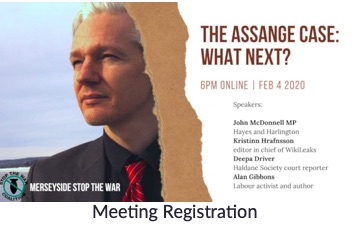
Ms. Mairead Maguire, Nobel Peace Laureate, has today nominated Julian Assange, Chelsea Manning and Edward Snowden for the 2021 Nobel Peace Prize.


WikiLeaks founder Julian Assange greets supporters from a balcony of the Ecuadorian embassy in London. (AP Photo/Frank Augstein, File)

In her nomination letter to Nobel Committee in Oslo, Ms. Maguire wrote:

“My reasons for nominating them together are simple.   Individually each has given countless examples of courage exposing governments’ illegal actions that caused millions of deaths – putting their own freedom and lives on the line.

“Collectively, their lives of self-sacrifice and selflessness constitute remarkable demonstrations of the magnificence of the human spirit.   They are indeed breathtaking testimonies to the goodness inherent in the human heart.

“The Nobel Committee could protect and help save the lives of these three Champions of Peace by awarding them the 2021 Nobel Peace Prize.  By doing so the Committee would honour the will of Nobel, in acknowledging true heroes of Peace.   The Nobel Committee would also give great hope to publishers, journalists, writers, and many who face repression and persecution by their governments as they struggle to be writers of truth and history of humanity.”

*******************

4th January, 2021

The Norwegian Nobel Committee
Henrik Ibsen’s gate 51
O255 Oslo, Norway

Subject:  Nomination of Julian Assange, Chelsea Manning and Edward Snowden for the 2021 Nobel Peace Prize

Dear Members of the Norwegian Nobel Committee, I hope this finds you well.
I am herein nominating these three individuals, as a group, for the 2021 Nobel Peace Prize.

All three have been individually nominated in previous years for the Peace Prize, but none received it to date.   My reasons for nominating them together are simple.

Individually, each has given countless examples of courage exposing governments’ illegal actions that caused millions of deaths—putting their own freedoms and lives on the line.

Collectively, their lives of self-sacrifice and selflessness constitute remarkable demonstrations of the magnificence of the human spirit. They are indeed breathtaking testimonies to the goodness inherent in the human heart.

Today around the world, when we listen or read about violence, militarism, poverty, war, pandemics, climate change, and particularly the suffering of millions of little children hungry in a rich world, it is hard not to feel despair and wonder… ‘where is the hope?’  However, the hope lies in the lives of ordinary people doing extraordinary things to serve and help others even sometimes at the cost of their own lives.

(Article continued in the column on the right)

Question related to this article:
 
Julian Assange, Is he a hero for the culture of peace?

Free flow of information, How is it important for a culture of peace?

The Nobel Peace Prize: Does it go to the right people?

(Article continued from the column on the left)

Our hope lies in lives like those of Chelsea, Ed and Julian, their altruism helping restore our faith in ourselves and in our brothers and sisters everywhere.  We allow ourselves to be inspired by their courage and example as they motivate us to act.   If they are capable of such great acts of love, maybe we too can do something for others – at least we can try to keep the Golden Rule, ‘do unto others as you would have them do to you’ (which all religions preach). We each can try to do no harm, and try to do what is right.

Chelsea Manning, as an American soldier based in Iraq, could not go along with the murder of Iraqi civilians.  Julian Assange, as a publisher, had to do his duty and disclose facts of the Iraqi and Afghan wars to the public. Edward Snowden, working in U.S. intelligence, could not remain silent knowing that his government was carrying out illegal surveillance of US citizens and world governments.

They could have remained silent but chose the hard road to tell the truth.

Now they are being punished cruelly and vindictively by those who broke international laws, the very people who should be held responsible for the deaths of children and civilians in Iraq, Afghanistan, Pakistan, Libya, Syria, Yemen

Currently Assange is in Belmarsh Prison, UK, facing extradition charges to USA, as the British government cooperates with the American Grand Jury to condemn him (an Australian citizen and publisher) to cruel, degrading and inhuman treatment, which could even lead to the death penalty.

Even more insidious, with a few honourable exceptions, the Main Stream Media–if not silent at the unjust torture of Assange by the UK and US governments–collude in the abuse of Assange, a fellow publisher. If Assange is extradited to USA to stand trial and imprisoned for truth telling, thereafter no reporter, newspaper or publisher in the world will be safe from the same treatment by the USA and other repressive governments opposed to public accountability and scrutiny.

Snowden is seeking asylum in Moscow (Russia have just granted him citizenship to help protect his life) and is unable to return to his home in the USA lest he be arrested and confined to an American prison for life.

Manning is in an American prison, having been re-arrested and held because she courageously refuses to give testimony against Assange.

All of these three Champions of Peace followed their consciences, did their duty with love. I am sure that they were afraid, but they endured their Dark Nights of the Soul, they each did something beautiful and magnificent in service of others.  We must all be grateful for their uplifting spirits.

The Nobel Committee could protect and help save the lives of these three champions of peace by awarding them the 2021 Nobel Peace Prize. By doing so you would honour the will of Nobel, in acknowledging true heroes of Peace.  The Nobel committee would also give great hope to publishers, journalists, writers, and many who face repression and persecution by their governments as they struggle to be the writers of truth and history of humanity. Thank you.

Peace,

Mairead Maguire