Tag Archives: Europe

Isabelle Bourgeois: Your joy is my destination

… EDUCATION FOR PEACE …

An article by Tony Robinson from Pressenza

Early readers from the first days of Pressenza will remember Isabelle Bourgeois as a passionate journalist who joined the Base Team of the World March for Peace and Nonviolence.  Almost every day, Isabelle would upload a video summary of the day’s events, telling both the serious and humorous sides of the journey.

In fact, Isabelle is a professionally trained journalist who has worked in war zones such as Iraq, Ethiopia and Kosovo for the Red Cross, but despairing of the one-sided stories portrayed in the media, Isabelle abandoned mainstream journalism and has set off to follow her own dream, driven by a profound purpose: to seek out joy in the world and to transmit it to as many people as possible.

As I know Isabelle very well from the time we shared on the World March, she called me a few weeks ago to say she was on her tour called “Joy for the Planet” and wanted to come and see what inspiring people she could find in Hungary.  I realised that after 6 months’ sleeping in her camper van, she’d probably welcome the spare bed and hot shower I could offer her!  So to Budapest she came and I helped out while she met up with a young Japanese ballet dancer who she was in contact with and who offered to be a subject in a video to spread joy through dance.  We spoke a lot about her project, her purpose and the future.
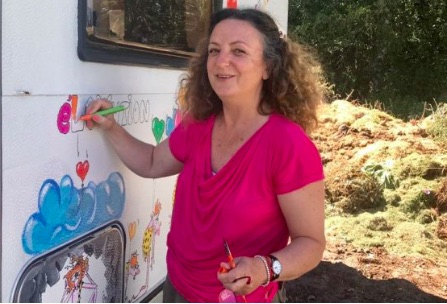

Isabelle decorates her beloved vehicle and home for 2018 (Image by Joy for the Planet)

One has the impression with Isabelle that she is being guided by a great force.  What seems to be a coincidence at first, later on always feels like it was meant to be.  As she says herself, “I’m the right person at the right place, at the right time with the right people.”
I took the opportunity to interview her for Pressenza and offer her her old role back!

Pressenza: What is Joy for the Planet? Tell us about this project.

Isabelle Bourgeois: Joy for the planet is a journey around the world but starting with a tour through Europe, with my camper van that I’ve called Begoodee, in order to promote and share joy, enthusiasm and passion through meeting inspiring people.  I’m a journalist and all my life I’ve been dedicated to promoting and sharing positive news, inspiring news, through the media and I wanted to bring my own contribution to improve humankind, somehow, on a very humble level.  So the idea is to travel throughout Europe for one year with the gift that I’m born with and with my experience as a journalist, with my camera, with my microphone and pencil and some drawings.  I’m bringing joy and sharing joy as a volunteer through videos, articles and interviews.

PZ: I see that as part of the project, in every place you go, you look for inspiring people who you award with the title nominee of joy and give them a solar lamp. What’s that about?

IB: The idea again is to bring trust and faith, but faith not in a religious sense, faith in yourself, faith in your life’s mission, faith in the purpose that you are living on Earth.  So the idea is to build bridges instead of fear, instead of walls, to show how much beauty there is in the world and how many great and inspiring people there are.  And on the road, in order to show the light that goes from person to person helping each other and being passionate about their lives, I found a concrete way to symbolize this transmission of love and passion with a little solar lamp.

So on the road, in a way which is not at all planned or controlled, something totally spontaneous, I might meet some people; adults, disabled people, children who are willing to build solar lamps with me.  So they add their light to this project, they add their love, they add their hopes, by building these little lamps.  And on the road I offer these lamps to inspiring people who dedicate their lives to others, or who bring better living conditions for us.

PZ: What led you to take on this great adventure?

IB: For the last 25 years, I’ve been a journalist and at the beginning I was a regular journalist, writing about gossip, violence and scandals; nothing that actually helps anyone to evolve and I was also working as a humanitarian delegate in war-torn countries.  And being in war zones I was surprised to see so much love, solidarity, great behaviour and forgiveness from all parties involved in the conflict.  But in the evening when I came back home and switched on the TV, the media were only talking about terrorism, bomb attacks, violence and blood, and I said that there’s something here which isn’t right, because I’m in the middle of the war and I see so much beauty also, so much love, so much peace and I thought, “Oh, there’s a kind of conscious manipulation by omitting what makes people human beings.”  And I didn’t want to take part in that lie anymore because this war and violence is a reality but it’s not the reality.  And I witnessed also another reality which is solidarity, helping each other, forgiving and so 15 years ago I decided to create a good news website – somehow similar to Pressenza – on a voluntary basis and I decided to quit mainstream journalism for good, because it contributes much more to increasing fear, hate and judgment among people than to bringing trust and inspiring solutions.  So this was the first thing I did.

And then I tried as a freelance journalist to publish good news, inspiring news, but most of the media said, “Good news is not news, Isabelle,” and, “You’re too idealistic, you’re too naïve.” Really, I was hitting my head against a brick wall for many years, wanting to show that other side of reality.

So in the mean time I created other projects like, for instance, Planet Positive Action which is a travel company that organises solidarity tours. 

(Article continued in right column)

(continued from left column)

It’s about travellers who visit a country while at the same time helping and giving a meaning to the trip. So I did that while taking a bit more distance from journalism but I never gave up on the idea of really bringing my journalistic faculties to others because I love my job.

I think journalism is one of the most beautiful jobs in the world.  So two years ago I said I will not give up on inspiring journalism or humanist journalism and I said, “But how can I bring my reportage, my features, my articles, if mainstream media are not that interested in publishing what I see and who I meet?”  And so I said, “I’ll do it on my own, I’ll just find some money to buy a vehicle and I’ll jump into the world with my camera, my microphone, my pencil and I’ll just do it on my own. I will not wait any more for people to follow me in this. I’ll just do it.”

And I did some crowdfunding last November and I succeeded to collect eighteen thousand euros which was beyond my expectations because I was asking for fifteen thousand.  And then I bought my second-hand old camper van and that’s it.  I started my journey from Switzerland six months ago and this is how it happened, to make a long story short. Although the project only took shape two years ago, it’s really a life-time commitment.

PZ: On your journey so far from Switzerland with Begoodee, where have you been? And could you give us a couple of highlights for you?

IB:  Yes.  So I started in Switzerland then I went down to Sardinia, Corsica, France, Germany, Denmark, Norway, Finland and then I went through all the Baltic countries to Poland, and I landed now a few days ago in Budapest.

Highlights?  Actually every day of that journey has been a highlight because I’ve met such unbelievable people, extraordinary people.

So for instance in Finland, I met Villé, a 25 years old young man who tried to kill himself when he was 16 years old because he couldn’t fit with that world.  It was like he was parachuted on to a terrible planet he didn’t want to belong to. So he jumped off a cliff, and he told me, “I jumped from the cliff. I’ve lost two legs, but I found my joy.”  And he was sharing with me what made him so joyful today and he said that it was this path that has nothing to do with what is visible, with materialistic issues; it’s about finding peace and loving everything whatever it is, beyond shape and form, beyond the physical.  So he was really a fantastic person.

Also in Finland, I participated in the world championships of boot-throwing. This also I loved so much because it was kind of, when you’re going through a hard time and you have this total nonsense sport which helps you also to give a meaning to your life, because it helps you to take distance from drama and from seriousness.  So I found it actually very therapeutic.

Also in the South of France I met a guy whose dream, he is 75 years old, was to cross the Atlantic inside a barrel.

I’ve met Buddhists, I’ve met Jewish people who are committed to bringing peace to the Middle East.  I’ve met dancers who were dancing to bring all the nations together.

And I have rewarded – it’s not me actually it’s the project, because there is a big difference between me and the project – so the project has rewarded so far 36 or 37 nominees of Joy.

PZ: What’s the future for this project?  Where are you seeing it in the future?

IB:  Of course, the idea now is to build something that will remain, that will be useful for everyone.  So this year’s journey is just for me a calling card to show to everyone that I want to give an example.  So, I did it with all my love, with all my convictions.  I did it and then I will write a book about this journey and I would like to make a movie because so far I’ve edited more than 60 videos but very short so I’d like to make a movie. And then with this movie, the journey (the experience), the writing and the film, I would like to create a kind of a place, a physical location, where people can experience joy: joy through art, joy through science (with quantum physics, for instance, how your thoughts are influencing your destiny), joy with music, joy and education, and so on.  So, it will be a place where people can experience, in an interactive way, how to find the key to joy in life and how to live a dream, how to align your values with your actions.

PZ:  What have you learned in these last six months?

IB: [Laughter] That I was right! I’ve learned somehow very deep, but I’ve learned that I was right to trust human beings.  I was right all my life to trust human beings, and to see jewels within them. And people who behave badly, it’s not that they’re bad, it’s just that they didn’t have the chance to be loved enough to follow their dreams.  So all the harm and the bad is coming from ignorance.  It’s not coming from reality, rather from a source of negativity.  It’s really an accident in a loving process in an individual’s path.  So, I’ve learned that actually everyone is good and has a very beautiful ground but education factors have stopped them from remaining loving or a loved person.  I’ve learned that I shouldn’t judge anymore what is right and what is wrong, because if you decide what’s right, what’s wrong, then you will feed the notion of duality and this is not at all what I would like to contribute.  So by accepting light and dark, good and bad in a compassionate way, I believe that I contribute more to building this sense of oneness on earth.

PZ: And finally, what brings you joy?

IB: Of course, this project actually.  There is joy in finding joy actually.  So because all my life, I really felt joy despite the burdens, difficulties and troubles in my life, I never quit that deep feeling that everything has a purpose and that we’re not alone and that there’s a reason for all the turbulence in your life.  So I never quit that underground stream of joy, but it was of course up and down, up and down, like as if I was going out of the flow and then back into the flow, and out of the flow and back again.  But now, through this project I feel really that I’m non-stop in the flow of joy, non-stop, because I feel that I’m the right person at the right place, at the right time with the right people and that I’m really doing what I was born for, that I’m in my life’s mission.

PZ: Very good. Thank you and good luck!

(Thank you to Janet Hudgins, the CPNN reporter for this article.)
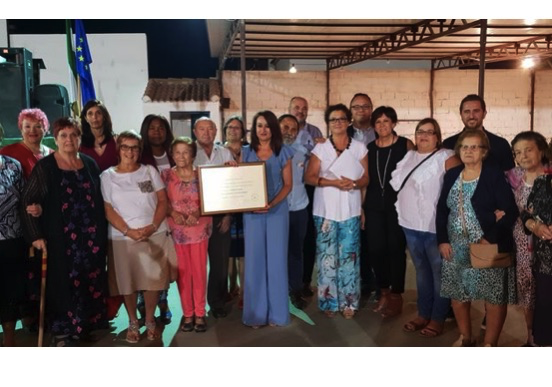
UNESCO recognizes Cortes de Baza (Spain) for Dialogue and Coexistence

TOLERANCE AND SOLIDARITY .

An article from Granada Hoy (reproduced without commerical purpose)

On August 20, in the cultural week prior to the festivities of Cortes de Baza, Cortes de Baza received recognition as the first Municipality for Dialogue and Coexistence in Andalusia. This appointment arises after the full agreement of the City Council on July 27, where Cortes assumed the institutionalization of the Culture of Peace in the municipality.


Neighbors from Cortes pose next to the title that recognizes them as a Municipality for Dialogue and Coexistence.

The agreement concerns the joint project of the Unesco Center of Andalusia and the Institute of Peace and Conflict of the University of Granada (IPAZ) where the municipality assumes the provisions of resolution A/RES/67/104 (2015) of the General Assembly of the United Nations on the Promotion of Dialogue, Understanding and Cooperation among Religions and Cultures for Peace.

The agreement stipulates that diversity and plurality is an asset and that minorities, whether ethnic, linguistic, cultural or religious, should be recognized, with the aim of eliminating any form of racism, discrimination, xenophobia and intolerance, in addition to look for the resolution of possible conflicts in a peaceful way.

(Article continued in right column)

(Click here for the original Spanish version of this article)

Question for this article

The refugee crisis, Who is responsible?

(Article continued from left column)

The agreement supports measures that promote tolerance, solidarity and coexistence with refugees, immigrants and displaced persons, as well as their social integration among other measures. It is the latter, a measure of special importance in recent days, where the arrival of people from other territories to our country is generating numerous debates on how to deal with this problem.

Under these premises and with the creation of the Intercultural Dialogue Table, organized on July 13, Cortes de Baza becomes the first Andalusian town with the recognition of Municipality for Dialogue and Coexistence.

The process of this recognition is carried out through the unequivocal demonstration that the locality assumes the aforementioned principles, through a municipal agreement as is also the case of the Altiplano municipality, where it was approved by unanimity of all political groups, and the creation of an Intercultural Dialogue Board, under the verification, advice and support of technicians and researchers from both the Unesco Andalusia Center and the IPAZ. It should be pointed out that the involvement of the City Council of Cortes de Baza as well as the teaching staff of the Colegio Santos Médicos in the locality has been fundamental.

The Intercultural Dialogue Board of Cortes de Baza is composed of people of different nationalities from Russia, Belgium, Romania, Colombia, Mexico, England, Dominican Republic, among others, as well as religious minorities such as Jehovah’s Witnesses, Muslims or Orthodox Christians.

It should also be mentioned that of the 16 members that make up this Board, all but three are women, giving it a feminist and integrative vocation. This plurality is appreciated in a small municipality such as Cortes de Baza, which has a population of less than 2,000 residents.

Traveling by Bicycle Gives Direct Contact with People

… EDUCATION FOR PEACE …

An article by Stip & F

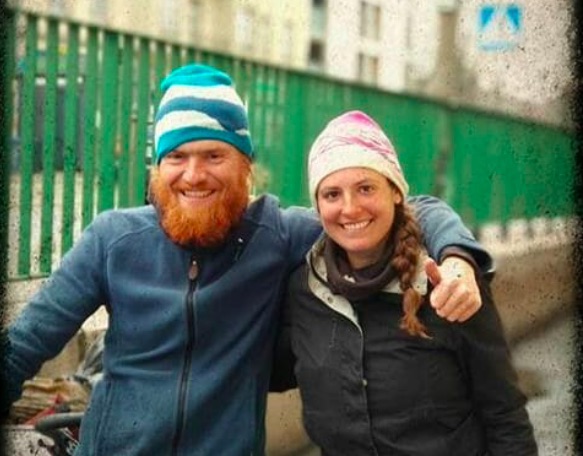
After eight years of professional life in the banking sector in Paris, we decided to travel by bike to discover Europe via Morocco. This means of locomotion has become obvious to us. Economical and practical, it allowed us to travel 17000 km during a year. Meeting peope is all the more facilitated as we are in direct contact with them.


(click on image to see the video)

The same questions come up frequently in all languages: Where are you from? Why are you doing this? Where do you sleep ? Their questions allow to get in touch, to express who we are, without necessarily going through the words, but especially by smiling, and what we hope to make clear: our simplicity.

We went in search of ourselves, especially through meeting people, sharing their stories and experiences. The memory of these exchanges will remain with us forever: a Belgian family who drew our first tears at the time of departure in Spain; the Moroccan couple in the Atlas Mountains who shared everything; the kindness and the big heart of an Italian family in Cremona; the welcome and generosity of a Serbian entrepreneur; a memorable breakfast with two retirees in the middle of Finland …

(Article continued in right column)

(Click here for the original version in French.)

(continued from left column)

We also discovered a new kind of fast and intense relationship. People did not hesitate to tell us their life stories. This drove us to compassion and humility in the face of their heartbreaking stories. We listened attentively, comforted and left, maybe sometimes a little too fast … Hoping that peace has returned to their life.

These spontaneous exchanges are a great way to learn about yourself. It was rare that we had any reason to be frightened, and when that happened, it was most often based on limits to our understanding, deeply rooted in ourselves through our education and the messages conveyed by society. This experience has shown us that kindness and generosity are everywhere; you just need to open your eyes. It seems that too often, we do not believe what we see, but we see what we believe. Sometimes in the cafes, a customer pays the bill, the boss offers us a meal, a person offers us a room … Arriving with a positive intention can make a big difference.

Inevitably, some events wore on our nerves, like the rain near Foggia in Italy, which in the end was punctuated by a beautiful evening around a fire. We learned that we must welcome everything, accept it as it is, even that which we might consider negative.

Intuition became our best ally over the days in all situations. It’s about giving more space to our feelings as the best indicator. Being in close contact with the elements, we are immersed in the environment, open to capturing more information. Our senses sharpen, we know instinctively if we must extend a meeting, shorten or change course. Sometimes, we felt that an invitation was too insistent, and we refused it, at the risk of offending someone. We prefer to be in agreement with ourselves rather than compromise.

The difficulties we encountered, whether related to climate, relationships with others, or our own doubts … turn out to be ways for us to grow. Once the discomfort has passed, the field of possibilities gets bigger. This has been a journey to remember who we are, to go beyond the facades built around our ego.

We continue our journey, having become more aware and grateful for all the intentions of life. Above all, we must simply remember: the human being is benevolent by nature.

Emerald Isle Goes Green: Ireland just voted to divest from fossil fuel companies

. . SUSTAINABLE DEVELOPMENT . .

An article by Casey O’Brien for the Sierra Club ©2018 Sierra Club. All Rights Reserved – reproduced from a Sierra Club website with permission of the Sierra Club

The global fossil fuel divestment movement just got a huge push from an unexpected place—Ireland. On July 12, Ireland became the first country to vote to shed its financial holdings in oil, gas, and coal corporations. The measure calling for the country to sell off its estimated $370 million in fossil fuel investments “as soon as is practicable” passed the lower house of the Parliament of Ireland with support from all parties. The vote marks a major milestone in the effort to move capital away from the largest carbon polluters.  


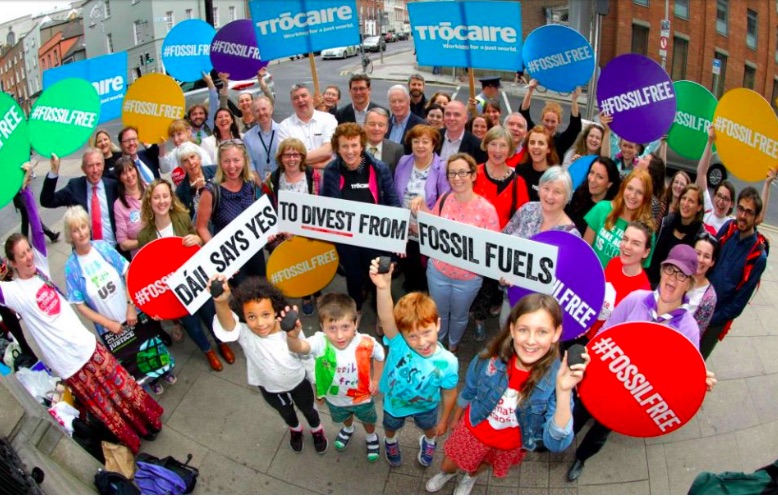
People celebrate July 12 after the passage of the Fossil Fuel Divestment Bill in Ireland. (Mark Stedman). Photo from National Catholic Reporter

“This is the next step in a progression . . . of what people considered impossible and unprecedented, but it makes perfect sense that that’s what’s happening,” said Andrew Behar, CEO of the socially responsible investment firm As You Sow. 

Ireland’s move is the latest surge in the rising tide of the divestment movement, which now includes universities across the United States, dozens of Catholic institutions, and New York City, which earlier this year announced it is investigating selling off its fossil fuel holdings. Go Fossil Free, a group that advocates for fossil fuel divestment, estimates that $6.15 trillion worth of fossil fuel assets have been sold off since the movement started in 2010. “First we had student movements, then we had mission-driven organizations—faith based and philanthropy—and now we have entire countries,” said Clara Vondrich, global director of Divest Invest, which provides institutions with guidance on how to move their money away from fossil fuel corporations.  

The move surprised some people, as Ireland has something of a reputation for being slow to act on climate, in comparison to other European nations. Bill McKibben, co-founder of 350.org, tweeted that the news of the vote “staggered him.” The Climate Action Network recently declared Ireland the second-worst country in the EU for climate change management. The only other country to consider such a move is much-wealthier Norway, which has proposed divesting its $1 trillion sovereign wealth fund but hasn’t done so yet. 

(continued in right column)

Question for this article:

Divestment: is it an effective tool to promote sustainable development?

(continued from left column)

Ireland’s vote is particularly important because it reflects a major shift in the divestment movement, Vondrich explained. Originally, fossil fuel divestment was entirely driven by moral concerns—institutions pulled their money out of oil, gas, and coal companies because they didn’t want to be contributing to the destruction of a stable climate. Now, divestment is increasingly seen as a smart financial move for investors; Ireland’s divestment is as much a fiduciary decision as it is a chance to demonstrate its principles. “The divestment movement now stands on a strong three-legged stool of moral, fiduciary, and financial arguments,” Vondrich said.   

A recent report by the Institute for Energy Economics and Financial Analysis (IEEFA) illustrates Vondrich’s point. The report states, “The financial case for fossil fuel divestment is strong. Over the past three and five years, respectively, global stock indexes without fossil fuel holdings have outperformed otherwise identical indexes that include fossil fuel companies. Fossil fuel companies once led the economy and world stock markets. They now lag.”    

Energy stocks were the second-worst performing sector in 2017, states IEEFA’s report, outpaced by health, technology, and other industries even as the price of oil stabilized from a low of $28 a barrel in 2016 to $75 today. Fossil fuel companies’ relatively weak performance is crucial, given that some investment institutions are required, by their charters, to prioritize profit performance and fiduciary responsibility above all other concerns. Ireland’s vote, Vondrich said, solidifies the argument that divestment is the financially savvy choice for investment managers.  

While Ireland’s vote only affects a relatively small amount of money (as national investment funds go), Behar and Vondrich agree that it carries significant symbolic value. “What started on a handful of college campuses is now the policy of nations,” Vondrich said. “Ireland’s pledge to divest takes the movement to the next level, where activists and heads of state work hand-in-hand to save the world.”  

Behar said, “This is a political statement. The fund is relatively small . . . but I think that having it decided in that venue is really important. It’s sort of like when California decided that they wanted CalPERS, the pension fund, to divest. That was a vote in the California legislature.” Behar continued, “I would equate it to when the Rockefeller Brothers Foundation made [their divestment] announcement at the 2014 climate summit in New York. That was a major moment, when the heirs of the Exxon fortune said, ‘We’re going to sell our Exxon [stocks].’” 

Vondrich said the strategy going forward is to continue to push for divestment decisions as well as divest-invest pledges in which divested funds are reinvested in enterprises committed to sustainability and clean energy. Ultimately, the goal is to demonstrate that buying shares of fossil fuel corporations is not a wise investment. 

“The fossil fuel industry is really in the long term, nonviable. So you want to get out as early as possible,” Behar said. “Our goal is removing the social license for these companies to exist.” 

BDS Victory: Irish Senate Approves Bill Boycotting Israeli Settlement Goods

. .DISARMAMENT & SECURITY. ,

An article from Telesur TV

Ireland becomes the first country to ban trade with Israel’s illegal settlements.

The Ireland senate approved the Occupied Territories Bill, which bans all trade with illegal Israeli settlements in the occupied West Bank, Wednesday. The Irish government opposed the legislation, but 25 independent and opposition lawmakers secured its approval.

Ireland is on its way to becoming the first country to prohibit “the import and sales of goods, services and natural resources originating in illegal settlements in occupied territories.” 

The Israeli Foreign Ministry responded to the decision saying that “the Irish Senate has given its hand to an aggressive, dangerous and radical populist anti-Israel boycott initiative that undermines prospects for a dialogue between Israel and the Palestinians.”

(article continued in right column)

Question related to this article:

Presenting the Palestinian side of the Middle East, Is it important for a culture of peace?

How can a culture of peace be established in the Middle East?

(article continued from left column)

Israeli Prime Minister Benjamin Netanyahu also protested, saying the bill “is to support the BDS movement and harm the State of Israel.”

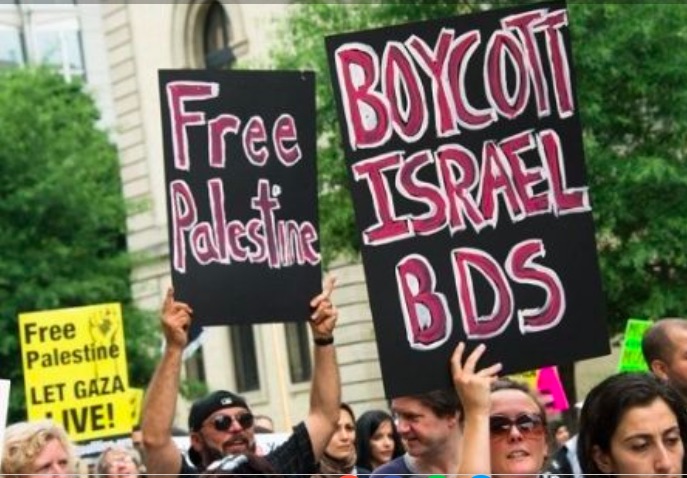
The Boycott, Divestment, and Sanctions (BDS) movement is a Palestinian-led international campaign launched in 2005 to push for the end of Israel’s over-50-year-long military occupation of Palestine, the end of the apartheid regime, and for the recognition of the right to return of the over five million Palestinian refugees.  

Despite attempts to discredit the BDS movement, Israel’s lethal response against protesters who participated in the Great March of Return, which began on March 30, has given the international campaign more relevance and victories.
 
The bill was introduced by Frances Black, a well-known singer and member of the Seanad, the upper house in Ireland’s Parliament. 

There is international consensus on the illegality of these settlements. Earlier this year the United Nations Human Rights Council published a report  on the role businesses play in Israel’s violations of international humanitarian law, “contributing to Israel’s confiscation of land, facilitate the transfer of its population into the Occupied Palestinian Territory and… the exploitation of Palestine’s natural resources.”

(Thank you to the Transcend Media Service for bringing this to our attention.)

II World Forum on Urban Violence and Education for Coexistence and Peace: Madrid, 5-8 November

.. DEMOCRATIC PARTICIPATION ..

Information from the website of the Forum (Translation by CPNN)

The Organizing Committee

On Monday, June 11, the Organizing Committee of the II World Forum on Urban Violence met in Madrid. The Forum will be held in the Spanish capital from November 5 to 8, 2018, with the aim of designing an integrated program capable of serving the expectations generated by this new edition of the Forum.

The invocation of the Forum was announced by the mayor of Madrid and co-president of the Union of Ibero-American Capital Cities (UCCI), Manuela Carmena, attended by representatives of the various organizations and platforms that take part of the Organizing Committee. They shared expectations for the organization of the Forum, raising, among other challenges, how to establish Madrid as the permanent seat of the Cities of Peace Forum and turn it into an annual event on the international agenda. The need to open a space to measure the results of the first Forum and its impact on interpersonal violence in territories and cities was also analyzed, as well as a discussion on how local leaders can contribute to “saving lives” with public policies that promote education for coexistence and peace in cities and territories.

The organizing committee currently is composed of: the city councils of Madrid, Barcelona and Paris; the Ibero-American General Secretariat (SEGIB); different United Nations agencies (UN Women, UN Habitat and the United Nations Development Program (UNDP), the World Health Organization (WHO), networks of cities such as the global network of United Cities and Local Governments (UCLG) ), the Spanish Federation of Municipalities and Provinces (FEMP), Metropolis, the Union of Iberoamerican Capital Cities (UCCI), Mayors for Peace and other platforms representing civil society such as the Spanish Association for Peace Research (aiPAZ); the Regional Federation of Neighborhood Associations of Madrid (FRAVM), the NGO Network of Madrid, the FAPA Giner de los Ríos and the Association of Educating Cities (AICE), as well as other collaborating entities that are committed to the organization and development of the forum process.

The meeting discussed the possibility of incorporating, in addition to debates and dialogues, other more dynamic ways of describing how cities, together with their citizens, confront the various forms of interpersonal violence. These include violence in sport, violence in social networks, juvenile violence, school violence, racism and xenophobia, international terrorism, LGTBIFobia, urban inequality and public space, violence against displaced persons and refugees and other more recent violence, such as the most current “aporophobia” (fear, rejection or aversion to poor people). These issues were integrated into the first draft of the working agenda.

(continued in right column)

(Click here for the Spanish original of this article)

Questions for this article:

How can culture of peace be developed at the municipal level?

(continued from left column)

PRE-REGISTRATION OF INITIATIVES / PROPOSALS FOR PARTICIPATION

Only one card can be registered per user. If you want to send more than one proposal, you must do so with another user / e-mail.

[The following information must be entered on the forum’s website:]

First Name

Last name

Email

Nationality

ID Number-Passport

Organization-Institution

Why did you decide to participate?

TITLE of the initiative

PLACE (City/country/region)

THEME/SPHERE (Type of violence / population affected

WHAT TYPE OF URBAN VIOLENCE DOES IT SEEK TO ERADICATE OR PREVENT?

STAKEHOLDERS INVOLVED (Impulse/collaboration)

DESCRIPTION (Summary of the main actions carried out)

RESULTS/IMPACTS/PERSPECTIVES

MORE INFORMATION (Details of the contact person, webpage, links, materials)/

PROPOSED PRESENTATION FOR THE INITIATIVE AT THE MADRID FORUM (5-8 NOVEMBER 2018)

TECHNICAL AND SUPPORT REQUIREMENTS TO PRESENT THE PROJECT IN MADRID (material and technical characteristics)

DETAILS OF THE PERSON RESPONSIBLE FOR THE PRESENTATION IN MADRID

First International Conference Against US/NATO Military Bases November 16-18, 2018, Dublin, Ireland

DISARMAMENT & SECURITY .

An announcement from the  international network “No to war – no to NATO”

Dear Friends of Peace Around the World,

We are deeply concerned, and frightened, by the threat of war that permeates the present Global atmosphere.

The increasingly aggressive and expansionist actions of US/NATO forces in violation of international law and the sovereign rights of all nations, the raging wars in the Middle East, the burgeoning arms race devastating the national treasuries, the bellicose language replacing diplomatic negotiations, the economic crises facing country after country, and the destruction of the global environment through war and unfettered exploitation, and their impact on public health, have all created crises that, unless checked by popular opposition, can lead to unimaginable catastrophe and war.


None of us can stop this madness alone from within our national borders. The global peace forces must come together, mobilizing the millions in our countries, and around the world, for peace. We cannot, and should not, allow our possible differences on other issues to separate us. WE MUST UNITE FOR PEACE!

On the basis of our shared understanding, we have initiated a Global Campaign Against US/NATO Military Bases, and are inviting you and your organization, recognized as a voice of your people for peace and national sovereignty, to join this new Global Campaign by signing our Global Unity Statement. It is our sincere hope that you will accept this invitation and join in our global effort to oppose all forms of war and aggression against sovereign nations.

To join the Global Campaign Against US/NATO Military Bases, please sign our Global Unity Statement: NoUSNATOBases.org.

As the first step toward launching our Global Campaign, we will be holding our first International Conference Against US/NATO Military Bases on November 16-18, 2018, in Dublin, Ireland, hosted by the Peace and Neutrality Alliance (PANA). It is our sincere hope that you will help us in mobilizing the maximum level of participation in this International Conference.

Additional details for the Conference, including registration and the Conference program, will be announced shortly.

As you are well aware, organizing such a broad-based International Conference requires a great amount of human and financial resources, especially since we are trying to invite experts from across the globe to make presentations. It is our sincere hope that you and your organization, based on your sense of solidarity with our common cause for peace, will make a generous donation toward covering the costs of this very important and historic Conference.

(Article continued in right column)

Question related to this article:

How can the peace movement become stronger and more effective?

(Article continued from left column)

For updated information on the Conference, or to make a financial contribution, please visit our web site at: NoUSNATOBases.org.

You can also contact us via email at: contact@NoUSNATOBases.org

Looking forward to your support and participation.

Yours in Peace,

Founding Organizations:

Peace and Neutrality Alliance (PANA), Ireland

Roger Cole, President • Ed Horgan, International Secretary • John Lannon, Member of the National Executive

Coalition Against U.S. Foreign Military Bases, USA

Coordinating Committee: Bahman Azad (Coordinator), U.S. Peace Council • Ajamu Baraka, Black Alliance for Peace • Medea Benjamin, CODEPINK • Leah Bolger, World BEYOND War • Bernadette Ellorin, BAYAN-USA • Sara Flounders, International Action Center • Bruce Gagnon, Global Network Against Weapons and Nuclear Power in Space • James Patrick Jordan, Alliance for Global Justice • Tarak Kauff, Veterans For Peace • Joe Lombardo, United National Antiwar Coalition • Alfred L. Marder, U.S. Peace Council • Kevin Martin, Peace Action • Nancy Price, Women’s International League for Peace and Freedom — US Section • Alice Slater, Nuclear Age Peace Foundation • David Swanson, World BEYOND War • Ann Wright, Veterans For Peace, CODEPINK • Kevin Zeese, Popular Resistance

Sponsoring Organizations:

• World Peace Council (WPC) • Movimiento Cubano por la Paz y la Soberania de los Pueblos (MOVPAZ) — (Cuba) • Centro Brasileiro de Solidariedade aos Povos e Luta pela Paz (CEBRAPAZ)— (Brazil) • Stop the War Coalition — (UK) • Okinawa Peace Action Center — (Japan) • Japan Peace Committee — (Japan) • Gangjeong International Team — (Jeju, South Korea) • Conselho Português para a Paz e Cooperação — (Potugal) • Belgrade Forum for a World of Equals — (Serbia) • Peace Committee of Turkey — (Turkey) • Cyprus Peace Council — (Cyprus) • Greek Committee for International Detente and Peace (EEDYE) — (Greece) • Philippine Peace & Solidarity Council (PPSC) — (Philippines) • Foro Contra la Guerra Imperialista y la OTAN — (Spain) • Palestinian Committee for Peace and Solidarity — (Palestine) • Canadian Peace Congress — (Canada) • Lebanese Peace Council — (Lebanon) • Peace and Solidarity Committee in Israel — (Israel) • Czech Peace Movement — (Czech Republic) • South African Peace Initiative — (South Africa) • German Peace Council — (Germany) • All India Peace and Solidarity Organization — (India) • Nepal Peace & Solidarity Council — (Nepal) • Swiss Peace Movement — (Switzerland) • British Peace Assembly — (Britain) • International Action for Liberation (INTAL) — (Belgium) • International League of Peoples Struggle — (Netherlands) • Comitato Contro La Guerra Milano (CCLGM — (Italy)

Finalization of activities of ‘Imagine’ Project for school year 2017-2018 (Cyprus)

… EDUCATION FOR PEACE …

A press release from the Association for Historical Dialogue and Research published by the Global Campaign for Peace Education

The Bi-communal Technical Committee on Education, which was established after the agreement between the two leaders in December 2015, continues its efforts to implement confidence building measures in schools of the two educational systems and promote contact and co-operation between students and educators from the two communities.


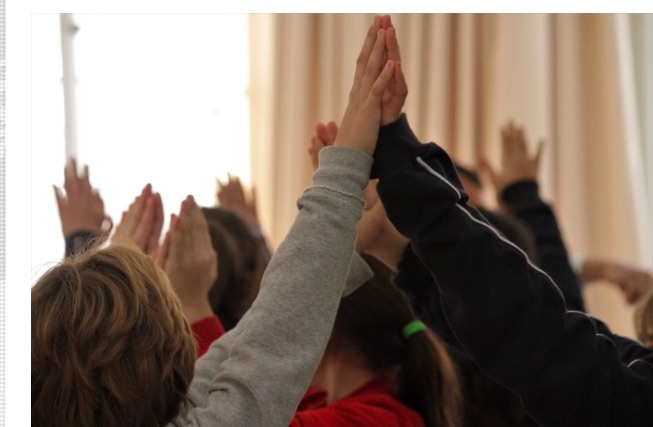
(Photo: ADHR)

Educational programme ‘Imagine’ which addresses primary, lower and upper secondary and vocational schools managed to bring together 2000 students and 194 teachers from  40 Turkish Cypriot and 40 Greek Cypriot schools from all areas of Cyprus during the educational year 2017-2018.

(continued in right column)

Question for this article:

Can Cyprus be reunited in peace?

Where is peace education taking place?

(continued from left column)

’Imagine’, taking place under the auspices of the Bi-Communal Technical Committee of Education and implemented by the Association for Historical Dialogue and Research (AHDR) and the Home for Cooperation (H4C) with the support of the Federal Foreign Office of Germany  and the UN Peacekeeping Force in Cyprus has just been successfully completed on June 4, 2018.

A successful school year of peace education trainings ended with a festival in the buffer zone at the auspicious occasion of 1 June, International Children’s Day. The closing event took place with the participation of 100 primary school children ages 10-12, coming from 2 Turkish Cypriot and 2 Greek Cypriot schools.

Grounded in a holistic understanding of a Culture of Peace and Non-Violence, the programme is being implemented in two stages: in the first stage, experienced trainers visit the schools of participating students and teachers in both communities to facilitate activities that deal with stereotypes, extremism and intolerance, paving the way for voluntary bi-communal contact at the H4C. Then, in the second stage, groups of students from the two communities, who wish to participate, are paired and meet in the buffer zone where they take part in either peace education workshops with the AHDR or sports activities with PeacePlayers International.

All teachers who have participated in ‘Imagine’ were invited for a ceremony and were awarded certificates of participation. The event took place at the Home for Cooperation on June 8, 2018 in the presence of the Co-Chairs of the Bi-communal Technical Committee on Education, Dr. Meltem Onurkan Samani and Dr. Michalinos Zembylas, as well as the Ambassador of the Federal Republic of Germany, H.E. Mr. Franz Josef Kremp and Elizabeth Spehar, Special Representative of the UN Secretary General and Head of UNFICYP in Cyprus.

Free Julian Assange!

FREE FLOW OF INFORMATION

A speech by Nobel Laureate Mairead Maguire at the British Embassy in Dublin, Ireland on 19 Jun 2018, reprinted by Transcend Media Service

We are here this evening to stand in solidarity with our friend Julian Assange, Editor in Chief, of WikiLeaks.   Because of WikiLeaks reporting of acts during US/NATO’s illegal wars against Afghanistan, Iraq, etc., and its highlighting of corruption by USA/CIA and corporate power, and continuing his fight in disclosing the links between the great private corporations and government agencies, Julian Assange has been threatened by high profile USA citizens, and a Grand Jury has been set up in American to try Julian Assange and WikiLeaks, for their publications.


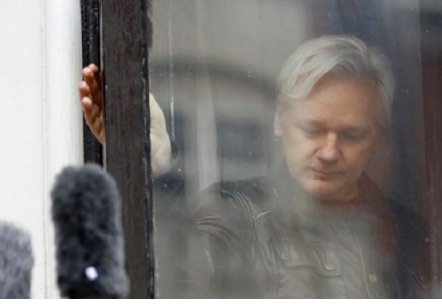
For this, he is being persecuted and deprived of his right to liberty, human rights, etc. Six years ago Julian Assange, aware of these extradition plans of America,  sought asylum in the  Ecuadorian Embassy,  in London, where he remains today.  (He is now in his 8th year of Arbitrary Detention in the U.K.)

Although Mr. Assange’s conditions were already harsh, having no sunlight or outdoor exercise since June 2012, his situation has gotten worse since March 2018 when the Ecuadorian Government (after a visit by UK/USA officials to Ecuador) imposed conditions that are like indefinite confinement.

He is prevented from having visitors, receiving telephone calls, no internet, emails, or other electronic communications.  He is unable to speak to his lawyers except in person and his   physical health, according to doctors, continues to deteriorate. Julian Assange is unable to walk outside the Ecuadorian embassy, as he has been told by UK government, he will be arrested by the British Metropolitan Police.  He has asked UK Gov. to give assurances he will not be   handed over to American Security for extradition to America, to face a grand Jury, where he could be tortured and face life imprisonment, but UK government, refuse to give him assurance of this.    A UN working group on Arbitrary detention has deemed this an arbitrary deprivation of his liberty and a grave human rights abuse which should be ended immediately, and for which, according to this UN Group on Arbitrary detention, he ought to be compensated by Britain and Sweden.

We should all be  deeply concerned at attacks by Governments, on ’truth’ tellers and ‚’whistle-blowers’ as this is a  danger posed to our democracy, security and good Governance when ‚whistle-blowers’ are thus persecuted.  These matters of removal of basic rights of speech, information, liberty, persecution and silencing of journalists, etc., are of fundamental importance to all of us who believe in a free and democratic society.

(Article continued in the column on the right)

Question related to this article:
 
Julian Assange, Is he a hero for the culture of peace?

(Article continued from the column on the left)

We have a duty to ensure Mr. Assange, an Australian citizen, is treated no less favourably than UK citizens detained for similar ofences.  British citizens enjoy the protection of the UK Human Rights Act l998 and the European Convention on Human Rights which guarantee their right to freedom of expression.  This right includes freedom to hold opinions without interference and to seek, received and impart information and ideas through any media and regardless of frontiers’ and to do so, without interference by public authority’ ;  He also has a right to be presumed innocent; and a right to the highest attainable standard of physical and mental health.

We have all a responsibility as Governments and as concerned Citizens to ensure that Mr. Assange’s treatment by UK Authorities accords to these standards.  As Julian Assange is an Australian Citizen and they have a responsibility to see their Citizens are protected and Rights upheld, we call upon the Australian Government to work for Julian’s Freedom and safe return to Australia.   Also we call upon the UK Government to do the utmost to restore Julian Assange’s human rights and the free and lawful operation of WikiLeaks.  Specifically, we ask UK government to:

1..Ensure Julian Assange is guaranteed full and timely access to all necessary medical and dental care;

2. Request and defend his right to receive information and impart information freely without interference by any public authority;

3. Defend Mr. Assange at home and abroad and object to threats levelled against Mr. Assange by high-profile US citizens and others;

4. Strongly oppose and refuse, any application to have Mr. Assange extradited to the United States where it is unlikely he would receive a fair trial;

5. Facilitate the exercise of his right to freedom of movement in an expedient manner;

6. Compensate him for his arbitrary detention (also the Swedish government should compensate him for his arbitrary detention).

I would like to make a special appeal to the American President Donald Trump and his Government, to close down this Grand Jury which has been established to try Julian Assange and WikiLeaks based on their publications, and confirm the US Government will not extradite him to America, but recognize that he too, (as any American Citizen, ) has a right to have his rights protected under law.

This impasse could be resolved through Mediation between Ecuadorian Embassy and the UK Government.  A text which includes a confirmation that Julian Assange will not be extradited to America and his Civil and Political Rights will be upheld by all Parties, would mean Freedom for Julian Assange.  The case of Julian Assange and WikiLeaks is deeply important to not only journalists, media, etc., but is of fundamental importance to a free and democratic society for us all.

We owe Julian Assange our deepest thanks for his courage and being prepared to tell the truth even at risk of his own liberty and life.  We can all, especially the media, and Governments, refuse to  be silent in face of such injustice and persecution of a man whose only crime was telling the truth to stop the wars and save lives.

We can refuse to be silent and thus complicit in the face of injustice and work together until Julian Assange can return in safety and freedom to be with his family in Australia, or whatever country he chooses as a free citizen of the world.

Castilla-La Mancha, Spain: The Strategic Agreement for Peace and Coexistence seeks a consensus of civil society

.. DEMOCRATIC PARTICIPATION ..

An article from La Cerca: Castilla-La Mancha (translated by CPNN)

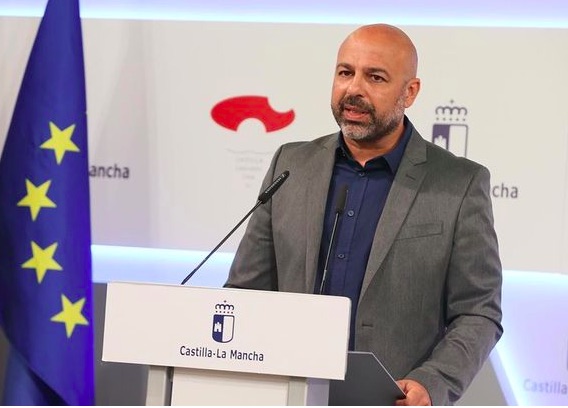
The second vice president of the regional government of Castilla-La Mancha, José García Molina, has appeared at a press conference on Wednesday [June 20] to report on the latest steps taken in the preparation of the Strategic Agreement for Peace and Coexistence which was presented to the parliamentary groups last May in the Cortes of Castilla-La Mancha.


José García Molina

Following the line of work of the participative processes in the elaboration of the Law of Participation and the Law of Guarantee of Income and of Citizen Guarantees; the project has been sent to organizations, unions and political formations so that they can participate in its elaboration.

“In a democratic society with a state of law that claims to be so, there is no room for radicalized attitudes, be they political, cultural or religious, that undermine or undermine those values ​​and those principles of democracy,” said José García Molina.

García Molina recalled the months of work developed in meetings with organizations and institutions working in different social and cultural spheres, with refugees, migrants or in a situation of vulnerability, who “have made their views known about what measures could be take to implement policies to prevent all processes of radicalization and stigmatization of these people.”

The draft has been sent to “all the organizations with which we have met, and that implement their daily work in Castilla-La Mancha, eleven representative unions of the region of different sectors, and a total of 53 political formations that have regional and even local and institutional implementation.”

(continued in right column)

(Click here for the article in Spanish)

Questions for this article:

The culture of peace at a regional level, Does it have advantages compared to a city level?

(continued from left column)

This follows the participatory processes such as those that have been carried out in the elaboration of the Law of Participation and the Law of Guarantees of Income and Citizen Guarantees, “which have favored the broader participatory processes in the History of the Community Board “and” to make civil society a participant in the policies that need to be implemented in our region “, García Molina explained that a basic document has been prepared” that gathers the contributions that generated the highest level of consensus regarding the problems we want to tackle “.

Strategic Plan for Peace and Coexistence

García Molina seeks the unanimous signature, “or at least majority”, on the document for the preparation and implementation of a Strategic Plan for Peace and Coexistence. The plan will follow the guidelines of the European Union, “which already work in other countries “, and that brings together three main axes: social cohesion projects, projects for interreligious coexistence, and projects for the promotion of the culture of Human Rights.

The first axe includes the universality of social policies, the promotion of educational, cultural and social actions for dissemination and awareness of the international problems of refugees; and the creation of a Regional Observatory on Human Rights and Equality Policies.

Second, among the interreligious coexistence projects are the creation of an interreligious dialogue agenda, the convening of an Interreligious Annual Forum; and training modules and / or teaching units that address respect for religious diversity in social and educational centers in our region.

And finally, there are projects to promote a culture of Human Rights including the promotion of diversity and respect for cultural differences, international conferences on multiculturalism and culture of peace, and cultural exchange programs.

“What we hope,” García Molina has concluded, “is that all those social, cultural, political and union organizations will answer us to set a date for the formal signing of that Agreement.” “Our desire,” he added, “is that the support be unanimous because it sends a good message of peace, of coexistence, and above all of rejection of any form of radicalization that can generate violence.”