Tag Archives: Africa

Sudan: Darfur deal welcomed by UN chief as ‘historic achievement’

DISARMAMENT & SECURITY .

An article from the United Nations

A peace agreement between Sudanese authorities and key armed movements from Darfur could provide a path to national unity, the head of the joint UN-African Union Mission in Darfur (UNAMID) said on Monday. Secretary-General António Guterres later described it  as an “historic achievement” towards lasting peace.


UNAMID/Albert Gonzalez Farran. UNAMID, in collaboration with the North Darfur Committee on Women, organised an open day session on UN Security Council Resolution 1325 on women, peace and security (file photo).

Sudan’s transitional Government initialled the deal alongside the Sudan Revolutionary Front (SRF) and Sudan Liberation Movement–Minni Minnawi (SLM/MM), at a ceremony held in neighbouring South Sudan. 

Determination, courage and commitment 

“The Secretary-General congratulates the people of the Sudan for this historic achievement and commends the parties to the negotiations for their political will and determination in working toward the common objective of peace”, said the statement released on Monday night in New York.

“He also thanks the Government of South Sudan and President Salva Kiir for their important role in facilitating the talks. The Secretary-General calls on the Sudan People’s Liberation Movement–North–Abdelaziz Al-Hilu and the Sudan Liberation Movement–Abdul Wahid Al-Nur to join the peace process.”

(Article continued in right column)

Question for this article:

Can peace be achieved in South Sudan?

(Article continued from left column)

Mr. Guterres said he was fully committed to supporting the implementation of the agreement, “which marks the start of a new era for the people of the Sudan and for people living in Darfur and the Two Areas, in particular. This will require sustained commitment and collaboration between the parties and the people of the Sudan.”

Earlier, Jeremiah Mamabolo, the UNAMID Joint Special Representative who attended the ceremony, said  the deal was a “significant step” and commended in particular the signatory parties for their “determination, courage and commitment to lasting peace in Sudan”.

17 years of brutal fighting

It is expected that the peace agreement will end 17 years of often brutal conflict in Darfur. 

Fighting between the forces of former President Omar al-Bashir, backed by allied militia, and various rebel movements, left around 300,000 dead, according to UN estimates, and millions displaced. 

President al-Bashir was overthrown in April 2019 following unrest that began in December 2018. 

 “We hope that this agreement is perceived as the start of a process that includes all in a positive move towards peace, justice and national unity. This includes the full realization of the hopes, dreams and aspirations of all the people of Sudan, including Darfuris”, said Mr. Mamabolo. 

Praise for South Sudan mediation 

At the ceremony, the UNAMID chief conveyed greetings from UN Secretary-General António Guterres and the AU Commission Chairperson, Moussa Faki. 

He also applauded the South Sudanese mediation team for facilitating the negotiation process amidst challenges. 
Mr. Mamabolo hoped that those parties who remain outside will soon join the peace process to fulfill the hopes and aspirations of the Sudanese people and the objectives of the December 2018 Revolution. 

“To that end, the United Nations and the African Union remain committed to supporting this process to the very last day of UNAMID’s mandate”, he said. 

Côte d’Ivoire: traditional chiefs gather in Yamoussoukro

. . DEMOCRATIC PARTICIPATION . .

An article by TKEmile in KOACI (translation by CPNN)

A great meeting between the Mediator of the Republic and the National Chamber of Kings and Traditional Chiefs of Côte d’Ivoire was held at the Félix Houphouët Boigny Foundation for the search for peace in Yamoussoukro, hosted this Saturday, August 29, as noted on the spot by KOACI,.


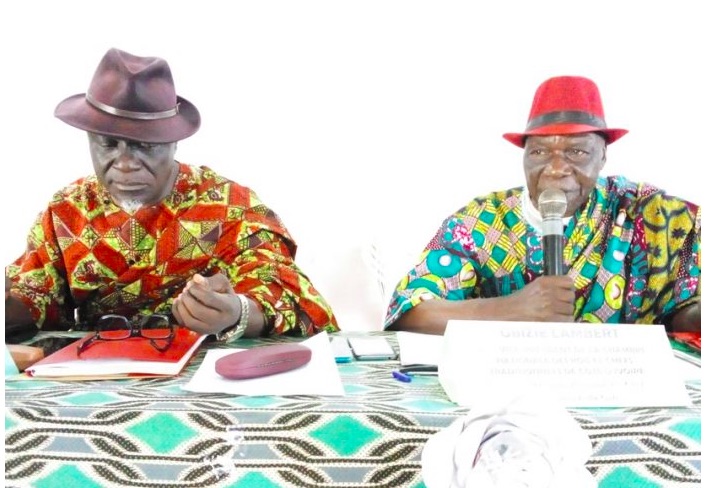
Traditional leaders at the Foundation in Yamoussoukro (photo by KOACI)

(Article continued in right column)

(Click here for the original French version of this article.)

Question related to this article:

How should elections be organized in a true democracy?

The Houghouët-Boigny Foundation of Yamoussoukro: what is its contribution to the culture of peace?

(Article continued from left column)

This meeting which saw the effective participation of the President of the National Chamber of Kings and Traditional Chiefs, His Majesty Amon Désiré Tanoe, of the Minister of State, Minister to the President of the Republic, in charge of Relations with Institutions, Gilbert Kafana Koné, was placed under the theme “the mechanisms for establishing a lasting peace in Côte d’Ivoire.”

The Mediator of the Republic, Adama Toungara, said that the kings and traditional leaders of the country on mission are at the heart of the culture of peace, pledge of lasting stability and harmonious development of Côte d’Ivoire. “I remain convinced that it is with the involvement of all, members of the government, traditional leaders, political leaders, religious guides and civil society, that we will succeed in forging and sustainably maintaining the image of fraternity, solidarity, union and peace.” said the mediator.

About 200 chiefs, from 108 departments of Côte d’Ivoire, took part in the meeting in Yamoussoukro this Saturday. The Mediator of the Republic and the President of the National Chamber of Kings and Traditional Chiefs, called on the traditional chiefs, guarantors of customs and traditions, to be messengers of Peace and social cohesion in their different villages, cantons and kingdoms in this election year. To conclude, they invited the political actors in the right tone and to avoid any action likely to undermine the peace and the unity of the Nation.

Burkina: The Movement for the Culture of Peace and Love of the Fatherland

. . DEMOCRATIC PARTICIPATION . .

An article from Le Faso

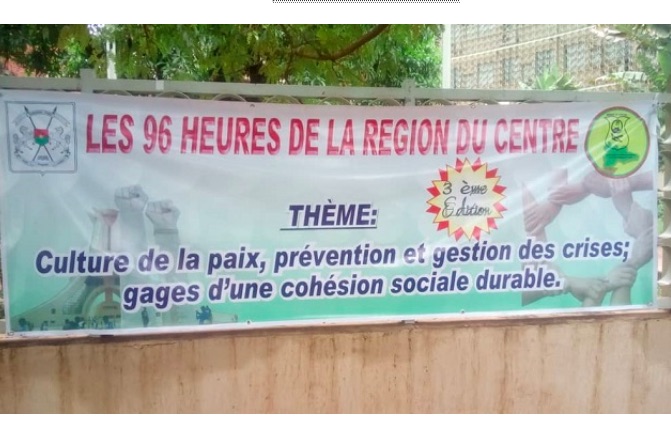
The Movement for the Culture of Peace and Love of the Fatherland (MPAP) held its second ordinary congress on August 29 and 30, 2020 in Bobo-Dioulasso. This meeting brought together the officers from 13 regions and the focal points of the 45 provinces of Burkina Faso under the theme: “Election year in Burkina Faso: what contribution for a free and transparent election, pledge of peace and social cohesion?”. The ceremony which took place on Saturday, August 29, 2020, was sponsored by the chef de canton des bobos mandarès.

The elections of November 22, 2020 crystallize debates both nationally and sub-regionally. They constitute a major stake for the consolidation of democracy and social cohesion.

(Article continued in right column)

(Click here for the original French version of this article.)

Question related to this article:

How should elections be organized in a true democracy?

(Article continued from left column)

According to the president of the Movement for the Culture of Peace and the Love of the Fatherland (MPAP), Samuel Kalkoumdo, these elections are being held in extremely difficult conditions, in that there are more than a million displaced people under conditions of insecurity that persist and make localities inaccessible. “In this condition, how can we succeed to hold free, transparent and universally accepted elections and avoid a social divide?” he asked.

It is in this context that the MPAP is committed to the quest for social cohesion, peace and living together through its congress held in the city of Sya. For the president of the MPAP, this is what motivated the choice of the topic of reflection which will allow the delegates to return home, seasoned and enlightened, to be real vectors of peace in their respective localities.

“The choice of this theme is imperative. In such a context, the country must be united. We must advocate social cohesion in order to be able to hope to build a bright future. All 45 provinces are represented at this congress. And during the two days of work, the delegates will be trained and steeped in experience,” he said.

Participants will take part in several communications, including one on the electoral process. “We are convinced that if people understand how the process is going, they will be less inclined to say without evidence that there has been fraud. The participants will be trained as association leaders, in order to be able to send a message of peace to the population,” explains the president of the MPAP. The Burkinabè shoujld cultivate peace by working for free and transparent elections accepted by all.

Culture of Peace in Guinea: Journalists Equipped with a ‘Common Ground Approach’ for Managing Rumors During Election Periods

. . DEMOCRATIC PARTICIPATION . .

An article by Adama Hawa Bah in Guinee 360 (translation by CPNN)

On the initiative of the international NGO Search for Common Ground, ten journalists from the written press and online media benefited from training on the roles and behaviors that journalists should adopt during elections: conflict-sensitive journalism, rumor management and the “Common Ground approach ”.

This USAID-funded project is part of the ” Electoral Capacity Building, Orderly Standards and Democratic Responsibilities” executed by Search for Common Ground with the theme ”the Common Ground Approach, the Journalist’s Role in election period and rumor management.”. The meeting served to remind media workers of their responsibilities before, during and after the elections.

(Article continued in right column)

(Click here for the original French version of this article.)

Question related to this article:

How should elections be organized in a true democracy?

(Article continued from left column)

“We know that the press plays a crucial role in the elections. We decided to talk to the media to remind them of their responsibilities in the conduct of his elections so that they do their job in a professional and responsible manner,” explained Fanta Conté, program manager at Search for Common Ground.

“We hope that these two days of work (25 and 26 August) will allow journalists to play their roles and do their work in a professional manner during this election period. After this workshop, we will establish a partnership with the participating bodies. They will produce articles on the electoral process but also on the promotion of peace because, it is important to educate citizens and to get people to understand how to participate in an election. … ”

Siba Guilavogui represented the editorial staff of the nimbanews.org site at this workshop. He was especially impressed by the quality of the modules provided by the trainers.

“I am very pleased with the quality of this workshop. The topics discussed were interesting. The presidential election will take place soon in our country and it is often peppered with violence. So as a man of the media, I have to know how to identify the right information to publish, to know how to give information that is in the sense of advocating peace instead of contributing to violence. ”

Nowadays, many people call themselves journalists without knowing the ethics and professional conduct of the profession, regrets Mantenin Sacko, a reporter who received the training. “I would like to thank the organizers for this great initiative, which has increased our knowledge of the journalistic profession. This training allowed us to learn much more about the social responsibility of journalists, and the behavior they should adopt during an election period. It also allowed us to understand a lot of things about life in society through practical exercises. It made a big impression on me,” she said.

International Alert Programme on Women, Peace and Security in Nigeria

. WOMEN’S EQUALITY .

An article from International Alert

In 2000, the United Nations Security Council passed Resolution 1325, which stressed the importance of the equal participation and full involvement of women in all efforts to maintain and promote peace and security. This resolution, with its four pillars of prevention, participation, protection, and peacebuilding and recovery, has become the focal point for galvanizing worldwide efforts to deal with the many challenges that women face in situations of conflict.

International Alert is implementing a programme on Women, Peace and Security in Nigeria, to support the federal government’s commitments to localising the broad goal of gender-inclusive and sustainable peace. Alert will support the Ministries of Women Affairs to develop action plans to support engagement with legislative, security and judicial actors to facilitate strategic policy-making that accounts for gender dynamics in dealing with conflict issues.

(Article continued in right column)

(Click here for the original Spanish version)

Question for this article

Can the women of Africa lead the continent to peace?

UN Resolution 1325, does it make a difference?

(Article continued from left column)

Alert will also identify, enable and support a network of women mediators who will take tangible action on peace and security issues; amplify messaging that promotes women’s participation and leadership in decision-making on peace and security; and identify male champions to influence social behaviour change towards women’s participation in peace and security mechanisms.

This will help to increase women’s effective participation in peace and security processes, peace negotiations, and conflict prevention and resolution. It will also help improve public perception on the role of women in peace and security, at all levels.

This project is currently implemented in Bauchi, Ningi, Tafawa Balewa and Itas Gadau Local Government Areas of Bauchi and Gwer West, Guma, Logo and Agatu Local Government Areas of Benue State, respectively.

The project run from July 2019 to November 2020.

Decolonising peace journalism – and putting it to work in East Africa

FREE FLOW OF INFORMATION

An article from The Conversation (republished according to a  Creative Commons Attribution / No modification license )

Conflict resolution is a recurrent theme in East Africa. This has prompted the need for innovative ways to create lasting consensus in the region as well as across the continent. One of these innovative ways is peace journalism. It can stimulate peaceful resolution of conflict by voicing different conflicting parties and issues in a balanced and objective manner. The Conversation Africa’s Julie Masiga spoke to Fredrick Ogenga about the role of peace journalism in Africa.


TV reporters prepare for a live broadcast during a strike by airline workers in Nairobi. Yasuyoshi Chiba/AFP via Getty Images

What is peace journalism and why does it matter?

Peace journalism is evident when reporters and editors make deliberate choices in their day to to day work that create opportunities for society at large to consider and value nonviolent responses to conflict.

The approach opens the possibility of a new road map tracing the connections between journalists, their sources, the stories they cover – and the consequences of their journalism. It builds awareness of nonviolence and creativity into the practical job of everyday editing and reporting that brings different parties to the negotiating table.

However, it is a Western concept that needs decolonising in terms of orientation and applicability. African peace journalism rejects the notion that “nothing good can come out of Africa”. It seeks to challenge the negative narratives about Africa. Africans can be both authors and sources of positive narratives. This requires us to rethink our set of news values if we are to imagine a new kind of transformative journalism.

We must also be clear about what peace journalism isn’t. It is not reporting that is wholly or even primarily oriented towards peace at all costs. It does not sacrifice truth and justice for a “law and order” type of peace as defined by the state. Instead, the essential elements of this form of journalism include sensitivity, agility, caution, factual information and self-reflectivity in relation to what media practitioners put into the content of news reports and editorials.

The nature of conflicts and the degree of media freedom varies from country to country. For this reason, these elements may not be uniformly applicable. For instance, covering a civil war will differ from reporting on terrorism or political or election-related conflict. However, these elements and the values will help foster a culture of peace and nonviolent conflict resolution across the region.

The manual for media practitioners that I recently edited tries to present this vision. The publication was the outcome of a workshop of journalists and scholars in the area of conflict and peacebuilding in East Africa.
Contributing experts are of the view that sensitivity to peace and the nonviolent prevention and resolution of conflict is best captured within the conceptual framework of “peace journalism”.

(continued in right column)

Question(s) related to this article:

African journalism and the Culture of Peace, A model for the rest of the world?

(continued from left column)

What are the highlights of the manual?

The manual offers refreshing perspectives on peace journalism by exploring the core values of truthfulness, social justice, equity, African cultures of peace, and balanced news reporting.

The chapters cumulatively represent a rich repertoire of experiences and cases that skilfully tell the story of the connections between media and peacebuilding in East Africa.

African peace journalism is journalism with African nuances and lenses that imbibe African values and philosophies. These would mean the inclusion of Utu/Ubuntu (humanity), Harambee (collective responsibility), and Umoja (unity) as news values. The manual captures these Afrocentric views of journalism in the context of the continent’s peace and security challenges.

Here are three highlights:

* Gloria Laker explores the role of peace journalism in ending the Lord’s Resistance Army insurgency (1988-2006) in northern Uganda, drawing upon Laker’s own experience as a war reporter.


* Duncan Omanga approaches the concept of terrorism as a form of political communication through public spectacle (and mass hysteria) and warns of the dangers of inappropriate labels in news coverage and reportage.


* Finally, I offer a conceptual overview of a hybrid (African) peace journalism in the context of emerging terrorist threats in Kenya. I explain how this unique approach to peace journalism combines elements from Western peace journalism and African lenses in conflict-sensitive reporting.


Our contribution to the peace journalism debate as Africans is slowly gaining popularity in the minds of ordinary people. This has been made possible through social media spaces where local content creators are taking the lead in pushing the narrative especially when it comes to contentious issues such as electoral politics. User generated content holds sway on social media.

Nevertheless, the manual has some good examples of both peace journalism and Africa peace journalism capturing cases in Kenya and Uganda. Most of these are stories are about ethnic politics, gender body politics, human rights and violent extremism.

Are there instances where the media have made conflict worse?

Yes. This was experienced in Kenya’s 2007-2008 general elections, which ended in post-election violence. It was at that point that I began exploring ways to make the media part of the solution and not the problem. Kenya’s media has often behaved ignorantly when reporting electoral politics and even violent extremism when it has manifested in terrorist attacks.

A keen observer knows well that the way the Kenyan media covered the Dusit Hotel attack in 2019 was different from the manner they reported the Westgate attack in 2013. The Westgate Mall attack coverage was much more sensationalist. The difference didn’t happen by chance. It was deliberate. The 2019 coverage was a product of extensive advocacy and training over the years on conflict sensitive journalism, which is largely the objective of the peace journalism manual.

During the 2013 general election, the Kenyan media was accused of pursuing the peace agenda at the expense of independence. Where do you draw the line?

We do not want journalists to be peace crusaders or televangelists. All we need to see is some journalism with an African lens, that speaks to Africa’s sense of agency, context and locality.

Agroecology: The Real Deal For Climate Crisis In Africa

. . SUSTAINABLE DEVELOPMENT . .

An article from the Alliance for Food Sovereignty in Africa

12 African organizations are taking action together online, in light of the COVID-19 pandemic, to call for action on climate change and promote agroecology

* Agroecology is Africa’s future for healthy, nutritious, and resilient food systems

* Agroecology is Africa’s best solution for climate change adaptation

* Agroecology cares for Mother Earth and restores biodiversity

* Agroecology addresses the imbalances between the powerful and the powerless

The Alliance for Food Sovereignty in Africa (AFSA) is pleased to officially launch a social media campaign on Agroecology for Climate Action, today, April 21, 2020. The campaign will also observe the occasion of Earth Day 2020, which will be internationally celebrated on April 22. The campaign will be live between April 21-23 on Twitter, Facebook, and Instagram. The official hashtag for the campaign is #Agroecology4Climate

AFSA launched policy advocacy endeavor in 2019, during the first Africa Climate Week in Accra, Ghana championing agroecology as an African solution to the climate crisis. The major purpose of the drive was to establish agroecology as a key policy response to the climate crisis that is negatively impacting Africa.

This social media campaign intends to mobilize and engage with the digital community in Africa and establish agroecology as the real deal to feed Africa and cool the planet.

AFSA Chairperson Dr Chris Macoloo emphasized the challenge we face: “Africa is the continent hardest hit by climate change while contributing the least to its cause. Drought, land degradation and ocean-temperature-rise threaten the livelihoods of many millions of African farmers, pastoralists and fishers. Agroecology mitigates and adapts, putting carbon back into the soil, and provides innovative ecological solutions to meet the climate challenges.”

(Article continued on right side of page)

Question for this article:

What is the relation between movements for food sovereignty and the global movement for a culture of peace?

How can we work together to overcome this medical and economic crisis?

(article continued from left side of page)

Dr Million Belay, General Coordinator of AFSA, said, “Holding a social media campaign on Agroecology for Climate is of urgent importance to AFSA. This is to quickly adapt to the new challenge that the coronavirus pandemic presented in communication as well as inject the voice of urgency to deal with the industrial agriculture, which is the root cause of the COVID 19 and the climate crisis.”

AFSA aims to establish agroecology as the priority African-led solution to the climate crisis.

The three-day social media campaign intends to:

* Promote agroecology as an African-led solution to climate emergency.

* Establish agroecology as a modern, scientific, and viable farming system that feeds Africa with culturally appropriate, healthy, and nutritious food.

* Establish agroecology as the most ecologically friendly farming system that works with the environment, nurtures biodiversity, and helps mitigate climate crisis.

Bridget Mugambe, AFSA Program Coordinator said, “Agroecology is a reverse response rejecting the industrial monoculture agriculture that contributes more than 90% of greenhouse gas emissions, degrades the environment, depletes biodiversity, erodes diverse cultures, and only feeds less than 30 percent of the world population. Campaigning for agroecology is campaigning for healthy and sustainable food systems while celebrating the farmers that feed 70% of the population with less than a quarter of all farmland.”

The online campaign will join a Twitter storm on April 22 commemorating World Earth Day. It is an ideal day to speak of the greatest bountiful gift that nature provides, our ability to farm and feed ourselves. We will join citizens of the world in their quest to make the human enterprise care and act towards a harmonious future that works for all life forms on earth.

AFSA is the biggest continental voice for food sovereignty and agroecology in Africa. It is the largest network of networks in Africa with more than 40 network members with a combined potential reach of up to 200 million Africans. Its membership embraces farmers, indigenous communities, pastoralists, hunters and gatherers, fisherfolk, consumer networks, women and youth networks, faith-based organizations and civil society organizations (CSOs).

Follow us on Twitter @Afsafrica, on Instagram @Afsafrica, and on Facebook AFSA.

North Africa: The Corona pandemic and the Struggle for our Peoples’ Resources and Food Sovereignty

. . SUSTAINABLE DEVELOPMENT . .

A presentation by Omar Aziki published by The Transnational Institute (reprinted according to a Creative Commons Licence:Attribution-Noncommercial-No Derivative Works 3.0 licence.)

Today, it appears that the Coronavirus Pandemic will inadvertently cause humanitarian tragedies of immense proportions. Its health, social, economic and psychological repercussions vary depending on social status. The lower classes will be the first to suffer from the lack of public healthcare and medication, as well as from the economic recession’s impact on employment and the cost of living.


Watch the video (In Arabic)

The spread of Covid-19 has exposed a relationship between the health crisis and other crises  brought about by the capitalist system. The latter includes financial crises (the crash of stock markets worldwide) as well as economic (the decline of production and economic recession), environmental (climate change and loss of biodiversity) and political ones (the rise of totalitarian governments and an institutional strain of international capitalism). The virus has also found fodder in the immigration crisis (spread across all continents) and the food crisis. There is a correlation between the vulnerability of the human immune system and the recurrence of epidemics. The manner by which agriculture has transformed, from an activity that produces ecological and healthy food, to a profit-making industry built on the poisoning of our bodies and environment.

Capitalism has destroyed subsistence agriculture, a mode of production in harmony with its environment, and caused massive deforestation and over-exploitation of marine resources. Meanwhile, big corporations have seized the genetic heritage developed by peasants through the centuries. They have appropriated a biodiversity constructed through the natural selection process of varieties of seeds, plants, and livestock. As such, GMOs were disseminated based on the logic of excessive production. These organisms form the basis of destructive monoculture, using production techniques that heavily depend on chemical fertilizers, toxic pesticides, industrial feed, added hormones and antibiotics. This heinous process of production affects both farm and marine animals. Capitalist conglomerates have dominated plant and livestock production chains, as well as distribution and consumption networks. The globalization of transportation and communication, as well as advertising (which is one of capitalism’s most effective weapons) made the penetration of an industrial consumer-oriented food regime possible.

That’s how famine developed; from which more than 820 million people suffer around the world today. And we mustn’t forget that the numbers do not reflect the extent of malnutrition in the countries of the South (especially amongst women and children) and its repercussions on the outbreak of diseases. The food dependency of most of the countries of the South was intensified by the agricultural policies of the big capitalists who produced to export what the world markets required according to the international division of labour. The import of essential commodities became dependent on speculative food markets. This is the reality experienced by the countries of North Africa and the Middle East, which have become one of the largest global importers of foodstuffs. These countries live at the mercy of food markets, a reality which has subjected them to regular bread riots as food prices have risen during the last 40 years. The most recent are the protests resulting from the food crisis in the context of the 2007-2008 international financial recession. This food crisis can be directly linked to the subsequent popular uprisings we witnessed in most countries in the region, from the end of 2010 until the beginning of 2020 when confinement measures obliged protesters to desert the streets.

(Article continued on right side of page)

Question for this article:

What is the relation between movements for food sovereignty and the global movement for a culture of peace?

How can we work together to overcome this medical and economic crisis?

(article continued from left side of page)

Today, as our region faces the Covid-19 outbreak, we see direct producers risking their lives as they resume their activities. Meanwhile, agricultural capitalists continue to show their disregard for the workers’ lives. They deny their right to preventive health measures both in transportation and inside production units while benefiting from state support, tax concessions, loan facilities and other benefits. On the other hand, small farmers, fishers, herders and agricultural labourers suffer from the lack or insufficiency of social subsidies, public healthcare, on top of a rise of prices for essential commodities, falling incomes and outright job loss.

The North African Network for Food Sovereignty, to which I belong, has put forward a series of demands and urgent measures  to be implemented through the entire health emergency period:

a. For small farmers, fishers, herders, forest workers and the unemployed in rural areas:

b. The payment of monthly compensation, no less than the minimum wage in rural areas, for the entire health emergency period.

c. The amount of compensation should be proportionate to the number of dependents in the worker’s household.

d. The universalization of social security and healthcare coverage and access to regular pensions.

e. The cancellation of debt owed by small farmers.

f. Providing all types of support to subsistence farming activities (in plains, mountains, forests and oases), subsistence stockbreeding, and coastal subsistence. As well as encouraging the consumption of their products through the creation of direct markets and fighting illegal and monopoly speculation.

For employees who lost their jobs in the fishing and agriculture sectors:

a. The payment of full wages.

b. The payment of employees’ social security contributions.

c. The cancellation of consumer credit and micro-credits.

For all direct producers in agriculture and fishing sectors:

a. The creation of a fund to regulate the prices of essential commodities (major food crops, vegetable oils, sugar, butane gas…)

For households, the state must cover the cost of:

a. The means of protection against Covid-19.

b. Medication and all medical services.

c. Water, electricity, communication networks and rent.

d. Children’s education.

Indeed, the deterioration of living and healthcare conditions will once again fuel popular uprisings which are already finding new ways to manifest themselves during the lockdown. We in the North African Network for Food sovereignty will work to engage with and mobilise small farmers, fishers, herders, forest and agricultural workers in this upcoming struggle.

We will continue, from within the Network, our activism and campaigns for:

* Popular education.

* Strengthening solidarity and organizational links.

* Speaking up against repression and the stifling of freedom of expression

* Exposing the prevailing model of production and consumption.

* The alternative of Food Sovereignty.

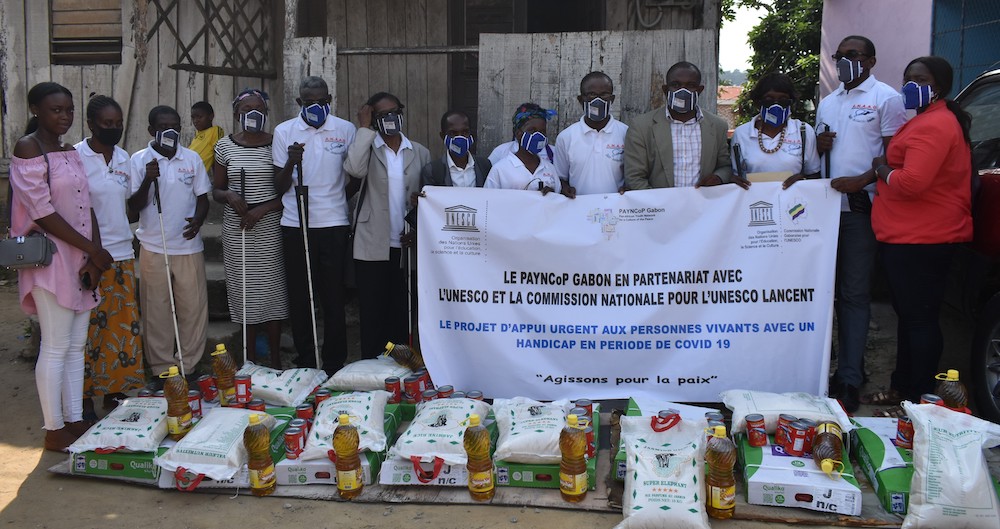
PAYNCoP Gabon Works with UNESCO to Combat Covid19 Fake News and Violence Against Women

FREE FLOW OF INFORMATION

sent to CPNN by Jerry Bibang

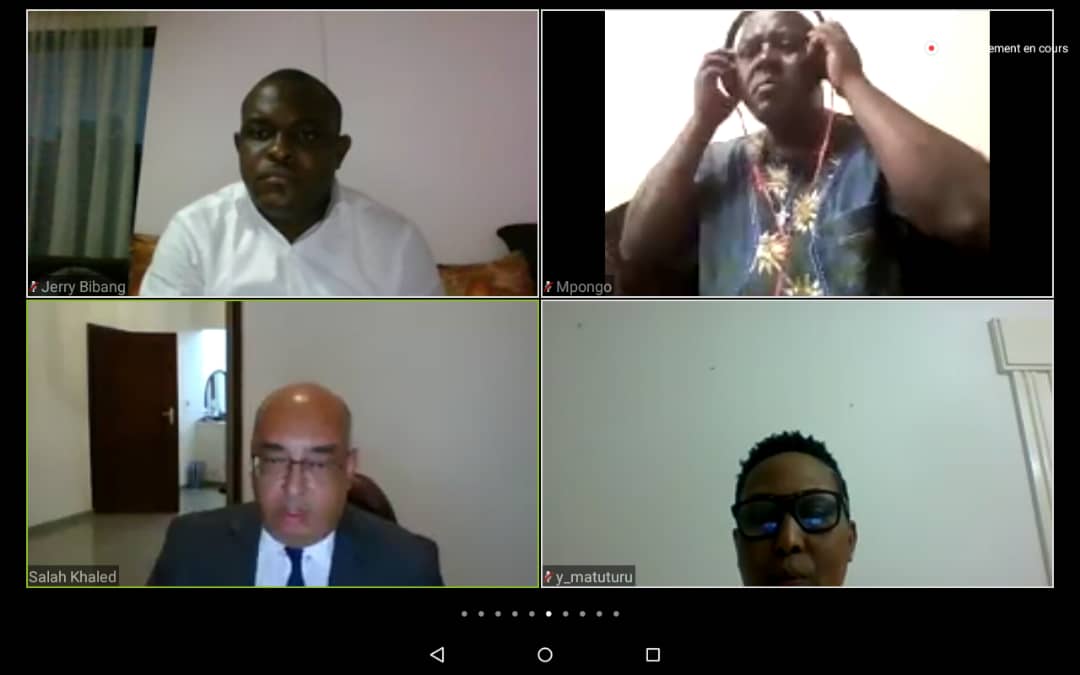
As part of the celebration of World Press Freedom Day (03 May), PAYNCoP Gabon took part, on 04 and 05 May 2020, in two video conferences, organized by the UNESCO Office in Libreville.


The first conference, which brought together about twenty youth organizations, focused on Media and Information Education (MIE) in order to combat the spread of fake news, particularly in connection with Covid 19.

(continued in right column)

Click here for the original version in French)

Question(s) related to this article:

African journalism and the Culture of Peace, A model for the rest of the world?

How can we work together to overcome this medical and economic crisis?

Protecting women and girls against violence, Is progress being made?

(continued from left column)

The meeting enabled the young association leaders from Gabon, including those from PAYNCoP Gabon, to strengthen their capacities in the techniques of detecting and verifying false information (fact-checking). Their rich discussions helped identify actions to be implemented jointly as part of the fight against Covid19, including an online awareness campaign.

The second conference, with journalists from public and private media, focused on dealing with violence against women and the safety of journalists. It was a question of seeing, among other things, how to deal with issues of violence against women, while respecting the rules of professional ethics and deontology as well as social and cultural realities in the Gabonese context. A pedagogical guide, published by UNESCO, entitled “Informing on violence against women and girls” as well as numerous oher contributions formed the framework of the exchanges.

On the sidelines of this meeting, the participating journalists discussed the need to set up a self-regulatory platform for information and communication professionals in order to to improve the practice of journalism in Gabon.

United Nations Alliance of Civilizations: Five Youth-Led Organizations Selected as Recipients of the Youth Solidarity Fund for 2019

. TOLERANCE & SOLIDARITY .

Excerpts from the newsletter of United Nations Alliance of Civilizations

UNAOC has announced the latest recipients of the Youth Solidarity Fund (YSF) [ announced in 2019]. More than 600 proposals were received from over 70 countries in response to the call for applications. Five organizations based in Africa and Asia were then selected to receive seed funding of up to USD 25,000 for the purpose of implementing projects with innovative and effective approaches to intercultural dialogue and interfaith harmony. These five recipients join a group of 63 other youth-led organizations that have been funded by UNAOC since 2008.

In addition to seed funding, YSF recipients will also receive technical support to strengthen the implementation of their projects. UNAOC has partnered with Search for Common Ground to facilitate a capacity-building programme called Youth 360, involving online workshops and ongoing support from mentors. YSF recipients will have access to this support until the end of their project implementation period in November 2020.

The current edition of YSF is implemented through financial contributions from the Governments of Finland, Malta and the Republic of Azerbaijan.

Umoja Mashinani – Kenya

“Our project, Umoja Mashinani, can be loosely translated to mean Peace Ambassadors in the Grassroots. We aim to enhance the capacity of community radio journalists to promote messages on non-violence, religious respect and intercul- tural cohesion. With UNAOC, we hope to build a sustainable and impactful platform together, fostering a community of young people who work for peace.”

Bonface Ochieng Opany, 27 years old
Project Coordinator, Umoja Mashinani
Youth Solidarity Fund Recipient, Amani Centre (Kenya)

Theatre for Peace – Sri Lanka

“Our project will bring young people with diverse backgrounds together to connect, create and transform. Through theater, we will facilitate a process of introspection to explore and challenge our own identities, beliefs, biases and perspectives. With the resources and the solidarity shared through UNAOC we will be stronger to stand up and challenge the polarization and separation in our society.”
Sivatharsini Raveendran, 28 years old Project Coordinator, Theatre for Peace – Connect.Create. Transform

For Youth Solidarity Fund Recipient, Centre for Communication Training (Sri Lanka)

(continued in right column)

Question related to this article:
 
Youth initiatives for a culture of peace, How can we ensure they get the attention and funding they deserve?

How can just one or a few persons contribute to peace and justice?

(continued from left column)

We Play for Peace – Lebanon

“We are launching ‘We Play for Peace!’ which is a project funded by UNAOC to create a safe space for youth from different religions, nationalities and backgrounds. Through sports, young people from the North Bekaa region of Lebanon will get the opportunity to set their differences aside and play together in peace. Youth will erase the memory of conflict and be a source of positive change for the future.”

Mehdi Houssein Yehya, 31 years old
Project Coordinator, We Play for Peace! Youth Solidarity Fund Recipient, Peace of Art (Lebanon)

Dismantling Stereotypes – Kingdom of Eswatini

“We are curating interfaith and intercultural conversations amongst young people of different religious and cultural backgrounds. With the grant from UNAOC, we aim to inculcate a culture of mutual understanding, respect and tolerance for these young people. Our goal is to place youth in the center of pre- venting any religious and cultural differences from breaking out into violence or developing into mechanisms for excluding other people.”

Sicelo Christopher Gama, 29 years old Project Coordinator,
Dismantling Religious and Cultural Stereotypes for Social Cohesion and Sustainable Peac
Youth Solidarity Fund Recipient, Swaziland Intent Youth Organization (Kingdom of Eswatini)

Nurturing for Peace – Uganda

“We thank UNAOC for their support of our project that will engage youth from seven sects of Islam and Christianity to strengthen interfaith understanding and foster new friendships. The project aims to reduce support for religiously motivated recruitment and acts of violent extremism in Eastern Uganda. We are confident that our project will be a living symbol to the ideals of interfaith cooperation and friendship among faiths.”

Zulaika Nanfuka, 32 years old
Project Coordinator, Nurturing for Peace
Youth Solidarity Fund Recipient, Uganda Muslim Youth Development Forum (Uganda)