Egypt: Women’s Voices Initiative for the Local Councils

. WOMEN’S EQUALITY .

Press release from Egyptian Center for Women’s Rights

The local councils are the cornerstone of political life, as they are directly responsible for all the services and the living conditions of citizens. Given the importance of the local councils, the 2014 Constitution granted new powers and parliamentary monitoring tools, so that the members of the local councils can effectively monitor the executive authority and ensure their accountability.

Egypt
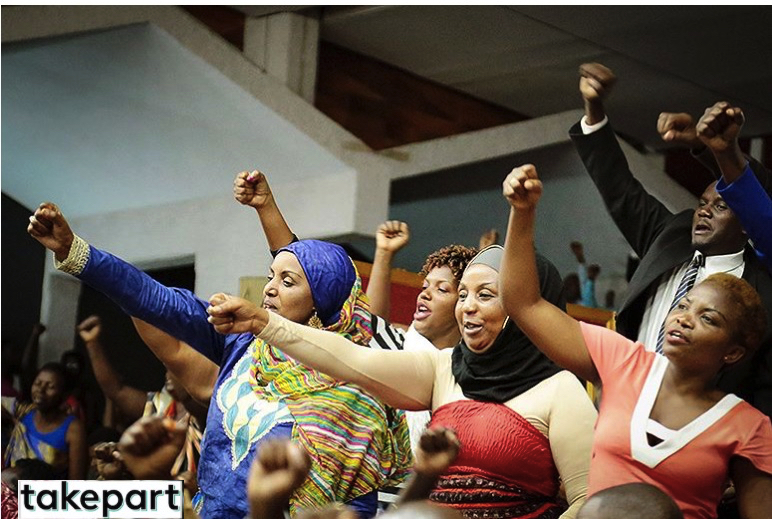
Press conference by the Egyptian Center for Women’s Rights, Cairo, March 20, 2015

The 2014 Constitution allocates that 25% of the local councils’ seats for women and 25% of seats for young people (young men and women) under the age of 35. This means women are allocated 13,000 seats, which is almost one third of the local councils. Therefore, it is necessary to unite the efforts of all societal organizations, including political parties, civil society organizations and initiatives to build the capacities and support women to become members of the local councils.

From this perspective, ECWR launches an initiative titled “Women Voices for the Local Councils.” This initiative seeks building the capacities and coordinating the efforts of active young women in the society in order to prepare a generation of young women leaders.

The initiative aims to:

Build the capacities of 1000 young women leaders from all Egypt’s 27 governorates to become members of the local councils.

Raise the awareness on the importance of the local councils.

Raise the awareness on the importance of women’s participation in the local councils

Female candidates would be selected according to the following criteria:

The age between 21 to 35

Young women active in public work through either being a member of a political party, NGO, youth initiative and are clearly active in their governorates.

To be provided with a Training of Trainers (TOT)

Each village, city, and governorate will be represented during the selection process

Educational attainment of the women should be a minimum of a diploma

Thereby, ECWR welcomes any nominations from political parties, civil society organizations, or initiatives for women with the aforementioned criteria.

Question related to this article:

Book review: Culture of Peace, A Utopia that is Possible

EDUCATION FOR PEACE .

A book review by Ericka Montaño Garfias in La Jornada (translated by CPNN)

Although violence has become a household word and the word peace is only an isolated reference in the media, since war is an invention of the human being, then we are capable of inventing a culture of peace. This is proposed by the American essayist David Adams in his book Culture of Peace: a Utopia that is Possible, published in Spanish by the Herder publishing house.

review
From left to right: Roberto Mercadillo, Institute of Neurobiology, Universidad Nacional Autonoma de Mexico, editor and translator of the book; Norman Bardavid, Director of Culture and Arts of Comnapaz Mexico; David Adams, author of the book; Arturo Vallejo Casanova, Rector of the Technological University of Corregidora; and Hiram Valdez, President of the National Peace Commission of Comnapaz Mexico

Culture of Peace: a possible utopia brings together three books into a single volume: The History of the Culture of War, World Peace through the Town hall: A Strategy for the Global Movement for a Culture of Peace; and I Have Seen the Promised Land: A Utopian Novella.

(Review continued in right column)

( Click here for the original version in Spanish.)

Question for this article:

What are the most important books about the culture of peace?

(Review continued from left column)

Adams, also a neurobiologist, is coordinator of Culture of Peace News Network (cpnn-world.org) and he participated in several programs and declarations of the United Nations Educational, Scientific and Cultural Organization (Unesco) in favor of peace such as the Declaration and Programme of Action on a Culture of Peace as well as the International Year for the Culture of Peace that resulted in the 2000 Manifesto with 75 million signatories worldwide promising to promote a culture of peace in everyday life.

David Adams’s approach is that if humans invented war and violence, then humans are able to invent and build peace.

According to the editor and translator, Roberto Emmanuele Mercadillo: “This work pursues a simple and basic idea: if war and violence are a creation, a cerebral and cultural construction, man can also invent and build peace in a rational and intentional way, even if it is necessary to internalize the concept of ‘other’ based on equality. The adage ‘I am the other’ should be the goal of family, school and institutional teaching to enhance the human right to peace, proposed by Unesco in 1997.”

Going beyond the responsibility of each individual, Adams also analyzes the role of civil society in creating and practicing a culture of peace through movements for peace and disarmament, ecology, human rights, democracy, women’s equality, and the free flow of information, in addition to raising the role of local governments.

Although the novel tells of a utopia, Adams is not a dreamer, or at least not entirely: he knows that the culture of peace should be understood as a process, in the original sense of the word culture. We will not just wake up one morning and discover that we have constructed a culture of peace.

(Editor’s note: The book is available from Herder in Mexico, from Herder in Spain and from Amazon in Spain.)

Cultura de paz: una utopía posible – una reseña del libro

. . EDUCACIÓN PARA LA PAZ . .

Una reseña del libro de Ericka Montaño Garfias en La Jornada

Cuando la violencia se ha convertido en palabra cotidiana y el vocablo paz es apenas referencia aislada en los medios de comunicación, si la guerra es un invento del ser humano, entonces éste es capaz de inventar una cultura de paz. Así lo plantea el ensayista estadunidense David Adams en su libro Cultura de paz: una utopía posible, publicado en castellano por el sello Herder.

review
De izquierda a derecha: Roberto Emmanuele Mercadillo, Instituto de Neurobiologia, Universidad Nacional Autonoma de México, el editor y traductor del libro; Norman Bardavid, director de cultura y artes de Comnapaz México; David Adams, el autor del libro, Arturo Vallejo Casanova, Rector de la Universidad Tecnologica de Corregidora; y Hiram Valdez, Presidente de la Comision Nacional de Cultura de Paz de Comnapaz México

Cultura de paz: una utopía posible reúne en un sólo tomo Historia de la cultura de guerra (The History of the Culture of War), La paz mundial a través de la democracia participativa: una estrategia para el movimiento global por una cultura de paz (World Peace through the Town hall: A Strategy for the Global Movement for a Culture of Peace) y He visto la tierra prometida: una novela utópica (I Have Seen the Promised land: A Utopian Novella).

Adams, también neurobiólogo, es coordinador de Culture of Peace News Network (cpnn-world.org) y participó en varios programas y declaraciones de la Organización de Naciones Unidas para la Ciencia, la Educación y la Cultura (Unesco) en favor de la paz, como el Programa de la Cultura de la Paz, la Declaración y Programa de Acción sobre una Cultura de Paz y de la iniciativa de la Unidad para el Año Internacional de la Cultura de la Paz que dio como resultado el Manifiesto 2000, en el que los firmantes (75 millones de personas en el mundo) se comprometieron a construir una cultura de paz en la vida diaria.

El planteamiento de David Adams es que si el ser humano inventó la guerra y la violencia, entonces es capaz de inventar y construir la paz.

“En esta obra se percibe y se persigue una idea básica: si la guerra y la violencia son una creación, una construcción cerebral y cultural, el hombre puede inventar y construir la paz de manera racional e intencional, aunque para ello sea necesario que la mente interiorice el concepto del ‘otro’ basado en igualdad y aprendido por cotidianidad. El adagio ‘el otro soy yo’ debería ser la meta de la enseñanza familiar, escolar e institucional para reforzar el derecho humano a la paz, propuesto por la Unesco en 1997”, escribió el editor y traductor de la obra Roberto Emmanuele Mercadillo en la nota inicial.

Más allá de que la responsabilidad sea individual, Adams también hace un análisis del papel de la sociedad civil en la creación y práctica de esa cultura a través de movimientos por la paz y el desarme, ecologistas, de derechos humanos, por la democracia, de la mujer, y por el libre flujo de información, además de plantear el papel de los gobiernos locales.

Aunque su novela habla de una utopía, Adams no es un soñador, o al menos no totalmente: sabe que la cultura de paz debe ser entendida como un proceso, en el sentido original de la palabra cultura. No vamos a despertar una mañana y descubrir que hemos construido una cultura de paz.

(Nota del editor: El libro está disponible de Herder México , de Herder España y de Amazon España.)

( Clickear aquí para una traducción inglês.)

Question for this article:

ICLEI Leaders and Members to strengthen Pope Francis’ efforts on climate, modern slavery and sustainability

. . SUSTAINABLE DEVELOPMENT . .

An article from ICLEI, Local Governments for Sustainability

On 21-22 July, a delegation of more than 60 Mayors from around the world will meet Pope Francis in the Vatican for a two-day event on climate change, human trafficking and sustainable development. ICLEI has mobilized its leadership and membership to show full support to the groundbreaking work of Pope Francis on these timely issues.

iclei
Park Won Soon, ICLEI President and Mayor of Seoul, South Korea

“The current wide-ranging crisis has brought us close to a point of no return and has the potential to nullify the social and economic progress achieved so far, thus posing a threat to the future existence of humankind,” remarked ICLEI President Won Soon Park. “We believe that the timely efforts of Pope Francis will help lead to bolder climate action and the birth of an inclusive and ambitious global climate regime”.

The ICLEI Leaders and Members attending the events in Vatican include: ICLEI President Park Wonsoon (Mayor of Seoul, participating via video message), ICLEI Vice President Miguel Angel Mancera ( Mayor of Mexico City), members of Global Executive Committee and Council namely Gustavo Petro (Mayor of Bogota), Parks Tau (Mayor of Johannesburg), Matthew Appelbaum (Mayor of Boulder), Estaella Marino (Deputy Mayor of Rome) and a number of ICLEI Members including George Ferguson (Mayor of Bristol), Anne Hidalgo (Mayor of Paris), Marcio Lacerda (Mayor of Belo Horizonte), Bill de Blasio (Mayor of New York City), Mayor Eduardo Paes (Mayor of Rio de Janeiro), José Fortunati (Mayor of Porto Alegre), Gustavo Fruet (Curitiba, Brazil), Jarosław Jóźwiak (Deputy-Mayor of Warsaw), Virginio Merola (Mayor of Bologna), Gregor Robertson (Mayor of Vancouver), Milan Bandić (Mayor of Zagreb), Stian Berger Rosland (Mayor of Oslo) and Karin Wanngard (Mayor of Stockholm). ICLEI Deputy Secretary General Monika Zimmermann and ICLEI Head of Policy and Advocacy Yunus Arikan will also participate in the meetings.

The meetings mark the first time that the Vatican has approached Mayors to work together and discuss how cities can help tackle the crucial issues facing humanity. From the beginning of his pontificate, Pope Francis has taken a firm stand against modern slavery, calling all communities to reject all systematic deprivation of individual freedom for the purposes of personal and commercial exploitation. In his well-received encyclical Laudato Si, the Pope has highlighted the connection between natural and human environment, emphasizing that global warming is one of the causes of poverty and forced migration and calling for all actors to work together in shaping a sustainable future.

(Article continued in the right column)

Question for this article:

Despite the vested interests of companies and governments, Can we make progress toward sustainable development?

(Article continued from the left column)

As the world’s leading cities’ network on sustainability, ICLEI has been at the forefront of tackling issues related to climate change and sustainability in cities and regions worldwide. In both the global and local stages, ICLEI has been actively promoting and advocating for sustainable cities and regions, which are low-carbon, resilient, smart, ecomobile, biodiverse, resource-efficient and productive, and healthy and happy.

“We are happy to observe an active and committed engagement of ICLEI Leaders and Members in the Vatican on 21 and 22 July. It is no surprise to us that Pope Francis has received a strong support from local and subnational leaders worldwide whose ambitious actions could help spur a global transformation to a sustainable urban future. This spirit and gathering in the Vatican will send clear signals to the global community and citizens of the world which will hopefully help ensure tangible and ambitious outcomes in the post2015 development agenda, climate negotiations and HABITAT III processes,” said ICLEI Deputy Secretary General Monika Zimmermann.

See original article for videos, advocacy documents, social media links and program information.

The Elders welcome Iranian nuclear agreement as boost to Middle East peace

DISARMAMENT AND SECURITY .

A press release by The Elders

14 July 2015: The Elders warmly congratulate all the parties to the nuclear talks on the successful conclusion of these marathon negotiations.

The delegations and their political leaders have shown determination and tenacity to overcome the many obstacles in their path and arrive at an agreement which, if implemented in full and in good faith, could lead to a significant improvement in regional stability and security.

elders

Kofi Annan, Chair of The Elders, said:

“The people and the countries of the world can be grateful for the courage, commitment and persistence shown by the negotiators and their governments, and for the hope that this agreement has brought.”

“It is vital that tangible and early progress is now made on implementation, in particular on watertight verification mechanisms and the lifting of sanctions on Iran.”

The Elders call on all those who continue to resist or work against this ground-breaking agreement to put aside ideological preconceptions, historical grievances and narrow political interests, and see it as a chance to further the wider aims of peace.

The Elders urge the parties to the agreement and other regional powers to seize this opportunity to build on the goodwill and progress achieved to help tackle the religious extremism and deep sectarian divisions, which are creating enormous human suffering and massive devastation throughout the Middle East.

Question related to this article:

How can a culture of peace be established in the Middle East?

Readers’ comments are invited on this article and question. See comments box below.

Dakar to host July conference on Islam, peace

TOLERANCE & SOLIDARITY .

An article from Star Africa Copyright APA

Dakar will from July 28 to 29 host a conference on ‘Islam and Peace’ that will bring together 500 delegates including eminent guests from around the world, the chairman of the organizing committee Babacar Abdoulaye Ibrahim Niasse announced in the Senegalese capital Tuesday.

dakar
Photo by Dakar Actu

“The conference aims to promote exchanges around the issue of global peace, contributions of women and youngsters in the advent of global peace. It will also identify and define the roles and responsibilities of communities to promote the culture of peace, share good practices of living together,” Niasse told a press conference.

Organized at Medina Baye Peace Initiative through the Senegal Jamhiyatu Ansaarud-Din association (JAD), the conference is supported by President Macky Sall.

The 500 expected participants will include erudite scholars from different religions, academics and researchers, religious leaders, policymakers and members of civil society.

According to Cheikh Mouhamadou Khouraichi Niasse, JAD’s chairman, the conference offers “a great opportunity to restore the image of Islam that is unrelated to the one that some so-called followers or critics give.”

Participants will discuss solidarity, the role of Islam in development, interfaith dialogue, extremism and terrorism.

(Click here for an article in French on this subject.)

Other articles related to this one:

Conférence internationale sur la paix : Médina Baye Peace initiative lance « une contribution de l’islam à l’avènement d’une paix mondiale durable »

. TOLÉRANCE & SOLIDARITÉ .

Un article de Dakar Actu

Les 28 et 29 juillet prochains, 500 délégués sont attendus à Dakar, dont de hautes personnalités venus du monde entier, pour un dialogue multiconfessionnel et multiculturel sur la paix.

dakar
Photo de Dakar Actu

Cette conférence internationale sur « islam et paix » a pour but de promouvoir les échanges autour de la problématique de la paix dans le monde, de favoriser les contributions des femmes et des jeunes dans l’avènement d’une paix mondiale durable. Elle vise aussi à identifier et à définir les rôles et responsabilités autour de la promotion de la culture de paix, de partager les bonnes pratiques du vivre ensemble.

L’événement est organisé par le programme initiative de Médina Baye pour la paix, à travers l’association Jamhiyatu Ansaarud-Din du Sénégal (JAD), avec le soutien actif du gouvernement sénégalais. Son Excellence Macky Sall, président de la République du Sénégal, est d’ailleurs le parrain officiel de la conférence et sera présent à l’événement.

Parmi les 500 participants attendus à Dakar figurent des savants et érudits de différentes religions, des universitaires et chercheurs, des chefs religieux et guides spirituels, des décideurs politiques et des membres de la société civile, des représentants d’organisations internationales, des militants et acteurs de la paix dans le monde ainsi que des partenaires techniques et financiers.

« Il s’agit d’une formidable occasion de rétablir l’image de l’Islam qui est sans rapport avec celle qu’en donnent certains de ses soi-disant adeptes, ni avec celle que ses détracteurs s’évertuent à en donner », a tenu à souligner Cheikh Mouhamd Khouraichi Ibrahim Niass, président de la section sénégalaise de la JamhiyatuAnsaarud-Din.

« Grace à la réflexion, au dialogue entre les communautés, nous allons démontrer comment l’Islam peut contribuer à l’avènement d’une paix mondiale durable », a-t-il ajouté.

(Cliquez ici pour un article en anglais concernant ce sujet.)

Question related to this article:


How can different faiths work together for understanding and harmony?

This discussion question applies to the following articles:

Creating Harmony in the World: Working through Our Faiths in Dialogue
Alternate Focus: Balance in Media Coverage in Middle East
The Parliament of the World's Religions (Barcelona, Spain)
Asian Religious Leaders Urge Religions To Teach Peace
Living Faiths Together – Tool kit on inter-religious dialogue in youth work
Sharing the right to Jerusalem's past
The Doha Pre-Forum of the United Nations Alliance of Civilizations
Peace For Childrens in Primary Schools in Iraq
Dialogue in Nigeria — a new DVD teaching-tool for peacemakers
4th Annual International Conference on Religion, Conflict and Peace
First Religious Youth Service Project in Pakistan
World Harmony Day at the UN Highlights the Culture of Peace
Report of Diversity Talk Series 2013, in Lahore, Pakistan
Journée d'étude à Tunis: Religions et cultures au service de la paix
Workshop in Tunis: Religions and cultures in the service of peace
Out of the spotlight, Moroccan Islamic party promotes interfaith dialogue
Muslim and Christian youth come together in Mombasa, Kenya
Greeting of Peace from United Social Welfare Society, Pakistan
Interfaith Cultural Study Tour to Nepal: Pakistan Youth Explore the Mysteries of Nepal
One Nation, One Blood (Pakistan)
Teachings of Peace
Overview of the Book, Paganism an Introduction to Earth-Centered Religions
La líder de un movimiento interreligioso Dena Merriam recibirá el 31 Niwano Peace Prize
Dena Merriam, Founder and leader of The Global Peace Initiative of Women to receive the Niwano Peace Prize
Pakistan: Scholars adopt charter of peace, support coexistence
Lebanese dialogue aims to strengthen unity in diversity
Un an du “Projet Revalorisation du Vivre Ensemble – REVE” au Niger
A Year-long Project for “Living Together – REVE” in Niger

United Cypriot economy to focus on shipping, tourism, education

DISARMAMENT AND SECURITY .

An article from Daily Sabah

The economic vision after a solution to the Cyprus issue was officially announced as part of the ongoing comprehensive negotiations between the Turkish Republic of Northern Cyprus and Greek Cyprus, and focuses on tourism, shipping and education. The Turkish Cypriot Chamber of Commerce and Greek Cypriot Chamber of Commerce and Industry (KEBE) held a joint event themed with their vision of the Cyprus economy after a solution. Representatives from the Istanbul Chamber of Commerce and Athens Chamber of Commerce attended the event as well. After the opening speeches, Turkish Cyprus President Mustafa Akıncı and Greek Cyprus President Nicos Anastasiades shared their visions about the Cyprus economy after a possible solution between two sides is reached.

cyprus
Greek Cypriot President Anastasiades (L) and Turkish Cypriot President Akıncı (R) shake hands at a meeting attended by representatives of the respective chambers of commerce.

Akıncı said in his speech that the Cyprus economy can provide for the welfare of its citizens, but this requires creating an economy that is resistant against crises and shocks, competitive and capable of being directed to different fields. “My vision of the Cyprus economy after a solution takes the welfare and prosperity of all Cypriots into account without looking at ethnic origin or background,” Akıncı emphasized.

Akıncı also touched on the economic benefits of the solution between the two sides. He stressed that Cyprus will have the potential to become a shipping center in the eastern Mediterranean and all Cypriot ships will be able to enter Turkish harbors after a solution is reached. He highlighted that a solution would provide endless opportunities for the tourism sector, which is a driving power of both economies on the island and they should devise a joint strategy of cooperation in this field.

One of the first steps to be taken in Cyprus is to establish a Federal Competition Board just like the one that exists in many European countries, Akıncı said. He added that they should invest in education at first to help foster a culture of peace and raise a new generation of children who can speak both Turkish and Greek as their mother tongues. Akıncı said that they were working to create a federation of two societies and two regions described in a joint declaration made on Feb. 11, 2014. “We have to transform our country and we need to do this with no delay. We have to cooperate to transform from the current situation to a Cyprus we want, but we have to work hard. We owe this to the younger generations,” Akıncı concluded.

Greek leader Nicos Anastasiades said the common future of the two societies is based on a united Cyprus as a EU member, which respects democratic principles, human rights and fundamental freedoms.

Anastasiades reiterated from the joint declaration that “the status quo is unacceptable and its prolongation will have negative consequences for the Greek and Turkish Cypriots.” He also mentioned the positive impacts of a settlement. “My vision is to reach a settlement that will end the anachronism related to the current situation and provide hope and the prospect of a better future for all Cypriots, in particular for the younger generations,” noted the Greek leader.

(Article continued in right column.)

Question related to this article:
 
Can Cyprus be reunited in peace?

(Article continued from left column.)

He said that a settlement would secure the full utilization of the great potential and prospect for economic growth, development and prosperity for all Cypriots. He also stated that a settlement between the two sides would provide a significant improvement to the investment climate and increase the attraction of large foreign investments and multinational companies. Stressing that it will be easier to access international finance and reach out to markets presently unexploited across the world, Anastasiades said the economic sectors that are now experiencing problems would be stimulated and this would have positive results on other sectors.

“We have committed ourselves to doing our utmost so this opportunity is not lost. We owe it to our children and the future generations of this country. We owe it to the people of Cyprus and their longing to live in a modern and thriving European country. And to this effort, the business community, as well as civil society, has an important role to play, and we call for your support and positive contribution towards this end,” Anastasiades concluded.

Carta abierta de las ONG a los Estados miembros de la Asamblea General sobre el proceso de selección del Secretario General de la ONU

. FREE FLOW OF INFORMATION .. LIBERTAD DE INFORMACIÓN .

Una carta por las 13 ONG que aparece a la derecha

Para: los Jefes de Estado y de Gobierno, los Ministros de Asuntos Exteriores, los representantes permanentes ante las Naciones Unidas

Excelencias:

La elección del nuevo Secretario General en 2016 será una de las decisiones más importantes que la Asamblea General tomará en los próximos diez años. El nuevo Secretario General tendrá que ocuparse de un mundo enfrentado sumido en guerras civiles cada vez más peligrosas, desastres humanitarios y medioambientales, terrorismo, regresión, crisis económica y financiera y desigualdad. La necesidad de una dirección global y una cooperación internacional es más imperiosa de lo que nunca ha sido. Es primordial que el candidato mejor capacitado sea elegido para convertirse en Secretario General de las Naciones Unidas.

1for7

La importancia y complejidad del puesto ha cambiado radicalmente durante los últimos 69 años, como también han cambiado las amenazas y dificultades a las que se enfrenta todo el sistema de las Naciones Unidas. La dirección de los sucesivos Secretarios Generales de la ONU (en calidad de directores generales, diplomáticos, mediadores y representantes de los objetivos y principios de la ONU) ha sido fundamental para perfilar la labor de las Naciones Unidas. Han sido portavoces internacionales públicos y críticos sobre cuestiones clave de paz y seguridad, desarrollo y derechos humanos.

El procedimiento que la Asamblea General adoptó en 1946 para elegir al Secretario General de la ONU está muy anticuado y no es compatible con la selección del mejor candidato posible. Está muy lejos de los modernos procesos de contratación de cargos internacionales de alto nivel y de los propios principios e ideales de la ONU. Por ejemplo, hacemos hincapié en el hecho de que ninguna mujer ha sido elegida para convertirse en Secretaria General de la ONU y muy pocas han sido consideradas seriamente para ocupar dicho puesto.

Durante los últimos veinte años, muchas organizaciones internacionales, como la ONU, han llevado a cabo mejoras y reformas de los mecanismos procesales para fomentar la transparencia y responsabilidad en las designaciones de altos funcionarios. Es imprescindible que el proceso de selección del próximo Secretario General se modifique para cumplir los altos principios por los que han abogado de forma insistente la Asamblea General de la ONU, los expertos de la ONU y la sociedad civil. Un proceso de selección más abierto e inclusivo en el que participaran todos los Estados miembros de las Naciones Unidas ayudaría también a revitalizar a la ONU y a reforzar su autoridad global.

Un grupo de organizaciones de la sociedad civil fuertemente comprometidas a defender la Carta de las Naciones Unidas y sus valores ha acordado una serie de principios y realizado propuestas que forman la base de una reforma urgente y factible. Las propuestas son realistas y no es necesario modificar la Carta de las Naciones Unidas. Muchas ya han sido respaldadas por gran parte de los Estados miembros de la ONU.

Consisten, entre otras, en la publicación de unos criterios de selección formales, una nominación de candidatos y un calendario claro del proceso de selección que permita una evaluación adecuada de los candidatos, como la presentación de un listado oficial de candidatos y la presentación de declaraciones sobre el proyecto del candidato.

Creemos que todos los Estados miembros de la Asamblea General pueden y deben desempeñar un papel más destacado y significativo en el proceso de designación.

Por ejemplo, la Asamblea General debería celebrar sesiones abiertas que permitan a los Estados miembros y, según los procedimientos de la Asamblea General, a otras partes interesadas relevantes, reunirse con los nominados y evaluar sus candidaturas. La Asamblea debería pedirles a los candidatos que no hicieran promesas sobre la designación específica de altos funcionarios antes de la decisión de la Asamblea sobre la designación del Secretario General.

Además, se le podría pedir al Consejo de Seguridad que presentara o recomendara a más de un candidato a la Asamblea General. Otra recomendación es que el mandato sea un periodo único y no renovable de siete años, lo que ayudaría al Secretario General a plantearse un programa a más largo plazo sin la interrupción de la campaña de reelección.

(El artículo continúa en el lado derecho de la página)

( Clickear aquí para la version inglês o aquí para la version francês)

Question(s) related to this article:

What is the United Nations doing for a culture of peace?

(Artículo continúa desde la parte izquierda de la página)

Las propuestas se describen en la plataforma política adjunta para una nueva campaña global: 1 para 7 mil millones – Encontrar al mejor dirigente de la ONU. Todos los días, más organizaciones e individuos de todo el mundo se suman a esta campaña. Pueden consultar los documentos de referencia relevantes en www.1for7billion.org/background

Dado que las Naciones Unidas está preparando la celebración del 70 aniversario de la Carta de las Naciones Unidas el año que viene, esperamos que los Estados miembros de la Asamblea General y del Consejo de Seguridad aprovechen esta oportunidad histórica para iniciar una serie clave de reformas básicas, como las que se describen en nuestro documento, a fin de garantizar que el candidato mejor capacitado sea elegido para convertirse en el próximo Secretario General de las Naciones Unidas.

Atentamente,*

Dinah Musindarwezo, Executive Director
African Women’s Development and Communication Network (FEMNET)

Salil Shetty, Secretary-General
Amnesty International

Ricken Patel, Executive Director
Avaaz

Danny Sriskandarajah, Secretary-General
CIVICUS: World Alliance for Citizen Participation

Yasmeen Hassan, Global Director
Equality Now

Evelyn Balais-Serrano, Executive Director
Forum-Asia

Jens Martens, Director Global Policy Forum

John Burroughs, Executive Director
Lawyers Committee on Nuclear Policy

Roberto Bissio, Coordinator
Social Watch

Chee Yoke Ling, Director
Third World Network

Eleanor Blomstrom, Program Director
Women’s Environment and Development Organization (WEDO)

William R. Pace, Executive Director
World Federalist Movement-Institute for Global Policy

Bonian Golmohammadi, Secretary-General
World Federation of United Nations Associations

*Desde el inicio de la campaña 1 para 7 mil millones en noviembre de 2014, decenas de ONG de todo el mundo se han unido en nuestra petición de un proceso de selección más abierto e inclusivo. Visite www.1for7billion.org/ngo-supporters si quiere ver un listado completo y actualizado de nuestros apoyos.

Lettre ouverte des ONG aux États membres de l’Assemblée générale sur le processus de sélection du Secrétaire général de l’ONU

LIBERTÉ DE L’INFORMATION

Une lettre par les 13 ONGs listés à droite

À l’attention de : Chefs d’État et de gouvernement, Ministres des Affaires étrangères, Représentants permanents auprès des Nations Unies

Excellences,

La sélection du nouveau Secrétaire général en 2016 sera l’une des décisions les plus importantes que l’Assemblée générale fera au cours des dix prochaines années. Le nouveau Secrétaire général devra aborder un monde confronté à des guerres civiles de plus en plus dangereuses, des catastrophes humanitaires et environnementales, au terrorisme, au développement régressif, aux crises économiques et financières, et à l’inégalité. Un leadership mondial et une coopération internationale sont plus que jamais nécessaires. Il est essentiel que le candidat le plus qualifié soit choisi pour devenir Secrétaire général de l’ONU.

1for7

L’importance et la complexité du poste a radicalement changé au cours des 69 dernières années, tout comme les menaces et les défis auxquels l’ensemble du système des Nations Unies est confronté. Le leadership des Secrétaires généraux de l’ONU successifs – en tant que principaux officiers administratifs, diplomates, médiateurs et représentants des buts et principes des Nations Unies – a joué un rôle fondamental dans l’élaboration du travail des Nations Unies. Ils ont fourni une opinion publique essentielle sur la scène internationale sur les questions clés de paix et de sécurité, du développement et des droits humains.

La procédure que l’Assemblée générale a adoptée en 1946 pour sélectionner le Secrétaire général de l’ONU est clairement obsolète et n’est pas adaptée pour la sélection du meilleur candidat possible. Elle satisfait de loin aux pratiques de recrutement modernes pour les nominations de hauts fonctionnaires internationaux, ainsi qu’aux propres normes et idéaux de l’ONU. Nous soulignons, par exemple, qu’aucune femme n’a jamais été sélectionnée pour devenir Secrétaire général de l’ONU, et que très peu ont été sérieusement prises en considération.

Au cours des vingt dernières années, de nombreuses organisations internationales, dont l’ONU, ont apporté d’importantes améliorations et de réformes aux mécanismes de procédure afin d’améliorer la transparence et la responsabilité des nominations de haut niveau. Il est impératif que le processus de sélection du prochain Secrétaire général de l’ONU soit modifié afin qu’il réponde aux normes plus élevées en faveur desquelles l’Assemblée générale de l’ONU, les experts de l’ONU et la société civile ont constamment plaidé. Un processus de sélection plus ouvert et inclusif engageant tous les États membres de l’ONU permettra également de revitaliser les Nations Unies et de renforcer son autorité dans le monde.

Un groupe d’organisations de la société civile fortement engagées à respecter la Charte de l’ONU et ses valeurs ont convenu d’un ensemble de principes et fait des propositions qui constituent la base d’une réforme urgente et crédible. Les propositions sont réalistes et ne nécessitent pas de modification de la Charte de l’ONU. Un grand nombre d’entre elles ont déjà été approuvées par une majorité d’États membres de l’ONU.

Ils comprennent la publication de critères de sélection formels, un appel à candidatures et un calendrier précis pour le processus de sélection qui permet une évaluation adéquate des candidats, y compris à travers une liste officielle des candidats et la présentation des déclarations de vision des candidats.

Nous estimons que tous les États membres de l’Assemblée générale peuvent et doivent jouer un rôle plus important et significatif dans le processus de nomination. Par exemple, l’Assemblée générale devrait tenir des sessions ouvertes qui permettent aux États membres et, conformément aux procédures de l’Assemblée générale, aux autres parties prenantes, de répondre aux candidats et d’examiner leur candidature. L’Assemblée devrait demander que les candidats s’engagent à ne pas faire de promesses en matière de nomination spécifique de haut niveau en amont de la décision de l’Assemblée sur la nomination du Secrétaire général.

En outre, le Conseil de sécurité pourrait être invité à présenter ou à recommander plus d’un candidat à l’Assemblée générale. Une autre recommandation est qu’il ne soit prévu qu’un seul mandat d’une période de sept ans non renouvelable, ce qui aiderait le Secrétaire général à poursuivre un programme à long terme sans avoir à être interrompu par une campagne de réélection.

(Voir suite sur colonne de droite. . . )

(Cliquez ici pour la version anglaise de cet article ou ici pour la version espagnole.)

Question(s) related to this article:

What is the United Nations doing for a culture of peace?

(. . . suite)

Les propositions sont décrites dans la plate-forme politique ci-jointe pour une nouvelle campagne mondiale : 1 pour 7 milliards – Trouver le meilleur dirigeant de l’ONU. Un plus grand nombre d’organisations et d’individus du monde entier rejoignent cette campagne jour après jour. Les documents d’information pertinents sont disponibles sur www.1for7billion.org/background.

Alors que les Nations Unies s’apprêtent à célébrer le 70e anniversaire de la Charte de l’ONU l’année prochaine, nous espérons que les États membres de l’Assemblée générale et du Conseil de sécurité saisiront cette occasion historique de lancer un ensemble clé de réformes fondamentales, y compris celles qui sont décrites dans notre document, afin de veiller à ce que le candidat le plus qualifié soit choisi afin de devenir le prochain Secrétaire général des Nations Unies.

Veuillez agréer, vos Excellences, nos sentiments respectueux, *

Dinah Musindarwezo, Directrice exécutive
African Women’s Development and Communication Network (FEMNET)

Salil Shetty, Secrétaire général
Amnesty International

Ricken Patel, Directeur exécutif
Avaaz

Danny Sriskandarajah, Secrétaire général
CIVICUS: World Alliance for Citizen Participation

Yasmeen Hassan, Directrice internationale
Equality Now

Evelyn Balais-Serrano, Directrice exécutive
Forum-Asia

Jens Martens, Directeur
Global Policy Forum

John Burroughs, Directeur exécutif
Lawyers Committee on Nuclear Policy

Roberto Bissio, Coordinateur
Social Watch

Chee Yoke Ling, Directrice
Third World Network

Eleanor Blomstrom, Directrice de programme
Women’s Environment and Development Organization (WEDO)
William R. Pace, Directeur exécutif
World Federalist Movement-Institute for Global Policy

Bonian Golmohammadi, Secrétaire général
World Federation of United Nations Associations

* Depuis le lancement de la campagne « 1 pour 7 milliards » en novembre 2014, des dizaines d’ONG du monde entier ont rejoint notre appel à un processus de sélection plus ouvert et inclusif. Rendez-vous sur 1for7billion.org/ngo-supporters/ pour une liste complète et à jour de ceux qui nous soutiennent.