We are the solution: African women organize for land and seed sovereignty

. . SUSTAINABLE DEVELOPMENT . .

An article by Simone Adler and Beverly Bell, for Other Worlds

Mariama Sonko is a farmer and organizer in Casamance, Senegal. She is the National Coordinator of We Are the Solution, a campaign for food sovereignty led by rural women in West Africa.

food sovereignty
Mariama Sonko, third from right, with a women farmers’ organization.
Photo courtesy of Fahamu.

Traditional, small-holder peasant agriculture is done by women. Women are the ones who save the seeds – the soul of the peasant population. This is to honor what women have inherited from their ancestors: the conservation of seeds as part of their knowledge to care for the whole family and nourish their communities.

The green revolution introduced GMOs in Africa. Technicians and researchers come to tell our producers about agriculture from the outside. They tell us that these modern varieties of [GMO] seeds are going to increase our yield. So we will produce a lot, fill up our stores – but soon we will be sick and in the cemeteries. Isn’t it better to grow less, eat well, have good health, live a long life, and pay attention to the generations to come? We reject agriculture that pollutes with chemicals, pesticides, GMOs.

Achieving our goals is a difficult struggle because we have few resources fighting against multinational corporations who have a lot of money. But development in Africa can’t take place on the backs of Africans, and Africa can’t develop without looking ahead for the children.

We Are the Solution is a campaign in West Africa led by rural women from Senegal, Burkina Faso, Mali, Ghana and Guinea, though we are a campaign of both women and men. Our vision is to truly promote ancestral knowledge and put pressure on our government to take seriously the preservation of our peasant agriculture.

The campaign has three objectives. First is the use and promotion of traditional knowledge transmitted from generation to generation, which supports food sovereignty and the preservation of peasant seeds. The second objective is to restore national policies favorable to agroecological peasant farming. And the third objective is the promotion of African agricultural production.

Women, Land, and Agriculture

In the agricultural sphere, development rests in the hands of the women, and their role is being proven repeatedly. We Are the Solution raises awareness and consciousness, key to changing the mentality of the people, on the importance of women in family farming and agricultural production.

Women are the primary workers of the land and the majority of the workforce in agriculture, involved in every step of agricultural production: in the fields, 70% of African agriculture is done by women; in conservation, women are the ones making efforts to conserve the native seeds; in animal husbandry; in food processing; in marketing; in selling food at the local level; and as consumers.

(continued in right column)

Question for this article:

What is the relation between movements for food sovereignty and the global movement for a culture of peace?

(Article continued from the left column)

In Africa, it’s said that land belongs to men as the heads of household. If women can’t access land, don’t have control of that land, or don’t own land, there is a problem. We are campaigning for women to have land ownership, and trying to raise this consciousness among men.

At the national level in Senegal, there’s a new law in effect that states that all citizens have the right to own land. But in practice, we still have the tradition. These women, most of whom are illiterate and rural, are socialized to believe that this longstanding culture can’t be changed. Our job is to [help them] understand they have the same rights as men, and that women owning land contributes to the well-being of the family and assures that they are fed.

At the local level, some women have risen up and demanded that land be put in their names, and now they are land-owners. Women’s associations have acquired blocks of land of up to one or two hectares, but frankly, there’s not much they can produce on that. To develop agriculture we need to cultivate larger plots or install irrigation, but this isn’t permitted because women don’t have a say in land use. There is idle land available and not enough men to work it all, yet they don’t want to turn it over to women. So the effort of raising awareness and advocacy goes on.

Agroecology, Sacred Seeds, and Food Sovereignty

Women peasant organizations are leading the movement for seed and food sovereignty. We should eat what we produce and produce what we eat.

Agroecology protects all living things and treats nature as sacred. Our seeds are ancient, and each is tied to a certain place. The traditional practice of seed selection preserves the environment and sustains biodiversity, while using our resources which are affordable and accessible. These seeds don’t need any modification.

We are seeing new diseases due to the diet arising from everything that is imported, and as a result of underestimating the value of traditional dishes of grains and vegetables.

Though many have gone to chemical agriculture, our movement has identified several traditional practices that we’re sharing with our sisters and brothers. We Are the Solution organizes workshops, forums, and community radio broadcasts to bring our message down to the popular, rural level and inform the grassroots about the advantages of traditional agroecological or peasant agriculture.

In Casamance [a region of Senegal], We Are the Solution has established a platform of 100 grassroots associations. We now have a model farm field and a store for marketing our family farm products from various kinds of production and hand-tool farming. The store is there to help us promote ecologically produced products produced by women. We are also trying to organize a forum on local consumption.

Overall, women are taking leadership roles in the countries in which We Are the Solution is active, promoting agroecology and seed and food sovereignty as the only viable system for the long-term. This way we can have healthy lives and protect the environment.

This is the first article in a 7-part series which features interviews with grassroots African leaders working for seed and food sovereignty, the decolonization of Africa’s food system, and the preservation of traditional farming practices. This series is made possible with support from New Field Foundation and Grassroots International. Many thanks to Stephen Bartlett for translation of the interview.

Open Data – Still Closed to Latin American Communities

FREE FLOW OF INFORMATION

An article by Emilio Godoy, Inter Press News Service (reprinted with permission) (abridged)

. . . The link between open data and projects that have an influence on local communities and the environment was one of the issues at the Open Government Partnership Global Summit held Oct. 27-29 in Mexico City. Taking part in the summit were representatives of governments and civil society and academics from the 65 countries participating in the Partnership, created in 2011 under the aegis of the United Nations. Of that total, 15 countries are from Latin America.

opendata
Alicia Bárcena, executive secretary of ECLAC, and other heads of international agencies discuss the need for greater transparency on the part of governments, during the Open Government Partnership Global Summit in Mexico City. Credit: ECLAC

During the summit’s forums and workshops, the delegates of organised civil society called for a strengthening of open data policies and faster progress towards compliance with Principle 10, which cannot happen unless there is movement towards total information openness.

It is common practice in the region for communities to be uninformed about the very existence of mining, oil, energy and other kinds of projects even when carried out in their immediate vicinity, as they are neither previously consulted nor given access to information. Permits and concessions are off their radar.

Countries in the region ratified the declaration on the application of Principle 10 of the Rio Declaration, signed during the U.N. Conference on Sustainable Development (Rio+20), held in Rio de Janeiro in June 2012.

According to information shared by participants during the open government summit in Mexico, the question of the environment is limited to instructions to disseminate public consultations in the environmental impact assessment process in the Second Plan of Action on open data 2013-2015.

Currently, Mexico is collecting proposals to design a third, more ambitious, plan.

One of its key focuses is “natural resource governance”, which encompasses climate change, fossil fuels, mining, ecosystems, the right to a healthy environment, and water resources for human consumption.

For its part, Peru has been discussing since May a “strategy on openness and reuse of open government data” for the period 2015-2019, which would include environmental questions.

In August, Argentina presented the first part of its “second plan for open government 2015–2017”, which also fails to include major environmental considerations.

“The problem is severe; it is not enough to just be transparent,” said Carlos Monge, the representative in Peru of the U.S.-based non-governmental Natural Resource Governance Institute. “There is a question of timing. When do citizens need that information? After the fact?

“That’s a mistake. We need to think about how to make information available before decisions are reached, as well as information about the impact of those decisions,” he told IPS.

(Article continued in the right column)

Question(s) related to this article:

Free flow of information, How is it important for a culture of peace?

(Article continued from the left column)

Monge complained that since 2014 countries like Bolivia, Colombia, Ecuador and Peru have reformed their legislation to lower environmental standards, with the aim of drawing investment in the mining and oil industries, due to the drop in global demand for raw materials, one of the pillars of their economies.

The “Global Atlas of Environmental Justice” lists 480 environmental conflicts in 16 Latin American and Caribbean nations, related to activities like mining, fossil fuels, waste and water management, access to land and infrastructure development.

The initiative forms part of the European project “Environmental Justice Organizations, Liabilities and Trade” and is coordinated by the University of Barcelona Institute of Science and Technology and drawn up by experts from 23 universities and environmental justice organisations from 18 countries.

The majority of the disputes, the atlas says, are concentrated in Colombia (101), Brazil (64), Ecuador (50), Peru (38), Argentina (37) and Mexico (36).

When they are in the dark about infrastructure or mining or oil industry projects in their local surroundings, communities suffer what U.S. Professor Rob Nixon calls “slow violence” from environmental problems arising from the exploitation of natural resources, which generates conflicts and further impoverishes local populations.

Alicia Bárcena, executive secretary of the Economic Commission for Latin America and the Caribbean (ECLAC), complained during the summit that local communities are not previously informed about extractive industry projects and said the region is not yet ready to meet open data requirements.

“It’s important for them to have information on concessions, contracts, impacts, revenue, consultations, so they are aware beforehand of the effects,” she told IPS.

The countries of this region agreed in November 2014 on the negotiation of a treaty on Principle 10, in a process facilitated by ECLAC, which is about to open a regional natural resource governance centre.

Tomás Severino, director of the Mexican NGO Cultura Ecológica. who is taking part in Mexico’s open data initiatives and in the Principle 10 regional negotiating process, stressed the need to modify laws to bring them into line with these schemes.

“We need participation and consultation mechanisms,” he said.

Monge cited two processes that he said should be given institutional structures. “Zoning and consultation imply the generation of a lot of information. If they want to carry out a project, the information on money, water and territory should be made transparent,” he said.

The first refers to zoning of residential, industrial or ecological areas, by the municipal authorities, and the second involves asking local populations whether or not they want a project to go ahead.

“Consultation is one of the most effective instruments. Principle 10 addresses it before a project is carried out,” Bárcena said.

(Thank you to Janet Hudgins, the CPNN reporter for this article.)

Angola to host biennial on culture of peace in Africa

FREE FLOW OF INFORMATION

An article from Agência Angola Press

The Minister of Higher Education, Adão do Nascimento, announced to the representatives of Member States of UNESCO that Angola will host as from next year, a biennial on the Culture of Peace in Africa.

Angola
The Minister of Higher Education, Adão do Nascimento
Foto de Francisco Miudo

Speaking at the 38th session of the UNESCO General Conference, taking place in Paris on 3-18 November, the official said that the biennial will, among other issues, assess the compliance by Member States of the African Union, the Action Plan approved in Luanda in March 2013.

To the minister, this biennial is more of a pragmatic approach for the materialization of UNESCO’s secular motto, namely “bearing the wars in the minds of men, it is in the minds of men that the defenses of peace must be erected”.

The head of the Angolan delegation to the General Conference welcomed the UNESCO appeals to the international community to engage in the unconditional defense of the assets of the humanity heritage, victims of indiscriminate destruction, as unfortunately happens in various parts of the world.

The Minister of Higher Education highlighted the efforts made by Angola to involve the various stakeholders under the public and private initiatives with domestic and foreign partners.

( Click here for the French version of this article or here for the Spanish version.)


Question related to this article.

L’Angola abrite le biennal sur la culture de paix en Afrique

LIBERTE DE L’INFORMATION

Un article de Agência Angola Press

Le ministre angolais de l’Enseignement Supérieur, Adão do Nascimento, a annoncé aux représentants des Etats membres de l?UNESCO que l’Angola abriterait à partir de l’année prochaine, un biennal sur la culture de paix en Afrique.

Angola
Le ministre angolais de l’Enseignement Supérieur, Adão do Nascimento
Foto de Francisco Miudo

Intervenant à la 38ème session plénière de la conférence générale de l’UNESCO qui se déroule à Paris depuis le 3 novembre, le gouvernant a dit que le biennal ferait, entre autre, une évaluation sur l’accomplissement par les Etats membres de l’Union Africaine, du Plan d’action approuvée à Luanda, en mars 2013.

Selon lui, ce biennal est plus qu’une voie pragmatique pour la matérialisation du thème séculier de l’UNESCO concrètement comme les guerres naissent de l’esprit des hommes, c’est de l’esprit des hommes que doivent être élevés les défenseurs de la paix.

Le chef de la délégation angolaise à la conférence générale a salué les appels de l’UNESCO pour que la communauté internationale s’engage dans la défense inconditionnelle des biens du patrimoine de l’humanité, victimes de destruction indiscriminée, comme cela se passe malheureusement dans plusieurs régions du monde.

( Cliquez ici pour une version anglaise de cet article ou ici pour une version espagnole.)


Question related to this article.

Angola alberga bienal sobre cultura de paz en África

. LIBERTAD DE INFORMACIÓN .

Un artículo de Agência Angola Press

El ministro de Enseñanza Superior, Adão do Nascimento, anunció a los representantes de los Estados Miembros de la UNESCO que Angola va a albergar, a partir del próximo año, una bienal sobre la Cultura de Paz en África.

Angola
Ministro de Enseñanza Superior – Adão do Nascimento
Foto de Francisco Miudo

Al intervenir en la 38ª sesión plenaria de la Conferencia General de la UNESCO, que tiene lugar en París desde el día 3 de este mes, el gobernante dijo que la bienal hará, entre otras, una evaluación del cumplimiento, por los Estados Miembros de la Unión Africana, del Plan de Acción aprobado en Luanda, en Marzo de 2013.

Para el ministro, esta bienal es una vía pragmática para la materialización del lema secular de la UNESCO, concretamente “naciendo las guerras en el espíritu de los hombres, es en el espíritu de los hombres que deben ser erguidos los baluartes de la paz”.

El jefe de la delegación angoleña a la conferencia general saludó los apelos de la UNESCO para que la comunidad internacional se empeñe en la defensa incondicional de los bienes del patrimonio de la Humanidad, víctimas de destrucción indiscriminada, tal como acontece infelizmente en varios puntos del mundo.

El ministro de Enseñanza Superior destacó los esfuerzos llevados a cabo por Angola, para englobar los más diversos actores en el cuadro de las iniciativas públicas y privadas con colaboradores nacionales y extranjeros.

En su intervención, Adão do Nascimento se refirió a las actividades más notorias de los últimos años, tal como el II Festival Nacional de la Cultura, considerando el momento más alto de la celebración y exaltación de la cultura angoleña, y el Encuentro Nacional sobre la Museología en Angola, que permitió compartir y enriquecer la visión sobre la política de museos del país.

( Clickear aquí para la version inglês de este artículo o aquí para la version francês.)


Question related to this article.

As the UN Celebrates Empowerment of Women, a New Survey Shows Major Frustrations

. WOMEN’S EQUALITY .

An article by Danielle Goldberg and Mavic Cabrera-Balleza for Pass Blue

Fifteen years ago, the United Nations Security Council unanimously adopted a resolution on women, peace and security, a landmark international law that demands women’s participation in decision-making on international peace and security.

passblue

Though seldom recognized, the fundamental roots of this resolution, known as 1325, came from women’s actual experiences in armed conflict and their struggles for peace, championed by women’s organizations and civil society groups around the world.

As governments, donors and the UN come together this month to renew their commitments to the resolution’s mandate and address constraints and obstacles that keep it from fully being carried out, it is critical that these parties continue to engage civil society organizations as equal partners. After all, we are the ones who are implementing the resolution on the ground.

In this light, the Global Network of Women Peacebuilders, in partnership with Cordaid, the International Civil Society Action Network and the NGO Working Group on Women, Peace and Security, all civil society organizations working hard on this mandate, conducted a survey earlier this year among other civil society organizations to solicit their views on the implementation of 1325.

Findings from the survey fed directly into the recently published global study commissioned by the UN secretary-general, Ban Ki-moon, to highlight “good practice examples, gaps and challenges, as well as emerging trends and priorities for action on UNSCR 1325 implementation.”

What stands out in the survey, featuring 317 responses from a wide range of organizations in 71 countries, is that women’s participation at all levels of decision-making in official peace and conflict negotiations and processes is still far from sufficient. As a result, a majority of respondents identified this as a top priority in the future agenda.

The ability to hold governments and armed groups accountable for grave human-rights violations against women was viewed as a significant achievement of 1325, though many groups qualified this gain.

Despite their leadership in the implementation of the resolution, overall respondents rated 1325 as only “moderately effective” because many of those surveyed think that the transformative potential of the resolution has not been fulfilled across the world. As one civil society group specifically noted, “The resolution is yet to witness groundbreaking achievement for strengthening the status of women in Nepal.”

Among positive reflections on the effectiveness of 1325, respondents said that it has mobilized women around the world and lent credibility and structure to their work. As one group in the Democratic Republic of the Congo said, “It has given us a platform to globalize all issues related to women.”

(Article continued in right column)

Question for this article:

UN Resolution 1325, does it make a difference?

(Article continued from the left column.)

Many respondents believe that the numerous women, peace and security resolutions stemming from 1325 have changed the dominant perception of women as victims to being agents of change and peace-builders.

Nonetheless, widespread concern was messaged in the survey that shifting paradigms on the women, peace and security agenda at the global level have not affected girls and women at the local level enough. In turn, respondents affirmed the need to tailor implementation of the 1325-related resolutions to the local realities of women and girls to ensure that such programming reaches remote areas.

Respondents also made key observations and recommendations regarding the resolution’s main pillars: women’s rights to participation and representation; conflict prevention and women’s protection; justice and accountability; and peace-building and recovery.

Participants in the survey want to see a reprioritization of conflict prevention, disarmament and demilitarization at the core of the 1325 agenda. They urge governments to move beyond a narrow focus of preventing sexual and gender-based violence, for instance, and instead use 1325 to address the causes of conflict, including gender norms — patriarchal cultures, for example — that drive conflict and insecurity.

Respondents reported an increase in women’s engagement in peace-building and recovery. Many also affirmed the importance of embedding “local” solutions into a comprehensive and innovative approach to peace, security and development. As a group in Burundi noted, “Gender must be at the heart of socioeconomic development and peace consolidation.”

Attesting to the lack of sufficient funding for their work, respondents urged donors to invest in programming and establish funding mechanisms that ensure rapid, direct access to resources, particularly for local women’s groups.

The survey also identified such emerging issues as the impact of violent extremism and terrorism on women and girls; the intersection among climate change and natural disasters and violent conflict; the correlation between peace and security and health pandemics; and the effect of mass media and information and communications technologies on the lives of women and girls.

To address these cross-cutting challenges, the survey again showed the importance of conflict prevention and redefining security based on the experiences of women on the ground.

Fifteen years after the adoption of 1325, survey results have made it clear that despite all the challenges, civil society remains highly committed to achieving the transformative potential of this landmark resolution. Moreover, their practical experiences demonstrate that the best solutions remain in the hands of civil society and that the most profound barrier remains political will.

As the Security Council meets this week and activities are held worldwide to commemorate this anniversary, those who carry out the mandate of 1325 must return to its roots by fully engaging civil society and local communities directly affected by violent conflicts. Only then can the promise of 1325 truly become a reality.

United Nations Online Volunteering – an excellent service for NGOs, government entities and others

TOLERANCE AND SOLIDARITY .

From Gert Ceville-Danielsen, UNV Portfolio Manager, Latin America and the Caribbean Development Programming Section

Dear CPNN,

I know you have a tremendous international network of peace educators, NGOs, CBOs and other organisations, and I thought our Online Volunteering service could be very useful for many of them .

Best regards,
Gert

unv
Image from video about UN Online Volunteering

1. FOR INDIVIDUALS

The United Nations Volunteers (UNV) programme is the UN organization that promotes volunteerism to support peace and development worldwide. Volunteerism can transform the pace and nature of development, and it benefits both society at large and the individual volunteer. UNV contributes to peace and development by advocating for volunteerism globally, encouraging partners to integrate volunteerism into development programming, and mobilizing volunteers.

For information on how to become an online volunteer please visit https://onlinevolunteering.org/en/vol/faq.html. The UNV Online Volunteering service connects volunteers and development organizations to collaborate online for peace and development. On this dedicated website, development organizations post their online volunteering opportunities. Interested individuals identify opportunities that match their interests, expertise, and skills, and submit their applications directly to the organizations, which select the volunteers they would like to engage in their activities.

Please contact info@onlinevolunteering.org for any questions you may have about online volunteering.

(Click here for a version of this article in Spanish)

(Article continued in right column)


(Article continued from left column)

2. FOR ENTITIES, NGOS, CBOS, UN AGENCIES, GOVERNMENTAL INSTITUTIONS AND OTHER ORGANISATIONS

The United Nations Volunteers (UNV) programme is the UN organization that promotes volunteerism to support peace and development worldwide. Volunteerism can transform the pace and nature of development, and it benefits both society at large and the individual volunteer. UNV contributes to peace and development by advocating for volunteerism globally, encouraging partners to integrate volunteerism into development programming, and mobilizing volunteers.

The UNV Online Volunteering service (www.onlinevolunteering.org) is a free service that puts volunteers into contact with organizations worldwide to work together for peace and development – over the Internet.

Online volunteers can support your activities in many ways. They can research information, design websites, translate publications, provide expert advice, and much more. For an impression of the diversity of volunteer opportunities organizations can publish, you may wish to visit the opportunity database at http://www.onlinevolunteering.org/en/org/opportunity_search/
Or explore the Stories section to read about the substantive contributions online volunteers have been making to the projects of development organizations across the globe.

This is how it works:

1. Register your organization on www.onlinevolunteering.org
2. Post a volunteer opportunity
3. Receive applications from online volunteers 
4. Select the volunteers with whom you would like to collaborate 
5. Start the online collaboration

We encourage you to visit the Resources section of the Online Volunteering service website for more information on how online volunteering works.

If you have any questions, please do not hesitate to contact info@onlinevolunteering.org

We look forward to hearing from you and to receiving your organization’s application for registration.

Cómo ser voluntario con el Voluntariado de las Naciones Unidas en línea

. .TOLERANCIA E SOLIDARIDAD ..

De Gert Ceville-Danielsen, VNU Portfolio Manager, Sección de Programación de Desarrollo del Caribe y América Latina

Estimado CPNN,

Yo sé que CPNN tiene una enorme red internacional de educadores para la paz, las ONG, las organizaciones comunitarias y otras organizaciones, y pensé que nuestro servicio de Voluntariado en Línea podría ser útil para muchos de ellos.

Atentamente,
Gert

unv
Imagen del vídeo para Voluntariado en Línea

PARA LAS PERSONAS

El programa VNU es la organización de la ONU que promueve el voluntariado para favorecer la paz y el desarrollo en todo el mundo. El voluntariado puede transformar el ritmo y la naturaleza del desarrollo, y beneficia tanto al conjunto de la sociedad como a los voluntarios. Para impulsar la paz y el desarrollo, el programa VNU promueve el voluntariado, aboga por su integración en los programas de desarrollo y moviliza a voluntarios en todo el mundo.

En caso de desear ser voluntario a través de Internet, visite www.onlinevolunteering.org . El servicio Voluntariado en Línea del programa VNU pone en contacto a voluntarios y organizaciones para que colaboren a través de Internet en pro de la paz y del desarrollo. En esta página web dedicada las organizaciones de desarrollo publican oportunidades de voluntariado en línea. Las personas interesadas identifican las oportunidades acordes con sus intereses, experiencia y aptitudes y envían las solicitudes directamente a las organizaciones para que éstas seleccionen a los voluntarios que desean involucrar.

Por favor contacte a info@onlinevolunteering.org en caso de tener preguntas sobre el voluntariado en línea.

(El artículo continúa en el lado derecho de la página)

(Clique aqui para o versão deste artigo em Inglês)

(El artículo continúa del lado izquierdo de la página)


2. PARA ORGANIZACIONES

El programa VNU es la organización de la ONU que promueve el voluntariado para favorecer la paz y el desarrollo en todo el mundo. El voluntariado puede transformar el ritmo y la naturaleza del desarrollo, y beneficia tanto al conjunto de la sociedad como a los voluntarios. Para impulsar la paz y el desarrollo, el programa VNU promueve el voluntariado, aboga por su integración en los programas de desarrollo y moviliza a voluntarios en todo el mundo.

El servicio Voluntariado en Línea del programa VNU (www.onlinevolunteering.org) es un servicio gratuito que pone en contacto a voluntarios con organizaciones para que colaboren a través de Internet en pro de la paz y el desarrollo.

Los voluntarios en línea están en condiciones de apoyar a su organización de diferentes maneras. Pueden buscar información, diseñar sitios web, traducir publicaciones, asesorar y mucho más. Para tener una idea de la diversidad de las oportunidades que las organizaciones han venido publicando, le invitamos a explorar la base de datos de oportunidades en http://www.onlinevolunteering.org/es/org/opportunity_search/  o la sección Experiencias, en la que se describen las aportaciones de los voluntarios a proyectos de organizaciones de desarrollo de todo el mundo.

El servicio funciona así:

1. Registre su organización en www.onlinevolunteering.org
2. Publique una oportunidad de voluntariado.
3. Reciba las candidaturas de los voluntarios en línea.
4. Seleccione a los voluntarios con los que desea colaborar.
5. Comience la colaboración en línea.

Le invitamos a visitar la sección Recursos de la página web del servicio para más información sobre el voluntariado en línea y los criterios de elegibilidad para las organizaciones.

No dude en contactar a info@onlinevolunteering.org en caso de tener preguntas.

En espera de la solicitud de registro de su organización, le saludamos atentamente.

English bulletin November 1, 2015

CULTURE OF PEACE IN LATIN AMERICA .

In the past two months we have carried no less than 18 articles about culture of peace from Latin America, as the continent continues to set an example for the rest of the world.

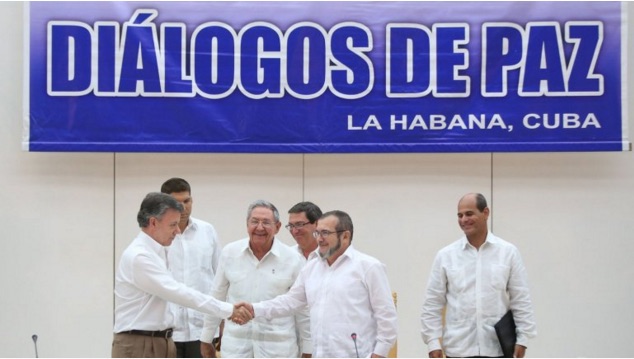
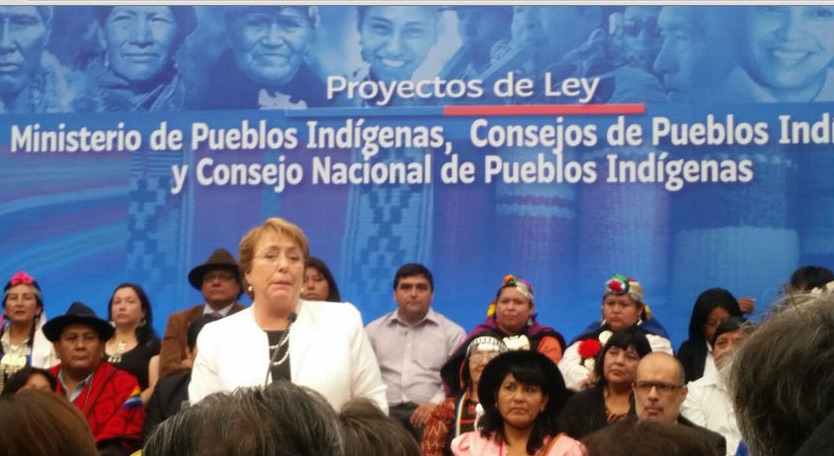
The leading edge is in Colombia which is emerging from decades of civil war. In Havana on September 23, the government and the FARC guerrilla movement signed a peace accord. And what is most important the entire Colombian people are becoming involved in the peace process. CPNN was privileged to take part in the National Encounter for Peace Education that took place October 1 and 2 in Bogota, involving a wide range of the civil society as well as government officials. Articles about the Encounter by Alicia Cabezuo of the International Peace Bureau and by David Adams are published in CPNN along with a link to a video of the meeting and an interview by Cabezudo about peace education. Colombian President Juan Manuel Santos took part in a nationally televised program on peace education with some of educators who took part in the Encounter. Earlier, the National Congress of REDUNDIPAZ met from September 21-23 to address “The Role of the University in Building Peace with Social Justice.” Then, on October 10, the government of Chile announced it is establishing a group of experts, veterans of peace processes in their countries, to work out of El Salvador on behalf of the Colombian agreement. This is a kind of international solidarity for peace that is rarely seen in other continents.

The culture of peace, as such, is on the agenda in Latin America, as shown by other recent CPNN articles. Cuba announced that it will advocate for this at UNESCO. In Argentina a cycle of events dedicated to this was held during the week of the International Day of Peace. Bolivian students marched for culture of peace.

In Brazil, a public hearing of the Congress was devoted to culture of peace in schools. While in Curitiba the Instituto Mundo Melhor (IMM) brought together police officers to discuss the culture of peace. And Cardinal Peter Turkson, the President of the Pontifical Council of Justice and Peace, spoke at an international symposium on “Promoting a Culture of Peace in a World of Conflict” that was held in Rio de Janeiro.

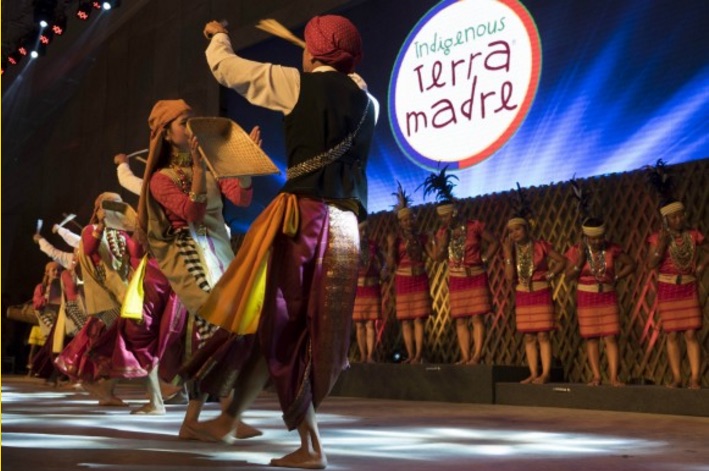
Latin America continues to make a major contribution to sustainable development. The governments of Bolivia, Ecuador and Venezuela announced at a forum in October that they will advocate for “Pachamama,” or Mother Earth, and civil society at the 21st United Nations Climate Change Conference in Paris in December. In this regard, CPNN recently carried articles about women dealing with waste management in Nicaragua, terrace farming by indigenous farmers in Chile, and a victory by the indigenous farmers of Guatemala against the monopoly practices of Monsanto.

In Guatemala, The Latin American Council for Peace Research (CLAIP) and the Latin American Faculty of Social Sciences (FLACSO) devoted their Third Regional Conference to “Latin America on the quest for sustainable peace: tools and contributions.” While in Honduras, the struggle of peasant movements for the reclaiming of stolen land is celebrated in the new film, “Fertile Ground“.

As we say in the video of the National Encounter for Peace Education in Colombia: “If you look at the news from around the world, there is war everywhere. . . [but] when we see that Colombia is going towards peace, it is an inspiration. If Colombia can make peace, se we can make peace in other countries also.”


FREE FLOW OF INFORMATION

encuentro
National Encounter for Peace Education in Colombia

WOMEN’S EQUALITY

parenthood
United States: Religious Groups Mobilize to Promote Feminism and Faith

DISARMAMENT AND SECURITY

no nato
Spain: An appeal against NATO military exercises galvanizes demonstrations and civil disobedience actions

HUMAN RIGHTS

chomage
France: Territories of zero long-term unemployed

SUSTAINABLE DEVELOPMENT

terraces
Bolivia, Ecuador, Venezuela Agree to Defend Mother Earth at COP21

DEMOCRATIC PARTICIPATION

nobel
Nobel Peace Prize 2015: Lesson in Hope from Tunisia . . .

TOLERANCE AND SOLIDARITY

sudan
Beating the drum for peace: A chat with the general secretary of the South Sudan Council of Churches

EDUCATION FOR PEACE

brazil
Brazil: Public hearing discusses education for culture of peace

Bulletin français 1 novembre 2015

. . LA PAIX EN AMERIQUE LATINE . .

Nous avons publié, dans les deux derniers mois pas moins de 18 articles sur la Culture de la Paix en Amérique Latine, montrant ainsi que le continent continue d’être un exemple pour le reste du monde.

Nous trouvons au premier rang la Colombie qui est en train d’émerger après plusieurs décennies de guerre civile. Le gouvernement et les guérillas des FARC ont signé à La Havane le 23 Septembre dernier, un accord de paix, mais le plus important, c’est que l’ensemble du peuple colombien est en train de s’impliquer dans ce processus.

CPNN a eu le privilège de prendre part à la Rencontre nationale pour l’Education pour la Paix qui a eu lieu les 1er et 2 Octobre à Bogota où un large éventail de la société civile ainsi que des représentants du gouvernement étaient présents . Nous avons publié deux articles ( Alicia Cabezudo de International Peace Bureau et David Adams de CPNN) avec un lien vers une vidéo de la Rencontre ainsi qu’un entretien de A.Cabezudo concernant les spécificités de l’Education pour la Paix.

Quelques jours avant, le 27 septembre, le président de Colombie Juan Manuel Santos a pris part à un programme télévisé à l’échelle nationale sur l’Education pour la Paix avec les éducateurs qui ont participé à la Rencontre. Plus tôt, les 21,22 et 23 septembre, le Congrès national de REDUNDIPAZ avait pris place sur le thème : “ Le rôle de l’université dans la construction de la paix avec la justice sociale.” Puis, le 10 Octobre, le gouvernement du Chili a annoncé qu’il mettait en place un groupe d’experts avec les vétérans ayant participé aux processus de paix dans leur pays, à travailler en El Salvador pour faire progresser l’accord de paix en Colombie. Ceci est un aspect de la solidarité internationale pour la paix qui est rarement vu dans d’autres continents.

La Culture de la Paix, et non simplement “la paix”, est à l’ordre du jour en Amérique latine, comme nous l’indiquons dans de récents articles de CPNN :

Cuba a annoncé qu’il plaiderait pour cela à l’UNESCO.

En Argentine s’est développé un cycle d’événements dédiés à cette même spécificité pendant la semaine de la Journée internationale de la paix.

En Bolivie les étudiants ont organisé les manifestations et défilé pour la Culture de la Paix.

-Au Brésil, une audience publique du Congrès a été consacrée à la Culture de la Paix dans les écoles, à Curitiba, l’Instituto Mundo Melhor (IMM) a réuni les agents de police pour discuter de la Culture de la Paix. Et à Rio de Janeiro, un symposium international sur la promotion d’une “Culture de la Paix dans un monde de conflit” s’est tenu avec la participation du Cardinal Peter Turkson, Président du Conseil Pontifical de Justice et Paix.

L’Amérique Latine continue d’apporter une contribution majeure au développement durable. Les gouvernements de Bolivie, d’Equateur et du Vénézuela ont annoncé lors d’un forum en Octobre, qu’ils seront les défenseurs de la “Pachamama”, ou la “Terre Mère” pendant la Conférence sur le changement climatique des Nations Unies à Paris en Décembre. A ce sujet, CPNN a récemment publié des articles sur différents points dont, l’intervention des femmes sur la gestion des déchets au Nicaragua, l’agriculture traditionnelle en terrasses au Chili, une victoire par les agriculteurs indigènes du Guatemala contre les pratiques de monopole de Monsanto.

Au Guatemala, le Conseil latino-américain de recherche sur la paix (CLAIP) et la Faculté des sciences sociales d’Amérique Latine (FLACSO) ont consacré leur troisième Conférence régionale à “l’Amérique Latine en quête d’une paix durable: Outils et contributions” .

Au Honduras, la lutte des mouvements paysans pour la récupération des terres volées est célébrée dans un nouveau film : ” Fertile ground ” (Terre fertile).

Comme nous avons dit dans la vidéo de la Rencontre nationale pour l’éducation pour la paix en Colombie: “Si vous regardez les nouvelles du monde entier, la guerre est partout dans le monde. . . [mais] quand nous voyons que la Colombie avance vers la paix, ce doit être une inspiration ! Si la Colombie peut faire la paix, cela veux dire que nous pourrions faire la paix dans d’autres pays aussi.


LIBERTÉ DE L’INFORMATION

encuentro
National Encounter for Peace Education in Colombia

ÉQUALITÉ HOMMES/FEMMES

parenthood
United States: Religious Groups Mobilize to Promote Feminism and Faith

DISARMAMENT ET SECURITÉ

no nato
Spain: An appeal against NATO military exercises galvanizes demonstrations and civil disobedience actions

DROITS DE L’HOMME

chomage
France: Territoires zéro chômeur de longue durée

DÉVELOPPEMENT DURABLE

terraces
Bolivia, Ecuador, Venezuela Agree to Defend Mother Earth at COP21

PARTICIPATION DÉMOCRATIQUE

nobel
Prix Nobel de la paix 2015, belle leçon d’espoir à la tunisienne…

TOLERANCE ET SOLIDARITÉ

sudan
Beating the drum for peace: A chat with the general secretary of the South Sudan Council of Churches

ÉDUCATION POUR LA PAIX

brazil
Brazil: Public hearing discusses education for culture of peace